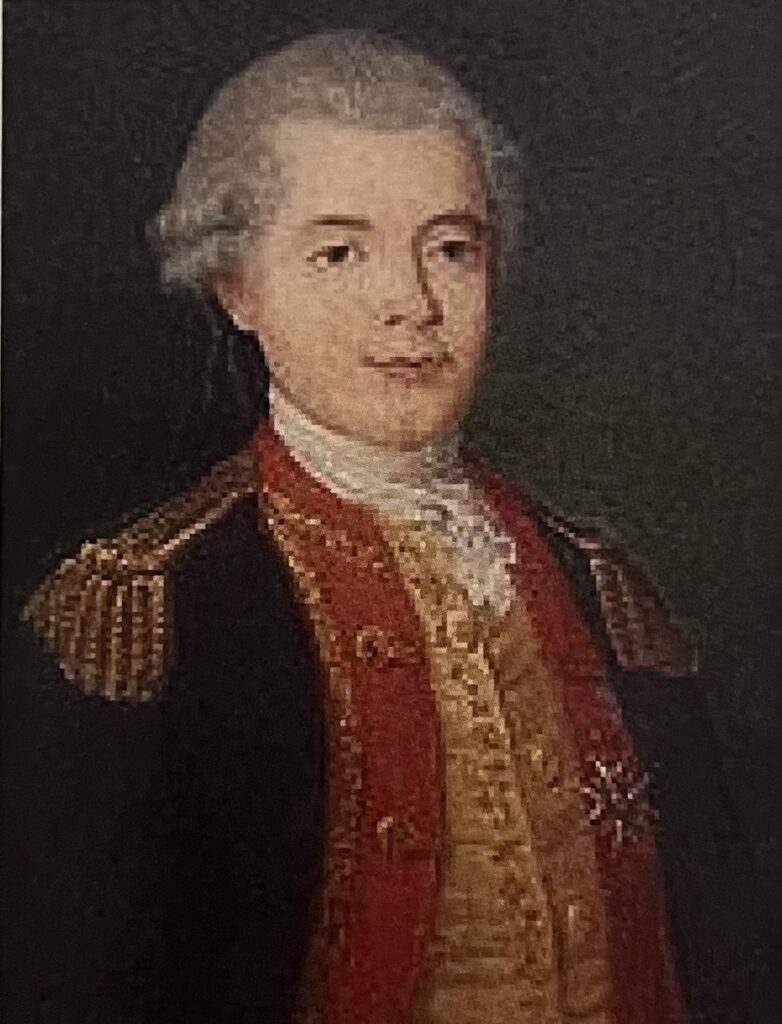
The Huon name has been immortalized by explorer and naval commander Jean-Michel Huon de Kermadec (born in Brest in 1748), after whom Huonville, the Huon River, (Huon Pine was thus named as it grew near the river), and the Kermadec Islands (in the Pacific Ocean, north of New Zealand) were named. These namings occurred as a result of a trip from 1791-3, initially planned to investigate the disappearance of the ship La Perouse, missing since 1788.
S. Odgers, Tasmania Guide, p. 148
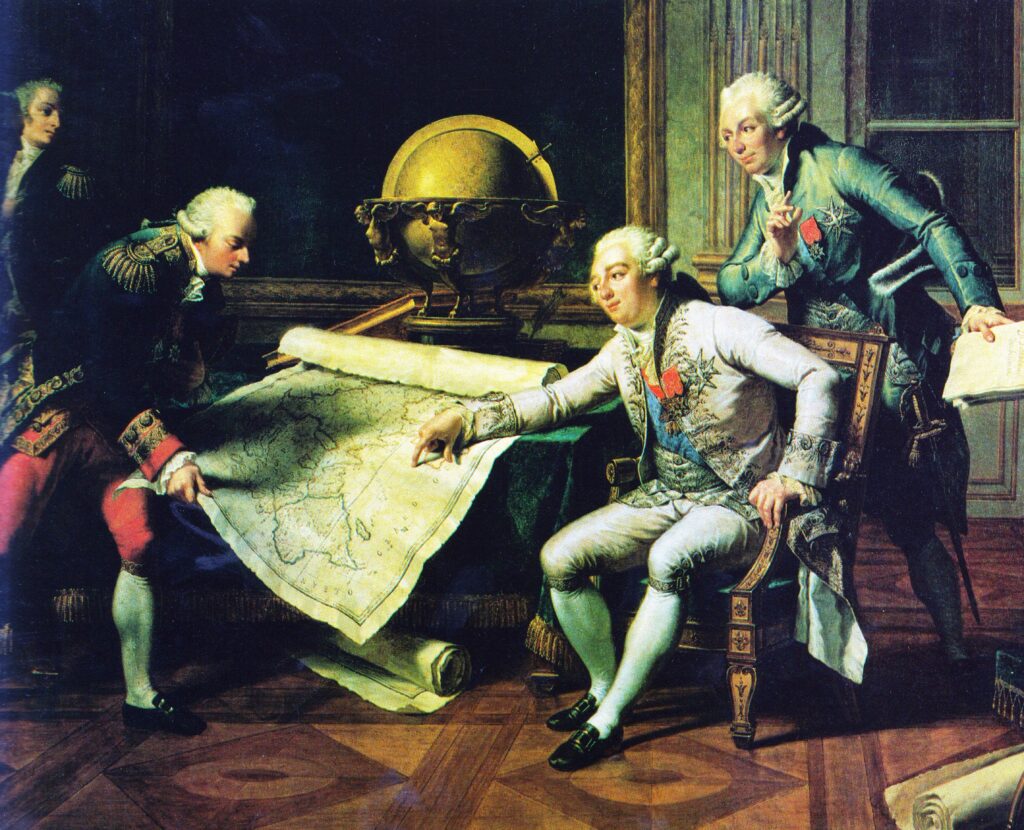
“In 1783 King Louis XVI agreed to a major scientific voyage to the Pacific and Indian Oceans. Jean Francois Galaup, Comte de la Perouse, an experienced and respected navigator, was chosen as commander. His ships, the Atrolabe and the Boussole set sail in August 1785. He thoroughly surveyed the North Pacific before reaching Botany Bay in January 1788, only a few days after the First Fleet had left it for Port Jackson. On 23 February, the French expedition followed and saw in Port Jackson the tents of the first British settlement in Australia. Fifteen days later the French sailed out through Sydney Heads. They were never seen again.”
Trevor Jacob Southland, The Maritime Exploration of Australia 1987 p.94
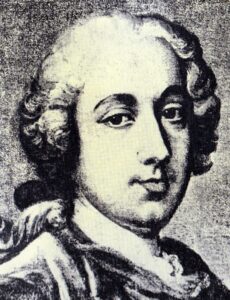
It was some years later, when some wreckage was found on the islands of the New Hebrides, that their fate was learned. As no intelligence had been received for three years respecting the ships…the National Assembly of Paris sent out two ships to steer the same course as those navigators must have taken.” These two ships Recherche (The Research) under the command of Antoine Raymond Joseph de Bruni Chevalier d’Entrecasteaux (left) and Esperance (Hope) under the command of Captain Jean Michel Huon de Kermadec commenced their journey on the 28th September 1791. John Rintoul Esperance Yesterday and Today 1964 p.2
Huon was his colleague from a previous trip to the coasts of China. L. Marchant, France Australe , p. 83
“The d’Entrecasteaux expedition left France on 28 September 1791…It included 219 officers, sailors, scientists and artists… D’Entrecasteaux called at Ambon for provisions and set sail for the western coast of Australia. Strong southerly winds, however, forced the expedition to sail far out into the Indian Ocean, but eventually it sighted the coast just north of Cape Leeuwin. High seas and the rugged coastline prevented detailed surveys being made. No signs of life were seen and the land appeared barren.
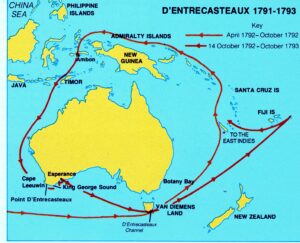
The ships then turned along the south coast and observed (but did not anchor at) King George Sound. By 7th December 1792 they were following the sweep of the coastline as it begins to form the Great Australian Bight. On the following day they came across reefs and islands lying just off the present site of Hopetoun. As they sailed eastward, high seas, strong winds, reefs and offshore islands placed the ships in danger. Trevor Jacob Southland, The Maritime Exploration of Australia 1987 p.96
At three thirty on the afternoon of December 9th 1792, Huon de Kermadec in the Esperance was leading the two ships through the bad weather, rounded the mainland and found shelter and anchored in a bay.
“A young crewman aboard L’Esperance named le Grande was sent to the mast-head and guided the ship through a narrow deep-water passage. The Recherche followed. The manoeuvring of the Esperance and the skill of the young man so impressed d’Entrecasteaux that he named Port Esperance and Cape Le Grande in their honour.”
Trevor Jacob Southland, The Maritime Exploration of Australia 1987 p.97
D’Entrecasteaux wrote in his journal “I decided to give the harbour the name of “Esperance Bay”, that of the first frigate to enter it”. Rintoul, John, Esperance Yesterday and Today, (Esperance Shire Council, 1963), p.3
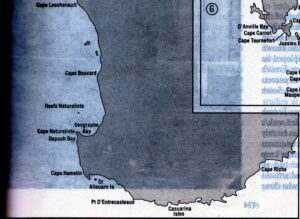
Esperance; Esperance Bay WA. Huon de Kermadec, an officer of Admiral d’Entrecasteaux’s squadron, in command of the frigate L’Esperance, visited the bay in 1792. The aboriginal name was Gabie Kylie, Place where the water lies like a boomerang.”
A.W.Reed Place Names of Australia 1988 p.93
“D’Entrecasteaux was seeking for somewhere to pause before sailing to Tasmania. Water supplies were low, the prevailing winds were unfavourable and the rudder of the Esperance was in need of repair. A forge was set up on Observatory Island so repairs could be made. Seals and penguin were killed for food and an observation tent set up. However, scientific work was hampered by the difficulty of landing men and supplies on the rocky island.
Eventually a landing was made on the mainland just east of the present site of Esperance. The first shore party was unimpressed and said the soil was sandy and unsuitable for European settlement. The botanist Riche went off to collect specimens and became lost in the thick scrub. D’Entrecasteaux concerned about the poor health of the crew and the shortage of drinking water had to be persuaded not to sail away without Riche. Trevor Jacob Southland, The Maritime Exploration of Australia 1987 p.98
“The reason for his non-return with the main party was that Mr Riche was constantly stopping to collect specimens of plants and rocks and was soon left behind.” He discovered a large salt lake, undoubtedly Pink Lake, and observed emus, kangaroos, and observed the marks of a dog he thought to be as large as a wolf. He came upon a small of spring of fresh water near the lake. In his report Mr Riche wrote “A very atheist in spite of himself would believe in God after such a piece of good fortune.” He was so exhausted he was forced to abandon some of his collection of plants and rocks. He slept and at daybreak he set off once more and appears to have made a circular journey from Pink Lake across or around Lake Warden to the Six-Mile Hill, to the coast and then on to the highlands of Wireless Hill from which he was able to sight the two ships at anchor. He had been fifty four hours on shore with no other provisions than some bits of biscuits.
During the time they were in Esperance both M. Riche and M. Labillardiere took a keen interest in the geology and natural history of their surroundings. Both describe in considerable detail the rock, plant life and birds which they saw. As Mr C.A.Gardner, one time Government Botanist in Western Australia points out, the first kangaroo paw to be collected and described was discovered and named at Esperance by M. Labillardiere, who write in his journal: In those arid wastes grow a fine plant which nearly resembles the iris…Ijhave nominated this species “arigosanthos rufa”. To Esperance then goes the honour of having produced the first sample of the flower which has become our State’s floral emblem. Rintoul, John, Esperance Yesterday and Today, (Esperance Shire Council, 1963), p.6
The expedition then sailed from Port Esperance to just past the head of the Great Australian Bight, where it left the coast and headed for Tasmania. There the scientists conducted a number of studies, including research among the Tasmanian Aboriginal people.” Trevor Jacob Southland, The Maritime Exploration of Australia 1987 p.98
On January 21, 1793, the expedition reached Recherche Bay on the Tasmanian coast – on that very day, the head of King Louis XVI fell in Paris.
“With reserves of water critically low by January 1793, Huon persuaded d’Entrecasteaux to sail directly to Van Diemen’s Land, where they could be assured of replenishment, thereby losing the opportunity to determine the existence of a strait south of New Holland. On 21 January the expedition returned to Recherche Bay. This second visit to Tasmania, which lasted until 27 February, was characterized by friendly contact with the indigenous inhabitants. It was also significant for the discovery of the Derwent estuary. The Recherche and Espérance sailed on to Tongatapu and then Balade in New Caledonia where Huon de Kermadec died of tuberculosis on 6 May 1793. He was buried on the offshore island of Poudioué (Cook‘s Observatory Island).
A well-read and cultured man, who sketched and played the flute, Huon left precise instructions that his substantial library should be distributed among his fellow officers. He was unmarried. D’Entrecasteaux named the Huon River in Tasmania and the Kermadec Islands, north-east of New Zealand, after him. The Kermadec Trench and Kermadec Ridge in the Pacific also honour his name as does, indirectly, the magnificent Huon pine (Lagarostrabus franklinii) in Tasmania.”
Australian Dictionary of Biography, Supplementary Volume, (MUP), 2005
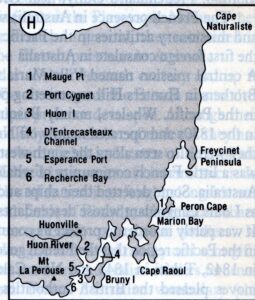
“Huon River Tasmania. The river (and the peninsular) were named by d’Entrecasteaux in honour of his second-in-command, Huon de Kermadec, when he surveyed the channel between the mainland and Bruny Island in 1792.
Huonville Tasmania. The town that arose in the banks of the Huon River was also named after Huon de Kermadec.”
A.W.Reed Place Names of Australia 1988 p.119
Huon de Kermadec died of scurvy and dysentery aged 45 on May 6th 1793 in Balade Bay, New Caledonia.
C. Waldman & A. Wexler, Who was Who in the World of Exploration.
“France let escape every opportunity to colonise any part of the continent, largely because of the lack of support and interest shown by its rulers, who were too preoccupied by their wars at home. A few (French) sought refuge in Australia. Among them was Gabriel Huon de Kerrilliau, a member of the Bourbon family.
James Jupp The Australian People 1988 p.472