Memories of growing up in City Beach by Jody Harrison
One normal afternoon around 1976, I got home from Uni, dumped my bag and headed for sustenance. My hunger dulled briefly when correspondence caught my eye. Held by a yellow, smiley face fridge magnet was my mother’s unmistakable quirky left-handed writing: “Jack, I have flushed the toilet twice.”. I grabbed a texta and wrote under it “Has the romance gone out of your life?”. This specific information was vital as we only had one loo – our septic tank needed emptying and the poo truck man had been notified. Sometimes it was simply a recalcitrant tree root which had delighted in the spoils of such an environment. More importantly, to my self-centred adolescent mind, it meant I could brave the toilet with the pleasant reassurance it might have nothing unexpected in it.
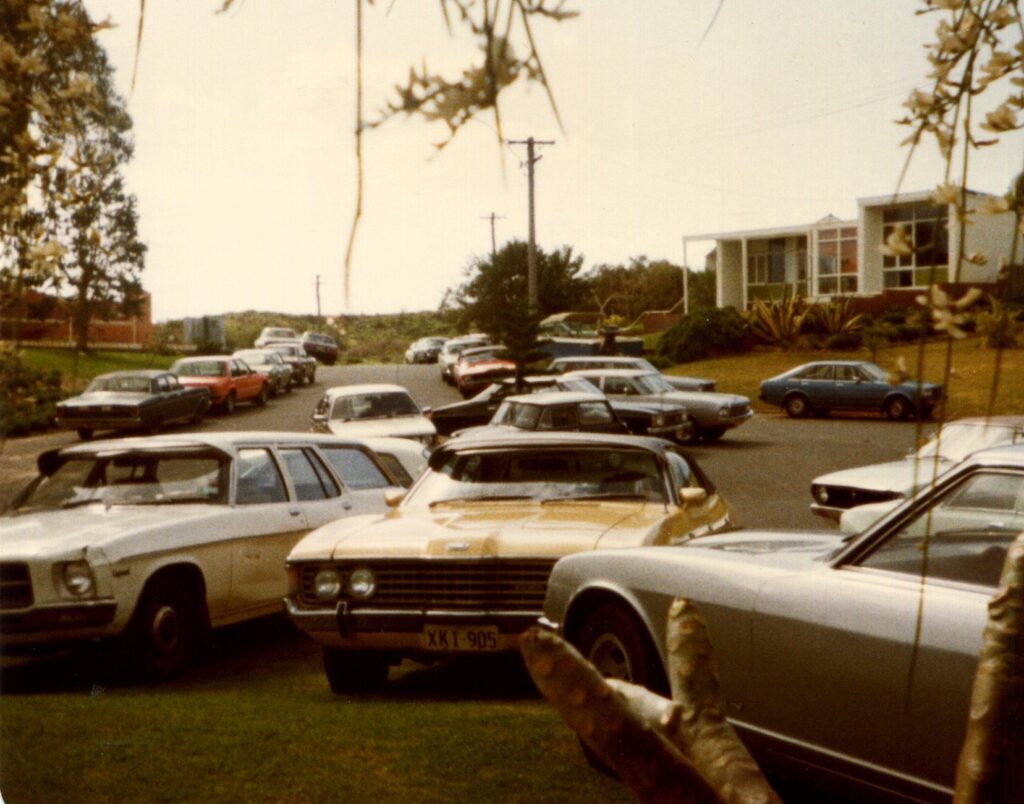
Events, such as the arrival of a poo truck, sparked attention in our City Beach cul de sac which afforded sparse parking, tricky large truck manoeuvring and precious little privacy (taken to the extreme by the first resident at #4, Mr Frederick George, who kept a diary and wrote car registration details of all cars that visited The Street).
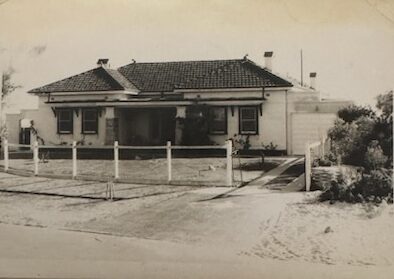
Well before our Harrison Ivanoff house was built at number 11, this bungalow was built by Mr George – Frederick Charles George – and his wife Euphemia Jane (nee Kean) who were married in Fremantle in 1899.
Mr & Mr George built a Californian Bungalow – suited well in Nedlands at this time – around 1934. City Beach was only 6 years old at the time. It had no proper roads, telephone, public transport or shops. Mr George is listed as an “investor” in the 1936 census, though the next owner of number 4 Dodonia, Phil Henderson, remembers him as being an engineer. Builder and owner, Mr George had a mentally impaired daughter, Gwendoline, who died in 1948 aged 44.
Mr George went off to Europe with his Dodonia plans and imported the ceiling moulds for the house. When the Hendersons bought number 4, there were drawings of the ceilings. He sold it because he got sick and died (7.8.1955 aged 83). Apparently his Doctor asked Mrs Reader (who lived opposite in number 1) to check up on him and make sure he had a meal a day. Bea Reader was a wonderful woman, filled with generosity and empathy, and of course she did much more than that and when he got very sick a niece turned up from the country and stayed there trying to protect the Estate.
Mr George was a Mason and all his Masonic gear was left in the garage.
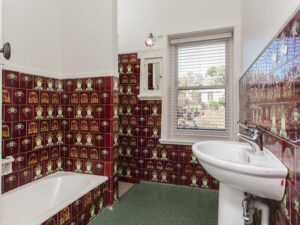
This house had a bathroom that filled me with awe, as it had beautiful, elegant, patterned maroon tiles up the wall and a pull handle flush loo, which was a new thing for me.
It had a large extension ocean side and also had a laundry chute down to a huge concrete laundry / workshop where Elizabeth and I spend many hours mucking around and listening to the Seekers on an old record player.
Kevin Henderson was an orthodontist and was the first Orthodontist involved in the care of cleft palate children in Perth. Kevin’s practice was situated at Walmer House 242 St George’s Terrace (1939 graduated 1942 registered). When I was 13, I remember going up to number 4 with the sad tale that I was about to have 12 baby teeth extracted as they were not letting my adult teeth through. Kevin quietly removed a hanky from his pocket and asked me to display my choppers. In a flash he extracted one of my slightly wobbly teeth – I never felt a thing (and only had 11 teeth left to remove!).
Kevin was the son of illustrious dentist Gilbert Dowling Henderson, an identical twin born to architect Edgar Henderson.
In the 1890s Edgar Henderson and family (there were to be five surviving children) moved to Western Australia, where Gilbert’s father designed their home in McCourt Street, Leederville, as well as a Catholic primary school and the first buildings for St John of God Hospital, Subiaco.
The boys were educated at the nuns’ school and Christian Brothers’ College, Perth. Gilbert studied dentistry in the practice of Dr Bennett and Dr Nathan and was registered by the Dental Board on 4 October 1915. He served at the training camp at Blackboy Hill during World War I. On 27 November 1918 at St Mary’s Catholic Cathedral, Perth, he married Frances Josephine Dennehy, a nurse. They had five children. Beginning general dental practice, he became enthusiastically involved in the struggle of the profession to raise dentistry standards. In 1922 he was a founding member of the State branch of the Australian Dental Association, on which he served for many years.
Gilbert Henderson was the first chairman of the Perth Dental Hospital in 1926 and of the board of management of the associated Western Australian College of Dental Science in 1936. He was both a clinical teacher and an administrator. In the 1930s he also represented Western Australia on the dental committee of the Council for Scientific and Industrial Research.
Resigning as dean of the college, Henderson began full-time duty on 27 April 1942 as captain, Australian Army Medical Corps (Dental). Described as 5 ft 5 ins (165 cm) tall, with brown hair and brown eyes, he served at the 118th General Hospital at Northam and was promoted major in October. In January 1943 he was posted to the 115th Military Hospital, Heidelberg, Victoria, where he served as a specialist, designing mechanical aids for repairing fractured facial bones, and fine prosthetic shields to restore soft tissue loss, especially for ears, noses and eyes. He was best known for building a prosthetic hand, activated by rods inserted in the arm muscles. His sensitivity to patients’ morale was especially appreciated and remembered. On 26 November 1945 his appointment terminated in Perth.
Henderson practised as a specialist in oral surgery and radiology and resumed his role as dean of the dental science college (later the University of Western Australia’s faculty of dental science); next year he became an original member of the advisory board to the faculty. In 1948 he was vice-president of the Perth congress of the Australian Dental Association. Appointed C.B.E. in 1950 he was also elected a fellow of dental surgery of the Royal College of Surgeons, Edinburgh, and fellow of the International College of Dentistry. At the 1964 dental congress in Perth the opening address was the ‘Gilbert Henderson Oration’, delivered by Professor K. J. G. Sutherland.
Particularly concerned about the dental needs of people living in remote places, Henderson taught one pastoralist’s wife how to provide emergency sedative dressings for decayed teeth and a Kimberly-based police sergeant Athol Monck—later police commissioner—to extract teeth painlessly, ensuring the dental board knew and approved of his para-dental training. Henderson’s was a dedicated life and many of his kindnesses were private. Regarding community service as an obligation, he served simultaneously as honorary oral surgeon to Royal Perth and Fremantle hospitals and to the Princess Margaret Hospital for Children—a heavy workload in addition to his practice.
Henderson’s wife died in 1951. He retired in 1965 but did not finally leave the university faculty until April 1970. The latter established a Gilbert Henderson prize in oral surgery and conferred on him a doctorate of dental science, the first award of such a degree by the university. He died on 19 October 1977 in St John of God Hospital, Subiaco, and was buried in Karrakatta cemetery. Three sons and a daughter survived him.
Philomena Joan Farrell was born on 11 March 1929 in Ipswich, Queensland to James Joseph Farrell and Helene Philomina (nee Kerwick). The family moved to W.A. when Phil was about 3 and her father James James Farrell was the General Manager of the massive Wyndham meatworks from 1932 to 1956 (they closed in ’65) and he was a foundation member of the Australian Meat Board He opened the company Demco with his sons Dermot and Bernard and the Farrells bought four Kimberley cattle stations and had two million acres and 40 thousand head of cattle. Derm Farrell managed the Broome operations, except when his father “JJ” came up to check up. JJ died of pneumonia on a boat trip back from Wyndham. The Farrell family lived around Nedlands (just around the corner from Jack Harrison’s parents.)
Phil and Kevin were married in 1951 and moved to Dodonia Gardens in 1957.
Phil and her sister Molly seemed to be forever in the kitchen and Aunty Molly’s baking was truly gourmet. Phil was very good friends with Jim (James) and Bea (Beatrice) Reader at number 1 and Mrs Reader had a home salon and did her hair. I loved visiting the Readers as they had cats and always spoilt me. Both the Reader and Henderson girls baby sat me from time to time. Phil’s niece Louise delivered all three of my babies.
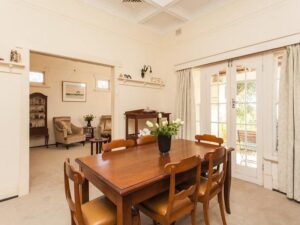
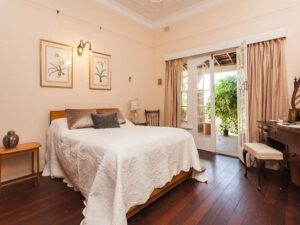
#4 was bought from Mr George in 1957 by the Kevin and Phil Henderson family with their six kids: Francine, James, Hilaire, Guy, Elizabeth and Tom. They extended the house in 1965 when Tom was born. 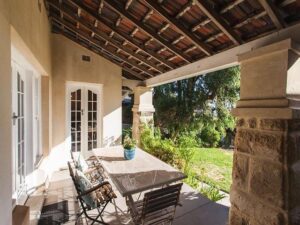
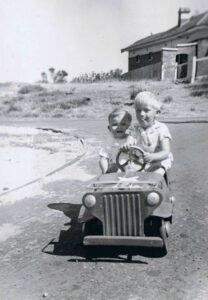
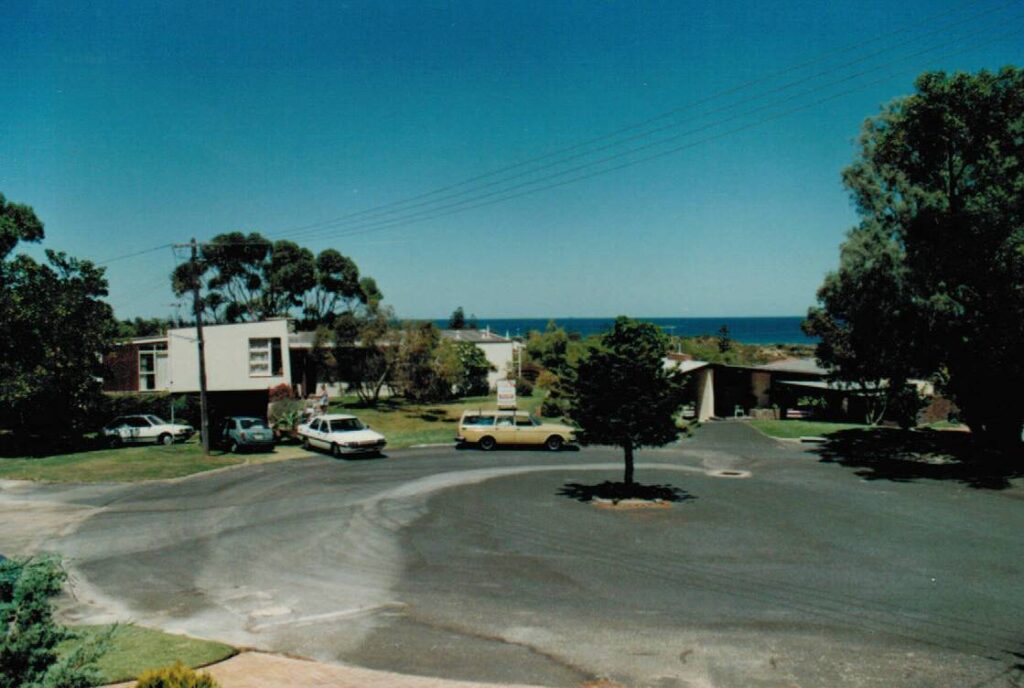
“Dodonia Gardens” provided a racetrack around which children zoomed on their treddle cars or bikes, footballs brought down power lines, late night inebriated rollerskating races were attempted and the occasional kangaroo ran amok. At the bottom of the street was an inadequate water drain that flooded after heavy rain and all the kids would ride their bikes or plod through the massive puddle.

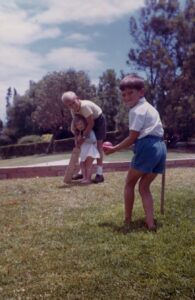
There were a lot of young lads in Dodonia – street cricket rivalled the Ashes and football matches saw the demise of power poles.
The council downsized the Dodonia “garden” to a single pine tree that a helpful neighbour annually lopped to ensure it didn’t block his view. The Council should have renamed us “Dodonia Lone Wide Pine”.
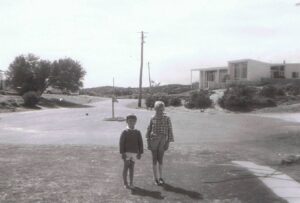
Previously isolated by sparse facilities and public transport, the land sales improved in Perth’s coastal suburbs during the 1950’s when cars became affordable. Mum, married aged 19, immediately lost her adored ABC job (Government rules of the time dictating that married women could not be employed) and in 1954, this intelligent, social woman found herself living on a lonely sand dune.
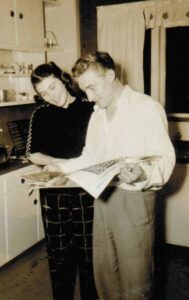
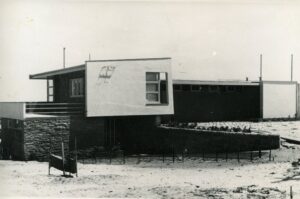
Within a decade she had three children and had welcomed and embraced the camaraderie of her near neighbours in similar situations.
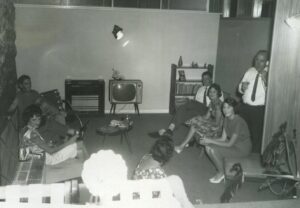
Rotational hosting of “Friday Night Drinks” was initiated by Dodonia neighbours intending to share knitting patterns and stimulating conversation. They were accompanied by the odd gin and tonic, an Alpine and distracted slightly by the mutual loose supervision of their small children trashing each other’s houses. As the children grew and the years passed, the children attended less and the husbands started turning up, not wanting to miss any excuse to imbibe in an aperitif, play records and enjoy this unique and precious hamlet. Close neighbours the Pixleys at 39 Dampier Avenue also joined this club Ellis Pixley was an obstetrician and his wife Mary taught most of the kids in the district how to swim. We holidayed to Rottnest on their boat with their kids Fiona, Michael and Rohan. We also saw a lot of the Oliver family – Geoff, Marg and Craig at 49 Dampier Avenue.
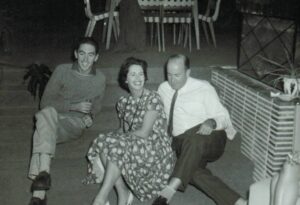
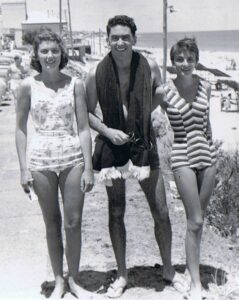
By the mid 1960’s Dodonia boasted eight houses and well over 20 children. My formative years were simple and happy, shared with extraordinary people and the freedom that life then afforded.
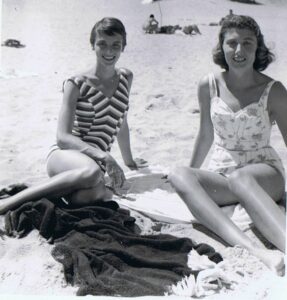
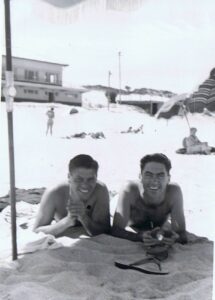
We walked or rode to Floreat Beach, roamed the sand dunes, and built cubbies in dugite and red back spider infested spare blocks. My contemporaries came home when the streetlights came on or heard their names hollered from their front doors.
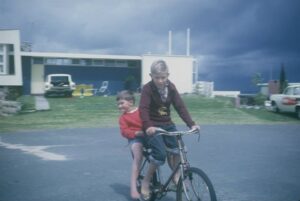
Doors were rarely locked and during heat waves we slept with every window open or outside in a hammock. Our land line finger dial telephone had six numbers: 859187.
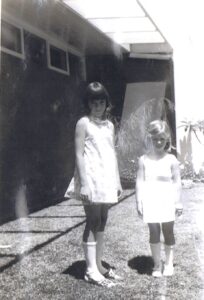
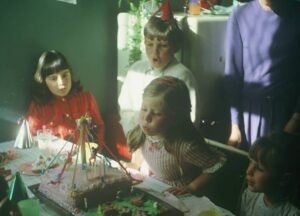
I mixed with dentists, war veterans, managers, millionaires, ratbags, engineers, artists and Sandover medalists.
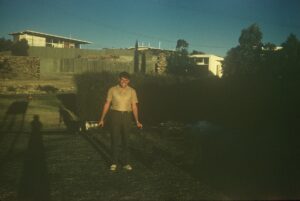
Number 7, dotted with Rolls Royces, was owned by Ray Williams, owner of Tip Top Meats and El Caballo Blanco, with wife Audrey and five daughters Dianne, Ros, Pat, Anne and Karen. Audrey always welcomed you in to her house, a place which filled me with wonder, having a large aviary, cats, a swimming pool, gym, grand piano, organ, milkshake machine, marble floors and several bathrooms.
El Caballo Blanco was founded by Perth businessman Ray Williams and was proud to be known as the foundation home of the Andalusian horse in Australia. In 1970 Williams travelled the world looking for what he considered to be the perfect horse to breed and cross with Australian horses. In 1971 Williams travelled to Jerez, Spain and bought the Andalusian stallion ‘Bodeguero’ and returned to Perth to start the Bodeguero Stud in Wooroloo. In 1974 El Caballo Blanco was opened as a hotel and function venue featuring arena performances by the famous Spanish Dancing Horses from the Bodeguero Stud.
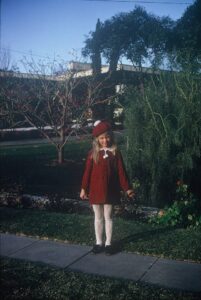
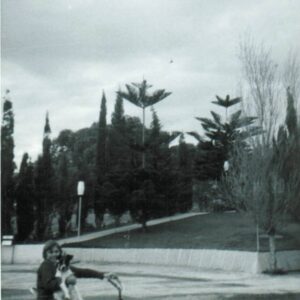
Every family created its fair share of unintended havoc within this tight knit community, but a few are worthy of historic mention.
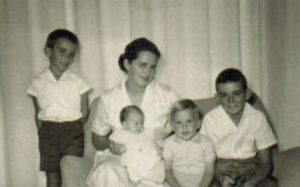
Colemans at #9 was owned by John Coleman, Donella (nee Nicol) or Donna as we called her and their four kids Lindsay, Steven, Tim and Lisa.
John set the tone immediately, not being shy to inform Dad that if the lavatory door was open (which was highly possible in his case), with Iwanoff’s design to see the ocean view from every angle, they could see Jack on the toilet (and also the ocean).
Donna bi-hourly fed a tiny, orphaned kangaroo joey adopted during a holiday. As luck would have it, an abandoned puppy found by a Coleman lad hurtling down a haphazard pre-dirt-bike track in the sand dunes at the end of Dodonia was similarly adopted. Percival Kangaroo grew far larger than Dino Dog and confronted visiting businessmen in a protective stance, balancing on his tail ready to deck them, especially if they wanted to take his photo. A spectacular Coleman kangaroo tackle any AFL player would admire saved one such hapless visitor.
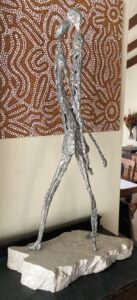
Donna was an artist and potter. Her Giocomettiesque sculptures involved her boiling up lead on her stove and she ended up giving herself lead poisoning.
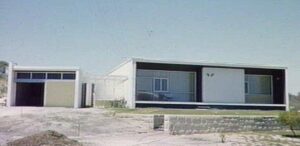
The Coleman house was designed by Gil Nicol (Gilbert Ridgway Nicol), Donna’s brother, who also designed the Carillon Tower in Lake Burley Griffen, Canberra and the Reid Library.
When the Coleman family sadly departed, their house was purchased by veterinarian Don and wife Monica Harris and their sons David and Patrick.
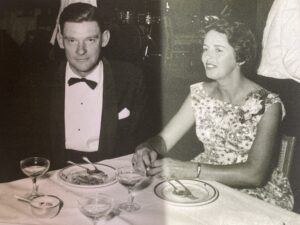
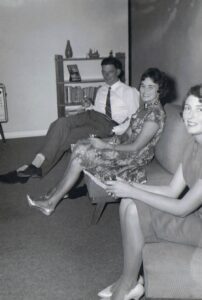
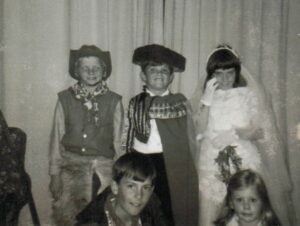
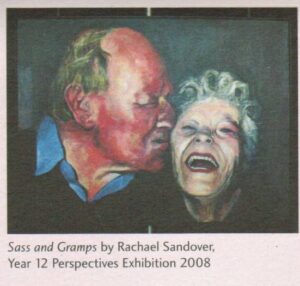
The Sandovers at #3 were always a lively household with three boys: Ian, Grayam and Tony (four if you count their father, Robin), their matriarch Patsy sharing the physical devastation of polio with my brother Jay. Sandovers owned a dog called Jody – a coincidence having two Jodys in the street. Robin Sandover was the son of prominent Perth hardware merchant and benefactor Alfred Sandover M.B.E. who created and donated the Sandover Medal.
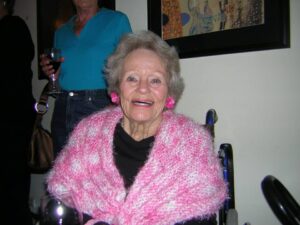
Patricia Jean Sandover, known as Patsy, (nee Brownell) was the daughter of famous war veteran Ray Brownell and his wife Rhyllis, was a champion athlete and went to Perth college with Marcia Harrison. After three iron lung births, her resolve was to ignore polio’s limitations with disdain, resulting in a car designed that required only using her hands (not possibly the safest vehicle with no hand on the wheel whilst changing gears, but she delivered “Meals on Wheels” – I think that sums her up). Jay Harrison went up to the Sandovers for a play wearing a jumper his Mum Marcia had lovingly knitted. He returned from #3 with a cardigan that had been cut up the front, as a helpful colleague thought it would look better and had made the necessary adjustment with a pair of scissors.
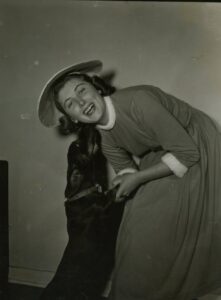
Karma prevailed, as unfortunately our sausage dog ate their rabbits (this was during the pre-fenced dog era – I would have hated to be the baker or postman) and their Heaven promised burial performed at vacant block #5 next door. A confrontation the next day saw this theology come undone when a congregation member (one of his sons) dug up the rabbits to see if they had actually gone to heaven. Robin and Dad enjoyed the odd drink and apparently had a roller skating race down Dodonia one night, which Robin claimed he won.
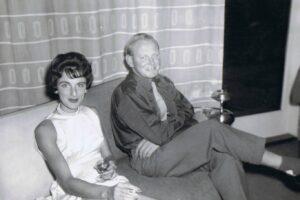
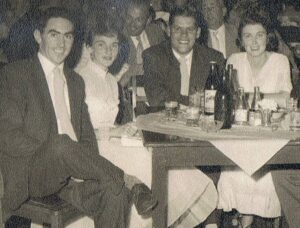
Our direct northern neighbours at #10 were Neville Malcolm Campbell and Janice Adele Campbell (nee Godden) and their sons Rex and Scott and dog Skeety. Neville was the manager of Vox Adeon. They owned a caravan which Nev had built himself.
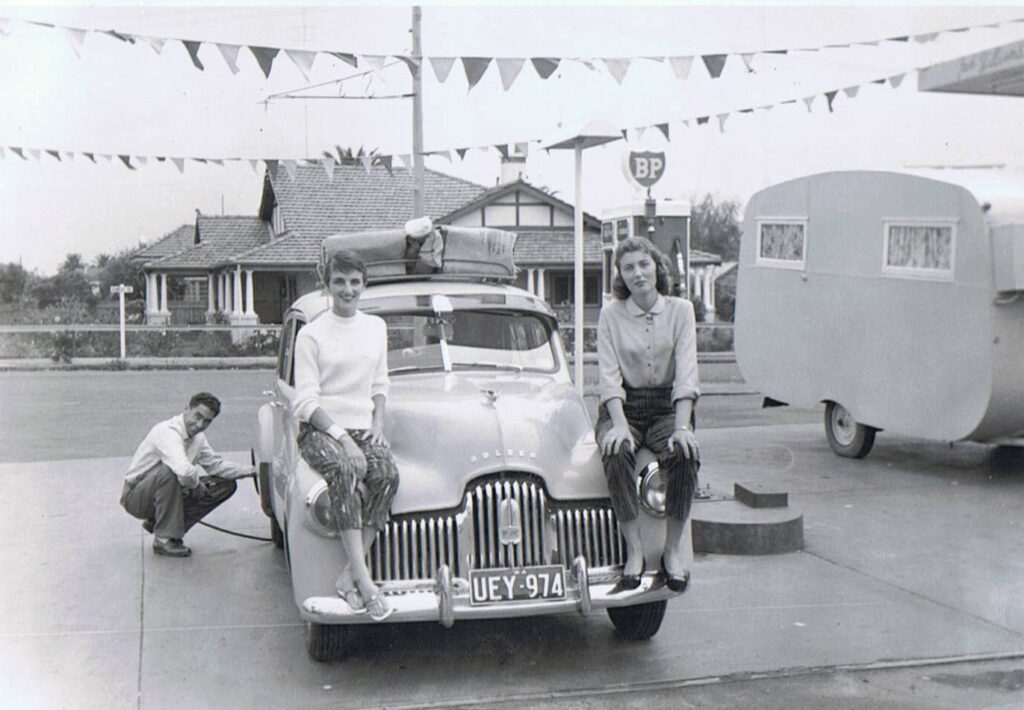
Nev Campbell at and Dad shared a passion for home brewing way before it became fashionable (heady choice of beers – Emu Bitter, Emu Export or Swan Lager). The smell of boiling hops is horrendous and was always a house clearer, made even more so when Nev’s stout brew boiled over the stove top. These brews had minds of their own, exploding unexpectedly in the laundry where Dad housed the bottles, causing mess and smells that never endeared Dad to Mum. Yeast, sugar, hops, carefully measured into the fermenter were left to bubble and brew, before being lovingly bottled into an army of king browns until tasting day arrived. Off would come the bottle top, the promising looking elixir would be poured into one of Dad’s cherished pewter mugs, the result, invariably appalling. Nev and Jack went halves in a mower. Jack returned from work one day to see Nev’s lawn beautifully mowed and the letters N.C. mowed into the lawn of #11. When Cyclone Alby hit in 1978, Mum and I spent the night with Jan in the Campbell’s caravan as all the electricity was out and the caravan had a gas stove.
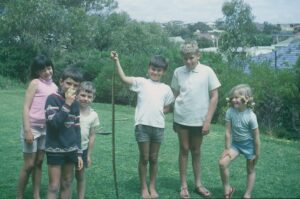
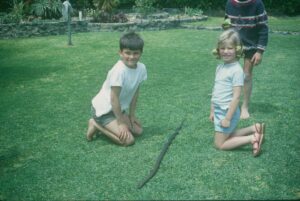
Dugite snakes were unwelcome Dodonia visitors, one being spotted from our lounge room during a gathering of local lads. We rushed out to try and find it, just in time to see a tail disappearing into some tall reeds at #10. Mob mentality prevailed and enthusiastically agreed to ignite the reeds to smoke the snake out. We never saw the dugite, but the flaming garden certainly made for an entertaining display, blackening the wall and cracking the nearby glass.
Henderson kids from #4 enjoyed the unique experience of sharing a swim with a friendly dugite at #7’s fabulous resort style swimming pool. Swimming was quickly replaced by sprinting practice as Mr Reader from #1 was urgently requested assist in relocating the native visitor.
Dad loved the simple things during his recreational hours, such as burning anything he could find in the incinerator (a 44 gallon drum) or even better, in a bonfire, invariably lighting it up not noticing that Mum had just hung some washing out so the clothes had a lovely bushfire smell about them. One day Nev Campbell said “Jack – I’m worried about you” and called Dad’s attention to a five foot high, very healthy marijuana plant in between their properties. Mentally visualising Dodonia raided by the drug squad, Jack ripped it out and incinerated it immediately, probably supplying our neighbours with a nice, relaxed attitude for the rest of the afternoon.
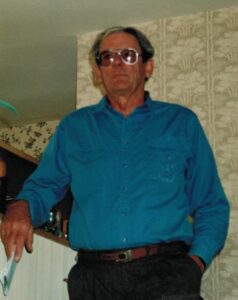
Dad was a do-it-yourself guy, whose maintenance sometimes required more maintenance through dire consequences. His methods were a bit Fawlty Towersesque, with skits Laurel and Hardy had used half a century prior turned into realities, such as the time he swung around with a painting plank on his shoulder and whacked Mum a beauty in the head. He loved the outdoors and I enjoyed standing with him as he drilled through the asbestos fence to put up creeper lattice and painting railway sleepers with creosote ready to make a new garden bed. I admired his acrobatic skills and nerve, teetering on a ladder painting our savagely buffeted and salted west facing home with lead-based paint. Injuries were liberally painted with mercurochrome. He patiently wallpapered over the sandpaper rendered walls which melted off in strips during summer heatwaves.
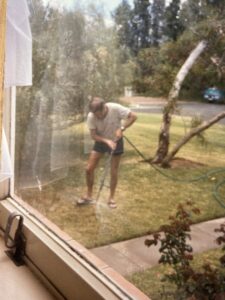
Dodonia boasted buffalo lawns lovingly topsoiled annually with yellow sand, filled with bundies which we kids hurled at each other and traipsed through the house. Dad was passionate about lawn watering. He had a special knack of needing to change the sprinkler just before we were departing somewhere, leaving the family (often with 2 dogs) sweltering in the car. I remember him kneeling in his concert tails to turn a sprinkler off just before departing for a performance. One special joy in his life was the invention of a walking sprinkler that followed the hose carefully round the track you created. Problem was, if it got off its track, it kept chugging along, directionless, which our family witnessed from our kitchen window during a meal, observing our sprinkler watering the bitumen on its way up towards #3.
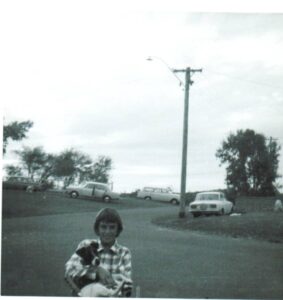
I witnessed a few scenes that would have fitted comfortably in a murder movie, but my favourite is probably the day Mum was preparing for a posh dinner party for internationally renowned musicians – something she achieved impeccably and took very seriously. Mum always put her best foot forward for these occasions, largely to prove that Australians were not a bunch of convict, vegemite eating, kangaroo riding colonials. The house was immaculate, the dining room table laid with the best silver and crockery, the salmon mousse merely being graced with finishing sprigs of parsley. Rather than go around the house, Dad decided to take the short cut through the house to get his bag of blood and bone to back yard. The bag exploded spectacularly in the lounge room, it’s unmistakable odour reminiscent of stockyards, victoriously clinging to everything it touched. At least the dinner had an authentic Australian aroma.
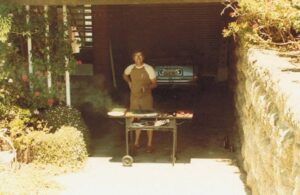
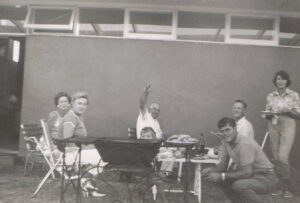
One thing Dad was never uncertain about was Sunday – barbeque day – a ritual which was carried out regardless of weather conditions. Stormy July days would still see the maestro slaving over his soggy grill, using all his talents to coax damp wood into semblance of heat, usually causing clouds of choking smoke to move ominously from the carport under the house upwards, invading every room, eyeball and chest cavity in proximity. Jack’s weekly BBQ was known to many, including weary, visiting musicians seeking minor repairs to their woodwind instruments (and major repairs to their nervous systems). On one such occasion, Dad lit his barby and joyously took his colleague into the nearby laundry, (which doubled as Dad’s workshop, practice room, home brew storage, grog fridge, dog sleepout, store room) to “talk shop” and attempt repairs, leaving only the faithful border collie, Sooty, to tend the fire. This did not prove to be a successful manoeuvre as was discovered some time later when one glance at the black fire and cold grill made the next step – emergency measures – necessary. Dad’s idea of barby first aid involved kerosene – a tasty marinade to a good Aussie slab of steak and the accompanying black snaggers.
On another lovely Perth summer’s day, a barbeque lunch had been planned to entertain overseas guests. One of we small, innocent kinder chose that day to discover the marvellous sensation created when you squeeze raw sausage meat through your fingers, emptying every one.
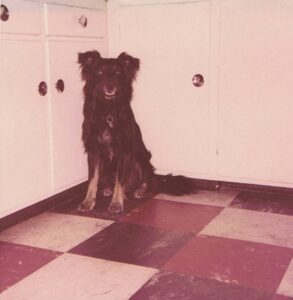
Plus our border collie liked the look of the camembert on the cheese platter and ate it, regurgitating it a little while later at the feet of one happy guest.
Bea Reader at#1 Dodonia told a fab tale of having prepared a plate of hors d’oeuvres for a party, in between each one she had carefully placed a peeled prawn. She nipped into the kitchen to get the final mini pickled onions and returned to find her cat had neatly removed and eaten every prawn. James John Herbert Reader (known as Jim) was a war veteran and was very unhappy when Dad bought a Japanese car. Beatrice Ellen Reader – “Bea” was a hairdresser by trade, all set up at home, a lover of cats and a wonderful, kind woman. Their daughters Moira, Vicki, Sondra and Ellen used to babysit us.
Dad’s barbie was upgraded to a Weber kettle and one idyllic Christmas, it was #11’s turn to host the extended family lunch. Mum had splashed out on an expensive boned turkey, stuffed with exotic fruits and Dad was given ONE JOB – to cook this prized poultry in the Weber kettle. He even managed to get out of going to Church that morning (VERY difficult to do) using the excuse he had to get the heat beads ready and the bird on, ready for lunch. Shortly after arriving home from Church, we heard a percussive noise from the carport where the bird’s delicious aromas had just started to emerge. Jack had not quite secured the legs of the weber kettle and they had collapsed. Bird and heat beads hissed along the carport floor, mingling with the car grease and other choice morsels not intended to accompany turkey.
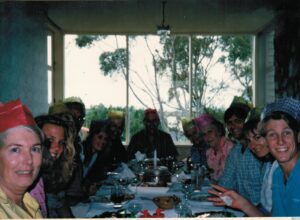
Lunch was rather late due to unforeseen technical issues and Mum clinked Dad’s glass of Christmas cheer through gritted teeth managing a tense “Merry. Christmas. Jack.” To complete the carnage, our dining smorgasbord was extended with a highly dodgy fold out bridge table whose legs, similarly to the weber, hadn’t been quite secured and one kick left our sumptuous dinner full of red cordial.
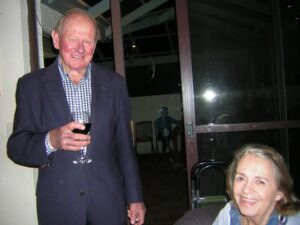
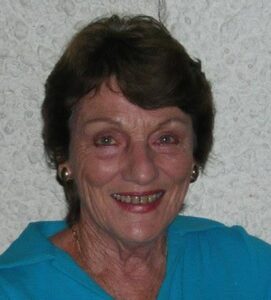
I was close friends with Suzie Hunt whose house, designed by her architect Dad Peter, abutted the southern end of our property at 18 Lowana Way. Sleepovers With Suzie, Felicity and Juliette supervised by Glenys, were always super fun as Suzie had an attic for her bedroom.
Architect William Harse, wife Anne and their kids Janis, Kim and Ingrid were eastern neighbours with the Campbells at 67 Dampier Avenue. Byron Kakulas and his family Anne, Arthur, Felice and Carolyn also lived at 59 Dampier, just sounth to Dodonia’s entrance with Raymond, Anne and Sylvie Quirk neighbouring the back of the Henderson house.
Up until recently, when the last original owner left, I could still turn up unannounced and be welcomed through the doors of these houses. These truly golden years and experiences shared by the families in this street are now precious memories and historical novelties, but the bonds between our families will never be broken.
The vacant cubby blocks were built on, our parents got older and retired and houses were sold in preparation for these inevitable stages in life. Most of our family homes have sadly now been demolished, but I still drive in to Dodonia Gardens accompanied by a sense of calm at arriving safely home.