In May 1920, a group of returned servicemen formed the Band of 44th Battalion Association to later be known as the Returned Soldiers League (R.S.L.) Memorial Band.
The attention of returned soldier bandsmen is directed to an advertisement calling a meeting to-night, at the Soldiers’ Institute, at 7.30. Band practice will commence under Bandmaster L. R. Green.[1]
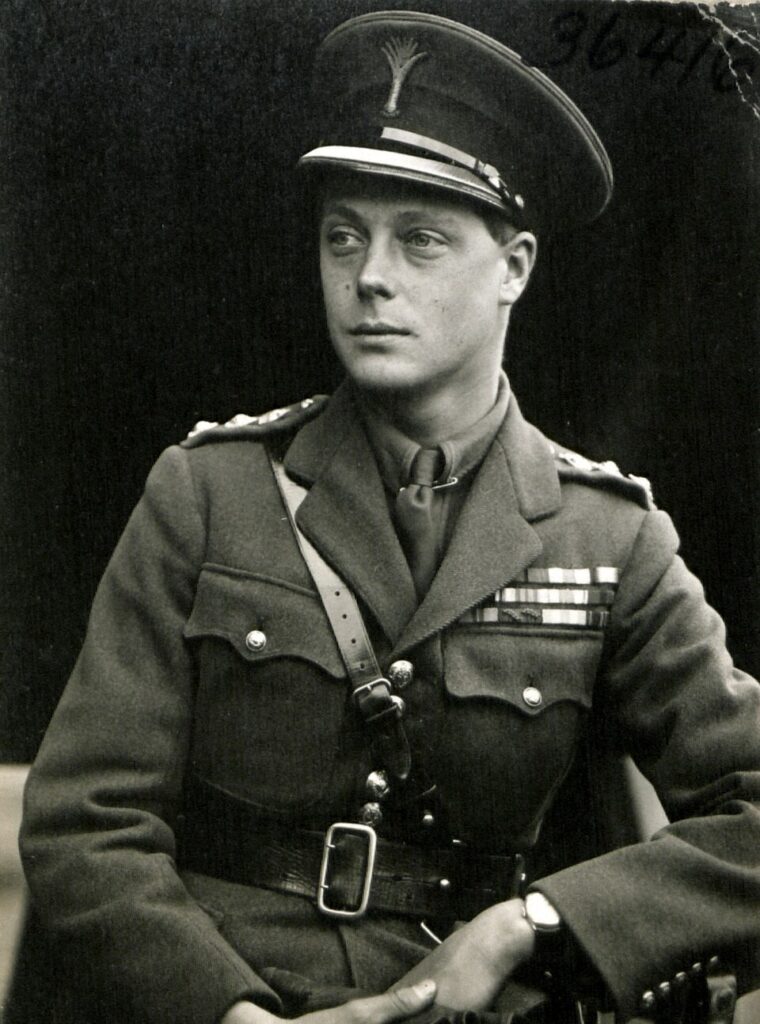
Initially established to perform for the Prince of Wales’ (notorious King Edward VIII who abdicated) visit to Perth in July 1920, 44th Battalion Association held a fundraising concert for the Mount Lawley-North Perth RSL sub-branch in the Lyceum Theatre, now known as the Astor Theatre on Thursday 19 June 1920. This band led a march past reviewed by the Prince of Wales at Government House and also performed at several events during his stay.
Top of Form
The Forty-fourth’s Reunion.
Friday 2nd July 1920
The annual reunion of the 44th Battalion was held at St. George’s Hall, Perth, on Friday night, July 2, the date having been altered from June 6 (embarkation day) to July 2, in order to give members living-in country districts an opportunity to be present. The president of the Association (Capt. C. Longmore) presided, and on his left sat (the O.C., Lieut.-Colonel Mansbridge (“Old Billy”). The usual toasts were proposed, “The King” and “The Prince” by the chairman, the toast of “Kindred Associations” – being left ‘in the hands of Lieut.-Colonel Mansbridge; who emphasised the spirit of comradeship and fraternity which seemed to exist when members of battalions who meet in a social way and he trusted that many more kindred bodies would arise from the ashes of the Great War and help to commemorate many stirring, episodes which had occurred overseas. “Fallen Soldiers” was honoured in silence, all glasses on the table’ being turned down. The toast of “Our Guests” was entrusted to Mr. Cropper Milligan, who eloquently eulogised the parties present, pointing out that the feeling of comradeship should exist among all fighting bodies.
At the conclusion of the “smoko” and after some Scotch members had introduced the Caledonian Pipe Band, the chairman announced that Senator Pearce had been approached by Mr. J. Cornell, M.L.C., on behalf of the Battalion Association with a request that the set of brass band instruments and uniforms which had been lent by the Defence Department, during the Prince’s visit should he retained by the association until directions came from the department in Melbourne for them to be returned. The chairman stated that the Senator had given a favourable reply and that at an early date everything would be fixed up and the band placed on a permanent basis. “God Save the King” terminated a most enjoyable reunion, many stories being told and retold, and many old fighting mates meeting once more.[2]
The Returned Sailors and Soldiers Imperial League of Australia (RSSILA) now R.S.L. W.A., was highly active in Perth, focused on welfare and advocacy for World War I veterans. Key activities included local sub-branch meetings and community events. From the early 1920’s William Harrison played piano in his own band “Harrison’s Orchestra” and frequently performed at Returned Soldier’s League Events.
Madame Bennett Wilkinson wishes to thank the W.A Concert Artists for admitting a party of wounded soldiers to witness the production of “Floradora,” also Mr. Durham Marcel for consenting to the Melrose artists giving an afternoon to the patients at the Base Hospital last week; Mrs. Kiely and Mr. Culley., of Cottesloe Beach; Messrs. Goerling, Anderson, Harrison, and Hodge deserve special thanks for their assistance with motors in driving them to and from Fremantle.[3]
The Fremantle branch of the R.S.L. are running a children’s and adults’ fancy dress ball in the Fremantle Town Hall on Saturday next, August 28, starting at 8 p.m. Children will occupy the floor till 9.30p.m. and adults till 12p.m. Harrison’s jazz band has been engaged for the occasion; good prizes are offered for competition, and refreshments will be provided. Altogether an enjoyable evening is assured.[4]
R.S.L. Canteen.
The local branch of the R.S.L. was successful in securing the dry canteen and the manner in which it was carried out evoked the admiration; of all. Messrs. Brandon and Denslowe were purveyors of saveloys “and rolls, and they did a roaring business. They selected a “possy” near the wet canteen (no insinuations, Mr. Editor), and they were kept going all the afternoon. In another portion of the ground was the ice-cream stall conducted by Mr. E, Corbett, the secretary, and Mr. B., Baker, assisted occasionally by, President H. ‘Cooper. A large marquee had been erected, and here a bevy of willing workers dispensed refreshments. The ladies in
charge were -Mrs. C. (Sherville, Miss Miller, Miss Bailey, Mrs. Harrison, Mrs. Brandon, and Miss Baker. The male helpers were Messrs. Harrison, Pitton, Pitton, jun., T. Brown, and T. Taylor. The Y.M.C.A. kindly lent the furniture for the canteen, and Mr Crossley, of Perth, gave the coppers. The public patronised the tea tent liberally, but there was one oversight — the absence of fruit. It was also remarked that when the Governor entered the grounds to open the Show the band neglected to play the National Anthem, as is customary at such functions. However, mounting Tyler’s lorry, His Ex. declared the Show open. Although no patriotic flags were displayed, except at the hall in the’ soldiers’ canteen the Union Jack and the Australian flags were prominent. Our president, Mr. H Cooper, generally superintended all arrangements, and the band of the 44th Battalion rendered martial music and enlivened the general proceedings.[5]
George Strauss Mellor was a prominent Perth-based musician and WWI veteran who served as the long-time Bandmaster of the R.S.L. Band and foundation Secretary of the R.S.L. A skilled trumpeter, he was instrumental in early WA musical history was a local entrepreneur.[6]
Another notable R.S.L band member and student of George Mellor was trumpeter, Charles Court, who later became Premier of Western Australia. Sir Charles Court remembers the R.S.L. Band “practised and had its headquarters in the Old Stirling House, a series of temporary buildings, part lathe and plaster, part asbestos, part timber, which were put up as First World War offices. (Stirling House became the State Headquarters of the R.S.L.). It was right opposite St George’s Cathedral and caused a certain amount of dismay to the Dean of the Cathedral, much to the amusement of Archbishop Riley, who was on our side. He was a great R.S.L. man. He told the Dean, when he complained about the band practising on Sunday, that the congregation would enjoy the band more than they would his sermon”![7]
An auspicious R.S.L. Band engagement included performing at the unveiling of the memorial for the 10th Light Horse Regiment in Kings Park by His Excellency the Governor, Sir Frances Newdegate on Sunday 13th March 1921 at 3.30pm. Sir Francis Newdegate laid the foundation stone for the memorial on 8 October 1920, using a trowel made from a Turkish bayonet taken at Beersheba. The monument is a granite obelisk located on Fraser Avenue, honouring the 299 men of the 10th Light Horse Regiment who lost their lives in World War I. Following the unveiling, a memorial service was conducted by the Chaplain-General, Archbishop Riley.
The Forty-fourth’s Reunion.
Friday 2nd July 1920The annual reunion of the 44th Battalion was held at St. George’s Hall, Perth, on Friday night, July 2, the date having been altered from June 6 (embarkation day) to- July 2, in order to give members living in country districts an opportunity to be present. The president of the Association (Capt. C. Longmore) presided, and on his left sat (the O.C., Lieut.Colonel Mansbridge (“Old Bill”). The usual toasts were proposed, “The King” and “The Prince” by the chairman, the toast of “Kindred Associations being left in the hands of Lieut. Colonel Mansbridge who emphasised the spirit of comradeship and fraternity which seemed to exist when members of battalions met in a social way and he trusted that many more kindred bodies, would arise from the ashes of the Great War and help to commemorate many stirring, episodes which had occurred overseas. “Fallen Soldiers” was honored in silence, all glasses on the table being turned down. The toast of “Our Guests” was entrusted to Mr. Cropper Milligan, who eloquently eulogised the parties present, pointing out that the feeling of comradeship should exist among all fighting bodies. At the conclusion of the “smoko” and after some Scotch members had introduced the Caledonian Pipe Band, the chairman announced that Senator Pearce had been approached by Mr. J. Cornell, M.L.C., on behalf of the Battalion Association with a request that the set of brass band instruments and uniforms which had been lent by the Defence Department, during the Prince’s visit should he retained by the association until directions came from the department in Melbourne for them to be returned. The chairman stated that the Senator had given a favorable reply and that at an early date everything would be fixed up and the band placed on a permanent basis. “God Save the King” terminated a most enjoyable reunion, many stories being told and retold, and many old fighting mates meeting once more. [1]
[1] The Australian Friday 9th July 1920 page 1
[1] The West Australian Wednesday 26 May 1920 page 6
[2] The Australian Friday 9 July 1920 page 1
[3] Sunday Times Sunday 1 August 1920 page 6
[4] The Fremantle Times Friday 27 August 1920 page 1
[5] The Australian Friday 10 December 1920 page 5
[6] C. Court, Charles Court – The Early Years Arts Centre Press 1995 p.112
[7] C. Court, Charles Court – The Early Years Arts Centre Press 1995 p. 113.