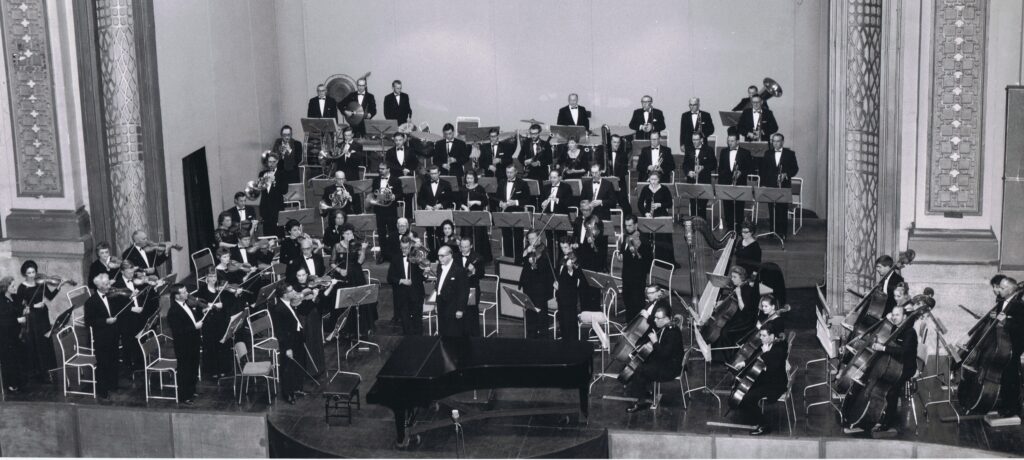
The West Australian Symphony Orchestra (WASO) is the state orchestra of Western Australia, based in Perth.
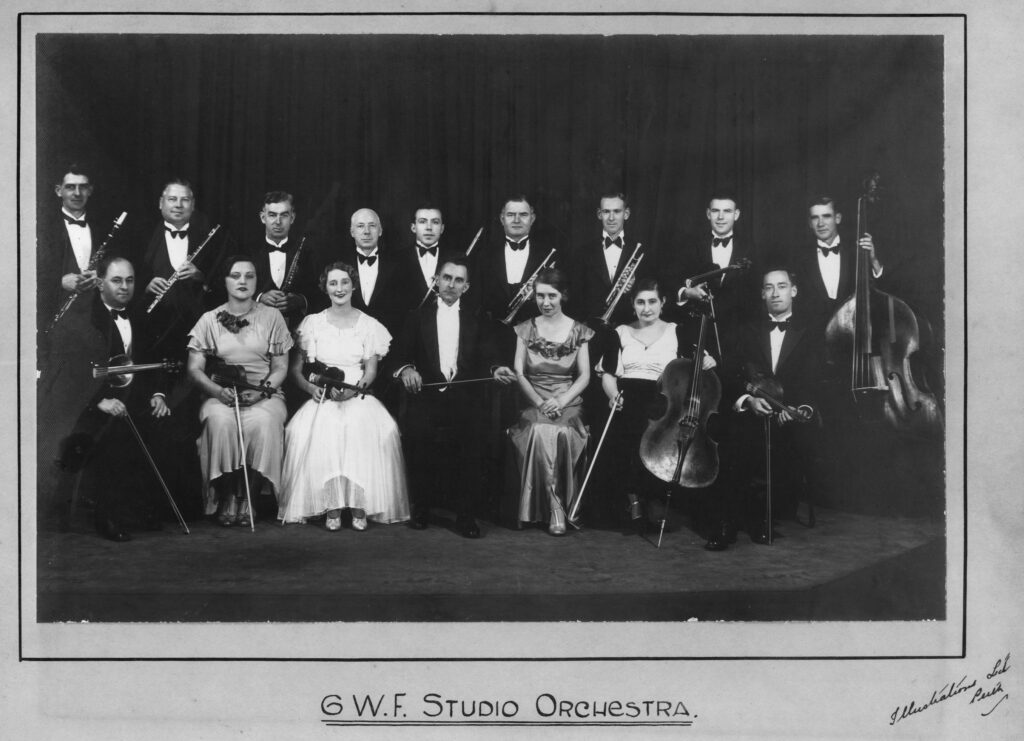
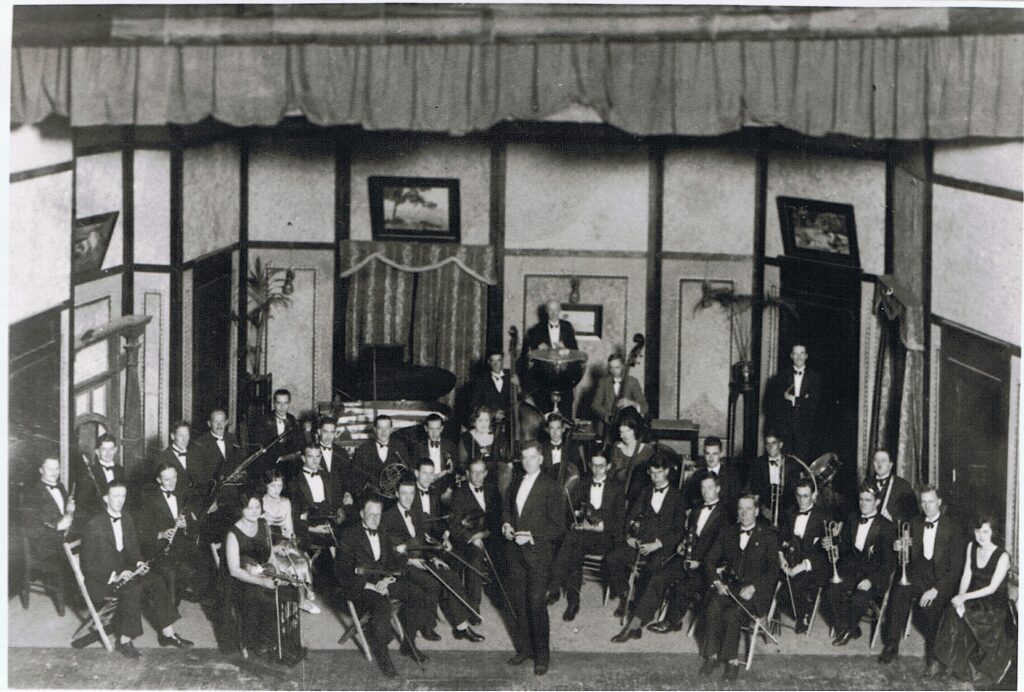
The West Australian Symphony Orchestra (WASO), originally known as the Perth Symphony Orchestra, enjoyed a year of life under the baton of Harold Betteridge in 1921, was reformed in 1928 by Harold Newton (16 September 1928 with a performance at The Queens Hall on William Street) and reconstituted in 1936.
When the Australian Broadcasting Commission introduced its Australia wide celebrity concerts for the first time, musicians in this Orchestra were paid a wage not contingent on concert takings. As a result of this ABC policy, the Orchestra experienced invaluable exposure to prestigious overseas conductors and soloists.
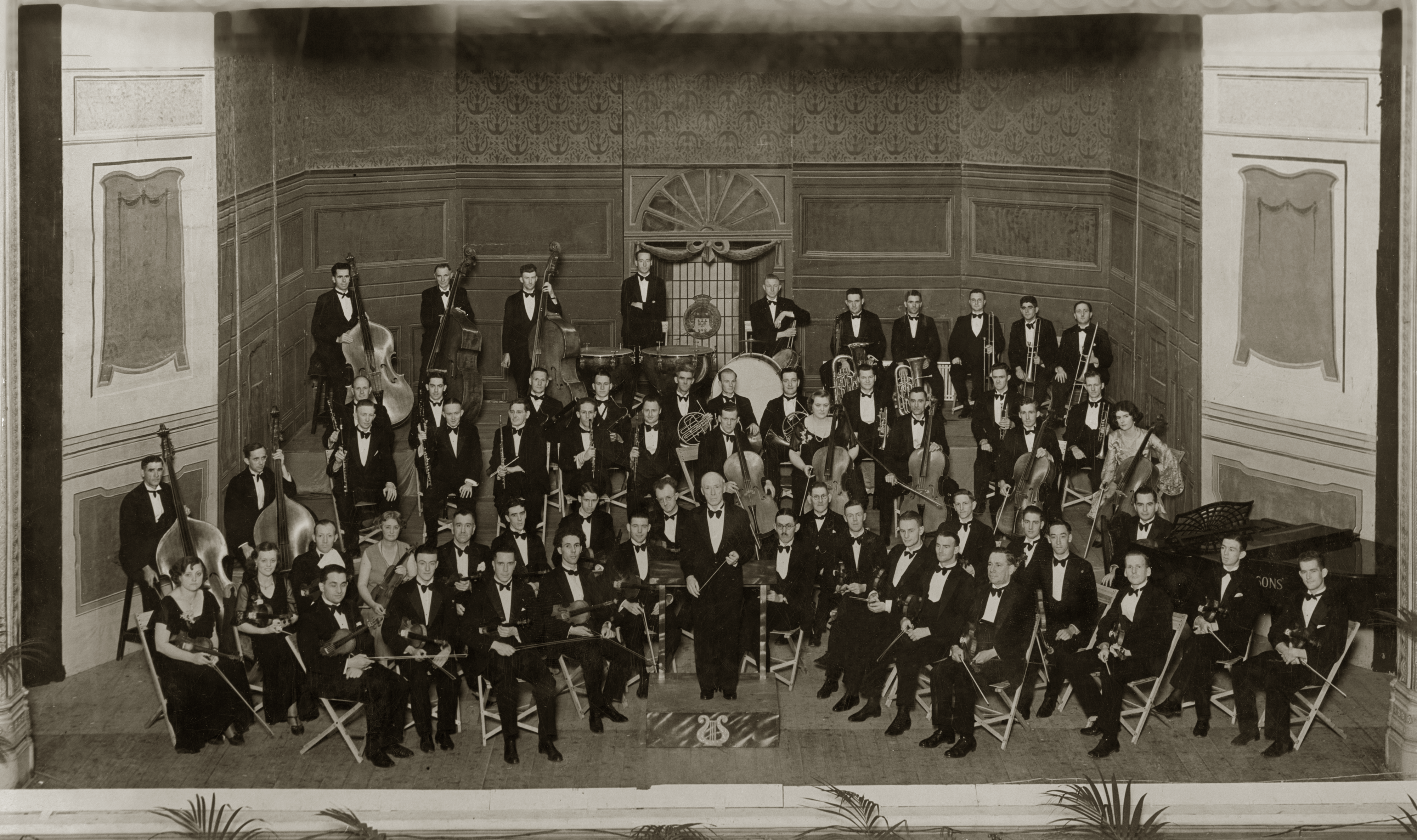
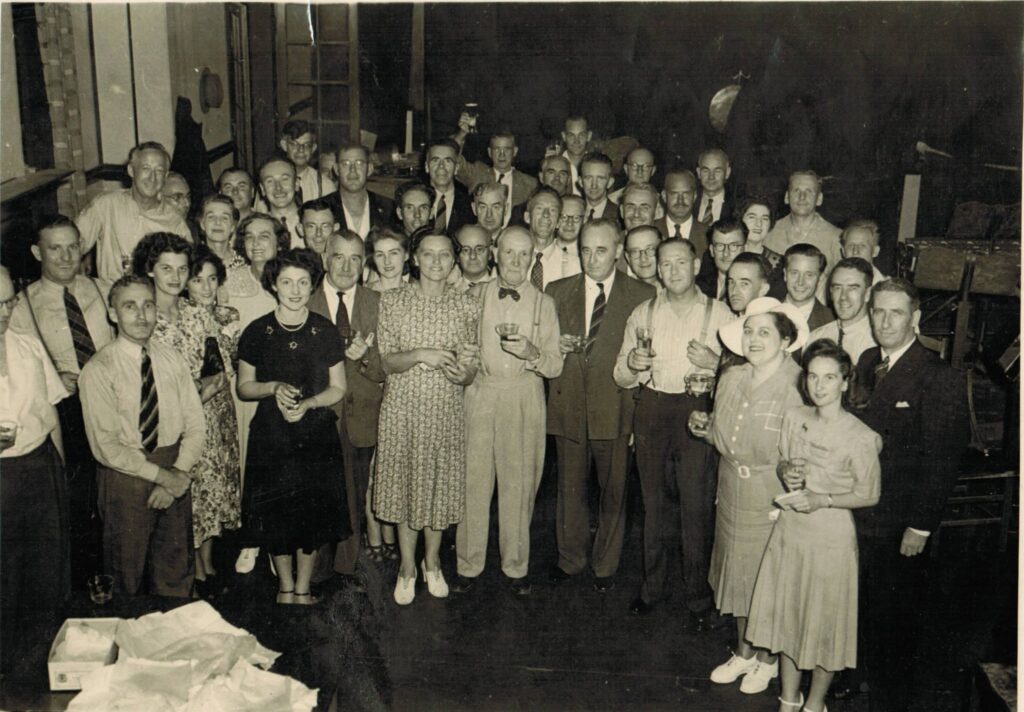
In 1950 a grant of £5000 from the W.A. government and smaller amounts from Perth City Council and other municipal authorities enabled orchestral musicians to increase to 40 (in these early days the orchestra still had to rely on the addition of casual players who, although trained musicians, often had other professions or trades).
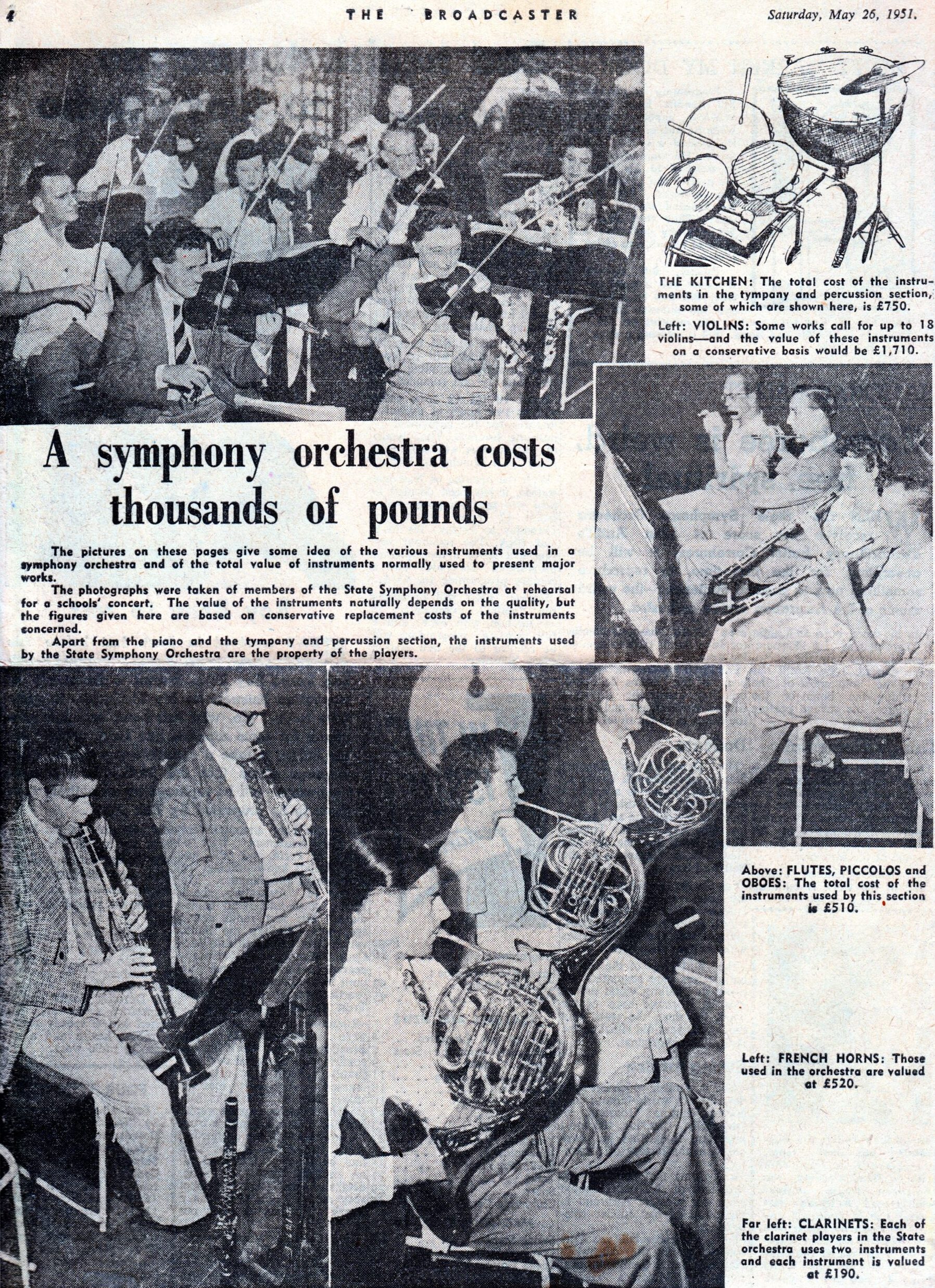
The Perth Symphony Orchestra became known as the West Australian Symphony Orchestra which made its debut on 6 January 1951 at a concert conducted by Rudolph Pekarek in the Somerville Auditorium.
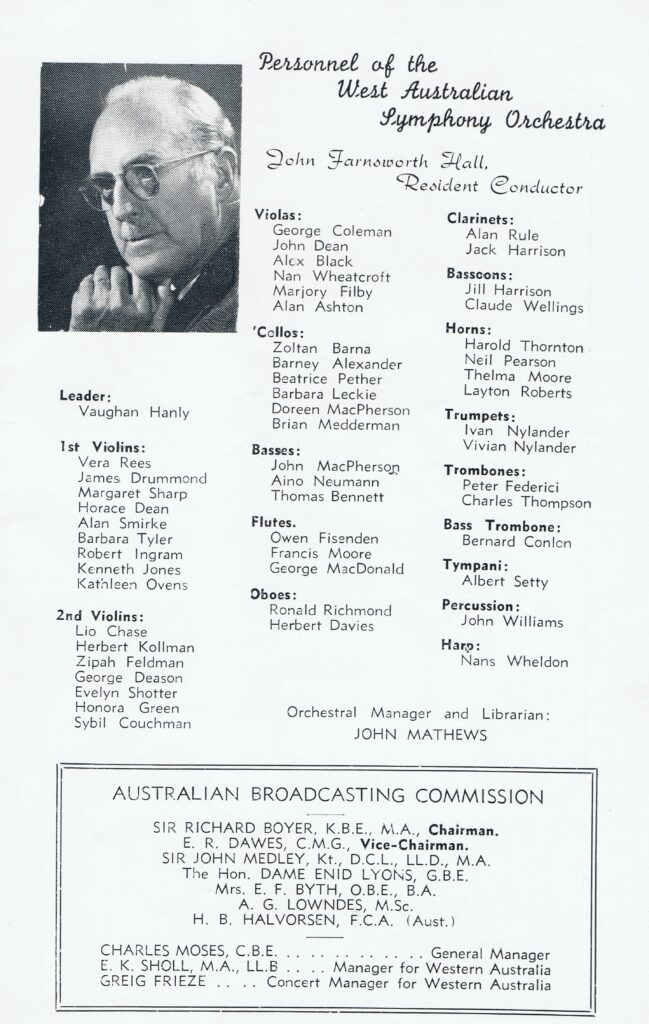
In addition to ABC studio commitments, during 1953 the Orchestra gave 40 public concerts catering for specific age groups in metropolitan and country areas. John Farnsworth Hall was appointed resident conductor from 1954 until 1964. Repertoire was governed by orchestral size and broadcasting obligations and centred around music from the classical and romantic periods with the occasional foray into the 20th century.
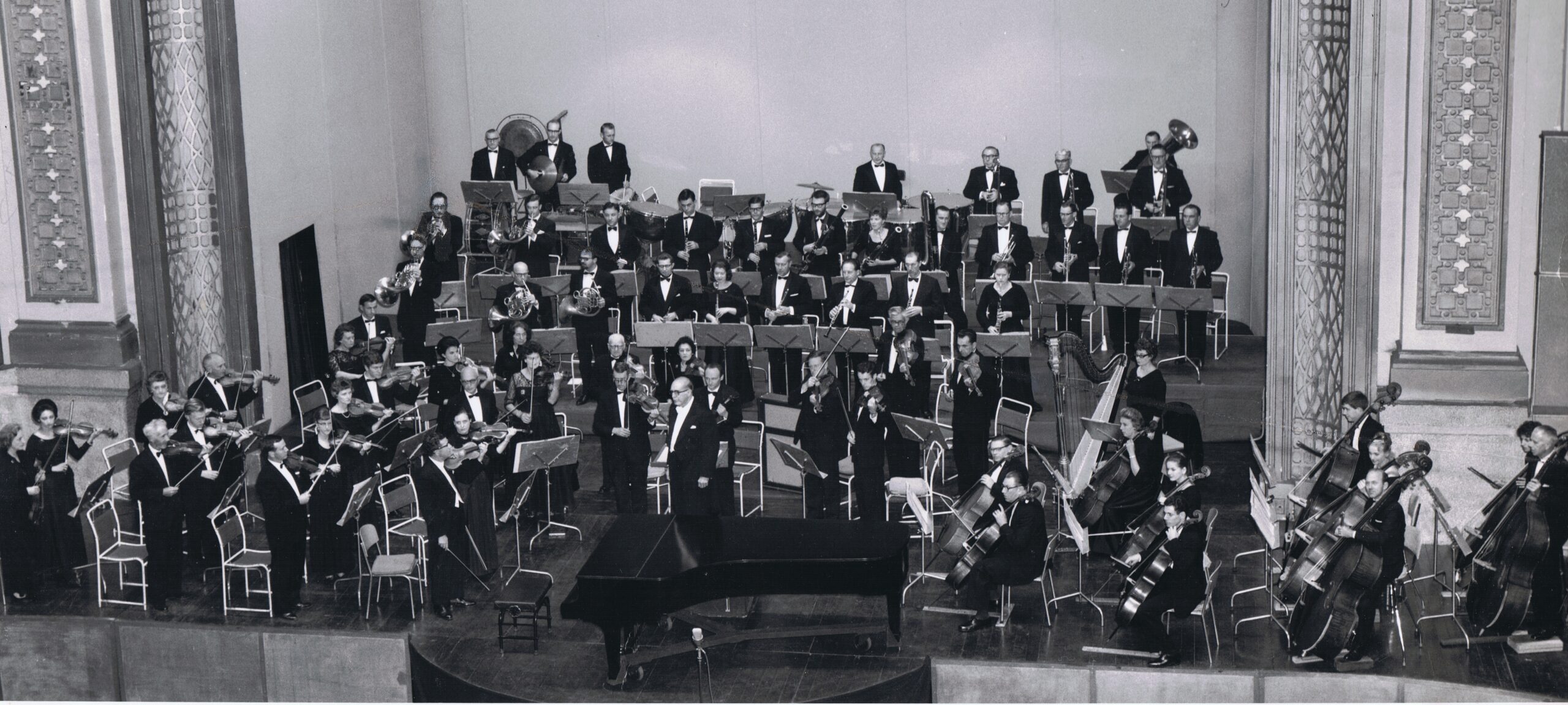
Audience numbers fell when, due to the sale of the Capitol Theatre in 1966, concerts given by WASO’s 50 permanent members were held in Winthrop Hall.
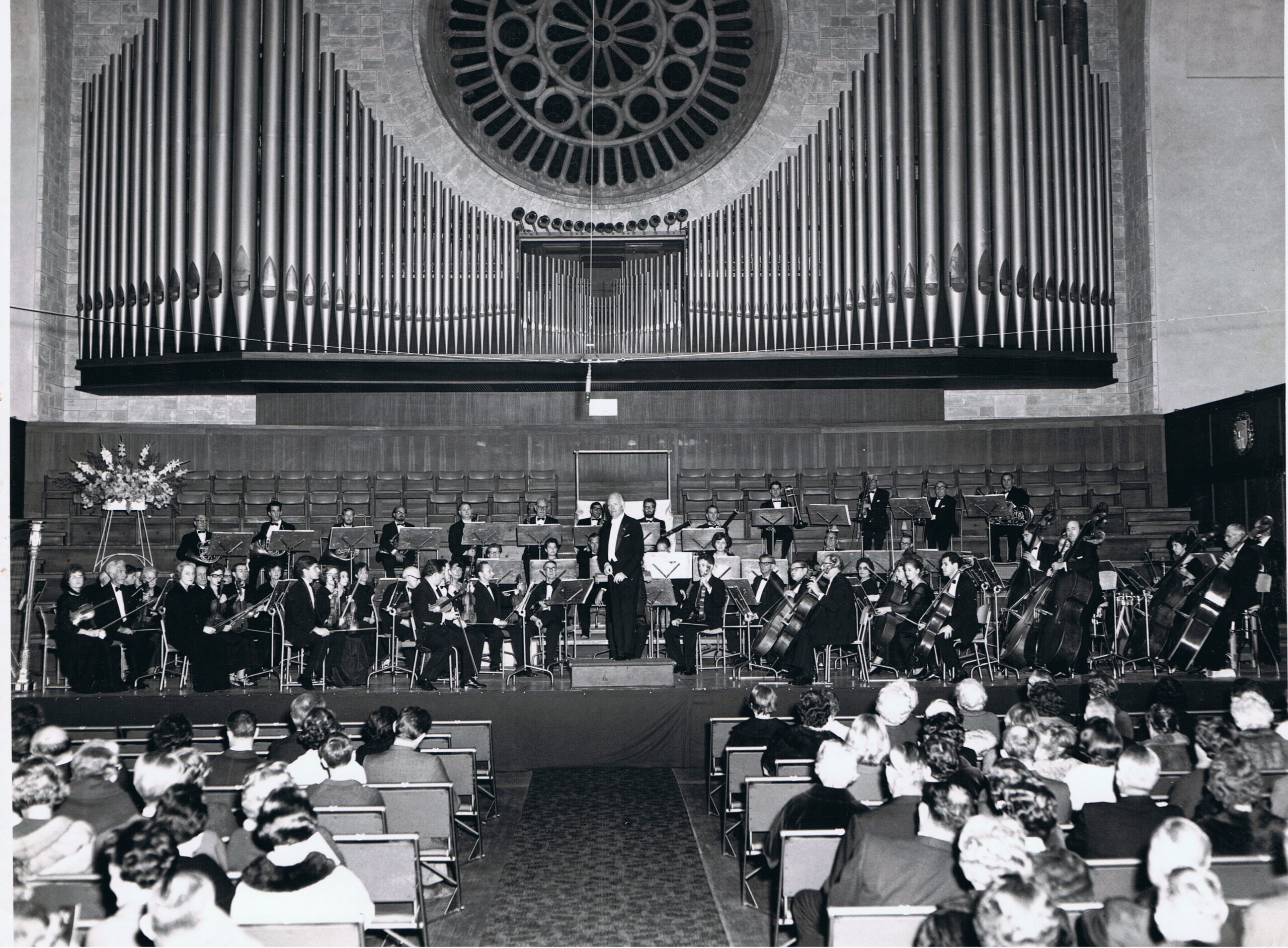
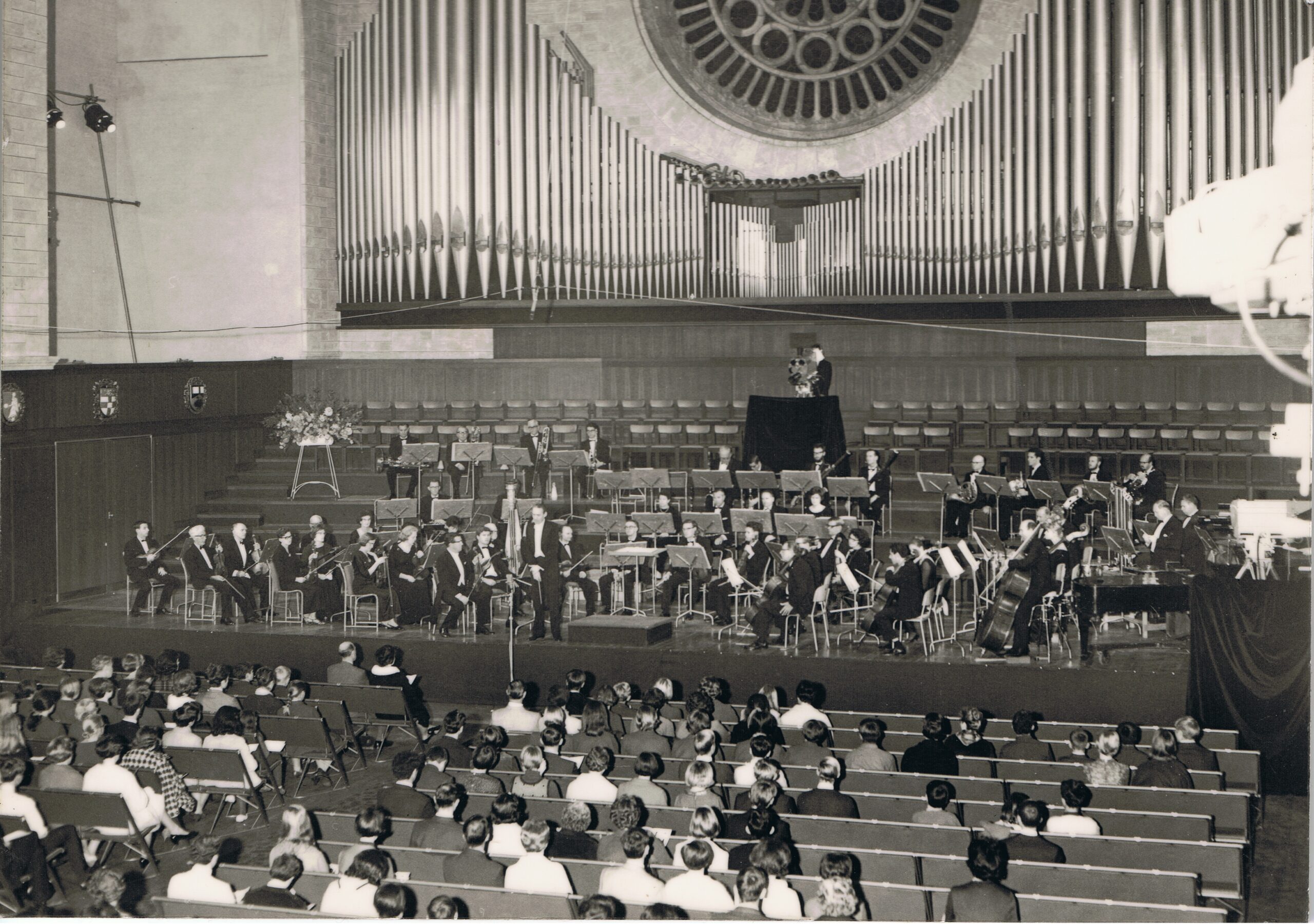
However, the Perth Concert Hall, completed in 1973, attracted capacity houses. The Adelaide Symphony Orchestra joined WASO for the opening concert, presided over by chief conductor Tibor Paul.
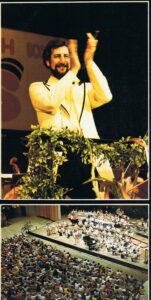 His untimely death later that year gave rise to the appointment of David Measham, whose prom concerts given in the Perth Entertainment Centre, attracted huge audiences (19,000 patrons over three nights in 1980).
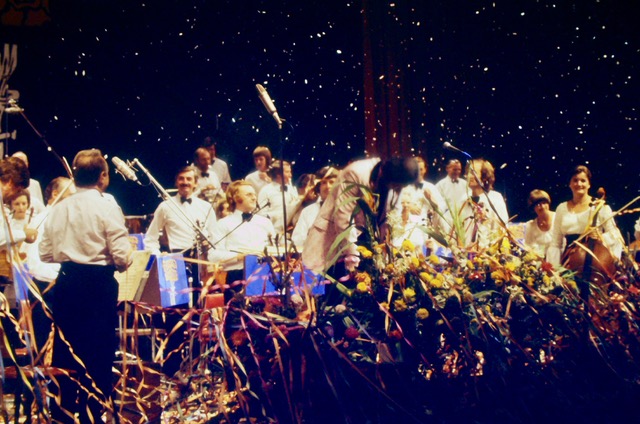
The extension of repertoire into more popular styles caused a period of instability within the Orchestra, but later became accepted as an essential part of its work. George Ermolenko Senior was concertmaster for a brief time in the late 1970s; Robert Cooper was appointed to this position in 1981.
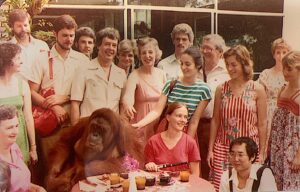
In 1983 the orchestra of 65 permanent members undertook its first overseas trip to Singapore.
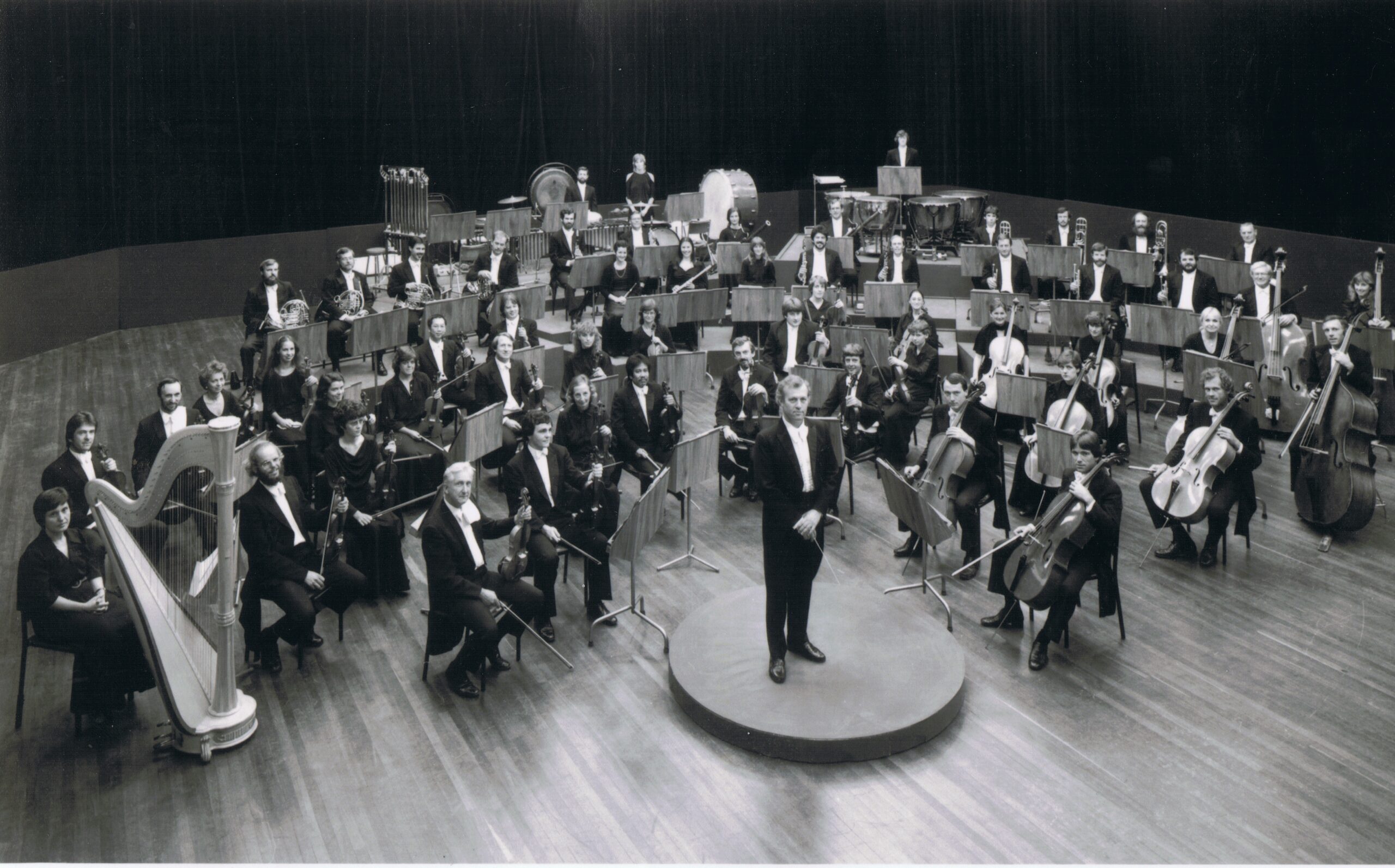
As early as 1979, a national committee headed by Alex Dix recommended that a new body known as Music Australia be created to take over concert and orchestral management from the ABC, with the administration of the symphony orchestras to take place at a local level. Although these proposals were rejected in 1982, in 1985 another committee cheered by Ken Tribe recommended all ABC Symphony Orchestras should divert to local ownership. Using the Tribe Report guidelines, the national scene was localised by a committee chaired by Robert Vickery. Federal funding was channelled through a body called Symphony Australia. Significant changes resulted from these inquiries. WASO amalgamated with the W.A. Arts Orchestra in 1989 and expanded its role to include playing for the local opera and ballet companies.
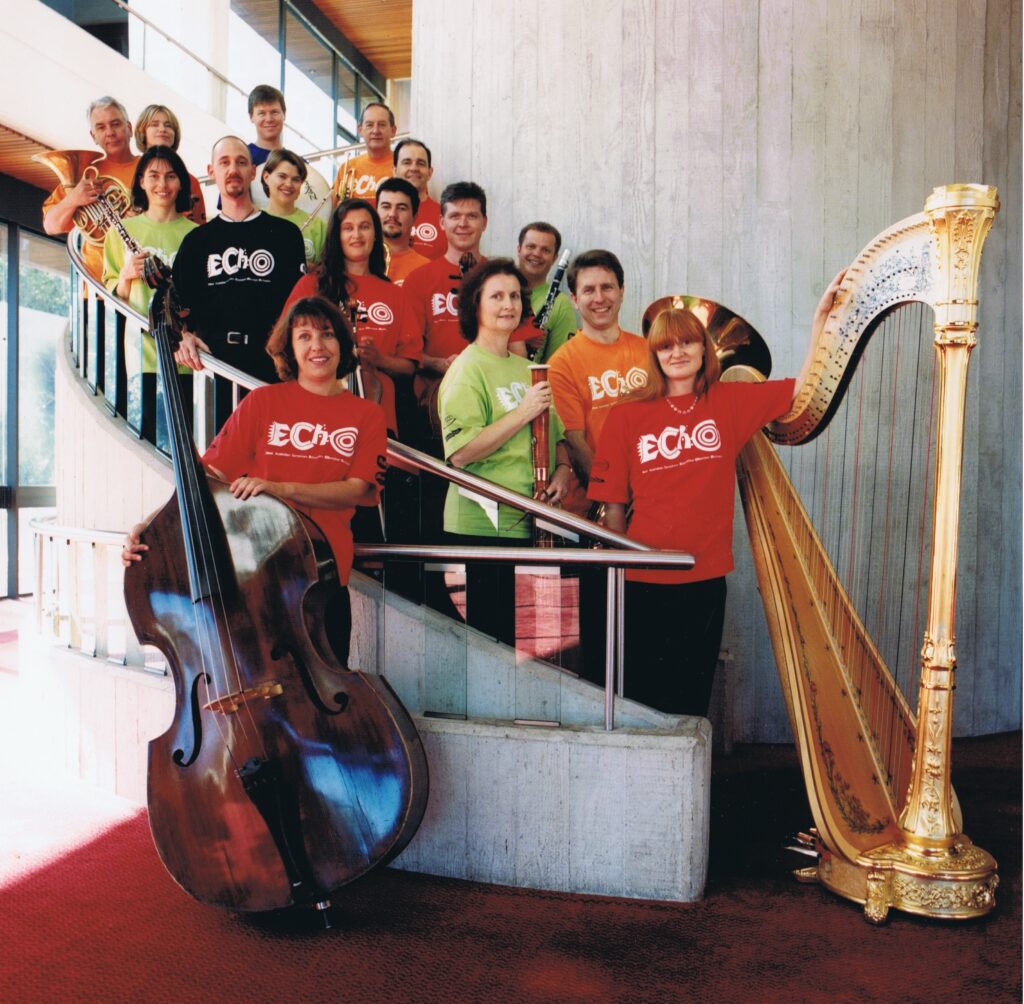
The formation from WASO members of the Education CHamber Orchestra – EChO – in 1995 enabled classical music to be heard in remote areas of the state.
Jorge Mester, Vernon Hanley and Vladimir Verbitsky were the chief conductors during this period, Ashley Arbuckle the concertmaster. WASO toured to Melbourne and Sydney in 1997.
The most dramatic organisational change came in 1998. The Orchestra divested from the ABC and became a corporate body with its own Board of Management. Although funding still came from the federal and state governments, program enhancement relied increasingly on corporate sponsorship.
In the 21st century, this enlarged body of 83 musicians with concertmaster Daniel Kossov (2002 to 2004) and John Harding (from 2005) produced world class performances from a comprehensive repertoire.
Matthias Bamert was appointed resident conductor in 2003 and remained in that position until the Orchestra’s tour of China in 2006 which was timed to coincide with the first Western Australian shipment of liquified natural gas to that country.
Historical Encyclopedia of Western Australia, Edited by Jenny Gregory and Jan Gothard, 2009, University of Western Australia Press, page 919.
In 2003 WASO celebrated 75 years with a gala concert and the publication of Marcia Harrison‘s “West Australian Symphony Orchestra – Celebrating 75 Years”.
Principal conductors
- 1951–1954: Rudolf Pekarek
- 1955–1965: John Farnsworth Hall
- 1965–1970: Thomas Mayer
- 1971–1973: Tibor Paul
- 1975–1981: David Measham
- 1982–1985: Albert Rosen
- 1991–1993: Jorge Mester
- 1994–1997: Vernon Handley
- 2003–2006: Matthias Bamert
- 2009–2013: Paul Daniel
- 2014: Asher Fisch