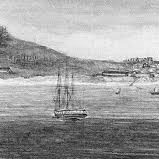
BRANSCOMBE
Branscombe is a small town in the county of Devon. The South West of England is steeped in the romance of smugglers, wreckers and pirates whose colourful exploits inspired writers like Robert Louis Stevenson and Daphne de Maurier. Situated on the English Channel, Branscombe boasts one of the oldest Smithies in the country, having been working since the 15th century. Looking back from the sea across the valley is the Great Seaside Farm dating from the 14th century and in the village centre is St Winifred’s Church with its late-Norman tower.
Barley, P et al, Book of British Villages, p. 419.
For at least 200 years from the late 12th century, all Branscombes and their descendants appear to be related to a single family which lived at Edge Barton in Branscombe Parish, Devon. Apparently the house survives, although there is little of the fabric of the original manor house visible.
The following has been compiled based on research on Ancestry based on source documents and DNA results:
BRANSCOMBE. Sarah, b. 1797/1802
- 1st 1833 Thomas REES
- 2nd 1836 Thomas HENSHAW.
Reference: The Bicentennial Dictionary of Western Australians
The Swan River Colony 1832 Census records states Sarah Branscombe was a servant from Devonshire.
When married to Thomas Henshaw on 14th September 1836 it states that Sarah was born in 1806.
Based on these facts and my DNA match with her sister Ann BRANSCOMBE, it might be concluded that Sarah Branscombe was the daughter of Charles Thomas (born July 1772) and Sarah (née Hellier) married on 16 January 1799 in Ottery St Mary, Devon.
| 16/01/1799 | Charles | BRANSOMBE | Ottery St Mary | Sarah | HELLIER |
Her sister Ann Branscombe was baptised on 18th April 1802 in Venn Ottery, Devon and the 1851 England Census records her as aged 48. Devon, England, Church of England Baptisms, Marriages and Burials, 1538-1812 record that a Sarah Branscombe was born the 29th July 1805 and baptized on 25th Dec 1805 in Ottery St Mary, Devon, England.
Ann and Sarah’s father Charles Thomas BRANSCOMBE was born in July 1772 in Ottery St Mary, Devon to Peter BRANSCOMBE (27) and Ann DAVIES (27).
Charles Thomas Branscombe married Sarah HELLIER on 16 January 1799 in Ottery St Mary, Devon.
| 16/01/1799 | Charles | BRANSOMBE | Ottery St Mary | Sarah | HELLIER |
(There is a strong Hellier family history in Ottery St Mary which is still linked up to the time of writing.) Children of SAMUEL HELLIER and HANNAH CARPENTER are:
| i. | SARAH4 HELLIER8, b. c. March 1770, Ottery St. Mary, Devon, England; d. Unknown; m. CHARLES BRANSCOMBE8, 16 January 1799, Venn Ottery, Devon, England8; d. Unknown. |
| More About SARAH HELLIER: Christening: 24 March 1770, Ottery St. Mary, Devon, England8 |
| More About CHARLES BRANSCOMBE and SARAH HELLIER: Marriage: 16 January 1799, Venn Ottery, Devon, England8 |
https://www.genealogy.com/ftm/w/i/l/Sharen-Williams-PA/GENE6-0003.html
Venn Ottery
The parish of Venn Ottery lies in eastern Devon not too far from its English Channel coastline. Venn Ottery is located about 3 miles south of the small market town of Ottery St Mary and as both names suggests it lies on the western banks of the River Otter. Venn Ottery sits, in lanes, about a mile north of the A3052 road which connects Exeter with Lyme Regis in Dorset and which forms the coastal road for this area of Devon, albeit well back from the strongly undulating coastline. Venn Ottery is a small and compact village sitting in a shallow side valley of the Otter. The economy of this region would have been dominated by pastoral farming interspersed with orchards for cider and perry, the parish was, however, described as being almost 1/3 “common or waste”. The Otter drains the parish the short distance south to the English Channel meeting the latter at Budleigh Salterton. Venn Ottery is sited at around 40 metres above the sea on strongly rising ground, local heights of almost 160 metres are reached on nearby Aylesbeare Common. Venn Ottery parish was one of the smaller in the area, it covered only just 900 acres and would have supported just over 100 parishioners.
http://www.tinstaafl.co.uk/eandwhmi/devon/church%20pages/venn_ottery.htm
Charles Branscombe died in July 1842 in Tiverton, Devon, at the age of 70, and was buried in Willand, Devon. His wife Sarah (nee Hellier) died March 1848 in Tiverton aged 72.
SARAH BRANSCOMBE
The reasons for Sarah coming to Perth are unknown, but she likely came as part of the early British settlement seeking opportunity or a better life, as it was a new, ambitious colony founded for free settlers but struggling to attract people, with many early arrivals being soldiers or professionals. People often migrated to Australia for economic reasons, adventure, or to escape conditions in Britain. As a young lady from a working class background, perhaps it appealed to Sarah to travel to the new colony with the promise of employment, meals and independence.
John Septimus Roe arrived in Perth in June 1829 on the Parmelia and began preliminary surveys from a tent camp obeying the instructions of Governor Stirling. When he began planning Perth, it was roughly high land to the west (King’s Park), mudflats to the east, the Swan River to the south and swamps and lakes to the north. Along the muddy foreshore small groups of aboriginals clad in their kangaroo-skin cloaks spent much of their time spearing cobblers. Boys from the Perth Boys’ School in St George’s Terrace caught gilgies in the millpond situated just behind it. The streets were unpaved and were not even gravelled, sand in summer, mud in winter. People lived largely in tents as only the wealthy could afford to build houses.
A.E.Williams, p 88.
1831
Sarah Branscombe sailed with Charlotte Duffield and her children (Samuel Bidgood, John Hole Jnr, Charles and Lydia Charlotte) who arrived to join John Hole Duffield Snr who had arrived earlier on the Warrior. Mrs Duffield travelled from Exeter (In 1830, travelling from Exeter to Branscombe meant using horse-drawn coaches or private transport along rough roads, likely via Honiton, taking a day’s journey to cover the 20 miles) to join her husband who had sailed earlier to the Swan River Colony in the Eliza.
Egyptian
The Duffield family, Sarah Branscombe and Thomas Rees all departed London on board the Egyptian.
The ship Egyptian, under Captain W. Lilburn, arrived in the Swan River Colony (Perth/Fremantle) on December 28, 1831, from London, bringing around 65 passengers, including notable arrivals like the Duffield family and Alexander Anderson and his family, marking a significant arrival for the early colony, though no full passenger list for this specific trip survives.
- Notable Passengers: Charlotte Duffield and her children (Samuel Bidgood, John Hole Jnr, Charles, Lydia Charlotte) arrived to join John Hole Duffield (who arrived earlier on the Warrior). Alexander Anderson and his family were also on board.
- Significance: The Egyptian had previously arrived in the colony in February 1830, but this December 1831 voyage brought more settlers to the burgeoning Swan River Colony.
It was likely a long voyage, as early colonial ships from England took months (around 100-150+ days), depending on the specific vessel, route (with stops at ports like Rio or Cape Town), and weather, with voyages often being unpredictable.
The diary of John Morrell details his voyage as taking 5 months.
For the rest, the story is just one of a man sufficiently adventurous at fifty to leave Old England and face in Western Australia the perils and difficulties common to other early colonists. Little did John Morrell think when he left London on the first of September 1830, that he would shortly have to face a mutiny at sea, take his hand on the pumps with his fellow passengers for ten hours at a stretch during a storm, suffer the loss of his wife within a year of setting foot in the colony, and finally lay down his life for a friend.
As soon as the occupants of the coach, Mr. and Mrs John Morrell, two of their, children, Frederick and Anne, reached the Rambler they made arrangements for their trip to the Cape. On the following day the Rambler weighed anchor and then sailed along the south coast of England until Ryde (Isle of Wight) was reached. Here they were delayed over three weeks by storms and adverse winds. It was not until the fifth week of their voyage that they assembled on deck to bid good-bye to old England; the Lizard lighthouse dipped below the horizon, and the brig sailed on to the brave new world. By a happy coincidence Table Mountain, came into view on Christmas Day, and the Rambler anchored in Table Bay, bringing to a close the first stage of the voyage. During the stay at Cape Town arrangements were made with the captain of the Eliza to take them on to the Swan River Settlement. Here also Morrell met his son John, a lad of about eighteen, and together they purchased vines, trees, potatoes etc, for their future farm. John however, remained at the Cape and came later to Fremantle.
The voyage ended in about February, 1831, when the Eliza fouled a sandbank near Clarence, about 13 miles south of Fremantle. The landing was made in small boats, which were brought as close as possible to the shore, and then the women and children were carried while the men and boys waded. A picture springs to our mind of John Morrell standing on the white beach, casting perchance a regretful glance out to sea to the Eliza, and then looking to the wind-blown trees and low bushes that girt the land of his choice.
Around late December 1831, Sarah Branscombe conceived a child which may have occurred late in the voyage or shortly after arriving in the Swan River Colony. I can’t imagine the fear of this 26 year old single woman falling pregnant with no family to support her in a foreign, hot and challenging environment.
Having discovered the Duffield house had not been completed, there may have been no room for Sarah. Being very much in need of a servant, Sarah became a maid with the Morrell family as recorded in the 1.7.1832 census[3].
BERRYMAN, Ian, A Colony detailed: the first census of Western Australia, (Perth: Creative Research, 1979. [312.09941 BER])
A detailed analysis of the 1832 census, giving a numerical listing, an alphabetical listing and notes on the people therein.
The Morrell diary gives their living conditions from when they arrived in Perth in 1831 prior to moving to York:
At the spot where they landed was a small well, and nearby they erected a shack in which they lived for about four months. Then the Morrells shifted into Fremantle, where they were joined in January, 1832, by Richard the eldest son, who had just come out from England. In a letter written shortly after his arrival, Richard, then a young man of 23, admits that the Morrells had not done much in the way of cultivation, but “have at tended mostly to building.” Both John Morrell and Richard were carpenters, and their services would be much in demand in the infant colony. Richard mentions, however, that they did have a small spot of ground cultivated and fenced within half a mile of Fremantle. This appears to have been planted on the site of the Town Hall, and its area was three acres. The plot was sown in wheat and barley, and, according to Richard, looked well; from another source we learn that it did not turn out as well as expected. Another and larger area of ten acres was planted in the neighbourhood of the Karrakatta Cemetery. “I think,” said Richard Morrell in 1832, “that we shall begin to cultivate some land when ours is measured out.”
“Annie Morrell’s mother was known throughout the huge family as ‘Big Grandma’. She was born Susannah Summerland in 1822 to a Quaker family in Lancashire, Britain. With her parents and eight brothers and sisters she arrived in the fledgling colony of Western Australia in May 1830 aboard a small sailing ship called the James. Just over a year later the Morrell family also arrived, in another small sailing ship, the Eliza. John Morrell… aimed to be farmers, and, after two or three attempts on the coastal strip around Fremantle, they decided to go further inland.
Morrell set out from Fremantle with a bullock-drawn dray, and, after leaving Guildford, followed the cart track to York. After this Morrell would be forced to cut his own track along the Avon to Northam; which was reached on July 11, 1832. Sarah endured these travelling conditions pregnant and possibly whilst performing the duties of a maid.
1832
On 18th September 1832 Sarah gave birth to an illegitimate daughter ELIZABETH only a few weeks before the death of the ailing Mrs Ann Morrell (at age 43) so the previous months must have been a trying time for the household. John’s wife, Ann Morrell died of cancer and is buried in Fremantle Cemetery (Grave AA 1669).
A record of early baptisms held in Battye Library mentions the baptism by Reverand J.B. Wittenoom, Colonial Chaplain, of Elizabeth the daughter of Sarah Branscombe on 8th October 1832 – the very day Ann Morrell was buried. The chaplain was stationed in Perth and it seems that while in Fremantle to conduct the burial service, he may have found it convenient to perform a baptism at the same house.
In the 1832 census of the colony the total population numbered about 1400 people – Sarah Branscombe was in Fremantle, while George Rees was a fisherman on Rottnest Island. As there was only one person with the name Rees in the census, we assume this to be the same person as Thomas. Oddly, in the family bible of Henry Edward Russell (Elizabeth’s future husband) is a comment that Elizabeth’s father was “a merchant in Perth”. There is no evidence that Thomas ever became a merchant but the fact remains that Thomas Rees was acknowledged as Elizabeth’s father upon her marriage.
In August 1832 Governor Stirling left for England in H.M.S. Sulphur taking with him these Census records as at 30th June. The colony was then scarcely three years old. At this time Fremantle is described as “only a small camp set among the sandhills and grasstrees”. Williams, A.E., Western Australia A Potted History 1616-1870s, p.73
The population of Fremantle according to the 1832 Census was 364. Perth’s population was only 390 and the entire population of the State was probably no more than 1500.
1833
The Colonial Chaplain’s services were required again when Sarah was married on 24th April 1833 to THOMAS GEORGE REES (sometime misspelt Reece but Rees in the Bicentennial Dictionary of Western Australians) both of Fremantle.
Thomas Rees’ paternity of Elizabeth was confirmed in 2025 when a DNA match came through Thomas’s sister Bridget Rees, born on 20 December 1796 in Llangendeirne, Carmarthenshire, Wales to Rees Rees aged 35, and her mother, Anne Walter.
REES
When Rees Rees was born in 1761, in Llangendeirne, Carmarthenshire, Wales, his father, John William Rees, was 31 and his mother, Ann Hannah Lewis, was 27.
He married Anne Walter on 12 January 1785, in Llangendeirne, Carmarthenshire, Wales, United Kingdom. They were the parents of at least 5 sons and 7 daughters. He lived in Llangendeirne, Carmarthenshire, Wales, United Kingdom in 1841. He died on 14 July 1844, in Kidwelly, Carmarthenshire, Wales, United Kingdom, at the age of 83, and was buried in Llangendeirne, Carmarthenshire, Wales, United Kingdom.
https://ancestors.familysearch.org/en/LDLM-WS8/rees-rees-1761-1844
Thomas Rees is recorded as having recovered the Challenger Buoy. The “Challenger Buoy” was a vital navigation marker in the entrance to Cockburn Sound, near Fremantle, in the early days of the Swan River Colony. It became a topic of discussion in December 1833 and June 1834 when it repeatedly broke adrift from its moorings during gales, posing a hazard to shipping.
Details of the Buoy’s Recovery
- Purpose: The buoy, along with the Stags’ and Mid beacons, marked the safe channel into Cockburn Sound, a natural anchorage south of Fremantle.
- The Incident: Newspaper articles from the era reported that strong gales caused the buoy to break free, leaving only the beacons for navigation.
- The Recoverer: A local boatman and fisherman named Thomas George Rees (1801-1834) was specifically recorded as having recovered the “Challenger Buoy”.
THE CHALLENGER BUOY, painted black, is moored in 6 fathoms water, about 25 yards to the N. E. of the Challenger rock, which is nearly awash, and is situated near the North-western termination of Sea Reef, extending a mile and a quarter in a N. W. direction from the N. W. point of Garden Island. This buoy is visible from a ship’s deck, through a spy glass, at the distance of 5 or 6 miles, and is a principal object to be made out by a ship approaching the channel between Carnac and Garden Islands.
The Perth Gazette and Western Australian Journal (WA : 1833 – 1847) Sat 21 Dec 1833 P. 202
THE WESTERN AUSTRALIAN JOURNAL
WRECK OF THE CUMBERLAND
Sarah was widowed 15 months later on 28th August 1834 when Thomas Rees drowned as the ship CUMBERLAND of which he was a crew member, was blown ashore in a gale at Mangles Bay (Garden Island) south of Fremantle.
The cutter “Cumberland”, carrying cargo for the Bussell family, left Fremantle on 28th August 1834 bound for the South-West of Western Australia. During a sudden violent storm, Captain James McDermott and the crew of three could not stop the vessel from being broken up on the reef off Point Peron, WA. There were no survivors. Seven men were charged with robbing and looting. The wrecking of the “Cumberland” did not become public knowledge until one year after the sinking.
With acknowledgement to the Busselton Family History Soc.Inc. “Busgen” Bulletin May 2002.
WRECK OF THE CUMBERLAND.
The Cumberland left this for Port Augusta on the 28th of August last. No tidings of the vessel having been obtained, a general opinion prevailed that she had foundered at sea, confirmed by the circumstance of our having been visited by a severe north wester on the afternoon of the day she sailed. So strong was this impression, that no steps were taken to examine the coast, and the vessel, with her cargo and souls on board, were given up as a total loss; providentially, however, a discovery has recently been made, which is likely to lead to the restoration of much of the property, as well as the exposure of a most villainous and systematic robbery of the wreck which, it now appears was found about the first week, in October, near Mangles-Bay, the south end of Garden island.
29/08/1834. The Perth Gazette and Western Australian Journal (WA : 1833-1847) http://nla.gov.au/nla.news-article641115
“in regards to the bodies, Cousins says they found one, but it was so far decomposed, that the head dropped from it on their touching it. They supposed it to be the remains of REES, a sailor who it is known had lost a finger from one hand, the skeleton having one finger short”.
JOHN MORRELL
John Morrell was settling himself in Northam at the time of Thomas’s death and no records can be found how Sarah fared at this time and it is possible that she was unemployed with the two year old Elizabeth.
In 1934 John Morrell remarried two years after Ann’s death and pressed on with his plan. Eventually, he and his family arrived at the confluence of the Avon and Mortlock rivers and took up a land grant of 4600 acres. By 1836, John Morrell had built Morby Cottage, a good-size house with framed and glazed windows and a snug fireplace, on the northern side of the present township of Northam. After clearing the scrub nearby, the family was soon ploughing rich river land.
Founder of Northam. (By “Phoenix.”)
Although the story of John Morrell is typical of all pioneers in the Northam district, it has one point of difference. He was first. Morrell took up the first farm, built the first farmhouse, turned the first sod, imported the first livestock to the district, and sent the first farm produce to Perth. The Northam district, indeed the whole of the Avon Valley, had been discovered by the energetic Ensign Dale. To the enthusiasm of this explorer the early settlement of the Avon Valley must be largely attributed. It is not likely that all the settlers visited the Avon to select their land, and it is also improbable that the land was marked out before settlement. After Morrell’s goods and chattels were itemised and assessed, he was directed, we imagine, to take up an area of about 4,500 acres at a distance of about 25 miles down the Avon from Mount Bakewell. In July, 1832, Morrell set out from Fremantle with a bullock-drawn dray, and, after leaving Guildford, followed the cart track to York. After this Morrell would be forced to cut his own track along the Avon to Northam; which was reached on July 11, 1832. It is firmly in the minds of some of his descendants that Morrell used to say he made the first cart track to Northam. As likely as not, Morrell, after his arrival, erected a temporary shack, and then set to work to plant the vines, trees, and potatoes he had bought at Cape Town. Later he selected the slopes of Doctor’s Hill for the site of his farm house, and here was erected a permanent home, Morby Farm, which to-day stands a monument to Morrell’s skill in building from the crudest of materials. As far as is known, Morrell brought no livestock to the colony, but he had arranged with William Chidlow, an agriculturist of some experience, to buy livestock and bring it out. Before Chidlow’s arrival in the colony, in about 1834, Morrell had erected the fences necessary for the folds. Morrell then left Northam and went to Perth, where he assisted in the erection of some of its earliest buildings. Chidlow carried on in his absence at Northam, and was able to send some butter to Perth in 1835. But Morrell’s Morby Farm has a greater claim to importance than just being the pioneer farm of the district. It was the centre from which old Northam developed; it was Northam’s first school and first church, and maybe the first flour was ground there, and the first butter and cheese prepared. The school at Morby Farm was a private one, and the first teacher James Knight. The first church services were conducted by the Rev. Harper, of Toodyay, who used to pay periodical visits. The flour was ground in the mill erected at Morby Farm by Frederick Morrell, who was assisted by advice given by Lockyer. A cheese press was among the goods brought by Morrell from England, and with it good quality cheese was made at Morby Farm. Before the erection of fences all classes of stock were shepherded-driven each day to the pastures and folded each night. In 1837 Peter Chidlow, Edward Jones and another man were shepherding sheep on the Avon between Northam and Katrine. After filling in the morning doing some clearing they sat down to lunch near a large granite outcrop. With alarming suddenness a spear thrown by a native struck Chidlow, who crumpled up. As soon as Jones and his mate realised that Chidlow was dead they fled for safety to the under growth along the Avon. Jones was killed with another spear and only one man was left to carry the tragic news to Morby Farm. Chidlow and Jones were buried on Doctor’s Hill and John Morrell was among the mourners at the graveside. No doubt the little community wondered whether this funeral would be the forerunner of others. Six years later John Morrell passed away, a second victim to a practical joke. In those days a higher price was paid for clean wool and graziers used to wash their sheep in the Avon before shearing. Suitable races were built in the Avon in places where the current was strong. The men from Morby Farm were engaged in this task of washing the woollies when a sudden burst of laughter announced that a man had been pushed in the river. The laughter died away when it was seen that he did not rise to the surface. Morrell plunged into the icy-cold water and was successful in locating the man and bringing him out. Unfortunately the rescued man contracted pneumonia and died a few days afterwards. It was at this funeral that Morrell indicated the place where he would like to be buried. It was a spot half-way up the wind-swept hill where a tree with pendant branches swept the ground. Strangely enough, the chill Morrell received from his plunge in the Avon also led to pneumonia and a fortnight later he died. In 1843 he was buried at the spot he had himself chosen and his four children were at the graveside. With the town he founded nestling in the smiling valley far below, with the blue waters of the Avon gleaming resplendently in brilliant sunlight, with the noise and clatter of commerce subdued with distance, this pioneer of Northam sleeps quietly on his chosen hill.
The West Australian 23rd September 1933
John Morrell, the founder of Northam, WA, is buried in a historic grave marked by a monument on the roadside verge at Gillett Road & Goomalling Road in Northam, with the actual burial spot now under the bitumen road. There is a brick monument, erected in 1929 and later restored by descendants, commemorating the first settler of the area who died in 1843 after rescuing a drowning man.
HENSHAW
HENSHAW. Thomas, b . 1807 (England) . d. 20. 9. 1888 (York) , arr. 12.10.1829 per Caroline. m. 14. 9.1836 (Frem) Sarab b . lS06 (Eng). widow of T. G. Rees . she arr. 1831 per Egyptian. Chd. Thomas b. 1837 (York) d . 1S44, Jane b. 1838 d . 1918. Thomas was indentured while in England to William Everard . Labourer at Guildford. Carter at York & labourer by l880s. Both semi- lit. CofE.
The Bicentennial Dictionary of Western Australians
1836
On 14.9.1836 Sarah Rees (nee Branscombe) was married again by Reverend Wittenoom to Thomas Henshaw – a boatman and fisherman in Fremantle. Henshaw was born about 1807 and arrived on 12th October 1829 per the Caroline as a servant indentured to William Everard, as was William Bashford from Tunbridge Wells.
| Bashford | William | Bachford | steerage | general servant for Everard | Tunbridge Wells, Eng |
The Caroline left St Katherine’s Dock in London on June 2 and pulled in near Worthing in Sussex on June 4 to load the rest of her cargo. She finally left England on June 6 arrived in the Swan River Colony on October 12, 1829 after stopping at Rio de Janeiro in Brazil on the way. She was reported to have carried 60 adult passengers. One child was born during the voyage and another was buried in Rio. The ‘ship’, which is sometimes referred to as a ‘brig’, was built at Cochin in India by John Crookenden and registered at the Port of Calcutta on November 21, 1825. In 1829 her owners were were William Chapman, a banker from Newcastle-upon-Tyne, and Eliot MacNaughten, a gentleman of Calcutta. Although many vessels of the time bore the name of Caroline as a sign of popular support for the Queen in her disputes with the much-disliked George IV; but Lloyd’s Register has established this vessel as the same one whose earlier story was told by Ida Marriott in ‘The Voyage of the Caroline from England to Van Diemen’s Land and Batavia in 1827-8’. Her captain for the homeward half of that voyage was James Fewson, who then took the three Henty brothers and their employees out to the Swan River on the next journey.
During May in 1829, ‘The Times’ of London ran the following advertisement in its shipping notices:
For the New Settlement at Swan River, and will touch at Rio Janeiro, the fast-sailing and newly coppered poop ship Caroline A1 burden 400 tons armed with carriage guns. This vessel has very superior accommodation for passengers, having seven feet between decks. The whole of the vessel being nearly engaged, such persons who may wish to avail themselves of this conveyance are required to make an early application to James Henty, Esq., West Tarring, Worthing, or 5 Arundel Street, Strand; Henry Dod and Son, Mark Lane, or to George Bishop, 28 Jewry St., Aldgate.
Thomas Henty’s three sons, James, Stephen and John, were being sent ahead to establish a new farming and pastoral life for the family in Western Australia. Prize Spanish merinos had been purchased and a whitesmith, carpenter, shepherds and stockmen were signed on. They were nearly all old employees of the family and came from West Tarring in Suffolk. They signed on to serve Thomas Henty, gentleman, or his agents, as dutiful servants for five years in return for a free passage, £20 a year, fuel and board.
Two sets of letters exist to tell the tale of the voyage and of life in the earliest years at the Swan. One set is in the Mitchell Library in New South Wales and holds letters from Henry Camfield who travelled as a cabin passenger. The other set of letters were written by James Henty and were found among family papers in England. Marney Bassett had access to the letters and referred to them in her book, ‘The Hentys‘.
Chartering a ship was an expensive business. ‘Charter parties’, or contracts, varied in their terms and even though there is no surviving record of the one between James Henty and the Caroline‘s owners, the ‘Brighton Cazette’ quoted a figure of £5 per ton a month. That would make a total bill of £7,000 for the hire of the ship from May to November. In contrast, the English Government piad $4.10s a ton a month to hire the Parmelia for its trip to the Swan River a few months earlier.
Everard left the Swan River Colony in March 1930, but Henshaw, released from his agreement, remained to become a farmer. Henshaw’s release from indenture meant he could get land:
GOVERNMENT NOTICE- Survey Office, Western Australia January 7, 1834
THE Regulations under which Town and Suburban Allotments of Land in Western Australia may be obtained by Individuals, appearing not to be generally understood, His Honor the Lieutenant-GOVERNOR has directed the publication of the following summary of the Rules and Regulations on the subject, for the guidance of all persons desirous of having such Lands allotted to them. Servants under indenture will not be permitted to hold town lots without the previous written consent of the party to whom they are so engaged.
Perth Gazette and Western Australian Journal 1834
1837
With Sarah and his step daughter Elizabeth, Thomas Henshaw moved to the Avon Valley where he was recorded in the 1837 Census as a labourer. The land was originally owned by James Solomon (the brother-in-law of Charles Pratt, who arrived in the colony in 1830) who acquired a land grant in the Avon Valley and named it ‘Addington’ . The property was situated in the fertile Avon Valley, an area important for sheep and horse raising in the early days of the Swan River Colony. Soldiers were initially stationed at ‘Addington’ to protect early settlers from potential conflict with the local Aboriginal people (the Ballardong Noongar), giving rise to the name of the nearby “Bugle Hill”. In the mid-1800s, figures such as police constable George Petty and shepherd Thomas Lockyer were employed at ‘Addington’ farm.
Sarah Branscombe Rees and Thomas Henshaw had a son Thomas (1837 – 1844) and a daughter, Jane (born 14th October 1838) who was baptized in Guildford on 13th April 1840.
HENSHAW. Jane. b. 1837/8, d . 1918 . dtr. of Thomas & Sarah, m. 1853 William Richard WARREN.
The Bicentennial Dictionary of Western Australians
1846
James Dempster’s diary dated 9th April 1846 commented that T. Henshaw was ploughing at Charles Pratt’s property, Beverley, farmed by Dempster. James Solomon, the brother-in-law of Charles Pratt.
1848
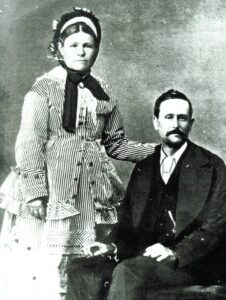
Elizabeth Branscombe Rees met her husband William (Henry Edward) Porter (Russell) in York and they married on 24th August 1848 in York by the Reverand William Mears in the presence of Thomas Boys Wall and his son George.
William used his real name on the marriage certificate – Henry Edward Russell – but was identified as a Parkhurst Boy in a handwritten note on the certificate.
1859
The 1859 Census mentioned Thomas Henshaw as a carter but there is no other mention of him until his death aged 8 of sunstroke in January 1865 – a month recorded of one of severe heat.
According to the Russell Family Bible (cited by Murray Cooper Russell), Sarah Branscombe Rees Henshaw died 2th July 1867, presumably in York.
WARREN
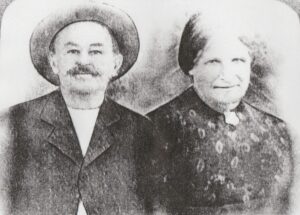 Sarah’s daughter Jane Henshaw married William Richard Warren in York in 1863 (#2000).
WARREN, William Richard, b . 1821 (Worcester , Eag), d . 15 . 5. 1918 (York) (expiree), son of Richard & Sarah, arr. 28. 6. 1851 per Pyrenees, 8 . 7.1853 (WA) Jane HENSHAW b . 14 . 10. 1838 (York) d . 16 . 10. 1918 (Pingelly), dtr . of Thomas & Sarah. Chd. Hannah, Sarah b . 1855 , William Richard b . 1856. Thomas James, Elizabeth b . 1859 (York Wesl) d. 1859, Hary Jane b . 1865, Henry Edward b . 1867 d . 1942, Joseph b. 1873 (York Wes!), Eliza Louisa Rebecca bp. 1879, Sophia Rachel bp. 1884. Listed in York Census 1859. tailor. Employed 9 TIL men on occasions 1864- 1872. Perth 1880s. Lit . Wesl. Wife 111it.
William Richard Warren arrived in the Swan River Colony March as a convict Transported to WA on the Pyrenees arriving at Fremantle, Western Australia on 28 June 1851. He had been collected from Justitia Hulk prison. He was convicted of receiving stolen goods and sentenced to 7 years on 23 October 1848 at Central Criminal Court, London, London, England. He had been convicted previously. Convict 544 – occupation tailor, semi literate.
Jane Henshaw and William Warren had 10 children between 1855 and 1884:
b: abt 1855 in York, Western Australia, Australia.
d: 27 Jan 1938 in Geraldton, Western Australia, Australia; age: 83.
m: James William (Jim) COLLINS b: Jul 1843 in Thorley, Hertfordshire, England. m: 25 Oct 1871 in York, Western Australia, Australia. d: 15 May 1927 in Geraldton, Western Australia, Australia; age: 83.
b: 1857 in York, Western Australia, Australia.
d: 1857 in York, Western Australia, Australia; age: 0.
b: 1859 in York, Western Australia, Australia.
d: 1859 in York, Western Australia, Australia; age: 0.
b: 30 July 1860 in York Shire, Western Australia, Australia.
d: 1 July 1924 in Pingelly, Pingelly Shire, Western Australia, Australia; age: 63.
m: Mary Ann Darcey b: 04 Oct 1862 in Noombling, Perth, Western Australia. m: 1897 in Beverley, d: 29 Dec 1921 in Pingelly WA Australia; age: 59.
b: 1863 in York, Western Australia, Australia.
d: 07 Apr 1937 in Northam, Western Australia, Australia; age: 74.
m: William Charles HAYMAN b: 18 Oct 1865 in Perth, Western Australia, Australia. m: 17 May 1885 in Perth, Western Australia, Australia. d: 4 Dec 1941 in Bakers Hill, Western Australia, Australia; age: 76.
b: 1866 in York, Western Australia, Australia.
d: 28/06/1943 in Pingelly,Western Australia; age: 77.
m: Mary Martha LIQUORISH b: 16 Sep 1875 in Uppingham, Rutland, England. m: 1916 in Pingelly, Western Australia, Australia. d: 30 Mar 1945 in Pingelly, Western Australia, Australia; age: 69.
b: 1869 in York WA.
d: 1888 in Guildford, Western Australia, Australia; age: 19.
m: Frederick Pollard b: 8 Jul 1864 Guildford. M: 30 Nov 1884 d: 1 Dec 1889.
b: 8 Jan 1873 in York, Western Australia, Australia.
d: 1 Nov 1937 in York, Western Australia, Australia; age: 64.
m: Louisa Rebecca Perry b: 1867 in Perth, Western Australia. m: 1891 in York, Western Australia. d: 22 Aug 1930 in York, West Australia, Australia; age: 63.
b: 1879 in York, Western Australia, Australia.
d: 20 Mar 1908 in Western Australia, Australia; age: 29.
m: John William Stone b: 27 July 1869 in York Western Australia. m: 17 Jun 1897 in York, Western Australia, Australia. d: 2 Nov 1944 in York, York Dist., Western Australia; age: 75.
b: 4 May 1884 in York, Western Australia, Australia. m: 1909 in York, Western Australia.
d: 2 Feb 1943 in York, Western Australia, Australia; age: 58.
m: John William Stone b: 27 July 1869 in York Western Australia. m: 7 Feb 1909 in York WA Australia. d: 2 Nov 1944 in York, York Dist., Western Australia; age: 75.