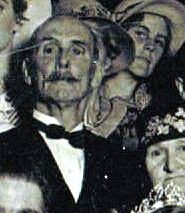
When he was 13, Norma Henley’s father William James Henley arrived in Queensland, Australia on 5th June 1883 from Bristol with his family in 1886 as part of the Assisted Immigration Scheme. His father John was a carpenter. William James Henley and Mary Jane Scott married in the Bible Christian Church, Clifton Terrace, Red Hill on 22.5.1889 by Benjamin Rounsefell when William was 21. Their witnesses were Joseph Waltisbuhl and Alice Scott (older sister of Mary).
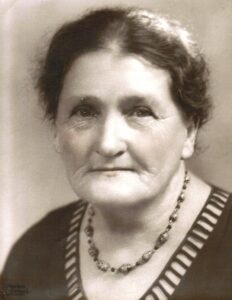
At the time of their marriage William was a bootmaker and his bride, Mary Scott, a boot machinist. William lived in Cochrane Street, Red Hill and Mary lived at Lower Clifton Terrace, Brisbane. Once they were married they lived in Baroona Road, Paddington, Queensland.
Apparently William and his brother, Charlie, owned most of the suburb Graceville and simply sold land when they needed money. William was also a saddle maker and a barber. William was also very musical and was the Band-Master in the Moreton Regiment and arranged all their music. William and several of his relatives travelled to Western Australia by camel for the Big Gold Rush. They found no gold and survived due to William’s ability to cut hair. They returned via a cattle boat. Two more of his children were born after his return: Cliff and Norma.
William died on the 14.11.1934 aged 65 from silicosis or “The Widow Maker” caused by the dust of the quartz pits at the gold mines. Mary Henley died on the 3.6.1940 aged 70.
The Six Children of William Henley and Mary Jane Scott:
- William Harry (born 19.12.1889 m. Bessie CUMES)
- Elsie May (born 8.8.1892 m Denis O’SULLIVAN)
- Lillian Mary Hannah (1895 – 22.6 1954 aged 59 m. Stanley HORN)
- Charles Victor John (1889 m. Olive STONE died of Paget’s disease)
- Clifford Eric Scott (1906 m. Cecilly WAGNER)
- NORMA HELENA EMILY (20.12.1909 m Henry William CHAYTER)
- William Harry Henley
was Dux of Milton State School. As a young man he was running to catch a tram, slipped and a tram wheel crushed his instep. The ambulance wheeled him by handcart to Brisbane General Hospital where the foot was sewn back on. He developed gangrene and his leg was amputated above the knee. Harry went on to become an accountant and the Company Secretary of James Campbell’s. After suffering a nervous breakdown following a medical condition called thyrotoxicosis Harry resigned from Campbell’s and bought a shop – the first of many. He played golf, loved fishing, shooting and was also the Secretary of the Queensland Cricket Association (which is probably how his sister Norma met her husband). Harry married Bessie Cumes and had three sons : Sydney, Bert (who was in Changi during the war) and Len (father of Patsie).
- Elsie May Henley (born 8.8.1892) went to the Milton State School. She married Dennis (“Dinny”) O’Sullivan at Church of England Grammar School and Norma was a flower girl. They had six sons : William Dennis (5.1.1916 – 15.9.1988, marriede Suzanne Munns), John Clifford (10.5.1918 – 5.1987 married Mona Conquest), Harry Jeremiah (Jerry) (9.3.1920 married Mary MacKenzie), Des (who died at the age of 9 from diptheria 24.2.25 – 24.5.1934) Dennis Charles (2.10.1922 married Florence Conquest) and Brian Timothy (born 13.12.1929 married Ann Langan).
- Lillian Mary Anna Henley married Stanley Horn and had three children : Mabel, Charlie and Dorothy. Lillian died 22.6.1954 aged 59 of breast cancer.
- Victor Charles John Henley married Olive Stone (who was a kleptomaniac!). He died of Paget’s Disease.
- Clifford Eric Scott Henley was dux of Sherwood State School and won a full scholarship to Brisbane Grammar. He studied accountancy and was Queensland manager of Manufacturers Mutual Insurance. He played excellent tennis and formed a team with his equally talented tennis playing sister, Norma, called “The Myalls”. Cliff married Cecily Wagner.
- NORMA HELENA EMILY HENLEY married HENRY WILLIAM CHAYTER.
HENRY WILLIAM “ROLLO” CHAYTER was born on 7.10.1907 in Brisbane Queensland. He was confirmed on 19.9.1923 at St Peter’s. He lived in Manly and attended Church of England Grammar School where he was in the cricket (wicketkeeper), athletic and football teams and earned the nickname “Rollo”, named after a rotund draft horse which rolled the cricket pitch.
Henry passed his Junior in 1924 (English, Arithmetic, Algebra, Geometry and Chemistry) and was then apprenticed to pharmicist John Richardson of South Brisbane for three years (earning 15 shillings the first year, 20 the second and 25 the third) and became a Chemist, graduating from the Pharmacy Board of Queensland in November 1930.
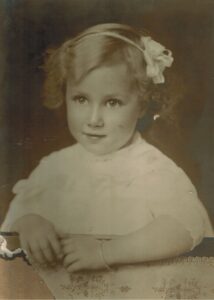
When Norma Helena Emily Henley was born on 20 December 1909 in Brisbane, Queensland, her father, William, was 39, and her mother, Mary, was 40.
Norma lived much of her early life with her sister, Elsie and brother-in-law Dennis O’Sullivan on their property 25 miles from the bush town, Muckadilla, 344 miles from Brisbane.
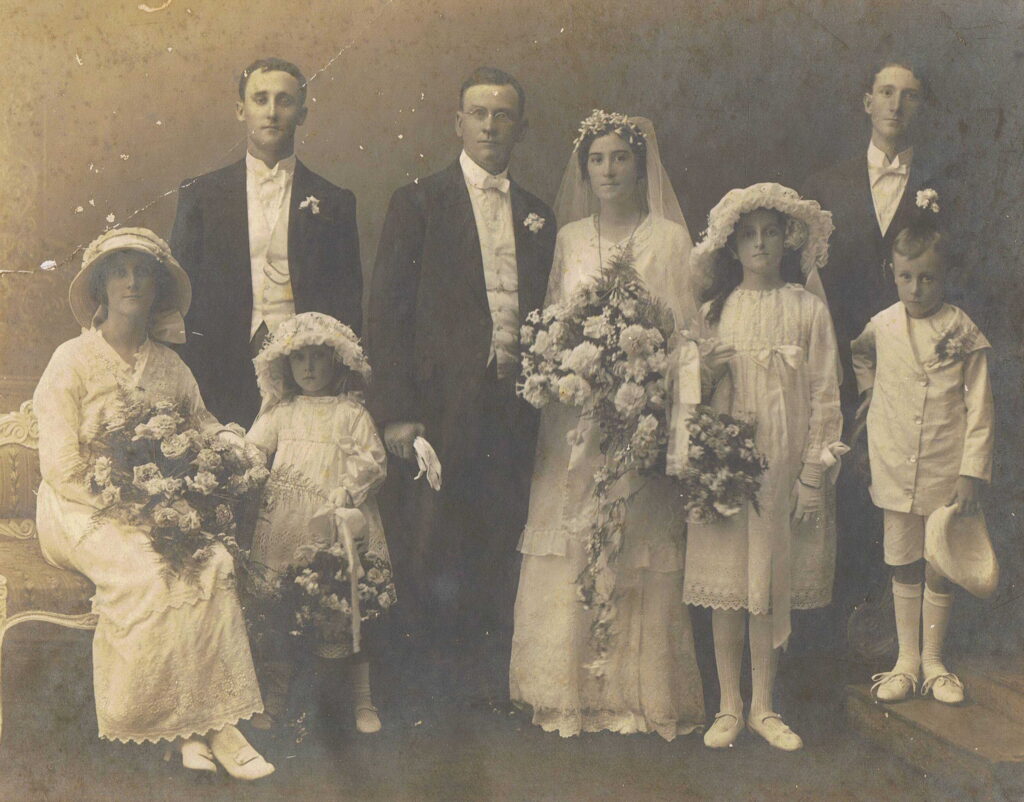
She was adored by Elsie and “Dinny” as she was the daughter they never had. They lavished gifts on her – dogs, horses (and bought a paddock at Graceville for her to keep them in) a piano and private music lessons at the Sacred Heart Convent at Corinda.
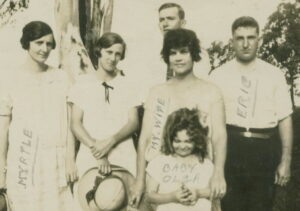
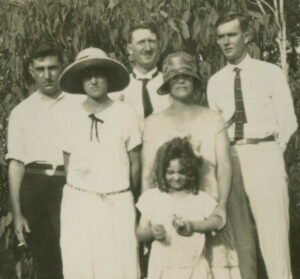
Norma never worked but mostly galloped around the countryside visiting neighbours, playing the piano or tennis.
Norma often visited Elsie’s sheep station “Ashmount” Muckadilla and also attended the racing including the Sydney and Melbourne Cups.
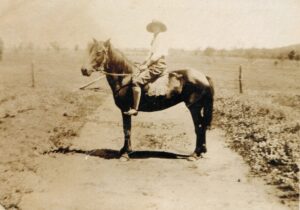
Apparently Norma was quite a wilful child and was of the opinion that she could ride any horse. She was told strictly by Dinnie not to attempt to ride a horse called “Algy” as it was known to have a foul temper. Norma disobeyed him and was thrown by the horse, landing on her head and was knocked out and winded!
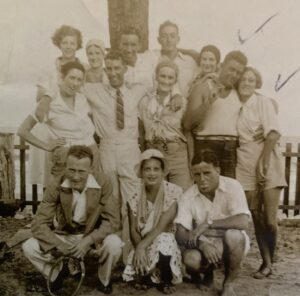
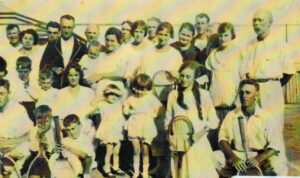
Norma and Rollo met playing tennis.
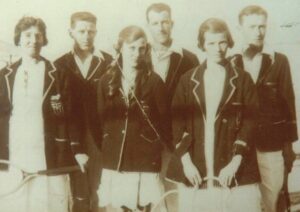
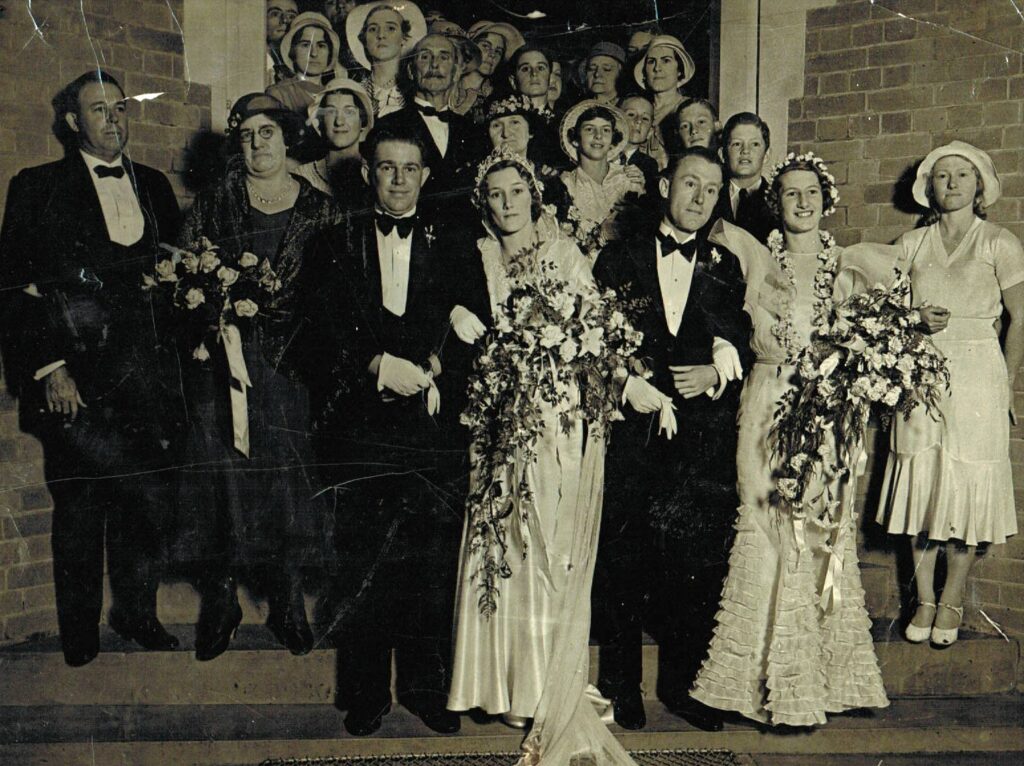
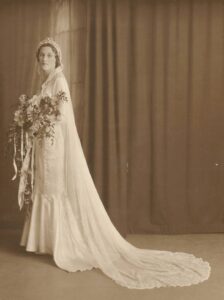
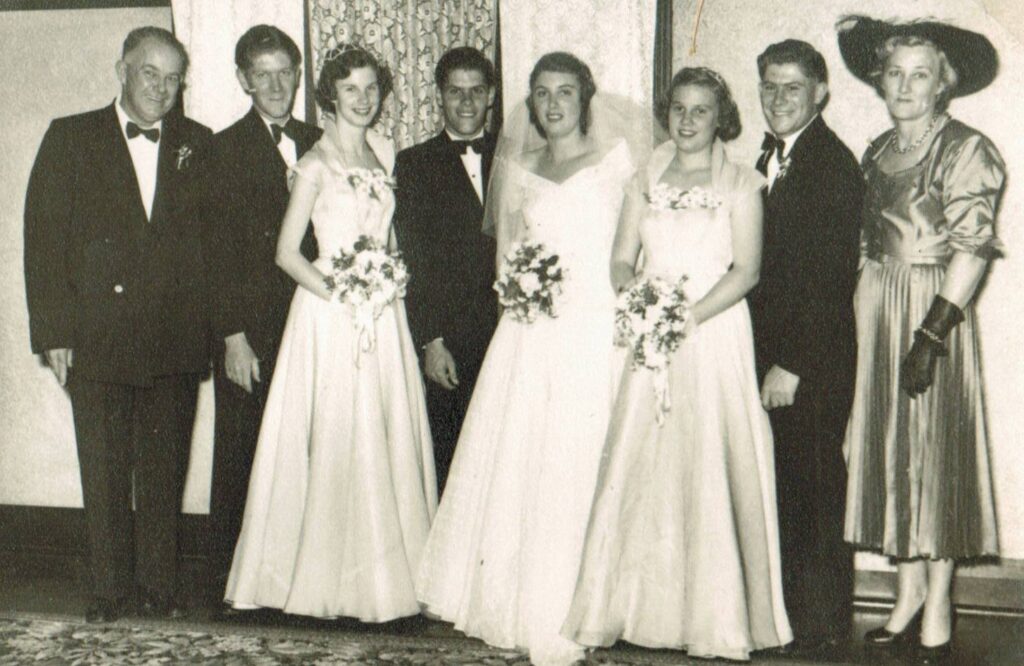
Rollo was married to NORMA HELENA EMILY HENLEY on 28.11.32 in the Chapel at Church of England Grammar School by Canon Morris. Canon Morris gave them a bible as their wedding present.
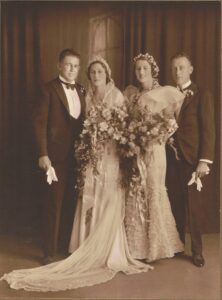
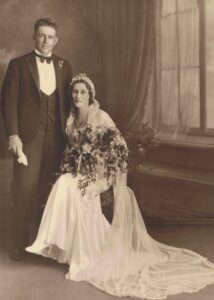
The wedding car was the Chayter’s huge Graham-Page with flowers in the vases on each side of the cabin. Norma borrowed an antique veil and spent the wedding terrified she would tear it.
The reception was at 45 Graceville Avenue (“Euroka”) where apparently all the kids got drunk on claret cup! For their honeymoon Norma and Rollo went to “Ashmount”. Rollo was not a bush boy and Norma broke him in picnicking, swimming, fishing, shooting and teaching him to ride. Apparently Rollo was very much attached to his mother at this time.
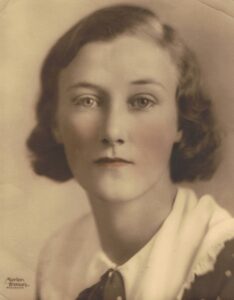
They had a daughter Marcia on 18.1.1934.
CHAYTER On Jan 18th to Mr and Mrs H.W. Chayter Mackie St Moorooka – a daughter (Marcia).
The Courier-Mail Brisbane 20 Jan 1934 pg 12.
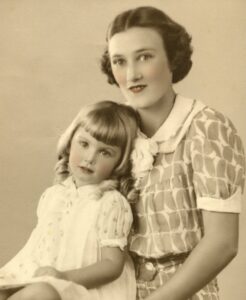
“You know that some people hate animals, but when you are alone riding in the bush, if you have a horse that loves you and a dog that will stay with you, it is a love that you will never experience in life with humans”.
These words recorded by Norma Henley provide an insight into the loneliness experienced by her, when as the result of her marriage to Henry Chayter, Norma, Henry and their small daughter, Marcia, moved to Western Australia.
In 1937 aged three, Norma’s life changed forever. With jobs scarce due to the Depression, her father, a fully qualified chemist, accepted the prize offer of managership of the Felton, Grimwade and Bickford chemical factory (which had amalgamated with The Drug Houses of Australia) in Perth. The laboratory and works section manufactured drugs, galenicals, pharmaceutical and proprietary products in Charles Street.
During its long history in Western Australia, the laboratory and works section was managed by Mr R. Chayter (1935 – 1953).
A History of Pharmacy in W.A.” by Alan McWhinney.
In March 1937, their Brisbane belongings, Beale upright piano and all, were duly secured with them on a ship called the “Duntroon”. Their passage to Perth was so rough that their cases slipped from under one bed to another like greasy snaggers in a frypan. The accompanying sea sickness knew no bounds. Norma and the three year old Marcia were so ill, they disembarked in Adelaide and completed the voyage by train.
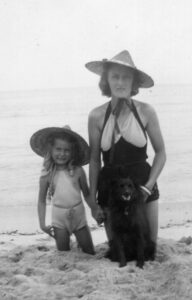
On their arrival in Perth they were met by a Mr Maxwell who was the manager of the business side of Feltons. A flat in Mount Street central Perth had been organised for them and soon after in they then rented a brand new house at 28 Woodroyd Street, Mt Lawley that had sand for a garden.
This new life was a far cry from Norma’s Queensland experience. For many years this young woman (who knew no one in Western Australia) pined for Western Queensland, her parents and her siblings.
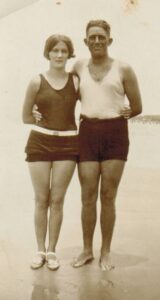
Rollo was very occupied with the responsibilities of his new job.
In their rented house in Woodroyd Street Mount Lawley, Norma was alone much of time with her small daughter. In an attempt to make some friends and save her sanity Norma joined the North Perth Tennis Club. She pushed Marcia in a pusher all the way before she even hit a ball, then all the way back. Rollo joined the West Perth Cricket Club as a wicketkeeper and had matches on the weekend.
CRICKET TEAMS
W.A.C.A. teams for matches beginning tomorrow are: —
West Perth. — Second grade: Baker, Chayter, Jones, Chandler, Annesley, Berry, Lockwood, Grimbley, Parry, McGill, Waldock.
The Daily News Friday 19 January 1940 page 16
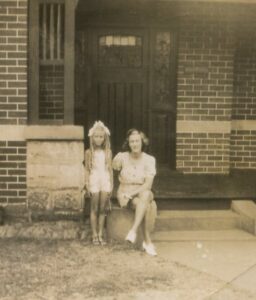
Norma befriended the neighbours – the Holberts directly over the road and the McHarrie family next door. Had it not been for the benevolence of Ethel and Andy McHarrie, Marcia wondered if Norma would have survived. (Marcia’s guinea pigs didn’t survive as the McHarrie’s cat ate them.) The McHarries had four surviving children (Joan had died aged 6 in 1928 of diptheria) Ken, Dawn, Adele and Judy (Judy McHarrie married Peter Stafford).
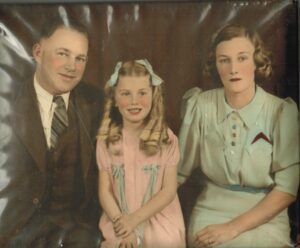
Whilst Marcia attending Braemar kindergarten, Norma was briefly over the road at Faversham Hospital (35 Glenroyd Road – now heritage listed) having had her appendix and a cyst on her ovary removed. Marcia paid her a solo impromptu visit which did nothing for Norma’s condition. This operation left Norma with a yawning scar which refused to hold stitches. Rollo used to carry her into the sun and pour cod liver oil on the wound. Marcia remembers a nurse named Grace was employed at this time to help Norma recover.
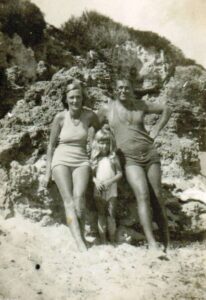
On 3rd June 1940 Norma received news that her mother Mary had died at Sherwood Private Hospital in Brisbane. She had asthma, diabetes and myocardinal degeneration. Norma was 30 years old and Marcia, then 6, remembers poor, devastated Norma lying on the lounge crying, with the knowledge that she would never see her mother again and could not even attend her funeral. Norma’s Dad William James Henley had died the year Mum was born.
Around 1944, the Chayter family had moved to 31 Longroyd Street, a house owned by Marion and Gordon Campbell who lived around the corner in Braeside Road.
The Longroyd Street house was divided in half by a passage: on one side a large bedroom a small bedroom and the kitchen the other side a large lounge and study nook and an enormous dining room opposite the kitchen. At the back was a small bathroom complete with a gas hot water system which involve lighting a pilot flame.
The kitchen led out onto an open back veranda which had canvas blinds known as the sleepout. During the summer months, beds were moved from the bedrooms and all the family slept on the veranda. At one end of the sleepout was a small room which was used either as a maid’s room (they had one called Rose and another June) or a toy room.
At the other end of the veranda was the laundry complete with a copper as there were no washing machine machines in those days. On wash day a fire was lit underneath the copper, water carted to fill it up and soap was grated into the water. The clothes were added and the water brought to the boil and allowed to continue in that state for sometime, the washerwoman giving the contents an occasional poke with the copper stick when a suitable amount of time had passed. This said stick was used to drag the steaming clothes onto the trough where they would be hand rinsed and if you were not lucky enough to own a hand ringer, the water would be rung out by hand, the clothes finally finding their way to the line which was just that a line of wire raised or lowered by means of a wooden clothes prop. The long laundry line spanned the length of the backyard which nestled closely to the outside and only toilet.
Apart from work, produce production was Rollo’s forte, coming in the form of eggs, their backyard being large enough to accommodate fowls of all shapes and sizes. These pampered pets – Horry Loo Loo and Maisie to just name two, were aware of their privileged position, strutting proudly in and out of the creeper which grew in s Sleeping Beauty castle like manner over their coop. Gran did not share Rollo’s feathered enthusiasm, which is not surprising, as they often had ailing chicks, huddling together in a shoe box being warmed in the oven, or a chicken with a match stick splint on one leg, found limping around the laundry.
Food was kept cool by means of an ice chest and an ice man called on a regular basis and we children were always hoping for a chip of ice. Ice cream was available only in shops.
The Longroyd Street house had a huge tennis court area at the back our back fence adjoining the side fence of the Braeside house belonging to the Coombs family of five girls: Judy, Caroline, Elizabeth, Diana, Patricia their father, Harry, who was a major in the army. Their mother Thelma was a lovely lady who was always in need of help. They lived in a rabbit warren adjoining their back gardens, where a gate was installed to allow the constant intermingling of the two families.
Over the road from the Coombs lived Marion and Gordon Campbell and their three wild boys Andrew, Bruce and Stuart. Bruce was born without a roof in his mouth and had a speech impediment. Gordon was also a high ranking army of Officer who saw active duty. Marion (maiden name was Dunlop) was a gregarious, likable woman who could often be seen with a fag in her mouth, a bottle of sherry in one hand and the vacuum cleaner in the other. They had a small Australian terrier called “Spider” and the boys kept rabbits which dug up their entire back garden. Judy Coombs married Dean Berry he died but I’m sure Brian and Bruce now where Judy is. Caroline m asrrieda farmer in Cunderdin I think. Surname Burns.
It was a joy having plentiful playmates at this new Mt Lawley address. The mob of children tortured the Chayter’s tennis court with lengthy cricket games. Not too friendly rivalry existed between this sporting pack and another neighbourhood gang, the fruits of the castor oil tree being used to pelt to great advantage on several occasions.
Nerida and Carolyn Coombs were of a similar age and played together a lot. One of their favourite past times was “carry around shops”.
occupied their leisure hours with “carry around shops”, spending hours making coloured potions from starch and cochineal, or gleaning old jewellery and bits and pieces from long suffering neighbours, in order to present a tempting tray. One of enterprising neighbours utilised her talents and produced dolls, the heads of which were made of plaster of Paris, solid enough to fell their owners to the ground with a single blow.
Marcia was a sickly child who suffered constantly with “bronchitis”. On Guy Faulks night, she remembered looking out her window at Catherine wheels that her father had attached to the fence outside her bedroom. On the rare times that she was well enough to be in “the night air”, her hair which was long and blonde was bundled into a shower cap to prevent it catching alight. In hindsight it is no surprise that she suffered chest problems as her father was a heavy smoker and every Friday night hosted in a game of poker with a group of chemists who smoked cigars all in the room opposite Marcia’s bedroom.
On May 17th 1941 Norma and Rollo had another daughter, Nerida. She was a large baby over 9 pounds. Many doctors had joined the war effort and Norma had a difficult time. Norma’s recovery was slow and Marcia can remember having to battle with the washing and hanging the water laden towels on the line.
Compared to the United Kingdom, Australia’s war deprivation was nothing. Ration books were issued for food, petrol and clothing. Not that there was a lot in the shops to buy. All goods were poured into the war effort, especially Australian wool for uniforms and food for the troops from countries where production had never been bombed. Everyone who could knit did so: scarves, socks and balaclava’s out of khaki coloured wool which was supplied by the Red Cross. Norma knitted Marcia a green skirt and top out of this wool. Petrol was short. Berwyn Allen’s father Ernie had a car with a gas producer on the back of it.
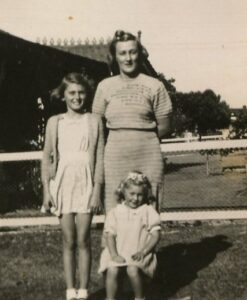
Commodities were scarce and Berwyn’s mother queued for hours for a packet of bobby pins and similarly, Rollo queued and cajoled to procure a large, yellow teddy bear for Nerida for Christmas, much to her delight.
Christmases were fairly meagre. One year, Marcia remembered waking early to see what presents she had: there were two – a pair of brown crisscrossed sandals and a book called “Coles Funny Picture Book”. She remembered thinking “is that all?”.
Over the road from the Chayters and scattered along Longroyd Street lived three married sisters: Arthur and Frankie Avery and their son Bob. Frankie was a member of the Red Cross.
Bill and Amy Jennings and their daughter Ann who was Marcia’s age Marge Cameron and her children – Marge’s husband died of berri berri in a Japanese prisoner of war camp and she had three children.
Although the local Mount Lawley children were not aware, the Japanese war machine was creeping down the West Australian coast. The war dragged on, windows were fitted with blackout paper and air raid wardens patrolled to make sure no chink of light was visible in case the Japanese, who were bombing Darwin, might catch a glimpse.
Each household was required to have an air raid shelter and from time to time air raid sirens would sound as a precautionary measure. An air raid shelter was installed at the end of the Longroyd tennis court in their back yard. The first hint of a siren would find the Chayter family sardined in this half buried 44 gallon drum. Norma used to pack milk arrowroot biscuits in a Mills and Ware’s case to keep Nerida quiet while they were in the shelter. Nerida, being a toddler, was stuffed with food to keep her occupied until Gabriel blew the “all clear”. The Coombs shelter was a large underground affair which the children used it as a cubby.
Household stress levels didn’t improve in February 1942 when Norma – then six months pregnant – faced Rollo going to war. Rollo enlisted and was accepted into the Australian Military Forces Western Command, but shortly after, was given an exemption from overseas service in order to stay in Perth in the Citizen Forces as Laboratory Manager to continue manufacturing much needed pharmaceuticals. As a result, he received white feathers in the mail (a sign of cowardice) and the family was regularly abused by grieving peers judging him for not fighting for his country.
As Marcia grew older she was required to do many household duties. Gran wasn’t big on housework and having been raised largely on a sheep station and had never actually worked for an employer she had no idea of money management. Her favourite outing was going to the races, ensuring she looked the part with smart outfits boasting matching hat, handbag and shoes. Marcia remembered lively conversations between her parents about gambled housekeeping money and used to pray that her mother would win at the races so these dreadful scenes would not take place.
On a Saturday Norma and Rollo went to the horse races. Marcia, Nerida and the Coombs girls would either go to the Astor pictures on foot which was about 2 km or would cook fried bread or make honeycomb at the Coombs house. The price of entry into the Astor Theatre was sixpence and ice cream was threepence. Lollies were scarce. The only chocolate available was made locally at Plaistowes. There were two films which filled Marcia with terror. The 1943 “Captive Wild Women” was one. A woman turned into an ape or vice versa and wreaked havoc and destruction. The other movie was the 1944“Arsenic and Old Lace”, the story about two harmless little old ladies who ran a guest house from which the visitors did not emerge. She went to see this movie one Friday night at the Astor Theatre with Mary Blacklock a school friend who was sleeping over. Marcia couldn’t simply not sit out the whole film and was so scared she made them both run all the way home.
Each year the Chayters had a two weeks holiday at Waterman’s Bay at the Sandy Croft guesthouse. When this place closed down they spent one holiday in a friends shack at Trigg Island. At that stage they had no car and were deposited in this place by one of their neighbours.
Berwyn’s father Ernie Allen left his job as an insurance agent and their lovely home in Rob Street and bought a pub firstly in Pithara and then in York. Berwyn and her mother Hazel went with him initially but it was too much for Hazel. Berwyn and her mother moved in with Berwyn’s grandmother and lived in a house in Pakenham Street East Perth. Berwyn came to Perth College and had a life-long friendship with Marcia. Hazel suffered a complete breakdown and was given shock treatment in what must have been a C class Hospital and Berwyn came to live with the Chayters.
During Marcia’s high school years her father was seriously ill for some time with Brill’s Disease, a highly infectious form of recurring typhus caused by a bacterium transmitted by vermin, otherwise known as the plague. The illness itself is debilitating and may occur years after the initial sickness.
In 1943 Marcia was accepted into the Perth College intermediate school aged 9. She thought this was a wonderful place. It was run by the sisters of the Church of England Church and Mrs. Dunbar was her teacher at this time. A happy place of learning that doubled as a school for novices for those wishing to become a Church of England nun.
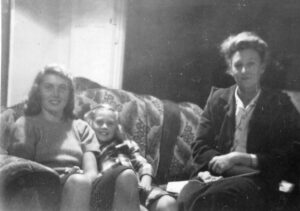
Marcia helped enormously with the care of her sister, Nerida, so much so that when she started at Perth College, her 3 year old sister Nerida cried distressingly when separated from her. Taking pity on both
Norma and the weeping toddler, Mrs Talbot and Mrs Broadfoot ran the Perth College junior school and offered to take Nerida into the kindy, even though she was under age. Norma pushing her there in the pusher. Nerida was put to bed every afternoon on a little stretcher with patchwork quilts made by the sisters and was often still asleep when Norma returned at the end of the school day.
Both girls attended Perth College from then on, Nerida for both her primary and secondary education.
Fresh bread was delivered daily in Mt Lawley (other suburbs were making their own). Marcia used to walk to Perth College and walk home for lunch (which was usually Vegemite on poppyseed bread) and then walk back to school and then walk home afterwards regardless of the weather.
In May 1945 the war came to an end, bringing with it joy for some and misery for others whose loved ones didn’t return.
Marcia’s health remained poor and she remembered attending a play put on in the Perth College Hall with Nerida. Halfway through the performance she felt unwell and made her way to the door. Sister Patricia was standing at the door and as she reached her, Marcia collapsed and passed out. Norma and Rollo were playing poker at the Campbell’s who mercifully had a car and came to take her home.
Perth College, as a school for novices, was a very religious school. They attended chapel every morning and nativity plays were produced at the appropriate season. In one of these plays. Berwyn was the angel in the annunciation scene and Marcia was an apostle, complete with a breadstick prop stuck on with Tarzan’s grip. Musical works, mainly of a singing nature, were also produced. Adrienne Silbert and Marcia sang a duet in a reduced version of The Magic Flute. Anne and Margaret Dempster, who were having the singing lessons at the time, sang the leads. The Perth College Boarders’ quarters were out of bounds for day girls which tended to create a “them and us” feeling. Mrs Russell-Smith, a large bullfrog type lady, was the boarding house head mistress. This formidable lady conducted the reading exams and everyone was given 100%.
Marcia’s friends at Perth College: All the Coombs girls, Berwyn Allen, Janice Grace, Linda Berry, Min Ferguson, Noreen Knight, Edwina Penton, Norma Humbert, Margaret Hurst, Adrienne Silbert, Cynthia Cohen and Mary Blacklock. At one of Mary Blacklock’s parties Marcia met Judy Mitchell (my godmother) who attended Perth Modern School, a scholarship school for brains in those days. (Judy and Marcia were to meet up again at the ABC.) Dianna Greg was also in Marcia’s class and she was the mother of Mary Ellen King and she died very young.
The Nevard family lived on the corner of North Street and Braeside Road. Bill Nevard owned “Nevada Shirts.” Theirs was a splendid house with an equally splendid garden and tennis court. They threw fabulous parties. The Nevards had two children: June a few years older than Marcia and Brian about Marcia’s age. They played good tennis as did Bruce Robinson who Norma correctly predicted would make his name in tennis. North Street was a continuation of Longroyd Street and down it a little way lived Bruce’s Mum, Mrs Blanche Keturah Robinson (nee Truscott) and her sons (including Rob whose daughter Michelle married Berwyn’s son Greg). Mrs Blanche Robinson was Marcia’s piano teacher. She was a gentle, old-fashioned woman and Marcia felt guilty that she didn’t work hard enough for her. Marcia sat an Australian Music Examinations Board fourth grade piano exam in 1945 with a credit so she couldn’t have been that bad!
Emily and Frederick Finch lived with their 3 children at North Street Mt Lawley and Helen went to Lawley Ladies’ College. John, her brother went to Wesley College. Frederick was a Changi POW.
Sally Varden (Mrs Cook who taught Jody at St Marys) also lived in North Street.
The Perth Cup horse racing carnival was held each year on New Year’s Day Norma and Rollo loved to go. They bought tickets for their children to attend a pantomime at the Tivoli Theatre (near His Majesty’s Theatre) and would drop them there and they would catch a train home. It was a fairly sleazy area and as much as Marcia loved the pantomimes and imagined that one day she would be a musical comedy star, she was always so glad when we actually were on the tram heading for home. The tram stop was in Walcott Street so they still had to walk another kilometre before reaching home.
In about 1946, Marcia returned to ballet attending Mrs Breslin’s ballet classes at North Perth with Berwyn. There they met Vera Berlstein (who later married John Kohn). Vera and her family had fled to Europe and remained in a refugee camp in South Africa until the end of the war. Vera’s mother was a skilled tailor a wonderful lady and her father had a second hand furniture shop. He was a nervous wreck as was Vera’s sister Eva.
In about 1946, Marcia joined the junior Repertory Club run by Mrs Herder held in the West Australian Buildings (previously the W.A. Newspapers machine room) in St. George’s Terrace behind the tea rooms. (Jack Harrison performed there in 1947). In one of the productions, she was Alice in “The Mad Tea Party” – Marcia assumed it was because of her blonde hair. Jeannie McGregor who was quite a bit younger was the Door mouse. Jeannie lived at the end of Longroyd Street in a huge house with her parents and Aunt and Uncle (Auntie Mim and Ubagah). Ubagah was the manager of the Plaistowe chocolate factory. (They gave Marcia the “Amelia Anne Stiggins” book.)
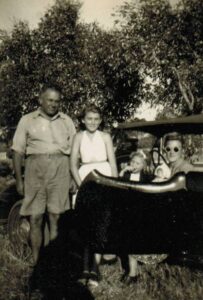
About 1946, Rollo bought their first car – a Vauxhall Tourer – which had been part of the traveller fleet at Felton’s. Rollo permitting, the car meant the family could go down to Scarborough or Trigg beach for a swim on a Sunday and an added treat was a chocolate ice cream from a shop in Scarborough, the only place in Perth where they could be purchased. Anne Jennings (neighbour) sometimes came with them.
Marcia, Nerida and Diana and Cally Coombs went to ballet classes, firstly with Linley Wilson and then Evelyn Hodginson (daughter of Shirley Halliday).
Nerida remembers breaking her wrist during a ballet class and being told “Come on, you’re alright, get up” which she did and continued the class. When Rollo picked them up Nerida was as white as a sheet and was taken to St Anne’s for an xray. Ballet exams were held by The Royal Academy of Dancing (formerly The Association of Operatic Dancing of Great Britain) and Marcia attended her exam at The McNess Hall, Pier Street, Perth and passed Grade 3 in 1947. Marcia also obtained her 4th grade diploma in French after doing an Alliance Francaise exam in 1947.
Longroyd Street was on a bus route which ended at Stirling Street. Mum had a medium sized Pomeranian type dog called Topsy who was run over and killed. Norma just sat on the curb and cried. Jimmy, their next dog was part dingo and he tended to kill the neighbour’s chooks.
Rollo continued to play cricket for West Perth. He was the wicked keeper and every weekend mum and Marcia would go reluctantly to watch him play. Mum took scones for afternoon tea on one occasion roll Rollo was at death’s door with Brills disease – the plague – but he still played cricket.
LOWER. GRADES.
Teams for the B and C Grade finals are as follows:
B Grade.
West Perth: Berry. Chayter, Trson (2) Bridges, Grigg. POX. Grimbley. Waldock, Steel, Hawthorn, and Guy (12)
The West Australian Thursday 18 April 1946 page 5
In December 1946 and January 1947, Rollo’s brother Ray came to visit. Marcia remembered them getting a real Christmas tree and showing him the Perth sights in their car, including Kings Park and City Beach. They went on a picnic and Nerida remembered Ray being bitten by bull ants.
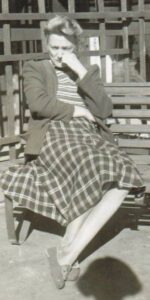
So Marcia had done piano, ballet, French, singing – what was missing? being a debutante! Berwyn’s Dad Ernie had a property up at York at this time.
Ambulance Ball
Most Successful Social Function
Debutantes Presented
The debutantes who made their bow were: …Marcia Chayter, blue floral…Berwyn Allen, lemon organdie…York Chronical Friday 12 September 1947 page 1
Because it was the closest, Marcia attended Sunday School run by the Presbyterian Church that was held at St Giles Hall. Later, when she was able to walk greater distances, she attended Saint Patrick’s Anglican Church Sunday School. To reach Saint Patrick’s Marcia had to pass by the house of Horace, Rhona and John Dean. (John’s daughter Amanda married Marcia’s son Kimberley.)
Marcia left Perth College at the age of 14 gained her Junior Certificate for which she sat in November 1948. The Perth College nuns were not keen to give an end of year dance so the PC girls arranged one for themselves. The parents of one of Marcia’s class, Adrienne Silbert, owned a reception Centre in Mount Lawley called “Tannerville” and so dance was organised there. Malcolm Taylor, who Marcia had met at Wesley dancing classes, was her partner. The dress she wore was a blue dimity material but it was not hers – it belonged to Adele McHarrie. “I must say I felt inferior for school occasions like this. I always wore a band of fresh flowers in my hair made by Miss Passmore who lived a few houses away.”
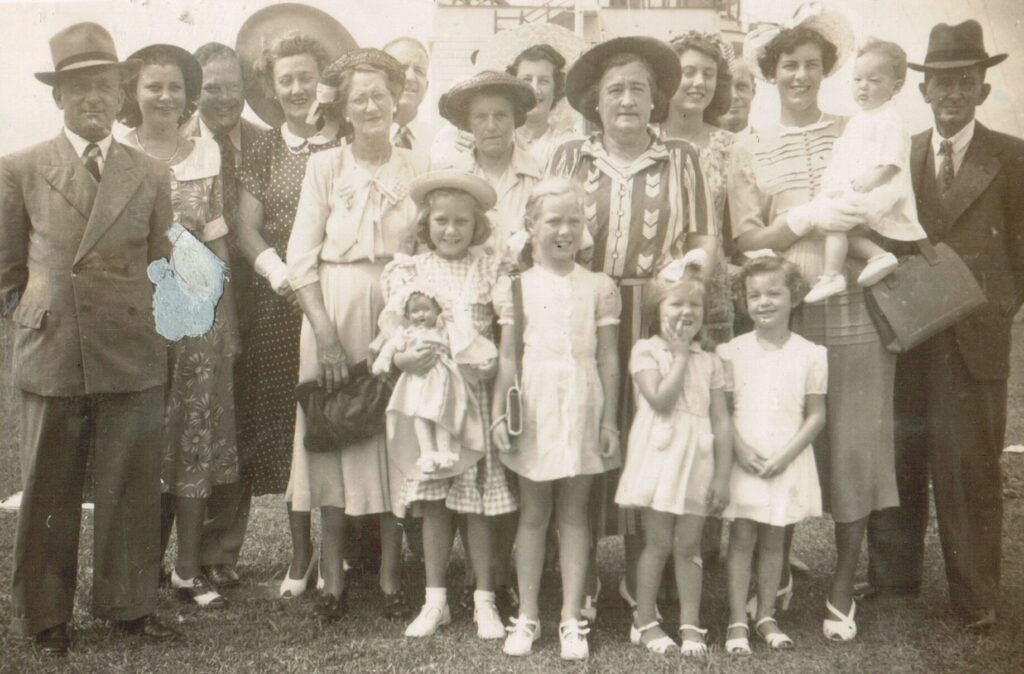
At the end of 1948 the Chayter family returned to Queensland for a holiday. It was 11 years since Norma had seen her sister and brothers and her mother had died while we were in Perth. They stayed with Auntie Elsie O’Sullivan and visited Auntie Lillian Horn who lived in the same street. Lillian’s daughter was a fabulous dressmaker and made Nerida a little blue and white gingham dress which she had a perky little straw hat to go with. Marcia remembers her cousins Brian O’Sullivan, Dot and Allan Dollar all going to Cloudland’s Ballroom. Marcia remembers one of the first places she checked was the bedroom in her grandfather’s house to see if his vast bed still remained. The golden bedspread had long gone, but the layout of the room was as she remembered it as a three year old and the sleepout where her Uncle Ray and Auntie Jean had sung and laughed was still untouched. This vision of gaiety and slumber was all Mum’s memory held for her first years in Brisbane. Rollo stopped over in Sydney on business on the way back to Perth.
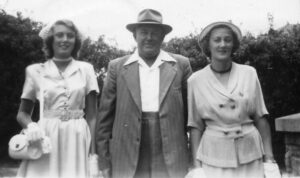
Marcia was confirmed on 2nd November 1947 at Perth College Chapel.
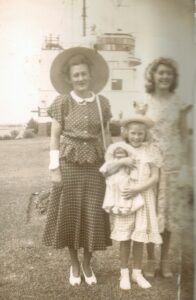
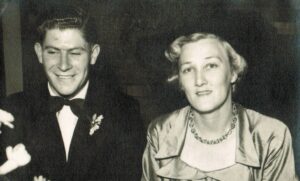
Marcia was married to Jack Harrison in 1953.
After a staffing reshuffle at D.H.A. Rollo worked for a short while with Rosen’s Pharmacy in Perth but then opened his own pharmacy on the corner of Coode Street and South Terrace in Como.
Norma worked in Rollo’s Chemist Shop as an assistant.
At this time, in order to be closer to their new pharmacy, the Chayters moved to a housing commission house in Manning Park which they rented for 18 months with an option to buy.
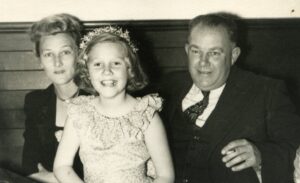
In about 1955, the Chayter’s bought their first house at 44 Ednah Street, South Perth from Mr Gordon (who owned Gordon Cycles). Apparently it had been unoccupied for some time and still had black house paint on all the windows from WWII which Norma scraped off with a razor blade! Sometime in the 1950s they also purchased a holiday home in Safety Bay.
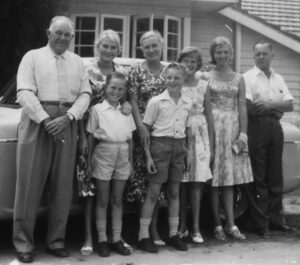
The same year their first grandchild Jay was born and second grandchild, Kimberley, was born in 1959.
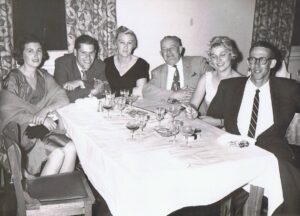
On 12th August 1961 Nerida married Chilla Porter in Queensland.
In 1963 their first granddaughter, Jody, was born.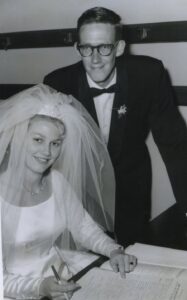
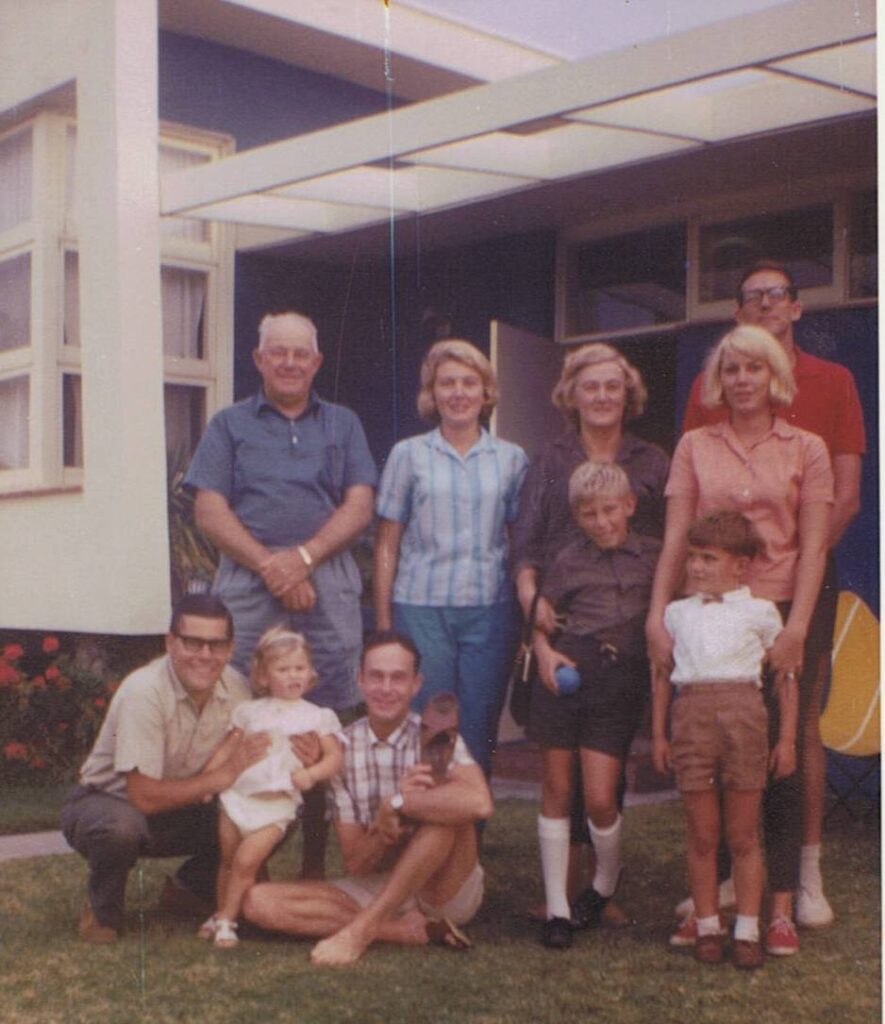
Norma and Rollo loved nothing better than dressing up and going to the races on a Saturday.
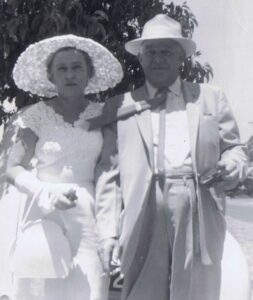
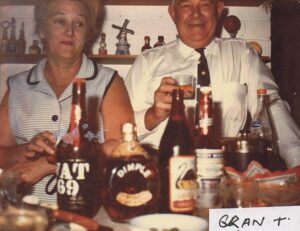
Rollo played poker and apparently had a Friday poker night every so often during which, his largely jewish friends, smoked smelly cigars which drove Norma mad! He also went to the trots and races, played cricket (he was Captain of the West Perth Cricket Club), tennis, swam, played piano and was a keen gardener, especially proud of his sweet peas.
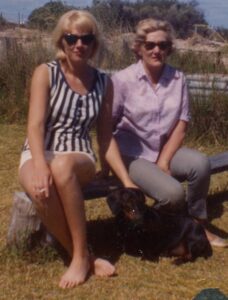
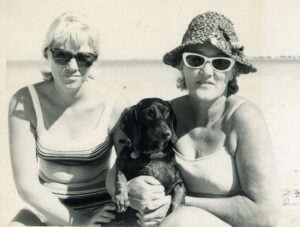
Rollo was also a keen fisherman and enjoyed holidaying down at his and Norma’s beach house on Safety Bay Road, Safety Bay. He was a perpetual member of the South Perth Community Centre. He enjoyed eating lollies and always had a full jar of lollies in his sleepout! Rollo and Norma continued their weekly visits to the races. Norma was notoriously bad with money and keeping secrets, especially birthday presents and spoilt her grandchildren with trips to town and presents.
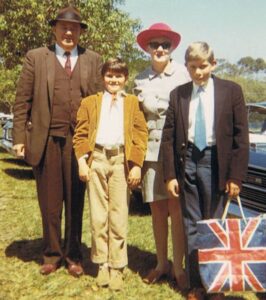
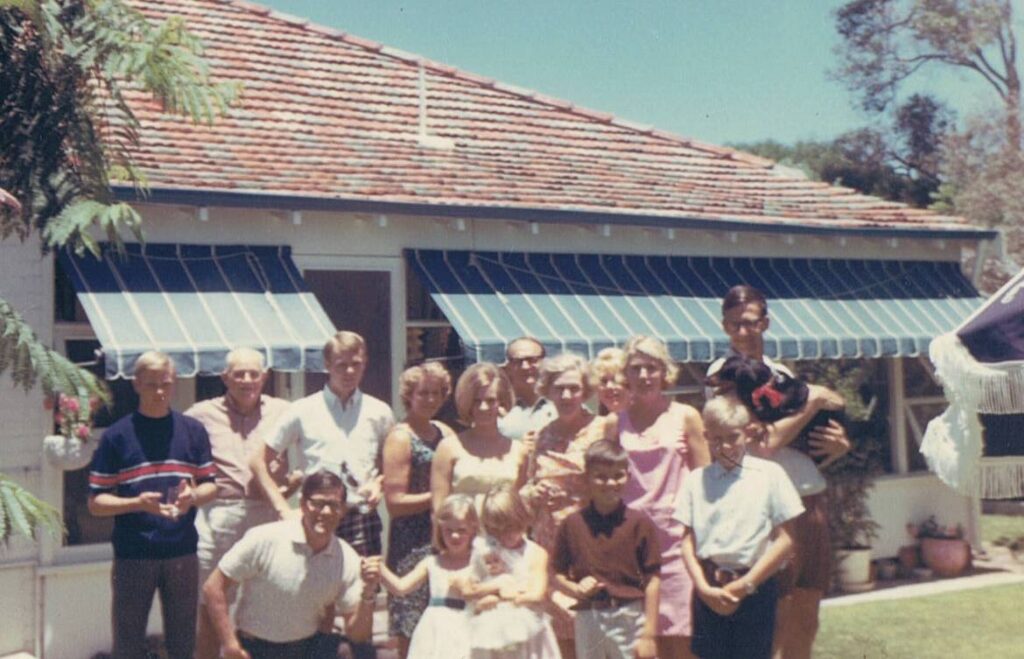
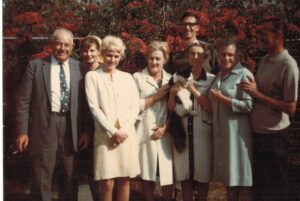
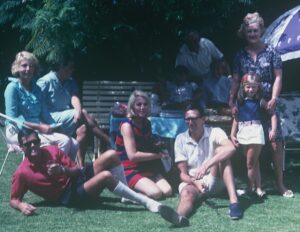
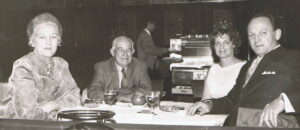
Rollo died at the age of 64 of bowel and liver cancer on 9.7.1972 and was buried on 11.7.1972 at Karrakatta Cemetery (CofE).
Norma was a widow at the age of 61 and sold 44 Ednah Street and built a Granny Flat designed by Iwan Iwanoff at the back of her daughter Marcia’s property at 11 Dodonia Gardens City Beach and lived with them for 21 years until 1993.
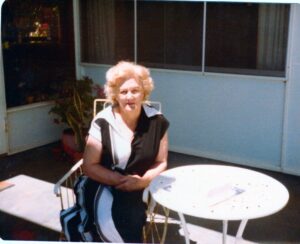
During this time she made several overseas trips and a trip back to Queensland and unfortunately spent most of the money Rollo had left her and existed there after on the pension.
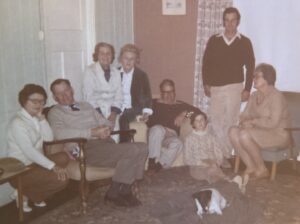
Norma was passionate about dogs, who she overfed, slipping them morsels at the dinner table.
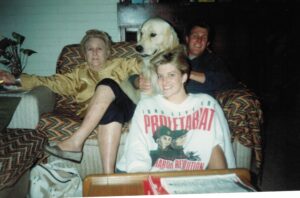
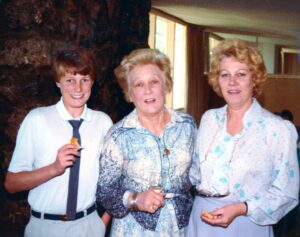
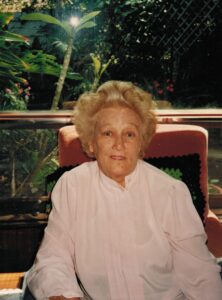
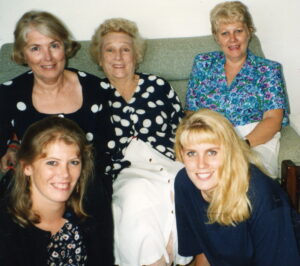
In 1993, Norma’s first grandchild Samantha was born.
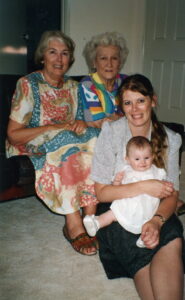
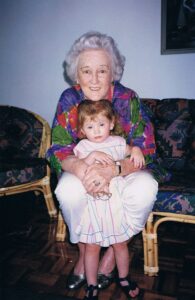
In 1993 Jack and Marcia sold their City Beach house and Norma moved to a self contained unit attached to a retirement village in Bradford Street Mt Lawley. When her health worsened (she had Paget’s disease and cancer of the kidneys) Norma moved again to a room at Crystal Village in Karrinyup.
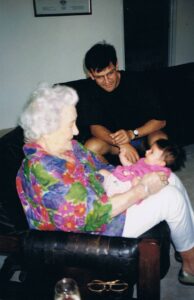
Norma knew four of her grandchildren:
Samantha, Natasha, Jacqueline and Mitchell.
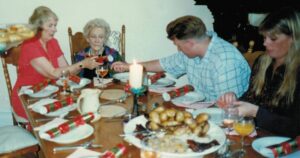
Norma died in Osborne Park Hospital on 13.4.1997 whilst watching an Eagles footabll match – they won!) and is buried with Rollo in the Church of England section of Karrakatta Cemetery opposite Hollywood High School.
Norma died of Ischaemic heart disease (5 years), Hypertension [Dysautonomia] (15 years), (Contributory cause) Carcinoma right kidney (4 months), Paget’s disease of bone (15 years).