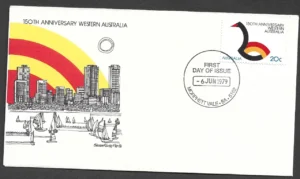
 “Way 79” in Western Australia – “The Year of Excitement” – was the official year-long celebration marking the 150th anniversary (sesquicentennial) of European settlement and colonisation in Western Australia, dating back to the founding of the Swan River Colony in 1829.
A massive New Year’s Eve concert on the Perth Esplanade kicked off the year, drawing an estimated 60,000 people with performances by figures Rolf Harris, Fat Cat and Percy Penguin.
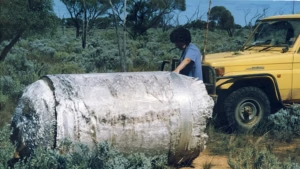 Skylab came down near Esperance on July 12th 1979.
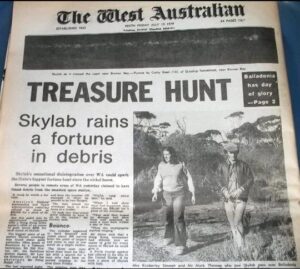 The Shire of Esperance light-heartedly fined NASA $400 for littering, which went unpaid for decades until a US radio show host raised the money to pay it off in 2009. Pieces of debris—including oxygen tanks, a food storage freezer, and titanium nitrogen tanks—were recovered from paddocks and local properties.
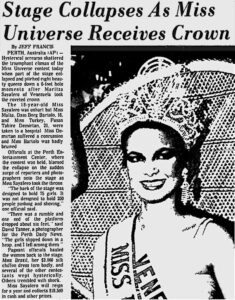 Miss Universe 1979, the 28th Miss Universe pageant, was held on 20 July 1979 at the Perth Entertainment Centre in Perth, Australia. Maritza Sayalero of Venezuela was crowned by Margaret Gardiner of South Africa. This is the first time Venezuela won the pageant.
Reports on the stage collapse
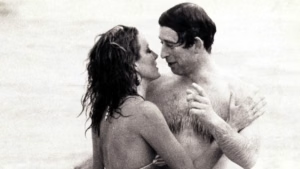 Prince Charles toured Western Australia as part of the state’s commemorative calendar.
In March he was famously photographed at Cottesloe Beach being kissed by model Jane Priest.
On March 11, 1979, the young royal was taking a morning swim during an Australian tour. Priest, then 26 years old, approached him in a bikini and placed her hands on his shoulders/chest before kissing him. While widely reported at the time as a lucky, spontaneous moment, accounts later surfaced—including from Priest and royal photographer Kent Gavin—suggesting it was an orchestrated public relations setup designed to make the reserved bachelor look more approachable and modern. Other photographers present (such as Kerry Edwards and John Campbell) disputed exact details of who planned the shot. The iconic image was beamed across global front pages and is remembered as one of the most famous celebrity photos in Western Australian history.
The year also saw the emerging Indigenous land-rights and protest movement voice opposition to 150 years of dispossession, including demonstrations at events and living-condition inspections led by figures like Ken Colbung and Al Grassby.
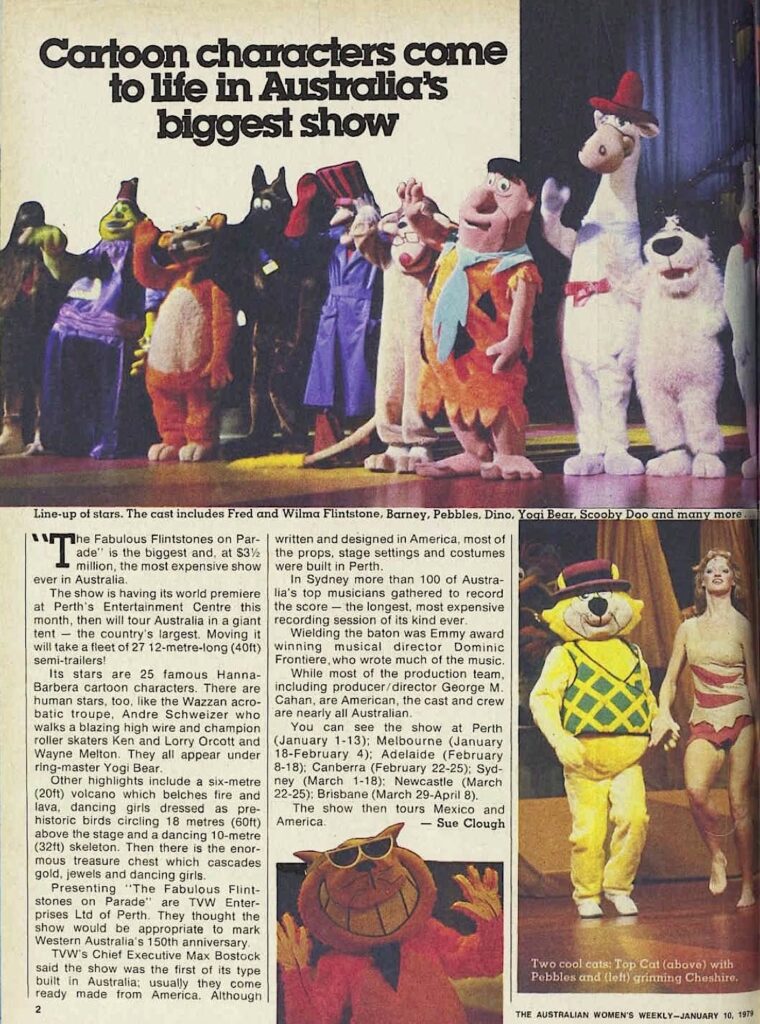
https://www.facebook.com/groups/watvhistory/posts/2189489331165248/
There was a release of a 14-volume Sesquicentenary Celebrations historical series for the occasion which was first proposed by the Perth Chamber of Commerce in 1971 and expanded under Premier Sir Charles Court.
The 14 commissioned titles covered diverse aspects of Western Australian history, culture, environment, and society:
- Aborigines of the West
- Agriculture in Western Australia
- The Beginning: European Discovery and Early Settlement of Swan River
- Education in Western Australia
- Environment and Science
- Essays on Western Australian Politics
- A History of Commerce and Industry in Western Australia
- Immigrants in Western Australia
- The Literature of Western Australia (edited by Bruce Bennett)
- Mining in Western Australia
- Western Landscapes
- Western Towns and Buildings
- Westralian Portraits
- Westralian Voices: Documents in Western Australian Social History
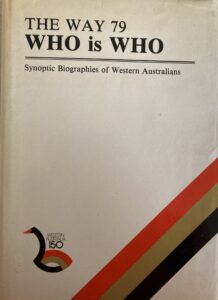
Alongside the 14-volume scholarly series, the celebrations included commemorative school diaries, historical plaques, and community publications like Reflections: Profiles of 150 Women who Helped Make Western Australian History and “The Way 79 Who is Who” – a book of synoptic biographies of West Australians.
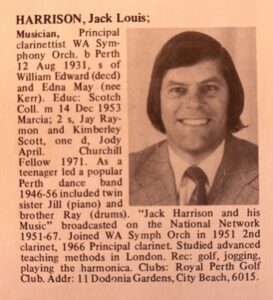
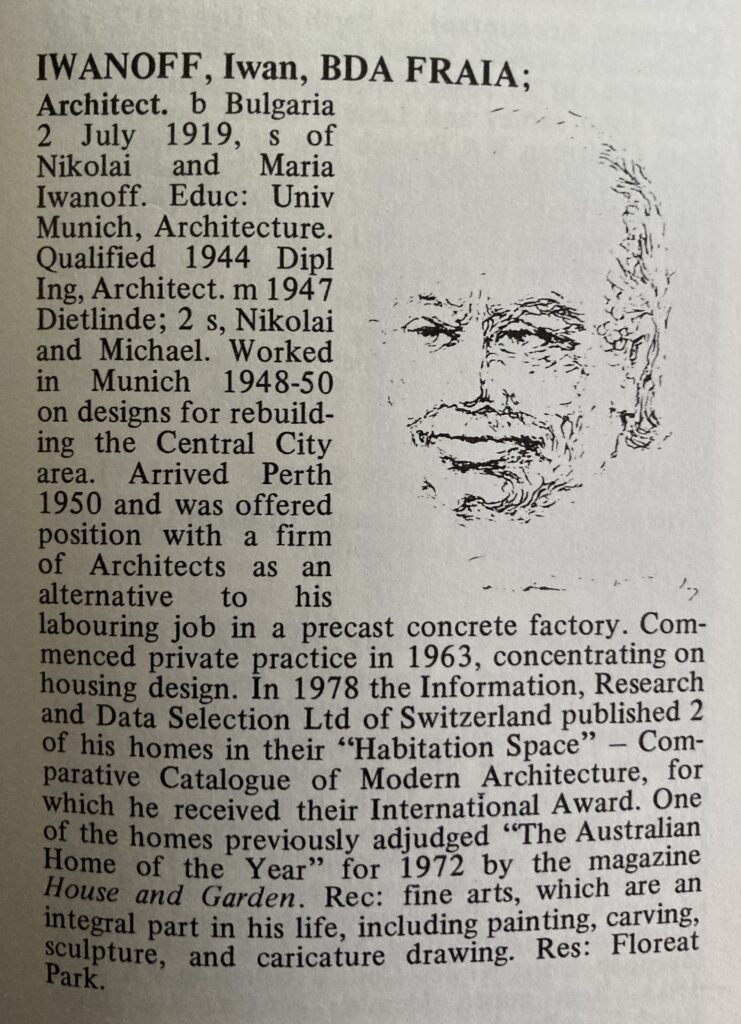
Major national and international cultural events to Western Australia. Two notable musical milestones occurred under the WAY ’79 banner that year:
The Australian National Band Championships: Held in Perth from April 13th to 16th, 1979. This major competitive music event brought brass bands from across Australia to Western Australia to mark the anniversary.
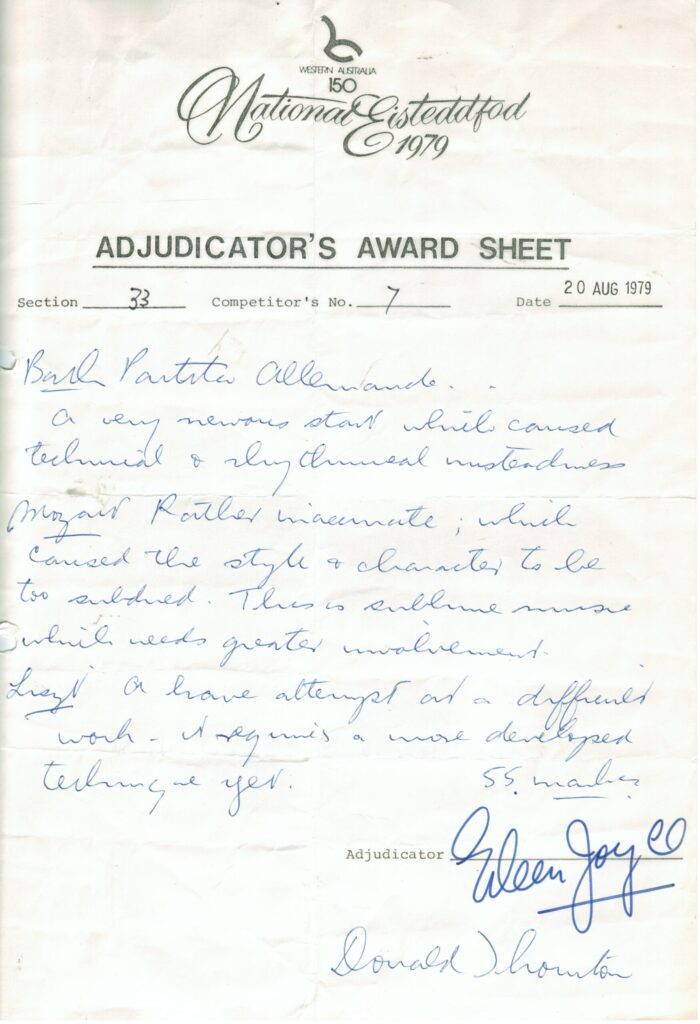
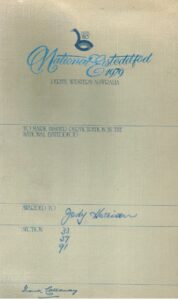 National Eisteddfod Recognition: Local Western Australian student musicians competed at the national level during this highly publicised celebratory year.
Young WA pianist Stephen Farmer famously received a special commendation from the iconic Australian pianist Eileen Joyce at the National Eisteddfod in August 1979.
West Australian concert pianist Donald Thornton was also an adjudicator.
T shirts, tea towels and memorabilia were popular.
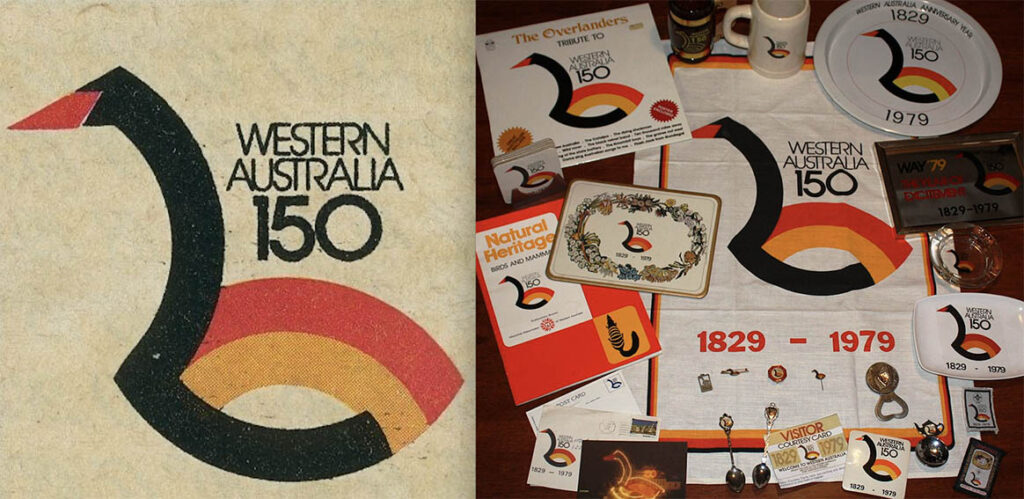
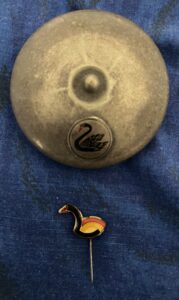
https://en.wikipedia.org/wiki/WAY_79
https://collectionswa.net.au/node/125588
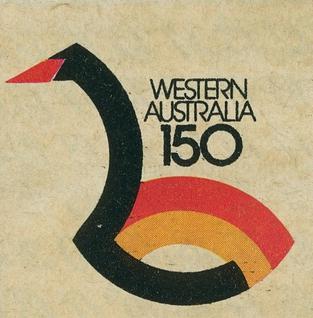
https://wa.campaignbrief.com/who-designed-the-way-79-logo/
WAY 79 – 150th Celebration of Western Australia
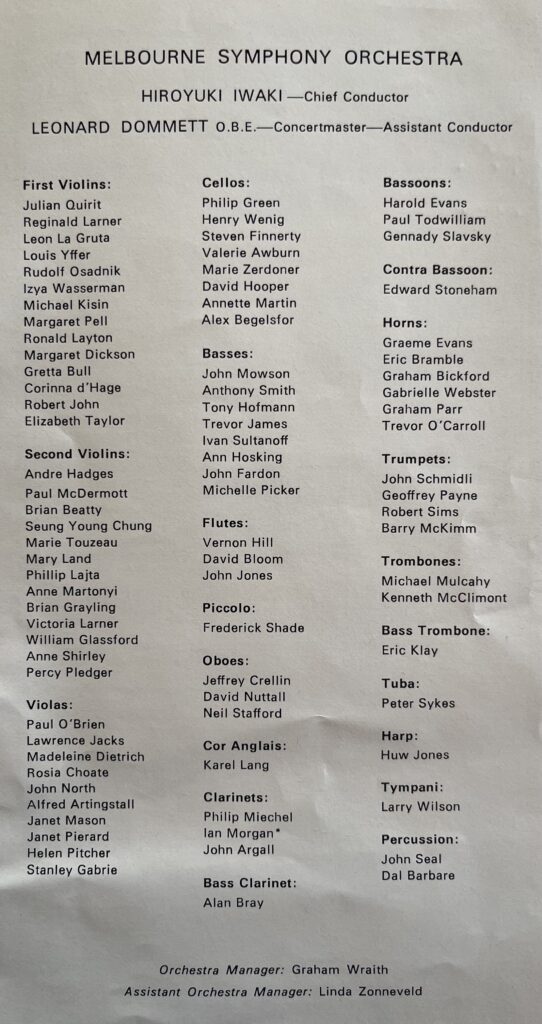
Thursday 12th July 1979 8pm Perth Concert Hall
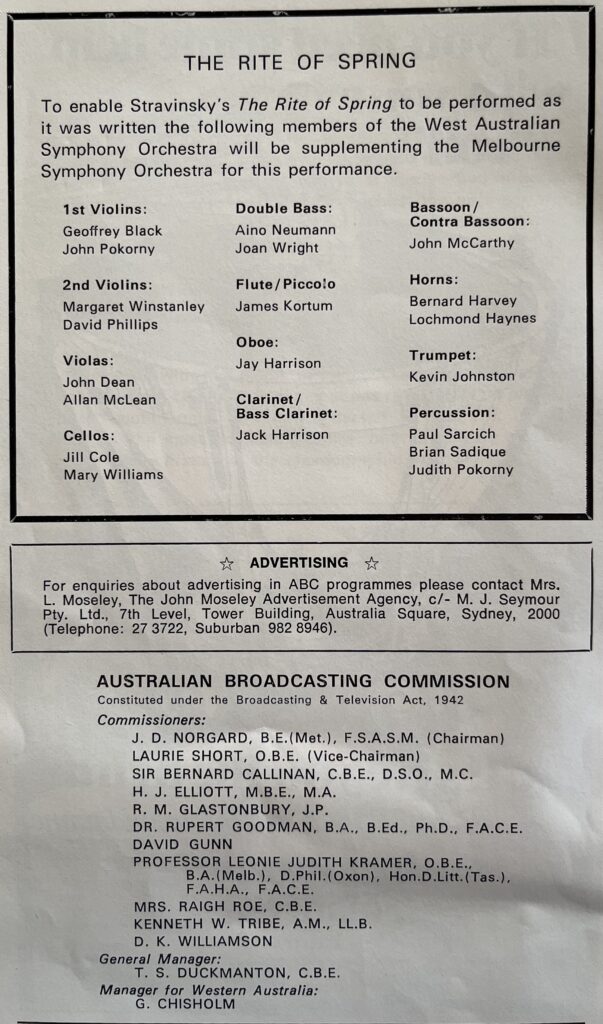
Stravinsky “The Rite of Spring” was performed by the Melbourne Symphony Orchestra conducted by Hiroyuki Iwaki.
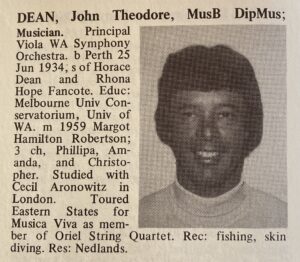
Jack and Jay Harrison were asked to augment the M.S.O. for this concert, as were John Dean, Aino Neumann, Bernard Harvey and Kevin Johnston in this Perth Premiere.
It brought together international delegations, tribal performers, and community groups from across the Indian Ocean rim and African nations (such as Kenya, Tanzania, Somalia, Mozambique, and the Malagasy Republic), alongside local Australian and Aboriginal arts organizations.
The inaugural festival was directed by Professor Frank Callaway.
Sunday September 23rd 1979 3pm.
The Australian Broadcasting Commission presents a FREE AUSTRALIAN COMPOSERS’ WORKSHOP
In conjunction with the Department of Music, the University of Western Australia as a contribution to the Indian Ocean Arts Festival and on the occasion of the 18th General Assembly of the International Music council (of UNESCO)
The West Australian Symphony Orchestra with Conductor: Patrick Thomas
Soloists Jill Mowson (bassoon), Jack Harrison (clarinet)
Works by Peter Sculthorpe, David Tunley, James Penberthy and John Exton.
Basil Kirke Studio A.B.C. Perth
The West Australian Saturday September 22 1979
The Australian Broadcasting Commission presents a FREE AUSTRALIAN COMPOSERS’ WORKSHOP
(from the printed program)
Concerto for Clarinet and Strings DAVID TUNLEY
Soloist Jack Harrison
The Concerto for Clarinet and Strings combines elements of rich romanticism with the more pungent harmonies and buoyant rhythms of the 20th century “neo-classic” idiom. It was written for Jack Harrison, whose particular style of playing moulded much of the works character, particularly in the cadenza of the opening movement which is accompanied by a solo double base whose throbbing rhythms and deep sounds is reminiscent of the didgeridoo. The slow second movement catches an intensity of expression eminently suited to the solo instrument giving way to a lilting dance in the finale.
Concerto for Bassoon and Orchestra JAMES PENBERTHY
Soloist Jill Mowson
The Bassoon Concerto was written in November 1954 for the West Australian Symphony Orchestra’s John Cran. He never played it and the first performance was given by George Dreyfus with his own Melbourne Orchestra 15 years later. There were only two movements consisting of fast and slow sections showing the agility of the instrument in merry if not clownish mood, and in contrast and eloquence in a more reflective manner. A new second movement, very serious in nature, was written this year specially for the present Jill Mowson performance. The old second movement now becomes the third.
Australian Works in ABC Concert – By Derek Moore Morgan
The ABC Basil Kirke Studio was the setting yesterday afternoon for a workshop concert of music by contemporary Australian composers. It was arranged in conjunction with the University of W.A.’s Department of Music as a contribution to the Indian Ocean Arts Festival. David Measham replaced conductor Patrick Thomas at short notice. Measham directed the West Australian Symphony Orchestra in secure performances of works by David Tunley, James Penberty and Peter Sculthorpe. Tunley, as the only composer present, gave a brief background to his Concerto for Clarinet and Strings in which Jack Harrison (to whom the work is dedicated) was the soloist. Possessed by a clarinet part of considerable technical difficulty, this piece was suave. Elegantly finished phrases and strings and soloist complimented each other in a deftly assorted variety of tempi, moods and rhythms.
James Penberthy, writing for larger orchestral forces, occasionally thickened his textures so that the rather reticent solo instrument in his Concerto for Bassoon and Orchestra had something of a struggle to survive. But bassoonist Jill Mowson played it with pleasantly controlled tone. Peter Sculthorpe’s recent “Mangrove” evokes a quality of “Australian” atmospheric sound, using conventional orchestral means in new and unusual ways. A brass prelude leading to a lengthy divisi cello passage moved to high wavering violin sounds. It travelled to percussion and brass for the ending to create a picture of some features of a desolate land. It is a piece that deserves rehearsing.
The West Australian Monday September 24 1979 page 27
A Shame this music remains a Stranger – By Anne Hodgson-Goodman
Why do composers today continue to write music when so few people care to hear it? That was the question reviewed by an ABC Workshop of contemporary Australian compositions in the Basil Kirke Studio last Sunday. The orchestra’s performance must have satisfied David Tunley. The concerto was inspired by the technique of Jack Harrison, principal clarinettist of the WASO who, as soloist at the workshop met the considerable technical difficulties with mastery and style. Although the work is not easy to perform, Tunley never lost touch with musicality. In different ways, each of the three movements demonstrated a fine compositional ability. The general impression was matched by Jill Mowson, the soloist in James Penberty’s Concerto for Bassoon and Orchestra. But she had a more difficult task. The proliferation of ideas in the orchestra made at times an uncomfortable background for the comparatively soft-toned bassoon. Nevertheless, the tonal colour of the instrument was well employed throughout the work, and Jill Mowson demonstrated her technical expertise and understanding. Finally, the audience heard a recent work by Peter Sculthorpe – Mangrove for Orchestra.
The Sunday Times September 30 1979
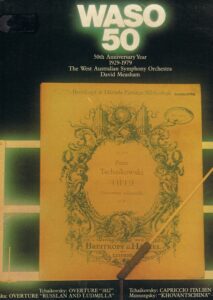
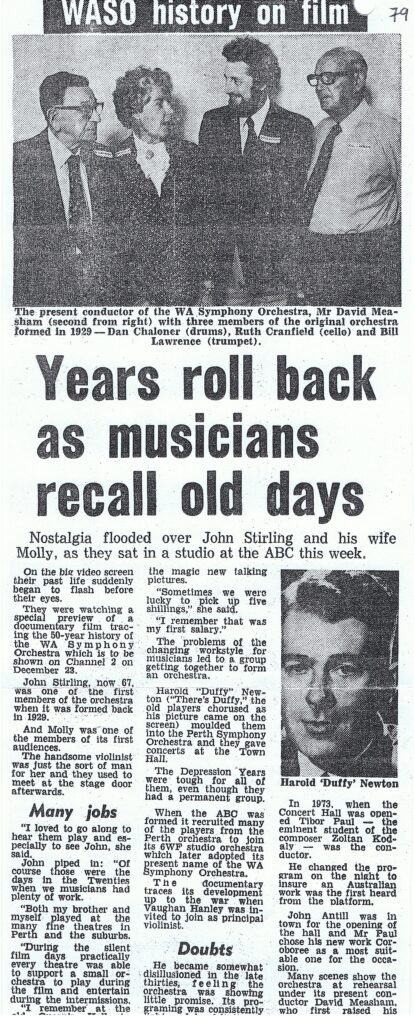
Coincidentally, it was the 50th anniversary of the West Australian Symphony Orchestra and an album and a documentary was made for the occasion.
Happy Birthday WASO – By Derek Moore Morgan – ABC Documentary “FIFTY YEARS ON”
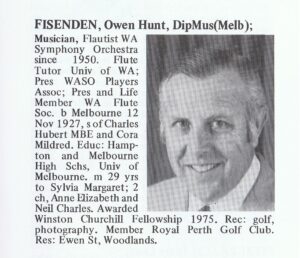
“Fifty Years On” is the title of an unusual hour long television documentary to be screened by the ABC on Sunday, December 23 at 9:30 pm. Commemorating the 50th anniversary of the West Australian Symphony Orchestra this program traces the Orchestra’s evolution in pictures and sound. Nostalgic shots of Perth’s palmy theatre orchestra days are swiftly followed by the traumatic depression period for the musicians, sparked by Al Jolson and the arrival of talkies in Australia in 1928 and Perth a year, later bringing unemployment in its wake. Rare pictures often had to be obtained from former players, now long retired, or from relatives. A can of early black and white film was accidentally discovered by an ABC employee among outdated material scheduled for the trashcan and was mercifully preserved. The Perth Symphony Orchestra is depicted on stage at His Majesty’s Theatre in 1931 with nearly 40 musicians headed by conductor Harold Duffy Newton. The Orchestra’s name changed to the W.A. Symphony Orchestra in 1950 with the State Government, the Perth City Council and other municipal authorities joining forces to subsidise it. Two of the Orchestra’s longest serving members – clarinettist Jack Harrison and flautist Owen Fisenden joined that same year. The role of conductors is long and sometimes distinguished, including names such as Nelson Burton, Ernest Roberts, Henry Krips, Rudolph Pekarek, John Farnsworth Hall, Thomas Mayer and Tibor Paul. Vaughan Hanly the violinist and WASO’s leader for almost 40 years, speaks with affection of the Orchestra’s past and expresses his confidence in the shape of things to come. Backed partly by rehearsal shots of today’s musicians at work with conductors David Measham and Peter Eros, the film highlights the Orchestra’s community role travelling with it on country tours and moving behind the scenes during rehearsal and recording sessions. Devised, directed and produced by David Witt, it is compulsory and compulsive pre-Christmas viewing for the State’s concert-goers.
The West Australian Tuesday December 18 1979