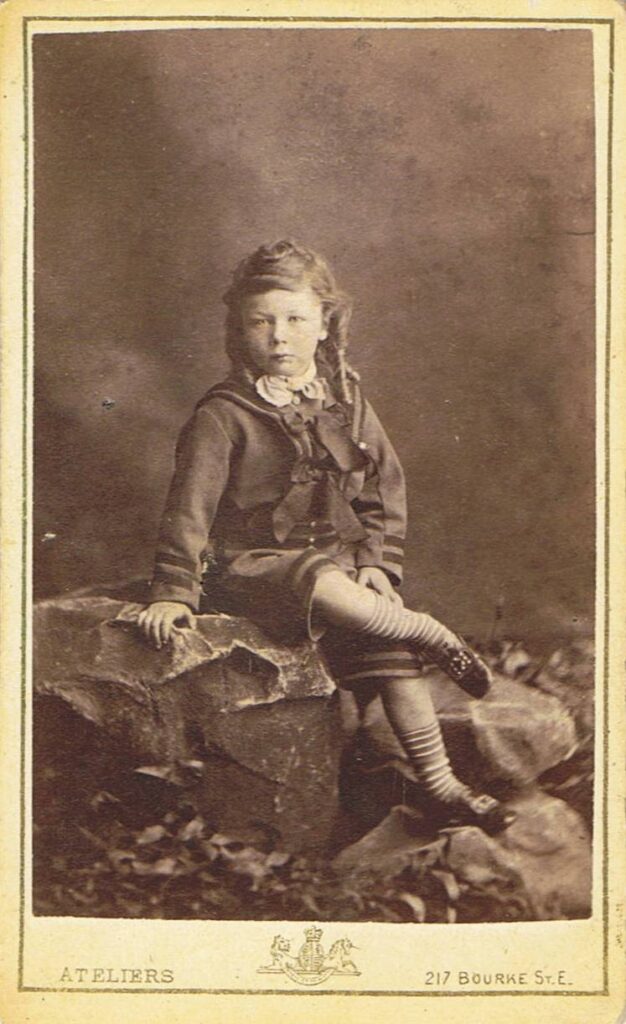
Arthur Dight Harrison was born in the Harrison family home in Mason Street Hawthorn Melbourne at 4.45pm on 3rd October 1871. He was the eighth child of the twelve children of Edward George Harrison (born 25th July 1928 in Jamaica) and Mary Frances Dight (born 23rd August 1837 in Campbelltown, New South Wales, Australia). Edward immigrated to Melbourne in 1853 and married Mary on the 18th Mar 1858 at St. Peter’s Church in Collingwood. The Harrison and Dight families both came from wealth – the Harrisons from slave trade and plantations and the Dights from their early roots in colonial Australia’s land endowments.
Arthur was only 10 years old when his father Edward George Harrison died and was educated at home and then later at Hawthorn Grammar School, Melbourne.
Harrison folklore insists Phoebe Alice Parsons was employed in service by the Harrisons at their home in Mason Street, Hawthorn and Arthur fell in love with her. The Harrison family disapproved of Arthur’s romance with Phoebe and they moved to Perth in order to marry. Why Perth was chosen is a mystery. Perhaps it was due to the economic depression in the eastern states and the discovery of gold in Western Australia and consequent need for tradesmen.
One can only assume that Arthur had been provided with some financial support from his wealthy Melbourne Harrison family when they shipped him to the Western Colony. (His mother Mary Frances (nee Dight) lived in Hawthorn until her death in 1927 and Arthur was not a beneficiary in her will.)
At the time of their marriage in August 1896, Arthur Harrison is from Subiaco and Phoebe Parsons is from Perth.
Arthur and Phoebe were married on the 22th August 1896 in the old wooden Wesley Methodist Church at 113 Charles Street, North Perth. Their witnesses were William Morham and Martha Ann Parsons (nee Griffin), Phoebe’s widowed sister-in-law.
Presumably, after their marriage in August, Phoebe moved in with her new husband Arthur Harrison at 256 Perth Street Subiaco.
Remembering that Arthur and Phoebe (even as hired help) had come from a stately mansion in Hawthorn, their accommodation in Subiaco would have seemed basic. If Arthur had managed to build even a wooden single room they would have had to cart water, use lamps for light, light fires for warmth and cooking, and toilet and bathroom facilities were non existent.
In October 1895, Subiaco residents had convened an open air meeting and started the “Subiaco Progress Association” in an effort to control local affairs such as schooling, roads, water, sale of food, keeping of animals and disposal of rubbish and sewerage. The first report on 5th August 1896 stated “that of the completed dwellings and tents there were 74 without any sanitary conveniences – of which 43 were tents and 31 others. That there were 23 cesspits in Subiaco. That there were 14 closet buildings with no receptacles.” Disease was an ever-present threat for Subiaco pioneers [1] a fact that Arthur and Phoebe knew only too well with the death of her brother Alfred Parsons from typhoid 9 months prior.
Arthur was a carpenter and the Harrisons built a weatherboard cottage at 256 Perth Street Subiaco.
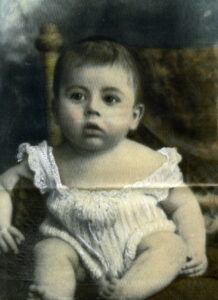
According to 1898 The Western Australian Directory [Wise’s], Arthur Harrison was living in Perth Street Subiaco in 1898 where WILLIAM EDWARD HARRISON, the first child of Arthur and Phoebe, was born on the 15th January 1898 in Subiaco, Western Australia, Registration 4176. Births primarily occurred at home, typically involving the assistance of a midwife, female relatives, or neighbours. Doctors were rarely present at home births in 1898, as they were few in number and often called only for emergencies or by wealthier families. Midwives like Frances Catherine Barnes and Elizabeth Alice Bell were known to be working in the Subiaco area during this early period.
Arthur and Phoebe had a portrait photo taken of their firstborn, which indicates that they could afford this expense.
According to the 1899 Western Australian Directory (Wise’s) Arthur Harrison was living in Subiaco.
Phoebe’s widowed sister-in-law Martha remarried on 1st March 1899 to grocer, Harold Bertie Hopkins and lived at 62 Newcastle Street, Leederville. They had their first child Vera May in 1900. Harold had a grocery and mixed business in William Street which no doubt was utilised greatly by the Harrison family. It imported tinned goods and bulk foods.
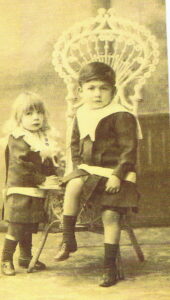
Second child of Arthur and Phoebe, ARTHUR LOUIS HARRISON, was born in Subiaco on 30th March 1900.
Third child of Arthur and Phoebe, NELLIE FRANCES HARRISON was born in Subiaco on 25th September 1901.
By October 1901, Phoebe and Arthur had 3 children under 4 years old.
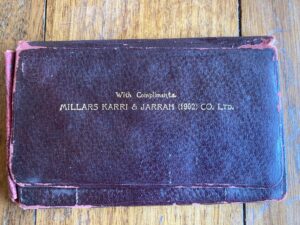
Arthur was doing business with Millars Karri and Jarrah Forests Limited which was founded in 1902 after the amalgamation of eleven timber companies across Western Australia including the Canning Jarrah Forest Company which had their own railway line from Midland Junction to Canning Mills. Millars came to Midland Junction in 1903 and established a timber mill, yard and hardware store on Railway Parade beside the Midland Railway Company of WA passenger line with Millars also having their own siding from the line until the early 1950’s.
In 1903 the Harrison family are registered as living in 256 Perth Street (now known as Churchill Avenue) and Arthur’s occupation a carpenter.
256 Perth Street was a weatherboard cottage with sash windows and a picket fence. It had turned timber verandah posts and ornate wooden fretwork. We know that a little later they had a lemon tree, garden with pansies, chickens, a cat and a pet parrot. In 1903 electricity was available in Subiaco.
Arthur and Phoebe Harrison’s children learnt music, which is an indication of their financial ability to afford lessons, instruments and possibly a piano and also their consideration of music being a worthy subject during a time when education was merely a path to employment.
Subiaco was rapidly transforming from a sparse settlement into a bustling residential and commercial suburb, characterized by Federation-style architecture, including brick cottages and ornate villas. Key developments centred around Rokeby Road and Hay Street, featuring the Subiaco Hotel, the Municipal Council chambers, and early timber yards.
SUBY SNAPS.
Saturday 6 October 1906
We understand Mr. J. H. Prowse will not contest the Mayoral election.
A local doctor’s horse put in Wednesday morning in careering round the town, with a sulky attached. No damage was done.
King’s Hall was occupied on Wednesday (3rd) by the Subiaco Tennis Club, when the annual ball was held, and was attended by about 30 couples.
The Bishop of Perth will open the new Anglican Church to-morrow week. Morning service will be attended by His Excellency the Governor and suite.
On Wednesday night the Subiaco Fire Brigade Band inaugurated a series of moonlight concerts in the Municipal Gardens. There was a large attendance, and the programme submitted by Bandmaster Partington was much appreciated. These concerts will be continued weekly with the approval of the council.
On Thursday night Mr. A. J. Kensitt’s first annual ball was held at King’s Hall, when 90 couples kept matters merry until the early morning hours. Mrs. Reilly had charge of the catering, and Sheridan’s band supplied music. The costumes were varied. Amongst the fancy costumes were the following: —Miss Brack, night; Miss Egan, orange girl; Miss Kensitt, Spanish girl; Miss Gallagher, Harlequin ; Miss M. Gallagher, Bow Bell; Mrs. Kealy, Ruinahin; Miss Lawson, Admiral; Miss Hogan, fairy Princess ; Miss Batty, Topsy ; Mr. Dixon, Druid; Mr. Davis, Seaforth Highlander; Mr. O’Shea, clown; Mr. Davies, Peirrot; Mr. Drabble, Knight of Garter; Miss Allen, Folly ; Mr. Henderson, Spring; Mr. Containo, Folly; Miss Middleton, night; Miss Miller, red riding hood; Miss Laidlaw, Blue Bell; Mrs. Smith, nurse ; Miss Davis, poppy ; Mr. C. Smith, jockey ; Mr. Adam, jockey; Miss F. Anderson, Peirrot; Mr. Hyman, coon; Mr. Harrison, coon ; Miss Harris, ping pong girl; Miss Harris, red, white and blue ; Miss Bennett, folly ; Mr. W. Richardson, Jester; Miss Deldhurty, winter ; Mr. Brett, jack taf; Mr. Stanfield, A.L.H.; Mr. Smith, cricketer.
Express (Perth, WA : 1905 – 1907), Saturday 6 October 1906, page 2
Arthur and Phoebe’s last child CHARLES GEORGE HARRISON was born 20.8.1907.
During the early 1900s, Subiaco was rapidly expanding with Federation-era weatherboard and brick cottages. Operating as an independent builder, Harrison would travel from the suburb of Subiaco across into the city center to take on major building contracts and structural maintenance. In November 1908 Arthur Harrison was working on the Girls’ Orphanage on Adelaide Terrace, which we know from a letter Nellie sent in to the Daily Newspaper:
PRIZE LETTER from Nellie Harrison – 256 Perth-street, Subiaco.
Dear Uncle Tom, — I thank you for the nice card you sent -me for my birthday. My dada is working at the Girls’ Orphanage, on Adelaide Terrace, and he says all the children look so nice and happy, and well-cared for there, and when I am older I am going to visit them. Enclosed sixpence for their Xmas Cheer Fund. Your loving little niece, NELLIE HARRISON, aged 7.
Dear Nellie,— I thank you for your subscription for the Orphans’ Christmas Cheer. I would be, very, pleased if you would save your pennies and buy a present for one of the orphans. If you send something to me I will write the name of one of the children on the present, and will put it on the Christmas tree, x x x x. Uncle Tom The Daily News Saturday 14 November 1908 page 9
18/8/O8 – TO BUILDERS.
TENDERS are invited until noon MONDAY, August 24, for the ERECTION and COMPLETION of ALTERATIONS and ADDITIONS to the GIRLS’ ORPHANAGE, Adelaide-terrace, Perth, for the Diocesan Trustees. No tender necessarily accepted. Plans, specifications, and conditions of contract can be seen. at our Offices. HOBBS, SMITH, and FORBES, Architects and Surveyors, Weld Chambers, St. George’s Terrace, Perth. The Daily News Thursday 20 August 1908 page 1
GIRLS’ ORPHANAGE ADELAIDE TERRACE
“ONE OF THE STAFF” Makes Certain Charges Calling For Inquiry
Our criticism, last week, of the Perth Girls’ Orphanage has evoked a caustic reply from a correspondent who hides her anonymity under the nom de guerre of, “One of the Staff”. The P.G.O., like other institutions maintained with a similar object, is subsidised by the state to the extent of 1/2 per capita per diem, an allowance which is, in the majority of instances, ample enough to feed and clothe the inmates on the scale of magnificence characteristic of the menage of these eleemosynary reformatories. The charges made by “One of the Staff against the management of the Perth Girls’ Orphanage are serious enough to call for an independent inquiry by the Superintendent of Charities, for it may be taken for granted that the State is nominally entitled to exercise ordinary supervision over the expenditure of the subsidies paid to the institution.
“One of the Staff” writes: lt is high time the authorities knew how the public, money is spent at the Girls’ Orphanage, in Adelaide Terrace. I have, been here nearly six months, and am now leaving it, thoroughly disgusted. The matron occasionally lectures the members of the working staff, the burden of her remarks being that we should do all things for the children free of charge, and from: sheer “affection” for them. But I fail to see where HER love comes in for the orphanage is a splendid home for her and her relations. Her sister is a trained nurse,
engaged in private nursing which brings her in £3 per week when she gets a case. But when she’s out of work she boards and lodges at the orphanage where her aristocratic instincts, are molly-coddled, so far as the slender resources of the academy will permit. She breakfasts in bed and is waited on. hand and foot, by one or other of the orphans, who are taught to regard her as a personage of considerable importance. – Some time ago the matron’s mother arrived in Perth by the late train. One of the orphans was detailed to wait up for her, to prepare supper and coffee for Her Majesty and next morning the same unfortunate child was compelled to rise at an early hour and wait on the matron and her mother whilst they breakfasted in bed. lt is only necessary to add that the latter was permitted to stay at the orphanage for a month eating food that should have been the portion of the unfortunate inmates. Also, when the girls are sent out to service, they are frequently assigned to the personal friends of the matron. Our correspondent has made it quite clear that the management of the P.G.O. is conducted on undesirable lines, that greater satisfaction and better results would probably be attained if the general direction of affairs were vested in a committee composed of noble minded women, who would place the interests of the lone and forlorn orphans before every other consideration. At the same time we would suggest to Mr James Longmore the advisability of inquiring into the charges made by One of the Staff for if our correspondent speaks by the book, it, is obvious that, the State subsidy is occasionally utilised for purposes that are not nominated in the bond. Sunday Times Sunday 5 January 1908 page 3
Western Australia, as part of the Commonwealth of Australia, was officially committed to World War I on August 4, 1914. When Britain declared war on Germany at 11 p.m. on 4 August 1914 (London time), all dominions of the British Empire, including Australia, were automatically at war. The official enlistment age for the Australian Imperial Force (AIF) was generally 18 to 45 years. While volunteers could join at 18 with parental consent, the standard minimum age was often 21, and some younger men falsified their age to fight. Initial 1914 requirements were stricter, but upper age limits were raised to 45 by 1915.
A total of 32,231 individuals from Western Australia enlisted, representing 37.5% of males aged 18 to 44. Arthur Harrison was aged 43 and his oldest son William aged 16. William enlisted in 1916 aged 18.
The Harrison family contributed to many concerts and fundraising events whilst their son William Harrison was serving overseas.
World War I was officially declared over on 11th November 1918. William was in Jerusalem at the time and his diary entry states “Everybody has gone mad. Jews are ringing the Liberty Bell. Artillery firing blank shells and the boys in the regiment are sending up rockets.”
William Harrison embarked from Egypt for Australia on 21st June 1919 on the “Madras” and arrived in Fremantle on Friday 25th July 1919. After the war, William lived with his parents at 256 Perth Road Subiaco. When he returned, his siblings were 3 years older than when he had last seen them. Lou had gone from aged 16 to 19, Nellie from 15 to 18 and Charlie from 9 to 12.
Arthur Dight Harrison’s sister Gertrude Scott (nee Harrison) died on 13th March 1920 in Melbourne aged 57. The family knew she had been unwell as in a letter overseas to William Harrison in 1918 from his grandmother Mary, Gertrude is described as “an invalid confined continually to her bed. She is a Christian woman & is resigned & cheerful under her sad lot”. Her son Frank Scott was a gunner in France in WWI.
SCOTT. -On the 13th March, at “Gallipoli,” Kew, Gertrude Jane, the dearly beloved wife of Harry Scott, N.S.W., second eldest loved daughter of the late Edward George and Mary Harrison, “Hilton,” Hawthorn.
By 1924 Arthur and Phoebe Harrison were living in Merewa Street, West Subiaco. Arthur and his son Arthur (known as “Lou”) were buying land and building houses.
On Sunday 10 August 1924 the engagement was announced in the Sunday Times of:
Edna May, younger daughter of Mr. and Mrs. W. Kerr of Leake Street, Bayswater, to William Edward, eldest son of Mr. and Mrs. A. D. Harrison, of Merriwa Street, Nedlands.
At the age of 27 on the 25th July 1925 at St Mary’s Church of England West Perth William Edward Harrison was married to the eighteen year old EDNA MAY KERR (born 12.8.1906 in Midland Junction, Western Australia). They lived at 64 Bruce Street Nedlands until their own house at 24 Highway (later Kingsway) Nedlands was completed by Arthur and Lou.
On 13th February 1926 in Subiaco, Edna gave birth to their son William Arthur Harrison who was the first grandchild of Phoebe and Arthur Harrison.
1926 was a busy and joyful year for Phoebe and Arthur with two weddings and two grandchildren born.
January 16th 1926, William’s sister Nellie married Edward Francis McDavitt with Charlie Harrison as a groomsman:
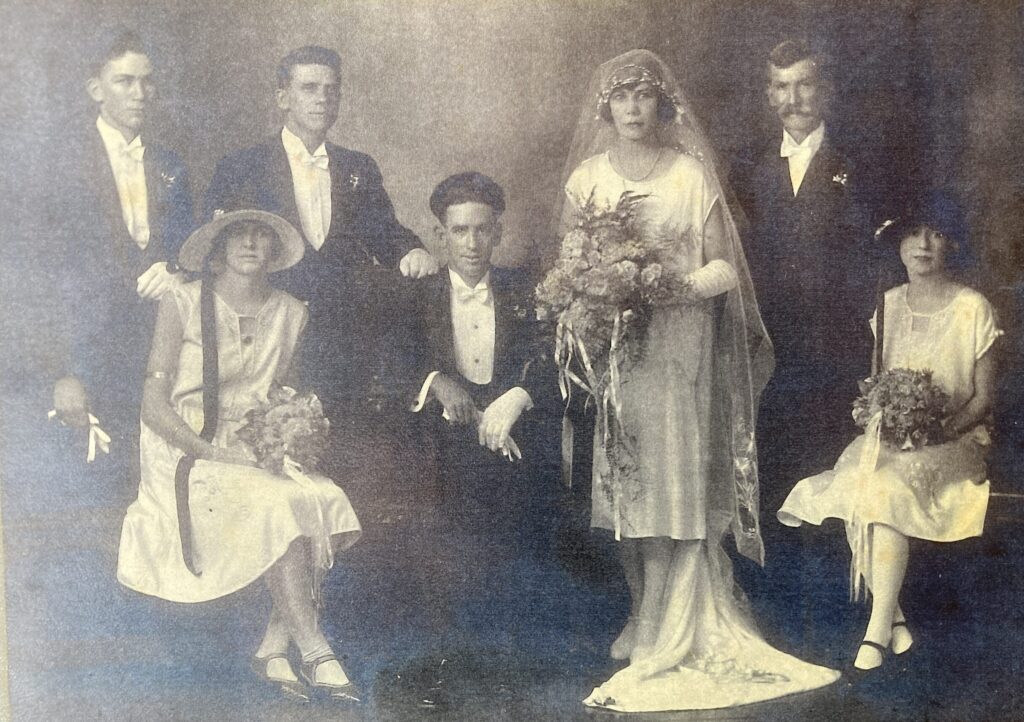
McDAVITT-HARRISON.
A pretty wedding was solemnised at St. Mary’s Church, West Perth, recently, by the Rev. Riley, when Nellie, only daughter of Mr. and Mrs. A. Harrison, of Nedlands, was married to Edward F., son of Mrs. and the late Mr. E. McDavitt, of West Perth, The bride, who entered the church, on the arm of her father, made a charming picture in a gown of heavy morocain, richly embroidered. The train of morocain was lined with shell pink georgette, and the veil fell softly from a becoming chaplet of orange blossom. A shower bouquet of roses completed her toilette. The bride was attended by two bridesmaids, the Misses Lily Faddfson and Marion Hobbs, both of whom wore dainty frocks of shell pink and powder blue crepe de chine respectively and black picture hats. The bridegroom was ably supported by Mr. Keckwick,
and Mr. C. Harrison, brother of the bride, was groomsman. After the ceremony a reception was held at Wembley Hall, where a large number of guests were received by Mr. and Mrs. A. Harrison, the hostess wearing to advantage a gown of black morocain, with trimming of crystal beads and black hat with ospreys. Mrs. McDavitt, mother of the bridegroom, was gracefully attired in embossed, morocain, with hat en suite. After congratulations and good wishes had been expressed to the bride and bridegroom, a happy time was spent at the wedding breakfast. The customary toasts were honored, and later music and dancing were enjoyed. Mr. and Mrs. McDavitt left by car, the bride travelling in a pretty gown of saxe blue morocain, with touches of red and a. smart black hat. Many beautiful presents were received, including cheques. Their future home will be at Cottesloe.
On February 13th 1926 William’s brother Arthur “Lou” was married to Vera Fryer and Charlie Harrison was best man:
HARRISON-FRYER
A pretty wedding was recently solemnised at St. Andrew’s Church. Subiaco, by the Rev. Greatorex, when Vera, only daughter of Mr. and Mrs. W. Fryer, of Jolimont, was married to Arthur Louis, second son of Mr. and Mrs. Arthur Harrison, of Nedlands. The bride, who entered the church on the arm of her father, looked charming in a frock French georgette over silk with briar embroidery, and pleating. Her veil was held in place by a coronet of orange blossom, whilst her train of ivory georgette, lined with shell pink and trimmed with ribbon and ideated flounces, was caught at the shoulders with sprays of orange blossom. The two trainbearers were little Miss Joan Murrie in dainty pink crepe de chine, with lace frills and. peaked cap of silver tissue, and Master Freddie Fryer (nephew of the bride) in a pink silk suit. The bride’s toilet was completed by a beautiful shower bouquet of white roses and fern. The bride was attended by two bridesmaids. Miss Vera Loggan and Miss Eileen Moffatt, the former wearing apricot georgette over silk : appliqued in pastel shades, and the latter wearing mauve brocaded georgette over silk. Both bridesmaids wore striking head dresses of Kilver tissue and carried bouquets of roses to harmonise with their frocks. The bridegroom was supported by his brother, Mr. Charlie Harrison as best man. and Mr. William Fryer (brother of the bride) as groomsman. After the ceremony a reception was held at Wembley Hall, Mrs. Fryer receiving the guests in a smart frock of Wedgwood blue morocain trimmed with coffee coloured lace and black hat with gold ospreys. Mrs. Harrison (mother of the bridegroom) was gracefully attired in black morocain enriched with crystal beads and hat en suite. After congratulations had been expressed to the bride and bridegroom a happy time was spent at the wedding breakfast. The usual toasts were honoured after which music and dancing was thoroughly enjoyed. Mr. and Mrs. Harrison left for their honeymoon at Busselton, the bride travelling in n. frock of cinnamon morocain richly embroidered and hat to match. Many beautiful presents, including cheques, were received.
On 27th May 1927, Arthur Dight Harrison’s mother Mary Frances Harrison (nee Dight) died in Melbourne. Arthur’s sons William and Lou had been to Melbourne prior to her death, but there is no indication that Arthur had been back since his arrival in Perth in 1895.
DEATHS
HARRISON.—On the 27th May, at her late residence, Hilton, Brooke street, Hawthorn, Mary Frances Harrison, relict of the late
Edward George Harrison, aged 89 years.
Mary Frances Harrison had seven living children at the time of her death, including Arthur. She died in her home at “Hilton” 8 Brooke Street Lower Hawthorn where she lived with her widowed son Charles Dight Harrison (and probably his daughter Nancy) and unmarried daughters Frances Alice Edith and Minnie May Mitchell. Executors of her will were her daughter Isobel Sophie and Charles Dight and her estate was bequeathed to Frances and Minnie with the direction for them to “give to each of the other members of my family something of mine as a memento or keepsake”.
The Harrison Hawthorn house was valued as being worth less that 500 pounds and Mary’s personal estate “within the jurisdiction” being less that 55 pounds – broken down to household furniture and affects 50 pounds and bank savings of 5 pounds. Probate was granted 22nd December 1930 – 3 years after her death. Isobel was Matron at Colac Hospital at the time of probate and her brother Charles signed the legalities over to her.
When Isobel retired, she came back to live with her sisters at 8 Brooke Street. Minnie May Mitchell Harrison was the last of Edward and Mary Harrison’s children to die. She outlived her Brother Arthur, remained at Brook Street until at least until 1954 (last census available) and died 8th June 1960 aged 82.
None of Edward Harrison’s sons had sons that procreated except Arthur Dight Harrison. Of Arthur’s 3 sons, only one has a descendant capable of keeping this branch of the Harrison name alive and that is through William Edward: son Jack Harrison; son Kim; son Mitchell (born 1997).
Whilst working in the Electoral and Titles Office (the Treasury buildings and Titles Office buildings bounded by Barrack St, St Georges Terrace and Cathedral Avenue) William Harrison bought blocks of land in Inglewood and Subiaco (40 acres) for about 10 shillings a block/acre. His brother Lou and father Arthur built houses on these blocks to sell.
This house at 112 Derby Road, Subiaco (now Shenton Park) later became the home of Vera and Lou Harrison.
Real Estate Matters
BIG SUBIACO FIGURES
£13,061 In Three Weeks
The Subiaco building surveyor (Mr. T. C. Taylor) reports exceptionally high figures for the past three weeks ended August 10. In all 27 permits were issued to a total value of £13,061. Of this number eleven are for brick houses, ranging in value from £692 to £1500. The latter is a seven-roomed house in Cooper-street for Mr. S. Moore. A five roomed brick dwelling in Derby-road is costing
Mr. A. Harrison £850, and another in Hampden-road for Mr. S. Moore is expected to cost £800. Mr. Moore is also erecting a brick house in Hardy-road at a cost of £780. ‘Two four-roomed houses in Bagot-road and Denis-street will cost £800 and £770 respectively. Dudley and Dwyer are erecting four weatherboard houses in Yilgarn-street at a cost of £2000, while one in. Herbert-street for Mr. A. Anderson will cost £500.[1]
SITUATIONS VACANT.
PLASTERER’S Labourer wanted.
Apply Harrison’s job, Leura-St., off Park-road, Hollywood, Nedlands. [2]
[1] The Daily News Thursday 16 August 1928 page 2
[2] The West Australian Saturday 26 October 1929 page 26
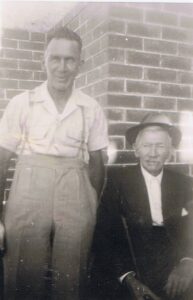
Arthur and Phoebe Harrison later lived in a house Arthur built at 18 Kitchener Street, Shenton Park. Arthur and his son Lou built many houses in Perth, including 24 Highway/Kingsway Nedlands.
|
Harrison |
C. G. |
Williams Road, Nedlands |
Morris Cowley |
13553 |
Metro Private Car |
1927-28 |
Arthur and Phoebe’s youngest son Charlie lived with them at Kitchener and in 1930 ran a milk supplier business and owned 2 horses. Charlie went into a shop on the corner of Lake & Aberdeen Streets to see if he could deliver milk. This shop was run by Ethel Longbottom, mother of sisters Ruby, Pearl and Emerald Koeford who lived at 105 Francis Street North Perth. Charlie initially dated Pearl and later married Emmie. Charlie, who was apparently very handy and excellent with woodwork, was also listed as a carpenter in the early 1930 electoral roles, so was possibly involved in the Harrison building business.
REAL ESTATE – 1935
Other new work authorised in the metropolitan area includes: – eight room brick residence, Highway Nedlands (1100 pounds) W.E. Harrison.[1]
A NEDLANDS RESIDENCE.
Inspection Today and Tomorrow of the Spanish-Californian type of design and consisting of a hall, lounge, dining room, two bedrooms, kitchen, pantry, bathroom, laundry, workshop and garage on the ground floor, and study, two bedrooms and sleep-out on the second floor, a gentleman’s residence, built by Messrs. A. Harrison and Son at 24 Highway, Nedlands, will be open for inspection from 2 o’clock until 6 o’clock today and tomorrow. Features of the interior are texture walls and plate rails, and wrought iron balustrading. The conveniences include gas heater, gas stove and gas copper and sewerage. From the sleepout a fine view of the river is obtained.[2]
[1] Sunday Times Sunday 3 March 1935 page 16
[2] The West Australian Saturday 24 August 1935 page 4
In Real Estate News, Arthur Harrison applied to make brick additions to 112 Derby Road, Subiaco (now Shenton Park) the to home of his son Arthur “Lou” and Vera Harrison and their daughters Valma and Judith.[1]
[1] The West Australian Saturday 25 April 1936 page 6
In November 1938, aged 66, Arthur Harrison was still a builder with a real estate building permit being granted: Fremantle – weatherboard house, Forrest Street, 550 pounds.[1]
[1] The West Australian Saturday 5 November 1938 page 7
Australia entered World War II on September 3, 1939, immediately following Britain’s declaration of war on Germany. Prime Minister Robert Menzies announced the involvement, prompting a rapid volunteer mobilization for the 2nd Australian Imperial Force (AIF) to support British forces in Europe and the Middle East, while initiating home-front preparations.
Charles Harrison enlisted in the Royal Australian Airforce in Harvey in August 1940.
Arthur Dight Harrison had an English accent and his favourite saying was “Too true”. He enjoyed drinking beer and whiskey at the pub and smoked a pipe resulting in cancer of the mouth.
According to Edna Harrison, Phoebe Alice Harrison had a lovely sense of humour – when Edna Harrison and Phoebe went on a trip to Melbourne to visit relatives, when dinner was served at Arthur’s brother Charles Dight Harrison’s house in Richmond, Charles did not start to dine with the others. When asked why he wasn’t eating, he replied “because I have no napkin”. When he died, Phoebe apparently said “where he has gone he won’t need a napkin”! Remembering that Phoebe had once been the kitchen maid at the Harrison’s household, it is not surprising she found this remark rude!
Edna Harrison also remembers Phoebe giving her good advice, such as when you have bad news to tell your husband, wait until he has had a good meal, then tell him!
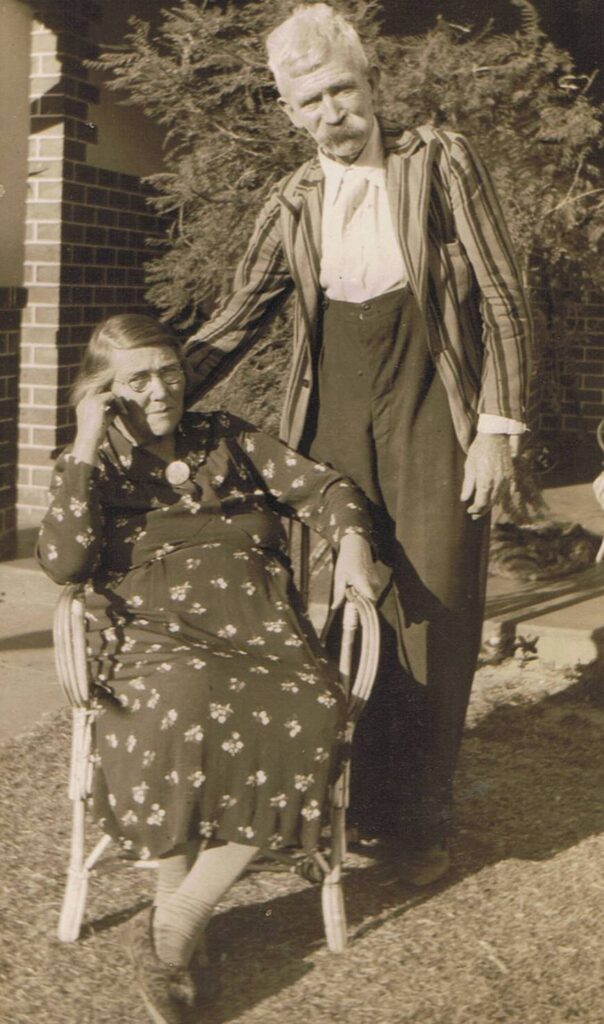
Jack’s grandmother Phoebe Alice Harrison died aged 70 on 29th May 1943 after having had a stroke and being confined to a wheel chair.
HARRISON. On Mar 29, 1943, in
Subiaco. Phoebe Alice. Dearly beloved wife of Arthur, of 18 Kitchener Street, Shenton Park. Loving mother of William, Arthur (Lou), Nellie (Mrs E. P. McDavitt) and Charles (RAPA); aged 70 years. Peacefully sleeping.
PROSPERITY LODGE. UAOD. No 333.
HARRISON – the Officers and Members of the above Lodge and Order are respectfully requested to attend the Funeral and Service for the late wife of our esteemed Brother, Arthur Harrison which will be conducted in the Crematorium Chapel. Karrakatta. THIS (Monday) AFTERNOON at 3.15 o’clock. Connecting train will leave Perth at 2.37 o’clock. W. GUMMOW, Secretary.
When Phoebe Harrison died, Charlie’s wife, Emmie, moved in at 18 Kitchener Street and helped her father-in-law, Arthur Harrison. Emmie Harrison remembered Arthur waking her one night to see if she had anything to wash his mouth out with – he had removed one of his teeth with a set of pliers as it had been troubling him! He washed his mouth out with salty water and then a large amount of whiskey! Arthur was still registered as a builder at this time.
When Victory Day finally came on May 8th 1945, Jack decorated his bike with streamers for the occasion.
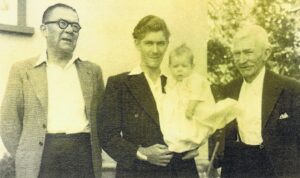
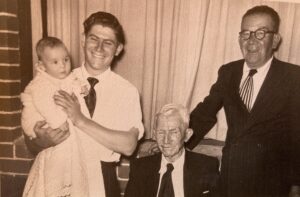
Later in life Phoebe and Arthur moved to 18 Kitchener Street, Hollywood (Nedlands) where Arthur continued on building projects with his son Lou and they enjoyed supporting their children and grandchildren.
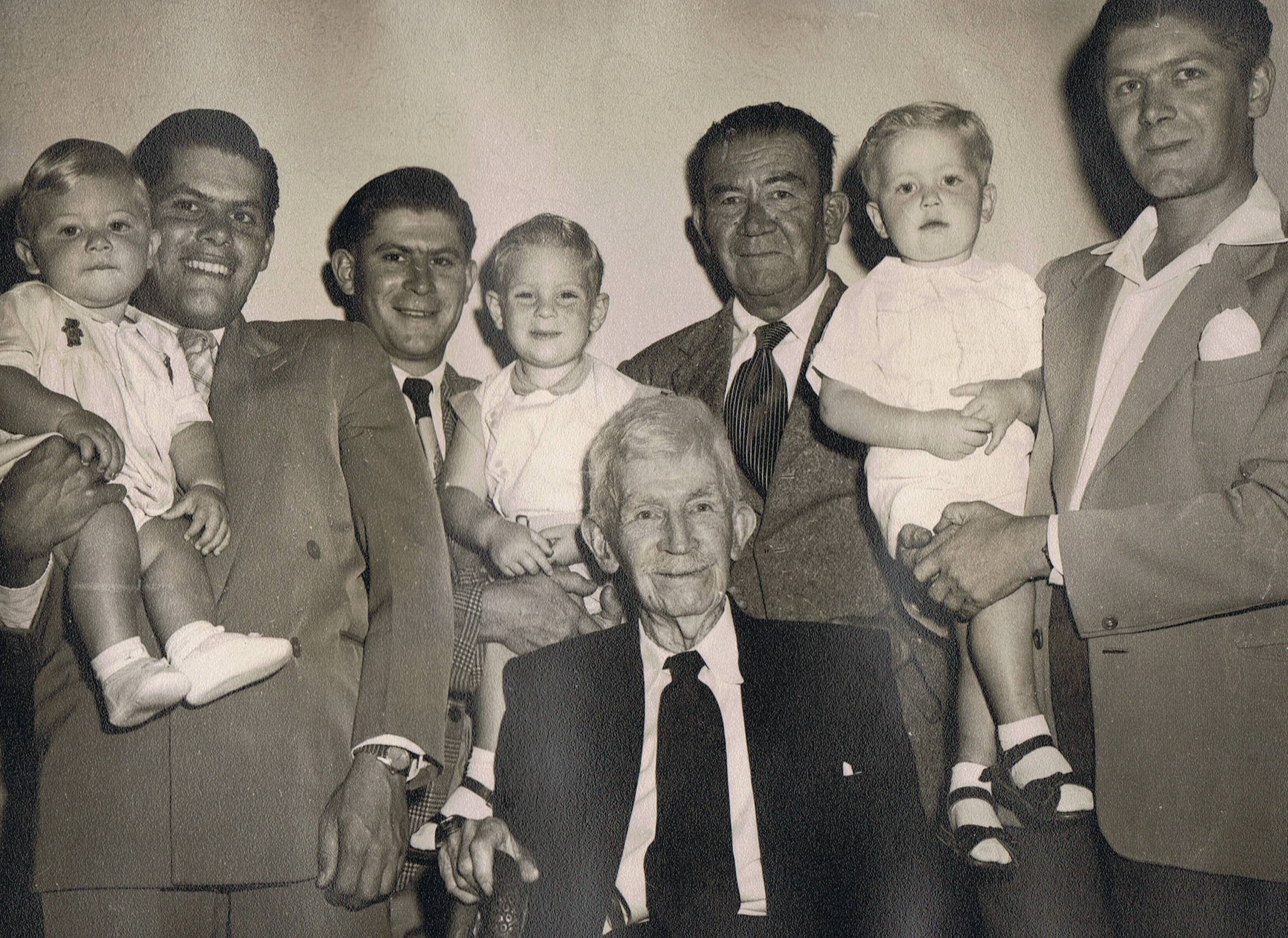
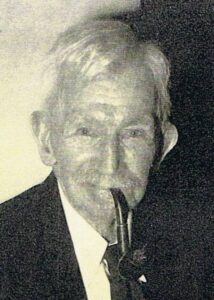
Arthur died on 27th February 1959 aged 87 after having been a widower for 16 years.