KERR
Kerr = Scots and Northern English: topographical name for someone who lived near a patch of wet ground overgrown with brushwood. A legend grew up that the Kerrs were left handed, from the Gaelic cearr meaning wrong, left-handed.
For five generations, the “Walter” Kerr family called their first born son William – quite a challenge for genealogists!
The Kerr family tree has been traced back to Robert Ker of Kersland who was killed at Flodden in 1513.
One can still view a stone set into the wall of a single storey building to the left of the farmhouse of Meikle Auchengree into which is carved the initials of Robert Ker and Bessie Campbell (his wife) from 1663.
Meadowhead farm Auchengree, Scotland, was given to William Kerr I in 1798 by his father Bryce Kerr of Meikle, Auchengree. William’s mother was Agnes Gilmour of Clerkland.
WILLIAM KERR II married JANET MONTGOMERIE and the record of the birth and baptism of their son William III can still be found in parish records in Meadowhead.
WILLIAM KERR III (born 21.9.1818) married ELIZABETH CRAIG. He was a carpenter.
He emigrated to Australia from Aryshire aboard the Black Eagle in about 1854 accompanied by his wife and four of their children.
Elizabeth died in 1862 so presumably the eldest reared the younger children. William III – committed suicide on 6.3.1872 aged 53. Two years later his daughter Margaret got married at her home at Boundary Street, Flemmington, Victoria, which may have been the family residence at the time.
The seven children of William Kerr III and Elizabeth:
Elizabeth (born Aryshire 1842 – 1907)
William IV (born Aryshire 1845)
Janet (born Aryshire 1851)
Robert (born Aryshire 1853)
Margaret (born Richmond, Victoria 1856 and married Frederick Austin de Groot, died 22.1.1919, buried at Wagga Cemetery)
Andrew (born Australia 1858)
Agnes (born Australia (1861 – 1913)
WILLIAM KERR IV (born 1845 in Beith Aryshire, Scotland) and aged about 9 emigrated to Australia from Aryshire aboard the Black Eagle in about 1854 with his family.
William IV married BETSY LORD (born in Newchurch, Lancashire, England) in Fitzroy, Victoria in 1871.
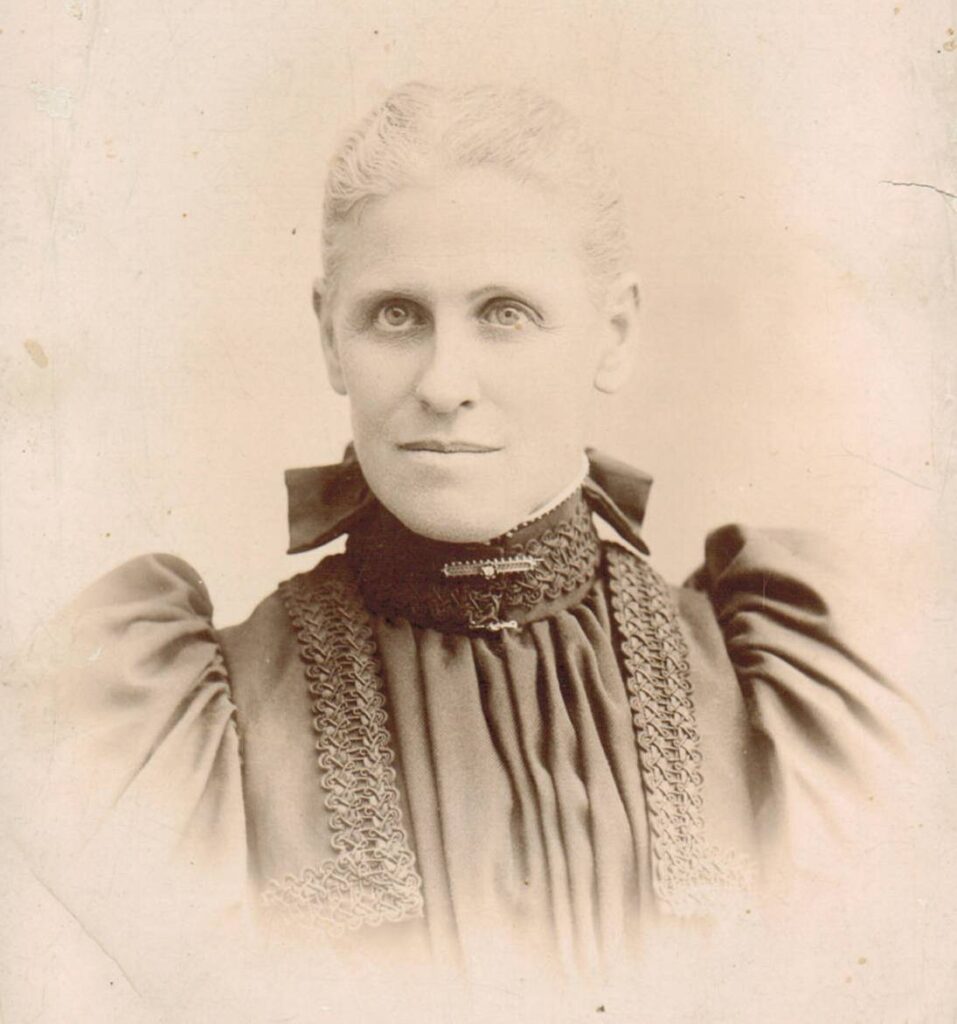
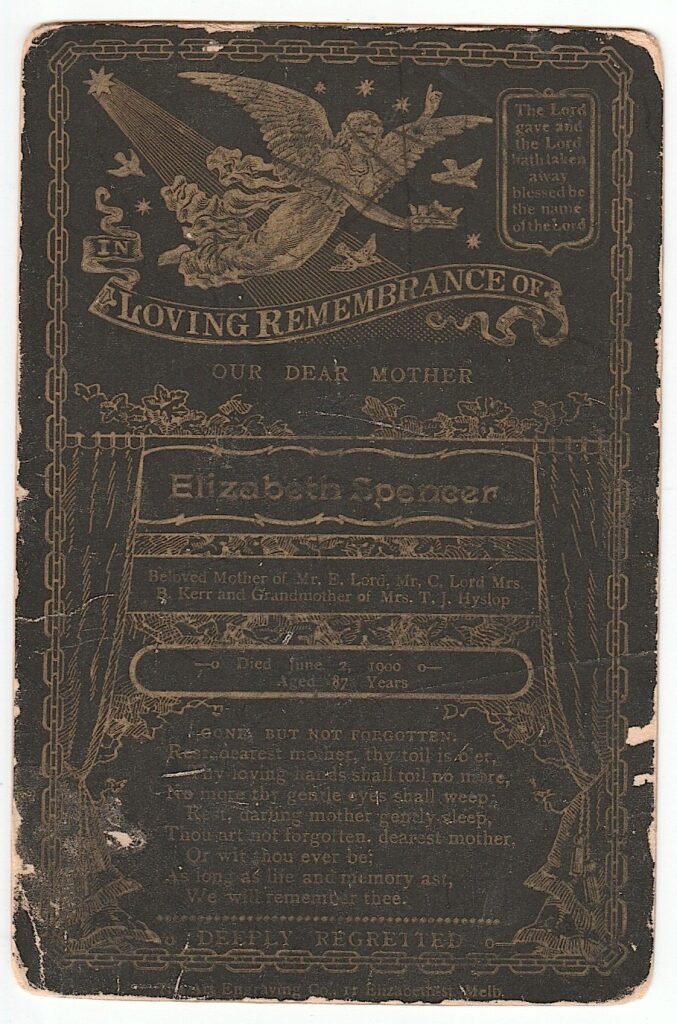
Betsy Lord’s mother was ELIZABETH LORD (nee SPENCER) who was born in 1813 and died 2.6.1900.
William IV was a salesman.
He died of Epilepsy aged 35 on 10.11.1880 in Fitzroy, Victoria and is buried in Melbourne General Cemetery.
The four children of William Kerr IV and Betsy:
Elizabeth (born 1872)
Montgomery (born 1872)
William (Walter) V (born 1874)
John Edmund (born 1878)
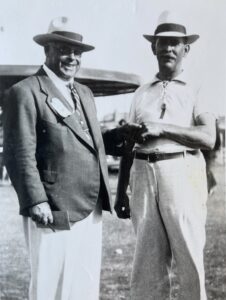
WILLIAM KERR V was known as “Wally” or “Walter”.
When William “Walter” Kerr was born on 8 June 1874 in Fitzroy, Victoria, his father, William IV, was 29 and his mother, Betsy (nee Lord), was 22.
He was baptised on 30th July 1874 at St Mark’s Church of England, Gore Street Fitzroy, Victoria. baptismal register 1855-1920.
Wally was only six when his father died.
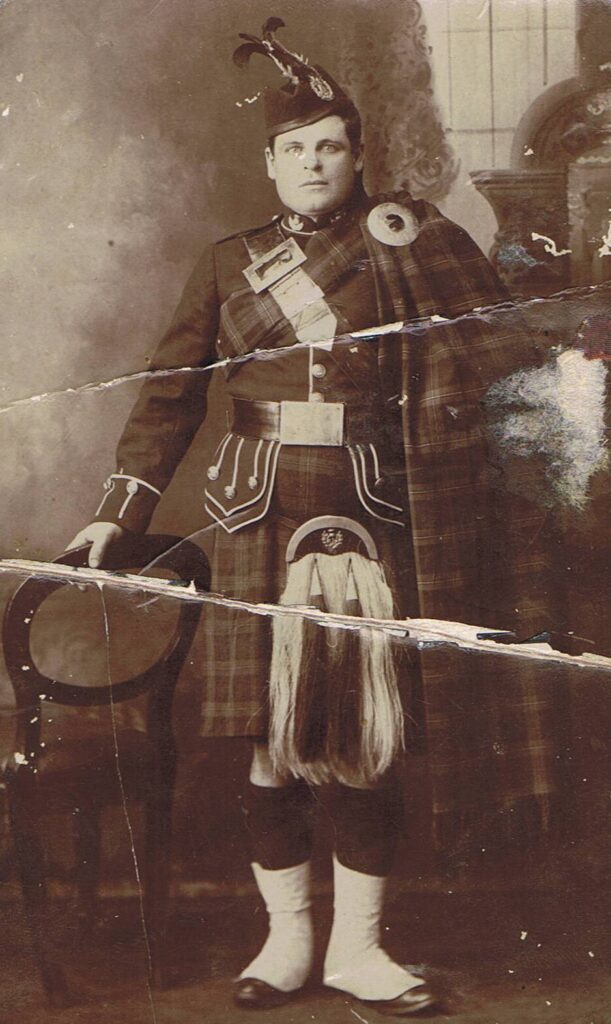
According to his Midland Railway service records Wally arrived in Western Australia about 1894 and joined the Railways in Fremantle as a carriage painter
In 1894, Western Australia’s railway network was expanding rapidly, driven by the gold rush and agricultural development. The Midland Railway (Midland Junction to Walkaway) was completed in 1894, requiring a large workforce. Workers often faced harsh conditions, with many from other states, including Victoria, or from Torres Strait Islander communities, constructing tracks.
In 1904, Wally transferred to the workshops at Midland Junction and served with the West Australian Government Railways for over 40 years until the time of his death on 11.3.1939 aged 64.
Wally was a champion cycler:
Wesleyan Methodist Church.
The Revs. H. W. Congrave and W. E. Poole entered upon their work in the Perth Circuit last Sunday, and will reside at Subiaco and East Perth, respectively. Sister Marian, in charge of the Sisters’ Home, will proceed to Adelaide at an early date, for a holiday. The Pleasant Sunday Afternoon Movement will be resumed on the first Sunday in May. Hospital Saturday and Sunday Movement at Fremantle.-The preliminary programme in connection with the movement in Fremantle for increasing the maintenance fund of the local hospital is published elsewhere. On May 3rd a concert will be given in the Fremantle Town Hall by the Apollo Club, and a similar entertainment will be provided by the Locomotive Minstrel Club on the 6th proximo. On the same date a football match will be played between the Fremantle and East Fremantle Football Clubs, and attempts will be made to lower the half-mile, one mile and hour cycling records of the colony, by C. J. Levien and and W. Kerr. On the following Sunday an instrumental concert will be given on the Fremantle Oval by the Infantry and Locomotive “Workshops banda. The various committees have the organisation work well forward and the special appeal which is being made to the people of Fremantle to support their local hospital will doubtless meet with a hearty response. Midland Junction.
The West Australian Saturday 22 April 1899 page 5
CYCLING.
Albany to Fremantle.
KERR ESTABLISHES A RECORD.
On Thursday morning last Wally Kerr, the well-known Fremantle cyclist, left Albany for the purpose of establishing an unpaced record for the trip from Albany to Fremantle. Kerr arrived at his destination at 5 minutes to one this afternoon, covering the distance (285 miles) in 49 hours 55 minutes from the time he started till he finished up at Fremantle. Taking everything into consideration the performance was a highly meritorious one and reflects great credit upon the plucky rider. The roads were in a very bad state and owing to the very few houses on the route (the old mail track), Kerr had to come through on two meals only, while in addition he had no sleep since Tuesday night, for on the railway journey from Fremantle to Albany on Wednesday night he was unable to obtain even a snooze. In some places it was an utter impossibility to ride a bicycle and as a result Kerr states that he had to walk fully one-third of the distance, and one portion he had to ” foot it” 31 miles in one stretch. The previous best time for the trip from Albany to Perth (273 miles) was 3 ½ days, put up by Bert Davis, of Albany, and a champion some time ago, so that Kerr is almost a day and a-half to the good Kerr, who scales list. 81bs., rode a 231b. forward frame Vernon path racer, shod with a new make of Brown & Brown tyres,” and he speaks in the very highest terms of praise with regards to the manner in which the machine and the tyres stood the rough usage to which they were subjected. He had not a single mishap with his mount throughout, and the tyres had not been blown up from the time that he left Fremantle till he returned. Kerr states that it is his intention to make an attempt to further reduce the record when the fine weather sets in.
The Umpire (Fremantle) Saturday 1 July 1899 page 3
On 4 February 1904 WALTER KERR married AMY LOUISA GANE ((born 2.6.1881 in Fremantle).
KERR—GANE.—On April 2, at the residence of the bride’s parents, 221 Mandurah-road, Walter, second son of the late William Kerr, of Fitzroy, Vic., to Amy Louisa, second daughter of Samuel James Gane, of Fremantle.
At that time the whole Bayswater district was “a very lush rural area with several large dairy herds and numerous market gardens tended by Chinese.” From her youth, Edna Harrison remembered Meakin’s Dairy (now occupied by St Mark’s R.C. School on the corner of Beaufort and Coode Streets.) and the Meakin twins and the Chinese market gardens (the last of which disappeared around the late 1930’s when Bayswater oval was built).
When Bessie Amelia Kerr was born on 28 December 1904 in Guildford, Western Australia, her father, William, was 30, and her mother, Amy, was 23
Edna May was born 12th August 1906 in Amhurst Road, West Midland – a postcard from Betsy to Amy exists addressed to “Rosedale” in Amhurst Road which has now been extended and turned into an old age home.
A recipe published in the paper has Mrs. Kerr, living at Byers Road, Midland Junction:
STEAMED SPONGE CAKE.
Two eggs, their weight in sugar (castor), half the weight in flour, pinch of salt, pinch-of cream of tartar and carbonate of soda. Beat the yolks of eggs with the sugar, add the whites (which have previously been beaten stiff), then add flour; bake an hour in a saucepan in a slow oven. Do not lift the lid off saucepan for five minutes after leaving the oven.
Mrs. Kerr, Byers Road. Midland Junction.
Sunday Times Sunday 16 September 1906 page 7
AMATEUR PUGILISM.
DIVERSION AT A PICTURE SHOW.
Arthur Bransby, of Margaret-road, Midland Junction, and Wally Kerr, of Amos road, both workshop employees, appeared in the Midland Junction police court this morning charged with having created a disturbance by fighting in the Town Hall last Monday evening during the progress of King’s picture show. The evidence showed that the disturbance originated through Bransby placing his foot in Kerr’s chair. The latter resented it and after a verbal protest, commenced a vigorous onslaught on Bransby, P.C. Leen finally separating the contestants. After hearing the evidence Mr P. A. Gugeri, J.P., said it was clear that Bransby was the aggressor, but although Kerr had provocation he was not justified in taking the law into his own hands. Disturbances of this sort were particularly serious in a crowded hall which, for the purposes of the entertainment, was necessarily in darkness. A panic might easily be caused, with the gravest consequences. He fined Bransby 30s and 2s costs, and Kerr 15s and 2s costs.
The Swan Express (Midland Junction) Friday 30 July 1909 page 2
On 10 December 1909 a huge fire in the paint shop at Midland Workshops destroyed 19 passenger carriages and 2 brakevans. “Wally” Kerr was employed as a carriage painter with W.A. Railways in Midland at the time and would have seen the aftermath of that fire.
(Many thanks to Rail Heritage WA for their assistance with this research).
THE MIDLAND WORKSHOPS FIRE
The disastrous fire which broke out in the Midland. Loco Shops late -on Friday night destroyed the paint shop and its contents, including six lavatory cars, involving a total loss of between £35,000 and £40,000 at the outside. Although, an official investigation has since been proceeding, the authorities are still in the dark as to the origin of the fire. A policy of £20,000 on the building expired week before the conflagration, though steps were earlier taken to renew it. The Insurance Companies which were interviewed, however, demanded a premium rate covering the whole of the shops which meant an outlay of over £4000 per annum, contrasted with, the expired rate of £800 a year. It is stated, however, that the increased rate works out at 16/8 per cent., as compared with that in the Eastern States. Under these circumstances the department decided to do its own insuring, and Ministerial authorisation had already been obtained for the transaction. The limit of insurance on the paint-shop which could be written was £20,000, so that even if the building had been covered there would still be a loss of £20,000. As it is, the Railway Insurance Fund started with a debit balance of about £40,000.
Sunday Times (Perth, WA : 1902 – 1955) Sun 12 Dec 1909 Page 1
According to the electoral roll of 1912 William (Walter) Kerr lived in Leake Street, Bayswater “carriage painter, freeholder, lot 73 Oakleigh Estate, Leake Street” (now number 17).
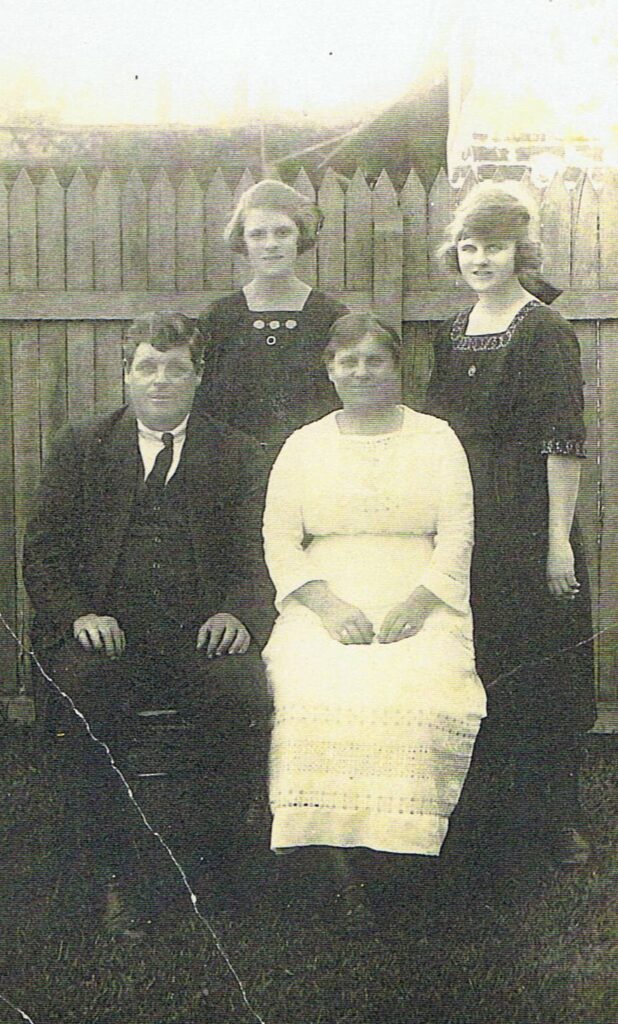
Ross George remembers going to Leake Street on Saturday mornings to mow Walter and Amy’s lawn. Afterwards they often listened to the football (Wally was a Claremont supporter, Ross – Subiaco). Wally would also go every other Saturday to the fish shop opposite Boans and buy a live crayfish for what would now be about 5c, which he would take home, shell and prepare for bait to go fishing with his angling club the next day. The anglers went by boat out of Fremantle.
Amy played croquet and enjoyed going to the movies. From all accounts she was a thorough lady taking great care with her appearance (she “never used soap on her face”) and taking a long time in the bathroom and also to eat her dinner! (Ross George remembers being told by Amy to chew his food 25 times!) She also enjoyed chatting, a trait not enjoyed by her son-in-law Bill Harrison, particularly at the dinner table!
Walter took an active interest in various organisations including the West Guildford Grand United Order of Odd Fellows, Coastal Scottish Pipe Band (for which he was the drum major), W.A. Caledonian Pipe Band (drum major and life member), the W.A. Angling Club (life member) and The Ugly Men’s Voluntary Workers’ Association. (This association was based on a competition of penny votes to find the ugliest man in Perth. Money was given to war widows and their families, and later to a range of welfare projects[1].) He played croquet with both the Bayswater and the Subiaco croquet clubs and also played bowls.
W.A. Angling Club (life member)
William “Wally” Kerr would also go every other Saturday to the fish shop opposite Boans and buy a live crayfish for what would now be about 5c, which he would take home, shell and prepare for bait to go fishing with his angling club the next day. The anglers went by boat out of Fremantle.
The club was first formed in 1904 under the name of the “West Australian Angling Club” (WAAC) and has been in existence ever since, changing its name and becoming incorporated in 1970 to the “West Coast Angling Club (Inc)”. It was the first fishing club in Western Australia and indeed in Australia as far as can be ascertained, to own its own boat.
James Innes, a Scot, and friends met at the Criterion Hotel in Perth early in 1904 and founded the original club. James had arrived in Queensland as a 13 year old immigrant and made his way to the WA Goldfields where he was involved in mining at Coolgardie. He later moved to Perth and ran the Norwood Hotel in East Perth.
Members of the original club initially hired planked row boats from Tilleys Boatshed in East Fremantle, tied them together to form a chain and rowed them just outside the mouth of Fremantle Harbour to catch Dhufish, Skippy and Whiting.
The WAAC later purchased the old harbour ferry “Cooee” from funds and member donations and renamed it the “Western Angler”. It proved unsuitable for use outside the Fremantle heads due to its shallow draught and it eventually sank. It apparently still lies deep in the mud below the south landing adjacent the Fremantle Traffic Bridge in East Fremantle.
As a result of the loss of the Western Angler, which had served the club well for many years despite its seaworthiness (or lack of), the WAAC commissioned, in 1926, Sam Lawrence (a well known local boat builder), to construct a 35ft long, 10 ton carvel planked sea boat with a 10ft beam. The engine was an Invincible 3-cylinder 30/50 hp, petrol which delivered a cruising speed of 6 -7 knots.
This was launched from the boatyard situated on the riverfront at the Esplanade, Perth, in 1928. It was named the James Innes in recognition of the founder of the club. Its original moorings were next to famous craft such as Zephyr, Emerald, Dauntless, Dawn – L, Invincible, Sambo and Henley all built by Tilleys.
At the outbreak of World War 11, the club offered the James Innes to the Royal Australian Navy (RAN) who accepted the offer and together with boats from various Swan River clubs, it was used as a patrol boat.
Western Australian Angling Club – FISHING (Notes by “Piscator.”)
From an excursionist point of view the weather last Sunday was heavenly-a cloudless sky, sparkling water of crystal line purity, and light zephyr breezes from the east. All these idyllic conditions were, however, unfavourable for angling, and sport was patchy in consequence. Every available boat was requisitioned both in the river and at Fremantle on Saturday and Sunday, and while some remarkably good catches were effected, others were disappointingly small. The glorious uncertainty of cricket is proverbial, but it is questionable whether, the bat and ball can beat the rod and line in that respect. On Sunday, for instance, anglers who went far afield for snapper and other big game caught only skipjack, flathead, whiting, and suchlike, while those who fished within rowing distance of the moles at Fremantle literally scooped the pool, a fine snapper of 131b. being among the trophies secured by the inshore division. Two launches were chartered for members of the Deep Sea Club participating, in the interclub championship competition, and an imposing flotilla of rowing boats was required for the Western Australian Angling Club, the members of which invariably pull themselves to their favourite spots outside the harbour. The arrangements were controlled hy the respective Secretaries, Messrs. E.J. Barratt and A. E Burgess, and. left nothing to be desired.
Tho utmost bonhomie; which biljim says is a mild expression for goodfellowship, prevailed between the contending clubs, and hearty cheers were given by both sides for the winner. Mr. J. D. Ewing, president of the Western Australian. Angling Club, who secured tile trophy subscribed for by the clubs, and carrying with it the championship for the season 1917-18. Mr. F. J. Shaw, president of the Deep Sea Club, in a neat little speech, redolent of fish and fishing in many waters, congratulated his brother president on his fine win and impressed a hope that the competition would become an annual affair, as such reunions çonduced greatly to the popularity of angling. Contrary to expectation members the largest fish were captured by the rowing boat division, the seven best catches made by the W.A. Angling Club as follows: …Among the varieties taken wore skipjack, herring, leather jacket, garfish, gurnard and parrot fish. The boats were towed out by Mr Tilly’s launch Invicta and on the return trip by the Aurora.…All the fish caught and weighed in accounting to over 2001b were sent to the Military Base Hospital at Fremantle as a contribution of the competing clubs.…In the river some great catches of tailer are being made hy city anglers. Mr. Beale secured seventy-four in less thana couple of hours, and Archie Armstrong obtained 95 off Como in about the same time. Black bream are occasionally taken above Canning Bridge, and flounder are plentiful off Bicton.
Western Mail Friday 18 January 1918 page 25
ANGLING
The Western Australian Angling Club will hold their March competition on Sunday next outside Fremantle harbour. The innovation of reaching the fishing grounds by launch instead of rowing boats proved so successful that it is to be adopted in future, and a start will be made from Barrack-street jetty at, 8 a.m. sharp, calling at Fremantle en route. Intending competitors are requested to communicate with Mr. George Hutchins. hon. secretary.
The West Australian Wednesday 17 March 1920 page 8
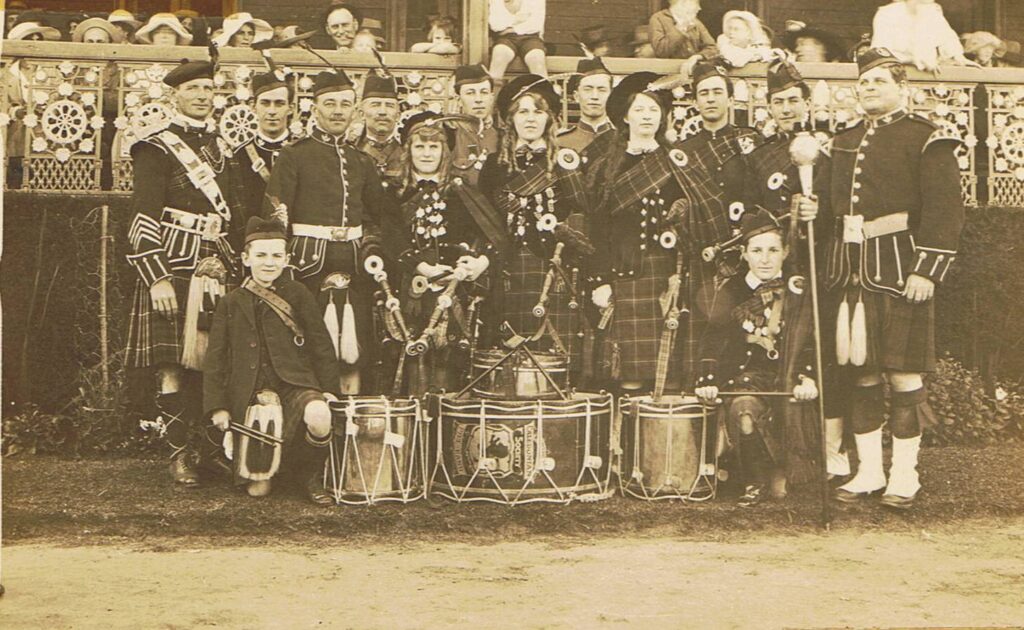
ANZAC DAY CONCERT.
Next Saturday evening, in His Majesty’s Theatre; the Mt Lawley-North Perth sub-branch R.S.L. will celebrate Anzac Day with a military concert. The event will be under the patronage of His Excellency the Governor, and the following military men have consented to be present:— Brigadier-General Bessell-Brown, Brigadier General Drake-Brockman, Major General Sir Talbot Hobbs. Colonel H. Collett, Colonel G. Barber, the State Commandant (Colonel Peck), and Colonel L. Tilney; The programme will be under the direction of Mr H. C. Goff who recently returned from the front, and the following well known artists will appear:— Misses Elsie Rosalyn (late English Pierrots), Rene Fell, Flora Crooks, Dora Clarke, and Bessie Kerr: Messrs. Geo. Horton (late English Pierrots), Donald Stuart (late Melrose Theatre), E. Scott,. Lionel Carter, C. L. Green, Lionel Hart, Percy Coward, and R. Jackson, the Harmonious Quartette Party, and the W.A. Caledonian Pipe Band. The box plan is at Nicholson’s.
The Daily News Wednesday 21 April 1920 page 5
At the age of 27 on the 25th July 1925 at St Mary’s Church of England West Perth William Edward Harrison was married to the eighteen year old EDNA MAY KERR.
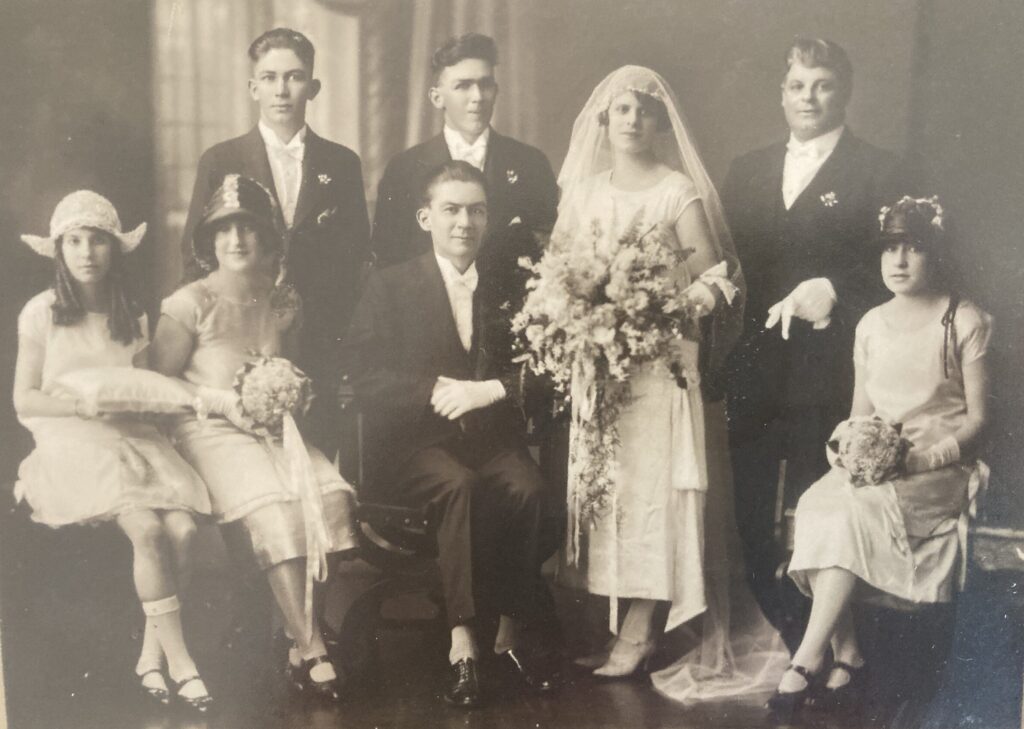
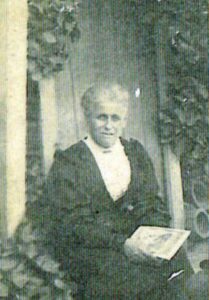
Walter Kerr was on the Caledonian Society committee and Amy was on the women’s committee:
Caledonian Children’s Ball
A children’s ball organised by the’ Caledonian Society of Western Australia was held last evening at the Temple Court ballroom, under the patronage of the Administrator (Sir John Northmore). The spacious ballroom made an ideal setting for the interesting pageant of youth and colour, which was a constant source of interest for a large number of grown up friends and well-wishers of the children present. The judges were: — Mesdames Henry Greig, H. Mann, J. Macfarlane and C. Doig. The masters of ceremony were Messrs. R. J. Bresland and G. J. Robertson, Mr. Hector Urquhart being the honorary piper.
The council of the Caledonian Society, of which Mr. J.- MacCallum Smith, M.L.A., is patron, interested in the great success of the ball, included: —The Chief (Mr. Alex Craigie), Chieftains J. Innes, F. Boyd, G. Robertson, and B. Mackay, and Councillors J. Dawsin, D. Mackenzie, C. Gunn, J. Oag, R. J. Bresland, W. Kerr, A. Robertson, with Mr. J. Munachen as honorary secretary and treasurer. The women’s committee consisted of Mesdames Craigie (convener), Innes, Boyd, Mackay, Robertson, Gunn, Oag, Harrison, Smith, Clements, Burgess, Jennings, Gough, Neill, McCullock, Thomson, Watts, Ross and Simpson, Misses Craigie, Waddell and Mathews. The grand march was’ beautifully carried out, the different sets adding splashes of colour to the attractive scene. The first prize for the best fancy set for children of eight years and under was awarded to an Early Victorian set organised by Miss Pearlie Dhu, the second prize going to a Blue Militaire set by Miss Hodginson, and a prize for the best danced set for children of the same age to a Children of the Regiment set by Miss Kathleen Campbell. The reward for the best dressed set over eight years of age and under 16 was given to the 1932 Scandals by Miss Hodgkinson, and the second prize to a Gaiety set by Miss Maisie Donoghue. The Beck and Call set, by Miss Pearlie Dhu, gained the award for the best danced set in that section. A Highland set, by Miss Maisie Donoghue, also was given a prize. Miss Vera Kinnamont got the first prize for the best dressed Highland lassie of eight years and under, Bonny Good coming second. Miss Jean Waddell won the award for the best dressed Highland lassie of 12 years or under 16, Miss Doris Taylor being awarded the second prize. The prizes were presented by Mrs. Craigie. Supper served at long tables in the Temple Court dining-room, and amid showers of yellow wattle blossom, was a picture of bonnie West Australian childhood and youth.
The West Australian Friday 24 June 1932 page 8
Anuually the Kerr family went holidaying at Christmas time down to Turkey Point near Bunbury. They would catch an overnight train to Bunbury and then tooka half hour boat ride out to the Point where there were crude wooden shacks with hessian bags as curtains and straw mattresses. The family went fishing and crabbing and explored the old wreck on the beach at this site until the public were no longer able to vists when it was taken over by the Bunbury powerhouse.
Walter and Amy Kerr had two daughters:
BESSIE AMELIA (1904 – 8.1.1977)
and
EDNA MAY (12.8.1906 – 1996).
Walter Kerr died suddenly of a heart attack on the 11th March 1939 aged 64 and is buried in the Presbyterian Cemetery at Karrakatta. The devasted Amy, Edna and Bessie wrote in the paper:
“Loving and kind in all his ways, upright and just to the end of his days, a smiling face, a heart of gold one of the best this world could hold.”
KERR
On March 11 1939 at Perth, William “Wally” Kerr, late of 78 Gloster Street, Subiaco, dearly beloved husband of Amy, loving father of Bessie (Mrs. W. George) and Edna (Mrs. W. Harrison), fond father-in-law of Wilfred George and William Harrison, loving Pa of Ross, Bernice, Billy, Ramon, Jack and Jill.
Aged 64 years. One of the best.
FUNERALS.
The Late Mr. W. Kerr.
Mr. William (“Wally”) Kerr, of 78 Gloster Street, Subiaco, passed away on Sunday March 11. The late Mr. Kerr, who was born at Fitzroy, Victoria, 64 years ago, came to Western Australia at the age of 20 years and for the past 43 years served in the West Australian Government Railways, where he was highly esteemed by his fellow officers. In his leisure time deceased took an active interest in various organisations including the Oddfellows’ Society, Ugly Men’s Association, Caledonian Society, Scottish Pipe Bands and the West Australian Angling Club. His pleasing personality will be remembered by a large circle of friends, among whom he was highly respected. The Rev. T. P. McEvoy officiated at the graveside in the presence of a large gathering of relatives and friends. Deceased leaves a widow and two daughters to mourn their loss.
The chief mourners were Mrs. W. Kerr (Wife), Mesdames W. George and W. Harrison (daughters), Messrs. W. George and W. Harrison (sons-in-law), Mesdames Morey, G. Doyle and Watt (sisters-in-law), Mrs. Woolley (Aunt), Miss M. Doyle and Mrs. J. Doyle (nieces), Messrs. A. Doyle and W. Finlay (nephews), Mr. F. DeGroot, Mesdames Bishop, Spence. Hicks, Walters and Bessen and Messrs. G. Hicks. D. Russell and C. DeGroot (cousins).
The pall-bearers were Messrs. J. Yule, J. Flint, A. Copley, E. Bridges Cr J. Stevens and Messrs. J. Truscott, J. Crawford, J. MacCallum Smith, M.L.A. and J. Innes.
Among those present at the graveside were Messrs. Wood (representing paint and trimming shops staff. Loco. Workshops. Midland Junction). W. Westlev (W.A.G.R. Picnic Committee), K James (West Guildford Branch G.U.O.O.F.). J. Innes (President, W.A. Angling Club), J. Yule (grand secretary G.U.O.O.F.), Sgt.-Major James. R.F.A. (representing South African Veterans), F. Wimbridge (representing Workshops Angling Club). Geo. J. Robertson (secretary Caledonian Society), J. Oswald (Caledonia Pipe Band), A. M. Lon (C.S. Pipe Band), W. G. Foreur (C.S. Pipe Band), Chas. Doig (Fremantle Caledonian Society), L. T.
Wark (W.A.G.R.), E. L. Handcock (representing the “‘Mirror”), A. Wells (Bayswater Bowling Club), J. Russell (hon. Secretary Scottish Union); Mesdames C. Smith (Subiaco Croquet Club) and A. J. Jenkins (Subiaco Croquet Club); Messrs. J. D. Ewing. H. M. Gullan, J. McDonald., J. Oliver, R. E. Walsh, A. L. Harrison, T. McDonald, T. Mackensie, E. F.
McDewitt. A. E. Harrison, J. Overell, A. H.Wilson, W. Paterson, John Treen, J. A. Biffen, J. Crossley, W. P. Ellett (Railways, Karrakatta), J. Quine, A. Ecclestone, W H. Kent, Alf Mackay, A. Frayne, T. H. Batey, J. Rubery, Alf. E. Vizard, J. Flanningan, Geo. Hamilton, T. Smart, E. Woodford. J. Booth, J. V. Granland. J. H. Millington, W. H Hayes, L. N. Robbins, H. W. Vincent. P. Lonnie, T B. Coatham, W. C. Allen, J. W. Maikin, C. A. Pearce, W. Cary, T. S. Norton, R. S. Dyson, S. Stokeld, H Poole and R. Lenay, Mr. and Mrs. Flint, Mr. and Mrs P. C. Raynor, Mr. and Mrs. C. Sinclair, Mr. and Mrs. H. R. Dixon, Mesdames J. Crawford, R. Farrell, A. Oswald, A. O’Leary, A. D. Harrison, A. Vial, W. Hughes, George Withnell, J. Webster, Biffin, Duncan, K. Brewer, Farrell, J. Curnick, B. Choules and E. Bridges; Misses Elsie Curmick, M. Farrell and George.
Many beautiful floral tributes and wreaths were placed at the graveside by: His wife, daughters and families; painters and trimmers. W.A.G.R.; Messrs Finlay, Sweetman, Humphry and family; Guildford Lodge. G.U.O.O.F.; W.A. Angling Club; Auntie Eliza. Ethel and family; Mr. and Mrs. C. Newman, Charlie and Laurel; Mat and family: Mr. and Mrs. T. Smart and family; Les and Beat; the president and members of the Subiaco Croquet Club; Mr. and Mrs. Sinclair and Mr and Mrs. Dixon and families, the Coastal Scottish Pipe Band, Mr. and Mrs. H. W. Vincent; Mr. and Mrs P. C. Raynor, Midland Junction Angling Club; Dorothy. George and May; Mr. and Mrs Biffen, Gregg. Margaret and Jean; Ida and Jim Flint; members of the Bayswater Croquet Club: Mr. and Mrs. F. A. deGroot and Colin; Alice and Dick Beesen: Mrs. Blades; Alice, Harry and family; Norma and Jim; Mollie, Will and family; Marion and Archie Howe; Ed and Nancy. Numerous cards, telegrams, letters and personal expressions of sympathy were received by the bereaved family. The funeral arrangements were in the hands of Prosser, Scott and Co., Ltd.
The West Australian Saturday 18 March 1939 page 17
[1] D. Tout-Smith, The Foundations of Fremantle, p.63.