by Peter Boyce
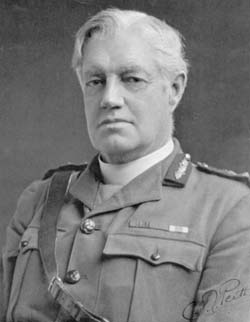
Charles Owen Leaver Riley (1854-1929), archbishop, was born on 26 May 1854 at Birmingham, England, eldest child of Rev. Lawrence William Riley, a Cheshire vicar, and his wife Emma, née Shaw. Riley was educated at Heversham Grammar School and Owens College, Manchester; he then attended Gonville and Caius College, Cambridge, where he completed the mathematics tripos (B.A., 1878; M.A., 1881; D.D., 1894). He was made deacon in 1878 and ordained priest next year. After serving curacies in York and Manchester, in 1885 he became rector of St Paul’s, Preston, and from next year served concurrently as surrogate to the bishop of Manchester. On 7 January 1886 he married Elizabeth Merriman; they had three daughters and three sons.
No sooner had he accepted the more prosperous living of Morecombe, Lancashire, in 1894, than he was offered the bishopric of Perth as successor to Bishop H. H. Parry. Riley was consecrated by the archbishop of Canterbury on 18 October and arrived in Western Australia on 3 February 1895.
His episcopate spanned thirty-four years; he arrived two years after the discovery of gold at Kalgoorlie, and died on the eve of the Depression. In between, the State’s population had quadrupled to 400,000. At first Riley felt very isolated, but after the gold rush three new Anglican dioceses were created: Bunbury in 1904, the North-West in 1909 and Kalgoorlie in 1914. With the third see, Western Australia became a Church of England province with Riley as its metropolitan and archbishop. He travelled extensively through his vast diocese, although he rarely visited the North-West, and overseas, attending Lambeth conferences in 1897 and 1908. He found it difficult to recruit suitable clergy for the primitive and distant mining communities; but supervised the completion of St George’s Cathedral, Perth, and authorized many new parishes, forty-five within his diocese. His position was Broad rather than High Church.
Although nearly 40 per cent of Western Australians were nominally Anglican during Riley’s episcopate, the number enrolled in parishes never exceeded 12,000. However, the gregarious archbishop’s influence was quite disproportionate to the size of his flock of regular communicants. He projected himself into civic affairs and cultivated friendships with leaders in politics, commerce and the professions—possibly, at times, at the expense of attention to routine administrative and pastoral concerns within his own ecclesiastical polity. However, one historian has noted his meticulous and businesslike methods. He was Perth’s official representative at the 1911 coronation and in 1919 the government accorded him a special place in the table of precedence immediately below the chief justice, as a tribute ‘personal to the present Archbishop’. In 1920 he was appointed O.B.E.
He interested himself in military affairs, tertiary education, Freemasonry and social welfare. Public issues, especially strikes in the transport industry, regularly engaged Riley’s attention and occasionally his direct involvement. In the Perth tramway strike of 1918 he organized a citizens’ strike committee; in the wharf stoppage of May 1919 he enlisted the Roman Catholic archbishop’s co-operation to influence the government; and in December 1920–January 1921 he was chief arbitrator in the famous railway strike. His mediation was not always welcomed by the labour press; the communist Katharine Susannah Prichard, for one, scorned churchmen who ‘pose as generous and noble patrons of the poor’.
In 1916 Archbishop Riley was appointed Anglican chaplain general of the Australian Imperial Force, having been senior chaplain to the Western Australian Defence Force from 1895. He sought to expand the Anglican chaplaincy corps, but his plan for one chaplain to every troopship failed. Late in 1916 he visited the Western Front, and on the return voyage his troopship Ivernia was torpedoed amidships in the Mediterranean, resulting in 130 deaths. Riley lost everything but the clothes he wore ferrying a lifeboat of fifty survivors to a trawler. The tour resulted in the appointment of fifteen more chaplains. It also strengthened his view of conscription, which he supported publicly on the eve of the plebiscites in 1916 and 1917. After the war, though offered the presidency, he became patron of the State branch of the Returned Sailors’ and Soldiers’ Imperial League of Australia.
Riley helped his friend Sir Winthrop Hackett to establish the University of Western Australia. In the choice of faculties Riley argued that priority be given to agriculture and mechanical engineering, in 1914 supporting a chair of commerce, and he endorsed Hackett’s plea for free tertiary education. He was first warden of convocation in 1912-16. Chancellor in 1916-22, his chairmanship was more aggressive, and possibly less influential, than Hackett’s, but he took his duties seriously.
In 1899 Riley had established a small theological college, St John’s; it never received an adequate or permanent home, teaching resources were deficient and in 1926 it closed. From the Hackett bequest to tertiary education, however, £104,000 was made available that year towards the establishment of an Anglican residential college affiliated to the university. Riley laid the foundation stone of the chapel to be erected with St George’s College in 1928, and it was no accident that the building’s modern Gothic style resembled his old Cambridge college.
In the field of secondary education the archbishop blazed few trails, though he eventually (1917) allowed the establishment of a Council of Church of England Schools, linking most diocesan church schools; and in 1920 he allowed the parish of St Mary’s, West Perth, to acquire a private girls’ school, with his son Rev. C. L. Riley as headmaster. Archbishop Riley clashed frequently with that forceful spokesman for the Anglican school system, Rev. P. U. Henn, Guildford Grammar School’s headmaster. But Riley was a regular speaker at teachers’ union conferences and had supported a 1903-04 campaign for a secular secondary school rather than the early establishment of a university.
In 1904 Riley began his record term as grand master of the Western Australian Grand Lodge. He reluctantly vacated the office in 1917 to make way for the new governor, Sir William Ellison Macartney; but he resumed it in 1920 and held it until his death, when the lodge boasted 150 branches and 10,000 members. From his Preston days the Archbishop had campaigned vigorously for temperance and against gambling, but seems not to have been labelled a wowser. He identified himself with many voluntary causes, especially in the cultural and welfare fields and was patron, president or committee-member of many associations, being president of the trustees of the Museum, Art Gallery and Public Library in 1920-29. He was ‘a man’s man’, and his hearty good humour and boyish appearance—thick waving hair and chiselled mouth—gave an impression of ‘robust muscular Christianity’ and a commanding presence. His hobby was carpentry. At his seventieth birthday party in the town hall the premier’s representative praised his knack of smiling ‘when things were going dead wrong’, and his amiable relations with other religious groups.
Despite his English orientation and Imperial sentiments—he depended heavily on English recruits to swell the ranks of his clergy—Riley argued, unsuccessfully, for the Anglican dioceses in Australia to adopt a constitution to liberate them from the English Church. His relationships with senior clergy, notably deans and archdeacons, were sometimes stormy; and in later years he managed without a dean, perhaps partly because the previous one was a forger. After 1914 his visitations to country parishes became rare. His final years were dogged by ill health, but he was reluctant to retire. In January 1929 he gave notice of his resignation; he died of emphysema early on 23 June. A state funeral attracted some 30,000 people, including 1000 returned soldiers, said to be the largest and most representative crowd ever assembled in Perth. He was buried in Karrakatta cemetery.
Riley was survived by his wife and five children. One son Charles Lawrence, bishop of Bendigo, was a chaplain general of the Australian Military Forces in World War II; Basil, the second, a correspondent of The Times, had been assassinated in China in 1927. A posthumous portrait of Archbishop Riley hangs in the University of Western Australia’s senate room.
https://adb.anu.edu.au/biography/riley-charles-owen-leaver-8213
His son was Charles Lawrence Riley CBE, VD (10 October 1888 -1 April 1971) was an Australian Anglican bishop: the fourth Bishop of Bendigo from 1938 to 1957; and Chaplain-General to the AMF from 1942 until 1957.
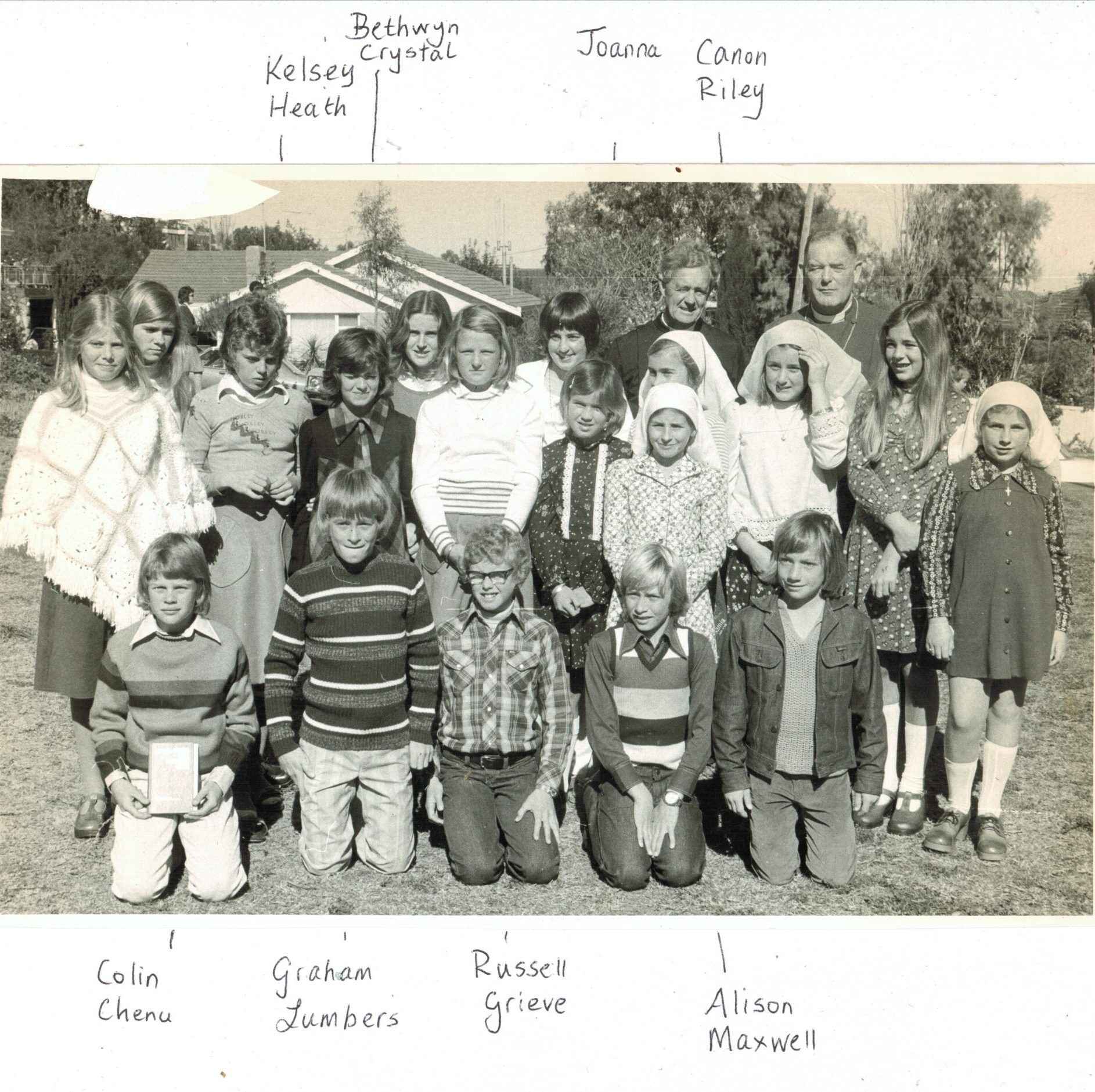
His grandson was Canon Lawrence William (“Bill”) Riley (1917–1981) who was an Anglican clergyman in Perth, W.A. known for his parish ministry and leadership roles with St Mary’s Anglican Girls’ School.
1894
CONSECRATION OF BISHOP RILEY.
THE CEREMONY IN WESTMINSTER ABBEY.
A London correspondent, writing to us under date October 19th, says there was a large gathering of West Australians in London at Westminster Abbey, on the morning of the 18th October, to see the new Bishop consecrated by the Archbishop of Canterbury. Amongst those bound from or connected with the colony I noticed Mrs. and Miss Habgood, Mrs Edward Wittenoom, Miss May Moore, Mr. and Miss Sandover, Miss Lefroy, Mrs. Bunbury, Mr. and Mrs. Broadhurst, Mrs. Pitts, Mrs. Jas MacDonald, Mr. and Mrs. Trinder, Mr. and Mrs. and Miss Bethell, Mr. Gwyn, and Mr. Frank Gwyn.
The Pall Mall Gazette of the 18th October gives the following description of the ceremony: At Westminster Abbey this morning, the Rev. Arthur Thomas Lloyd D DM Vicar of St Nicholas and Hon. Canon of Newcastle on Tyne, was consecrated as Bishop Suffragan of Thetford, and the Rev. Charles Owen Leaver Riley, Vicar of St. Paul’s, Preston, as Bishop of Perth, Western Australia. The Archbishop of Canterbury met the Dean of Westminster, the Assistant Bishops, and the Canons, and the Bishops elect, in the Jerusalem Chamber, where a procession was formed to the Abbey. After all the officiating prelates and clergy had taken their places, the Archbishop of Canterbury began the service of the Holy Communion. The Epistle and the Gospel for the day were then read, and the Nicene Creed having been arms, a sermon was preached by Canon Norris. The Bishops elect were then conducted to the Islip Chapel, where they put on their records and were conducted back to the Sacrarium, the Archbishop having previously taken his seat in front of the Holy Table. The Bishops elect were then presented to the Archbishop with the usual formula. The Queen’s mandate for the consecration was read, and the oath of canonical obedience administered. The Archbishop then put the question of examination, and the Bishops elect retired, returning in a short time in full episcopal habit. The Archbishop and the Assistant Bishops then placed their hands on their heads of the new bishop, and the act of consecration having been performed the Bishop of Thetford and the Bishop of Perth took their seats within the rails with the other bishops. After the celebration of the Holy Communion the Archbishop, with the new bishops, the Assistant Bishops, the canons, clergy, and the choir returned in procession to the Jerusalem Chamber.
West Australian (Perth, WA : 1879 – 1954), Saturday 17 November 1894, page 3
1895
THE BISHOP OF PERTH
THE ENTHONNIZATION CEREMONY. IMPRESSIVE SERVICE. A LARGE CONGREGATION.
The Right Rev. C. O. L. Riley was enthroned as Bishop of Perth at St. George’s Cathedral this morning. The service was attended by a very large congregation. Much of the seating accommodation was taken up by seatholders, who were admitted before the general public, and by the time of the arrival of His Lordship the sacred edifice was full. Amongst those present were His Excellency the Governor who was accompanied by Captain Mecham, A.D.C., Mr. Justice Hensman and Mrs. Hensman, Sir Geo. Shenton, the Acting-Premier- (Mr. S. Burt), Mr and Mrs. E. H. Wittenoom, M.L.A. (Minister for Mines, &c), a number of members of the Legislature, Dr. and Mrs. Waylen and many other prominent citizens.
The ceremony, though simple,was exceedingly impressive. When, the Bishop arrived at the west door of the Cathedral he was met by Dean Goldsmith, Archdeacon Watkins, and the Canons of the Cathedral, the Clergy, Choir, Lay members of the Synod and the Churchwardens, and Vestry of the Parish. After His Lord3hip had exhibited testifying his due consecration, a procession was formed down the main aisle towards the sanctuary, Psalm 122 being sung meanwhile. His Lordship walked between the Dean and Archdeacon and was invested in the scarlet robes of his office. On reaching the entrance to the Chancel the Bishop knelt at the Fald-stool and after some prayers of a special character had been said by the Dean, the Rev. James Allen (Bishop’s Chaplain) approached the Bishop during the singing of Psalm 89 and escorted him to the Sanctuary. The Archbishop’s mandate was then read by the Treasurer of the Diocese and having made the declaration His Lordship was conducted to the Bishop’s Throne by the Dean who declared him duly enthroned. Prayers and the singing of the Benedictus followed, and then the Bishop celebrated the Holy Eucharist.
The Communion of the people followed, the Sacrament being administered by the Bishop. The’musical portion of the service carried out by the choir under, the organist Mr. E. A. Letch, included the psalm singing and the rendering of the Benedictus and Nunc Dimittis, Mr. Arthur Letch rendering the solos.
Daily News (Perth, WA : 1882 – 1955), Tuesday 5 February 1895, page 3
Anglicanism in the Country.
THE reception accorded to Bishop Riley in the various country districts he has visited, and the enthusiasm awakened by his words and presence, augur well for the cause of Anglicanism in tho outlying districts of the colony. Wherever he has gone the Bishop appears to have created a good impression. His deportment, his sound common sense, and his homely style of address, seem to have won the confidence and touched the affections of the people acknowledging him as thoir spiritual shepherd. They, in their tarn, have striven to show that they aro cap-able of great exertion and no little sacrifice in behalf of the church whose creed they profess. To a greater extent than any other religious body, the Church of England has it in its power to minister to the spiritual necessities of the handful of people scattered about Western Australia. Its ramifications are wider spread than those of any similar organisation, and on the proper use of these depends its future influence for . good. Colonists themselves,are apparently both ready and anxious to do their abare towards making the church a real, active, energetic power in their midst. The buildings which they have helped so greatly to construct, im* provo, or restore, and the efforts they aro making to support the clergymen allotted to them, are indications of this fact. Fortunately also Bishop Riley appears to have grasped the situation. Ohurch work ia this colony is not in the least like that of the old country. The institution here has not the command of tho same ample fonds as there, neither has it the same social factors working in its favour. The conditions in short are wholly different. lu this colony, as ia mose parts of Australia, the Anglican Ohurch hasto regard its chief function as that of a missionary enterprise. The late Archbishop Tait held that it was the duty of the English Ohurch to deal with the dangers which civilisation brought in its train, and with civilisation itself. It had, he urged, to follow and direct, rather than to thwart and repress the course of events, to express and to guido the religious feelings of intelligent men who wero specially impatient of ecclesiastical control, and to be the truest witness to the world of an active minded, progressive, zealous and loving Christianity. It was« in his view the task of the ohnrch to resist entire absorption in the calls of religions ministrations and to devote a portion of its energies to influencing public opinion on every side, to identifying itself with all the best interests of the country. To the degree to which this conception of the dnty of the Anglican Church is applied to life in Western Australia-while there is wise and generous recognition of the excellent work of other churches-will the cause which Bishop Riley has so mach at heart prosper.
Western Mail (Perth, WA : 1885 – 1954), Saturday 8 June 1895, page 17
1896
RETURN OF BISHOP BILEY.
AN INTERVIEW. THE NATIVES’ QUESTION.
Among the passengers from the eastern colonies in the R.M.S. Orotava, which arrived at Albany on Saturday, was Bishop Riley, who returned to his diocese after having attended the general synod of the Anglican Church in Australia (better known as the quinquennial session of the church parliament), which was held in Sydney at the end of September. Bishop Riley reached Perth on Sunday morning, and, in the course of a conversation with a representative of The Morning Herald, he said that he had heard while in the eastern colonies that the veracity of his communication to the Governor on the subject of the natives had been challenged by members of the Upper House. He had read Mr. D. McKay’s speech as reported in The Morning Herald. He had had his say, and they had had their say, and now it was his desire, before speaking further, to acquaint himself with all the details that had transpired in his absence. Until he had made himself cognisant of these, he would not say anything further. Questioned as to the synod, he readily consented to give a resume of the work done. There were present representatives of all the dioceses and 12 bishops, the Primate presiding. The Bishops of Rockhampton and Ballarat were absent in England, but Bishops Stretch and Cooper were among those present. The Western Australian representatives besides himself were the Rev. D. J. Garland and Mr. A. J. Wright. The synod sat for 10 days, meetings of the synod being held in the afternoons and evenings, and committee meetings in the morning. The principal debate was with reference to the Primacy, as to whether it should remain in Sydney or not, and as to the mode of election. No decision was, however, arrived at. The subject was referred to a select committee, with instructions to bring up a report to the next session, five years hence. It was determined that the Lambeth conference, which will be held next year, should be asked to recognise the Bishop of Sydney as Archbishop. This was done in accordance with the wish of the late Archbishop of Canterbury. It was also decided to send a bishop as soon as possible to New Guinea to attend to the mission belonging to the Church of England. ” That,” said the Bishop, “was the most important business transacted.” Of the people of Sydney Bishop Riley spoke as heiug most profusely hospitable. ” All seemed to do their utmost to make us comfortable, and they succeeded.” There was a garden party at the Primate’s residence, and another at Government-house, when Lord and Lady Hampden entertained 3,000 guests. Our representative asked in trepidation whether he had seen the harbor? “Yes, and I was charmed with it,” replied the Bishop, who added that they were entertained at a harbor picnic, duripg which they admired the loveliness of Port Jackson. Questioned regarding the feeling in church circles particularly towards Western Australia, Bishop Riley said that there was a’ great deal of sympathy with the church iu this colony, on account of the fact that the members were increasing with such rapidity that it was almost impossible to overtake the work, and the Bishops of Australia, he said, had issued a joint letter of appeal for help from England for work in the colony. In answer to a query, the Bishop said that he had preached at the cathedrals of Adelaide, Melbourne, Sydney, Bathurst, Armidale, and Brisbane, besides having spoken at those places and in Geelong and Ballarat. The grandest meeting of all at which he spoke, however, was that in the Melbourne Town-hall, which was packed by a most enthusiastic audience. He had enjoyed his trip immensely, though there had been hard work, and he had been wonderfully impressed by the magnificence of the cities of Sydney and Melbourne and the beauty of the Blue Mountains of New South Wales. At every place he visited numbers of people frequently inquired after friends in Western Australia. That, he thought, showed that great interest was being taken in Western Australia in other parts of the continent. He met Sir Gerard Smith at dinner at Government-house in Adelaide on Tuesday last. While at Bathurst he had a lengthy conversation with the federationists, who were most anxious that Western Australia should be well represented at the forthcoming convention. Sir John Forrest seemed to be well known and popular in the eastern colonies, and many of his friends there anxiously inquired after him.
Morning Herald (Perth, WA : 1896 – 1909), Monday 2 November 1896, page 3
KNUTSFORD AND AUSTRALIA – BISHOP BILEY AND HIS DIOCESE.
The Stockport (Eng.) Advertiser of October 16 says : — The “Diocese of Perth ..(Western Australia) Quarterly Magazine” for July contains some interesting facts about Bishop Riley of that diocese, who, it will be remembered by many Knutsford people, and, indeed, by many throughout Cheshire, is closely connected with Knutsford. The Right Rev. Charles Owen Leaver Riley, Bishop of Perth, Western Australia, is the son of the late Rev. L. W. Riley, M.A., first vicar of St. Cross, Knutsford, and he is also the brother of Mr. A. B. Riley, manager of the Cast Metal , Mill, Stockport. It is a curious coincidence that in the diocese of the Bishop, who is so closely connected with Knutsford, Cheshire there should be a place called Knutsford. There is, in fact, a , town of that name in the vast diocese over which Bishop Riley presides. He was consecrated in Westminster Abbey on St. Luke’s Day, 1894, by the Archbishop of Canterbury and a number of other bishops, and was enthroned in St. George’s Cathedral, Perth, on February 5, 1895. ” He has,” says the magazine, “thrown himself with great courage and energy into his work. The difficulties of that work are very great, and arise from the vastness of the diocese, the poverty of the church, and the difficulty in obtaining clergy.” So vast is the diocese that the whole areas of Austro-Hungary, Great Britain and Ireland, France, Germany, Italy, Greece, Switzerland, Servia, and Montenegro put together would not equal the area of the diocese of Perth, which contains 1,057,250 square miles. ” The increase of population during the last few years,” continues the magazine, ” has been little short of alarming to a bishop who feels the responsibility of providing for his people. In 1893 it was 65,064 ; in September, 1895, 94,373 ; in 1896 it may be estimated at 101,233.” This brief extract from an antipodean record will doubtless be of interest to our readers, to whom members of the Riley family are in many cases well known.
Morning Herald (Perth, WA : 1896 – 1909), Tuesday 24 November 1896, page 8
1916
MILITARY CARNIVAL AT LOTON PARK TO-DAY.
26 August 1916
To-day all training camps in the coastal area will be deserted, and every soldier free for the purpose of witnessing, or competing in, the big military carnival to be held on the Perth Oval (Loton Park), commencing at 11 o’clock. Two special trains will convey the men from Blackboy Hill to the Perth Central Station, from where they will be permitted to wend their way to the grounds at leisure. There will be no general march to the scene. The carnival should be unique in many respects. All arrangements have been conducted by military men and members of the forces will provide the whole day’s programme. The soldiers themselves have readily consented to pay the fixed admission price to the ground, as the proceeds are to be devoted towards the War Patriotic Fund and the Sports Fund of the A.I.F. Soldiers wives and children will, however, be admitted free of charge, and over 2,000 tickets have been forwarded, in addition to a donation of £20 to provide sports for them during the day. Approximately 2.200 entries have been received by the committee for the various events, so there should be no lack of competition in any one of them. All branches of the military have been catered for-Artillery, Infantry, Light Horse, Army Service Corps, and Army Medical Corps, all have their own particular section, and keen interest has been taken in every instance. The members of the Soldiers’ Welcome Committee have charge of the refreshments, and elaborate preparations have been made.
The carnival will be tinder the patronage of his Excellency the Governor (Sir Harry Barren), who is due to arrive on the grounds at 2.30 in the afternoon when a general parade of something like 4.000 men will take place. The officials, who have taken a big interest in the success of the gathering, are:-President, Lieutenant-Colonel Meeks (Camp Commandant, Blackboy Hill); vice-presidents, Lieutenant-Colonel C. Battye, Lientenant-Colonel Randell, P.M.O., Lieutenant-Colonel Hadley, Lieutenant-Colonel Strickland, the Chaplains-General (Archbishop Riley and Archbishop Clune), Major Dowson, Major Walden, A.M.C., Major Buchanan, Captains Ogilvie (C.C. Belmont). Captain Rockett (C.C. Claremont). Captain Bilton, Captain Rogers, Captain Taylor, S.O.R.S., Captain Rev. Father Hallinan, Lieutenant Manley:
General committee: Chairman, Major Chandler; vice-chairmen. Major J. Campbell, Captain Cooper; members, Lieutenant Bray, Lieutenant. Morgans, Lieutenant Meares, Lieutenant Bracks, Lieutenant Rose, Sergeants Major J. Nestor. Denslow, Collett, Crisp, Crack, Beigly, Hammond, and Dunn. Sergeants Stewart, Morgan, Clark, F R. Dean, Crommlelin, Lathson, Jones, Corporals Porter, T. Luff, Watson, James Little, Marshall. Privates L. Dineen, J. Dean, L. Longson, F. Baker, J. M. McMahon, F. Watson, W. P. Davies, A. V. Rose, F. W. Price, H. W. Brown, Charles, Goldfinch, B. C. Spencer, and Wassell: auditors, Lieutenants Peisley and Coleman; treasurer, Lieutenant E. H. Hall: cashier, Corporal Goldfinch: joint secretaries. Sergeant E. L. Handcock and Private W. H. Stockdale.
The following programme has been drawn up, and will be adhered to as closely as conditions will allow:
Military Events
11 a-m., semi final “O’Grady team”; 11.30 a.m. Army Service drive: 12 noon, bayonet fighting: 12.30p.m., semi finals tug-of-war: 2 p.m, marching order race and tilting the bucket: 2.30p.m., Artillery drive: 2.45 p.m., min competition and frog race; 3 p.m. bomb throwing and boot jumble race; 3.15 p.m., pillow fight and tent pegging: 3.30 p.m. tent pitching. stretcher bearing (four men): 3.45p.m., O’Grady team final and wrestling on horseback: 4 p.m., Artillery alarm race and six stretcher bearers: 4.15 p.m., boat race, tug-of-war final: 4.30 p.m., mounted tug-of-war and infantry alarm race: 4.45n.m. obstacle race, buckjumping; 5 p.m., band race.
Athletic Events
11 a.m., preliminary heats 100 yards: 11.30 a.m. long jump.
potato race: 12 noon, N.C.O. race and O.M. store race: 12.15 n.m., old huffers’ race, putting the weight: 12.50p.m. heats of 440 yards; 2 p.m. high jump, young sergeant major race: 2.30 p.m. hop, step and jump, hurdle race: 2.45 p.m. relay race, bicycle race (one mile); 3 p.m., walking race and 100 yards officers’ race: 3.15 p.m., 100 yards final, 50 yards staff sergeants-major race: 3.30 pm., 50 yards sack race, motor cycle race: 4 p.m. 440 final: 4.30 p.m. one mile foot race: 4.45 p.m. returned soldiers’ race and committee race.
The West Australian Saturday 26 August 1916 page 6
Another notable R.S.L band member and student of George Mellor was trumpeter, Charles Court, who later became Premier of Western Australia. Sir Charles Court remembers the R.S.L. Band “practised and had its headquarters in the Old Stirling House, a series of temporary buildings, part lathe and plaster, part asbestos, part timber, which were put up as First World War offices. (Stirling House became the State Headquarters of the R.S.L.). It was right opposite St George’s Cathedral and caused a certain amount of dismay to the Dean of the Cathedral, much to the amusement of Archbishop Riley, who was on our side. He was a great R.S.L. man. He told the Dean, when he complained about the band practising on Sunday, that the congregation would enjoy the band more than they would his sermon”!
C. Court, Charles Court – The Early Years Arts Centre Press 1995 p. 113.
1921
An auspicious R.S.L. Band engagement included performing at the unveiling of the memorial for the 10th Light Horse Regiment in Kings Park by His Excellency the Governor, Sir Frances Newdegate on Sunday 13th March 1921 at 3.30pm. Sir Francis Newdegate laid the foundation stone for the memorial on 8 October 1920, using a trowel made from a Turkish bayonet taken at Beersheba. The monument is a granite obelisk located on Fraser Avenue, honouring the 299 men of the 10th Light Horse Regiment who lost their lives in World War I. Following the unveiling, a memorial service was conducted by the Chaplain-General, Archbishop Riley.
A Night of Nights.
The Loyalty League’s Launching.
Stirring Speeches and Enthusiastic Demonstrations.
The spontaneous loyalty of Western Australia was demonstrated on Tuesday night when even squeezed-in standing room was not obtainable either in the farthest back portion of the stage or the top-most step in the gallery of His Majesty ‘s Theatre, on the occasion of the launching of the Empire Loyalty League ‘s -campaign — a day unique in its aptness. Empire Day was selected for the launching of the campaign, and the great enthusiasm- displayed will make the affair memorable. The huge theatre was freely decorated with flags and bunting, and so soon as the doors were opened dense masses of people poured into every portion of the building, and -standing room was soon at a premium. It -is’ doubtful if so -many people have ever been crowded into the gallery. The whole space of the huge stage was -availed of, and every corner of it was -occupied. Tlie proceedings throughout were very enthusiastic, and all the speakers were given attentive and appreciative hearings. Surprisingly few interjections were made, and on the one or two occasions reference was made to Ireland they were greeted with applause. One woman in the gallery who refused to stand during tlie National Anthem was forcibly lifted up by her neighbors. Mr. Prank Moss (president of the League) presided, and he had on. his fight the Mayor (Sir William Lath-lain) and on his left Sir Walter James. Others on the platf-orm were Archbishop Riley, Rabbi D. I. Freedman, Mrs.(J. Cowan, M.L.A., Dr. A. Saw and Messrs. Harrison, M.L.A., T. P. Quin-lan,- P. A. Connolly, J. ‘S. Battye, L. Carter, M.L.A., W. Padbury, W„ Richardson, M.L.A.,- J. Nicholson, M.L.C., C. A., Saw, and T. Taylor (State secretary of the R.S.L.) No representative of the ‘Government was present on the stage. Unfurling- 1310 Flag. Opening the meeting, the Mayor said he had ‘ frequently had the honor of opening and initiating many movements, but he had never appreciated the honor so much as he did that evening, and it was with tlie greatest pleasure he declared the meeting open. Sir William then pulled a cord and a huge Union Jack, suspended between the dress -circle boxes-, fell unfurled. Immediately the great audience rose to its feet and sang the National Anthem, the accompaniment being provided by the band of the 44th Battalion, which occupied the orchestral pit. At tlie conclusion cheers were given for the flag and the Empire. Sir William Lathlain then detailed the origin of the flag. His reference to’ tlie ‘Cross of St. Patrick caused an interjeetor to exclaim “God -save Ireland.” Soon afterwards a’ man in the gallery asked, “What about the Australian flag?” but his voice was drowned in an outburst .of cheering. Concluding, Sir William said the Union Jack was the flag that stood for liberty and the guarding of tlie rights of the subjects: of tlie Empire. (Applause.) ! Resolution of Loyalty. ‘ The chairman (Mr. Prank Moss) moved the first resolution: — “That we citizens -of the State of Western Australia assembled on Empire Day to inaugurate an Empire Loyalty League for tlie State express our continued loyalty and devotion to His Majesty the King, Throne, and Empire.” He said: ” We have arranged this meeting of the Empire Loyalty League to give the people of Western Australia an opportunity of expressing tlieir loyalty to our Empire and our King and to the flag under which we live and are protected, and at the same time set forth- the objective of the League. Wo think that the objects and purposes of the Empire Loyalty League are quite clear, simple, and acceptable to all loyal people. Possibly there are some who are not conversant with the objects -of the Empire Loyalty League. To these I would say that our idea is to foster the spirit -of loyalty that is in iis, to educate our children to respect the flag and be loyal to our Empire and -o/ur King. (Applause.) Let ‘Loyalty First’ be their motto. No doubt those who are against this movement of loyalty wish to belittle and -damage the movement, – and for their purpose state that, the League is antagonistic to this or that body Or association, and also that it is sectarian’. But our objective is plainly set out in the consti-tution, and. we want you to understand clearly that the League is non-see- : tarian and non-party. (Apnlause.l We welcome as members or as supporters every man or woman who. is a loyal subject -of -our Empire, irrespective of creed -or party, and we want -all who will to help -put an end to everything disloyal in our midst, and thus keep Australia, the fairest country on this earth, free from any possibility of internal strife.” (Loud applause.) Sir Walter James, who was given an enthusiastic reception, spoke on “The Empire Day, the Day We Celebrate.” He said it was indeed inspiring to speak on such a subject to so Wast ah audience, and to know they could all meet together and appreciate the ideal of which tlieir flag was -tlie emblem. The flag was tlie symbol which allowed them to meet , in a common homage and for a common ideal. They needed ‘more occasions such as thev were then ‘enjoying td meet together1 beneath the flag. (Applause:) He hoped that- as long as tliey had an Empire to live for and die for tlie. Union Jack would be flown throughout that Empire -on Empire Day. Those who opposed the fly-.ing of the flag had no ideals. (Applause.) When the call of the blood came, the men of the Empire had proved that the occasions for flying the . flag were not mere flag-wagging incidents. ‘(Applause.) What ‘community had woven into its flag such a combination .as had been woven into
tlie’ Union Jack? There never had been a fight -or a war beneath that flag but the blood had been spilt of Englishmen, Scotchmen, Irishmen, and Welshmen. The Imperial records showed ,that our great public men and administrators had been men of tlie four nations. It was beneath that flag that we had -enjoyed liberty in Australia. They could have tlieir Australian flag —(hear, hear) — their Canadian flag, tlieir Irish flag, their Scottish flag; but standing above all would be that Union’ Jack which belonged to no one of us, but was the precious possession of all. (Cheers.) The men of the four nations, all working together, had permitted the flag being kept continually flying during the past -century, and he thanked God that the boys of Australia had aided in- keeping it flying above all others, and so preserving their liberties, during the late war. (Applause.) History told them that, even our enemies, when they came beneath the flag, had gained benefits, and for a recent example they had 0.1113′ to look at South Africa. (Applause.) In America, also, the great deeds achieved in that country had all -been done by men who were descended from people who had lived beneath tlie grand old flag. (Applause.) . He felt very strongly, on the question, and he always wanted to see the emblem flying aloft, and so long as they kept the Union Jack above all -other flags they could be sure of tlieir liberty and independence. The manifestations of the last few years had .been -strange to him, and there were others in that, audience to whom the developments had been strange also. In this small community were men who had fought an the Crimea and’ in the Indian Mutiny. They were English, . Scottish, Irish, ‘ and Welsh. They might have had their friendly rivalries, but hot one of them had thought of traducing the flag under which they had fought, or claimed to fly their own above the Union Jack. They had their differences, but they only lasted a day, all being for tlie old flag. (Applause.)’ He was one of those’ who believed that tlie good old days would come -back-, (Applause.) Merely4 ibeeause ani extreme minority had taken possession of one section, he did not believe that loyalists -should neglect to help the more moderate of those men who believed in the Union Jack as strongly asf they did. If tliey helped the moderate section they would bring to a rapid termination the present condition of affairs. ‘ (Applause.) He knew personally dozens of Irishmen in Perth who were -as loyal from the top -of their heads to the bottom -of their feet -as he was. There were tens of thousands like that throughout’ Australia — men who believed that just -as Ireland had attained her greatest happiness’ beneath the Union Jack, so her happiness in the future would depend on her keeping beneath that flag side by side , -with England — ‘(applause) — . with Canada, Australia, South Africa, and the other parts of the Empire. .It rested with loyalists to help those men. assert the’ir power. What was the good of any person talking about loyalty and rendering mere lip service? There were too many 1 lip loyalists in Perth, and the “West Australian” was among them. (Applause.) No organisation could attain any good end unless its members were thorough. Many movements might be utterly destroyed by half-hearted people, by time-servers, by men who sat on a rail. Tlie flag was worth making some sacrifice for. Omelettes could not be made without breaking eggs, and the fttyalty movement could not be -carried on without hurting the feelings of some persons. It had to be -done, and the spirit of loyalty had to be fostered and maintained, even if it was necessary to risk the -censure of the Press. It was as necessary for them to be determined as it was for them as a nation to have sometimes to go to war. . Recently they bad found in Australia that the flag was being, insulted and’ dragged to the dirt. (Shame!) It had been: said that no Irishman would carry the Union Jack in Australia, but he\ did not believe it. There were thousands of very loyal Irishmen in Australia who would protest against the flag -being insulted. (Applause.) It was necessary for them to have a Loyalty League to prevent the extremists speaking out and taking possession. Affairs had been allowed to drift too far, and they needed a Loyalty League. .(Applause.) But to make it a- success “they would have to be thorough, and tliey must be prepared to stand shoulder to shoulder, and as a united people maintain me giuuu unci nag as uie common em-ble’m -of the Empire. (‘Great applause.) Everyone -present had a forefather who had fought under the flag at .some time. The Peninsula and Crimea and- the Indian wars had all been won by the men who fought beneath the Union Jack, and -on the recent war their sons, brothers, and husbands had responded’ to the call of the Empire. Those men had been made feel that when the flag was attacked they also had been. (Applause.) It was beneath that flag that it was possible for -them to maintain their White Australia policy. Every red thread in the flag had been dyed red a thousand -times by the blood of Englishmen, Irishmen, Scotchmen, and Welshmen, and by God’s help they would keep it flying above them for all time. (Loud cheers and applause.) Mr. H. E. Bolton, State president of the R.S.L., supporting Sir Walter James, said it was something like an Empire Day gathering. “There is some ginger in this,” he said, amidst ap-clause. What, he asked, had become of the disloyalists during the war? They had crawled away into a hollow log, not because they were afraid -of internment or military regulations, but because tliey were afraid of the people of Australia. (Applause.) Now that the
war was over, however, disloyalists were coming out of tlieir logs and flaunting their views, but it’ was a pity there had not be4n enough white ants in the logs to consume them. (Laughter.) They were pulling tlie Union Jack down and burning it. Were the same people in Australia to-dav who kept the disloyalists quiet during the war? A Yoice: No! Mr. Bolton: Yes, tliey are, and more, of them. (Applause.) If the fear of consequences from the people kept the disloyalists quiet during tlie war, .wlty don’t 3rou people keep -tliem quiet now the war is over? A Yoice: Keep Mannix out of Australia! (Prolonged applause.) Mr. Bolton: I hope that suggestion will be taken up throughout Australia. Mr. Bolton, continuing,, said his organisation was the most loyal body in Australia. (Applause.) It was non-sectarian and non-party. So long as the Empire Loyalty League remained non-sectarian and non-party, and conformed in_ that respect to the /constitution of his organisation, he promised, on behalf of his membership of 12,000, that the Soldiers’ League would ptand solidly) -with the Empire Loyalty League. (Cheers.) That day they liad read in the Press a declaration by the Governor of New South Wales. That Governor had said he believed in free speech. Tlie representative of the King in any State or . dominion should not give expression to such a view. He should not say that, the mere fact of the burning of the Union Jack was just tlie act of a mad man which he did not tako seriously. (Applause.) If the Governor of New South Wales did not take that act seriously, a few returned soldiers did, and he was not fit to hold his high position unless lie was prepared to waive what he had said. It was a Governor’s duty to ‘ uphold the flag. They had tried to rescue the old flag. Returned soldiers would take the matter pretty seriously, whether the Governor of New South Wales did or not. It was an unwise statement for the King’s representative to -make, and lie was not fit for his position unless he upheld the flag. (Applause.) The League must also be. no respecter of persons. He knew some thoroughly loyal Roman Catholics, and respected them. At the call of the chairman, enthusiastic cheers were given by the audience for the. flag and Empire Day. The Second Resolution. Sir William Latlilain moved — “That this public meeting -of West Australian citizens pledges itself to further and maintain a spirit of Imperial unity and to oppose ‘ any attempt to dismember .the Empire, and that this . resolution be conveyed to the Right Hon. Lloyd George, Prime Minister of England.” He said it was almost to be regretted that the necessity for the meeting existed, but at! the same time lie felt proud that the citizens of Perth had so nobly answered to the call of the League by attending in such numbers and displaying the enthusiasm they did. It was with feelings of disgust that he realised people lived in Australia and were opposed to the Union Jack. They should be, and Were, determined to all stand’ together and maintain the rights and principles the flag stood for. Men- who claimed to be true to) the Empire must immediately dissociate -themselves with those who traduced the flag and announce themselves as loyalists. They iii Australia were the descendants of the four nations which made up their great Empire, but despite that there existed in the State people who were prepared to make disloyal statements. He deplored the creation of a sectarian feeling, and he trusted the feeling would be kept out -of Perth, as it existed in Melbourne and ‘Sydney, but they had a- duty to perform, and if was to see -that all citizens loved and honored the flag under which tliey lived. I11 his opinion, most of the intrigue that existed in Australia was imported, and it sliould be got rid of by being deported. (Applause.) America taught them a lesson in how the flag sliould be honored. Each school child in America was taught to love and honor the flag, and to salute it. The’ American people, realised the necessity for honoring tiie flag, and it was looked up to and acknowledged by all sections. General Pershing had recently said every American citizen should honor the flag, and that no one .should be allowed to live under it if he intended breeding intrigue. The same spirit should apply in Australia. (Applause.) The war had been fought to keep intact the union of the flag. . If it was dismembered the descent of the Empire would soon take place. While he paid his respect, to the Union Jack, lie also paid it to the Australian flag, for the reason that Australia’s sons had upheld it alongside the Union Jack. (Applause.) They should never forget they ‘were living in Australia and fty-ing the flag by the grace! of God and the deeds of their great British navy; which sailed under the grand old flag. (Loud applause.) In the past they had been too tolerant of disloyalty, and they sliould see that the occurrences and -happenings of Sydney and Melbourne were not done in Perth. (An-
plause.) The Mayor then said: “I will now read you the resolution.” A. Yoice: But will the “West Australian” publish it? (Laughter.) Mr. T. A. L. Davy, vice-president of the Empire Loyalty League, seconded the resolution. He said the Leagfie supported freedom of speech so long as that freedom of speech was in agreement with its ideals. People could criticise the policy of the Empire to their heart’s content, but the League said that no man, without its opposition and hostility, could endeavor to create hatred between the constituent parts -of the Empire, or to split any portion from it. Tlie League was non-sectarian. By that the’ meant that they did not desire to know what’ religion any person held. They considered that such’ a matter was a person’s intimate private concern. (Hear, hear.) But a man might not shelter under any religion and, when the League charged him with disloralty, turn round and accuse it of sectarianism. “We don’t care,” he said, ” whether he is the head of a religion or ” A Voice: The tail of it. (Laughter.) Mr. Davy: Or if he has no religion at all. But when he preaches dis-loi’alty he is our en em-, and we will
attack him. That is all there’ is to it. (Applause.) With three cheers tlie resolution was carried. The whole audience then stood and ” sang tlie National Anthem. Proceedings concluded with cheers for the King and Australia.’ ‘ At intervals during the evening vocal items were rendered by the Misses Elsie Rosslyn and Beth Harrison, and Messrs. G. Miliken and/ E. A. Hughes.
Australian (Perth, WA : 1917 – 1923), Friday 27 May 1921, page 2
January 16th 1926, William’s sister Nellie married Edward Francis McDavitt with Charlie Harrison as a groomsman:
McDAVITT-HARRISON.
A pretty wedding was solemnised at St. Mary’s Church, West Perth, recently, by the Rev. Riley, when Nellie, only daughter of Mr. and Mrs. A. Harrison, of Nedlands, was married to Edward F., son of Mrs. and the late Mr. E. McDavitt, of West Perth, The bride, who entered the church, on the arm of her father, made a charming picture in a gown of heavy morocain, richly embroidered. The train of morocain was lined with shell pink georgette, and the veil fell softly from a becoming chaplet of orange blossom. A shower bouquet of roses completed her toilette. The bride was attended by two bridesmaids, the Misses Lily Faddfson and Marion Hobbs, both of whom wore dainty frocks of shell pink and powder blue crepe de chine respectively and black picture hats. The bridegroom was ably supported by Mr. Keckwick, and Mr. C. Harrison, brother of the bride, was groomsman. After the ceremony a reception was held at Wembley Hall, where a large number of guests were received by Mr. and Mrs. A. Harrison, the hostess wearing to advantage a gown of black morocain, with trimming of crystal beads and black hat with ospreys. Mrs. McDavitt, mother of the bridegroom, was gracefully attired in embossed, morocain, with hat en suite. After congratulations and good wishes had been expressed to the bride and bridegroom, a happy time was spent at the wedding breakfast. The customary toasts were honored, and later music and dancing were enjoyed. Mr. and Mrs. McDavitt left by car, the bride travelling in a pretty gown of saxe blue morocain, with touches of red and a. smart black hat. Many beautiful presents were received, including cheques. Their future home will be at Cottesloe.
SOLDIERS AND SAILORS
The smoke social of the West Perth sub-branch of the R.S.L. was a bumper affair. During the evening Padre Riley made reference to the number of diggers still outside the ranks of the R.S.L. The West Perth sub-branch has an average membership of 600, most of whom have been members since the inception of the sub-branch, and the combined Public Services of the State and Commonwealth Governments would be in a very poor position to-day had it not been for that great organisation-the R.S.L. The sub – branch desires to thank Mr. William Harrison for the excellent music provided by his orchestra at their smoke social and also to extend its appreciation to those artists who provided the vocal items, namely R. Buchanan, H. P. Clarke, H. Gibson, D. Lyall and H. Miller.
Sunday times Sunday 5 September 1926 page 7
HIS SON:
ANNUAL SMOKE SOCIAL
Senator Collett Honoured
Thoughts of monetary reform and other subjects which had been debated seriously during the past three days were thrust aside by delegates and others who attended the annual smoke social of the Returned Soldiers’ League, at the Soldiers’ Institute last night. A number of toasts were enthusiastically honoured ; songs were sung and musical items tendered. The State president (Senator H, B. Collett) was in the chair for the ninth year, and during the evening feeling reference was made to his impending resignation. On behalf of delegates to the conference, Lieutenant Colonel T. C. Fairley presented the president -with a gold wristlet watch, suitably inscribed. Senator Collett’s successor will be elected to-day. The first toasts honoured, were to the King and to ‘Fallen Comrades.’ In proposing the toast to ‘The Government and Parliament of Western Australia.’ Lieutenant-Colonel Fairley said that the Government could be sure that the conference was doing its best for the country and ex soldiers should have equal faith in the Government. The Minister for Agriculture (Mr. Millington), responding, congratulated the league on the excellence of its organisation. Stating that countries best equipped to defend themselves were best able to ensure peace within their shores, Archdeacon C. L. Riley stressed the need in Australia for an adequate defence, when proposing the toast ‘ to ‘The Armed Forces of the Crown.’ In a humorous speech, the District Commandant (Brigadier A. M. Martyn) responded. He, too, stressed the point that armed forces existed to prevent, not to provoke, war. He paid tribute, to the league, and to the rifle club movement, as valuable means of inspiring loyalty in citizens.
Other toasts honoured were:— ‘The R.S.L..’ ‘The Primary Industries of W.A.,’ ‘Our Guests,’ proposed by Mr A.Yeates and responded to by, the Leader of the Opposition (Mr. Latham), the Lord Mayor of Perth (Mr. J. T. Franklin, MLC.),’ and Sir Charles Nathan. MLC. ‘The Press,’ ‘The ‘Staff, ‘ and ‘The Chairman.’ Messrs. H. G. Neate and W. Savage rendered vocal items. Messrs. Ted Scott and W. Talbot delivered monologues, and Mr. W. Harrison was at the piano.
The West Australian Thursday 5 October 1933 page 15
ARCHDEACON RILEY.
Anzac House Farewell Tonight. An invitation is extended to all exservice men and women to attend a send-off to the Ven. Archdeacon C. L. Riley in the ballroom of Anzac House at 8 o’clock tonight. Those attending should wear an ex-service badge. The invitation also applies to members of the women’s auxiliaries of the Returned Soldiers’ League. The State president (Mr. A. Yeates) will preside, and during the evening presentations will be made to Archdeacon and Mrs. Riley. Those present will be entertained with musical and vocal items. Afterwards, Archdeacon and Mrs. Riley will be entertained to supper by the Returned Army Nurses’ sub-branch of the league. Archdeacon Riley will be tendered a civic farewell by the Lord Mayor of Perth (Mr. C. Harper) and councillors at the council chambers at noon, on August 12.
West Australian (Perth, WA : 1879 – 1954), Wednesday 13 July 1938, page 20
HIS GRANDSON:
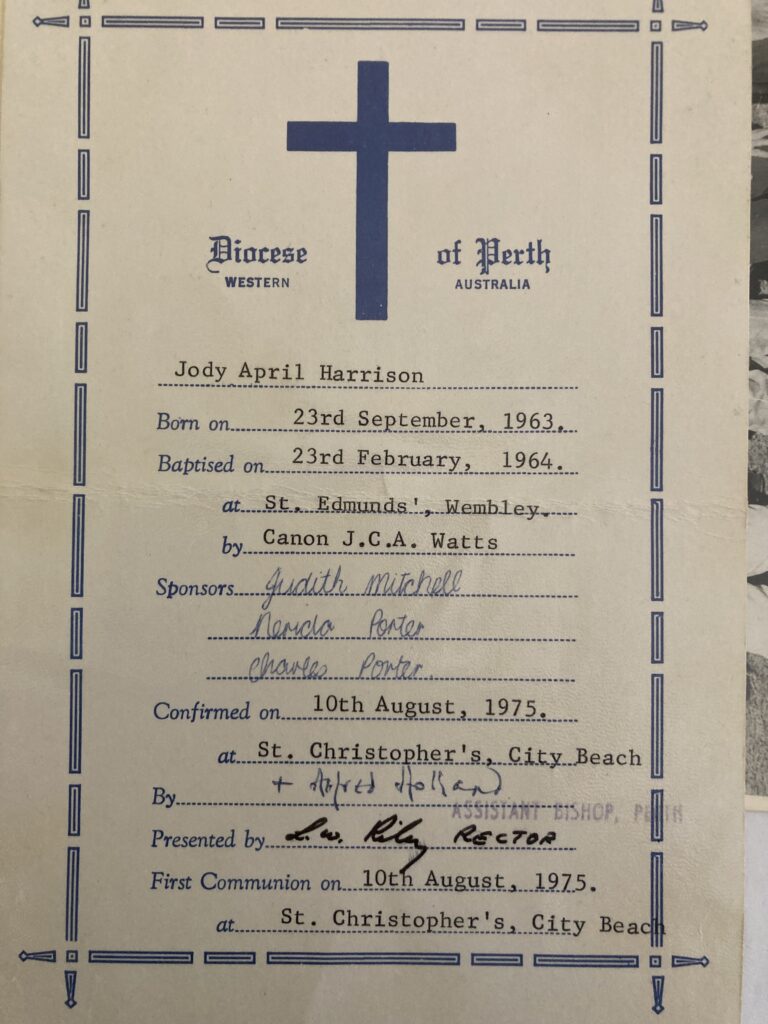
Confirmation of Jody Harrison at St Christopher’s Church City Beach.