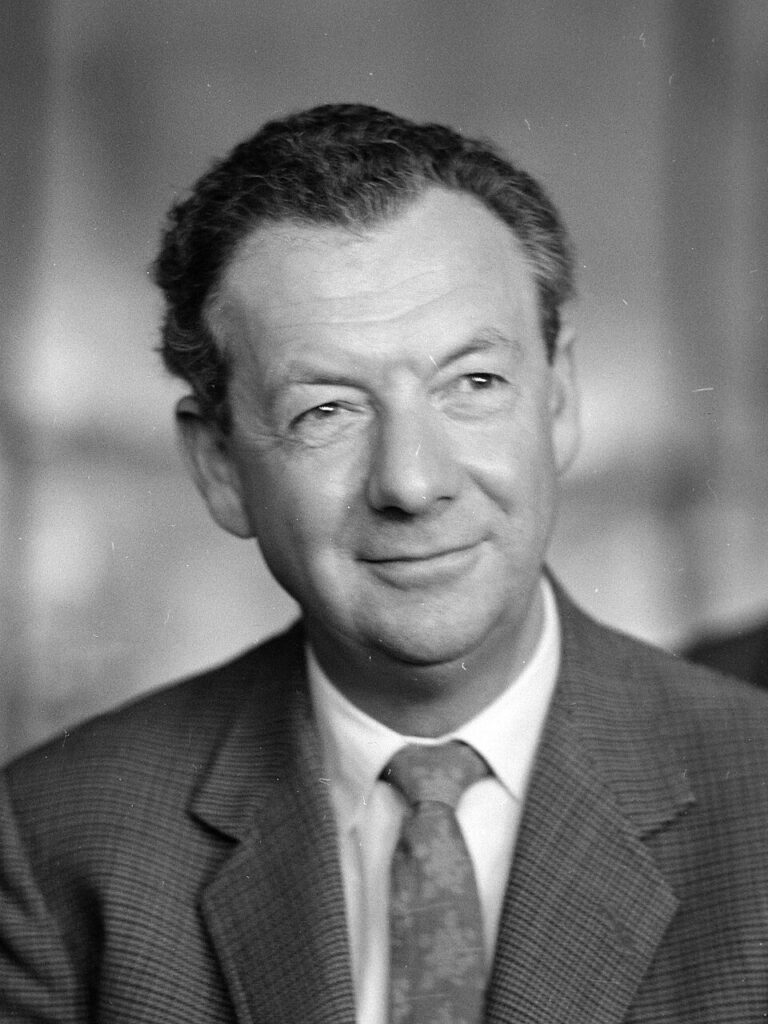
Albert Herring World Premiere – 6/20/1947 Glyndebourne Frederick Ashton, director / English Opera Group / Benjamin Britten Britten’s second chamber opera was composed just a year after its predecessor, The Rape of Lucretia, in 1947. Yet the contrast in style and subject matter could not be greater: instead of a tragedy based on a tale from Roman antiquity, Albert Herring is a comic opera set in the imaginary East Suffolk town of Loxford at the turn of the 20th century. The score contains some of Britten’s wittiest musical invention and his gifts for parody and caricature, already evident in Peter Grimes, are given full reign. However, the work is far from being mere farce: Albert is a sympathetic and credible figure who, tied to his mother’s apron-strings and frustrated by small-town pieties, embarks on a debauched ‘rake’s progress’, a theme fully in keeping with the composer’s favourite subject of the loss of innocence. Moreover, such poignant touches as the third-act Threnody, in which Albert, presumed dead, is solemnly mourned by the gathered townsfolk, makes Donald Mitchell’s description of the opera as ‘a serious comedy’ seem completely apt. Reproduced by kind permission of the Britten-Pears Library https://www.boosey.com/cr/music/Benjamin-Britten-Albert-Herring/3871 The 1973 performance of Benjamin Britten’s comic opera Albert Herring in Perth was a prominent feature of the 1973 Festival of Perth. Presented as a key theatrical event of the festival, the production ran from February 1 to February 10, 1973, at the University of Western Australia’s Octagon Theatre. The production was notable for combining major national and local creative talent:
- The Company: The opera was staged by the Western Australian Opera Company in conjunction with the Australian Elizabethan Theatre Trust.
- The Conductor: The production was musically directed and conducted by the highly distinguished Austrian-Australian conductor Georg Tintner.
- The Director: It was directed by John Milson, an influential figure in early Australian opera and theatre development.
- The Cast: The principal cast featured renowned Australian operatic vocalists, including soprano Patricia Whitbread and mezzo-soprano Valerie Melrose.
Albert Herring Proves to be a Bad Catch – With Robert Gude Ten minutes late getting underway to a two-fifths empty house at the Octagon, the opening night of the W.A. Opera Company’s production of Benjamin Britten’s “Albert Herring” was already too moribund to resuscitate. The plotting in Act One induced the muse of Morpheus simply because it was virtually impossible to decipher what anyone on stage was singing about. The company threw away the key to the plot which remained undiscovered right to the last bar of Act Three. Patricia Whitbread remained prominent both vocally and socially in her role as the imperious Lady Billows. Her larger than life characterisation lent itself to projecting both voice and diction into the lifeless acoustics of the Octagon. The rest of the cast had equal opportunity but for some inexplicable reason underplayed and undersang Britten’s brilliant operatic farce. An occasional word or two was intelligible. isolated by bar after bar of baffle. The less said about Martin Clare portraying the mumbling Mayor the better. Mr Clare’s pitch was pathetic, his onstage efforts inept. Between Miss Whitbread and Mr Clare this small cast was totally inadequate for the operatic task required. What redeems Albert Herring is the splendid production by John Milson. Act Two Scene One had the magic Milson touch: Jeffrey Weaver as Harry enduring functional discomfort during choir practice; Cliff Arndt’s bedrock boredom of wearisome waffle from windbags; John Nicholson’s stunned mullet manner and accepting homage as though facing the gallows with a recommendation for preferential treatment. Kristan Fredrickson’s articulate set and consummate costumes were colourful. Allowance should have been made, however, for a costume change amongst characters who could afford more than one ensemble thus enhancing the illusion of a passage of stage time. Conductor Geore Tintner seemed determined that Britten’s 12 member orchestra should overwhelm his singers at every opportunity. Strings were insecure throughout, with the exception of Aino Neumann, contrabass; Neil Pierson’s horn; Jack Harrison’s clarinet; Peter Randall’s oboe; James Hopkinson’s flute and most commendable, Michael Jefferies impeccable harp held Mr Tintner’s orchestra together. This festival fare is indigestible, not worth a candle and most certainly not worth the price of admission. If Britten’s Herring performed at it was on opening night is the W.A. Opera Company’s first production for the Festival Of Perth it could well be the last. Sunday Independent February 4 1973
| Feb 1973 | Benjamin Brittten Albert Herring PERTH PREMIERE | Georg Tintner (conductor) 12 piece orchestra | Festival of Perth W.A. Opera Company The Octagon Theatre, University of Western Australia |