Search names, events, places, organisations, and sources across the archive.
Person
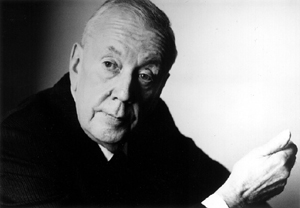
ARNOLD, Malcolm
21.10.1921 – 23.9.2006
Sir Malcolm Arnold was a British composer and trumpeter.
Malcolm Arnold was born in Northampton to a family of shoemakers. As a rebellious teenager, he was attracted to the creative freedom of jazz. After seeing Louis Armstrong play in Bournemouth, he took up the trumpet at the age of 12 and 5 years later won a scholarship to the Royal College of Music (RCM). At the RCM he studied composition with Gordon Jacob and the trumpet with Ernest Hall. In 1941, he joined the London Philharmonic Orchestra as second trumpet and became principal trumpet in 1943.
In 1944, he volunteered for military service, but after he found out the army wanted to put him in a military band, he shot himself in the foot to get back to civilian life. After a season as principal trumpet with the BBC Symphony Orchestra, he returned to the London Philharmonic in 1946 where he remained until 1948 to become a full-time composer.
Malcolm Arnold began his career playing trumpet professionally, by age thirty his life was devoted to composition. He was bracketed with Britten and Walton as one of the most sought-after composers in Britain. His natural melodic gift earned him a reputation as a composer of light music in works such as his sets of Welsh, English, Scottish, Irish and Cornish Dances, and his scores to the St Trinian’s films and Hobson’s Choice. Arnold was a relatively conservative composer of tonal works, but a prolific and popular one. He acknowledged Hector Berlioz as an influence, and several commentators have drawn a comparison with Jean Sibelius.
He was knighted in 1993 for his service to music. He received honorary doctorates from the University of Exeter (1969), University of Durham (1982), University of Leicester (1984), Miami University of Ohio (1989), University of Winchester (1983), and the University of Northampton (2006).
https://www.windrep.org/Malcolm_Arnold
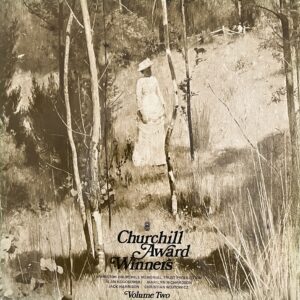
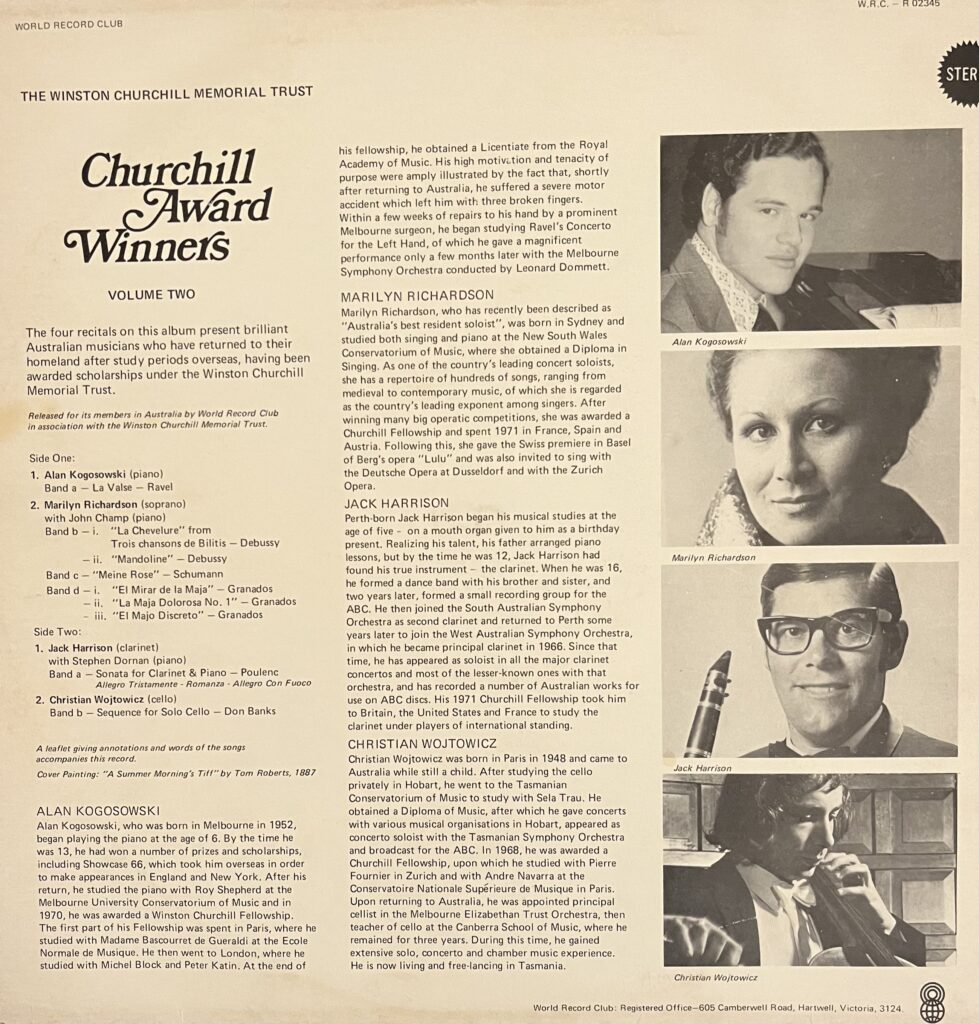
In September 1973 Jack was invited by Ivor Meddleton to be an artist on the second Churchill Fellows’ L.P. recording. The artist was asked to donate their time, to be recorded at the closest A.B.C. studio and the cost of the accompanist covered by The Winston Churchill Memorial Trust.
Jack replied that he would be happy to contribute.
“Listed below are three pieces, any one of which would be suitable and I will leave the final choice in your hands:-“Concerto for Clarinet and String Orchestra” by Malcolm Arnold – my reasons for including this work is that I am performing this piece of music with the W.A. Symphony Orchestra during the month of November and the A.B.C. has agreed to allow a recording to be made for the Churchill Trust. Another reason is that there is, to my knowledge, no commercial recording of this concerto. As I will be concentrating on this piece for the next six weeks, I would naturally favour it as my choice.”
11.11.1973
Malcolm Arnold Clarinet Concerto (1949) AUSTRALIAN PREMIERE
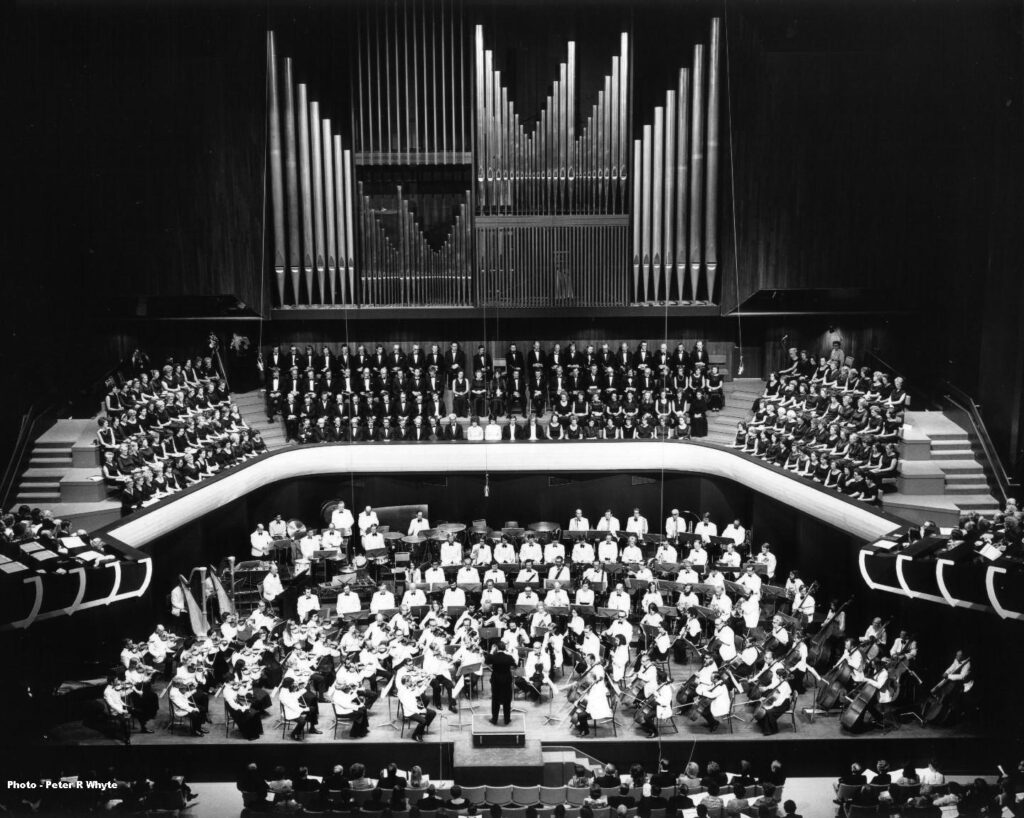
On November 11th 1973 clarinettist Jack Harrison performed the Australian Premiere of Malcolm Arnold’s Clarinet Concerto with the West Australian Symphony Orchestra conducted by David Measham directed by the A.B.C. in a free concert in the Perth Concert Hall.
https://en.wikipedia.org/wiki/Malcolm_Arnold
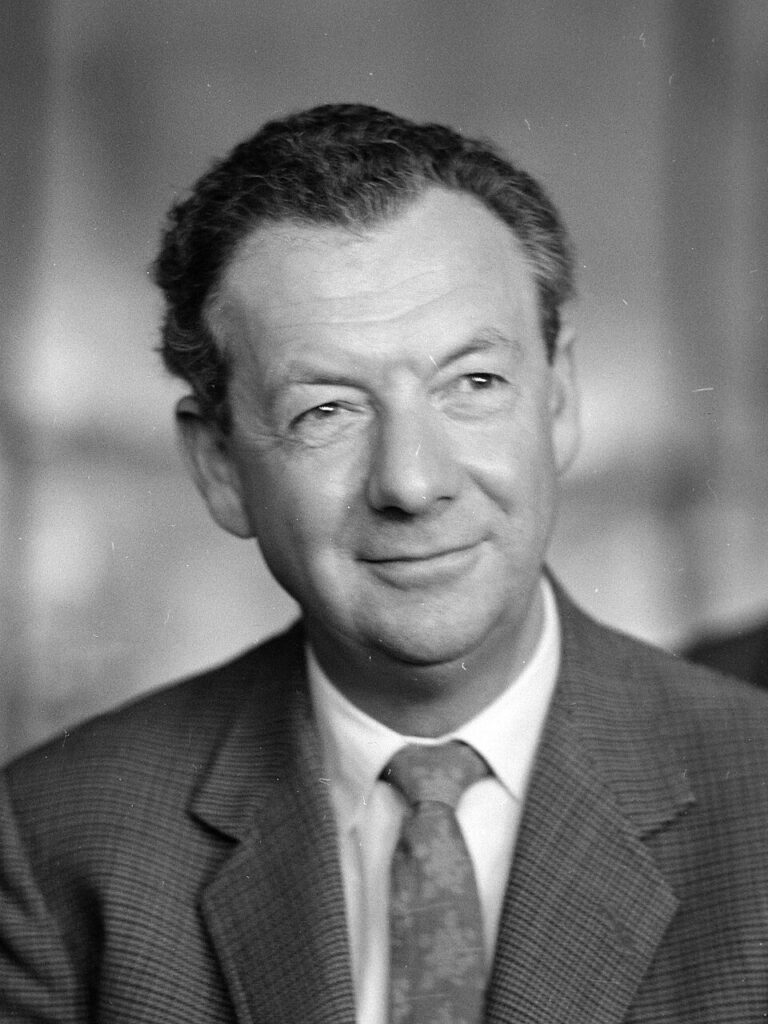
Composer-conductor Benjamin Britten was born November 22, 1913, in Lowestoft, Suffolk County, England. He started piano and viola study before age five, musical composition at age six, and entered the Royal Conservatory of Music (RCM) at age seventeen after three years of private composition study with English composer Frank Bridge.
Upon graduating from the RCM, Britten began working for the film division of the BBC, creating incidental music for films and other productions. During the late 1930s, he worked with a number of theatrical and musical performing groups which shared his left-wing and pacifist viewpoints. These activities led to his association with W. H. Auden, whose poetry provided texts for a number of songs. It was during this time that he met tenor Peter Pears, who became his musical associate and life companion.
Many of Britten’s vocal compositions were written to be performed by Pears, who also achieved wide acclaim in his own right for lieder and oratorio performances throughout Europe and America. In 1939, Britten and Pears went to America, where they lived until their return to England in 1942, when Britten was exempted from military service as a conscientious objector.
While in America, Britten’s work drew the attention of Serge Koussevitsky, whose Koussevitsky Foundation commissioned the opera Peter Grimes, based upon a story by English poet George Crabbe. Completed in 1945, it was premiered by the Sadler’s Wells Opera Company and again one year later in America by conductor Leonard Bernstein. With Peter Grimes, Britten was assured international recognition as a major figure in the world of music.
Britten was an unusually prolific and versatile composer. Operas, solo vocal and choral works, orchestral and chamber pieces, and incidental music for film and theater flowed from a rich musical energy over his entire career.
His best known works include The Young Person’s Guide to the Orchestra (1946), based on a theme by Henry Purcell; the massive War Requiem (1962); and his first opera, Peter Grimes.
Together with Peter Pears and Imogene Holst (daughter of composer Gustav Holst), Britten established the Aldeburgh Festival in 1948, which continues to attract world class performers and composers each year. Some of Britten’s finest compositions were premiered at the Aldeburgh Festival.
Britten experienced a stroke during a heart operation in 1973, the effects of which prevented him from working for the last three years of his life. He died in December 1976, only a few months after being named a Life Peer by the Queen of England. He is buried in the family plot at Aldeburgh. His partner, Peter Pears, and Imogene Holst lie in graves on either side of his own.
https://www.kennedy-center.org/education/resources-for-educators/classroom-resources/media-and-interactives/artists/britten-benjaminAlbert Herring
World Premiere – 6/20/1947 Glyndebourne
Frederick Ashton, director / English Opera Group / Benjamin Britten
Britten’s second chamber opera was composed just a year after its predecessor, The Rape of Lucretia, in 1947. Yet the contrast in style and subject matter could not be greater: instead of a tragedy based on a tale from Roman antiquity, Albert Herring is a comic opera set in the imaginary East Suffolk town of Loxford at the turn of the 20th century. The score contains some of Britten’s wittiest musical invention and his gifts for parody and caricature, already evident in Peter Grimes, are given full reign. However, the work is far from being mere farce: Albert is a sympathetic and credible figure who, tied to his mother’s apron-strings and frustrated by small-town pieties, embarks on a debauched ‘rake’s progress’, a theme fully in keeping with the composer’s favourite subject of the loss of innocence.
Moreover, such poignant touches as the third-act Threnody, in which Albert, presumed dead, is solemnly mourned by the gathered townsfolk, makes Donald Mitchell’s description of the opera as ‘a serious comedy’ seem completely apt.
Reproduced by kind permission of theBritten-Pears Libraryhttps://www.boosey.com/cr/music/Benjamin-Britten-Albert-Herring/3871
The 1973 performance of Benjamin Britten’s comic opera Albert Herring in Perth was a prominent feature of the 1973 Festival of Perth.
Presented as a key theatrical event of the festival, the production ran from February 1 to February 10, 1973, at the University of Western Australia’s Octagon Theatre. The production was notable for combining major national and local creative talent:
The Conductor: The production was musically directed and conducted by the highly distinguished Austrian-Australian conductor Georg Tintner.
The Director: It was directed by John Milson, an influential figure in early Australian opera and theatre development.
The Cast: The principal cast featured renowned Australian operatic vocalists, including soprano Patricia Whitbread and mezzo-soprano Valerie Melrose.
Albert Herring Proves to be a Bad Catch – With Robert GudeTen minutes late getting underway to a two-fifths empty house at the Octagon, the opening night of the W.A. Opera Company’s production of Benjamin Britten’s “Albert Herring” was already too moribund to resuscitate. The plotting in Act One induced the muse of Morpheus simply because it was virtually impossible to decipher what anyone on stage was singing about. The company threw away the key to the plot which remained undiscovered right to the last bar of Act Three. Patricia Whitbread remained prominent both vocally and socially in her role as the imperious Lady Billows. Her larger than life characterisation lent itself to projecting both voice and diction into the lifeless acoustics of the Octagon. The rest of the cast had equal opportunity but for some inexplicable reason underplayed and undersang Britten’s brilliant operatic farce. An occasional word or two was intelligible. isolated by bar after bar of baffle. The less said about Martin Clare portraying the mumbling Mayor the better. Mr Clare’s pitch was pathetic, his onstage efforts inept. Between Miss Whitbread and Mr Clare this small cast was totally inadequate for the operatic task required. What redeems Albert Herring is the splendid production by John Milson. Act Two Scene One had the magic Milson touch: Jeffrey Weaver as Harry enduring functional discomfort during choir practice; Cliff Arndt’s bedrock boredom of wearisome waffle from windbags; John Nicholson’s stunned mullet manner and accepting homage as though facing the gallows with a recommendation for preferential treatment. Kristan Fredrickson’s articulate set and consummate costumes were colourful. Allowance should have been made, however, for a costume change amongst characters who could afford more than one ensemble thus enhancing the illusion of a passage of stage time. Conductor Geore Tintner seemed determined that Britten’s 12 member orchestra should overwhelm his singers at every opportunity. Strings were insecure throughout, with the exception of Aino Neumann, contrabass; Neil Pierson’s horn; Jack Harrison’s clarinet; Peter Randall’s oboe; James Hopkinson’s flute and most commendable, Michael Jefferies impeccable harp held Mr Tintner’s orchestra together. This festival fare is indigestible, not worth a candle and most certainly not worth the price of admission. If Britten’s Herring performed at it was on opening night is the W.A. Opera Company’s first production for the Festival Of Perth it could well be the last. Sunday Independent February 4 1973
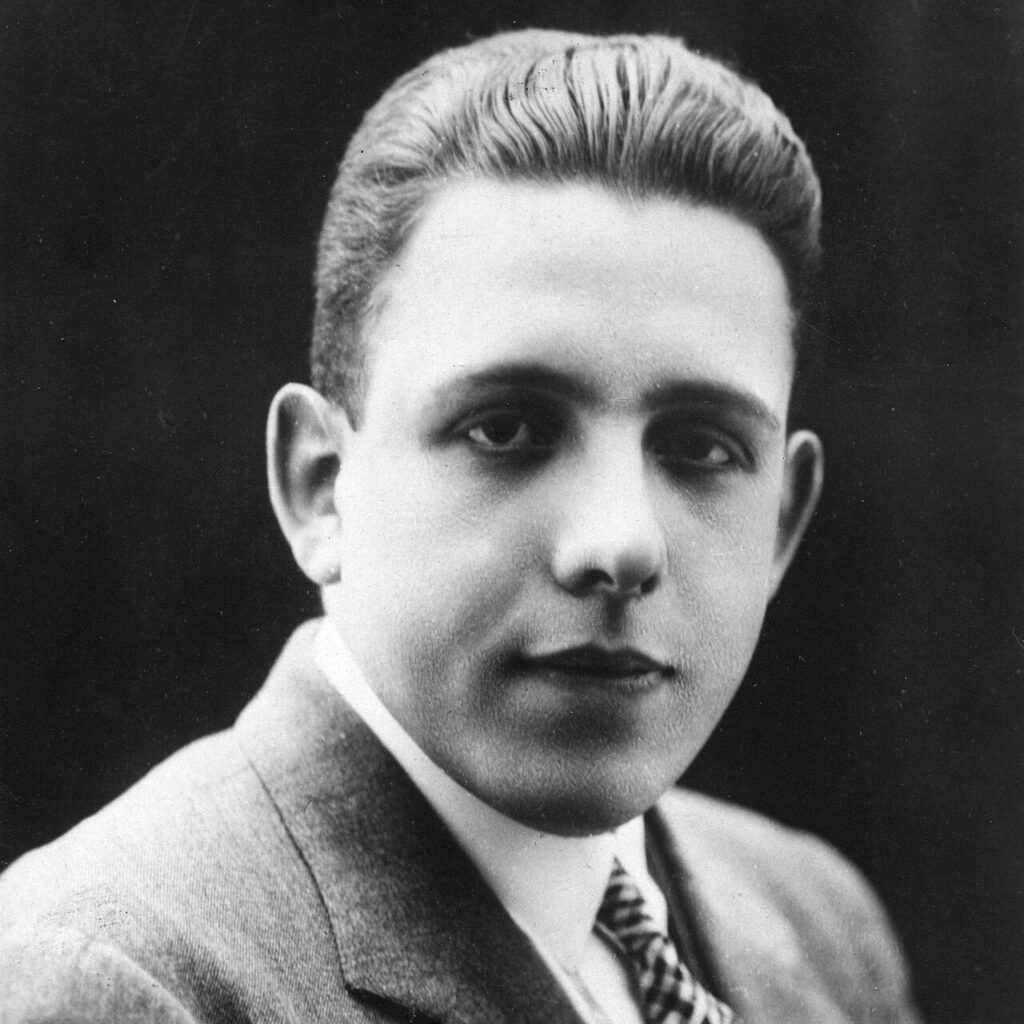
Born in Paris, France, in 1899, Francis Poulenc was a composer noted for music that is witty, crystal clear, and tuneful.
His mother, a talented amateur pianist, was his first piano teacher. Poulenc’s involvement with music was as an amateur for some years. At age 18, Poulenc had his first major success as a composer with Rapsodie Nègre for baritone and chamber ensemble. He had had no composition lessons tothis point and, despite some study later, he remained largely self-taught.
While in the French National Service in 1918, Poulenc composed a number of miniature pieces. Among them was a short work for piano, Trois Mouvements Perpétuels, played for the first time in public in 1919, which became popular throughout Europe.
In the 1920s, he was part of a group of five other young French composers nicknamed “Les Six.” They followed the artistic leanings of Satie and Cocteau, rebelling against the Germanic tradition in music.
Poulenc wrote in almost every medium. His piano works included short pieces as well as concertos for one and two pianos and orchestra. Among his choral works are Un Soir de Neige and a Stabat Mater. His theater works include several ballets: a one-character, one-act tragedy, La Voix Humaine as well as the religious opera, Les Dialogues des Carmelites.
https://www.kennedy-center.org/education/resources-for-educators/classroom-resources/media-and-interactives/artists/poulenc-francisCLARINET SONATA
The clarinettist Benny Goodman, who commissioned the piece, was intended to premiere it with the composer accompanying. Poulenc died suddenly of a heart attack on 30 January 1963 before it was published, and an editor was employed to ascertain the identity of some notes, as well as provide missing dynamics and articulations. The premiere was given at New York City’s Carnegie Hall by Benny Goodman and Leonard Bernstein on 10 April 1963.
The first Australian recording of Poulenc’s Clarinet Sonata was made by Jack Harrison and Stephen Dornan (piano) in 1973. It was recorded at the A.B.C. for the 2nd L.P. of Churchill Fellowship artists for The Winston Churchill Memorial Trust.
1973
Poulenc Clarinet Sonata (1963) FIRST AUSTRALIANRECORDING
Jack Harrison (clarinet) Stephen Dornan (piano)
Recorded at the A.B.C. for the 2nd L.P. of Churchill Fellowship artists for The Winston Churchill Memorial Trust.