Person

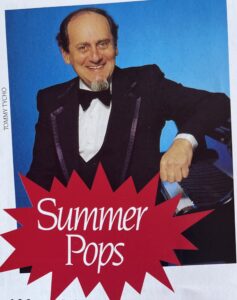
TYCHO, Tommy

Tommy Tycho and music-making in Western Australia

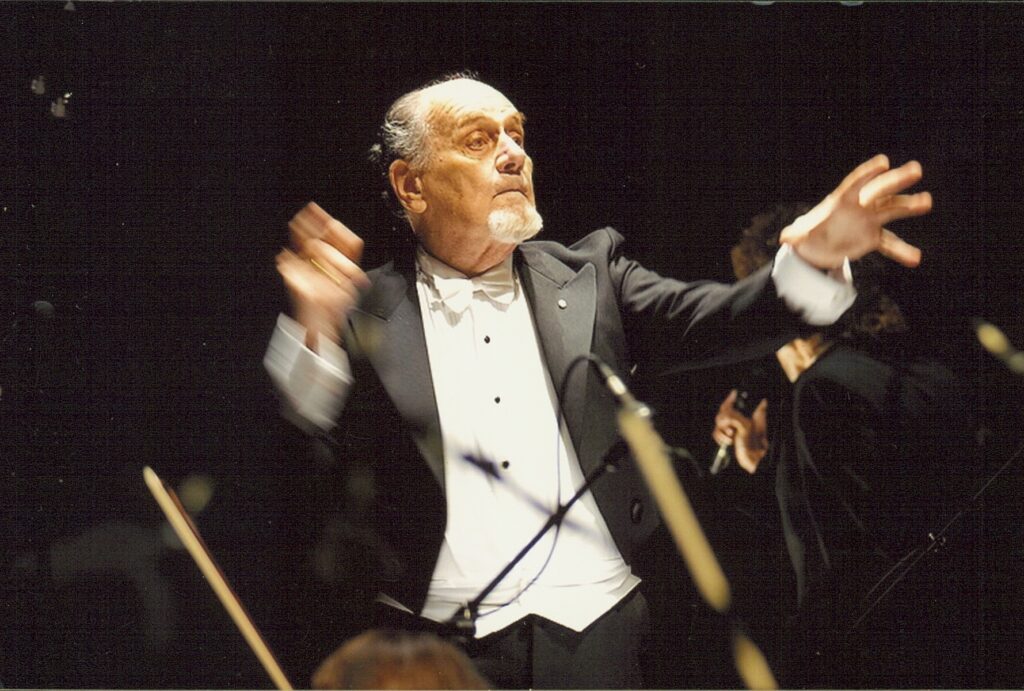
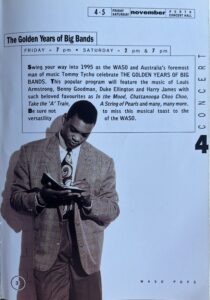
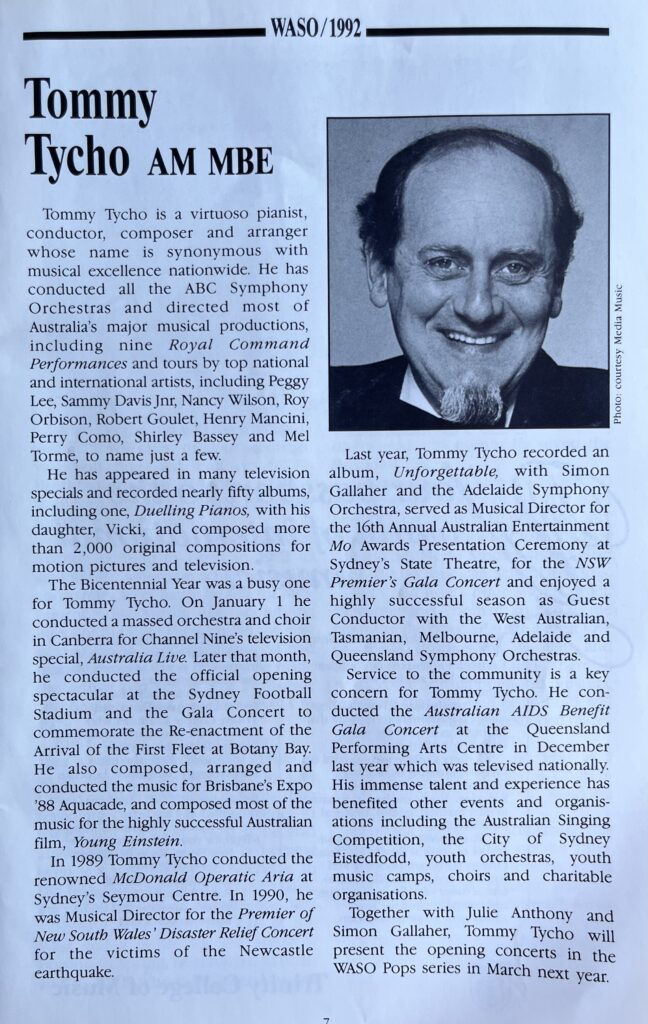
 Tommy Tycho had a long association with the West Australian Symphony Orchestra. From 1984-2003 he was a frequent guest conductor in their family and contemporary music programs. At the time Tommy was the first popular music conductor to appear with all the state symphony orchestras (who were then managed by the ABC).

The first concerts Tycho performed with WASO were the ABC Family concerts 1984 featuring Tommy and Vicky and conducted by Dobbs Franks. Soon Tycho was invited as a guest conductor for WASO and the first concert was “Fascinating Rhythms” featuring singer Jackie Love. The program also included the Perth premiere of Tommy’s 1984 “Prom Overture”, op.5 which had been commissioned by Sydney Youth Orchestra. The concert also featured Tommy’s piano and orchestra arrangement of Gershwin’s “Fascinating Rhythm”, with many other Gershwin themes thrown in.

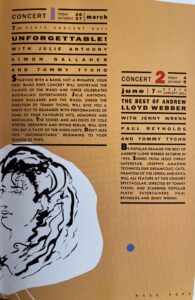
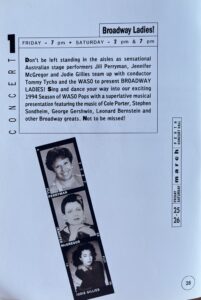
During the 1990s Tycho was featured as conductor in the “Fantastic Fridays” series. These concerts included Broadway music, and a Disney concert was also programmed in the 1990s featuring singers and instrumental arrangements of Disney music. Another concert called “All themes great and small” featuring daughter Vicky Tycho who gave her debut in 1982 and worked regularly with Tommy during the 1980s-1990s as a duelling piano act.

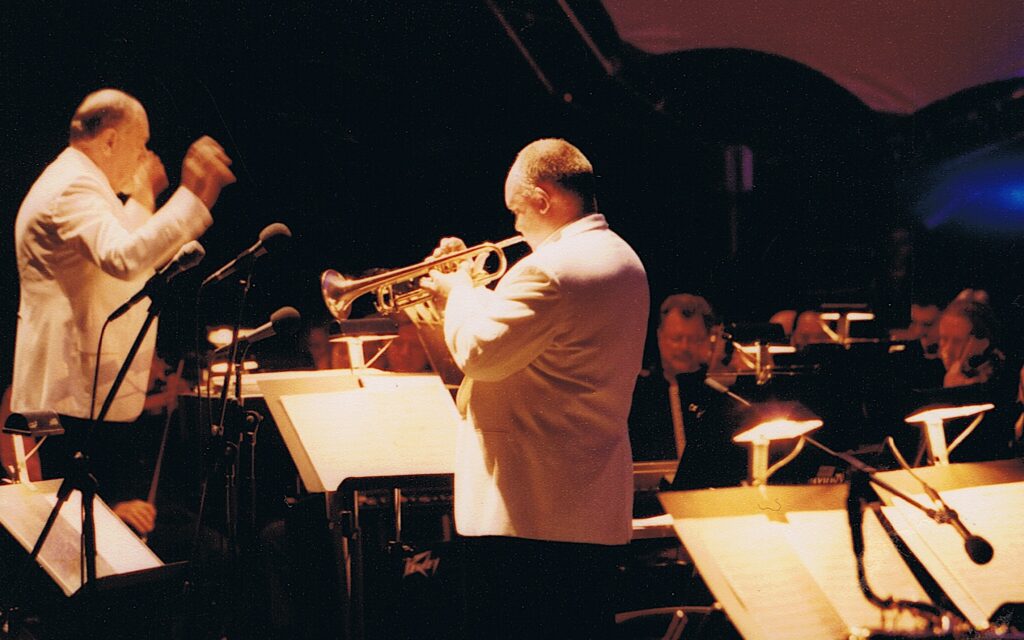
Tommy Tycho with James Morrison and WASO
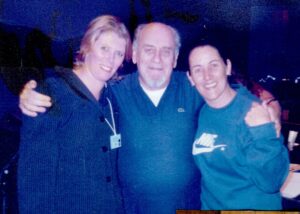
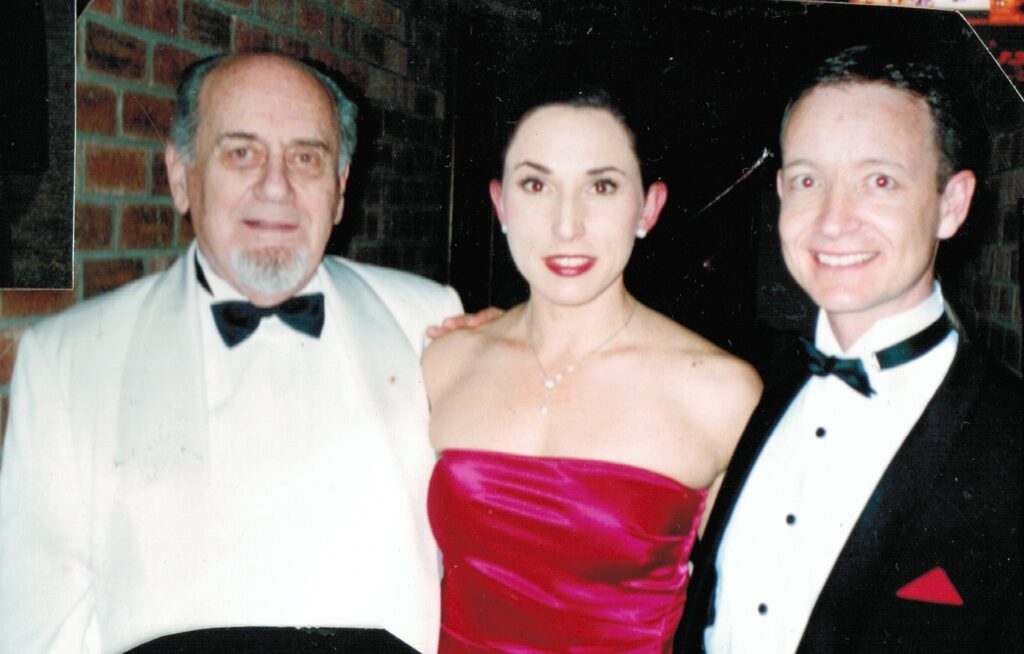
Jody Harrison, Tommy Tycho, Grace Knight

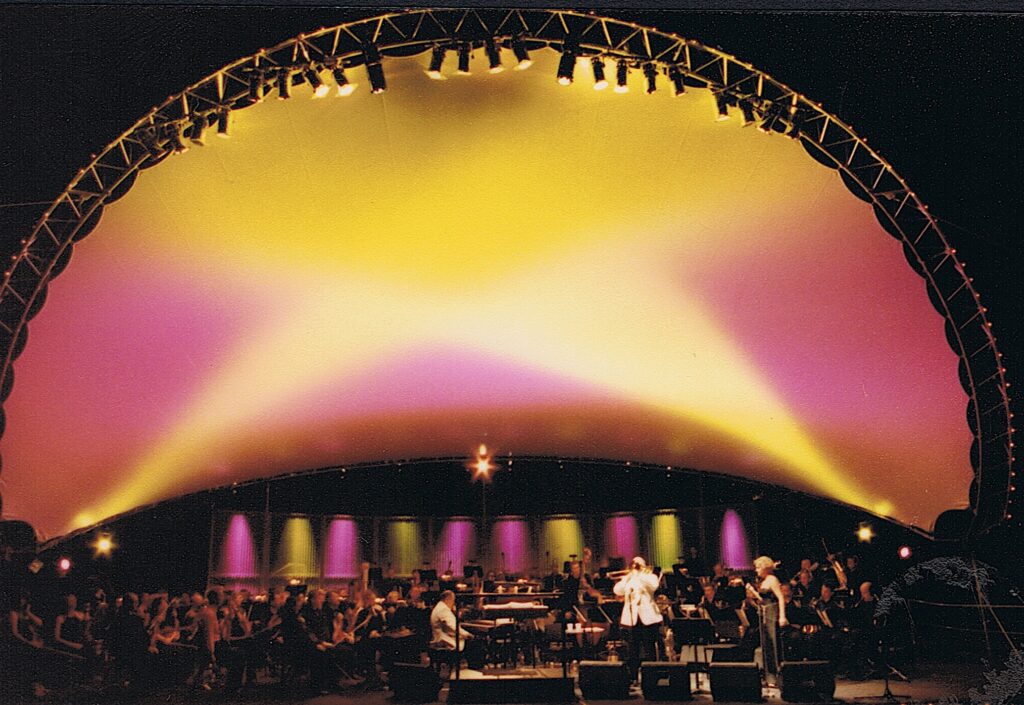
In 2000 Tommy conducted many of WASO’s outdoor concerts called “Pops in the Park” held at Kings Park.

These featured James Morrison and Emma Pask, the crooner Frank Bennett, and Grace Knight.


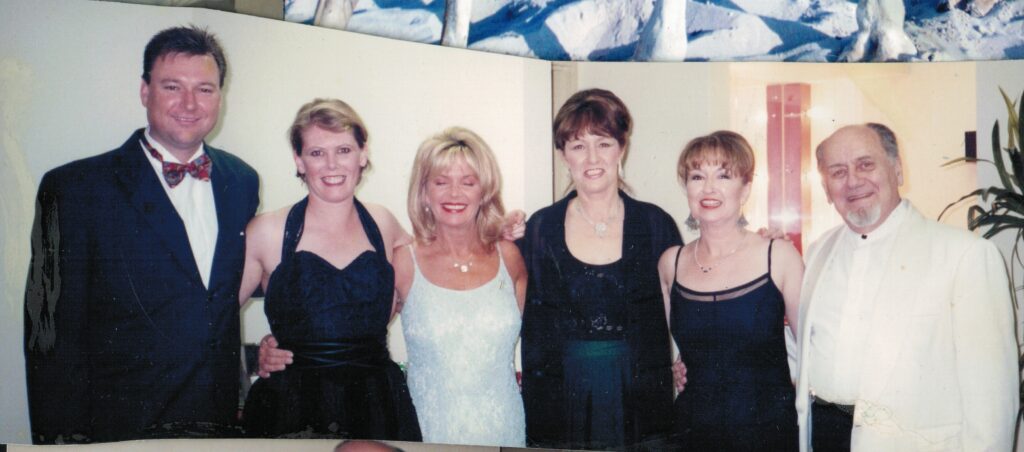
Mark Underwood, Jody Harrison, Annie Neil, Sue Bluck, Jenny Wren (“Birdland”) and Tommy Tycho

The early 2000s saw Tycho return to WASO as a guest artist and conductor as part of the Ernst and Young Contempo Series. These concerts included Rhonda Burchmore and pianist Ray Aldridge. Other concerts featured Julie Anthony, Rob Guest, and others.

Tommy Tycho, Libby Hammer and James Flynn on tour in Esperance with “Sinatra”

In 2003 Tommy was commissioned by WASO to compose a five-minute piece to celebrate their 75th birthday (Tycho also celebrated his 75th birthday that year), which was a celebratory overture called The Celebration of Septuaginta Quinque.

This was part of their 5 x 15 commissioning program in which they commissioned 15 composers to write 5 minute works totalling 15 minutes. In this same concert Tommy also gave the premiere of the third movement of his Violin Concerto, which was performed by WASO’s concert master at the time, Daniel Kossov.


Material provided by Dr Samuel Cottell.


Tommy Tycho (1928-2013), AM MBE, Doctor of Music (honoris causa)

Thomas (Tommy) Tycho was born in Budapest, Hungary in 1928. His mother was a celebrated soprano, and his father worked for the Hungarian Electrical Commission. By age four Tycho began learning the piano and soon was a child prodigy, playing Gershwin’s Rhapsody in Blue with the Budapest Philharmonic at ten years of age. Tycho also studied composition with Leo Weiner, Zoltan Kodaly, and Carl Orff. The Occupation of Hungary and World War II interrupted Tycho’s studies and he was interned in a Labor camp and the ghetto. After the war Tycho continued his studies in composition and conducting. To make a living to support his family he worked as a pianist and arranger in jazz and dance bands in Hungary performing in upscale hotels and making recordings. He also worked in a number of night clubs. His formal studies included music at the Hungarian Gymnasium and the Franz Liszt Academy of Music. Leaving Hungary the day before the Communist takeover, Tommy joined a dance band led by Jules Szepesi, and they became residents at the Park Hotel in Tehran. Tycho was soon called upon by the Shah and became the palace pianist. During this time Tycho met his wife Eve, and wanting to settle down they migrated to Australia in 1951.

Unable to join the protectionist Musician’s Union of NSW Tycho sought work at David Jones as a storeman in the loading dock. Upon gaining entry to the Union Tycho auditioned at the ABC and soon gave broadcasts on the Sunday radio program A Handful of Keys. During the 1950s he regularly broadcast on ABC radio including as a duo pianist with Glenn Marks, as pianist with the Jay Wilbur Ensemble, in the Geza Bachmann Trio, and forming his own light music ensemble, The Thomas Tycho Players, where he wrote the music arrangements, compositions, and led the ensemble. Beyond the ABC Tycho led a quartet on radio 2UW, appeared on The Ford Show, and for a time was the Shefte Melody Man broadcasting popular tunes on the 2UW program. In the 1950s Tycho also composed his first two film scores for the Government film department: Valley of the Yarra and A Call for Order.

When Channel 7 (ATN) commenced broadcasting on 2 December 1956, Tycho was one of the first musicians to perform on television. At the same time he was also a pianist and arranger in the Sydney Tonight orchestra, soon becoming the music director of the entire 7 network. Tycho was vital to the success of television working as music director for all of the music and revue programs Curtain Call, The Commonwealth Bank Hour of Music, Revue ‘61, ‘62, Startime, Startime ‘63, Studio A, Teen Time, The Johnny O’Keefe Show (later renamed Sing Sing Sing), and many more. During this period Tycho also composed original music for locally produced television programs Penthouse, and the documentary series ANZAC. He later wrote music for The Mavis Bramston Show, the theme music for You Can’t See ‘Round Corners, The Battlers, and Riptide.  During the period 1964-1968 Tycho wrote arrangements for RCA Records of Australia appearing on over fifty recordings. Here he released his debut LP as pianist arranger and conductor on Tycho, Tycho. In the latter years of his association with ATN7 Tycho also directed the orchestra at the Silver Spade, working with artists such as Ethel Merman, Mel Torme, Barbara Eden and other international artists.

Leaving television in 1972 Tycho reinvented himself by returning to live performing. With the help of Robert A. Gunn and Mel Welles, the trio created a series of concerts in association with 2CH Radio who had just switched to the ‘good music’ format. The concerts featured the newly formed Good Music Orchestra and showcased Tycho’s talents as a pianist, arranger, and conductor. The first of these concerts, Good Music Live at the Sydney Opera House, was released on Festival Records. These were followed by a series of  “Nigh with …” concerts that included music by Gershwin, Cole Porter, Irving Berlin, and Rodgers, Hammerstein and Hart were all recorded and released on LP. During this time Tycho also created Big Band Concerts, An Evening with Julie Anthony, and Hello Broadway starring Anthony, Barry Crocker, and Frankie Davidson. In 1979 Tycho was the music director for Peggy Lee’s Australian tour. During this period he was the music director for A Concert for Darwin, and for June Bronhill’s concert at the Sydney Opera House.

Having established himself as the leading orchestral popular music figure in Australia, the 1980s saw Tycho conducting the first Royal Charity concert broadcast live from Sydney Opera House. In 1980 Tycho once again returned to television as the music director of the multicultural music variety program Cabaret on the newly established Channel-0 (SBS). He made recordings, and with Lynn Rich as manager formed the Sydney International Orchestra. In 1982 Tycho composed and arranged music for the Commonwealth Games in Brisbane. In 1983 he was the music director for the opening of Sydney Entertainment Center. During this time Tycho formed a piano duo with his daughter Vicky. They toured nationally and made an LP Duelling Pianos.

In 1984 Tycho arranged and recorded Australia’s new national anthem Advance Australia Fair for the ABC. He later arranged various versions of the anthem in 1985 and 1986. The 1986 version was recorded by Julie Anthony and is the version still used today for major sporting and cultural events. Tycho’s most iconic version is perhaps the special 1988 Bicentennial version broadcast live from the lawn of Parliament House and was used as ABC television’s station closing throughout the 1980s and 90s, with Tycho’s arrangement giving Australia’s anthem its heart and soul.

The 1980s saw Tycho engaged as a guest conductor with the state symphony orchestras becoming one of Australia’s first popular music maestros. He first was invited as a guest pianist with the MSO, then recorded a three-part television series, My Music, with the Queensland Symphony for ABC television. He conducted the Queensland, Adelaide, Tasmanian, West Australian, and Sydney Symphony Orchestras over a twenty-year period.  Tycho continued to be in demand as conductor, arranger and pianist throughout the 1990s and 2000s making three albums with his protege Bernard Walz. Tycho also wrote the arrangements for three Anthony Warlow albums and was music director for two of Warlow’s national tours in the 1990s and 2000s. He provided arrangements and recordings for hundreds of artists and was in demand for all the major cultural events. In 1995 he published his memoirs The Tommy Tycho Story: Music, Maestro Please.

During his lifetime Tycho composed several film scores including the iconic Young Einstein for Yahoo Serious and others. Tycho composed a number of light music pieces including Sydney Suite, Sunday at Taronga Park, Dance of the Fireflies, The Kangaroo and others. He also composed a number of classical concert pieces including a String Quartet (1947), Suite for Grand Orchestra (1948/9), Three Pieces for Woodwind Quartet (1971), a Trumpet Concerto for Dick Montz (1985), Proms Overture, op.5 (1984) commissioned by the Sydney Youth Orchestra, The Celebration of Septuaginta Quinque commissioned by WASO in 2003, “Romanza” the second movement from his incomplete second piano concerto, and his magnum opus, the Violin Concerto (2002) which is regularly performed.

Tycho was awarded an MBE in 1977, an AM in 1987 and an honorary Doctor of Music in 2007 from the University of Sydney. He was also a patron of the MO Awards. Tycho’s enduring legacy is still present today in Australian cultural life. His orchestrations are still performed by orchestras and the Tycho Trust, led by his daughter Vicky, ensures his music is made available for future generations through digitisation and preservation. Samuel Cottell has written a PhD on Tycho “From storeman to stardom: the life and music of Tommy Tycho within the context of light music 1951-1978,” and a new documentary TYCHO! Beyond the Baton by Stephan Wellink  has won multiple awards and accolades being regularly screened in cinemas around Australia.

Biography provided by Dr Samuel Cottell 2026.


Jody Harrison and Tommy Tycho

Memories of Tommy Tycho by Jody Harrison

The master, the Maestro, the magnificent Tommy Tycho – with whom I was privileged to work with on many occasions – told me after a day of rehearsing a Pops concert in which he was both the Conductor AND the piano soloist – that he wasn’t feeling well.   I must preface this with the fascinating experience I shared a couple of weeks previously for a Family Concert with a medical theme, in which my colleague Paul Doyle an I had approached WASO sponsors St John of God Hospital for the use of a heart monitor.  We hooked it up to the obliging Principal Cellist during the concert, a huge screen above the orchestra showing what happened to your heart rate when you began performing.  This contact became hugely useful when I received a call from Tommy’s wife, Eve, late the same evening (that comes under my E.B. agreement contract right at the bottom that says “other duties as directed”) pleading with me for help as Tommy was most unwell.  I popped to the Sheraton to assess the situation and seeing the usually cheerful and hilariously naughty Tommy grey and in obvious pain, immediately realised he needed to go to hospital.  Tommy had previous heart problems and I wanted to call an ambulance and get him to hospital.  Tommy didn’t want to go to hospital – Eve was sobbing and begging him to go.  I bit the bullet and rang the fab staff at St John of God Hospital (not an emergency hospital) reminding the night staff of my use of their heart monitor a couple of weeks before, the fact that they were a WASO sponsor and I thought the conductor was having a heart attack.  After a quick and urgent discussion they fabulously allowed me to drive him straight to ICU and be admitted.  He was having a heart attack.  Dobbs Franks filled in the next day of rehearsals (bearing in mind Tommy was also doing extensive piano solos – fab day for Dobbs I image) and Tommy came back for the final rehearsals and performances!  Can’t hold a good man down.

Years

Person

MENOTTI, Gian Carlo

Gian Carlo Menotti, composer (b. July 7, 1911–d. February 1, 2007)

Gian Carlo Menotti became the most-performed contemporary opera composer of his era. He stood alone on the American scene as the first to create American opera with so much appeal to audiences that it became established in permanent repertory. He adapted his natural Italian gift for operatic drama and performance to the requirements of the American stage and changing times. According to fellow composer Ned Rorem: “It is not opinion but fact that Menotti singlehandedly revitalized the concept of living opera for Americans…and violently altered the nature of lyric theater here and, by extension, throughout the world.”

Menotti was born in the country town of Cadegliano on Lake Lugano in Italy. His father was a prosperous businessman and his mother, although she had nine other children, was a talented musician, and taught her young son the rudiments of music. At age 10, Menotti wrote his first opera titled The Death of Pierrot, though it was never performed professionally. At age 13, when Menotti entered the Milan Conservatory, he had already written a second opera. In 1927, he came to the United States and studied at the Curtis Institute of Music in Philadelphia with Rosario Scalero. Having received his diploma with honors from the Institute in 1933, Menotti began the libretto for his opera Amelia Goes to the Ball, an ebullient opera buffa, first staged in 1937 at Philadelphia’s Academy of music by students of the Curtis Institute and then in New York with such success that the Metropolitan Opera accepted it for the following season. Amelia was responsible for Menotti’s receiving a commission from NBC for a radio opera. The comic opera, first broadcast in 1939, was The Old Man and the Thief, which was later performed on stage by the Philadelphia Opera Company.

It was, however, with The Medium that Menotti was established as one of the foremost composer-librettist of modern opera. The tragedy, about a fraudulent spiritualist caught between the worlds of reality, which she cannot understand, and of the supernatural, in which she doesn’t believe, had a run of 211 performances at the Ethel Barrymore Theater on Broadway (1947-48) and was accompanied by a “curtain-raiser,” a totally different one-act comedy The Telephone.

Menotti’s first full length opera, The Consul, considered by many to be his greatest work, opened at the Ethel Barrymore Theater March 15, 1950. This searing contemporary work describing the plight of political fugitives vainly trying to escape an unnamed police state but failing to obtain the necessary visa had an eight month run and received the Pulitzer Prize and the Drama Critics Award. It has since been translated into 12 languages and performed in more than 20 countries.

On Christmas Eve, 1951, the first opera written expressly for television, Menotti’s Amahl and the Night Visitors was broadcast on NBC. The opera, influenced by Bosch’s Adoration of the Magi, has become one of the most frequently performed of the 20th century. The composer’s next effort, The Saint of Bleecker Street, a serious drama set in contemporary New York, which opened in New York December 27, 1954, won the Drama Critics Circle Award for the best musical play of 1954 and the Pulitzer Prize for 1955. It also received a Music Critics Circle Award for the best opera. Three years later, Menotti organized the Festival of Two Worlds in Spoleto, Italy, staging old and new musical works.

In 1977, he inaugurated the American counterpart of the festival in Charleston, South Carolina. Menotti was later replaced as director of the Spoletto Festival, due to differences in his approach to music. Additional works evolved including The Death of the Bishop of Brindisi, a cantata about the Children’s Crusade of 1212, commissioned by the Cincinnati Music Festival Association, and Le dernier sauvage, an opera which premiered in France and was later given a lavish production at the Metropolitan Opera in New York.

Operas for children are also included among his works. A Bride from Pluto, a humorous space opera was commissioned by the Kennedy Center. His Help, Help, the Globolinks!, which he considers “an opera in one act for children and those who like children,” was commissioned in Hamburg.

In addition to his numerous operatic works, Menotti has enriched the artistic world with his ballets, including Sebastian ; Errand into the Maze; and The Unicorn, the Gorgon and the Manticore orchestral works (Apocalypse), and Landscapes and Remembrances, a cantata to his own autobiographical words. Menotti continued to compose–his most recent operas include Goya (1986) and The Singing Child (1993). In addition to being awarded the Kennedy Center Honors for lifetime achievement in the arts, Menotti was also chosen as the 1991 “Musician of the Year” by Musical America. According to critical appraisal by H. Wiley Hitchcock, “Menotti combined the theatrical sense of a poplar playwright and a Pucciniesque musical vocabulary with an Italian love of liquid language and a humane interest in characters as real human beings. The result is opera more accessible than anyone else’s at the time.

https://www.kennedy-center.org/artists/m/ma-mn/gian-menotti/


https://en.wikipedia.org/wiki/Gian_Carlo_Menotti


Gian Carlo Menotti’s opera The Consul had its historically notable Perth premiere on July 3, 1953. It was staged by the National Theatre Movement Opera Company at His Majesty’s Theatre, featuring a highly praised performance by Australian soprano Marie Collier in the lead role of Magda Sorel.   Jack performed in a Menotti opera “The Consul” and quoted from it his whole life – “sign at the bottom of the page” and “what is your name?  Magda Sorel, age 33”.

Instruments

Years

Person

TUNLEY, David

Emeritus Professor David Tunley, AM MMus (Durham), DLitt, Hon. DMus (UWA), FAHA, DSCM, LTCL Chevalier de L’Ordre des Palmes Académiques.

A graduate of the New South Wales State Conservatorium, David Tunley was previously a specialist music teacher at Fort Street Boys’ High School in Sydney. He gained the BMus and MMus degree from the University of Durham and in 1970 was awarded the degree of Doctor of Letters by the University of Western Australia.  He was promoted to the level of Senior Lecturer in 1964, Reader in 1971 and Associate Professor in 1972. He was largely responsible for the development of the Department’s courses in the language and literature of music and had the main responsibility for the supervision of musicological research. His own contributions to musical scholarship have gained him international recognition particularly in the field of 18th century French music. Professor Tunley was the founder of the University A Cappella Choir, later transformed into the University Collegium Musicum. At various times during these years he was acting head of the department.

Meyer, John, Touches of Sweet Harmony: Music in The University of Western Australia 1953 – 1998, (The University of Western Australia, 1999).


Professor Tunley, along with Professor Callaway, established University of Western Australia as one of the most important music programs in Australia. Beginning at UWA in the 1958, Professor Tunley became a world authority in music of the French Baroque, having lived in Paris where he studied with Nadia Boulanger. Generations of Australian musicians owe David a debt of gratitude for his undergraduate teaching, and for the scores of Masters and Doctoral students that he supervised with compassion and his encyclopaedic knowledge of the span of music history. Professor Tunley’s compositional output is heard around the world, with his Concerto for Clarinet (1965) being a notable contribution to the repertoire. An author of 8 books, and more than 70 articles, he also held research positions in Oxford, and for the Rockefeller foundation in Italy. He made a considerable contribution to the Perth Community, founding the much-loved York Winter Music festival and the Terrace Proms. A former Head of School at UWA, Professor Tunley was often seen in his retirement at performances in venues around Perth, and attended many events at the UWA Conservatorium, showing great interest in student performances. David died in 2024 aged 94.


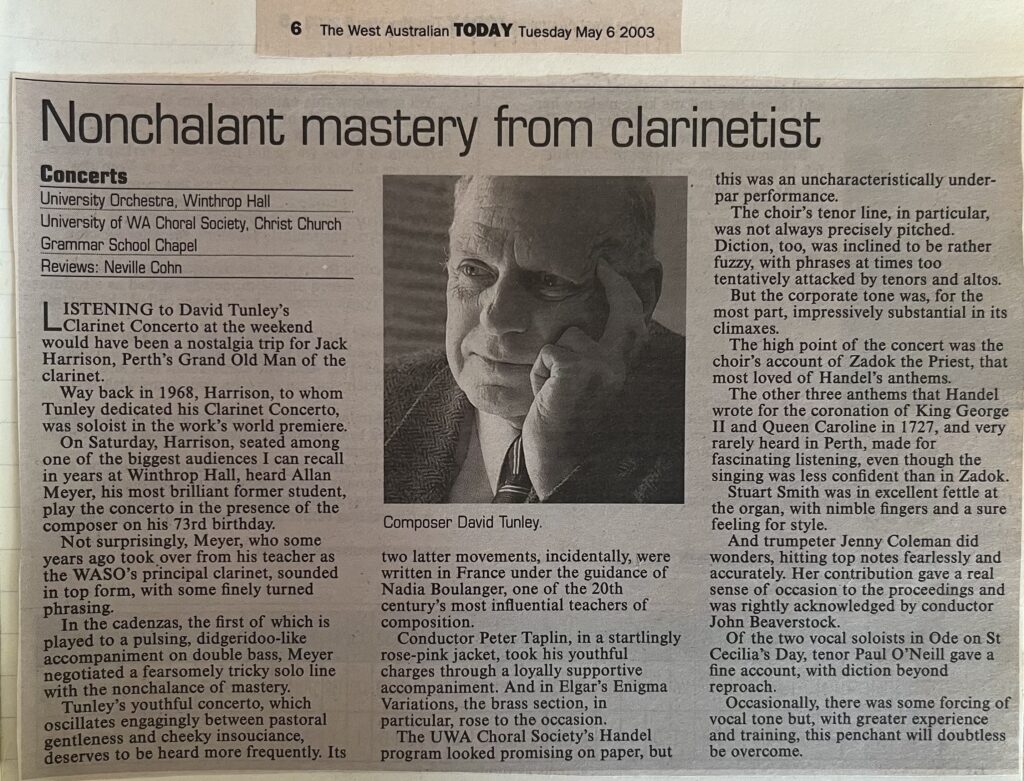
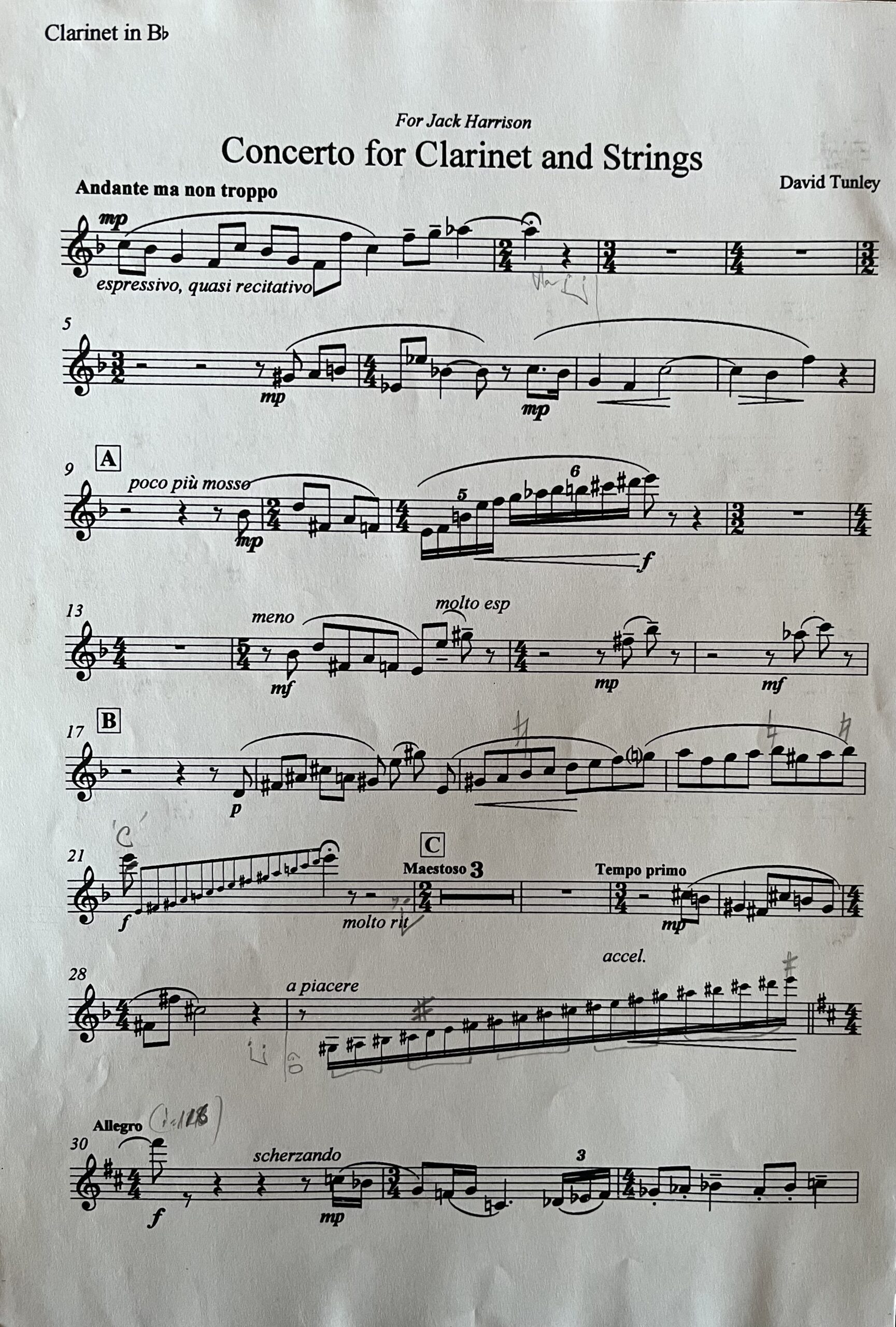
Tunley’s “Introduction and Scherzo” for Clarinet and Strings is dedicated to Jack Harrison.  The first performance was on Saturday 5th August 1961 at 8pm in Winthrop Hall at the University of W.A. conducted by John Farnsworth Hall.  It was broadcast live to air by 6WF.  Following studies with Nadia Boulanger in Paris in 1964, Tunley added expanded upon and added a further movement and turned the piece into the Clarinet concerto.

The work was included a series of three concerts by the W.A. University Arts Union arts festival from July 18 to August 8 1961.  The 1961 W.A. University Arts Union Festival was a massive inter-university student arts, music, and drama festival. Hosted by the Guild of Undergraduates at the University of Western Australia (UWA), it featured performances of chamber music, jazz, and folk music, as well as choral events, Asian dance, drama, and debating.

The Festival programme also featured the University’s A Cappella Choir which David Tunley had founded shortly after joining the music staff in 1958.   Marcia Harrison was a member of this choir.


1961 MUSIC by Peter Hellstrom

As a contribution to the W.A. Music Council’s bursary scheme, the University Music Society will hold a public concert in Winthrop Hall at 8 o’clock on Monday night.  The programme will be presented by the University Orchestral Society, clarinettist Jack Harrison and the University’s A Cappella Choir.  They will perform works by composers of the 16th Century to the present, including compositions by Perth musicians Jennifer Fowler, David Tunley and Trevor Jones. 

The West Australian Saturday (cut off) 1961


MUSIC by Peter Hellstrom

Three concerts in Winthrop Hall will be highlights of the W.A. University Arts Union arts festival from July 18 to August 5 (1961).

The first, on July 20, will be a free lunch-hour programme presented by the W.A. Symphony Orchestra conducted by John Farnsworth Hall.  Soprano Lynette Howieson will be soloist.

The next will be presented by the Kiranta Trio during the lunch-hour on July 27.  Members of the trio are pianist Patricia Burns, flautist William Frater and bassoonist Brian Pope.

The final concert, which will start at 8pm on August 5 will feature the world premiere of David Farquar’s Concerto for Piano and Orchestra.  The programme will include works from the 16th Century to the present.  The artists will be the University String Quartet, pianist Michael Cole, bassoonist Brian Pope and clarinettist, Jack Harrison. The West Australian Saturday July 15 1961


FESTIVAL CONCERT TONIGHT

World Premiere of David Farquhar’s prize winning Concertino for Piano and Orchestra

First Performance in Australia – Chamber Concerto No. 3 for Bassoon, Strings and Percussion by Elisabeth Lutyens.

David Tunley’s Introduction and Scherzo for Clarinet and Strings

Plus works by Dvorak, Grieg, Delius, Elgar, Walton and others.

UNIVERSITY ORCHESTRA conducted by Trevor Jones.

Soloists: Michael Cole, Jack Harrison, Brian Pope.

Assisting Artists: John Mowson, John Dean, Verdon Williams.

WINTHROP HALL

8pm Sat 5th August 1961

Unreserved seats at door 10/ Students 7/6


LIVE BROADCAST – MUSIC by Peter Hellstrom – Saturday 5th August 1961

The first performance of University lecturer David Tunley’s “Introduction and Scherzo” will be broadcast from station 6WF tonight during a concert beginning at 8pm.  The work, which is for strings and clarinet, will be played by the W.A. Symphony Orchestra conducted by John Farnsworth Hall, and the soloist will be Jack Harrison to whom the composition has been dedicated.  The West Australian Saturday 5 August 1961


1965

MUSIC By Peter Hellstrom

The Master of Queens Musick, Sir Arthur Bliss, has told the Festival Of Perth committee that the planning of the musical programs in the coming festival is a magnificent gesture to British music and should be more widely known.   That it has become well known already in Britain is showing by letters from many leading authorities there they include congratulations from the executive of the Composers Guild of Great Britain.   Though some prominent English music festivals like Cheltenham, Aldeburgh and the longest established Three Choirs Festival feature their country music, no British festival has in recent times included such an extensive and exciting range of British music in one series.  Works of nearly 70 composers are included. The Perth programs have been wisely spaced over the six week festival period and though many of the concerts will start at the customary 8 pm some will be at 6 pm to enable patrons to attend another festival attraction the same evening.

Works by Vaughan Williams Gordon Jacob, Howard Ferguson, Lennox Berkeley and Michael Tippett will be new to W.A. The London Symphony Orchestra conducted by Colin Davis will introduce Bliss’s “Discourse for Orchestra” to Australia in one of its Perth concerts.  In the other, Tippett’s Symphony No. 2 and Stravinsksy’s Symphony in Three movements will be played here for the first time. Leading W.A. musicians appearing as soloists in the festival will include soprano Molly McGurk who will sing Benjamin Britain’s song cycle Les Illuminations with the W.A. Symphony Orchestra. She will also sing the solo soprano part in the University Choral Society’s performance of Vaughan Williams A Sea Symphony. Stephen Dorman will be the accompanist for tenor David Galliver’s three British song recitals. He will also partner violinist Vaughan Hanly in a Sonata recital and will play the solo part in constant Lambert’s Concerto for Orchestra and Nine Instruments.  Jack Harrison will be the soloist in David Tunley’s Clarinet Concerto and will be joined by the Oriel Quartet in Bliss Clarinet Quintet.  Graham Wood will introduce James Penberthy’s Romance for Violin and Orchestra and Alice Carrard will be the pianist with the A.B.C. Wind Players in Rawsthorne’s recent quintet. Madame Carrard will be joined by Mr Dornan, Stephanie James and Michael Cole to perform Malcolm Williamson’s new Concerto for Wind Quintet and two pianos. The new university organist, Mr John Hind, will be soloist in a program which will feature the W.A. Bach Society. The Oriel Quartet will also be the soloists with the W.A. Symphony Orchestra in Elgar’s Introduction and Allegro for strings and will give a separate recital of works by Howells, Frank Bridge,  John Exton (the newly appointed senior lecturer in music at the University) Gerald Finzi, Elizabeth Lutyens and Edmund Rubbra. 

The West Australian September 1965


Local Composer’s Work Earns Warm Ovation

By Stephen Wild

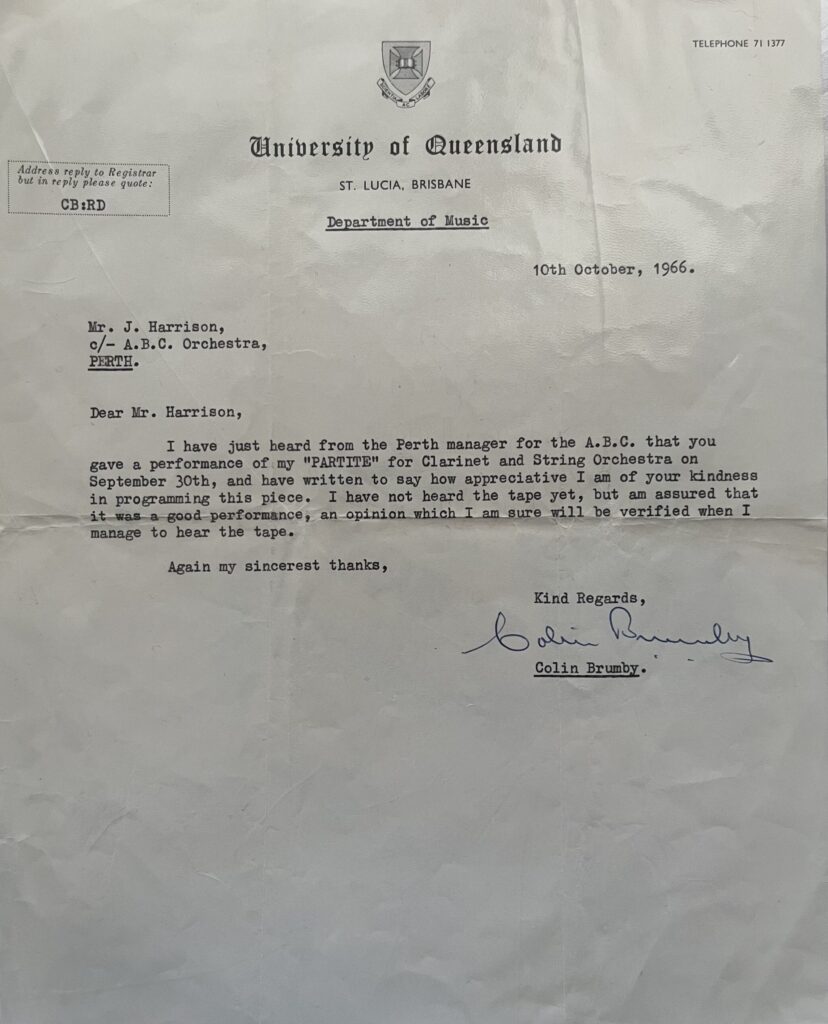
The first performance of a composition by West Australian composer, David Tunley, deservedly received an enthusiastic ovation at the third concert of British music at Winthrop Hall last night. The soloist for Mr Tunley’s Concerto for Clarinet and Strings was Jack Harrison to whom the Concerto is dedicated. The facility and musicianship with which Mr Harrison performed the solo part was misleading. It’s technical difficulties and subtleties could be navigated only by one of Mr Harrison’s capability. The work itself reveals a composer endowed with a wealth of musical ideas and the sensitivity and craftsmanship to mould those ideas into an artistic whole.   Written over several years, the quality of inspiration is uneven. The second and third movements gain in musical worth over the first.  The brooding and intense second movement was extremely moving, mainly because of Vaughan Hanly’s sympathetic conducting.  The third movement is indebted to Bartok, and its difficult rhythms were not entirely successfully negotiated by the Orchestra. 

A prince of instruments with an Australian note. By James Penberthy

The most satisfying event in the Festival Of Perth is, for me, the first performance of David Tunley’s Clarinet Concerto. This performance was not a commendable crumb thrown to a local lad. It was a notable Australian musical event and the natural right of the composer.  The Concerto was played by Jack Harrison and an orchestra conducted by Vaughan Hanly in Winthrop Hall last Tuesday night. This was only the first of many performances, for the work will be undoubtedly recorded and published. It will then become part of the standard repertoire for the clarinet which is, of course, one of the Royal princes among instruments. Some of the music of today baffles judgement and general appreciation. It is based on formulae which can be learned in 10 lessons by a child who failed in junior arithmetic. But Tunley is not like that; he expresses his feeling in music, feeling which is skilfully woven by song and harmony and charged with vital human rhythms. He is no baffled mathematician posing as a composer.  In his Concerto for Clarinet and Strings, Tunley has given us music from the head and heart; music which though modern, is still recognisable in the listeners heads and hearts as music. I am sure that Jack Harrison’s clarinet playing is almost up to the composers ideal for a performance of this work. But Vaughan Hanly showed his one pronounced weakness in conducting he beats nice rhythms but he never electrifies them. He is strangely enough much gentle with the baton than with the violin. The Concerto’s first movement could perhaps be tightened up. That, of course, is the composer business. But if I may presume I would ask for more fluidity. The lyrical first subject germ seemed sacrificed to a nervous complaint in the disjointed episodes. It is fair to assume that the composer intended it just that way.  The second movement from the first, uncertain note of the viola, had the stamp of creative intuition and originality. The bittersweet harmonic flavour, the delicate sighing; the strength, the gentleness all came to an end too soon.  Movement three was eloquent and rich for the clarinet as well as the listener sighing –  strings mounting to a fine climax –  vital rhythms with again two little orchestral drama – the clarinet, leaping and gliding and crying in torment – and the end is final and beautiful as natural death. The Sunday Times February 13 1966


JACK HARRISON

From the printed programme

In the fifteen years since Jack Harrison first joined the clarinet section of the West Australian Symphony Orchestra, he has become a prominent figure in W.A. musical circles.  Hi appearances as soloist with the orchestra include both saxophone and clarinet concertos.  Notable highlights were the Australian premieres of the Aaron Copland Clarinet Concerto and the Richard Strauss Double Concerto for bassoon and clarinet.  On this occasion, the bassoon soloist was his twin sister Jill.  In addition to his orchestral work he has been associated with many chamber music ensembles and his own light music ensemble.  The concerto to be performed this evening is of particular interest, for it was composed by David Tunley, Senior Lecturer in Music at the University of W.A. and was written for and dedicated to Jack Harrison. 


MUSIC A CONCERT – By Peter Hellstrom – Saturday August 5th 1967 8pm

An unusual and exciting concert will be given in Winthrop Hall on August 5 in aid of the building fund of St Columba the new university men’s residential college. Called “Concert Extraordinary”, the varied program will involve more than 300 performers including several leading W.A. musicians, all of whom will donate their services to the appeal.   Directed by John Hind, the Bach Society Choir will sing Benjamin Britain’s “Hymn to St Cecilia” and the Perth Madrigal Singers will sing ”The Daniel Jazz” by Herbert Chappell. The University’s A Cappella Choir conducted by David Tunley, will sing English madrigals. The University Choral Society will join combined choirs in performances of works by Mozart and Handel which will be conducted by Professor Frank Callaway. The program will open with university organist, John Hind, playing Bach’s great “Toccata and Fugue in D minor”.   Violinist Vaughan Hanly will play Saint-Saen’s “Introduction and Rondo Capriccioso” with pianist Stephen Dornan who will also be heard with soprano Margot Robertson and clarinettist Jack Harrison in Schubert’s “The Shepherd on The Rock”.   Jack Harrison will also play harmonica solos.


MUSIC – By Peter Hellstrom

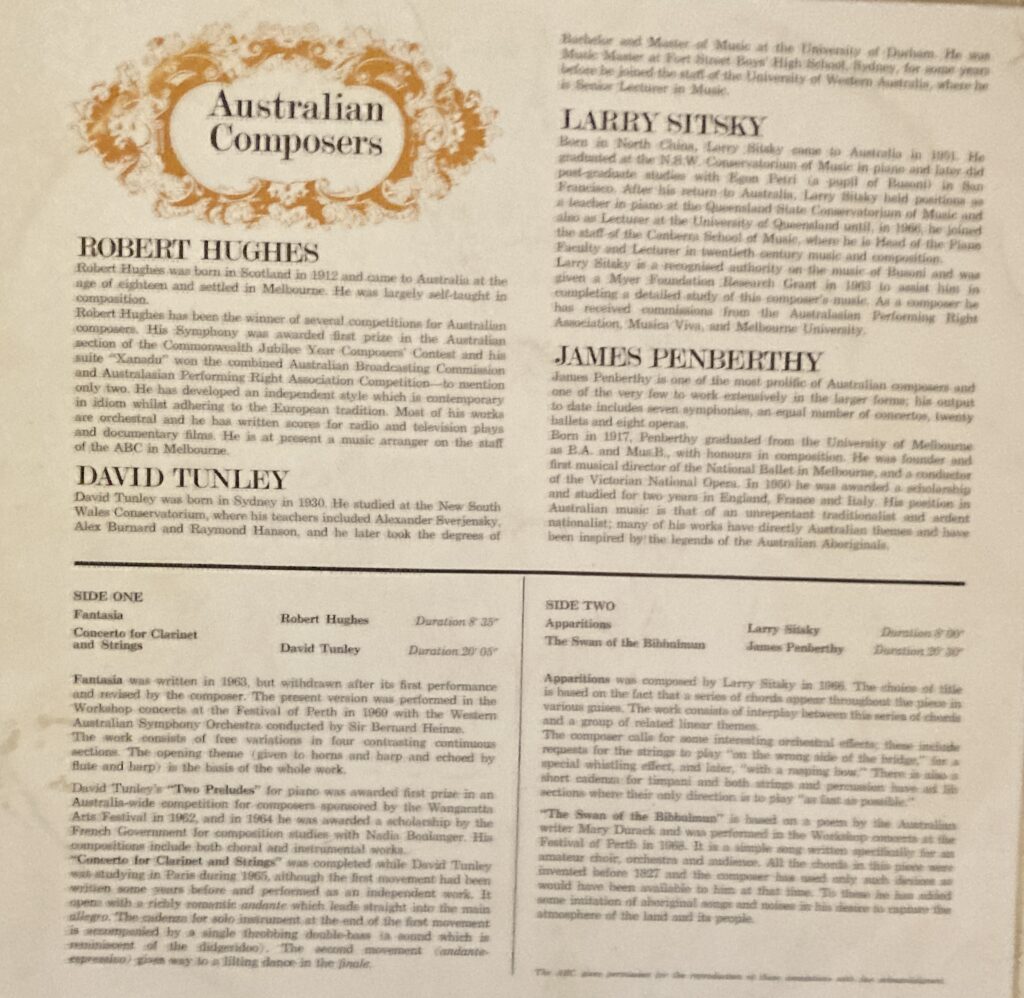
An aspect of the Festival of Perth already creating interest throughout Australia is a workshop series of four Australian composers to be presented by the A.B.C. in conjunction with the festival committee. The workshops will consist of programs of works mainly for Orchestra. Several will be first performances they will be given in the Basil Kirke Studio at 6 pm on February 15, 22 and 29 and March 7. Each program will have a different conductor. The conductors will be Henry Kripps, Patrick Thomas, John Hopkins and Thomas Mayer. A further special feature of each program will be the presence of at least one interstate composer who will come to Perth for the occasion. The composers are Nigel Butterley, Larry Sitsky, Felix Werder and Richard Meale.   Other interstate composers whose works will be performed are Colin Brumby, George Dreyfus, Helen Gifford, Peter Sculthorpe and David Ahern.  The four W.A. composers contributing to the programs are James Penberthy, Dr John Exton, David Tunley and Jennifer Fowler. As a contrast to the formality of the normal concert presentation, the workshops will include discussion between conductors, composers and members of the audiences.  In several of the concerts, provision has been made for some works to be played twice to give listeners a further opportunity of coming to grips with the new music. The chairman of the Festival Of Perth music committee, Professor Frank Callaway, said yesterday that W.A. compositions would include Mr Tunley’s Concerto for Clarinet and Strings (with soloist Jack Harrison), Dr Exton’s Movements for Orchestra, a recently completed string Quartet by Jennifer Fowler to be played by the Oriel Quartet and James Penberthy’s Cantata for Chorus and Orchestra “The Swan of  Bibbulman”. This will be performed by the Lyrics Singers and the W.A. Symphony Orchestra. The work is set to a poem by Mary Durack. The West Australian Saturday December 23 1967


1968

Mr Butterley will direct the performance of his “Laudes” (1962). The other works will be performed by the W.A. Symphony Orchestra conducted by Henry Kripps with soloist Jack Harrison (clarinet).  An illustrated talk by Mr Butterley will follow the music. The idea behind the workshops is to present composers’ work and then for the composers to discuss aspects of the music with the audience and performers.  The works of all three composers at next Thursday’s workshop will attract attention but special interest will centre on Sydney born Nigel Butterley. His “In the head the fire”, a work for radio commissioned by the A.B.C., won the international Italia prize in 1966.  He has written five film scores, song cycles, liturgical music, a ballet, a string Quartet and other works. David Tunley, senior music lecturer at the W.A. University, is doing research into 18th century French cantatas. Colin Brumby, a senior music lecturer at the Queensland University, has written three books on music. Several of his compositions have been recorded.  The West Australian Saturday February 10 1968 page 23


Two Composers Talk about Their Work – By Sally Trethowan – Thursday February 15 1968

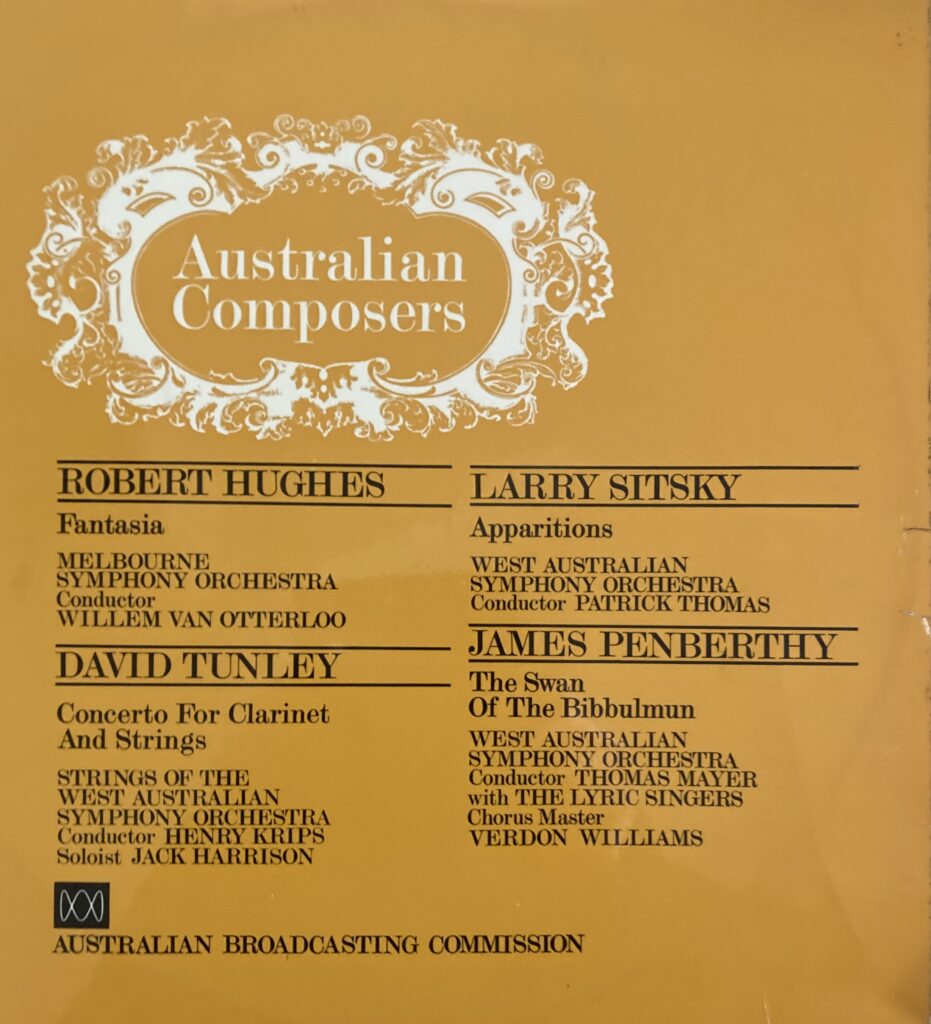
The series of four Australian Composers Workshops presented by the A.B.C. and presided over by Professor Frank Callaway is one of the most significant musical events included in our Festival Of Perth.  The series which is free, has been organised to present to Perth audiences some of the principal facets of the contemporary Australian musical scene. Nearly all chairs were occupied in the Basil Kirke Memorial Studio last night for the first workshop. Three works were presented two of them introduced by their composers. West Australian David Tunley and Nigel Butterley from Sydney.  When introducing his “Concerto for Clarinet and Strings” (1965), David Tunley remarked that the work was comparatively conservative and that it had been moulded by the clarinet style of the soloist Jack Harrison.  It may be conservative if considered against the most advanced of today’s exploratory techniques, but this is no cause for disparagement. Indeed, the thematic structure is so loosely and adroitly plotted that the work can be grasped though not exhausted at a first hearing.  The tone of the work is at times acrid, at times lyrical.  Though there is no lack of wit, the core of the composition is the introspective and affecting musings of the slow movement. Jack Harrison’s skilled and sensitive realisation of the solo part was complimented by splendid playing from the string members of the W.A. Symphony Orchestra directed by Henry Kripps.

COMPUTED SEQUENCE

Mr Kripps also conducted the full Orchestra in a work written in 1963 for him and the South Australian Symphony Orchestra.  Colin Brumby’s “Fibonacci Variations” employs the modern serial technique, the series in this case being a special sequence of numbers computed by the Italian mathematician Fibonacci. Though a score and plenty of time are necessary to follow through the abstruse patterning’s of such a work, Brumby’s music, which was brilliantly performed by conductor and Orchestra, made an immediate impact by its vitality. Nigel Butterley’s “Laudes”  (“Praises”) written in 1962 is as impressive of work as its composer is a speaker.  A man of intense personal faith which illuminates his music, he spoke simply and tellingly of the “Laudes” which is in four movements scored for eight solo instruments, and is prefaced by a quotation from the mystical poet Thomas Traherne. The work originated from visits made to various churches in Europe. For instance, the serene first movement was the result of contemplating the mosaics in the basilica in Ravenna and the third movement, the interior of Kings College Chapel Cambridge.  Each movement has a distinctive character and beauty that may be appreciated whether or not the architectural associations are considered. The idiom used is a free serialism though as Nigel Butterley said, technical matters are not nearly as important as the ideas behind the music.  The West Australian Friday February 16 1968


This Talk is so Unnecessary – By James Penberthy

When a composer is present for the performance of his own work, he exposes himself, when he talks about his work as well, he exposure borders on indecency and is, or should be, unnecessary. There was too much talk and two little music at the first of the composers workshops held in the A.B.C. orchestral studio on Thursday evening. There was a very large and attentive audience present to hear music by David Tunley of W.A., Nigel Butterley of New South Wales and Colin Brumby of Queensland. There are not many towns in Australia that can furnish such a fine audience for contemporary Australian works and when Henry Kripps, the conductor of the West Australian Symphony Orchestra for the occasion, berated the audience and the Orchestra for their attitude, he was well wide of the mark. Mr Kripps had resented what he thought were unworthy words and laughter about the music of Nigel Butterley. The music should speak for itself if it is worthy of its mettle. I know some of the composers and some of the music which is to follow and I am afraid if the series of concerts is permitted to become a talk workshop instead of a music workshop, there will be unpleasant scenes. I was sitting well back in the hall and on every side I heard complaints about the amount of talk and very little about the modern music.  The music was brooding, tense rhapsodic and syncopated when Jack Harrison played David Tunley’s work for clarinet and strings. There was nothing to puzzle the audience for the lines of rhythm and melody and the blocks of harmony were based on an accepted and well recognised tradition. Nigel Butterley’s “Laudes” for a small group of instruments was just as easy listening, provided the audience sat back in the air-conditioned comfort to let the music speak. The sounds inspired by four European churches were economically drawn and brought a quiet mood to the quiet, sensitive listener. One should not fight new music. It is like fighting the incoming tide. Colin Brumby’s Fibonacci Variations were built on mathematically deduced ideas. They were exciting and very dramatic. The orchestra, which often looks bored playing Beethoven, never looked bored while playing Brumby. The Sunday Times February 18 1968 page 32


TUNLEY

Soloist Jack Harrison

The Concerto for Clarinet and Strings combines elements of rich romanticism with the more pungent harmonies and buoyant rhythms of the 20th century “neo-classic” idiom.  It was written for Jack Harrison, whose particular style of playing moulded much of the works character, particularly in the cadenza of the opening movement which is accompanied by a solo double base whose throbbing rhythms and deep sounds is reminiscent of the didgeridoo. The slow second movement catches an intensity of expression eminently suited to the solo instrument giving way to a lilting dance in the finale.

Concerto for Bassoon and Orchestra JAMES PENBERTHY

 Soloist Jill Mowson

 The Bassoon Concerto was written in November 1954 for the West Australian Symphony Orchestra’s John Cran. He never played it and the first performance was given by George Dreyfus with his own Melbourne Orchestra 15 years later. There were only two movements consisting of fast and slow sections showing the agility of the instrument in merry if not clownish mood, and in contrast and eloquence in a more reflective manner. A new second movement, very serious in nature, was written this year specially for the present Jill Mowson performance. The old second movement now becomes the third.

Tunley, James Penberthy and Peter Sculthorpe.  Tunley, as the only composer present, gave a brief background to his Concerto for clarinet and Strings in which Jack Harrison (to whom the work is dedicated) was the soloist.  Possessed by a clarinet part of considerable technical difficulty, this piece was suave.  Elegantly finished phrases and strings and soloist complimented each other in a deftly assorted variety of tempi, moods and rhythms.

James Penberthy, writing for larger orchestral forces, occasionally thickened his textures so that the rather reticent solo instrument in his Concerto for Bassoon and Orchestra had something of a struggle to survive.  But bassoonist Jill Mowson played it with pleasantly controlled tone.  Peter Sculthorpe’s recent “Mangrove” evokes a quality of “Australian” atmospheric sound, using conventional orchestral means in new and unusual ways.  A brass prelude leading to a lengthy divisi cello passage moved to high wavering violin sounds.  It travelled to percussion and brass for the ending to create a picture of some features of a desolate land.  It is a piece that deserves rehearsing. The West Australian Monday September 24 1979 page 27


1979

A Shame this music remains a Stranger – By Anne Hodgson-Goodman

Why do composers today continue to write music when so few people care to hear it?  That was the question reviewed by an ABC Workshop of contemporary Australian compositions in the Basil Kirke Studio last Sunday.

The orchestra’s performance must have satisfied David Tunley.  The concerto was inspired by the technique of Jack Harrison, principal clarinettist of the WASO who, as soloist at the workshop met the considerable technical difficulties with mastery and style.  Although the work is not easy to perform, Tunley never lost touch with musicality.  In different ways, each of the three movements demonstrated a fine compositional ability.  The general impression was matched by Jill Mowson, the soloist in James Penberty’s Concerto for Bassoon and Orchestra.  But she had a more difficult task.  The proliferation of ideas in the orchestra made at times an uncomfortable background for the comparatively soft-toned bassoon.  Nevertheless, the tonal colour of the instrument was well employed throughout the work, and Jill Mowson demonstrated her technical expertise and understanding.  Finally, the audience heard a recent work by Peter Sculthorpe – Mangrove for Orchestra. The Sunday Times September 30 1979


https://www.australianmusiccentre.com.au/work/tunley-david-concerto-for-clarinet-and-strings

https://www.uwa.edu.au/news/article/2024/june/remembering-uwas-master-of-music-vale-emeritus-professor-david-tunley-1930-2024
Instruments

Years

Person

CONFREY, Zez

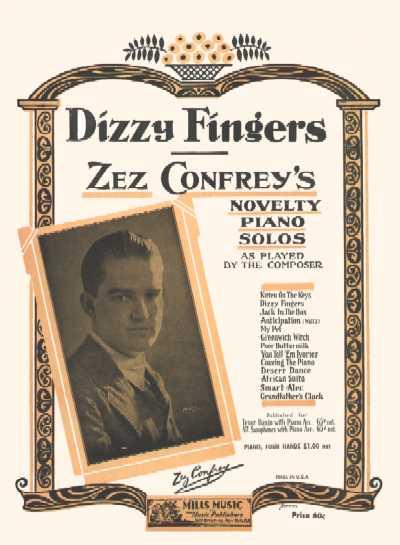
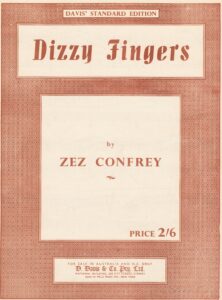
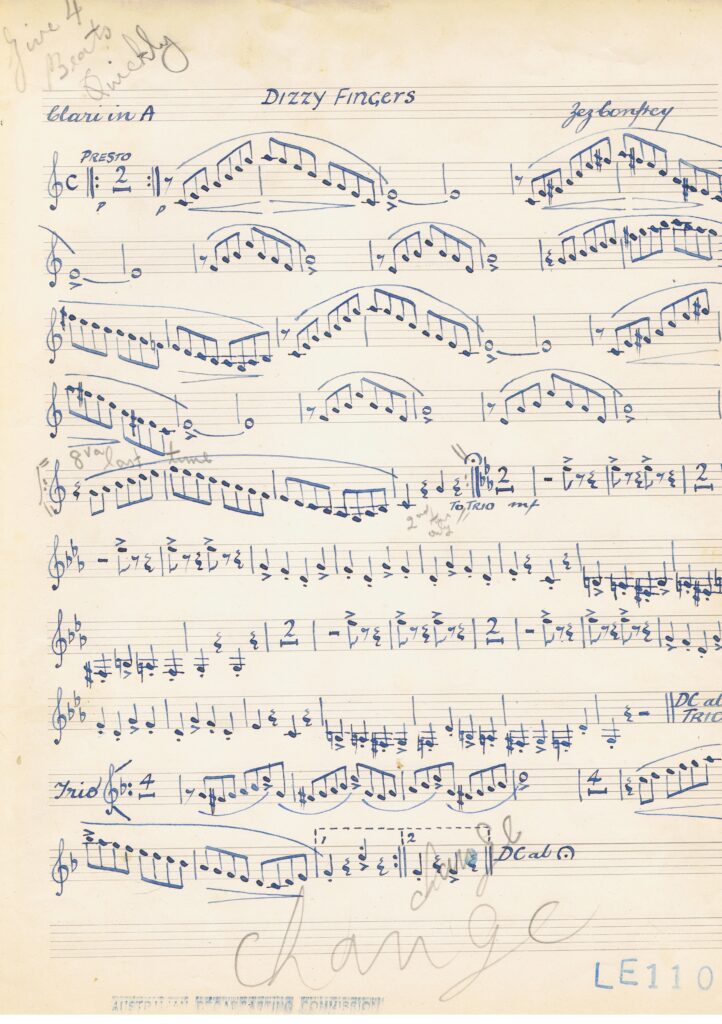
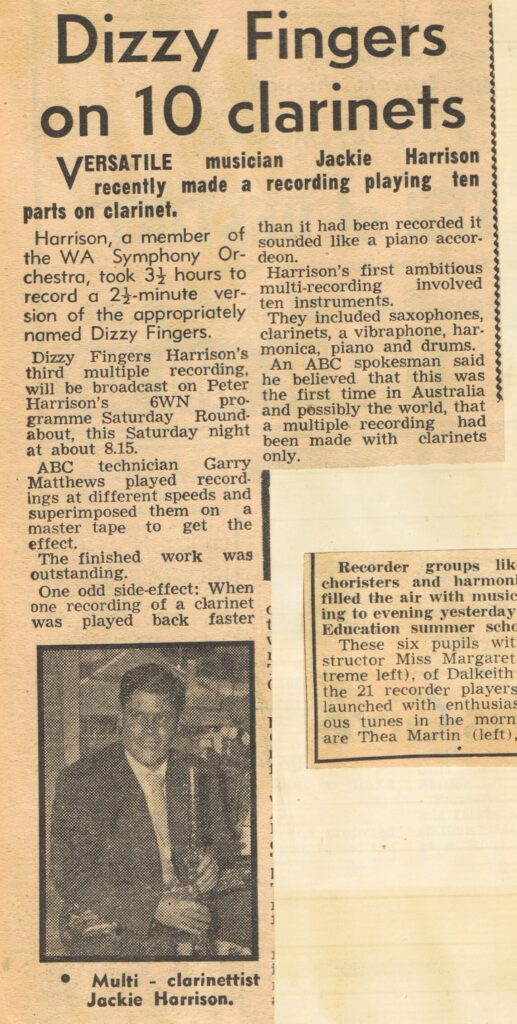
Dizzy Fingers by Zez Confrey was published in New York in 1923. In 1960, clarinettist Jack Harrison recorded “Dizzy Fingers” by Zez Confrey playing all ten clarinet parts. The recordings were played at different speeds, backwards, and superimposed onto the master tape by ABC technician Garry Matthews at Broadcast House. The Sunday Times, 13 March 1960: “Versatile musician Jack Harrison recently made a recording playing ten parts on clarinet. The finished work will be broadcast on Peter Harrison’s 6WN programme Saturday Roundabout.”

https://en.wikipedia.org/wiki/Zez_Confrey

https://youtu.be/bMiCL7l5gYo?si=O_SA4S6wWmw_tib8

Instruments

Years

Person

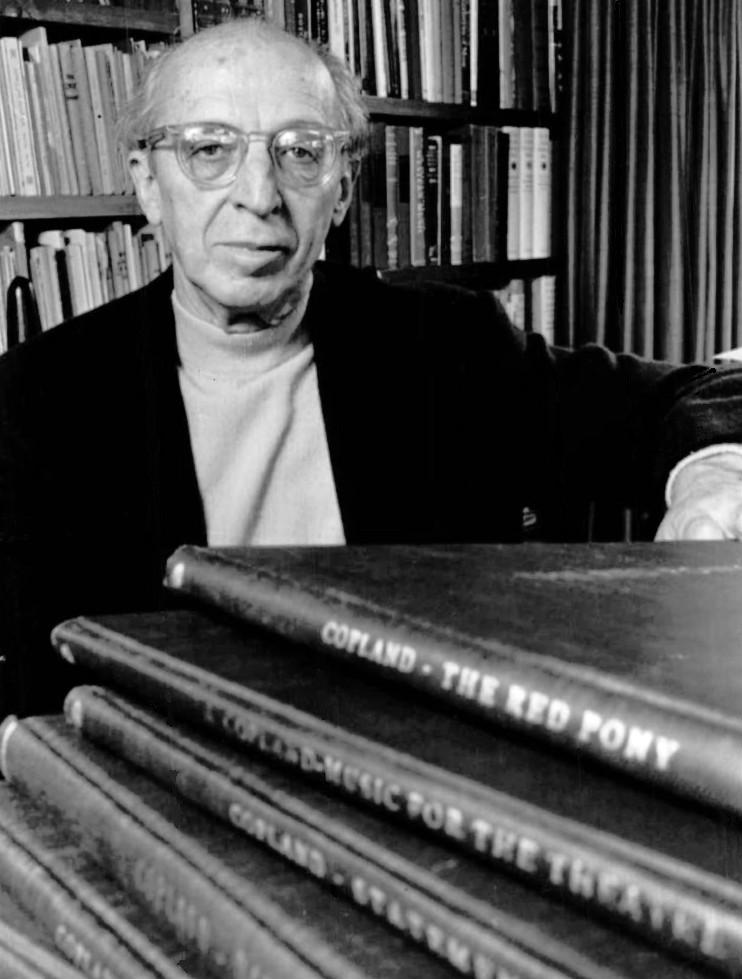
COPLAND, Aaron

Brooklyn, New York was a bustling place at the turn of the last century, filled with people of many nationalities. Many were immigrants; some were customers of Copland’s Department Store on Washington Avenue. Described by Aaron Copland as “a kind of neighborhood Macy’s,” the store was operated by Sarah and Harris Copland, Russian-born, Jewish immigrants. They lived above and to the side of the store with their five children. Everyone in the family worked at the store. “Copland’s” was the center of their lives.

Harris and Sarah Copland outside of Copland's Department Store, 1922
Harris and Sarah Copland outside of Copland’s Department Store, 1922
“The store proved to be influential in the shaping of my formative years,” Copland explained. “I took the cash register from time to time, learning the responsibility and trust the job implied. Artists have usually been thought to be nitwits in the handling of money. No one has ever accused me of that particular failing.” When his friends joked about his frugality, and Leonard Bernstein called him “plain,” Copland would object good-naturedly: “What do you expect from the son of shopkeepers!” It was in the store that Aaron learned the value of hard work. “The daily routine was demanding, with Saturdays and sale days particularly exhausting, and Christmas the busiest time of all,” he recalled. “I worked after school. Later on it occurred to me that I was selling toys to kids my own age!” In preparation for his autobiography, Copland talked about his family. He never looked for hidden meanings. His father came from Russia and the family settled on the East Coast, but his mother’s family, the Mittenthals, were more adventurous. They settled in Texas and sold dry goods until Jesse James’ brother, Frank, robbed the store and the family moved north to the Lower East Side of New York City. Sarah Mittenthal had spent her first nineteen years among cowboys, Indians, and immigrants. Copland was often asked, “How could a Jewish boy from Brooklyn write cowboy music?” He would respond, “Well, all American boys love the West!” or “Agnes [De Mille] insisted.” Not inclined towards self-analysis, he did not recognize a connection between Billy the Kid or Rodeo and his mother, who had grown up in Texas and sang Western folk songs to her youngest child. The Mittenthal relatives believed that their famous cousin’s dignity and reserve were southern traits from their side of the family.
Aaron Copland at the age of 9 with his sister Josephine
Copland grew up with so many people around him that he was never lonely, but there was a certain amount of benign neglect that actually proved advantageous. He was left to make his own decisions. When he asked for piano lessons, the reaction was not enthusiastic–they had been given to his siblings with little success–but his parents agreed that he could find a teacher himself if he wanted lessons, and they would pay. Where this desire and talent to be a musician came from, no one knew, including Copland himself. He once wrote in a brief autobiographical sketch: “I was born on a street in Brooklyn that can only be described as drab…” There was no connection of any kind to the arts. When Aaron told his father that he wanted to be a musician, Harris Copland exclaimed, “Where do you ever get such an idea?” But Aaron persisted, enduring “the tough guys around the block” who called him “sissy” and teased him about carrying a case with music. He found a few artistic friends who talked to him about France and wrote poetry. When he knew he needed a higher level of instruction, he arranged for lessons with the well-known New York musician Rubin Goldmark. “I will never forget the excitement of going over the Brooklyn Bridge to Manhattan!” Copland exclaimed. Thus began a lifelong attachment to New York City. But not to Rubin Goldmark. Copland soon learned to keep his more imaginative pieces to himself, much as Charles Ives had done earlier when studying with Horatio Parker at Yale. While working with the Copland papers and manuscripts that were in file cabinets in the basement of his house in Peekskill, New York, I came upon six workbooks of assignments for Rubin Goldmark. Copland was astonished to see things he had not looked at for sixty years. “Holy Moses!” he exclaimed, “I kept everything!” (He actually used expressions like this, as well as “gee whiz” and “golly.”) As we turned the pages of one folder labeled “Juvenilia,” Copland gleefully read the instructions from Goldmark: “No parallel fifths! No fourths! No octaves!” In response to my comment about how far he had strayed from these exercises, he said, “I had to learn it somewhere, and this was as good as it got in those days.” No anger, no criticism of Goldmark, no impatience to move on. Only humor at being called “the young modernist” of the class at the graduation recital. Copland had been on the lookout for a way to get to France, “where everything new and exciting was happening.” He applied and was accepted for the first fellowship at the Conservatoire Americain at the Palace of Fontainebleau. Goldmark insisted Copland could not go without mastering sonata form. After composing a complete and proper sonata to satisfy Goldmark, Copland was free to board the ocean liner France for his first European crossing and what would be the most meaningful years of his life. It was five months before his twenty-first birthday. He had never been further from home than Manhattan.
Nadia Boulanger and her class, Paris, 1923. Library of Congress, Music Division.
Fontainebleau was a good introduction to France before going on to Paris. While at the Palace, a friend insisted Copland attend a harmony class taught by a young Frenchwoman, Nadia Boulanger. He was so impressed that he made a difficult decision–she was to be his teacher. Later, he remembered, “I hesitated, because I had never heard of any composer who had studied with a woman.” The good news was that it cost less: only 60 francs (about $4.20). As usual, his parents trusted him to make the right decision. Copland, Virgil Thomson, and Melville Smith were Boulanger’s first American students. They were followed by Roy Harris, Walter Piston, Elliott Carter, and many of the century’s composers and musicians. Her students, who became known as the “Boulangerie,” called her “Mademoiselle.” She recognized Copland’s talent from the start, as he did hers. In later years, he often said, “I don’t know what my career would have been like without her!” Copland was immensely talented–but he was also the right person in the right place on several crucial occasions. For example, it happened that Serge Koussevitzky was assuming his post as music director of the Boston Symphony Orchestra at the very same time Copland was planning to return to the states in 1924. Boulanger took Copland to see the famous conductor in Paris. After Copland played part of his only orchestral work, the ballet , on the piano Koussevitzky said, “You vill write an organ concerto, Mademoiselle vill play it, and I vill conduct!” (In the end, Walter Damrosch led the first performance of the concerto, with the New York Symphony.) Copland had never heard a note of his own orchestration, and here was the great conductor asking for a major work to be played by both the Boston Symphony Orchestra and the New York Symphony (one of the earlier incarnations of the New York Philharmonic). When Copland asked his teacher, “Do you really think I can do it?” she pointed a finger at him. “You can do it!” That was the end of the discussion. A year of study in France became three. While far from home, Copland began to think about finding a distinctively American sound. “There is a French-sounding music, a German sound, why not American? We had done it in ragtime and jazz, but not in the kind of concert music I was interested in.” He returned to New York in 1924, totally unknown, without a job, but with the Koussevitzky commission in his pocket and a determination to promote American music. From the start of what would become a spectacular career, Copland had the support of an influential teacher and a major conductor with an orchestra at his disposal. “I’m a lucky guy,” was Copland’s genial way of recognizing his extraordinary good fortune. Copland’s primary goal was to compose the best music he could. A quality of excellence is evident in all his work, from a wide range of abstract concert music to collaborative works for radio, film, ballet, and opera. He had a secondary goal: to promote the cause of American music and to increase performance opportunities for composers. Copland was at the center of activities in the world of contemporary music for decades. His efforts helped establish American music on the world scene, and his leadership and dedication as a “good citizen” set an example for composers that followed after him. Copland changed very little through the years. He was a private person and kept personal affairs to himself, as he believed they should be. Even those closest to Copland were not sure they really knew him. He was supremely interested in all aspects of music to the exclusion of other things. He did not pay much attention to the other arts, except certain kinds of literature, such as biography. He had no hobbies, nor did he care much about food, sports, or gardens. But anything and everything relating to music interested him. He loved to hear gossip about the music world from visitors, and very late in life when he could no longer go to concerts he would still ask, “What’s happening out there? Who are the young composers? What are they writing?” He laughed when told tonality was back, saying he was not aware it had gone anywhere, and he was amused to hear about Minimalism. “By definition, it can’t do much harm, can it?” His wit and good humor made for good company.
Leonard Bernstein and Aaron Copland at the rehearsal for the world premiere of Copland's Connotations, Philharmonic Hall, 1962. Courtesy of the New York Philharmonic Leon Levy Digital Archives. (Photo: Bert Bial)
Leonard Bernstein and Aaron Copland at the rehearsal for the world premiere of Copland’s Connotations, Philharmonic Hall, 1962. Courtesy of the New York Philharmonic Leon Levy Digital Archives. (Photo: Bert Bial)
“Simplicity” is a word that has been used to describe both the man and his music. If it is simplicity, then it is of the most complex kind. Copland was a complicated combination of genuine modesty and supreme confidence. He knew who he was and what he had accomplished, and he was very sure of himself musically, rarely adopting suggestions from others, even Boulanger or Koussevitzky. He would be interested, listen politely, then inevitably stay with his original decision. The only change he has ever accepted came from Leonard Bernstein, who deleted a few measures in the last movement of the . Copland didn’t appreciate the cut being made and played first without his permission, but he was so admiring of Lenny’s musicianship that he agreed for artistic reasons. Copland and Bernstein, totally different personalities, were very close, personally and musically. Special birthday celebrations began with Copland’s 50th and continued to the 90th. He enjoyed them, mostly because these occasions generated performances of his music. He was especially pleased when his “neglected children” were included–those pieces played less often than the more popular ones. Copland’s long life and career paralleled what was happening around him. Although interested in what was new, he was not, like Ives and other innovators, far ahead of his time. When his music changed, as it did several times, it intuitively mirrored the world around him–from periods when he composed esoteric intellectual pieces, such as the three major piano works and the , to when he wrote the more accessible collaborative ballets with Lincoln Kirstein, Eugene Loring, Agnes De Mille, and Martha Graham. Commissions and extra-musical conditions might stimulate Copland’s imagination, but when he got down to composing, it was musical ideas that generated his decisions. The result was a “Copland sound” that is recognizable in all his work. It is a sound that became synonymous with the finest values of America to the world. Vivian Perlis was a Historian specializing in 20th-century American music. On the faculty of the Yale School of Music, she was founding director of the Oral History Project in American Music. She was known for her recording and film productions, lectures, and publications among them, Charles Ives Remembered, an Oral History and as co-author with Aaron Copland, Copland: 1900 Through 1942 and Copland Since 1943. Television productions include documentaries on Eubie Blake, John Cage, Copland, and Ives. https://www.aaroncopland.com/about/the-man-behind-the-music/
CLARINET CONCERTO “The renowned jazz clarinetist Benny Goodman asked Copland to compose a work for him. The result was a two-movement concerto: the first section is one of Copland’s most lyrical and melodious creations; the second is in an all-out jazzy style replete with a glissando or jazz “smear” at the end. The movements are connected by a cadenza for the soloist. Benny Goodman said in an interview, “I always felt good about that commission and about playing the Concerto with Aaron conducting.” Since then, many of the foremost clarinetists worldwide have performed the piece.”  https://www.aaroncopland.com/works/clarinet-concerto/

Jack Harrison performed the Australian premiere of Aaron Copland’s Clarinet Concerto with the West Australian Symphony Orchestra, presented by the Australian Broadcasting Commission.


MUSIC – 3pm MARCH 11 1962 Fremantle

There will be an interesting programme at the W.A. Symphony Orchestra’s free concert in the Fremantle Town Hall at 3pm tomorrow.  The orchestra and clarinettist Jack Harrison will perform a concerto by Aaron Copland and the orchestra programme will include Rossini’s “Thieving Magpie” Overture, and arrangement of Bach choral prelude and Mussorgsky’s “A Night on the Bare Mountain”.    The West Australian Saturday March 10 1962


COPLAND CLARINET CONCERTO – AUSTRALIAN PREMIERE

3pm MARCH 11 1962 Fremantle

There will be an interesting programme at the W.A. Symphony Orchestra’s free concert in the Fremantle Town Hall at 3pm tomorrow.  The orchestra and clarinettist Jack Harrison will perform a concerto by Aaron Copland and the orchestra programme will include Rossini’s “Thieving Magpie” Overture, and arrangement of Bach choral prelude and Mussorgsky’s “A Night on the Bare Mountain”. 

The West Australian Saturday March 10 1962

MARCH 14th 1963

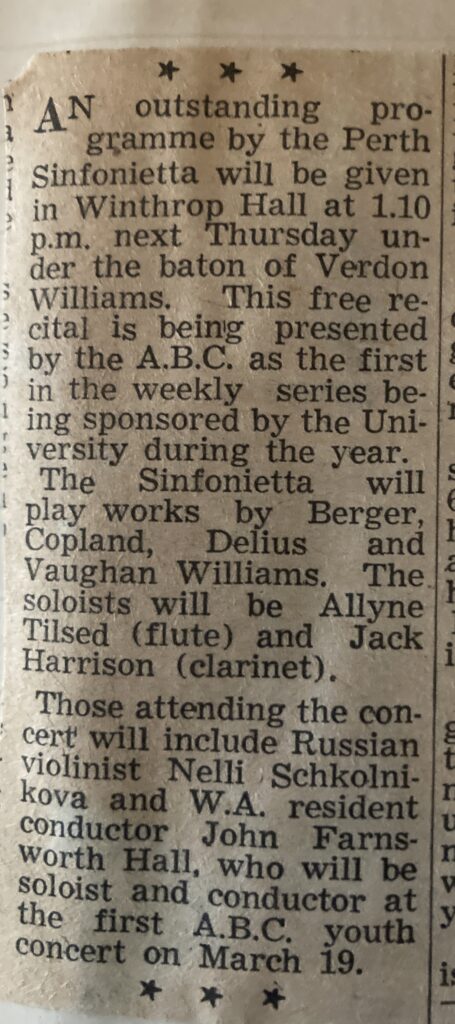
An outstanding programme by the Perth Sinfonietta will be given in Winthrop Hall at 1.10pm next Thursday under the baton of Verdon Williams.  This free recital is being presented by the A.B.C. as the first in a weekly series being sponsored by the University during the year.  The Sinfonietta will play works by Berger, Copland, Delius and Vaughan Williams.  The soloists will be Allyne Tilsed (flute) and Jack Harrison (clarinet).  Those attending the concert include Russian violinist Nelli Schkolniskova and W.A. resident conductor John Farnsworth Hall, who will be soloists and conductor in the first A.B.C. Youth Concert on March 19.


LUNCH MUSIC IS PROMISING – By Sally Trethowan – MARCH 14th 1963

The programme for this year’s free lunch-hour concert series held on Thursdays in Winthrop Hall is even more interesting and varied in type of music and number of performers than last year’s.

If the first concert given yesterday to a large audience by the Perth Sinfonietta, is any indication of the quality, the weekly programmes will be exciting musical experiences and a major contribution to musical life in W.A.

The Perth Sinfonietta always gives us an entertaining, thought-provoking programme.  Conductor Verdon William’s introductory comments are instructive, to the point, and do not offend by being too technical or too long.  The choice of composers in yesterday’s concert – Berger, Vivaldi, Copland, Delius and Vaughan Williams – leaned heavily towards the moderate, making the Vivaldi Flute Concerto (“The Goldfinch”) a pertinent, pleasant comment on, and exposition of, a more elegant and graceful age.  The young flautist, Allyne Tilsed, who has just joined the W.A. Symphony Orchestra has a sureness of tone control which allows the most delicate innuendos without over or under emphasis.  In Vivaldi’s “Goldfinch”, flute and strings chattered and trilled in animated conversation, whereas in the Copland Clarinet Concerto, a different symphonic relationship exists between orchestra and clarinet.

Clarinettist Jack Harrison interwove the sure mellowness of tone and bell-like clarity of his instrument into the orchestral texture of the work.

The brief overture of Jean Berger that began the programme and a Delius “Serenade” and Vaughan Williams “Fantasia on Greensleeves” which closed it, are works typical of the individuality of their composers, but have in common the fact that they make light and easy listening. 

The West Australian March 15 1963
15.3.1963 Aaron Copland Clarinet Concerto (1948) AUSTRALIAN PREMIERE Jack Harrison (clarinet) Perth Sinfonietta Verdon Williams (conductor) Free lunchtime concert Winthrop Hall, University of Western Australia

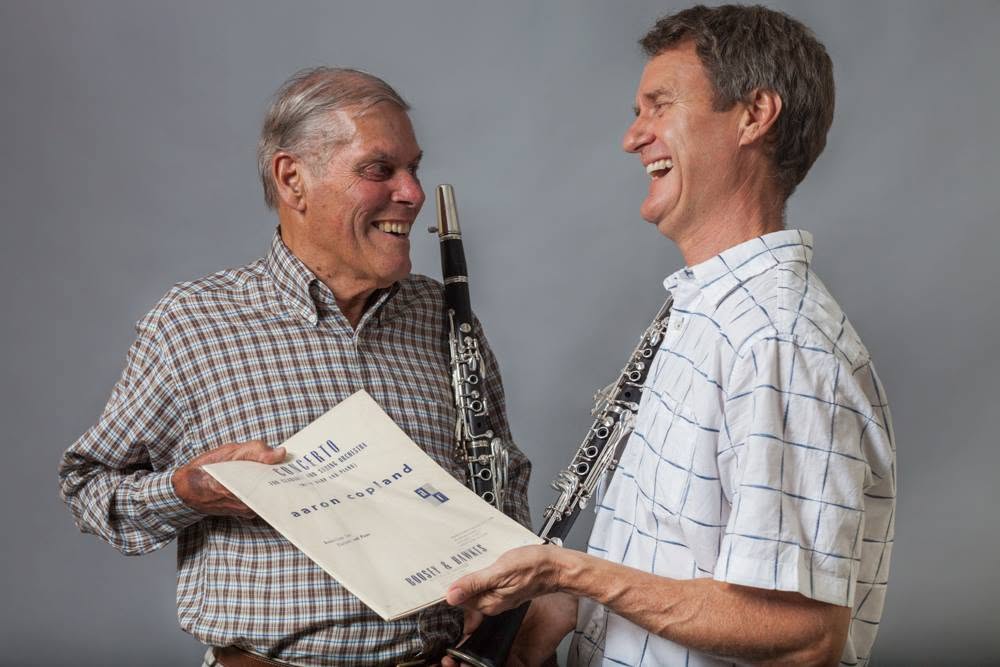
Allan Meyer performed the Copland in 2013, just after Jack Harrison passed away.

Jack Harrison passing the Copland Clarinet score to Allan Meyer

https://www.aaroncopland.com https://en.wikipedia.org/wiki/Aaron_Copland

Instruments

Years

Person

ARNOLD, Malcolm

21.10.1921 – 23.9.2006 Sir Malcolm Arnold was a British composer and trumpeter. Malcolm Arnold was born in Northampton to a family of shoemakers. As a rebellious teenager, he was attracted to the creative freedom of jazz. After seeing Louis Armstrong play in Bournemouth, he took up the trumpet at the age of 12 and 5 years later won a scholarship to the Royal College of Music (RCM). At the RCM he studied composition with Gordon Jacob and the trumpet with Ernest Hall. In 1941, he joined the London Philharmonic Orchestra as second trumpet and became principal trumpet in 1943. In 1944, he volunteered for military service, but after he found out the army wanted to put him in a military band, he shot himself in the foot to get back to civilian life. After a season as principal trumpet with the BBC Symphony Orchestra, he returned to the London Philharmonic in 1946 where he remained until 1948 to become a full-time composer. Malcolm Arnold began his career playing trumpet professionally, by age thirty his life was devoted to composition. He was bracketed with Britten and Walton as one of the most sought-after composers in Britain. His natural melodic gift earned him a reputation as a composer of light music in works such as his sets of Welsh, English, Scottish, Irish and Cornish Dances, and his scores to the St Trinian’s films and Hobson’s Choice. Arnold was a relatively conservative composer of tonal works, but a prolific and popular one. He acknowledged Hector Berlioz as an influence, and several commentators have drawn a comparison with Jean Sibelius. He was knighted in 1993 for his service to music. He received honorary doctorates from the University of Exeter (1969), University of Durham (1982), University of Leicester (1984), Miami University of Ohio (1989), University of Winchester (1983), and the University of Northampton (2006). https://www.windrep.org/Malcolm_Arnold In September 1973 Jack was invited by Ivor Meddleton to be an artist on the second Churchill Fellows’ L.P. recording.  The artist was asked to donate their time, to be recorded at the closest A.B.C. studio and the cost of the accompanist covered by The Winston Churchill Memorial Trust. Jack replied that he would be happy to contribute.  “Listed below are three pieces, any one of which would be suitable and I will leave the final choice in your hands:- “Concerto for Clarinet and String Orchestra” by Malcolm Arnold – my reasons for including this work is that I am performing this piece of music with the W.A. Symphony Orchestra during the month of November and the A.B.C. has agreed to allow a recording to be made for the Churchill Trust.  Another reason is that there is, to my knowledge, no commercial recording of this concerto.  As I will be concentrating on this piece for the next six weeks, I would naturally favour it as my choice.”
11.11.1973 Malcolm Arnold Clarinet Concerto (1949) AUSTRALIAN PREMIERE Jack Harrison (clarinet) David Measham (conductor) West Australian Symphony Orchestra Perth Concert Hall  
On November 11th 1973 clarinettist Jack Harrison performed the Australian Premiere of Malcolm Arnold’s Clarinet Concerto with the West Australian Symphony Orchestra conducted by David Measham directed by the A.B.C. in a free concert in the Perth Concert Hall.
https://en.wikipedia.org/wiki/Malcolm_Arnold

Instruments

Years

Person

ALLEN, Geoffrey

Geoffrey Allen was born in the UK in 1927. His musical education was limited to private piano lessons, and consequently he was self-taught in all other aspects of music. Allen began to compose while a teenager, but his ambitions for a career in music were thwarted by parents and teachers, who were opposed to his aspirations. Instead, he studied geography at Oxford University while continuing to compose in his spare time. The first of his acknowledged compositions dates from his university years. After his graduation in 1951, Allen moved to Sydney, where he taught geography for two years at Trinity Grammar School. At the end of this period, he took up the first of a number of positions in Australian libraries, accepting a place on the staff of the State (then ‘Public’) Library of NSW. He was a scientific librarian with the CSIRO from 1958 until 1961, when he moved to Perth to work in the library of the University of Western Australia. He later became foundation Librarian of the WA Institute of Technology, and, when this became Curtin University in 1987, the University Librarian. Allen retired in 1992. While in Sydney in the 1950s, Geoffrey Allen founded the Recording Society of Australia, and acted as its Secretary until 1961. During this period, the Society issued a number of LP recordings of Australian works and performers, on the Brolga label. Allen’s own music (Two Lullabies) was recorded by the Society, along with that of other Australian composers, such as Edgar Bainton, Nigel Butterley, Margaret Sutherland and Larry Sitsky. In 1990 he established the Keys Press for the purpose of publishing contemporary Australian classical music. Between 1990 and 2014 he published over 500 separate titles by around 50 composers, including Roy Agnew, Miriam Hyde, Ann Ghandar, and Larry Sitsky. After a lull in composing during mid-life, Allen experienced a resurgence of creative drive in the late 1980s and continued to compose for several decades. His body of work includes sixteen piano sonatas, many shorter piano pieces and numerous works for woodwinds, together with songs and a few works for strings. Geoffrey Allen’s style was much influenced by mid-19th century British and French composers. His music is generally melody-driven, and is characterised by chromatic and frequently shifting tonalities with the rare flirtation with atonality. He eschewed serialism and minimalism and believed them to be passing fads. In 2010s, he collaborated with David Wickham from the Western Australian Academy of Performing Arts and other Western Australian musicians to produce a number of CD recordings of music he had previously published, including some of his own. These CDs were released in the UK by Stone Records and the details can be viewed on their website. Geoffrey Allen died on 24 October 2021 after a short illness, at the age of 94. https://www.australianmusiccentre.com.au/artist/allen-geoffrey
10.4.1994 Geoffrey Allen Five Diversions for oboe, clarinet and bassoon Jack Harrison (clarinet) Jill Mowson (bassoon) Jay Harrison (oboe) Churchill Fellow Concert, WAAPA Music Auditorium Western Australia

Instruments

Years

Person

BERNSTEIN, Leonard

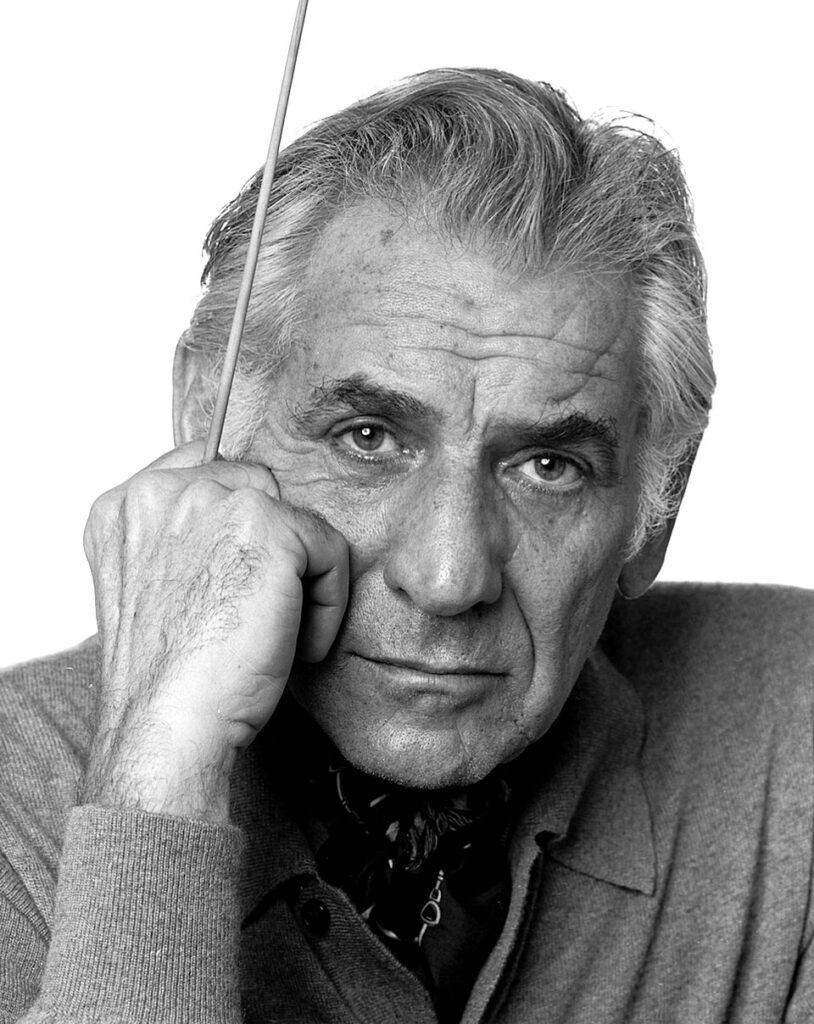
Born in Lawrence, Massachusetts in 1918, Leonard Bernstein was a conductor, composer, author and lecturer who had a dramatic impact on the popular audience’s acceptance and appreciation of classical music. He had piano lessons as a boy and furthered his education in conducting, orchestration and piano at Harvard University, the Curtis Institute of Music in Philadelphia and the Boston Symphony Orchestra’s summer institute, Tanglewood. Bernstein was appointed to his first conducting post in 1943, as Assistant Conductor of the New York Philharmonic. On November 14, 1943, he substituted on a few hours notice for the ailing Bruno Walter at a Carnegie Hall concert, which was broadcast nationally on radio, receiving critical acclaim. Soon, orchestras worldwide sought him out as a guest conductor. He taught at Tanglewood for many years and was Music Director of the New York Philharmonic from 1958 to 1969. Bernstein’s first large-scale work, Symphony No. 1 (1943), was first performed with the Pittsburgh Symphony Orchestra in 1944 and received the New York Music Critics’ Award. Other major compositions by Bernstein include Symphonies No.2 and 3, “Mass: A Theater Piece for Singers, Players and Dancers,” commissioned for the opening of the Kennedy Center in 1971. Ballets for which he wrote the music include Fancy Free (1944) and Facsimile (1946). Bernstein also contributed substantially to the Broadway musical stage with many productions, including On The Town (1944), Wonderful Town (1953), and West Side Story (1957). He received many honors and awards including the Kennedy Center Honors (1980), the American Academy of Arts and Letters Gold Medal (1981), and eleven Emmy® Awards for televised concerts such as the “Young People’s Concerts.” https://www.kennedy-center.org/education/resources-for-educators/classroom-resources/media-and-interactives/artists/bernstein-leonard https://leonardbernstein.com/about
Sonata for Clarinet and Piano Leonard Bernstein wrote his Sonata for Clarinet and Piano between 1941 and 1942, during his time at the Curtis Institute of Music and a summer residency at Tanglewood. It holds the distinction of being Bernstein’s very first published piece of music. The two-movement chamber work is famously dedicated to his close friend, the clarinettist David Oppenheim. It received its world premiere on April 21, 1942, at the Institute of Modern Art in Boston, featuring David Glazer on clarinet and Bernstein himself on the piano.
MUSIC – By Peter Hellstrom – U.W.A. Thursday Lunchtime Recital 16 September 1965 The free lunch-time concert at 1.10pm at the University next Thursday will be given in the undercroft of Winthrop Hall.  The performers will be clarinettist Jack Harrison, cellist Louis Mojzer and pianist Stephen Dornan.  The programme will be Sonata in E flat major Op. 120 No. 2 for Clarinet by Brahms, Sonata (1934) for Cello and Piano by Shostakovich, and the Sonata for Clarinet and Piano by Leonard Bernstein.
1965 EXPRESSION IN BRAHMS TRIO – By Sally Trethowan Much of Brahms later music is valedictory in sentiment, and the trio for Piano Clarinet and Cello Op. 114 is typical of his last works. The major item in yesterday’s free lunchtime concert in Winthrop Hall, this work was performed expressively by Stephen Dornan (piano) Jack Harrison (clarinet) and Louis Mojzer (cello). Mr Dornan’s realisation of the full textured piano part which lies mainly in the middle and lower registers of the instrument demonstrated his deep understanding of and affinity for Brahms’s chamber music. Mr Harrison played the clarinet line with a poignancy and sweetness that echoed in sentiment the autumnal sadness of the cello part effectively realised by Mr Mozer.  To open the program Mr Dornan and Mr Harrison played the Sonata for Clarinet and Piano by American Leonard Bernstein, a man famed as composer, conductor, concert pianist, scholar and expert on Bach and jazz. The first of the two movements was a romantic outpouring of song which, however, adroitly sidestepped both the banal and the sentimental.  The second was a delightful capricious movement strongly flavoured with jazz rhythms. Here the clarinet chatted loquaciously, emphasising its arguments with strongly accented syncopations till it finally deemed to defeat the piano with sheer ebullience. After this Mr. Dornan in an expert display on the piano played three highly coloured pieces from Mihaud’s “Saudades do Brazil”, music that alternatively swayed and exploded with the ferocity of a tropical storm.  The West Australian Friday September 10 1965
16.9.1965 Leonard Bernstein Clarinet Sonata (1942) AUSTRALIAN PREMIERE? PERTH PREMIERE Jack Harrison (clarinet) Stephen Dornan (piano) Free lunchtime, Winthrop Hall Undercroft, University of Western Australia
https://en.wikipedia.org/wiki/Leonard_Bernstein

Instruments

Years

Person

BRITTEN, Benjamin

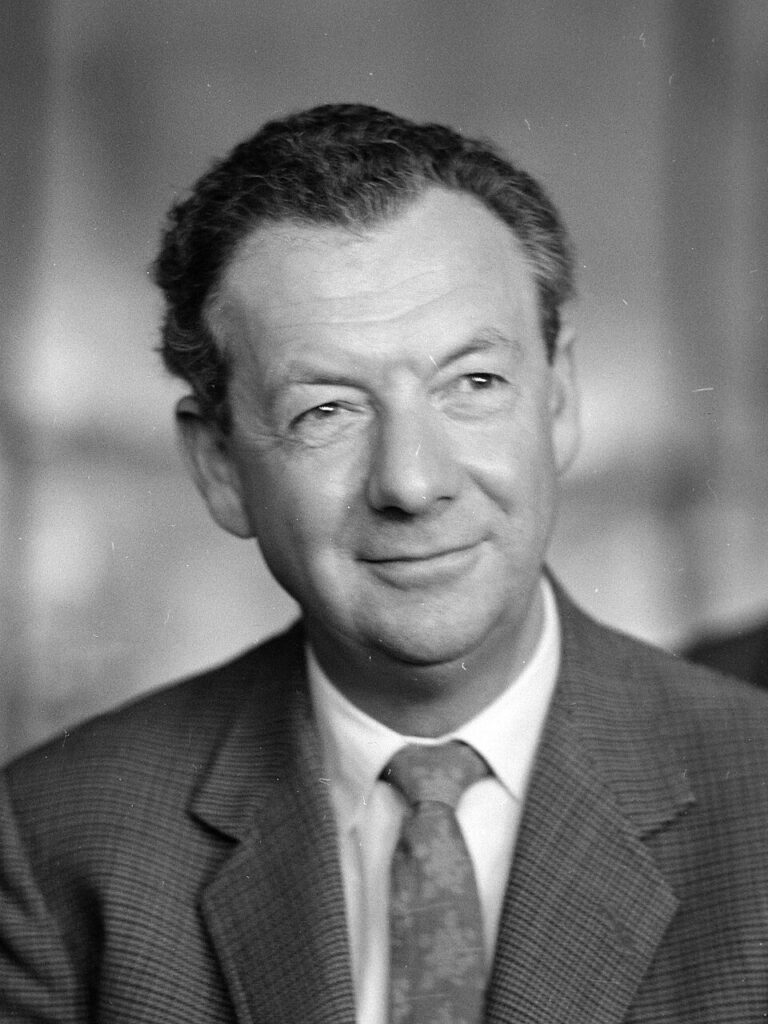
Composer-conductor Benjamin Britten was born November 22, 1913, in Lowestoft, Suffolk County, England. He started piano and viola study before age five, musical composition at age six, and entered the Royal Conservatory of Music (RCM) at age seventeen after three years of private composition study with English composer Frank Bridge. Upon graduating from the RCM, Britten began working for the film division of the BBC, creating incidental music for films and other productions. During the late 1930s, he worked with a number of theatrical and musical performing groups which shared his left-wing and pacifist viewpoints. These activities led to his association with W. H. Auden, whose poetry provided texts for a number of songs. It was during this time that he met tenor Peter Pears, who became his musical associate and life companion. Many of Britten’s vocal compositions were written to be performed by Pears, who also achieved wide acclaim in his own right for lieder and oratorio performances throughout Europe and America. In 1939, Britten and Pears went to America, where they lived until their return to England in 1942, when Britten was exempted from military service as a conscientious objector. While in America, Britten’s work drew the attention of Serge Koussevitsky, whose Koussevitsky Foundation commissioned the opera Peter Grimes, based upon a story by English poet George Crabbe. Completed in 1945, it was premiered by the Sadler’s Wells Opera Company and again one year later in America by conductor Leonard Bernstein. With Peter Grimes, Britten was assured international recognition as a major figure in the world of music. Britten was an unusually prolific and versatile composer. Operas, solo vocal and choral works, orchestral and chamber pieces, and incidental music for film and theater flowed from a rich musical energy over his entire career. His best known works include The Young Person’s Guide to the Orchestra (1946), based on a theme by Henry Purcell; the massive War Requiem (1962); and his first opera, Peter Grimes. Together with Peter Pears and Imogene Holst (daughter of composer Gustav Holst), Britten established the Aldeburgh Festival in 1948, which continues to attract world class performers and composers each year. Some of Britten’s finest compositions were premiered at the Aldeburgh Festival. Britten experienced a stroke during a heart operation in 1973, the effects of which prevented him from working for the last three years of his life. He died in December 1976, only a few months after being named a Life Peer by the Queen of England. He is buried in the family plot at Aldeburgh. His partner, Peter Pears, and Imogene Holst lie in graves on either side of his own. https://www.kennedy-center.org/education/resources-for-educators/classroom-resources/media-and-interactives/artists/britten-benjamin
Albert Herring World Premiere – 6/20/1947 Glyndebourne Frederick Ashton, director / English Opera Group / Benjamin Britten Britten’s second chamber opera was composed just a year after its predecessor, The Rape of Lucretia, in 1947. Yet the contrast in style and subject matter could not be greater: instead of a tragedy based on a tale from Roman antiquity, Albert Herring is a comic opera set in the imaginary East Suffolk town of Loxford at the turn of the 20th century. The score contains some of Britten’s wittiest musical invention and his gifts for parody and caricature, already evident in Peter Grimes, are given full reign. However, the work is far from being mere farce: Albert is a sympathetic and credible figure who, tied to his mother’s apron-strings and frustrated by small-town pieties, embarks on a debauched ‘rake’s progress’, a theme fully in keeping with the composer’s favourite subject of the loss of innocence. Moreover, such poignant touches as the third-act Threnody, in which Albert, presumed dead, is solemnly mourned by the gathered townsfolk, makes Donald Mitchell’s description of the opera as ‘a serious comedy’ seem completely apt. Reproduced by kind permission of the Britten-Pears Library https://www.boosey.com/cr/music/Benjamin-Britten-Albert-Herring/3871 The 1973 performance of Benjamin Britten’s comic opera Albert Herring in Perth was a prominent feature of the 1973 Festival of Perth. Presented as a key theatrical event of the festival, the production ran from February 1 to February 10, 1973, at the University of Western Australia’s Octagon Theatre. The production was notable for combining major national and local creative talent:
  • The Company: The opera was staged by the Western Australian Opera Company in conjunction with the Australian Elizabethan Theatre Trust.
  • The Conductor: The production was musically directed and conducted by the highly distinguished Austrian-Australian conductor Georg Tintner.
  • The Director: It was directed by John Milson, an influential figure in early Australian opera and theatre development.
  • The Cast: The principal cast featured renowned Australian operatic vocalists, including soprano Patricia Whitbread and mezzo-soprano Valerie Melrose.

Albert Herring Proves to be a Bad Catch – With Robert Gude Ten minutes late getting underway to a two-fifths empty house at the Octagon, the opening night of the W.A. Opera Company’s production of Benjamin Britten’s “Albert Herring” was already too moribund to resuscitate.   The plotting in Act One induced the muse of Morpheus simply because it was virtually impossible to decipher what anyone on stage was singing about. The company threw away the key to the plot which remained undiscovered right to the last bar of Act Three. Patricia Whitbread remained prominent both vocally and socially in her role as the imperious Lady Billows.  Her larger than life characterisation lent itself to projecting both voice and diction into the lifeless acoustics of the Octagon. The rest of the cast had equal opportunity but for some inexplicable reason underplayed and undersang Britten’s brilliant operatic farce.  An occasional word or two was intelligible. isolated by bar after bar of baffle.  The less said about Martin Clare portraying the mumbling Mayor the better.  Mr Clare’s pitch was pathetic, his onstage efforts inept.  Between Miss Whitbread and Mr Clare this small cast was totally inadequate for the operatic task required.  What redeems Albert Herring is the splendid production by John Milson. Act Two Scene One had the magic Milson touch: Jeffrey Weaver as Harry enduring functional discomfort during choir practice; Cliff Arndt’s bedrock boredom of wearisome waffle from windbags; John Nicholson’s stunned mullet manner and accepting homage as though facing the gallows with a recommendation for preferential treatment. Kristan Fredrickson’s articulate set and consummate costumes were colourful.  Allowance should have been made, however, for a costume change amongst characters who could afford more than one ensemble thus enhancing the illusion of a passage of stage time.  Conductor Geore Tintner seemed determined that Britten’s 12 member orchestra should overwhelm his singers at every opportunity.  Strings were insecure throughout, with the exception of Aino Neumann, contrabass; Neil Pierson’s horn; Jack Harrison’s clarinet; Peter Randall’s oboe; James Hopkinson’s flute and most commendable, Michael Jefferies impeccable harp held Mr Tintner’s orchestra together. This festival fare is indigestible, not worth a candle and most certainly not worth the price of admission. If Britten’s Herring performed at it was on opening night is the W.A. Opera Company’s first production for the Festival Of Perth it could well be the last. Sunday Independent February 4 1973
Feb 1973 Benjamin Brittten Albert Herring PERTH PREMIERE Georg Tintner (conductor)   12 piece orchestra Festival of Perth W.A. Opera Company   The Octagon Theatre, University of Western Australia
https://en.wikipedia.org/wiki/Benjamin_Britten

Instruments

Years

Person

BRUMBY, Colin

Colin Brumby was born in Melbourne, Australia, in 1933 and educated at the Glen Iris State School, Spring Road Central School, and Melbourne Boys’ High School. While enrolled in the Bachelor of Music Course at the Conservatorium of Music, he began to develop an interest in composition A suggestion from the conductor Verdon Williams, that he should write something for solo instrument and orchestra, resulted in his first work to receive a professional performance: Romance for Oboe and Strings was performed on radio by the Jiri Tancibudek with the Melbourne Symphony Orchestra in 1954. On graduating from the Melbourne University Conservatorium of Music, Colin Brumby was appointed Music Master at Sunshine High School. After teaching for three years, however, in 1959 he decided to head north to Queensland where he was promptly appointed a Junior Lecturer in Music on the staff of the (then) Kelvin Grove Teachers’ College In 1962 he left to take up a scholarship awarded by the Spanish Government to study advanced musical composition under Philipp Jarnach at an international music course in Santiago de Compostela, Spain. It was there that he met with fellow-Australian, guitarist John Williams, who suggested that Colin should continue on to London at the conclusion of the course in Spain. Taking up John Williams’s advice, he was appointed Head of Music at Greenford Grammar School, and studied composition privately with Alexander Goehr, resulting in his major orchestral work, Fibonacci Variations. He returned to Australia in 1964 to take up a lectureship in the Department of Music at the University of Queensland. In the late ’60s, at the invitation of the Queensland Division of the Arts Council of Australia, he composed several twenty-minute operettas for children, which were toured around the state where they were enjoyed by more than 70,000 children annually. In 1972, he was awarded a Doctorate in Music by the Melbourne University, prior to returning to Europe for twelve months’ further study in advanced music composition with Franco Evangelisti in Rome, Italy. Because, however, of his increasing dissatisfaction with the prevailing atonal style of composition, he returned composing tonal music in The Phoenix and the Turtle, a work written in response to a commission from Musica Viva for the 1974 Australian tour of the Academy of St Martin in the Fields under Neville Marriner. This work marked a lasting change of compositional style for Brumby, who said at the time, ‘I became convinced that the atonal style of composition attempted to elevate gibberish to an art-form, and that I wanted no further part in it.’ The immediate appeal that his extremely large musical output makes to performer and listener alike means that he is one of Australia’s most frequently broadcast and performed composers. His list of works, many of them commissions, includes symphonies, concertos, operas, ballets, film scores, musicals, chamber music, songs and choral works…in fact, music in almost every genre. Colin Brumby passed away in Brisbane on 3 January 2018. https://www.australianmusiccentre.com.au/artist/brumby-colin
1966 PARTITE FOR CLARINET AND STRING ORCHESTRA On 30th September 1966 Jack Harrison performed the Perth Premiere of the Colin Brumby Partite for Clarinet and String Orchestra with the West Australian Symphony Orchestra in Basil Kirke Studio, A.B.C. as part of the Festival of Perth.  I can’t find who did the Premiere, but probably someone in Queensland, where Colin Brumby was based at the time.
Letter from Colin Brumby

1967 On Sunday, January 29, 1967, Jack Harrison performed in the Australian premiere of “Strophe” (written in 1964 for violin, clarinet, and piano) by Australian composer Colin Brumby as part of the Recital of Australian Contemporary Composers during the 1967 Festival of Perth. The performance took place live in the Basil Kirke Studio (ABC Studio 620 on Adelaide Terrace) with John Exton (violin) and Alice Carrard (piano). TRIO FOR CLARINET VIOLIN AND PIANO 1967 MUSIC By Peter Hellstrom The opening musical performance of the Festival Of Perth at 3 pm tomorrow week will be a free recital of contemporary Australian chamber music in the A.B.C. Basil Kirke Studio. The festival committee is to be congratulated on the emphasis it has given this year to Australian music.  As a result of its cooperation with the Fellowship of Australian composers, 14 of the 55 composers represented in the Festival are Australian.   The opening recital is by the Oriel Quartet with which will appear pianist Alice Carrard, violinist John Exton and clarinettist Jack Harrison. Many of the works will be given their first W.A. performances. They include Sydney composer Peter Sculthorpe’s Sixth String Quartet, Colin Brumby’s Trio for clarinet violin and piano and Peter Tahourdin ’s Clarinet and Piano Sonata.  West Australian compositions will include Jennifer Fowler’s String Trio and Ashley Arbuckle’s Movements for String Trio.  The West Australian January 21 1967 page 35
30.09.1966 Colin Brumby Partite for Clarinet and String Orchestra PERTH PREMIERE Jack Harrison (clarinet)   West Australian Symphony Orchestra Festival of Perth Basil Kirke Studio ABC Letter from Colin Brumby
29.1.1967 Colin Brumby Strophe for Clarinet, Violin and Piano (1964) AUSTRALIAN PREMIERE   Peter Tahourdin Clarinet Sonata PERTH PREMIERE Jack Harrison (clarinet) Alice Carrard (piano) John Exton (violin) Festival of Perth Free Studio Recital Basil Kirke Studio A.B.C. Adelaide Terrace, Perth, Western Australia
 

1968 MUSIC FESTIVAL OF PERTH 1968 By Peter Hellstrom An aspect of the Festival of Perth already creating interest throughout Australia is a workshop series of four Australian composers to be presented by the A.B.C. in conjunction with the festival committee. The workshops will consist of programs of works mainly for Orchestra. Several will be first performances they will be given in the Basil Kirke Studio at 6 pm on February 15, 22 and 29 and March 7. Each program will have a different conductor. The conductors will be Henry Kripps, Patrick Thomas, John Hopkins and Thomas Mayer. A further special feature of each program will be the presence of at least one interstate composer who will come to Perth for the occasion. The composers are Nigel Butterley, Larry Sitsky, Felix Werder and Richard Meale.   Other interstate composers whose works will be performed are Colin Brumby, George Dreyfus Helen Gifford, Peter Sculthorpe and David Ahern.  The four W.A. composers contributing to the programs are James Penberthy, Dr John Exton, David Tunley and Jennifer Fowler. As a contrast to the formality of the normal concert presentation, the workshops will include discussion between conductors, composers and members of the audiences.  In several of the concerts, provision has been made for some works to be played twice to give listeners a further opportunity of coming to grips with the new music. The chairman of the Festival Of Perth music committee, Professor Frank Callaway, said yesterday that W.A. compositions would include Mr Tunley’s Concerto for Clarinet and Strings (with soloist Jack Harrison), Dr Exton’s Movements for Orchestra, a recently completed string Quartet by Jennifer Fowler to be played by the Oriel Quartet and James Penberthy’s Cantata for Chorus and Orchestra “The Swan of  Bibbulman”. This will be performed by the Lyrics Singers and the W.A. Symphony Orchestra. The work is set to a poem by Mary Durack.  The West Australian Saturday December 23 1967

Instruments

Years