1890–1946
George Mellor was a highly respected Australian musician, teacher, and military bandleader who left a significant mark on the early community music scene in Perth, Western Australia.
Born in 1890, Mellor served his country during World War I as a member of the AIF (#1616). He enlisted and became a key figure in the 51st Battalion, where he served as a Lance Sergeant and Sergeant.
Apres La Guerre.
The 51st Battalion was well served with musical talent, and in its ranks were Sergeant George Mellor (bandmaster), Privates Lionel Hart (violinist), Alf Pateman and the late Bert Goff (pianists).
After the Armistice the 13th Brigade was quartered at Bouvignes, near Dinant, and George and his musicians ran a dance every night in a weaving factory. They were free at first, but the demand for encores and late nights caused a charge of half a franc to be made. There were plenty of ladies, and it was a common sight to see 1,000 couples on the floor, including many distinguished officers of high rank, with wives, or fiancées (I hope!). Colonel Bob Christie, D.S.O., of the 51st., and Colonel Harry Murray V.C. of the 4th Machine Gun Battalion, were frequent visitors.
A fancy-dress ball was the event of the year, and ingenious and appropriate costumes seemed to spring like magic from a district which had been in German hands for four years. Lieutenant Crocker, the 51st Signalling Officer, appeared in a life-like mask with a winking eye and a luminous nose. At the supper he was the great attraction, for, as he disposed of sundry glasses of vin-blanc, so he switched on the luminous nose and winked the eye. The outfit was improvised, and was a testimony to Aussie initiative.
Western Mail (Perth, WA : 1885 – 1954), Thursday 5 March 1931, page 2
The 51st Battalion Band.
Dear Non-Com.,
The very fine picture which appeared in the Diggers’ Diary of young George Mellor enjoying his “annual” brought to mind the first time I heard George perform on his cornet. The year was 1916, place Tel-el-Kebir, and the hour near midnight. The boys had packed up and were lying about waiting for the order to move off to entrain for Alexandria. It was a calm night, and we were getting a bit drowsy, but soon roused when George entertained with numerous melodies.
The 51st Battalion had returned to bi-lets; at Buire after its second trip in at Flers. We were greatly interested when the instruments arrived and the battalion band formed up each afternoon to practice near the railway line. The language used by George in getting, the instruments was an entertainment in itself.
Later we moved forward, leaving the band behind to undergo intense training. We were, naturally, very proud of our band, and were looking forward to much music on our return to billets. However, the circumstances of our next meeting were a little stiff for both sides, as we had been several days marching with bad feet on bad roads. The band was unlucky in having to play us into Buire over the last few miles. We tried to swing along, but found the step too quick, and were soon in trouble. The adjutant had his work cut out galloping his charger along calling on the platoon officers to keep their men in step. This broke the boys up, with the result that the band on its first regimental appearance was counted out!
Later, however, we enjoyed many pleasant hours listening to the band of the good old 51st. “Fifty-Fifty-First,” Subiaco.
Western Mail (Perth, WA : 1885 – 1954), Thursday 31 May 1934, page 2
Upon returning to civilian life in Western Australia, George Mellor embedded himself deeply into the local classical and brass band communities. In 1925, Mellor took on the role of Musical Director for the newly restructured R.S.L. Band (Returned Services League). He was at the helm when the band received a historic delivery of brand-new, premium Besson brass instruments, an event that elevated the ensemble’s prestige in the city. He spent 24 years as a core member and conductor for the prominent Perth RSL Memorial Band, leading high-profile performances at public locations like the Ascot racecourse.
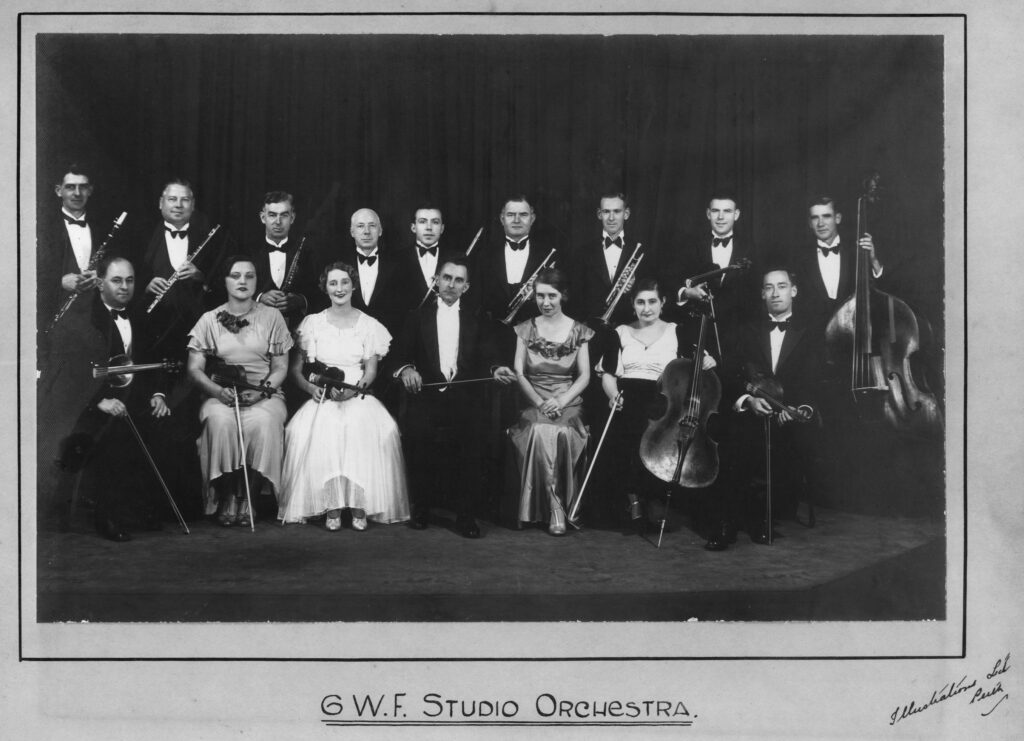
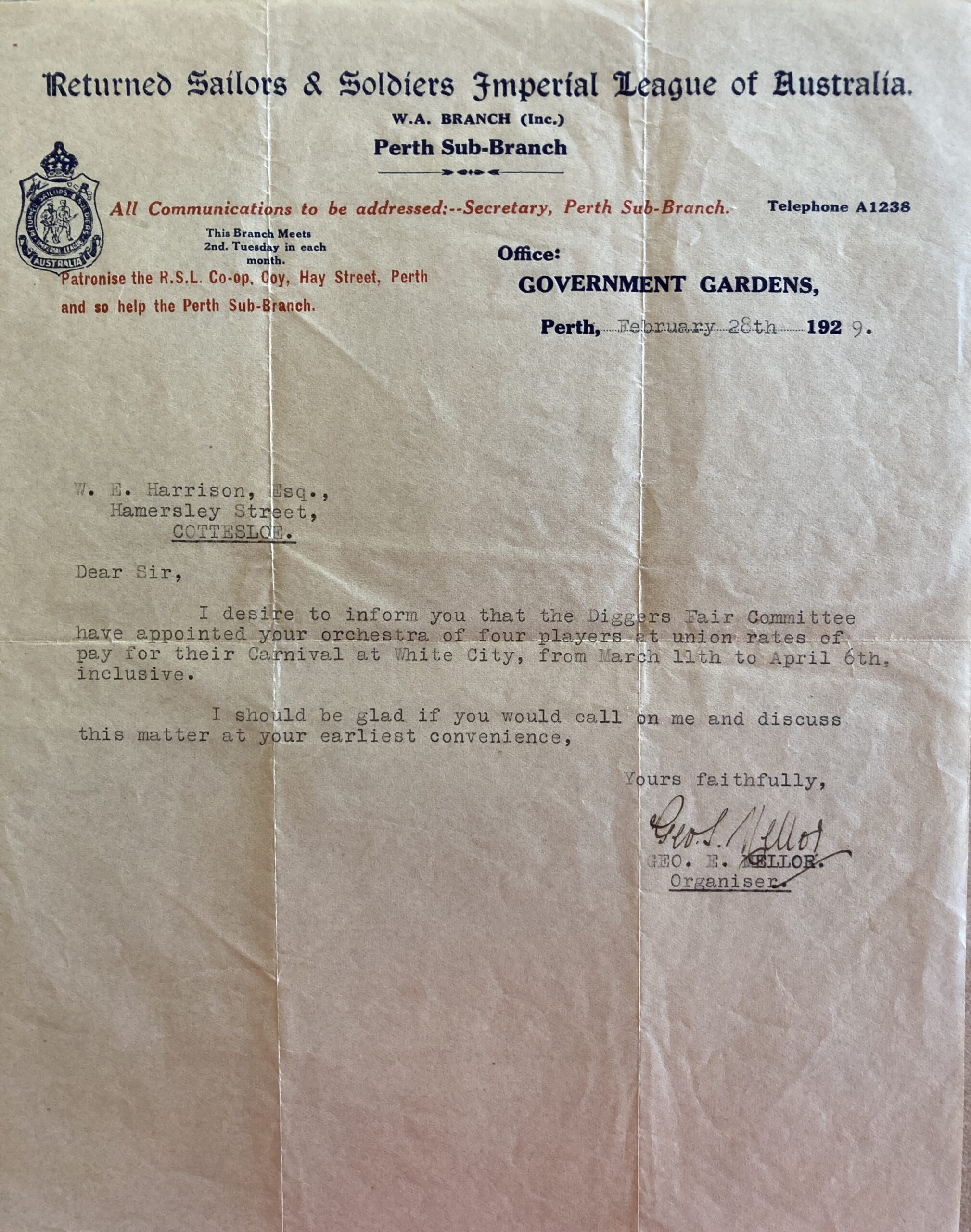
He was a member of Bill Harrison’s Orchestra.
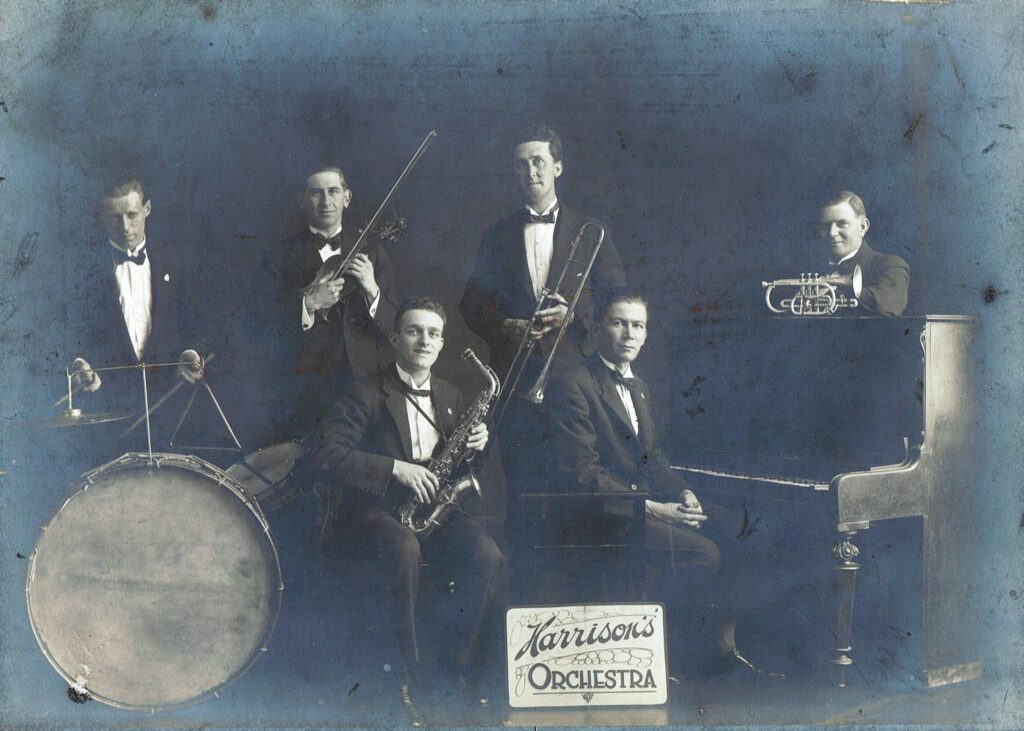
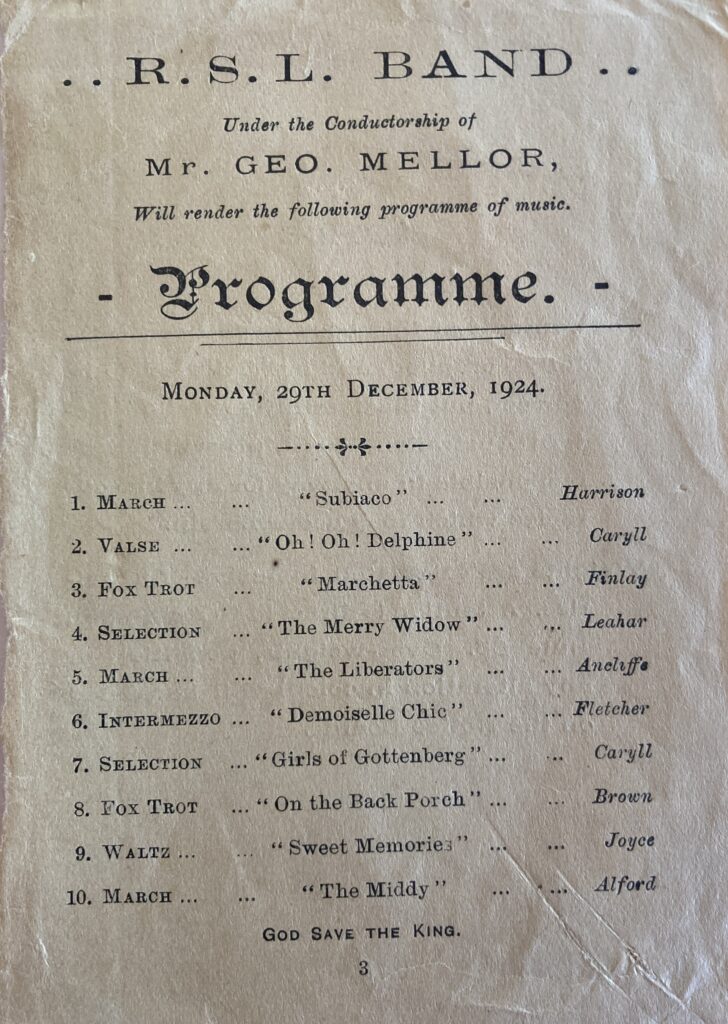
31 May 1931
Perth Symphony Orchestra
The cornet solo “Take A Pair of Sparkling eyes” from “The gondoliers”, played by G. Mellor, “was well set off by a soft accompaniment by the violins”.
1936
In 1936 auditions, overseen by Ernest J. Roberts, were held in order to establish a nucleus of Perth musicians to augment the 6.W.F. Studio Orchestra for public concerts given by the Perth Symphony Orchestra.
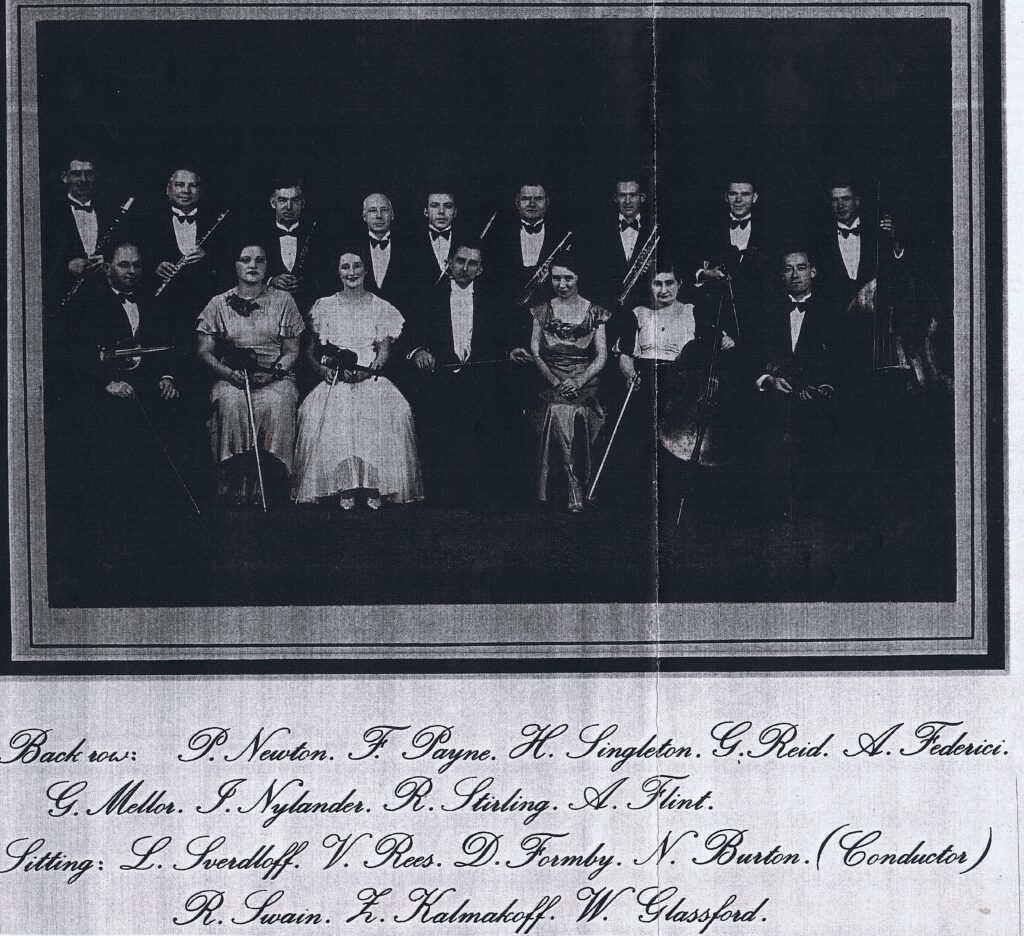
Those chosen for the coveted positions were: Vera Rees (Waterman) as the leader, Lazar Sverdloff and Dorothy Formby 1st violins, Bill Glassford 2nd violin, Bob Stirling viola, Zlata Kalmikoff cello, Freddy Flint bass, Harry Singleton oboe, Fred Payne flute, Percy Newton clarinet, George Mellor 1st trumpet, Ivan Nylander 2nd trumpet, Tony Federici trombone, George Reid drums and Rima Swain piano.
Harrison, Marcia, West Australian Symphony Orchestra Celebrating 75 Years, (WASO Holdings Pty Ltd, 2003). P.11
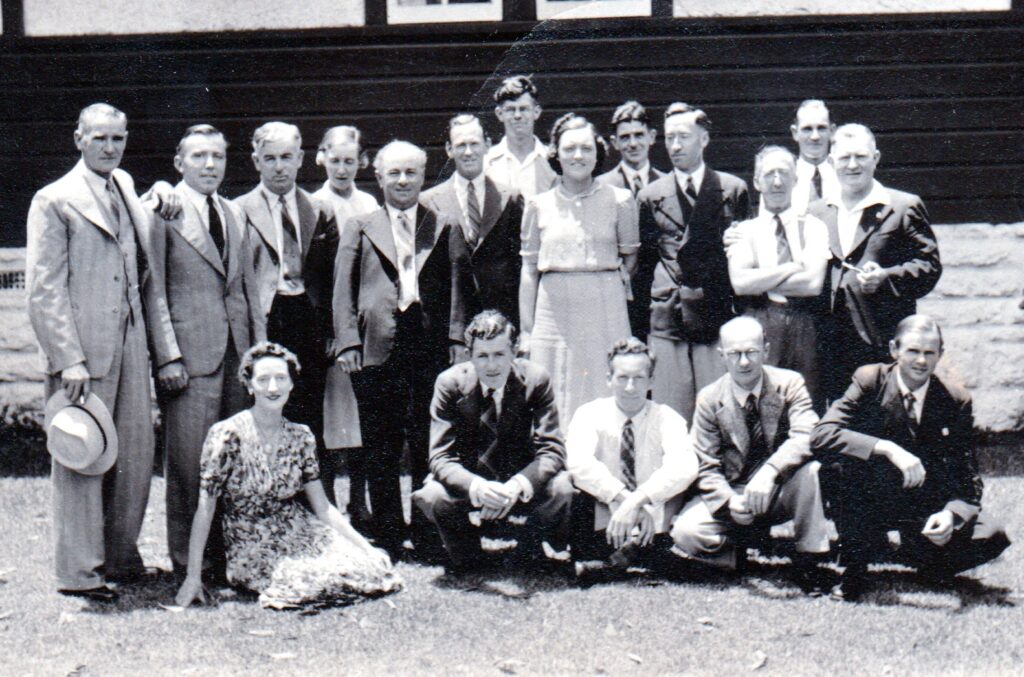
BACK L-R: Fred Flint, Tony Federici, Harry Singleton, Rima Swain, Lazar Sverdloff, Ivan Nylander, Alec Black, Vera Rees, Percy Newton, William Glassford, George Davies, Bob Trew, George Mellor.
FRONT: ?, Vaughan Hanly, Dave Kember, Harold Thornton, ?.
1929
1946
MR. GEORGE MELLOR DEATH ON SATURDAY.
R.S.L and A.B.C. Bandsman.
Well known as a bandsman and as an enthusiast of the Returned Soldiers’ League since its inception, Mr George Mellor died yesterday. aged 56. His last illness was short but he had not enjoyed good health for several years. Although the late Mr Mellor played almost any brass instrument, he was perhaps best known as a cornetist. At the time of his death he was a member of the Australian Broadcasting Commission Orchestra. During many years’ association with the A.B.C. he played under the baton of most of the visiting conductors. Mr. Mellor was probably best known as the conductor of the RSL. Memorial Band, which he founded 24 years ago. One of his proudest achievements was to have been included as the only West Australian member in the, Commonwealth Band which visited America and Canada under the baton of Mr Bert Baile in 1926. Mr. Mellor was prominently associated with the administrative side of the RS.L. for many years. From 1924 to 1940 he was secretary of the Perth sub-branch of the R.S.L. and he was also a member of the State executive for a long period. Paying a tribute to the late Mr. Mellor last night the secretary of the RSL. (Mr. D. M. Benson) said: “The league has lost a very esteemed member and a great supporter, and hundreds of other diggers have lost a good cobber.” Mr. Benson said that as the secretary of the Perth sub-branch Mr. Mellor had successfully advocated the claims of many war widows with the Repatriation Department and the appeal tribunals. He had always made his services available, to sound the last post at diggers’ funerals and had been known to attend nine gravesides as bugler in one day. Although unseen, he was heard by many thousands when he sounded the bugle calls at the dawn services on Anzac Day. Mr. Benson said that Mr Mellor’s old comrade, Bugle-Major George Gilmore, who had been associated with Mr. Mellor as bugler at all Anzac Day parades with the exception of two when Mr-Mellor was again on active service, would sound the last post during a service at the Karrakatta crematorium today.
Mr. Mellor left a widow, two sons and a daughter.
West Australian (Perth, WA : 1879 – 1954), Monday 14 January 1946, page 6
Vale George Mellor
Although he had been ailing for several years, the death of the veteran R.S.L. band master, George Mellor, after a short illness on January 12, came as a surprise that shocked a wide circle of friends. He was a keen enthusiast in R.S.L. affairs and was equally well known in musical circles, both as a conductor and a performer in the Australian Broadcasting Commission’s Orchestra. He played almost any brass instrument, but he was best known as, a cornetist and trumpeter. The late George Mellor was the son of an Army bandmaster, the late Lieut. T. Mellor, who died in Sydney a few years ago. George was born in Sydney, but came to this State as a youth and did his war service with the 51st Bn. Towards the end of 1916, he formed the band of the 51st Bn., which soon became one of the outstanding bands of the A.I.F. He was probably best known as the conductor of the R.S.L. Memorial Band, which he formed 24 years ago, and of which he was bandmaster, with one break, ever since. One of his proudest achievements was to have been included, as the only West Australian member, in the Commonwealth Band, which visited the United States and Canada, under the baton of Mr. Bert Baile in 1926. For several years, he was full time secretary of the Perth sub branch, and he was a member of the State Executive for a long period. Paying a last tribute to an old friend and associate, the State Secretary (Mr. D. M. Benson) said: “The League has lost a very esteemed member and a great supporter, and hundreds of other. Diggers have lost a good cobber.” As secretary of the Perth sub branch, Mr. Mellor successfully advocated the claims of many war widows with the Repatriation Department and the appeal tribunals. He had always made his services available to sound the calls at Diggers’ funerals, and had been known to attend at nine gravesides in the one day. Although unseen, he was heard bv many thousands when he sounded the calls at Dawn and Esplanade services on ANZAC Day. Associated with George Mellor on these occasions was Bugler Major Gilmore, whose only absences were during the two years George Gilmore was again on active service in the Middle East. George Gilmore, with Drummer H. Tuckey, had the sad duty of sounding the calls over his old friend at the Karrakatta crematorium on January 14. Mr. Mellor left a widow, two sons and a daughter, to whom we tender deep condolence on a loss which is ours as well as theirs.
Listening Post (Perth, WA : 1921 – 1954), Tuesday 1 January 1946, page 3