1979 – “Way 79” Western Australia

“Way 79” in Western Australia – “The Year of Excitement” – was the official year-long celebration marking the 150th anniversary (sesquicentennial) of European settlement and colonisation in Western Australia, dating back to the founding of the Swan River Colony in 1829.


A massive New Year’s Eve concert on the Perth Esplanade kicked off the year, drawing an estimated 60,000 people with performances by figures Rolf Harris, Fat Cat and Percy Penguin.
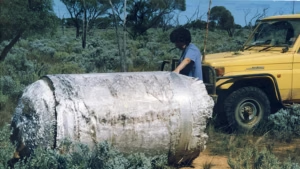

Skylab came down near Esperance on July 12th 1979.
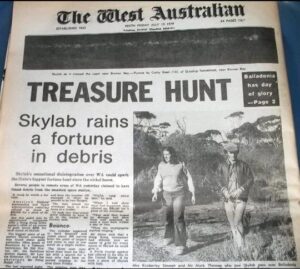
NASA’s Skylab space station reentered Earth’s atmosphere and scattered debris over Esperance and surrounding areas in Western Australia (with the breakup occurring late on July 11, UTC/local time transitions). Due to a calculation error by NASA and higher-than-expected solar activity that increased atmospheric drag, Skylab fell prematurely instead of landing in the southern Indian Ocean/Atlantic as planned.  As it broke apart entering the atmosphere, it lit up the night sky over Esperance like a massive fireworks display accompanied by sonic booms.
The Shire of Esperance light-heartedly fined NASA $400 for littering, which went unpaid for decades until a US radio show host raised the money to pay it off in 2009.  Pieces of debris—including oxygen tanks, a food storage freezer, and titanium nitrogen tanks—were recovered from paddocks and local properties.
Many of these items are now preserved and on display at the Esperance Museum.
https://www.abc.net.au/news/2019-07-12/four-decades-on-from-skylabs-descent-from-space/11249626

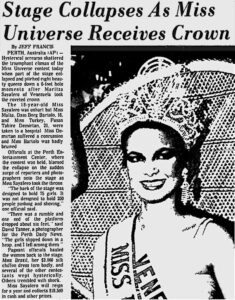
Miss Universe 1979, the 28th Miss Universe pageant, was held on 20 July 1979 at the Perth Entertainment Centre in Perth, Australia. Maritza Sayalero of Venezuela was crowned by Margaret Gardiner of South Africa. This is the first time Venezuela won the pageant.
Notably, a large piece of debris from Skylab, which had fallen days earlier, was displayed on stage during coronation night.
The show started at 9 a.m. to catch the prime-time TV audience in the United States. Organisers of the event estimated that 600 million persons in 50 countries watched the telecast.

Reports on the stage collapse

The 1979 pageant held in Perth, Australia, had only just finished when a huge crash and loud screams filled the building. Part of the stage had collapsed, injuring 20 candidates and lots of reporters and photographers.
20 contestants were involved in the collapse of part of the stage after contestants and news photographers rushed to the throne of the new Miss Universe. Costa Rica, Carla Facio Franco, and Philippines, Criselda Flores Cecilio, had suffered bruises. Malta, Dian Borg Bartolo, and Turkey, Fusin Tahire Dermitan, had leg injuries.
Barely a few minutes into her reign as Miss Universe, Maritza Sayalero of Venezuela heard hysterical screams around her. Part of the stage designed to hold 75 people collapsed after a surge of 200 reporters and photographers onstage. Part of the stage collapsed, bringing along beauty queens and reporters down a 6-foot deep hole. Among those who fell were Miss Malta (Dain Borg Bartolo), Miss Turkey (Fusan Tahire Demirtan), Miss Philippines (Criselda Cecilio), second runner-up Miss England (Carolyn Seaward) and third runner-up Miss Brazil (Marta da Costa). On the lighter side, runner-up Gina Swainson of Bermuda went on to win the Miss World crown later that year.
As contestants went to congratulate the newly-crowned Maritza Sayalero and the press rushed to her throne to take pictures, a part of the catwalk of the stage collapsed causing injury to about 20 contestants. Tahire Dermitan of Turkey and Dian Bartolo of Malta were among the ones that were badly injured and had leg injuries and bruises. Carla Franco of Costa Rica and Criselda Cecilio of the Philippines were also reported to have suffered injuries when the stage collapsed. Maritza still cried as she was interviewed by press people recalling the stage collapse incident as she had many friends out of the girls who got injured.
Moments after the coronation – the stage collapsed due to the sheer weight of people conglomerating around the winners in addition to the heavy piece of skylab debris that was on display in the background. A group of candidates fell on the hole which saw Misses Malta (Dian Borg Bartolo) and Turkey (Fusin Tahire Dermitan) getting a concussion and badly bruised, respectively.
Immediately after the live telecast ended, the stage collapsed, as too many journalists and photographers had stormed on to get a photograph of the new queen.
Miss Malta Dain Borg Bartolo and Miss Turkey Fusin Tahire Dermitan were injured. While Dain had some minor bruises, Fusin suffered a concussion. They fell down in a 6-foot hole when the stage collapsed. Similarly, Miss Dominican Republic Yaritza Reyes felt an enormous amount of pain when her left foot went straight into the hole. And while she recovered quickly, it was very apparent that she masked her pain courageously.
It was the 20th of July in 1979 when Venezuela won its very first Miss Universe crown. Then 18 year old Maritza Sayalero won the title after she survived evening gown, swimsuit and interview being on top of the other candidates.
The celebratory mood after Sayalero’s win was replaced by shrieks and screams from the candidates when a portion of the stage collapsed and the platform dropped about 6 feet. This incident happened at the Perth Entertainment Centre in Perth, Australia! It was attributed to the sudden surge of photographers and reporters onto the stage immediately after the crowning.
Miss Costa Rica went on to participate in the 1979 Miss Universe competition, where she made worldwide news as the stage collapsed and pictures of her falling where posted world wide.

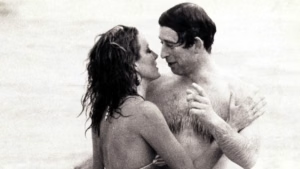
Prince Charles toured Western Australia as part of the state’s commemorative calendar.

In March he was famously photographed at Cottesloe Beach being kissed by model Jane Priest.

On March 11, 1979, the young royal was taking a morning swim during an Australian tour. Priest, then 26 years old, approached him in a bikini and placed her hands on his shoulders/chest before kissing him. While widely reported at the time as a lucky, spontaneous moment, accounts later surfaced—including from Priest and royal photographer Kent Gavin—suggesting it was an orchestrated public relations setup designed to make the reserved bachelor look more approachable and modern. Other photographers present (such as Kerry Edwards and John Campbell) disputed exact details of who planned the shot. The iconic image was beamed across global front pages and is remembered as one of the most famous celebrity photos in Western Australian history.

https://thewest.com.au/news/royal-family/king-charles-cottesloe-kiss-the-fresh-twist-behind-was-most-famous-celebrity-photo–c-11114394


The year also saw the emerging Indigenous land-rights and protest movement voice opposition to 150 years of dispossession, including demonstrations at events and living-condition inspections led by figures like Ken Colbung and Al Grassby.
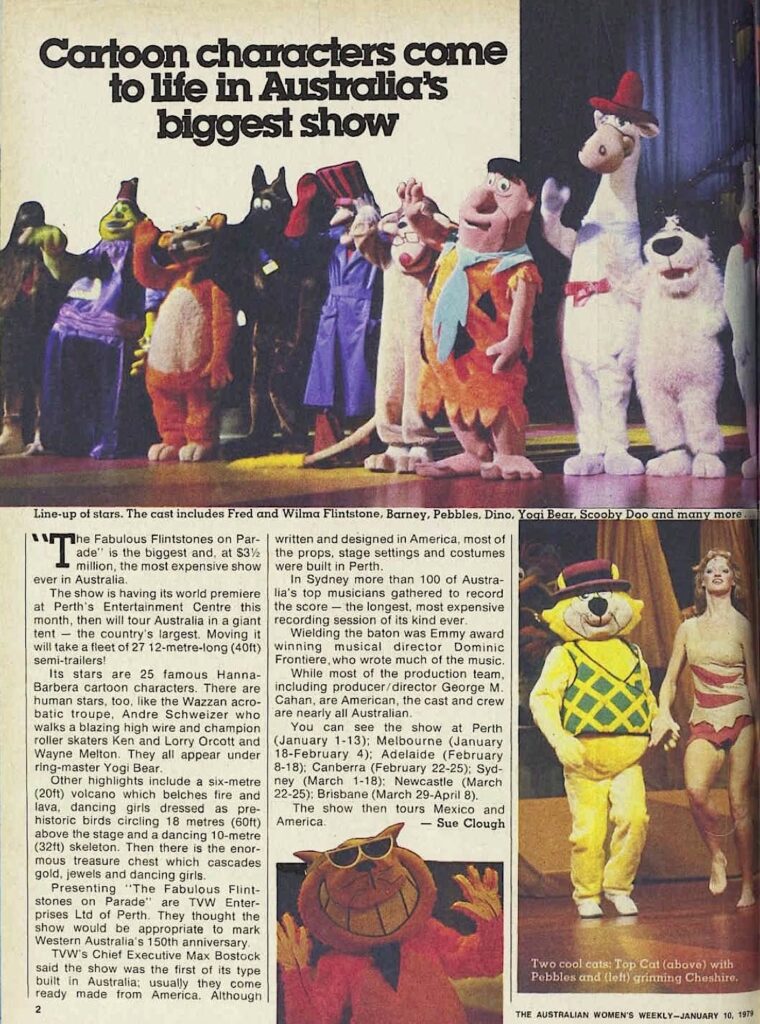

Another 1979 show that premiered at the Perth Entertainment Centre, and traveled through out Australia, was “The Fabulous Flintstones on Parade”. It was a show filled with music, live action and costumed Hanna-Barbera characters.
It featured the Flintstones as well as other popular Hanna Barbera characters including Scooby Doo, Huckleberry Hound, Snagglepuss and Dick Dastardly among others, performing musical numbers with titles such as “Infernal Disco” and “We Will Always Be Friends”. It was the biggest and most expensive show to grace Australia at that time. There were high wire acts and special effects, and of course merchandise for parents to spoil the kids with on the way home.
TVW made a TV special of the show for America which was presented by Michael Landon. The Director was Keith Mackenzie. Post Production was done in Los Angeles.
In order for Keith to Direct and Edit “The Fabulous Flintstones on Parade” it was necessary for Keith to be accepted as a member of the Directors Guild of America. All Directors working on Programs for Television Stations in America have to be DGA members. Normally an American Director would have had to come to Australia to Direct the show, but, the American Producers persuaded the DGA that Keith was the best qualified and was in Perth. The DGA agreed and Keith was accepted as a member. The entrance Fee into the DGA at that time was $US 3,000, rather a large sum of money. However, Sir James Cruthers very generously paid Keith’s joining Fee. Keith has remained a Director member of the DGA ever since.
Nicki Roland performed in the lead roll of Pebbles. Nicki is the daughter of former prominent dance teacher, the late Norma Atkinson.

https://www.facebook.com/groups/watvhistory/posts/2189489331165248/


There was a release of a 14-volume Sesquicentenary Celebrations historical series for the occasion which was first proposed by the Perth Chamber of Commerce in 1971 and expanded under Premier Sir Charles Court.

The 14 commissioned titles covered diverse aspects of Western Australian history, culture, environment, and society:

  • Aborigines of the West
  • Agriculture in Western Australia
  • The Beginning: European Discovery and Early Settlement of Swan River
  • Education in Western Australia
  • Environment and Science
  • Essays on Western Australian Politics
  • A History of Commerce and Industry in Western Australia
  • Immigrants in Western Australia
  • The Literature of Western Australia (edited by Bruce Bennett)
  • Mining in Western Australia
  • Western Landscapes
  • Western Towns and Buildings
  • Westralian Portraits
  • Westralian Voices: Documents in Western Australian Social History

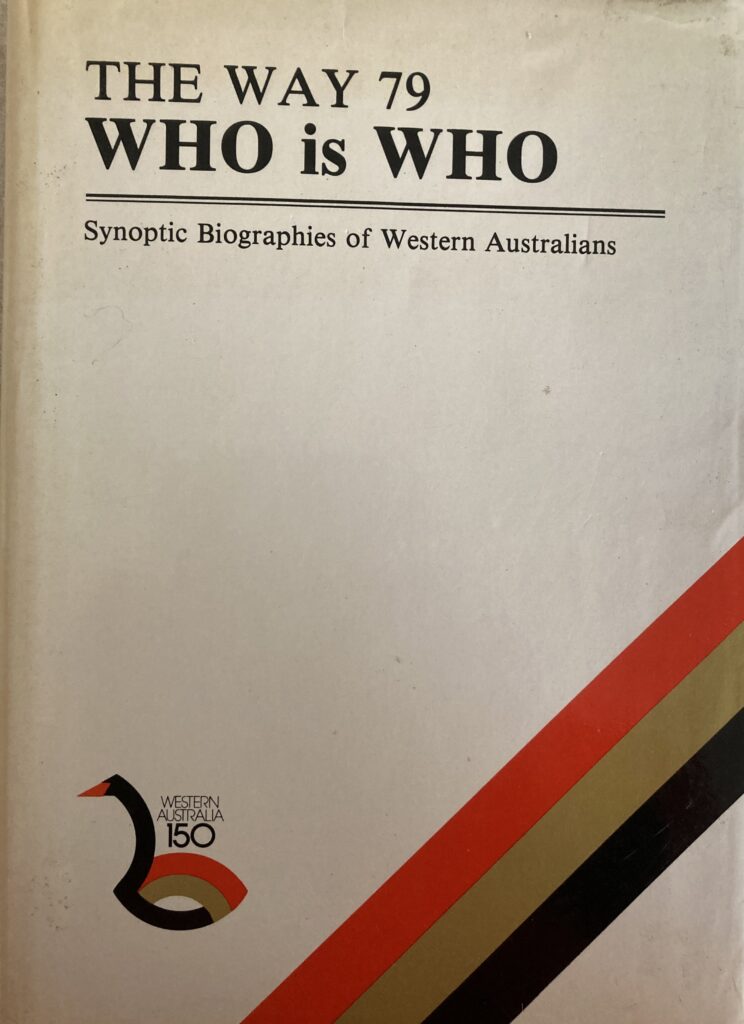
Alongside the 14-volume scholarly series, the celebrations included commemorative school diaries, historical plaques, and community publications like Reflections: Profiles of 150 Women who Helped Make Western Australian History and “The Way 79 Who is Who” – a book of synoptic biographies of West Australians.
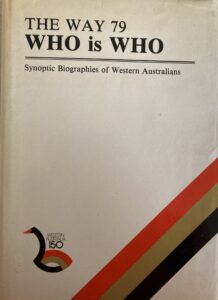
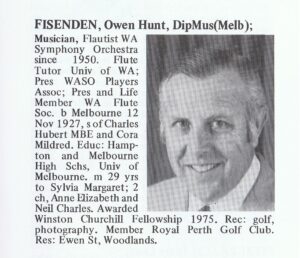
Sacks, Margaret, The Way 79 Who is Who, (Crawley Publishers Pty Ltd, 1979).
Owen Fisenden biography 1979
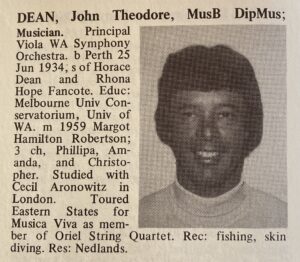
John Dean
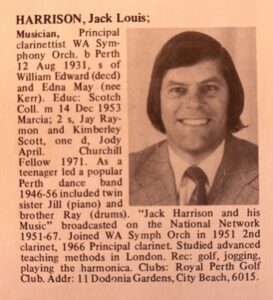
Jack Harrison
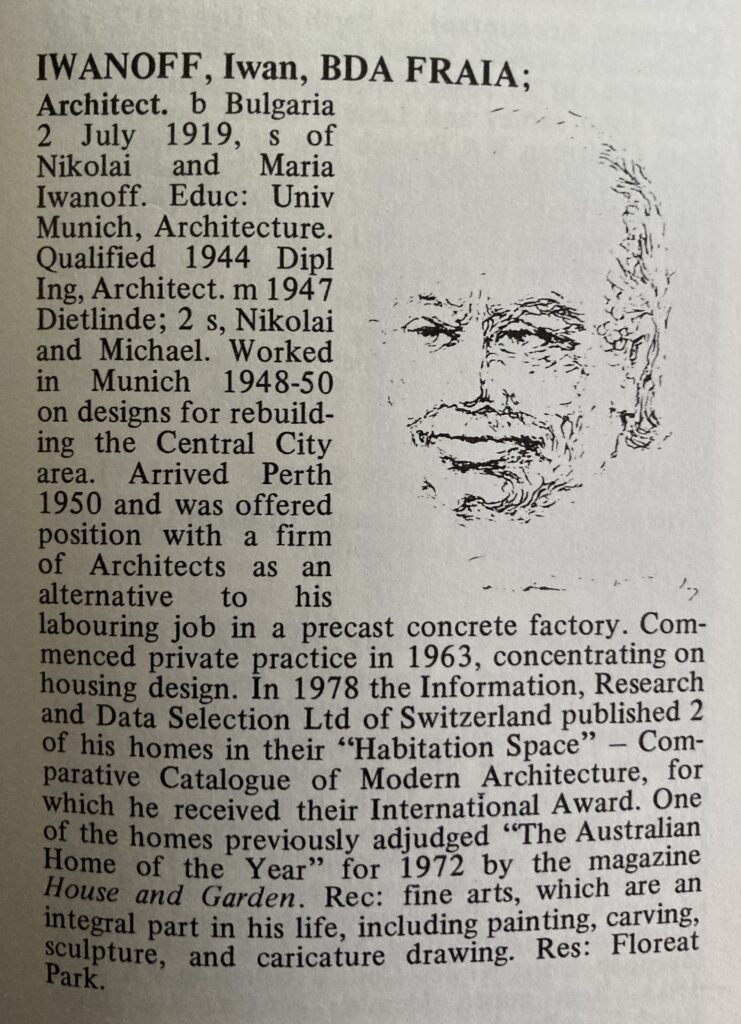
Iwan Iwanoff “The Way 79 – Who is Who”

Major national and international cultural events to Western Australia. Two notable musical milestones occurred under the WAY ’79 banner that year:

 The Australian National Band Championships: Held in Perth from April 13th to 16th, 1979. This major competitive music event brought brass bands from across Australia to Western Australia to mark the anniversary.
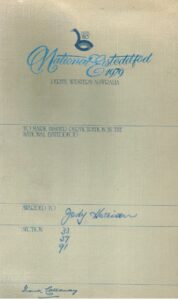
National Eisteddfod Recognition: Local Western Australian student musicians competed at the national level during this highly publicised celebratory year.

Young WA pianist Stephen Farmer famously received a special commendation from the iconic Australian pianist Eileen Joyce at the National Eisteddfod in August 1979.

West Australian concert pianist Donald Thornton was also an adjudicator.
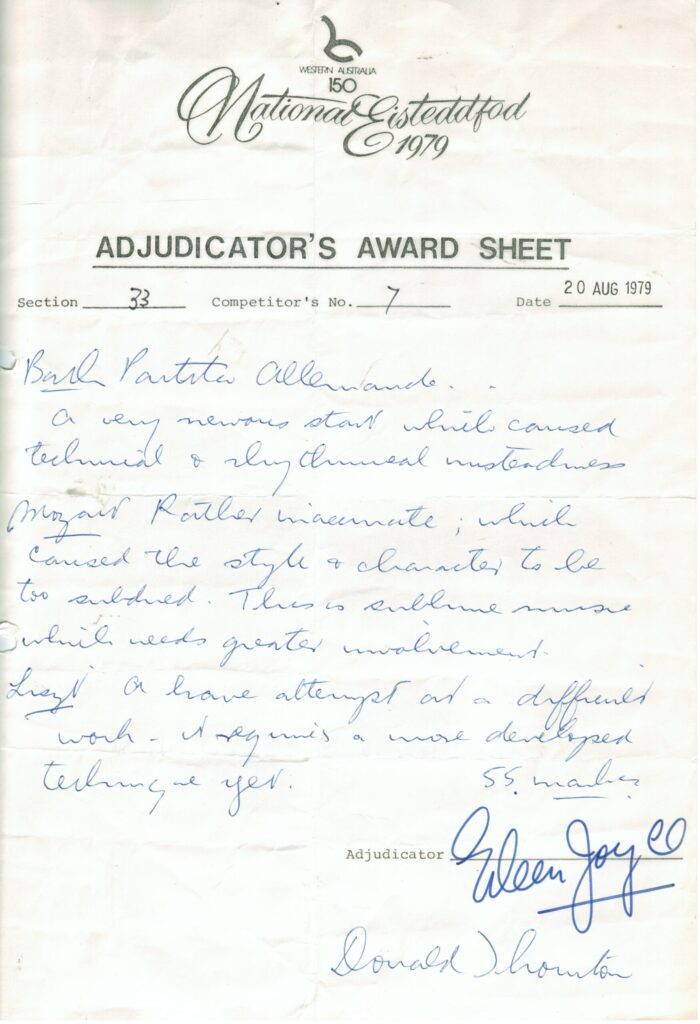
Way 1979 Eisteddfod: Eileen Joyce signature with Donald Thornton

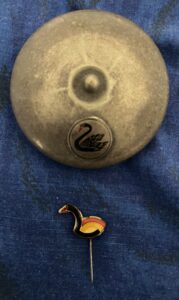
T shirts, tea towels and memorabilia were popular.
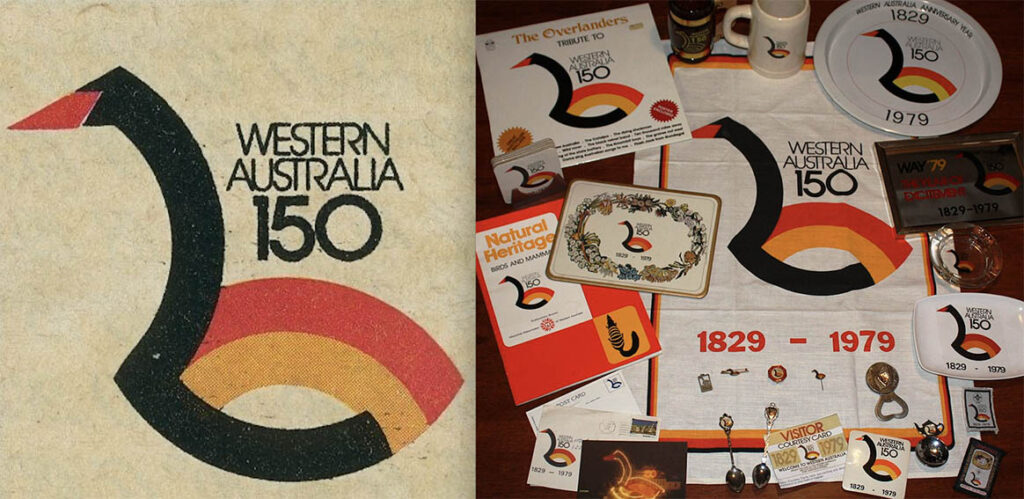
 

https://en.wikipedia.org/wiki/WAY_79

https://collectionswa.net.au/node/125588

https://wa.campaignbrief.com/who-designed-the-way-79-logo/


WAY 79 – 150th  Celebration of Western Australia

Thursday 12th July 1979 8pm Perth Concert Hall

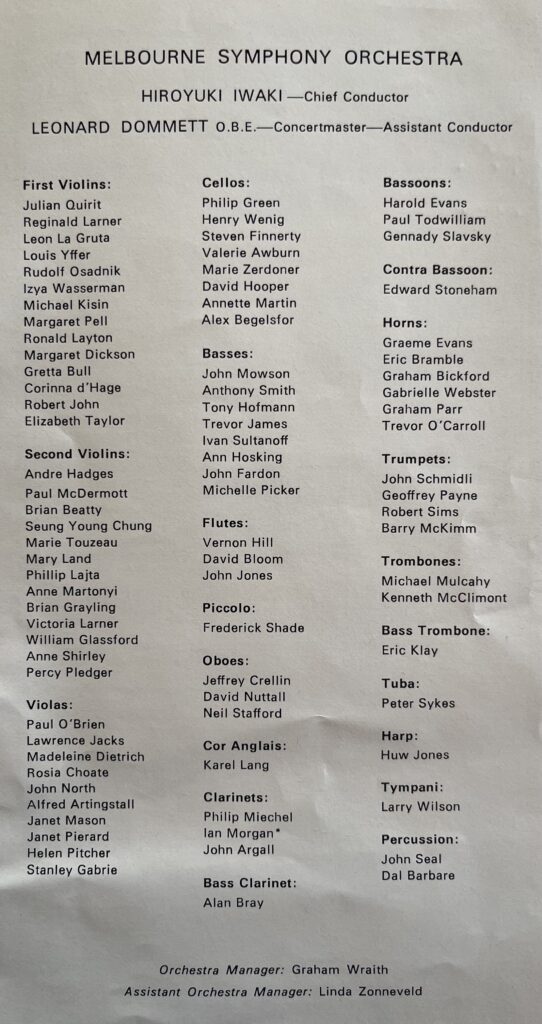
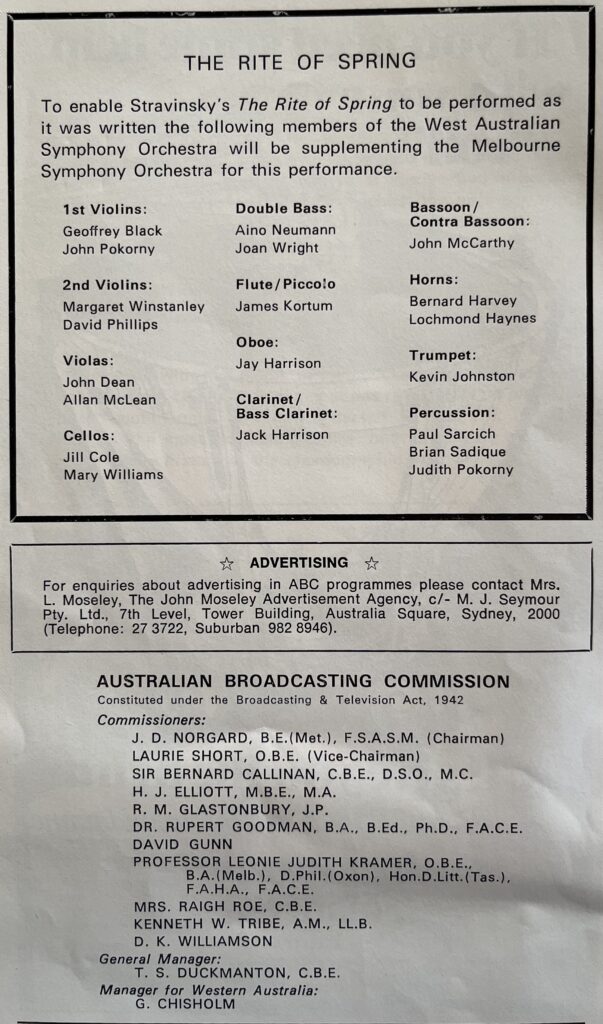
Stravinsky “The Rite of Spring” was performed by the Melbourne Symphony Orchestra conducted by Hiroyuki Iwaki.

Jack and Jay Harrison were asked to augment the M.S.O. for this concert, as were John Dean, Aino Neumann, Bernard Harvey and Kevin Johnston in this Perth Premiere.


From 22nd September to 6th October 1979 the Indian Ocean Arts Festival was held in Perth.  It was a landmark cultural event—the first time countries and island nations bordering the Indian Ocean cooperated in a major artistic showcase to foster mutual understanding and break down geographic isolation. The festival formed a centrepiece of Western Australia’s 150th Anniversary Celebrations.

It brought together international delegations, tribal performers, and community groups from across the Indian Ocean rim and African nations (such as Kenya, Tanzania, Somalia, Mozambique, and the Malagasy Republic), alongside local Australian and Aboriginal arts organizations.

The inaugural festival was directed by Professor Frank Callaway.

Sunday September 23rd 1979 3pm.

The Australian Broadcasting Commission presents a FREE AUSTRALIAN COMPOSERS’ WORKSHOP

In conjunction with the Department of Music, the University of Western Australia as a contribution to the Indian Ocean Arts Festival and on the occasion of the 18th General Assembly of the International Music council (of UNESCO)

The West Australian Symphony Orchestra with Conductor: Patrick Thomas

Soloists Jill Mowson (bassoon), Jack Harrison (clarinet)

Works by Peter Sculthorpe, David Tunley, James Penberthy and John Exton.

Basil Kirke Studio A.B.C. Perth

The West Australian Saturday September 22 1979

The Australian Broadcasting Commission presents a FREE AUSTRALIAN COMPOSERS’ WORKSHOP

(from the printed program)

Concerto for Clarinet and Strings DAVID TUNLEY

Soloist Jack Harrison

The Concerto for Clarinet and Strings combines elements of rich romanticism with the more pungent harmonies and buoyant rhythms of the 20th century “neo-classic” idiom.  It was written for Jack Harrison, whose particular style of playing moulded much of the works character, particularly in the cadenza of the opening movement which is accompanied by a solo double base whose throbbing rhythms and deep sounds is reminiscent of the didgeridoo. The slow second movement catches an intensity of expression eminently suited to the solo instrument giving way to a lilting dance in the finale.

 Concerto for Bassoon and Orchestra JAMES PENBERTHY

 Soloist Jill Mowson

 The Bassoon Concerto was written in November 1954 for the West Australian Symphony Orchestra’s John Cran. He never played it and the first performance was given by George Dreyfus with his own Melbourne Orchestra 15 years later. There were only two movements consisting of fast and slow sections showing the agility of the instrument in merry if not clownish mood, and in contrast and eloquence in a more reflective manner. A new second movement, very serious in nature, was written this year specially for the present Jill Mowson performance. The old second movement now becomes the third.


Australian Works in ABC Concert – By Derek Moore Morgan

 The ABC Basil Kirke Studio was the setting yesterday afternoon for a workshop concert of music by contemporary Australian composers. It was arranged in conjunction with the University of W.A.’s Department of Music as a contribution to the Indian Ocean Arts Festival. David Measham replaced conductor Patrick Thomas at short notice. Measham directed the West Australian Symphony Orchestra in secure performances of works by David Tunley, James Penberty and Peter Sculthorpe.  Tunley, as the only composer present, gave a brief background to his Concerto for Clarinet and Strings in which Jack Harrison (to whom the work is dedicated) was the soloist.  Possessed by a clarinet part of considerable technical difficulty, this piece was suave.  Elegantly finished phrases and strings and soloist complimented each other in a deftly assorted variety of tempi, moods and rhythms.

James Penberthy, writing for larger orchestral forces, occasionally thickened his textures so that the rather reticent solo instrument in his Concerto for Bassoon and Orchestra had something of a struggle to survive.  But bassoonist Jill Mowson played it with pleasantly controlled tone.  Peter Sculthorpe’s recent “Mangrove” evokes a quality of “Australian” atmospheric sound, using conventional orchestral means in new and unusual ways.  A brass prelude leading to a lengthy divisi cello passage moved to high wavering violin sounds.  It travelled to percussion and brass for the ending to create a picture of some features of a desolate land.  It is a piece that deserves rehearsing. 

The West Australian Monday September 24 1979 page 27


A Shame this music remains a Stranger – By Anne Hodgson-Goodman

Why do composers today continue to write music when so few people care to hear it?  That was the question reviewed by an ABC Workshop of contemporary Australian compositions in the Basil Kirke Studio last Sunday.  The orchestra’s performance must have satisfied David Tunley.  The concerto was inspired by the technique of Jack Harrison, principal clarinettist of the WASO who, as soloist at the workshop met the considerable technical difficulties with mastery and style.  Although the work is not easy to perform, Tunley never lost touch with musicality.  In different ways, each of the three movements demonstrated a fine compositional ability.  The general impression was matched by Jill Mowson, the soloist in James Penberty’s Concerto for Bassoon and Orchestra.  But she had a more difficult task.  The proliferation of ideas in the orchestra made at times an uncomfortable background for the comparatively soft-toned bassoon.  Nevertheless, the tonal colour of the instrument was well employed throughout the work, and Jill Mowson demonstrated her technical expertise and understanding.  Finally, the audience heard a recent work by Peter Sculthorpe – Mangrove for Orchestra.  

The Sunday Times September 30 1979


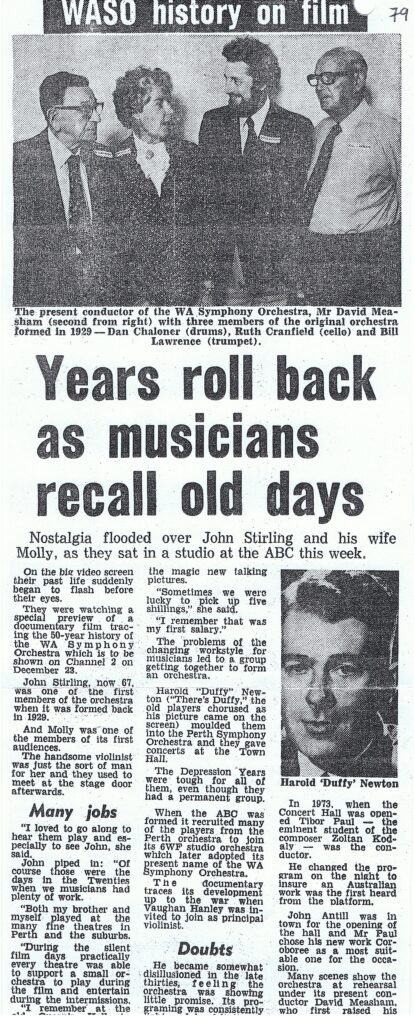
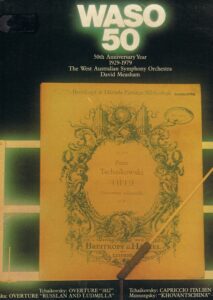
Coincidentally, it was the 50th anniversary of the West Australian Symphony Orchestra and an album and a documentary was made for the occasion.

Happy Birthday WASO – By Derek Moore Morgan – ABC Documentary “FIFTY YEARS ON”

“Fifty Years On” is the title of an unusual hour long television documentary to be screened by the ABC on Sunday, December 23 at 9:30 pm.  Commemorating the 50th anniversary of the West Australian Symphony Orchestra this program traces the Orchestra’s evolution in pictures and sound.  Nostalgic shots of Perth’s palmy theatre orchestra days are swiftly followed by the traumatic depression period for the musicians, sparked by Al Jolson and the arrival of talkies in Australia in 1928 and Perth a year, later bringing unemployment in its wake. Rare pictures often had to be obtained from former players, now long retired, or from relatives.  A can of early black and white film was accidentally discovered by an ABC employee among outdated material scheduled for the trashcan and was mercifully preserved.  The Perth Symphony Orchestra is depicted on stage at His Majesty’s Theatre in 1931 with nearly 40 musicians headed by conductor Harold Duffy Newton. The Orchestra’s name changed to the W.A. Symphony Orchestra in 1950 with the State Government, the Perth City Council and other municipal authorities joining forces to subsidise it. Two of the Orchestra’s longest serving members – clarinettist Jack Harrison and flautist Owen Fisenden joined that same year. The role of conductors is long and sometimes distinguished, including names such as Nelson Burton, Ernest Roberts, Henry Krips, Rudolph Pekarek, John Farnsworth Hall, Thomas Mayer and Tibor Paul.  Vaughan Hanly the violinist and WASO’s leader for almost 40 years, speaks with affection of the Orchestra’s past and expresses his confidence in the shape of things to come. Backed partly by rehearsal shots of today’s musicians at work with conductors David Measham and Peter Eros, the film highlights the Orchestra’s community role travelling with it on country tours and moving behind the scenes during rehearsal and recording sessions.  Devised, directed and produced by David Witt, it is compulsory and compulsive pre-Christmas viewing for the State’s concert-goers. 

The West Australian Tuesday December 18 1979
Person

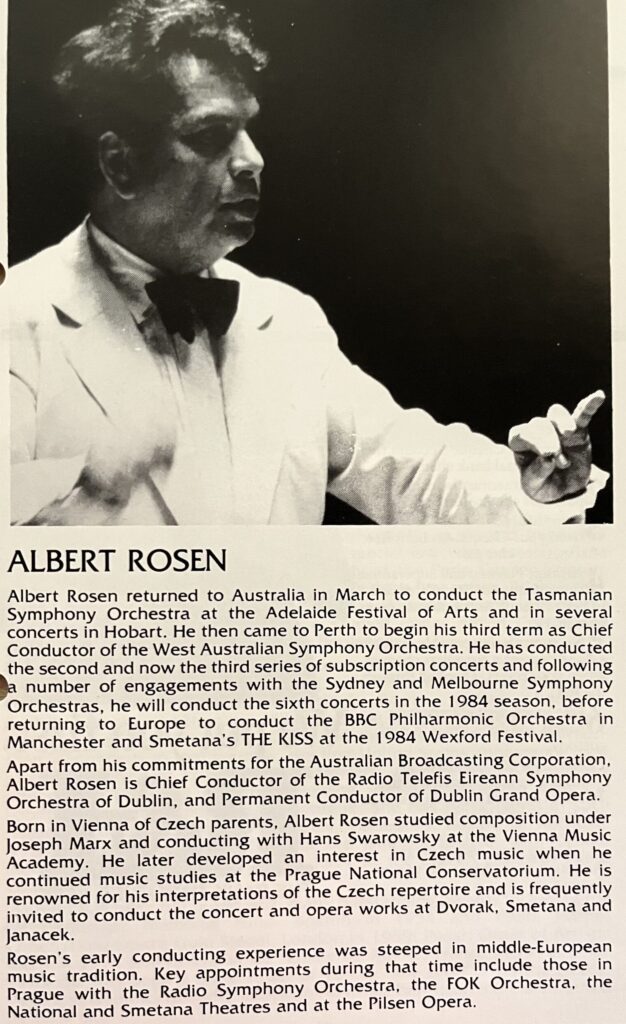
ROSEN, Albert

Albert Rosen first appeared as a guest conductor with the West Australian Symphony Orchestra in 1979.

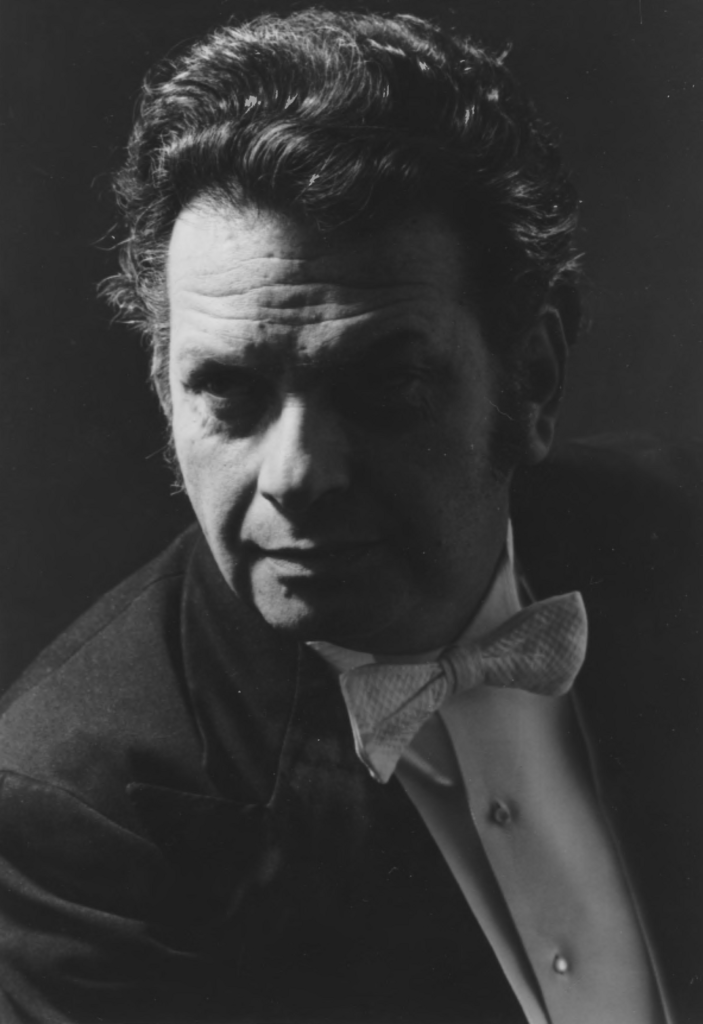
In 1980 he was appointed Chief Conductor, a position he held until 1985.  The previous Chief Conductor, David Measham, was appointed Principal Guest Conductor.

Rosen was greatly admired by the orchestra with one of his most notable concerts being with Death and Transfiguration by Richard Strauss, Nigel Kennedy performing the Elgar Violin Concerto and the greatly augmented brass section basking in the glory of Janáček’s Sinonietta.

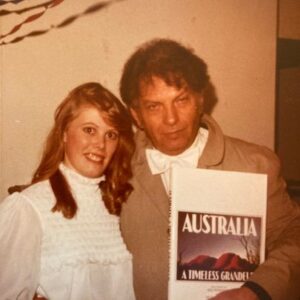
Jody Harrison with Rosen after the WAYO concert.

Albert Rosen has a special place in the heart of this website owner.

In June and July 1983, Rosen coached the West Australian Youth Orchestra on a weekly basis for their performance of Dvorak’s “New World” Symphony.

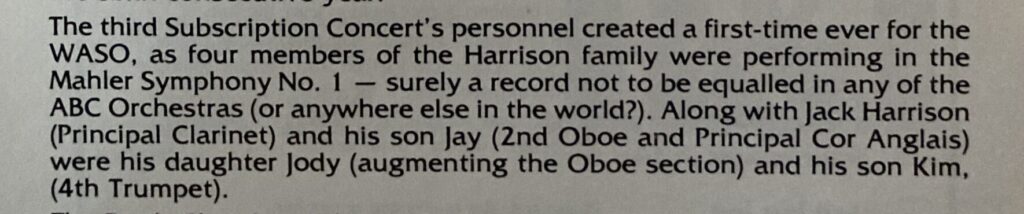
Rosen conducted Mahler’s First Symphony in 1984 in which four members of Jack Harrison’s family performed.


In 1984, Rosen also conducted the State Finals of the A.B.C. Instrumental and Vocal competition in which Jody Harrison was a finalist on cor anglais.

Rosen returned regularly as a guest conductor of the WASO right up until 1997 during which time it was painfully obvious he was losing his battle with cancer.  Rosen commented at this time “that his arms were the only part of his body still working properly.”

Harrison, Marcia, West Australian Symphony Orchestra Celebrating 75 Years, (WASO Holdings Pty Ltd, 2003), p.113.

Albert Rosen died in 1998 of lung cancer.


Rosen, Albert (1924–97), orchestra conductor, was born 14 February 1924 in Vienna, Austria, second child and only son of Dr Ludwig Rosen, an Austrian lawyer, and Teresia Rosen (née Ruzickova), of Czech ethnicity. The household was not especially musical, and Rosen’s talents were late to emerge. The family moved to Prague, Czechoslovakia, where he received his primary and secondary education. After studying piano, composition, and conducting at the Vienna state academy, he moved to the Prague conservatory, where, amid an important musical renaissance in the city, his training included thrice-weekly turns at conducting the conservatory orchestra, led by Josef Suk. Engaged on graduation as a conductor with the Pilsen (Plzeň) opera (1949), he honed his skills in the company’s wide repertoire of opera, ballet, drama, and background and incidental music. Appointed (1960) a resident conductor at Prague’s National Theatre, the country’s principal opera company, he became a conductor of the Prague Symphony Orchestra (1964) and director of the Smetana Theatre (1965), the city’s second opera company.

Rosen’s long association with Ireland commenced in 1965 when he made a huge impression conducting the Radio Telefís Éireann Symphony Orchestra (RTÉSO) at the Wexford Opera Festival in Massenet’s ‘Don Quichotte’. Return visits to Wexford, to conduct Donizetti’s ‘Lucrezia Borgia’ (1966) and Rossini’s ‘Otello’ (1967), led to his appointment as principal conductor of the RTÉSO; the third occupant of the post, he served the longest tenure to date (1968–80). A popular choice with both musicians and the public, he immediately restored coherence and direction to the orchestra after the uncertainty that followed the controversial departure of the Hungarian conductor Tibor Paul (the orchestra’s second principal conductor (1961–7), coming after the Yugoslav Milan Horvat (1953–8)). Rosen developed the orchestra’s repertory, embracing numerous contemporary offerings but with a solid grounding in the classical and romantic tradition, and continued the policy of programming works by Irish composers, including premieres of new compositions by Seoirse Bradley, Brian Boydell (qv), and A. J. Potter (qv). He conducted such eminent visiting soloists as Robert Casadesus, Ruggiero Ricci, and James Galway, and also programmed solo engagements by members of the orchestra. Throughout his tenure the RTÉSO’s base was the St Francis Xavier Hall, Upper Sherrard St., Dublin; taking the orchestra to other Dublin venues and to provincial locations, especially Limerick and Cork, Rosen reached a yet broader audience through the increased frequency of television broadcasts in addition to the long-standing radio performances. He regularly conducted in the Dublin Festival of Twentieth Century Music; particularly memorable were the premiere of the symphonic portrait ‘Jonathan Swift’ by Gerard Victory (qv) in St Patrick’s cathedral (1972), and a performance of Olivier Messiaen’s ‘Turangalîla-symphonie’ in the composer’s presence and with the composer’s wife and sister-in-law as soloists (1976). In March 1976 Rosen led the RTÉSO on a tour of seven English and Welsh cities, followed by its first three performances in continental Europe, playing to especial acclaim in Antwerp. For the orchestra’s second and longer European tour (1980) he teamed with Colman Pearse (who would succeed him as the orchestra’s fourth, and first Irish-born, principal conductor); Rosen identified a Paris performance of Mahler’s fifth symphony as a highpoint of his career.

Rosen’s foremost love and métier was always opera, followed by the lush, opulent scores of nineteenth-century romanticism, and the music of his native Czechoslovakia. Integral to the development and success of the Wexford festival, he conducted eighteen operas there, more than any other conductor; highlights included a passionate production of ‘Kát’a Kabanová’ by Janáček (1972), and a spine-chilling interpretation of Britten’s ‘The turn of the screw’ (1976). He was skilled at adapting big romantic scores to the 46-piece orchestra necessitated by the diminutive Wexford pit. He also conducted some 165 performances of twenty-four operas for the Dublin Grand Opera Society (latterly Opera Ireland), starting with ‘Die Fledermaus’ by the younger Johann Strauss (1969), and including the first Irish performance of Janáček’s ‘Jenufa’ (1973), and a modern-dress ‘Così fan tutte’ by Mozart (1983 and 1984), one of the company’s most acclaimed productions.

With a family and continuing career in Czechoslovakia, Rosen found difficult the years following the suppression of the ‘Prague spring’ liberalisation, which coincided with his Dublin appointment, and in 1971 he resigned his Prague positions. He once observed that under the Czech communist system if a thing was organised by the state it was organised well, but if it was not state-organised it did not exist; while basking in the greater artistic freedom and scope for individual initiative in the west, he frequently bemoaned the paucity of state support for the arts in Ireland. Resigning as principal, Rosen became chief guest conductor (1980–94) of the RTÉSO (from 1990, the National Symphony Orchestra of Ireland (NSOI)); on his seventieth birthday he received the unique appointment of conductor laureate (1994–7). One month after the venue’s opening, he debuted (4 October 1981) at the orchestra’s new home, the National Concert Hall, with a programme of Bruckner, Rachmaninov, and ‘The banks of Sullane’ by Seán Ó Riada (qv). Appointed chief conductor of the Western Australia Symphony Orchestra, Perth (1982), he later became principal conductor of the five orchestras of the Australian Broadcasting Corporation, based in Adelaide. A guest conductor with orchestras throughout Europe, he had an astonishing capacity to deputise at short notice for a scheduled conductor. His numerous international opera credits included acclaimed engagements in San Francisco, San Diego, and Paris, and with the Scottish Opera and the English National Opera.

A rugged giant of a man, who lumbered to the podium like a great bear, Rosen was a kinetically ebullient presence on the platform, constantly moving about with the emotion of the music, dubbed by the RTÉ musicians ‘the bouncing Czech’ for his propensity to spring into the air at particularly dramatic moments. A throwback to the nineteenth-century school of conducting, he eschewed the modern predilection for total command and finely rehearsed exactitude, favouring rather a flexible and improvisatory accommodation to the unpredictable character of every performance, valuing above all a sincere and unconditional surrender to the music as performed. Lively, engaging, and bon vivant, his impeccable old-world manners touched with a raffish streak, he was modest about his talents and unpretentious about his art. Twice married and twice divorced in Czechoslovakia, he had a daughter by his first marriage and a son by his second. An incessant smoker, he fell ill with lung cancer in 1996. He returned to Dublin from Australia in May 1997 to conduct the last night of the Bank of Ireland/RTÉ proms and record a session of Czech music, but was admitted to St Vincent’s hospital, where he died on 23 May 1997. A memorial service was held in St Stephen’s (the ‘Peppercanister’) church, Upper Mount St. Crescent (27 May). The NSOI performed a tribute concert under the baton of Oliver von Dohnanyi, music director of Prague’s National Theatre (28 September 1997).

Sources

ITWW; Ir. Independent, 14 Feb. 1994 (profile); Ir. Times, 18 Mar. 1994 (profile); ibid., 24, 26, 30 May 1997; Times, 11 June 1997; Pat O’Kelly, The National Symphony Orchestra of Ireland 1948–1998: a selected history (1998), passim; Michael Kennedy (ed.), Oxford dictionary of music (2001)

Publishing information

DOI: https://doi.org/10.3318/dib.007802.v1

Originally published October 2009 as part of the Dictionary of Irish Biography
Last revised October 2009


Instruments

Years

Wigmore Ensemble

Wigmore Ensemble

Person

HINDEMITH, Paul

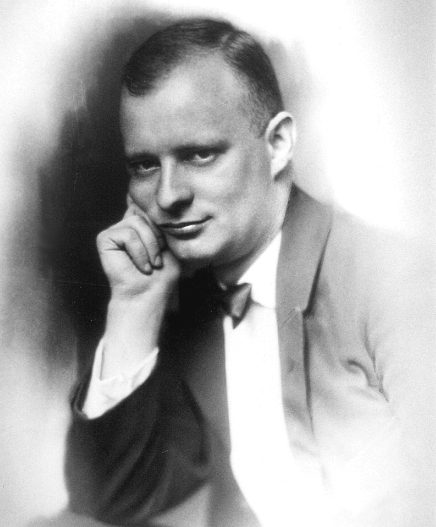
German composer Paul Hindemith was born in Hanau, Germany on November 16, 1895. A major innovator of musical modernism, he was a composer, conductor, violist, educator, and a scholar. In his early teens he studied the violin at the Hoch Conservatory in Frankfurt and composition with Arnold Mendelssohn and Bernhard Sekles. Hindemith acted as concertmaster for the Frankfurt Opera House Orchestra from 1915-23, interrupted only by time spent in army service. ; Initially establishing his reputation through his chamber music and expressionistic operas, Hindemith subsequently turned to neo-classicism in his Kammermusiken (1922-27). This series of seven chamber concerti pay homage to Bach’s Brandenburgs, while employing distinctly modern elements, notably jazz. Besides chamber works, Hindemith composed in other genres including lieder, and music for amateurs as well as school children. ; Hindemith produced masterpieces including: the opera Mathis der Maler (1934-1935) in which he dramatized the dilemma of the artist in society and reflected the need for greater responsibility to art; the ballet Nobilissima Visione (1938) based on the life of St. Francis; and, the choral work Six Chansons (1939) to French poems by Rilke. He also wrote several sonatas for every major instrument, which became part of the standard repertory. ; The Nazis forced Hindemith to leave Germany where his works were considered “culturally Bolshevist.” In 1938 he began his exile in Switzerland followed two years later by an exile in the United States, where he joined the Yale University faculty (1940-53). The 1940s were witness to what is generally considered the apogee of Hindemith’s output and critical standing with such masterpieces as: Symphony in E Flat (1940); The Four Temperaments (1940); Sonata for Two Pianos (1942); Ludis Tonalis (1942), an homage to Bachâ’s Well -Tempered Clavier; Symphonic Metamorphosis on Themes of Carl Maria von Weber (1943); and, Sinfonia Serena (1945). In 1953 Hindemith left the United States for Switzerland. There he composed the opera Die Harmonie der Welt, where his search for an all-encompassing harmony was realized. In 1963 Hindemith became ill in Frankfurt and died there in December. https://www.kennedy-center.org/artists/h/ha-hn/paul-hindemith QUARTET FOR CLARINET, VIOLIN, CELLO AND PIANO Paul Hindemith’s quartet for clarinet, violin, cello, and piano is a major work of imposing scale.  Also celebrated during his lifetime for his virtuosic viola-playing, as a composer Paul Hindemith was a “revolutionary of the 20th-century musical world” (Emmanuel Loubet). Unusual among his contemporaries for his fascination with contrapuntal technique (with models like Bach and Handel), the passionate music theorist nonetheless described in his treatise the need for an expanded tonality that surpassed major-minor harmonic structures to find a new foundation in a hierarchic order of intervals. Composed in 1938 as he was emigrating from Germany under the growing storm of Nazism, Hindemith’s quartet performed here perfectly mirrors his dual ambitions of combining Baroque-inspired contrapuntalism with neoclassicism and other more modern compositional techniques. https://www.medici.tv/en/concerts/chamber-music-society-hindemith-quartet-clarinet-violin-cello-and-piano
WIGMORE ENSEMBLE – 8.15pm Tuesday May 22 1979 – Perth Concert Hall Paul Hindemith Quartet for Clarinet, Violin, Cello and Piano (1938) Graham Wood (violin) Jill Cole (cello) Jack Harrison (clarinet) David Bollard (Piano) Players respond to Challenge – By Derek Moore Morgan The main aim of the recently formed Wigmore Ensemble is to achieve flexibility of repertoire by altering the number and content of the group after the fashion of Britain’s famous Melos Ensemble. Last night’s Perth Concert Hall appearance for Musica Viva by W.A. artists Graham Wood, Jill Cole, Jack Harrison and David Bollard produced just the sort of piece which can so easily suffer neglect – the quartet for violin, cello, clarinet and piano of 1938 by Hindemith. This is a work which exploits a fine range of ideas and moods suffering not at all from the dryness which can affect this composer at times. The players had a well integrated and developed work under their fingers and they responded to its challenge. David Bollard’s handling of the prominent toccata-like piano climax had the right driving energy. The Wigmore ensemble can be very pleased with this their Concert Hall debut.  The West Australian Wednesday May 23 1979
22.5.1979 Paul Hindemith Quartet for Clarinet, Violin, Cello and Piano (1938) Jack Harrison (clarinet)   The Wigmore Ensemble Graham Wood (violin) Jill Cole (cello) David bollard (piano) Musica Viva Perth Concert Hall


Instruments

Years

Sacks, Margaret, The Way 79 Who is Who, (Crawley Publishers Pty Ltd, 1979).

Sacks, Margaret, The Way 79 Who is Who, (Crawley Publishers Pty Ltd, 1979).

Person

MAYDWELL, Anthony

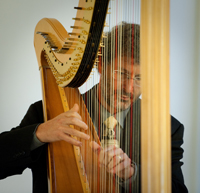
Through his position as educator, as harpist, and in his capacity as director of orchestral and choral music, Anthony Maydwell has an impressive if unusual reputation. As a child, Anthony Maydwell was a medallist in St Andrew’s Cathedral, Sydney. He began formal piano tuition at 5, taking up the harp at the age of 10.

Anthony began playing regularly with the Sydney Symphony Orchestra from the age of 16 with his first recordings and his concerto début for Musica Viva at 17. At 21 he was described as ‘a distinguished Australian musician’ (Sydney Morning Herald). While still studying Anthony Maydwell gained experience in conducting under Robert Pikler and Richard Gill, already experimenting with the rarer parts of the repertoire including Restoration masques and late Renaissance Italian madrigal.

In 1975, Anthony was awarded Student of the Year at the NSW State Conservatorium of Music. He was a member of AZ Music, The Seymour Group and regularly played with Opera Australia and Australian Ballet orchestras. After taking up the position as harpist with the West Australian Symphony Orchestra, Anthony Maydwell completed an MA at the University of Western Australia specialising in Trecento Madrigal, and later in 18th century performance practice.

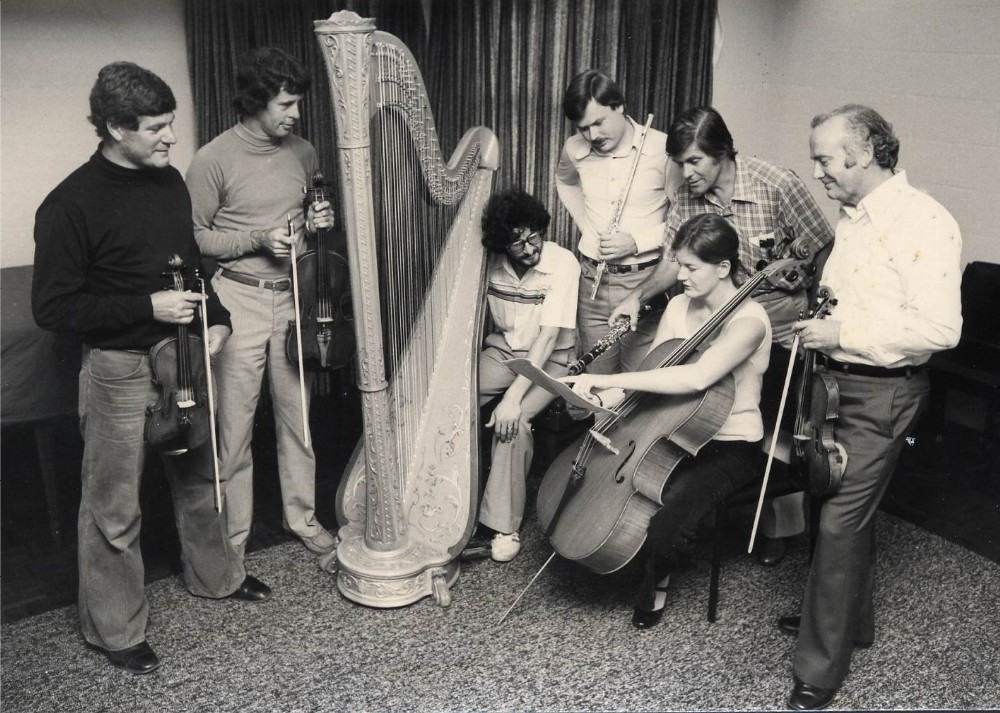
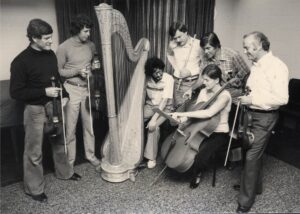
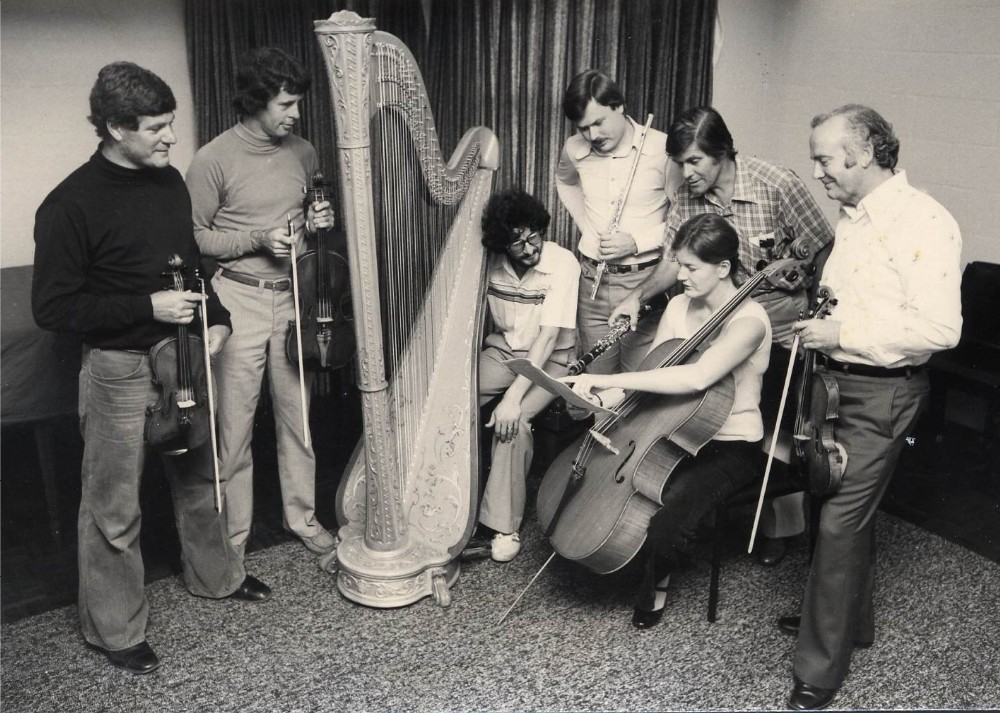
Chamber Group off to a Good Start – By Derek Moore Morgan – 23rd April 1979 The recently formed Wigmore Ensemble made its first public appearance last night with a delightfully varied program at the Octagon Theatre. A flexible group with no fixed numbers, it has the practical advantage of being able to present music of widely different genres some of which inevitably gets left on the shelf because it doesn’t quite fit a specific mould such as the string quartet or Trio.  This was a University of W.A. music Society recital. The performers were Graham Wood and Ashley Arbuckle (violins), John Dean (viola), Jill Cole (cello), Neil Fisenden (flute), Jack Harrison (clarinet) and Anthony Maydwell (harp). The final item, Ravel’s atmospheric and beautifully crafted “Introduction and Allegro” brought all the players together to produce a nice degree of sonority and delicacy capturing much of the subtlety of the masterpiece.  Starting with the Mozart Quartet for Flute and Strings in D major a mellifluous example of the composer’s earliest style, the players gave us a bright indication of the bubbling and effervescent Gatty of the Rondo finale.  The British composer Frank Bridge, himself a viola player, wrote a whole body of telling string music.  His little known Trio (Rhapsody) from 1928 proved to be a forward looking piece for the difficult unless usual combination of two violins and viola, with mysterious opening and closing sections surrounding an energetic central portion. The Italian composer Malpiero’s “Sonata a cinque” (1936) is an appealing piece of writing which hangs on the air like a haunting elergy. Anthony Maydwell’s expressive harp playing came to the fore here.  The Quartet for clarinet and strings by Rawsthorne is another piece of chamber music which is deftly written and manipulates varying moods. Jack Harrison’s neatly inflected clarinet tone was well handled.

Anthony was on staff at the WA Conservatorium of Music from 1986 to 2008. He resigned to focus on his Bolivian work described below. He has toured with the Hallé Orchestra and the Budapest Symphony; conducted first Australian performances of Haydn’s Seven Last Words in both orchestral and oratorio versions as well as conducting Australian premier performances of many composers including Sir Harrison Birtwhistle, Sylvano Bussotti, George Crumb, Debussy, Olivier Messiaen, Arvo Pärt and Gofredo Petrassi. For over a decade Anthony has directed the SUMMA MUSICA Chamber Choir which has won considerable acclaim performing both early and contemporary music, including the first Australian performances of works by Gallus, Gesualdo, Giovanetti, Hakim, Landi, Lassus, Lotti, and Macmillan, to name but a few.

Among the highlights of his performing career starting with his first commercial recording aged 16 of Eugene Goosens’ Trio for the ABC/World Record Club through to playing harp on the 2006 Naxos/Opus Arte DVD (OAF 4014D) of Britten’s Turn of the Screw are but two of many memorable performances. From the beginning of 2000 to 2003 Anthony Maydwell was principal harpist in the Singapore Symphony Orchestra performing in both Singapore and China including harp on a recording of the works of Richard Yardumian by the orchestra on the BIS label.

In 2003 Anthony Maydwell completed a new performing edition of Tomas Luis de Victoria’s Lamentatio which was performed on Good Friday of that year. He also  directed performances of Janequin’s Onomatopoeic Chansons (his translation of the text is available at ChoralNet), Debussy’s Chansons de Bilitis, Monteverdi’s Fourth Book of Madrigals (The previous year he directed a performance of Gesualdo’s Fifth Book), and directed the WA Academy of Performing Arts 2003 season of Kurt Weill’s Street Scene (A brief review appears in the March 2004 edition of Opera magazine).


Performances presented in 2004 included Saint-Saëns/Philip Cannon recital (Harp), Brahms’ Requiem (Harp) and directed a performance of Berlioz works for choir and piano and selections from L’enfance du Christ with the Conservatorium Chorale. He also made a ‘live’ recording for broadcast by the ABC in October. He conducted performances of Handel’s Zadok the Priest and Mozart’s Coronation Mass in October. He performed on harp, works by Swiss composer F-J Zbinden with flute and Spanish-Cuban composer Morales Caso with viola in late October and early November and conducted SUMMA MUSICA in a performance of works by Pärt, Maxwell Davies and MacMillan in December. In 2004 he completed a new edition of Pomponio Nenna’s Responses for Holy Week (selections were performed in May of that year by Collegium Vocale, Ghent). The responses for Maundy Thursday and Good Friday were presented on Good Friday, 2004 while the Wednesday Responses were performed in July 2004.  In 2005 he directed a performance of Palestrina’s fourth book of Lamentations for Good Friday and music of Rutter and Sir Michael Tippett. In June he directed the SUMMA MUSICA in a performance of Russian sacred music for the Perth Russian Festival and in early July conducted a choral concert of Vaughan Williams, Frank Martin and Murrill. He  presented Mozart’s Mass in C minor in November and the first Australian performance of Rautavaara’s Vigilia in early December.

For a  three-concert series starting on Good Friday 2006 he prepared an edition of Alexander Utendal’s historically significant Penitential Psalms published in 1570 from part books held in the Royal Danish Library.  Four psalms performed on Good Friday and three psalms performed July 7.

After travelling to Bolivia and spending time in the Archivo Nacional Boliviana in Sucre during 2006 Maydwell commenced the reconstruction of works from the  Spanish colonial period. Good Friday 2007 saw the presentation by Summa Musica of two sets of lamentation settings of the works of Tomas Crecquillon and Johannis Gardani (first performance in modern times) found in a publication of settings by a number of composers from 1549. Both works have been re-edited by Anthony Maydwell from the 1956 thesis of Glen Watkins (the famous Gesualdo scholar) on Renaissance Polyphonic Lamentation settings.

Towards the end of 2007 Maydwell presented Stravinsky’s L’Histoire du Soldat as well as other chamber music, opera and  orchestral harp playing in various concerts.
In November he conducted Summa Musica in the first Australian performance of Bo Holten’s Songs of Heaven and Hell (1995). In January 2008 Maydwell returned to the Archivo Nacional in Sucre, Bolivia and made a significant historical discovery of imprints from 1544 and 1598 in the bindings of 18th century Passion settings. These represent the earliest imprints in South America. He returned with hundreds of pages of manuscript in digitized form and has already begun the process of reconstruction. Some of the works completed were performed by Summa Musica in June and November 2008. His findings were published in Anuario 2008. Anthony Maydwell directed a performance of Cristobal de Morales’ Lamentation setting (published posthumously in 1564) on Good Friday. In 2008 Maydwell also performed as harpist with such diverse performers as Paul Potts and Aled Jones to the Kiev Ballet. (Swan Lake and Sleeping Beauty). He also re-established the Exhibition Programme – a programme he had run previously for 15 years through the WA Academy of Performing Arts and the Australian Music Examinations Board – for gifted pre-tertiary music students through the University of Western Australia. The programme is now running independently on the campus of Trinity College, in East Perth. Maydwell’s 2009 activities commenced with the first performance in modern times of one of  eight Passion settings by the Bolivian composers Manuel Mesa y Carizzo and Juan de Araujo (it is not always clear whose work is whose) – the setting of the Passion according to St John performed in La Plata in the years 1767-1773. The same concert saw the first Australian performance of Brazilian Classical period composer José Maurizio Nunes Garcia’s Miserere from 1798. In June he returned to Bolivia to present a paper to the Congreso V of the Asociación de Estudios Bolivianos on his methodologies in uncovering lost imprints, reconstructing works found in the archive and presented fo  discussion the potential for the regular performances of colonial repertoire in Bolivia. Later in 2009 Maydwell played harp for the Australian Ballet’s performances of Swan Lake and presented a concert of Bolivian repertoire with Summa Musica as well as the Nine Lessons and Carols at Trinity Church, Perth. 2010 commenced with performances with the WA Philharmonic Orchestra and the reconstruction and performance of Pedro Ximenes Abril y Tirado’s Passion according to St Luke for Good Friday and the first performance in modern times of the Renaissance composer, Estevao Brito’s Lamentation settings. 2011 Maydwell revisited Victoria’s Responses for Tenebrae with Summa Musica reconstructed and performed a lamentation setting for two trebles and harp from Bolivia, reconstructed and directed the complete Il Lauro Secco published in Ferrara in 1572. He also edited the complete Welsh Harper of 1830 – a monumental project of 450 pages of solo harp repertoire.

2012 Maydwell directed Summa Musica at the National Orff-Schulwerk Conference, played harp with Il Divo for the Festival of Perth, the WASO’s EChO series and the WASO’s Composers’ series.
He directed Summa Music at the Fremantle Arts Centre and Seton College and conducted a performance of Gesualdo’s Miserere and performed settings of the Pange Lingua by Antonio de Cabezon from 1550 from his own transcriptions upon the Arpa Doppia.
He performed for the Jubilee of the parish of St Cecilia in Floreat. Of a more academic bent he delivered the Advanced Music Skills unit at WAAPA and completed a new edition from the 1613 print held in the State Library of Bologna of Gesualdo’s 6th book of Madrigals to be performed by Summa Musica later in 2013.
He established a new ensemble for boys with changing voices, Concentus Musicus Perth which gave its premiere performance at the end of 2011. Most recently, he played harp for the Perth Symphony in recordings of the works of Carlo Gandofia and the new opera Pecan Summer.

During 2013 Maydwell completed a reconstruction of Giammateo’s music for Holy Week. Sabbato Sancto was performed on Good Friday by Summa Musica.He also reconstructed Heinrich Graun’s Easter oratorio Der Tod Jesu and Carissimi’s First and Second books of Motets. He has established the teaching of harp at Perth College and Trinity College.He started the Treetop children’s choir in the Hills east of Perth. His involvement with both the Perth Symphony (South Pacific, Symphony by the Lake), WA Philharmonic (Nutcracker Ballet), and WASO (Eugene Onegin, ECho and Attar/Westlake Compassion) continues.In the last couple of years Maydwell has completed a number of monumental projects: Michael Praetorius’ Musarum Sionar collection of 52 motets (over 900 pages of choral score) and Paulo Fararese’s Music for Holy Week (over 400 pages).Since 2013 he has continued to reconstruct many Renaissance works from single sources. His chamber choir continues to present many of these editions in performance.

After the tragic death of his youngest son Adrian in 2019, Maydwell set up a free online archive dedicated to his memory of his editions reconstructed over the last 35 years. Feel free to peruse and download at the Adrian Adam Maydwell Archive. Anthony Maydwell’s reconstruction and editorial work uses the Score, Sibelius, and Dorico interfaces.

He is an occasional speaker for arts and community organisations such as Alliance Française, the Goethe Institute, Musica Viva, Rotary International, the Western Australian Symphony Orchestra, University of the Third Age, and the University of WA’s Centre for Medieval and Early Modern Studies.

http://www.anthonymaydwell.com/Biography/Biography.htm

Instruments

Years