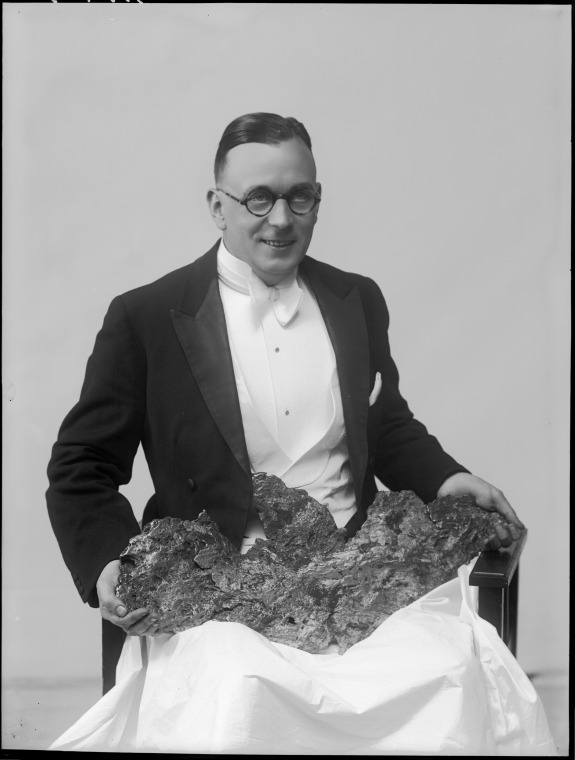
Bertram (Bert) Howell (1893-1961), musician, band-leader and collector, was born on 24 November 1893 at Runcorn, Cheshire, England, son of James Bertram Howell, storekeeper to a general contractor, and his wife Charlotte Helen, née Holness. Educated at Manchester, Bert claimed to have learned to play the violin from the age of 9 at the Royal Manchester College of Music and to have progressed to playing in the Hallé Orchestra. He emigrated to Melbourne before World War I broke out and formed the Society Jazz Band in 1916. His early professional engagements included appearances at the ‘Djin Djin’ tearooms, Collins Street, in 1920 and at private parties. In that year he established the Dominant Music Lending Library at 178 Collins Street. Between engagements at the Victory Picture Theatre, St Kilda, he went abroad in 1922 and 1924 to further his musical studies and collect the latest music.
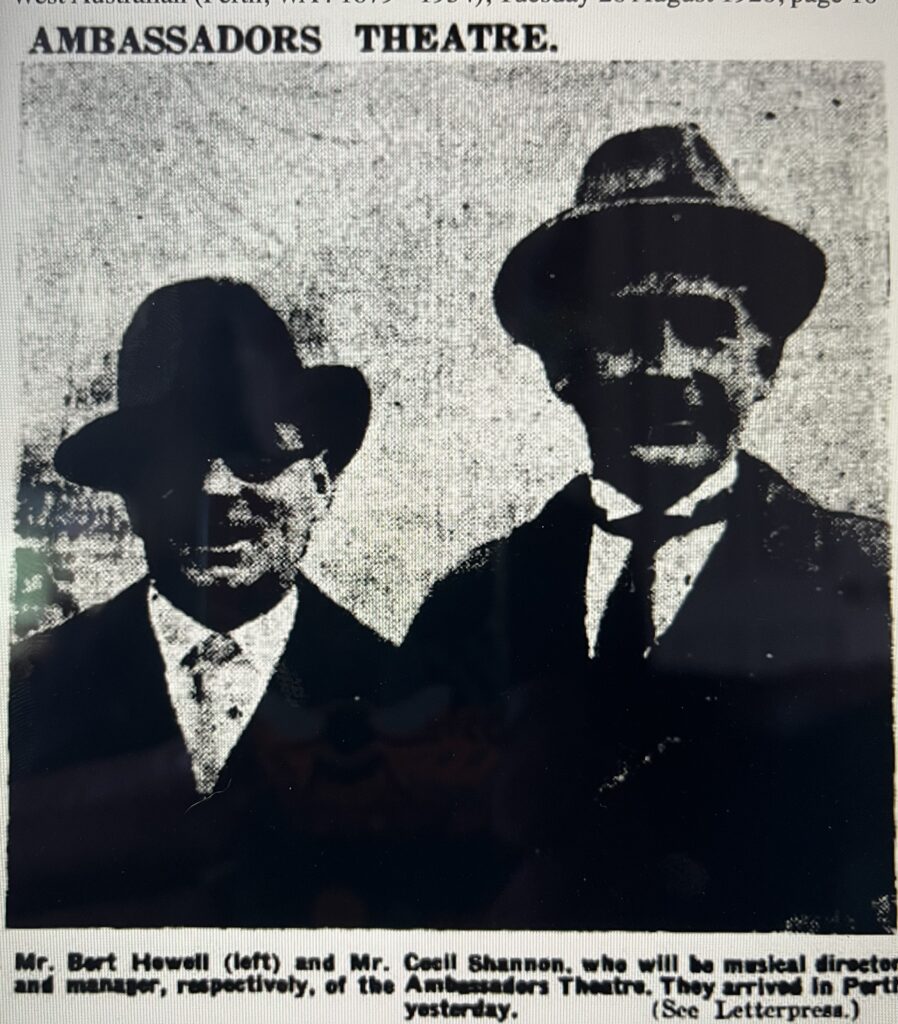
After two phenomenally successful years (from September 1928) at the Ambassadors Theatre, Perth, Howell arrived in Sydney early in 1931 where he took positions in turn at the Capitol and State theatres.
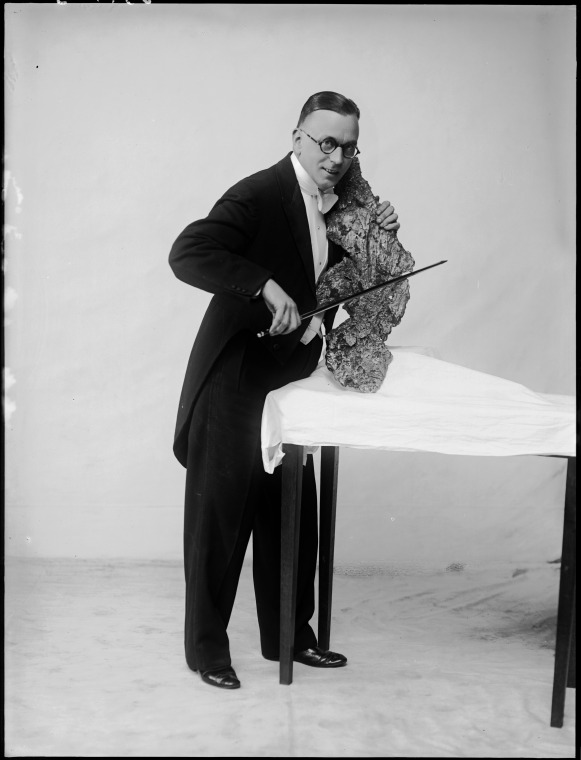
UNION THEATRES’ MUSIC
A New Policy
With a view to increasing interest in the musical side of the entertainment throughout Union Theatres Limited principal theatre, Mr. Stuart F. Doyle, managing director, has just announced details of a policy which will result in an interstate interchange of musical directors. The new scheme will result in Mr. Bert Howell’s temporary departure from Perth, as the altered policy will mean that in future interstate ‘guest’ conductors will frequently take charge of the musical operations in the company’s big theatres in the various capitals. This will mean that a greater variety in musical entertainment will be infused, as the organisation possesses the services of several brilliant musicians, and a suggestion has been made that music-lovers in the different States will appreciate the opportunity of contrasting the styles and personalities of the various directors. After a season at the Capitol in Sydney, followed by ths State Theatre, Melbourne, and possibly the State Theatre, Sydney, Mr. Howell will return to Perth, the various musicai leaders rotating in the meantime. To enable the new scheme to operate, the company has finalised arrangements whereby Mr. Harry Cross will rejoin the organisation. Mr. Cross has had a long and successful experience as conductor at the Haymarket Theatre, Sydney, the Crystal Palace, and other well-known houses of entertainment. Besides being a noted violinist, Mr. Cross has had a long experience as a personality stage band conductor, and has also adjudicated with conspicuous success in various competitions. During Mr. Howell’s absence from Perth, he will leave at the Ambassadors Theatre his enormous library, considered the most complete in Australia, so that the new director will have the benefit of countless numbers to select from. Apart from Mr. Howell’s departure, the personnel of the Ambasasdors orchestra will remain unchanged. Arrangements are already being made for special farewell performances to be given by Mr Ho well during his final week, the dates of which will shortly be announced.
Daily News (Perth, WA : 1882 – 1955), Friday 6 February 1931, page 6
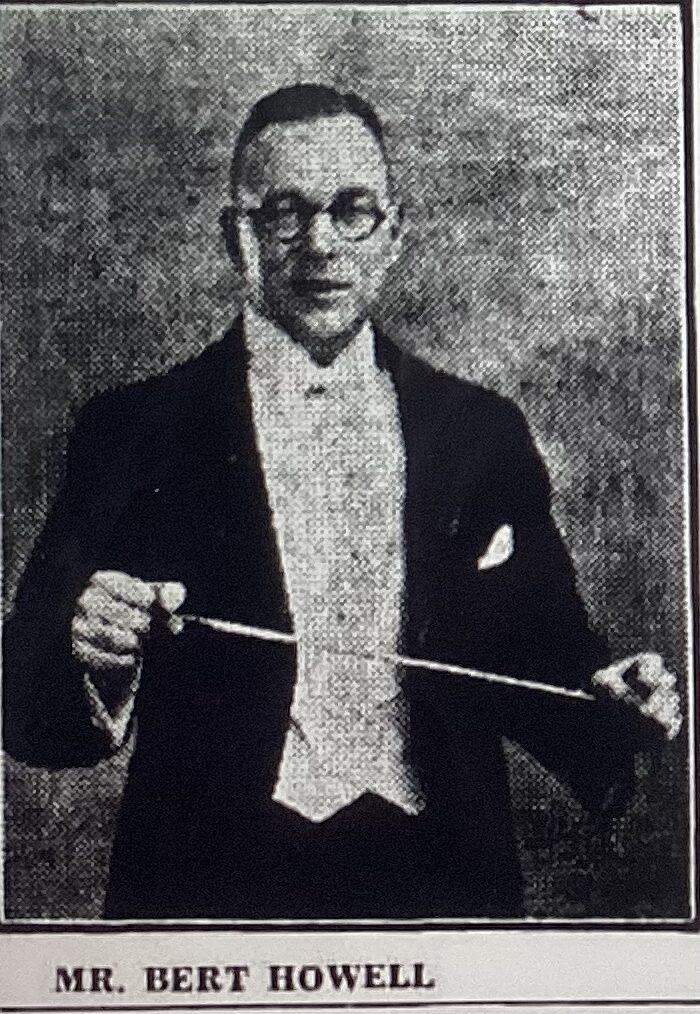
An eighteen-month season followed at the Capitol Picture Theatre, Melbourne, before his world tour in 1933. Visiting Cairo, Vienna, Madrid, Paris, Brussels, Berlin, London, New York and Hollywood, he returned to Melbourne with two trunkloads of the latest orchestral music.
Howell adopted Swing, an aggressive new form of music, when it reached Australia in 1936 and quickly spread through the entertainment industry. His band dominated Melbourne radio. Organized as both a big-time theatre and radio unit, it included the city’s top musicians who could earn over £15 a week. From September 1935 they combined regular appearances at the Capitol with their ‘Shell Show’ on radio 3AW. In March 1938 the band moved to the State Theatre until its contract was ended in February 1939. Lured by Sydney’s night-life, its members decided to relocate there.
By May 1939, less than two months after starting at the Prince Edward Theatre, the band was appearing at Romano‘s Restaurant, Martin Place. The hectic pace continued: a typical day’s schedule included two shows at the Prince Edward between feature films, and nightclub work at Romano’s between 9 p.m. and 2 a.m. from Monday to Saturday. On Wednesdays the ‘Kraft Dilly Revue’ (relayed to twenty-three radio stations throughout Australia from radio 2GB) presented the singer Dorothy ‘Dilly’ Foster with Howell’s band, sponsored by the Kraft Walker Cheese Co. Pty Ltd. At St Peter’s Anglican Church, East Sydney, on 1 June 1940 Howell married Jean Bishop Houghton, an 18-year-old law clerk; they were to remain childless and to be divorced in 1956. His song, Homeward, written with Varney Monk, was previewed in 1944 in the ‘The Anzac Show’ at the Prince Edward. At the end of World War II he terminated his engagement and left for England.
While living at Whitstable, Kent, the Howells established an antiques and fine arts business at Canterbury. He had become interested in the fifteenth-century French lyric poet, François Villon, and collected rare editions of his published works in England. Howell returned to Australia in June 1949, corresponded regularly with English and European antiquarian book-dealers, and travelled overseas to supplement his Villon collection. He died of coronary vascular disease on 10 November 1961 at St Luke’s Hospital, Darlinghurst, and was buried in Randwick cemetery; his Villon collection, personal papers and ephemera were bequeathed to the Public Library of New South Wales.
by Judy Nelson