Person

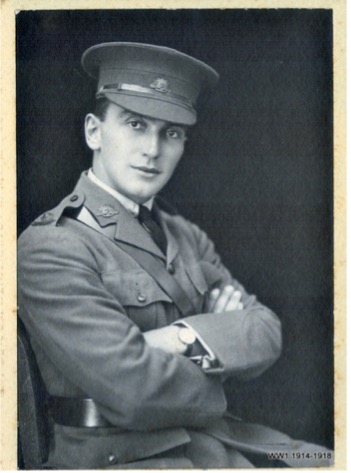
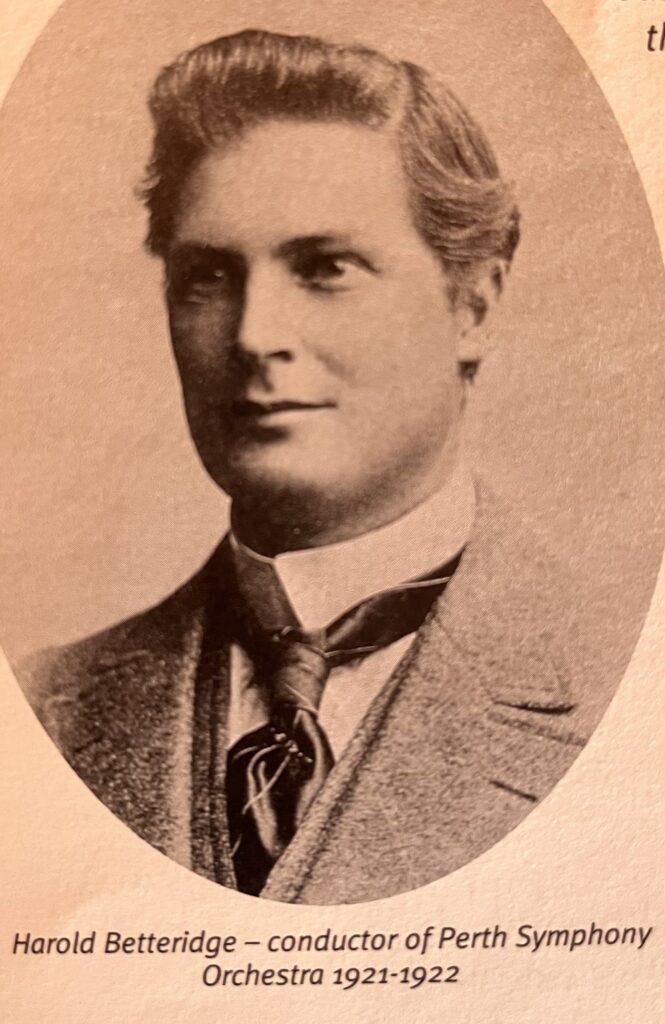
BETTERIDGE, Harold

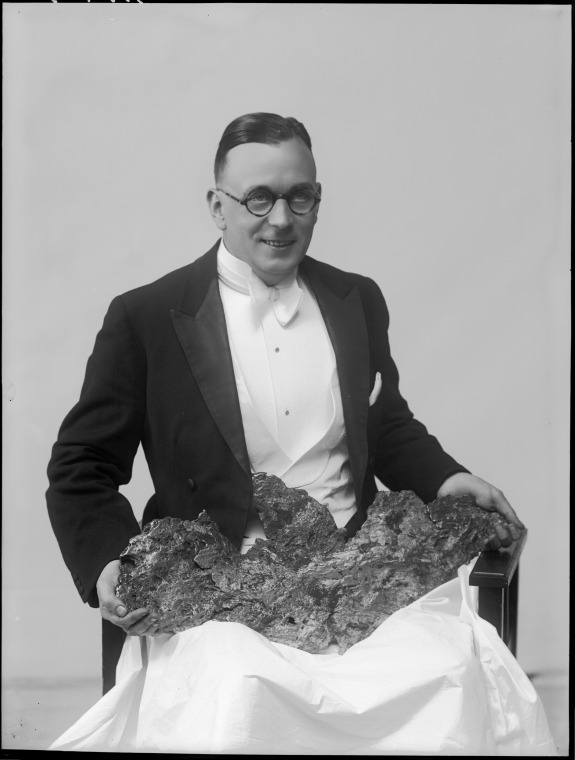
When Harold Betteridge was born on 6 February 1878 in Benalla, Victoria, his father, Henry, was 54 and his mother, Elizabeth, was 33.

His father Henry taught double bass, cello, violin and also worked as a carpenter.  Records in 1896 describe a concert in  Benalla Shire Hall, where Henry played cello and his son Reginald played flute in the orchestra.

Henry moved to Western Australia the same year arriving onboard the “Buninyong” with his wife, daughters and sons Mr H. Betteridge and Mr R. Betteridge from Melbourne.

In 1903, Harold Betteridge was a draper’s assistant living in 19 York Street, Subiaco.


1903

BENEFIT CONCERT.

The Perth Town Hall was filled with an appreciative audience last night, the occasion being a benefit concert to Mr. P. Barraclough, who was injured during the Eight Hours Demonstration on the Association Cricket Ground. The programme, which proved an enjoyable one, was contributed to by the following:-Misses Sadie Harris and J.Tremere Legge, Messrs. F. W. Jacoby, H. Little, Westhoven, Roxy, Fellows, J, Riley and H. Betteridge, the Federal Quartette Party of instrumentalists and the Headquarters Band. The accompaniments were played by Miss Sadie Harris and Mr. E. Ball. The general arrangements, which were under the control of Messrs. J.W. Croft and A. Eagleton, as joint secretaries, were well carried out. It is anticipated that a substantial sum will be netted as the result of the entertainment.

West Australian (Perth, WA : 1879 – 1954), Friday 20 February 1903, page 6


BAND CONCERT. The open-air concert given last night by the Boulder A.W.A. Band, in conjunction with the Perth Federal Band, attracted a large concourse of people to the Association Cricket Ground. The following programme of music was rendered by the combined bands, under the direction of Bandmaster W. M. Partington, of the Boulder:-Cakewalk., “Kansas City” (Pryor): selection, “Bohemian Girl” (Balfe); waltz, “Irene” (S. Raymond); selection, “Mercadante” (Round): descriptive fantasia. “A Soldier’s Life” (Sheriff); cakewalk, “The Brooklyn” (Thurban). An effective arrangement of Sullivan’s song. -“The Lost Chord.” with cornet solo by Mr. H. Betteridge, of Perth Federal Band. 

West Australian (Perth, WA : 1879 – 1954), Wednesday 18 November 1903, page 5


AMUSEMENTS, ETC. BOULDER CITY BAND.

The Boulder City Band gave their concert after their lengthy winter recess on Sunday evening, and those who attended at the Recreation Reserve were treated to a magnificent performance. The concert concluded with the march, “March of the Fearless,” composed by Mr. Betteridge, of Perth, especially for the massed bands at the nest championship contest in October and November.

Evening Star (Boulder, WA : 1898 – 1921), Tuesday 17 September 1907, page 3


1909

Henry Betteridge died in 1909:

The funeral of the late Mr. Henry Betteridge, late of Coghlan-road, Subiaco, took place yesterday (Tuesday) afternoon, in the Anglican portion of the Karrakatta Cemetery, and was well attended. The chief mourners were: Mrs. E. A. Betteridge (widow), Miss Beatrice Betteridge and Mrs. Florence Dungey (daughters), Messrs. Reginald and Harold Betteridge (sons), Mrs. R. Betteridge (daughter-in-law), and Miss P. Dungey. The pall-bearers were Messrs. W. Smith, W. Cuthbert, J. Richards, G. H. Foss, F. Cole, and Mr. Whitney. Mr. R. H. Kell represented professional musicians of Perth, and Mr. W. Hansen represented the orchestra of West’s Pictures. Wreaths and floral tributes were received from many friends. The Rev. L. N. O’Neil officiated at the grave, and the funeral arrangements were carried out by Mr. Donald J. Chipper, of Perth and Fremantle.

West Australian (Perth, WA : 1879 – 1954), Wednesday 18 August 1909, page 9


1910

VIC’S PICTURES, PERTH.

Aided by excellent projection, and the splendid orchestral band under Harold Betteridge, Vic.’s Pictures in the Star Rink continue to hold up their end of the stick. 

Sunday Times (Perth, WA : 1902 – 1955), Sunday 11 December 1910, page 9


1911

PERTH CONCERT BAND.

The Sunday performances of the Perth Concert Band, under the conductorship of Harold Betteridge, are crowding His Majesty’s.

Sunday Times (Perth, WA : 1902 – 1955), Sunday 2 July 1911, page 1


1912

QUEENS HALL

Aided by the magnificent music of Harold Betteridge’s band, whose overture, entr’acte and incidental harmonies are more than worth the admission money.

Sunday Times (Perth, WA : 1902 – 1955), Sunday 27 October 1912, page 16


1913

SUNDAY PICTURES.

The American Picture  Co. will screen its usual picture entertainment at His Majesty’s Theatre tomorrow evening. Mr. Harold Betteridge’s orchestra will supply the incidental music.

Daily News (Perth, WA : 1882 – 1955), Saturday 5 July 1913, page 11


ENTERTAINMENTS. PICTURES AND VAUDEVILLE.

Tonight’s new series of Vic’s Pictures at Queen’s Hall comprises a host of highly-attractive subjects, produced by the leading film makers of the world. A Nordisk film, “A Venomous Bite,” deals with the rivalry of two circus. artists. and incidentally provides many splendid scenes of ring life. Wiffles, the popular French comedian, is shown in the amusing role of one who fears the designs of a band of assassins, and more humour of an excellent order is supplied in the Vitagraph subject, “Binglea at the Cabaret.” and Keystone’s “Hide and Seek.” In the travel and industrial section are “Russian River Scenes” and “Workaday Scenes in the Flowery Land.” The dramatic element is further introduced in “Under the Shadow of the Law” and “The Healer.” An elaborate new musical programme will be submitted this evening by Mr. Harold Betteridge. 

West Australian (Perth, WA : 1879 – 1954), Wednesday 22 October 1913, page 10


1916

He Harold Betteridge married Frances Nichols in 1916 in Perth, Western Australia. They had three children in 10 years.


GRAND THEATRE OPENS TONIGHT.

Punctually at 8 o’clock to-night the new picture palace, the Grand Theatre, will be opened by the Mayor (Mr. F. Rea.) The whole of the gross takings will be handed over to the Wounded Soldiers’ Fund and an additional attraction for the opening night will be the soldiers’ orchestra of 10 performers, in khaki, under the baton of Corporal Brahams. The management announce that owing to the large crowds expected at the official opening, it has been decided not to open the Barrack street entrance. The public, therefore, will not to-night have access to the theatre from that entrance. But on Thursday morning it will be thrown, open, a custom which will he carried out in the future. The opening Metro production will be ‘The Yellow Streak,’ a drama full of sensational incidents, and of absorbing interest, featuring Lionel Barymore, one of America’s greatest actors. Another great attraction for the Grand Theatre is announced, the management having secured the sole rights for the French Government war films, showing excellent pictures of the soldiers in action at the front, and manoeuvres of the Allies’ fleet, together with the war hydroplanes near Salonika. The usual budget of comedy and Topical Gazettes will make up the programme. Prices for admission to the Grand Theatre will be:— Daytime, from 10.30 in the morning till 6.30 at night: Stalls, 3d.; dress circle, and private boxes, 1s. Night Prices: Stalls, 6d.; dress circle and private boxes 1s. For the evening performance the grand orchestra, under the baton of Mr. Harold Betteridge, will officiate. During the afternoon performances, Madame Stancliffe will play all the incidental music for the pictures. On Saturday night next there will be an entire change of programme, and the Metro’s next star production, the ‘High Road’ will be screened. The theatre will be open to-morrow morning at 10.30 a.m., and the performance will start punctually each day at 11 o’clock, and be continued till 11 o’clock at night.

Daily News (Perth, WA : 1882 – 1955), Wednesday 20 September 1916, page 2


1917

GRAND THEATRE.

With the aid of a splendid orchestral band under the conductorship of Harold Betteridge, the Grand Theatre is keeping up its high reputation. 

Sunday Times (Perth, WA : 1902 – 1955), Sunday 28 January 1917, page 9


1921

Mcintosh memorial concert.

A classical concert will be given at Perth Town Hall on Sunday next at 8.45 p.m. by the newly-formed Concert Orchestra on behalf of the Mcintosh memorial Appeal. The orchestra consisting of 25 performers under the conductorship of Mr. Harold Betteridge will render half-a-dozen selections. Mr. Jules Flesfader will, play the cornet solo in the ‘”Lost Chord” selection. Supporting vocal numbers are to be given by Miss Rose Atkinson and Mr. Lionel Carter. Bookings at Nicholson’s.

Australian (Perth, WA : 1917 – 1923), Friday 27 May 1921, page 2


PERTH CONCERT ORCHESTRA

All lovers of music should welcome the advent of the just-organised ‘Perth Concert Orchestra,’ who made their debut to Perth audiences at the Town Hall on Sunday night last. The combination consists of 25 of the State’s chief orchestral musicians, under the baton of Mr Harold Betteridge, with Mr. Lionel Hart as leader. The aim of the musicians is to place a high-class programme before the public weekly, and if the opening concert is a sample, then we have a lot of look forward to. No better programme has ever been presented in Perth, including as it did selections from ‘Chu Chin Chow,’ ‘The Lilac Domino, and from Supe’s works. The strings were particularly good, especially the bass; whilst the reeds were also excellent. The brass side, however, needs strengthening, and was evidently not so in touch with the conductor as the rest of the orchestra. This, however, will disappear when the members have played more together. The vocal items were rendered by Miss Burns and Lionel Carter, so, ’nuff sed. The orchestra make their second appearance Sunday night, when a very fine programme is to be given. The concert starts at 9 pm. prompt, and admission is by silver coin, but the programme demands more than the usual ‘thrummer’ — a lot more. We will certainly say this, that attendance here after church, or if you don’t go to church at all, will do you a lot of good, and will prove an antidote to puritanical ravings. The orchestra deserves success, and this can only be secured by the music-loving portion of the community giving it its whole-hearted support.

Mirror (Perth, WA : 1921 – 1956), Saturday 18 June 1921, page 3


Perth may not boast a State Orchestra such as New South Wales had, but now wants Victoria to take a share in, yet musical lovers of the Swan city are no less fond of good music, not of the jazz variety or of Yankee origin. It is good to know that a concert orchestra of 25 members has been formed under the conductorship of Mr Harold Betteridge, with Mr. Lionel Hart as leader. These members are all in the front row of local professionals, and their opening concert promises great things for the future.

Mirror (Perth, WA : 1921 – 1956), Saturday 25 June 1921, page 1


Perth Symphony Orchestra

SUNDAY NIGHT’S ATTRACTIONS.

Despite counter attractions, the Town Hall was crowded on Sunday night last, when the Perth Symphony Orchestra gave their third concert. The programme was a most excellent one, and included Mr. Harold Betteridge’s setting of ‘Ave Maria,’ in which Miss Violet Peet sung. The composer is to be congratulated on the artistic triumph which this item achieved, and Miss Peet’s singing calls for high eulogy. Tomorrow (Sunday) night the orchestra again appear, and will be assisted by Miss Lilly Crisp and Mr. Lionel Carter. The orchestra’s selections include Selections from ‘Yuillieme Tell.’ Elgar’s ‘Salut d’Armour,’ Schubert’s ‘March Militaire,’ and other items of interest. The hall should again be crowded, and it is well up to the public to support this fine combination, but ‘thrummers’ are no good in the box. Any person who refuses to give up to the full limit does not appreciate good music and should purchase a mouth-organ, Jew’s harp, or penny whistle. There is one matter calling for some alteration, which is the elimination of the white-haired person who persists in parading up and down the isles during the performance carrying a suit case. His performance is certainly not musical, nor does he assist materially.

Mirror (Perth, WA : 1921 – 1956), Saturday 2 July 1921, page 1


PERTH SYMPHONY ORCHESTRA – FURTHER SUCCESSES

Sunday night last found the Town Hall filled with a highly appreciative audience, when the Perth Symphony Orchestra under Mr. Harold Betteridge, assisted by Miss Violet Peet and Mr Lionel Carter presented a programme which was received with great enthusiasm. Tomorrow (Sunday) night, the orchestra again appears, when the programme will include Suppe’s -‘Dance Pique’, Gounod’s ‘Funeral March of a Marionette,’ ‘Marche Triumph’ from Aida, and selections from ‘Steven Adams’ songs. The vocal items will include solos by Messrs. Ben Davis and Lionel Carter, who will also contribute the duets, ‘Watchman, What of the Night?’ and ‘Less Than the Dust.’ Perth is particularly fortunate in having such a splendid weekly musical treat provided them, and the organisation certainly deserves every support, and that not only in the numbers attending, but in the shape of hard cash, without which even musical artists cannot altogether live.

Mirror (Perth, WA : 1921 – 1956), Saturday 16 July 1921, page 4


THEATRE ROYAL.

As usual the music plays a prominent part in the programme, the members of the big First National Orchestra, under Mr. Harold Betteridge, earning a goodly share of the praises heaped on the Royal’s generous entertainment.

Sunday Times (Perth, WA : 1902 – 1955), Sunday 9 October 1921, page 6


PERTH SYMPHONY ORCHESTRA.

Last evening’s concert was perhaps the most successful in every way that has been given by the Perth Symphony Orchestra. The main items of the concert had previously been, performed, but were repeated in response to many requests from the large audiences which attend weekly. The beauty of tone and balance was shown to best effect in a fine rendition of the overture from ‘William Tell’ (Rossini), and the contributions by the orchestra, including ‘Demoiselle Chic’ (Fletcher), ‘Lamp of Love’  (Schwartz), and the selection from Norton’s ‘Chu Chin Chow,’ show a marked improvement in every department of an orchestra which does full credit to the musical ability of its conductor, Mr. Harold Betteridge. A very welcome addition to the programme was the appearance of Mr. A. G. Rutland, ‘celloist of the Melbourne Symphony Orchestra, who played Golterman’s ‘Cantilena’ in most artistic style, for which he was very deservedly encored. Another new, and a certainly very promising, artist was presented to Perth in the person of Mr. Robert Buchanan (tenor), who sang ‘Like to the Damask Rose’ (Elgar), and ‘Where’er You Walk’ (Handel), as an encore number. Perth should hear more of this young singer in the future. Miss Ada Holtfreter also was enthusiastically recalled for her singing of ‘Mifanwy.’

Daily News (Perth, WA : 1882 – 1955), Monday 3 October 1921, page 5


PERTH SYMPHONY ORCHESTRA.

Every seat-in the Perth Town Hall was occupied last night, when the Perth Symphony Orchestra under the baton of Mr. Harold Betteridge presented their weekly concert. In the instrumental numbers the orchestra maintained the high standard they set at the commencement of the series, their contributions being “Fame and Glory” (Matt), the overture from “Barbiere de Seville” (Rossini). incidental music to “Monsieur Beaucaire” (Rosse) and a suite of three dances from “Henry VIII.” (German). The toreador’s song from “Carmen” (Bizet) was rendered in spirited fashion by Mr. Ben Davies, who added “Friend” (Davies) as an encore. Mr. Lionel Carter sang with excellent effect “The Lowestoft Boat” (Elgar), and “‘Time was I Roved the Mountains”, (Lohr). Mr. Carter. and Mr. Davies were recalled for their interpretation of the duet: “Watchman, What of the, Night.” Mr. Sid Clutsom and Mr. O. G. Campbell Egan were the pianists. 

West Australian (Perth, WA : 1879 – 1954), Monday 10 October 1921, page 8


1922

MUSIC AND MOONLIGHT.

Under the baton of the well-known musical Director, Mr. Harold Betteridge, an orchestra of 25 instruments will render selections on Tuesday night next in the Government Gardens. It is hoped that a large number of people will avail themselves of the opportunity to hear some of the work of the best composers played by a talented body of musicians. Support from the public in a generous fashion will go a long way towards keeping in this State the gifted musical people who now reside here. A moonlit garden, fresh with the aroma of beautiful flowers and fanned by the breezes from the Swan should provide ideal relaxation. The orchestra will be supported by leading vocalists.

Sunday Times (Perth, WA : 1902 – 1955), Sunday 15 January 1922, page 12


ORCHESTRAL CONCERT.

Mr. Harold Betteridge‘s orchestra gave another delightful concert in the Government Gardens last evening when a large audience showed its appreciation of the specially selected programme submitted. The Suite Oriental “A Lover in Damascus” was repeated by request and showed the effects of the recent rehearsals. Mendelssohn’s “Spring Song;” and the “Incidental Musie to Monsieur Beaucaire” were treated with delicacy; while Rossini’s Overture “Semiramide” was given with a nice attention to light and shade though the bass was hardly strong enough in the forte passages. The orchestra was assisted by Miss Violet Concanen and Mr. J. F Stephens, both of whom were recalled. There is no doubt that this fine combination is deserving of patronage and a big attendance is expected at the next concert on Friday next.

West Australian (Perth, WA : 1879 – 1954), Wednesday 1 February 1922, page 8


Harold Betteridge left Perth in May 1922.


1923

The Newport Workshops’ brass ; band, under Mr Harold Betteridge, will play in the Botanical Gardens on Sunday afternoon.

Herald (Melbourne, Vic. : 1861 – 1954), Friday 9 March 1923, page 7


1945

Harold Betteridge Dies In Melbourne

Dead in Victoria: Harold Betteridge, remembered in Perth musical circles as bandmaster and composer. He was responsible for many original creations, and was for years in charge of the Perth Concert Band.

Chief triumph of his career came while touring the United States, when John Phillip Sousa, “The March King”, expressed a wish to conduct Betteridge’s band in “Stars and Stripes Forever”, “El Capitan” and other Sousa compositions.

From Sousa this was a rare compliment;

Betteridge was 67 when the call came. Widow, 2 daughters and a son reside at 1 Glendene Ave., Kew.

Sunday Times (Perth, WA : 1902 – 1955), Sunday 22 April 1945, page 15


CONCERT STAR ENGAGED

The engagement of Miss Edna Henderickx, Brisbane violinist, and Mr. Harold

Betteridge viola player, has been announced. Mr. Betteridge is the only son of the late Mr. Harold Betteridge, founder of the first symphony orchestra in Perth, and of Mrs. Betteridge, of Melbourne.

Miss Henderickx, who is well known as an A.B.C. concert artist, is the only daughter of Mr. and Mrs. R. Henderickx, of Kelvin Grove. Both play in the Queensland Symphony Orchestra.

Brisbane Telegraph (Qld. : 1948 – 1955), Tuesday 23 March 1948, page 6


Instruments

Years

Person

BANDY, Peter

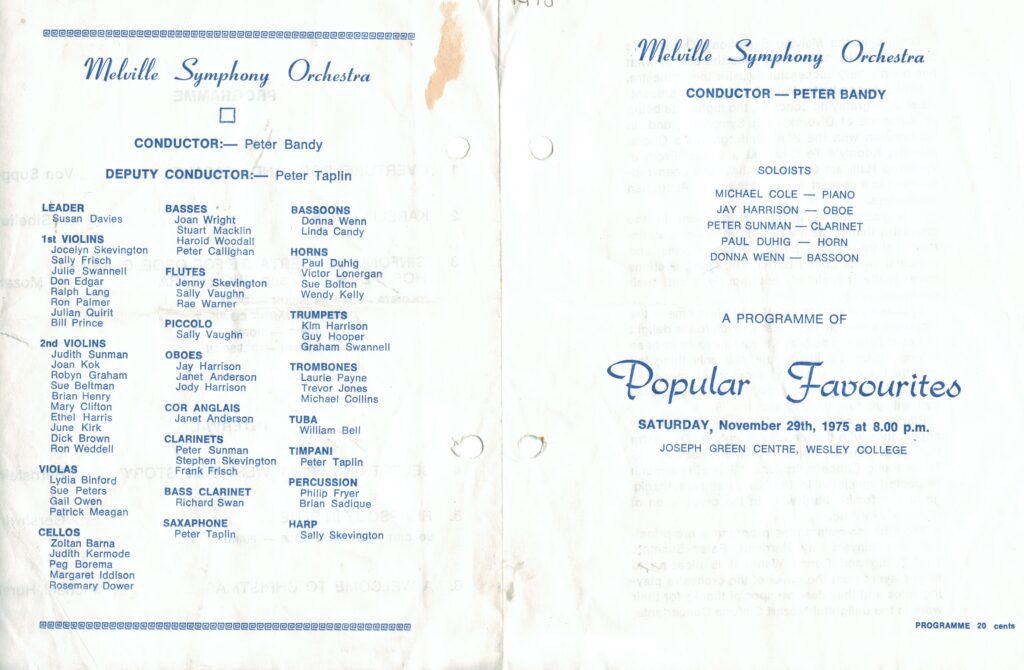
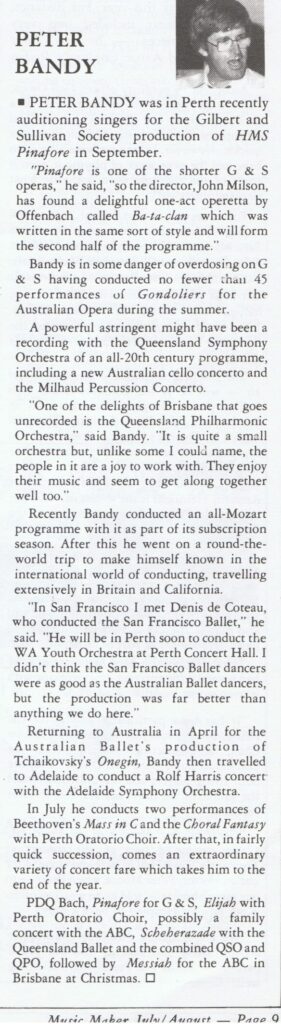
Peter Bandy is associated with conducting both amateur and professional orchestras in Perth.  He was very involved in the Perth May Camps, Melville and Nedlands Amateur Orchestras.  He was a frequent conductor of the West Australian Symphony Orchestra.


Peter Bandy has earned himself a reputation as a conductor of considerable experience with successful performances in diverse genres including choral, orchestral, opera and ballet music. Alongside his performing talents are years spent learning his craft as Music Director, Music Arranger, Chorus Master and Orchestra Manager.

Whilst studying at the University of Western Australia, Peter won a conducting audition with the West Australian Symphony Orchestra. In the same year he formed the Perth Oratorio Choir which performed all the major oratorios with professional orchestras.

A Western Australian Arts Council Grant enabled him to study conducting under Vilem Tausky at the Guildhall School of Music and Drama in London. Since then he has conducted most of the major symphony orchestras in Australia and New Zealand. Peter was Music Director of the Western Australian Gilbert and Sullivan Society; held the position of Chorus Master with Opera Australia and made his conducting debut with the company with The Gondoliers.

Peter’s association with the Australian Ballet as Resident Conductor has included touring with the company to New Zealand and conducting the Auckland Philharmonia in performances of Romeo and Juliet. Peter has also conducted the New Zealand Symphony Orchestra and the Royal New Zealand Ballet, as well as the Christchurch Symphony.

Peter has inspired and taught generations of young musicians in his role as an educator. He was Music Director at St Hilda’s Anglican Girls’ School (Perth) and Ivanhoe Girl’s Grammar School (Melbourne). He also ran conducting classes at the University of Melbourne for Music Education students, and conducting workshops for the Australian Band and Orchestra Directors Association.

Peter has adjudicated Music Festivals and Eisteddfods throughout Australia; in Perth, Bunbury, Canberra, Sydney, Traralgon, Warragul, Bendigo, Mt Gambier, Burnie, Ballarat (South Street) and Hamilton.

As Chief Conductor and Music Director of the Melbourne Youth Orchestra, the repertoire performed included the symphonies of Mahler, Tchaikovsky, Shostakovich and Bruckner, Bartok’s Concerto for Orchestra, Stravinsky’s great ballets, Firebird, Petrushka and the Rite of Spring, and Pictures at an Exhibition by Moussorgsky/Ravel. This music gave a solid and thorough orchestral training to these young players, many of whom have gone on to a career as professional musicians.

Peter has been the Music Director of the Australian Conservatoire of Ballet, was Music Director of the Royal Melbourne Philharmonic Society for three years, and Music Director of Sing Australia Hawthorn for four years.

As Music Director of the Heidelberg Choral Society since 2011 he has presented a vast choral repertoire to sell out audiences.


1975


1978

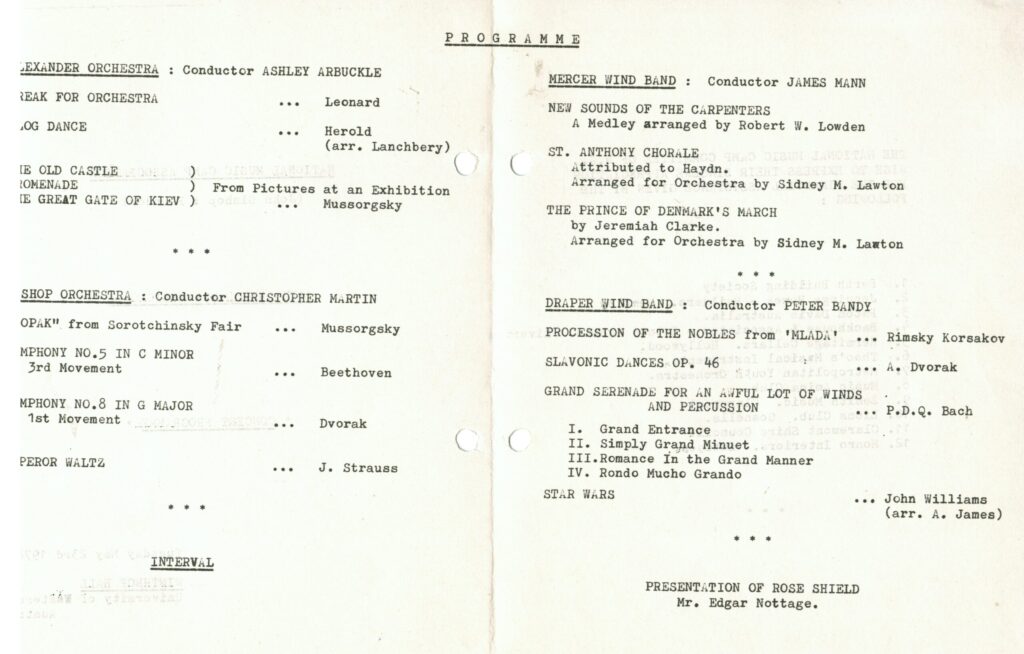
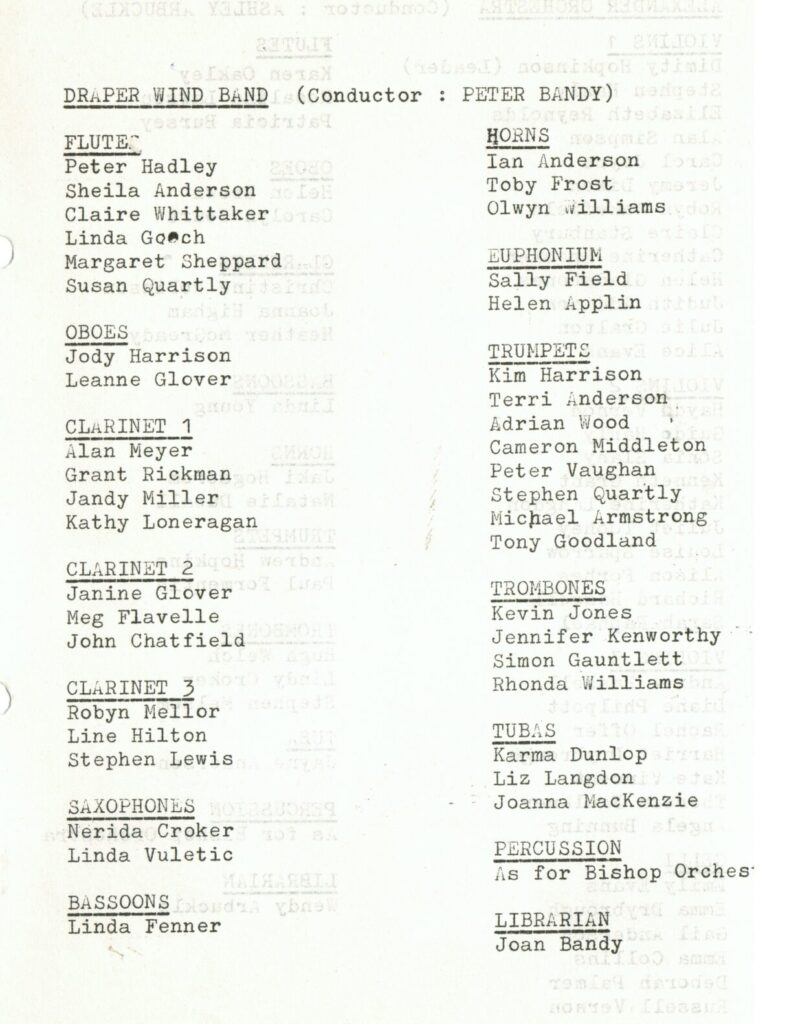
May Music Camp – conductor of the Draper Wind Band

In 1978, Peter also conducted the West Australian Symphony Orchestra’s annual free concert at Fremantle with Julian Quirit, a WASO violinist, as the soloist.
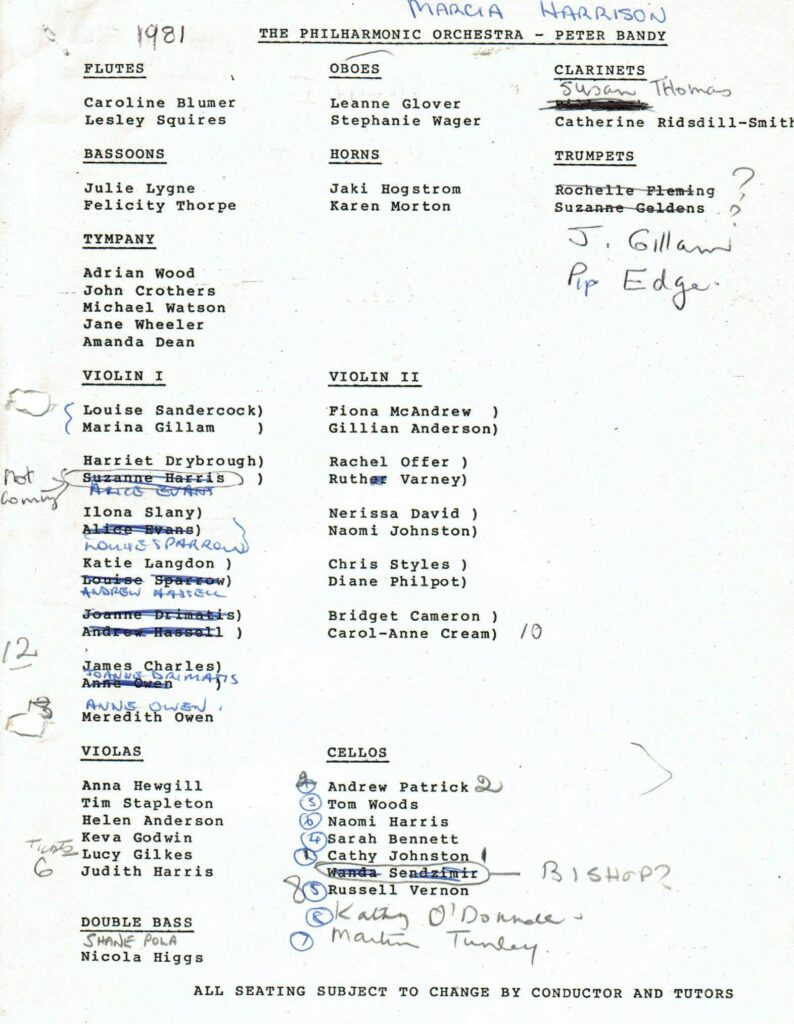
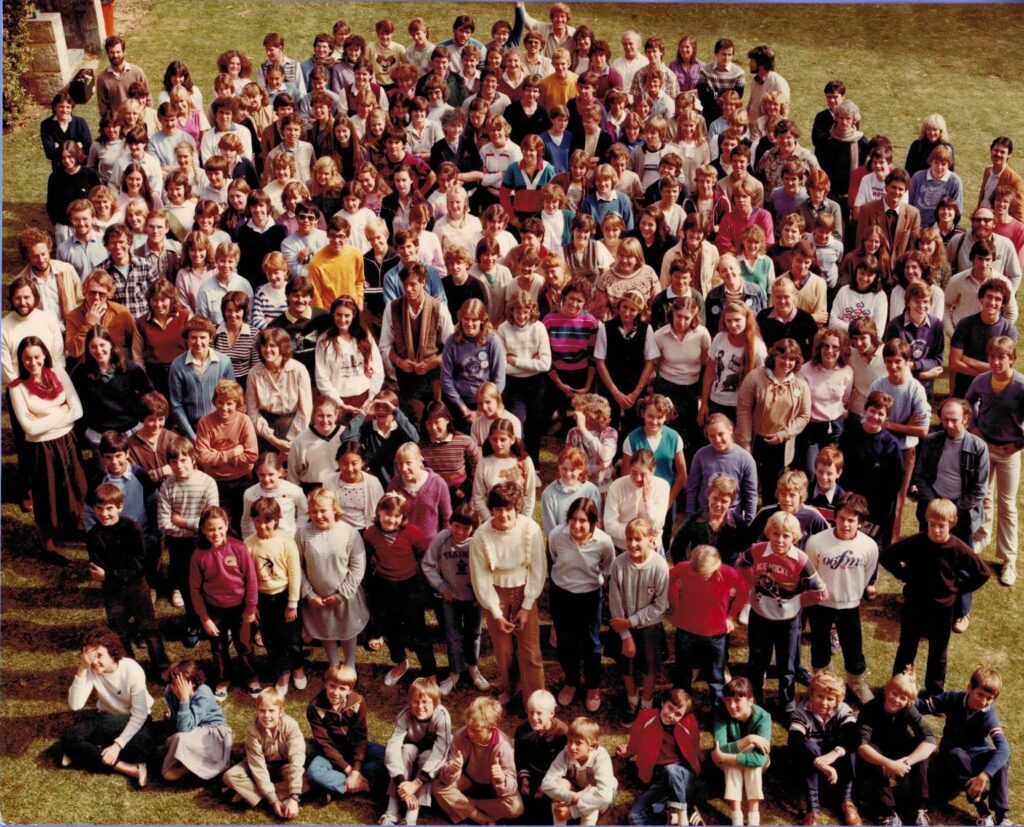
1981

1981 May Music Camp

1983

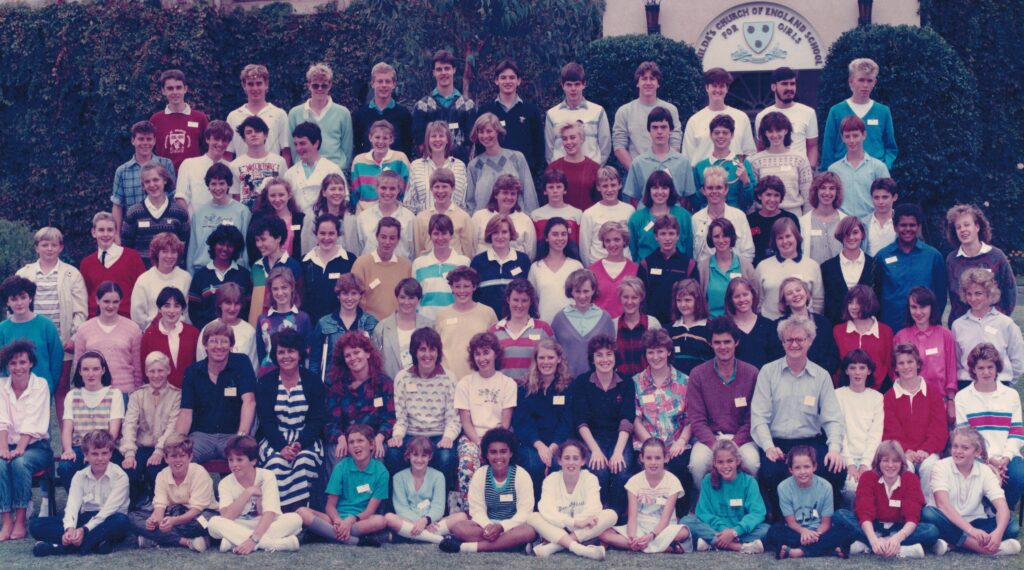
1983 May Camp at Wesley – Peter back centre with his arm up!

1986

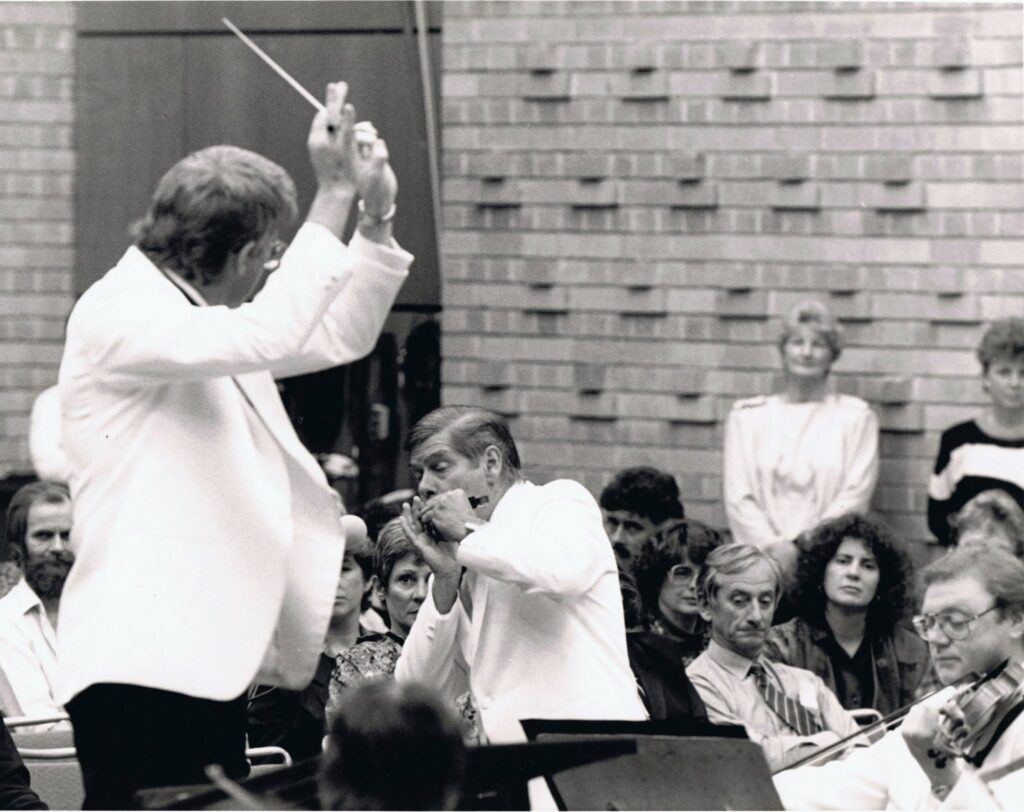
Peter Bandy conducting WASO with soloist Jack Harrison (harmonica) in the ABC Basil Kirke Studio
1986 NMCA May Camp at St Hilda’s A.G.S. – Peter fourth from left second row

1987

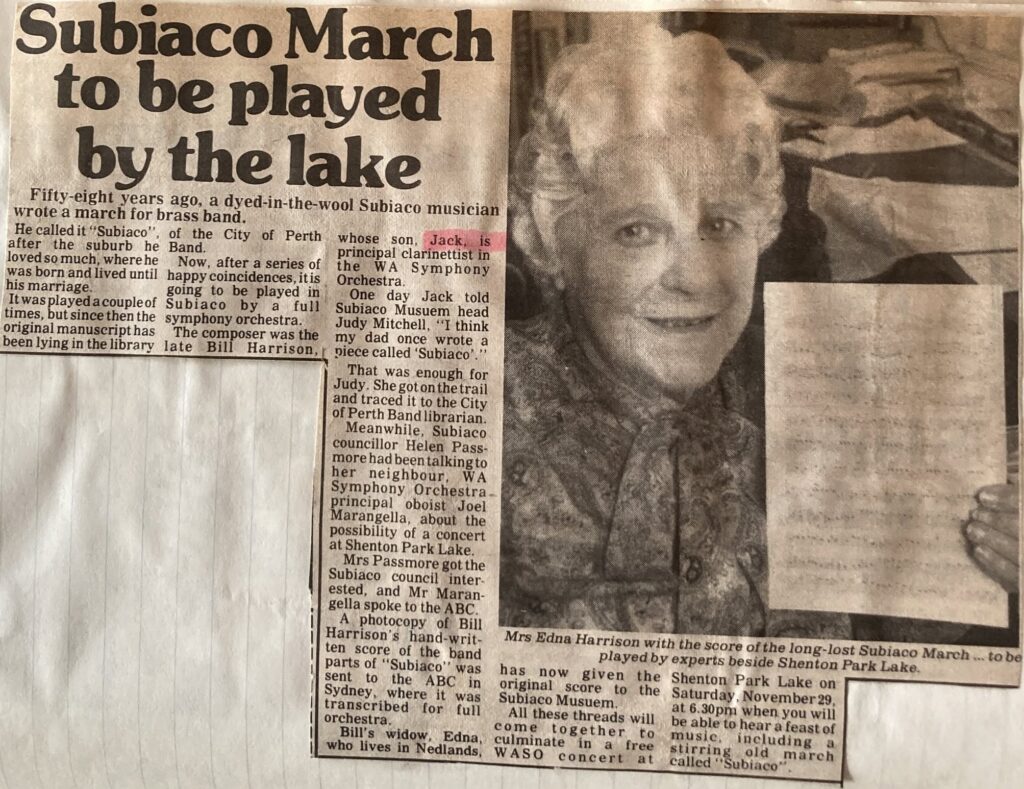
Peter Bandy conducted the WASO performing by Shenton Park Lake with Joel Marangella as soloist.  He was also involved in the first commercial WASO CD recording.

1987 William Harrison’s “Subiaco March” performed at Shenton Park Lake
Harrison, Marcia, West Australian Symphony Orchestra Celebrating 75 Years, (WASO Holdings Pty Ltd, 2003), p. 85.

1989

Peter Bandy conducted the ever popular WASO “Ted Bull’s Christmas Concert”.


1990

On 7th September 1990, Peter Bandy was the Associate Conductor for with WASO for “An Evening of Madness” with Professor Peter Schickele, or P.D.Q. Bach.  He also conducted a “Coffee Concert” with soloist Elisa Wilson.


MEMORIES OF JACK HARRISON:

I had the privilege of conducting Jack many times.  He was so good at everything he did, but also a great person, which of course is the reason you three loved him so much. We all did.  When the Concert Hall opened in 1973, The Adelaide SO came over to join WASO.  It was my first year as Orchestra Manager.  During a rehearsal, the orchestra were playing something I don’t recall, but it had a clarinet solo in it.  Jack delivered it with his usual professional polish. One of the ASO members I vaguely knew, was standing next to me and he said: “we would give anything for your first clarinet”. His musicianship and excellent performing standards were well known throughout Australia.

Not only Australia.  When I went to London in 1979, I stayed for a few months with friends in Chelmsford, Essex. There was an amateur group called the Essex Symphony Orchestra which I joined because they needed a horn player.  The fact that I was accepted probably gives you an idea of the standard of the orchestra! The next concert was featuring the great clarinettist from Sir Thomas Beacham’s day, and, at that time, principal with the LSO, Jack Brymer.  He played the Mozart concerto beautifully, and afterwards I went up to him, and introduced myself as a conducting student at the Guildhall School of Music and Drama in London.  When I told him I was from Perth WA, he asked if I knew his friend Jack Harrison!

Instruments

Years

Person

HOWELL, Bert

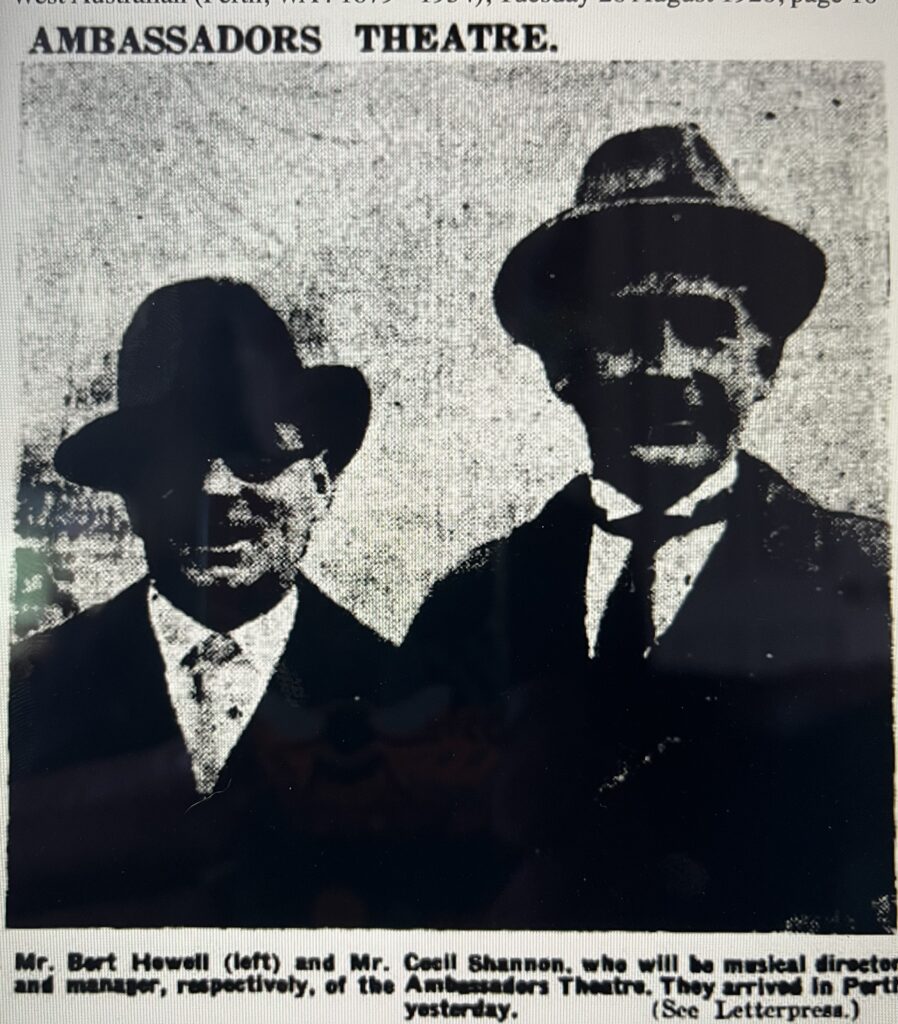
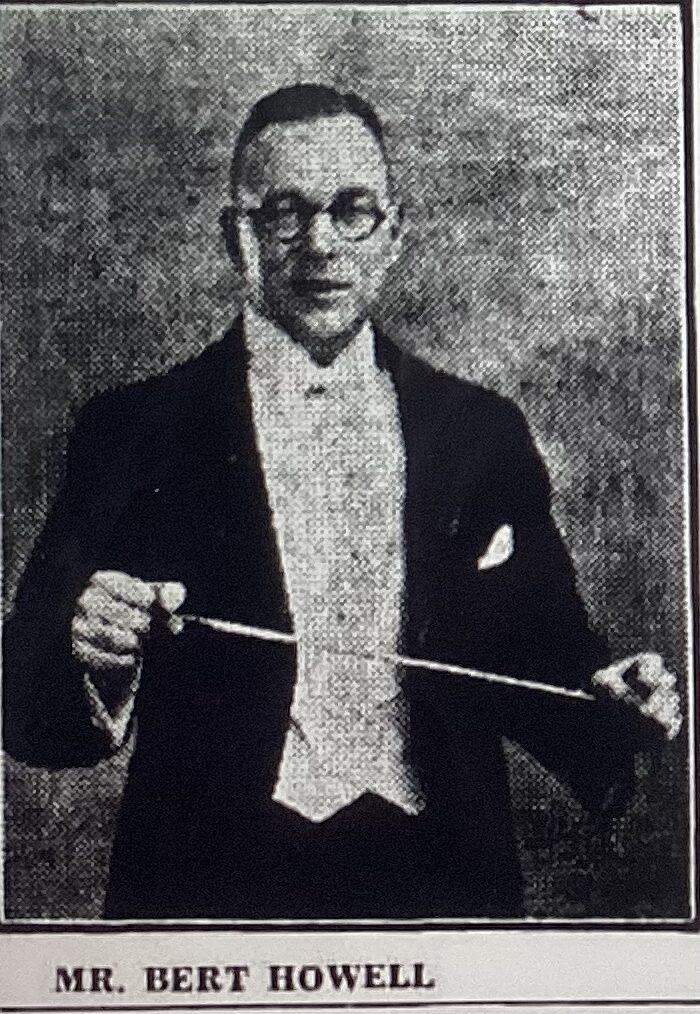
Bertram (Bert) Howell (1893-1961), musician, band-leader and collector, was born on 24 November 1893 at Runcorn, Cheshire, England, son of James Bertram Howell, storekeeper to a general contractor, and his wife Charlotte Helen, née Holness. Educated at Manchester, Bert claimed to have learned to play the violin from the age of 9 at the Royal Manchester College of Music and to have progressed to playing in the Hallé Orchestra. He emigrated to Melbourne before World War I broke out and formed the Society Jazz Band in 1916. His early professional engagements included appearances at the ‘Djin Djin’ tearooms, Collins Street, in 1920 and at private parties. In that year he established the Dominant Music Lending Library at 178 Collins Street. Between engagements at the Victory Picture Theatre, St Kilda, he went abroad in 1922 and 1924 to further his musical studies and collect the latest music.

West Australian (Perth, WA : 1879 – 1954), Tuesday 28 August 1928, page 16

After two phenomenally successful years (from September 1928) at the Ambassadors Theatre, Perth, Howell arrived in Sydney early in 1931 where he took positions in turn at the Capitol and State theatres.


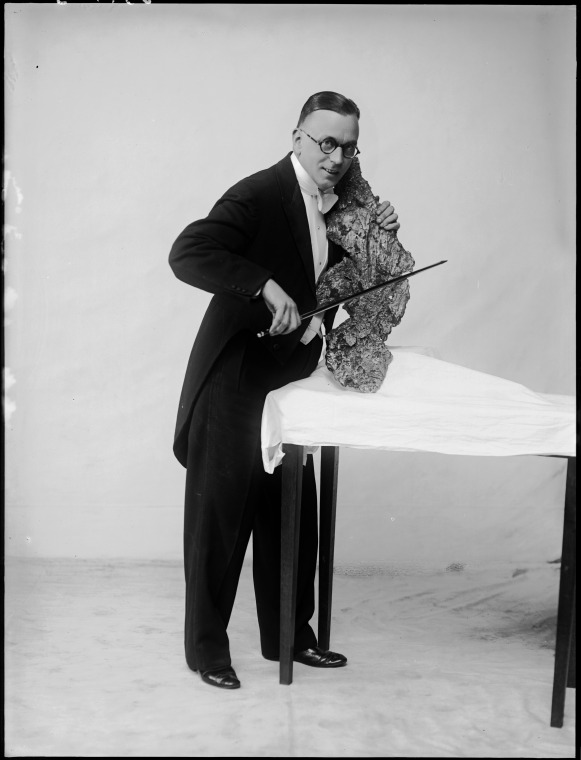
Courtesy State Library of Western Australia slwa_b3473553_2


UNION THEATRES’ MUSIC

A New Policy

With a view to increasing interest in the musical side of the entertainment throughout Union Theatres Limited principal theatre, Mr. Stuart F. Doyle, managing director, has just announced details of a policy which will result in an interstate interchange of musical directors. The new scheme will result in Mr. Bert Howell’s temporary departure from Perth, as the altered policy will mean that in future interstate ‘guest’ conductors will frequently take charge of the musical operations in the company’s big theatres in the various capitals. This will mean that a greater variety in musical entertainment will be infused, as the organisation possesses the services of several brilliant musicians, and a suggestion has been made that music-lovers in the different States will appreciate the opportunity of contrasting the styles and personalities of the various directors. After a season at the Capitol in Sydney, followed by ths State Theatre, Melbourne, and possibly the State Theatre, Sydney, Mr. Howell will return to Perth, the various musicai leaders rotating in the meantime. To enable the new scheme to operate, the company has finalised arrangements whereby Mr. Harry Cross will rejoin the organisation. Mr. Cross has had a long and successful experience as conductor at the Haymarket Theatre, Sydney, the Crystal Palace, and other well-known houses of entertainment. Besides being a noted violinist, Mr. Cross has had a long experience as a personality stage band conductor, and has also adjudicated with conspicuous success in various competitions. During Mr. Howell’s absence from Perth, he will leave at the Ambassadors Theatre his enormous library, considered the most complete in Australia, so that the new director will have the benefit of countless numbers to select from. Apart from Mr. Howell’s departure, the personnel of the Ambasasdors orchestra will remain unchanged. Arrangements are already being made for special farewell performances to be given by Mr Ho well during his final week, the dates of which will shortly be announced.

Daily News (Perth, WA : 1882 – 1955), Friday 6 February 1931, page 6


An eighteen-month season followed at the Capitol Picture Theatre, Melbourne, before his world tour in 1933. Visiting Cairo, Vienna, Madrid, Paris, Brussels, Berlin, London, New York and Hollywood, he returned to Melbourne with two trunkloads of the latest orchestral music.

Howell adopted Swing, an aggressive new form of music, when it reached Australia in 1936 and quickly spread through the entertainment industry. His band dominated Melbourne radio. Organized as both a big-time theatre and radio unit, it included the city’s top musicians who could earn over £15 a week. From September 1935 they combined regular appearances at the Capitol with their ‘Shell Show’ on radio 3AW. In March 1938 the band moved to the State Theatre until its contract was ended in February 1939. Lured by Sydney’s night-life, its members decided to relocate there.

By May 1939, less than two months after starting at the Prince Edward Theatre, the band was appearing at Romano‘s Restaurant, Martin Place. The hectic pace continued: a typical day’s schedule included two shows at the Prince Edward between feature films, and nightclub work at Romano’s between 9 p.m. and 2 a.m. from Monday to Saturday. On Wednesdays the ‘Kraft Dilly Revue’ (relayed to twenty-three radio stations throughout Australia from radio 2GB) presented the singer Dorothy ‘Dilly’ Foster with Howell’s band, sponsored by the Kraft Walker Cheese Co. Pty Ltd. At St Peter’s Anglican Church, East Sydney, on 1 June 1940 Howell married Jean Bishop Houghton, an 18-year-old law clerk; they were to remain childless and to be divorced in 1956. His song, Homeward, written with Varney Monk, was previewed in 1944 in the ‘The Anzac Show’ at the Prince Edward. At the end of World War II he terminated his engagement and left for England.

While living at Whitstable, Kent, the Howells established an antiques and fine arts business at Canterbury. He had become interested in the fifteenth-century French lyric poet, François Villon, and collected rare editions of his published works in England. Howell returned to Australia in June 1949, corresponded regularly with English and European antiquarian book-dealers, and travelled overseas to supplement his Villon collection. He died of coronary vascular disease on 10 November 1961 at St Luke’s Hospital, Darlinghurst, and was buried in Randwick cemetery; his Villon collection, personal papers and ephemera were bequeathed to the Public Library of New South Wales.

Bertram (Bert) Howell (1893–1961)

by Judy Nelson

https://adb.anu.edu.au/biography/howell-bertram-bert-10557

Instruments

Years

Person

STENGÅRDS, Warwick


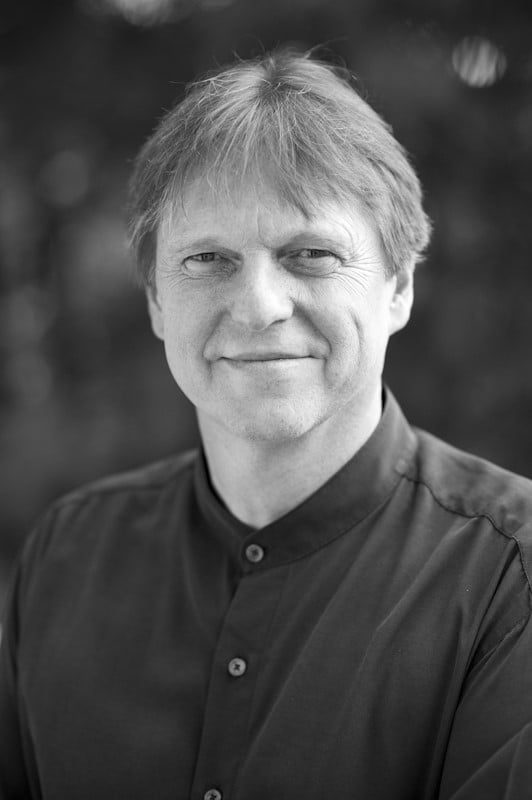
Following a four-year engagement as Assistent Generalmusikdirektor at the Volksoper Wien and a seven-year tenure as Erster Kapellmeister at the Luzerner Theater, Warwick Stengårds is an Australian/Swedish freelance conductor based in Australia.   

 In addition to an extensive symphonic canon, Stengårds has a music-theatre repertoire of over 100 works performing with companies such as Vienna State Opera, Volksoper Wien, Folkoperan Stockholm, Opera Australia, Victoria State Opera, Chamber Made Opera and West Australian Opera where, in 1991, he was appointed Music Director.  

 Operatic highlights include the world premieres of Naske’s Die Rote Zora, Das Städtchen Drumherum, Enakos, Koehne’s Love Burns, Tahourdin’s Heloise and Abelard, Ingham’s Transfigured Night, Koukias’ Mikrovian and Australian premieres of Reimann’s Die Gespenstersonate, Turnage’s Greek, Williamson’s Our Man in Havana, Swiss premieres of Greek, Kraus’ Soliman II and Joplin’s Treemonisha  

 Stengårds also has wide experience with choral groups. In addition to a four-year term as Director of Queen’s College Chapel Choir, he was Music Director of the Royal Melbourne Philharmonic Choir for four years followed by a three-year appointment with the University of Western Australia Choral Society. He has conducted the West Australian and Tasmanian Symphony Choruses, the undergraduate choirs at the Universities of Melbourne, Monash, Macquarie and Western Australia, the Ashton Smith Singers, the Newcastle University Choir, the Willoughby Symphony Choir and Harmonia Sacra. 

 In Europe, aside from the internationally acclaimed Johann Strauss Capelle and Schönbrunner Schlossorchester where he was appointed Chefdirigent in 2004, Stengårds has conducted the Ulster Orchestra in a series of concerts and recordings for the British Broadcasting Corporation, the SL Orkester, the Uppsala Kammarorkester, Klangforum Wien, MUSIKFABRIK (Koeln), the Wroclaw Philharmonic, the Rundfunk Sinfonie-Orchester Saarbrücken (featuring soloist Andreas Scholl), DalaSinfoniettan, the Lucerne Symphony Orchestra, the European Doctors Orchestra and the Nürnberger Symphoniker. 

 Recent projects included: 

 Tyranny of Distance with the Melbourne Symphony Orchestra, Einstein Cantata with SonicFiction and concerts with the Luxemburg Philharmonie, Purcell’s Fairy Queen in South Africa for Cape Festival, Naske’s Das Städtchen Drumherum at the Vienna State Opera, Die Csardasfürstin in Leipzig, Die Fledermaus in Lüneburg, Madama Butterfly, Reimann’s Die Gespenstersonate for Opera Australia, Alcina for Gertrude Opera, the world premiere of Naske’s Enakos at the Vienna State Opera, Lost Operas of Oz for SOSA and concerts with the Australian Youth Orchestra and VCASS.  

 Rembrandt’s Wife for Opera Australia, and concerts with Klangforum Wien, MUSIKFABRIK, the Melbourne Youth Orchestra and the Malta Philharmonic are among future projects.  

 June 2022 


Warwick had the excitement of conducting Jack Harrison’s last pit season in His Majesty’s Theatre playing bass clarinet in “Madama Butterfly”.  He remembers his woodwind colleagues counting down the sleeps for him.

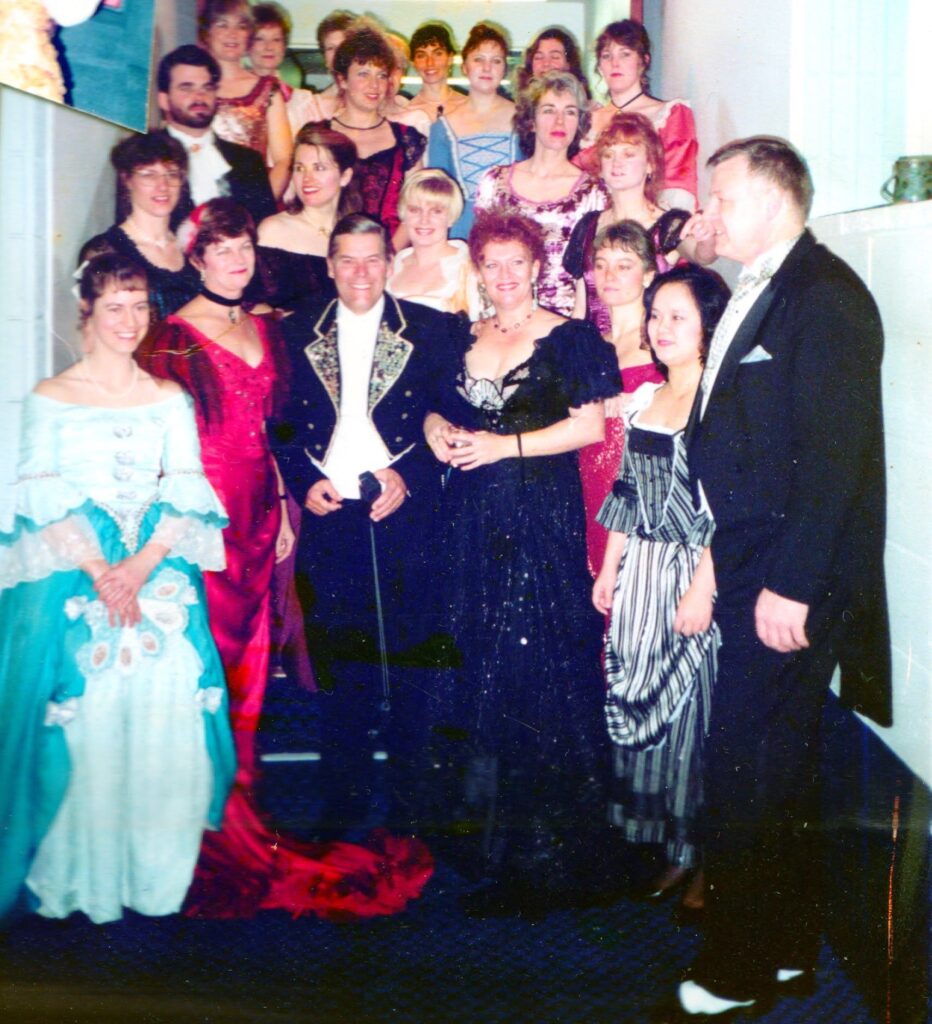
Warwick conducted the Pops concert “Very Viennese” in July 1992 for which the orchestra members were invited to borrow a costume from the W.A. Opera Company wardrobe.

WASO Viennese Concert

Instruments

Years

Person

HOPKINS, John

John Raymond Hopkins AM OBE (1927–2013) was a prominent British-born Australian conductor, educator, and music administrator.

As the head of music for the Australian Broadcasting Commission, from 1963 – 1973,  Hopkins oversaw the national network of ABC symphony orchestras—which included WASO at the time. During this decade, he drove major developments in Australian orchestral programming and championed local composers.

Hopkins founded the New Zealand National Youth Orchestra, co-founded the Australian Youth Orchestra and launched the Darwin Symphony Orchestra.

A notable concert with the West Australian Symphony Orchestra conducted by John Hopkins occurred on 11th September 1982 to commemorate the centenary of the birth of Percy Grainger.

Hopkins joined forces with Graham Ashton in April 1998 to perform Peter Sculthorpe’s Mangrove as part of the “Arts on the Edge” conference held at the WA Academy of Performing Arts.


One of Australia’s most esteemed conductors and administrators, British-born John Hopkins OBE AM (19 July 1927 – 30 September 2013) trained as a cellist with Haydn Rogerson at the Royal Manchester College of Music, then studied conducting with Joseph Lewis at the Guildhall School, London, and with Carlo Zecchi at the Mozarteum in Salzburg. He became assistant conductor of the BBC Scottish Orchestra at a young age in 1949, then conductor of the BBC Northern Orchestra in 1952.

Hopkins moved to New Zealand in 1957 where he lead the National Orchestra of New Zealand (later NZSO) as well as the New Zealand Opera Company, and founded the New Zealand National Youth Orchestra.

In 1963 he moved to Australia where he soon became recognised as an innovator. As Federal Director of Music for the ABC – a leadership position responsible for the activities of all the then ABC orchestras – he oversaw the most vibrant and prolific period in terms of performances of Australian music new and old. Hopkins initiated a concert series featuring avant-garde works by international composers as well as actively championing the work of Australian artists Peter Sculthorpe, Nigel Butterley and Richard Meale. He held the post until 1973.

Hopkins conducted the Melbourne and Sydney Symphony Orchestras, and completed numerous overseas tours to conduct orchestras from Belgium, Holland, Sweden, Yugoslavia, Czechoslovakia, the USSR, Canada, the USA, South Africa and Japan. Other career highs included becoming the founding Dean of the College of Music at the Victorian College of the Arts, and enjoying a six-year tenure as Director of Sydney Conservatorium of Music. John Hopkins was Convenor of Conducting and an Honorary Professorial Fellow in the School of Music at the University of Melbourne. He was awarded the APRA/AMC Award for Distinguished Services to Australian Music in 2011.

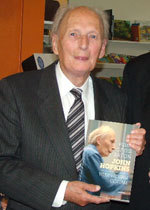
Hopkins published his memoirs, The point of the baton (written in collaboration with William Cottam), in 2009.

https://www.australianmusiccentre.com.au/artist/hopkins-john


https://www.abc.net.au/news/2013-10-01/classical-music-conductor-john-hopkins-dies/4991984

Instruments

Years

Person

YOUNG, Simone

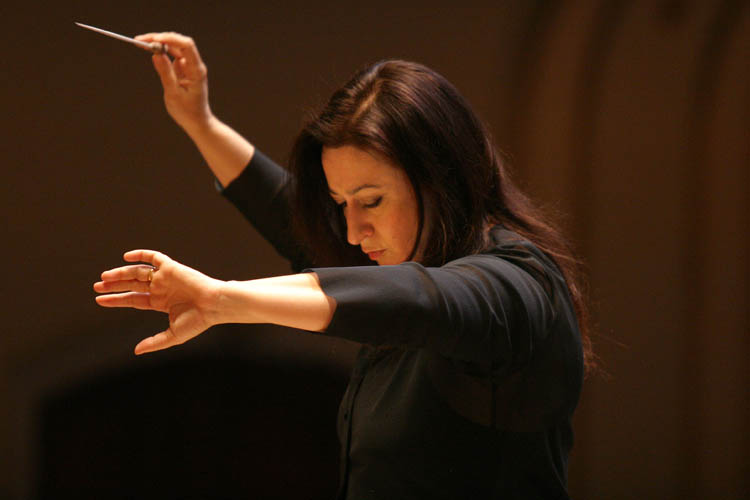
Simone Young first conducted the West Australian Symphony Orchestra in 1997 performing Haydn’s Symphony No 99 and Symphony No. 9 by Bruckner.  The following year she conducted Bartók’s Concerto for Orchestra and Mahler 7.

In 2017, Simone Young conducted a concert that featured Haydn’s Symphony No. 99, Brahms, and the world premiere of Australian composer Andrew Schultz’s Maali with soloists Adam Mikulicz (bassoon), Peter Facer (oboe) , David Evans (horn) and Allan Meyer (clarinet).

Music: Simone Young: 20 Years with WASO


The Australian conductor Simone Young is widely regarded as one of the leading conductors of our time. Since 2022, she has served as Chief Conductor of the Sydney Symphony Orchestra, where she is leading, among other projects, a concert performance cycle of Wagner’s Der Ring des Nibelungen.

In the 2026/27 season, she returns to the Opéra national de Paris to conduct Katja Kabanova. At the Staatsoper Unter den Linden in Berlin, she conducts Nabucco, while at the Vienna State Opera she leads performances of Lulu and Parsifal. In the summer of 2027, she returns to the Bayreuth Festival to conduct Die Meistersinger von Nürnberg.

Simone Young also continues to make a major impact on the international concert stage and appears with the RAI National Symphony Orchestra, Deutsches Symphonie-Orchester Berlin, Orchestre National de Lyon, Bavarian Radio Symphony Orchestra, Philharmonia Orchestra, BBC Philharmonic, Oslo Philharmonic, Filarmonica della Scala, and the Orchestre National de France.
From 2005 to 2015, Simone Young served as Artistic Director of the Hamburg State Opera and General Music Director of the Hamburg Philharmonic State Orchestra. In this dual role, she oversaw an exceptionally broad repertoire, ranging from Mozart, Verdi, Puccini, Wagner and Strauss to Hindemith, Britten and Henze, while also presenting numerous world and national premieres. Prior to this, she was Chief Conductor of the Bergen Philharmonic Orchestra from 1998 to 2002, and Artistic Director of Opera Australia in Sydney and Melbourne from 2001 to 2003.

Early in her career, Simone Young established herself internationally as one of the foremost interpreters of the works of Richard Wagner and Richard Strauss. She has conducted several complete cycles of Wagner’s Der Ring des Nibelungen at the Vienna State Opera, the Staatsoper Unter den Linden, and the Bayreuth Festival, as well as in a new production at the Hamburg State Opera, and most recently at Teatro alla Scala during the 2025/26 season.

Guest engagements have taken her to many of the world’s leading opera houses, including the Vienna State Opera, Opéra national de Paris, the Royal Opera House Covent Garden in London, the Metropolitan Opera in New York, the Bavarian State Opera, the Semperoper Dresden, the Zurich Opera House, and Teatro alla Scala.

On the concert platform, Simone Young has long been one of the world’s most sought-after conductors. She regularly appears with leading orchestras including the Vienna Philharmonic, Berlin Philharmonic, Chicago Symphony Orchestra, New York Philharmonic, Los Angeles Philharmonic, Bavarian Radio Symphony Orchestra, Staatskapelle Berlin, London Philharmonic Orchestra, Philharmonia Orchestra, San Francisco Symphony, Dallas Symphony Orchestra, National Symphony Orchestra (Washington, D.C.), Munich Philharmonic, Orchestre de Paris, Orchestre National de France, Orchestre Philharmonique de Radio France, Filarmonica della Scala, BBC Symphony Orchestra, Royal Stockholm Philharmonic Orchestra, Oslo Philharmonic, as well as the leading orchestras of Australia.

https://www.simoneyoung.com/english/biography/

Instruments

Years

Person

BAMERT, Matthias

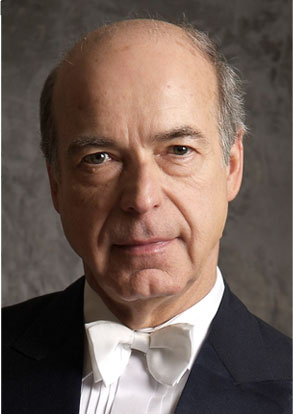
Matthias Bamert was the Chief Conductor of the West Australian Symphony Orchestra from 2003 until 2006.

Bamert took over as chief conductor in 2003 (with his inaugural gala featuring Mahler’s Resurrection Symphony for the orchestra’s 75th anniversary). Although his initial contract was scheduled through 2007, WASO terminated his contract 18 months early in May 2006 following a challenging tour of China and artistic/administrative friction.


The Swiss conductor, Matthias Bamert, studied music in his native Switzerland, as well as in Darmstadt and Paris, falling in with the likes of Pierre Boulez and Stockhausen; these associations can be detected in his own compositions from the 1970s. He spent from 1965 to 1969 as principal oboist with the Mozarteum Orchestra Salzburg, but then switched to conducting.

Matthias Bamert’s conducting career began in North America as an apprentice to George Szell and later as Assistant Conductor to Leopold Stokowski at the American Symphony, and Resident Conductor of the Cleveland Orchestra under Lorin Maazel. This legacy lives on in his hugely popular recordings for Chandos with the BBC Philharmonic of Stokowski’s arrangements of Bach, Wagner and Mussorgsky. He was music director of the Swiss Radio Orchestra from 1977 to 1983, then began making a wider reputation across Europe.

He was Principal Guest Conductor of the New Zealand Symphony Orchestra from 2000 to 2005, Deputy Guest Conductor of the Royal Philharmonic Orchestra from 2003 to 2008 and Principal Conductor of the Western Australian Symphony Orchestra from 2003 to 2007. From 2005 to 2008 he was Principal Conductor of the Malaysian Philharmonic Orchestra; from 2017 to 2022 he was Principal Guest Conductor of the Daejeon Philharmonic Orchestra in Korea; and from 2018 to March 2024 he was Chief Conductor of the Sapporo Symphony Orchestra.

Principal Guest Conductor of the Scottish National Orchestra and Director of the Glasgow contemporary music festival Musica Nova from 1985 to 1990, Matthias Bamert became known for his innovative programming and has conducted the world premieres of works by many composers such as Takemitsu, Casken, Macmillan and Rihm. His gift for imaginative programming came to the fore during his tenure as Director of the Lucerne Festival from 1992 to 1998, when he was also responsible for the opening of the KKL Luzern, started a Easter Festival and a piano festival.

Music Director of the London Mozart Players from 1993 to 2000, Matthias Bamert has masterminded a hugely successful series of recordings of works by “Contemporaries of Mozart” which has already exceeded 75 symphonies.

He has made numerous guest appearances with orchestras in Europe, the USA and Asia, including the Cleveland Orchestra, Chicago Symphony Orchestra, Los Angeles Philharmonic, Pittsburgh Symphony, Orchestre symphonique de Montreal, Wiener Symphoniker, Salzburg Mozarteum Orchestra, Berliner Symphoniker, MDR Sinfonieorchester Leipzig, Orchestre de Paris, Helsinki Philharmonic, Residentie Orkest Den Haag, Orquesta Nacional de Espana, Saint Petersburg Philharmonic Orchestra, BBC Symphony Orchestra, London Philharmonic, City of Birmingham Symphony Orchestra, BBC Philharmonic, Sydney Symphony, NHK Symphony Orchestra, Hiroshima Symphony Orchestra and KBS Symphony Orchestra, amongst others.

Although Matthias Bamert has a solid reputation as a conductor of the standard repertory, he is best known for his work on behalf of new music, obscure 18th century music, and neglected music from all eras. He is known to be a quick study, able to master new scores in very little time, and bring off highly effective premieres in concert and on CD. A prolific recording artist, Matthias Bamert has made over 80 CDs, many of which have won international prizes. His output includes 24 CDs of music by Mozart’s contemporaries with the London Mozart Players, the complete symphonies of Parry and five CDs of works by Frank Martin with the London Philharmonic Orchestra, the symphonies of Roberto Gerhard with the BBC Symphony Orchestra, the Dutch repertoire with the Residentie Orkest and the Stokowski transcriptions as well as works by Korngold and Dohnanyi with the BBC Philharmonic Orchestra.

https://www.matthias-bamert.com/Profile.html


Instruments

Years

Person

MESTER, Jorge

Jorge Mester was Chief Conductor of the West Australian Symphony Orchestra from 1991 to 1993.  He was married to mezzo-soprano Kimball Wheeler who appeared with the orchestra as soloist singing Mozart and Richard Strauss.

Mester colour coded his scores which required the librarian to photocopy and bind each one he required.


The American conductor Jorge Mester was born in Mexico City in 1935 to parents who had emigrated from Hungary. He studied conducting with Jean Morel at The Juilliard School in New York, also working with Leonard Bernstein at the Berkshire Music Center, and with Albert Wolff.

In 1955, he made his debut conducting the National Symphony Orchestra of Mexico. His opera debut was with Salome in 1960 at the Spoleto Festival in Italy. Since then he has conducted many of the world’s leading ensembles, including the Boston Symphony, the Detroit Symphony, and the Royal Philharmonic orchestras, and conducted the premieres of more than 75 works. He was music director of the Louisville Orchestra, noted for its advocacy of new and neglected music, from 1967 to 1979 and again from 2006-2012. With this orchestra Mester made more than seventy-one recordings of works by such composers as Bruch, Cowell, Crumb, Dallapiccola, Ginastera, Granados, Koechlin, Penderecki, Petrassi, Schuller, and Shostakovich.

From 1969 to 1990, he was music director of the Aspen Festival and later became its conductor laureate. Mester was appointed music director of the Pasadena Symphony Orchestra in 1983, and in 1998 he added to that post the music directorship of the Mexico City Philharmonic Orchestra.

A noted teacher, he was on the faculty of The Juilliard School for most of the period between 1958 and 1988. His teaching influence extends to several generations of conductors, including James Conlon, Dennis Russell Davies, Andreas Delfs, JoAnn Falletta, and John Nelson, and as mentor to highly-acclaimed artists such as Nadja Salerno-Sonnenberg, Midori, Renee Fleming, Cho-Liang Lin, and Robert McDuffie.

https://www.milkenarchive.org/artists/view/jorge-mester

Students

Instruments

Years

Person

HANDLEY, Vernon

Vernon Handley was the Chief Conductor of the West Australian Symphony Orchestra from 1994 until 1997.


Vernon Handley Biography by Bruce Eder

One of England’s busiest and most recorded conductors of the late 20th century, Vernon Handley emerged in the 1970s as the successor to Sir Adrian Boult and Sir John Barbirolli as the leading exponent of English music. Like Boult before him, he made a career specialty out of performing and recording symphonic music from England, some of it well-known and much of it overlooked by previous generations of conductors and audiences.

Vernon George Handley was educated at Balliol College, Oxford, and the Guildhall School of Music. His earliest engagements as conductor were with the Oxford University Musical Club and Union, the Tonbridge Philharmonic Society, and the orchestra of the Hatfield School of Music and Drama. He became a professor of orchestra and conducting at the Royal College of Music during 1966, a post he held for six years. During the 1960s and 1970s, Handley was a frequent guest conductor with the Bournemouth Symphony Orchestra, the City of Birmingham Symphony Orchestra, the Royal Philharmonic, the BBC Welsh Orchestra and the BBC Northern Symphony, the London Philharmonic, and the Philharmonia Orchestra. He was also frequently seen as a guest conductor on tour in various European countries, including Germany, Holland, Sweden, and France. Handley was also seen as a conductor at the London Proms concerts, and was the chief guest conductor of the Royal Liverpool Philharmonic Orchestra from 1989 to 1994, in addition to holding posts with several Australian orchestras. In 1998 he became principal guest conductor of the BBC Concert Orchestra, and was, as well, associate conductor of the Royal Philharmonic Orchestra.

Handley’s major impact as a conductor was through his recordings for EMI and Chandos, where he performed a large body of important English music. For EMI, his recordings of the music of Delius and Elgar, and, especially, the nine Vaughan Williams symphonies have proved perennially popular, the latter good successors to the earlier recordings by Sir Adrian Boult. For Chandos, he recorded a more unusual and specialized body of work, including the six symphonies of Sir Charles Villier Stanford — which had largely been forgotten since the first decade of the 20th century — and the works of E.J. Moeran, Sir Arnold Bax, Sir Arthur Bliss, Peter Warlock, and Gerald Finzi, among many others. Handley also occasionally did work with more mainstream European composers, including conducting Jill Gomez’s highly effective performance of the Joseph Canteloube‘s Songs of the Auvergne.

When he wasn’t conducting, Handley spent much of his time studying and photographing birds in their natural habitats.

https://www.allmusic.com/artist/vernon-handley-mn0000205059


https://www.overgrownpath.com/2008/09/vernon-handley-go-in-name-of-angels.html


Instruments

Years

Person

CROSBY-BROWNE, John

John “Jack” Crosby-Browne was the band master and conductor of the ANZAC Mounted Division Band in Palestine formed in 1917.

He was born on 5th July 1886 at St George Hanover Square, London, England and was schooled at the Duke of York’s Royal Military College, London.

On  4.10.1915, aged 29 Lieutenant John Crobsy-Browne enlisted in the A.I.F. 5th Light Horse Regiment at North Quay, Qld, citing his profession as Musician.

In August 1917, the Anzac Mounted Division was resting at Marakeb, a camp on the Mediterranean coast about three miles north of Khan Yunis. After months of campaigning, the men were given a rare opportunity to rest, swim in the Mediterranean, train and prepare their horses for the coming offensive.

Lieutenant John Crosby-Browne of the 5th Light Horse had previously served as a military band conductor in the British Army. Recovering from malaria, he was approached by Lieutenant Colonel John Arnott, commanding officer of the 7th Light Horse Regiment, and asked to form a band to entertain and raise the morale of the troops.

The response was rapid and the band grew steadily in numbers for the next month.

When Lieutenant General Harry Chauvel inspected the 20 member band at Desert Column on 22 September 1917 he was impressed. The band was seconded to Anzac Mounted Divisional Headquarters and ordered to accompany the Division into the field. Additional instruments and music were obtained from London by Crosby-Browne in late September.

One of the band’s earliest major assignments was a sports afternoon on 6 October 1917 organised by the 2nd Light Horse Brigade, commanded by Brigadier General Ryrie with Generals Allenby and Chaytor present.

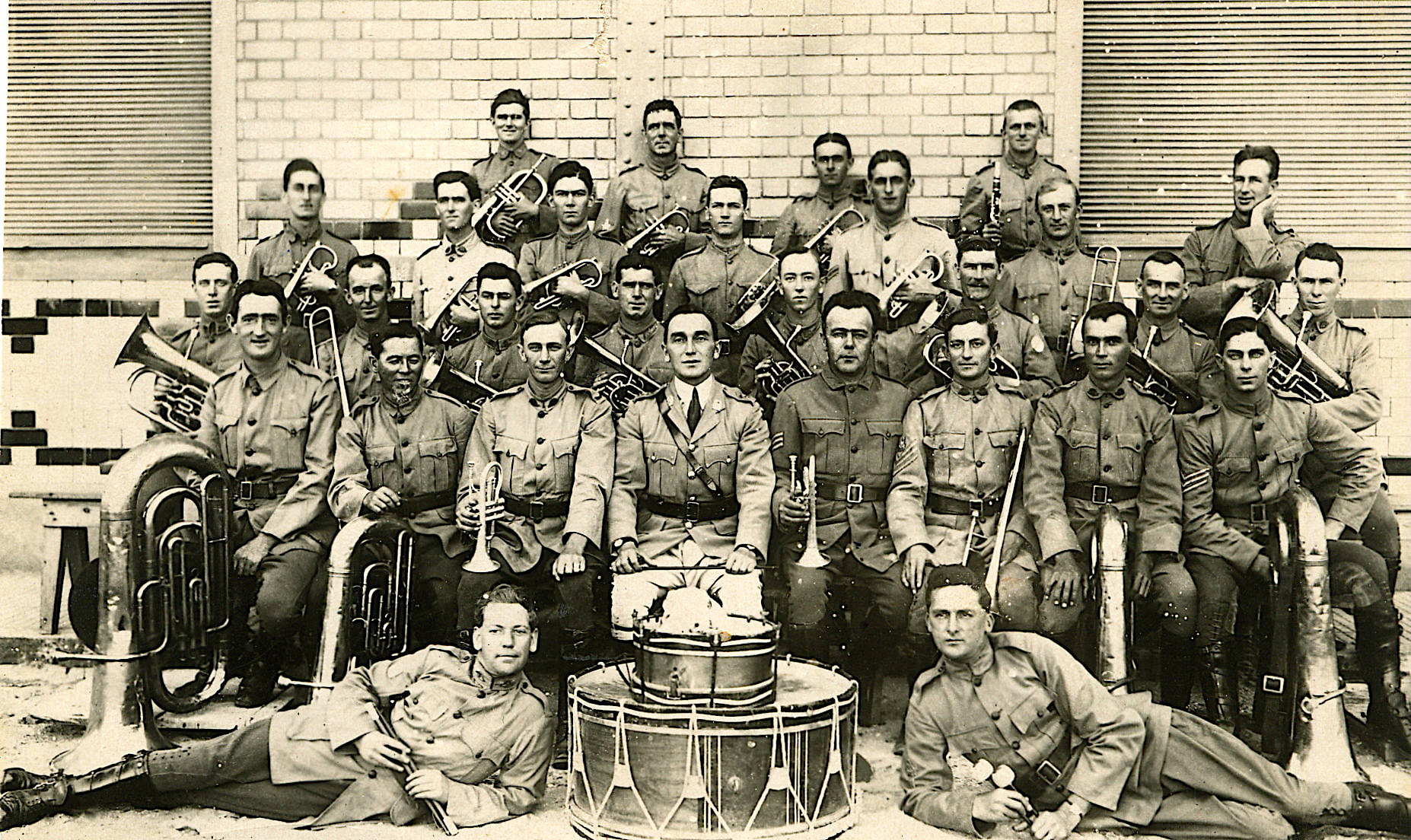
ANZAC Mounted Division Band Palestine 1917 – Crosby-Browne seated front middle row

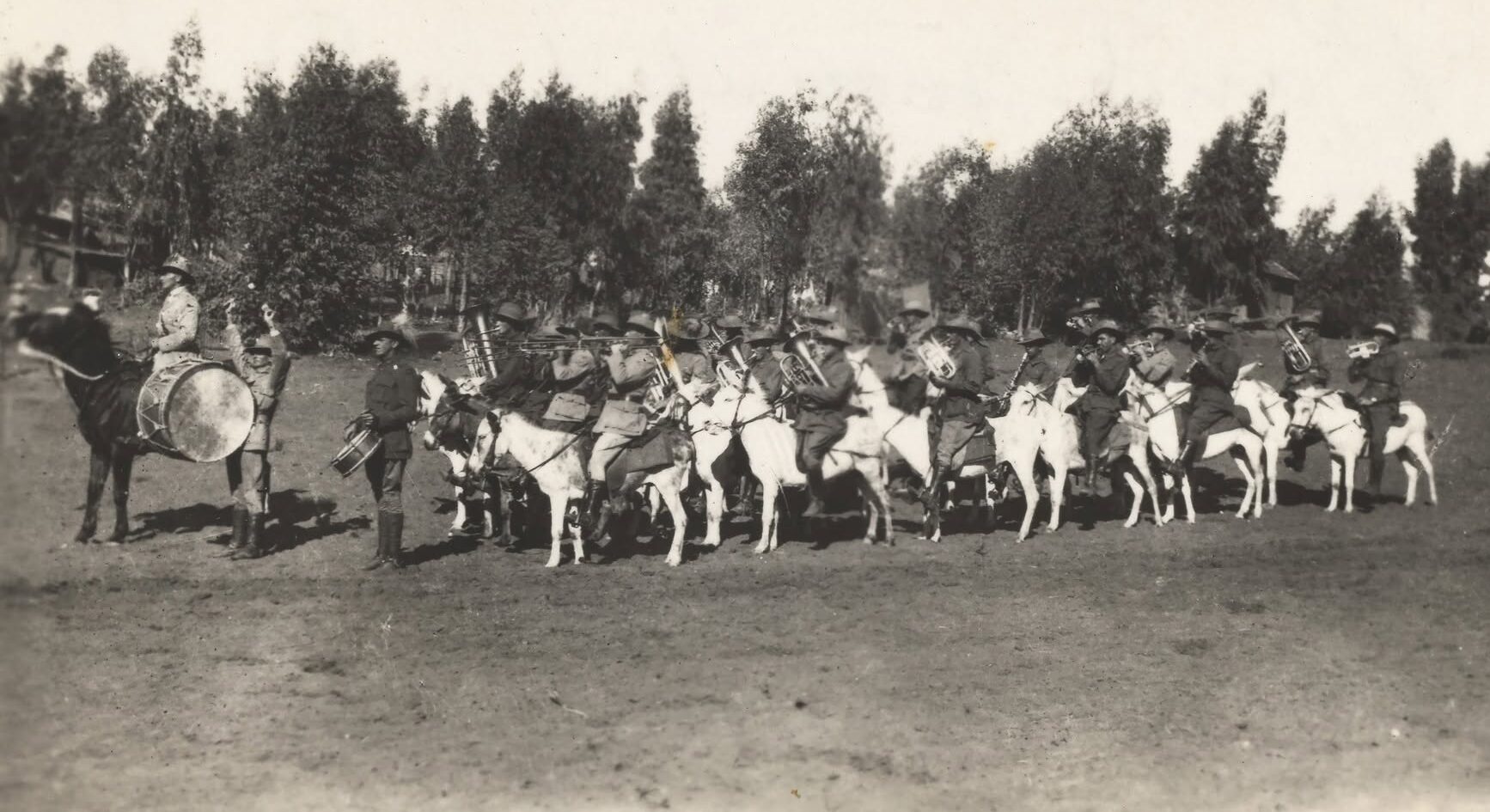
The band was famous for riding on white sudanese donkeys played over 140 performances.

ANZAC Mounted Division Band parading on donkeys, 1917 Palestine – photo courtesy The Australian War Memorial P00061.008

At the conclusion of the war Crosby-Browne returned to Australia on 27 June 1919.

In his non service life he was a Musical Director and Conductor of the NSW Police Band. He was the Band Director at the 1938 Sydney Empire Games. He also worked as a teacher of the clarinet at the Sydney Conservatorium of Music and where the John Crosby-Browne Scholarship was created allowing annual free tuition for the winning student.


His last rank was Captain in WWII – Service Numbers N60178, N278378.


1940

Crosby-Browne Is Man Of Many Parts

Light-Horseman; Police Inspector ; and Professor

RECENTLY Sydney Police Band – 40 men strong — set out from headquarters to give a mid-day performance in a city park. When band arrived at the park, there were only 39 men present.

MYSTERY of missing bandsman was left unsolved during performance. On return to headquarters puzzled bandmaster was relieved to learn that the absentee had been found. Unnoticed by his companions, he had slipped from band ranks, had made a quick and silent arrest on the footpath, and had taken the culprit away to lay a charge. Which only shows that a police-bandsman is a policeman first of all. Not so, however, the director of the police band — Captain J. Crosby-Browne, known as “Bing” when at home.

Versatile Officer

He is three things in one — a captain in the army, an inspector in the police force, and a professor at Sydney’s Conservatorium of Music. He holds his rank of captain as senior bandmaster of Commonwealth armed forces. At present he is also officer-in-charge of bands of the Eastern Command. As director of police band, he Is “honorary” first-class inspector, entitled to wear three “pips.”

And for last 20 years he has been professor of clarionet playing at Conservatorium. But the director is the one exception In the band. All other members must be

fully graduated policemen. Sometimes this makes captain — he prefers this title — Crosby-Browne’s task difficult: “It is not always easy to find musicians who have required height and weight for policemen,” he told “Smith’s.” “So most recruits for the band must come from inside the force.” Only rarely does he choose a musician from outside. Even if musician has outstanding ability, he must first be eligible to join the force, prove himself as a policeman, before he is admitted. Fortunately for standard of band, musical and police temperaments seem to have something in common. With exception of that of Australian Broadcasting Commission, Sydney Police Band is only full military band in Australia. It Is modern. In conformity with present trend, full- set of low-pitch instruments was obtained in 1936. And it has perhaps a more thorough training than any other band of its kind in Australia. On an average 60 performances are given every year, apart from the regular mid-day performances each week-day,” and the two rehearsals each week.

In Palestine

Captain Crosby-Browne has been with band now for more than 14 years. Born in England, he received his early band training in the British Army, with the crack 21st Lancers and First Life Guards. He then studied at the London Academy of Music. Crosby-Browne migrated to Australia in 1912, and, when war broke out two years later, joined the 5th Light Horse, A.I.F., as an officer. He saw service In Palestine, and later became bandmaster of Anzac Mounted Division Band there. At the moment he divides his time between police headquarters and Ingleburn barracks. He has trained all the bands that have so far gone away with the new A.I.F. Though he has been for a long time with the Police Band, he is by no means the oldest member. Sergeant J. Anderson, clarionet  player, and Sergeant Mclntyre, French horn, have both been with the band for 30 years; and Sergeant B. L. Caesar for 25 years. Distinguished bandsman Is Sergeant R. Prowse, who for three years in succession won the N.S.W. “B” flat Bass championship, which in 1938 included the All-Australia championship.

Opposition To Band

Band was established in 1894, and at first met with opposition from many quarters, even from inside Police Department, where view was widely held that a good policeman would never be a musician. But as band showed it could produce good policemen — two Commissioners, Mitchell and Childs, came from its ranks – it won favor in official eyes. Today N.S.W. Police Commissioner (W. McKay) is a keen supporter, gives every assistance in permitting members to attend rehearsals and performances. Band members receive no extra pay for their services, and band itself does not accept fees. Performances are only given at functions of purely charitable or patriotic character.  It Is not yet decided whether band will take an active part in new recruiting campaign, but, since the war, midday park performances have been given at request of civic authorities.

PHOTO CROSBY-BROWNE …. likes trying anything. 

Smith’s Weekly (Sydney, NSW : 1919 – 1950), Saturday 8 June 1940, page 6


MUSICIAN’S MISCONDUCT

In the Divorce Court to-day, Mrs. Inez Lois Crosby-Browne was granted a decree nisi for divorce from John Crosby-Browne, former police band-master, on the ground of his misconduct with Lillian Grimsley.

The suit was undefended. Mrs Crosby-Browne said she saw her husband and Grimsley on the back seat of his car in Fairlight-crescent, Manly. She recognised the woman as a student at the Conservatorium of Music, where her husband had appeared in a concert. “I told Crosby-Browne that he should be ashamed of himself, taking girls out from the Conservatorium.” Joseph Barker, Inquiry agent, told the Court he admonished Crosby-Browne at Manly. 

Sun (Sydney, NSW : 1910 – 1954), Wednesday 23 April 1941, page 3


Musician’s Wife Seeks Alimony;

Reference To Caesar Divorce

Mention of the Caesar divorce case, which resulted in the dismissal from the police force of Detective-Sergeant McRae of the C.I.B., was made today before the Deputy-Registrar in Divorce (Mr. Doughan). CAPTAIN JOHN CROSBY BROWNE, military band leader and former leader of the N.S.W. Police Band, and who was a professional, musician employed prior to his divorce by the Conservatorium, defended an application brought by his wife, Mrs. Inez Crosby Browne, for alimony. Crosby Browne admitted that he had been married four times, but denied that he was now engaged to be married again. Mrs. Crosby Browne, of Northbridge, divorced her husband last year on the ground of his adultery with Miss Lillian Grimsley. She also named three other girls, but did not proceed with the cases against them. Two of the girls, it was stated today, had been pupils at

the Conservatorium under Crosby Browne. Herself a professional violinist, Mrs. Crosby Browne told the court that she estimated her husband’s income from all sources at £1500 a year. Heavy Tax Payment’s Crosby Browne denied this, and said it was only £813, of which £473 was military pay, the balance being private income. Out of this he had to pay £230 in taxes, while the 4 per cent, limitation on profits if enacted would also hit him hard. He said his wife was one of the best professional musicians in Sydney and could find employment anywhere as a violinist. Browne said that following the Caesar divorce case, and also his own divorce, the Police Commissioner had a conversation with him, and as a result he resigned from his position of police band leader. The hearing is not finished.

Mr. Howard Beale (by W. Boland) for the wife; Mr. J. Smyth for the husband. 

Daily Mirror (Sydney, NSW : 1941 – 1955), Thursday 30 July 1942, page 2


Decree Against Police Bandsman

The New. South Wales Police Bandmaster, John Crosby Browne, 54, was found guilty in the Divorce Court yesterday of misconduct with a student

of the Conservatorium of Music. The petitioner was1 Mrs. Inez Lois Crosby Browne (formerly Lang), 33, of Bay Street, Mosman. She charged her husband, who did not defend the suit, with having committed adultery with Lilian Grimsley, Conservatorium student, at Manly on December 13, 1940. The names of three other women were Included as Interveners in the petition, but Mr. G. Barwick (for the wife) said he did not propose to offer any evidence against them. Mr. Justice Edwards dismissed them from the suit.

Mrs. Crosby Browne said she was married in Sydney in April, 1932, and she and her husband lived together at Battle Boulevarde. Seaforth, until the time of the misconduct. Her husband was formerly a “professor at the Conservatorium on the clarinet.” On the night of December 13 she attended a concert at the Conservatorium, where her husband was playing, and later she and a private detective, and others, followed him and a girl to Bollngbroke Parade, Manly, In a car. She walked up to his cat and found misconduct taking place between him and Lilian Grimsley. ‘ Joseph Barter; inquiry agent, .said that Crosby Browne “went berserk” when discovered, and tried to punch him. The judge granted Mrs. Crosby Browne a decree nisi. 

Daily Telegraph (Sydney, NSW : 1931 – 1954), Thursday 24 April 1941, page 8


BAND LEADER’S AMOURS

Married four times, Captain John Crosby Browne told the Deputy-Registrar in Divorce today that he was divorced last August when his fourth wife charged him with adultery with three women.

Now a band leader, with the AMF, Captain Crosby Browne denied that he had become engaged again. One of his former wives had died, he said. Crosby Browne’s fourth wife, Inez Lois Crosby Browne, to day sought an order for permanent alimony and maintenance for their son. Crosby Browne said he was formerly leader of the Police Band. Following the Caesar divorce case and Detective-Sergeant McRae’s dismissal from the police force, the Commissioner said something to him, in consequence of which he resigned. At Conservatorium, Crosby Browne said he was a professional musician and had been dismissed from the Conservatorium after his wife divorced him in August. Two of the three women named by his wife were pupils at the Conservatorium.  Income £813 , Crosby Browne told the Deputy-Registrar (Mr. Doughan) that his gross annual income was £813, including £473 military pay and allowances. Out of this he had to pay £230 State and Federal tax and mortgage payments of £352 a year. The 4 per cent, profit limitation would reduce his income further. He also had to pay £100 to support his mother, who was a widow aged 83 he added. His former wife was 34 and in good health, he said. She was one of the best professional musicians in Sydney, and could at any time find employment as a violinist with theatre or orchestras, the ABC or the Conservatorium, In a theatre she could earn £6 a week. Mr. H. O. Beale (by Mr. W. Boland) for the wife: Mr. J. Smyth for the husband. 

Sun (Sydney, NSW : 1910 – 1954), Thursday 30 July 1942, page 2


Musician To Find Notes For Wife’s Alimony

WELL-KNOWN musician John Crosby Browne, now a bandmaster and captain in the A.I.F., and formerly of Seaforth, has been associated with the production of millions of the kind of notes that blend into melody, but from now on the maestro will be required to produce some notes of a more material kind. They are to be produced in accordance with an order made last week by the Deputy-Registrar

in Divorce (Mr. J. Doughan), and in the shape of permanent alimony for his wife, Inez Lois Crosby Browne, and maintenance of their 10 year old child, now in the custody of Mrs. Browne. Mr Doughan. in a reserved judgment, directed that Crosby Browne pay his wife alimony at the rate of £4 5s a week and that he also cough up £1 I5s a week for the support of the child. For many years Crosby Browne has loomed large in the musical world. For some time he was prominently associated with the Conservatorium of Music, and at one time he was leader of the Police Band. Since 1941 he has been in the Army as a District Bandmaster with the rank of Captain. It was indicated, during the hearing recently of the wife’s alimony application, that Crosby Browne, whom she divorced in May, 1941, on the ground of his adultery, was pretty well ‘ribbed’ in the matter of cash. ft was revealed that he has assets amounting at least to £9500. comprising shares £7500, a house at Seaforth valued at £1550, a car valued at £300 and £300 in cash. His income was assessed at £1010 s year. Mr. Doughan was apparently of the opinion that Crosby Browne was actually somewhat better off than the above figures would indicate. “I think, on the evidence, there is a strong suspicion that the respondent might have other assets. During the last four or five years he has sold various shares and a motor cruiser, about which he was cross-examined. His answers were vague and unsatisfactory and he has made no real attempt to present a clear statement of his transactions during recent years.” the Deputy-Registrar said.

Mr Beale for Mrs Crosby Browne: Mr Smyth for the husband.

PHOTOS CAPTAIN CROSBY BROWNE,  whose alimony payments to his former wife (top right) were fixed last week. 

Truth (Sydney, NSW : 1894 – 1954), Sunday 27 June 1943, page 19


Ex-Police Band Chief Fined Over Revolver

FROM TRUTH’S BULLI REPRESENTATIVE.

JOHN CROSBY-BROWN (61), former bandmaster of the N.S.W. Police Band, was fined £10 at Bulli Court on Friday on a charge of having had an unlicensed revolver in his possession.

Police alleged that the revolver was found in his car at Woonona on September 10. When the revolver was found he told police that someone must have planted it in his car, it was stated. Crosby-Brown, of 41 Seaforth Crescent, Seaforth, pleaded not guilty, and told the court that he did not know the pistol was in his car. He said he had been married five times. During the past 12 months he had been worried by anonymous telephone calls and threatening letters, he said. Detective R. H. Marsh said that after receiving an anonymous telephone call on September 10, 1947. he went to the house where Crosby-Brown was staying. When he told Crosby-Brown that he had been informed that he had an unlicensed pistol in his possession, Crosby-Brown replied: ‘That’s ridiculous. I haven’t any firearms,’ he said. ‘I searched the car and found a 22 calibre revolver, loaded in four chambers,’ said Marsh. ‘Crosby-Brown said, ‘It’s not mine. I’ve never seen it before,” he said.

Crosby-Brown told him, he said, that no one else had been driving the car, but someone must have planted the revolver in it. Det. V. Marriot said that when the revolver had been found the hammer was jammed and the trigger could not be pulled. Crosby-Brown said he was of independent means. Outlining his life from the time he joined the Life Guards in England at the age of 17 years, and from which he was discharged in 1911, he said he was a lieutenant in the Anzac Mounted Division in World War I., and was Professor of the Clarinet at the Sydney Conservatorium from 1920-40. He was appointed Musical Director of the N.S.W. Police Force in 1925 with the honorary rank of Inspector First Class and organised the police bands throughout the State, he said. Prom 1940 to 1946, he said, he served in World War with the rank of captain, and the appointment of senior Army Bandmaster. He retired in 1946 with the rank of major and was awarded the Efficiency Decoration. He said that a day or two after his discharge from the Army he was walking in Martin Place when he saw a woman. He passed her as it was his impression that she did not wish to speak. After that, he said, he received an anonymous telephone call and later two police officers called at his home and found two revolvers. One was a service revolver and the other he had not seen before. He was charged at Manly Court with having had unlicensed revolvers in his possession and was convicted, he said. The day after his conviction, he received another anonymous phone call from a man who said: ‘What you got yesterday is nothing to what you will get in the future.’ ‘From then on I was worried with telephone calls every other day and in the middle of the night. I complained to the Manly Police and the Postal Investigation Department, but they could not locate the callers,’ Crosby-Brown said. He said he also received anonymous letters. Two witnesses gave evidence that Crosby-Brown bore an excellent character. Crosby-Brown was allowed 21 days to pay the fine.  

Truth (Sydney, NSW : 1894 – 1954), Sunday 2 November 1947, page 43


1980

John Crosby-Browne died of natural causes on 21.2.1980 in Drummoyne, New South Wales, Australia aged 93.

Instruments

Years