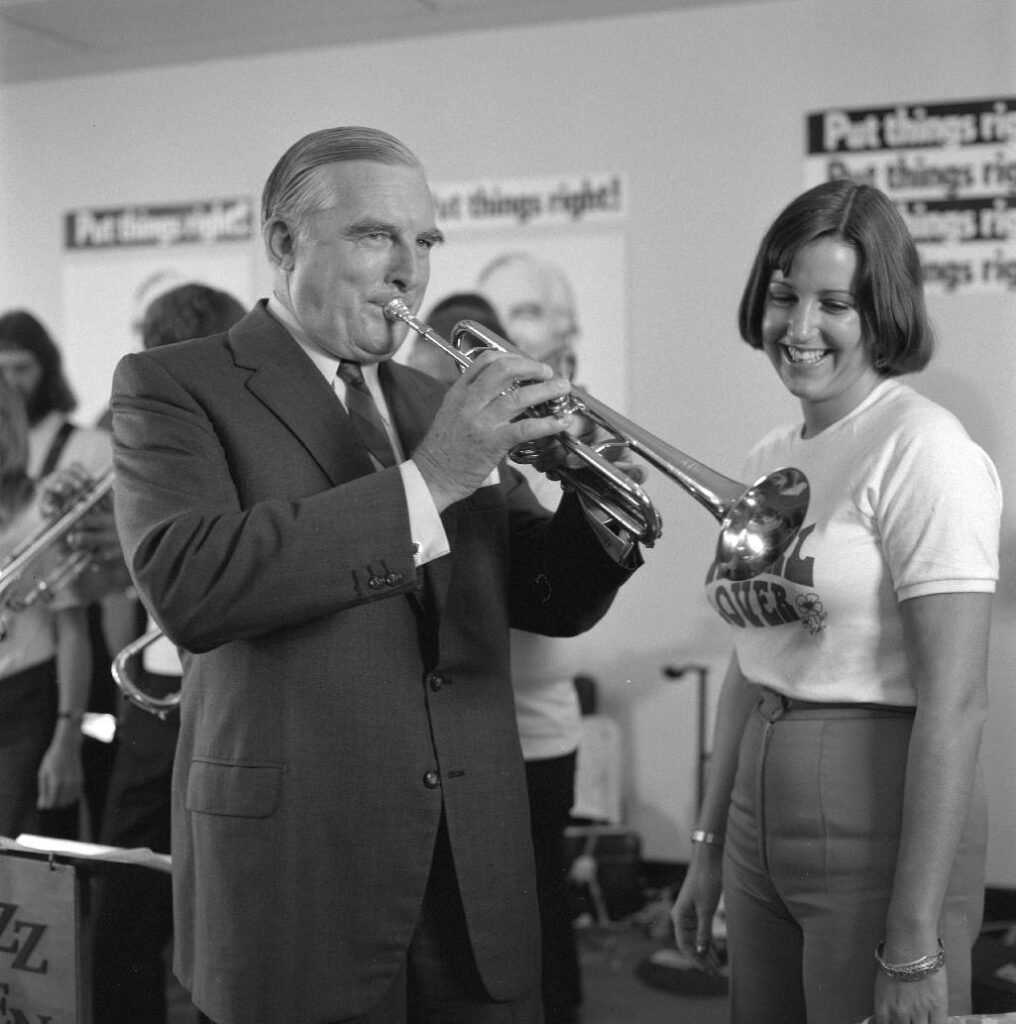
Sir Charles Walter Michael Court AK KCMG OBE (29 September 1911 – 22 December 2007) was an Australian politician who was the premier of Western Australia from 8 April 1974 to 25 January 1982.
Charles Court was born on 29 September 1911 in Crawley, Sussex, England. He was the eldest of two sons of Rose Rebecca Rice and Walter James Court, a plumber. The name Charles came from his mother’s brother, Walter from his father, and Michael because he was born on Michaelmas Day. The Court family left Crawley on 18 March 1912, bound for Western Australia. As the Port of Southampton was stifled by a coal strike, they travelled via Antwerp in Belgium, boarding the German ship Cassel. They arrived in Fremantle, Western Australia, on 1 May 1912. The family planned to return to Crawley within five years, but that never eventuated, first because Walter Court struggled to secure a job in Perth, then due to illness, then due to World War I.
The Court family spent their first eight years in Western Australia living in Leederville, just north of Perth. Walter Court eventually obtained a job digging sewerage and drainage trenches, where he formed a good enough impression that he was referred to a plumber who offered him a job. Walter later got injured, and then in January 1916, enlisted in the army. At the time, Rose was pregnant with their second son. Walter trained at Blackboy Hill Camp and left for France in March 1916. Six weeks later, Sydney Hugo Court was born. Charles shouldered heavy responsibility while his father was away. One time, when Walter’s pay stopped coming through, Charles was sent down to the Perth Trades Hall to give a note to the union secretary.
Court’s first three years of school were at the local infants’ school. He then attended Leederville Primary School. Walter arrived home in May 1919. By then a lance corporal, Walter first served with the 177th Tunnelling Company and later with the Australian Electrical and Mechanical Miners and Builders Unit. Walter again found difficulty in securing a job. He found irregular work for plumbers H Rance and Son. As the economy improved, the work became more regular. Walter was a strong unionist and supported the Labor Party. He admired Labor premier Philip Collier and took Charles to union rallies.
In 1921, the Court family purchased and moved into a house in West Subiaco (now Shenton Park), using a War Service Homes Scheme loan. In West Subiaco, Charles attended Rosalie Primary School, and from 1924 to 1926, he attended Perth Boys School.
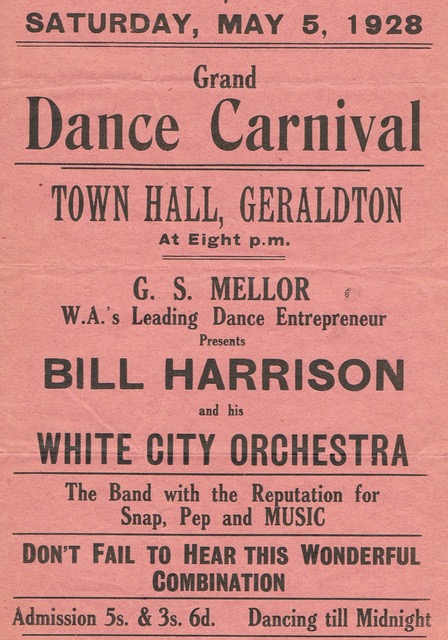
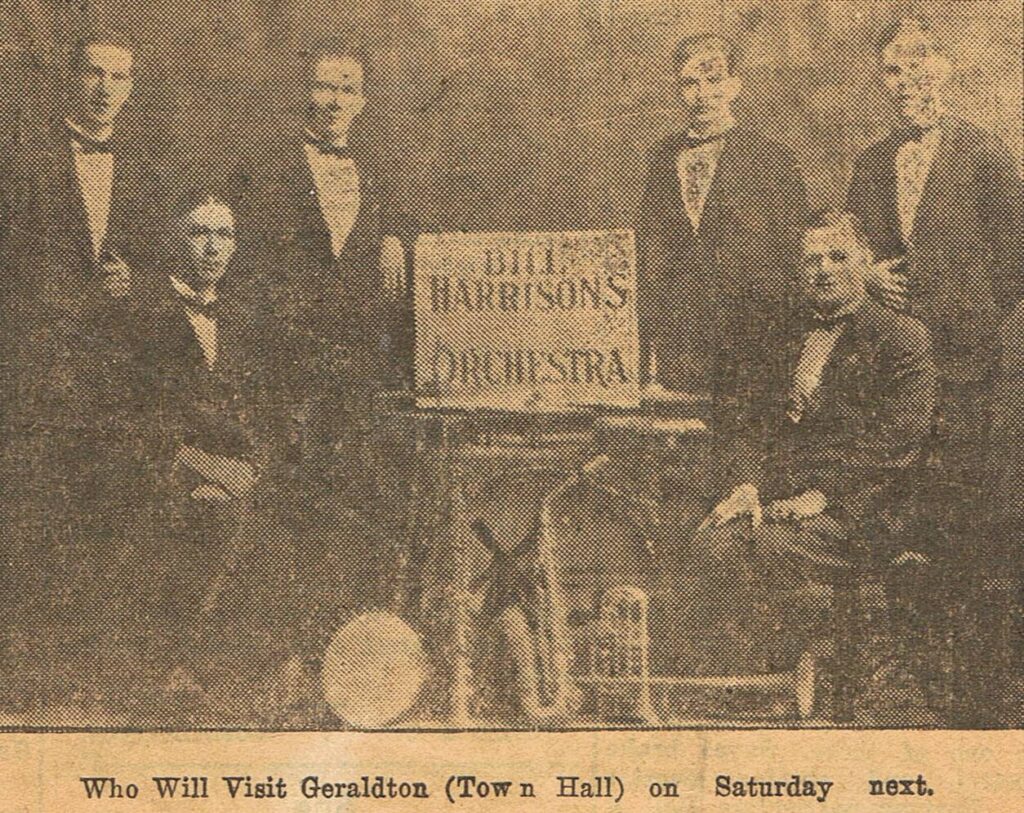
Meanwhile, in 1919, Court started learning to play the cornet and he soon joined a succession of local bands. Beginning at age 12, Court played in music competitions. He later joined the RSL band, which consisted of ex-servicemen, including Bill Harrison. It was renamed the RSL memorial band so that Court could join, and he became the band’s solo cornet. He also joined the Young Australia League band and the Metropolitan Symphony Orchestra, the latter of which got Court his first job. When he was 15, the secretary of the Metropolitan Symphony Orchestra asked the patron, Sir William Campion, who was also the governor of Western Australia, to put in a good word, which resulted in Court gaining a job as an office boy for law firm Robinson Cox & Wheatley. [1]
[1] https://en.wikipedia.org/wiki/Charles_Court
The West Subiaco Scout Hall was prettily decorated for the coming-of age celebration of Mr. Charles Court, the well-known cornetist. and the function, which proved thoroughly enjoyable, was largely attended. During supper the customary toasts were given with musical honours. Mr. A. J. McLaren, in a happy and sincere manner, proposed the principal toast, and was supported by Mr. W. Halvorsen, while that of the parents was suitably attended to by Messrs. J. Dennison and R. C. Bradbury. Mr. W. Court handed Mr. Chas Court a huge key, which was attached to a large chain. Those who contributed to the evening’s pleasure were Mr. Bert Harding, trick cyclist; Miss Sylvia George and Mr. C. Thompson, while Mr. Court played cornet solos. Mr. Tom Bennett was M.C. and Mr. Fred Nice accompanist.