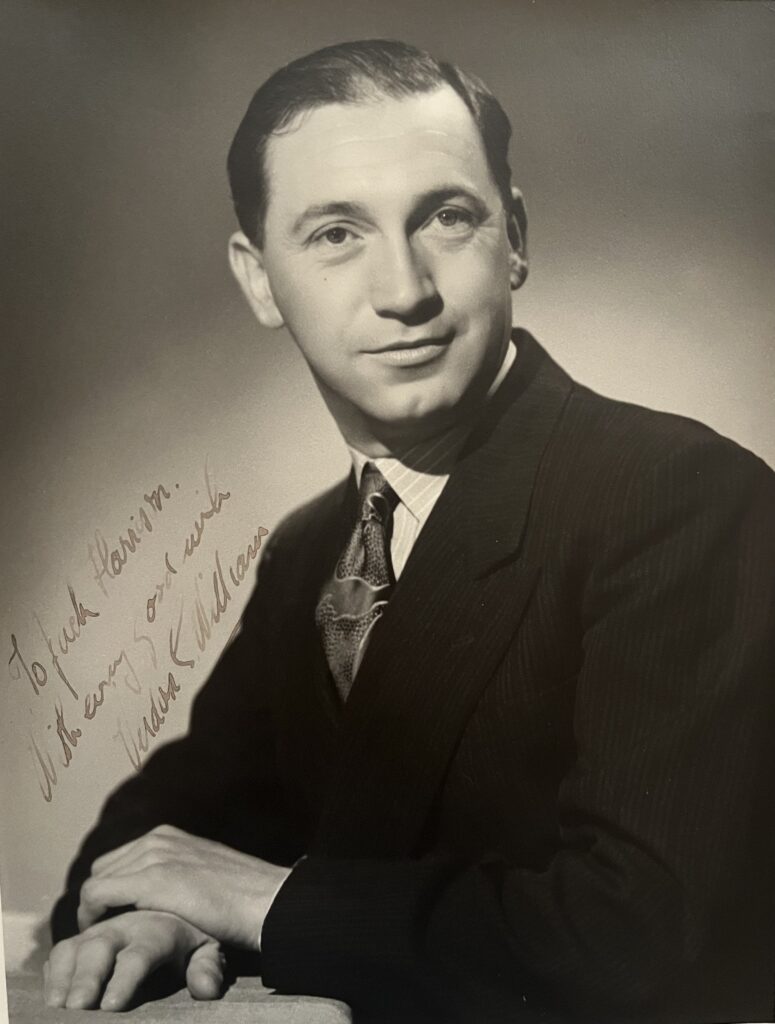
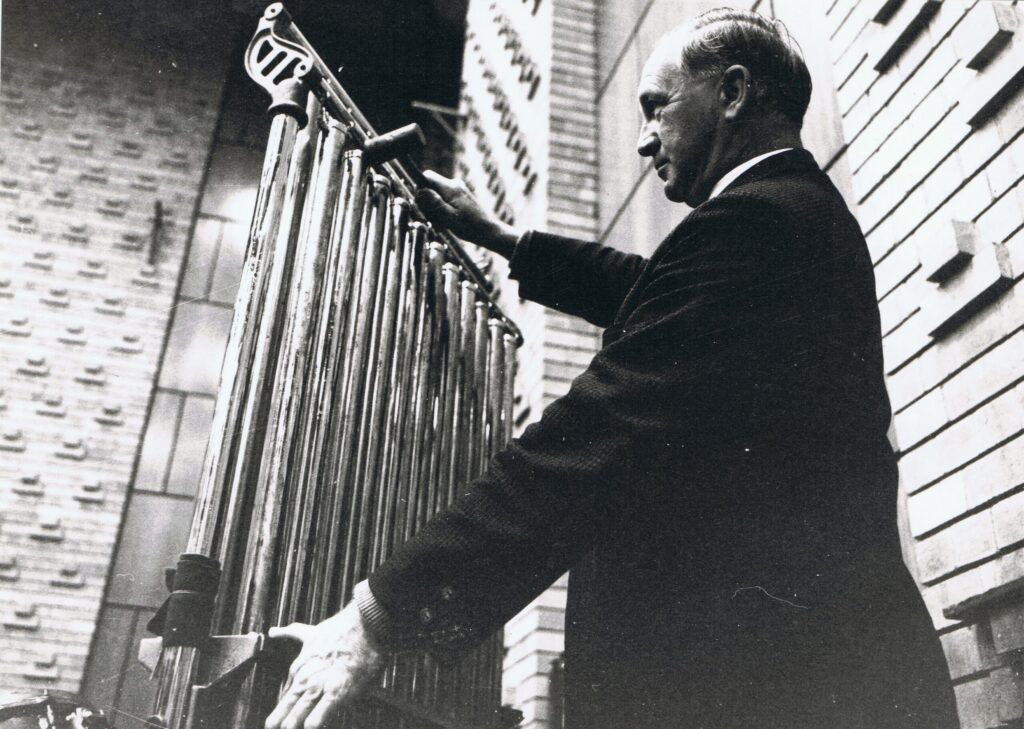
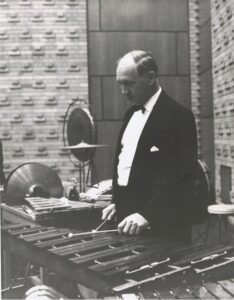
VERDON WILLIAMS was one of Australia’s most versatile musicians – and one of the most popular – as percussionist, pianist, lecturer, arranger, composer and conductor.
After early piano training with his mother, he obtained a scholarship to the University of Melbourne Conservatorium of Music from where he graduated with first class honours. He studied piano under Waldemar Sidel and Percy Grainger, and undertook many tours in both solo and concerto performances, and gave lecture tours with his wife, soprano Doris Dodd.
A former conductor of opera at the National Theatre, Melbourne, he also composed two successful ballets, The Outlaw and Conflict.
Verdon Williams joined the West Australian Symphony Orchestra in 1960; shortly afterward he founded the Perth Sinfonietta and the Lyric Singers.
He was for a time conductor of the Tasmanian Symphony Orchestra before returning to Western Australia.
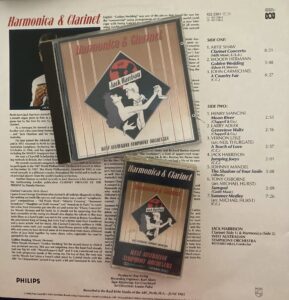
Verdon arranged “Moon River” for harmonica and orchestra for Jack Harrison and the West Australian Symphony Orchestra. This arrangement appears on the ABC album “Moon River” (previously known as “Harmonica and Clarinet”) and is heard frequently on ABC Classic FM.
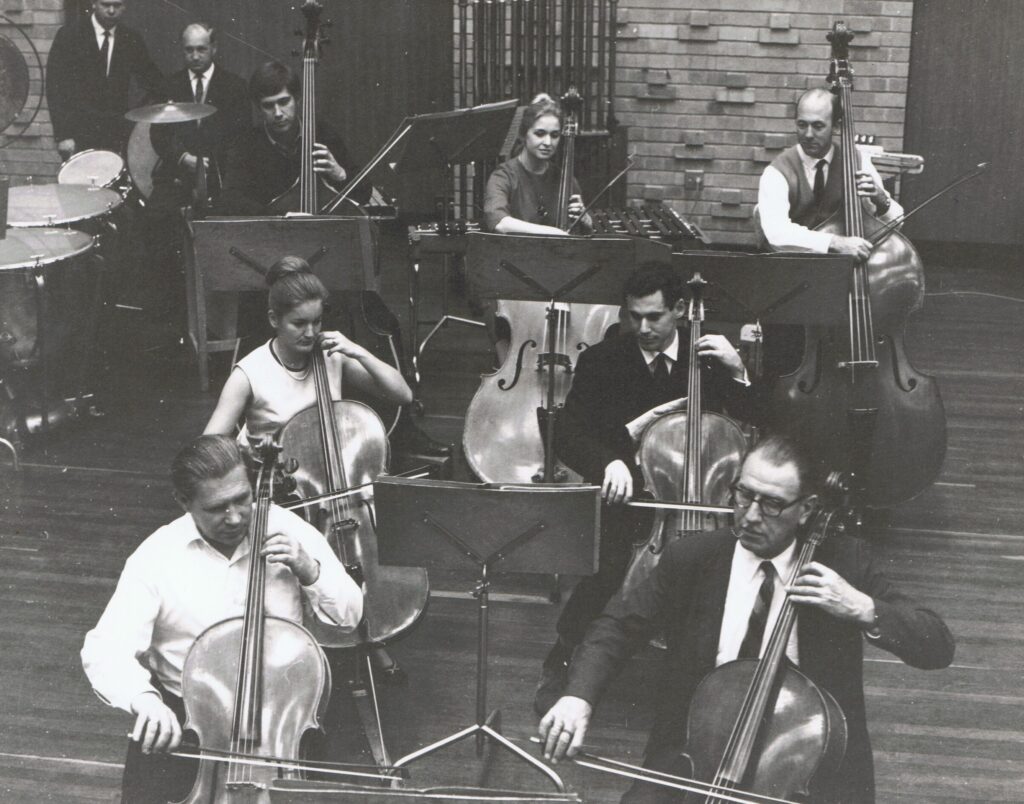
Verdon Williams moved in a number of different directions. He was initially engaged as a percussion player, doubling on piano. However, his talents were multi-faceted. The orchestra often played is light music arrangements, with Verdon wielding the baton; and as if that were not enough, he could also turn hs hand to a honking contra bassoon on the rare occasions when that cumbersome instrument was required.
Harrison, Marcia, West Australian Symphony Orchestra Celebrating 75 Years, (WASO Holdings Pty Ltd, 2003). p.35
1961
ABW TO SCREEN BIRTHDAY SHOW Thursday May 11 1961 – By Keith Flanagan
ABW Channel 2 will tonight present its biggest live show yet, to celebrate its first birthday. There will be singers, dancers, a 25 piece orchestra and an invited audience of 200 for the two hour show. Jock Millett will produce the cabaret style show in the Kirk Memorial Studio in the radio building – the biggest studio the A.B.C. has here. The record library will be taken over as a makeup room for the 44 people who will come before the cameras. Lighting in the studio will be equivalent to 1000 60 watt globes. Jim Fisher, Earl Reeve and Diana Ward will compere the show, to run from 8pm to 10.30pm, with a half hour break from 9 for the American documentary “Our Man in Space”. Verdon Williams has formed a 25 piece orchestra for the show. Artists to appear are the Four Notes, Margot Robertson, Tony Federici, Carmen Arenas, Adriano Angelucci, Doris Dodd, Garry Smith and Derna Sluik, Jack Harrison, the Wrightsons, Lorna Sydney, Gerrard Sibbritt and Terri Charlesworth, Andre Tio, Peter Piccini and a demonstration ballroom group.
The West Australian Thursday May 11 1961
1961 RADIO BROADCAST
Light Music by Family
When Perth’s versatile instrumentalist Jack Harrison and his quintet play, it’s a family affair. In a series of six programmes of light music starting this Tuesday at 8pm from 6WN, Harrison will play the harmonica, saxophone and clarinet. He and his father have made special arrangements of Latin-American tunes slow ballads and novelty numbers for the programmes. Members of the quintet will be Harrison’s twin sister Jill (bassoonist and second pianist) her husband John Mowson (principal bass with the W.A. Symphony Orchestra), Laszlo Vidak (violin), Verdon Williams (percussion) and Stephanie James (principal piano).
FESTIVAL CONCERT TONIGHT
World Premiere of David Farquhar’s prize winning Concertino for Piano and Orchestra
First Performance in Australia – Chamber Concerto No. 3 for Bassoon, Strings and Percussion by Elisabeth Lutyens.
David Tunley’s Introduction and Scherzo for Clarinet and Strings
Plus works by Dvorak, Grieg, Delius, Elgar, Walton and others.
UNIVERSITY ORCHESTRA conducted by Trevor Jones.
Soloists: Michael Cole, Jack Harrison, Brian Pope.
Assisting Artists: John Mowson, John Dean, Verdon Williams.
8pm Sat 5th August 1961 – Unreserved seats at door 10/ Students 7/6
BROADCASTS
The Eastern states have had the rare pleasure of hearing a good deal of Jack Harrison’s quintet from the A.B.C. stations. Jack produced six programmes of light music for 6WN with arrangements by himself and his father of Latin-American tunes, slow ballads and novelty numbers. Members of the quintet are: Jack, clarinet, saxophone and harmonica; his sister Jill on bassoonist and also as second pianist; her husband John Mowson, principal bass with the W.A. Symphony Orchestra; Laszlo Vidak, violin; Verdon Williams, percussion and Stephanie James, principal piano. The session is a pleasure to listen to.
The Australian Accordionist Vol. 8 No. 1 November 1961
1962
ATTRACTIVE PERFORMANCE
Southern Serenaders Tour
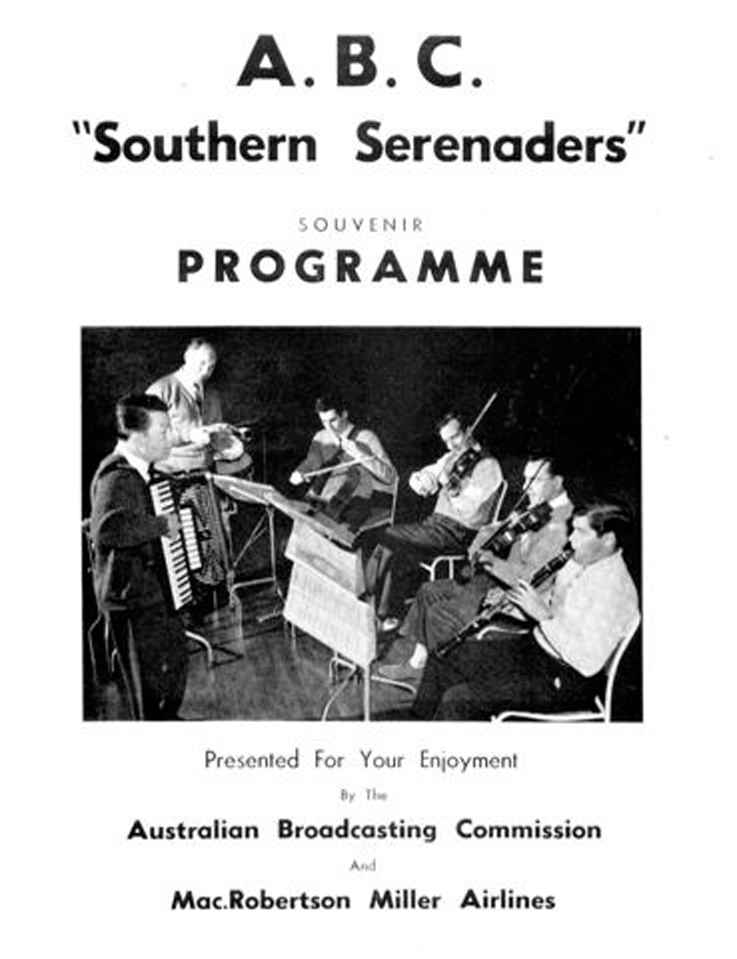
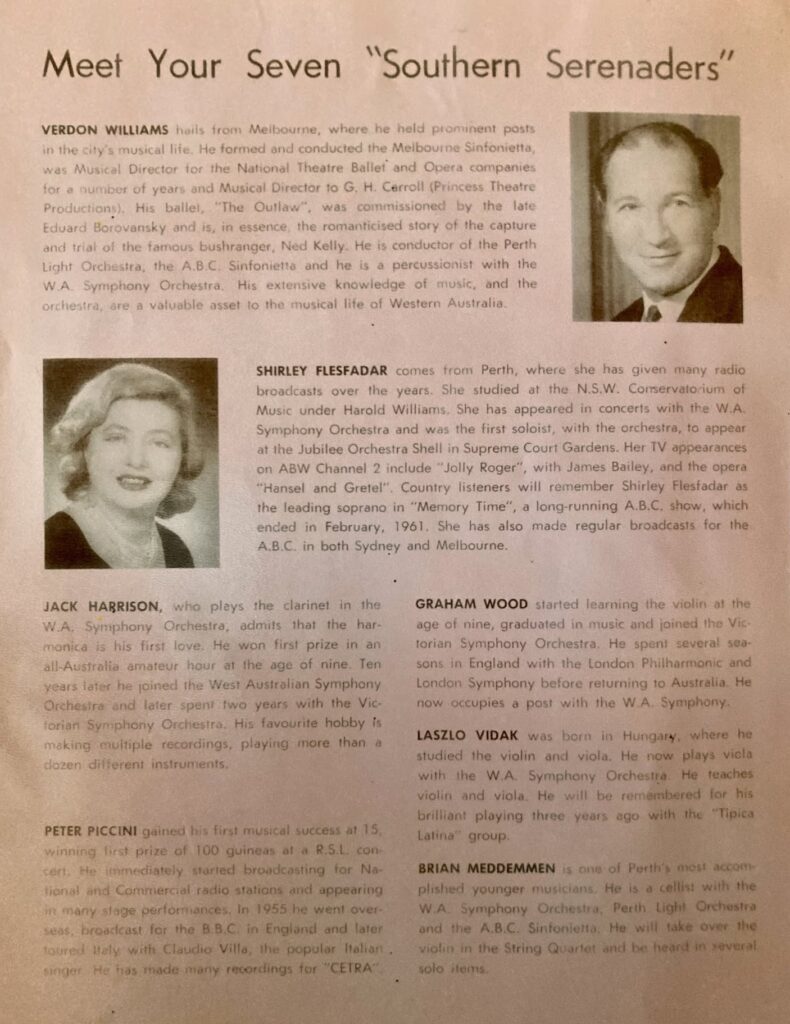
Verdon Williams, popular conductor of the Perth Light Orchestra and the A.B.C. Sinfonietta, will head the orchestra which will tour the North West next month. Accordion virtuoso Peter Piccini and versatile clarinettist Jack Harrison will also tour with the group. All the musicians with the exception of Peter Piccini are members of the West Australian Symphony Orchestra. People in the North will once again hear the magic violin of Laszlo Vidak, who earned thundering ovations during the 1959 M.M.A. A.B.C. Cultural Tour of the “Lido Quartet”.
Jack Harrison has written a special number called “Jumping Joeys” for this tour. Soprano, Shirley Flesfader, will also sing three excerpts from the lyric song cycle “North of Capricorn” by W.A. Composer, Robert Gude.
The outstanding gaiety and appeal of the programme compiled and arranged by Verdon Williams includes selections by Cole Porter, excerpts from “Oklahoma” and Latin American music and a special arrangement for string quartet of a movement from “Eine Kleine Nachtmusik” by Mozart. Shirley Flesfader will sing arias from Bizet’s opera “Carmen”, Puccini’s “Madame Butterfly” and a selection from “Kismet”. Peter Piccini will give an impromptu recital of audience request numbers. Each member of the group will be heard in solo items and the versatile musicians will play a wide variety of instruments.
 MUSICIANS TO TOUR IN NORTH
The A.B.C. and MacRobertson Miller Airlines Ltd. Will send seven musicians through the North-West for a series of concerts between August 28 and September 8. The A.B.C. artists will fly 4000 miles in 12 days to give concerts in Carnarvon, Port Hedland, Broome, Derby, Wyndham, Kununurra and Darwin. The group is to be led by Verdon Williams, will include Shirley Fresfader, Peter Piccini (accordion), Jack Harrison (clarinet and harmonica), Graham Wood (violin), Laslo Vidak (violin and viola) and Brian Meddeman (cello and violin). A small TV film unit will tour with the group. The film they make will be shown in the Eastern States as a part of an A.B.C. project to focus attention on the North.
The West Australian August 8 1962
The “Southern Serenaders”
From August 28 – September 8th 1962 the A.B.C. sent a small group of musicians, led by Verdon Williams, on a tour of the north west of the state. Apart from Verdon, the ensemble which we called “The Southern Serenaders” included Graham Wood on violin, Laslo Vidak on violin and viola, Brian Meddemmen on cello, Jack Harrison on clarinet and harmonica, Peter Piccini on accordion and soprano Shirley Flesfader.
Graham Wood wrote to me: “ We travelled by DC3 aircraft, giving concerts in Carnarvon, Port Hedland, Derby, Broome, Darwin, Wyndham and Kununurra. Verdon had arranged all the music, which was of a pretty light nature and we all had a solo spot. We were paid £8 per concert and received a living allowance of £3/3/0 a day. We had a happy time, enjoying each other’s company. Peter Piccini was a natural comic and poor Shirley was the butt of many a practical joke, which she took in good part. One thing I remember vividly was the night when a huge stick insect landed on my violin while I was playing “The Flight of the Bumblebee”!
Most of the towns were still remote and largely undeveloped at that time, so people really appreciated our efforts. The aborigines were shy about coming to our concerts, so in Derby a few of us were taken out to a camp late at night after our performance. In a moonlit clearing we played to the people, some of whom produced a couple of digeridoos and played them for us. A magical moment ensued, as Jack Harrison quietly joined in with some gentle improvisations on his clarinet. We were entranced as were all the people there, dogs included. A genuine fusion of cultures.”
RECORD AUDIENCE CHEERS 1962 CULTURAL TOUR
The A.B.C. “Southern Serenaders” played to an estimated audience of 6000 people during their 4000 mile tour of seven North West ports including Darwin and Kununurra.
Darwin gave the orchestra its largest reception. About 4000 people crowded the Darwin oval sitting on available chairs provided, on rugs on the ground and in hundreds of motor cars parked around the perimeter of the ground. Darwin’s town Clerk (Bill Sullivan), who estimated the size of the audience, remarked that in all his experience it was the largest crowd he had seen in Darwin at such a presentation. Everywhere they went the “Southern Serenaders” earned cheering ovations and goodwill for M.M.A. and the A.B.C.
Departing from Derby around 4am, Jack Harrison (clarinet) and Peter Piccini (accordion) decided to hold an impromptu jam session in the air terminal. When M.M.A.’s chartered F.27 arrived, they moved out onto the tarmac, serenading the sleepy-eyed passengers that emerged from the aircraft in the small hours. The previous night, six members of the orchestra, augmented by four aborigine musicians, improvised what was probably the most unique combination of sounds heard in the North in a long time. The only bachelor in the orchestra, cellist Brian Meddemmen, was the only member of the group game enough to bring home an aboriginal wife beater. Violinist Laszlo Vidak fell victim to “fiddler’s peril” when the top string on his violin broke during a solo. He finished the item without a break and few people realised what had happened until Verdon Williams mentioned it to the audience.
On arrival at Wyndham, Peter Piccini discovered that the precision mechanism on one key on his £500 accordion had broken. A technician from Wyndham Aeradio was located who did a superb welding job at short notice and a scant hour before the concert there. Mr Piccini was still replacing bits and pieces of springs, levers and keys with the able assistance of Graham Wood and Jack Harrison.
In their off-duty moments, most members of the group took the opportunity to see the surrounding countryside of the towns they visited. Mr. E.K. Sholl, A.B.C. Manager, Fred Combs, A.B.C.2 cameraman and cellist Brian Meddermmen earned top honours for vim, vigour and vitality by climbing the Bastion at Wyndham and Kelly’s Knob at Kununurra. Shirley Flesfader was the only member of the touring group to return to Perth with genuine Nor’-West influenza. Well on the road to recovery as Jetstream went to press, Miss Flesfader enjoyed the joke on herself remarking “Trust the soprano to be the only one in the company to catch the ‘flu’”. To Verdon Williams, the North-West was a paradise. He collected seeds and minute cuttings of different varieties of Western Australian plants, shrubs and flowers. Some are already established in the large garden of his south Perth home.
PRAISE FROM A.B.C.
At every port-of-call, the Manager for Western Australia of the Australian Broadcasting Commission, Mr. E.K. Sholl, told audiences at the “Southern Serenaders” concerts how greatly he admired the work being done by M.M.A. to bring culture programmes into the North. He went on to assure audiences that by next March the A.B.C.’s two short wave stations, VLX and VLW, would increase their signals from 10 to 50 kilowatts and from 2 to 10 kilowatts respectively. “You will then be able to receive Perth short wave broadcasts with approximately the same clarity as you now receive Melbourne’s transmission through Radio Australia”, Mr Sholl said. This, he anticipated, would enhance the listening pleasure of almost everyone in the North from Carnarvon to Wyndham.
Jetstream Official Publication of Mac.Robertson Miller Airlines Ltd. Vol 1. No. 20 September 1962
 1963
CONCERT – MARCH 14th 1963
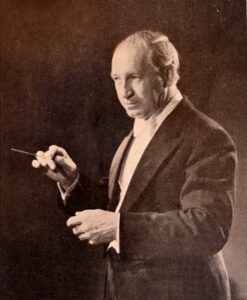
An outstanding programme by the Perth Sinfonietta will be given in Winthrop Hall at 1.10pm next Thursday under the baton of Verdon Williams. This free recital is being presented by the A.B.C. as the first in a weekly series being sponsored by the University during the year. The Sinfonietta will play works by Berger, Copland, Delius and Vaughan Williams. The soloists will be Allyne Tilsed (flute) and Jack Harrison (clarinet). Those attending the concert include Russian violinist Nelli Schkolniskova and W.A. resident conductor John Farnsworth Hall, who will be soloists and conductor in the first A.B.C. Youth Concert on March 19.
LUNCH MUSIC IS PROMISING – By Sally Trethowan – MARCH 14th 1963
The programme for this year’s free lunch-hour concert series held on Thursdays in Winthrop Hall is even more interesting and varied in type of music and number of performers than last year’s. If the first concert given yesterday to a large audience by the Perth Sinfonietta, is any indication of the quality, the weekly programmes will be exciting musical experiences and a major contribution to musical life in W.A. The Perth Sinfonietta always gives us an entertaining, thought-provoking programme. Conductor Verdon William’s introductory comments are instructive, to the point, and do not offend by being too technical or too long. The choice of composers in yesterday’s concert – Berger, Vivaldi, Copland, Delius and Vaughan Williams – leaned heavily towards the moderate, making the Vivaldi Flute Concerto (“The Goldfinch”) a pertinent, pleasant comment on, and exposition of, a more elegant and graceful age. The young flautist, Allyne Tilsed, who has just joined the W.A. Symphony Orchestra has a sureness of tone control which allows the most delicate innuendos without over or under emphasis. In Vivaldi’s “Goldfinch”, flute and strings chattered and trilled in animated conversation, whereas in the Copland Clarinet Concerto, a different symphonic relationship exists between orchestra and clarinet. Clarinettist Jack Harrison interwove the sure mellowness of tone and bell-like clarity of his instrument into the orchestral texture of the work. The brief overture of Jean Berger that began the programme and a Delius “Serenade” and Vaughan Williams “Fantasia on Greensleeves” which closed it, are works typical of the individuality of their composers, but have in common the fact that they make light and easy listening.
The West Australian March 15 1963
1963 TELEVISION – 9.30 Channel 2: ALL STRINGS AND FANCY FREE
Perth Sinfonietta conducted by Verdon Williams. Featuring Audrey Webster (harp), John Reece (percussionist), Jack Harrison (clarinet and harmonica) and Molly McGurk (soprano). Music to be played includes All Strings, Fancy Free and Moon River.
TELEVISION – 9.30 Channel 2: ALL STRINGS AND FANCY FREE
An 18 piece orchestra will be used by Channel 2 for its live program – All Strings and Fancy Free – at 9.30pm on Tuesday. The group, conducted by Verdon Williams, will consist of 10 violins, three violas, two cellos, a double bass, harp and percussion. In some tunes they will be joined by the piano. Soloists will be pianist and soprano Molly McGurk and dance band leader, Jack Harrison who will play clarinet and harmonica. Some of the tunes to be played include Moon River, At the Balalaika, Cuban Rondo, One Kiss They Can’t Take that Away from Me.
1964
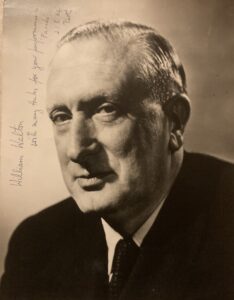
Jack Harrison performed in the Perth premiere performance of “Façade” in May 1964 with the composer present.
Actor James Beattie was the speaker and Verdon Williams the conductor. William Walton signed a photo for Jack that reads:
“with many thanks for your performance in “Façade” 21.5.64 Perth”.
1966
Saturday 26 February 1966
In the same studio at 6pm next Saturday, Verdon Williams will conduct a chamber music concert. The performers will be the A.B.C. Chamber Ensemble and James Beattie and the Oriel String Quartet with Jack Harrison.
MUSIC – By Peter Hellstrom
British music to be played next week in the Festival Of Perth will include some well-known compositions in the ABCs Basil Kirk studio at 6 o’clock tonight. There will be a performance of William Walton’s “Façade” for speaker and chamber ensemble with which Walton first made an impact on the English musical scene. It consists of a recitation of Edith Sitwell poems against the background of chamber ensemble music. The speaker will be James Beatty and the ABC chamber ensemble will be conducted by Verdon Williams. The other work in the programme, Bliss Clarinet Quintet, will be performed by the Oriel String Quartet with Jack Harrison.
The West Australian Saturday February 26 1966
WORDS, MUSIC BLEND SUBTLY IN “FAÇADE” – By Sally Trethowan
Nearly 2 years ago, actor James Beatty conductor Verdon Williams and a small chamber ensemble gave a scintillating performance of the original version of “Façade”. The same actor and conductor were responsible for a no less diverting and accomplished reading of the work in the Basil Kirk Memorial studio on Saturday night as part of the Festival Of Perth “Music of Britain” series. William Walton deft and witty accompaniment to the spoken verses by Edith Sitwell no longer shock audiences as they did in the 20s. What seemed iconoclastic musical language then, derived as it was mainly from jazz and the music-hall, seems passe now. But though time has weathered the original satiric bite, the work still magnificently fulfils the sub- title “An Entertainment”. A successful performance of “Façade” depends predominantly on fractional timing and coordination between the individual musicians, and between the speaker and instrumentalists. On this count Saturday’s reading could scarcely have been better. Beattie’s performance of the verbal prestidigitations in the “Tarantella” and part of the “’Tango Paso Doble” was admirable as was his rhythmic delivery of the apparently nonsensical compilation of associative images into a rich mosaic of orchestrated word sounds. The other work on the program, Arthur Bliss’s Clarinet Quintet, is extremely demanding on all players, though in no sense is it a showpiece. The Oriel String Quartet and clarinettist Jack Harrison, who also performed this work in the composers presence when he visited W.A. about 18 months ago, gave a craftsman like an intelligent reading, inclusive in the brusque helter-skelter scherzo and finale, and reflective, even faintly nostalgic, in the intensely lyrical first and third movements. Bliss’s harmonic acidulation in these movements, however, precludes any thought of the molasses type sentimentality often associated particularly in 19th century music with lyricism.
The West Australian Monday February 28 1966
FESTIVAL FAILS IN ITS HUNT FOR A MUSICAL DRAW CARD – BY KENNETH HINCE IN PERTH
Put on at cocktail time “Façade” was prefaced by the Clarinet Quintet of Arthur Bliss, music of thick Brahmsian texture. This has no necessary reason for existence being simply a work that someone felt like writing down. All the instruments are used with a sense of duty, all the movements are filled with scrupulously professional writing, but it’s total meaning might be boiled down into a bar or two of Elgar or Britten. Only a historian could have really enjoyed its performance; only an archivist could have been satisfied to hear it played instead of reading it over in a library. It was performed on Saturday by Jack Harrison and the Oriel String Quartet – Harrison with unfailingly accurate but monotonous uninflected attack, the Quartet balanced, well matched and reasonably polished. “Façade” came off rather worse. Music of superb elan which has worn much better than most people realise, it had a fairly good reading from James Beatty. The décor in the Basil Kirke Studio was quite adequate with a gauze curtain allowing just enough of the reciter and the chamber Orchestra to come through to the audience. But the instrumental work was just not accurate enough for the music. For a mid 60s audience, the point of this music lies half in the way it bites its thumb at Victorian morality, half in the bitterly precise realisation of the score. On Saturday under Verdon Williams, things were too this and that too hither and thither. For people who had not heard “Façade” before this was a tolerable enough experience but to a man who wanted to feel the true historical grip of this music, the performance was too slack and inefficient for a casual reading let alone for a performance of festival tone.
The Australian Monday February 28 1966
1966 NEW PROGRAM OF “EVERGREENS” FROM W.A. JACK HARRISON AND HIS MUSIC
A new series of popular all-time favourite music will start on Monday on May 16 1966 at 8.30pm on the First Network.
It will be presented by six members of the West Australian Symphony Orchestra led by Jack Harrison. Special arrangements have been written for their combination of bassoon, bass, violin, piano and percussion with the leader doubling on clarinet and saxophone. There are five programs in the series to be titled “Jack Harrison and his Music”. Jack Harrison will occasionally introduce his first love the mouth organ. He is a versatile musician and once made a multi recording in which he played 14 instruments including percussion and piano. He has been a member of the W.A. Symphony Orchestra for 15 years during which he has appeared frequently as soloist in clarinet and saxophone Concertos. Highlights of these performances were the Australian Premiere of the Aaron Copland Clarinet Concerto and the Richard Strauss Double Concerto for Bassoon and Clarinet. On this occasion the bassoon soloist was his twin sister Jill who also joins him in his new series doubling on piano and percussion. Items in the first program are “Mice on the Move”, “Gigi”, “Sidewalk”, “Petite Waltz”, “Holiday in Honduras”, “Comedian Gallop” The Pygmy Patrol”, “Will O‘ Wisp” and “Forever Samba”. The other artists in the series Laszlo Vidak violin John Mowson bass Stephanie James piano and Verdon Williams percussion.
1967
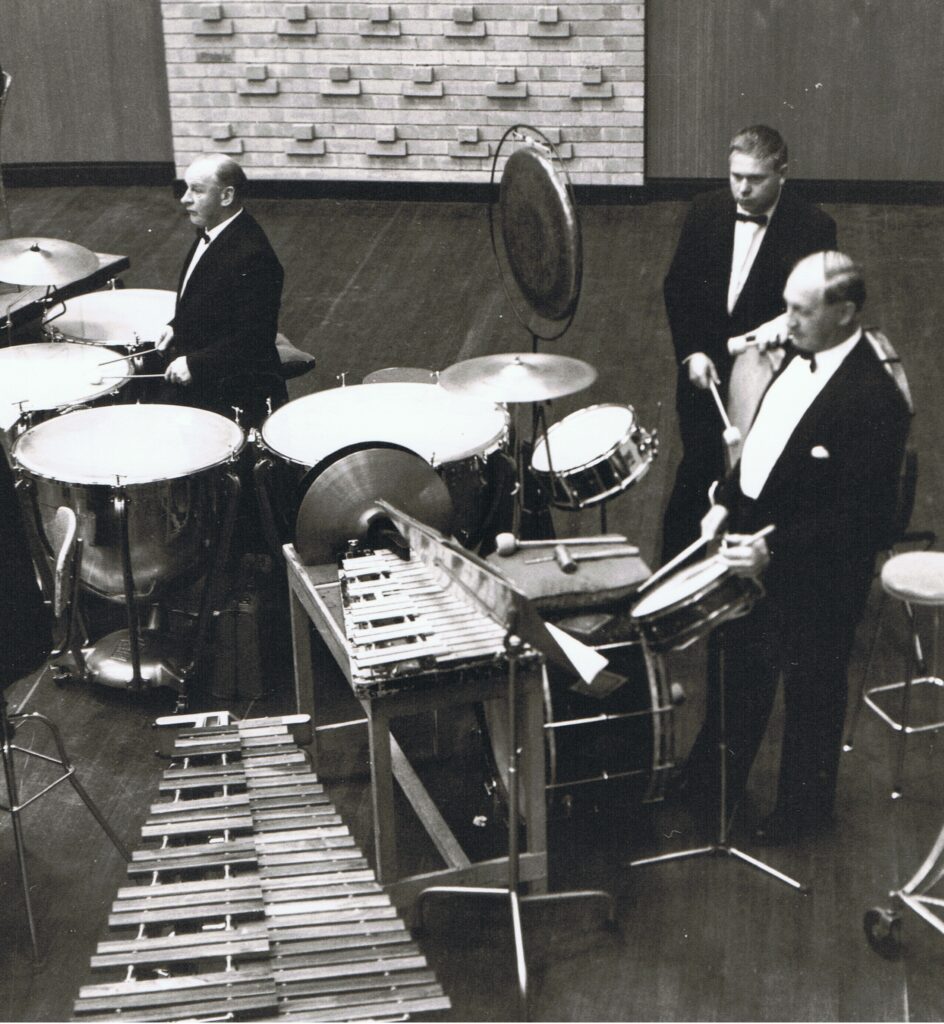
1967 CONCERT IS A PERTH MUSIC “HAPPENING”
By Sally Trethowan
The “straight” items included popular classics such as… Schubert’s “The Shepherd on The Rock” with pianist Stephen Dornan, soprano Margot Robertson and clarinettist Jack Harrison.
PART II: Harmonica and Piano:
“Genevieve Waltz” Larry Adler
Hungarian Dance No. 6 Brahms
Jack Harrison and Verdon Williams
1968
Free A.B.C. Concert – Sunday September 29th 1968
The free concert in the A.B.C.s Basil Kirke Studio tomorrow beginning at 3 o’clock is one of a series of six in which distinguished artists are performing a wide variety of works. The program will be Bartok’s outstanding and complicated “Sonata for two pianos and percussion” played by Wendy Nash and Stephen Dornan and percussionists John Reece and Brian Sadique directed by Verdon Williams and Stravinsky’s “Soldiers Tale” concert suite conducted by Verdon Williams. The performers will be Graham Wood (violin), John Mowson (bass), Jack Harrison (clarinet), Jill Harrison (bassoon), Donald Johnson (trumpet), Alan Mewitt (trombone) and Brian Sadique (percussion).
The West Australian Saturday September 28 1968
Igor Stravinsky‘s The Soldier’s Tale Concert Suite (July 1920) is scored for septet: Clarinet (in A and B♭), Bassoon, Cornet, Trombone, Violin, Double Bass and percussion. The West Australian premiere was performed on Sunday September 29th 1968 in a free concert put on by the A.B.C. in the Basic Kirke Studio. Directed by Verdon Williams, the performers were Graham Wood (violin), John Mowson (bass), Jack Harrison (clarinet), Jill Harrison (bassoon), Donald Johnson (trumpet), Alan Mewitt (trombone) and Brian Sadique (percussion).
1970
RADIO BROADCAST (1970?) – 10.30 ORCHESTRA TIME
Tasmanian Orchestra
Conductor: Verdon Williams
Penny Bill Harrison
1972
ABC – AUSTRALIA DAY FREE CONCERT – SUNDAY 30TH JANUARY 1972 AT 8PM – Supreme Court Gardens
By the West Australian Symphony Orchestra
Conductor Verdon Williams
With soloist Jack Harrison (clarinet) and narrator David Hawkes
1973
MUSIC PROGRAMMES
A six-part series of West Australia Australian Symphony orchestral programs under the baton of conductor Verdon Williams and Tibor Paul will begin on Channel 2 on Thursday. The series also brings before the public seven of Western Australia’s leading concert Hall soloists: Robert Armstrong (flute); Jack Harrison (clarinet); Leslie Perrin (soprano); Ashley Arbuckle (violin); the Perth Trumpet Trio and pianists Wendy Pomroy and David Bollard. Music for the series was selected for its broad appeal. Works range from the themes from “Love Story” and “Exodus” and the part from the ballet Spartacus (made popular as the theme from the television series The Onedin Line) to Rossini’s Barber of Seville overture the Capriccio Italien by Tchaikovsky and Mozart’s Eine Kleine Nachtmusik. The Sunday Times April 29 1973
1974
ABC FESTIVAL OF PERTH FREE CONCERT – 3pm SUNDAY 3rd February 1974
West Australian Symphony Orchestra Conductor Verdon Williams
With soloist Jack Harrison (harmonica) playing Moon River, Raindrops Keep Falling on my Head
1977
CONCERT PLEASES FAMILIES
By Dan Chadwick
The third ABC Family Concert for this year was held at the Perth Concert Hall on Friday night. An all Australian program was greeted with the now customary glee associated with this show. The W.A. Symphony Orchestra was conducted by Alan Abbott, a large, affable raconteur of musical anecdotes. He is a long-standing exponent of light music, a sound which is supposed to be pleasing but not profound. This is in contrast to dark and heavy music which is regarded as profound but not very pleasing. The program was geared to the short attention spans of the youngest members of the audience. The most lively event was Jack Harrison’s mouth organ masterpiece as he wove his way around the microphone. The deep voiced Bruce Martin together with the male section of the W.A. Opera Company chorus contributed three songs including an emphatic rendering of Kipling’s Boots which encouraged the stamping for more items in the second half. Luciano Trebse, though only committed to a small part in a Verdon Williams work, also performed a Chopin Impromptu. The evening closed with a succession of singalongs.
PLEASANT AUSTRALIAN MUSIC – By Derek Moore Morgan
Australian music provided the theme for last night’s ABC family concert at the Perth Concert Hall. Under the title “Australia calls the tune” and with Alan Abbott as conductor, the highlights of this light music program were items by Percy Grainger and in particular his colourful and even moving setting of “Shallow Brown”. This was one of three folk songs settings in which the soloist was Bruce Martin with the W.A. opera chorus men’s voices. Bruce Martin possesses a pleasing, commanding voice and sings with residence and clarity. Pianist Luciano Trebse contributed a Chopin Impromptu in addition to his somewhat negative part in the “Chanson Romantique” by Verdon Williams, and the West Australian Symphony Orchestra’s Jack Harrison gave us very credible harmonica playing. Coaxed by conductor Alan Abbott, audience participation in William Lovelock’s “Let’s all join in” was effective – especially when it came to “Waltzing Matilda”. A lively audience with lots of really young children revelled in the programs variety.