Person

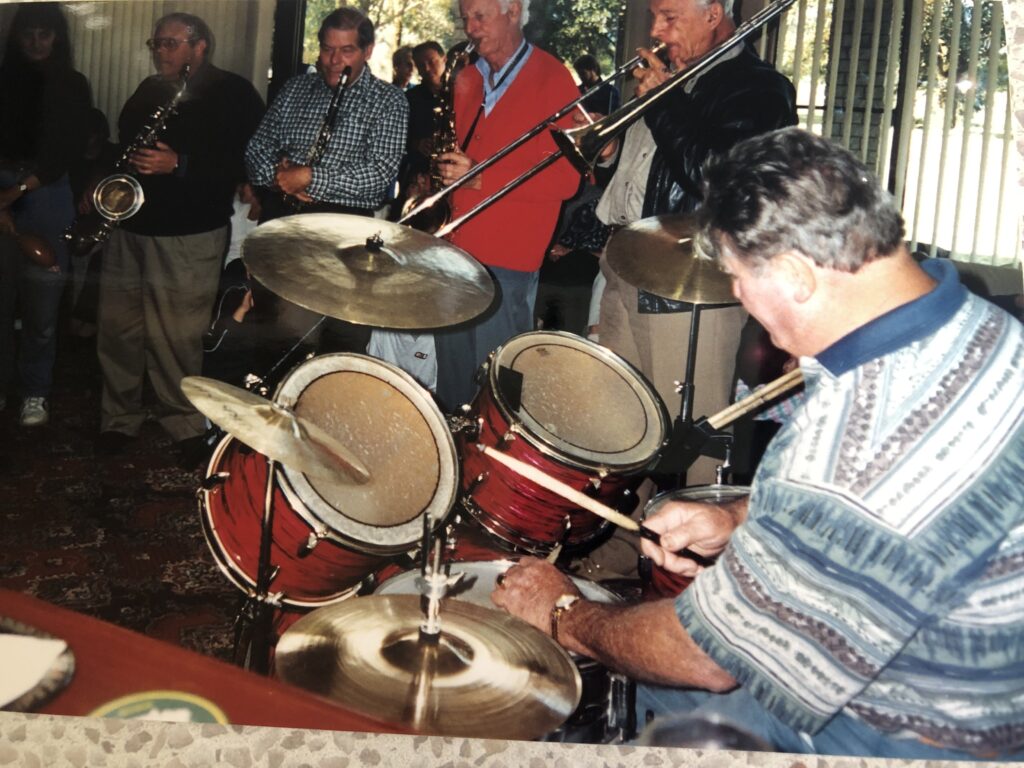
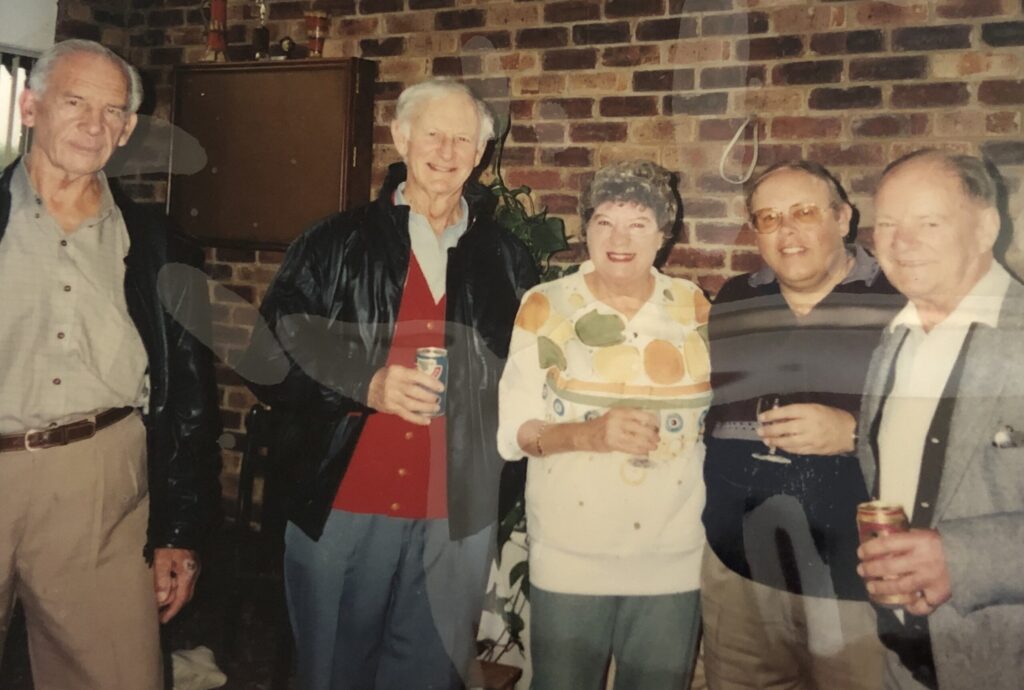
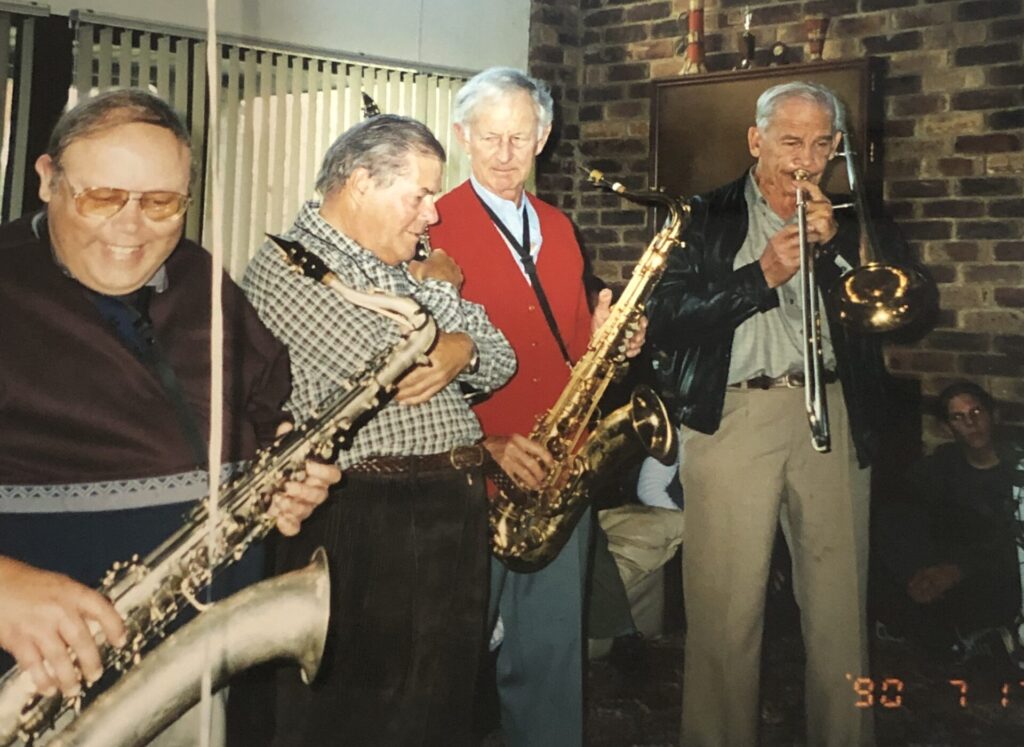
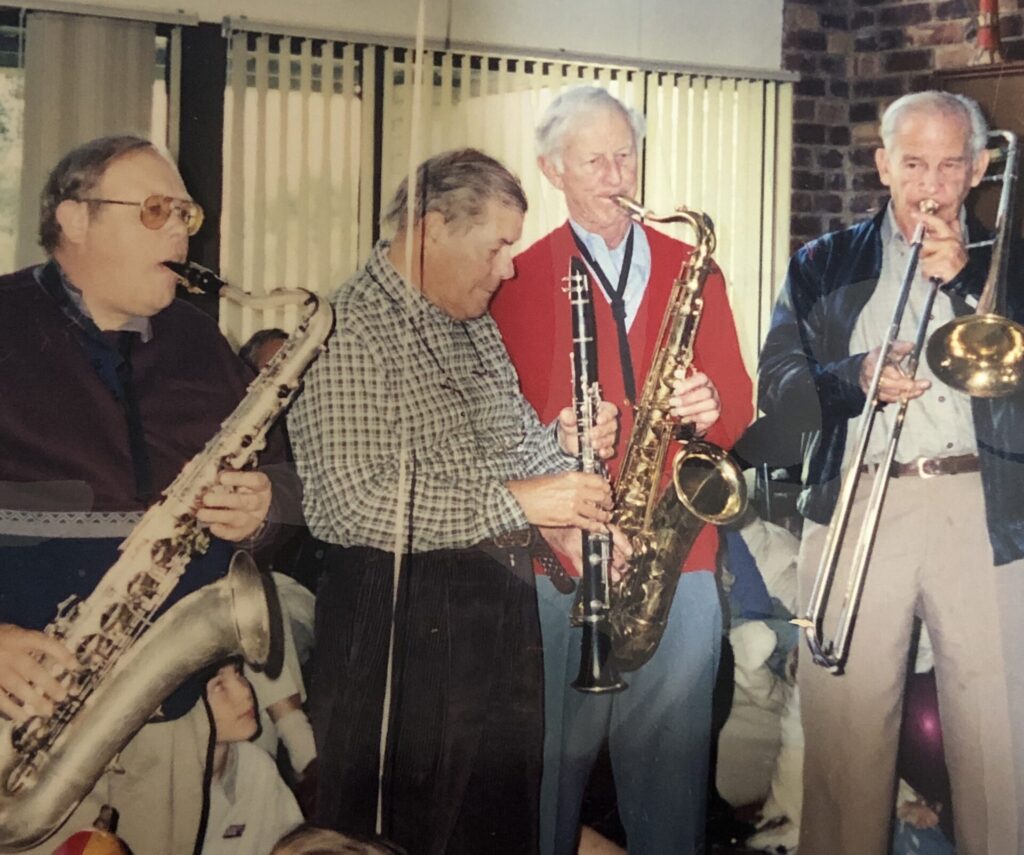
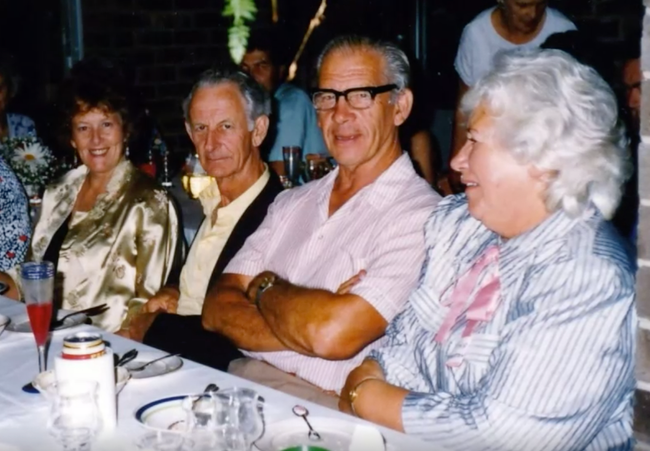
HATTON, Dick

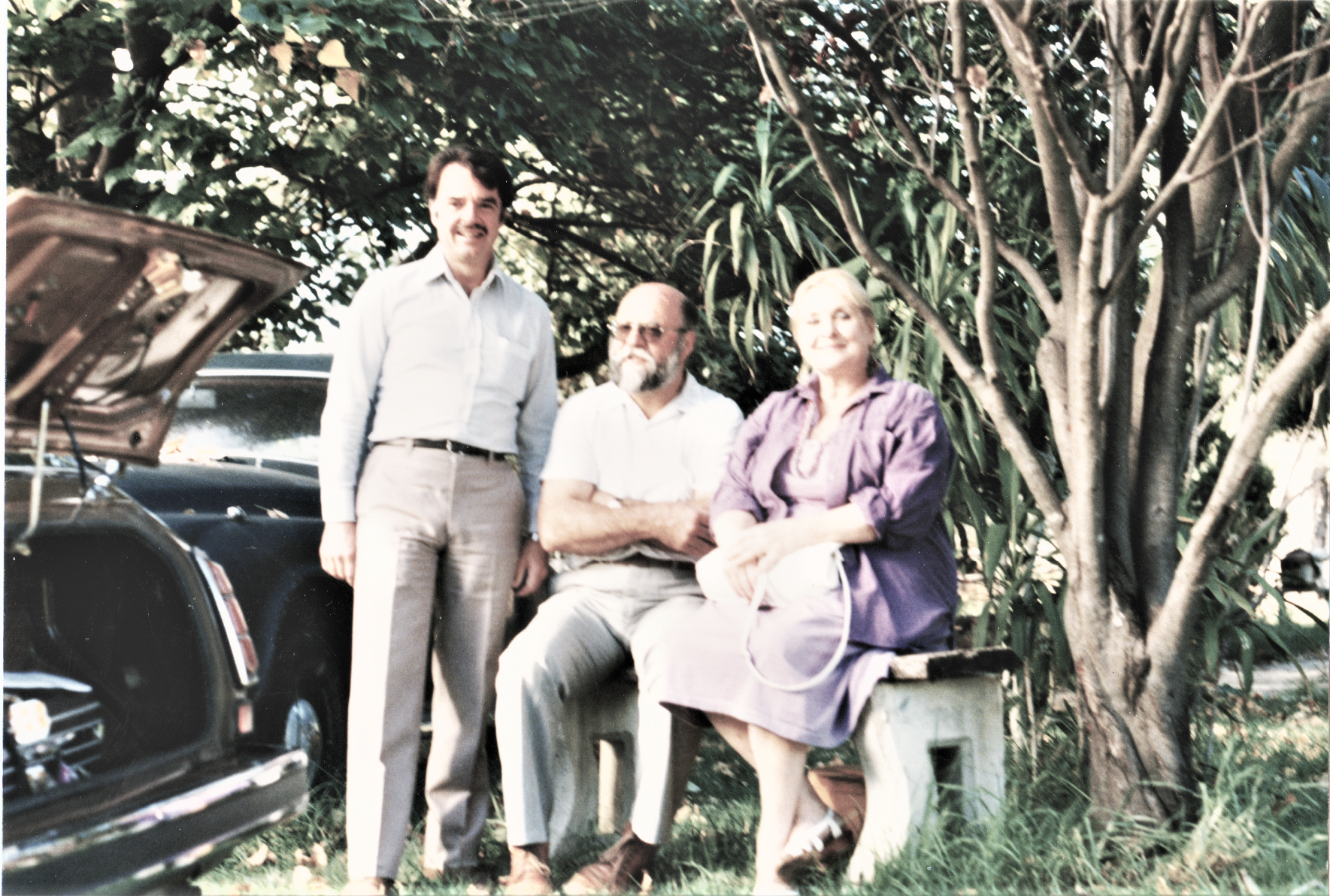
Richard Traquair Hatton was born at his parents home at 82 Highway (now Kingsway) Nedlands on 27th July, 1926.

His father, George, was an auditor with the West Australian Government Railways and travelled the state (though he never drove). He was a champion soccer player and cricketer. His mother, Annie Jeanette was a school teacher and several times women’s champion of Nedlands Tennis Club. She also played the piano and they both often held musical soirees at their house in the evenings singing Gilbert and Sullivan and other popular classics of the day. Undoubtedly this was influential on the young Dick as he subsequently became a musician.

Dick had two brothers, Ted and Jim, who were 8 and 10 years older respectively. Dick was educated at Claremont Primary School and Christ Church Grammar. However, he did not attend school until year 4, having been home schooled by his mother before that. Upon leaving school, he worked at Nicholsons and was often to be found in the record department comparing notes with the young Keith Whittle. A few years later, he was playing league football with Claremont before joining the Air Force as an aircraft fitter in 1944 at the age of 18. During the war he spent time in Melbourne and Kalgoorlie, both experiences he always remembered fondly.  After the war, he took an apprenticeship as a printer and soon after this, met young Dulcie Ashworth fromYork, fresh out the Air Force herself. During this time he was an active motorcyclist, racing in the Harley Scramble several times and road racing at places such as Caversham and Moolyabini on his Excelsior Warrior and, later, Manxman.

Finally, in 1952, Dick married Dulcie. Children Philip, Elizabeth and Christopher followed soon afterwards in 1954, ‘56 and ’57 respectively.  They settled into 24 Watkins Rd, Dalkeith for what Dick often said were “good years”. During this time, he worked as a clerk for the Army, being based first at Swan Barracks and then at Karrakatta. The Claremont Football Club was very important, with the family rarely missing a Saturday afternoon game.

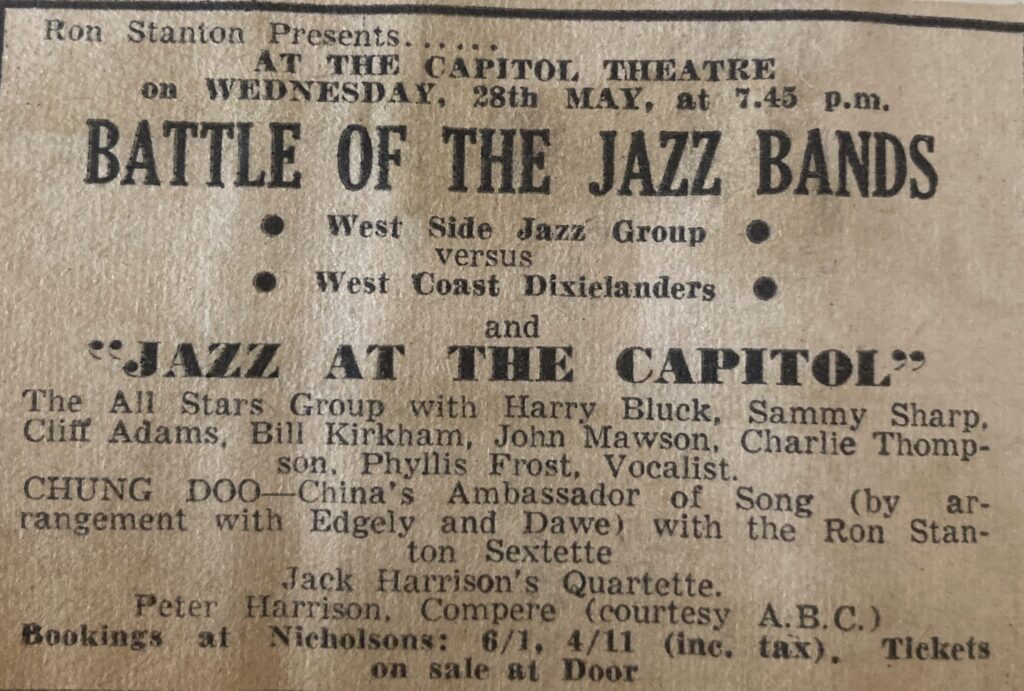
All throughout these years, Dick had been a part time professional musician, playing trombone, piano and alto sax with many different bands. He had been a pioneer of the traditional jazz revival in Perth after the war as a founding member of the West Side Jazz Group in the late 1940’s. Later, in the 1950s, came a very popular band, the West Coast Dixielanders.  Along the way, he played all sorts of weddings, balls, parties, etc with people such as Elsie Bruce, Bruce Wroth, Allen Blight, Sam Sharp and John Reagan’s “Modernaires”.

In 1961, the whole family travelled toMelbourne on the Oriana where Dick attended theAustralian Jazz Convention.  In the late 1960’s, he decided to throw caution to the wind and start his own business as a trucking contractor. This worked well for a few years and gave him a lot of satisfaction. However, it was destroyed when he hit a dog while riding his motorbike and nearly died, being hospitalized for the best part of two months. He lost his contract with the truck and his insurance did not cover motorcycle accidents. After trying to struggle on with a contract that was not as good as his previous one, he finally gave up and became a bus driver with the MTT.

Taking leave, he took his first trip to Europe at this time. Around this time too the marriage to Dulcie was in trouble and they finally separated in 1976.

After a couple of difficult years, he met Tina Tieleman who, in 1979, became his new wife. They enjoyed more than 30 good years together, first living in Swanbourne and then retiring to Golden Bay, followed by Warnbro, where they built their dream home and Dick his dream workshop. This enabled him to finish restoring the 1937 Chev truck, which he rebuilt from a rusted hulk that had been lying in a farmer’s field, over a period of 10 years. They also drove around Australia in their Comer camper van, took trips to Hong Kong with the Air Force Association Band and a vintage car tour of Tasmaniain their classic Humber. They were active in the Peel branch of the Vintage Car Club and Dick played in various bands including a 15 year stint with the MagicDream Big Band and finishing in the last few years as a stalwart of the Rockingham Swing Band.

The last few years were difficult for Dick, marked by growing illness, frailness and dementia for both him and Tina. When finally forced to move from his home, he was very unhappy. His last year was spent living with Phil.  It was great that Phil, Liz and chris were able to nurse him until the end finally came in Fremantle Hospital from pneumonia complicated by the effects of Non-Hodgkins Lymphoma and Prostate cancer.

Keith Whittle and Dick worked together at Nicholson‘s when they were 16, savouring each new jazz record as it arrived in the store.


1947

MYOLA CLUB TOASTS COLIN MOUNSEY’S 21st

The Myola Club, Claremont, was the scene of much gaiety one night during the week when Colin, eldest son of Mr. and Mrs. Fred Mounsey, of Nedlands, celebrated his 21st birthday. Mrs. Mounsey received the guests in charming gown of azure blue crepe, beaded in silver, and black accessories. During the evening the guests autographed a large wooden key. Only disappointment was that Colin’s only sister, Joy, was unable to be present. Some of those invited were: Mr. and Mrs. Cannemeyer, Mr. and Mrs. Ralph Siele, Mr. and Mrs. D. Lambert, Mr. and Mrs. Bob Lakides, Mr. and Mrs. Morgan Herbert, Mrs. A. Moran, Mr. and Mrs. Eric Wilson, Mr. and Mrs. Jo Walton; Misses Melva Jones, Betty Green, Beryl King, Billie Diamond, June McShane, Val Wroth, Edith Materson, Val Wansbrough, Mary Carlson. Joan Firby, Lea Parker, Beryl Sexton. J. Maloney, Norma Schofield, Margaret Atherdon., Margaret Le Lievre, P. Carter, Joan Carlson. Messrs. F. Mounsey, Des Thomas, Bruce Wroth, Arthur Downey, Keith Hownslow, Col. Goldsmith, Dick Hatton, John Miller, Frank Sagare, Peter Lyons, Mas Annear, Merv Howie, Phil Greenwood, Bert Hall, George Freeman, Ray West, Peter Hatton, Allan Tyson, Roland Baker, Jo Watson, Bunt Hardy, D. Mounsey, and many others.

Mirror (Perth, WA : 1921 – 1956), Saturday 3 May 1947, page 13


1951

Country engagements announced this week are; Dulcie Mavis Ashworth of York to Dick Hatton of Nedlands.

Northam News (WA : 1947 – 1954), Wednesday 25 July 1951, page 12


1952


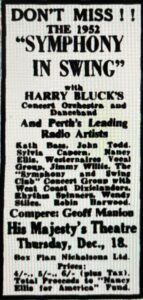
DON’T MISS The 1952 Symphony in Swing with Harry Bluck‘s Concert Orchestra and Dance Band

And Perth’s Leading Radio Artists:

Kath Bass, John Todd,  Sylvia Caporn, Nancy Ellis, Westernaires Vocal Group, Jimmy Willis the “Symphony and Swing Club,” Concert Group with West Coast Dixielanders, Rhythm Spinners, Wendy Stiles, Robin Harwood. Compere: Geoff Manion.

HIS MAJESTY’S THEATRE. THURSDAY. DEC 18th. Box plan Nicholsons Ltd. Prices 4/, 5/. 67 (plus tax). Total proceeds to “Nancy Ellis for America” Fund.

Daily News (Perth, WA : 1882 – 1955), Saturday 13 December 1952, page 11


1953

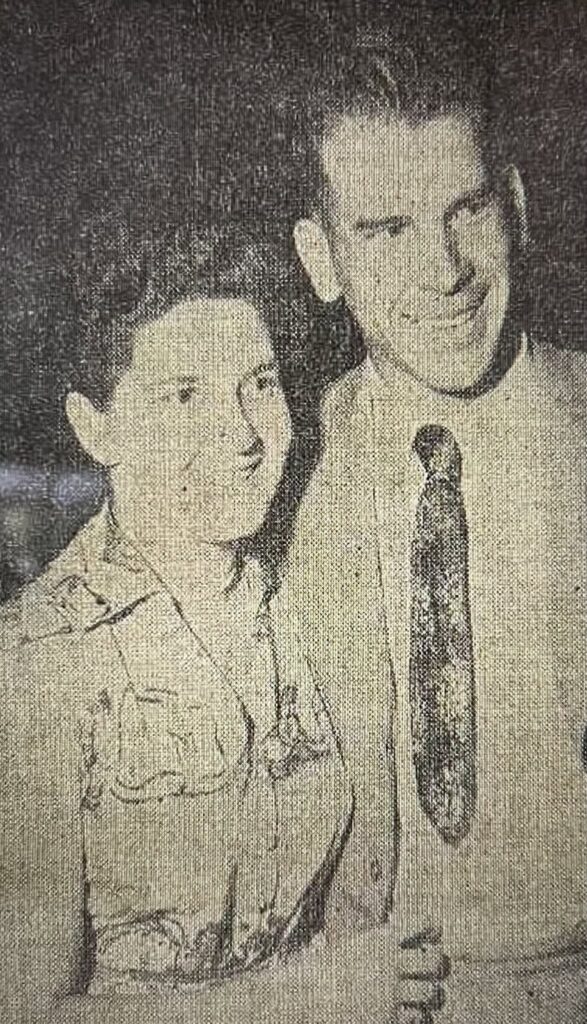
Dulcie and Dick Hatton: Daily News (Perth, WA : 1882 – 1955), Saturday 17 January 1953, page 9


Reason to celebrate

Joan lnnes of Mt. Lawley and Flying-Officer Noel Johnson, of Pearce. recently announced their engagement, and last night Frank Throssell gave them a party at his Nedlands home.

Daily News (Perth, WA : 1882 – 1955), Saturday 17 January 1953, page 9


IMPROMPTU JAM STOLE THE SHOW

An impromptu jam session nearly stole the show at Thursday night’s WA Amateur Dance Band Concert at the Capitol Theatre. Composite band of members who had competed earlier, really went to town and had patrons rocking in their seats. Jam band was led by internationally known Harry Phillips on the trumpet and Sid Vandervelde on guitar. Boys really turned it on and the crowd went wild. Even when Sammy Sharp came forward to announce the night’s awards the audience clamoured for another spread of jam. So, a grinning Sammy waved the boys to continue. Night was a feast of bounce, jive and bop with the amateur instrumentalists showing enough promise to indicate that many will soon be making pro names for themselves. Hundreds were present to hear 13 outfits, ranging in size from 4 to 11 pieces, vie with one another in a variety of Jazz renditions. Judges Ken Murdock, Ron Moyle, Merv Rowston, Harry Bluck and Bill Kirkham were not set an easy task. Finally, they awarded the shield to the West Coast Dixielanders, a 7 -piece outfit led by Phil Battey on trumpet, George Battey, clarinet, Dick Hatton, trombone. Conn Goldsmith, bass, Bob Anderson, piano. Alan Blight, drums, and Vince Goldsmith, guitar. These boys have been playing together less than a year and decided at the last minute to enter the contest. They will hold the shield until next year’s contests.

The Dixielanders all prefer the type of music their name suggests is their special dish and are keen on the Jelly Roll Morton school. Second place went to Neil Manno’s Quintette with the Jive Five led by Wynne Hammer third. Other awards were: Best Instrumentalist; Ray Taylor, trumpet. Best Guitar: Jimmy Taylor. Best Drummer: Wynne Hammer. Best Pianist: Thelma McGrath. Best Vocalist: Bill Groessler. Most promising reed player was 17-y-o Neil Boon, a Dutch youth. Organisers, the W A Musicians’ Union, Sammy Sharp and compere Wally Hadley are to be congratulated on a good show which all agreed was a great improvement on previous contests and augurs well for the future of dance music in this State. Saw quite a sprinkling of musicians who have given up regular playing in the audience at the Capitol, including Harry Ward and Laurie McGrath.

Mirror (Perth, WA : 1921 – 1956), Saturday 25 July 1953, page 11


THEY MADE GOOD – AND SUCCESS DIDN’T GO TO THEIR HEADS

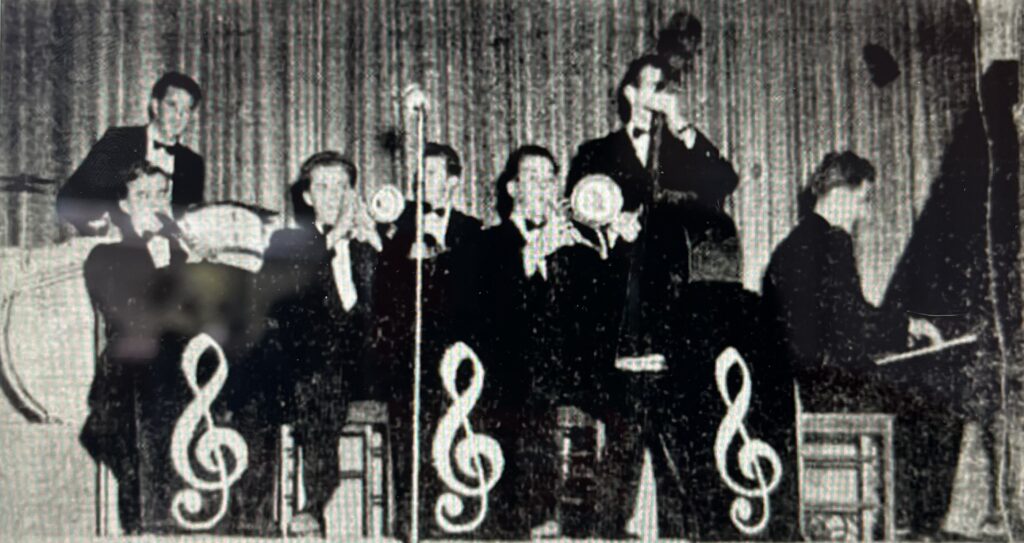
PICTURED ARE THE WEST COAST DIXIELANDERS who won the Dance Band Contest last week at the Capitol. Personnel, left to right: Geo. Battey (clarinet), Alan Blight (drums), Phil Battey (leader and trumpet), Vince Goldsmith (guitar), Dick Hatton (trom), Col Goldsmith (bass) and Bob Anderson (piano).

Mirror (Perth, WA : 1921 – 1956), Saturday 1 August 1953, page 12


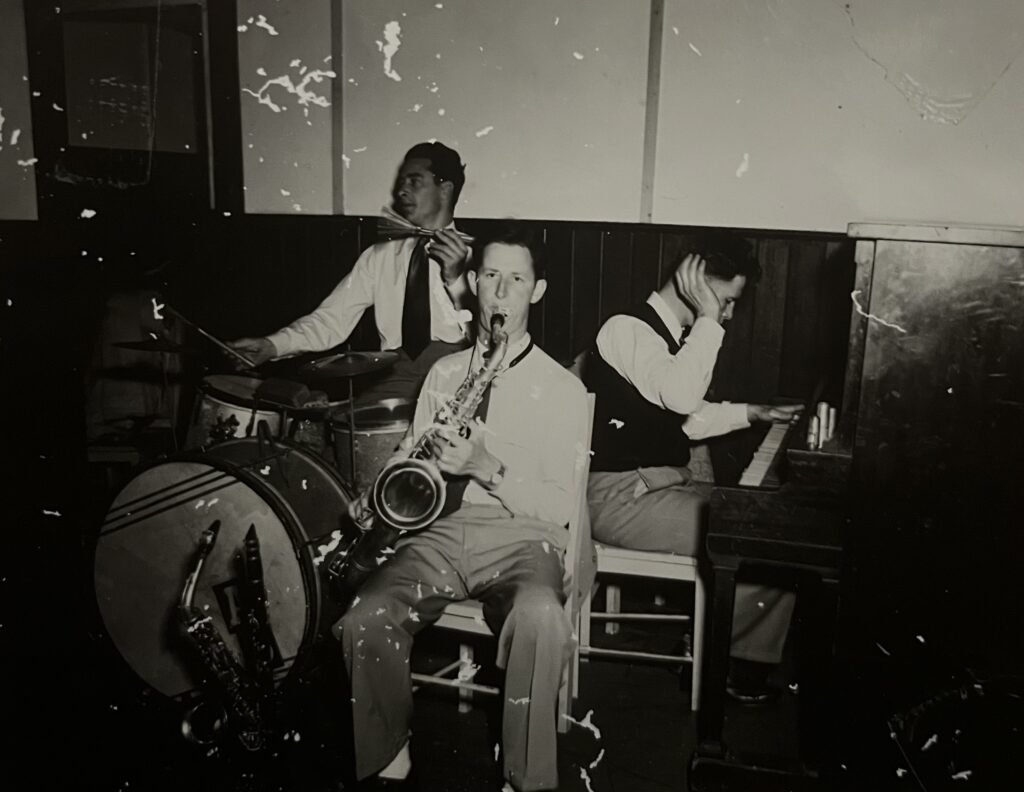
Alan Blight, Bruce Wroth and Dick Hatton

1954

HATTON (nee Ashworth): At Kensington, to Dulcie and Dick – a son (Philip Traquair.)

West Australian (Perth, WA : 1879 – 1954), Saturday 22 May 1954, page 40


MANY MUSICIANS AND ARTISTS donated their time at the Teen and Twenty Club’s open dance which was held to raise money for the Wendy Nash appeal. A cheque for £65 has been given to the young’ pianist. Artists included the Rhythm Spinners, Lisa Ray and Bill Higgins. Paul and Eileen, W.A. jive champions. Johnny and Evelyn, nightclub entertainers from Melbourne, and Wendy Stiles. Among the musicians were Jack Harrison, Horrie King, Sammy Sharpe, Jimmy Beeson, Keith Whittle, Johnny Regan, Alex MacMillan, Ralph Filmer, Dick Hatton and Les West’s orchestra.

Western Mail (Perth, WA : 1885 – 1954), Thursday 22 July 1954, page 22


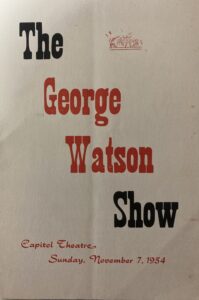
1954 George Watson Show
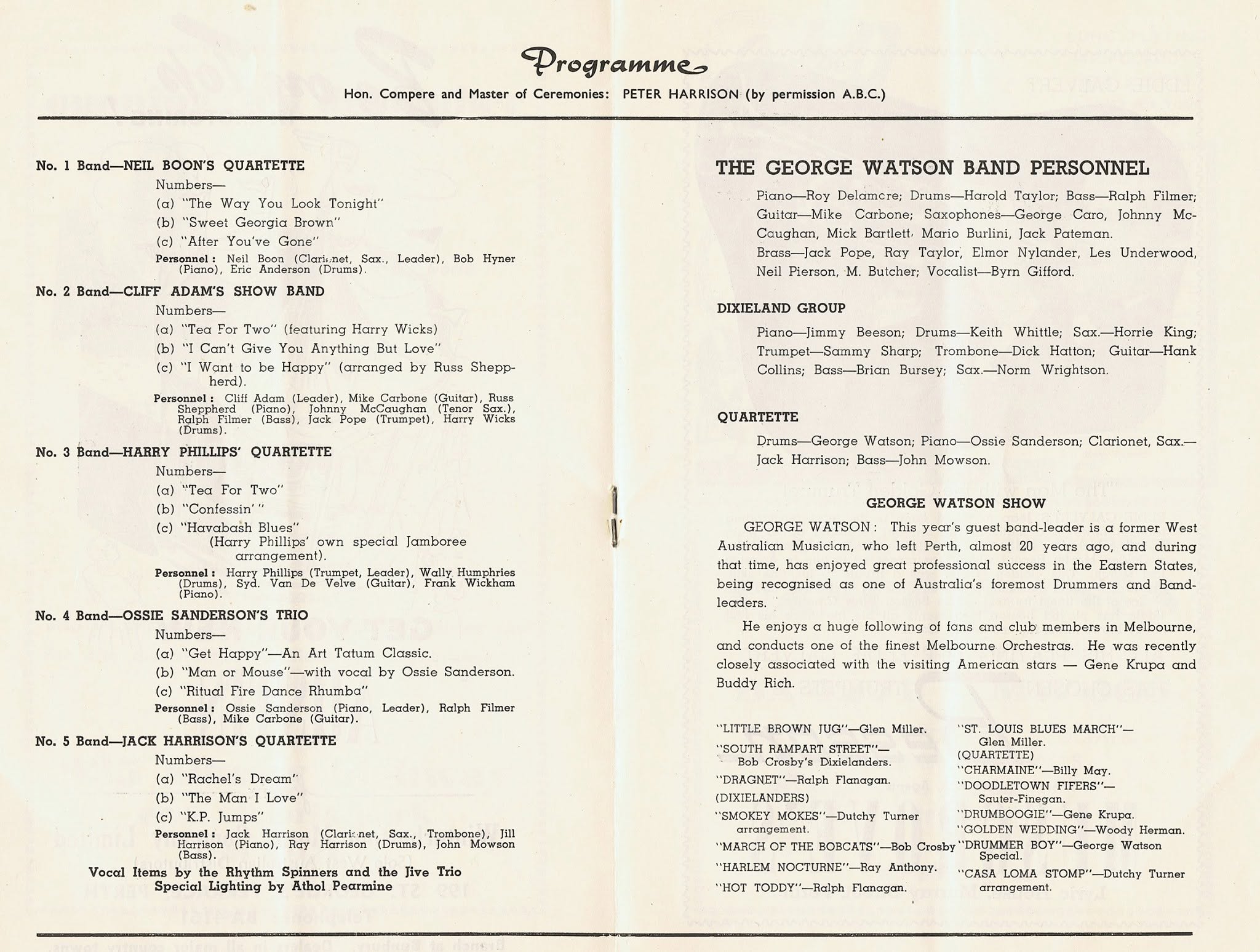
1954 Watson George program

1955

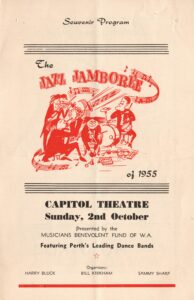
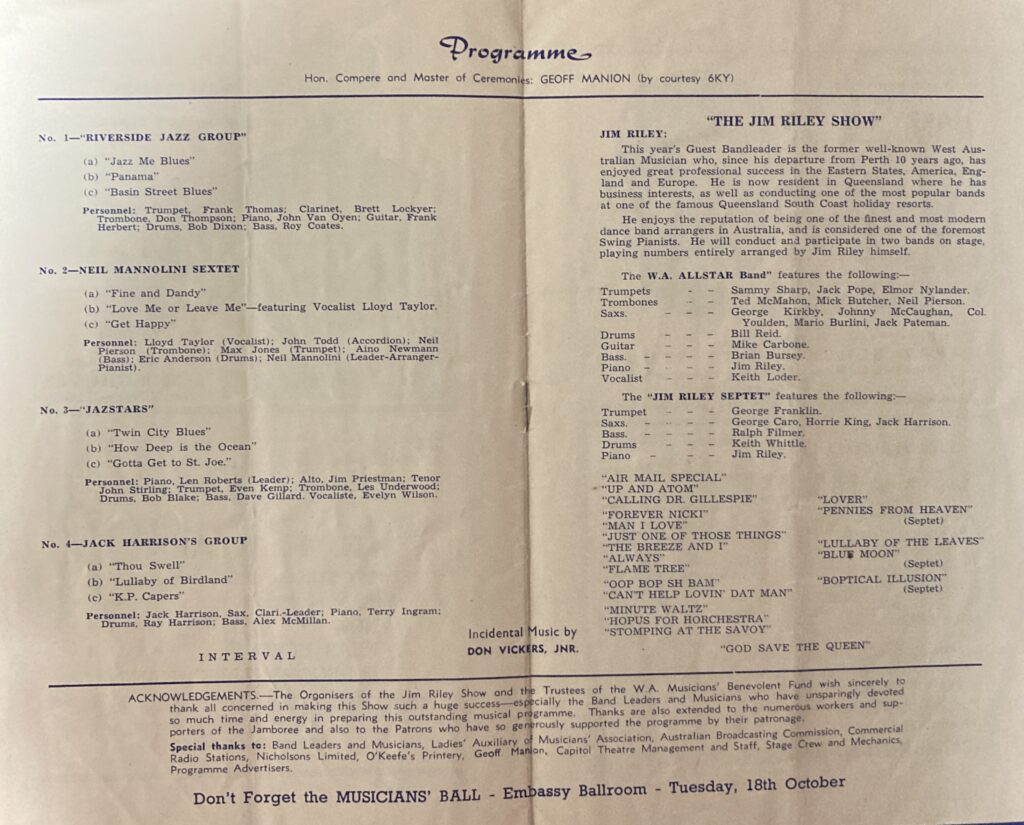
1955 Jazz Jamboree – program
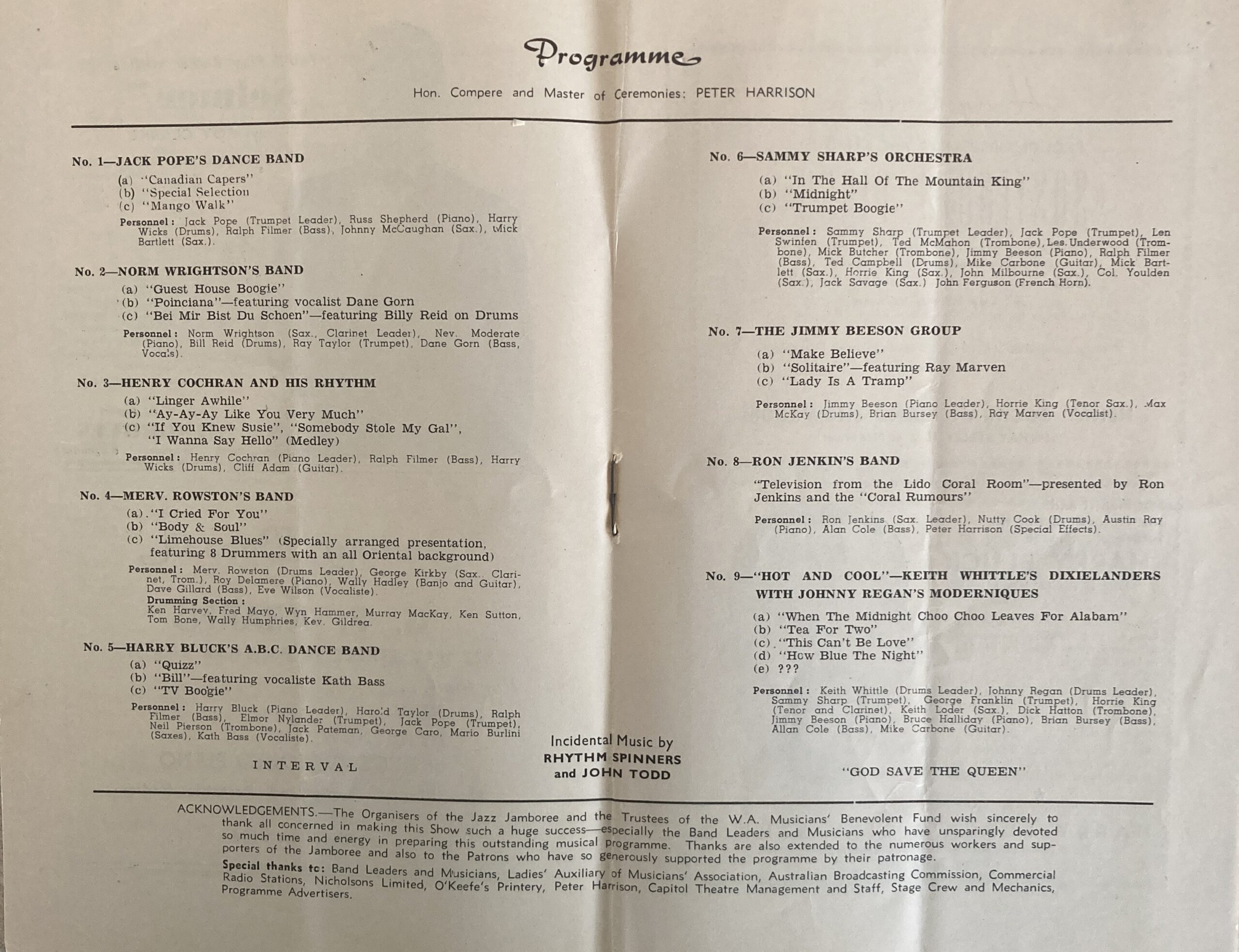
1955 Jazz Jamboree Program

1960

Australian Jazz Convention 1960 riverboat trip

The  family went across from Perth on the Oriana so Dick Hatton (trombone/piano) could play at the convention. 


1976

The main-stream group “The Dick Hatton Quintet” with Barry Bruce (piano), Bruce Wroth (sax) and Keith Whittle (drums) and sit ins Ken “Kipper” Keresky (trombone) and Eddie Martin (trumpet) and a group fronted by Colin Scott (guitar) and Murray Wilkins (bass guitar).  Bruce Wroth mentioned above and who works in the Art Department of the daily morning paper, The West Australian, a few weeks back won the first prize in a graphic art competition to design a symbol for the Festival of Perth which is held annually.

Jazz Down Under, 5 January 1976


2000 – 70th birthday of Ray Harrison: Jack Harrison, Bruce Wroth (sax), Dick Hatton (trombone) Ray Harrison (drums)
Dick Hatton (left), Bruce Wroth, Jill Mowson, Jay Harrison, Ross George
Jay and Jack Harrison, Bruce Wroth, Dick Hatton


Tina and Dick Hatton, Bruce and Joan Wroth

Dick Hatton died on 19th October 2012 aged 86.

Years

Person

ROBINSON, Blanche

Blanche Keturah Robinson L.T.C.L. L.R.S.M.

Blanche was born in Boulder on 25th November 1901 to Ethel and Horace Truscott.  She attended Boulder Primary School and Kalgoorlie High School.  Blanche studied music with Miss Meta Pickering.

Blanche taught piano and theory in the Goldfields until 1927, married and then moved to Perth.  Blanche was married to Robert Alfred Robinson and had two sons Robert Balfour and Gordon Bruce.

During WWII Blanche arranged musical programmes for the troops and Red Cross.  For many years she was on the Music Advisory Board of the University of Western Australia and was Vice-President of the W.A. Music Teachers Association.  Blanche worked for the Quambry Club Red Cross arranging musical programmes 2 or 3 times a year and took small groups of musicians to hospitals and homes.


1940

Music Club Meeting

An informal meeting of the Royal Schools’ Music Club was held at the Karrakatta Club Hall last night, only members being present on this occasion. The platform was artistically decorated with large bowls of Michaelmas, daisies, zinnias and dahlias, and on the tables which were placed about the rooms were vases of roses and carnations. The president. Mrs. Cecil Mason, received members at the entrance to the hall, and was assisted by the secretary, Miss Gwenyth Greaves. Mrs. Mason’s frock was of striped French crepe in pastel tones of coral, jade and gold, with shoulder straps and girdle of jade velvet. Miss Greaves chose eau de nil georgette with corsage spray in violet tonings. A musical programme, which had been arranged by Miss Margaret Williamson, was presented during the evening, and included items by the following members:-Blanche Robinson and Daisy Budd (piano duet), Mary Buggy (songs), Mina Chapman (violin soli), Mavis Dick (songs) and Margaret Williamson (piano solo). The serving of supper brought an enjoyable evening to a close.

Sunday Times (Perth, WA : 1902 – 1955), Sunday 14 April 1940, page 24


Musical Evening.

THE Royal Schools’ Music Club held an informal meeting at the Karrakatta Club Hall on Saturday, members only being present. The president (Mrs Cecil Mason) received at the entrance to the hall and wore a frock of striped French crepe in pastel tonings. She was assisted by the secretary (Miss Gwenyth Greaves). The programme, which was arranged by Miss Margaret Williamson, commenced with the reading of a paper by Mr. Kenneth Watts on “Creative Music in the School Child.” A second paper, entitled “Greig,” was read by Mrs. Florence Human, Miss Zeeba Halperin assisting with pianoforte illustrations. Musical items were also given by the following members:–Mrs. Phil Collier, jun. (piano solo), Miss Mary Buggy (songs), Misses Blanche Robinson and Daisy Buds (piano duets), Miss Mavis Dick (songs). Miss Mina Chapman (violin solos), N. Yiendi (songs), and Miss M. Williamson (piano solo). Misses Mavis Dick and Margaret Williamson were accompanists.

West Australian (Perth, WA : 1879 – 1954), Monday 15 April 1940, page 4


Music Club Entertains.

THE stage of the Karrakatta Club Hall was decorated with bowls and vases of roses, gladioli and Iceland poppies on Saturday, when the Royal Schools’ Music Club entertained many guests and members. The president (Mrs. Cecil Mason) received wearing a frock of green, violet, and palest gold striped taffeta with a corsage of self-tone green. She was assisted by the secretary (Miss Gwenyth Greaves), who chose eau-de-nil georgetter, and the assistant secretary (Miss Marjorie Wyndham), who wore a frock of blue crepe georgette. Mrs. Mason welcomed the guests, after which a musical programme, arranged by Miss Jean Fullarton, was presented, the following members contributing items: Florence Purslove (piano solo): Gertrude Tearle (songs), accompanied by Yvonne Rees; Mina Chapman (violin concerto) with accompaniment by Florence Hodd; Dorothy Arnold (songs) accompanied by Dorothea Angus; Margaret Williamson (piano solos) and the Royal Schools’ Double Quartette (songs) conducted by Dorothea Angus, and accompanied by Blanche Robinson. At the conclusion of the musical programme, a one-act comedy entitled “A Marriage Has Been Disarranged” was presented by the Marlowe Club, produced by Miss Ilma Weston. The cast comprised Mesdames Moore and Chappell, Misses Joan Coleman, A. Chugg, E. Munyard, Pat. Ryan, Nancy Piggott, and Nancy Hill. Members of the committee who assisted in entertaining the guests were Mesdames D. Arnold, K. . Budd, N. Yiend, and R. A. Robinson; Misses Gwenyth Greaves, Marjorie Wyndham, Jean Fullarton, Jean Newsham, Dorothea Angus, Margaret Williamson, and Mr. E. Chambers. During the evening a presentation was made to Mr. Keith Devenish, a club member who has joined the Air Force.

West Australian (Perth, WA : 1879 – 1954), Monday 14 October 1940, page 12


1941

SOCIAL ITEMS. Musicale at Mt. Lawley.

THE entertainment committee of the R.A.A.F. Comforts Fund held a musicale at Mr. and Mrs. E. Sinclair’s home at Mt. Lawley on Saturday evening. The lounge, which accommodates 100 people, was filled with music-lovers, and was arranged with a profusion of bowls of Easter lilies, roses, Morrison, smokebush and other wild flowers. The following artists contributed to the programme:-Margaret Williamson, Phyllis Everett and Roger Worth (songs), June East (recitation). Mina Chapman (violin solos), Dorothea Angus (piano solo). Blanche Robinson and Dorothea Angus were the accompanists. At the conclusion of the programme Mrs. Mason (president of the entertainment committee) thanked Mr. and Mrs. Sinclair for their kindness in lending their home for the occasion, and Mr. J Armstrong (a member of the R.A.A.F. Comforts Fund committee) thanked the artists. Mr. and Mrs. Sinclair replied. Members of the entertainment committee, who helped towards the success of the evening, were Mesdames Alda, Burgess-Lloyd. H. Adkins. Hugo, McCaul. Misses J. L. Young and Ida Geddes.

West Australian (Perth, WA : 1879 – 1954), Tuesday 8 April 1941, page 4


MUSIC CLUB ENTERTAINS.

THE Royal Schools Music Club entertained at the Karrakatta Club Hall on Saturday evening. The stage was arranged with bowls of roses and vases of cotoneaster, chrysanthemums and zinnias. The guests were received by the president (Mrs. Cecil Mason) who wore a frock of green, violet and palest gold striped taffeta with a corsage of selftoned green. She was assisted by the secretary (Miss Jean Pullarton), who chose a frock of turquoise lame with diamente shoulder ornaments. The programme which was arranged by Miss Joyce Marshall, began with a paper by Miss Ida Roberts entitled “Style in Pianoforte Music.” and was illustrated by Joan Pike, Nancy Davies, Helen Richardson, Nell Downes and Ken Watts. The remainder of the programme consisted of musical items contributed by the following members: Peggy Brennan (songs), accompanied by Blanche Robinson; Mavis Dick (piano solo), Maud Boesser (songs), accompanied by Mrs. N. E. Moran; Mrs. F. Human (songs), accompanied by Mavis Dick.

West Australian (Perth, WA : 1879 – 1954), Tuesday 13 May 1941, page 4


Music Club Entertains.

MEMBERS of the Royal Schools Music Club entertained on Saturday at the Karrakatta Club Hall which was decorated with large bowls of poinsettias, roses, wattle and Iceland poppies. The president (Mrs. Cecil Mason) received the guests wearing a frock of white georgette with diamente. She was assisted by the secretary (Miss Jean Fullarton), who wore a frock of cyclamen taffeta. Mrs. Mason welcomed. the guests, after which a programme arranged by Miss Ella Carmichael was presented. This began with a paper by Muriel Bird entitled “The Three Romanticists-Shelley, Byron and Keats,” and was illustrated by Maisie Peck, Joy D’Arcy-Evans, and Merle Gillham. The remainder of the programme was contributed by the following members, Noreen Collier (piano solo), Elvie Rodstead (songs accompanied by Edgar Nottage), Mina Chapman (violin sonata accompanied by Florence Hodd), Royal Schools Singers (conducted by Dorothea Angus, accompanied by Blanche Robinson), Elvie Arnold (songs accompanied by Blanche Robinson) and Edgar Nottage (piano solo).

West Australian (Perth, WA : 1879 – 1954), Tuesday 17 June 1941, page 4


Evening of Music.

BOWLS of poinsettias and peach blossom, and vases of roses, Geraldton wax flower, and Iceland poppies made attractive decorations at the Karrakatta Club Hall on Saturday when the Royal Schools’ Music Club entertained many guests and members at an evening of music. The president (Mrs. C. L. Mason) received the guests at the entrance to the hall wearing a blue French crepe skirt with matching velvet bodice, and was assisted by the secretary (Miss Jean Fullarton), who chose a frock of turquoise blue lame. The programme of the evening, arranged by Myril Frape, opened with a paper by Gwenyth Greaves entitled “17th and 18th Century Opera,” which was illustrated by Dorothy Arnold and Winifred Hamilton, with Blanche Robinson as accompanist. The latter part of the programme was contributed to by Denise Dingwall and Dorothea Angus (violin and piano sonata), Mavis and Peggy Hutchins (duet on two pianos), Gertrude Tearle (songs), accompanied by Winifred Gamble, and Sydney Lynch (songs) accompanied by Mrs. E. Lynch.

West Australian (Perth, WA : 1879 – 1954), Wednesday 16 July 1941, page 4


1942

SOCIAL NOTES. The marriage was quietly solemnised early yesterday morning at St. Luke’s Church, Cottesloe, between Miss Dorothy Balston, the second daughter of Mr. and Mrs. W. Balston, of Peppermint Grove, and the Rev. Ivan Cardell-Oliver, the younger son of the late Dr. Cardell Oliver and Mrs. Cardell-Oliver. M.L.A., of Ventnor-avenue, West Perth. The Rev. W. E. Jones, rector of St. Luke’s, officiated. The bride was given away by her father, and Miss Cecily Balston (sister of the bride) was bridesmaid, and the Rev. L. W. Riley was best man. Later in the day the bride and bridegroom left for their future home at Bridgetown, where Mr. Cardell-Oliver will be inducted as rector of that parish on Thursday.

Miss Linley Wilson, who has spent the past few months in Sydney, anticipates returning to Perth before Easter. She had intended returning in the middle of this month but has been detained by the illness of her mother. While in Sydney Miss Wilson, who is the representative in this State of the Royal Academy of Dancing, attended the annual advisory committee meeting.

The Royal Schools’ Music Club held its annual at-home on Saturday at the Karrakatta Club Hall. Mrs. C. L. Mason (president) received the guests and members, and was assisted by Miss Mavis Jones (the assistant secretary). A musical programme, arranged by Miss Marjorie Wyndham. was contributed to by Winnie Gamble and Yvonne Lees (piano concerto), Gwen Pierpoint (songs), Honor Camerer (recitation), Helen Richardson (piano solo), Denise Dingwall and Dorothea Angus (violin and piano sonata), Doris Horrigan (songs), James Condon (recitation), and Blanche Robinson who accompanied the vocalists.

West Australian (Perth, WA : 1879 – 1954), Tuesday 17 March 1942, page 3


SOCIAL NOTES.

Banksia blooms and crimson berries decorated the Repertory Club Theatre yesterday afternoon when a musicale took place there in aid of the Merchant Service comforts fund. Mrs Cecil Treadgold arranged the programme to which the following artists contributed: Charlotte Weaver (songs), Winnie Hamilton (songs). Marjorie Harper (pianist) and Blanche Robinson (accompanist). A dramatic item arranged by Billie Cohen was presented by herself and Joyce McKee. Afternoon tea was served by members of the house committees: Medames A. J. Bishop, B. Edwards, S. Johnson, L. B. Lawrence, G. Pilkington and Miss Muriel Wieck.

West Australian (Perth, WA : 1879 – 1954), Tuesday 26 May 1942, page 5


COMING EVENTS.

THIS AFTERNOON At the Karrakatta Club a musical programme has been arranged by Mrs Cecil Mason. The following artists will contribute to the programme: Doris Horrigan, Ella Savage, Dorothy Arnold, Norma Collier, Ruth Cranfleld and Blanche Robinson. 

West Australian (Perth, WA : 1879 – 1954), Tuesday 20 October 1942, page 5


1943

COMING EVENTS.

Tuesday April 6: The Karrakatta Club will begin its winter activities at 3 o’clock. when a musicale arranged by Mr Cecil Mason will take place. It will be in aid of Red Cross funds and the contributing artists are Doris Horrigan (vocalist), Nora Coalstad (Pianist) and Blanche Robinson accompanist. It is hoped it will be well supported by members and their friends. 

West Australian (Perth, WA : 1879 – 1954), Tuesday 30 March 1943, page 5


COMING EVENTS. TOMORROW, JULY 15: 6th miniature recital at Karrakatta Club. 3 pm. for Red Cross. Mozart programme with instrumental trio for clarinet, viola and piano. Soprano solos, vocal trio (3 women. from the Magic Flute). Artists. Doris Horrigan, Valantine Lewin, Phyllis Everett, Percy Newton, William Glassford, Edward Black. Accompanist Blanche Robinson. 

West Australian (Perth, WA : 1879 – 1954), Wednesday 14 July 1943, page 4


MINIATURE RECITAL A Mozart Programme.

There was a good attendance at the Karrakatta Club Ball yesterday afternoon on the occasion of the fifth of this season’s miniature recitals organised by Mrs C. Charlton in aid of Red Cross funds. The programme consisted entirely of selections from the works of Mozart. Contrasted and well-chosen examples were presented by capable artists, who provided an entertainment well balanced and bearing ample evidence of careful preparation. Chamber music songs and a concerted vocal number were included and all were given with a full measure of artistry. The trio in E flat, Op 7, for clarinet, viola and piano was played by Percy Newton. William Glassford and Edward Black; Doris Horrigan (soprano) sang “No mi der” from the opera “Don Giovanni,” “L’Amero” (with violin obligato by William Glassford), “My lady is so charming” and “Un Moto de Gioja” and joined Valentine Lewin and Phyllis Everett in a trio from “The Magic Flute.” The accompaniments for the vocal numbers were played by Blanche Robinson, whose excellent work deserves a special word of praise. 

West Australian (Perth, WA : 1879 – 1954), Friday 16 July 1943, page 6


1944

MINIATURE RECITAL First-Grade Music.

In the capable hands of a small company of artists of high reputation the miniature recital given in the Lady Onslow Hall on Friday night was an entertainment of first grade order throughout. With the Brahms Sonata in D minor for piano and violin, played most expressively by Nora Coalstad and Vaughan Hanly, as the major performance, the music provided, both instrumental and vocal, was characteristically good. Two groups of songs by Doris Horrigan included “Summer” (Martin Shaw), “‘To the Queen of My Heart” (Delius), “Will o’ the Wisp” (Gilbert Spross). “The Mirror” (Francmesnil), “The Apple Tree” (Georges). “The White Moon” and “Mandolin” (Szulc). Nora Coalstad played an arrangement by Mugellini of Bach’s Prelude and Fugue in A minor, two Mazurkas and three etudes (Chopin). Vaughan Hanly – (accompanied by Nora Coalstad) played “Rondo” (Mozart, arranged by Kreisler). Blanche Robinson accompanied the songs.

West Australian (Perth, WA : 1879 – 1954), Monday 24 July 1944, page 3


Big Show For POW

Manpower department officials have organised a Sunday night show for the Red Cross P.O.W. fund. Show will be held at the Capitol Theatre next Sunday night, and the following appear on the programme: The U.S. Navy Band, the C.T.A. Choir, Joe Brennan and Ida Newton, Dave Howard and his saxophone with Phyllis Blott, Doris Horrigan, the Lydian Singers, Trixie Shephard, Kay Trethowan. the Zigeuner Band conducted by Mr Lazar Sverdloff, Maurice Jaffey, J. Lenegan, J. F. Stephens, Blanche Robinson, O. G. Campbell Egan and Laurie O’Keefe. Spectacular finale entitled ‘Land of Hope and Glory’ will feature a tableaux of the United Nations, which will be presented by a choir comprised of the Lydian Singers, with the Commercial Travellers’ Choir, the United States Navy Band and Kay Trethowan as vocalist. 

Daily News (Perth, WA : 1882 – 1955), Wednesday 30 August 1944, page 6


1946

SOCIAL NOTES. (By “Avon.”)

Great bowls of poinsettias and winter berries decorated the ballroom of the Adelphi Hotel, yesterday afternoon at a musicale arranged by Mrs. F. Herman in aid of the Y.M.C.A. Hostel extension appeal. Over 200 persons sat around the tables and enjoyed the entertainment, which included humourous sketches. The artists were Rosemary Cullen and Hilda Black, pianists, Doris Horrigan, Phyllis Everitt, Mercia De Mamiel and E. Mothershaw, vocalists and Blanche Robinson and Mrs. A. E. Armstrong, accompanists. A humourous sketch, written for the occasion, was presented by Peggy Nunn and Tom Tracy. The ballroom was lent by the hotel management. 

West Australian (Perth, WA : 1879 – 1954), Friday 7 June 1946, page 3


1947

VARIED ACTIVITY. Musicale to Aid Appeal.

An array of local musical talent is getting together to aid the British Flood Relief Appeal Organised by Mrs. Arthur Francis, the musicale will be held in the Women’s Service Guild rooms, Cecil Building, Sherwood-court, Perth, next Wednesday at 2.30 p.m. Those who will contribute to the programme include Stephen Dornan (solo pianist), Phyllis Browning-Ashton (contralto), Nance Myatt (soprano), and Wendy Tyler (‘cellist). Doris Tyler and Blanche Robinson will play accompaniments. Proceeds from the function, for which Mrs. Francis is hoping to have a crowded audience, will go towards the Victoria League’s special relief fund. Tickets, however, will not be limited to members of the league. 

West Australian (Perth, WA : 1879 – 1954), Thursday 24 April 1947, page 18


WOMAN’S REALM

SOCIAL NOTES

Little groups of people sat at the informally arranged tables in the ballroom at the Adelphi Hotel on Thursday and enjoyed the musical programme arranged for their entertainment at the afternoon party given by Mrs. F. Herman. The artists who contributed to the interesting and varied programme were Doris Horrigan, Phyllis Everett, Brenda Cullity, Stephen Dornan, Edgar Nottage and Ernest Mothershaw. The accompanist was Blanche Robinson. Mrs. Herman received her guests, who numbered more than 100, wearing a smart black frock fashioned with a high neckline and an attractive gathered peplum finished with a glittering gold buckle. 

West Australian (Perth, WA : 1879 – 1954), Saturday 2 August 1947, page 17


Music And Theatre By “FIDELIO”

At the annual meeting of the W.A. Music Teachers’ Association last Saturday, the following office bearers were elected for 1948: President, E. S. Craft; vice-president, A. J. Leckie; hon. secretary and treasurer, Miss Florence Hodd; council, Misses Ida Geddes and Meta Pickering, Mrs. Blanche Robinson and Edward Black and Horace Dean; associates’ representative, Miss Myrl Frape. Appreciative reference was made to the work of the retiring secretary, Miss Joy Edgar, who came to the assistance of the association at a difficult time three years ago.

West Australian (Perth, WA : 1879 – 1954), Saturday 6 December 1947, page 5


1948

SOCIAL NOTES

A beautiful gown of pale turquoise dusted with opalescent sequins was worn by Mrs. F. Herman in the Lady Onslow Hall last night at a musicale arranged by her in honour of the wives of the delegates to the Dental Congress. Mrs. J. A. Campbell Wilson, wife of the president of the congress, assisted her to receive the guests. She chose a smart flared frock of cyclamen with touches of attractive blue embroidery on the bodice. Among the visitors seated at the informally arranged tables were Mrs. W. Stanley Wilkinson, wife of the Federal president of the Australian Dental Association; Mrs. A. Amies, whose husband is Dean of the Faculty of Dentistry at the Melbourne University; Mrs. H. G. Radden, wife of the Professor of Dental Science at the University; Mesdames P. Menzies and C. J. B. Veryard, who were the hostesses at the Mayoral reception yesterday. Artists who contributed to the musical programme were Doris Horrigan (soprano). Sylvia Sharpe (elocutionist), Winifred Bissett, Betty Wright and Edgar Nottage (pianists), William Mills (baritone), Phyllis Everett (vocalist) and Honore Nottage (monologues). They were accompanied by Blanche Robinson, Stephanie James, Rosalie Mills and Heather Day.

West Australian (Perth, WA : 1879 – 1954), Thursday 27 May 1948, page 11


SOCIAL NOTES

Small tables decorated with pink flowers were set around the ballroom of the Adelphi Hotel yesterday afternoon when Mrs. F. Herman held a musicale. She chose a dress of fine cream silk with insets of cream lace and a small hat trimmed with roses in deep tonings. About 80 guests attended the musicale which consisted of pianoforte, violin, songs and recitations. At the conclusion of the programme, afternoon tea was served and the guests wandered from table to table. The artists were Doris Horrigan, Marion Mendelson, Ethel Dodd and Alison Cairns (vocalists), Sylvia Sharpe (elocutionist), Joy Tulloh and Norman Bourke (violinists), and Dorothea Angus and Heather Day (pianists). The accompanists were Blanche Robinson, Edith Holmes, Minnie Freedman and William Bourke.

West Australian (Perth, WA : 1879 – 1954), Wednesday 3 November 1948, page 19


1949

Lady Mitchell attended the annual social of the National Council of Women, which took place in the Women’s Service Guild rooms yesterday afternoon. She was met by the president (Mrs. R. E. Pratt) and the home secretary (Mrs. Carmody). Among the guests were Dom Moreno and representatives of the Country Women’s Association, the Friendly Union of Soldiers’ Wives and the Women’s Service Guild. Members and their guests enjoyed a musical programme that included songs by Doris Horrigan, Winifred Hurford, Patricia Chalker and J. B. Carmody; pianoforte solos by Mrs. H. Adkins; and recitations by Maimie Keating. Mrs. Blanche Robinson was the accompanist. 

West Australian (Perth, WA : 1879 – 1954), Thursday 23 June 1949, page 26


1952

Sensitive Singing By Miss Ellis (By “Fidello.”)

Well-wishers of Nancy Ellis had another opportunity last night of helping towards her journey to America, and of forming their own opinions about her vocal, accomplishments and prospects. Her singing was the central feature of a concert in which she had a soprano (Marie Bremner), a pianist (Nora Coalstad) and a violinist (John Dean) as supporting artists. The Assembly Hall was not quite full, which was disappointing. Miss Ellis showed us quickly that she is deserving of help and recognition. Commencing with a piece of slow-paced Italian bel canto by Caldara, she met satisfyingly its call for quiet, steady tone, for firm, supple “line drawing.” Then she sang with admirable control the florid “MymSoul Rejoices,” from Bach’s “Magnicat.” These were two beautiful performances. Appealing Miss Ellis has a warm-toned mezzo which falls appealingly on the ear, and it was most pleasant to find not a trace last night of any bad habits in her use of it-she has a feeling for rhythm and time, is scrupulous with note values, secure in intonation, and sings with a natural refinement. Above all, the very evident musical sensitivity which governs her performances made her programme a warming, interesting experience, even though not- everything was as convincing as the items abovementioned. Byrd, Gluck, Verdi, Schumann, Wolf and Bantock were other composers in her list. Miss Bremner brought humour to the evening, with amusing songs by Hely-Hutchinson and Dalhousie Young; Miss Coalstad gave us polished Chopin playing and some folk tunes arranged by Bartok; Mr. Dean drew upon Tschaikowsky, Gluck, Mozart, Kreisler. Blanche Robinson and Wallace Tate shared the accompaniments.

West Australian (Perth, WA : 1879 – 1954), Saturday 22 November 1952, page 10


1954

A COLOR FILM of Malaya, Hong Kong and Japan was presented by Mr. Cyril Peet at the June meeting of the Royal Schools’ Music Club at the Adult Education Board rooms last night. President, Miss Joyce Marshall, Assisted by the hon. Secretary, Miss Andrena Sutherland, received members and guests, and the program was arranged by Miss Myrl Frape. Supper was served by Mesdames Blanche Robinson, Edith Spence, Winifred Hurford, Doris Horrigan, Ada Miller, Margaret Foyster, Edna. Pillow, Gwyneth Piff, Lottie Dean and Miss Maud Boesser.

Sunday Times (Perth, WA : 1902 – 1955), Sunday 13 June 1954, page 19


Blanche died on 10th March 1987 aged 85


Instruments

Years

Person

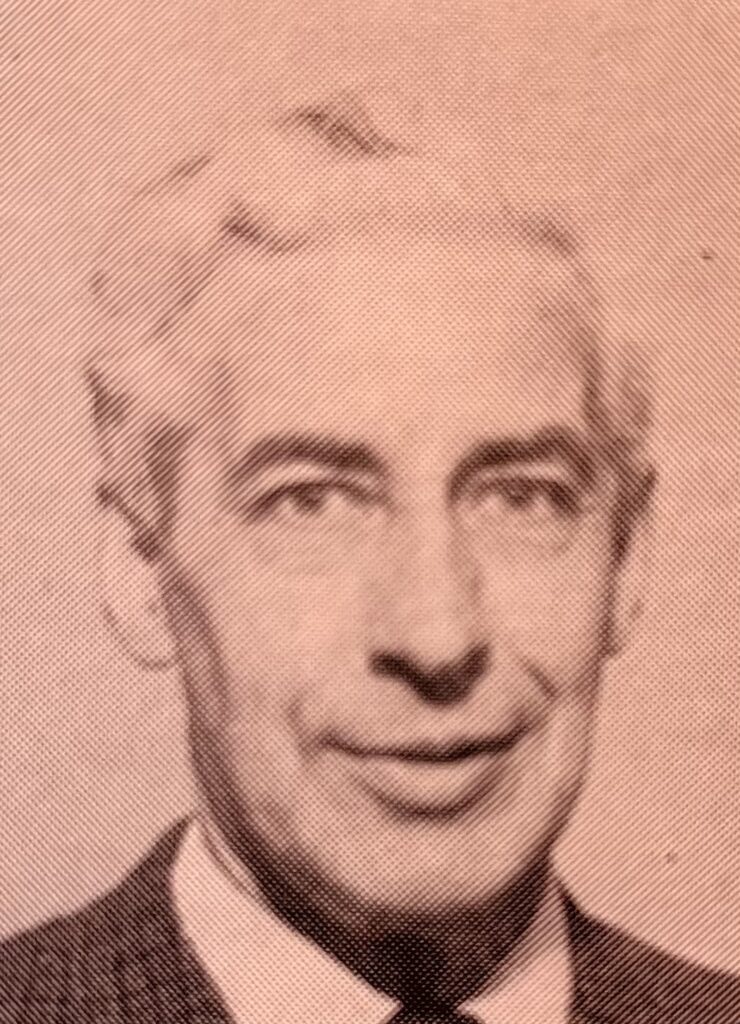
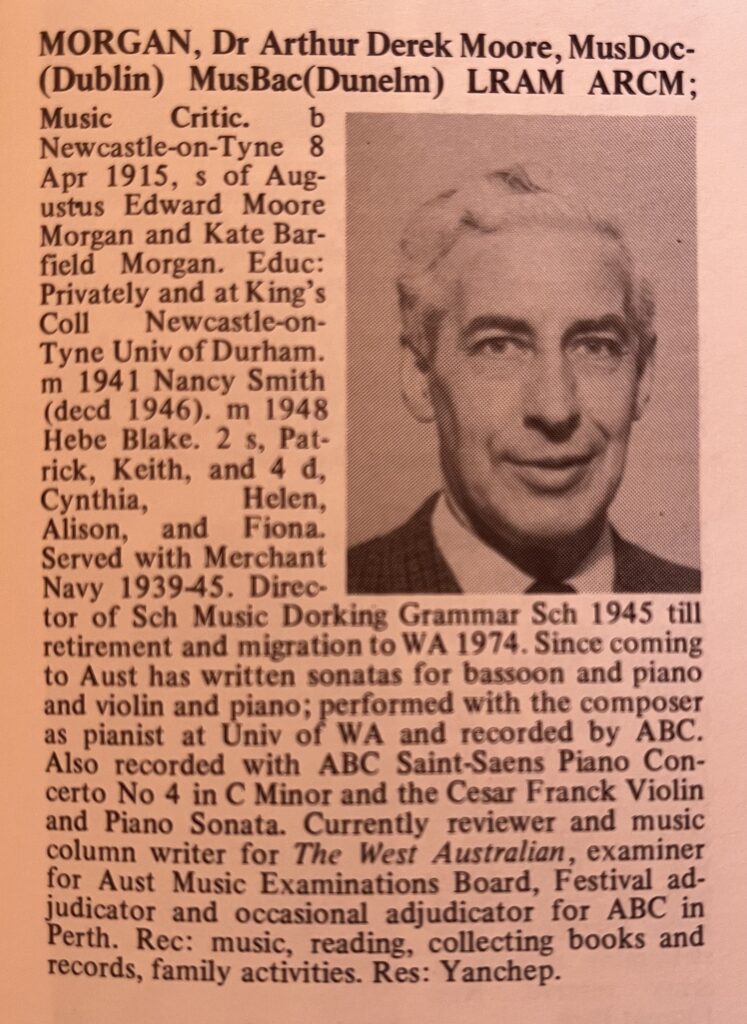
MOORE MORGAN, Derek

Derek Moore Morgan was the reviewer and music column writer for The West Australian newspaper for many years and an A.M.E.B. examiner.

Sacks, Margaret, The Way 79 Who is Who, (Crawley Publishers Pty Ltd, 1979), p.275.


born: April 1915; died: December 2007

Sea water may have coursed through his veins but teaching was in his genes. For many years music critic for The West Australian, Derek Moore Morgan came from a large Northern Irish family steeped in the educational tradition.

An only child, he was born in Forrest  Hall, a village near Newcastle-on-Tyne. His father had a prep school in the village and his grandfather, Canon William Moore Morgan, was headmaster of Armagh Royal School.

Early showing a gift for music, the young pianist played at local festivals and later  for the northern BBC, as well as winning diplomas from London College of Music in his mid-teens. He graduated B Mus from King’s College, Durham University in 1936. By 1939, he had also earned B Mus and doctoral degrees (for which he composed a symphony) at Trinity College, Dublin.

Derek seemed destined to follow in his father’s and grandfather’s footsteps. But there was a prior calling. When World War II broke out, Derry joined the British Merchant Navy as a radio officer sailing with Atlantic convoys early in the war and later serving on vessels taking coals, not to but from, Newcastle down England’s east coast to London, a dangerous journey with German E-boats constantly on the prowl for prey.

This seagoing trait is evident in the generation following Derry. A son, Patrick, joined the Merchant Navy as a cadet when he was 17 – and daughter Cynthia became a WRNS 3rd officer. She was born during an air raid in 1944 to Derry’s first wife Nancy Smith who died young of TB in 1947.

After the war, Derry was appointed Director of School Music at Dorking Grammar School and taught there with distinction for 29 years.

By many accounts, Doc (as he was affectionately known to his students), was an inspiring, dynamic teacher. His future wife , novelist and short story writer Barbara Yates Rothwell (who was also to serve as music critic on The West Australian) was at the time a sixth former and choir accompanist, thus able to see his teaching method close up.  She recalled that “no one who sat through his classes would ever forget the sight of Doc standing at the piano, banging out the orchestral parts of some great classic work – Handel’s Messiah and Coronation Anthems, perhaps, or Mozart’s Requiem – bellowing out the bass part in a raucous, slightly off-key voice. Whether his style of teaching was planned or whether it simply emerged from his volatile, vibrant personality is difficult to say.” And  annual Christmas carol services in the local parish church were routinely packed to the doors.

In 1967, however, the cumulative strain of years of shouldering the responsibilities of running Dorking Grammar’s music department on his own and, perhaps, residual stress of war service brought on a serious breakdown.

Derry returned to work after convalescing for four months – but it wasn’t the same although there was still the old spirit that had so splendidly inspired his student.

Change was on the cards. And when Barbara suggested immigrating to Australia – a daughter had settled in Australia some time before – his response was “Why not?”. They came to Perth in 1974. Derry never returned to the UK.

Barbara recalls how, fifty and more years on, letters still arrive at Christmas from grateful students mentioning the joy experienced at those long-ago choral sessions.

Those many years teaching in the UK were to prove invaluable in Derry’s work for the Australian Music Examinations Board in Perth where his genial, avuncular manner did much to put nervous candidates at their ease.

Although music was his main game, Derry was handy with wood, the evidence of that apparent in the bookshelves he installed in the family home in Yanchep. He’d also occasionally play a round of tennis when he could find an opponent

Derry never learned to drive a car and it was Barbara who, in the interests of road safety (as she put it, tongue in cheek), would ferry Derry to and from their Yanchep home. Barbara says “Derry began learning to drive in his 40s. He could do the steering part perfectly well but he thought the road belonged to him so I begged him NOT to drive”. In so doing, she took on a monumental task ferrying Derry to and from concert venues in and near the CBD; it was a 100 kilometre round trip, done countless times over the years.

Derry is survived by Barbara, children Cynthia, Patrick, Helen, Keith., Alison and Fiona and grandchildren.

At the funeral service, there were recordings, made during years at Dorking Grammar, of Derek conducting extracts from Brahms’ A German Requiem and his own Christmas carol Behold a simple, tender Babe, described by emeritus professor David Tunley as “hauntingly beautiful” and the many reviews he wrote for The West Australian as “invariably informed by fine musicianship“ .

Neville Cohn

Obituary Derek Moore Morgan

Instruments

Years

Person

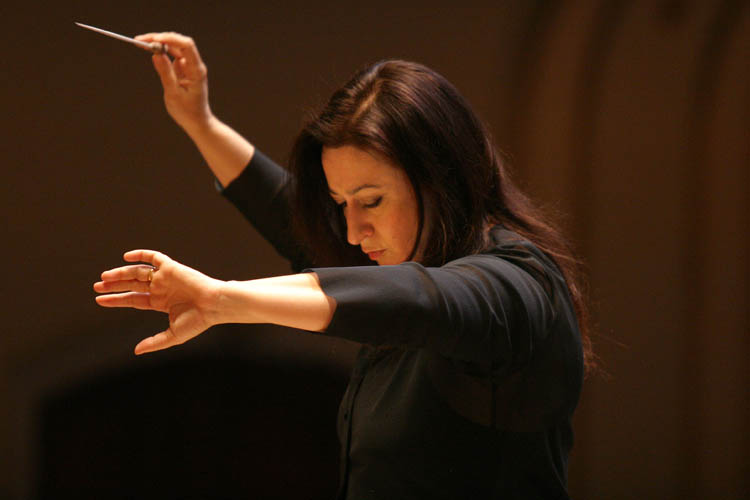
YOUNG, Simone

Simone Young first conducted the West Australian Symphony Orchestra in 1997 performing Haydn’s Symphony No 99 and Symphony No. 9 by Bruckner.  The following year she conducted Bartók’s Concerto for Orchestra and Mahler 7.

In 2017, Simone Young conducted a concert that featured Haydn’s Symphony No. 99, Brahms, and the world premiere of Australian composer Andrew Schultz’s Maali with soloists Adam Mikulicz (bassoon), Peter Facer (oboe) , David Evans (horn) and Allan Meyer (clarinet).

Music: Simone Young: 20 Years with WASO


The Australian conductor Simone Young is widely regarded as one of the leading conductors of our time. Since 2022, she has served as Chief Conductor of the Sydney Symphony Orchestra, where she is leading, among other projects, a concert performance cycle of Wagner’s Der Ring des Nibelungen.

In the 2026/27 season, she returns to the Opéra national de Paris to conduct Katja Kabanova. At the Staatsoper Unter den Linden in Berlin, she conducts Nabucco, while at the Vienna State Opera she leads performances of Lulu and Parsifal. In the summer of 2027, she returns to the Bayreuth Festival to conduct Die Meistersinger von Nürnberg.

Simone Young also continues to make a major impact on the international concert stage and appears with the RAI National Symphony Orchestra, Deutsches Symphonie-Orchester Berlin, Orchestre National de Lyon, Bavarian Radio Symphony Orchestra, Philharmonia Orchestra, BBC Philharmonic, Oslo Philharmonic, Filarmonica della Scala, and the Orchestre National de France.
From 2005 to 2015, Simone Young served as Artistic Director of the Hamburg State Opera and General Music Director of the Hamburg Philharmonic State Orchestra. In this dual role, she oversaw an exceptionally broad repertoire, ranging from Mozart, Verdi, Puccini, Wagner and Strauss to Hindemith, Britten and Henze, while also presenting numerous world and national premieres. Prior to this, she was Chief Conductor of the Bergen Philharmonic Orchestra from 1998 to 2002, and Artistic Director of Opera Australia in Sydney and Melbourne from 2001 to 2003.

Early in her career, Simone Young established herself internationally as one of the foremost interpreters of the works of Richard Wagner and Richard Strauss. She has conducted several complete cycles of Wagner’s Der Ring des Nibelungen at the Vienna State Opera, the Staatsoper Unter den Linden, and the Bayreuth Festival, as well as in a new production at the Hamburg State Opera, and most recently at Teatro alla Scala during the 2025/26 season.

Guest engagements have taken her to many of the world’s leading opera houses, including the Vienna State Opera, Opéra national de Paris, the Royal Opera House Covent Garden in London, the Metropolitan Opera in New York, the Bavarian State Opera, the Semperoper Dresden, the Zurich Opera House, and Teatro alla Scala.

On the concert platform, Simone Young has long been one of the world’s most sought-after conductors. She regularly appears with leading orchestras including the Vienna Philharmonic, Berlin Philharmonic, Chicago Symphony Orchestra, New York Philharmonic, Los Angeles Philharmonic, Bavarian Radio Symphony Orchestra, Staatskapelle Berlin, London Philharmonic Orchestra, Philharmonia Orchestra, San Francisco Symphony, Dallas Symphony Orchestra, National Symphony Orchestra (Washington, D.C.), Munich Philharmonic, Orchestre de Paris, Orchestre National de France, Orchestre Philharmonique de Radio France, Filarmonica della Scala, BBC Symphony Orchestra, Royal Stockholm Philharmonic Orchestra, Oslo Philharmonic, as well as the leading orchestras of Australia.

https://www.simoneyoung.com/english/biography/

Instruments

Years

Person

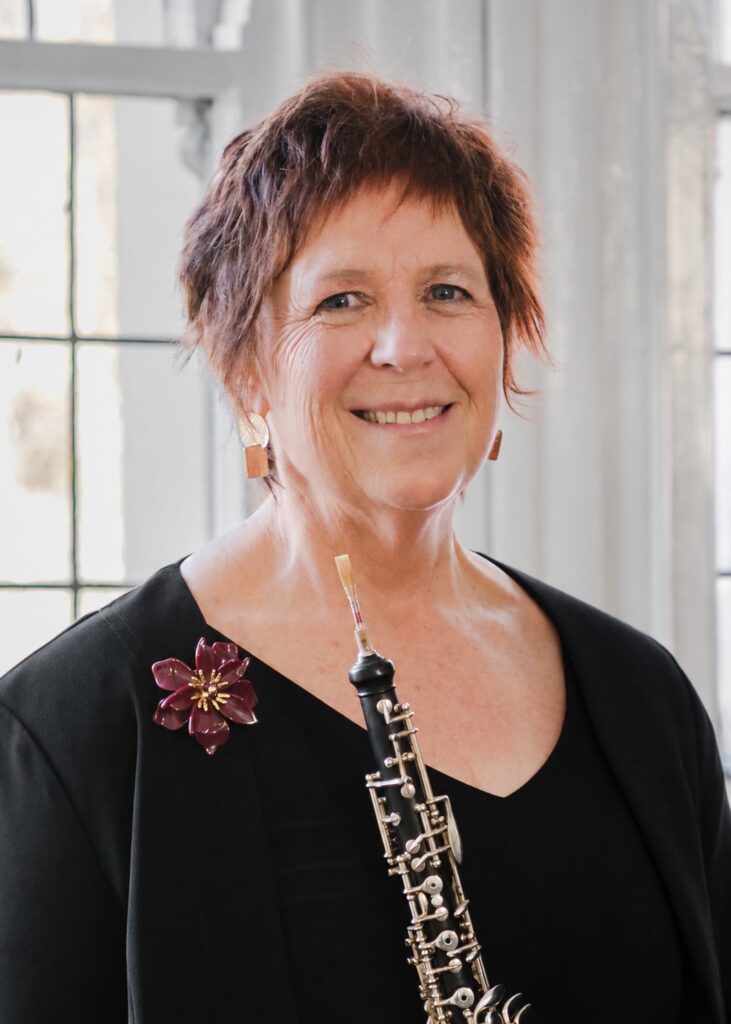
NICHOLLS, Stephanie

Stephanie Nicholls is a Perth-based oboist, pianist, musical director and arts leader with a passion for bringing people together through music.

An accomplished orchestral musician, Stephanie has performed extensively with the West Australian Symphony Orchestra, including as Associate Principal Oboe, and regularly performs as Principal Oboe with Perth Symphony Orchestra.

She is also a collaborative pianist, educator and examiner, with teaching and mentoring experience at the University of Western Australia, WAAPA and Methodist Ladies’ College.

In 2017, she was appointed as a consultant for the Australian Music Examinations Board’s oboe syllabus.

In 2023, Stephanie founded Mirabilis Collective, a Perth-based arts organisation dedicated to celebrating the music and achievements of women composers and performers. As Artistic Director, she brings together musicians across generations to create imaginative chamber music performances that combine outstanding musicianship, storytelling and connection.

In October 2026, Stephanie founded and directed the inaugural Hear Her Now Chamber Music Festival, a 12-day celebration featuring more than 20 events and music by 157 women composers and songwriters spanning over 900 years.

Through Mirabilis Collective, Stephanie also champions regional engagement, music education and community participation, creating opportunities for musicians and audiences to connect through shared musical experiences.

Her work reflects a strong belief in the power of music to build community, nurture talent and ensure that music by women has a lasting place on Australian stages.

https://mirabiliscollective.com/

Instruments

Person

BLACKMAN, Greg

GREG BLACKMAN  is a clarinet soloist, recitalist, chamber player and teacher.
He was born in Yeovil, England, on 27 February 1949 moving to Australia when he was one year old.  Encouraged by his mother, Greg started playing the flute aged 8, which was not a happy choice of instrument for him, changing to clarinet aged 13.  Greg’s high school music teacher was Richard Gill who conducted Greg in his first professional gig (£5) in Gilbert and Sullivan’s “Gondoliers”.  Greg’s final two years of school were spent at the Sydney Conservatorium High School.
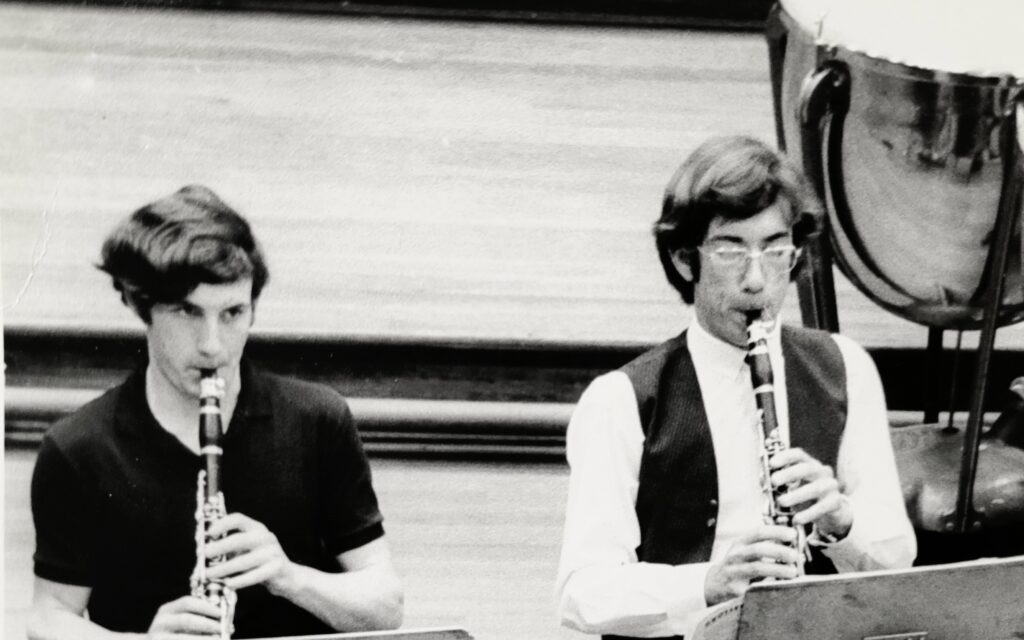
Greg Blackman ( right ), Duncan Abercromby, ABC National Training Orchestra, Sydney, 1970


From 1964 to 1970 Greg studied with Tim White, ex-Melbourne Symphony Orchestra, and Don Westlake at the Sydney Con, then in 1972/3 he had two concentrated months with Jack Brymer in England.

Greg was 2nd clarinet with the Queensland Symphony from 1971 – 73.

1973 – Adelaide Symphony Orchestra

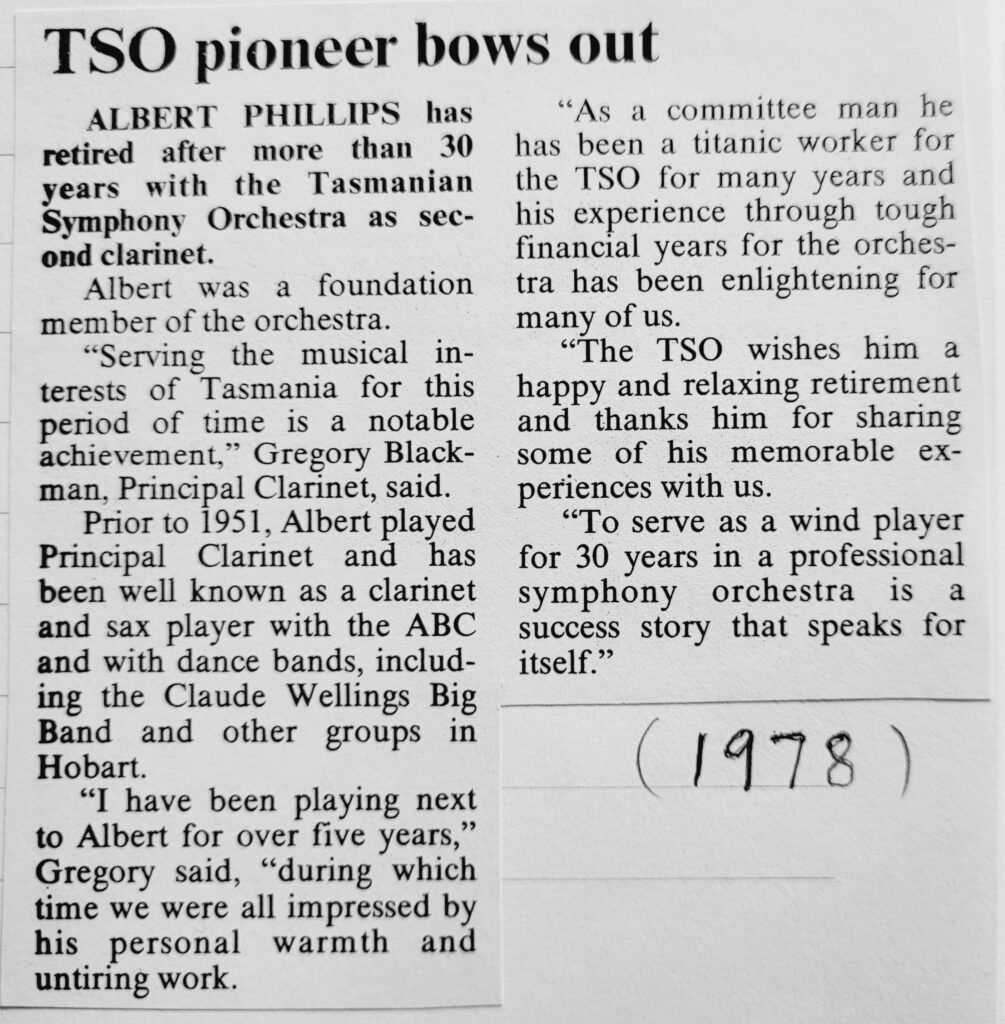
Greg was Principal Clarinet of the Tasmanian Symphony Orchestra from 1973 – 1979, during which time he performed the Weber First Concerto conducted by Walter Susskind.
( Duncan Abercromby filled the T.S.O. Principal position when Greg went to Adelaide).

1979 – Adelaide Symphony Orchestra
Greg was  Principal Clarinet with the Adelaide Symphony Orchestra from 1979 – 2006, taking one year off in 1984 when he was Senior Lecturer at the Canberra School of Music, Principal in the Canberra Symphony Orchestra and in the Canberra Wind Soloists.
Adelaide Symphony Orchestra: Allan Meyer, Diane Gingras and Greg Blackman
Larry Sitsky has written Zuqurq for solo clarinet and bongos for Greg, and Peter Webb has written a Sonata.
In 1970, Greg gave the first performance of Don Banks’ Prologue, Night-Pieces and Blues for Two at the Cell-Block Theatre in Sydney.

Weston, Pamela, Clarinet Virtuosi of Today, (Egon,1989), p316

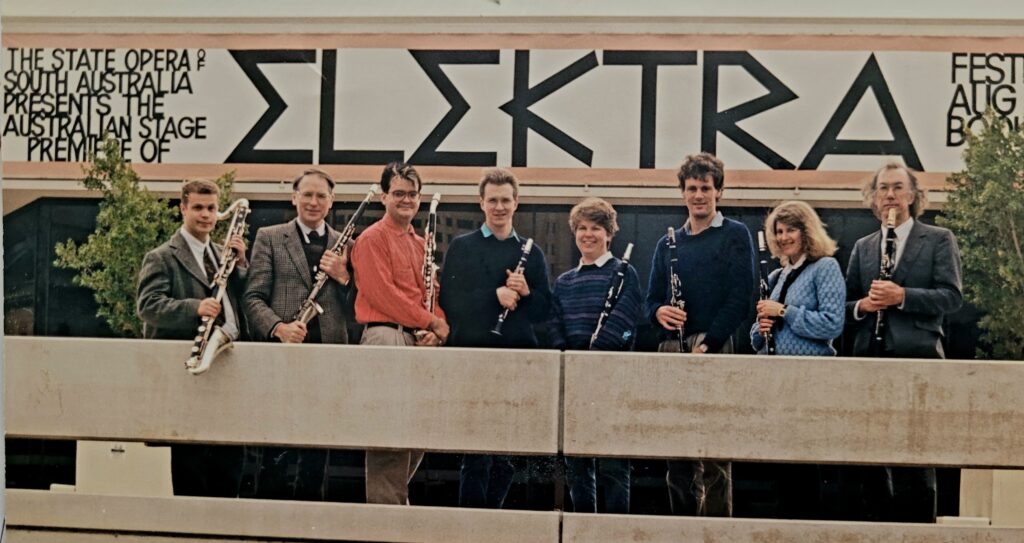
ASO for premiere of Elektra 1991 . Right to left : Greg Blackman Cl.1, Julie Burns Cl.2, Brian Catchlove Cl.3, Mary Waterhouse Cl.4, Darren Skelton Eflat Cl., Haig Burnell Basset Hn.1, David Shephard Basset Hn.2, Alex Millier Bass Cl.
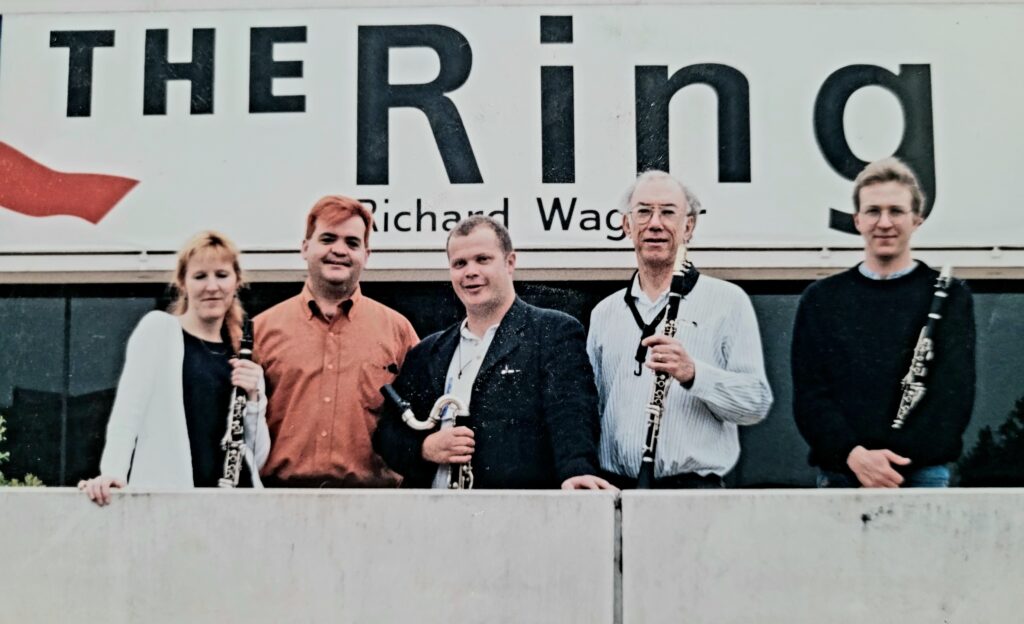
Australia’s first complete staged Ring Cycle, ASO Jeffrey Tate 1998. Players r to l : Darren Skelton, Cl / Eflat., Greg Blackman, Cl 1, Alex Millier, Bass Cl., Haigh Burnell, Cl 1/assoc., Shona Charlton, Cl 2.

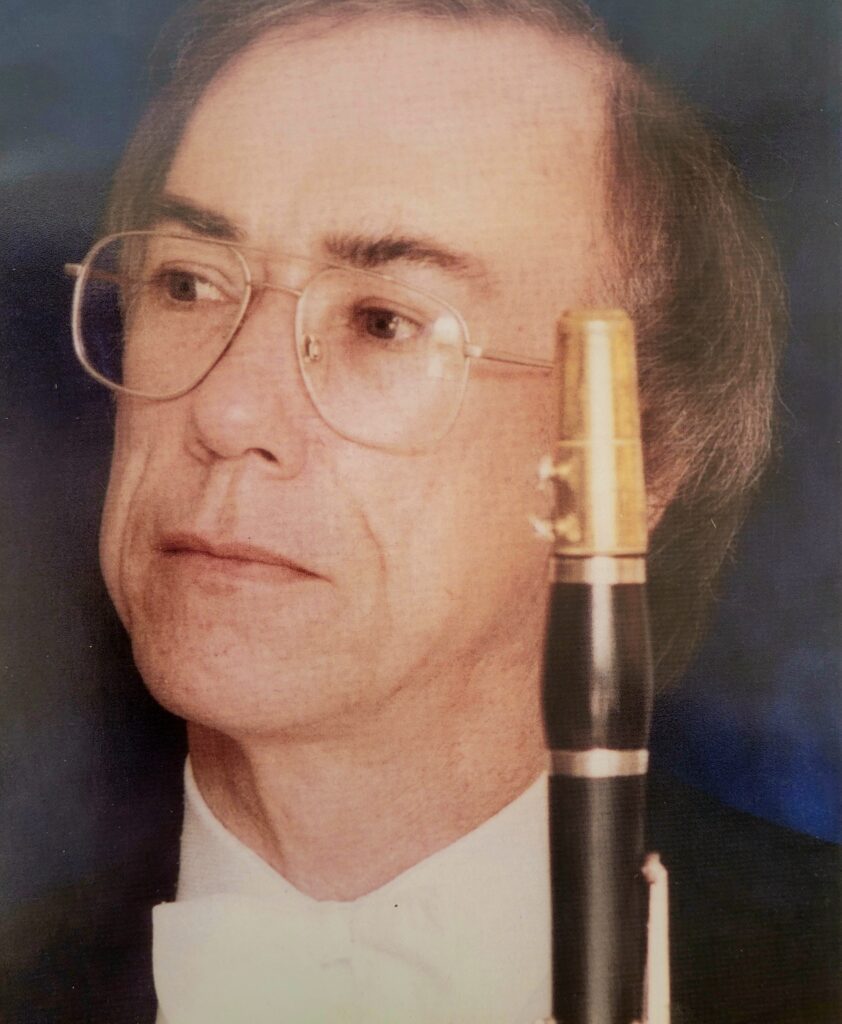
JACK HARRISON REMEMBERED  (Greg Blackman)

As an 18-year old student of Don Westlake – Principal Clarinet, SSO – around 1967, I recall him speaking of Jack in glowing terms, as being  ” probably the finest player in the country .”  My teacher came from Perth, so Don was aware of a fine clarinet teaching tradition in the West.
             It would be some 6 or 7 years later in 1976 that I first met Jack Harrison at a Clarinet Convention at Sydney Conservatorium. He came up to me in the main auditorium ( I was surprised he knew who I was )  and said hello, just like a friend I had always known. As we sat there together listening to a dry, tedious, droning lecture, Jack eventually said : ” Hey Greg, this is a lot of B. S. isn’t it ? Why don’t we just go down the pub for a chat ? ” So probably the highlight of the entire convention was the delightful afternoon I spent with Jack at the pub.
             Sometime after as Principal in TSO, I came across a note pencilled into the clarinet part. It read : ” Hi Greg, regards, Jack “. At that time ABC orchestral parts circulated around the country, so with Jack and me, the clarinet parts became a sort of messaging facility, which continued between us for over a decade; like ” How are things Greg? “.  So weeks or months later Jack would get : “Fine Thanks Jack, what’s new there ? “
               I recall Jack’s astonishing tape of the Artie Shaw concerto – we were all talking about it. We also got wind of a story about Jack playing in WASO, where he was playing some rustic folk dances, with his warm, smooth sound that we all admired.  The conductor asked : ” Meester Harrison, can you play with a more peasant-like tone ? ” to which Jack dryly replied :” Sorry, maestro, I left my peasant – like mouthpiece at home ! “
               During my several visits to Perth, Jack was ever the charming host; always sharing stories with his engaging style of humour among the mandatory tech talk.
                So let me conclude by saying that Jack was a great character and an inspiring player with an easy, warm, natural style, both as a colleague and as a musician. I have been blessed and enriched  by his presence in my life.
                                                                                                                                        Greg Blackman     6 November 2026

Person

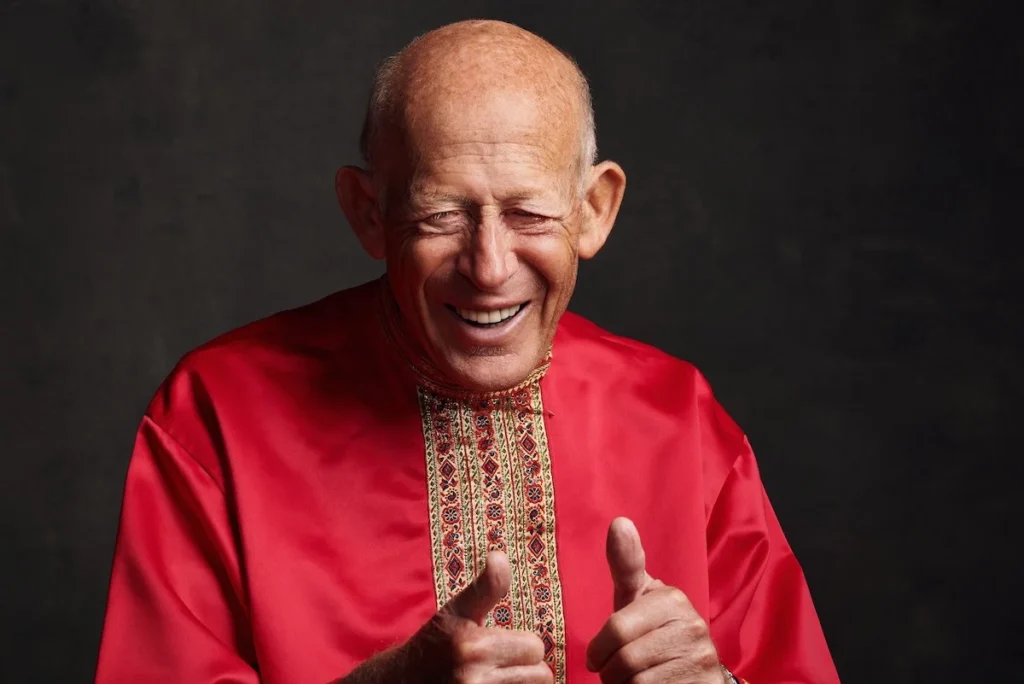
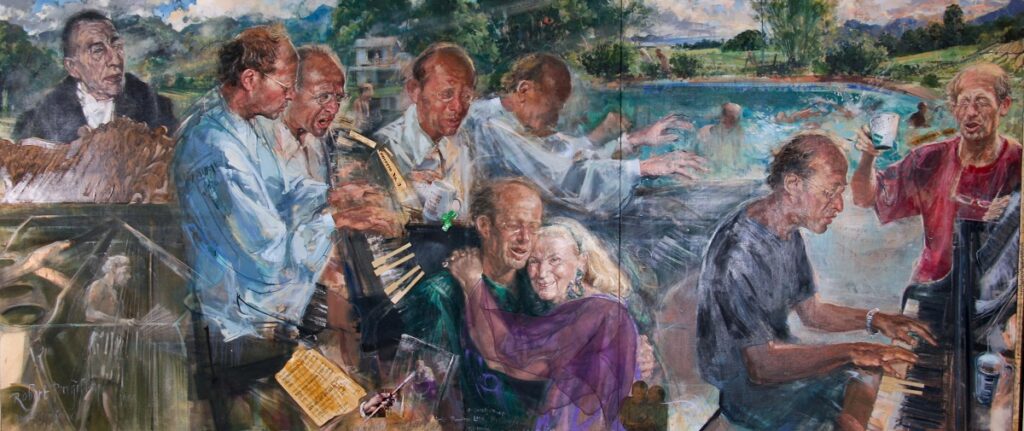
HELFGOTT, David

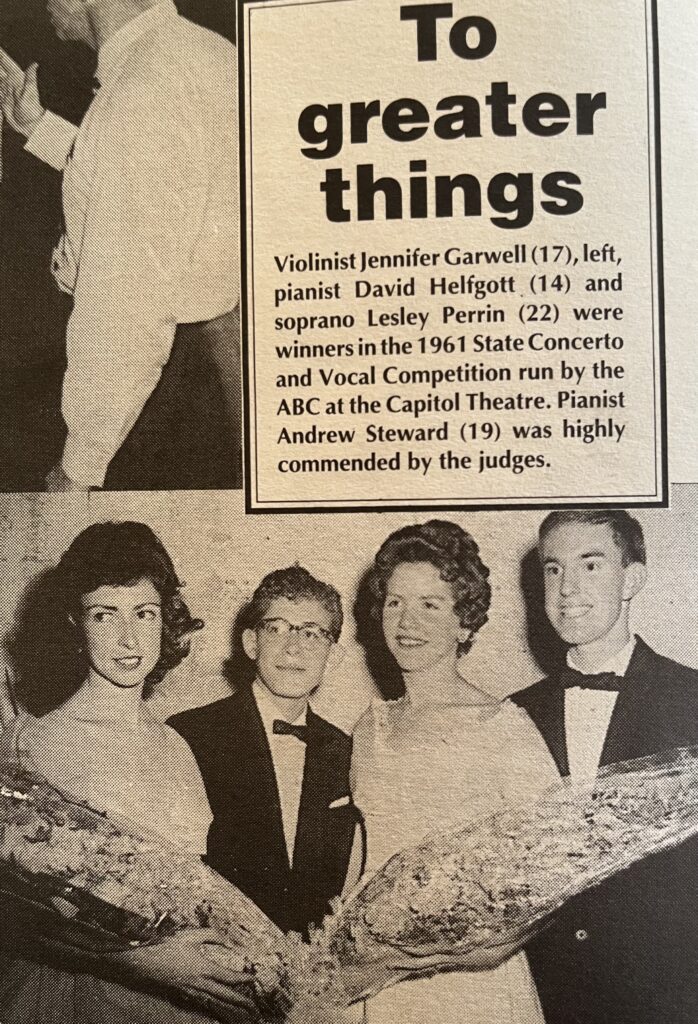
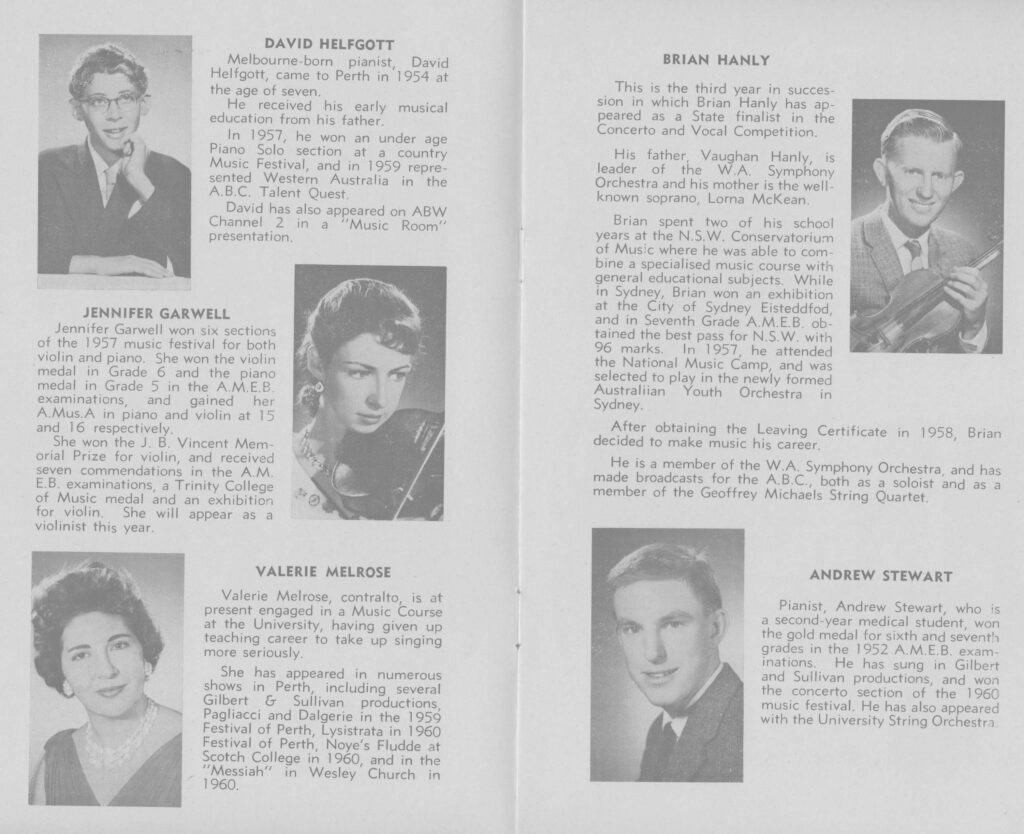
David Helfgott was born in Melbourne, Australia, in 1947. He showed extraordinary pianistic ability from an early age, winning the state finals of the ABC’s Instrumental & Vocal Competition six times.

Miller, Vicki, The Sixties, (West Australian Newspapers Limited), p.14
1961-7th June – C&V State Finals – WASO. courtesy Patrick Brislan

At age 17, David began studying with Alice Carrard, a former student of Bartok and Istvan Thoman, himself a pupil of Liszt. Two years later, David went to London to study at the Royal College of Music with Cyril Smith, who described him as his most brilliant student in 25 years of teaching and likened him to Horowitz, both technically and temperamentally.

David won a number of awards at the College, including the Dannreuther Prize for Best Concerto Performance for his triumphant performance of Rachmaninov’s Third Piano Concerto. However, towards the end of his time in London, David faced increased emotional instability and mental excitability, compounded by the death in Perth of his mentor, writer Katherine Susannah Pritchard.

A period of frequent hospitalization followed during the 1970s, but by 1976 David had moved to a halfway house where he stayed for six years. The greatest crisis for David had been the loss of his inner music, but he remembers the day the music came back: “The fog lifted, I could hear again … I survived.”

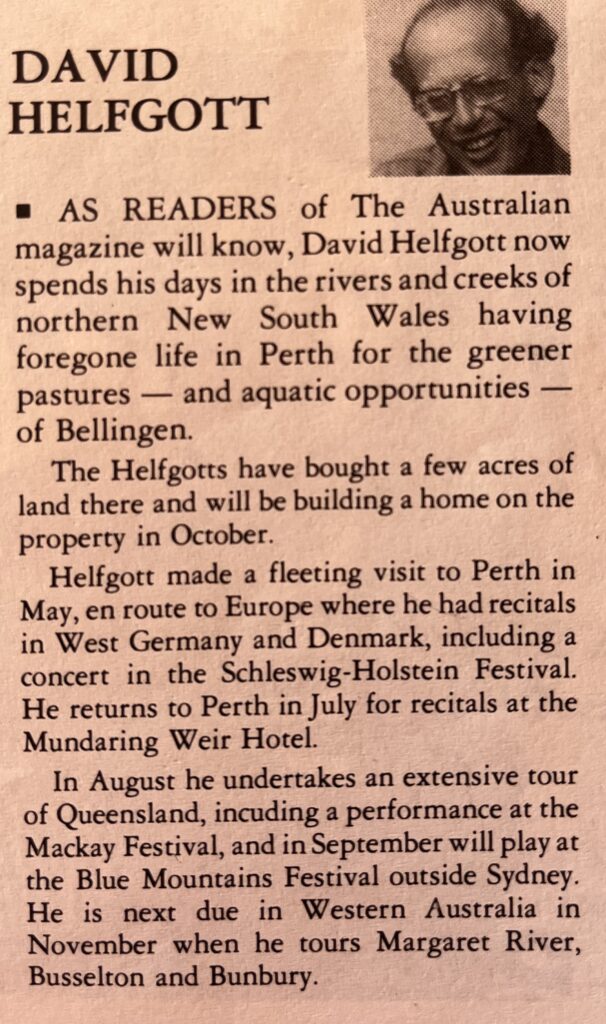
Dr Chris Reynolds, who owned Riccardo’s wine bar in Perth, where David performed on Saturday nights, brought David back to the public’s attention. It was there he meet his future wife, Gillian, who, with the support of promoter Mike Parry, helped David gradually resume his concert career with concert performances in Perth and a sell-out tour of Australia’s eastern states in 1986. This was followed by a trip to Europe, with recitals in Germany and Denmark.

David triumphantly returned to an active life of concert giving and performance, and made a series of CDs, including the soundtrack of the Oscar-winning film Shine, which celebrates his remarkable and inspiring life. David’s recording of the Rachmaninov Third was the number one selling CD in Australia, the United States and the United Kingdom for many months. Both attained gold status.

In October 1996, David played four sold-out concerts at the Sydney Opera House, an unprecedented occurrence. A challenging world tour followed the next year, with packed recitals and performances throughout the US and the UK, concluding with David’s return to the Royal Albert Hall in London, were he played the Rachmaninov Third Piano Concerto to a capacity crowd and received a thunderous standing ovation.

Over the next five years, David kept up his world touring, through Asia, Africa, Japan, New Zealand and Europe, while also maintaining a busy Australian schedule. David released four more CDs, including Brilliantissimo, Brave New World, and one featuring the Tchaikovsky Piano Concerto No.1 and Rachmaninov’s Variations on a Theme of Paganini, two of David’s favourite works. However, the highlight release for this year was In Viva, a disc containing two movements of the Mozart Piano Concerto No. 24 from David’s prize-winning performance in Perth when he was fourteen years of age.

In 2002, David was invited to represent Australia at the Beijing Music Festival and in Guangzhou, while 2003 saw a triumphant tour of Europe – particularly of Austria, where he completely won the hearts of the Viennese.

One of the major highlights of David’s career came in October 2004 when the Edith Cowan University in Western Australia awarded him an Honorary Doctorate of Music. His whole family was in attendance.

David conquered Europe yet again in 2005 and 2006. In Italy, he played the Rachmaninov Third in Montecatini Terme, where both Verdi and Puccini lived and where David and Gillian were awarded the Key of the City. Then it was on to sell-out performances of the concerto in Vienna and Zurich, plus many recitals in Spain, Norway and Denmark. On 26 November 2006, David was inducted into The Australian Walk of Fame.

In 2007 and 2008, David had extremely successful return tours of South Africa, New Zealand and Japan, and major European tours. But his recital in Sydney in November at the City Recital Hall gained the greatest accolades heard in the Hall in recent memory.

The year 2009 opened with David receiving a huge honour when a 2.7 metre sculpture by the internationally recognized sculpture, John Van Der Kolk, was dedicated to David and placed in the Bellingen Council Park in recognition of David’s courage, contribution to music and his work in the community.

In June, David performed in Israel for the first time in both Jerusalem and Tel Aviv as part of the Australian-Israel Cultural Exchange, and then toured Turkey and Europe, with a very successful recital in Vienna receiving one of the greatest ovations of David’s career.

2010 was David’s busiest year with tours of Germany, Cyprus and Turkey, some relaxation at home, then big tours of Australia before returning to South Africa and Zimbabwe. Denmark, Switzerland and Austria, followed by a performance at a conference in Kansas City, a trip to beautiful New Zealand and finally a return home in December.

2011 started in Budapest, followed by Denmark, extensive touring of Turkey and Italy, and more touring of Australia.

2012 was a very exciting year with performances of the Rachmaninov Third Piano Concerto in Europe, the highlight being the performance in the famous Musikverien Concert Hall in Vienna where David received a sixteen-minute standing ovation for a truly memorable performance.

Vienna was again the highlight in May when David performed to 40,000 people at the Life Ball, supporting AIDS. The next day, 19 May, he performed in the Hofburg Palace at President Clinton’s fund-raising dinner, which happened to be David’s 65th birthday. After the performance, David was embraced by President Clinton and the President of Austria, who then stood and sang with all the guests “Happy Birthday”. It was certainly a night to remember.

2013 saw further honours bestowed on David by the Commune of Montecatini Terme in Tuscany, which granted him Honorary Citizenship. This famous spa town is renowned for its association with Puccini and Verdi.

A return to Budapest in July that year was a special occasion to perform the Rachmaninov Third, as it was the birthplace of Madame Alice Carrard, one of David’s most influential and beloved teachers and a fitting end to his European tour.

In August, David undertook his largest Australian tour with 24 recitals. In September, gave his Farewell Tour of South Africa.

2014‘s touring started in Turkey, to our delight. Again there was a great reception and an invitation to return in 2015 for recitals in Istanbul, Izmir and Ankara. Austria, Denmark, Germany and Switzerland were also on the 2015 agenda, plus a return to Budapest to perform the Tchaikovsky Piano Concerto No.1, much to David’s delight.

However, the outstanding musical highlight of the year was David performing with Rhodri Clarke the Rachmaninov Third Piano Concerto on two pianos at the Sydney Opera House. This was followed by a truly memorable performance repeated in Melbourne in June 2015 to an ecstatic audience.

2015 also saw David returning to his old school, Mt.Lawley High School in Perth, where a piano practice room was to be named after him. This was a very nostalgic event for David and the current students were greatly inspired by him.

David also performed with the Royal Australian Navy Band. This was a huge crowd pleaser and a very happy event. David is always thrilled to perform with other musicians and hopes to do a repeat performance in the near future.

2016 was a particulary exciting year with the release of the German documentary Hello I Am David, which covers touring with David performing the Rachmaninov Third Piano Concerto. It is a very endearing film and is now available on Netflix.

Touring in 2016 was very extensive, covering Germany, Austria, Denmark and Turkey, plus Australia extending the number of countries where he has performed to over thirty five.

2017 will start with tours in Europe of the stunning performances of the Rachmaninov Third Piano Concerto for duo pianos, events not to be missed, and a return to the UK (after a long gap) for performances again of the “Rach 3” in Manchester and, to David’s great joy, London at The Barbican on 29 May.

Another highlight will be David’s 70th Birthday Celebration Recital in Copenhagen in the Konsevatoriets Koncertsal.

The truly extraordinary artist that is David Helfgott is continuing to receive the worldwide recognition that his remarkable technical and interpretative genius deserves. His continuing and unparalleled success comes as no surprise to David’s legion of devoted admirers everywhere. They have long regarded his recitals as transcending mere music making, and an affirmation of the tenacity of the human spirit and imagination.

http://www.davidhelfgott.com/piano

https://en.wikipedia.org/wiki/David_Helfgott

David Helfgott


1983

‘Sorry everyone, David has an obsession with tea bags’


1985

Pianist David Helfgott performed at the inaugural Leeuwin Estate concert on February 23rd 1985 alongside the London Philharmonic Orchestra.


1986

Classical pianist David Helfgott is presenting a recital in the Great Hall or the National Gallery on Saturday, May 31, 8 p.m. He will perform Rachmaninov’s Preludes in B Flat, D, Major and G. Minor; Liszt’s Ballade in B. Minor, La Campanella and Mephisto Waltz, and Moussorgsky’s Pictures from an Exhibition. Helfgott formerly from Melbourne, is now a resident of Perth. His Melbourne recital is part of an Australia-wide tour. Helfgott, a child prodigy who enjoyed success in England, is now on the comeback trail. Tickets ($12) are available by phoning Brian Clark 861 7814 prior to recital, or on the night at the door for $15.

Australian Jewish News (Melbourne, Vic. : 1935 – 1999), Friday 16 May 1986, page 20


1989

On February 18th 1989, the annual Leeuwin Estate concert featured vocalist Dionne Warwick supported by pianist David Helfgott performing “Rhapsody in Blue” with the West Australian Symphony Orchestra.


1990

Music Maker Vol. 8 No. 4 July-August 1990, p.9

1996 – Shine


Shine (1996)

Synopsis

David Helfgott (played as a child by Alex Rafalowicz) is a piano prodigy, growing up in Perth in the 1950s. His father Peter (Armin Mueller-Stahl) is a loving authoritarian, determined to keep his family together at all costs, a legacy perhaps of having lost family members during the Nazi Holocaust. In his teens, David (now played by Noah Taylor) is offered a scholarship to study in the US but his father forbids him to go. A few years later, David walks out on the family, to take a scholarship to the Royal College of Music in London, where he has a complete breakdown. He returns to Perth and spends years in psychiatric care and half-way houses. He is still estranged from his father, but he rediscovers his love of performing by playing piano in a restaurant. The restaurant owner (Sonia Todd) introduces him to one of her friends, an astrologer called Gillian (Lynn Redgrave), and a romance blossoms. Eventually, David returns to the concert hall, where he triumphs.

Curator’s notes

Shine is a universal story of great talent triumphing over great trauma, but it was controversial at the time of release because of a debate about what caused the trauma. The film appears to suggest that the father Peter, traumatised by the Second World War, damaged the son. One of David Helfgott’s sisters (see below) later claimed that this was not an accurate portrayal of her father. A different interpretation might also be drawn from the film – that David Helfgott’s illness was just that – an illness that had no external causes, but could be affected by stress. In any case, the film is less about the causes than the depiction of how David Helfgott survived and came to terms with his illness. That is what audiences around the world loved about Shine.

There are at least three great performances in the film, not just that of Geoffrey Rush (as the adult David). Armin Mueller-Stahl is superb as the father, a man whose capacity for love is as obvious as his inability to compromise or forgive. The third great performance is Noah Taylor’s as the adolescent David. In some ways this is the hardest role, because he has to take David from shy 14-year-old to the young man who touches greatness at the Royal College of Music, even as his mind is cracking wide-open. It’s the kind of eccentric role that Taylor has made his specialty, but he gives one of the best performances of what is now already a long career (see The Year My Voice Broke, made in 1987). Geoffrey Rush won almost every award possible in 1997, including the Oscar for best actor in a leading role. The performance made him an international star, with good reason. He makes Helfgott’s mania credible, without becoming self-conscious. He makes the character loveable, without making him pathetic. David’s intelligence is always visible through the fog of his word-plays, and Rush brings a further layer of credibility by playing the piano himself (although the soundtrack mostly uses Helfgott’s own playing). This was also the film that catapulted director Scott Hicks to an international career. He was nominated for an Oscar as best director, one of seven Oscar nominations for Shine. The others were for best film (Jane Scott), best original screenplay (Jan Sardi) and story (Scott Hicks), best supporting actor (Armin Mueller-Stahl), best original score (David Hirschfelder), best editing (Pip Karmel), and best actor (Rush).

The controversy over accuracy stems largely from a book written by David’s sister Margaret (Out of Tune – David Helfgott and the Myth of Shine), after the film’s success. She claimed the film was wildly inaccurate and demeaned her father, who died in 1975. Rather than a tyrant, he was a loving father and husband who was, if anything, too lenient with his wayward son. Scott Hicks wrote a letter to The Wall Street Journal in rebuttal, in which he said that other members of the family supported his depiction of Peter Helfgott and that he withheld far more serious accusations of abuse against the father, out of consideration for the family and the audience. Hicks said he stands by the research that informed the film: ‘I maintain that all of the actions of the character Peter Helfgott have their origins in real events’.

https://aso.gov.au/titles/features/shine/notes/


Title: The Book of David Author: Beverley Eley Publisher: Harper/Collins, 285pp, $14.95 Reviewer: Shira Sebban

THIS book often made me cringe with embarrassment at the washing of one family’s dirty linen in public. For in attempting to tell the story of Australian Jewish pianist David Helfgott, his biographer Beverley Eley is forced to find her way through a maze of often conflicting memories and beliefs held by Helfgott himself and by those who have known him. One Helfgott family member is often pitted against another, such as when Helfgott and his older sister Margaret — who has been elected spokesperson by the family — disagree as to whether their father told the truth (pp 80-81).

Acknowledging such difficulties, Eley tries to present and accommodate all views, often limiting her own involvement to posing questions and raising hypotheses. For example, she provides the reader with several possible explanations for Helfgott’s behaviour, before concluding that “I believe the answer is a combination of all these perhapses” (pp 10-11).

However, she also sometimes takes sides, condoning and condemning, while trying to explain what is perhaps unexplainable. Helfgott’s father Peter tends to be treated particularly harshly, arid is unable to defend himself, having died in 1975.

Eley displays some generosity towards him early on, dismissing as a “myth” the view that Peter was an “unyielding fanatic’’ whose influence made his son ‘different’, and pointing out that “apart from David’s comments … there is no hard evidence to support these claims”. She also states the rest of the Helfgott family’s view, namely, that “Peter was a loving and much-loved father and … David was born ‘different’’’ (p 12).

Yet, later on she writes: “Peter’s entrenched and authoritarian stance … would ultimately lead to the disintegration of his relationship with his ‘Prince’ (David)” (p 88). Blame is clearly being laid at Peter’s feet.

We will never know conclusively why Peter acted the way he did. Little is known of his early life, Eley resorting to a potted version of Polish, Russian and Palestinian history, in which she hypothesises as to the part Peter might have played (chapter 2). All we really have are the often differing opinions of his children and in laws.

As for his wife Rachel, other than her statement that “Peter contributed to increasing her self-esteem and helped her to regain her health” (p 31), her views are rarely mentioned. No explanation is given for this, other than to practically dismiss Rachel as “a woman who had accepted her husband’s direction as to what kind of apples she should buy” (p 231).

Although not a psychologist herself, Eley constantly subjects the reader to pop psychology and truisms in an attempt to explain the behaviour of Helfgott and his family. We are told that in a child, “talking and bladder or bowel control are determined by maturation and learning” (p 47), and that “for some, maturity comes with the years as easily as breathing” (p 192).

But for this approach to work, the book would have had to be written by a trained psychologist or psychiatrist, and preferably by a doctor who had treated Helfgott himself. This, of course, is impossible as it would have destroyed the confidential nature of the doctorpatient relationship.

The book was written in a hurry — and it shows. Eley may have known Helfgott for some time, but Helfgott’s wife Gillian only approached her to write the biography in late 1994. Eley did not agree to do so until July 1995, which means that she had to complete all the research and writing in less than a year, not giving her much time to reflect on and attempt to make sense of such a complex character.

The book would have benefited from more stringent editing. The author constantly jumps back and forth, repeating points just in case we’ve forgotten them. For instance, Margaret’s belief as to why her father didn’t let David study in America is repeated several times (pp 82-83, p 181, p 216). There are also some typographical errors (such as p 213 where the sister of Helfgott’s father is mistakenly referred to as his aunt).

Nevertheless, the book does have its strengths. Eley makes extensive use of Helfgott’s letters, enabling readers to hear his voice as a young man for themselves. She also traces his life in considerable detail, including his first frustrated attempts as a child to learn the piano, early successes and failures, four years of study in London, his return to Australia, many years of repeated depression and mental illness, his gradual recovery, marriage and return to the stage.

Eley clearly shows what a struggle life has been for David Helfgott. But perhaps his very fallibility and courage are what make him so liked by so many.

Australian Jewish News (Sydney, NSW : 1990 – 2008), Friday 23 August 1996, page 29


Peter Helfgott

PLEASE allow me a comment on the film Shine.

The film is well produced and the acting is superb. The character of David Helfgott’s father, however, the late Peter Helfgott, has been horribly distorted and does him a great injustice.

After seeing the film, people seem to have the impression that David Helfgott’s breakdown was caused because his father placed too much pressure on David. Peter Helfgott was portrayed as having been too strict and overbearing. Those TV promotions for the film which I chanced to see, showed only the sequences which portrayed Peter Helfgott as a demon.

In a feature article printed in “The West Magazine” last year, Scott Hicks, the filmmaker, was quoted as saying — Shine is a dramatisation inspired by Helfgott’s life. It is not a documentary. It is a narrative, fictional, feature film.” If this were truly so, one would have to wonder why the filmmaker chose to use real names.

Please remember that it was Peter Helfgott who recognised his son’s talent and who made many sacrifices to enable David to develop his talent. Sadly history has shown that those blessed with great talent sometimes break down.

The filmmaker has offered an interpretation of David Helfgott’s life which lends dramatic appeal to the story, but the film portrayal has done untold damage to Peter Helfgott’s reputation. I just don’t know how such a great wrong can be redressed. Let us be mindful for the feel ings of Peter Helfgott’s widow, Rae Helfgott and her children and refrain from indulging in pop psychology. Let us not destroy Peter Helfgott’s Shern Tov, his good name.

Miriam London Menora, W A

Australian Jewish News (Melbourne, Vic. : 1935 – 1999), Friday 25 October 1996, page 18


1997

David Helfgott

A MAJOR concern with Ms Mar garet Helfgott’s campaign (AJN 22/11) against Shine is the way she talks about her brother David, as if he does not exist. David is indeed alive and well, and more than capable of making judgements about his own life and how it should be portrayed on film.

Shine, to a remarkably faithful degree, presents David’s perception of his childhood and his relationship with his father. Others might have different perceptions, but that in no way denies the reality of how David sees the events which played so important a part in his life.

Margaret is quoting medical sources about David’s mental history. And discussing very private and privileged matters without her brother’s permission. As well, Margaret’s reference to David’s “partial recovery” is not only ungracious but hardly the sort of supportive remark one would hope from a sister, who, like David, has had to endure many difficulties. Denial may be one way of coping, but it is not David’s and he should be supported in taking whatever healing path he chooses.

Gillian Helfgott

(David Helfgott’s wife) Bellingen, NSW

Australian Jewish News (Melbourne, Vic. : 1935 – 1999), Friday 29 November 1996, page 25


Helfgott family

I WOULD like to reply to a letter from Gillian Helfgott (AJN 29/11/96) in which she objected to my quoting medical information regarding my brother David’s health. This seems strange considering that Gillian herself arranged for David to be interviewed by his psychiatrist, Dr Susanne Win on the Witness programme of August 6, 1996, with Gillian present, when the diagnostic details were presented publicly nationwide on television.

Secondly, I have no “campaign against David”, as claimed by Gillian. The film stands on its own merits as an excellent cinematographic work and crowd puller. This does not mean, however, that it is sacrosant regarding legitimate criticism. It depicts my father in a cruel and offensive way. My criticism is totally focused on the biased and inaccurate character depiction of Peter Helfgott who was, incidentally, not exclusively related to David, but to all those who treasured and loved Peter, including other children and his widow. Are our thoughts, hurts and distress of no consequence?

The pity is that this film could have been made without “speaking ill of the dead”, a strict tradition in Judaism.

Lastly, Gillian objects to David’s current state being referred to as “partial recovery” from his illness. Please God that his health will strengthen and increase until his recovery will be indeed complete. It is a great comfort to know that David is once again able to participate as fully in his beloved world of music.

Margaret Helfgott Israel


I SAW the film Shine on the Gold Coast with friends. I walked out of the theatre. The acting was very good, but the way the film portrayed Peter Helfgott was unforgiveable. I was a bridesmaid at the wedding of Rae and Peter Helfgott in Melbourne in 1944. Peter was a clever and gentle man and knew what was good for his children. He had a difficult time and friends let him down so he shifted to Perth. Times were very hard then for the family.

I am very sad at what this film has done to Peter’s reputation as a fine and kind man.

Miriam, Lemish Doncaster

This correspondence is now closed. The Editor

Australian Jewish News (Melbourne, Vic. : 1935 – 1999), Friday 24 January 1997, page 16


1998

In February, advantage was taken of the immense popularity of the movie “Shine”.  Western Australian pianist David Helfgott – whose life story was the subject of the film – was featured playing its musical centre-piece, the Piano Concerto No. 3 by Rachmaninov.  Gerald Krug was the conductor for this special concert.

Harrison, Marcia, West Australian Symphony Orchestra Celebrating 75 Years, (WASO Holdings Pty Ltd, 2003), p. 115.


2010

https://thewest.com.au/news/wa/helfgotts-to-shine-in-perth-ng-ya-221437

Instruments

Person

HENDERSON, Anne

Anne Henderson (nee Care)

Anne Henderson’s earliest musical training was in Melbourne studying piano. She took up bassoon at the age of 13. Anne continued her musical studies at Melbourne University, and as an International Student on a Rotary Foundation Scholarship in Georgia USA.

On her return to Australia in 1971, Anne worked as second bassoon with the Tasmanian Symphony before taking up a scholarship with the ABC’s National Training Orchestra. This period was interrupted to take up a contract with the then Elizabethan Theatre Trust Sydney Orchestra. Anne left Sydney in 1973 to do a Postgraduate Course in Education at Melbourne University and eventually studied for her Master of Music Degree at Adelaide University. This time gave her the opportunity to work closely with the members of the Adelaide wind quintet and lead to many opportunities including a tour to the eastern States performing Haydn’s Sinfonia Concertante with Ladislav Jasek (violin), John Kennedy (‘cello) and Jiri Tancibudik (oboe). She was also a member of the South Australian Education Department Music Branch Wind Quintet, playing for schools in and around Adelaide.

Anne interrupted her studies if 1975 to take up a contract with the Melbourne Symphony Orchestra as second bassoon. The following year she continued with the orchestra as Acting Associate Principal Bassoon until she moved to Perth. She was employed there by the WA Department of Education as a peripatetic teacher and as a full-time staff member at John Curtin Senior High School teaching Music and English.

Anne joined WASO in 1977 and in 1978 was appointed Principal Bassoon. She has continued to work in education in Primary, Secondary and Tertiary Centres in Perth and has been a member of various Chamber Music groups in Perth including Perth Wind Quintet and the Emanuel Ensemble.

Her first Concerto performance with WASO was a series of Schools concerts playing the Weber Bassoon Concerto.

Anne was also a member of the WASO’s New Music Ensemble and the successful Education Chamber Orchestra.
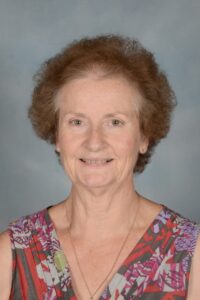
Anne retired from WASO in 2009 and continues to teach in a number of schools where she is a strong advocate for the use of the Mini-Bassoon in upper Primary Years and has performed with various ensembles including the Perth Symphony, Perth Chamber Orchestra and Fremantle Chamber Orchestra. Other activities include examining for the AMEB and SCSA and active involvement with the Australasian Double Reed Society currently holding the position of Vice President.
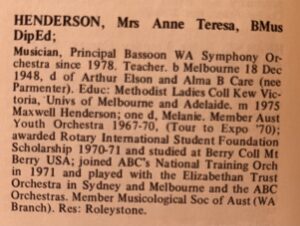
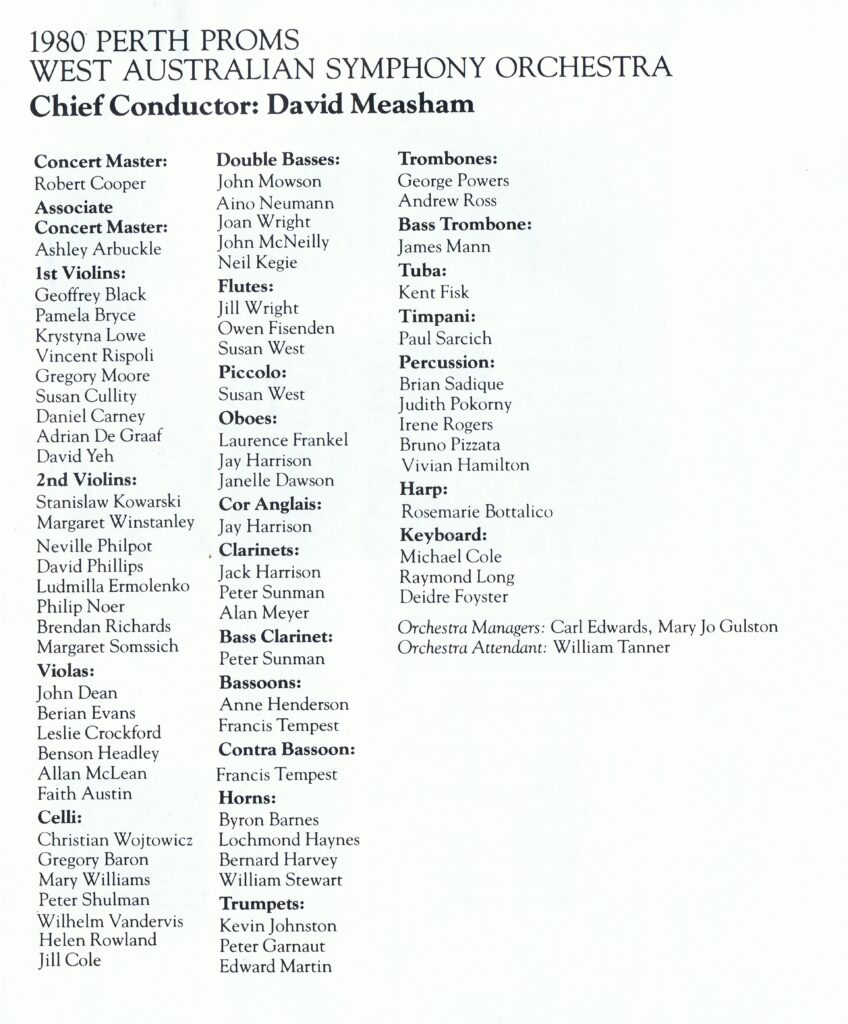
In down time Anne enjoys long walks, reading, overseas hikes and puzzles of any description.

Anne Henderson: 

B.Mus.(Melb) Dip Ed.(Melb) Grad Dip Lib Inf St.(Curtin)

Vice President Australasian Double Reed Society

A.M.E.B. Advisory Board Member


1979

Sacks, Margaret, The Way 79 Who is Who, (Crawley Publishers Pty Ltd, 1979), p.174


1980

1980 WASO Proms Orchestra list


1983

1983 WASO Singapore Tour – Anne in green
1983 WASO in Studio 620 Gerald Krug

1984


1989


1994

1994 WASO wind section: Jonathan Craven, Lorna Cook, Allan Meyer (clarinets); Anne Henderson, Robert Weeks, Linda Luce (bassoons)

1995

1995 Mozart Sinfonia Concertante for Four Winds: WASO with soloists Allan Meyer, Heidi Kepper, Joel Marangella, Anne Henderson


1996


1997

WASO Bassoon section: Natasha Woodley, Anne Henderson, Robert Weeks, Wendy Cooper
1997 WASO new logo launch party: Lorna Cook (clarinet), Anne Henderson, Jane Geeson (harp)

2001

WASO EChO in Sydney 2001 for education with Matthew Barley

2003

Anne Henderson – number 59!

2015

Anne Henderson at Penrhos College demonstrating a mini bassoon


Instruments

Years

Person

NEUMANN, Aino

Husband and wife team Aino Neumann and Neil Pierson both studied at the Sydney Conservatorium.  They married in 1952 and moved to Perth the following year, Aino to play bass with the West Australian Symphony Orchestra while Neil played trombone with a band at His Majesty’s Theatre.  Later, on advice from Rudolf Pekarek, he studied french horn as a second instrument and joined the orchestra in 1956 playing that instrument.
Harrison, Marcia, West Australian Symphony Orchestra Celebrating 75 Years, (WASO Holdings Pty Ltd, 2003). p.57


1953

COCKTAILS: More than 100 people were at the pre-Christmas party at Broadcast House last night when the W.A. Symphony Orchestral Committee entertained the members of the orchestra and their wives. Among those present were Mrs. C. T. Adams (left), a member of the committee, Aino Neumann, who plays double-bass in the orchestra, and Mrs. B. Alexander, of West Perth.

West Australian (Perth, WA : 1879 – 1954), Friday 27 November 1953, page 26


1954

Two Women Musicians Will Play For Queen

Looking forward to playing for the Queen are two of Perth’s women musicians, Miss Aino Neumann, a double bass player, and Miss Stephanie James, a pianist. They will be members of a small group who will provide music at the parliamentary dinner and at the women’s reception at the University. Both are members of the West Australian Symphony Orchestra. Born in Sydney, where she studied at the Conservatorium, Miss Neumann joined the orchestra when she came to Perth last year. She started piano lessons when she was, 11, but later decided to learn the double bass, an instrument she had always admired. Dwarfed by her instrument, Miss Neumann is one of the very few women double bass players in Australia. She comes from a musical family. Her mother was a singer and ballet dancer, and her grandfather played the French horn and the organ. In private life Miss Neumann is the wife of Mr. Neil Pierson, a trombonist. Her only hobby beside music, is housekeeping at their City Beach home. As there is no harp in the orchestra, Miss James plays on the piano the parts scored for the harp. A West Australian, she studied at the Melbourne Conservatorium and in England before she joined the orchestra four years ago.

West Australian (Perth, WA : 1879 – 1954), Thursday 18 March 1954, page 22


Women Are Prominent In W.A. Orchestra

A Melbourne flautist, Miss June Lindsay, complained recently that in England there was a great prejudice against women in orchestras. But there seems to be no such feeling in the West Australian Symphony Orchestra.

A group of 15 musicians who will play when the: Queen attends the women’s reception at the University, includes six women. They are Misses Margaret Sharp and Denise Dingwell (violinists Barbara Smith (viola), Beatrice Pether (cellist), Stephanie James (pianist), and Aino Neumann (double For many years the deputy leader of the orchestra has been Mrs. Vera Rees, and she took over as first violinist during World War I. Born and trained in London, she has played in the. orchestra here for 20 years. She finds the life of a musician very interesting. “You have to be very meticulous with your work,” she says. ‘Cello, Horn The ‘cello section plays under Miss Wendy Tyler, of Nedlands, who has held the position for. three years. She studied under Laurie Ken nedy in Sydney and then returned to her home State. .’Another. – unusual.. instrument for a girl to play is .the French horn, .but Miss.Thelma Moire, of Claremont,. has gained the position of third horn in the orchestra. She studied at the Melbourne Conservatorium for four years: Miss Moore is a member of a musical family. “All of them have been” musicians at some stage.” she said. Her brother, Frank, is second flute in the orchestra. She sailed for England in the Orontes this week with her par-ents. ‘During her six months. overseas she hopes to be able to get some further musical experience. Miss Jill Harrison, of Cottesloe, has been the second bassoon player for two years. She is the only professional woman bassoonist in Australia and studied at the Elder Conservatorium, Adelaide. A veteran-musician is Miss W. Wright who studied the viola at the Royal Academy of Music in London under Sir Henry Wood. She returned to Australia for some years.and then decided to go back to England. Her intended stay of one year did not eventuate and it was 20 years before she returned to Perth and joined the orchestra here. Debutantes For ·Ball Plans are .already being made for the annual ball of the Order of the Eastern Stat which will be held at the Embassy on June 29. The secretary (Mrs. A. Mc Kirby), said yesterday that there were some vacancies in the list of girls who would make their debut at the ball. Any girls who were interested should get in touch with her at her home in Mosman Park. 

West Australian (Perth, WA : 1879 – 1954), Wednesday 24 March 1954, page 26


SYMPHONY ORCHESTRA AT COLLIE

Tonight’s Concert Will Be Broadcast

Those people who appreciate good music should not fail to attend the concert to be given in (he Mineworkers’ Institute tonight by the West Australian Symphony Orchestra. If an audience of at least 300 people is obtained, not only at Collie but also the other three centres to be visited by the orchestra, then the concerts could become an annual event.
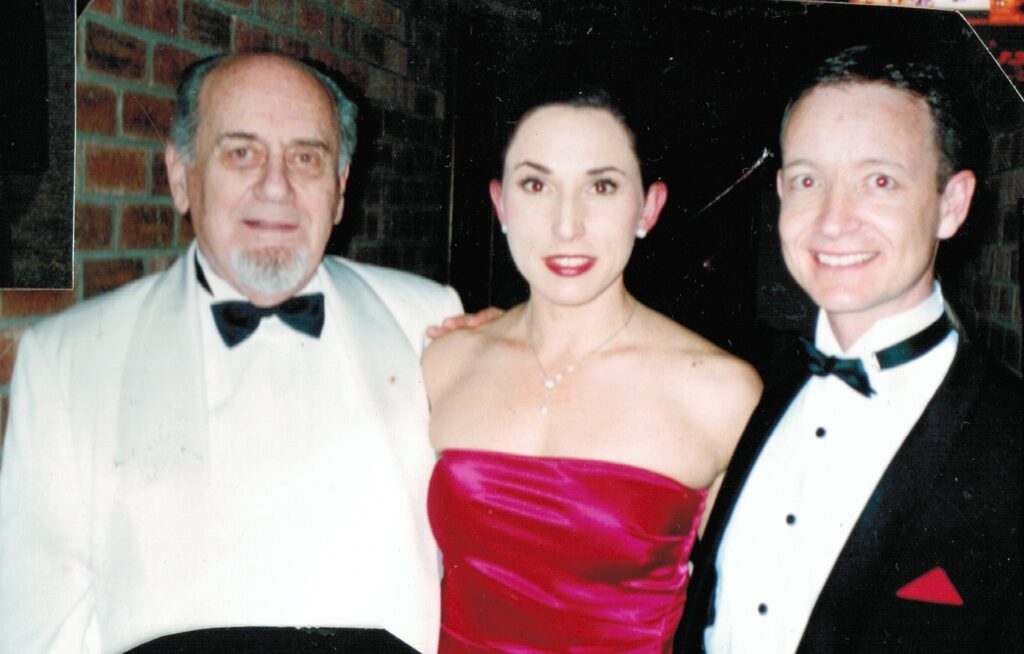
Tonight’s concert, or a portion of it, will be broadcast by the A.B.C. For this reason, all doors are closed during the playing of each orchestral item. Patrons are advised to be seated in good time for the first item as doors will be closed punctually at 8 p.m. The West Australian Orchestra boasts several unusual instruments to be played by women musicians. For example, there is double bass, Aino Neumann, probably one of the few instances of this instrument in a symphony orchestra to be played by a woman musician. Blond and of Latvian extraction, Aino Neumann only joined the orchestra a year ago. The orchestra will make its second tour of the country with these concerts, for at the ‘beginning of April, it appeared in the Great Southern district, giving concerts at Katanning and Albany, which attracted great local interest.
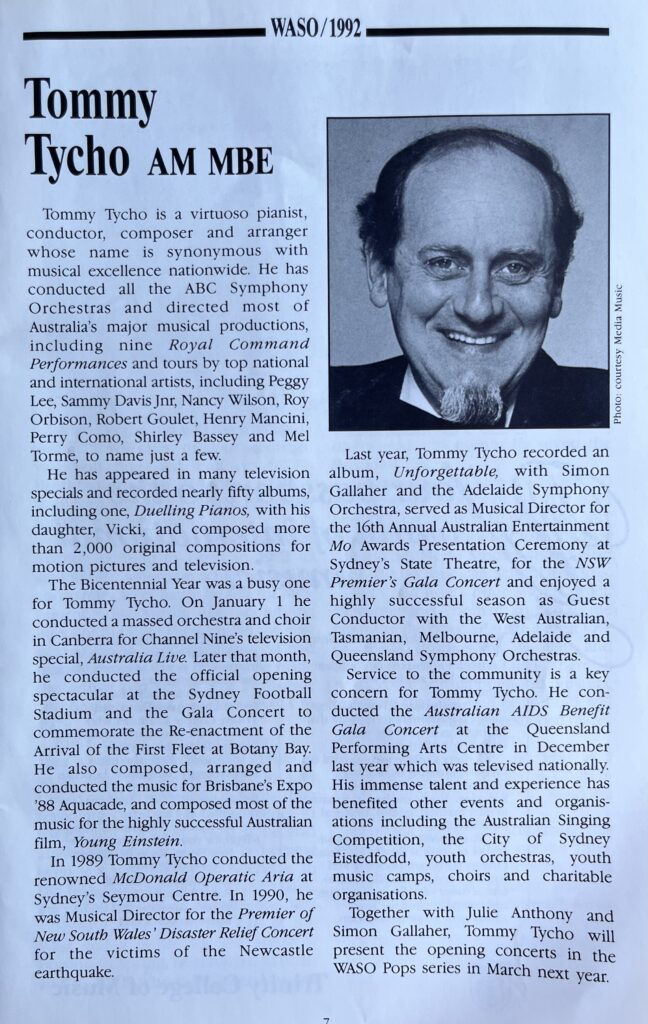
Collie Mail (WA : 1908 – 1966), Thursday 29 April 1954, page 12


1955

1955 Jim Riley Show
1955 Jim Riley Show program

1966

Aino Neumann 1966 WASO concert for the blind school with Ray Irving

1967

1967 WASO David Ellis and Aino Neumann in ABC Basil Kirke Studio
1967 WASO cellos and basses: Front row left to right: Zoltan Barna (Pest), Louis Mojzer (Buda). 2nd row Jill Heady, Brian Meddemmen. 3rd row: David Ellis, Aino Neumann, John Mowson. Back row: Peter Clinch, Verdon Williams.
1970

Sunday May 26 1970

The second concert in Series I of this year’s A.B.C. recitals in the Basil Kirke Studio will be given tomorrow afternoon at 3 o’clock.  A Rossini Quartet For Wind will be played by flautist Owen Fisenden, clarinettist Jack Harrison, horn player Neil Pierson and bassoonist Brian Pope.  A Beethoven septet will be performed by clarinettist Jack Harrison, bassoonist Brian Pope, violinist Vaughan Hanly, violist John Gould, cellist Ray Fraser and double bass player Aino Neumann. One of the objects of the concert is to bring the best local artists playing chamber music before the public.  Symphony concerts naturally attract more people because of the grandeur and perhaps a little because of the mere occasion.  But we must not let the chamber music and solo recitals die.  They are part of the backbone of music in Europe, the primary source of most music.


1973

Albert Herring Proves to be a Bad Catch

With Robert Gude

Ten minutes late getting underway to a two-fifths empty house at the Octagon, the opening night of the W.A. Opera Company’s production of Benjamin Britten’s “Albert Herring” was already too moribund to resuscitate.   The plotting in Act One induced the muse of Morpheus simply because it was virtually impossible to decipher what anyone on stage was singing about. The company threw away the key to the plot which remained undiscovered right to the last bar of Act Three. Patricia Whitbread remained prominent both vocally and socially in her role as the imperious Lady Billows.  Her larger than life characterisation lent itself to projecting both voice and diction into the lifeless acoustics of the Octagon. The rest of the cast had equal opportunity but for some inexplicable reason underplayed and undersang Britten’s brilliant operatic farce.  An occasional word or two was intelligible. isolated by bar after bar of baffle.  The less said about Martin Clare portraying the mumbling Mayor the better.  Mr Clare’s pitch was pathetic, his onstage efforts inept.  Between Miss Whitbread and Mr Clare this small cast was totally inadequate for the operatic task required.  

What redeems Albert Herring is the splendid production by John Milson. Act Two Scene One had the magic Milson touch: Jeffrey Weaver as Harry enduring functional discomfort during choir practice; Cliff Arndt’s bedrock boredom of wearisome waffle from windbags; John Nicholson’s stunned mullet manner and accepting homage as though facing the gallows with a recommendation for preferential treatment. Kristan Fredrickson’s articulate set and consummate costumes were colourful.  Allowance should have been made, however, for a costume change amongst characters who could afford more than one ensemble thus enhancing the illusion of a passage of stage time.  Conductor Geore Tintner seemed determined that Britten’s 12 member orchestra should overwhelm his singers at every opportunity.  Strings were insecure throughout, with the exception of Aino Neumann, contrabass; Neil Pierson’s horn; Jack Harrison’s clarinet; Peter Randall’s oboe; James Hopkinson’s flute and most commendable, Michael Jefferies impeccable harp held Mr Tintner’s orchestra together. This festival fare is indigestible, not worth a candle and most certainly not worth the price of admission. If Britten’s Herring performed at it was on opening night is the W.A. Opera Company’s first production for the Festival Of Perth it could well be the last.

Sunday Independent February 4 1973


1977

1977: 20 year A.B.C. service medals


1979

1979 WASO with Measham: John Dean, Joan Wright, Dave Ellis

1989


Neil, Aino and Patrick Brislan

Aino died on the 2nd April 2016 aged 81.

Instruments

Years

Person

TYCHO, Tommy

Tommy Tycho and music-making in Western Australia

 Tommy Tycho had a long association with the West Australian Symphony Orchestra. From 1984-2003 he was a frequent guest conductor in their family and contemporary music programs. At the time Tommy was the first popular music conductor to appear with all the state symphony orchestras (who were then managed by the ABC).

The first concerts Tycho performed with WASO were the ABC Family concerts 1984 featuring Tommy and Vicky and conducted by Dobbs Franks. Soon Tycho was invited as a guest conductor for WASO and the first concert was “Fascinating Rhythms” featuring singer Jackie Love. The program also included the Perth premiere of Tommy’s 1984 “Prom Overture”, op.5 which had been commissioned by Sydney Youth Orchestra. The concert also featured Tommy’s piano and orchestra arrangement of Gershwin’s “Fascinating Rhythm”, with many other Gershwin themes thrown in.

During the 1990s Tycho was featured as conductor in the “Fantastic Fridays” series. These concerts included Broadway music, and a Disney concert was also programmed in the 1990s featuring singers and instrumental arrangements of Disney music. Another concert called “All themes great and small” featuring daughter Vicky Tycho who gave her debut in 1982 and worked regularly with Tommy during the 1980s-1990s as a duelling piano act.

Tommy Tycho with James Morrison and WASO
Jody Harrison, Tommy Tycho, Grace Knight

In 2000 Tommy conducted many of WASO’s outdoor concerts called “Pops in the Park” held at Kings Park.

These featured James Morrison and Emma Pask, the crooner Frank Bennett, and Grace Knight.


Mark Underwood, Jody Harrison, Annie Neil, Sue Bluck, Jenny Wren (“Birdland”) and Tommy Tycho

The early 2000s saw Tycho return to WASO as a guest artist and conductor as part of the Ernst and Young Contempo Series. These concerts included Rhonda Burchmore and pianist Ray Aldridge. Other concerts featured Julie Anthony, Rob Guest, and others.

Tommy Tycho, Libby Hammer and James Flynn on tour in Esperance with “Sinatra”

In 2003 Tommy was commissioned by WASO to compose a five-minute piece to celebrate their 75th birthday (Tycho also celebrated his 75th birthday that year), which was a celebratory overture called The Celebration of Septuaginta Quinque.

This was part of their 5 x 15 commissioning program in which they commissioned 15 composers to write 5 minute works totalling 15 minutes. In this same concert Tommy also gave the premiere of the third movement of his Violin Concerto, which was performed by WASO’s concert master at the time, Daniel Kossov.


Material provided by Dr Samuel Cottell.


Tommy Tycho (1928-2013), AM MBE, Doctor of Music (honoris causa)

Thomas (Tommy) Tycho was born in Budapest, Hungary in 1928. His mother was a celebrated soprano, and his father worked for the Hungarian Electrical Commission. By age four Tycho began learning the piano and soon was a child prodigy, playing Gershwin’s Rhapsody in Blue with the Budapest Philharmonic at ten years of age. Tycho also studied composition with Leo Weiner, Zoltan Kodaly, and Carl Orff. The Occupation of Hungary and World War II interrupted Tycho’s studies and he was interned in a Labor camp and the ghetto. After the war Tycho continued his studies in composition and conducting. To make a living to support his family he worked as a pianist and arranger in jazz and dance bands in Hungary performing in upscale hotels and making recordings. He also worked in a number of night clubs. His formal studies included music at the Hungarian Gymnasium and the Franz Liszt Academy of Music. Leaving Hungary the day before the Communist takeover, Tommy joined a dance band led by Jules Szepesi, and they became residents at the Park Hotel in Tehran. Tycho was soon called upon by the Shah and became the palace pianist. During this time Tycho met his wife Eve, and wanting to settle down they migrated to Australia in 1951.

Unable to join the protectionist Musician’s Union of NSW Tycho sought work at David Jones as a storeman in the loading dock. Upon gaining entry to the Union Tycho auditioned at the ABC and soon gave broadcasts on the Sunday radio program A Handful of Keys. During the 1950s he regularly broadcast on ABC radio including as a duo pianist with Glenn Marks, as pianist with the Jay Wilbur Ensemble, in the Geza Bachmann Trio, and forming his own light music ensemble, The Thomas Tycho Players, where he wrote the music arrangements, compositions, and led the ensemble. Beyond the ABC Tycho led a quartet on radio 2UW, appeared on The Ford Show, and for a time was the Shefte Melody Man broadcasting popular tunes on the 2UW program. In the 1950s Tycho also composed his first two film scores for the Government film department: Valley of the Yarra and A Call for Order.

When Channel 7 (ATN) commenced broadcasting on 2 December 1956, Tycho was one of the first musicians to perform on television. At the same time he was also a pianist and arranger in the Sydney Tonight orchestra, soon becoming the music director of the entire 7 network. Tycho was vital to the success of television working as music director for all of the music and revue programs Curtain Call, The Commonwealth Bank Hour of Music, Revue ‘61, ‘62, Startime, Startime ‘63, Studio A, Teen Time, The Johnny O’Keefe Show (later renamed Sing Sing Sing), and many more. During this period Tycho also composed original music for locally produced television programs Penthouse, and the documentary series ANZAC. He later wrote music for The Mavis Bramston Show, the theme music for You Can’t See ‘Round Corners, The Battlers, and Riptide.  During the period 1964-1968 Tycho wrote arrangements for RCA Records of Australia appearing on over fifty recordings. Here he released his debut LP as pianist arranger and conductor on Tycho, Tycho. In the latter years of his association with ATN7 Tycho also directed the orchestra at the Silver Spade, working with artists such as Ethel Merman, Mel Torme, Barbara Eden and other international artists.

Leaving television in 1972 Tycho reinvented himself by returning to live performing. With the help of Robert A. Gunn and Mel Welles, the trio created a series of concerts in association with 2CH Radio who had just switched to the ‘good music’ format. The concerts featured the newly formed Good Music Orchestra and showcased Tycho’s talents as a pianist, arranger, and conductor. The first of these concerts, Good Music Live at the Sydney Opera House, was released on Festival Records. These were followed by a series of  “Nigh with …” concerts that included music by Gershwin, Cole Porter, Irving Berlin, and Rodgers, Hammerstein and Hart were all recorded and released on LP. During this time Tycho also created Big Band Concerts, An Evening with Julie Anthony, and Hello Broadway starring Anthony, Barry Crocker, and Frankie Davidson. In 1979 Tycho was the music director for Peggy Lee’s Australian tour. During this period he was the music director for A Concert for Darwin, and for June Bronhill’s concert at the Sydney Opera House.

Having established himself as the leading orchestral popular music figure in Australia, the 1980s saw Tycho conducting the first Royal Charity concert broadcast live from Sydney Opera House. In 1980 Tycho once again returned to television as the music director of the multicultural music variety program Cabaret on the newly established Channel-0 (SBS). He made recordings, and with Lynn Rich as manager formed the Sydney International Orchestra. In 1982 Tycho composed and arranged music for the Commonwealth Games in Brisbane. In 1983 he was the music director for the opening of Sydney Entertainment Center. During this time Tycho formed a piano duo with his daughter Vicky. They toured nationally and made an LP Duelling Pianos.

In 1984 Tycho arranged and recorded Australia’s new national anthem Advance Australia Fair for the ABC. He later arranged various versions of the anthem in 1985 and 1986. The 1986 version was recorded by Julie Anthony and is the version still used today for major sporting and cultural events. Tycho’s most iconic version is perhaps the special 1988 Bicentennial version broadcast live from the lawn of Parliament House and was used as ABC television’s station closing throughout the 1980s and 90s, with Tycho’s arrangement giving Australia’s anthem its heart and soul.
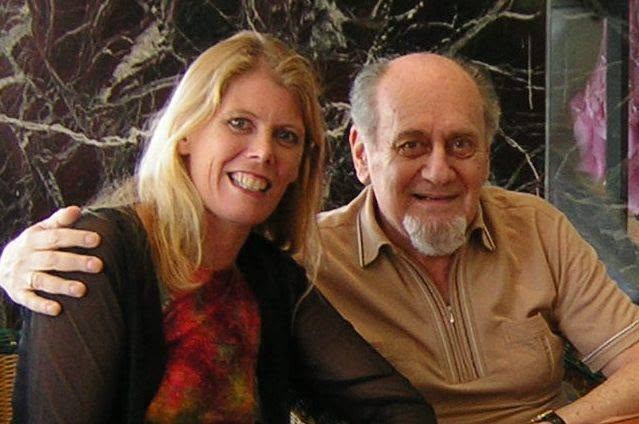
The 1980s saw Tycho engaged as a guest conductor with the state symphony orchestras becoming one of Australia’s first popular music maestros. He first was invited as a guest pianist with the MSO, then recorded a three-part television series, My Music, with the Queensland Symphony for ABC television. He conducted the Queensland, Adelaide, Tasmanian, West Australian, and Sydney Symphony Orchestras over a twenty-year period.  Tycho continued to be in demand as conductor, arranger and pianist throughout the 1990s and 2000s making three albums with his protege Bernard Walz. Tycho also wrote the arrangements for three Anthony Warlow albums and was music director for two of Warlow’s national tours in the 1990s and 2000s. He provided arrangements and recordings for hundreds of artists and was in demand for all the major cultural events. In 1995 he published his memoirs The Tommy Tycho Story: Music, Maestro Please.

During his lifetime Tycho composed several film scores including the iconic Young Einstein for Yahoo Serious and others. Tycho composed a number of light music pieces including Sydney Suite, Sunday at Taronga Park, Dance of the Fireflies, The Kangaroo and others. He also composed a number of classical concert pieces including a String Quartet (1947), Suite for Grand Orchestra (1948/9), Three Pieces for Woodwind Quartet (1971), a Trumpet Concerto for Dick Montz (1985), Proms Overture, op.5 (1984) commissioned by the Sydney Youth Orchestra, The Celebration of Septuaginta Quinque commissioned by WASO in 2003, “Romanza” the second movement from his incomplete second piano concerto, and his magnum opus, the Violin Concerto (2002) which is regularly performed.

Tycho was awarded an MBE in 1977, an AM in 1987 and an honorary Doctor of Music in 2007 from the University of Sydney. He was also a patron of the MO Awards. Tycho’s enduring legacy is still present today in Australian cultural life. His orchestrations are still performed by orchestras and the Tycho Trust, led by his daughter Vicky, ensures his music is made available for future generations through digitisation and preservation. Samuel Cottell has written a PhD on Tycho “From storeman to stardom: the life and music of Tommy Tycho within the context of light music 1951-1978,” and a new documentary TYCHO! Beyond the Baton by Stephan Wellink  has won multiple awards and accolades being regularly screened in cinemas around Australia.

Biography provided by Dr Samuel Cottell 2026.


Jody Harrison and Tommy Tycho

Memories of Tommy Tycho by Jody Harrison

The master, the Maestro, the magnificent Tommy Tycho – with whom I was privileged to work with on many occasions – told me after a day of rehearsing a Pops concert in which he was both the Conductor AND the piano soloist – that he wasn’t feeling well.   I must preface this with the fascinating experience I shared a couple of weeks previously for a Family Concert with a medical theme, in which my colleague Paul Doyle an I had approached WASO sponsors St John of God Hospital for the use of a heart monitor.  We hooked it up to the obliging Principal Cellist during the concert, a huge screen above the orchestra showing what happened to your heart rate when you began performing.  This contact became hugely useful when I received a call from Tommy’s wife, Eve, late the same evening (that comes under my E.B. agreement contract right at the bottom that says “other duties as directed”) pleading with me for help as Tommy was most unwell.  I popped to the Sheraton to assess the situation and seeing the usually cheerful and hilariously naughty Tommy grey and in obvious pain, immediately realised he needed to go to hospital.  Tommy had previous heart problems and I wanted to call an ambulance and get him to hospital.  Tommy didn’t want to go to hospital – Eve was sobbing and begging him to go.  I bit the bullet and rang the fab staff at St John of God Hospital (not an emergency hospital) reminding the night staff of my use of their heart monitor a couple of weeks before, the fact that they were a WASO sponsor and I thought the conductor was having a heart attack.  After a quick and urgent discussion they fabulously allowed me to drive him straight to ICU and be admitted.  He was having a heart attack.  Dobbs Franks filled in the next day of rehearsals (bearing in mind Tommy was also doing extensive piano solos – fab day for Dobbs I image) and Tommy came back for the final rehearsals and performances!  Can’t hold a good man down.

Years