Miller, Vicki, The Sixties, (West Australian Newspapers Limited).
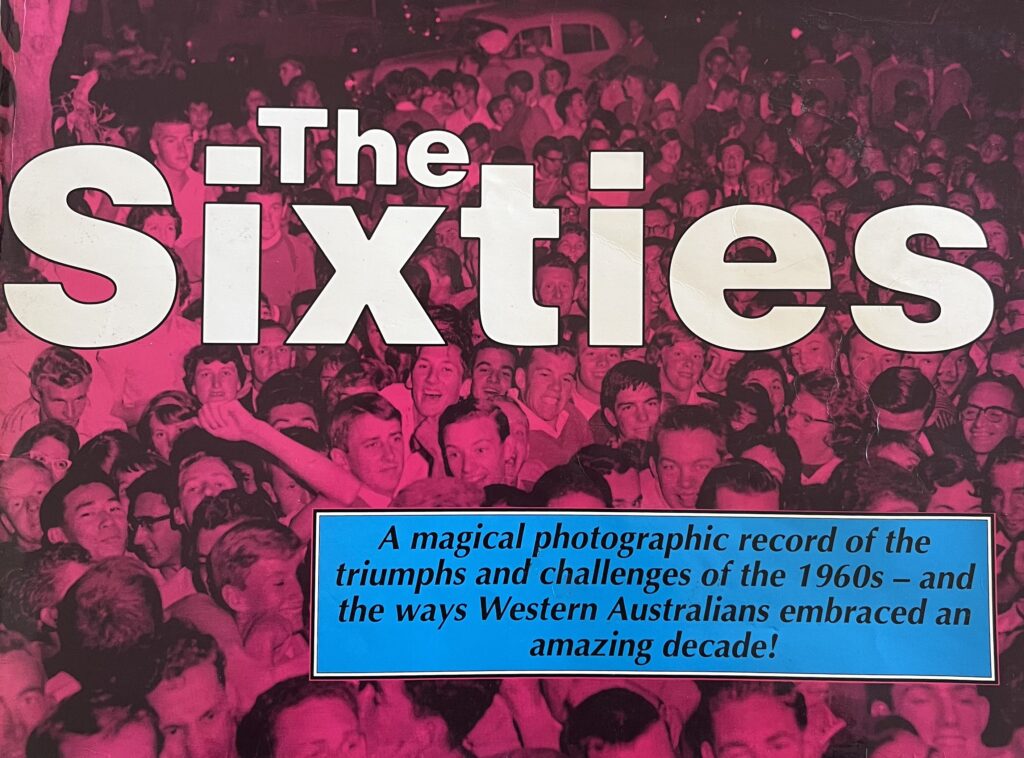
Miller, Vicki, The Sixties, (West Australian Newspapers Limited).
Person
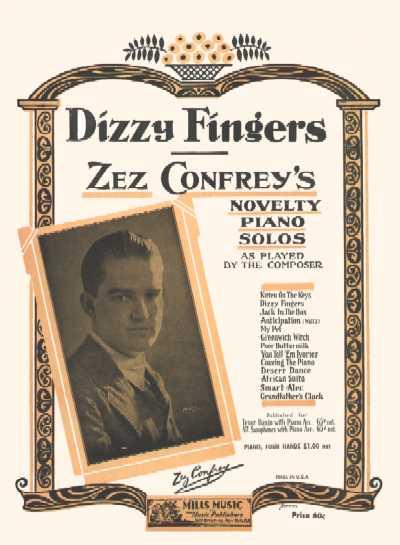
Dizzy Fingers by Zez Confrey was published in New York in 1923. In 1960, clarinettist Jack Harrison recorded “Dizzy Fingers” by Zez Confrey playing all ten clarinet parts. The recordings were played at different speeds, backwards, and superimposed onto the master tape by ABC technician Garry Matthews at Broadcast House. The Sunday Times, 13 March 1960: “Versatile musician Jack Harrison recently made a recording playing ten parts on clarinet. The finished work will be broadcast on Peter Harrison’s 6WN programme Saturday Roundabout.”
Person
Person
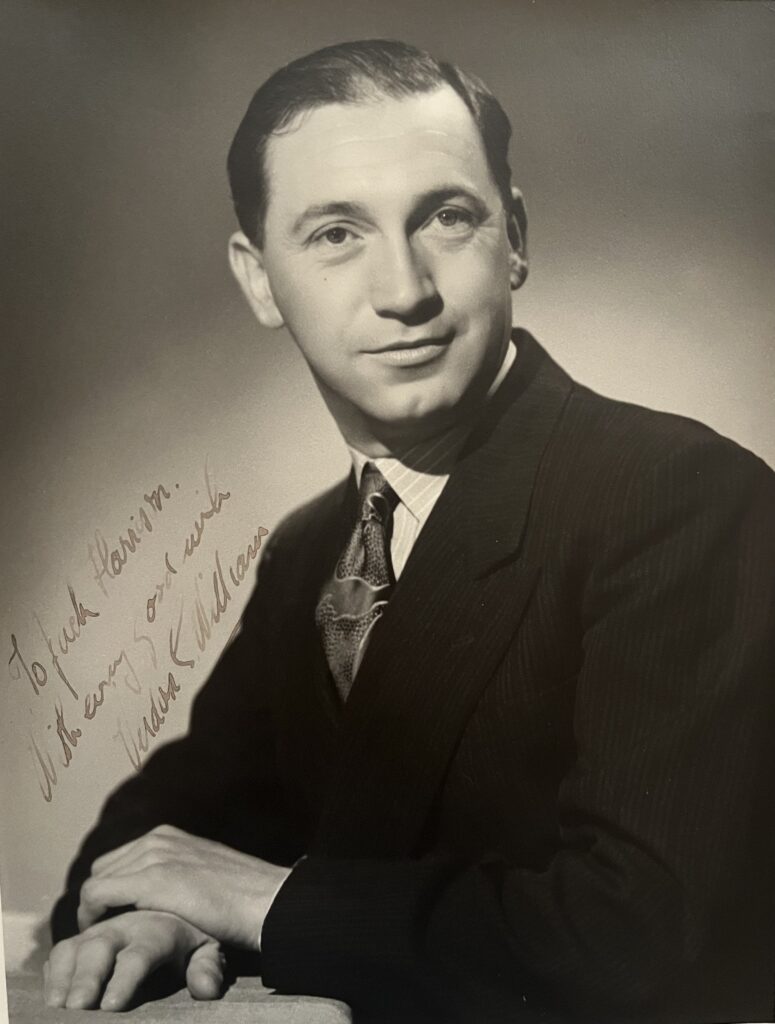
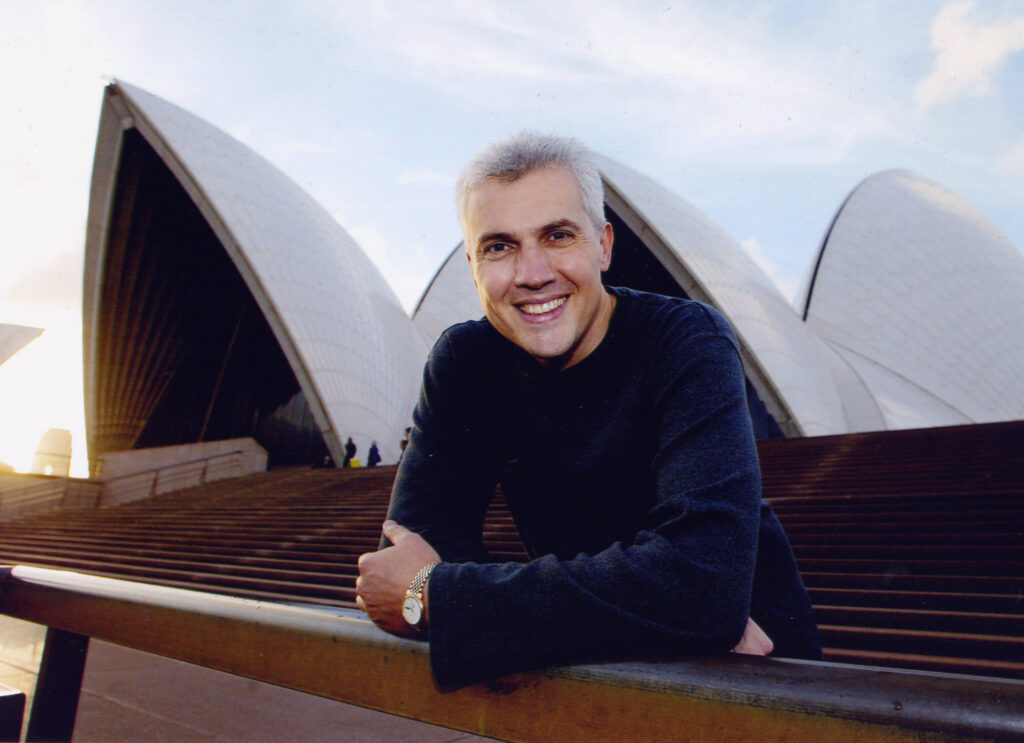
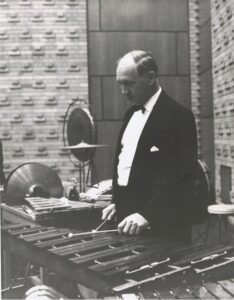
VERDON WILLIAMS was one of Australia’s most versatile musicians – and one of the most popular – as percussionist, pianist, lecturer, arranger, composer and conductor.
After early piano training with his mother, he obtained a scholarship to the University of Melbourne Conservatorium of Music from where he graduated with first class honours. He studied piano under Waldemar Sidel and Percy Grainger, and undertook many tours in both solo and concerto performances, and gave lecture tours with his wife, soprano Doris Dodd.
A former conductor of opera at the National Theatre, Melbourne, he also composed two successful ballets, The Outlaw and Conflict.
Verdon Williams joined the West Australian Symphony Orchestra in 1960; shortly afterward he founded the Perth Sinfonietta and the Lyric Singers.
He was for a time conductor of the Tasmanian Symphony Orchestra before returning to Western Australia.
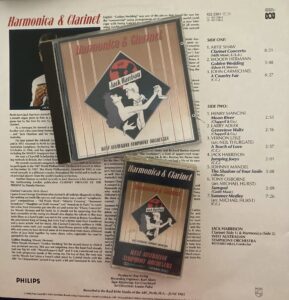
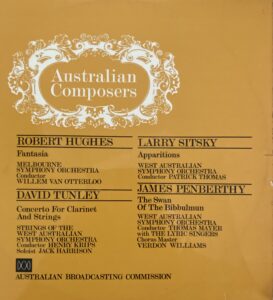
Verdon arranged “Moon River” for harmonica and orchestra for Jack Harrison and the West Australian Symphony Orchestra. This arrangement appears on the ABC album “Moon River” (previously known as “Harmonica and Clarinet”) and is heard frequently on ABC Classic FM.
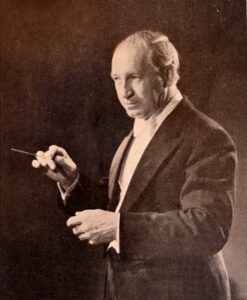
Verdon Williams moved in a number of different directions. He was initially engaged as a percussion player, doubling on piano. However, his talents were multi-faceted. The orchestra often played is light music arrangements, with Verdon wielding the baton; and as if that were not enough, he could also turn hs hand to a honking contra bassoon on the rare occasions when that cumbersome instrument was required.
Harrison, Marcia, West Australian Symphony Orchestra Celebrating 75 Years, (WASO Holdings Pty Ltd, 2003). p.35
1961
ABW TO SCREEN BIRTHDAY SHOW Thursday May 11 1961 – By Keith Flanagan
ABW Channel 2 will tonight present its biggest live show yet, to celebrate its first birthday. There will be singers, dancers, a 25 piece orchestra and an invited audience of 200 for the two hour show. Jock Millett will produce the cabaret style show in the Kirk Memorial Studio in the radio building – the biggest studio the A.B.C. has here. The record library will be taken over as a makeup room for the 44 people who will come before the cameras. Lighting in the studio will be equivalent to 1000 60 watt globes. Jim Fisher, Earl Reeve and Diana Ward will compere the show, to run from 8pm to 10.30pm, with a half hour break from 9 for the American documentary “Our Man in Space”. Verdon Williams has formed a 25 piece orchestra for the show. Artists to appear are the Four Notes, Margot Robertson, Tony Federici, Carmen Arenas, Adriano Angelucci, Doris Dodd, Garry Smith and Derna Sluik, Jack Harrison, the Wrightsons, Lorna Sydney, Gerrard Sibbritt and Terri Charlesworth, Andre Tio, Peter Piccini and a demonstration ballroom group.
The West Australian Thursday May 11 1961
1961 RADIO BROADCAST
Light Music by Family
When Perth’s versatile instrumentalist Jack Harrison and his quintet play, it’s a family affair. In a series of six programmes of light music starting this Tuesday at 8pm from 6WN, Harrison will play the harmonica, saxophone and clarinet. He and his father have made special arrangements of Latin-American tunes slow ballads and novelty numbers for the programmes. Members of the quintet will be Harrison’s twin sister Jill (bassoonist and second pianist) her husband John Mowson (principal bass with the W.A. Symphony Orchestra), Laszlo Vidak (violin), Verdon Williams (percussion) and Stephanie James (principal piano).
FESTIVAL CONCERT TONIGHT
World Premiere of David Farquhar’s prize winning Concertino for Piano and Orchestra
First Performance in Australia – Chamber Concerto No. 3 for Bassoon, Strings and Percussion by Elisabeth Lutyens.
David Tunley’s Introduction and Scherzo for Clarinet and Strings
Plus works by Dvorak, Grieg, Delius, Elgar, Walton and others.
UNIVERSITY ORCHESTRA conducted by Trevor Jones.
Soloists: Michael Cole, Jack Harrison, Brian Pope.
Assisting Artists: John Mowson, John Dean, Verdon Williams.
8pm Sat 5th August 1961 – Unreserved seats at door 10/ Students 7/6
BROADCASTS
The Eastern states have had the rare pleasure of hearing a good deal of Jack Harrison’s quintet from the A.B.C. stations. Jack produced six programmes of light music for 6WN with arrangements by himself and his father of Latin-American tunes, slow ballads and novelty numbers. Members of the quintet are: Jack, clarinet, saxophone and harmonica; his sister Jill on bassoonist and also as second pianist; her husband John Mowson, principal bass with the W.A. Symphony Orchestra; Laszlo Vidak, violin; Verdon Williams, percussion and Stephanie James, principal piano. The session is a pleasure to listen to.
The Australian Accordionist Vol. 8 No. 1 November 1961
1962
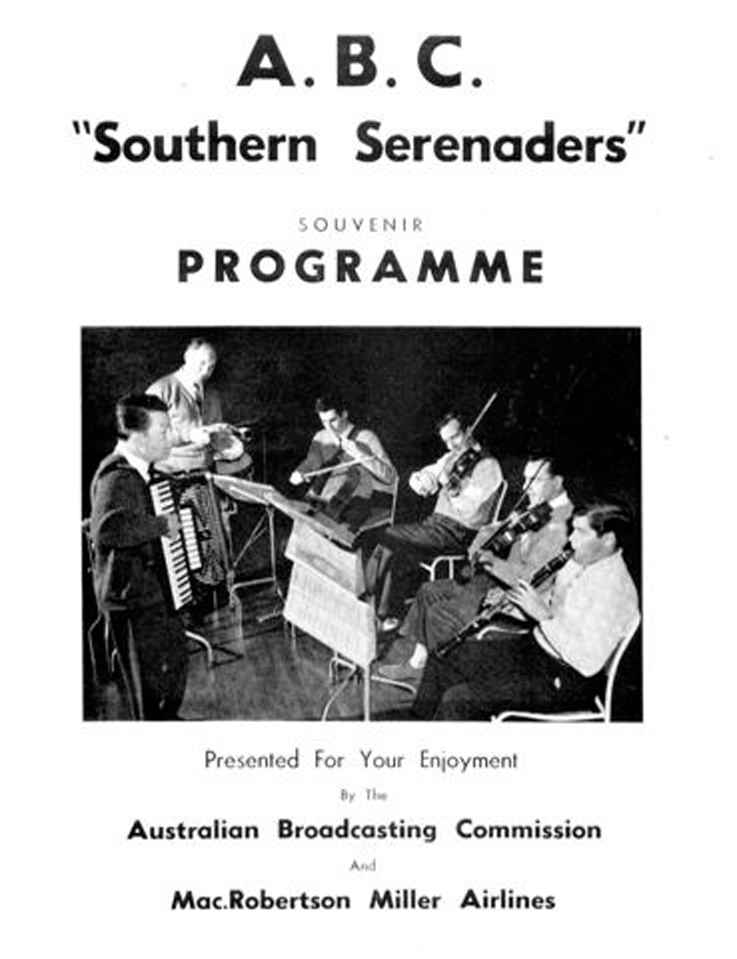
ATTRACTIVE PERFORMANCE
Southern Serenaders Tour
Verdon Williams, popular conductor of the Perth Light Orchestra and the A.B.C. Sinfonietta, will head the orchestra which will tour the North West next month. Accordion virtuoso Peter Piccini and versatile clarinettist Jack Harrison will also tour with the group. All the musicians with the exception of Peter Piccini are members of the West Australian Symphony Orchestra. People in the North will once again hear the magic violin of Laszlo Vidak, who earned thundering ovations during the 1959 M.M.A. A.B.C. Cultural Tour of the “Lido Quartet”.
Jack Harrison has written a special number called “Jumping Joeys” for this tour. Soprano, Shirley Flesfader, will also sing three excerpts from the lyric song cycle “North of Capricorn” by W.A. Composer, Robert Gude.
The outstanding gaiety and appeal of the programme compiled and arranged by Verdon Williams includes selections by Cole Porter, excerpts from “Oklahoma” and Latin American music and a special arrangement for string quartet of a movement from “Eine Kleine Nachtmusik” by Mozart. Shirley Flesfader will sing arias from Bizet’s opera “Carmen”, Puccini’s “Madame Butterfly” and a selection from “Kismet”. Peter Piccini will give an impromptu recital of audience request numbers. Each member of the group will be heard in solo items and the versatile musicians will play a wide variety of instruments.
 MUSICIANS TO TOUR IN NORTH
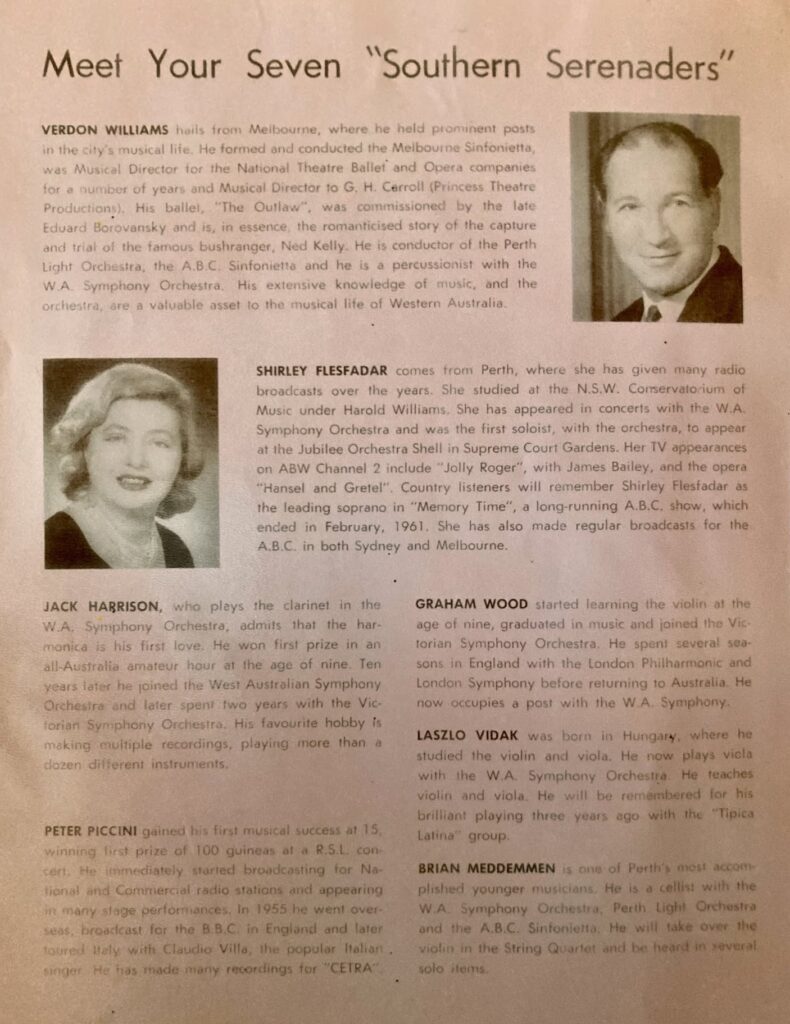
The A.B.C. and MacRobertson Miller Airlines Ltd. Will send seven musicians through the North-West for a series of concerts between August 28 and September 8. The A.B.C. artists will fly 4000 miles in 12 days to give concerts in Carnarvon, Port Hedland, Broome, Derby, Wyndham, Kununurra and Darwin. The group is to be led by Verdon Williams, will include Shirley Fresfader, Peter Piccini (accordion), Jack Harrison (clarinet and harmonica), Graham Wood (violin), Laslo Vidak (violin and viola) and Brian Meddeman (cello and violin). A small TV film unit will tour with the group. The film they make will be shown in the Eastern States as a part of an A.B.C. project to focus attention on the North.
The West Australian August 8 1962
The “Southern Serenaders”
From August 28 – September 8th 1962 the A.B.C. sent a small group of musicians, led by Verdon Williams, on a tour of the north west of the state. Apart from Verdon, the ensemble which we called “The Southern Serenaders” included Graham Wood on violin, Laslo Vidak on violin and viola, Brian Meddemmen on cello, Jack Harrison on clarinet and harmonica, Peter Piccini on accordion and soprano Shirley Flesfader.
Graham Wood wrote to me: “ We travelled by DC3 aircraft, giving concerts in Carnarvon, Port Hedland, Derby, Broome, Darwin, Wyndham and Kununurra. Verdon had arranged all the music, which was of a pretty light nature and we all had a solo spot. We were paid £8 per concert and received a living allowance of £3/3/0 a day. We had a happy time, enjoying each other’s company. Peter Piccini was a natural comic and poor Shirley was the butt of many a practical joke, which she took in good part. One thing I remember vividly was the night when a huge stick insect landed on my violin while I was playing “The Flight of the Bumblebee”!
Most of the towns were still remote and largely undeveloped at that time, so people really appreciated our efforts. The aborigines were shy about coming to our concerts, so in Derby a few of us were taken out to a camp late at night after our performance. In a moonlit clearing we played to the people, some of whom produced a couple of digeridoos and played them for us. A magical moment ensued, as Jack Harrison quietly joined in with some gentle improvisations on his clarinet. We were entranced as were all the people there, dogs included. A genuine fusion of cultures.”
RECORD AUDIENCE CHEERS 1962 CULTURAL TOUR
The A.B.C. “Southern Serenaders” played to an estimated audience of 6000 people during their 4000 mile tour of seven North West ports including Darwin and Kununurra.
Darwin gave the orchestra its largest reception. About 4000 people crowded the Darwin oval sitting on available chairs provided, on rugs on the ground and in hundreds of motor cars parked around the perimeter of the ground. Darwin’s town Clerk (Bill Sullivan), who estimated the size of the audience, remarked that in all his experience it was the largest crowd he had seen in Darwin at such a presentation. Everywhere they went the “Southern Serenaders” earned cheering ovations and goodwill for M.M.A. and the A.B.C.
Departing from Derby around 4am, Jack Harrison (clarinet) and Peter Piccini (accordion) decided to hold an impromptu jam session in the air terminal. When M.M.A.’s chartered F.27 arrived, they moved out onto the tarmac, serenading the sleepy-eyed passengers that emerged from the aircraft in the small hours. The previous night, six members of the orchestra, augmented by four aborigine musicians, improvised what was probably the most unique combination of sounds heard in the North in a long time. The only bachelor in the orchestra, cellist Brian Meddemmen, was the only member of the group game enough to bring home an aboriginal wife beater. Violinist Laszlo Vidak fell victim to “fiddler’s peril” when the top string on his violin broke during a solo. He finished the item without a break and few people realised what had happened until Verdon Williams mentioned it to the audience.
On arrival at Wyndham, Peter Piccini discovered that the precision mechanism on one key on his £500 accordion had broken. A technician from Wyndham Aeradio was located who did a superb welding job at short notice and a scant hour before the concert there. Mr Piccini was still replacing bits and pieces of springs, levers and keys with the able assistance of Graham Wood and Jack Harrison.
In their off-duty moments, most members of the group took the opportunity to see the surrounding countryside of the towns they visited. Mr. E.K. Sholl, A.B.C. Manager, Fred Combs, A.B.C.2 cameraman and cellist Brian Meddermmen earned top honours for vim, vigour and vitality by climbing the Bastion at Wyndham and Kelly’s Knob at Kununurra. Shirley Flesfader was the only member of the touring group to return to Perth with genuine Nor’-West influenza. Well on the road to recovery as Jetstream went to press, Miss Flesfader enjoyed the joke on herself remarking “Trust the soprano to be the only one in the company to catch the ‘flu’”. To Verdon Williams, the North-West was a paradise. He collected seeds and minute cuttings of different varieties of Western Australian plants, shrubs and flowers. Some are already established in the large garden of his south Perth home.
PRAISE FROM A.B.C.
At every port-of-call, the Manager for Western Australia of the Australian Broadcasting Commission, Mr. E.K. Sholl, told audiences at the “Southern Serenaders” concerts how greatly he admired the work being done by M.M.A. to bring culture programmes into the North. He went on to assure audiences that by next March the A.B.C.’s two short wave stations, VLX and VLW, would increase their signals from 10 to 50 kilowatts and from 2 to 10 kilowatts respectively. “You will then be able to receive Perth short wave broadcasts with approximately the same clarity as you now receive Melbourne’s transmission through Radio Australia”, Mr Sholl said. This, he anticipated, would enhance the listening pleasure of almost everyone in the North from Carnarvon to Wyndham.
Jetstream Official Publication of Mac.Robertson Miller Airlines Ltd. Vol 1. No. 20 September 1962
 1963
CONCERT – MARCH 14th 1963
An outstanding programme by the Perth Sinfonietta will be given in Winthrop Hall at 1.10pm next Thursday under the baton of Verdon Williams. This free recital is being presented by the A.B.C. as the first in a weekly series being sponsored by the University during the year. The Sinfonietta will play works by Berger, Copland, Delius and Vaughan Williams. The soloists will be Allyne Tilsed (flute) and Jack Harrison (clarinet). Those attending the concert include Russian violinist Nelli Schkolniskova and W.A. resident conductor John Farnsworth Hall, who will be soloists and conductor in the first A.B.C. Youth Concert on March 19.
LUNCH MUSIC IS PROMISING – By Sally Trethowan – MARCH 14th 1963
The programme for this year’s free lunch-hour concert series held on Thursdays in Winthrop Hall is even more interesting and varied in type of music and number of performers than last year’s. If the first concert given yesterday to a large audience by the Perth Sinfonietta, is any indication of the quality, the weekly programmes will be exciting musical experiences and a major contribution to musical life in W.A. The Perth Sinfonietta always gives us an entertaining, thought-provoking programme. Conductor Verdon William’s introductory comments are instructive, to the point, and do not offend by being too technical or too long. The choice of composers in yesterday’s concert – Berger, Vivaldi, Copland, Delius and Vaughan Williams – leaned heavily towards the moderate, making the Vivaldi Flute Concerto (“The Goldfinch”) a pertinent, pleasant comment on, and exposition of, a more elegant and graceful age. The young flautist, Allyne Tilsed, who has just joined the W.A. Symphony Orchestra has a sureness of tone control which allows the most delicate innuendos without over or under emphasis. In Vivaldi’s “Goldfinch”, flute and strings chattered and trilled in animated conversation, whereas in the Copland Clarinet Concerto, a different symphonic relationship exists between orchestra and clarinet. Clarinettist Jack Harrison interwove the sure mellowness of tone and bell-like clarity of his instrument into the orchestral texture of the work. The brief overture of Jean Berger that began the programme and a Delius “Serenade” and Vaughan Williams “Fantasia on Greensleeves” which closed it, are works typical of the individuality of their composers, but have in common the fact that they make light and easy listening.
The West Australian March 15 1963
1963 TELEVISION – 9.30 Channel 2: ALL STRINGS AND FANCY FREE
Perth Sinfonietta conducted by Verdon Williams. Featuring Audrey Webster (harp), John Reece (percussionist), Jack Harrison (clarinet and harmonica) and Molly McGurk (soprano). Music to be played includes All Strings, Fancy Free and Moon River.
TELEVISION – 9.30 Channel 2: ALL STRINGS AND FANCY FREE
An 18 piece orchestra will be used by Channel 2 for its live program – All Strings and Fancy Free – at 9.30pm on Tuesday. The group, conducted by Verdon Williams, will consist of 10 violins, three violas, two cellos, a double bass, harp and percussion. In some tunes they will be joined by the piano. Soloists will be pianist and soprano Molly McGurk and dance band leader, Jack Harrison who will play clarinet and harmonica. Some of the tunes to be played include Moon River, At the Balalaika, Cuban Rondo, One Kiss They Can’t Take that Away from Me.
1964
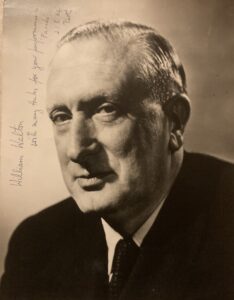
Jack Harrison performed in the Perth premiere performance of “Façade” in May 1964 with the composer present.
Actor James Beattie was the speaker and Verdon Williams the conductor. William Walton signed a photo for Jack that reads:
“with many thanks for your performance in “Façade” 21.5.64 Perth”.
1966
Saturday 26 February 1966
In the same studio at 6pm next Saturday, Verdon Williams will conduct a chamber music concert. The performers will be the A.B.C. Chamber Ensemble and James Beattie and the Oriel String Quartet with Jack Harrison.
MUSIC – By Peter Hellstrom
British music to be played next week in the Festival Of Perth will include some well-known compositions in the ABCs Basil Kirk studio at 6 o’clock tonight. There will be a performance of William Walton’s “Façade” for speaker and chamber ensemble with which Walton first made an impact on the English musical scene. It consists of a recitation of Edith Sitwell poems against the background of chamber ensemble music. The speaker will be James Beatty and the ABC chamber ensemble will be conducted by Verdon Williams. The other work in the programme, Bliss Clarinet Quintet, will be performed by the Oriel String Quartet with Jack Harrison.
The West Australian Saturday February 26 1966
WORDS, MUSIC BLEND SUBTLY IN “FAÇADE” – By Sally Trethowan
Nearly 2 years ago, actor James Beatty conductor Verdon Williams and a small chamber ensemble gave a scintillating performance of the original version of “Façade”. The same actor and conductor were responsible for a no less diverting and accomplished reading of the work in the Basil Kirk Memorial studio on Saturday night as part of the Festival Of Perth “Music of Britain” series. William Walton deft and witty accompaniment to the spoken verses by Edith Sitwell no longer shock audiences as they did in the 20s. What seemed iconoclastic musical language then, derived as it was mainly from jazz and the music-hall, seems passe now. But though time has weathered the original satiric bite, the work still magnificently fulfils the sub- title “An Entertainment”. A successful performance of “Façade” depends predominantly on fractional timing and coordination between the individual musicians, and between the speaker and instrumentalists. On this count Saturday’s reading could scarcely have been better. Beattie’s performance of the verbal prestidigitations in the “Tarantella” and part of the “’Tango Paso Doble” was admirable as was his rhythmic delivery of the apparently nonsensical compilation of associative images into a rich mosaic of orchestrated word sounds. The other work on the program, Arthur Bliss’s Clarinet Quintet, is extremely demanding on all players, though in no sense is it a showpiece. The Oriel String Quartet and clarinettist Jack Harrison, who also performed this work in the composers presence when he visited W.A. about 18 months ago, gave a craftsman like an intelligent reading, inclusive in the brusque helter-skelter scherzo and finale, and reflective, even faintly nostalgic, in the intensely lyrical first and third movements. Bliss’s harmonic acidulation in these movements, however, precludes any thought of the molasses type sentimentality often associated particularly in 19th century music with lyricism.
The West Australian Monday February 28 1966
FESTIVAL FAILS IN ITS HUNT FOR A MUSICAL DRAW CARD – BY KENNETH HINCE IN PERTH
Put on at cocktail time “Façade” was prefaced by the Clarinet Quintet of Arthur Bliss, music of thick Brahmsian texture. This has no necessary reason for existence being simply a work that someone felt like writing down. All the instruments are used with a sense of duty, all the movements are filled with scrupulously professional writing, but it’s total meaning might be boiled down into a bar or two of Elgar or Britten. Only a historian could have really enjoyed its performance; only an archivist could have been satisfied to hear it played instead of reading it over in a library. It was performed on Saturday by Jack Harrison and the Oriel String Quartet – Harrison with unfailingly accurate but monotonous uninflected attack, the Quartet balanced, well matched and reasonably polished. “Façade” came off rather worse. Music of superb elan which has worn much better than most people realise, it had a fairly good reading from James Beatty. The décor in the Basil Kirke Studio was quite adequate with a gauze curtain allowing just enough of the reciter and the chamber Orchestra to come through to the audience. But the instrumental work was just not accurate enough for the music. For a mid 60s audience, the point of this music lies half in the way it bites its thumb at Victorian morality, half in the bitterly precise realisation of the score. On Saturday under Verdon Williams, things were too this and that too hither and thither. For people who had not heard “Façade” before this was a tolerable enough experience but to a man who wanted to feel the true historical grip of this music, the performance was too slack and inefficient for a casual reading let alone for a performance of festival tone.
The Australian Monday February 28 1966
1966 NEW PROGRAM OF “EVERGREENS” FROM W.A. JACK HARRISON AND HIS MUSIC
A new series of popular all-time favourite music will start on Monday on May 16 1966 at 8.30pm on the First Network.
It will be presented by six members of the West Australian Symphony Orchestra led by Jack Harrison. Special arrangements have been written for their combination of bassoon, bass, violin, piano and percussion with the leader doubling on clarinet and saxophone. There are five programs in the series to be titled “Jack Harrison and his Music”. Jack Harrison will occasionally introduce his first love the mouth organ. He is a versatile musician and once made a multi recording in which he played 14 instruments including percussion and piano. He has been a member of the W.A. Symphony Orchestra for 15 years during which he has appeared frequently as soloist in clarinet and saxophone Concertos. Highlights of these performances were the Australian Premiere of the Aaron Copland Clarinet Concerto and the Richard Strauss Double Concerto for Bassoon and Clarinet. On this occasion the bassoon soloist was his twin sister Jill who also joins him in his new series doubling on piano and percussion. Items in the first program are “Mice on the Move”, “Gigi”, “Sidewalk”, “Petite Waltz”, “Holiday in Honduras”, “Comedian Gallop” The Pygmy Patrol”, “Will O‘ Wisp” and “Forever Samba”. The other artists in the series Laszlo Vidak violin John Mowson bass Stephanie James piano and Verdon Williams percussion.
1967
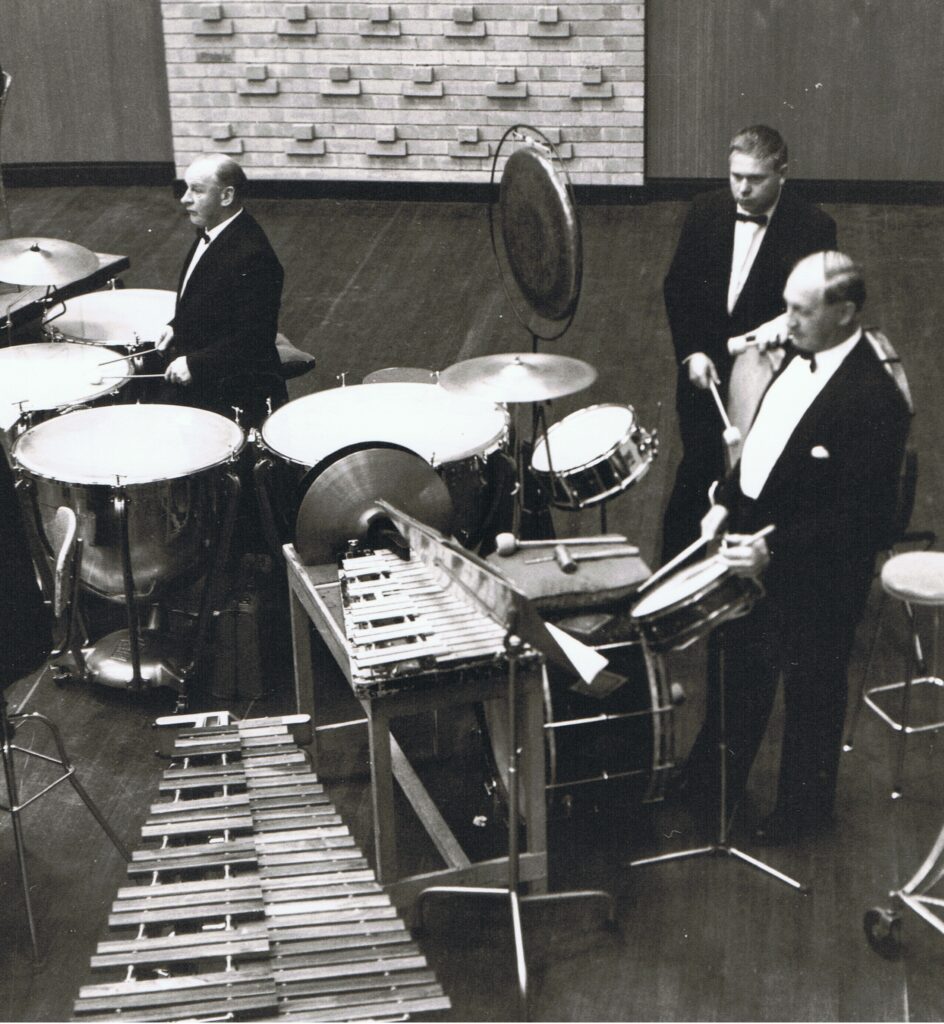
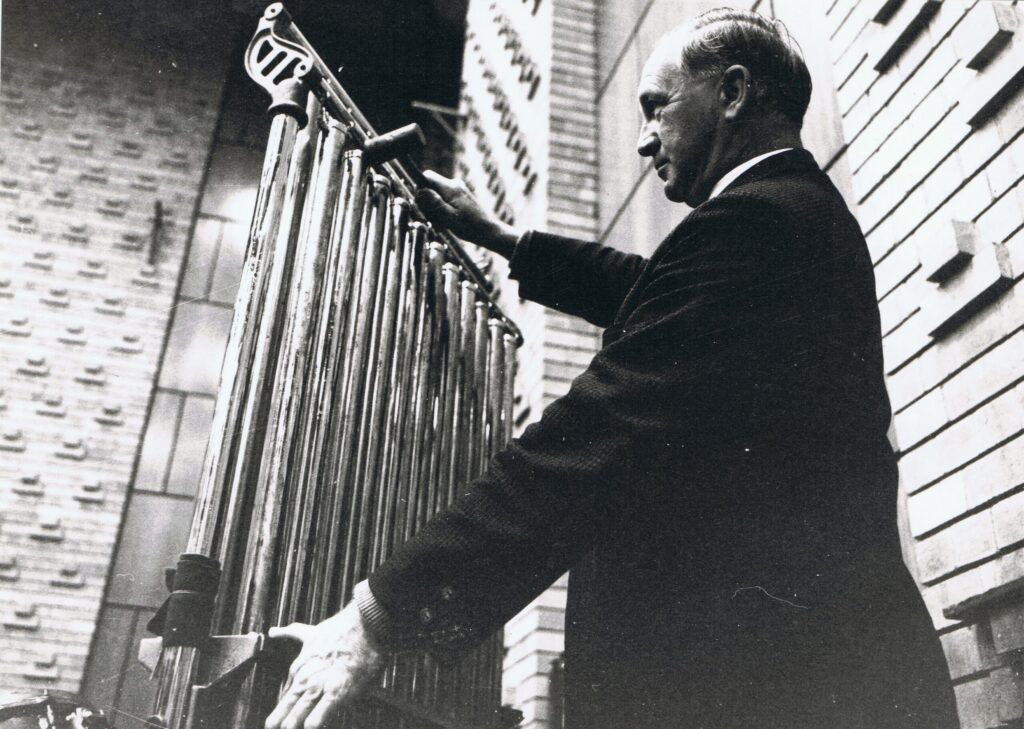
1967 CONCERT IS A PERTH MUSIC “HAPPENING”
By Sally Trethowan
The “straight” items included popular classics such as… Schubert’s “The Shepherd on The Rock” with pianist Stephen Dornan, soprano Margot Robertson and clarinettist Jack Harrison.
PART II: Harmonica and Piano:
“Genevieve Waltz” Larry Adler
Hungarian Dance No. 6 Brahms
Jack Harrison and Verdon Williams
1968
Free A.B.C. Concert – Sunday September 29th 1968
The free concert in the A.B.C.s Basil Kirke Studio tomorrow beginning at 3 o’clock is one of a series of six in which distinguished artists are performing a wide variety of works. The program will be Bartok’s outstanding and complicated “Sonata for two pianos and percussion” played by Wendy Nash and Stephen Dornan and percussionists John Reece and Brian Sadique directed by Verdon Williams and Stravinsky’s “Soldiers Tale” concert suite conducted by Verdon Williams. The performers will be Graham Wood (violin), John Mowson (bass), Jack Harrison (clarinet), Jill Harrison (bassoon), Donald Johnson (trumpet), Alan Mewitt (trombone) and Brian Sadique (percussion).
The West Australian Saturday September 28 1968
Igor Stravinsky‘s The Soldier’s Tale Concert Suite (July 1920) is scored for septet: Clarinet (in A and B♭), Bassoon, Cornet, Trombone, Violin, Double Bass and percussion. The West Australian premiere was performed on Sunday September 29th 1968 in a free concert put on by the A.B.C. in the Basic Kirke Studio. Directed by Verdon Williams, the performers were Graham Wood (violin), John Mowson (bass), Jack Harrison (clarinet), Jill Harrison (bassoon), Donald Johnson (trumpet), Alan Mewitt (trombone) and Brian Sadique (percussion).
1970
RADIO BROADCAST (1970?) – 10.30 ORCHESTRA TIME
Tasmanian Orchestra
Conductor: Verdon Williams
Penny Bill Harrison
1972
ABC – AUSTRALIA DAY FREE CONCERT – SUNDAY 30TH JANUARY 1972 AT 8PM – Supreme Court Gardens
By the West Australian Symphony Orchestra
Conductor Verdon Williams
With soloist Jack Harrison (clarinet) and narrator David Hawkes
1973
MUSIC PROGRAMMES
A six-part series of West Australia Australian Symphony orchestral programs under the baton of conductor Verdon Williams and Tibor Paul will begin on Channel 2 on Thursday. The series also brings before the public seven of Western Australia’s leading concert Hall soloists: Robert Armstrong (flute); Jack Harrison (clarinet); Leslie Perrin (soprano); Ashley Arbuckle (violin); the Perth Trumpet Trio and pianists Wendy Pomroy and David Bollard. Music for the series was selected for its broad appeal. Works range from the themes from “Love Story” and “Exodus” and the part from the ballet Spartacus (made popular as the theme from the television series The Onedin Line) to Rossini’s Barber of Seville overture the Capriccio Italien by Tchaikovsky and Mozart’s Eine Kleine Nachtmusik. The Sunday Times April 29 1973
1974
ABC FESTIVAL OF PERTH FREE CONCERT – 3pm SUNDAY 3rd February 1974
West Australian Symphony Orchestra Conductor Verdon Williams
With soloist Jack Harrison (harmonica) playing Moon River, Raindrops Keep Falling on my Head
1977
CONCERT PLEASES FAMILIES
By Dan Chadwick
The third ABC Family Concert for this year was held at the Perth Concert Hall on Friday night. An all Australian program was greeted with the now customary glee associated with this show. The W.A. Symphony Orchestra was conducted by Alan Abbott, a large, affable raconteur of musical anecdotes. He is a long-standing exponent of light music, a sound which is supposed to be pleasing but not profound. This is in contrast to dark and heavy music which is regarded as profound but not very pleasing. The program was geared to the short attention spans of the youngest members of the audience. The most lively event was Jack Harrison’s mouth organ masterpiece as he wove his way around the microphone. The deep voiced Bruce Martin together with the male section of the W.A. Opera Company chorus contributed three songs including an emphatic rendering of Kipling’s Boots which encouraged the stamping for more items in the second half. Luciano Trebse, though only committed to a small part in a Verdon Williams work, also performed a Chopin Impromptu. The evening closed with a succession of singalongs.
PLEASANT AUSTRALIAN MUSIC – By Derek Moore Morgan
Australian music provided the theme for last night’s ABC family concert at the Perth Concert Hall. Under the title “Australia calls the tune” and with Alan Abbott as conductor, the highlights of this light music program were items by Percy Grainger and in particular his colourful and even moving setting of “Shallow Brown”. This was one of three folk songs settings in which the soloist was Bruce Martin with the W.A. opera chorus men’s voices. Bruce Martin possesses a pleasing, commanding voice and sings with residence and clarity. Pianist Luciano Trebse contributed a Chopin Impromptu in addition to his somewhat negative part in the “Chanson Romantique” by Verdon Williams, and the West Australian Symphony Orchestra’s Jack Harrison gave us very credible harmonica playing. Coaxed by conductor Alan Abbott, audience participation in William Lovelock’s “Let’s all join in” was effective – especially when it came to “Waltzing Matilda”. A lively audience with lots of really young children revelled in the programs variety.
Person
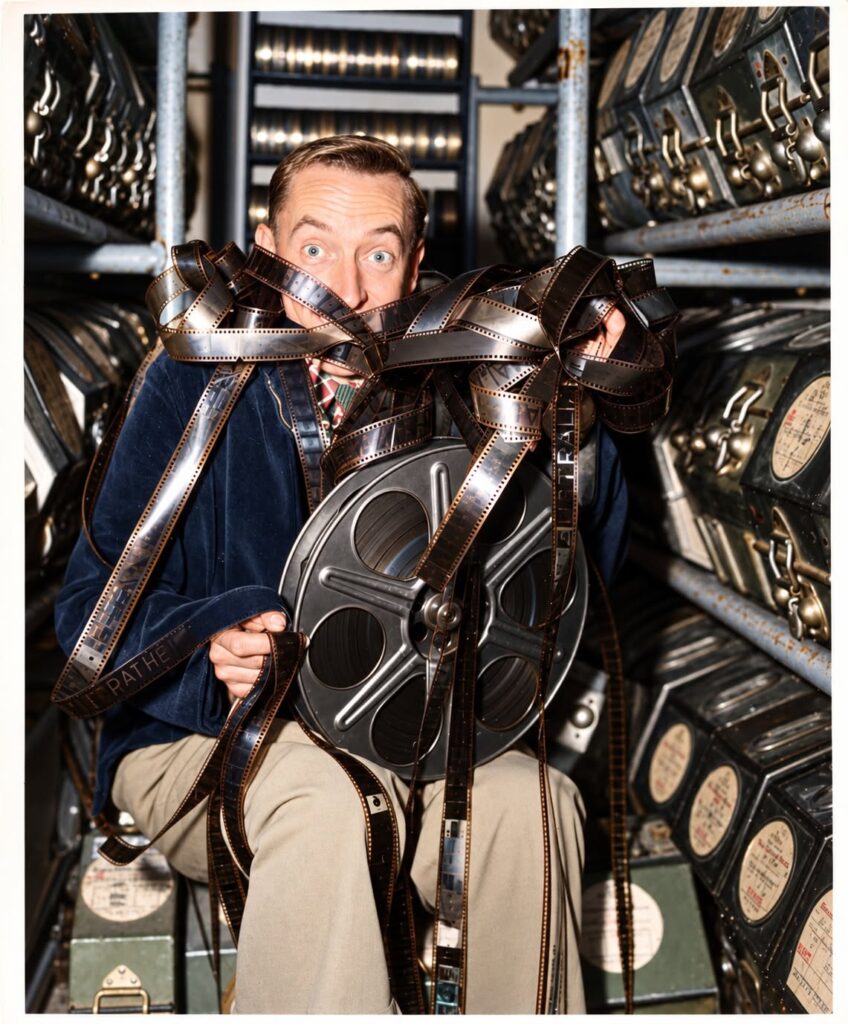
Peter Harrison was a popular and mischievous jazz presenter and announcer for ABC Radio Perth (historically 6WF) broadcasting from the old Adelaide Terrace studios and worked across Perth and Melbourne commercial and public radio from the 1950s through the 1980s. He compered hundreds of live shows in the 1950s, working with all the big jazz names in Perth and celebrities such as Rolf Harrison. Peter was the compere of popular radio broadcast “Jack Harrison and his Music.”
Around November 1970, Peter started appearing on stations including 6KY and continued presenting programs for the ABC (such as jazz and swing segments and Sportsview on Saturday afternoons).
Peter relocated to Melbourne in February 1972 where he joined 3XY, initially hosting the late-night shift before moving into a highly rated breakfast and morning slot that cemented his reputation for quick wit and a distinctive on-air voice. He also spent time on 3DB
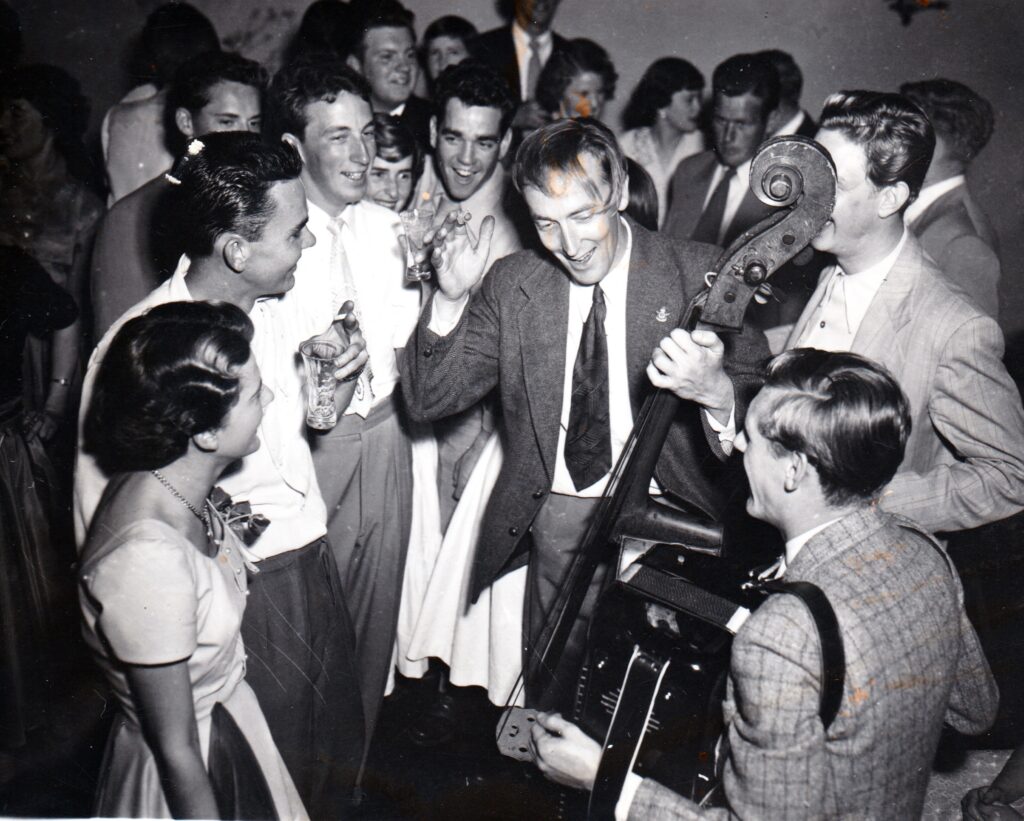
He also played the double bass.
1946
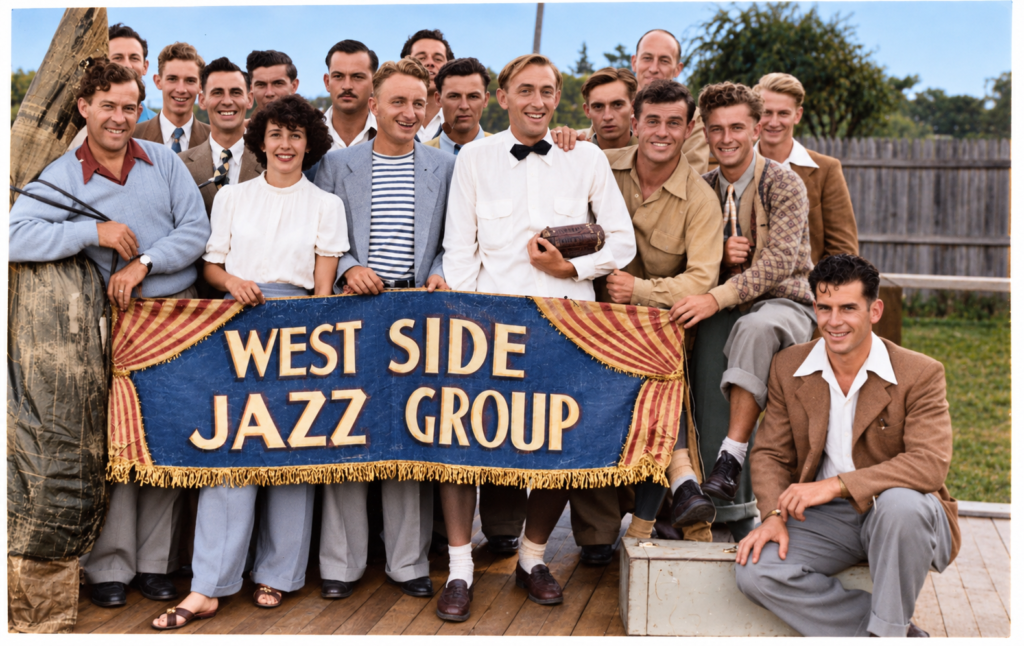
In the scrapbooks of Jack Harrison, Peter begins appearing in 1948:
1948
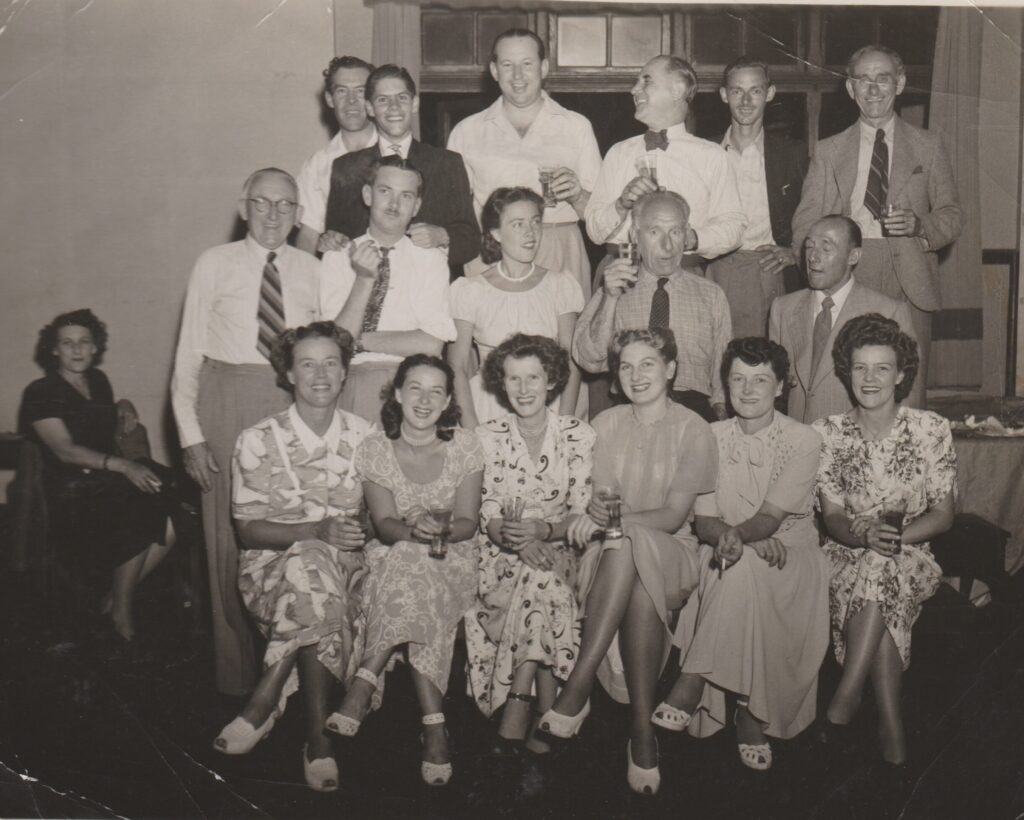
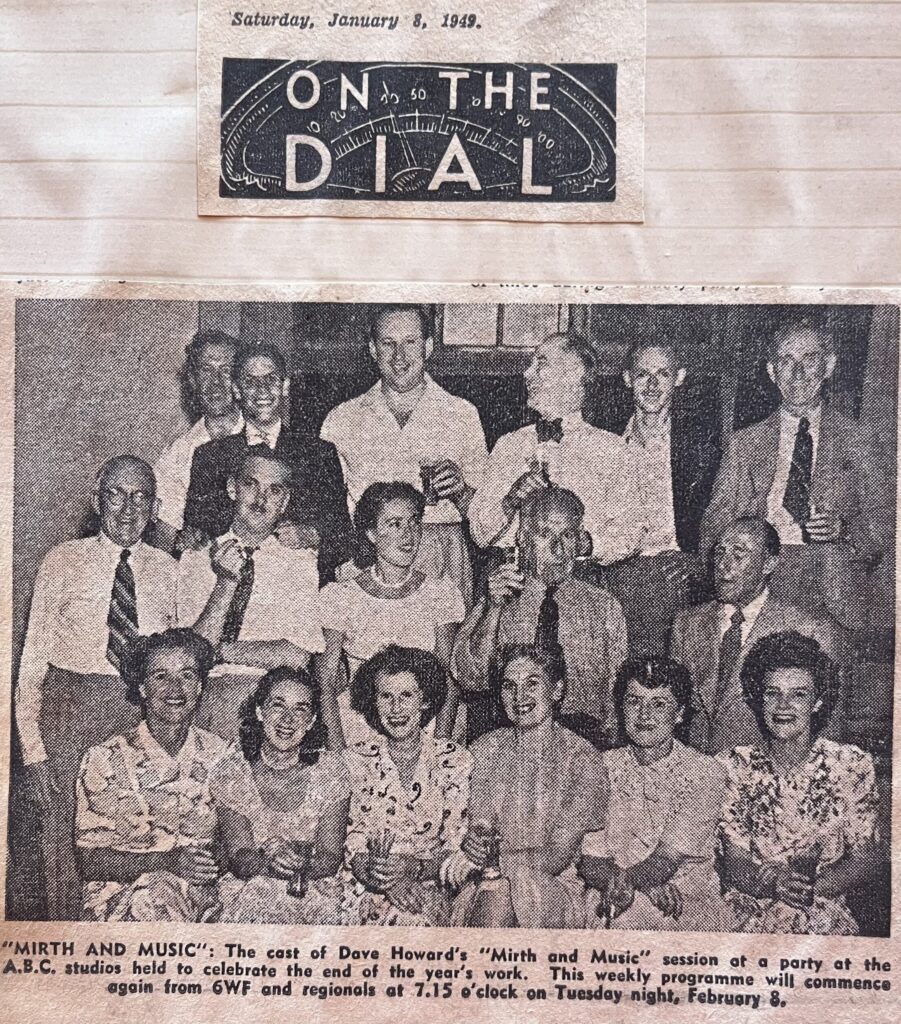
Mirth and Music ARTISTS
Members of Dave Howard’s Mirth and Music Show met last week and extended best wishes to Miss Betty Bahen, one of its members, prior to her marriage to Mr. Geoff Hammond. On behalf of the troupe, Miss Nell Shortland-Jones presented Miss Bahen with a wedding gift. Those present were Miss Betty Whittaker, Miss Olwyn Thomas, Miss Rhoda Allen, Miss Sylvia Caporn, Mr. Ernest Paulasto, Mr. Fred Paulasto, Mr. Albert Chappelle, Mr. Harry Bluck, Mr. Dave Howard, Mr. Geoff Wilbur, Mr. Ralph Filmer, Mr. Bill Hendrie, Mr. Harold Malcolm, Mr. James Congdon, Mr. Jack Harrison, Mr. Billy Edwards and Mr. Harry Graham. Western Mail Thursday 9 December 1948 page 37
1949

On October 6 1949, Jack Harrison played the first performance in W.A. of the Artie Shaw Clarinet Concerto with the Jazz Symphony Orchestra conducted by John Nugent Haywood at the Capitol Theatre:
JAZZ SYMPHONY OF 1949 – CAPITOL THEATRE – THURSDAY, OCT. 6 1949 – (One Night Only).
1949’s BIGGEST MUSICAL SHOW
Surprise Exclusive Engagement of Australia’s Topline Film, Radio Actor and Producer Star of “Overlanders” Film, Founder and First Conductor of Perth Symphony Orchestra JOHN NUGENT HAYWARD Conducting
THE JAZZ SYMPHONY ORCHESTRA IN GERSHWIN’S “RHAPSODY IN BLUE”
Featuring LOUISE D’ARCY – A.B.C. Concerto SOLOIST.
HUGE LINE-UP OF THE STATE’S BEST PROFESSIONALS ! ! !
SAMMY SHARP‘S JAZZ SYMPHONY ORCHESTRA of 28 Leading Musicians.
ALBERT CHAPPELLE Dramatic Baritone in W.A.’s first presentation of the famous “SOLILOQUY” with Orchestra.
JACKIE HARRISON First Performance in W.A. of the thrilling ARTIE SHAW “CONCERTO FOR CLARINET” with Orchestra.
PHYLLIS FROST Sensational Blind B.B.C. Singer.
CLIFF ADAM and “NIDDY” ROBERTS hilarious Comedy Duo.
“SOPHISTICATED LADIES” STRING ENSEMBLE All-femme String ensemble heard with success over A.B.C.
PETER HARRISON Well-known Radio Personality and Announcer, also prominent “Old'” Jazz Authority.
HARRY BLUCK Producer who successfully directed the “Jazz Symphony of 1948”, “Jazz Jamboree,” “Battle of Bands” and other successes.
ADMISSION – 3/-, 4/-, 5/- (plus tax) – BOX PLAN AT NICHOLSONS. – BOOK EARLY TO AVOID DISAPPOINTMENT.
The West Australian Friday 30 September 1949 page 37
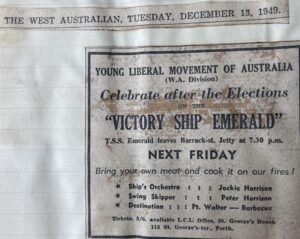
Young Liberal Movement of Australia (W.A. Division) – Celebrate after the Elections
“Victory Ship “Emerald”
T.S.S. Emerald leaves Barrack St Jetty at 7.30pm. Friday December 16th 1949
Bring your own meat and cook it on our fires! Ship’s Orchestra: Jackie Harrison. Swing Skipper: Peter Harrison
Destination: Point Walter – Tickets: 3/6 available L.C.L. Office St George’s House – 115 St George’s Terrace, Perth
The West Australian, Tuesday December 13th 1949
1950
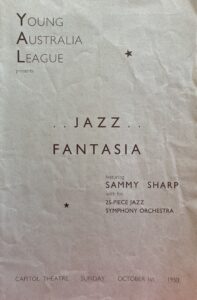
“JAZZ FANTASIA”
October 1 1950
The Young Australia League – will present Sammy Sharp and his orchestra of 25 in the third annual Jazz Fantasia at the Capitol Theatre on October 1. Supporting artists will include Louise D’Arcy, Jack Harrison, Betty Whittaker, Bryn Gifford, Phyllis Frost and Keith Hounslow. The compere will be Peter Harrison.
The West Australian Tuesday 19 September 1950 page 12
A BLITZ IN MUSIC WILL FOLLOW THE BAND
The Young Australia League band will march through the city as a prelude to Perth’s third Jazz Fantasia at the Capitol Theatre on Sunday, October 1. Sammy Sharp and his Jazz Symphony Orchestra, with many supporting artists will provide the programme at the theatre. One of the featured works will be a performance of London Fantasia, with pianist Louise Darcy as soloist. It is a musical story of the spirit of London during the blitz. Other artists will include clarinettist Jackie Harrison; a State finalist in the concerto and vocal competition this year, Phyllis Frost; a blind singer who has been featured with Claude Brampton’s All Blind Orchestra in- London; and Betty Whittaker, star of the Repertory Club’s Maritza. The show will be’produced by Sammy Sharp and compered by Peter Harrison and Terry Scanlon.
The Daily News Thursday 21 September 1950 page 12
CAPITOL THEATRE – Sunday, October 1st 1950 – Y.A.L. Presents – “JAZZ FANTASIA”
With SAMMY SHARP and his 25-piece Jazz Symphony Orchestra.
Comperes; TERRY SCANLAN, compere Ice Follies (by courtesy David N. Martin, Mgr. Dr. Tiv. Circuit Aust. Pty. Ltd.); PETER HARRISON (by courtesy A.B.C.).
Guest Artists Include- LOUISE D’ARCY. Soloist of “London Fantasia”: Jack Harrison in Artie Shaw”Clarinet Concerto” and Betty Whittaker, Bryn Gifford, Phyllis Prost, Jimmy Beeson.
SAMMY SHARP will be featured in Harry James’s arrangement of “Concerto for Trumpet.” Prices 5/ 4/ 3/ plus tax. Box plan at Nicholsons.
The West Australian Wednesday 27 September 1950 page 37
1950 Jazz Jamboree
BANDLEADERS. Applications are invited from all Bandleaders who wish their bands to participate in the JAZZ JAMBOREE OF 1950 on OCTOBER 29. Application Forms and particulars are available from MUSICIANS’ BENEVOLENT FUND Secretary, Union Office, 33 Barrack-st. Applications close 1 p.m., August 31, 1950. HARRY BLUCK. Hon. Organiser.
West Australian (Perth, WA : 1879 – 1954), Monday 21 August 1950, page 28
West Australian (Perth, WA : 1879 – 1954), Saturday 28 October 1950, page 7
THE BIGGEST DANCE BAND SHOW of the YEAR — ALL YOUR FAVORITES
JAZZ JAMBOREE of 1950 – CAPITOL THEATRE – SUNDAY, OCTOBER 29th
NINE OF THE STATE’S LEADING DANCE BANDS
Bill Kirkham’s Embassy Band
Ken Murdoch’s Ensemble
Ron Jenkins Band
Peter Clinch Boptette
Merv Rowston’s Band
Colin Hicks and His Musk
Wayne Hendrick’s Modernaires
Norm Wrightson’s Band
Harry Bluck’s Music in the Modern Manner
ALL YOUR SWING, JAZZ AND BEBOP FAVORITES
500 Unreserved Seats on Sale at Doer
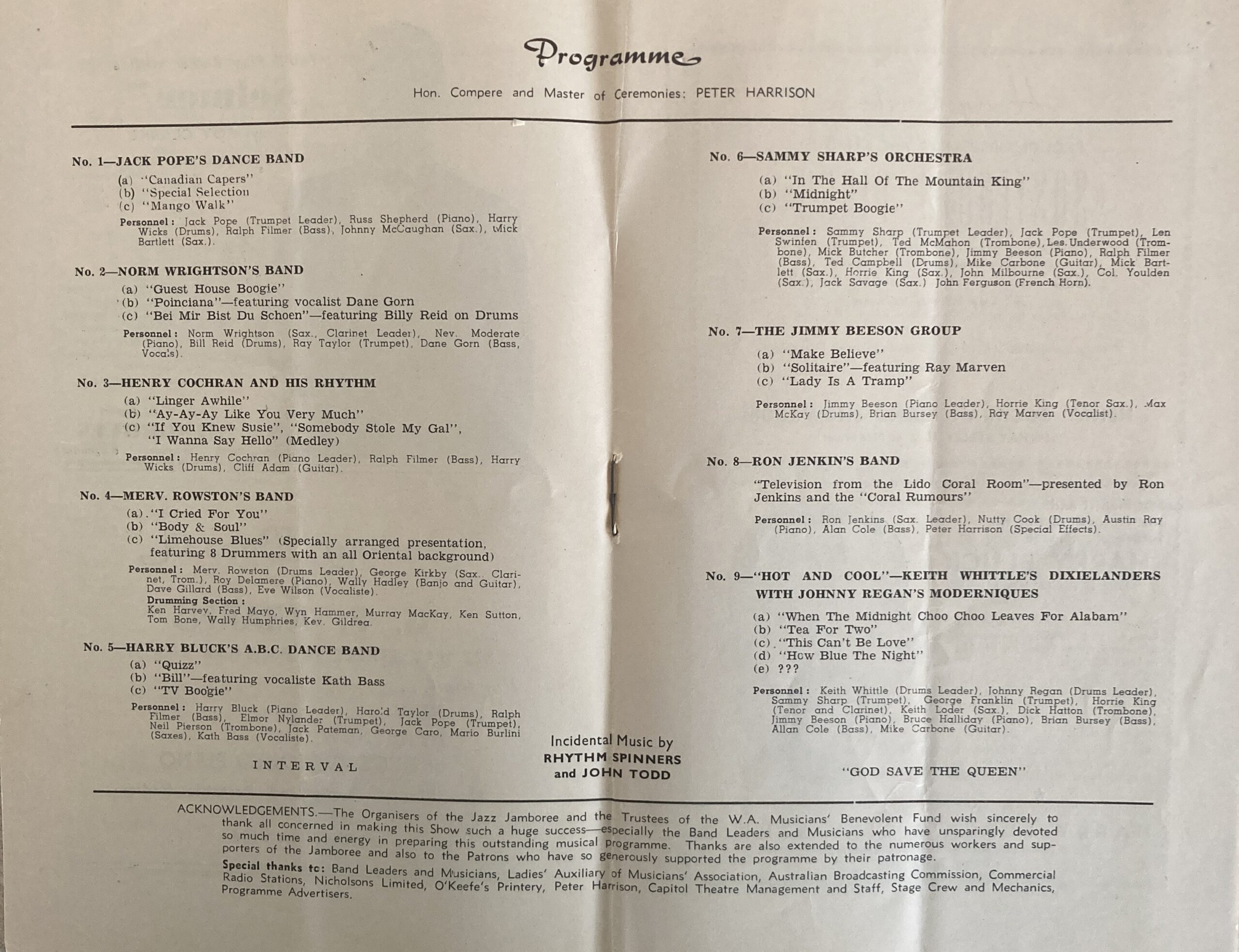
GFOFF MANION and PETER HARRISON Comperes
JAZZ MUSIC: Nine dance bands combined to present the “Jazz Jamboree of 1950” in the Capitol Theatre on Sunday night to raise money for the W.A. Musician’s Benevolent Fund. Every seat was filled and the audience had an op portunity of comparing different styles. Warm applause greeted special efforts by the bands or their vocalists. The programme was produced by Harry Bluck and the comperes were Geoff Manion and Peter Harrison.
West Australian (Perth, WA : 1879 – 1954), Tuesday 31 October 1950, page 9
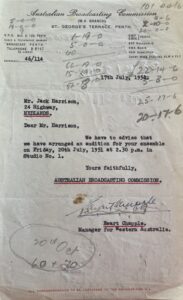
1951
On 20th July 1951 Jack’s ensemble auditioned at 2.30pm in A.B.C. Studio 1 by Ewart Chapple, Manager for Western Australia. “Jack Harrison and His Music” broadcast regularly for nine years on A.B.C. Radio 6WN up until 1960. The A.B.C. provided a 1 ¼ hour rehearsal followed immediately by a 1 ¼ hour pre-recording during the week (often Wednesday afternoons) and live broadcasts occurred Sunday evenings, usually 6 – 6.30pm. Jack was required to provide 27 minutes of music which were introduced by an A.B.C. presenter (often Peter Harrison – no relative) making a total of half an hour. Twenty seven minutes of new music was about 10 musical numbers that had to be new, arranged for the specific ensemble, parts copied by hand, practised and rehearsed before they got to the ABC. In 1959 Jack received a total of £42 for the above. Jack’s father William did many of the arrangements.
The first broadcast of “Jack Harrison and His Music” was on September 1951 on 6WN.
1951 – JACK HARRISON’S SEXTET OPENS ON 6WN
On September 2 Jack Harrison’s Sextet opens on 6WN. The programme will probably consist of light classics, arranged modern ballads, and bright numbers of the samba, tarantella and bolero type. Last year Jack studied under the Sydney musician Clive Amadio and it is quite likely that Jack’s sessions will resemble the well-known Amadio Quintet. Jack reports that the members are James Drummond (violinist), Stephanie James (pianist) who recently returned from Europe, Kenneth Murdoch (saxophonist) John Mowson (bass) and his father, William Harrison (organ and vibes). Jack will play first clarinet and second saxophone. He will have a guest singer for each session. Kath Bass, Phyllis Blott and Elise Longwill would probably be the first three he says. Each number will be arranged for the sextet. Jack and his father are doing some of this work. Some work by an Eastern States arranger is available provided it is copied. Sister Jill is doing this in her spare time in Adelaide.
The Broadcaster Saturday August 18 1951 Vol. 18 No. 907.
1952
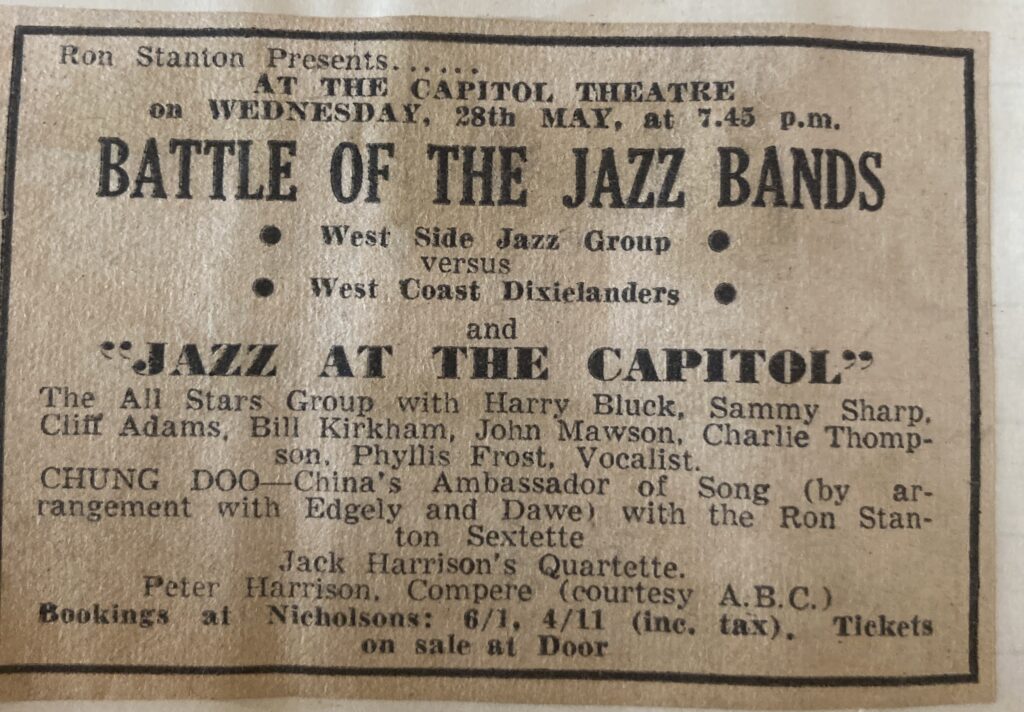
1953
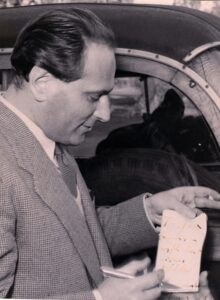
CONDUCTOR IN THE GROOVE
Conductor-pianist Walter Susskind, currently in Perth to give a series of concerts and recitals, last Sunday evening deserted the concert platform to “getin the groove” with a group of Perth’s most ardent swing fans.
The maestro has always been tolerant of modern music – he has expressed admiration for works by Gershwin and Woody Herman. With this in mind a group of Perth’s young swing fans sent him an invitation to join them on Sunday evening at Geoff Forsaith’s home in Crawley, where they would beat out a few bars. Prominent in the group were the West Coast Dixielanders – who only a few nights before had been placed first in the 1953 Dance Band Contest – John Mowson and Jill and Jack Harrison, and ABC announcer and record wrangler Peter Harrison. The bars were being duly “beat” when the doorbell rang to announce a new arrival at the festivities, and to their delight the swingsters were being introduced a few moments later to Walter Susskind.
The evening which followed was a complete success. The guest of honour regaled the musicians with anecdotes on his experiences while travelling in America and on the Continent and the musicians in turn treated him to a selection of modern music which would have sent their fans green with envy.
And although he declined an invitation to take over the pianist’s seat for a few numbers, Walter Susskind left the impression that he would have been only too happy to have done so had it not been for the fact that there were serious things ahead for him on the morrow.
The Broadcaster Saturday August 1 1953 Vol. 20 No. 1009
On 5th September 1953 Marcia Chayter was bridesmaid for the wedding of her ABC typist friend Deirdre Schorer to ABC announcer Donald Sanders. ABC announcers Peter Harrison and John Treffrey attended, along with the ABC typist girls including Jeanette Earl and Mary Treffry.
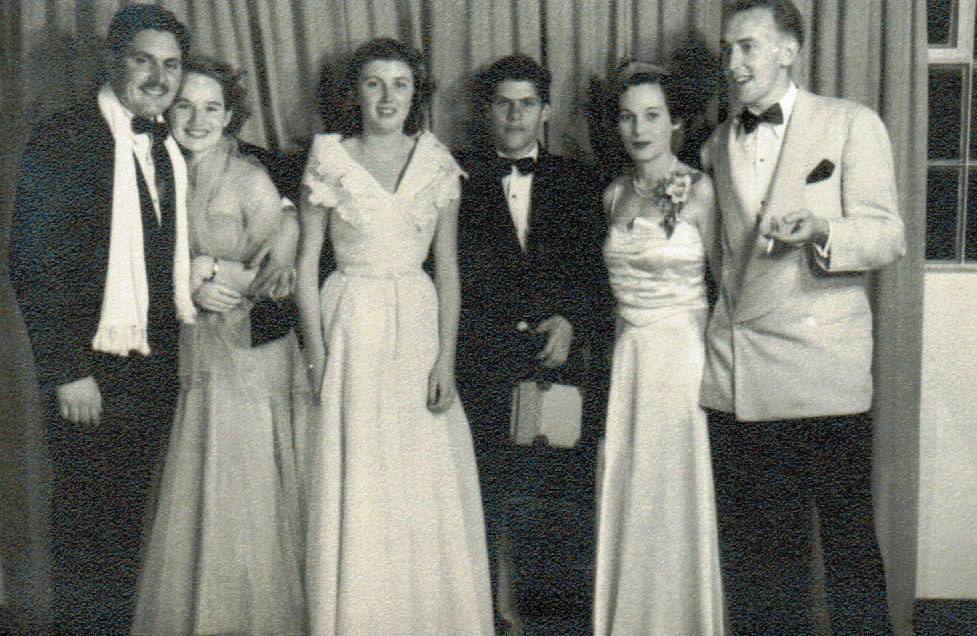
A.B.C. announcer Don Sanders and his wife leave Christ Church, Claremont, after their wedding. The bride was formerly Deirdre Schorer, daughter of Mr. and Mrs. H. C. Schorer, of Dalkeith. Don is the only son of Mr. and Mrs. W. Sanders of Adelaide.
On 14th December 1953, Peter attended the wedding of Jack Harrison and Marcia Chayter.
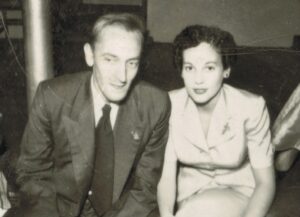
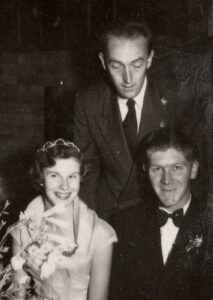
Nutty Cook, Jack Harrison, Peter Harrison and Ted Preston
1954
RON JENKINS – OLD HATS INSPIRED ‘MAD HATTER ‘ MUSIC VOGUE
A stack of old hats in his father’s men’s wear store started Ron Jenkins on the road to success in dance band-cum-comedy work. Discarded headgear gave Ron the idea of adding a novelty angle to his band. Later, he dug deeper into the pile of old clothes which had collected in the shop since its inception in 1910, and the idea for what so many dancegoers now know as typical Jenkins’ style was born. Ron always believed patrons want something more than straight music. Just how right he was is illustrated by the way dancers will stop and gather round the stand while Bon and the boys go through their crazy capers.
The Jenkins’ humor is essentially a team effort. A title is first chosen, then all band members offer their suggestions for slapstick. Best ideas are pooled and a number is ready to split the dancers’ sides. A lot of comedy is impromptu, but for big shows the band gets together at Ron’s place — as some Melville residents know only too well— to rehearse. To back this fooling Ron has a huge store of varied clothes. Included in his ‘wardrobe’ are 50 hats, ranging from elegant bowlers’ to Yankee gob caps, 8 striped blazers of unknown vintage. parson’s coats, swallow-tailed coats, oilskins, and Indian blankets. He also has masks, spectacles, false noses, cheeks and such like by the hundreds, not to mention innumerable wigs both male and female. Compere of ‘Jazz at the Capitol’ Peter Harrison will probably say smoke bombs and crackers should be included in the list of the Jenkins’ equipment. While Harrison was talking before Jenkins’ act last Sunday a smoke bomb exploded behind him. Amid crackers and jumping jacks he was removed from the stage in a none-too-gentle manner. Before the smoke of the battle had cleared away the boys were on their stands beating out ‘Crazy Man ‘Crazy.’ ! It was!! Some think Ron’s car must have elastic sides, judging from the huge bundle of clothes of one sort or another which he; brings to engagements. When he opens the door out comes Ron, crazy clothes and all. The next half hour is usually spent sorting it out.
Comedy is only part of the Jenkins’ group. His musicians are ton class and can turn out: solid music. Group comprises Vince Cook (drums), Allan Cole (bass) and Austin Ray (piano), not to mention Ron Jenkins on sax and clarinet. When the outfit is increased to a quintet for bigger bookings Ray Reason (you should listen to Reason) adds his trumpet Nutty Cook, apart from his brilliant drumming, can certainly put over a vocal — particularly a semi-comedy type. Ron vouches for the fact that many of the ideas for his shows come from the Cook cranium. Pianist Austin Ray has built up a great local reputation with his keyboard work, and really enters into the spirit of things when the band goes mad. Allan Cole (bass), needs no Introduction. He used also to be with Colin Hicks. Ron Jenkins has based his band to some extent on the Fats Waller style. ‘Fats got terrific lift out of popular numbers for a small combination and we try to get something of the same effect,’ says Ron, summing up. He sticks mainly to popular numbers which please the majority. The drive the quartet gets is amazing. Ron Jenkins’ interest in dance music dates back to when he was 6. His parents used to take him to dance festivals and the like. Soon after, he started to practise on his father’s drum kit and then he switched to the sax. He started playing with his father at small dances and shows. His first big job was with Merv Rowston‘s Old Time Band at Government House. Later, he formed his own group. He has had more or less the same personnel in his outfit since the end of the war. The Jenkins’ Group will always be small and compact. Ron says he would never be able to put across his comedy with a big band. Things would get out of hand and it would be a shambles. He has a great admiration for the way Spike Jones can present the music be does with so many in the band, and thinks this would take a lot of practice. He doesn’t take ideas from Spike, however. During the ball season the Ron Jenkins’ Quartet or Quintet has a busy time. Apart from regular Saturday engagement at the Valray, Rockingham, he has also a number of week-night engagements. He has travelled as far north as Big Bell and as far south as Busselton to play at dances. One Australian he has a lot of time for is Bobby Limb. Both Bobby Limb and Ron Jenkins serve up a similar type of fooling. Now Ron intends to revive some of his favorites from a few years back. Among best numbers are ‘Down on the Farm,’ ‘I’m Nuts on Screwy Music’ (which naturally enough his one of his favorites) and ‘Don’t Bring Lulu.’ Current, numbers which have received a going over from the Jenkins’ group Include ‘Ugly Child,’ ‘Dear Ron (John), and ‘I See the Moon.’ Ron was in 2 minds whether to play ‘Dear Ron’ or ‘I See the Moon’ at the Capitol last Sunday. He settled for the latter as it was more topical. Applause almost brought the roof down. Looking to the future. Ron and the boys are very interested in the advent of TV in the West. A group, like theirs should do very in this medium. Band gets Just as much kick out of playing as you get from seeing and having fun.
The Mirror Saturday 3 July 1954 page 14
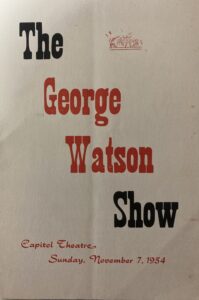
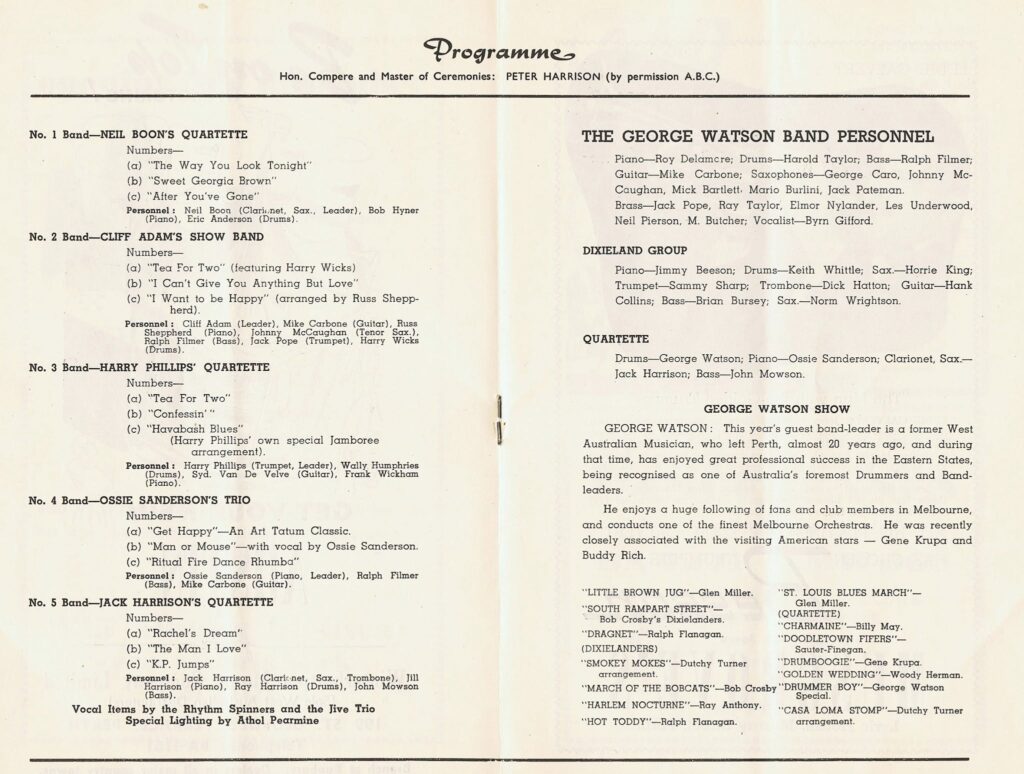
The George Watson Show:
1955
Compere of Jazz Jamboree:
1960
Dizzy Fingers on 10 clarinets
Versatile musician Jack Harrison recently made a recording playing ten parts on clarinet. Harrison, a member of the WA Symphony Orchestra, took 3 ½ hours to record a 2 ½ minute version of the appropriately named Dizzy Fingers.
Dizzy Fingers, Harrison’s third multiple recording, will be broadcast on Peter Harrison’s 6WN programme Saturday Roundabout this Saturday 19th March at about 8.15.
ABC technician Garry Matthews played recordings at different speeds and superimposed them on a master tape to get the effect. The finished work was outstanding. One odd side-effect: when one recording of a clarinet was played back faster than is had been recorded it sounded like a piano accordion. Harrison’s first multi-recording involved ten instruments. They included saxophones, clarinets, a vibraphone, harmonica, piano and drums. An ABC spokesman said he believed that this was the first time in Australia and possibly the world that a multi recording had been made with clarinets only. The Sunday Times Mar 13 1960
1961
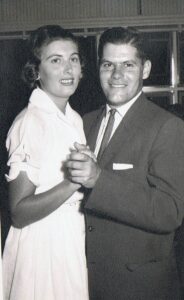
Jack and Marcia Harrison attended the wedding of Peter Harrison to Maureen Lorraine Rooke from Bridgetown.
1964
TELEVISION
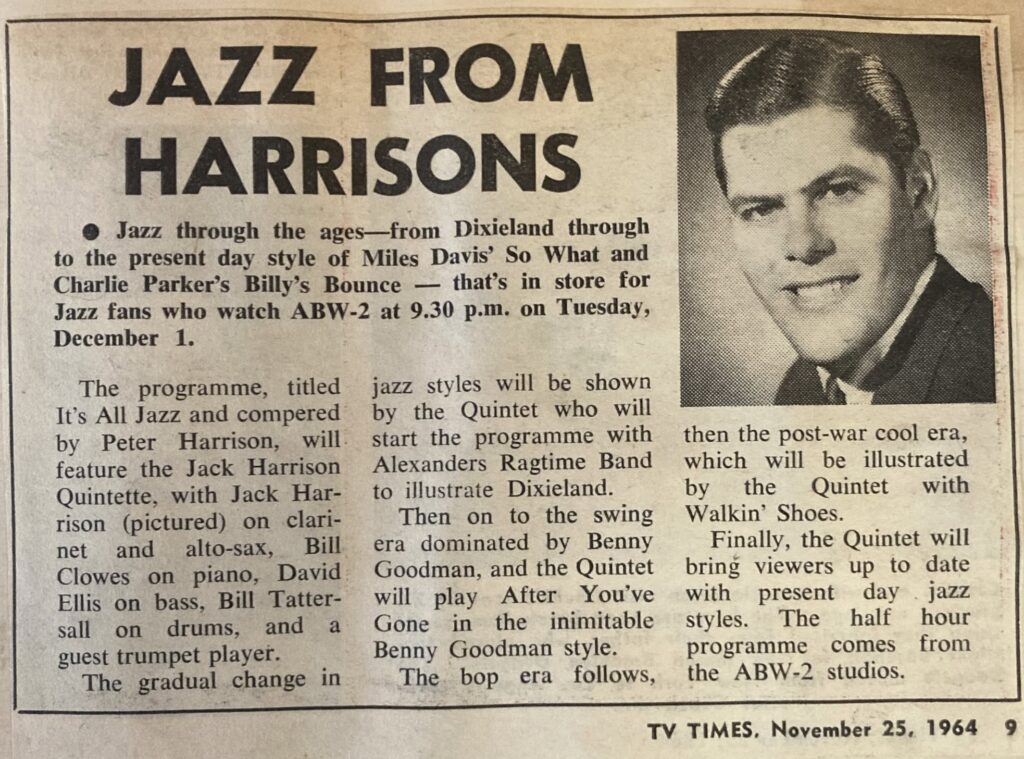
JAZZ FROM HARRISONS
Jazz through the ages – from Dixieland through to the present day style of Miles Davis’ “So What” and Charlie Parker’s “Billy’s Bounce” – that’s in store for jazz fans who watch ABW-2 at 9.30pm on Tuesday December 1.
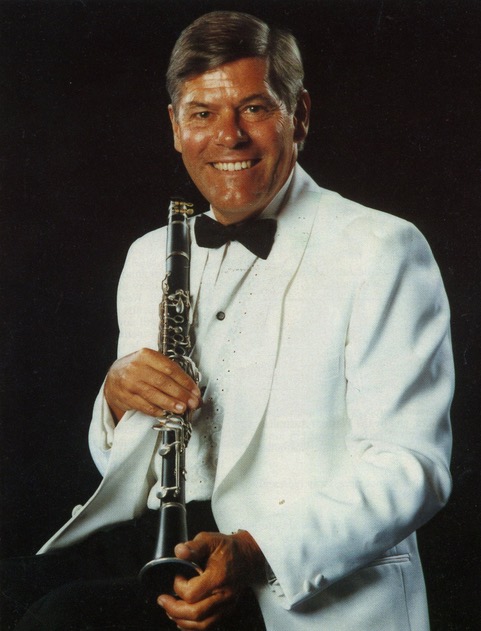
The programme entitles “It’s All Jazz” and compered by Peter Harrison, will feature the Jack Harrison Quintette with Harrison (pictured) on the clarinet and alto-saxophone, Bill Clowes on piano, David Ellis on bass and Bill Tattersall on drums and a guest trumpet player. The gradual change in jazz styles will be shown by the Quintet who will start the program with play “Alexander’s Rag Time Band to demonstrate Dixieland. Then on to the swing era dominated by Benny Goodman, and the Quintet will play “After You’re Gone” in the inimitable Goodman style. The bop era follows, then the post- 1947 cool era, with “Walkin’ Shoes”. Finally, the Quintet will bring viewers up to date with present day jazz styles. The half hour programme comes from the ABW-2 studios. TV Times November 25 1964
TELEVISION
JAZZ PLAYING 50 OVER 50 YEARS
Tuesday 1st Dec 1964
Dixieland, swing and be-bop is in store for viewers with an ear for jazz on ABW2 at 9.35pm on Tuesday. The programme, called “And All That Jazz” will show how the style of jazz playing has altered in the past 50 years, beginning with Dixieland Jazz. It then moves to the swing era dominated by Benny Goodman, then on to bop, cool and mainstream jazz. The concert will be compered by Peter Harrison with Perth’s top jazz band, the Jack Harrison Quintet. It consists of Jack Harrison (alto sax and clarinet) Billy Clowes (piano) David Ellis (bass) and Bill Tattersall (drums) and a guest trumpet player.
PETER HARRISON – Career & On-Air Style
Themed Music Nights: He hosted specialized evening music segments, famously presenting the jazz programs where he would meticulously detail every track, artist, recording year, and studio. [1, 2]
Station Antics: Known for his great sense of humour and camaraderie, he was infamous for playful pranks on nervous young announcers just starting their live shifts.
Broadcasting Legacy: He was a cherished personality during the golden era of local Perth radio before automation and networking changed the medium.
To the average person, the commercial announcers appeared more friendly, not as stern or stuffy as the ABC variety, though in reality, the ABC announcers were often the opposite in person. They needed to be well educated, knowledgeable and articulate to hold the position, yet these qualities were often combined with a quick wit and a mischievous sense of humour. This in an atmosphere of camaraderie which often led to pranks and no end of high jinks when off-air. For example: Roger Cook described the mischievous nature of Peter Harrison in his book, “More Dangerous Ground: The inside story of Britain’s Best Known Investigative Journalist”.
“Peter’s favourite targets were young announcers fresh out of training. Waiting until they had gone on air, he would ignore the red ‘On Air’ light outside the soundproofed studio and wander in, putting a reassuring finger to his lips to imply he was there purely in a monitoring capacity. The nervous reader would plough on, glancing up at Peter from time to time.
The next thing the victim would see was the stations most senior newscaster dropping his twills and underpants and lowering his buttocks down onto the grey metal wastepaper basket. He would stare fixedly at the now panic-stricken newsreader who would stutter, lose his place and generally wish for his mother to come and take him away.
Peter would then up the ante, and start to strain and grimace, producing barely-audible grunts. Nothing that the listener would ever hear, but loud enough for those in the studio to pick up.
The end result was usually near-hysteria and a newsreading performance that left the listener confused and often concerned for the health of the young broadcaster. The broadcaster, having gratefully handed over to the continuity announcer, would watch, slack-jawed, as Harrison pulled up his pants, did himself up and strode out of the room as if nothing had happened. Sometimes his victims would try to persuade themselves that nothing had happened, particularly when Peter greeted them later and nonchalantly gave them some small piece of advice about their performance.”
Imprint: Book Guild Ltd
Country of Publication: United Kingdom
ISBN: 9781846241093
Publication Date: April 2007
https://watvhistory.com/2012/08/the-6wf-story-part-3-of-3/
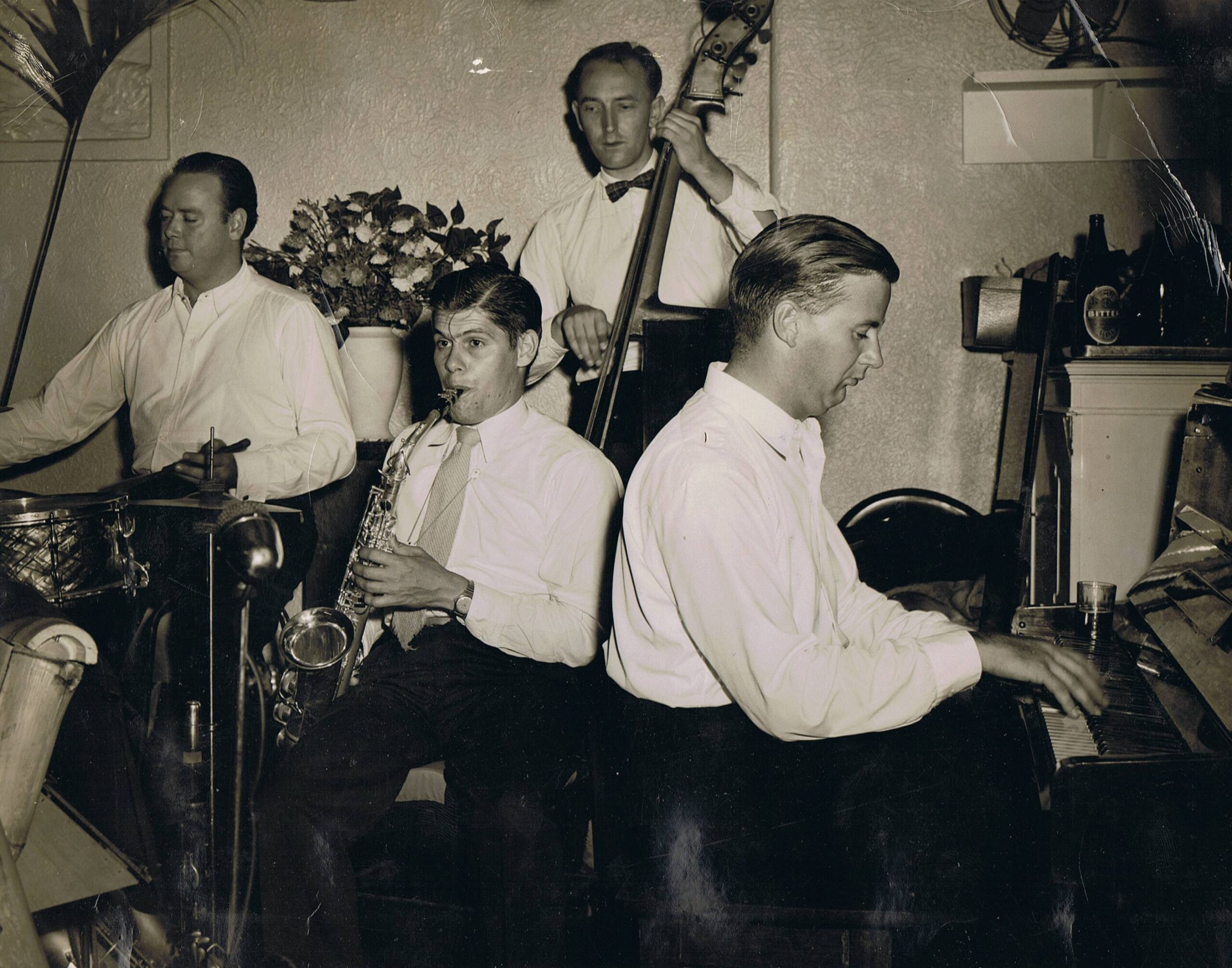
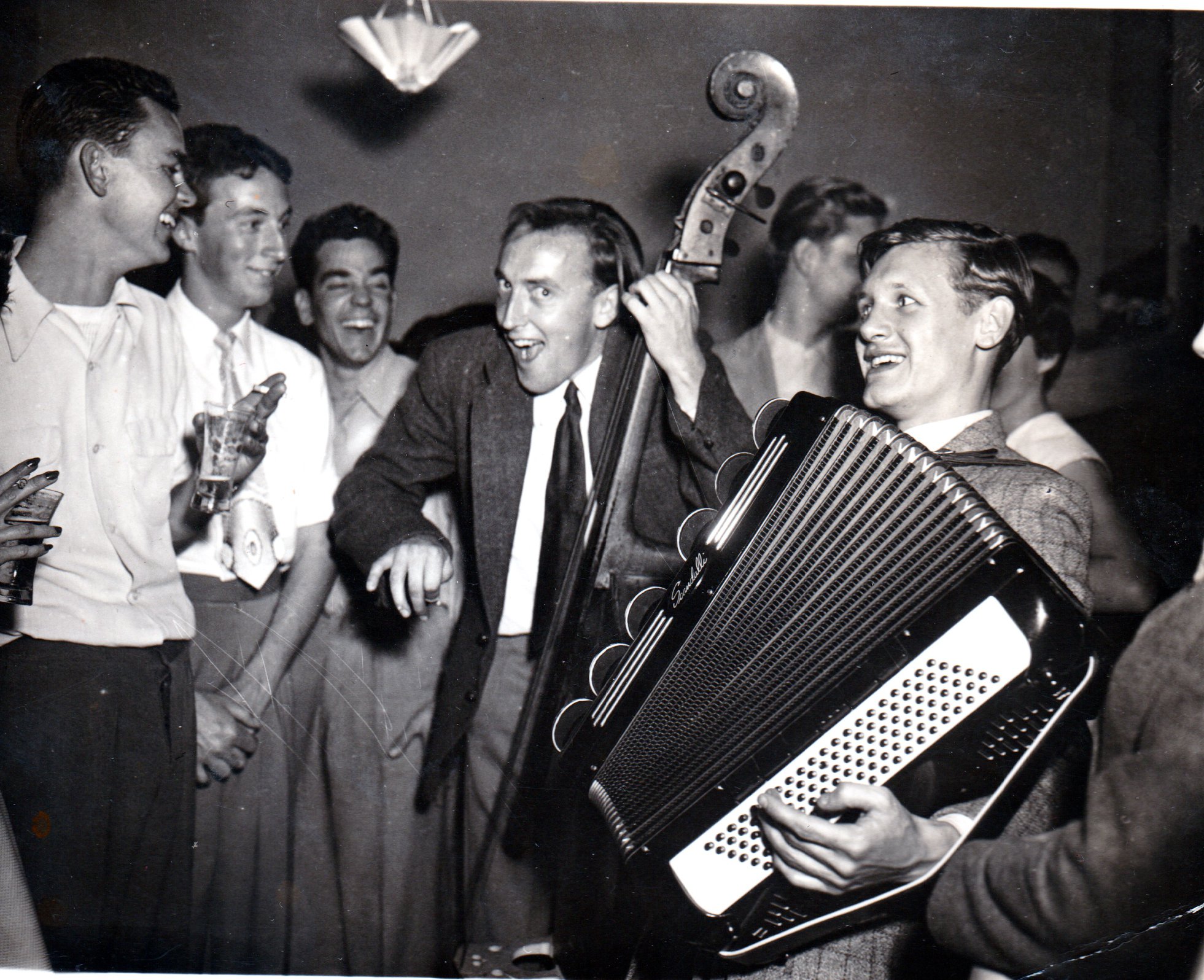 Peter Harrison (bass) with Billy Clowes (accordion)
Further to Peter Harrison, Ian Stimson has kindly pointed to that ‘Harro’ played the double bass fiddle at a nite club directly in line with the Cottesloe surf lifesaving club. The Picture gardens were on the eastern side of that cabaret building.
“He was one of the Jazz Musos for the Jack Davey show held at the Cottesloe Civic centre. I can remember his group arriving in an open vintage car to play there followed by Jack Davey. This was recorded at 6IX, the whole programme.
“Then there was the famous incident coming back to 2pm Saturday afternoon when he marched into ABC studio one as the big White Hunter complete with Pith Helmet and shotgun. This gag cost him a 6 week suspension.
“I knew his brother at 25 squadron RAAF Base Pearce in my Nasho Days.”
Here are some Heritage Notes to put this into perspective….
The Lido Cabaret and The Lido Picture Gardens opened in 1936 and were important social centres for Cottesloe and other nearby western suburbs until c 1960.
According to Dr Peter Harries… In the 1960’s the Lido was the first cabaret club to feature a stripper and was run by Ron Jenkins, drummer Nutty Cooke, piano Jimmy Beeson and bass player Peter Harrison of ABC fame.
Earlier, the Ron Jenkins Band performed at the Palais de Danse on the Cottesloe beach front. This dance venue was in the Centenary Pavilion, that opened in 1929. The pavilion became the focus for beach activity at Cottesloe Beach until its demolition in 1982. Several restaurants were located within the pavilion. The top floor was a dance floor and in the 1940s and 1950s the ‘Palais de Dance’ was a popular venue for dancing and live music.
The Lido land was owned by F.D. North. It stretched down to the parade from his home. In 1913 a weatherboard building was erected and rented to Mrs McDonald who had a shop there. The Lido Cabaret and Picture Gardens were designed and built by Howard Bonner for the Hatfield family in 1936. Reference: “Cottesloe is Calling” Daily News Friday Dec 20 1935.
http://archive.is/D0k3a#selection-265.0-265.628
At the seaside suburb of Cottesloe, local residents and holidaymakers would spend the balmy summer nights at the new Lido Picture Garden constructed beneath tall pines near the Indian Ocean at the foot of Forrest Street. One of the most prestigous in the group, the Lido was built solely as an open air venue. It was designed by Howard Bonner in 1935 and adjoined the popular Lido Cabaret which operated until the 1960s as Perth’s favoured night club. The cinema catered for an audience of 550 and consisted of a 94ft x 92ft. walled garden space, and a proscenium with a vaguely Oriental motif.
http://inherit.stateheritage.wa.gov.au/…/85b9ef50-1682…
The picture gardens held 550 patrons. It was the third venue in the Cottesloe area operated by Lewis M. Hatfield. It was constructed in 1935 at the corner of Forrest St and Marine Parade, overlooking the ocean and behind the Lido Tea-rooms, which were later removed in pieces and relocated to Rockingham as a weekend cottage. The Lido Cabaret was then built on the corner in front of the gardens. The gardens was called a Chinese Gardens, because the construction had a chinese flavour. The gardens closed in 1960 and the Cabaret in 1966, after which the site was again used for a restaurant – the Mandarin, which was sold in 1996.
Sources: Max Bell, Perth – a cinema history, The Book Guild, Lewes, Sussex, p.59
Max Bell, ´Looking back’, Kino, no.41, September 1992, pp.16-17
Film Weekly Directory, 1948 – 9
Post Office Directory, 1936/7 – 1949
Post, 12-13 October 1996, p.6
West Australian, 1935 – 1960
http://www.ammpt.asn.au/cadoux-to-currambine/#cottesloe
The Lido Cabaret closed in 1966, after which the site was used for a restaurant, the Mandarin, which was sold in 1996, and became the La Tropicana Restaurant. When the La Tropicana Restaurant closed, it was converted into a restaurant/cafe/bakery called Il Lido (88 Marine Terrace) which opened in (2007 or 2008).
Il Lido Italian Canteen is an art-deco espresso bar and licensed restaurant that takes its name from the site’s heritage — it used to be the popular “Lido Cabaret”.
https://www.facebook.com/groups/watvhistory/posts/1178769302237261/
Person
Gary Matthews was an ABC technician who engineered Jack Harrison‘s multi-track clarinet recording Dizzy Fingers at Broadcast House.
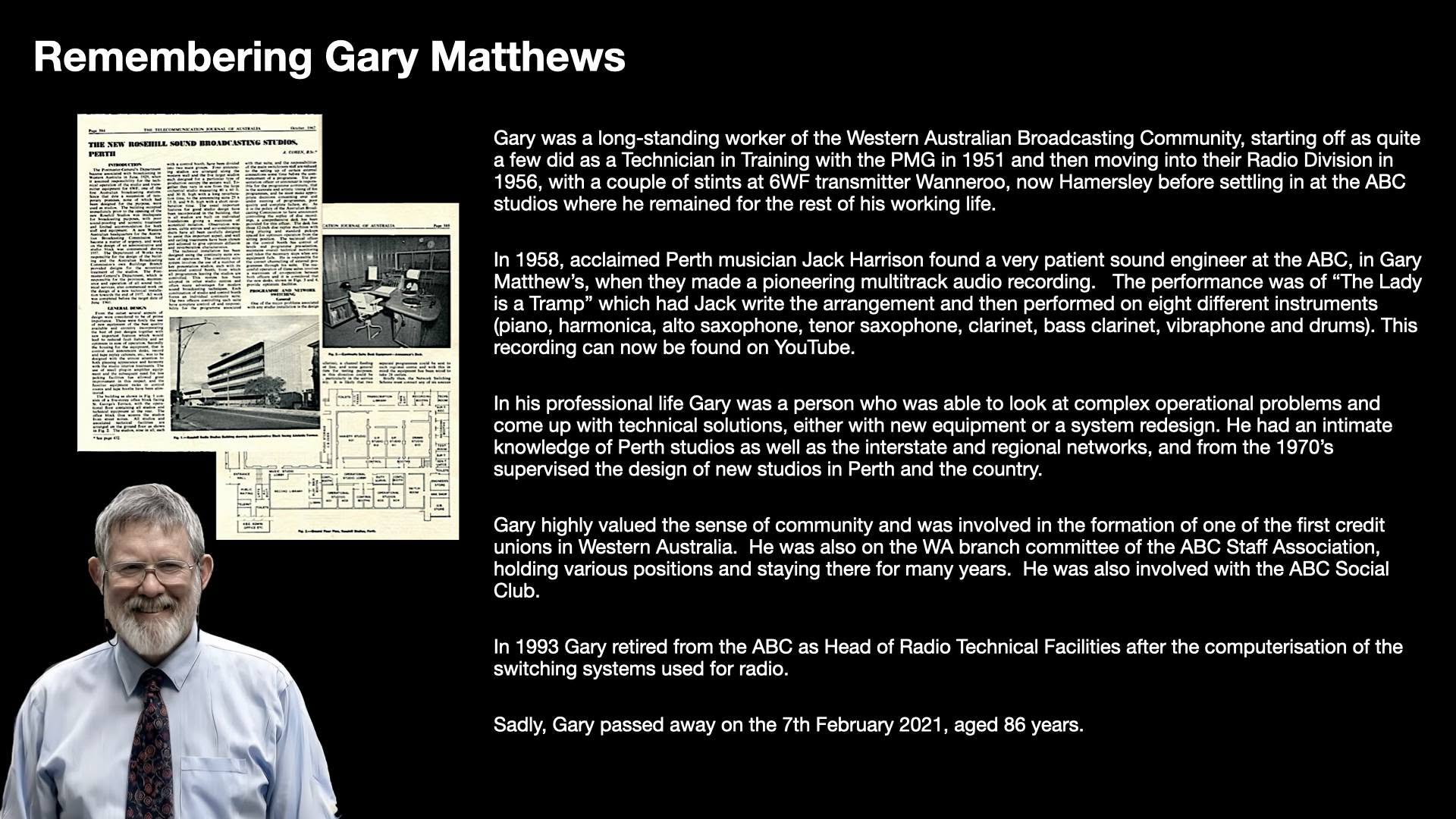
In 1960, clarinettist Jack Harrison recorded “Dizzy Fingers” by Zez Confrey playing all ten clarinet parts. The recordings were played at different speeds, backwards, and superimposed onto the master tape by ABC technician Garry Matthews at Broadcast House.
The Sunday Times, 13 March 1960: “Versatile musician Jack Harrison recently made a recording playing ten parts on clarinet. The finished work will be broadcast on Peter Harrison’s 6WN programme Saturday Roundabout.”
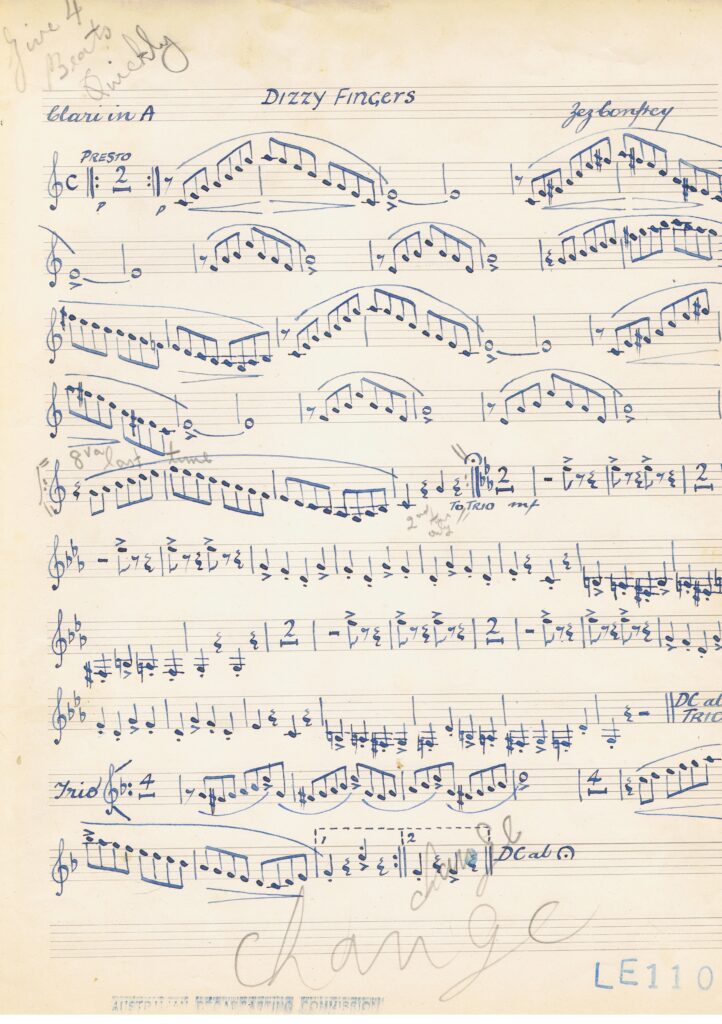
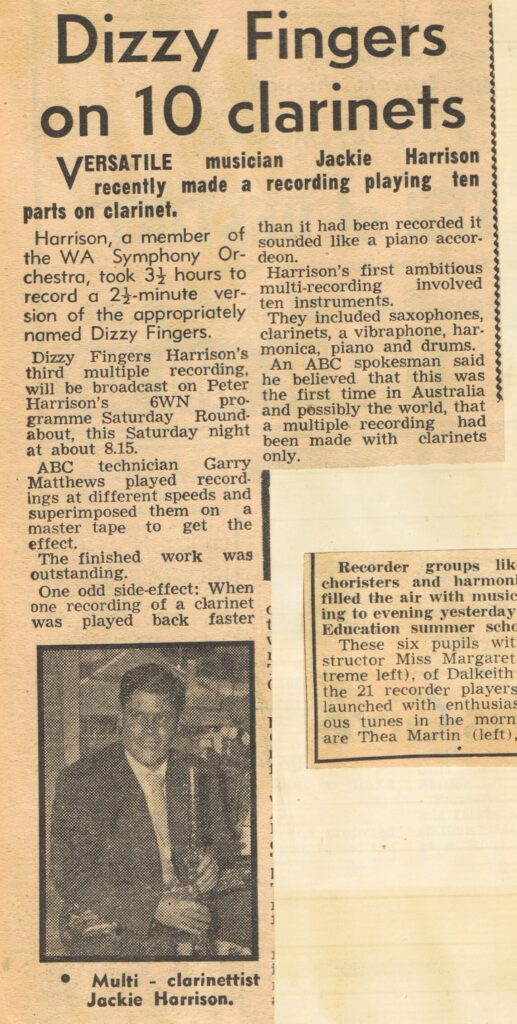
Dizzy Fingers by Zez Confrey was published in New York in 1923. In 1960, clarinettist Jack Harrison recorded “Dizzy Fingers” by Zez Confrey playing all ten clarinet parts. The recordings were played at different speeds, backwards, and superimposed onto the master tape by ABC technician Garry Matthews at Broadcast House. The Sunday Times, 13 March 1960: “Versatile musician Jack Harrison recently made a recording playing ten parts on clarinet. The finished work will be broadcast on Peter Harrison’s 6WN programme Saturday Roundabout.”
https://en.wikipedia.org/wiki/Zez_Confrey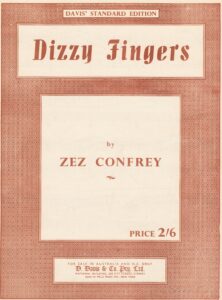
https://youtu.be/bMiCL7l5gYo?si=O_SA4S6wWmw_tib8
Person
Kit Denton was a writer and broadcaster with a lifelong interest in music. He performed in dance bands in Western Australia before his later career in radio and television. He was the father of Andrew Denton.
Kit Denton, originally Arnold Ditkofsky, was a writer, screenwriter, producer and broadcaster who was prominent in his adopted home of Australia. He also tried his hand at prospecting. He was born in England of Polish Jewish descent.
Born Arnold Christopher Ditkofsky on 5th May 1928 in Stepney, Middlesex, England, Kit Denton was raised in London’s East End. His parents, Harry Ditkofsky and Fanny Baskin, were devout Jews who kept Shabbat, ate kosher and spoke Yiddish.
He joined the British Army following the Second World War, with which he served with the British Forces Broadcasting Service in Germany.
Kit married Lee Pearson, who was of Irish Catholic heritage, and became an atheist.
From 1951 until 1965, Kit worked for the Australian Broadcasting Commission as an announcer, and eventually moved on to screenwriting, producing and directing television. With an abiding interest in military history, he is best known for his 1973 novel, The Breaker, based on the story of Breaker Morant (the film, Breaker Morant, was not based on Kit’s book, but on a play by Kenneth G Ross). [1] Kit also wrote:
Aged almost 69 years, Kit passed away on 14th April 1997 at his home in the Blue Mountains, New South Wales.
He was the father of comedian, television producer, Gold Logie-nominated television presenter and former radio host, Andrew Denton (4 May 1960-), who married fellow tv presenter Jennifer Byrne and are the parents of Connor Denton (1994-). In August 2006, Andrew announced a $25,000 writing scholarship in his father’s name: The Kit Denton Fellowship, which has been presented to members of the Australian Writers’ Guild from 2007 onwards.
https://www.wikitree.com/wiki/Ditkofsky-1
https://en.wikipedia.org/wiki/Kit_Denton
1952
Mr. and Mrs. Kit Denton, who were married last Friday, met in the course of their radio station duties. Mr. Denton is an announcer. The bride, who was Lee Pearson, is the daughter of Mrs. E. J. Pearson, of Tenterfield, N.S.W., who came to Perth for the pretty all-pink wedding which took place at St. Mary’s Cathedral. The honeymooners will set up house in a nice little flat over-looking the river at Mosman Bay.
Western Mail (Perth, WA : 1885 – 1954), Thursday 7 August 1952, page 33
1960
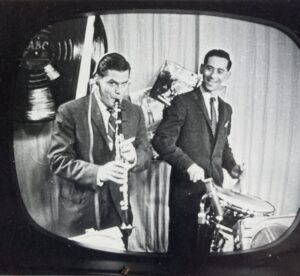
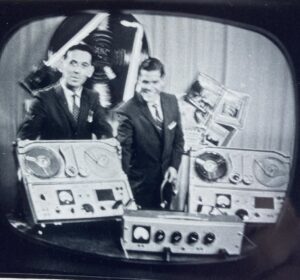
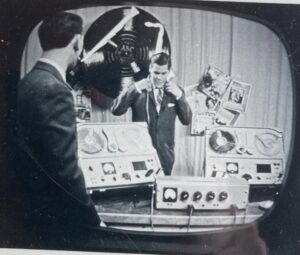
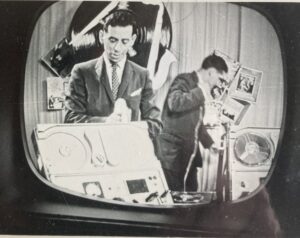
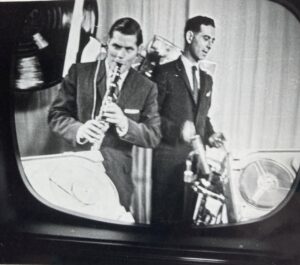
ABC TV Perth (station callsign: ABW) officially launched on May 7, 1960. Broadcasts began from the original studios on Adelaide Terrace in downtown Perth and its transmitter in Bickley, expanding public-owned television to Western Australia. The station relied entirely on live-to-air broadcasting for its music performances. True multitracking did not exist in the station’s infancy; early local audio engineers captured performances using mono or basic two-channel twin-track tape recorders (like early Ampex machines) connected to a centralized mixing console.
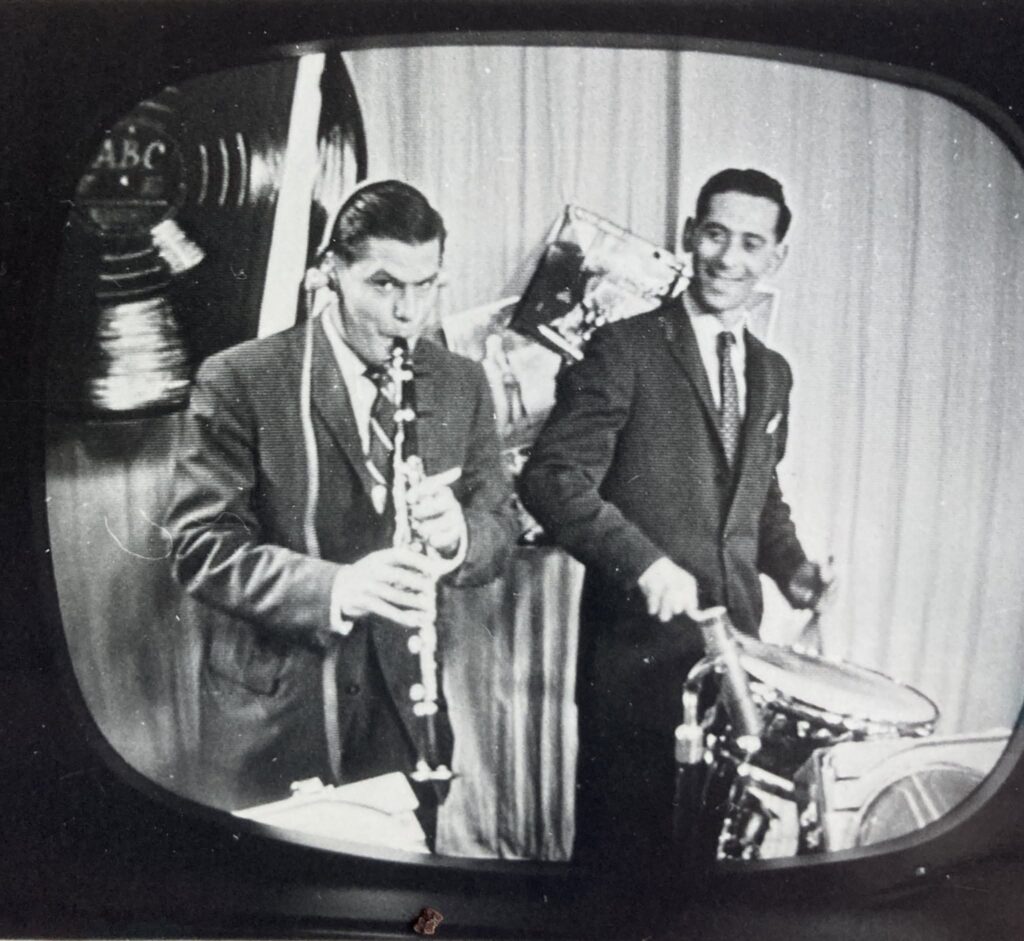
Kit Denton assisted Jack Harrison with his multi tracking broadcast.
1961
GOLD MINER IS NOW A TV STAR
Witty, urbane Kit Denton considers himself a “failure” in Australia. The reason: he migrated to be a goldminer, instead has found himself stranded (prosperously) on the surface. Denton came to Western Australia 11 years ago from London. For six months he WAS a goldminer on Western Australia’s colourful goldfields, but then decided he didn’t have the aptitude and settled in Perth. Here he found consolation in a field he had already had some knowledge of in Britain — radio and entertainment. Almost reluctantly he found himself being pushed up the ladder. He worked, successively, on three Perth commercial radio stations, as announcer, programme manager. scriptwriter, then joined the Perth stations of the Australian Broadcasting Commission. He soon won himself a reputation as a polished interviewer and prepared many radio documentaries. Denton has travelled over much of the 1,000,000 square miles of Western Australia with a tape recorder, a lively imagination, a quick eye and ear. Many of his programmes have been broadcast throughout Australia, and some over Radio Australia, the ABC’s shortwave programme to the world. “I was a rotten miner, but Australia has been good to me just the same.” Denton said. “This must be the most exciting continent on earth to live at the moment.”
Good Neighbour (ACT : 1950 – 1969), Saturday 1 April 1961, page 3
1964
A LOOK AT THE BEATLES
The Beatle Cult comes under a close and humorous scrutiny in B-Day on Channel 3 tonight at 8.30.
The programme, narrated and compiled by Kit Denton, looks at the Beatles’ “trade marks”—their shocks of hair, and the distinctive Mersey beat.
Their hair style has become part and parcel of their act.
“Yet,” says Kit Denton, “hair-styles have been part of the ‘personality’ of many of the world’s greatest figures.
“In the 1930’s Adolf Hitler had the most talked about hair-do in the world. The flambouyant wrestler Gorgeous George would have been nothing without his wonder-ul growth of hair. Further back in history, the biblical character Samson won fame through his hair, and maybe the Beatles should note that without it he was a nothing.”
Kit Denton takes a close look at the Beatles’ “Liverpool Sound”, with the Mersey beat.
“Is it any different from the beat that took the King of Swing, Benny Goodman, to dizzy heights in the 1940’s?” Denton asks.
To illustrate his point, he shows a group of madly stomping teenagers of the 1960’s dancing to music by the Beatles. The music changes and you see the same group dancing just as well to Benny Goodman and his swing of the 1940’s; then further back to Kid Ory, even further back to Meade Lux Lewis and way, way back to Johann Sebastian Bach.
Canberra Times (ACT : 1926 – 1995), Thursday 11 June 1964, page 39
1983
Author’s new book not meant to destroy Breaker legend – By PETER FULLER, Literary Editor
I’m devoted to cryptic crosswords,” says Kit Denton, “and I never give them up. I have some at home which I’ve had sitting around for years with one clue still vacant.”
The remark is made by way of analogy. For more than a decade Denton has been wrestling with the mysteries of the lives and death of Harry “Breaker” Morant, bushman, poet, soldier and, some might say, martyr. He has dealt with him fictionally, in his novel ‘The Breaker’, and historically in his latest book, ‘Closed File’, written in part “to get the itch out of my skull”. But is the file really closed on the man who was executed with fellowofficer Peter Handcock at Pretoria in 1902?
“I’d like to think it was; I’d like to think so,” Denton says.
“I don’t really believe it is, not while those imponderables are still there. The analogy is the detective who successfully wraps up the case, the guy’s in prison, and he knows when he goes back over the file that there are two witnesses that he can’t find.
“There are two outstanding things, aren’t there?” he says.
“For me the itch is never going to truly disappear until and unless I can scratch at those two things. One: Who was Morant? Was he Harry Harbord Morant, of Hampshire, or not? That’s one. And the other, what happened to James Francis Thomas’s record of the court-martial, which he brought back to Australia with him? Where the hell is it?”
“There’s an ancilliary one, too: why were the documents destroyed by the Brits? And perhaps another ancilliary question: is my romantic suspicion about a correspondence between the Kaiser and the King anything more than a romantic suspicion? Until the revolution, and I can sit there and rifle through, and say – “There it is: ‘Dear Ted’.
For those who came late, “Breaker” Morant was, by his own word, the son of Admiral Sir George Morant, a member of an old and honourable south-west-of-England house. Whatever truth there might be in that, he was a notable personality in Australia in the latter part of the last century, making a reputation for himself as a superlative horseman and versifier of some talent. When the Boer War broke out he joined the South Australian Mounted Rifles and reached South Africa in February 1900. A little more than a year later he was commissioned as a lieutenant in the Bush Veldt Carbineers, one of the irregular units formed by the British to suppress the Boer commandos; less than a year after that he and Handcock died before a firing squad for war crimes. They were defended by Captain J. F. Thomas, a Tenterfield lawyer and newspaper proprietor. The circumstances surrounding their executions were not quite regular, and it has been suggested that the British used them as scapegoats to placate German outrage at the killing of a German missionary.
Denton says ‘Closed File’ is not an attempt to the “demythologise” the figure of Morant, who has become something of a folk hero in the light of ‘The Breaker’ and the film ‘Breaker Morant’.
“I wasn’t intent in the first place on establishing a myth,” Denton says, “and certainly there’s been no intention in this case of breaking down a legend. “It’s simply that from word one, from the first time I heard him talked about, I’ve wanted to know what the truth of the matter was. And this [‘Closed File’] is something like the book I wanted to write in the first place – not the novel.”
In retrospect, Denton isn’t surprised that Australia was captivated by Morant. It’s a standard pattern, he says. “Robin Hood, Jesse James, William Tell, Siegfried, George Patton – you know. The winner against all odds, like Phar Lap, is one thing; the nearly winner against all odds is the stuff of legend. The good bad man is the one people like because he’s bucking the system.”
At the time that Denton wrote ‘The Breaker’, shortage of time and money prevented him doing the sort of research he wanted to do to unravel the whole Morant story. ‘Closed File’ is the product of that morecomplete research, which has thrown up some surprising facts and opinions, among them the charge by Trooper Theunis Botha, Morant’s interpreter, that on at least one occasion “The Breaker” had shown cowardice in refusing to close with a Boer party.
“That came as a shock to me when I first saw it,” says Denton.
“It’s the only hint, anywhere that I’ve searched, anywhere at all, of that sort of reticence in the face of physical danger. And it’s easily acceptable that Botha was biased about it, or looking at it from the wrong point of view, or not capable of appreciating the military situation, as it was. But then 1 don’t know that Morant was capable of appreciating it. He had no practical experience in making command decisions, other than what he’d learnt on the ground. But he was a quick study, wasn’t he’?”
The Morant of history was, Denton says, “an enigma from beginning to end”: “That business of where he came from is a puzzle.” His character is more easily discerned, however, and Denton would sum it up with the word “bastard”.
“That phrase that the old man who first told me the story used is the one 1 still cling to – ‘The bravest bad bastard I’ve ever met’.
“He was a weird mix of things, and I think if you have to put one word down to describe him neatly, the nearest word 1 think might be “bastard”, in the Australian sense, so that it has that equivocal meaning. He’s a good bastard, he’s a bad bastard: you can take it whichever way you want, and quite plainly through his life people took it at one side or the other. I doubt very much if he knew what side he was on anyway.
“I truly think he was a properly, scientifically, clinically amoral man, incapable of distinguishing between conventional right and wrong. Therefore I can’t see him as a sinful man, as an evil man.”
It’s not unfair, though rather simplistic, to see the Carbineers as tough men who were unjustly punished for doing their job, an admittedly dirty job. If their job was containing the Boers so that peace talks could continue, then they were doing it, Denton says -“but they were doing it in a very roughshod if not slipshod way, which was true not only of them but of most of the other troops under command at that time in forward areas.
“Unjust? Yes, I think that’s probably true because there were so many examples of the same sorts of things being done, on both sides. But there was a degree of unfairness about the whole thing. It was a show-piecc trial – a German missionary had been killed, a civilian. It was a perfect chance for Kitchener to do things that needed to be done, in his eyes.”
For Denton, a question mark still hangs over the behaviour of Lord Kitchener, the British Commander-in-Chief, though “it’s more a suspicion, more a feeling, an emotion than anything else”, he says.
The thing that “really gets under my skin” is that after sentence was passed. Kitchener was out of touch for several days. “At no other level at all than the purely military one, for the GOC in a war area simply to sever himself from communication at that time was dead wrong. It smells,”
Canberra Times (ACT : 1926 – 1995), Sunday 23 October 1983, page 9
Slow and painful: Andrew Denton recalls father’s final agonising moments