Horace Andrew (Horrie) Dargie (1917–1999)
by Ray Grieve
This article was published online in 2024
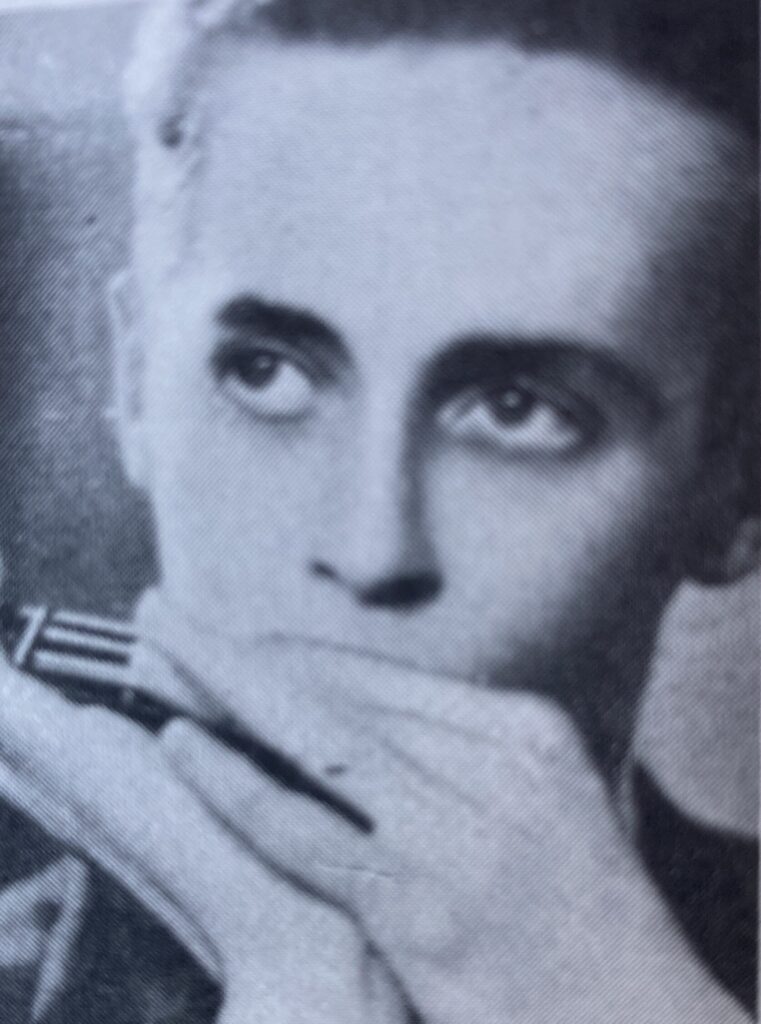
Horace Andrew (Horrie) Dargie (1917–1999), musician, entertainer, and production director, was born on 7 July 1917 at Footscray, Melbourne, younger son of Andrew Dargie, tally clerk, and his wife Adelaide Mary, née Sargent, both Victorian born. Horrie attended Footscray Technical School. At the age of ten his father had given him a basic diatonic mouth organ. The boy was inspired by the American entertainer Larry Adler who in the mid-1930s achieved worldwide renown through recordings and Hollywood films, playing a more sophisticated and versatile Hohner brand chromatic harmonica. Dargie acquired a chromatic and developed his own unique style. He also became a proficient clarinettist and saxophonist.
In 1937 Dargie won the P. and A. (Professional and Amateur) Parade competition on the Melbourne radio station 3KZ and began to work professionally in local dance bands. He toured for the Australian Broadcasting Commission as a soloist, and in May 1938 was a guest artist with the Jim Davidson ABC Dance Band. After the tour he moved to Sydney, where Davidson’s Dandies provided the accompaniment for Dargie’s first solo recording, ‘There’s a Goldmine in the Sky’ and ‘Rosalie’/’In the Still of the Night’ (Regal Zonophone). More solo performances followed in Brisbane before he toured New Zealand, then returned to Sydney where he established the Horrie Dargie Harmonica School. He continued to play and promote the Hohner brand harmonica in advertisements for the next twenty years through the company’s Australian agent, Kurt Jacob and Co. Pty Ltd.
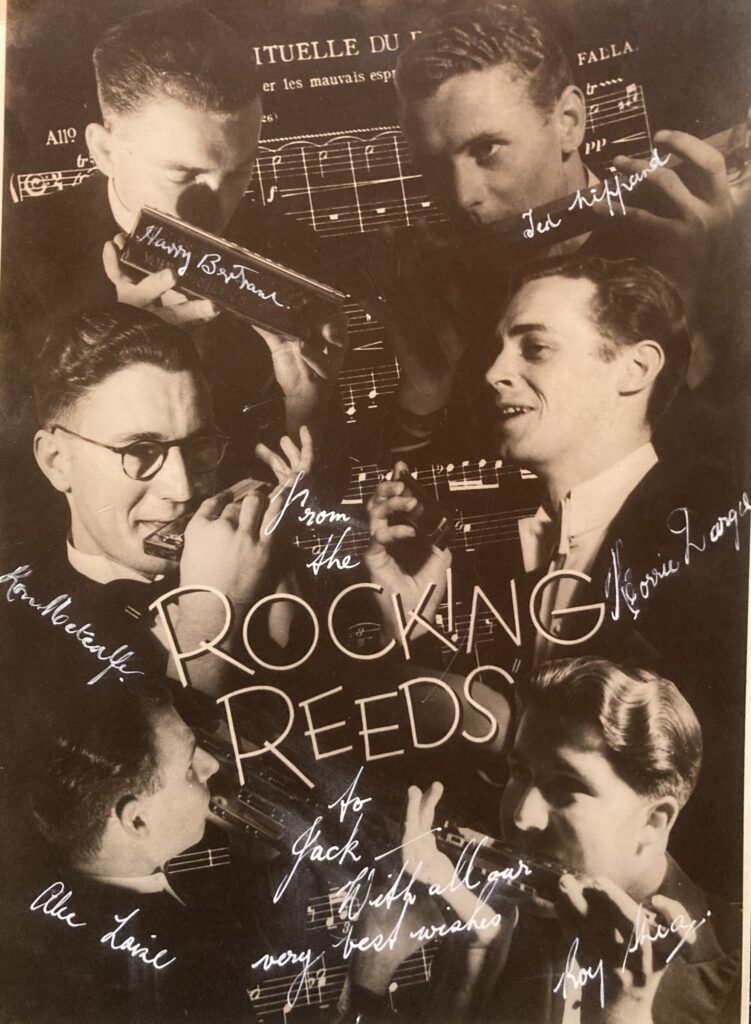
On 5 February 1940 Dargie married New South Wales-born Julie Babette Cheffirs, a journalist, at the Wesley Chapel, Sydney. That year he also formed the Rocking Reeds, a six-piece band which achieved immediate success on stage and radio. Harmonica jazz ensembles were becoming popular in Europe, and the group was one of the pioneers of the genre in Australia. The Rocking Reeds released six recordings in 1940 and 1941.
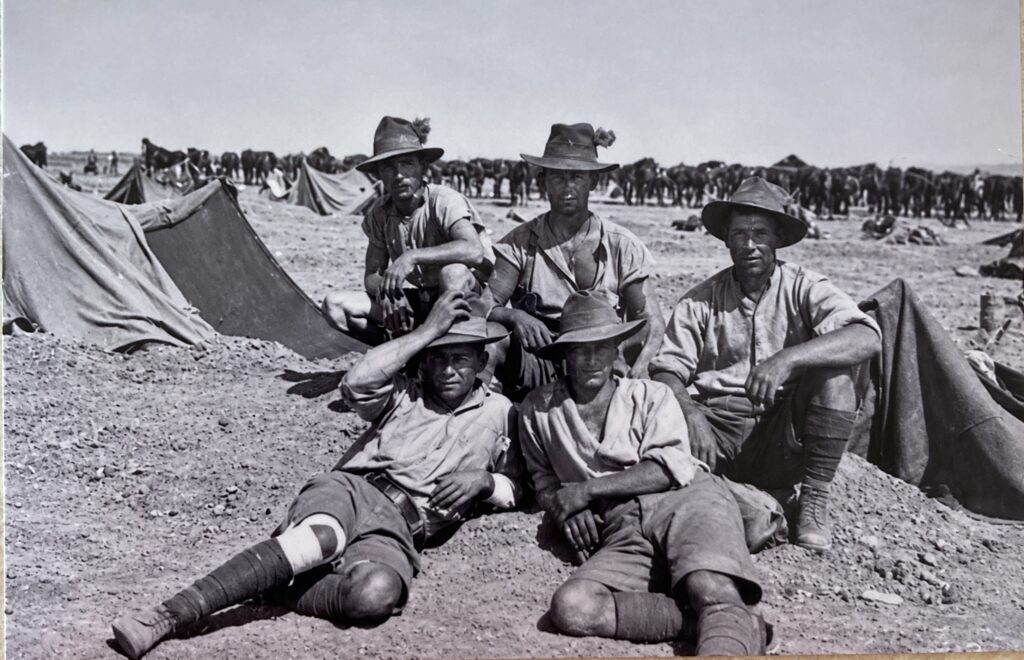
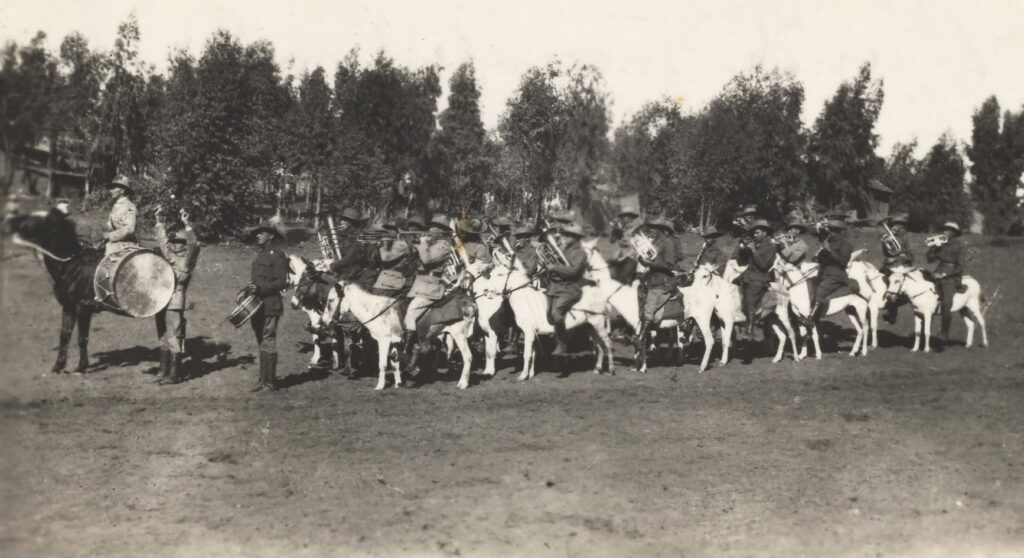
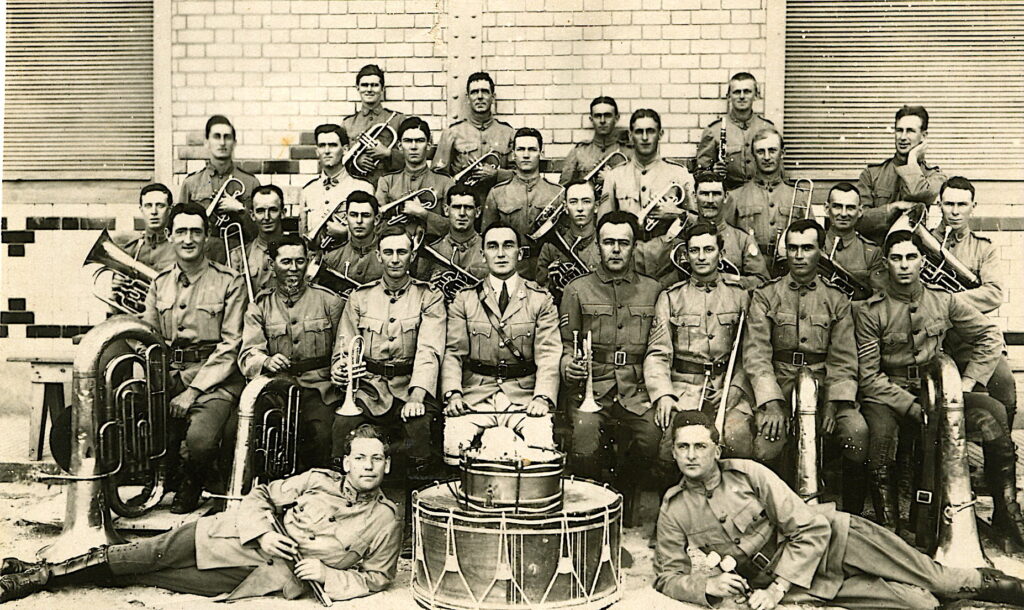
With the outbreak of World War II, many in Dargie’s group joined the armed forces. He enlisted in the Australian Imperial Force on 13 November 1942, serving with the 3rd Armoured Division Concert Party then, from April 1945, the 1st Australian Entertainment Unit as musical director and variety performer. His engagements included New Guinea (1943–44) where Adler, who was entertaining American troops, invited the Australian on stage to perform, the pair having met in Australia when Adler was touring in 1938. Dargie also served in Darwin (1945) and, as a warrant officer, class two (1946), with the British Commonwealth Occupation Force in Japan (1946–47).
After his discharge in March 1947, Dargie returned to Melbourne where he formed the Horrie Dargie Harlequintet. The group became famous in Australia and Europe, their shows featuring a variety of harmonica types, as well as vocals, guitar, bass, and comedy sketches. Their performance at the Sydney Town Hall in November 1952 was recorded and released on a ten-inch album, Horrie Dargie Concert (Diaphon), which sold seventy-five thousand copies and was recognised as Australia’s first gold album. In 1952 the band embarked on a five-year tour of Europe, based in England under the management of the Lew Grade Organisation. They appeared on radio and television, toured the Moss Empire Group’s chain of theatres in Britain, and performed in Austria, France, Italy, the Netherlands, and West Germany. After his divorce from Julie, on 13 March 1955 he married Betty Winifred Glew, a Victorian-born variety artiste, in the Hitchin registry office, Hertfordshire, England. That year he also contracted a serious case of polio and was hospitalised for six months in England. He eventually recovered sufficiently to rejoin the tour.
Back in Australia from 1958, Dargie’s group, variously called the Horrie Dargie Quintet or Quartet, or The Dargies, resumed performing in concerts and on television. In all, the group released sixteen ten- and twelve-inch albums, two of which featured Dargie as a harmonica soloist. Their 1957 cover of ‘The Green Door’ (Festival) was the group’s biggest selling recording. Dargie also took on new roles at Melbourne television station GTV-9 as a performer and manager of the talent division. There, and later at HSV-7, he compered national series The BP Super Show (1959–61) and The Price Is Right (1963), and having formed the production company DYT Productions, served as the production director on The Price Is Right, The Delo and Daly Show, Daly at Night, and The Go!! Show. He also composed and arranged music for shows and advertisements.
Betty died from breast cancer in August 1972, and on 22 May 1975 Dargie married Victorian-born Catherine Agnes Pattinson, an accounts clerk, in a civil ceremony at Wynnum, Queensland. Moving again to Sydney, he performed regularly as a soloist in clubs and aboard cruise ships. On his final cruise in February 1986, the liner MS Mikhail Lermontov sank off the coast of New Zealand. All passengers survived.
A modest man who described his many recordings as ‘just a way to make a living’ (Jinman 1996, 5), Dargie was nevertheless an exceptional musician and performer. Adler regarded him as one of the best four harmonica players in the world, and by one local account he was ‘Australia’s wizard of the harmonica’ who possessed ‘an appreciation of melody and an understanding of style that gives his numbers quality as well as musical beauty’ (Cumberland Argus and Fruitgrowers’ Advocate 1939, 4). In 1996 he was inducted into the Australian Recording Industry Association Hall of Fame for the Horrie Dargie Concert album. His daughters from his second marriage, Lynne and Anne, followed him into show business, performing as the Dargie Sisters. He died of pulmonary emphysema on 30 August 1999 at Campbelltown, and was cremated; he was survived by Catherine, and Anne. Lynne had predeceased him in August 1997.
Research edited by Peter Woodley
Select Bibliography
- Cumberland Argus and Fruitgrowers’ Advocate (Parramatta, NSW). ‘Australia’s Wizard of the Harmonica.’ 22 February 1939, 4
- Dargie, Horrie. Interview by Bill Stephens, 23 June 1992. Sound recording. National Library of Australia
- Grieve, Ray. A Band in a Waistcoat Pocket: The Story of the Harmonica in Australia. Sydney: Currency Press, 1995
- Grieve, Ray. Boomerangs and Crackajacks: The Harmonica in Australia, 1825 to 1960. Macgregor, ACT: Ray Grieve, 2019
- Jinman, Richard. ‘Hall of Fame Beckons Horrie and His Harmonica.’ Australian, 21–22 September 1996, 5
- Wireless Weekly (Sydney). ‘First Got Break in P. and A. Parade.’ 8 March 1941, 10
Citation details
Ray Grieve, ‘Dargie, Horace Andrew (Horrie) (1917–1999)’, Australian Dictionary of Biography, National Centre of Biography, Australian National University, https://adb.anu.edu.au/biography/dargie-horace-andrew-horrie-33979/text42586, published online 2024, accessed online 22 September 2026.