An enjoyable evening was spent on last Thursday evening, when the community concerts again resumed after a month’s recess. Mr. Abel again wielded the baton and music was provided by Mrs. Manea, Mr. Allen and Mr. Rasmussen. Items were rendered by Barbara Lee (song , and dance), Messrs. Jefferis (songs), Bill Hendrie (mouth organ and ukelele). Rasmussen (song and guitar) and a duet by Bill Hendrie and Vic Rasmussen.
For the first time within our recollection, people were turned away from the Narrogin Town Hall last Tuesday, despite the fact that extra seats were packed to within a few feet of the stage. The occasion was the Community Concert presented by the men of the 109 Convalescent Camp. The Concert proved thoroughly enjoyable to the huge crowd from start to finish, and those present were no doubt surprised at the unexpected number of talented artists convalescing in our midst. d A seven-piece swing bend dispensed delightful music, and the various artists thoroughly deserved the prolonged applause which followed practically every item. The versatility of one artist in particular—Bill Hendrie—was the subject of quite a lot of comment. This young man accompanied practically every artist on his guitar throughout the night, was a member of the band, was encored three times in his imitation of George Formby, gave two difficult and delightful renderings on the mouth organ, and caused amusement in one of the final numbers by the band when he brought a cello on to the stage and plucked this to some purpose. It would take too much space to give full commendation to each individual artist. Suffice it to say that they all gave very creditable performances, and we hope to see more of them in the near future.
Although only a few months have elapsed since youthful, unassuming WA pianist Ray Hartley left Perth to try his luck in Sydney musical circles, already he has rocketed towards success as an ivory-tickler and arranger.
Last Friday the ‘Ray Hartley Trio and Joanne,’ in association with famous orchestra leader Eric Tann, created a sensation in a concert at the Sydney Town Hall. Tann is so impressed with Hartley’s ability that he intends to take him to Eng-land when he returns next year. Ray Hartley hails from Kellerberrin, and the vocalist in his trio, Joan Robinson, is also a Perth girl, formerly Joan Hill. Other Hartley Trio members are Don Andrews (guitar), late of Fred Hartley’s Quintet, and Reg Robinson (bass), Reg uses a 5-string bass, which gives him an average of 16 notes above middle C. Trio has broadcasted over the ABC and station 2CH, and at present they are rehearsing for a recording session at Columbia studio at Homebush, Sydney. When Ray Hartley first went to the Eastern States,
he studied under Perth pianist Jim Riley, who is now at the Trocadero. He carried with him a let-ter of introduction from local band leader Sammy Sharpe to Eric Tann, and after an audition was taken into Tann’s band at Romano’s. Original Hartley trio will be remembered by Perth swing fans for their radio work and success at the last Jazz Jam-boree at the Capital Theatre. Other members of the old outfit are well-known Perth rhythm men Ralph Filmer and Bill Hendrie. In preparation for his forthcoming trip overseas, Ray Hartley is at the moment studying at the Sydney Conservatorium.
SYDNEY PICTURE of Perth pianist Ray Hartley and his band which is doing well in that city. From left: Ray, Don Andrews (guitarist), Joan Robinson (vocalist, formerly Joan Hill of Perth) and Reg Robinson (bass player).
Mirror (Perth, WA : 1921 – 1956), Saturday 9 October 1948, page 15
Jack Harrison’s New Role Jack Harrison, a mouth organist, has broadcast from every capital city in the Commonwealth and is well known to listeners in this State. He will be shortly heard from the National stations in an entirely new role – as leader of his own swing quartette. He will use mainly the alto sax and clarinet, but for variation will sometimes express himself with the tenor sax or the harmonica.At the age of 16, Jack is considered Australia’s youngest dance band leader. Other members of the quartette are Bill Hendrie (guitar), Jack Harrison’s sister Jill (pianist with a modern trend) and brother Ray (drummer). They are both well known to Perth dancers. Bill Hendrie is a local boy who has spent some time in the Eastern states and has been associated musically with Jim Davidson, Reg Lewis and other well-known band leaders. Bill is considered to be among Australia’s best guitarists and an expert on modern harmony. The quartette intends to present modern arrangements of old and new tunes in such a manner as to appeal both to teenagers and listeners of more mature years. The Broadcaster Saturday March 20 1948 Vol 14, No 729
Big Jazz Jamboree Mystery
Perth’s hep-cats are properly mystified. No one will tell them the identity of a mystery band which will play at the big jazz jamboree at the Capitol on
Sunday night, Oct. 31. Anyone who solves this Top Swing Secret gets a prize— 6 swing records, no less! Eight bands will play, led by Merv Rowston, Jackie Harrison, Chris Gosper, Ken Murdoch, Sammy Sharp, Ron Jenkins, Bill Kirkham and Harry Bluck. The Mirror Saturday 23 October 1948 page 4
According to The Broadcaster Saturday November 6 1948 Vol 15. No 762, “The mystery band of the evening, a two piece unit consisting of Bill Hendrie on the guitar and Ralph Filmer on the bass gave an unusual rendition of “Waltzing Matilda””.
Rhythmettes
Mirth and Music – ARTISTS
Members of Dave Howard’s Mirth and Music Show met last week and extended best wishes to Miss Betty Bahen, one of its members, prior to her marriage to Mr. Geoff Hammond. On behalf of the troupe, Miss Nell Shortland-Jones presented Miss Bahen with a wedding gift. Those present were Miss Betty Whittaker, Miss Olwyn Thomas, Miss Rhoda Allen, Miss Sylvia Caporn, Mr. Ernest Paulasto, Mr. Fred Paulasto, Mr. Albert Chappelle, Mr. Harry Bluck, Mr. Dave Howard, Mr. Geoff Wilbur, Mr. Ralph Filmer, Mr. Bill Hendrie, Mr. Harold Malcolm, Mr. James Congdon, Mr. Jack Harrison, Mr. Billy Edwards and Mr. Harry Graham.
Western Mail Thursday 9 December 1948 page 37
1949
Jack augmented his swing band according to the requirements of functions, sometimes up to ten players, such as the April 22nd 1949 University of Western Australia Graduation Ball at Winthrop Hall. Players were issued with a cheque on 5th May 1949 and were paid 3 pound 2 and 6 for the gig. Players paid were: Norm Wrightson (saxophone), G. Kirkby, Jack Pope (trumpet), George Franklin (trumpet), C. Thompson, Bill Hendrie (guitar), N. Coates, Ray Harrison (drums), Jill Harrison (piano) and Jack was the tenth band member.
GRADUATION BALL
8.30pm – 2am
April 22 1949 Winthrop Hall, University
In Aid of World Student relief
ADMISSION Double Ticket 24/7 (inc tax.)
Jack Harrison’s Ten Piece Orchestra – bookings at Nicholsons
AROUND PERTH – WITH HARRY BLUCK
Ball Season Starts Rolling in Perth
Heavy Bookings as Biz Booms
The annual outcrop of balls generally makes its presence felt about this time of the year and already some of the earliest have taken place. This season promises to be a busier one than previously and some large-sized bands should be seen on the various stands. Already, youthful Jack Harrison has made a good start by fronting a 10 piece outfit at the University Graduation Ball, and from all accounts the ultimate sound of the band justified the Harrison judgement in selecting good players as his support.
Music Maker and Dance Band News May 1949
5 MAY 1949
JACK HARRISON Cheque to:
Norm Wrightson Grad Ball £3/2/6
Kirkby Grad Ball £3/2/6
Pope Grad Ball £3/2/6
Franklin Grad Ball £3/2/6
Thompson Grad Ball £3/2/6
Hendrie Grad Ball £3/2/6
Coates Grad Ball £3/2/6
Ray Harrison Grad Ball £3/2/6
Jill Harrison Grad Ball £3/2/6
(photo) The Rhythmettes: A combination regularly featured in “Mirth and Music” from 6WF on Tuesday nights. Left to right: Harry Bluck (leader, piano accordionist and arranger), Jack Harrison (clarinet), Sylvia Caporn (pianist), Ralph Filmer (bass), George Hay (guitar) and Bill Hendrie (guitar).
The Broadcaster Saturday July 2 1949 Vol. 16. No. 796
6WF SWING SHOW
Revolutionising Radio History in this state, WF turned on a half hour session in which four local bands were featured. They were as follows
The W.A. JAZZ GROUP
JACK HARRISON QUARTET
A.B.C. RHYTHMETTES.
Tempo The Australian Musical News Magazine July 1949 Vol. 12 No. 10
4 JULY 1949
JACK Cheque to: Jack Pope Womens College £5/3
Colin Youlden Womens College £2/11/8
Bill Kirkham Womens College £2/11/8
Charlie Thompson Womens College £2/11/8
George Franklin Womens College £2/11/8
Bill Hendrie Womens College £2/11/8
Roy Coates Womens College £2/11/8
16 JULY 1949
JACK Cheque to: Ray Harrison Wages £5/14
Jill Harrison Wages £5/14
Bill Hendrie Comm. Bank £1/14
29 JULY 1949
JACK Cheque to: Ray Harrison Wages £5/08
Jill Harrison Wages £1/18/8
13 AUGUST 1949
JACK Cheque to: Ray Harrison Wages £7/2/3
21 AUGUST 1949
JACK Cheque to: Bill Hendrie University £3/1
1950
Molly’s People and Parties
SPOTTED attractive young men-about-town Bill Hendry and Laurie Malulich in deep discussion which looked like going on for hours. Laurie is an ardent collector of futuristic discs of the ‘Bop’ idiom. Bill is still leading his ”Day Dreamers’ ensemble on the National network. By the way, old pal Arthur Murray is still doing the vocals on Bill’s session — and singing better than ever.
Mirror (Perth, WA : 1921 – 1956), Saturday 29 April 1950, page 12
Monday 7th August 1950
Jack: Cheque to: Bill Hendrie C.G.C £3/8/6
PEOPLE YOU LISTEN TO
(photo) Admiring the engagement ring of Marcia Harrison (left) are fiancé Jack Harrison and twin sister Jill at a party held at the Nedlands Tennis Club to celebrate their coming of age.
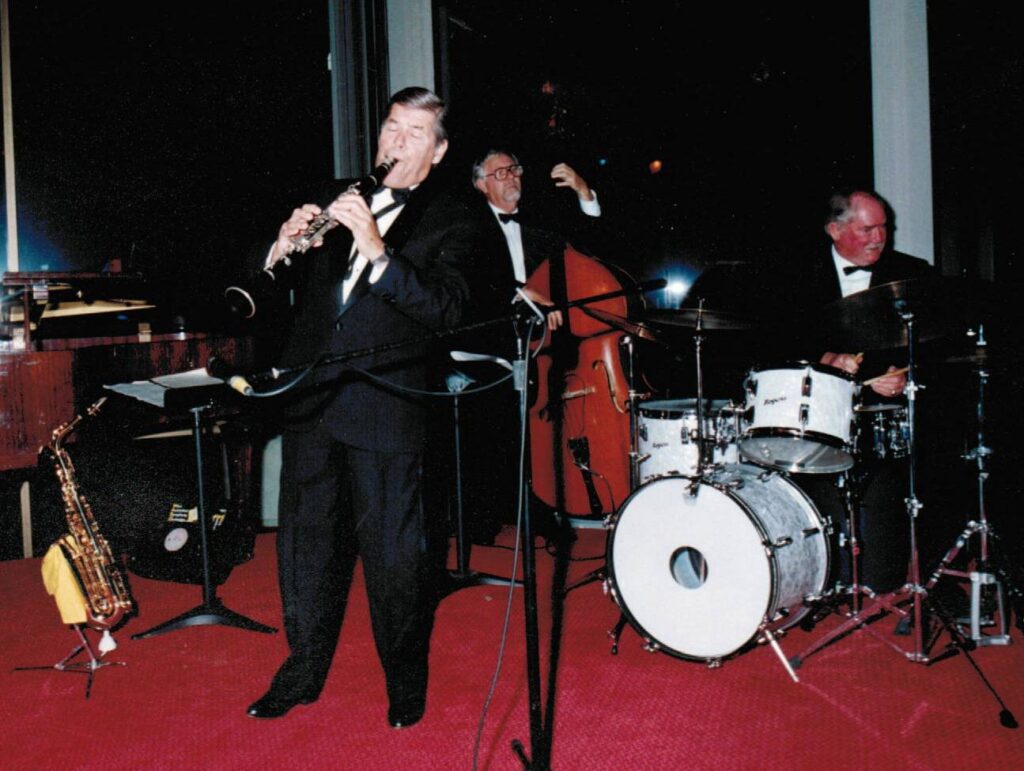
Since he was five, Jack Harrison has been associated with the musical world together with his twin sister Jill. Both recently celebrated their 21st birthday at a party which included many of the musicians. Jack and Jill are now members of the W.A. Symphony Orchestra playing the clarinet and bassoon respectively. He has won numerous prizes and at the age of eight won an Amateur Hour contest in Sydney. He worked in his father’s band until he decided to form his own which consisted usually of himself, Jill, elder brother Ray and guitarist Bill Hendrie.
Jack has played in A.B.C. shows and at the present time has a session in which his quintet plays light classical music. He was for a while in the Adelaide Symphony Orchestra and studied the clarinet under the late Percy Newton (brother of John Nugent Hayward), Alan rule and Clive Amadio. At the party Jack’s engagement to A.B.C. typist Marcia Chayter was announced.
Horace Andrew (Horrie) Dargie (1917–1999), musician, entertainer, and production director, was born on 7 July 1917 at Footscray, Melbourne, younger son of Andrew Dargie, tally clerk, and his wife Adelaide Mary, née Sargent, both Victorian born. Horrie attended Footscray Technical School. At the age of ten his father had given him a basic diatonic mouth organ. The boy was inspired by the American entertainer Larry Adler who in the mid-1930s achieved worldwide renown through recordings and Hollywood films, playing a more sophisticated and versatile Hohner brand chromatic harmonica. Dargie acquired a chromatic and developed his own unique style. He also became a proficient clarinettist and saxophonist.
In 1937 Dargie won the P. and A. (Professional and Amateur) Parade competition on the Melbourne radio station 3KZ and began to work professionally in local dance bands. He toured for the Australian Broadcasting Commission as a soloist, and in May 1938 was a guest artist with the Jim Davidson ABC Dance Band. After the tour he moved to Sydney, where Davidson’s Dandies provided the accompaniment for Dargie’s first solo recording, ‘There’s a Goldmine in the Sky’ and ‘Rosalie’/’In the Still of the Night’ (Regal Zonophone). More solo performances followed in Brisbane before he toured New Zealand, then returned to Sydney where he established the Horrie Dargie Harmonica School. He continued to play and promote the Hohner brand harmonica in advertisements for the next twenty years through the company’s Australian agent, Kurt Jacob and Co. Pty Ltd.
On 5 February 1940 Dargie married New South Wales-born Julie Babette Cheffirs, a journalist, at the Wesley Chapel, Sydney. That year he also formed the Rocking Reeds, a six-piece band which achieved immediate success on stage and radio. Harmonica jazz ensembles were becoming popular in Europe, and the group was one of the pioneers of the genre in Australia. The Rocking Reeds released six recordings in 1940 and 1941.
With the outbreak of World War II, many in Dargie’s group joined the armed forces. He enlisted in the Australian Imperial Force on 13 November 1942, serving with the 3rd Armoured Division Concert Party then, from April 1945, the 1st Australian Entertainment Unit as musical director and variety performer. His engagements included New Guinea (1943–44) where Adler, who was entertaining American troops, invited the Australian on stage to perform, the pair having met in Australia when Adler was touring in 1938. Dargie also served in Darwin (1945) and, as a warrant officer, class two (1946), with the British Commonwealth Occupation Force in Japan (1946–47).
After his discharge in March 1947, Dargie returned to Melbourne where he formed the Horrie Dargie Harlequintet. The group became famous in Australia and Europe, their shows featuring a variety of harmonica types, as well as vocals, guitar, bass, and comedy sketches. Their performance at the Sydney Town Hall in November 1952 was recorded and released on a ten-inch album, Horrie Dargie Concert (Diaphon), which sold seventy-five thousand copies and was recognised as Australia’s first gold album. In 1952 the band embarked on a five-year tour of Europe, based in England under the management of the Lew Grade Organisation. They appeared on radio and television, toured the Moss Empire Group’s chain of theatres in Britain, and performed in Austria, France, Italy, the Netherlands, and West Germany. After his divorce from Julie, on 13 March 1955 he married Betty Winifred Glew, a Victorian-born variety artiste, in the Hitchin registry office, Hertfordshire, England. That year he also contracted a serious case of polio and was hospitalised for six months in England. He eventually recovered sufficiently to rejoin the tour.
Back in Australia from 1958, Dargie’s group, variously called the Horrie Dargie Quintet or Quartet, or The Dargies, resumed performing in concerts and on television. In all, the group released sixteen ten- and twelve-inch albums, two of which featured Dargie as a harmonica soloist. Their 1957 cover of ‘The Green Door’ (Festival) was the group’s biggest selling recording. Dargie also took on new roles at Melbourne television station GTV-9 as a performer and manager of the talent division. There, and later at HSV-7, he compered national series The BP Super Show (1959–61) and The Price Is Right (1963), and having formed the production company DYT Productions, served as the production director on The Price Is Right, The Delo and Daly Show, Daly at Night, and The Go!! Show. He also composed and arranged music for shows and advertisements.
Betty died from breast cancer in August 1972, and on 22 May 1975 Dargie married Victorian-born Catherine Agnes Pattinson, an accounts clerk, in a civil ceremony at Wynnum, Queensland. Moving again to Sydney, he performed regularly as a soloist in clubs and aboard cruise ships. On his final cruise in February 1986, the liner MS Mikhail Lermontov sank off the coast of New Zealand. All passengers survived.
A modest man who described his many recordings as ‘just a way to make a living’ (Jinman 1996, 5), Dargie was nevertheless an exceptional musician and performer. Adler regarded him as one of the best four harmonica players in the world, and by one local account he was ‘Australia’s wizard of the harmonica’ who possessed ‘an appreciation of melody and an understanding of style that gives his numbers quality as well as musical beauty’ (Cumberland Argus and Fruitgrowers’ Advocate 1939, 4). In 1996 he was inducted into the Australian Recording Industry Association Hall of Fame for the Horrie Dargie Concert album. His daughters from his second marriage, Lynne and Anne, followed him into show business, performing as the Dargie Sisters. He died of pulmonary emphysema on 30 August 1999 at Campbelltown, and was cremated; he was survived by Catherine, and Anne. Lynne had predeceased him in August 1997.
Research edited by Peter Woodley
Select Bibliography
Cumberland Argus and Fruitgrowers’ Advocate (Parramatta, NSW). ‘Australia’s Wizard of the Harmonica.’ 22 February 1939, 4
Dargie, Horrie. Interview by Bill Stephens, 23 June 1992. Sound recording. National Library of Australia
Grieve, Ray. A Band in a Waistcoat Pocket: The Story of the Harmonica in Australia. Sydney: Currency Press, 1995
Grieve, Ray. Boomerangs and Crackajacks: The Harmonica in Australia, 1825 to 1960. Macgregor, ACT: Ray Grieve, 2019
Jinman, Richard. ‘Hall of Fame Beckons Horrie and His Harmonica.’ Australian, 21–22 September 1996, 5
Wireless Weekly (Sydney). ‘First Got Break in P. and A. Parade.’ 8 March 1941, 10
Citation details
Ray Grieve, ‘Dargie, Horace Andrew (Horrie) (1917–1999)’, Australian Dictionary of Biography, National Centre of Biography, Australian National University, https://adb.anu.edu.au/biography/dargie-horace-andrew-horrie-33979/text42586, published online 2024, accessed online 22 September 2026.
Harmonica part for Jack Harrison’s “Jumping Joeys”
ATTRACTIVE PERFORMANCE
Southern Serenaders Tour
Verdon Williams, popular conductor of the Perth Light Orchestra and the A.B.C. Sinfonietta, will head the orchestra which will tour the North West next month. Accordion virtuoso Peter Piccini and versatile clarinettist Jack Harrison will also tour with the group. All the musicians with the exception of Peter Piccini are members of the West Australian Symphony Orchestra. People in the North will once again hear the magic violin of Laszlo Vidak, who earned thundering ovations during the 1959 M.M.A. A.B.C. Cultural Tour of the “Lido Quartet”.
Jack Harrison has written a special number called “Jumping Joeys” for this tour. Soprano, Shirley Flesfader, will also sing three excerpts from the lyric song cycle “North of Capricorn” by W.A. Composer, Robert Gude.
The outstanding gaiety and appeal of the programme compiled and arranged by Verdon Williams includes selections by Cole Porter, excerpts from “Oklahoma” and Latin American music and a special arrangement for string quartet of a movement from “Eine Kleine Nachtmusik” by Mozart. Shirley Flesfader will sing arias from Bizet’s opera “Carmen”, Puccini’s “Madame Butterfly” and a selection from “Kismet”. Peter Piccini will give an impromptu recital of audience request numbers. Each member of the group will be heard in solo items and the versatile musicians will play a wide variety of instruments. [1]
1962
Jack Harrison Jumping Joeys for solo harmonica WORLD PREMIERE
Verdon Williams (conductor) Shirley Flesfader (soprano) , Peter Piccini (accordion), Jack Harrison (clarinet and harmonica), Graham Wood (violin), Laslo Vidak (violin and viola) and Brian Meddeman (cello and violin)
In 1960, clarinettist Jack Harrison recorded “Dizzy Fingers” by Zez Confrey playing all ten clarinet parts. The recordings were played at different speeds, backwards, and superimposed onto the master tape by ABC technician Garry Matthews at Broadcast House.
The Sunday Times, 13 March 1960: “Versatile musician Jack Harrison recently made a recording playing ten parts on clarinet. The finished work will be broadcast on Peter Harrison’s 6WN programme Saturday Roundabout.”
Person
HARRISON, Jack Louis
12 August 1931 – 1 April 2013
JACK LOUIS HARRISON was the second born twin (sister Jill Lois born first) on the 12th August 1931 at the brand-new Tresillian Hospital at 21 Tyrell Street Nedlands, Western Australia.
It was also the birthday of their 25 year old mother, Edna May Harrison (nee Kerr).
Edna didn’t know she was having twins – she thought, being her third pregnancy, that she had just stacked on weight! Apparently William was so surprised he forgot to wish her a happy birthday!
In attendance at the birth of the twins was their Godmother, Dorothy Ray who worked at Tresillian. Dorothy was one of Sister Kate’s “orphans”. Dorothy used to stay on weekends and holidays in Bayswater with Jack’s maternal grandparents, William “Walter” & Amy Kerr. Only known as Dorothy, she took the name of Harrison on the occasion of her marriage, but never was formally adopted.
HARRISON On August 12, at Tresillian Hospital, to Mr and Mrs Harrison of 64 Bruce Street, Nedlands – a son and daughter (Jack and Jill)
Jack and Jill were baptized on 17th January 1932 at St Mary’s Church, Nedlands by A. Burton.
1933 Jack, Jill with their car1932 Jill and Jack Harrison in a rocker
The twins shared a memory from Bruce Street, sprinting home to their mother, screaming with terror at two huge birds coming towards them up the street. Edna investigated and returned to sooth her toddlers having confirmed it was two Catholic nuns in habits.
1932 Jill and Jack Harrison
1932 twins Jack and Jill standing in garden1935 – 24 Highway (later renamed Kingsway) Nedlands
Inspection Today and Tomorrow of the Spanish-Californian type of design and consisting of a hall, lounge, dining room, two bedrooms, kitchen, pantry, bathroom, laundry, workshop and garage on the ground floor, and study, two bedrooms and sleep-out on the second floor, a gentleman’s residence, built by Messrs. A. Harrison and Son at 24 Highway, Nedlands, will be open for inspection from 2 o’clock until 6 o’clock today and tomorrow. Features of the interior are texture walls and plate rails, and wrought iron balustrading. The conveniences include gas heater, gas stove and gas copper and sewerage. From the sleepout a fine view of the river is obtained. The West Australian Saturday 24 August 1935 page 4
1935 Highway Nedlands, built by Arthur and Lou HarrisonRamon, Jill, Bill Jnr and Jack Harrison
In 1936, Jack started his musical studies at the age of five, first on piano and music theory under the instruction of his father and then on a mouth organ which his eldest brother Bill Jnr had given him for Christmas. By the time his father came home from work Jack could play the chorus of “When I Grow too Old to Dream”.
In 1937 Jack and Jill attended Hollywood Primary School for 6 months (corner Hampton and Williams Roads) and then Nedlands State School. Jill remembers having to play “English Country Gardens” on the piano – alternating with Donald Thornton – to assist the children march back to class after assembly.
Jill also remembers being dive bombed and pecked by magpies during a walk home from school and living with a fear of birds from then on.
The first competition Jack won was when he was aged 7 in January 1939 at a Scottish Community Concert at the Perth Town Hall. This link with the Scottish community was no doubt through Edna Harrison’s father William Walter Kerr and her sister Bessie who were members of The Caledonian Society and Pipe Band.
Scottish Community Concert.
The Western Australian Scottish Union held its annual grand Scottish community concert in the Perth Town Hall last night with a crowded house, and in the presence of His Excellency the Lieutenant-Governor (Sir James Mitchell) and Lady Mitchell. Pipe Major Watson and Sergeant J. Sutherland piped the vice-regal party to their seats, (where they were received by Mr. J. MacCallum Smith, ML.A. (president of the union) and Mrs. Smith. The programme opened with pipe band selections and then Miss Betty Robertson sang “Sing us a song of Scotland.” and was accompanied by dancers when she sang the chorus. Mrs. Allan delighted with her rendition of “A Guid New Year” and later “Hall Caledonia,” and “Cam Ye by Athol.” David Lyle opened with “Gae Bring tae me a Pint o’ Wine” and “The Auld Scots Songs.” He sang “Mary” as an additional encore. Towards the end of the programme he again pleased his audience with his rendering of “My Love is like the Red Red Rose.” “Angus McDonald” was Miss Dorothy Ogilvie’s opening solo and was received with prolonged applause. She then presented “Caller Herrin” and in the second half “Success tae Scotland.” The conductor of the programme, Mr. “Bill” Talbott submitted several humorous items, led the community singing and supervised the amateur trials. Items of particular merit were submitted by Alex McNeil. He sang “A’ the Airts” and “The Nameless Lassie.” Miss Thelma McLennan (grand champion dancer for 1938) gave a sword dance, while pupils of Miss Hodgkinson presented “Sea Trubhais” and “Reel o’ Tulloch.” “The Road to the Isles” was pleasingly sung by Mr. T. Mackie. A comedian, Willie Frew, entertained with ‘The Waggle o’ tie Kilt” and “The Wedding of Sandy McNab,” to which was added many typical Scottish jokes. Four competitors took part in the amateur trials competition and the awards were made to Jack Harrison (mouth organ), A. Thomas (solo), and G. Grant (accordion). Miss L. Hoskings was the accompanist.
The West Australian Tuesday January 3 1939 page 3
Harrison kids – skinny legs!1937 Kalamunda shack: Bill Jnr, Edna, Bill Snr. Front: Jill, Jack Ray
Jack’s older brother Ramon (or “Ray”) was also attending Nedlands State School and had started learning the drums with teachers Alf Schofield and Fraser Middleton-White.
Hohner harmonica artist
On Sunday May 7th 1939 Jack was guest artist in a “Radiola Rhythm” broadcast by Radio 6PR relayed to 6AM and 6WB. By this time Jack was a representative for Hohner Harmonicas who had invented the chromatic harmonica in 1910. Roy Kent was the manager of Nicholsons Music.
Billy Barnes Memories
Picking up the thread of Bitty Barnes’s reminiscences… We were discussing the Radiola Rhythm Band around 1935-6. Then Alwyn Kurts conceived the idea of community concerts with variety, and the Town Ball shows were launched. These proved so popular that a larger hall had to be obtained, so a shift was made to the Capitol Theatre. Personnel comprised Alwyn Kurtz compere, Sylvia Caporn piano, the late ‘Skip’ Alexander clarinet and sax, Viv Nylander trumpet, Alf Shute bass, and Billy Barnes guitar vocals and comedy. Show then transferred to the Ambassadors, which became a very popular mid-day show and continued until war broke out and the outfit then carried on the good work entertaining at camp concerts. Mirror Saturday 6 June 1953 page 12
1939 Jack harmonica press shot
RADIOLA RHYTHM – GUEST ARTIST – Sunday May 7 1939. Session 9.10a.m.
Jack Harrison, although only seven years old, is well known to radio listeners. His latest success was at the Anzac House Concert this week when he won the cup presented for the best juvenile performer. There is ONLY ONE Chromatic Mouth-organ, the HOHNER Chromonica. Illustrated Catalogue “Hohner” Harmonica – Post Free. Nicholsons, 86 Barrack Street, Perth
In June 1939 Jack was advertised as “Introducing Another Hohner Star” having “already won four cups and several cash prizes” performing harmonica in the broadcast on Station 6PR Sunday Evening June 4th (the Deanna Durbin quest S.T.S. Search for Talent session).
1939 Jack harmonica press shot
INTRODUCING ANOTHER STAR BY HOHNER
Jack Harrison, although only 7 years old, has already won four cups and several cash prizes with his “Hohner” harmonica. Listen into Station 6PR Sunday Evening June 4th (S.T.S session) and hear Jack Harrison Broadcast.
Plenty of Money and You1938 Jack playing harmonica with father William at the piano
Big Programme Is Listed – What should prove the best S.T.S. concert yet is listed for tomorrow night at the Picadilly theatre. There will be a grand final of the Deanna Durbin quest with seven competitors listed: Seven-year-old Jack Harrison who is described as a wonder mouth organist. Daily News 2 June 1939
S.T.C. ENTERTAINMENT – Deanna Durbin Finals To-night
TONIGHT’S S.T.C show at the Piccadilly Theatre, in addition to featuring the grand final heat of the Deanna Durbin songstress competition, will bring to the audience, and listeners over Station 6PR many outstanding instrumental and novelty turns. Little Jackie Harrison, six-year-old harmonica player, will appear with his huge instrument, which is almost as big as himself, in the trials. He is sure of a great welcome, as he is really an excellent performer for his age. In addition eight guest artists will help fill out a gigantic programme of diversified numbers, and Neddy Roberts and his Lucas’ Novelty Band will again delight listeners. Sponsored by local S.T.C. Radio Corporation interests Messrs W. J. Lucas Ltd and Messrs J. Bateman Ltd., of Perth, and Messrs Randall and Long of Fremantle-a bumper programme is presented at the Piccadilly Theatre and over Station 6PR (Paul Daly compere) every Sunday evening with the object of discovering and helping radio talent. The first prize in the trials is a return trip to Sydney, with opportunities of going on the air over there. The listener who picks the winner will receive a new model S.T.C. radio. In the Deanna Durbin contest the aim is to find a young singer in Western Australia who most resembles the famous star. The local “Deanna Durbin” will receive a cash prize of five guineas and a week’s contract to appear at the Piccadilly Theatre in addition to other prizes. Sunday Times Sunday 4 June 1939 page 9
Deanna Durbin Quest Awaits Vote
The highly successful quest for a local Deanna Durbin was brought to a conclusion apart from final voting at the S.T.C. concert at the Piccadilly Theatre last night. So great was public interest in the concert that every seat was occupied or sold within 10 minutes of the opening of the doors. The principal feature of the enjoyable programme was the grand final of the Deanna Durbin quest. Seven grand finalists faced the microphone and the packed theatre. Five independent judges chose three of that number. Listeners’ votes will decide the question as to which of the selected three deserves main honours. Each of the grand finalists gave a creditable performance. In one case the contestant was extremely nervous and although she had a particularly sweet voice her nervousness spoiled her effort. In this contest there was pleasing variety of fare. Each of the grand finalists deserves commendation for her efforts. There was plenty of variety in the S.T.C. search for talent. A pianist, male and female vocalists, and instrumentalists presented good fare. One of the competitors — a vocalist — got the gong, but the length or the song rather than any reflection on his performance was responsible. There was only time for one community song.
1938 Jack Harrison aged 7 – publicity shot
Then came seven year old Jack Harrison, who was described beforehand as a wonder with the mouth-organ. His performance indicated that the description really applied to him. He gave encores with pleasing matter-of-factness. George Kirkby, saxophonist and Baden Fixter, violinist, gave enjoyable numbers. With the Lucas Novelty Band led by Niddy Roberts they also rendered other pleasing items. The Misses N. Sheridan and A. Hyens gave a particularly pleasing two-piano duet. The two pianists in the Lucas Novelty Band also performed excellently in a duet. Popularity of the band was well evidenced. Paul Daly was in charge of the programme and presided over the happiest concert of the series. Proceeds of the concert (as with the others held at the Piccadilly Theatre) will go to the Baby Week Appeal. Winners of the Deanna Durbin grand final and the S.T.C. search session will be announced in The Daily News on Thursday. Votes must reach station 6PR or W.J. Lucas Ltd., Hay-street, Perth, by Wednesday at the latest. Last night’s concert was organised by the sponsors of the S.T.C. search for talent — Messrs. W. J. Lucas Ltd., Hay-street,- Perth; M. J. Bateman Ltd., Milligan-street, Perth; and Messrs. Randell and Long, Fremantle, in association with the management of the Piccadilly Theatre and Universal Pictures. The Daily News Monday 5 June 1939 page 9
Jack Harrison – The seven-year-old virtuoso of the Mouth Organ. Here him playing with the Radiola Rhythm Swing Band at Selfridge’s Community Concert at the Perth Town Hall and broadcasting from Station 6PR on Thursday, August 3. The Broadcaster 29 July 1939
Selfridge’s Show Tomorrow – Because the Perth Town Hall is otherwise booked for Thursday night, Selfridges’ concert this week will take place tomorrow night. A feature of the concert will be the appearance as guest artists of three juveniles. Manox Gosper, a 14-year-old pianist: Tim Grey, boy singer, and Jack Harrison, seven year old mouth organist, are the young artists. Each is stated to give a brilliant performance in his particular sphere. The Radiola Rhythm Swing Band will be augmented, and its drummer, A. McGrath, will do a specialty act. Mr. Alwyn Kurts will lead the band and will conduct the community singing and the concert. There will be a further series of the amateur and professional trials, in which vocalists and instrumentalists will be heard. First prize in this contest is a free trip to England. These concerts are highly popular and tomorrow’s one in the Perth Town Hall promises to maintain their popularity and quality. From 8.30 p.m. to 10.30 p.m. the programme will be broadcast by station 6PR. The Daily News Tuesday August 1 1939 page 16
SHOW TONIGHT – Three talented juveniles will be the guest artists at Selfridges’ concert at Perth Town Hall tonight. Manox Gosper (a 14-year-old pianist), Tim Grey (boy vocalist), and seven-year-old J. Harrison (mouth-organ prodigy) will be the featured performers on what promises to be a highly enjoyable programme. On stage will be the Radiola Rhythm Swing Band. The band has been augmented, and its drummer. A. McGrath, will do a specialty act to night. Community singing, always a popular feature of the programme, will be conducted by Mr. Alwyn. Kurts. Tonight’s professional and amateur trials will have vocalists and instrumentalists as competitors. A silver cup awaits the winner of the heat, and he or she also qualifies for the finals, winner of which gains a free return trip to England as well as other valuable prizes. The programme will start at 8p.m. From 8.30 p.m. to 10.30 p.m it will be broadcast by station 6PR. The Daily News Wednesday 2 August 1939 page 13
Selfridges’ Concert Success
1939 Edna, Jill, Bill & Jack Harrison on the couch
Despite last night’s heavy rain, Perth Town Hall was well filled for Selfridges’ concert. A feature of the night’s amateur and professional trials was the fact that seven men, all vocalists, competed. The winner was Mr. J. Sinclair, of the Kalgoorlie Hotel, Perth. Guest artists who contributed to an enjoyable programme were – Ted Keen, vocalist; Jack Holman, comedian, and seven-year-old J. Harrison, mouth organist. The Radiola Rhythm Swing Band contributed many items and community singing was highly popular. Through unforeseen circumstances, Manox Gosper, 14-year-old pianist, and Tim Grey, vocalist, who had been billed to appear last night, could not do so. They are listed for next Thursday’s concert. Next week’s concert will feature a Continental stage show for which elaborate preparations are being made. The Daily News Thursday 3 August 1939 page 6
Digger’s Night
On August 4th (next Friday) 25 years after the war began, a digger’s night will be held at the Fremantle Town Hall community concert broadcast by 6PM-AM. On that night the amateur trials will be presented by returned men only. Next Monday night will also be digger’s night at the ANZAC House community concert broadcast by the same stations. At one of these concerts ex-service men in the amateur trials will compete for a cup provided by an anonymous donor. Songs of 20 years ago will make the “rafters” sing on both occasions. Votes of listeners and the opinions of independent judges will decide which two of the seven competitors in the search-for-talent and two of the competitors in the ace-announcer quest qualify for the final. Voets must reach station 6PR or W.J. Lucas Ltd, Hay Street Perth, by Wednesday. Cancassed votes render a candidate liable to disqualification. Results will be announced in The Daily News on Thursday. Other items on a thoroughly enjoyable programme were given by Miss Joan Stanton and Mr John Anstey, by Jack Harrison, eight-year-old mouth-organist, and by Niddy Roberts and his Laughmakers. Community singing again proved highly popular. The winner of the search is to be given a first-class return trip to Sydney with guaranteed engagements at Eastern states broadcasting stations. The ace-announcer selected will be given a trip to Sydney and a full-time job on arrival there. These substantial prizes are being offered by the sponsors of the contest, W.J. Lucas Ltd, M.J. Bateman Ltd, Milligan Street, Perth and Messrs. Randell and Long, Fremantle. The Broadcaster July 29- August 5 1939 page 75
PEOPLE YOU LISTEN TO
One day a 12 year old boy named Bill was standing thoughtfully outside a shop window in town. Suddenly he put his hand in his pocket, pulled out three pence and, walking into the shop, exchanged the coins for a mouth organ. Then he went home and handed the mouth organ to his six year old brother, Jack Harrison, as a Christmas present. By the time his father came home from work Jack could play the chorus of “When I Grow too Old to Dream”. That was 18 months ago. From the 3d instrument Jack has gone on to a two-and-sixpenny one; then the priced jumped to 6/6 and then 25/, until today you will see him playing with 3 pounds worth of wood and metal. Last Thursday night Jack was programmed to appear at the 6PR community concert. But this seven year old boy was not going on as a competitor – he was programmed as a guest artist. The Broadcaster August 5-12 1939 page 13
Harrison family
Australia entered World War II on September 3, 1939, immediately following Britain’s declaration of war on Germany. Prime Minister Robert Menzies announced the involvement, prompting a rapid volunteer mobilisation for the 2nd Australian Imperial Force (AIF) to support British forces in Europe and the Middle East, while initiating home-front preparations.
Being an ANZAC digger from World War I, William Harrison was very involved in the Returned Soldiers’ League and was always supportive of fundraising events that supported the war effort and entertained the troops, as well as community concerts aimed at raising morale. Radio news and broadcasts were central to many lives, especially those who sent members of their family to the war and were desperate for news of their loved ones.
William Harrison knew all the right people in Western Australia’s music scene having managed his own orchestra during the 1920s and obviously contacted them in order to promote his young son, entering him in competitions and exposing him to the public with concert and broadcast performances.
6PR – 6TZ – Jack Harrison, Winner (final) Charlie Carter’s Juvenile Amateur Trials conducted by Stations 6AM-6PM. Jack will broadcast from stations 6PR-6TZ Sunday morning November 26 Radiola Rhythm Program. Don’t fail to hear this remarkable broadcast. Jack plays a Harmonica stocked by Nicholsons Ltd. Hear George Franklin, Solo Cornetist with Perth City Band in Special Broadcast from Stations 6PR-6TZ Sunday evening November 26, 9 o’clock. George plays a Boosey and Hawkes Bb cornet. Sole agent Nicholsons Ltd. The CHAMPIONS PREFER the N.V.A. (New Valve Action) CORNET. Illustrated catalogue: Boosey and Hawkes Cornets post free! The Mirror Saturday Night November 25 1939
1939 Jill and Jack Harrison – twins in sailor suits
Cottesloe Central Beach Tonight (Friday) at 8 o’clock. Popular Beach Free Concert. Sponsored by the central beach business people in conjunction with Cottesloe Municipal Council. Two hours of Real Entertainment. Compered by Billy Barnes. Tonight’s Outstanding Programme: Nell Shortland-Jones, Joan Bridger, Alan Barry, Jack Harrison, Billy Barnes, Gladys Thomas and other radio and concert artists. Pioneer buses leave Bible House, St George’s Terrace near King Street every few minutes.
The first mention of the impact of WWII is evident when Jack performed at ANZAC House on November 29th 1939 as part of the annual “Festival of Toys” fund for orphans broadcast by 6AM-PM: According to a note from “Peggy” of 6AM-PM, the annual “Festival of Toys” fund for orphans is proving a great success, over 50 pounds already having been collected, much of which has been sent in by listeners, who have been surprised to learn that in the 18 orphanages in and around Perth there are 1330 children. The “Festival of Toys” provides at least one toy for each of these children and two representatives from each orphanage are selected by the children themselves to receive the toys on behalf of the others. This function will take the form of a studio party on December 19 when the staff of 6AM-PM will entertain the children with cakes, ices and Christmas fare. Afterwards some 50 or 60 children will sing carols, the choir being augmented by the choir of boys of St Mary’s Church, South Perth, under the direction of Mrs Pannet. This will be broadcast during the children’s session at 5.30p.m.On November 29 a concert at ANZAC House under the direction of Bill Talbot realised 30 pounds for the festival, assisting artists being Gwen Reid, Betty Day, Carmel Burroughs, Les Adams, Reg Smirke, Hugh Hay, Jack Harrison, Alan Roydhouse, Frank Peterson and Letty Hoskins (pianist.). The sum raised at this function included 9 pounds sent over from the naval and military men in camp at Rottnest and also from the residents. A Christmas concert organised by Bill Talbot will be held at Wooroloo Sanitorium on December 17. The Broadcaster Dec 9 – 16 1939 page 31
1940 – 9 years old
Jack Harrison, the 8 year old Harmonica virtuoso, will broadcast from stations 6PR and 6TZ on Thursday, April 25, and May 2 from Kasely’s Community Concerts, Town Hall, Perth. The Broadcaster April 27 – May 4 1940
1940 Nedlands Primary Fancy Dress Day
POLICE BOYS’ CLUB CONCERT GOES BIG – Concert and vaudeville show staged at the Hollywood on Wednesday by the Orphean Concert Party for the benefit of the Police Boys’ Club was a grand success. A huge company of over 150 artists took part, the crowning feature being the ‘Britannia and Her Children” tableau. Choirs from the Perth Boys’ School and the Central Girls’ School rendered items, and the Y.A.L. Band played selections. Patriotic and popular airs were rendered by Miss Edith Carr, Afr. John Sullivan and Mr. Jess Frankish. Misses Jean Smith and Nellie Kershaw were well received. Prominent among a host of novelty acts were the Oreski Jugo Slav banjo team and the King family’s Swing Strings. Markey Bros, appeared solo and in their sensational wire-walking act. Heading the comedy was Buster Noble of Coles, while Frank Fenn, Laurie and Wrenn and others ably handled the humour. In a galaxy of musical entertainment Mr. Jack Harding, banjoist, Miss Lola Kins, Master Jack Harrison and Miss Navana Austin’s popular trio all played a prominent part. ‘Spoonologist’ Jack Walker was a riot. Contortionist, Thelma Barry tied herself in knots and the Houllahan sisters met with approval. Miss Verna King was accompaniste. Mirror Saturday 26 October 1940 page 12
1940 Jack and Jill Harrison with their canoe at Crawley Bay Nedlands
Aged 9, Jack’s first big break was winning the radio competition “Search for Talent”. The names of 52 heat winners were published in The Broadcaster late September 1940. There were 20 heats, four semi-finals and one grand final. Jack won 18 out of the 24 amateur trials (he was second in six others). Wireless Weekly Sydney February 22, 1941
Jack was the winner of the 18th heat of the Western Australian radio competition 6ML “Search for Talent” at the Grand Theatre on Friday August 21 1940 performing “Smoke Gets in Your Eyes”. The first person in each heat received a guinea and qualified to compete for the 100 pound prize money offered to the three finalists.
PEOPLE YOU LISTEN TO – Money talks in any language but a hundred crisp Australian pound notes simply yells…and that’s the sum 6ML is offering the first three in the grand final of the search for talent at the Grand Theatre this Friday. Throughout the semi-finals and the 20 heats the station has paid something like £50. So total money spent in the trials will be 150 pounds, which is the biggest sum in the history of radio in this state. Competitors still in the running for the main event are:- Miss E. Nadin (vocalist), Miss B. Potter (accordion), Miss G. Tearle (vocalist), Swan Quartet (H. Griffiths, G. Griffiths, B. Davies and J. Edwards), Jack Harrison (mouth organ), R.G. Edwards (vocalist), Miss Edith Carr (vocalist), Keith Watts (vocalist). Chris Wilson is announcing on the A.B.C. wavelength.
In October 1940, Jack won first prize (£75) in “Search for Talent” on the mouth organ accompanied by his father on piano, competing against largely adults and professional players. The prize was presented to him by Bryn Samuel, Manager of W.A. Broadcasters Ltd at the Grand Theatre.
The Broadcaster October 26 – Nov 2 1940
JACK HARRISON Winner of the 6ML Search for Talent – Plays an Harmonica from Nicholsons. We’re happy to pay tribute to Jack Harrison for his magnificent performance in winning first prize in the State-wide “Search for Talent” conducted by Station 6ML. Jack has only been playing the Mouthorgan for a little over two years and the instrument he uses is an ordinary stock model from NICHOLSON’S. Why not let your small son start learning this fascinating instrument right away? Who knows that he might not be a second Jack Harrison. Mirror Saturday Night October 19, 1940
1940 Jack harmonica receiving £75 6ML Search For Talent prize from Bryn Samuel.
1940 – People You Listen To – Winner of the 6ML Search for Talent grand final at the Grand Theatre last Friday was Jack Louis Harrison, nine year old exponent of the mouth organ. As a result, when it comes to the presentation of prizes this Friday at the theatre, Jack will receive £75. Second prize of £15 will be handed to competitor No. 3 Eunice Nadin who sang “My Hero” from “The Chocolate Soldier”. Edith Carr, competitor No. 5, who sang “A Dream of Delight” will receive £10 as third prize. Jack Harrison turned 9 on August 12th and already has decorated the dining room with eight silver cups – trophies won at various competitions in this state. At the Nedlands State School he’s in second standard. His time at home is taken up with an hour’s practice on the mouth organ and in playing with his twin sister and two brothers. He had always wanted a play-house erected in the backyard and his mother tells me that his victory has now made that possible. The Broadcaster October 19-24 1940
PEOPLE YOU LISTEN TO – In the front row of the Grand Theatre sat a number of newspaper boys. They had left their stands on the street corners to witness the presentation of prizes at the 6ML Search for Talent. The boys waited rather impatiently until proceedings began. At last the nine-year-old winner walked out to receive his prize of 75 pounds. However, he hadn’t gone very far when one of the smallest of the newsboys with all the assurance in the world yelled “I’ll see you later!”. The next successful competitor to walk on stage was a rather attractive girl. The small newsboy’s voice piped up again: “and I’ll see you later, too!” The Broadcaster November 2-9 1940
YOUTHFUL WINNER
Congratulations to young Jack Harrison. This lad, as I have already mentioned, is only eight years of age, but, despite his youth, put up a splendid performance to win the final of the 6ML £75 Amateur Trials. It is the more remarkable when one considers that this was an open event and, believe me, it was won entirely on his brilliant playing. He played the mouth-organ like an artist. Music Maker Sydney November 30th 1940 Vol. 36. No. 4
POLICE BOYS’ CLUB CONCERT GOES BIG
Concert and vaudeville show staged at the Hollywood on Wednesday by the Orphean Concert Party for the benefit of the Police Boys’ Club was a grand success. A huge company of over 150 artists took part, the crowning feature being the ‘Britannia and Her Children’ tableau. Choirs from the Perth Boys’ School and the Central Girls’ School rendered items, and the Y.A.L. Band played selections. Patriotic and popular airs were rendered by Miss Edith Carr, Mr. John Sullivan and Mr. Jess Frankish. Misses Jean Smith and Nellie Kershaw were well received. Prominent among a host of novelty acts were the Oreski Jugo Slav banjo team and the King family’s Swing Strings. Markey Bros, appeared solo and in their sensational wire-walking act. Heading the comedy was Buster Noble of Coles, while Frank Fenn, Laurie and Wrenn and others ably handled the humour. In a galaxy of musical entertainment Mr. Jack Harding, banjoist, Miss Lola King, Master Jack Harrison and Miss Navana Austin’s popular trio all played a prominent part. ‘Spoonologist’ Jack Walker was a riot. Contortionist, Thelma Barry tied herself in knots and the Houllahan sisters met with approval. Miss Verna King was accompaniste. The Mirror Saturday October 26 1940 page 12
Cole’s Varieties. – There will be two performances at Cole’s Varieties today commencing with a matinee at 2.30, when a programme selected for the entertainment of children will be presented. In the evening a change of programme will be made and, as an added attraction, Jack Harrison, the boy mouth-organ player, will be included. The West Australian Saturday 2 November 1940 page 14
1939 Jack Harrison harmonica press shot
ENTERTAINMENT – Cole’s Varieties – Jack Harrison, a young mouth-organ player, appeared at Cole’s Varieties on Saturday night when the company presented its new programme. A large audience enjoyed the lengthy programme. Kuester presented novel impersonations and later followed with clever tap dancing with her partner James. The comedy acrobats, Ray and Rayon, maintained their popularity with their clever tumbling, while the Florays thrilled the audience with their acrobatics. Another favourite was the negro baritone, Frank Radcliffe. Two spectacular items were those in which Millie Ayr and the ballet presented “Tm in Love with Vienna,” and Fay Gordon’s rhythm display. Millie and Fay at the piano and the posing act of Levonn and Leone were well received. Bert Le Blanc, comedian, was ably assisted by Buster Noble, Ginger James and Ned Ayr. The West Australian November 4 1940 page 11
On Tuesday next nine year old exponent of the mouth organ Jack Harrison departs for Sydney with his father. Jack made his trip to the harbour city possible when he won the £75 first prize of the 6ML talent search two months ago. Jack will stay in Sydney for seven weeks where he will be tutored by Horrie Dargie, mouth organise who got an A.B.C. tour. The Broadcaster December 7 – 14 1940
Horrie Dargie
1941 Sydney and Melbourne – aged 9
As a result of this win, Jack travelled with his father to Sydney, where Jack had lessons with famous harmonica soloist Horrie Dargie and then on to Melbourne.
His father had set up professional engagements for him with Sydney radio 2LO, picture theatre bookings and secured a contract to appear with Dick Freeman’s Orchestra at the Trocadero.
Jack was offered a season on the Tivoli circuit. The Colgate-Palmolive “The Youth Show” premiered in Sydney on July 17 1940 and was produced by Russell Scott on 2BH with George Patterson Pty Ltd Agency handling the artists. Jack Harrison was a guest artist on several occasions whilst in the Sydney in 1941 and it was broadcast nationally by 2GB to 5DN-RM, 3AW, 6PR-TZ and 4BH. “All the players were presented with kits containing complete ranges of all Colgate-Palmolive products.” Commercial-Broadcasting-Vol-9-No-03-1940-08-01.
PEOPLE YOU LISTEN TO – The small head of Jack Harrison, nine year old mouth organ exponent, was crowned with success within a week of his arrival in Sydney. Jack, by the time this is read, will have been in the harbour city for two weeks of a seven weeks’ tour, made possible when he won the first prize of 75 pounds from adult and professional competitors in the 6ML “Search For Talent” three months ago. In Sydney, his father tells me in a letter, he’s having an hour’s tuition a day from Horrie Dargie, outstanding mouth organist. Within a week of his arrival the Tivoli Theatre circuit had offered him a Commonwealth-wide tour, but it was rejected by his father, who thought it would be too strenuous. But fame did not stop the Tivoli offer. The nationals and locals in Sydney have both pounced upon him for microphone “appearances”. He is booked to appear in the Australia-wide “Amateur Hour” (6IX-WB, Thursdays in this State of W.A.) while he is making four broadcasts weekly for a sponsor on 2SM and has contracted to make four recordings with orchestra for another commercial station. When he is not engaged as described above or resting, he can be seen with Dick Freeman’s band at the Sydney Trocadero. On the return trip he’ll be broadcasting in Melbourne…And all in the first week. The Broadcaster January 4-11 1941
1940 Jack and William Harrison in Sydney for Amateur Hour Youth Australia wide
THIS WAS GOOD – Saw a little boy at the Trocadero on the night of 30th December. That act was not just another kid playing mouth organ. He stopped the show. Four encores and the crowd screamed for more. He had everything – music, rhythm, presence and the big band behind him, and he used that band. It was hard to believe such a tiny boy could make such music. YOUTHFUL PROTÉGÉ – Only 9 years old, but already considered Australia’s leading harmonica player under 16 by his teacher Horrie Dargie. Horrie can indeed afford to be enthusiastic over Jack Harrison, who has been hailed by Sydney public since his arrival here a few weeks ago. Jack’s style, although he be of such a tender age, is very much matured and, he is considered outstanding. He has appeared on “Australia’s Amateur Hour”, the Trocadero and finally the “Youth Show”. He will be leaving shortly for Melbourne where he has been booked for a number of engagements. Tempo – The Australian Musical News Magazine Sydney Jan-Feb 1941
1940 Jack and William Harrison in Sydney
In Sydney, young Jack Harrison did a season with the Trocadero and took lessons from Horrie Dargie. He has a repertoire of 45 numbers. His show piece is “Somebody Stole My Gal” which will be featured in the “Youth Show” (produced by Russell Scott) from 2GB at 8.30pm on February 26.
8.30” The Youth Show, produced by Russell Scott. Featuring Robin Ordell, Reg Johnston, Joy Nichols, Colin Croft, Peggy McDonald, Jack Harrison, Wilma Gregory, Ron Patten, Bernard Don, Alastair Roberts, Jean Cerchi, Coburg West Juvenile Choir, Mary Sinclair. Wireless Weekly Sydney February 22 1941
Adelaide. Jack Harrison…who will appear in the “Youth Show” from 5DN-RM at 8.30pm today (Wednesday). Radio Call Adelaide: Wednesday February 26 1941
Talking Shop By “Finn” Westralian Wonder. From farther and farther afield come the stars of 3Aws “Youth Show” and the latest on the list is an amazing young man from Nedlands, Western Australia. He is nine year old Jack Harrison who surprised everyone by winning the first prize in the big 150 pound “Search for Talent”. He competed against allcomers and won by popular vote, although listeners had no knowledge of his age or identity. Jack started playing the mouth organ …he will feature in the broadcast from 3AW. The Listener In Complete Radio Newspaper February 22-28 1941 And 4BH. Teleradio Saturday March 1, 1941
Jack’s father tells me (per the P.M.G.) that he has met at least 14 W.A. people n Melbourne and Sydney who are tops in the eastern entertainment world. He cut out newspaper references to some of the W.A. people which have appeared during the few weeks he has been in the East and forwarded them to me. One about “Duffy” Newton (who used to act in 6WF plays) made about ten inches of type, had a double column heading and carried a photo. Other cuttings contained photographs of David Samuel (deputy-leader of Bert Howell’s Band and leader of last year’s “Youth Sow” band), Chester Bond (who is at present featured in a big radio serial), Bob Gibson and George Watson (a principal of the Drum Club). The Broadcaster February 1 – 8 1941
YOUTHFUL PERTH VIRTUOSIO VISITS SYDNEY
Jack Harrison, nine-year-old Perth harmonica artist, was a visitor to the Harbour Twon during January. In Perth, Jack recently won first prize in a 75 pound talent quest, and whilst in Sydney received an offer to play a season on the Tivoli circuit, which he unfortunately had to refuse. He also did several recordings for the 2GB “Youth Show”. Jackie Harrison, the young harmonicaist, has been a great success in Sydney. His Dad let us know occasionally as to his doings, and he has certainly made an impression. Been offered a contract by Tivoli Theatres and Tait’s, and he has appeared in the “Youth Hour”; also Australian Amateur Hour – in fact, on the last voting that I heard regarding this session he was away in front. Music Maker Sydney January 31st 1941
FIRST PRIZE WINNER – In £150 Search for Talent- Jack Harrison is only Nine Years Old
From further and further afield come the stars of the “Youth Show”, that popular presentation heard from 4BH every Wednesday night at 8.30pm. The latest on the list is an amazing young man from Nedlands, Western Australia. He is 9 years old Jack Harrison, who created a sensation by winning the first prize in a big £150 Search for Talent. He competed against all-comers, and won by popular vote, although listeners had no knowledge of his age or identity. Jack Harrison started playing the mouth organ at the age of 7 and today he has a repertoire of 45 numbers, including both popular music and classics. His show number is “Somebody Stole My Gal” and this number will be featured in the next 4BH broadcast of the “Youth Show” on Wednesday February 26th 1941. Teleradio Saturday Saturday March 1 1941 page 42
When Jack returned from Sydney and Melbourne in February 1941 he was nine years old and attended Nedlands State Primary School. Brother Ray had completed primary school and attended Junior Technical School in Newcastle Street in West Perth and was a drummer in the Y.A.L band.
MUSIC, MONEY and MOVIES
FRIDAY NIGHT February 7 1941 AMBASSADORS and Tuesday February 11 1941 HOYTS Fremantle. Presenting on stage, JACK HARRISON, W.A. boy acclaimed world wizard of the harmonica, Alwyn Kurts, Ron Moyle’s Band, Joan Bridger, Billie Barnes. The West Australian Wednesday February 5 1941
Jack was offered a weekly recording session and broadcast which was recorded at the 6AM Studio in the old ABCBroadcast House on a Sunday. William Harrison, his father, managed and accompanied him for his performances and kept a diary planning the repertoire for each show.
Hohner Artist advertisement
By now, Jack was a representative artist for both Hohner Harmonicas and locally made Batyphone radios.
Batyphones were manufactured from 1923 through to 1953. They were sold direct to the public, but radios were also advertised by resellers and agents. From 1923 to 1940’s the radios were handmade in Perth Western Australia. Batyphones were aimed at a niche market – the farming community. Most farms did not have A.C. electricity. Thus most Batyphones made were battery sets or AC/DC sets. Only a few AC sets were manufactured. At one stage the company was making 15 to 25 sets per week and had 12 salesmen on the road, travelling around the country. [7]
Tune-in to the Batyphone Boy Virtuoso For a real musical treat. Jack Harrison – The Batyphone Boy Virtuoso with his favourite harmonica. Station 6AM Every Saturday at 12.15pm P.S. Do you want a reliable, low cost, low operating Radio that clearly brings in overseas stations? Then write to the address below and inquire about their new money-saving offer. C.S. Baty & Coy, 890 Hay St, Perth.
HOHNER – The World’s Best HARMONICAS – ARE PLAYED BY THE WORLD’S MOST OUTSTANDING PERFORMERS: Larry Adler, Horrie Dargie, Harry Thompson, Vic. De Llano, Max Braybrook, Laurie Smith, Bon Wells, Peter D. Thompson, Jenks Hall, Doug. Harwood, George Brown, Jack Harrison. All play Hohner chromonicas
Repertoire (from William Harrison’s diary): Blue Lagoon, Nursie, Believe me If All, Blue Bells of Scotland, Bagpipes, Annie Laurie.
Charlie Carter’s ANZAC House Community Concert conducted by Kevin Whitby. “Scotch Night”. Assisting artists: Phil Green (humorous entertainer), Jack Harrison (mouth organist) Flora Nowotny (soprano). The Broadcaster April 19-26 1941
CONCERT FOR PIER STREET KINDERGARTEN- Concert organised by the Junior Kindergarten Association to raise funds for the re-opening of the Pier Street Kindergarten will be held on Friday, April 4, at the new Hollywood Theatre. Programme will be provided by the Orphean Concert Party in co-operation with 6AM and 6PM. Artists include Haley Markey, Jack Harrison (mouth organ), Matson’s Hawaiians, G. Biter, Max Joses, Y.A.L. Orchestra and S. Salingans, the singer and pianist, with some 30 other high-class artists. Mirror Saturday 15 March 1941 page 9
CONCERT FOR APPEAL – To raise funds for the reestablishment of a Junior Kindergarten in Pier Street, a drive is now being made. Among the events scheduled is a concert by the Orpheans Concert Party on Friday April 4, in the New Hollywood Theatre. Programme will include Haley Markey, Jack Harrison, Thelma Parry, Sterio Saligans. Y.A.L. orchestra, The Carrie Swinging String Sings, Orpheans Ladies’ Choir, Edith Carr, C. Ritter, Glen Matson and his Hawaiians, Herbert Gibson, Dennis Flaherty and Yvonne Slavin. Mirror Saturday 22 March 1941 page 15
Variety Entertainment – Under the auspices of the Kindergarten Junior Auxiliary, the Orpheans’ Society will present a variety programme at the Luxor Theatre tonight. The items range from selections by the Y.A.L. Band (conducted by Mr. George Reid) to mouth organ solos by Jack Harrison, tight-rope walking and cycling by Haley Markey (who will shortly leave to fulfil an Eastern States engagement) and songs, dances and instrumental numbers by other well-known performers on Perth concert platforms. The entertainment is designed to raise funds for the erection of a free kindergarten in Pier-street. The West Australian Friday 4 April 1941 page 6
6PM Coffee Point 227m., 1,320 K/c.
8.37: Charlie Carter’s ANZAC House Community Concert conducted by Kevin Whitby “SCOTCH NIGHT”. Assisting artists: Phil Green: Humorous Entertainer, Jack Harrison: Mouth Organist, Flora Nowotny: Soprano. The Broadcaster Monday April 21 1941
Suburban Theatres Tonight – Ritz Mt Hawthorn – Reserves B7697 – A Night of Fun, Pep and Harmony. MONSTER BIRTHDAY GALA NIGHT. On the stage: Jack Samuels (The Singing Cowboy), Jack Harrison (W.A,’s own Harmonica Prince), Jimmy Riley (Wizard of the Piano Accordion). THREE TIER BIRTHDAY CAKE AND THREE PRIZES TO BE WON. The West Australian Monday 19 May 1941
Repertoire from William Harrison’s diary: Nursie, Ferry Boat Serenade, Whispering
Non-stop Variety Show! With RON MOYLE’S BAND. Featuring JACK HARRISON (Australia’s Larry Alder) and “THE THREE CHEERS.” “MUSIC, MONEY AND MOVIES” On stage tonight! The West Australian Friday 23 May 1941 page 14
6PM Coffee Point 227m., 1,320 K/c. 8.30pm: Charlie Carter’s ANZAC House Community Concert conducted by Kevin Whitby “SCOTCH NIGHT” Assisting artists: Jack Harrison (harmonica), Olive Rundin (soprano), Ray Le Cornu (vibraphone), Jack Hosking (comedian), Accompanist, Letty Hosking. The Broadcaster Monday June 9 1941
Repertoire from William Harrison’s diary: Ave Maria, Ferry Boat Wonderland, For Ever I’ll Remember, Nursie, Over the Rainbow, Whispering.
BROADCAST 6AM Northam 306m., 980 K/c 12.15: The Batyphone Boy Virtuoso (sponsor C.S.Baty) The Broadcaster Saturday June 21, June 29, July 13, July 27, August 17 , Oct 27, Nov 17 1941
Jack Harrison’s Repertoire: Jack Harrison, the boy mouth organist, has settled down after his sojourn to Sydney and is doing a weekly session each Sunday from 6AM. Jack is keen on studio work and is endeavouring to perfect his microphone technique aided by occasional advice from announcer Kevin Whitby. He is also proving the extent of his repertoire. On this weekly session he has performed no less than 42 different numbers and still has between 20 and 30 unplayed pieces in reserve. The Broadcaster Sunday July 27 1941
NIGHT SESSION Community concert In aid of Fremantle Hospital. Conducted by Moray Powell. Assisting Artists: Jack Harrison (the Boy Virtuoso). Accompanist: Letty Hosking. The Broadcaster Friday July 11 1941
Repertoire from William Harrison’s diary: Nobodies Sweetheart, Sin to Tell a Lie, Ave Maria, Whispering, South of the Border
Mother’s Day card from Jack to his Mum, Edna
1942 – 10 years old
In 1942, Jack’s recording sessions and broadcasts continued with 6PM / 6WN and he featured in several concerts and fundraising events. John McMeikan, whose 2 aunts lived in Highway Nedlands near the Harrison family, remembered listening with great excitement from his family’s Babakin farm to Jack playing on the radio.
NEWCOMER Amongst the new members welcomed to the concert party this month was Jackie Harrison. Jackie is one of Westralia’s most promising mouth organists and recently won fame in the amateur trials conducted by the A.B.C. from Melbourne. The Boomerang March 28 1942
Some of the Participants In last week’s “Passing Show” (6WN) were E. Paulasto, P. Foweraker, F. Paulasto, Miss E. Moran, Jack Harrison and Miss Nell Shortland-Jones. The ABC Weekly Vol 4 No. 22 May 30 1942
A Bright Boy. One of the brightest members of the Concert Party was Jackie Harrison. He has a charming personality and never fails to captivate his audience with his mouth organ solos. The Boomerang May 30 1942
WOMAN’S REALM – THE RENDEZVOUS – Service Club for Airmen. Each Sunday evening there is an informal dance at the Rendezvous, the service club for airmen of all allied nations, and members of the W.A.A.A.F. in the basement of National House, William Street Perth. To date the men have had to dance on a concrete floor, but the committee has now put down a wooden dance floor in one of the rooms and last night saw the official “opening” of the newly equipped room. Large and airy, furnished with comfortable lounges, easy chairs and, during the day, writing facilities. The room has a small raised platform for the plane at one end and is equipped with a microphone for the use of artists who contribute musical items during the evening. Mrs A. Hugo and Mrs Nell Jones are responsible for arranging the Sunday night entertainments which are preceded by a buffet tea, and yesterday featured Jack Harrison, the young harmonica player on the programme. Another innovation is the serving of morning tea at 11 and afternoon tea at 4 to any men who are at the Rendezvous at those times. The club is open daily from 10am until 10pm although on dance nights it remains open until later in the evening. The West Australian Monday August 10 1942 page 5
LEMNOS SUNDAY. On Sunday August 9, through the kind courtesy of the management of Suburban Theatres Ltd., the Auxiliary were, once again, able to entertain soldier inmates from Sunset, Home of Peace, and Lemnos to an excellent picture show, followed by a very dainty tea and a musical programme. About 100 guests were present and all thoroughly enjoyed the treat. The tables were beautifully arranged and loaded with good fare. The president, Mrs G. Randall, welcomed the guests, and also the Hon. Norbert Keenan, K.C., M.L.A., and Mr R. A. Wood. Who was present representing the sub-branch president. Several of the guests suitably responded and thanked the Auxiliary for their splendid effort to provide such a wonderful afternoon and evening. At the conclusion of the tea the hall was cleared and many indulged in dancing, followed by musical items by the following: Mrs Jacobs, Miss G. Hope, Mr Bob Donaldson and Master Jack Harrison, all being well received and enjoyed.
15th August 1942
NEWS FROM THE STUDIOS: A charming group of performers who have appeared recently in “The Passing Show” (6WN, Thursdays). [photo] Left to Right: Nancy Jacka, Jack Harrison, Margaret Jones and Irene Abbott. The ABC Weekly 15 August 1942
SUNDAY CONCERT. “The workings of the Police Boys Clubs” is the subject of Constable W. Scott has chosen for his address tomorrow afternoon at the seventh Pleasant Sunday Afternoon in the North Perth Town Hall. Concert will commence at 3 p.m., includes items by Miss Nell Shortland-Jones, the Y.A.L. Band, Mr Bill Talbot, Master, Jackie Harrison, the Mace String Quartette, Mrs Marjorie Cook, Miss Hannah Colley. Accompanist will be Miss Stephanie Nash. Proceeds will go to the Northern Suburbs Police Boys’ Club. The Daily News Saturday 3 October 1942 page 12
Pleasant Sunday. Tomorrow (Sunday), commencing at 3 p.m., In the Maylands Town Hall, a Pleasant Sunday Afternoon, arranged by Cr. W. L. Menkens, will take place. It will be in aid of the Perth Road Board Red Cross Prisoners of War Fund (Maylands ward committee). The chair will be taken by Mr. H. V. Shearn, M.L.A., and the speaker Mr. R. Lloyd Thomas, whose subject will be ‘Planning World Peace.’ An excellent musical programme will be contributed to by Miss Nell Shortland-Jones, Miss Marjorie Payne, Miss Joy Hobley, Miss Hannah Colley, Mr. David Lyle, Mr. Will Savage, Master Jackie Harrison, with Miss Stephanie Nash as accompanist. Mirror, Saturday November 7 1942 page 19
1944 Jack and his father William Harrison at Cottesloe Beach
1943
In 1943 Jack, aged 11, was attending Nedlands State School and continued recording sessions and broadcasts continued with 6PM / 6WN and he performing in community and fundraising events, including a concert raising funds for Prisoners of War organised by North Perth R.S.L. and North Perth Red Cross where he performed “Hungarian Dance No. 5” and “Margie”.
Juvenile Jamboree
AROUND THE STUDIOS. Children have become the focal point of many programmes, and the latest feature comes with the announcement by 6AM-PM of the opening programme in a series entitled “Juvenile Jamboree”. The first programme will be aired on Monday evening at 8.45pm and will star some of this state’s leading juvenile artists – Leanne Ericson, “The Kowboy Kid;: Jesse Eves, popular vocalist; Kathleen Conan, dramatic recitation; Betty Elder, popular vocalist; Jack Harrison, mouth organist; the Cartwright twins, Jim and Do, entertainers. The Broadcaster Wednesday February 10, 1943
Stars of Tomorrow ! ! RADIO HAS NOTHING BETTER IN REAL ENTERTAINMENT THAN “JUVENILE JAMBOREE”! BROADCAST FROM 6PM -6 AM MONDAYS, 8.45 p.m. The State’s Leading Juveniles in a 1-hour Show. Produced and Presented by STAN GERVAS. Sunday Times Sunday 28 February 1943 page 15
“Juvenile Jamboree”, 6AM-PM’s new feature has all the hallmarks of a successful show. The initial programme which presented seven very talented youngsters, and was well received by city and country listeners, revealed that a few of the artists had succeeded in big radio shows. Jackie Harrison had visited the Eastern States, and appeared in “Youth Show” several times as well as big stage performances. The Broadcaster Wednesday February 17 1943
HIS MAJESTY’S THEATRE GRAND COMMUNITY CONCERT ON SUNDAY EVENING NEXT. The Most Startling Array of Community Singing and International and Local Entertainers, featuring: THE DUTCH CHOIR AND SOLOISTS – SPECAL EXCLUSIVE APPEARANCE OF AMAZING VOICES, JACKIE HARRISON, Mouth Organ Virtuoso; PAULASTO BROS., Entertainers; THE LITTLE DIGGER. Entertainer: GLADYS HOPE. Pianiste THE TWO DIGGERS, Instrumentalists; KEITH CULLEN, Boy Soprano; NELL SHORTLAND-JONES, Soprano; EILEEN MORAN, Entertainer. TRIALS FOR MEMBERS OF THE FORCES. Conductor: Councillor E. CADDY. Compere: JOHN SULLIVAN. RESERVES AT NICHOLSONS. The West Australian Thursday 10 June 1943 page 5
Jack Harrison’s mates in Highway Nedlands in 1944: John McMeikan, Happy, Geoff Vincent, Billy Brown, Stuart Longwell
In 1943, John McMeikan’s father was killed in a farming accident and John and his sisters moved to 16 Highway to live with his Aunty and Grandma, the Harrison home becoming his second home. John (or “Blondie” or “Oof”) remembered Edna “at that time when I was feeling the loss of my parents, was the darling of my life. How I wished I could have a mum like her. She was a fantastic lady”. John also remembered with great fondness Nana Amy Kerr, Aunty Bessie, Aunty Dodo Ray and Mrs Gilgin. Mrs Gilgan always said “all serene old bean” and so was therefore nicknamed “All Serene”!
John McMeikan and Jack from all accounts got up to plenty of mischief, particularly on their bikes on their secret tracks down to the river. These trips were inevitably accompanied by Jack’s clever dog, “Happy”, who appeared to be always laughing. Jack had trained Happy to sit in a trailer which Jack towed behind his bike. A favourite pastime of these lads was “The trick of the trade” which was to beg a sausage roll or pie from Edna and then head down to Number 16 and raid John’s Aunty’s kitchen for a piece of her favourite fruitcake. It must have been on one of these occasions that the boys observed Aunty and Grandma’s voluminous bloomers hanging on the line and from then on nicknamed Aunty as “Skants” and Grandma as “Pants”!
1947 Jack Harrison and John “Blondie” McMeiken
There were also trips up to Uncle Lou Harrison‘s shack at Kalamunda when the days were filled with catching gilgies in the creek. Jack also visited the McMeikan farm at Babakin (which had been taken over by John’s Uncle Reg and Aunty Mary McMeikan) when the boys would pull stone heaps apart in search of rabbits, which were in plague proportions in the wheat belt.
PEOPLE YOU LISTEN TO – Jack Harrison, an 11 year old mouth organist, will shortly be heard in Dave Howard’s “Radio Mansions”. His repertoire comprises 160 numbers, many of them from the classics. He received lessons in mouth organ playing from the late Horrie Dargie (Sydney). He is a pupil of the Nedlands State School and his spare time is devoted to the study of piano and harmony. His ambition is to attend the Sydney Conservatorium of Music for further study. In 1940-41 in Sydney, Jack won a session of “Amateur Hour”. He appeared on 3 occasions with “Youth Show” at the time when Mr Russell Scott was the producer. He also appeared nightly with Dick Freeman’s Dance Band at the Trocadero. The Broadcaster Wednesday August 4 1943
FIVE SCRIPTS EVERY WEEK- Only Part of Dave Howard’s Job. To write the scripts of five shows every week, to produce these and to appear in the majority, forms only part of Dave Howard’s activities. The energetic A.B.C. entertainer is responsible for the whole production of “Radio Mansions” and “Bess for Blackout”. Recent statistics show that the Mansions programme is the most popular, and has the biggest fan mail of any show over the national stations throughout Australia. Last Thursday the 10 year old mouth organist, Jack Harrison, appeared with marked success and this youngster is already termed Westralia’s miniature Larry Adler…Many fine artists who perform in “Radio Mansions” and the Perth Light Orchestra, perform under the direction of Percy Newton.
Mouth-organ Soloist – JACK HARRISON – Jack is often heard over Perth A.B.C. Stations. He has taken part in many Y.A.L programmes and he is always a popular performer. His Uncle Charlie (Harrison) was a bugler on the “Boss” staff on an Interstate tour of 1924. That was long before Jack was born, but the family has kept in touch with the League ever since. The Boomerang August 1943
Castledare Boys’ Home (or Junior Orphanage) was a residential institution in Wilson, Perth, operated by the Christian Brothers from 1929 to 1983. Initially for children with intellectual disabilities, it later housed wards of the state, orphans, and child migrants, becoming known for strict, harsh conditions and widespread, severe abuse documented by the Royal Commission.
Aid For Castledare. On Sunday next at 8.30 p.m. the U.S. Navy band will be heard at the Capitol Theatre, when a concert will be held to assist the Castledare Orphanage. In addition, there will be items by U.S. navy boys and outstanding Australian performers. The theatre has been kindly loaned by Sir Benjamin Fuller. Sunday Times Sunday 19 September 1943 page 5
A REAL MUSICAL FEAST WITH THE U.S. NAVY BAND at The Capitol Theatre. This Sunday Evening, September 26 (Kindly loaned by Sir Benjamin Fuller). This outstanding musical combination will feature: Colonel Bogey March, French comedy Overture, Tales of Vienna Woods, Gems of Stephen Foster. Assisting artists: Carmel Burrows, Claude Saunders, Nell Shortland-Jones, Jackie Harrison, May Pigram. Reservations at Nicholsons. Dress Circle and Front Stalls 3/. Unreserved 2/. In aid of Castledare Orphanage. Daily News Saturday September 25 1943
SUNDAY CONCERTS. An Army concert party presented a bright and varied entertainment at His Majesty’s Theatre last night. The show. which was compered by Des. Turner, of the ABC. Sydney, contained many good individual numbers by such artists as Pat Harrop, Hughie Hay, George Lewis, Fergy Rose, Tom Urquhart, Henry Cochrane’s Novelty Swing Boys and the “Sky Rocket Lovelies Ballet” also contributed to the programme. A concert in aid of Castledare Orphanage was held at the Capitol Theatre last night under the patronage of the Lord Mayor (Dr Meagher). John Sullivan was compere and the programme opened with “Advance Australia Fair” and ‘The Star-spangled Banner” sung by a boys choir from the orphanage. A U.S. band gave a number of enjoyable items and the assisting artists were Carmel Burrows, Nell Shortland-Jones, May Pilgrim. Claude Saunders and Jackie Harrison. The 11th of a series of Sunday afternoon Concerts held at the North Perth Town Hall yesterday afternoon realised over £15 for the Kindergarten Union of WA. It was arranged by Mrs W. L. Menkens. Mr A. Houston was chairman and the speakers were Chaplain C. R. Phillips. who spoke on “Service or Profit.” Mr A. King and the president of the union (Lady Birley). The musical programme was given by the North Perth Senior State School Choir under the baton of Miss R. Adam, assisted by Mrs J. Dean, Misses E. M. Stone, Pat Hill, Edna Hollett and Nancy Wilson. The accompanists were Mrs E. Everitt, Miss V. Tulk and Mr J. Dean. The West Australian Mon 27 September 1943 page 5
Repertory Club Theatre Wednesday December 22 1943 In Aid of Subiaco Police Boys’ Club building. Programme: Harmonica Wonder…Jackie Harrison
City Commercial COLLEGES. Annual Concert and Report. The annual concert and prize distribution of the City Commercial Colleges attracted a crowded audience in the Assembly Hall on Friday night. A programme of bright and varied instrumental and vocal numbers was contributed by Misses R. Barlee and O. Dunton and Messrs A. North, J. Harrison, V. Sellars, D. Howard, H. Webster and E. Hesse. Mr Dave Howard acted as compere. The prizes were distributed by the Lord Mayor (Dr T. W. Meagher). The West Australian Friday December 24 1943 page 3
1944
1944 was Jack’s last year at Nedlands State School. His school report from Nedlands State School says “Jack has not been concentrating on his work of late and will have to apply himself more assiduously if he is to succeed in seventh grade”!
Jack began studying the clarinet with Percy Newton (he would ride his bike to his house with his clarinet strapped on the back) and later Alan Rule, then Principal Clarinet with the Perth Symphony Orchestra. Jack initially asked to play the French horn, but his father William wisely pointed out that the clarinet would allow him to play both jazz and classical.
TONIGHT AND EVERY FRIDAY AND Wednesday. at Monash House: Grand Old-Time and Modern Dance. by Killa’s’ popular Dance Band. Lucky spots, Monte Carlo and floor shows by Perth’s leading artists. Adm 1/4. plus tax. NOTE: Special attraction. Master Jack Harrison. the wizard on the mouth organ will appear in person. The West Australian Friday February 11 1944 page 7
From somewhere in camp: ABC ON PARADE. Devised, arranged and produced by Dave Howard, with the ABC Theatre Orchestra, conducted by Ernest J. Roberts and including the following artists: Joe Brennan and Ida Newton, Sunny Day (Elsie Connoly), Olive Dunton, Jack Harrison, Eileen Moran, Vernon Sellars, Maurice Jaffey, Nell Shortland-Jones, The Paulasto Brothers. (Bob Trew clarinet 14th June) Compared by Cyril Leighton. The Broadcaster Thursday February 24, Thursday April 20, June 14 1944
STARS ON STAGE At the Sportsmen’s Amusement Palace. Tonight — 9 o’clock — Tonight. JOAN CURTIN, Xylophonist; JACKIE HARRISON, Mouth Organ: BILL MAYERS, Dancer; BERYL BEVAN, Male Impersonator; RON CRAWFORD, Piano Accordion. DON’T MISS THIS SPLENDID SHOW ON STAGE, PLUS SYLVESTER’S “WONDER” SHOW. ALL FOR PATRIOTIC PURPOSES. RUN BY THE W.A. SPORTSMEN’S COUNCIL. The West Australian Friday 10 March 1944 page 7
GRAND VARIETY SHOW Ms JOHN SULLIVAN will present at HOYTS, FREMANTLE, next SUNDAY NIGHT at 8.45 in aid of the Fremantle Community Youth Centre the following array of popular stage artists: Joan CURTIN (xylophonist), Beryl BEVAN (male impersonator), Shirley LOVE (contortionist), Shirley STEVENS (soprano), Ted BOUCHER (animal impersonator), SYLVESTER (magician), Bob WALKER (Spoonologist), ASHTON DUO (entertainers), Claude SAUNDERS (tenor), ZODIAC ACT, JACK HARRISON— Mouth Organ, ALI BUCK – Fire Eater. PRICES: 3/, 2/ and 1/. Booking at Theatre. Phone L1884. Daily News Friday August 25 1944 page 9
Sunday 17th September at 3 – Superb Concert -The A.B.C. on Parade. To Aid the Wooroloo Sanitorium Colony. Featuring…Jack Harrison (W.A,s miniature Larry Adler)…and the U.S. Navy Band. Ambassadors Theatre. By courtesy of Hoyts Theatres Ltd. Broadcast by station 6WN. Daily News Friday September 8 1944 page 10
AID FOR WOOROLOO. Concert Next Sunday. Theatrical artists are expressing their goodwill towards the patients of Wooroloo with a benefit concert in aid of the Sanatorium Colony, at the Ambassadors Theatre on Sunday, commencing at 3 o’clock. The Australian Broadcasting Commission has consented to present a performance of “The ABC on Parade,” which will be the first public appearance of this broadcast show, recently returned from a tour of military camps. The producer and compere is Dave Howard, with theatre orchestra under the direction of Ivan Nylander and Tony North at the organ. Guest artists include Betty Hatfield (soprano), Eileen Moran (entertainer), Olive Dunton (xylophonist), Tony North (wizard of the wurlitzer), Vaughan Hanly (virtuoso violin), Neil Shortland-Jones (popular vocalist), Maurice Jaffey (tenor), Jack Harrison (W.A.’s miniature Larry Adler), Hannah Colley (trumpet soloist) the Paulasto Brothers (entertainers) and those nitwits of the network Joe Brennan and Ida Newton, The second half of the concert programme opens with the US Navy Band compered by Stan Gervas of 6PM-AM Professional vocalists, entertainers and vaudeville acts will also appear in sequence with a grand finale by the U.S. Band. The Ambassadors Theatre for this concert was made available to the Wooroloo Farm Colony Committee by Mr S. W. Perry, resident manager for Hoyts Theatres, Ltd. Dr Park, Commissioner of Public Health, will briefly indicate that the concert opens a week of intensified effort to interest the public in the colony development and welfare of the patients at Wooroloo. Seats for the concert may be reserved at Nicholsons, the admission prices being 4/, 3/ and 2/. The West Australian Wednesday 13 September 1944 page 4
1945
World War II had been dominating everyone’s lives. Young boys found these times exciting, especially when Lancaster bombers flew over and one could observe the gunners sitting in their turrets. Both the McMeikan and Harrison Highway Nedlands homes had air-raid shelters dug in the back yards. John’s house had cracks in the walls caused by the Catalinas flying just feet above the house.
When Victory Day finally came on May 8th 1945, Jack decorated his bike with streamers for the occasion.
1945 Sunday nights became “jam session” night at the Harrison’s Nedlands home, with all four children (Bill Jnr on saxophone) joining in.
Ray, Bill Jnr and William HarrisonJack, Ray and Bill Harrison
Jack’s best mate and neighbour, John McMeikan, described Ray Harrison as not only a “brilliant drummer” but also the clown of the family “a born comedian” and remembers his nickname as a result being “Nit”. Jack called Ramon “Mon”.
BROADCAST: A.B.C. PERTH CONCERT ORCHESTRA
8.0pm. Conducted by Ernest J. Roberts. Assisting Artist Jack Harrison (mouth organ). Caravan (Ellington), Bird Songs at Eventide (Coates) Don’t Sweetheart Me (Friend), Melody in F (Rubinstein), Hungarian Dance No. 6 (Brahms), When Day is Done (Da Silva).
6WF 9.15: VARIETY HALF-HOUR Produced by Dave Howard, featuring Nan Gregory (entertainer), Jack Harrison (harmonica), The Paulasto Brothers (comedians) Reg Smith (accordion), Edna Coughlan (soprano) and Cottam and Kay. The Broadcaster Tuesday June 12 1945
6WN: 7.0 A recital by Jack Harrison (mouth organist): Cheek to Cheek (Irving Berlin), Minuet in G (Beethoven), Brown Bird Singing (Haydn Wood), Caravan (Duke Ellington), Night and Day (Gershwin), Dark Town Stutters Ball (Da Silva). The Broadcaster Wednesday June 20 1945
YOUTH ORCHESTRA CREATED
At the end of 1944, the idea for a W.A. Youth Orchestra was floated by Mr Campbell Egan based on the success of the British model:
MUSIC NOTES – By “Fidelio”
For the performance tonight, under ABC auspices, of Handel’ “Messiah” the principals will be Alice Mallon (soprano), Phyllis Everett (contralto), Frederick Williamson (tenor) and Stanley Glarkson (bass). The choral forces comprise the ABC operatic choir, the Perth Philharmonic Society and the University choir-a total of something over 200 voices. The Perth Symphony Orchestra is responsible for the instrumental side, and Mr William G. James will be in charge of the performance. Apropos the number of artists engaged in this presentation, it is interesting to recall that during the lifetime of Handel the “Messiah” was performed by 33 players and only 23 singers. Afterwards the numbers in England increased by leaps and bounds. For instance, at the festival in 1784 (25 years after the composer’s death) the combined forces had grown from 56 to over 500. In the days of the famous Crystal Palace festivals in south London the numbers reached 1,035 in 1854. 2,500 in 1857 and 4,000 in 1859. In his recently published auto biography Sir Thomas Beecham (whose conducting of “Messiah” in Perth is still a vivid memory) speaks of the growth in size of Handelian choirs as destroying the harmonious balance which obtained in the composer’s day between singers and instrumentalists. “Our sight as well as hearing,” says Sir Thomas, “was offended by the incongruity of vast mases of choral tone insufficiently supported by orchestral accompaniment. To redress this glaring inequality recourse was had the organ, without reflecting that it too had changed out of recognition during 200 years in character and size. The inevitable result was that the two elder members of the triple alliance worked nervously in dread of their new partner, who in the quieter movements rarely furnished a tonal contribution that blended with their own, and in the louder generally overwhelmed them with a deafening clatter of reverberatory thunder.” After further comments on this situation Sir Thomas remarks: “It is unsafe to dogmatise about composers who worked and lived in an age so distant from our own, but of one thing I am fairly sure: If Handel, who was the greatest impresario as well as artist of his day, were confronted with the gigantic crowds of singers that now strive to interpret his music, he would at once cut them down to a quarter of their bloated dimensions or rewrite the orchestral portion of his scores for the largest combination of instruments he could lay his hands.”
Choosing what is usually termed the “psychological moment” for launching his proposal, Mr O. G. Campbell Egan (Superintendent of Music in the Education Department) put forward a few days ago the idea of a youth orchestra for Perth. He had just recalled to our minds with a “song fest” the rights of the ordinary boy and girl (meaning those with no special gifts as well as the minority) to the joys of active music-making and the development of appreciation; and
Rotary had announced a plan for a youth centre which would include a hall for musical performances. Very timely, then, was the announcement of a scheme which links up with both these objectives in a thoroughly practical way-not an untried piece of idealism but a line of progress developed extensively and with fine results in both America and Britain. Since Mr Campbell Egan has himself expounded the purpose of his scheme and its value to the child and the community the present writer will venture here only to add a footnote or two. The youth orchestra is, as has been explained, the stage beyond the school orchestra, which, of course, is not available to the child after he leaves school. In London in 1926 the London Junior Orchestra was founded in order to ensure that the ever-increasing work done by Britain’s numerous school orchestras should not be wasted. It was restricted, at first, in so far as it catered only for “old boys and girls” from the public and secondary schools, but in 1929 it became an independent organisation. For years it gave concerts regularly in London. It grew so large that it had to be divided into two sections’ and by 1935 it became necessary to add a third section, the intention being that advanced, intermediary and elementary players should have their own orchestra. In 1939 the L.J.O. had the honour of being chosen to represent amateur orchestras in the London Music Festival of that year, when their president, Sir Henry Wood, conducted them. They have continued their activities during the war. It is not suggested that the L.J.O. provides in all respects the pattern on which a youth orchestra in Western Australia should be built, but it does set before us an interesting example. The London “Daily Herald” wrote a while ago words referring to the school orchestra movement which are just as, appropriate to its elder brother, the youth orchestra: “It inculcates an intelligent musicianship at an early age, it provides an excellent means of occupying leisure, and it is an extremely civilising influence, for music-making involves an acute balance between discipline and leadership and trims the wings of emotion with the shears of intellect.” The West Australian Saturday 4 November 1944 page 4
A.B.C. Youth Training Orchestra 1945
Jack was the youngest member of the newly formed ABC amateur Orchestra formed in 1945 by Mr E.J. Roberts.
Violinist, Norman Bourke was also in this orchestra, which rehearsed at Perth Girls’ School in James Street. Norman grew up in Wembley with musical siblings Marie, Bill and Walter who all played piano. Norman initially learnt violin from the nun Sister Mary Phillip at Victoria Park Convent on a borrowed instrument. About the time he started with the youth orchestra he was learning from Mr James, a friend of Vaughan Hanly who later joined the West Australian Symphony Orchestra. Norman left school after his Junior and started working aged 15 as a “Messenger” for the ABC which saw he and the Harrisons cross paths again several years later. Norman explained that and ABC “Messenger” was the bottom of the ABC food chain, required to pick up post and newspapers on a bicycle and deliver them back to Broadcast House. He initially got the job only for six weeks filling in behind someone who was sick, but then received an official telegram from the ABC offering him employment.
“Do it Yourself” – Amateur Orchestra is Opportunity (By “Althena”)
To a number of Perth’s amateur musicians, Mr E.J. Roberts and the ABC have offered a golden opportunity to “do it yourself” in unison by the formation of an amateur symphony orchestra. Mr Roberts selected only those whom he considered sufficiently conversant with their instruments to be able to give attention to the niceties of orchestral playing because, as he explained when I attended a recent rehearsal, his aim was to weld a miscellaneous collection of players into an orchestra, not to teach people how to play individual instruments. Although the majority of the players are of the teen age, ages range widely, from the diminutive Jack Harrison, the clarinettist, to elderly men and women who have joined forces with youth; linked by the ageless bonds of music. The youngest member, Jack Harrison, comes from a musical family. He has been playing a clarinet for the past 18 months, but has played other instruments. The Broadcaster Wednesday July 11 1945
First youth orchestra in W.A. Jack Harrison playing clarinet.
Likes the Orchestra. Jackie Harrison, popular in the League Concert Party during the early stages of the war, has been among the regular listeners to the symphony orchestra concerts this season. Reason, he is gleaning all the knowledge he can about the clarinet. As a member of the juvenile A.B.C. Orchestra he has gained good experience and shows promise of becoming most proficient in the woodwind section. He is anxious to get back into the League band ranks if there is room for a clarinet. The Boomerang September 30 1945
YOUTH ORCHESTRA – INAUGURAL CONCERT.High Standard Achieved. Winthrop Hall on Wednesday night was the scene of the inaugural concert of the newly formed All-youth Orchestra. What latent talent existed was revealed as the programme unfolded…Norman Burke and Leslie Jenkins in solo numbers…Jack Harrison’s contribution on the harmonica…The West Australian Friday 19 October 1945 page 9
In 1945 aged 13 Jack attended Scotch college and Jill attended P.L.C. (with Daphne Angus married name Archer). At Scotch College Jack became “King of the Cuts” for his misbehaviour! He left at end of the following year when his father, William, identified that he was wasting his money on Jack with regards to the traditional school subjects offered at high school. Jill was sad to leave high school, but by this time her father had found a bassoon and she began to learn the instrument from Billy Moore and with the aid of a bassoon tutor. Jack started learning the saxophone from Ken Murdoch.
1945 started for Jack with a concert January 1st:
ANZAC HOUSE TONIGHT. Modern and Old-time Dance (two modern, one old-time). Make this the perfect ending to a happy holiday. Ideal surroundings. fast floor and your favourite melodies rendered by Ettie Roffman’s four-piece orchestra with well known radio star, Arthur Murray, to sing them for you. Special engagement of Joan Curtin, xylophoniste, and Jack Harrison, young wizard of the harmonica. Chas MacAllan, our popular MC. Admission 2/7. Supper and cool drinks available on premises. Conducted by South Perth Younger Branch of the Australian Comforts Fund. The West Australian Monday January 1 1945 page 7
GRAND CONCERT and CROWNING CEREMONY – in Aid of – Community Youth Centre, Fremantle. Featuring Johnny Holman, Joan Curtin, Mae Pilgrim, Ali Buck, Bert Darby, Geo. Townsend, Ted Bucher, Jackie Harrison and John Sullivan, Compere. Pianiste: Winnie Walker. HOYTS – FREMANTLE. The West Australian Thursday 22 March 1945 page 9
BROADCAST: A.B.C. PERTH CONCERT ORCHESTRA 8.pm. Conducted by Ernest J. Roberts. Assisting Artist Jack Harrison (mouth organ). Caravan (Ellington), Bird Songs at Eventide (Coates) Don’t Sweetheart Me (Friend), Melody in F (Rubinstein), Hungarian Dance No. 6 (Brahms), When Day is Done (Da Silva).
6WF – 9.15pm VARIETY HALF-HOUR – Produced by Dave Howard, featuring Nan Gregory (entertainer), Jack Harrison (harmonica), The Paulasto Brothers (comedians) Reg Smith (accordion), Edna Coughlan (soprano) and Cottam and Kay. The Broadcaster Tuesday June 12 1945
6WN – 7pm A recital by Jack Harrison (mouth organist): Cheek to Cheek (Irving Berlin), Minuet in G (Beethoven), Brown Bird Singing (Haydn Wood), Caravan (Duke Ellington), Night and Day (Gershwin), Dark Town Stutters Ball (Da Silva). The Broadcaster Wednesday June 20 1945
Will Aid Orphans – Beauty will be on parade to help the orphans. Supporters of the State Service Miss Australia contestants can be sure of seeing their chosen candidate, and be sure of helping the orphans, when they take their seats at the Ambassadors. Theatre on Sunday. Show will commence at 2.15 p.m. and has many features. There is a strong supporting programme featuring George Webster’s Hawaiian guitars; Coral Gunning, entertainer, Jack Harrison, 14-year-old wizard of the harmonica; Leonore Laye. soprano; Joan Curtin, xylophonist; Harry Ward, entertainer: Phil Davidson, vocalist, and Faith Court and Merime Holt with violin and piano. Piano accompanist will be Billy Edwards. Whole show will be compered by Dave Howard. There will be a full variety of entertainment, which will also include the first release of the ‘D’ Day epic film, ‘A Harbour Goes to France.’ A sing-song will be conducted by Les Waldron, now back from the forces and well acquainted with his old friend the Wurlitzer organ. Sunday afternoon gives an opportunity for the Perth public to do another Christian deed by helping the orphans and spending an afternoon with pleasant entertainment. The Daily News Saturday 17 November 1945 page 15
Ray Harrison’s Swing Band
In October 1945, Ray Harrison’s Swing Band (Ray, Jack and Jill Harrison) entered in the 1945 Sportsmen’s Amateur Quest which was a prominent talent competition aimed at showcasing local performers. The first final of this competition, described as the “W.A. Sportsmen’s £150 Amateur Quest,” was held at the Perth Town Hall on Sunday, October 28, 1945. The event was a high-profile entertainment competition during the immediate post-war period in Perth.
Sunday, 8.45 p.m. PERTH TOWN HALL – FINAL £150 W.A. SPORTSMEN’S AMATEUR QUEST
VOCAL SECTION: Mr Lloyd Taylor, Miss Pauline Jordan, Mr Ernie Mulcahy, Miss Julia Pusey, Miss Betty Elder, Mr Geo. Townsend. NOVELTY SECTION: Mr Ernest Ritter, Miss Fay Robinson, Mr John Sutton, Miss Pauline Thick, Ray Harrison’s Swing Band, Mr Frank Jenkins. The Daily News Thursday 8 November 1945 page 12
The voting results determining the artists to progress to the final were:
Result 2nd Final £150 W.A. – Sportsmen’s Amateur Quest – Artists Selected to Appear Grand Final
No. 10. HARRISON’S SWING BAND 191
No. 9. Mr. JENKINS 182
No. 6. Mr. ERNIE MULCAHY 180
No. 11. Miss JULIA PUSEY 139
No. 2. Miss BETTY ELDER 137
No. 5. Mr JOHN SUTTON 133.
The Daily News Wednesday 7 November 1945 page 13
1945 Jack Harrison (aged 14) walking in London Court, Perth
Sunday Afternoon Concert. A graphic film of the D-day operations will be screened at the Ambassadors Theatre on Sunday afternoon in aid of the “Daily News” Orphans’ Christmas Cheer. The picture shows the building and transporting of a harbour across the ocean to France. In addition to the screen entertainment, the Australian Broadcasting Commission will present a variety show with the following artists: Dave Howard (compere), George Webster, Coral Gunning, Leonora Laye, Jack Harrison and Joan Curtin. Les Waldron at the Wurlitzer organ, will play for community singing for half an hour. The doors will be opened at 2 o’clock and entertainment will commence at 2.30 o’clock. The theatre has been made available by Hoyts Theatres, Ltd. The West Australian Friday 16 November 1945 page 10
Sunday Afternoon 18th November 1945 – AMBASSADORS THEATRE – By courtesy of Hoyts Theatres, Ltd: Coral Gunning – Stage and Radio Star, Jack Harrison – Wizard of the Harmonica, Phil Davidson – Popular vocalist, Dave Howard – Saxophonist, Harry Ward – Popular Entertainer
On November 23rd Jack performed in an A.B.C. variety concert and toured to Kalgoorlie with Kathleen Goodall, a musical comedy star from the Eastern States.
GRAND VARIETY CONCERT – The popular soprano, Kathleen Goodall, is the featured artist in the A.B.C.’s grand variety concert to be presented in the Kalgoorlie Town Hall on Friday, November 23 at 8 p.m. Supporting artists will include three Goldfields personalities, George McDonald (flautist), Phil Lewis (‘Kate Smith’) and Mrs Anne Thomas (contralto). In addition, Maurice Jaffey (tenor), Jack Harrison (harmonica) and Phyllis Blott (pianist) will appear. Mr Dave Howard arrived in Kalgoorlie yesterday to produce and compere the concert, but unfortunately, he had to return to Perth immediately owing to the serious illness of his wife. It is hoped, however, that he will be able to return in time for the concert. The Kalgoorlie Miner Saturday 17 November 1945 page 6
A.B,C. CONCERT – Successful Kalgoorlie Presentation – KATHLEEN GOODALL PLEASES. Last night in the Kalgoorlie Town Hall, before a large and appreciative audience, the Australian Broadcasting Commission presented its grand variety concert, featuring Miss Kathleen Goodall, radio’s musical comedy star. Miss Goodall went to the Eastern States 10 years ago, and last night was her first appearance in this State for many years. She sang ‘Shine Through my Dreams,’ from the musical extravaganza ‘Glamorous Night,’ ‘Morning,’ from ”Waltzes from Vienna,’ ‘One Kiss,’ from ‘The New Moon,’ ‘The Lass with the Delicate Air,’ ‘Maidens of Cadiz’ and ‘I Give my Heart.’ She was loudly applauded throughout her recital, and at the conclusion was presented with a bouquet of white lilies by Mr. A. Norwood, of 6GP. Mr. Maurice Jaffey, tenor, rendering ‘Simple Little Melody,’ ‘Marta,’ ‘Where the River Shannon Flows’ and ‘Dreams of Long Ago,’ was very popular, as also was Jack Harrison, the 14-year-old wizard of the harmonica. He played ‘Londonderry Air,’ ‘By the Wishing Well,’ ‘Oh, Johnny,’ ‘Tiger Rag’ and ‘Stardust.’ Mr. George McDonald, flautist, accompanied by his wife, was the first goldfields artist to appear and was given a great ovation. Another local artist was Mrs. Anne Thomas, mezzo-soprano, of Coolgardie, who won the recent opportunity hour competition conducted by the A.B.C in’ Kalgoorlie. She sang ‘Arise, O Sun’ and ‘In an Old fashioned Town.’ The other goldfields artist on the programme was Miss Phil Lewis, our own ‘Kate Smith,’ who was unable to appear in the first half of the concert. However, she adequately made up for this when she appeared after the interval and sang ‘Down on the Farm’ and ‘Shine On, Harvest Moon.’ The only other, item was entitled ‘Selections by the Personality Girl, Coral Gunning,’ who sang the latest song hit ‘Don’t Fence Me In.’ Impersonations of Pinocchio and Jimminy Cricket and Horace Kenny, an English comedian, proved amusing. She then gave her impression of a contralto rendering ‘This is Worth Fighting For’ and concluded by whistling ‘When I Grow Too Old to Dream.’ Mr. Dave Howard, who produced and compered the show, must be congratulated on the non-stop way in which the artists appeared on the stage. He brought the concert to an end by playing ‘Oh, Sweet Mystery of Life’ on his saxophone. Thanks are also due to the accompanist, Phyllis Blott, who did an excellent job under trying conditions, as the atmosphere of the hall, which was packed to capacity, was very hot and stuffy. At the conclusion of the show the artists were assembled on the stage and thanked by Mr. Conrad Charlton, State manager of the Australian Broadcasting Commission. He also thanked the audience for their ‘warm’ welcome, with emphasis on the warm. He said that there would be more talent shows on the goldfields in the near future, and added that he hoped to see the goldfields choir started up again, stating that there had been nothing in Perth to compare with it before. He also mentioned that it was proposed to bring the A.B.C. Symphony Orchestra to Kalgoorlie at a future date, adding later that he hoped to be able to augment the orchestra with local talent. The Kalgoorlie Miner Saturday 24 November 1945 page 2
1946
Aged 14, Jack’s first concert for 1946 was in the Tivoli in February:
LALO and MUSETTE, specialty dance stylists commencing in ‘Hanky Panky,’ Bruce Carroll’s new entertainment which opens next Friday at the Tivoli, and has everything that goes to make a fun-packed show. Mirror Saturday 9 February 1946 page 8
Commencing 15th February 1946 THE TIVOLI Vaudeville & Revue Bruce Carroll presents “Hanky Panky” . Programme Part 1: 6. First appearance of the Boy Wonder Jack Harrison – Wizard of the Harmonica. Hanky Panky – New acts were in abundance at the Tivoli last night when the show ‘Hanky Panky’ commenced. Acts were Marie Doran, the Nightingale of Song; The Different Comedian, Hal Lennon; Specialty Dance Stylists, Lalo and Musette; The Wizard of the Harmonica, Jack Harrison; and Specialty Dancer, Des Bramwell. Revue ‘Hanky Panky’ contains many beautifully dressed and magnificently mounted song scenes, perhaps the best of which are ‘Lucky Star’ and ‘Sun God.’ Old favorites Ike Delavale, Maggie Buckley, Eddie Edwards were responsible for many of the laughs. Mirror Saturday 15 February 1946 page 16
By 1946, Jack was not only the “wizard of the harmonica” but also acknowledged as a clarinet player.
Jack Harrison featured on front of “Broadcaster” magazine
In June 1946, Jack appeared on the front of “The Broadcaster” magazine.
The Broadcaster, Perth Wednesday May 29 1946 Vol. 13 No 635.
BROADCASTER – ON THE COVER
Jack Harrison, the West Australian boy mouth-organist, who is considered to be Australia’s leading harmonica player under the age of 16, is drawn on the cover by Gordon this week. Jack is 14 years of age and at the age of eight he won 6PM-AM “Amateur Trials” a year later the 6ML “Search for Talent” and at the age of 10 he topped “Australia’s Amateur Hour”. He has broadcast from Sydney, Melbourne and Adelaide and at present is playing regularly for the A.B.C. His education is being completed under a private tutor. He is also studying the clarinet, harmony and orchestration and hopes to gain entrance into the Melbourne Conservatorium before long. He first started playing the mouthorgan at the age of six. He taught himself and advanced so much that his parents took him to Sydney for further tuition.
1946 Jack & Jill Harrison – Highway Nedlands
THE RAINBOW ROOM – Radio Show and Dance – Ad. 2/7. Featuring Johnny Turck, Jackie Harrison, Mavis Mills, Arthur Monahan, Wally Scott. Phone B9662. The Daily News Monday July 8 1946
“The Harrisons” performed as a trio for the MLC Old Girls’ Association Ball held at the Myola Club Hall in Claremont in July 1946:
MLC Old Girls’ Association is doing a great deal to revive its activities, which were curtailed during the war years, and the highlight of its social events held recently was the Old Girls’ Ball held at the Myola Club Hall, Claremont, when the president, Mrs. Margaret Way, received guests wearing a frock of black marquesette showing a satin tartan stripe. She was assisted by members of the committee, and secretary June Bear. Miss G. Walton, former mistress of the college, and the present headmistress, Miss J. Bowden, patrons of the association, were amongst those who enjoyed a delightful evening. A festive note was added with gay caps and hats, the handiwork of artistic members. Music was supplied by “The Harrisons” and incidentally, young Jack Harrison, who plays the harmonica, was successful “Amateur Hour” winner in a recent contest. Sunday Times Sunday 21 July 1946 page 7
SUNDAY JULY 28 1946 – MAKE THIS A DATE — GALA COMMUNITY AND VARIETY CONCERT, Princess Theatre Fremantle (Kindly loaned by Grand Theatres) Proceeds in aid Fremantle City R.S.L.. LOOK AT THIS LINE-UP OF TOP-LINE ARTISTS: Joan Bridger — Sweet Singer of Popular Songs. Jackie Harrison — Our Own youthful Larry Adler. Frank Fenn — the Very Different Funny Man. Len Ford -Fremantle’s Popular Baritone. Ken Gosper — and his Melodious Piano Accordeon. Angus McLean — Master Exponent of the Trumpet. Betty Elder – Vocalist. And ‘THE HOT SHOTS’— Non-Stop Crazy Musical Act Including: Merv Rowston at the Drums and Horno-Washboard. Jack Samuels — The Singing Cowboy. Lionel and A. — The Barnyard Musical Duo. Skinny Guy – Corn Doctor. THIS IS A RIOT ! ! Quick-Fire Quiz. Boodle for Brains. Cash Prizes. Introducing ‘Asparagus’, The Quiz Kid.
1946 Ray Harrison Trio “Search for Talent”
Ray Harrison’s drumming talent received state wide recognition when in November 1946 the “Ray Harrison Swing Band”, consisting of Ray on drums and Jack on clarinet and saxophone and Jill on piano came third in the 6PM-AM “Search for Talent” Competition held at Fremantle Town Hall.
Last Friday night at the Fremantle Town Hall the winners of the 6PM-AM £50 Search for Talent contest were announced. Phil Moran, tenor, won the competition while the Machlin sisters, a singing cowgirl trio, were second and Ray Harrison’s Swing Band was third. Ray, with his sister and brother Jill and Jack, were third in the contest with their combination as an orchestra. Ray plays the drums, Jill is the pianist and Jack plays the saxophone and clarinet. Jack won an Australian Amateur Hour in 1940 when he appeared at the age of nine as a mouth organist. The Broadcaster Saturday November 9 1946
Jack Harrison – publicity harmonica publicity shot
FRIDAY DECEMBER 6 broadcast. 8.30pm: A.B.C. Concert Orchestra, conducted by Ernest J. Roberts. Soloist, Jack Harrison (Mouth organ).
1948 “Jack Harrison Trio” in front of 24 Highway Nedlands
1947
In 1947 Jack had been released from high school (Scotch College) being held by a promise to his father that he would devote his life to music practise.
He formed his own dance band – first mentioned as Jackie Harrison and His Orchestra – with his twin sister Jill and brother Ray and they performed jazz with “dash old-time” at “The Blue Room” and regularly at North Perth Town Hall.
1947 Jack Harrison Trio – red lapels black jackets
AMBASSADORS
A MIDDAY COMMUNITY CONCERT TODAY AT 12.15. Conducted by Johnny Turck with Dawn Fields at the piano. Guest Artist, Jackie Harrison and His Orchestra QUIZ SESSION WITH CASH PRIZES. The West Australian Friday March 14 1947
1947 Jack Harrison with harmonica – publicity shot
PEMBERTON – Relax Concert The first prize in the competition, which was decided by popular vote of those in the hall, went to Kevin Hastie, who sang “The Windmill’s Turning.” Jardee lass, Hazel Dennis, filled second place, her selection of a song being “Some Rain Must Fall.” The third prize was awarded to Beryl Lindley, another vocalist. Three others competed. They were Mrs. G. Newton, Frank Connolly and Freda Hill. Mrs. Weston was accompanist for all six items. A huge crowd saw the show, seating accommodation being overtaxed despite the transfer of a number of chairs and forms from the R.S.L. Hall. Interest in the trials was shown by the fact that 481 votes were cast. Apart from the trials the programme consisted of items from the members of the visiting Relax concert party, interspersed with community singing. The show was compered by Mr. Les Adams, who also filled the role of comedian, Guest artists were the Machin Sisters, of Bridgetown, who filled second place in the 1946 “Search for Talent.” Members of the visiting party included Miss Letty Hoskins, piano accordionist and accompanist; Miss Norma Gregory, soprano; Miss Joan Curtin, xylophonist; Mr. Will Quarrell, baritone; Mr. Jack Harrison mouth organist and saxophonist and Mr. Bert Charles, saxophonist. The Pemberton Post Thursday 3 April 1947 page 1
TOODYAY – Relax Community Concert – A very popular team of guest artists journeyed from Perth Friday evening of last week to present another Relax Community Concert. Concert was sponsored by Westralian Soaps Ltd., and was broadcast over 6AM-6PM from 8.45 p.m. till 10.45 p.m. All door takings and donations were in aid of the school library fund organised by the Parents and Citizens’ Association of Toodyay. Local entrants for the £50 Search for Talent, proved to be most successful and very well received. Guest artists appearing were Paulasto Bros, Faith Court, Nell Shortland-Jones and Madame Holt, as “We Three”; Jack Harrison and Myer Fitzgerald with Lettie Hoskins at the piano and Mr. Les Adams as compere. Winner of the Search for Talent competition in Toodyay was Mrs. Mick Floyd who sang “Wait and See,” with Mrs. Bert Chitty. In second place and Mrs. Phillip Chitty as third. To these three singers we convey our best wishes for the future trials In which they will be competing. Toodyay Herald Friday 11 July 1947 page 2
A young man who is quickly coming into prominence in the local dance-band world is up-and-coming-altoist Jack Harrison. I had seen this name featured in many current dance-hall adverts., so snooped around to find who this “stranger” was fronting his own small outfit in quite a few nice little jobs, and was agreeably surprised to find former harmonica-wizard Jackie Harrison (now 15 years of age) tootling away on sax and clarrie with as much ease and confidence as many a veteran.
“SOMETHING OF A SENSATION”. He seemed to be reading almost anything around the place as well as finding his way around many of the old “fakies” with plenty of improvising. This may sound a tall yarn for one so young, but readers should remember that Jack Harrison was featured here in W.A. as somewhat of a sensation with his brilliant harmonica work and, after capturing all the local radio spots that he could, he went east to Sydney (when only 9 years of age) and there, after topping the poll in an Australian Amateur hour programme, fulfilled many radio dates with prominent Sydney radioites – Jack Davey’s Shows, the Youth Show and others. Thence to Melbourne to do a round of their Tivoli circuit and came happily back to Groper-land (NOT the least bit swell headed!!). Since his return Jack has been studying music very seriously, besides keeping many radio engagements, throughout each year – and now the fruits of his studies seem to be bearing well – judging by his easy switch to reed instruments in his own band.
1947 Jack Harrison publicity photo with a white mouthpiece
IT RUNS IN THE FAMILY. Music is an integral part of the Harrison family, as veteran pianist Bill Harrison is Jack’s proud poppa, a sister plays piano in Jack’s outfit while a brother wields the drumsticks. Jack is being ably coached in his sax work by Ken Murdoch, while he is also studying “legit” clarinet with A.B.C. woodwind-ist Alan Rule. Apart from these few activities, plus his harmonica appearances, plus his home rehearsals, plus his rehearsals with the A.B.C. Amateur Symphony Group, plus his private practice – Jack still finds time to be a modest 15 year old Aussie. All his many friends in local musical circles predict quite a musical future for young Jack – so we wish him the best of luck!! Music Maker July 21 1947
Erica Drake-Brockman
Throughout August, fundraising events for the 1947 Miss Australia Quest in Western Australia (Perth) were held focused on raising funds for charity and celebrating the 20 local entrants.
Miss Erica Drake-Brockman was selected as “Miss Western Australia” and later flew to Sydney in November 1947 to compete in the national final.
“1947 Miss Radio” Gloria Swain. First Function on Sunday – The first function in aid of the candidature of “Miss Radio” in the “Miss Australia” contest will be held on Sunday night. A community concert timed to start at 8.45 o’clock will be conducted in the Capitol Theatre. Artists who have offered to appear include Letty Hosking (pianist), Chris Christensen (wizard of the zither), Coral Gunning (personality girl), Jack Harrison (mouth organist), Irene Stancliffe (soprano), Maurice Jaffy (tenor), Dave Howard (saxophonist), Nell Shortland-Jones (soprano), Ted MacDonald (entertainer) and visiting stars Joe Brennan and Ida Newton. The community singing will be conducted by John Juan and Ted Kean.
DANCE MUSIC – Thursday November 13 – 8.pm Sammy Sharp’s Dance Band – Assisting Artists: Jack Harrison (harmonica), June Phillips (soprano), Phyllis Blott (pianist). Continuity by Valerie Sisson. The Broadcaster November 13 1947
1947 Jack Harrison – publicity shot white tux and mouthpiece
TIVOLI THIRD ANNIVERSARY SHOW
From 15 – 23rd November 1947 Jack performed on the clarinet at the Tivoli Theatre’s third birthday celebration and was advertised as appearing in Bruce Carroll’s current Tivoli Revue “3rd Anniversary Show”.
WHAT’S ON IN TOWN – TIVOLI THEATRE IS 3 Years’ Old The Tivoli is 3 years old today, and the present attraction, ‘3rd Anniversary Show,’ is a typical birthday show, with surprises in store for all. Opening number is worthy of special mention. It takes you back 3 years and shows glimpses of famous stars and well-known revues which were popular in bygone days. Mighty Scotch Atom Heather James excels on her piano-accordeon, and newcomer, local lad, Jack Harrison gives a polished performance on his clarinet. Ike provides excellent comedy. The Mirror Saturday Night November 8 1947 page 14
Party Tonight – There’s a party every night at the Tivoli where “3rd Anniversary Show” is showing. Star attraction is Heather James, a wee Scottish lassie with a large piano-accordion. Arthur Hannell gives a fine rendition of “Jerusalem”. Tempus, the Magician, is an exceptionally polished performer, and local lad, Jack Harrison, is a master of modern melodies on his clarinet. Ike and Maggie are at their best. The Mirror Saturday Night, November 15 1947. Vol. 25, No. 1330
TIVOLI – All the old favorites appear in the rollicking revue Ballyhoo. Ike and Maggie are at their best, a novel presentation by Yvonne Carrier on the guitar and Jack Harrison clarinet is well applauded, while Arthur Hannell sings delightfully. Revue runs until Saturday. The Sunday Times November 23 1947 page 11
Variety with a Difference – A Variety programme that carried with it some serious and valuable aspects was the description by Mr. Kenneth Fowles of “National Fair”, an Australia wide radio show scheduled to commence from 6IX-WB-MD on January 7 1948. Mr Fowles is the originator, writer and director-producer of the show – which will present things and persons with claims to fame – and radio director of one of the biggest advertising agencies in Australia. Last week, while on a visit to Perth, Mr Fowles supervised the preparation of this State’s exhibits for broadcast in the first eight programmes. He urged listeners to keep pace with the other States be sending exhibits for further broadcasts. So far, he said Western Australian exhibits compared favourably with those which other States had put forward. The show would give West Australian artists the opportunity to be heard in the Eastern states and help them develop their talent. An example of the benefits to be obtained from taking part in a Commonwealth broadcast, said Mr Fowles, was the success of West Australian Jack Harrison, who topped the poll in an Amateur Hour broadcast in the Eastern states nearly seven years ago at the age of nine with a mouth organ solo. Since his return to Perth he had had no opportunity commensurate with his ability. Jack would be one of Western Australia’s exhibits in “National Fair” playing the harmonica, saxophone and clarinet. Details of anything or person with a claim to fame, Mr Fowles concluded, could be sent to 6IX-WB-MD and, if suitable, would be used as an exhibit. The Broadcaster Saturday December 13 1947 Vol 14. No 715
1948
Wednesday Jan 7 1948 – Dance Music – Sammy Sharp’s Dance Band with Mary Malone and Peter Boyd (vocalists); Jack Harrison (clarinettist), The Paulasto Brothers (comedians), Betty Bahen, Betty Hooper (soprano), Jimmy Condon (compere), Phyllis Blott (pianist). -6WF The Broadcaster January 1948
1948 Jack Harrison Dance Band Trio: Jill, Ray and Jack
1948 NATIONAL FAIR – RADIO COMPETITION
Jack’s band competed through in the “National Fair”, a radio competition which enabled West Australian talent to be heard in the Eastern States. The format was any Australian state issuing a “challenge” to the rest of Australia to find the best entertainer in a certain area.
“National Fair” a new, weekly, national wide radio competition talent show in which each State of the Commonwealth puts up an “exhibit” which they claim to be the best of its kind in Australia. This “exhibit” which takes the form of a challenge to the other states, can be anything from a singing parrot, to a dance band, or a pearl diver to a pianist – and so on. So far neither of the challenges issued by the Harrison family has been taken up by any of the other states of the Commonwealth. The A.B.C. have engaged these clever young musicians and they will soon be heard on their own half programme one a week on the State networks. Music Maker Australia’s Oldest and Greatest Music Magazine February 1948
“National Fair” – Sixteen Year Old Boy a “Veteran” Entertainer – Western Australia’s second challenge to the rest of Australia in the new 6IX-WB-MD feature “National Fair” will be issued but the versatile musician Jack Harrison, of Nedlands, on Wednesday night at 8 o’clock. Jack is sixteen years of age, but is already a “veteran” entertainer. He will be heard playing the saxophone and clarinet. Jack Harrison was eight years old when he first burst into the musical field as a harmonica player. In 1938 he won the “P. and A. Parade” conducted over 6ML and the following year at the age of nine his father took him to the Eastern States to compete in the “Amateur Hour”. He topped the poll. Then followed professional engagements in Sydney radio, picture theatre bookings and a contract to appear with the Sydney Trocadero Orchestra. He was also guest artist on several occasions in the Sydney broadcast programme, the “Youth Show”. Since his return to W.A., Jack has been busy with local radio engagements, professional bookings and a season at the Tivoli. He has now developed into an extremely competent musician, handling clarinet, saxophone and harmonica with a maturity beyond his years. In “National Fair” he will be accompanied by his sister Jill, his 18 year old brother Ray and his father. On his behalf, Western Australia will challenge the rest of Australia to find a better and more versatile musician. The Broadcaster Saturday January 10 1948 Vol 14, No 719.
NATIONAL FAIR – Harrison family Again – Sixteen-year-old Musician to give further broadcast – Western Australia was represented last week in “National Fair” from 6IX-WB-MD by twins, Jack and Jill Harrison and elder brother Ray. The Harrison family was put up as the best musical family in Australia. Jack Harrison, the 16 year old lad who played both the saxophone and clarinet, was such a success that the producers asked him to put up another challenge, so he is again appearing in the programme next Wednesday as the best clarinettist in Australia. Jack will again be accompanied by his twin Jill on the piano, and his brother Ray on the drums. This time Jack will be playing the clarinet only. His item will be “Special Delivery Stomp” one of Artie Shaw’s favourites. So far this is the first time two challenges have been put up by the same person. The West Australian selectors hope that this challenge is unbeatable, but listeners can decide that for themselves when they hear what the other States can produce to take up this challenge. The other five states also will be presenting their “exhibits” on Wednesday night at 8 o’clock, some again challenging and others answering challenges previously set. If anyone who knows of anything or anybody who could possibly be used as an “exhibit” in “National Fair”, he or she is asked to communicate with W.A. Broadcasters Ltd., Lyric House, Perth. The Broadcaster Saturday January 17 1948 Vol. 14, No. 720
On the Dial – The success of the Harrison Family (Jack, Jill and Ray) in the 6IX-WB-MD session “National Fair”, was demonstrated by the fact that they were engaged by the sponsors for a repeat performance the following week. When they were heard in the session for the first time Jack, who is 16 years of age, was nominated as the best clarinettist in Australia. So far no one has disputed the claim. There are no cash prizes for “National Fair”, but the session enables West Australian talent to be heard in the Eastern states. The programme is broadcast each Wednesday night at 8 o’clock. The Broadcaster Saturday February 14 1948
Harrisons Hit Jackpot in “National Fair” – Although “National Fair” (2UW Wednesday Night) has only been on the air a few weeks, already one of the “exhibits” has received an offer to appear on the A.B.C. This offer was made to the Western Australian Harrison family who appeared twice on “National Fair”, once as the “most musical family” in Australia and the second time Jack Harrison, accompanied by his twin sister Jill and elder brother Ray, appeared as the “best clarinettist”. “National Fair” is a new nation-wide radio competition in which each State of the Commonwealth puts up an “exhibit” which they claim to be the best of its kind in Australia. This “exhibit” which takes the form of a challenge to the other States, can be anything from a singing parrot to a dance band, or a pearl diver to a pianist – and so on. So far neither of the challenges issued by the Harrison family has been taken up by any of the other states in the commonwealth. The A.B.C. has engaged these clever, young musicians and they will soon be heard on their own half hour programme once a week on the State network. The producers of “National Fair” hope that this programme will bring to light many more talented people. Interesting entries continue to come in from all the States, some fantastic, amazing, others like the Harrison family, representing their State with their musical talent. Music Maker February 20 1948
In March 1948, Jack was nominated again as a challenger on “National Fair” responding to Victoria’s nomination to find a better harmonica player than Bruce Skurry.
On the Dial – Jack Harrison will enter the “National Fair” arena once again on Wednesday night. The 16 year old Perth musicians will take up a challenge from Victoria to find a better harmonica player than Brucy Skurry. Jack’s harmonica solo in this 6IX-WB-MD session will be “Smoke Gets in your eyes”. He appeared in two early “National Fair” programmes with his brother Ray and twin sister Jill. They were nominated in the first instance as the best juvenile music-makers. Jack was nominated as the best clarinettist in Australia. To date, no other State has accepted either of the challenges from this versatile family. The Broadcaster Saturday March 13 1948
Saturday 13th March – 50-50 DANCE – Grand Re-Opening – GALA NIGHT. FEATURING JACK HARRISON (clarinettist) And HIS BAND, North Perth Town Hall, Admission 1/9, Proceeds to North Perth R.S.L Memorial Hall fund
Jack Harrison’s New Role Jack Harrison, a mouth organist, has broadcast from every capital city in the Commonwealth and is well known to listeners in this State. He will be shortly heard from the National stations in an entirely new role – as leader of his own swing quartette. He will use mainly the alto sax and clarinet, but for variation will sometimes express himself with the tenor sax or the harmonica.
At the age of 16, Jack is considered Australia’s youngest dance band leader. Other members of the quartette are Bill Hendrie (guitar), Jack Harrison’s sister Jill (pianist with a modern trend) and brother Ray (drummer). They are both well known to Perth dancers. Bill Hendrie is a local boy who has spent some time in the Eastern states and has been associated musically with Jim Davidson, Reg Lewis and other well-known band leaders. Bill is considered to be among Australia’s best guitarists and an expert on modern harmony. The quartette intends to present modern arrangements of old and new tunes in such a manner as to appeal both to teenagers and listeners of more mature years. The Broadcaster Saturday March 20 1948 Vol 14, No 729
Friday April 2 1948 – Dance Music – 8.45: Jack Harrison’s Swing Quintette. Presenting modern arrangements of old and new tunes in such a manner as to appeal to teenagers and listeners of more mature years. – 6WF. The Broadcaster Saturday March 27 1948 Vol. 14 No 730
Tuesday April 6 1948 VARIETY SHOW 7.15pm: featuring Sammy Sharp’s Orchestra with Betty Whittaker, vocalist; Jack Harrison, clarionette, Harold Morrow, entertainer; George Wallace Jnr., and Al Reynolds, comedians; and Stella Wilson, soprano.
Jack and Jill with instrument cases
DANCING – Modern and Old-time dance tonight. North Perth Town Hall. Take 22 tram to the Rosemount, best floor in suburb, absolutely the best 3 piece orchestra in the state, Jack Harrison’s Dance Band. We guarantee you a wonderful time. Admission 1/9. Soft drink available. Proceeds to the North Perth R.S.L. Memorial Hall Fund. The West Australian Saturday April 24 1948 page 4
RED CROSS APPEAL CONCERT Donations to Funds by Audience. An audience which filled the Capitol Theatre attended a concert last night organised by the Highgate Sub branch of the R.S.L. in aid of the Food for Britain and the Red Cross Funds Appeal. The entertainment consisted of a programme of numbers by leading local artists and bands…. The artists were R.S.L. Band (conductor Charles Court), W.A. Caledonia Pipe Band; Sammy Sharp’s Dance Band with Henry Cochran (King of the Keyboard) and Jack Harrison (Ace Clarionetist) …Several hundred pounds was donated in the theatre at the close of the performance…. The West Australian Monday May 3 1948
MUSICAL FAMILY OFFERED OWN SHOW BY A.B.C. – APPEAL CONCERT – Donations To Funds By Audience. An audience which filled the Capitol Theatre attended a concert last night organised by the Highgate Sub-branch of the Returned Servicemen’s League in aid of the Food for Britain and Red Cross Funds Appeals. The entertainment consisted of a programme of numbers by leading local artists and bands, and several members of the “No, No, Nanette” company, and was as varied as it was excellent. Several hundred pounds was donated in the theatre at the close of the performance as a result of an appeal made from the stage by Fred Murray. The president of the Highgate sub branch of the R.S.L. (Mr. Gordon Hack), who thanked all who had contributed to the success of the concert, said it was the first of a series of functions arranged for the cause during the present month, and he stressed the worthiness of both objects. The artists were: R.S.L. Band (conductor, Charles Court); W.A. Caledonian Pipe Band, and Helen Reni Campbell, highland dancer (directed by Pipe-Major Campbell); Sammy Sharp‘s Dance Band, with Henry Cochran and Jack Harrison; the Eight Rascals (acrobatics); Ante Soljanic, Dawn Hack, Albert Chappelle, Betty Hatfield (vocalists); Phil Lewis, Lily Moore, Fred Murray and Miriam Lester (entertainers) Frances Moran (solo pianist) Carmel Burrows (violinist ) George McDonald (flautist); Sylvia Caporn, Frances Moran, Keith Carter and Mrs. McDonald (accompanists). The West Australian Monday May 3 1948 page 10
Part of printed programme
Presentation, featuring SAMMY SHARP’S DANCE BAND, Henry Cochrane – King of the Keyboard. Jack Harrison – Ace Clarionetist And By Courtesy of J.C. Williamson Ltd.: FRED MURRAY AND MIRIAM LESTER Tivoli
May 22 1948 – Colossal Carnival Dance – At North Perth Town Hall tonight Featuring Jack Harrison’s Modern Orchestra, floor show, jam session, balloons, streamers, novelties. Admission 2/-. Dancing modern with dash. 8pm to midnight. Proceeds to North Perth R.S.L. Memorial Hall fund.
Friday June 4 1948 – A.B.C. Interstate and National Programmes 9.15pm Jack Harrison Swing Quartet
China Boy; Song of India; Solitude; Alexander’s Ragtime Band; After You’ve Gone. The Broadcaster June 1948 page 56
SAY WHAT YOU THINK “Polished Performance” “Givusum Moore” (Hollywood): I was deeply impressed with the polished performance given by the Jack Harrison Quartette in the two recent broadcasts of that combination. These young musicians should receive all the encouragement and opportunity they deserve. I for one would like to see this type of local talent become a more regular feature of radio entertainment, especially now when recordings of new music by American bands will not be available. The Broadcaster Friday June 1948
1948 Battle of the Bands program
1948 BATTLE OF THE BANDS – a fund-raising competition was announced in Perth in April 1948 for the Perth Chest Clinic:
TB COLONY – To help raise funds for the Wooroloo after-care colony, a Hospital Queen contest will be held. It will be launched this month and will end in a health week and a musical, dramatic and dancing festival about the end of June. The Daily News Wednesday 7 April 1948 page 7
On July 1st 1948, Jack’s trio won £25 in “Battle of the Bands” at the Capitol Theatre. It was attended by His Excellency the Lieutenant-Governor, Sir James Mitchell G.C.M.G. and raised funds for Wooroloo hospital with Margot Elfverson, who was also the receptionist at the Murray St Chest Clinic, as the Public Health Candidate.
Thursday, July 1, 8 p.m. Popular Dance Band Contest – CAPITOL THEATRE. Guest Band .. .. Sammy Sharp and his Boys. Compere: Geoff Manton. PROCEEDS IN AID HOSPITAL QUEEN CONTEST The West Australian Monday 28 June 1948 page 12
THURSDAY JULY 1 1948 AT 8PM – BATTLE OF THE BANDS CAPITOL THEATRE, WILLIAM STREET, PERTH
Band No. 6 Jack Harrison’s Swing Trio
BATTLE OF THE BANDS CONTEST – HOSPITAL AID – Dance Band Contest Winners – Strains of boogie-woogie, jazz, jive and swing music formed the principal part of last night’s entertainment at the Capitol Theatre in connection with the Wooroloo Hospital Queen Contest. The programme was arranged by the Legion of Liberty. which is one of several bodies who together are seeking to raise £100,000 required for the establishment of a village for the after-care of discharged tuberculosis patients. The chief feature of the evening was the “battle of the bands.” with five dance bands competing for a prize comprising silver and a cheque for £25. Honours went to Jack Harrison’s Swing Trio, one of the smaller ensembles in the competition, consisting of Jack and his twin sister, aged 16 years, and an 18-year-old brother. Ron Jenkins and his orchestra were placed second, and the Ashton Quartette third. The prizes were presented on behalf of the legion by “Miss Liberty” (Miss Elma Palmer). Judgment was based on the strength of the applause. Nearly all accommodation in the theatre was taken. Geoff Manion compered. The West Australian Friday 2 July 1948 page 10
CAPITOL THEATRE SHOW – BATTLE OF THE BANDS CONTEST – VENTURE PROVES HUGE SUCCESS – WOOROLOO HOSPITAL QUEEN CONTEST With a theatre almost packed to capacity hundreds of enthusiasts enjoyed an evening of boogie-woogie, jive, jazz and swing music which formed the principal part of the Capitol Theatre entertainment on 1st July last. During the evening Sammy Sharpe’s fifteen piece Orchestra rendered latest numbers from overseas. The Battle of the Bands proved most interesting, the honours going to the smallest ensembles in the contest. Sixteen year old Jack Harrison, with his twin sister and eighteen year old brother took home the colours in the form of a silver cup and a cheque for £25. Judgement of the winning band was based on applause by the audience and results were very close. Ron Jenkins and his band ran Jack Harrison a very close second, with Mrs Ashton’s Quartette third on the list. Prizes were presented by “Miss Liberty” (Elma Palmer) who afterwards thanked many people and organisations for very valuable assistance rendered to the cause. A good profit was the result of the evening. The Harrisons generously donated five pounds of the prize money to “Miss Liberty’s” Appeal. Shows of this nature prove conclusively that the Legion is fully capable of running large functions, and we feel sure that this addition to the cause will be much appreciated. To members of the Hospital Queen Committee and to all members of the Legion who rendered assistance we express our sincere thanks. We also extend our sincere thanks and appreciation to the many firms whose assistance in various matters added tremendously to the success of the evening. To the contesting bands we owe a particular vote of thanks. Without the band there would not have been a contest. We feel that this Contest stimulated interest in the jazz-band world and we hope that in the future it will be possible to organise other functions of a similar nature. The Legion (Legion of Liberty) August 1948
Jack Harrison’s Dance Band Trio: Ray, Jack and Jill
HOSPITAL AID –Dance Band Contest Winners – Strains of boogie-woogie, jazz, jive and swing music formed the principal part of last night’s entertainment at the Capitol Theatre in connection with the Wooroloo Hospital Queen Contest. The chief feature of the evening was the “Battle of the Bands” with five dance bands competing for a prize comprising silver and a cheque for 25 pounds. Honours went to Jack Harrison’s Swing Trio, one of the smaller ensembles in the competition, consisting of Jack and his twin sister, aged 16 years and an 18 year old brother. Ron Jenkins and his orchestra were placed second. The West Australian Friday July 2 1948
Judgement of the winning band was based on applause by the audience…The Harrisons generously donated five pounds of the prize money to the appeal. The Legion Perth Western Australia August 1948
1948 Jack with first car – a 1937 Chev bought from his father1948 Jack Harrison in Chev (1st car) boot
On 12th August 1948 Jack turned 17 and immediately got his car licence.
To get your licence, you simply had to go to the local police station, state you could drive a car, and pay a small fee.
In those days, a driving test was rarely required—especially in country areas—and a single licence allowed you to drive almost any type of vehicle.
Jack’s first car was a 1938 Chevrolet Registration 18-556
1948 Y.A.L first post war civil ball
SEPTEMBER 1948
Thursday September 23 1948 – FIRST Post-War Civil Service BALL – Y.A.L Ballroom. In aid of Wooroloo Queen Contest – “Public Health Queen”. Jack Harrison’s Dance Band (seven piece) and Vocalist. Tickets 7/6 obtainable at all government Departments, or H.L. Woodrow, organising secretary, Perth Chest Clinic, 17 Murray Street. Tickets also available at Nicholsons. No door sales. The Civic Service Journal August 27 1948
1948 Jack Harrison clarinet bell up
The Perth Football Club will be featured in the “four-in-one-Show” on Thursday September 2. The broadcast will emanate from the Victoria Park Town Hall. A feature of the night will be the first appearance of Jack Harrison’s Swing Quartet in “Merry-Go-Round. The “Four-in-one-Show” is broadcast by 6PM-AM from 8 o’clock to 10 o’clock each Thursday night. The Broadcaster Saturday August 28, 1948
Friday 24th September 1948 at 8pm sharp GALA NIGHT Mt Lawley Tennis Club Introducing “The Jack Harrison Trio” (Winners of recent jazz contest) BALLOONS, NOVELTIES, LUCKY SPOTS Be in the Fun and bring Your friends!
OCTOBER – AROUND PERTH in October 1948 WITH HARRY BLUCK
PERTH RADIO STATIONS USING MORE BANDS AND LIVE ARTIST SESSIONS
Quick survey of local musicians currently airing programmes in Perth shows what a keen interest is being shown by local radio stations, both national and commercial, in presenting “flesh and blood” shows, especially by members of the dance band fraternity. Here are where a few of our leading “outfits” can be heard over the local ether. Sammy Sharp’s Band (featuring a 15 piece combination) and vocalist Peter Boyd are prominent each Thursday evening over station 6PR with a Band Presentation and “Talent Quest” show. Over the same network from Perth Town Hall, Chris Gosper and his “Music for Moderns” are relayed from their weekly midday sessions, which have proved a huge success, and shows signs of developing into something really big. From the same network come many other “live” shows including pianist Warrick Lever, Henry Cochrane and Jimmy Beeson. George Hay and his “Hawaiians”, Billy Barnes’ Hill Billys, Accordionist Harry Bluck, saxophonist Jack Pateman. On the Nationals the weekly show features the “Rhythmettes”, a novelty outfit led by Harry Bluck, while the Jackie Harrison Quintette and Emil also give occasional broadcasts, not forgetting of course, soloist Henry Cochrane. Quick roundup of the other stations tells us of a weekly Sunday Show by the “400 Swingtette” over 6KY, where Chris Gosper and Ralph St. Clair play solo piano sessions, while a prominent Hill Billy movement is also aired by this station.
Theatre May Use More Music
News that Sammy Sharp’s Thursday night broadcasts shift into the Ambassador’s Theatre as part of the programme etc, may mean the thin end of the wedge for some other houses to follow suit and gradually reintroduce more musicians into local theatres. From observation it appears that Perth picture houses are not doing terrific business mid week. Perhaps some really good musical acts and support may be the answer, as indications from the other side of the show business points to outstanding houses for all flesh-and-blood performances.
1948 The Second Jazz Jamboree
Already the bands concerned in this year’s “Jazz Jamboree” are working on their numbers for this colossal programme which shows every promise of superseding last year’s magnificent turn out. The bands listed to appear so far are – Merv Rowston’s, Jack Harrison’s, Ron Jenkin’s, A Jazz Group, Bill Kirkham’s, Chris Gosper’s and Sammy Sharp’s bands. This year a box plan will be opened and so it is hoped to avoid the terrific crush and queuing that took place last year – the queue was four deep, entirely encircling a complete city block – and was there for a couple of hours in pouring rain. Also – at last – proceeds from this year’s Jamboree go to the Musician’s own Benevolent Fund. Music Maker October 1948
SUNDAY OCTOBER 31st – JAZZ JAMBOREE OF 1948 Capitol Theatre, Sunday Night October 31 – eight leading bands led by Merv Rowston, Sammy Sharp, Chris Gosper, Harry Bluck, Ron Jenkins, Bill Kirkham, Jack Harrison, Ken Murdoch. Box plan at Nicholsons. Adm 2/6 Proceeds to Charity. Harry Bluck, who heads the A.B.C. Rhythmettes, is the brains behind the business and all proceeds go to the Musicians’ Benevolent Fund. The Mirror Saturday October 23 1948 Vol 25. No. 1379
CAPACITY HOUSE FOR SECOND JAZZ JAMBOREE The second annual W.A. Jazz Jamboree drew a capacity crowd at the Capitol Theatre last Sunday. Youthful Jackie Harrison captured the imagination of the crowd with a very capable version of “Tiger Rag” on the harmonica. It has been a long time since Jackie Harrison has been heard on this instrument and he well proved jazz can be played on a harmonica. Broadcaster Perth Saturday November 6 1948 Vol 15 No 762
SPOTLIGHT ON RADIO PROGRAMS – In “National Fair” from 6IX-WB-MD on Wednesday at 8pm Western Australia will present Jack Harrison as “Australia’s youngest dance band leader”. Jack is only 16 years old and plays both saxophone and clarinet, as well as conducting his own combination of piano, guitar, double bass and drums. The Broadcaster Saturday October 23 1948
1948 Jack Harrison Quintet with Jill Harrison, Ralph Filmer, Bill Hendrie, Jack and Ray.
DECEMBER 1948
1948 Thursday December 9th – MISS HARMONY (NANCY BAIRD) Sponsored by Civilian Maimed and Limbless Association Presents HARMONY HIGHLIGHTS OF 1948. star bands from the “Jazz Jamboree” with Western Australia’s leading concert artists in one combined colossal programme of music for all tastes… Including Sammy Sharp’s Swing Band, Jackie Harrison’s Quintette, Harry Bluck’s Swing Group. His Majesty’s Theatre. Box Plan at Nicholsons Admission 3/3 4/6 Unreserved 2/-
Thursday December 16th 1948 at 8 o’clock – Be In the Swing on the SWING SHIP T.S.S. Emerald Tonight . Price 3/6 Popular bands Ron Jenkins, Jack Harrison. Swing Master: Geoff Manion. The West Australian Perth Thursday December 16 1948. Also Daily News
24th December 1948 MISS AUSTRALIA QUEST Candidate Miss K. Passaris sponsored by Civilian Maimed and Limbless Association (W.A.) Inc. Modern Dance Xmas Eve At A.N.A. Aquatic club rooms Jack Harrison’s Dance Band Tickets 3/6 (Inc. supper). Tickets available Room 10 sixth floor Gleddon Buildings, Corner William and Hay streets Perth and at Door at Night of Dance.
1949
William Harrison was still very instrumental in assisting Jack and his siblings navigate their busy musical career. Jill remembers the phone never stopped ringing and they seemed to be often in the newspaper. William took Jack down to the Commercial Bank and helped him open his own bank account, encouraging him to save money and also providing him with the means to pay the musicians he employed by cheque.
1948 Jack’s second car – 1939 Vauxhall Tourer bought from his neighbour
Jack purchased his second car – a 1939 Vauxhall Tourer registration 55-324.
14 JAN 1949 – TONIGHT FRIDAY novelty Dance and barbecue at Nedlands Tennis Club. Food and refreshments provided. Jack Harrison’s band. Admission 11 ½ d. All welcome. The West Australian Friday 14 January 1949 page 37
Jack Harrison Quintet
Jack Harrison’s Swing Quintette performed at the Miss W.A. Finals at the Capitol Theatre on Sunday January 16th 1949 compared by Australia’s radio comedian and funny man Willie “Ow are yer mate” Fennell”. He was only in Perth for 29 hours and was entertained the entire time, including attending Gloucester Park to watch the January Handicap horse race.
After “the trots” Bill was entertained at a crab supper at the Nedlands home of Mr and Mrs W.E. Harrison. When Jack, Ray and Jill Harrison arrived home from playing at a dance, an impromptu musical programme was presented and, on the insistence of the company, the comedian rendered his number “Ow Are Yer, Mate?” The Broadcaster Perth January 22 1949 Vol 15. No. 773
MISS FIDLER WINS “MISS WEST AUSTRALIA”
State Entrant in National Quest Miss Patricia Fidler (“Miss Kimberley”) was announced to a crowded house at the Capitol Theatre last night as “Miss Western Australia. 1948,” by the radio artist, Willie Fennell. Miss Pat Bird (“Miss Highgate R.S.L.”) was placed second by the judges; Miss Pam Tonkin (“Miss Banker”) third; and Miss Shirley Strickland (“Miss Olympic”) fourth. Miss Olive Gannon (“Miss South Fremantle”) was awarded the prize for collecting the greatest amount for the objects of the quest (£286). Miss Fidler, who was born in Broome, is 21 years old, and was nominated by the citizens of the Kimberley district. She is an air hostess with the Mac Robertson-Miller Aviation Company Ltd. She is 5ft. 6in. tall, has light brown hair and brown eyes and weighs 8st. 81b. She spent 18 years in the Kimberleys, and her maternal grandmother was one of the first white women to settle in that district. Responding to the congratulations on the stage by Mr. Fennell, and Mr. E. A. Coleman, deputy chairman of the committee of the quest, Miss Fidler said that she had never been to Sydney, and looked forward to the trip to that city. Miss Fidler will make calls this week on the Governor (Sir James Mitchell), the Deputy Premier (Mr. Watts) and the Deputy Lord Mayor (Cr. Spencer), and will leave for Sydney on Saturday to take part in the final judging for “Miss Australia.” The official announcement was made at a special concert compered by Willie Fennell, who was associated in several humorous items with Michael Collins. Other artists were Phyllis Blott, Albert Chappelle, Witold Sanski, Jack Harrison‘s Swing Quintette and Henry Cochran. The West Australian Monday 17 January 1949 page 9
Thursday January 20 1949 – Dance Music Broadcast – 9.15pm: Jack Harrison’s Swing Quartet – 6WF. The Broadcaster January 15 1949
From February 1949, 17 year old Jack Harrison and his swing band were playing regularly at Anzac House Ballroom dances every Thursday night.
Modern and Old Time DANCING 3 FEBRUARY 1949 ANZAC HOUSE Every Thursday night. Special engagement of Jack Harrison and his band. A Musical Treat. Coolest Ballroom in Perth. Glorious Floor, Refreshments. Admission 2/- Direction: Bedford Morley Park R.S.L. The West Australian Thursday 3 February 1949 Page 32
1949 Ray, Jill and Jack Harrison with Jack Pope (trumpet)
THURSDAY 17 February 1949 – TONIGHT – ANZAC HOUSE. Modern Dancing, dash of old time. Presenting that wizard of swing, Jack Harrison and his Band. A musical treat for dance lovers. Admission 2/. The West Australian Thursday 17 February 1949 page 33
Wednesday 14 March 1949 St. Pat’s. Ball, Goomalling
Always the first big social function of the year, the Goomalling St. Patrick’s Bll invariably attracts a large attendance of both local and visiting dancers. This year the special feature of the function will be the music, which will be supplied by Jack Harrison’s Perth Dance Band. This orchestra recently was awarded the prize for the best dance band in W.A., in a State wide competition conducted at the Capitol Theatre. The vocalist accompanying the orchestra to Goomalling will be Miss Joan Bridger who has sung with all the leading bands at the Embassy Ballroom for the past six or seven years. All the other arrangements are on a par with the music. The Secretary has been advised that photographers from the Western Mail newspapers will be in latter dance at the St. Patrick’s Ball on Wednesday, March 14th. They will take up to 100 photographs, a page of which will be printed in the Western Mail and the rest will be on view at the local newsagents. Orders will be taken and photographs may be purchased. Wongan-Ballidu Budget Thursday 3 March 1949 page 2
St. Pat’s. Ball – NEXT WEDNESDAY. Although the time honoured St. Patrick’s Day falls on Thursday, March 17, the Goomalling Catholic community have decided to keep up the occasion on Wednesday, March 16, with a grand ball in the Memorial-Hall. Reason for this is that Jack Harrison’s Perth Band, which has been engaged to supply the music is not available on the Thursday night. In days gone by, this annual function was recognised as the opening of the dancing season, and it is the aim of the organisers to have the ball next Wednesday night recognised once more as such. Everything to ensure an enjoyable evening is being done by the energetic committee. Rollicking rhythm, fast floor and a sumptuous supper are only some of the features and there will not be a dull moment during the whole evening. Wongan-Ballidu Budget Thursday 10 March 1949 page 1
St. Patrick’s Ball Surpasses all Previous Efforts. “The most successful ever,” appeared to be the general opinion of those who attended the annual St. Patrick’s Ball in the Goomalling Memorial Hall last Wednesday evening. Dancers were in attendance from Northam, Meckering, Wongan Hills, Ballidu, Dowerin, Wyalkatchem, Trayning, Calingri and even as far afield as the city, while local dancers were there in full force. Included in the gathering noticed Mr Hugh A. Leslie, MLA, and Mrs Leslie, who have not missed a St. Patrick’s Ball in Goomalling for a number of years past. The hall was tastefully decorated with greenery, and streamers of green and gold, at once reminding one of the Patron Saint of Ireland, and the significance of the day. Soft lights shone down from above on the happy throng; which danced gaily below. The frocking of the ladies was both colourful and tasteful, and many beautiful creations were noticed on the dance floor. In fact, the frocking of the ladies blended harmoniously with the other decorations and added colour to an already colourful scene. The dance music was supplied by Jack Harrison‘s city dance band, who were making their first appearance in a country district. They were accompanied by Miss Joan Bridger, as vocalist, who has sung with all the leading orchestras at the Embassy in recent years. That the music was good, is evidenced by the fact that Harrison’s band recently won a State-wide dance band competition. The time was perfect, and many eulogistic remarks were overheard concerning the music. Behind the scenes, in the supper room, a gallant band of lady helpers led by Mrs Arthur Sawyer worked tirelessly throughout the entire evening, providing a sit-down supper for the dancers, in relays of seventy. Some idea of the number of people present can be gained from the fact that six sittings of supper were necessary before the last reveller been satisfied. During the evening a photographer from “The Western Mail” took a number of flash light photographs, which will be reproduced in that journal. Busy man of the evening was Mr C. J. Beck, who, as secretary, appeared to have the cares of the world on his shoulders. How ever, he and his committee must have indeed felt highly gratified at the ultimate outcome of their efforts. They all appeared to find time to join in the festivities. The door takings and donations were an all time record so we are led to believe, and after viewing the assemblage we can understand that. Taken right through, the evening was an unqualified social and financial success and was an auspicious opening to the dancing season in Goomalling. Goomalling Gazette Thursday 24 March 1949 page 1
WEDNESDAY 16th MARCH 1949 – TONIGHT – ANZAC HOUSE with its beautiful floor, bright and cheerful atmosphere, presents the wizard of spring music JACK HARRISON AND HIS EXPERT BAND IN MODERN DANCING. Come along and enjoy the happy crowd. Admission 2/. The West Australian Wednesday 16 March 1949 page 27
On March 119th 949, Jack featured in a broadcast for the first time performing classical clarinet repertoire:
CLASSICAL MUSIC 7.45pm YOUNG AUSTRALIA Jack Harrison (clarinet). Roundelay (A. Richardson); Concertino for Clarinet (C.M. Weber); Piece En Frome de Habanera (M. Ravel). The Broadcaster March 19 1949
THURSDAY 24 MARCH – DANCING TONIGHT – ANZAC HOUSE. With its well-seasoned and beautifully conditioned floor, presents to THE MODERN DANCERS OF PERTH, A GRAND CARNIVAL NIGHT. Streamers, Spot Dances, Monte Carlo. Prizes Galore. Glorious Swing Music by Jack Harrison‘s Band, Admission as usual, 2/. The West Australian Thursday 24 March 1949 page 27
ON THE DIAL – JACK HARRISON – started young
The story of Jack Harrison, well-known dance band leader, certainly has a strong flavour of romance. When he was five a mouth organ was left in his Christmas stocking and within a couple of days he was playing tunes on it. In a period of from five to six years he won ten silver cups, earned fees totalling over £500 and gained most votes in an “Amateur Hour” session during a tour of the Eastern States. He also appeared in several Sydney radio shows with Jack Davey, Harry Dearth and Dick Fair. Returning to this State, he resumed his studies at the Nedlands State School and Scotch College and in his spare time practised assiduously at the clarinet. When 16 he formed a dance band with his sister Jill at the piano and his brother Ray on the drums. His band was enlarged to suit occasions and last year. This band won the dance band contest held at the Capitol Theatre. Jack is now considered to be one of the youngest dance band leaders in Australia. The Broadcaster Saturday April 2 1949 page 11
THURSDAY 7 APRIL – DANCING TONIGHT ANZAC HOUSE. MODERN DANCING. Jack Harrison and his Swing Band. Be one of the happy crowd. Admission 2/.
Jenny, Marcia, Jack Harrison at Mt Lawley Tennis Club
The Mount Lawley Tennis Club dances held every second Friday was the place to go and Marcia Chayter‘s Mt Lawley “gang” including the Nevards, Coombs, Jenny Stevens, Berwyn Allen and Marcia would walk to those dances and met Jack Harrison and his twin sister Jill and brother Ray who supplied the music. Everyone knew everyone else everyone danced every dance. There was no alcohol and the man at the door made sure everyone was safe.
Kings Park Tennis Club held a similar type dance every alternate Saturday with the same band and the same people. Berwyn and Marcia caught a tram and a trolley bus to attend. Bob Pope who lived a few streets away often came as well this time. Margot Lang reminisced “when the Kings Park Tennis Club dance with Jackie Harrison’s band was a popular place for Nedland’s teenagers on Saturday nights, the girls would sometimes walk across Kings Park and down Jacob’s ladder to catch a trolley bus home on Mount Bay Road with never a worry about rapists lurking in the dark.” LANG, Margot The West Australian Magazine, 11.8.1990 page 17
Jack Harrison at North Cottesloe Beach
In between four hours practice a day, rehearsals at the ABC for his broadcasts and playing, Jack also loved tinkering with cars and surfing at North Cottesloe.
Talked to Jack Harrison, who at 17 is leader of his own band. Asked if he didn’t get sick of watching others dance and not being able to join in, but he said that it was just as much fun up on the platform as down on the floor. Still, on his nights off he gets down on the floor himself at the Embassy. Apart from music his main interest lies in cars and what makes them tick. Weekends he goes surfing at North Cottesloe. Practises at least four hours every day and attends A.B.C. rehearsals for his broadcasts. Considers that teeners old-time dancing is dying a fast death and that we will soon have the American jive permanently over our threshold. Milady April 1949 Vol. 1 No. 10
Ball season went all winter and most companies held one, such as the Red Cross, Victoria League and the private schools, along with every faculty of U.W.A. – architects, engineers, arts, law. Large balls were held at the Embassy and debutant balls at Government House Ballroom. They were formal affairs usually requiring a long, formal dress with long gloves. The Embassy Ballroom was renowned for its suppers, in particular ice cream cake.
In 1949 the main dance music influences at the time were Glenn Miller, Benny Goodman and Artie Shaw. Old time dancing was interspersed with the new swing and jazz movement and the big names performing around town were Harry Bluck, Colin Hicks, Ron Jenkins and Jack Harrison.
Jack Harrison augmented his swing band according to the requirements of functions, sometimes up to ten players, such as the April 22nd 1949 University of Western Australia Graduation Ball at Winthrop Hall. Players were issued with a cheque on 5th May 1949 and were paid 3 pound 2 and 6 for the gig.
Players paid were: Norm Wrightson (saxophone), George Kirkby, Jack Pope (trumpet), George Franklin (trumpet), Charles Thompson (trumpet) , Bill Hendrie (guitar), Roy Coates, Ray Harrison (drums), Jill Harrison (piano) and Jack was the tenth band member.
Jack Harrison Dance Band Winthrop Hall
April 22 1949 UNIVERSITY OF W.A. GRADUATION BALL Winthrop Hall, University 8.30pm – 2am
In Aid of World Student relief. ADMISSION Double Ticket 24/7 (inc tax.) Jack Harrison’s Ten Piece Orchestra – bookings at Nicholsons.
WINTHROP HALL BALL Beautiful Gowns. Beautiful evening gowns were a highlight of the University Women’s College ball in Winthrop Hall last night when hundreds of dancers, many of whom were graduates and students, enjoyed the novelty of an oyster bar. The proceeds of the ball will go to the Lady Mitchell fund for the establishment of a women’s college. Owing to indisposition, the Lieutenant-Governor (Sir James Mitchell) and Lady Mitchell were not present. The chairman of the ball committee (Mrs. Reg. Summerhayes), who received the official party, wore a model gown of pale blue patterned taffeta, with a close-fitting skirt, swathed in the “new look” style to a side bustle. Guests in the official party were the Lord Mayor (Mr. J. Totterdell), the Chancellor of the University (Mr. E. W. Gillett) and Miss Ann Gillett, the vice-Chancellor (Professor Currie) and Mrs. Currie, Dr. Roberta Jull, Dr. and Mrs. Maurice Johnson, Mr. and Mrs. V. Murphy, Mr. and Mrs. S. W. Perry and Mr. R. Summerhayes. Most of the women present wore shoulder sprays made by Mrs. J. P. Durack and sold by Misses Winsome Murphy, Colinette Cockshott and Pamela Simpson. Dr. Jull wore a black chenille velvet gown, Mrs. M. Johnson black moire taffefta fine lace; Mrs Curriet, black and white patterned sheer; Mrs. Murphy, blue silver lame; Miss Gillet, flower-patterned pink crepe; and Mrs. Perry had a silver-threaded black top to her black sunray pleated skirt. Others present were Dr. and Mrs. Hector Stewart. Dr. and Mrs. K. Brooke-Cowden. Dr. and Mrs. Radden, Professor and Mrs. Frank Beasley, Mr. and Mrs. Roy Shaw, Mr. and Mrs. Victor Steffanoni, Mr. and Mrs. Marshall Clifton, Mr. and Mrs. Bob Holmes, Mr. and Mrs. R. Cruickshank, Mr. and Mrs. K. Guthrie, Mrs. W.R. Marmion, Mrs. Len Liddell and Misses Ann Meagher. F. Du Feu, Nancy Durack, Pat Flanagan, Eve Summerhayes, M. Bandy, and Elizabeth Malloch. The West Australian Friday 23 April 1948 page 13
AROUND PERTH – WITH HARRY BLUCK – Ball Season Starts Rolling in Perth – Heavy Bookings as Biz Booms
The annual outcrop of balls generally makes its presence felt about this time of the year and already some of the earliest have taken place. This season promises to be a busier one than previously and some large-sized bands should be seen on the various stands. Already, youthful Jack Harrison has made a good start by fronting a 10 piece outfit at the University Graduation Ball, and from all accounts the ultimate sound of the band justified the Harrison judgement in selecting good players as his support. It’s in The Family! (Photo) Jack Harrison’s Trio, winners of Perth’s “Popular Dance Band Contest” for 1948. This talented threesome have remarkable polish, considering their extreme youthfulness, and have certainly made their presence felt in the comparatively short time for which they have been associated with the dance band business. From L to R: Jack Harrison (saxes), Ray Harrison (drums), Jill Harrison (piano). Jack and Jill are both aged 16 and Ray is 18. Since this photo was taken, Jack Harrison has blossomed out with a 10 piece band, with which he played at the Perth University Graduation Ball. (Photo by Arthur Fielding Ruskin). Music Maker and Dance Band News May 1949
THURSDAY 28 APRIL – TONIGHT – ANZAC HOUSE – THE DANCERS’ PARADISE. Perfect floor with Jack Harrison’s Swing Band in modern dancing. Be with the happy crowd. Admission 2/.
JACK HARRISON This versatile young W.A. artist will give a clarinet recital on Australia relay from 6WN at 11.30a.m. on May 9th. He will play compositions of Ravel, Weber and Rimsky-Korsakov. The Broadcaster Saturday April 30 1949
5 MAY 1949
JACK Cheque to:
Norm Wrightson Grad Ball £3/2/6
George Kirkby Grad Ball £3/2/6
Jack Pope Grad Ball £3/2/6
George Franklin Grad Ball £3/2/6
Charles Thompson Grad Ball £3/2/6
Bill Hendrie Grad Ball £3/2/6
Roy Coates Grad Ball £3/2/6
Ray Harrison Grad Ball £3/2/6
Jill Harrison Grad Ball £3/2/6
Saturday May 7 1949 – DANCE MUSIC – BROADCAST 9.15pm: Jack Harrison’s swing Quartet – 6WF. The Broadcaster Saturday May 7 1949
Thursday 12th May 1949 – TONIGHT – ANZAC HOUSE mostly modern Dancing with Jack Harrison and his swing band.Be with the happy crowd. Supper available. Admission 2/. The West Australian Thursday 12 May 1949 page 30
RHYTHM ROUNDUP
Rumour has it that ABC’s musical program director Dave Howard proposes to present 4 city bands in a rhythm program. Believe the 4 proposed bands will include Sammy Sharp’s 10 piece outfit, Harry Bluck’s sextet, Jackie Harrison and a Dixieland Group. It is to be hoped that this session will be the forerunner of many to follow. Congratulations, Dave!
FANS Wednesday night’s Embassy was a picture of color. HMAS Australia sailors were present in convincing manner. Charming Betty McNalr and Pat Bradley, both of Belmont, were discussing the band from the balcony . . . Engrossed in a quiet chat, saw Kath Coonan of Perth with Jack Richardson of Subiaco . . . Jill and Jack Harrison of Nedlands were there with Dave Hilliard and Lois Matthews, respectively. Jack agreed with me that it’s good to have a night off for a spot of dancing . . . Loge party consisted of Bob and Marj Long of Bayswater, Jeff Watts and Pat Atkinson of South Perth, Gladys and Lorna Wetters of Bayswater. Bob and Jeff are ex-members of Z Special force … Seen on the floor, Sue Anders of North Perth. The Mirror Saturday May 14 1949 Vol. 26 No. 1408
19 MAY 1949
JACK Cheque to: John Gaison Clarinet £16/10
Saturday May 21 1949 LIGHT MUSIC – BROADCAST 8.45pm: Programme by Jack Harrison. Harmonica and Clarinet, accompanist Phyllis Blott – 6WF. The Broadcaster Saturday May 21 1949
Saturday May 28 1949 DANCE MUSIC – BROADCAST 9.15pm: Jack Harrison’s swing Quartet – 6WF. The Broadcaster Saturday May 28 1949
Four bands will be featured for the first time by the Perth A.B.C. in a studio jazz presentation on Jun 23 at 7.15pm from 6WF and regionals. Entitled “Rendezvous with Rhythm”, the programme will be given by the W.A. Jazz Group, Jack Harrison Swing Quartet, Harry Bluck’s Rhythmettes and Sammy Sharp’s Swing Band. Continuity will be by Valerie Sisson and Dave Howard will produce.
THURSDAY 19 MAY 1949 – TONIGHT – ANZAC HOUSE, MOSTLY MODERN DANCING. WITH JACK HARRISON AND HIS SWING BAND. Supper Available. Admission 2/. The West Australian Thursday 19 May 1949 page 33
1949 Jack Harrison playing his valve trombone1949 Jack Harrison and Norm McMahon (trumpet) with trombone case
It was during 1949 that Jack bought and taught himself valve trombone which he featured in some jazz numbers, such as “I Got Rhythm”.
Young Clarinet Ace Tries a Trombone – Claimed by local jazz musicians to be the youngest band leader in Australia, 18 year old clarinet “wonder boy” Jackie Harrison has started to play a very different instrument – the trombone. Harrison has been noted as a wizard exponent of the mouth-organ and clarinet, but also plays the tenor and alto saxophones and the piano as well as his latest instrument. “Just for fun” Harrison bought a second hand valve trombone (one of the few in Perth) and taught himself to play it. He finds playing the heavy brass instrument hard after the clarinet, but acquitted himself well in a recent jazz jamboree in which he played a difficult passage in “I Got Rhythm”. During the number, Harrison played the clarinet, saxophone and mouth organ, as well as the trombone. He often joins his sister Jill for a boogie-woogie piano duet.
His music was mentioned in “Milady” magazine in June 1949 Vol 1. No12. With a photograph captioned “A trio of couples dancing at the Mt Lawley Tennis club to the music of Jack Harrison. From left to right they are: Beth Rodd and Peter Flower, Beth Thomas and Peter Blott, Mae Devlin and Thomas Walton.”
David Hough reminisces: “In my second-last year at a Perth boarding school, we started going to school dances. One of the most popular jazz bands playing these dances the year Melbourne had the Games was led by Jack Harrison, who plays principal clarinet with the WA Symphony Orchestra. In the late 1950s and early 1960s, his band was responsible for turning more people on to jazz than probably any other set of Perth musicians, though there were some other great players about.
Apart from Muskrat Ramble and The Woodchopper’s Ball, the centrepiece was Golden Wedding. Jack would get up on a chair, a little in front of the band, “smiling first a little smile”, his sharp eyes twinkling. And before “three shrill notes he uttered”, we’d all stopped dancing and come tumbling over one another to crowd around the chair. No other wind instrument touches the clarinet for its dynamics, its soft, velvety tone or its hard brilliance.
Jack Harrison was its master. His subtle, sensitive phrasing, his sweet, soft notes, held us enraptured.”
DAVID HOUGH Financial Review November 9 1989
Young Australia Broadcast 11.30: Jack Harrison (clarinet), Monica Weinman (soprano). Clarinet: Pepperino (R.M. Enderson); Nocturne in Eb Op. 9 No. 2 (F. Chopin). Soprano: Phyllis Has Such Charming Graces (H. Lane Wilson); Young Love Lies Sleeping (Arthur Somervell).
RHYTHM ROUNDUP As long as there is dancing the old question will arise, ‘Is old time on the way out?’ Some say ‘yes’ and some ‘no’ but despite the surprising number of all-modern and 50/50 dances in the city at present, old time seems to be in Perth to stay. Pre-war it was difficult to find a weekly dance spot which provided an all-modern program, but today all moderns are in the vogue, and even so, old-time programs are as plentiful as ever. An interesting observation is that of Harry Phillips, English trumpeter who has played with Ambrose, Mantovani, the Skyrockets and other famous British combinations. Mr. Phillips, who has been in Perth for 6 months, said ‘In London, old-time is seldom seen nowadays. Perhaps at parties and odd dance hall an old-time dance is included to the program, but purely as a lark.’ Possibly in the same manner as we, in Australia introduce a polka during the night.
JACKIE HARRISON
The 10 year old boy who used to be heard frequently over the radio playing a harmonica, is now one of this State’s leading dance musicians, though still in his early teens. There is scarcely a dance patron in this city who does not know Jackie Harrison, the young clarinettist of Nedlands, who with his sister Jill at piano and brother Ray beating drums, came out easy winners in the 1948 Battle of the Bands conducted at the Capitol Theatre. Jack, whose versatility has gained him a lot of respect and admiration in the local dance band world, commenced learning the clarinet at a very tender age and later branched out leading the Harrison Trio. He was heard to good effect in the Jazz Jamboree and perhaps the most attractive of all his engagements to date, was this year’s Grad. Ball at Winthrop Hall where he led a 10-piece outfit. For some time past, he has been playing with the ABC Rhythmettes led by Harry Bluck. From the same station, Jack has been conducting a swing quartet at regular intervals. His more recent dance spots are Anzac House, King’s Park Tennis Club, Young Liberal League and also the Mt. Lawley Tennis Club.
‘QUAIL’ The Mirror Saturday 11 June 1949 page 13
22 MAY 1949
JACK Cheque to: A. Sharp Upholstering car £5
Swing Show Thursday 23 June 1949
Organised by A.B.C.’s Dave Howard on Thursday evening at the Burt Memorial Hall from 7.15 to 7.45 p.m. was attended by a mixed crowd of more than 300, who thoroughly appreciated the program broadcast over WF. The four bands which took part were as follows: WA Jazz Group (a Dixieland outfit), the Jack Harrison Quartet, Harry Bluck’s ABC Rhythmettes and Sammy Sharp’s 10 piece outfit. Among the dance band fans saw Dorothy McMeikan, of Nedlands and Joan Bullmore also of the Nedlands district. A family group was present in Judy Grace and brothers Don and Doug of Mt. Lawley, who were discussing the show with Barbara Swift of Nedlands. Visitor Margaret Jacobs of Narrogin noticed chatting with Betty and Bill Clowes of Perth and Yvonne Bell of Bassendean. Ardent swing fan and record collector Ann Poynton, of Nedlands was one of many who thought that there should be more of this type of show. This is the first occasion in which a program has been presented by local bands over the air in this State, and it should be a forerunner to others along the same lines. The Mirror Saturday 25 June 1949 page 15
Rhythmettes
The Rhythmettes: A combination regularly featured in “Mirth and Music” from 6WF on Tuesday nights. Left to right: Harry Bluck (leader, piano accordionist and arranger), Jack Harrison (clarinet), Sylvia Caporn (pianist), Ralph Filmer (bass), George Hay (guitar) and Bill Hendrie (guitar). The Broadcaster Saturday July 2 1949 Vol. 16. No. 796
6WF SWING SHOW Revolutionising Radio History in this state, WF turned on a half hour session in which four local bands were featured. They were as follows: The W.A. JAZZ GROUP, JACK HARRISON QUARTET, A.B.C. RHYTHMETTES. More to transcribe. Tempo The Australian Musical News Magazine July 1949 Vol. 12 No. 10
4 JULY 1949
JACK Cheque to: Jack Pope Womens College £5/3
Colin Youlden Womens College £2/11/8
Bill Kirkham Womens College £2/11/8
Charlie Thompson Womens College £2/11/8
George Franklin Womens College £2/11/8
Bill Hendrie Womens College £2/11/8
Roy Coates Womens College £2/11/8
10 JULY 1949
JACK Cheque to:
Jill Harrison Wages £7/2
Ray Harrison Wages £7/2
ROUND THE BALLROOMS
As a novelty, the burlesque cricket match at the Embassy this week — a highlight of the LCL Ball — was a winner. It featured Dr. Grace, “Demon” Spofforth and Bert Oldfield and it was cricket at its brightest! Guest artist Jack Harrison, noted clarinetist, presented Golden Wedding, accompanied by Keith Whittle, Embassy drummer, followed by Artie Shaw’s “Special Delivery Stomp” accompanied by full band. Premier Ross McLarty received 10 beautiful debs. They were in white, with pastel posies. Personalities noted were Wendy Jago of Cottesloe, in an off-the-shoulder marquisette. She was with Richard Knight of Inglewood. Her sister Anne (one of the debs.) wore white organdie tiered skirt with white lace and white kid gloves, accompanied by Peter Kyle of Nedlands. Nomai Foster, of Scarborough, in sea green lace frock with green elbow length mittens. Her partner was Jack Jago of Cottesloe. Joan Dohnt, of Dalkeith wore an off-the-shoulder white lace gown with a tulle waist and matching silk gloves in her deb. presentation and was partnered by Max Carter of Nedlands. Celine Croft from the northern suburbs chose an attractive pink lace top and pink taffeta skirt with matchings. She was seen chatting on the balcony with Harry Payne. From Mt. Hawthorn, Micky Moylan was cute in black taffeta with tartan trimmings. She was seen with Don King of North Perth. J. C. Williamson group included Adrianne Paterson in a smart black velvet gown with Victor Hough, Fay Agnew, very attractive in a powder-blue taffeta frock with rainbow-hued dashes in the bodice and skirt. Fay, who is only 19, comes from Auckland, New Zealand, where she was a vocalist with a leading Auckland band. In Australia she joined the J. C. Williamson show as a chorus girl. She intends to make the theatre her career and plans to go further afield. Mirror Saturday 9 July 1949 page 14
13 JULY 1949
JACK Cheque to: Victor Read £4/4
MONDAY 1 AUGUST 1949 GRAND GALA DANCE. PERTH TOWN HALL. 50-50 Dance. Novelties. Floor Show. Balloons. Dance. GRAND SUPPER PROVIDED With JACKIE HARRISON’S ORCHESTRA. Admission 3/8, Inc. Tax. The West Australian Monday 1 August 1949 page 21
DANCE 12 August 1949 LIBERAL Dance in University Refectory Tonight. Dancing until 1 a.m. with Jack Harrison’s Orchestra. Admission 1/11. The West Australian Friday 12 August 1949 page 30
16 JULY 1949
JACK Cheque to:
Ray Harrison Wages £5/14
Jill Harrison Wages £5/14
Bill Hendrie Comm. Bank £1/14
29 JULY 1949
JACK Cheque to:
Ray Harrison Wages £5/08
Jill Harrison Wages £1/18/8
13 AUGUST 1949
JACK Cheque to: Ray Harrison Wages £7/2/3
21 AUGUST 1949
JACK Cheque to: Bill Hendrie University £3/1
26 AUGUST 1949
JACK Cheque to: Ray Harrison Wages £8/10/4
Jill Harrison Wages £3
2 SEPTEMBER 1949
JACK Cheque to: Ray Harrison Wages £5/10
4 SEPTEMBER 1949
Jill Harrison Wages £1/10
MONDAY NEXT, 5th SEPTEMBER 1949 SUBIACO FOOTBALL CLUB FIRST ANNUAL BALL Y.A.L. BALLROOM Harrison’s Dance Band — Dancing 8.30 p.m. to 1.30 a.m. Tickets 10/4 Single. Table Reservations at Nicholsons. [3]
[3] The Daily News Saturday 3 September 1949 page 27
Women’s Interests ….Subiaco Football Club’s First Annual Ball – Monday 5th SEPTEMBER 1949
An atmosphere of bonhomie and cheerfulness pervaded the first annual ball of Subiaco Football Club, held at the Y.A.L. Hall on Monday night. Everything was in favour of a successful night; there was perfect weather, good music by Jack Harrison’s band, novelties, and an excellent supper. Highlight of the ball, of course, was the Football Ballet. Entrance of the Sheik (Bob Wall), fanned in by an attendant (N. Gelavis), was greeted by loud laughter. Further merriment was caused when the Harem Girls, with their faces veiled, glided in, dancing sinuously to strains of ‘The Sheik of Araby’. One carried a dove, which escaped to the rafters. Summoned by the Sheik’s handclap, Salome (M. Posa), clad chiefly in net and sequins, gyrated gracefully in, and, after singing ‘Salome’, collapsed into the arms of the Sheik. The ballet was arranged by Mick Fitzgibbon and Vic Hodgson. The ‘girls’ were Alf Ferguson, Jim and Peter Unsworth, Tom Riley, Sam Williams and Ossie Gamble. B. Pritchard was unable to take part through a leg injury sustained during football practice. Other footballers present included Jimmy Hawtin, Rusty Innes, Les Walker, George Hall, Ted Kershaw, Bryce Pritchard., Mark Posa, S. Prowse, S. Bissen, and many others past and present.
THE DRESSES Among those present were: Mrs. Young, who wore black, with lace yoke; Mrs. Taylor, midnight blue taffeta, bouffant style; Mrs. V. Taylor, glamorous frock of pale blue net; Mrs. Brophy, black ballerina; Mrs. Brazil, black, with sequin trimming; Miss Davenport, graceful black frock; Mrs. Copeland, black, with unusual lace yoke; Mrs. R. Tilmer, black velvet; Mrs. Washburn, scarlet taffeta; Miss Halliday, scarlet and black; Miss Hawthorn, black velvet and fuschia shot taffeta; Miss Paddick, delphinium crepe; Mrs. Maynard, aqua crepe; Mrs. Pearce, black and white striped taffeta; Miss Valmai Smedley. a charming frock, lame and cyclamen net; Mrs. W. Blackburn, scarlet with effective cascade of gold flowers at hip; Mrs. J. Anderson, pale blue crepe; Mrs. Jock Green, dark cyclamen net and satin; Mrs. Hickmatt. cerise, with white spray; Mrs. Peers, powder-blue crepe; Miss Betty Green, pale blue ballerina; Miss Betty Pritchard, dainty pale pink frock; Mrs. Roberts, black, cyclamen flowers on blue background. [4]
Jack Harrison told his daughter Jody a story about playing at a football club dance where a young girl stood too close to a heater and her gown caught fire. The band members helped put her out as the patrons were apparently a bit under the weather…
Ray Harrison told his daughter Julie that during one dance gig the vibrations of the drums and music caused an entire case of king brown beer bottles to fall off the band’s stage and smash.
7 SEPTEMBER 1949
Best Way Garage Paint work £1/10
8 SEPTEMBER 1949
JACK Cheque to: Ray Harrison Wages £13
9 SEPTEMBER 1949
JACK Cheque to: Mr Moore Bb Clarinet £27
Mr Moore Clarinet Concerto £1/3/11
FRIDAY SEPTEMBER 19 1949 – CLASSICAL MUSIC 7.30pm: YOUNG WESTRALIA. CLARINET RECITAL. Jack Harrison, the clarinettist, will be featured in “Young Westralia” on Monday night at 7.30 o’clock over 6WN. This young player, well known to listeners, will play four pieces, amongst which will be the “Adagio” from Mozart’s Clarinet Concerto and Schumann’s Romance No. 1. [1]
11.30: YOUNG WESTRALIA: Helen Priestener (piano), Jack Harrison (clarinet)
22 SEPTEMBER 1949
JACK Cheque to: Ray Harrison Wages £6/17
2 OCTOBER 1949
JACK Cheque to: Ray Harrison Wages £3/10
“COMMAND PERFORMANCE” Capitol Theatre Next Sunday Night (Sun 2 Oct) In old of Legacy War Orphans’ Appeal. Dick Fair, of Amateur Hour fame. Anew McMaster and Company. Gaved, Chinese Magician. Albert Chappelle. Billy Edwards and The Specialty Harmonists. Y.A.L. Boys in Jack Anstey’s “Cuban Fair.” Jack Harrison’s Swing Quartette. The Wrightsons. Betty Whittaker and Phil. Moran. Wally Hadley. Laurie Croisette of London. Billy Clowes, Blind Pianist. Charlie Court. Cliff Adams. Pamela Flower. Phyllis Blott and Winnie Walker, Accompanists. Caledonian Pipe Bond. ANEW McMASTER, Producer. Lounge 10/-, Front Stalls 7/-, Circle 5/-, Back Stalls 3/-. [2]
[2] The West Australian Wednesday 28 September 1949 page 30
CONCERT AT CAPITOL (Sunday 2 Oct 1949) Good Response To Legacy Drive. The Legacy Club’s appeal for £ 10,000 benefited to the amount of £650 from the “Command Performance” on Sunday night at the Capitol Theatre. It was announced that in the two days since the appeal was launched, £1,500 had been donated and that an anonymous person had offered to donate £100 if five others would contribute a similar sum. The performance was compered by Mr. Dick Pair, of “Australia Hour” fame, produced by Mr. Michael Eustace and contributed to by star artists, all of whom gave their services free. The theatre was packed in all parts. Mr. Fair was piped on to the stage by the W.A. Caledonian Pipe Band. Mr. F. Gaved opened the programme with entertaining feats of magic, after which Mr. Charles Court (cornetist) rendered two items. Miss Pamela Flower’s contributions were followed by dance items by Mr. and Mrs. Wrightson and two sisters, Regina and Janina. Mr. Laurie Croisette, a London baritone, made his first appearance in Australia with two numbers and a guitar selection. Mr. Billy Edwards’s Specialty Harmonists (Messrs. L. Hancock, G. Griffiths, W. Frankish and L Richardson) were heard in three choruses, and Jack Harrison’s Swing Quartette was then heard. A male ballet of Y.A.L boys gave an exhibition of dancing and tap dancing. There was sustained applause for the blind pianist, Mr. Billy Clowes and Bette Whittaker and Phil Morgan. Mr. Albert Chappelle (baritone) had to respond to an encore. A banjo solo by Wally Hadley was also included. The accompanists were Mrs. N.W. Freemantle, Misses Phyllis Blott and Joan Drede and Mr. Billy Edwards. [3]
[3] The West Australian Tuesday 4 October 1949 page 6
JOLIMONT SPORTS CLUB ACTIVITIES (Notes by K.G.). Members are also reminded of the club dance to be held in the Y.A.L. next week. Jackie Harrison’s Dance Band will provide the music, and a good night is assured. [4]
[4] Subiaco Weekly Gazette Thursday 20 October 1949 page 3
Attention Modern Dancers: Tonight – Wednesday 26th at Y.A.L With Jackie Harrison’s Dance Band. Mostly Modern. 2/5 inc. tax. [5]
[5] The Daily News Wednesday 26 October 1949 page 14
Jack Harrison and Sam Sharp studying the score of Artie Shaw Clarinet Concerto1949 Sammy Sharp and Jack Harrison rehearsing forArtie Shaw Clarinet Concerto
On October 6 1949, Jack Harrison played the first performance in W.A. of the Artie Shaw Clarinet Concerto with the Jazz Symphony Orchestra conducted by John Nugent Haywood at the Capitol Theatre.
THURSDAY, OCT. 6 1949 – JAZZ SYMPHONY OF 1949
CAPITOL THEATRE (One Night Only). 1949’s BIGGEST MUSICAL SHOW
Surprise Exclusive Engagement of Australia’s Topline Film, Radio Actor and Producer Star of “Overlanders” Film, Founder and First Conductor of Perth Symphony Orchestra JOHN NUGENT HAYWARD Conducting THE JAZZ SYMPHONY ORCHESTRA IN GERSHWIN’S “RHAPSODY IN BLUE” Featuring LOUISE D’ARCY – A.B.C. Concerto SOLOIST. HUGE LINE-UP OF THE STATE’S BEST PROFESSIONALS ! ! ! SAMMY SHARP’S JAZZ SYMPHONY ORCHESTRA of 28 Leading Musicians. ALBERT CHAPPELLE Dramatic Baritone in W.A.’s first presentation of the famous “SOLILOQUY” with Orchestra. JACKIE HARRISON First Performance in W.A. of the thrilling ARTIE SHAW “CONCERTO FOR CLARINET” with Orchestra. PHYLLIS FROST Sensational Blind B.B.C. Singer. CLIFF ADAMS and “NIDDY” ROBERTS hilarious Comedy Duo. “SOPHISTICATED LADIES” STRING ENSEMBLE All-femme String ensemble heard with success over A.B.C. PETER HARRISON Well-known Radio Personality and Announcer, also prominent “Old'” Jazz Authority. HARRY BLUCK Producer who successfully directed the “Jazz Symphony of 1948”, “Jazz Jamboree,” “Battle of Bands” and other successes. ADMISSION – 3/-, 4/-, 5/- (plus tax). BOX PLAN AT NICHOLSONS. BOOK EARLY TO AVOID DISAPPOINTMENT. [1]
[1] The West Australian Friday 30 September 1949 page 37
Power Is On The Hourly Schedule Again – Power supplies cut out in parts of Perth and some suburbs shortly after 11 a.m. today. State Electricity Commission chairman Dumas said that the fault was connected with the 25,000 kilowat turbo-alternator at East Perth powerhouse. Cause of the failure was now being investigated. Mr. Dumas said the hour-on, hour-off schedule would be adhered to. Switching hours would be the reverse of those operating during the last breakdown. However, continuous supply would be maintained this evening at Claremont Show-grounds. This was the fourth time this year that power had failed on a Thursday. Yesterday a Daily News opinion column writer remarked on the ‘black Thursday’ aspect of the breakdowns (above). Trams, Trolleys Tram and trolley bus services would be cut down by 50 per cent from late this afternoon until further notice, said Tramways General Manager J. H. Napier. The services would be arranged similarly to the way they were during the last power restrictions. Petrol buses would be diverted to augment the tram and trolley bus schedules where possible. There would be no easing of the restrictions to handle tonight’s Royal Show crowds, but if possible one or two of the department’s petrol buses would be switched to help handle the people. Private buses are permitted to pick up or put down passengers anywhere along routes for tram and trolley buses. The restrictions on these buses picking up passengers on the Government routes have not been reimposed since they were last lifted. However, private bus companies are not permitted to operate on other private companies’ routes. Perth picture theatres and the Jazz Symphony at the Capitol Theatre tonight will operate with their auxiliary power plants. Stranded At the showgrounds passengers on ferris wheels and ‘octopuses’ were stranded in mid-air when the power failed. Children on some merry-go-rounds and horse-o-planes found their rides cut short. Power came on again after about 10 minutes and was maintained throughout the afternoon. ‘It was lucky that the break was only short. Otherwise it would have been quite a job to get people out of the top seats on the ferris wheels.’ said the manager of a group of roundabouts. Since last Christmas Eve there have been seven major holdups at the East Perth powerhouse, one of them (19 days) due to the coalstrike. Mechanical troubles on six other occasions have led to reduced output, with restrictions covering a period of 85 days. The last breakdown occurred on September 22. [2]
I don’t think I was the only one that got a kick out of Jazz Symphony of 1949 which packed the Capitol Thursday night. I really believe the audience enjoyed themselves thoroughly. In a grand show it’s hard to single out any particular artist but I hand the palm to blind singer Phyllis Frost (she’s ex-BBC). Her St. Louis Blues was outstanding. Jackie Harrison’s Concerto for Clarinet and Albert Chappelle’s Soliloquy (with full Sammy Sharp orchestra) we’re 2 other winners. So, too, was the big orchestra’s Rhapsody in Blue, in which Louise D’Arcy, piano, and John Nugent Hayward, conducting, were in splendid form. For humor, a talented musical trio in Niddy Roberts, Cliff Adams and Harry Bluck did a top-ranking job. Judging by the size of the audience, jazz concerts are the vogue. Should be a big gathering at the jamboree on October 30. [3]
Final Concerts in the 1949 Celebrity Series PERTH SYMPHONY ORCHESTRA Conductor: HENRI KRIPS Soloist: ELISABETH SCHWARZKOPF. TWO SOLO RECITALS, Tuesday and Thursday, 8 p.m.ELISABETH SCHWARZKOPF (Soprano) “She made everything seem fresh and new through the sparkle of colour and rhythm she threw over them.”-“Daily Telegraph.”Associate Artist: MARGARET SCHOFIELD (Pianist) Prices: 10/-. 7/6, 5/- plus tax and booking at Nicholsons, Concessions to students and members of musical organisations. Direction: Australian Broadcasting Commission.
1949 Jazz Jamboree – Jack Harrison
JAZZ JAMBOREE OF 1949 – EIGHT OF PERTH’S BEST BANDS – Alvan St. Jazz Group, Harry Black’s Swingtette, Jack Harrison’s Quintette, Ron Jenkins Lido Quartette, Ken Murdoch’s Band, Bill Kirkham’s Jive Band, Merv. Rowston’s Band, Sammy Sharpe’s Band. CAPITOL THEATRE, SUNDAY, OCTOBER 30th. ADMISSION: 3/6 (reserved). Box Plan at Nicholsons.
The West Australian Wednesday 19 October 1949 page 30
Jack and Ray Harrison’s set up
JIVE FANS BIG moment in local jive lives will arrive Sunday week when another Jazz Jamboree will be held at the Capitol with 60 of Perth’s best musicians featured in 8 bands: Alvan-street Jazz Group, Harry Bluck Swingtet, Jackie Harrison’s Quintet, Ron Jenkins Lido Quartet, Bill Kirkham’s Swing 7, Ken Murdock’s Band, Merv Rowston’s Society 5 and Sammy Sharp’s Band. Fans will also appreciate a re-appearance of sensational blind singer Phyllis Frost.
Mirror Saturday 22 October 1949 page 14
BIG JAZZ SHOW Over 60 musicians will appear in the “Jazz Jamboree of 1949” in the Capitol Theatre on Sunday October 30. Eight bands will feature every style from Dixieland to bop. The concerts have been held since 1947 and have attracted very big audiences. The proceeds for the show are donated to the musicians’ benevolent fund. The bands taking part will be: Alvan-street Jazz Group, Harry Bluck Swingtet, Jackie Harrison’s Quintet, Ron Jenkins Lido Quartet, Bill Kirkham’s Swing 7, Ken Murdock’s Band, Merv Rowston’s Society 5 and Sammy Sharp’s Band.
Jack Harrison scrapbook
OCT 30 1949 JAZZ JAMBOREE Among the Dance Bands A Night to be Remembered. Last week’s “Jazz Jamboree of 1949” provided this State with one of the most pleasant evenings of modern music. Every one of the 60 musicians who performed must be congratulated for his or her enthusiasm, craftmanship and above all determination to make the evening a success. As a result the Musicians’ Benevolent Fund in this state will benefit by a considerable amount of money. Every one of the 2224 seats in the Capitol Theatre was occupied and crowds paid to stand in the aisles and at the back of the theatre. A queue had formed in William Street outside the theatre shortly after 6pm and an hour later it stretched as far as St George’s Terrace. When the performance commenced at 9 o’clock, hopefuls still thronged the footpath waiting for cancellations or standing room. (Who said jazz wasn’t popular in this state?). Versatile Musicians That there were many followers of Jack Harrison and his band was easily seen when they trouped on to the stage and presented four slick numbers; clapping reached its highest point. The last number “I’ve Got Rhythm” was particularly well done and Jack played every instrument within reach on the stage. He capped it all by producing the familiar mouth organ from his pocket and using it to good effect.
The Broadcaster Saturday November 12 1949 page 48
30 OCTOBER 1949
JACK Cheque to: Ray Harrison Wages £3
1st NOVEMBER 1949 SUBIACO AMATEUR CYCLING CLUB (Notes by ‘AXEL’) TROPHIES PRESENTED
The annual dance and presentation of trophies took place on Tuesday evening of last week, in the Leederville Town Hall, and although a large crowd attended, there were not as many present as last year. During the evening, trophies won in the Perth to Bunbury, Club Championship, Consistency Competition, etc., were presented. Items by Jack Harrison, on his mouth organ, lucky spot, balloon and streamer dances and a nice supper, went to make a very enjoyable evening.
Subiaco Weekly Gazette Thursday 10 November 1949 page 3
MUSICIANS HERE DON’T LIKE BEPOP
Some of Perth’s leading jazz musicians were asked whether they agreed with caustic comment on bebop by the king of jazz trumpeters Louis Armstrong in Paris last week. Armstrong said that bebop was nothing but friction and squeezing notes out of a bad trumpet. “They play only mistakes and made weird sounds” he said. Band leader-trumpeter Sammy Sharp, who has played all over the world, thinks that Armstrong is the greatest jazz musician that has ever breathed. “Bebop leaves me cold” he said. “It’s an ultra modern idea of excitement in music, The music itself has a terrific construction with plenty of liberty with chords.” Bandleader and radio swing session compere Ken Murdoch (clarinet and saxophone). Finds bebop “an interesting study”. Band leader-saxophonist Bill Kirkham agrees with Armstrong’s criticism. “It’s surrealism in music and the public doesn’t understand it. I have music for bebop in my library, but my band never plays it,” Kirkham said. Australia’s youngest band leader, clarinettist Jackie Harrison (18) likes listening to the style.
Daily News Saturday 1949
15 NOVEMBER 1949
JACK Cheque to: Dr Anderson £1/5
BROADCAST TUESDAY NOVEMBER 15 1949 11.30: Young Australia, Bernice Demorest (piano) Jack Harrison (clarinet) – 6WN
THURSDAY NOVEMBER 17 1949 YOUTH IN MUSIC Annual Concert At Winthrop Hall (By T.C.M.)
Youth came into its own at the Winthrop Hall last night, when the annual concert by the Youth Orchestra took place. It was not only on the platform that youth was in evidence, for in the gallery around the hall was a throng of children for whom the music-making was, it seemed, as personal a thing as it was to the players themselves. In the body of the hall, too, where the audience was large, there were many young persons. Founded seven years ago by the Director of Music in the Schools (Mr. O. G. Campbell Egan), the orchestra has this year been divided into senior and junior sections. It was. the senior orchestra that was heard last night. Next week the junior body, conducted by Earle Nowotny, will give a schools concert in the Perth Town Hall. The seniors’ ages range up to 20 years. Consisting of 38 players, all strings except five woodwinds, the orchestra was responsible for some impressive work, with a mass of tone that provided some thrilling climaxes and some strong, sustained playing. The abiding impression, though, was of good “drill,” precision of attack and phrasing, and an absence of scrapes and’ squeaks. Mr. Edgar Nottage, the guest conductor, must have felt gratified at the result of his work over the last few months. He gave keen and inspiring leadership. It would appear invidious to name individual solo performers, of whom there were 16, all members of the orchestra. Mention should, however, be made of Erica Warden, a violinist who left her violin and sang in most accomplished style; Jack Harrison, an adept clarinettist; and Jill Harrison, for whom the difficulties of the bassoon held no terrors. Donald Gollagher was an efficient leader of the orchestra. The bright, unforced, yet obviously earnest singing of the East Victoria Park boys’ choir, con ducted by Miss Constance Phillips, was not without its comical element and was an instantaneous success.
The West Australian Friday November 18 1949 page 11
Let musical youth be served
THE youth orchestra founded by Mr. Campbell Egan and with Mr. E. Nottage as guest conductor, presented its fifth annual concert at Winthrop Hall on November 17. Those present were given a musical treat. Lord Mayor Totterdell, in proposing a vote of appreciation to the orchestra, struck the light note when he said, ‘From this youth orchestra, I feel will come the recruits for our State orchestra.’ What he did not say, however, was, ‘I will recommend to my council that £500 be set aside to foster this brilliant combination of young artists unequal led anywhere in Australia.’ What about it, my Lord Mayor ? — We Want More, North Perth.
The Daily News Saturday 26 November 1949 page 6
Wednesday 30 November 1949 TONIGHT Leederville Town Hall JACK HARRISON’S BAND Modern Dance. Trolley to door. Adm. 1/10. Direction: West Leederville Hockey Club.
The West Australian Wednesday 30 November 1949 page 34
Tonight (Friday 2 Dec 1949) Leederville Town Hall Jack Harrison’s Band Modern Dance Trolley to door. Adm. 1/10Direction: West Leederville Hockey Club.
The West Australian (Perth, WA : 1879 – 1954) Friday 2 December 1949 – Page 39
RADIO BROADCAST 8.30: Jack Harrison Ensemble
Saturday 3 December 1949 ARTISTS AT BIG CONCERT Here are a few more items of interest about the Grand Concert to be held in His Majesty’s Theatre on Saturday December 3 in aid of the United Nations Children’s Appeal. In addition to the performers already mentioned, Billy Clowes, Billy Clowes, the blind West Australian pianist who won the Amateur Hour polling a few weeks ago will appear. Also you will see Don Vicker’s piano-accordion group, the George Everson banjo band and Glen Matson and his guitar quartet. The Kindergarten Union trainees will present a mime called “The Tall, Tall Castle” and well known personality Jack Harrison will also be featured. An item of particular interest will be the appearance of Mr. A. Croisette, Hillbilly artist. Mr Croisette, an Englishman, has been in W.A. for about two months. He called on Bill Bennitt of 6IX and was immediately auditioned for “National Fair”. That was two days after his arrival in Australia. Shortly afterwards he appeared in “Command Performance” in the Capitol Theatre and dick Fair commented on the outstanding quality of his singing. Mr Croisette is the possessor of a magnificent baritone voice and can sing almost any kind of music, but prefers the hillbilly numbers which he will feature in this concert. He was successfully auditioned by the B.B.C. in England, and but for his move out here, would undoubtably have been heard on air over there. The concert is being arranged by Aunty Judy of the 6IX-WB-MD Children’s Hour who will compere the show.
Saturday 3 Dec 1949 * ALL STAR * Variety Concert United Nations Children’s Appeal Featuring * Jackie Harrison Mouth Organist * Billy Clowes Blind Pianist * Chic Burke Tap Dancer * Glen Matsen Guitar Ensemble * George Everson’s Banjo Band * Laurie Croisette Western Songs * Ballet Solo Linley Wilson Caravan Ballet * Carmel, Pattie, Judy Raitt, Vocal Trio * Valmai Read Accordion * Don Vickers Accordion Band *Cuban Fair John Anstey YAL Boys * Eunice Greig, Phil Moran, Vocal Duets * Joan Curtin Marimba * Una Glass Highland Dancing * Perth College and Christian Bros. School Choirs
HIS MAJESTY’S THEATRE SATURDAY, DECEMBER 3. You Can’t say ‘NO’ to a Starving Child. Help the United Nations Appeal for Children. Prices 4/1 and 3/1 BOX PLANS AT NICHOLSONS.
Ray and Jack Harrison
6 DECEMBER 1949
JACK Cheque to: Jill for Dr Read £1/5/6
11 DECEMBER 1949
JACK Cheque to: Ray Harrison Wages £9/0/4
Jill Harrison Wages £7/3/4
Dad’s (William) Wages £2/2
16 DECEMBER 1949
JACK Cheque to: Ray Harrison Wages £3/10
Jill Harrison Wages £5/5
Alberts Club Catering £2
Friday December 16th 1949 – Young Liberal Movement of Australia (W.A. Division) Celebrate after the Elections “Victory Ship “Emerald” T.S.S. Emerald leaves Barrack St Jetty at 7.30pm. Bring your own meat and cook it on our fires! Ship’s Orchestra: Jackie Harrison Swing Skipper: Peter Harrison Destination: Point Walter Tickets: 3/6 available L.C.L. Office St George’s House, 115 St George’s Terrace, Perth
The West Australian, Tuesday December 13th 1949
20 DECEMBER 1949
JACK Cheque to: Ray Harrison Wages £6/18
MARCIA CHAYTER DIARY 1949 – 1950
From the diary Marcia Chayter started on Thursday 22 December, it is clear that she is following Jack’s gigs around. Most Sundays Marcia Chayter’s “gang” would meet at North Cottesloe Beach. The diary is included here as it is an insight into Jack and Marcia’s dating life at the time and provides insight in to just how much work Jack was doing.
After Jack and Marcia had started to date, Jack would not join them until the afternoon as he had to practise in the morning and eat a roast dinner for lunch prior to meeting up with his friends! Jack’s car (“the chev”) allowed him the freedom to visit Marcia in Mt Lawley and also provide opportunities for fun excursions and day trips.
MARCIA: Thursday 22nd December 1949
Ian Moore’s party – Jack Harrison
MARCIA: Saturday 24th December 1949 Jack Dance
P.F.A. (Perth Football Association?) Dance Nedlands – Bob Pope, Jack played, came home in Punch’s car with Max and gang.
MARCIA: Sunday 25th December 1949 – CHRISTMAS DAY
Went to communion with Mum. (probably at St Patrick’s Church or Perth College). Had lunch at Civic Hotel (Beaufort St, Inglewood – run by Max Reilly’s father) with Max. Jack came up for tea and we went to City Beach with Bob Pope and Brian.
MARCIA: Tuesday 27th December 1949 Jack Dance
1950 Marcia Chayter, Blondie McMeikan, Anne at the beach
Beach with Jack, John McMeikan (Blondie– Jack’s neighbour from Kingsway Nedlands, sister Dot), Berwyn and gang. Bob stayed for tea and we went to a dance at the Y.A.L. (Young Australia League) with gang – Jack played. Danced quite a lot with Blondie.
MARCIA: Wednesday 28th December 1949
Went skating with Blondie. [Ice Palais Beaufort Street near Perth train station?] Have a bad cold.
Blondie McMeikan – Harrison neighbour in Highway
MARCIA: Thursday 29th December 1949
Went to Point Peron with Jack, Blondie and Berwyn. (PHOTO) [Point Peron is near Rockingham so it would have been a day trip]
MARCIA: Friday 30th December 1949 Jack – 8pm Mt Lawley Tennis Club
Went skating with Berwyn, Jack and Blondie. Went to Mt Lawley (Tennis Club Dance) with Bob. Jack played – had super time. (PHOTO)
MARCIA’S DIARY : Saturday 31st December 1949 Jack Ball NEW YEAR’S EVE Went to Civic Hotel for lunch then to the Perth Cup (horse racing at Ascot) with Max. Went to Palais at Cottesloe with Blondie and the gang. Gate crashed into Cottesloe Golf Club Ball to see Jack:
HEAVY BOOKING Dances at the Karrinyup Country Club and the Cottesloe Golf Club will attract many Persons [1]
[1] The West Australian Saturday 31 December 1949 page 2
Beautiful Ball Gowns LOVELY frocking again graced the lawns at Lake Karrinyup and Cottesloe Golf Clubs New Year’s Eve balls last night. Many hundred revellers filled the dance floors, swept onto the lawns, and crowded the impromptu bars, supper rooms and marquees. Floral decorations were a feature. Sucking pigs, turkeys and whole cooked fish were part of the succulent repast at both clubs, at which chefs in tall white caps presided. Gaily coloured fairy lights along the driveways and surrounding the clubhouses added to the festive air, and, floodlights lit the spacious front lawns where small refreshment booths were dotted. At Cottesloe much interest was shown in the 1950 bar, and in the newly installed liqueur bar. Guests were received by the president, Mr. Walter Saw, and Mrs. Saw. Among the dancers were Audrey and Earl Fry. Also at Cottesloe were Mr. and Mrs. C.G. Lancaster, Mr. and Mrs. J. V. Pascoe, Mr. and Mrs. F. E. Wingrove, Mr. and Mrs. Jim Young, Mr. and Mrs. Hector Norris, and Mr and Mrs Adrian Burke. (Patsy and Robin Sandover were at the Karrinyup Golf Club this night) [2]
People of all ages met at parties large and small on Saturday night to sing out the old year and to welcome 1950 in the traditional manner. From 8.30 until midnight streams of cars made their way to Karrinyup and the Cottesloe golf clubs, where the largest of these parties were held. At the Cottesloe Golf Club more than 400 members and guests were welcomed by the president (Mr. W. W. Saw) and his wife Mrs. Saw, who is the associates’ president, wore a slender square-necked gown of pale-blue cloque. Among the dancers were the captain (Mr. J. G. Hill) and Mrs. Hill, who wore a beautiful horizontally-tucked gown of turquoise blue crepe; the vice-president (Mr. G. M. Bunning) and his wife, whose smart frock of oyster faille was patterned in a fine black design; the chairman of the house committee (Mr. E. H. Fry) and Mrs. Fry, who chose a cool tailored gown of white linen with smart emerald green revers; Mrs. C. G. Lancaster, who wore a graceful knife-pleated gown of pale pink chiffon worn with a matching stole; Mrs. G. W. Stewart, who chose a full-skirted gown of rose pink taffeta; and Mr. and Mrs. W. A. Young, Mr. and Mrs. J. E. Mitchell, Mr. and Mrs. H. Plaistowe and Mr. and Mrs. N. Roydhouse. [3]
[3] The West Australian Monday 2 January 1950 page 7
1950
JANUARY 1950
MARCIA: Sunday 1st January 1950
Very sick with cold. Went for a swim with Mum and Dad in the morning. Jack came up in the afternoon and we went for a drive. Max came up for half an hour at night. Have lost voice completely. Perth temperature 100°.
MARCIA: Monday 2nd January 1950
Voice returned slightly. Bob came up at night. Jack and Dot rang. Perth temperature 106 degrees. (about 41 Celsius)
MARCIA: Tuesday 3rdJack “Mirth and Music” broadcasted by 6WF Tuesday nights
Cold much better. Went on picnic to Lennard’s Pool (now Mettam’s Pool) with Mum, Dad, Nerida and Max and swam all day. (PHOTO) Max stayed to tea. Jack rang up.
Listened to Jack play on wireless. Went to pictures with Max saw “Ma and Pa Kettle” [1949 American comedy] good show.
Marcia Chayter 1950
MARCIA: Wednesday 4th January 1950
Weather wet. Rang Jack and we decided to call off beach date cold much worse losing voice again. Max rang up asked me to Pat’s birthday party on Friday but cannot go. Peter Claudius came up. Jack rang up and made arrangements to go to ballet. (class). Friday arranged to meet Dot (McMeiken?) on Friday for lunch.
MARCIA: Friday 6th January 1950
Had photo taken. Met for lunch – went to Cottesloe Palais at Cottesloe with Jack and Jim, Jill, Berwyn, Owen, Bob and Dot. Had super time.
MARCIA: Saturday 7th January 1950
Went to beach with Jack and gang. Went to Jack’s after and played records. Peter rang. Max rang went to pictures after interval with Max saw “Dark Passage”. [Dark Passage is a 1947 American film noir directed by Delmer Daves and starring Humphrey Bogart and Lauren Bacall.]
MARCIA: Sunday 8th January 1950
Went to beach (probably Cottesloe after lunch) with Jack and gang. Max, Pat and Punch came up and we went for a drive. Very hot. My nose suffered.
MARCIA: Monday 9th January 1950
Started work. Temperature (in Perth) 105 – just about dead. Met Jack and gang for lunch. Berwyn rang up at night.
MARCIA: Tuesday 10thJack “Mirth and Music” broadcasted by 6WF Tuesday nights
Weather still hot. Met Bob for lunch. Jack rang. Listened to him play on wireless. Bob Brian and Don Watts came up.
MARCIA: Wednesday 11th January 1950
Met Bob for lunch. Went to beach with Jack, Berwyn and Owen at night had luscious time. Jack gave me a luscious photo of himself.
MARCIA: Thursday 12th January 1950 Jack Broadcast
Met gang for lunch. Bob and Peter Jago came up at night and we played records. Listened to Jack’s broadcast.
1950 Jenny, Marcia, Jack Harrison at Mt Lawley Tennis Club
MARCIA: Friday 13th January 1950 Jack – 8pm Mt Lawley Tennis Club
Had interview with Jimmy Beeson about learning piano – have arranged to go for lessons at 1.30pm on Fridays. Went to Mount Lawley (Tennis Club Dance). Had a luscious time. Came home with Jack.
MARCIA: Saturday 14th January 1950
Went to beach in the afternoon with Jack and gang. Peter came up at night.
MARCIA: Sunday 15th January 1950
Stayed home and tidied the house. went to Jack’s place for tea with Anne, Jim, Bob and Ken Murdoch and had luscious jam session after tea. Got home at 12.30am after super time. Jack gave me a super beach bag for my birthday.
1950 Marcia Chayter aged 16
MARCIA: Monday 16th January 1950
Met Bob and kids for lunch. Got proofs for my photos. Bob and Brian came up for a while at night.
MARCIA: Tuesday 17th January 1950
Met all the gang for lunch and we bought Jill some flowers and Jack a tie. went to see Jack and Jill off on the ship Strathaird – boo-hoo. went to Anton’s place after.
On 17th January 1950, William Snr (aged 52), Jack and Jill (aged 18) set sail from Fremantle aboard the Strathaird to Adelaide where Jill had won a scholarship to study bassoon and piano at the Adelaide Conservatorium.
William and Jack then continued on to Melbourne and Sydney.
During his stay in Sydney Jack performed with Frank Coughlan’s band in a series of swing concerts at the Trocadero and received an offer to stay with the band as a permanent member. He also received lessons from Clive Amadio (right).
In Donald Westlake’s book “From Me to You The Life and Times of Clive Amadio” he quotes a letter from Jack written in December 1998: Sometime in the early 50s, I went East with Dad and met Clive Amadio. I had a little ensemble in Perth similar to his that’s why I was interested. We went to a couple of his recording sessions in an old studio somewhere in the middle of Sydney and then out to his house in Vaucluse for a couple of lessons, lovely chap very friendly. The main thing he talked about was the double embouchure. He was a great one for that. I tried it for a couple of months but couldn’t see any advantage so gave it away. I’ve still got the autographed photograph. He gave me very nice head and shoulder studio photograph. When I got back, I had it framed and hung it over my bed – it was there for years. It says “with sincere regards to Jack Harrison, my young rival from the West. Clive Amadio.”
Westlake, Don. From Me to You: The Life and Times of Clive Amadio. Bowerbird Press, 1999. page 91.
JACK’S TRIP DIARY (17th January – 2nd March 1950)
JACK: Tue Jan 17th 1950
Departed Fremantle on the Strathaird (First class fare from Fremantle to Sydney 30 pounds 10 shillings) for Adelaide about 9.05pm. Had an extra grouse send off from the gang. Walked around until 11pm and went to bed.
Jan 7th 1950 Jack goes East – Daily News
MARCIA: Wednesday 18th January 1950
My birthday (born 18th Jan 1934 = 16th birthday)
Bob gave me a Lorna lipstick. Mum and dad gave me shoes and stockings.
Jack got a write up in The Daily News. Bob dropped in for a few minutes.
YOUNG MUSICIAN HEADS EAST
When the Strathaird sailed for Sydney yesterday it carried one of WA’s best young dance band musicians — clarinet and harmonica player Jack Harrison. At 18, Harrison is known as Australia’s youngest band leader. He had his own Dance Band at the age of 16. He has gone to Sydney for experience — especially in radio and recording work. Already he has been booked for several broadcasts. He said yesterday that he also hoped to ‘sit in’ with some of Sydney’s big orchestras. ‘My ideal job would be playing third saxophone with a recording band and doing clarinet solo work with an occasional novelty chorus on harmonica or tonette,’ he said. A versatile musician, Harrison plays clarinet, alto and tenor saxophone, harmonica, tonette, piano and he recently taught himself to play the trombone. His twin sister Jill, who played the piano in his band, accompanied him yesterday. She intends studying bassoon and piano in Adelaide. [1]
[1] The Daily News Wednesday 18 January 1950 page 8
JACK: Wed Jan 18th 1950
Slept very lightly. Had a bit of breakfast but not for long (I was crook). Walked around until lunch. Had lunch and kept it down. After lunch went up to the sports deck and met Norma Calcott & had a game of deck tennis. Met a beaut kid by the name of Ivor Roberts which made a four for tennis. Later on Ivor and I had a swim which was beaut. Had afternoon team and played singles in tennis (I lost). Had a lushish 4 course tea which consisted soup, fish, turkey and sweets. After tea we went to a dance and as usual I played in the band (just for a bit of fun because it was hard dancing with the boat rocking.) Got to bed at 12mid.
JACK: Thu Jan 19th 1950
Woke up feeling fit and had a nice breakfast. Dad and I went for a long walk around the decks. Jill and I amused ourselves by playing draughts. Had a beaut lunch. I met Ivor and we wandered around taking a few photos. Jill and I messed around playing draughts again (me losing mostly). Had a beaut 2 course tea. After we went and played House but only stuck it for three games (at a low at the time) leaving there. We went to a picture show which they held in the lounge. We saw “The Hasty Heart” which wasn’t too bad, only for one shot where the film caught alight. Came down to bed about 12mid.
Fri Jan 20th 1950 (arrival Adelaide)
Got up feeling fit & had a good breakfast. Went for a mile walk (8 times around “D” deck) and met a Perth boy named Des who seemed quite nice. At 11am I had a blow with the musicians in the lounge (classical). Had lunch, messed around, saw quite a few islands, including Kangaroo Island. Had a 2 course tea and waited around until the boat got into Adelaide at 9pm. Caught a tram at 9.45pm which got to Adelaide at 10.50pm. Got a taxi (which was a beaut Holden) to Jill’s G.F.S. (Girls’ Friendly Society Hostel) 59 Pennington Avenue, North Adelaide. We could only stay about 2 minutes because the taxi was waiting and the train was leaving at 11.07pm. Got back at 12mid to the boat and went to bed.
JACK: Sat 21st Jan 1950 (Adelaide departure)
Cleve Martin (clarinet) and Jock Good (bassoon)
Had a good breakfast as usual. Caught the 8.30am train to Adelaide, met Jill and went for a walk. Rung up Jock Good [Jill’s bassoon teacher] and met him and Mr Monthope who drove us around for a while.
Went to the ABC and met Cleve Martin, 1st clarinet in the Adelaide Symphony Orchestra.
Said goodbye to Jill and had lunch in town. (says in Broadcaster article he met Colin Bergenson who was playing at the Palais Royale).
Walked around and caught the train at 1.40pm to Outer Harbour and we sailed at 3pm. Had grouse tea. Des, Ken and I had a few drinks and went to a dance which was being held in the tourist deck. We thought this was wet, so went to a dance held on “A” Deck which was a bit better. Finally got to bed at 11pm.
Jack: Sun 22nd Jan 1950 (arrival Melbourne)
Had the same good meals etc. Quite Melbourne weather as most of the day was quite dull. Got into Melbourne an hour late (6pm rang Horrie Dargie made arrangements for lunch tomorrow). Had tea then visited Auntie Polly. Had quite a good yarn to Bob (Flanagan?) and made arrangements to go out tomorrow night. Left their place 10pm caught a tram and electric train to boat. Got to bed 11.30pm.
Jack: Mon 23rd Jan 1950 (Melbourne)
A real hectic day. Had breakfast. Went to Melbourne via bus, went for walk around, saw Glens, bought a bit of music, Allans bought some music, went to ABC then to Suttons trying to look up His Gosper but no luck. By this time it was time to meet Horrie but he didn’t turn up. Had a few pies and went up to the State Theatre where he was playing and looked him up. He got us into the show that night for nicks. Went to Aunty Polly’s for tea. Bob and I started by going to a place called the Copacabana where Splinter Reeves (ex-Perth saxophonist) was playing (he’s terrific) his pianist (Teddy Preston) is excellent too.
[“Reeves, nicknamed Splinter because he was so skinny, was a leading bop tenor saxophonist. He was an erratic character and no one could be sure that he would turn up for a job, but he played harder than most until he drifted out of jazz in the early 1950’s into novelty acts playing motor-car pumps and other oddments.”][2]
[2] Andrew Bisset, Black Roots, White Flowers, p.90
Horrie Dargie
Came out and went to theatrette for three quarters of an hour and went to State and saw Horrie Dargie which was good. He played “The Ritual Fire Dance”. After leaving we went to the Trocadero which was a monster modern Charlie Reanford’s band (referring to the German propaganda band “Charlie’s” singer Karl Schwedler (“Charlie”).
Left there, caught taxi to The Galleon which was very cool. [the original Galleon opened in the early 1930s and expanded to the adjoining properties in 1936, from numbers 126 to 132 Acland Street. It was an enormously popular spot for cabaret and variety acts. But it also featured some leading jazz musicians. In his article about the Galleon for VJazz (issue 64, October 2004), Ralph Powell wrote: “The importance of this café to Melbourne’s jazz scene cannot be underestimated when it is realised how many of Australia’s jazz greats played there.” Some of those musicians included Merv Acheson, Keith Atkins, Don Baker, Jeff Bland, Stan Bourne, Jack Brokensha, Mollie Byron and her all-women jazz band, Keith Cox, Dick Cranbourne, Edwin Duff, John Foster, Ken Ingram, Lin Jones, Larry Keane, Ron Loughhead, Ron Lucas, Willie McIntyre, Russ Murphy, Alan Nash, Wally Nash, Tony Newstead, Splinter Reeves, George Tack, Jack Varney, and Terry Wilkinson.]
Walked over to Luna Park and went on the scenic railways and the dipper (they really did move) caught taxi back to Trocaderos and then met Dad at 11.15pm and he had a friend who drove us to the ship – got to bed at 12mid.
Jack: Tue 24th Jan 1950 (Melbourne)
George Watson – drums
Got up too late to have breakfast so I had to make it myself. Went around deck a few times then wrote a letter to Jill. Had lunch and did an hour on clari. Went to town 3pm and went to Suttons and met George Watson (drummer). Sat in a little park for half an hour and later found a notice saying trespassers will be prosecuted and there was a cop on point duty only 30 yards away.
At 6pm, Dad and I went to tea at the Copacabana which was quite expensive. Splinter Reeves was playing there – Dad was very impressed with him and the pianist. They played some good Latin American brackets and some good jive. Left about 8.20pm for the ship and got to bed 9.45pm. The ship leaves for Sydney tonight at 11 o’clock.
Jack: Wed 25th Jan 1950 (en route to Sydney)
Had beaut breakfast. Went upstairs to find it was a beaut day and the sea was like a millpond (I mean a river). Went upstairs with Des and played table tennis. After a while I went downstairs and had a mouth organ lesson and later practiced clari. After that I went and played table tennis again and then played a few records with the drummer of the ship’s band. Had beaut lunch and went right up top and dozed in a deck chair. Des and I played deck tennis. Had a big tea and went to the pictures with Des, Dawn and Beryl. Saw “This Dangerous Age”. It was quite good. Got to bed 11pm.
Thu 26th Jan 1950 (arrive Sydney)
Got up at 6.15am because we wanted to see the boat coming in. It was in the heads. It was quite a good sight but it was quite foggy and you could not see very far away. The best part was going under the bridge.
Jimmy Riley – piano
Got into Sydney at 7.45am and got a taxi to the YMCA. Wandered around town a bit with Mr Whitelock, Mr Anthill and the Chappells. Had lunch at the YMCA and messed around in the afternoon. Had early tea and went out to Kurt Jacob’s place but he was not home.
Waited for about an hour then gave up and went to the Trocadero where there was a swing concert. It was very good. The band was Frank Coughlan’s. Went up and spoke to Jim Riley (ex Perth boy) and told him the WA news. At half time I saw George Franklin and sat with him the rest of the concert. Got to bed at 11pm.
MARCIA: Friday 27th January 1950
Jazz pianist Jimmy Beeson
Went to music. Jimmy Beeson played “Can’t Get Started” for me. Went to Mount Lawley (Tennis Club Dance) with Anne and Judy. Ray (Harrison) told me good news of Jack. Came home in Dick Burley’s car with Alma, Dick’s girlfriend, Norma and George. Did ¾ of an hour practise in the morning.
JACK: Fri 27th Jan 1950
Had breakfast which was very poor after the boat. Met Colin de Groot (cousin and professional golfer) who took us for a drive in his new Hillman. First we went to Slazengers where we saw tennis rackets, golf clubs & cricket bats being made, then drove around the place, coffee at King’s Cross. Had lunch at Bondi Beach and went for a swim. Came home then Colin and I looked around the shops at suits. Had tea & went for a walk. Rang up Clive Amadio and arranged to meet him on Sunday. Went down to Trocaderas at 7.30pm, met Jim Riley & had a talk. Dad and I went to the theatre and got to bed at 10.30pm.
Kurt Jacob – Hohner Harmonica representative
JACK: Sat 28th Jan 1950
Got up about 8am, had breakfast and went out looking for a bootmaker shop. I found one but it was shut and we went to a place where they repaired mouthorgans, but they were shut. Went up to King’s Cross & met Butch Kirkby. Had an early tea and went up to the Cross to the Roosevelt and met Wally Norman (trombone), came back into town to the Celebrity and met Paul Lombard. Got home and found a note from Jim Riley to go and see him so we went to the Troc. And met Frank Coughlan and he told me I could play a number on his sound show next Tuesday. Got to bed 11.30pm.
JACK: Sun 29th Jan 1950
Had breakfast and went for a long walk to the bridge and went up the pylons and looked all over the city. (took photo). At 3pm went to the post office then to meet Clive Amadio. Found him very interesting. Had tea, then went back and heard the whole show from the control box. Had a long talk to him afterwards. Got to bed 9.15pm.
1950 Jack in Sydney
JACK: Mon 30th Jan 1950
Had breakfast then went down to Circular Quay and went for a ferry trip, walked an hour and a half in the Botanic Gardens. Had lunch and walked in Hyde Park and looked in the Museum. Had tea. Went for long walk to the Strathaid, went on board and picked up Ray and Bert who walked back into town with us. Got to bed at 9pm.
MARCIA: Tuesday 31st January 1950
Met Bob and kids for lunch. Went to night school. Received letter from Jack (swoon).
JACK: Tues 31st Jan 1950
Had some breakfast and did some clari practice. Went down to Martin Place and booked a plane trip back from Adelaide. Looked at a few loafer suits. Met Colin at 11.30, went to Bondi and had lunch. Went for swim, had some coffee, came home and had tea. After tea went to the Trocadero and saw Butch Kirkby outside. Went in and played “Special Delivery” and “Nobody’s Sweetheart” and it went quite good. Saw the whole concert and came home. Coughlan booked me for next Tuesday. Got to bed 11.15pm.
FEBRUARY 1950
MARCIA: Wednesday 1st February 1950
Met Ann and crowd for lunch and read Jack’s letter to them. Wrote to Jack in evening. Practised piano 1 ¼ hours.
JACK: Wed 1st Feb 1950
After I did some mouthorgan practice, had a spell and did some clari. Went and booked TAA to get home (£19) and drew money out of the bank. Went to 2UE and met Mr Dawe who told us to come and see the Palmolive show [variety and quiz shows for the Colgate-Palmolive Radio Unit.] in rehearsal on Friday. After lunch went for a walk and met George Franklin. At 3pm we went to the Celebrity to find that the auditions were yesterday. Went around a few picture shows. Caught the train at 5pm to Bankstown and met Colin and then had tea. Colin showed us pictures and on the way home we called into Colin’s shop at the Course. Got to bed 11pm.
JACK: Thu 2nd Feb 1950
Kurt Jacob (Hohner) took us out for the day. Started out at 9am and went for a scenic drive to Palm Beach and Whale Beach near the mouth of the Hawkesbury River. Had a swim in a nice little pool by the ocean. Had lunch, went for a swim and lazed in the sun. Got in to town about 7pm and had some tea. Wrote some letters and got to bed about 10pm.
JACK: Fri 3rd Feb 1950
After breakfast did some practise & about 11am went to the music shops looking for some good clarinets but there weren’t any good ones. Had lunch. Coming home in the tram I saw Valery Reed. Lay down until 3pm then went around to see the Palmolive rehearsal at the Sydney Radio Theatre, opposite Trocaderos. Went to 2SM, came home, had tea at 7pm. Went to a quiz show followed by a show by Denis Collinson (Director ABC Melbourne Big Band) – The Allens show. After that, went to the Troc and listened to the band. Met a WA boy there – Bill someone. Got to bed 11pm.
JACK: Sat 4th Feb 1950
Did a bit of ironing, then some mouthorgan and clari. Wrote a letter to Mum. Had lunch & went for a walk. At 2pm after a lot of trams and buses we looked up Dad’s cousin, Peter (Percy) Parsons (22 Lenore St – engineer) and we stayed for tea. Met George and George’s girlfriend. After tea, caught a ? to a cobber’s place and met Tex and Don. Came home by train and got to bed 12mid.
JACK: Sun 5th Feb 1950
Had a boring day but an interesting evening. It rained all day long. Just played and read and went for walks. At 6pm we went to Clive Armadio’s show and once again picked up a few tips after the show. We arranged to have a clari lesson Tuesday morning. Clive ran Dad & I home. Got to bed 8.45pm.
JACK: Mon 6th Feb 1950 – Sydney Trip
A miserable day again; 3rd day of rain. Practised after breakfast and went for a walk. In the afternoon we went to Kurt’s (Jacob) place but had to wait for 2 hours until he got home. He fixed a few mouthorgans. Had tea. Wrote a letter and then went around to the Celebrity and played a number “Carrioca” and “Somebody”. Got to bed past 12mid.
Tues 7th Feb 1950
Got up early and caught what we thought was the right bus to Clive Armadio’s place (go to enquiry desk, 2nd floor) but finished up in the other side of town – called the 12 midday lesson off until tomorrow. After lunch met Willie Fennell and had a few drinks with him and had a good yarn. Messed about until tea. After tea went around to the Trocadero and played “The 29 Special” and “Carrioca” on the mouthorgan and went very well. Had a yarn with Frank Coughlan and Jim Riley. Saw representative of the Tempo (magazine). Came home and got to bed 11.30pm.
1950 Jack at the Trocadero – Tempo article
JACK: Wed 8th Feb 1950
Did a little practice and then went up to the Tatter Theatre. Had lunch then went to Rose Bay and walked around until 1.30pm then went to Clive Armadio’s place and had a lesson.
Notes from lesson: Stand reaching microphone for subtone. Tape measure for checking distance. Stop watch for timing music cues for panel man. Three microphones for ensemble, one for announcer. Boom microphone.
After went to Frank Dixon’s place in Rose Bay and he fixed my clari. Went out to Peter’s place (Peter Parsons?) and had tea and went for a drive afterwards. Came back to Peter’s, played clari for a while and then Peter drove us home.
MARCIA: Thursday 9th February 1950
Met Bob for lunch. Went to night school. Received letter from Jack.
JACK: Thu 9th Feb 1950
Practised after breakfast. Went down saw Harry Sardis. Had lunch and went out to Dyson and left my sax. Walked around Rose Bay and saw a catalina come in. Car in to town did some shopping, bought a jacket. Had tea, wrote letter and got to bed at 9.30pm.
JACK: Fri 10th Feb 1950
Did a bit of practice. Went for walk. Had lunch. Went to Kurt Jacob’s place and played some numbers with him. He drove us back into town. Caught the tram to Peter’s had tea, played a few numbers on clari and mouthorgan. Messed around with Rex, Ron Reith, George (Peter’s son), Bernard (Peter’s son) and Shirley. Got to bed at 1am.
JACK: Sat 11th Feb 1950
Stopped the night at Peter’s place. Went for day trip in the car to the Blue Mountains. We did 140 miles. I had a drive going up. Saw the 3 sisters and went on the scenic railway. (took photos) Had lunch. Walked around had afternoon tea. Coming home, the fog was very bad.
Got home had tea. Listened to the wireless. Went around to Shirley’s place and then went and listened to the band at the Ciaro. Heard Wally Carr sing, had a drink, came home, talked for a while and got to bed 11.10pm.
MARCIA: Sunday 12th February 1950
Went to Scarborough Beach with Colin and Brian Hicks, Joe, Bob and Jim and rest of gang. Bob and I went to Annes’s for tea then to see Mrs Harrison (Jack’s mother Edna at Kingsway Nedlands).
JACK: Sun 12th Feb 1950
Had breakfast and did a little practice. Had early breakfast. Went to drive Bobbin Head and Galato Gorge – nice day. Got home, had tea and a game of snooker with George’s Nuth (?). Other boys picked us up and we went home had a jam session, talked for a while and got to bed 1am.
JACK: Mon 13th Feb 1950
Stayed at Peter’s again. Had breakfast and did some clari practice for two hours got in to town at 12 and had lunch. Lay down a while and then went for a walk. Went to bank, Music Conservatory and met Willie Fennell [Australian radio, television, stage and film actor, comedian, producer and writer who appeared in many Australian television series] and had a few drinks. Had tea and went to theatrette with Dad for an hour. After, I went around to Trocaderos and had a yarn to Frank Coughlan and made arrangements with Jimmy Riley to have a blow with him tomorrow. Got to bed 10.45pm
JACK: Tue 14th Feb 1950
Went to ABC in King’s Cross and met Mr Paling, bassoonist and heard the Symphony Orchestra rehearse. Came home and did some washing. Had lunch. Went down to the Trocadero and met Jimmy Riley who gave me a lesson on bop chords. Had an early tea and did some ironing, read a bit, had a bath and in bed by 10pm
JACK: Wed 15th Feb 1950
Did some clari practice and went for a walk. Read till half past then went to Clive Armadio’s place and had a lesson and learnt quite a lot. Came home, quickly got changed and then went to Martin Place and met Mr Reid [George Reid conducted the original Perth Symphony Orchestra and his son Harold gave lessons to Sammy Sharp, Ken Murdoch and Merv Rowston] [4]. Went to the Reid’s for tea by ferry. Met Nancy and Valma. Played the clari and Valma sang. Had supper and came home – got to bed 11.30pm.
[4] Andrew Bisset, Black Roots, White Flowers, p.57
JACK: Thu 16th Feb 1950
Had breakfast and caught the ferry over to Taronga Park Zoo. Had a look around. Came back into town and went to the bank. Had lunch, read and did a bit of practice. Had a walk and an early tea.
Read until 8.10pm then met Kurt Jacob and wife and went to Princes to hear Leo White. Had a very nice meal. At interval, Kurt introduced me to Leo White [In 1944, Jack Richards was hired as pedal steel guitarist by bandleader Leo White for his 15 piece orchestra. In 1945, the same band landed a 6 nights per week 2 year residency at the very swank ‘Princes’ restaurant, at that time literally Sydney’s top nightclub/restaurant. During the WW2 years, Sydney’s nightlife and live music scene had ramped up considerably from the previous decade. In the Leo White bands, Jack also played conventional orchestral/big band style (archtop) guitar, becoming a proficient reader on both instruments.] and I had a chat with him. Had a few dances with Mrs Jacob. Leo had a seven piece outfit. Kurt drove us home and got to bed at 1.30am.
JACK: Fri 17th Feb 1950
Went out to Peter’s and did some practice. Had lunch, read and played the piano. Had tea. George Shelley, Keith (Barton) and I went by taxi to speedway. Had a good night. Taxied to Sydney, then taxied to Ryde and then home to Drummoyne. Had a cup of tea, talked then got to bed at 1.30am.
JACK: Sat 18th Feb 1950
Stopped at Peter’s overnight. Had breakfast and went for drive down to Woolongong and along coast road through National Park and then home – rained most of the way. Had tea and messed around with George, Shirley and Bernard. Had supper and said goodbye to the gang and Keith and Peter drove us into the YMCA – got to bed at 10.30pm.
JACK: Sun 19th Feb 1950
Had breakfast and a shave. Met Jim Riley at 11am. Met his father and went to the Tobruk Club, gave a Claris and mouthorgan act. Played Dixie with Bob (Graeme?) Bell: baritone horn, grand piano, trumpet and drums. Had a yarn until 3pm. Jim ran us home. 6pm went to Clive Armadio’s show – took photos.
Clive Amadio broadcast
Had a yarn to Clive and got to bed at 8.10pm
JACK: Mon 20th Feb 1950
Went down to Technical Museum and saw a lot of model engines and the model of Strasburg Clock. Came home had lunch. After we caught a ferry to Manly and lay about on the beach. Went for a walk. Had a nice tea. Went for walk. Went to the Trocadero and saw Coughlan and the boys. Got to bed 10.45pm
JACK: Tue 21st Feb 1950
Met Colin (de Groot – Grandmother was Margaret Kerr – was a golf professional) at 9am and went shopping with him. We went to the barbers, got my Cornel (clarinet). Dropped Dad and we had lunch with Keith and the hairdresser. Picked up his dogs and we went for a drive to Cromer Golf Course and had afternoon tea. Came home and after tea Dad and I went to see the Palmolive show. Came home, wrote a letter to Jill, got to bed at 10.30pm.
Wed 22nd Feb 1950
Got on the tram and went to Kurt’s place. He took us to Audley in the National Park to have lunch and then we went to Wattermolla Beach for a swim. I lay out in the sun until we left. Came home and picked up my sax. Before we left this morning I went around to Didow’s Place to pick up the sax and met Clive there. Kurt took us to a Chinese restaurant and we had a good tea. Said goodbye and I went to Trocadero to see Jim and Coughlan. Got to bed 10.45pm.
JACK: Thu 23rd Feb 1950
Did some practice then helped Dad with the washing, went to the bank, bought some 8mm film. Had lunch. Went to a second hand shop and sold Jill’s bassoon. Met Jim and went to his place made a record and played records. Came home, had tea then packed. Went to Troc and it was a swing concert which was good. Interval I met Dick Greenman and also had a chat with Jim. After show said goodbye to boys, got to bed at 11.10pm.
JACK: Fri 24th Feb 1950 (Sydney – Canberra)
Got up early & got a taxi to Martin’s Place for Murray Valley. Left 9.30am and had morning tea and went on to Moss Vale and had lunch, went on to Goulburn and had a milkshake and got in to Canberra at 4.30pm. We stayed at Traveller’s Lodge and had a nice tea. After tea we went for a walk, came home, had a bath and a shave and got to bed 8.35pm.
JACK: Sat 25th Feb 1950 (to Albury)
Got up at 7am and went to breakfast. The coach called and we went off. Had lunch at Gundagai where I saw the tucker box and Rusconi’s Masterpiece. The day was hot. At 5.15pm we got into Albury where we went to our room at the MVC (Murray Valley Centre) rooms. Had tea at Albury Hotel and went for a walk. Did some practice. Got to bed at 10.15pm.
JACK: Sun 26th Feb 1950 (to Swan Hill)
Up at 7am and had good breakfast. Caught coach. The day was very hot and a lot of dust blowing around. Got to Swan Hill at 5.45pm, had a shower. Had tea and a walk. Came home and did some practice and then we walked to the swimming pool. Lay on some grass for a while and came home. Got to bed 10pm.
MARCIA: Monday 27th February 1950
Bought blue coat. Met Owen and Berwyn for lunch. Jack rang me. Practise one hour.
JACK: Mon 27th Feb 1950 (to Mildura)
Seeing as the bus didn’t leave until 10am I slept in until 8, had breakfast and a walk. Started off on a very rough gravel road all the way to Mildura. Went for a walk and came to lodge and had tea. Had a walk after tea. Listened to wireless and got to bed at 8.15pm.
JACK: Tue 28th Feb 1950 (Mildura to Adelaide)
Left Mildura and had a good day’s travelling. Got in to Adelaide and we met Jill. Dad and I went to Grosvenor Hotel and had tea, got settled and met Jill at the Con. Jill and I went to Palais Royal and met Colin Reymonson. After interval we went to the Hackney (Hotel). One thing I noticed in Adelaide is the Quick steps are quicker. Went with Jill on a tram with her girlfriend and I came to the pub. Got to bed at 11.40pm.
JACK: Wed 1st Mar 1950
Had crook sleep and we got up and went for a walk and had breakfast at Railway presents. Went to the Con and met Jill. Left her and we tried some Buffet claris which were very good but didn’t do any business. Met Jill had lunch. Left Dad, went and had a look in Allans with Jill on chords and 12 bar. Went to ABC and tried my record. Met Pam someone. Went to the GFC and then came home and had tea. Met Jill and packed. Went up to the Con and heard her play. Came home got to bed 10.35pm.
MARCIA: Thursday 2nd March 1950
Lunch Owen Fitzgerald and Berwyn went to meet Jack at the plane. Went to Harrison’s afterwards run out of petrol on the way home and had a luscious time.
JACK: Thu 2nd Mar 1950
Had breakfast and Dad and I took his luggage around to his hotel and I put my sax in TAA. I went off, met Jill and played some clari and bass with her. Later on brought Mary in and she played the spoons. Had lunch said goodbye and went by utilities to airport and caught the DC4 – quite a good trip. I had Allan Symose for a seat mate. I was sick over Kalgoorlie. Met them all. Came home and Bob, Marcia, Jenny, Ann & Jim stopped for a while. I was to take them home to Mt Lawley but ran out of juice. After a lot of walking around we got Bill and he lent me his car. I borrowed a gallon off Mr Chayter and got the Chev home. Got to sleep 1am. (from Marcia’s diary: Lunch with Berwyn and Owen Fitzgerald. Went to meet Jack at the plane. Went to Harrison’s afterwards. Ran out of petrol on the way home – had a luscious time.)
JACK HARRISON RETURNS TO PERTH
Jack Harrison is back in Perth after having spent two months in Adelaide, Melbourne and Sydney. It is Jack’s opinion that the standard of dance bands in the Eastern States, particularly Sydney, is very high. During his stay in Sydney, the young music maker played solo with Frank Coughlan’s band in a series of swing concerts at the Trocadero and received an offer to remain with the band as a permanent member. Coughlan’s band plays mostly specially arranged numbers from the pen of the ex-Perth pianist Jimmy Riley. Other band leaders whom Jack met in Sydney were Dennis Collinson who has a 15 piece dance band as well as his Radio Orchestra, Les White at Princess, Paul Lombard at the Celebrity Club and Wally Norman at the Roosevelt. In Melbourne, he met George Watson, Splinter Reeves, Abe Romain and Horry Dargi; and in Adelaide, Colin Bergenson who was playing at the Palais Royal. Jack feels that the highlight of his tour was his association with Clive Amadio. This artist, in his friendly way, gave Jack lessons and invited him to the radio studio during the presentation of the well-known Amadio broadcasts. Watching these, and also rehearsals gave the young player experience he could not have gained elsewhere, he says. Jack says that Amadio spends the whole week perfecting his Sunday session. Nothing is too much trouble. A staff of arrangers, stopwatch timing, a tape measure as an aid to balance and even a musician and technician with a musical score in the panel room. A photo described “to Jack, my rival from the West, Clive Amadio” now hangs in the music room of the Harrison household. Questioned regarding his plans for the future. Jack said that there appeared to be a shortage of young clarinettists in some of the Eastern States and there was a possibility of his being offered a position with one of the ABC Symphony Orchestras. He was practising hard.
Broadcaster Jack Harrison scrap book
MARCIA: Saturday 4th March 1950
Practised piano. went to Armadale with Jack, Ray and Norma. Went to Harrison’s for tea cand came home fairly early. Max came up for a few minutes. Had a beaut time.
MARCIA: Sunday 5th March 1950
Practised piano. Went to beach. Met Jack and gang, so we went to Owen’s place to a farewell jam session to Jimmy – had super time.
MARCIA: Monday 6th March 1950
Was a holiday. practice piano for 2 ¼ hours. Went to beach in the morning. Went to see Jim’s train off with Jack. Jack came back to our place for a while after.
MARCIA: Tuesday 7th March Jack Dance
1950 Marcia at Liberal Ball
Went to Young Liberals Dinner Dance with Bob, Owen, Berwyn and Jenny went to ANZAC house at 10.30pm.
Jack was playing there and came home with Jack and the gang in the Chev had a luscious time.
BING & SWING CLUB DANCE— Tonight Anzac House
– Two Bands Non-Stop Dancing The Daily News Tuesday 7 March 1950 page 16
MARCIA: Friday 10th March 1950 Jack – 8pm Mt Lawley Tennis Club
Bob and Berwyn and Owen and I went to see Jenny in hospital then went to Mount Lawley (Tennis Club). Jack, Ray, Billy Clowes and the rest of the kids came to our place afterwards. Jim gave me “Isn’t it Romantic”. Had a super time.
MARCIA: Saturday 11th March 1950 Jack – Kings Park Tennis Club Dance
Asked to go to Kings Park by Max and refused. Went with Bob and Minn came home with Jack in Anne’s car talked to Jack.
MARCIA: Sunday 12th March 1950
Went to beach – met Jack and gang saw Jimmy Beeson.
MARCIA: Monday 13th March 1950
Met Jack for lunch. Practised piano one and a quarter hours.
MARCIA: Tuesday 14thJack “Mirth and Music” broadcasted by 6WF Tuesday nights
Went to school met Jack afterwards and he came up here.
MARCIA: Wednesday 15th March 1950
Met Ann for lunch. Jean and I went to Bueller’s. Went to Young Liberals. Jack rang up. Practise.
[Based on historical records of the Liberal Party in Western Australia, the Young Liberal Movement, which was formally established nationwide in late 1945, operated within the WA Liberal Party structure during the 1950s. Meeting Locations: In the early 1950s, the Western Australian Liberal Party generally met at the Liberal League’s clubrooms in Perth.]
15 MARCH 1950
JACK Cheque to: Tax £22/3
Ray Harrison Wages £4/4
MARCIA: Thursday 16th March 1950
Went to night school. Practised one hour
MARCIA: Friday 17th March 1950 Jack? Dance
Went to music – Jim Beeson gave me “Blue Room”. Bought some grey material for a skirt. Went to Young Liberal barbecue and dance with Max and mob.
MARCIA: Saturday 18th March 1950
Practiced piano in the morning. Went to beach with Jack and kids. Went to Kruger’s with Anne at night to look after kids.
MARCIA: Sunday 19th March 1950
Practise two hours. Went to beach in the afternoon with Berwyn and Owen met Jack and mob down there. Jack came back to our place for tea went up to see Bob after tea.
MARCIA: Monday 20th March 1950
Met Jack for lunch. Received letter from Jill. Practise one and a quarter hours.
MARCIA: Tuesday 21st Jack “Mirth and Music” broadcasted by 6WF Tuesday nights
Went to night school. Met Jack after he came out here. Practise.
MARCIA: Wednesday 22nd March 1950
Met Jenny for lunch. Owen, Berwyn, Jack and I went out at night had luscious time. Practise.
MARCIA: Thursday 23rd March 1950
Went to night school. Practise.
Jack Harrison and Marcia Chayter at Mt Lawley
MARCIA: Friday 24th March 1950 Jack – 8pm Mt Lawley Tennis Club
Went to music lesson Jimmy is not going to teach me (that day). Went to Mount Lawley (Tennis Club Dance). Brought all the gang back here had luscious time.
MARCIA: Saturday 25th March 1950
Went to the beach then to Anne’s afterwards. Went to party at Max’s place had super time.
MARCIA: Sunday 26th March 1950
Went to beach with Bob and Berwyn met Jack and mob down there. Bob and I went to Jack’s place for tea and came up after tea and we played records had a luscious time.
MARCIA: Monday 27th March 1950
Met Jack for lunch. Went to see Ken Murdoch. Practise one and a half hours.
MARCIA: Tuesday 28thJack “Mirth and Music” broadcasted by 6WF Tuesday nights
Went to “Mirth and Music” with Berwyn and Jean. Jack came back to our place, went for a drive.
MARCIA: Wednesday 29th March 1950
Met Jenny for lunch. Met Berwyn after work. Practise one and a quarter hours.
MARCIA: Thursday 30th March 1950
Went to night school.
MARCIA: Friday 31st March 1950
Berwyn’s birthday. Went to Owen’s (Fitzgerald) place for a party and had champagne.
April
MARCIA: Saturday 1st April 1950
Went to beach. Jack came back to our place for tea. Mob came up.
MARCIA: Sunday 2nd April 1950
Went to church at school (Perth College). Went to beach with Jack and kids.
MARCIA: Monday 3rd April 1950
Met Jack for lunch went up to Kings Park for lunch.
MARCIA: Tuesday 4thJack “Mirth and Music” broadcasted by 6WF Tuesday nights
Went to night school.
MARCIA: Wednesday 5th April 1950
Went to see “The Red Shoes” with Bob. Luscious.
MARCIA: Thursday 6th April 1950
Went to Anne’s place with Jack and mob for jam session. Had luscious time
MARCIA: Friday 7th April 1950
GOOD FRIDAY
Went to church with Berwyn. Went to beach with Berwyn and met Jack and mob down there.
MARCIA: Saturday 8th April 1950
1950 Jack and Marcia at Clowes’ Rockingham house
Went to Rockingham with Jack, Bob, Stan, Murray in Anne’s car went to Billy Clowe’s for lunch. [Billy Clowes family had a beach house at Palm Beach]. Went to pictures at night with Jack and six boys saw “Gunga Din” had a luscious time.
MARCIA: Sunday 9th April 1950 – EASTER
Went to church. Practise. Went for a drive with Jack, Blondie and his girlfriend. Jack came back for tea went for a drive. It was luscious.
MARCIA: Monday 10th April 1950
Went to beach and met Jack. Peter came up afterwards.
MARCIA: Tuesday 11thJack “Mirth and Music” broadcasted by 6WF Tuesday nights
Went to see “Great Gatsby” with Nerida and had lunch at Mint Grove. Went to Mirth and Music with Bob then after to Frank’s party with Jack, Owen and Berwyn. Had a luscious time.
MARCIA: Wednesday 12th April 1950
Took Nerida to ballet. Jack came up for a while in the afternoon. Practised a lot.
MARCIA: Thursday 13th April 1950
Practise. Went to beach with Jack and Colin Hicks down there. Went for music lesson – Jim Beeson gave me “Sorento”.
MARCIA: Friday 14th April 1950 Jack Dance
Practice three hours. Jack rang went to see Peter Claudius in hospital. Went to Embassy (Ballroom) with Anne, Murray, Max and Bob.
DANCING. ALL MODERN PROGRAMME – Tonight (Friday) at Embassy – Cabaret.
Embassy big Modern Band playing your latest Dance Music. Vocalist at the microphone-serenading you whilst you glide away the happy hours on a perfect floor. Luxurious surroundings. Meet all of Perth’s “Moderns” TONIGHT AT EMBASSY Direction: Golden Hour Dances. ADMISSION 3/1.
The West Australian Friday 14 April 1950 page 34
MARCIA: Saturday 15th April 1950 Jack Dance
Went to beach with Jack and mob. Went to see “That Midnight Kiss” with Anne, Murray, Max, Stan and Bob. Went to Bob’s for supper then to see Jack at the Masonic Hall.
MARCIA: Sunday 16th April 1950
1950- Jack’s 3rd car – brand new Hillman Minx
Jack brought his new car (Hillman Minx) – cost £300 according to his cheque book) and went for a drive with Owen, Berwyn and Jack. Jack stayed for tea. Went to Ken Murdoch’s with Jack, Billy Clowes and Stan for a jam session and had a luscious time.
MARCIA: Monday 17th April 1950
Resumed work (at J.L.B. Weir & Brodrick – Chartered Accountants). Met Jack for lunch.
MARCIA: Tuesday 18th. Jack “Mirth and Music” broadcasted by 6WF Tuesday nights
Went night school. Went to “give it a go” with Jack [competition run by Jack Davey over radio station 2AD Give it a Go (1957) was hosted by radio and TV personality Jack Davey, who also hosted The Pressure Pak Show. The show had pairs of contestants who competed against each other by answering general knowledge questions and was sponsored by the laundry powder company Persil.] then to Billy Clowes’s. Jack came back to our place.
JACK: Cheque for Car £300
MARCIA: Wednesday 19th April 1950
Washed hair. Practised piano.
MARCIA: Thursday 20th April 1950
Went to night school then to music. Jimmy Beeson gave me “Deed I Do”.
MARCIA: Friday 21st April 1950 Jack – 8pm Mt Lawley Tennis Club
Met Jack for lunch. Went to Mount Lawley (Tennis Club Dance). All mob came back here for supper.
MARCIA: Saturday 22nd April 1950 Jack – Kings Park Tennis Club Dance
Went to see “The Blue Lagoon” with Jack and Bob in the afternoon. Went to Kings Park (Tennis Club) at night with Bob had luscious time
MARCIA: Sunday 23rd April 1950 Jack Broadcast
Bob and Max came up for lunch. We went to see Jack in the afternoon then down to North Cottesloe Beach went back to Max’s for tea after hearing Jack’s broadcast with Bob then to Carl’s (?) for supper practise one hour.
MARCIA: Monday 24th April 1950
Met Jack for lunch. Practise one hour.
MARCIA: Tuesday 25thJack “Mirth and Music” broadcasted by 6WF Tuesday nights
ANZAC DAY HOLIDAY Washed hair. Mum was sick. Jack came up in the afternoon and helped me mow the lawn. Went to “Mirth and Music” with Jack and had luscious time. Practise one and a quarter hours.
MARCIA: Wednesday 26th April 1950
Stayed in at lunchtime. Practise one hour.
MARCIA: Thursday 27th April 1950
Jack came to see me at work. Went to night school and music. Jimmy Beeson started me on sixths and tenths.
MARCIA: Friday 28th April 1950 Jack – University Refectory Dance
Went to University Dance (Latin Quarter) [Dramatic Department according to Jack’s cheque] with Peter, Bob and mob. Jack played. had a luscious time.
MARCIA: Saturday 29th April 1950
Jack came up in the afternoon. Went for a drive. Went to pictures with Bob saw “It Happens Every Spring”. Went to supper afterwards with Bob, Beach and Jenny.
MARCIA: Sunday 30th April 1950
Jack came up in the afternoon and he Owen and Berwyn and I went for a drive. Met Anne and Murray.
MAY
MARCIA: Monday 1st May 1950
Mum was sick. Jack came up to work.
RADIO BROADCAST
5.11 Contralto and clarinet
Janet Hebbard (contralto) and Jack Harrison (clarinet)
Contralto: “How Could I Ever” (Handel). Clarinet: Aria (Eugene Bozza), Contralto: Twilight Fancies, Cradle Song (Delius), Clarinet: 2nd Arabesque (Claude Debussy)
MARCIA: Tuesday 2ndJack “Mirth and Music” broadcasted by 6WF Tuesday nights
Mum still sick so I did the washing. went to night school. Met Jack after “Mirth and Music”. He is in the semifinals. (of the ABC Instrumental and Vocal Competition)
Jack’s father owned a parcel of land in Kalamunda not too far from Chalet Rigi. In order to encourage him to practise, Bill told Jack in 1950 that he could have a block of this land if he got into the finals of the A.B.C. Instrumental and Vocal Competition.
MARCIA: Wednesday 3rd May 1950
Mum is a bit better. Bought some shoes. Jack rang.
MARCIA: Thursday 4th May 1950
Went to night school. Jack came up to work. He is in the finals.
VOICE AND CONCERTO – Semi-Finalists In A.B.C. Contest
The West Australian semi-finalists in the concerto and vocal competitions conducted by the Australian Broadcasting Commission were announced yesterday. They are Molly McGurk, Bernise Demorest. Pamela Kott and Ina Micale (pianists), Elise Longwill and Pamela Flower (sopranos) and Jack Harrison (clarinet). They will appear at the orchestral concert to be conducted by Sir Bernard Heinze on May 25 at the Capitol Theatre, at which the two State finalists will be selected. The final will be adjudicated by Dr. A. E. Floyd, Mr. L. Kennedy and the Assistant-Director of Music of the A.B.C. (Mr. H. Cannon). Mr. Cannon said yesterday that the number of entries in Western Australia in proportion to population had been the largest in the Commonwealth. This year there had been 69 entries for the competition, the majority having come from the metropolitan area. Prizes, he said, were being given to both the instrumentalist and vocalist finalist in the State and Commonwealth finals. The aim of the competition was to give young artists an opportunity to appear with an orchestra under an experienced conductor. Mr. Cannon added that the competition had impressed many overseas conductors, mainly because of the experience gained by young artists. and several conductors had said that it was a unique competition in this respect.
The West Australian Thursday 4 May 1950 page 7
Jack Harrison
MARCIA: Friday 5th May 1950 Jack – 8pm Mt Lawley Tennis Club
Jack came up to work. Went to Mount Lawley (Tennis Club dance) then to Min’s for supper. had lush time
VOICE AND CONCERTO
Semi-Finalists In A.B.C. Contest
The West Australian semi-finalists in the concerto and vocal competitions conducted by the Australian Broadcasting Commission were announced on Wednesday. They are Molly McGurk, Bernise Demorest, Pamela Kott and Ina Micale (pianists), Elise Longwill and Pamela Flower (sopranos) and Jack Harrison (clarinet). They will appear at the orchestral concert to be conducted by Sir Bernard Heinze on May 25 at the Capitol Theatre, at which the two State finalists will be selected. The final will be adjudicated by Dr. A. E. Floyd, Mr. L. Kennedy and the Assist ant-Director of Music of the A.B.C. (Mr. H. Cannon).
Mr. Cannon said on Wednesday that the number of entries in Western Australia in proportion to population had been the largest in the Commonwealth. This year there had been 69 entries for the competition, the majority having come from the metropolitan area. Prizes, he said, were being given to both the instrumentalist and vocalist finalist in the State and Commonwealth finals. The aim of the competition was to give young artists an opportunity to appear with an orchestra under an experienced conductor. Mr. Cannon added that the competition had impressed many overseas conductors, mainly because of the experience gained by young artists, and several conductors had said that it was a unique competition in this respect.
The West Australian Friday 5 May 1950 page 5
MARCIA: Saturday 6th May 1950 Jack – Kings Park Tennis Club Dance
Cooked in the afternoon. Went to Kings Park (Tennis Club Dance) with Bob and Brian. Met Jack and mob there. Had lush time.
MARCIA: Sunday 7th May 1950
1950 Jack in Kalamunda
Went for picnic up to Harrison’s shack with Jack, Owen, Berwyn, Ann, Murray, Bob, Jenny, Peter Balo and Jester. Jack, Owen and Berwyn stayed for tea. had super time. PHOTO
MARCIA: Monday 8th May 1950
Met Jack at lunchtime. Practised. Jenny and Pam rang.
MARCIA: Tuesday 9thJack “Mirth and Music” broadcasted by 6WF Tuesday nights
Went to “Mirth and Music” with mob stayed on to “I’ll pay That One.” [Radio show from Melbourne] Went to Mint Grove with Jack, Anne and Murray. Had luscious time.
MARCIA: Wednesday 10th May 1950
Practise one and a half hours. Washed hair. Rang Peter Claudius.
Jack: Cheques to: Bill Clowes Uni Dramatic £2/15
Ray Harrison Uni Dramatic £2/15
MARCIA: Thursday 11th May 1950
Jack came up to work in afternoon. Met Jim with Jack in the morning. Did not have music lesson as studio was shut. Went to party for Jim at Anne’s with Jack.
Jack: Cheque to: Bill’s (Wages) Wages £3/18
MARCIA: Friday 12th May 1950
Bought some pink taffeta. Max came up at night.
MARCIA: Saturday 13th May 1950 Jack Dance
Jack came up in the afternoon. Went to Saint Patrick’s dance (Church Hall in Mount Lawley?) with Brian and Don Maloney. Went to Owen’s afterwards. Jack played.
Jack: Cheque to: Ray’s (Wages) Wages £4
1950 Marcia Chayter, Jack Harrison and Anne Poynton
MARCIA: Sunday 14th May 1950
Jack, Owen, Berwyn, Anne, Murray, Peter, Jenny, Jim, Mrs. Poynton started for Roleystone. met with an accident on the Causeway. Jim cut his head. Ann and Jim’s cars are fairly battered. Went to Claudia’s shop for tea then to Jenny’s place.
MARCIA: Monday 15th May 1950 – Holiday
Jack came up for a few minutes. Jenny came up in the afternoon.
MARCIA: Tuesday 16thJack “Mirth and Music” broadcasted by 6WF Tuesday nights
Went to “Give it a Go” then to “Wattle” [WATTLE NIGHT CLUB. 62 ST. GEORGE’S TERRACE. (Next Door to London Court)?] with Jack
1950 Nerida
MARCIA: Wednesday 17th May 1950
Nerida’s birthday and dancing exam. [sister Nerida born 17th May 1941 = 9th birthday]
MARCIA: Thursday 18th May 1950
Night school. Music Jim Beeson gave me “Sunny side”.
MARCIA: Friday 19th May 1950
Took sick. Chill in my kidneys. Went to bed.
MARCIA: Saturday 20th May 1950
Sick all day and night. Jack, Bob and Jenny came up in the afternoon.
MARCIA: Sunday 21st May 1950
Almost better. Went with Jack and gang for trip on Pam Sampson’s launch and had a luscious time.
Local Finalists Meet Conductor
State finalists in the ABC vocal and concerto competition, who will play at next Thursday’s youth concert, met their conductor, Sir Bernard Heinze, yesterday morning.
Left to right: Molly McGurk (piano), Ina Micale (piano), Pamela Kott (piano), Pamela Flower (soprano), Jack Harrison (clarinet), Elise Longwill (soprano). Bernice Demorest (piano), and Sir Bernard.
Sunday Times Sunday 21 May 1950 page 21
MARCIA: Monday 20th May 1950
Met Jack for lunch.
MARCIA: Tuesday 23rdJack “Mirth and Music” broadcasted by 6WF Tuesday nights
Met Jack for lunch. Went to “Give it a go” with Jack. Had luscious time.
MARCIA: Wednesday 24th May 1950 – Practise.
Tomorrow at 8pm Capitol Theatre – 2nd YOUTH CONCERT
State Finalists in the Concerto and Vocal Competition.
PERTH SYMPHONY ORCHESTRA Conductor: Sir Bernard Heinze
Soloists: Molly McGurk, Bernice Demorest. Pamela Kott. Ina Micale (pianists); Elise Longwlll. Pamela Flower (sopranos); Jack Harrison (clarinet).
Prices: 2/1 to Youth up to 25 years 6/1 and 4/1 to adults. Plan at Nicholsons. Direction: Australian Broadcasting Commission.
The West Australian Wednesday 24 May 1950 page 35
Instrumental and Vocal
MARCIA: Thursday 25th May 1950 Jack – 8pm Finals I&V
Met Jack for lunch. Went to see Jack play at the Finals at the Capitol Theatre.
Sir Bernard Heinze – signed program
PERTH SYMPHONY ORCHESTRA
Conductor: Sir Bernard Heinze
Soloists: Molly McGurk. Bernice Demorest, Pamela Kott. Ina Micale (pianists). Elise Longwill. Pamela Flower. (sopranos). Jack Harrison (clarinet).
Prices: 2/1 to Youth up to 25 years, 6/1 and 4/1 to adults. Plan at Nicholsons until 4.30. Patrons are requested to be seated by 7.50 as the concert will commence at 8 sharp and there will be no admittance during an item.
Direction: AUSTRALIAN BROADCASTING COMMISSION
MARCIA: Friday 26thMay 1950Jack – 8pm Mt Lawley Tennis Club
Went to Mount Lawley (Tennis club Dance) came home with Jack had a luscious time.
Last night at the Capitol Theatre an audience which completely filled the auditorium attended the second of the Australian Broadcasting Commission’s series of youth concerts. Actually, the occasion, more than any other previous concert of the kind, fulfilled the purpose, for the young solo performers were those chosen in the West Australian concerto and vocal competition. There were seven of them, four pianists, one clarinettist (the only male to qualify) and two vocalists. Considerable interest was added by the fact that the concert was the final test to decide the choice of one instrumentalist and one singer to compete against two representatives of each State in Sydney at a later date.
HIGH PRAISE
The adjudicators were the Director of Music for the A.B.C. (Mr. W. G. James) and Dr. Edgar Bainton (former Director of the New South Wales Conservatorium of Music), Their decision, which was announced at the end of the concert, bestowed the honours on Miss Elise Longwell, soprano, whose singing of the aria, “Salce, Salce,” the Willow Song from Verdi’s opera,”Otello,” was a fine performance, and on Miss Molly McGurk, who received high praise for her playing of Liszt’s TodtcnTanz (Dance of Death). The adjudicators were so impressed also with Jack Harrison, who played the clarinet Concertino (Weber) that they announced their intention of strongly recommending his inclusion as a finalist.
The others who appeared were Miss Pamela Kott (first movement of Beethoven’s Piano Concerto No. 4, in G Major); Miss Bernice Demorest (first movement of Moszkowski’s Piano Concerto in E Major); Miss Ina Micale (first movement of Schumann’s Piano Concerto in A Minor); and Miss Pamela Flower (Jewel Song from Gounod’s opera “Faust”). A high standard was maintained by all the young musicians, and Dr. Bainton described the adjudicators’ task in arriving at their verdict as “exciting.” The orchestra, under the direction of Sir Bernard Heinze. Gave excellent cooperation to the soloists.
The West Australian Perth, Friday May 26 1950 page 14, Saturday May 27 1950 page 11
Jack Harrison plays and endorses a “Cabart” Clarinet
Finest in tone, tune and Workmanship
Obtainable only from
Wm. Moore
33 Barrack St Perth – B9640
MARCIA: Saturday 27th May 1950 Jack – Kings Park Tennis Club Dance
Jack came up in the afternoon. Went to Kings Park (Tennis Club Dance) came home with Jack had a luscious time.
MARCIA: Sunday 28th May 1950
Jack, Max, Jenny and I went for a drive in the afternoon. Jack and I went to see Bob in night – had luscious time.
MARCIA: Monday 29th May 1950 Jack broadcasted
Met Jack for lunch practise. Jack broadcasted.
CLARINET RECITAL
Clarinettist, Jack Harrison, will represent Young Westralia from 6WN when he is programmed to play “Fantasia Miniature” by Paquot, “Larghetto” by Mozart, “Summer Evening” by A. Goatley and “Le Petit Negre” by Debussy. Jack Harrison will be heard from 6WN on Monday May 29 at 7.30pm
MARCIA: Tuesday 30thJack “Mirth and Music” broadcasted by 6WF Tuesday nights
Went to night school then on to a dance in Nedlands. Jack took me home. I slept at Jenny’s.
MARCIA: Wednesday 31st May 1950
Met Jenny for lunch. Practice
MARCIA: Thursday 1st June 1950Jack Broadcasted
Met Jenny for lunch Jack came to see me. Jackbroadcasted. Went to night school.
Jack: Cheque to: Bill’s (Wages) Wages £2/2
Ray Taylor Trumpet £2/2/6
MARCIA: Friday 2nd June 1950Jack – 8pm Mt Lawley Tennis Club
Went to Mount Lawley (Tennis Club Dance) with Bob came home with Jack. Had a luscious time.
MARCIA: Saturday 3rd June 1950Jack – Kings Park Tennis Club Dance
Practise 2 ¼ hours. Went to Kings Park (Tennis Club dance) with Jenny slept at her place had a luscious time.
MARCIA: Sunday 4th June 1950
Did jigsaw puzzle in morning. Jack came up in the afternoon and brought me (to his) home. Went to Jack’s for tea had a beautiful time.
MARCIA: Monday 5th June 1950 Jack Rehearsal, Broadcast
Went to Hills with Anne, Murray and Jim. Saw Jack before rehearsal. Listened to Jack’s broadcast at night.
MARCIA: Tuesday 6thJack “Mirth and Music” broadcasted by 6WF Tuesday nights
Went to see “A Song is Born” with Jack, Anne and Murray. Luscious show and had a beaut time.
MARCIA: Wednesday 7th June 1950
Jack came up for a while in the evening
MARCIA: Thursday 8th June 1950
Sick. stayed home all day. Jack came up in the afternoon and drove me to night school and music.
Jack: Cheque to: Car license £2/14
MARCIA: Friday 9th June 1950
Bought material for evening dress. Stayed home at night.
MARCIA: Saturday 10th June 1950
Jack rang in the afternoon. Went to Brian Hick’s for jam session with Peter.
MARCIA: Sunday 11th June 1950
Went to Jenny’s in the afternoon. Stayed at Harrison’s for tea
MARCIA: Monday 12th June 1950
Met Jack for lunch.
MARCIA: Tuesday 13thJack “Mirth and Music” broadcasted by 6WF Tuesday nights
Went to night school. Saw Jack afterwards.
MARCIA: Wednesday 14th June 1950
Practise
Jack: Cheque to: Clarinets £100
MARCIA: Thursday 15th June 1950
Night school.
MARCIA: Friday 16thJune 1950 Jack – 8pm Mt Lawley Tennis Club
Mount Lawley (Tennis Club Dance) came home with Jack had beaut time.
MARCIA: Saturday 17th June 1950 Jack – Kings Park Tennis Club Dance
Jack came up in the afternoon. Went to Kings Park (Tennis Club Dance) with Doug Field had a beaut time.
MARCIA: Sunday 18th June 1950
Harley Scramble
Went to Harley Scramble with Jack and mob. Saw Doug. Jack came back to tea. Went to church at school (Perth College).
[Harley motorbikes –A well known event in its day, The Harley Scramble – Buckland Hill, Mosman Park, which ran from 1928 until the housing began to encroach on the course in 1964.]
MARCIA: Monday 19th June 1950
1950 Bank of Australia Ball: Jack Harrison and Marcia Chayter
Met Jack for lunch. Went to B of A (Bank of Australia) Ball with Jack. Had luscious time.
MARCIA: Tuesday 20thJack “Mirth and Music” broadcasted by 6WF Tuesday nights
Went to night school.
MARCIA: Wednesday 21st June 1950
Berwyn and Auntie (Hazel Allen?) came to tea. Jack and Owen came up afterwards.
MARCIA: Thursday 22nd June 1950
Jack came up to work. Went to night school and music.
MARCIA: Friday 23rdJune 1950 Jack– University Refectory Dance
Went to University Refectory Club Dance with Colin and Brian. Jack played.
MARCIA: Saturday 24th June 1950 Jack – Myola Club Dance
Went to Myola (Club) with Brian Hicks. Jack played. Slept at Jenny’s [Myola Hall, Stirling Road, Claremont]
1950 Jack Harrison & Marcia Chayter
MARCIA: Sunday 25th June 1950
Went to Mundaring with Jack and mob for picnic. Had beaut time. Jack stayed for tea.
1950 Marcia at Liberal Ball
MARCIA: Monday 26th June 1950
Met Jack for lunch. Went to Liberal Ball with Jack and mob. Had luscious time.
People And Parties
Liberal and Country League Ball at the Embassy
Many members from country branches were among the 700 dancers who went to the Liberal and Country League ball at the Embassy last night. The highlights of the evening were the spectacular coronation ceremony which followed the announcement of the winner of the L.C.L “Queen” competition and the pretty ceremony in which 12 debutantes were presented to the Premier (Mr. McLarty) and Mrs.McLarty. The Premier and Mrs. McLarty (who wore a smart gown of sage), were met by the chairman of the ball committee (Mr. G. N. Harris) and his wife, who chose a hydrangea-pink moire faille frock with a cluster of carnations at the waist, and the secretary (Mr. Arthur Griffith, M.L.A.) and Mrs. Griffith, who wore a striking flared frock of white sharkskin. Among other members of the official party were the Minister for Works (Mr. Brand), the president of the league (Mr. W. R. Gillespie) and Mrs. Gillespie, who wore a little matching jacket with her slender gown of black velvet; the general secretary (Mr. Clive Palmer) and his wife, whose full-skirted frock of black had a transparent lace yoke; the assistant general-secretary (Mr. L. Thomas), Mr. and Mrs. L. Barrett-Leonard, Mr, and Mrs. F. Book, Mr. and Mrs. P. J. Barblett, Mr. and Mrs. J. D. McCook and the president of the Young Liberal Movement (Mr. B. Snedden) and Mrs. Snedden. Miss Judy Roe, who represented the Young Liberal Movement in the competition, wore an attractive full-skirted frock of midnight-blue taffeta with an off-the-shoulder bodice; the University candidate, Miss Margaret Harper, chose a striking frock of pale teal-blue slipper satin, with a moulded bodice off-set by a high portrait collar; the Perth City Branch was represented by one of the debutantes, Miss Betty Craik, whose bouffant frock of white net had a tiered skirt, appliqued with taffeta motifs; Mrs. C. A. L. Wright, the Kalamunda candidate, wore a striking frock of fuchsia and blue shot taffeta, featuring the padded hip line. The dance was organised by a joint committee from the Perth City branch of the L.C.L. and the Young Liberal Movement. Those presented were Misses Betty Craik, Janet Patterson, Shirley Krieg, Rae Kuhne, Patricia Mills, Pat Morris, Anne Cook, Joan Bullmore, Margaret Carter, Pamela Gardner, Lorraine Dillon and Kay Rossiter. The West Australian Tuesday 27 June 1950 page 13
1950 Liberal Ball: Jim, Anne, Jack and Marcia far right
They Went To The Ball
Premier McLarty and other State Ministers were among those who attended the Liberal Ball at the Embassy last night. Twelve debutantes were presented to Mr McLarty, and the winner of the LCL Queen contest figured in a spectacular coronation ceremony. At right (photo) are Mr John Denton, of Crawley, and his fiancee Miss Betty Whittaker, of Mt Lawley. Below are Miss Betty Strang, of Victoria Park, and Mr Neville Monkhouse, of West Perth.
The Daily News Tuesday 27 June 1950 page 14
Jack: Cheque to: Commonwealth Bank £200
MARCIA: Tuesday 27thJack “Mirth and Music” broadcasted by 6WF Tuesday nights
Went to night school. Met Jack afterwards he came back home.
MARCIA: Wednesday 28th June 1950
Practise.
MARCIA: Thursday 29th June 1950
Washed hair. Practise.
MORAWA AND DISTRICT NEWS – Celebrity Concert – Jack Harrison, Clarinettist
This gifted young West Australian commenced his musical career at the aga of five. At the tender age of ten he taught himself to play a chromatic mouth organ, winning many radio competitions including the £150 prize in a ” Search for Talent quest conducted by one of the commercial stations. In 1940 whilst in Sydney he topped the poll in the ” Australian Amateur Hour,” playing this instrument. Since then, he has given many broadcasts for the Australian Broadcasting Commission, and at the age of eleven commenced learning to play the clarinet under the late Percy Newton, and continued under one of the leading clarinet players in Perth. Earlier this year he travelled to Sydney to obtain special tuition from the world-famous clarinet player, Clive Amadio. On leaving college, Jack became a professional musician working principally for the A.B.C., and is well known to radio listeners in the ” Mirth and Music ” session. He is a competent player, and has been engaged on many occasions relieving with the Perth Symphony Orchestra. He was a State finalist in the Concerto and Vocal Competition conducted by the A B.C., and was highly commended by the judges for his performance. Jack hopes to obtain a position as clarinettist in a symphony Orchestra before long. Greenough Sun Thursday 29 June 1950 page 5
MARCIA: Friday 30thJune 1950 Jack – 8pm Mt Lawley Tennis Club
Mount Lawley Ball with Jack Brisk. Jack played. Jenny slept over.
MARCIA: Saturday 1st July 1950
Went to see “Gone With the Wind” with Jack. Felt sick after and went to bed early.
MARCIA: Sunday 2nd July 1950
Jack came up in the afternoon. Went to Trigg Island then to Jack’s for tea.
MARCIA: Monday 3rd July 1950
Met Jack for lunch. Jack came up for a few minutes in the evening.
MARCIA: Tuesday 4thJack “Mirth and Music” broadcasted by 6WF Tuesday nights
Jack came up to work for a while. Met him after Mirth and Music. He, Ann and Jim came up for a while.
MARCIA: Wednesday 5th July 1950
Raced around getting lard for Mrs. Harrison. Jack came up in the evening.
Jack: Cheque to: (his parents) Board £11
A.B.C. Celebrity Artists
ELISE LONGWILL, SOPRANO
This 23 year old West Australian singer has had a remarkable career, having commenced her musical studies as late as 1945. In 1947 she won the Soprano Solo at the Eisteddfod, and became in 1948 the finalist in the Concerto and Vocal Competition conducted by the Australian Broadcasting Commission. She is very well known to Perth audiences, having taken leading parts in the W.A. Opera Society’s presentation of “Tales of Hoffman,” and the Repertory Club’s “Floradora” in 1949. Miss Longwill has appeared on many occasions for the A.B.C. in solo recitals, as well as with the A.B.C. Concert Orchestra. She will be well known as an artist in the “Young Australia” and “Young Westralia” sessions. She became finalist in this years State Vocal and Concerto Competition, which contest she won, thus becoming eligible for the Australia wide competition which is to take place shortly in the Eastern States.
MISS FLORA BUNNING
Miss Flora Bunning needs no introduction in Moora for many enjoyed her playing at last year’s concert. She obtained her Mus. Bac. at Melbourne, and then proceeded to London where she continued her studies under the celebrated pianist. S. Solomon. She is well known to music lovers as a result of her many broadcast recitals for the A.B.C., and her appearances on the concert platform, Like Miss Irene Stancliffe, she was one of the artists who gave freely of her time during the war years and helped to “pioneer” the presentation of “Everyman’s Music” recitals to troops stationed in Western Australia. In addition to many concerts given on behalf of the Adult Education Board, Miss Bunning has given recitals in India and Singapore.
JACK HARRISON. Clarinettist
This gifted young West Australian commenced his musical career at the age of five. At the tender age of six he taught himself to play a chromatic mouth organ, winning many radio competitions including the £150 prize in a “Search for Talent” Quest conducted by one of the commercial stations. In 1940 whilst in Sydney he topped the poll in the Australian Amateur Hour, playing this Instrument. Since then, he has given many broadcasts for the Australian Broadcasting Commission and at the age of 11 commenced learning to play the Clarinet under the late Percy Newton, and continued under one of the leading clarinet players in Perth. Jack hopes to obtain a position as clarinettist in a Symphony Orchestra before long.
Midlands Advocate Thursday 6 July 1950 page 2
Wongan-Ballidu Budget Thursday 6 July 1950 page 2
The North Midland Times Thursday 6 July 1950 page 4
WHO WILL VISIT WONGAN- JACK HARRISON- Clarinettist
This gifted young West Australian commenced his musical career at the age of five. At the tender age of 10 he taught himself to play a chromatic mouth organ, winning many radio competitions including the £150 prize in a “Search for Talent” quest conducted by one of the commercial stations. In 1940, whilst in Sydney, he topped the poll in the “Australian Amateur Hour” playing this instrument. Since then he has given many broadcasts for the Australian Broadcasting Commission, and at the age of eleven commenced learning to play the clarinet under the late Percy Newton, and continued under one of the leading clarinet players in Perth. Earlier this year he travelled to Sydney to obtain special tuition from the world-famous clarinet player Clive Amadio. On leaving college Jack became a professional musician, working principally for the ABC, and is well known to radio listeners in the “Mirth and Music” session. He is a competent player and has been engaged on many occasions relieving with the Perth Symphony Orchestra. He was a State finalist in the Concerto and Vocal Competition conducted by the ABC, and was highly commended by the judges for his performance. Jack, hopes to obtain a position as clarinetist in a symphony orchestra before long.
Wongan-Ballidu Budget Thursday 6 July 1950 page 2
MARCIA: Friday 7th July 1950 Jack playing at Embassy Ball
Jack came up to work. Went to Uni (University Refectory Club Dance) with Bob – crook show so left early and went to Embassy (Ballroom).
MARCIA: Saturday 8th July 1950
Jack rang. Went to pictures with Brian Hicks. Met Owen and Berwyn after.
ADULT EDUCATION BOARD – CONCERT IN TOWN HALL (GERALDTON) – CLOSE UP OF ARTISTS
As announced in the advertising columns of this issue, the Adult Education Board in association with the Geraldton Music Lovers Club, will present a celebrity concert in the Geraldton Town Hall on Wednesday night next, the three artists billed for the occasion Miss Florea Bunning (piano), Miss Elise Longwill (soprano) and Jack Harrison (clarinet). The box plan for the presentation is now open at the office of the Geraldton Newspapers Limited.
JACK HARRISON. Clarinettist
This gifted young West Australian commenced his musical career at the age of five. At the tender age of six he taught himself to play a chromatic mouth organ, winning many radio competitions including the £150 prize in a “Search for Talent” Quest conducted by one of the commercial stations. In 1940 whilst in Sydney he topped the poll in the Australian Amateur Hour, playing this Instrument. Since then, he has given many broadcasts for the Australian Broadcasting Commission and at the age of 11 commenced learning to play the Clarinet under the late Percy Newton, and continued under one of the leading clarinet players in Perth. Jack hopes to obtain a position as clarinettist in a Symphony Orchestra before long.
Geraldton Guardian Saturday 8 July 1950 page 1
The Irwin Index (Mingenew) Saturday 8 July 1950 page 1
MARCIA: Sunday 9th July 1950
Jack came up and stayed for tea and had a beaut time.
Monday 10th July 1950 Jack went away touring. (Jack in Moora)
JACK went on Adult Education Tours in the Country to: Moora, Carnamah, Geraldton, Morowa, Goomalling and Wongan Hills would be visited by this year’s State finalists in the A.B.C. vocal and concerto competition.
ABC Winner On Tour
Miss Elise Longwill, of Claremont, winner of the vocal section of the Australia wide concerto and vocal competition, who returned from Sydney on Friday, left Perth today on a tour of the wheat belt. On tour with her are clarinettist Jack Harrison and pianist Flora Bunning and Adult Education Assistant Director J. Birman. Their first recital will be given tonight at Moora, after which they will go to Carnamah, Geraldton, Morawa, Goomalling and Wongan Hills. The tour, which will end on Saturday night, will be the first of three tours by these artists under the auspices of the Adult Education Board.
The Daily News Monday 10 July 1950 page 2
MOORA
EVERYMAN’S MUSIC RECITAL
Those citizens of Moora Who are Interested In the cultural advancement of the district, owe a debt of gratitude to the Adult Education Board of W.A. for giving them the opportunity to hear artists of such excellence as Flora Bunning. Elise Longwill and Jack Harrison. A representative group of people were present and they made up in enthusiasm for the many empty seats. The highlight musically speaking, of the evening, was undoubtedly Miss Flora Bunnings brilliant interpretation of the Etude in C Minor (Chopin). Probably the majority of her listeners would find it difficult to analyse accurately the course of their excessive enjoyment and appreciation. Miss Bunning’s beautiful legato playing, of the famous D flat Major Nocturne (Chopin) was greatly marred (in the opinion of the writer) by the untunefulness of the pianoforte. The untunefulness was not so apparent in either Debussy Arabesque or the modern Spanish where the clearness and neatness of the rapid passages masked the deficiencies of the instrument. Forest Murmurs (Liszt) and Unfinished Waltz, completed the player’s solo list. Miss Bunning showed herself as an admirable ensemble player in association with Miss Elise Longwill and Mr. Jack Harrison. The concerted numbers were very happily conceived, particularly pleasing being the Shepherd on the Rock by Schubert. Miss Longwill delighted us with her group of Early English Songs in the first part of the programme. The group of modern songs in the second part were also well received.
Mr. Jack Harrison (Clarinettist) in the opinion of the writer had by far the hardest task. He gave a very pleasing performance, despite the difficulty of playing with a piano of uncertain tunefulness. The Weber Concertino Opus 26 was very successfully played; also the Nocturne in E flat major (Chopin). The Debussy, however, was his star performance. A lovely bit of musicianship all round, composer, player and accompanist. Altogether, the concert, was one to be remembered in the “mind’s-ear” for many a day, worthy of a much larger audience and a much better piano —Ruth Krieg. The North Midland Times (Moora) Thursday 20th July 1950 page 4
Tuesday 11th July 1950(Jack in Carnamah)
Recital at Carnamah – Talented Visiting Artists – ENTHUSIASTIC HOUSE
Three gifted artists in Miss Elise Longwill (soprano), Miss Flora Bunning (pianist) and Mr. Jack Harrison (clarinettist) presented a programme —rich in sparkling gems—under the auspices of the Adult Education Board to an appreciative audience last Tuesday night at Carnamah. Fresh from her triumph in Sydney, where she won the final in the vocal section of the Australian Broadcasting Commission’s concerto and vocal competition for 1950, Miss Longwill left the impression that she has a successful career in front of her. She has talent, youth and an unspoiled personality. Her voice is strikingly melodious, with an enunciation so perfect that not a word was lost to anyone. She soared to the top notes with the ease of a lark and like that eminent personality of the concert platform (Peter Dawson) on his last tour in Western Australia showed with songs which were in English that there is a charm in them too often overlooked in the past by those who made foreign compositions a fetish. Only twenty-three years of age, Miss Longwill has already achieved distinction in her profession. Although born in Liverpool, she came to Australia when but four years old and is entitled to regard herself as “a dinkum Aussie.” Jack Harrison first saw the light of day eighteen years ago in Nedlands. He demonstrated that he is a clarinettist of unusual promise. When voice, clarinet and piano were combined he showed an admirable appreciation of all that was required of him, with delicacy, restraint and brilliance wherever needed. The maturity in the art of Miss Flora Bunning was quickly apparent with a confident and understanding approach to her numbers, she soon had the audience captivated, her nimble fingers as they flew over the keyboard plucking the notes forth with a dexterity which had the hallmark of fine musicianship. The left hand work was especially admirable and, whether in the subdued passages or in the sprightly, she was unfailingly effective It was an evening with many enjoyable features and the visitors must have found it a pleasure, too, to discover such. manifest appreciation of their ability. Enthusiasm is contagious and it was clearly in evidence both amongst the audience and artists on Tuesday night. The Irwin Index (Mingenew) Saturday 15 July 1950 page 1
Wednesday 12th July 1950 (Jack in Geraldton)
Geraldton Top of Form- Fine Town Hall Recital – Talented Visiting Artists – ENTHUSIASTIC HOUSE
With the co-operation of the Geraldton Music-Lovers’ Club, the Adult Education Board was responsible in the Geraldton Town Hall last night for the presentation of a recital which will live long in memory. Three gifted artists in Miss Elise Longwill (soprano), Miss Flora Bunning (pianist) and Mr. Jack Harrison (clarinettist) presented a programme rich in sparkling gems. Although the house was on the thin side, its enthusiasm was in inverse proportions to its numerical strength, its warm-hearted appreciation bringing the visitors back for encores. Fresh from her triumph in Sydney, where she won the final in the vocal section of the Australian Broadcasting Commission’s concerto and vocal competition for 1950, Miss Longwill left the impression that she has a successful career in front, of her. She has talent, youth, and an unspoiled personality. Her voice is strikingly melodious, with an enunciation so perfect that not a word was lost in the back rows of the Town Hall last night. She soared to the top notes with the ease of a lark, and like that eminent personality of the concert platform (Peter Dawson) on his last tour in Western Australia showed with songs which were all in English that there is a charm in them too often overlooked in the past by those who made foreign compositions a fetish. Her first four numbers were by seventeenth century composers, with words by William Shakespeare in three of them ; in the second half — again with admirable deportment and facile accomplishment — she submitted three songs by contemporary composers. The initial bracket comprised ‘It was a Lover and his Lass’ (Morley), ‘When Daisies Pied’ (Arne), ‘It Attempt From Love’s Sickness’ (Purcell) and ‘Where the Bee Sucks (Arne) and the latter group ‘Sing, Break Into Song’ (Mallinson), ‘Cloths of Heaven’ (Dunhill) and ‘Five Eyes’ (Gibbs), while an ever popular number in ‘The Road to the Isles’ was sung as an encore. Only twenty-three years of age, Miss Longwill has already achieved distinction in her profession. Although born in Liverpool, she came to Australia when but four years old and is entitled to regard herself as ‘a dinkum Aussie,’
Jack Harrison first saw the light of ‘day eighteen years ago in Nedlands. He began his contributions to the programme with a Weber selection (Concertino, Op. 26) last night and soon demonstrated that he is a clarinettist of unusual promise. When voice, clarinet and piano were combined at the close of the opening half in ‘The Shepherd on the Rock’ (Schubert), he showed an admirable appreciation of all that was required of him, with delicacy, restraint and brilliance wherever needed. Beginning the second half of the delightful programme, he submitted the Nocturne in E Flat Major (Chopin), ‘Fantaisie Miniature’ (Paquot) and ‘The Little Nigger’ (Debussy) with ‘On Wings of Song’ (Mendelssohn) as an encore. Miss Bunning, Miss Longwill and Mr. Harrison at the close offered ‘Bird Songs at Eventide’ (Coates) and ‘The Pipes of Pan’ (Lehar), the last named proving one of the outstanding successes of the evening. (The final verse was again given to a delighted house as an encore). The maturity in the art of Miss Flora Bunning was quickly apparent. With a confident and understanding approach to her numbers, she soon had the audience captivated, her nimble fingers as they flew over the keyboard plucking the notes forth with a dexterity which had the hallmark of fine musicianship. The left hand work was especially admirable and, whether in the subdued passages or in the sprightly, she was unfailingly effective. She opened with Chopin’s Study in A Flat Major before going on to two further Chopin numbers in the Nocturne in D Flat Major and the Etude in C Minor Revolutionary Study, giving Liszt’s ‘Forgotten Waltz’ as an encore. In the second half Miss Bunning was again in high favor with ‘Arabesque’ (Debussy) and ‘Concert Allegro’ (Granados). The last named was particularly impressive and in response to sustained applause the artist played ‘Clair de Lune’ (Debussy). It was aa evening with many enjoyable features and the visitors must have found it a pleasure, too, to discover such manifest appreciation of their ability. Enthusiasm is contagious and it was clearly in evidence both amongst the audience and artists last night. Geraldton Guardian Thursday 13 July 1950 page 5
Thursday 13th July 1950 Jack in Morawa
Thursday, 13th July, 1950, At 8.15 p.m. MORAWA TOWN HALL
MAKE SURE OF YOUR SEAT – For a Magnificent Concert – Three Brilliant Artists: ELISE LONGWILL, Soprano (1950 Winner of A.B.C. Concerto and Vocal Competition), JACK HARRISON, Clarinettist (Finalist 1950 A.B.C. Competition), FLORA RUNNING, Pianist. Box Plan at Smith’s Pharmacy, Res 4/- ; At Doors 2/6. (No Tax), Children 1 6 to all parts of Hall. Direction :—ADULT EDUCATION BOARD. Greenough Sun Thursday 6 July 1950 page 5
Friday 14th July 1950 Jack inGoomalling
Celebrity Artists For Goomalling
A number of activities is planned this year by the Adult Education Board for country centres. The Acting Director of Adult Education (Mr. John Birman) announced in Perth that his Board is going to present to country centres a series of concerts and recitals and ballet performances in the next few months, which will bring the standard of amenities in country areas up to that prevailing in Perth. This expansion of policy in bringing good music and excellent entertainment to country people was made possible partly by the generous Contribution of the State Government, which voted a certain amount of money for this purpose. Mr. Keith George, of the Linley Wilson School of Dancing and Ballet, has just completed a preliminary tour of northern towns, during which he investigated the state of the stages and the existing facilities for the purpose of presenting the ballet group which will be touring the area late in August and early in September. Of immediate interest to the people of Goomalling is the forthcoming visit of three brilliant Perth artists, two of whom have recently successfully competed in the annual vocal and concerto competition conducted by the ABC. The party, consisting of Miss Elise Longwill, soprano (the winner of this year’s competition), Jack Harrison, clarinettist (a finalist), and Miss Flora Bunning, the well-known Perth pianist, will give a concert at Goomalling on Friday, July 14. Box plan. is open at Garnet Royal’s, and it is hoped that this and other activities will meet with the full support of the public. Local arrangements are made by a committee acting on behalf of the Adult Education Board, and all inquiries should be sent to Miss B. Hymus. Goomalling Gazette Thursday 13 July 1950 page 2
MARCIA: Saturday 15th July Jack in Wongan Hills – end of tour
Wongan Hills Hall at 8.15pm – MAKE SURE OF YOUR SEAT – For a Magnificent Concert – Three Brilliant Artists: ELISE LONGWILL, Soprano (1950 Winner of A.B.C. Concerto and Vocal Competition), JACK HARRISON, Clarinetist (Finalist 1950 A.B.C. Competition), FLORA RUNNING, Pianist. Box Plan at Pelham’s Newsagency. Res. 4/ at door 2/6 (no tax). Children 1/6 to all parts of hall. Wongan-Ballidu Budget Thursday 6 July page 2
MARCIA: Sunday 16th July 1950Jack – end of tour
Jack came up in the afternoon and stayed for dinner. Had luscious time.
MARCIA: Monday 17th July 1950
1950 Ray Harrison’s 21st
Met Jack for lunch. Went to Ray’s 21st birthday party. had a super time.
Ray’s 21st: Marcia Chayter and Jack HarrisonRay’s 21st: Jack, William, Ray Harrison and Norma Webber
MARCIA: Tuesday 18th July 1950Jack played at the Wesley Ball 8pm – 1am
1950 Wesley Ball: Marcia Chayter with Brian
Went to Wesley Old Boys Ball with Brian. (and Derek Briggs, Jenny Stevens, Bob Pope).
Jenny (Stevens) slept over.
OLD WESLEY COLLEGIAN’S BALL – To be held at Y.A.L HALL on Tuesday July 18th
DANCING 8pm – 1am. Floor shows, Novelties, Supper
Compere Geoff Manion. J. Harrison Orchestra
Admission 10/ single
MARCIA: Wednesday 19th July 1950
Rang Jack. Saw Jimmy and Brian. Jack rang
Marcia Chayter and Jack Harrison strolling through Perth
MARCIA: Thursday 20th July 1950
Jack came in to see me. Went to Nicholson’s to hear Jean’s record. Saw Brian. Went to night school.
MARCIA: Friday 21st July 1950Jack played at the University Refectory Dance
Jack came up in the afternoon went to Uni with Brian Hicks and Jack played.
UNIVERSITY BOAT CLUB – Naughtical Night this evening at 8pm in the University Refectory. Jack Harrison’s Orchestra. Adm. 2/- The West Australian Friday 21 July 1950 page 38
MARCIA: Saturday 22nd July 1950
Jack came up in the afternoon. Owen and Berwyn came up in the evening. Jack came up – no Kings Park Dance tonight.
1950 Yanchep with Dot and Blondie, Marcia & Berwyn Allen
MARCIA: Sunday 23rd July 1950
Went to Yanchep with Jack and the mob.
Jill (Harrison) came home. [Jill had been studying bassoon at Elder Conservatorium in Adelaide].
MARCIA: Monday 24th July 1950
Met Jack and Jill at lunch.
FINALISTS FEATURED
The 1950 Concerto and Vocal Competition finalist Jack Harrison (clarinettist) will be featured artist in the Young Westralia programme scheduled for Monday 24 July at 7.30pm from 6WN. The programme is interesting and varied including Melodia by Paquot, a Meditiation by Hunt, Gretchaninoff’s Fanfare de Coquelicots Op. 145 and Mozart’s German Dance.
1950 25th Wedding Anniversary party: Ray, Norma, Bill Snr, baby Susan with Edna, Jack, Mavis, Bill Jnr
MARCIA: Tuesday 25th Jack “Mirth and Music” broadcasted by 6WF Tuesday nights?
Went to Jack’s place after night school. It was Mrs. Harrison’s wedding anniversary. [Jack’s parents William and Edna Harrison married 25 July 1925 = 25th silver wedding anniversary].
MARCIA: Wednesday 26th July 1950
Jenny came to see me. saw Brian. Jack rang
MARCIA: Friday 28th July 1950Jack playing at University Refectory Dance
Went to University Ref Dance with Brian.
MARCIA: Saturday 29th July 1950Jack – Kings Park Tennis Club Dance
Jack came up in the afternoon went to Kings Park (Tennis Club Dance) with Bob
MARCIA: Sunday 30th July 1950
Jack came up in the afternoon went to Jack’s for tea.
MARCIA: Tuesday 1st August Jack “Mirth and Music” broadcasted by 6WF Tuesday nights
Met Jack after “Mirth and Music” and went to Mint Grove.
MARCIA: Wednesday 2nd August 1950
Jack and Brian Hicks came up.
MARCIA: Friday 4th August 1950 Jack playing at Embassy
Went to the Embassy (Ballroom) with Jack and the mob. Had a luscious time.
Jack: Cheque to: J. Pope Wesley £7/12/9
MARCIA: Saturday 5th August 1950
Jack and the mob came up for a jam session. Had luscious time.
MARCIA: Sunday 6th August 1950
Went to Harrison’s for tea. Had a super time.
MARCIA: Monday 7th August 1950
Jack rang.
Jack: Cheque to: Bill Hendrie C.G.C £3/8/6
MARCIA: Tuesday 8thJack “Mirth and Music” broadcasted by 6WF Tuesday nights
Night school had tea with Jack.
MARCIA: Wednesday 9th August 1950
Jack rang. Worked back.
Jack: Cheque to: Jill Harrison wages £7/6/8
Ray Harrison wages £8/11/6
MARCIA: Thursday 10th August 1950
Night school.
Jack: Cheque to: Bill Clowes wages £7/5/6
Ray Taylor £5/6/6
MARCIA: Friday 11th August 1950 Jack – 8pm Mt Lawley Tennis Club
Met Jill and Mrs. Harrison bought Jack’s birthday present. Went to Mount Lawley.
MARCIA: Saturday 12th August 1950 Jack – Kings Park Tennis Club Dance
JACK’S BIRTHDAY (19th)
Jack came up in the afternoon. Went to Kings Park (Tennis Club Dance) came home with Bob. Jack’s birthday.
1950 North Cottesloe Beach: Marcia, Blondie and Anne Poynton
MARCIA: Sunday 13th
Went to Cottesloe in the afternoon with Jack and the mob. Jack stayed for tea. Went to Bob’s.
MARCIA: Monday 14th August 1950
Met Jack for lunch.
Marcia’s diary stops here.
In August 1950, Jack was invited to join the South Australian Symphony Orchestra as second clarinet by conductor Henry Krips. He accepted the position starting in November. Prior to that he had many commitments including a 10 day country tour in late October with the Adult Education Board.
It must have been heart breaking for both he and Marcia.
Jack had back to back engagements in Perth prior to leaving for Adelaide and it also meant he missed his brother Ray’s wedding to Norma Webber in December.
Tuesday 15thJack “Mirth and Music” broadcasted by 6WF Tuesday nights
20 August 1950 AT THE CAPITAL THIS SUNDAY NIGHT –RHAPSODY IN JAZZ
Come and hear Jack Harrison, W. Kirkham and Colin Hicks and their orchestras. Plus W.A.’s leading artists, compered by Geoff Manion . Tickets at the door. Price 5/- and 3/. The Daily News Thursday 17 August 1950 page 19
AT THE CAPITOL THIS SUNDAY NIGHT – RHAPSODY IN JAZZ
Come and hear Jack Harrison, W. Kirkham and Colin Hicks and their orchestras. Supported by Betty Whittaker, Hazel Lewis, Michael Harrington-Martin, Phil Moron and other leading artists. Compered by Geoff Manion
Tickets at the door. Price 5/- and 3/. The Daily News Saturday 19 August 1950 page 22
FREE CONCERTS IN LUNCH HOUR
The first of a series of public lunch-hour concerts under the auspices of the Arts Council of Australia (West Australian branch) will be held next Thursday in the Claude Hotchin Galleries, 900 Hay-street, Perth. No charge will be made. The programme will start at 12.30 p.m. and will be repeated from 1 p.m. to 1.30 p.m. The artists to appear next Thursday will be Misses Flora Bunning (pianist) and Pamela Flower (soprano) and Mr. Jack Harrison (clarinettist). The West Australian Saturday 9 September 1950 page 15
On Monday 21st August 1950 Jack received a letter from Clive Amadio:
27 Towns Road, Vaucluse, 21/09/50.
Dear Jack,
Just a line to let you know I heard your swing broadcast on 14th (September). I have listened in to several of these sessions in the past few months, (not that I am greatly interested in swing) and I can assure you that yours was the most musical one so far. Although I admire the technical difficulties of be-bop and can enjoy well played Dixieland (this of course excludes Graham Bell) I feel that your set up would give the most pleasure to the greatest number of listeners.
Your clarinet was well in tune and I was wondering if you were using the Buescher? Whoever did your balance made a good job of it, just a little too much echo occasionally and sometimes the band intruded into the vocalist’s microphone (or were you working off one mic?). I think separate mic is absolutely necessary to ensure proper isolation of the vocalist. In passing. I might mention the tenor sax sounded very good. Possibly he, too, could work a little closer to the mic. I don’t like to hear a tenor working hard. One expects that drooling sound nowadays.
Let me know when you are on relay with something more serious and I will endeavour to listen again. As regards the Selmer alto you mentioned, is it silver or lacquer? And what does he ask for it? Is there any chance of getting a couple of snaps of it with your little camera? There are two pre-war models and it is only the later one which suits me. I think I told you that I can get the latest model at a greatly reduced price for advertising concessions to the agents, but it is so rubbishing an instrument that I wouldn’t have it as a gift.
I would not like to purchase an instrument that has been knocked about. Actually, I have had a couple offered to me here, one of them had been played at the Trocadero for a few years and was worn out. Another had been dropped and all the key work strained. Should you be able to take some snaps of the sax, the difference is mainly discernible round about the bell (the guard over the E flat key for instance being differently constructed to the later model).
Tell Dad that it was quite alright to use my name in application and that he was absolutely right about there being another violinist in the quintet, Phyllis MacDonald has been deputising for a month or so, Eddie Cochman having gone away with the Music Viva to New Zealand. Also we have “Al Fresco” (music). I’m afraid it will be difficult to think of something we have not got in our library unless he has a copy of a very old number called “Hors d’oeuvre”?
Give my kindest regards to your dad and thank him for dropping me the note. Just a possibility I might come over about middle of January, either that or Tasmania. It mainly depends how much studio work I can get to help off-set my expenses. I intend taking my boy with me. He wants to see a bit of Australia being just 14 and deeply interested in geography and history. Will probably fly to either of these places as I cannot spare much more than a week or 10 days away from Sydney. Cheerio for the present,
Sincerely
Clive Amadio.
Tuesday 22nd August Jack “Mirth and Music” broadcasted by 6WF Tuesday nights
Wednesday 23 August 1950
Jack: Cheque to: Dad £10/12/6
Cheque to: Dad Customs £7
Cheque to: Ray Taylor Modern £7. (trumpet)
Friday 25th August 1950Jack – 8pm Mt Lawley Tennis Club
Saturday 26th August 1950Jack – Kings Park Tennis Club Dance
Tuesday 29th August Jack “Mirth and Music” broadcasted by 6WF Tuesday nights
Tuesday 5th September Jack “Mirth and Music” broadcasted by 6WF Tuesday pm
Friday 8th September 1950Jack – 8pm Mt Lawley Tennis Club
Saturday 9th September 1950Jack – Kings Park Tennis Club Dance
Saturday September 9 1950 – THE ABC WEEKLY – Today’s Radio Broadcasts: 8pm Jack Harrison’s Swing Quintet
Tuesday 12th September Jack “Mirth and Music” broadcasted by 6WF Tuesday pm
Thursday 14 September 1950 – Music Recital At Lunchtime
Today the first of a series of free, lunchtime recitals of music was given in Mr. Claude Hotchin’s art gallery in Hay-st. Held between 12.30 and 1.30, it was attended by an appreciative audience of people of all ages. Artists were pianist Flora Bunning, soprano Pamela Flower and clarinettist Jack Harrison, and the concert was arranged by the Arts Council of Australia (WA division). The Daily News Thursday 14 September 1950 page 3
LUNCH-HOUR CONCERTS – Beginning Of Arts Council Series
“Our concerts will become, I hope, a feature of our city life,” said Sir Thomas Meagher, the president of the West Australian division of the Arts Council of Australia, speaking yesterday at the first of a series of free lunch-hour concerts arranged by the division. The concerts are being given at the Claude Hotchin Galleries in Hay-street, which, with a grand piano, have been made available for the purpose by Mr. Hotchin. With Australian landscapes around them on the walls, and the dais fronted with West Australian wild flowers, an audience of between 30 and 40 persons listened to the first programme, beginning at 12.30 p.m. When it was repeated, at 1 p.m., the numbers had increased appreciably. Sir Thomas Meagher said that they wished to find out whether the people wanted such concerts. He was hopeful that parties of workers in business houses and factories would come along. The programme, which deftly mingled sentiment, picturesqueness and cheerfulness, was in charge of Flora Bunning, who played piano solos (Debussy’s “Relets dans l’Eau” and Poulenc’s “Mouvement Perpetuelle”) and accompanied the contributions of Pamela Flower (soprano) and Jack Harrison (clarinettist). Miss Flower sang a group of Lieder (Schumann’s “Walnut Tree” and Schubert’s “The Secret” and “Laughing and Weeping”) and was joined by Mr. Harrison in “The Pipes of Pan” (Monckton). Mr. Harrison’s solos were a “Fantasia Miniature” (Paguet), an arrangement of a Chopin nocturne, and Debussy’s “The Little Nigger.” The next programme will be given on Thursday, September 28. The West Australian Friday 15 September 1950 page 5
RADIO CALL: 8.00 Swing Club. Featuring Jack Harrison’s Swing Quintet
Thursday September 14 1950 page 23
Saturday 16 September 1950 – JACK HARRISON – will be playing in the Refectory University tonight. Dancing 6-12; adm. 2/5. The West Australian Saturday 16 September 1950 page 41
SYMPHONY IN SWING
1950 Jazz Fantasia rehearsal: Jack Harrison, Jimmy Beeson, Betty Whitaker, Sammy Sharp and Keith Whittle.
REHEARSAL FOR SAMMY SHARP’S JAZZ FANTASIA – Saturday September 16 1950
(photo) from left to right: Jack Harrison, Jim Beeson, Betty Wittaker, Sammy Sharp and Keith Whittle.
The Broadcaster Saturday September 16 1950
Tuesday 19th SeptemberJack “Mirth and Music” broadcasted by 6WF Tuesday pm
Friday 22nd September 1950Jack – 8pm Mt Lawley Tennis Club
Saturday 23rd September 1950Jack – Kings Park Tennis Club Dance
1950 Jack rehearsing Artie Shaw
“JAZZ FANTASIA”
October 1 1950
The Young Australia League – will present Sammy Sharp and his orchestra of 25 in the third annual Jazz Fantasia at the Capitol Theatre on October 1. Supporting artists will include Louise D’Arcy, Jack Harrison, Betty Whittaker, Bryn Gifford, Phyllis Frost and Keith Hounslow. The compere will be Peter Harrison. The West Australian Tuesday 19 September 1950 page 12
A BLITZ IN MUSIC WILL FOLLOW THE BAND
The Young Australia League band will march through the city as a prelude to Perth’s third Jazz Fantasia at the Capitol Theatre on Sunday, October 1. Sammy Sharp and his Jazz Symphony Orchestra, with many supporting artists will provide the programme at the theatre. One of the featured works will be a performance of London Fantasia, with pianist Louise Darcy as soloist. It is a musical story of the spirit of London during the blitz. Other artists will include clarinettist Jackie Harrison; a State finalist in the concerto and vocal competition this year, Phyllis Frost; a blind singer who has been featured with Claude Brampton’s All Blind Orchestra in- London; and Betty Whittaker, star of the Repertory Club’s Maritza. The show will be’ produced by Sammy Sharp and compered by Peter Harrison and Terry Scanlon. The Daily News Thursday 21 September 1950 page 12
With SAMMY SHARP and his 25-piece Jazz Symphony Orchestra. Comperes; TERRY SCANLAN, compere Ice Follies (by courtesy David N. Martin, Mgr. Dr. Tiv. Circuit Aust. Pty. Ltd.); PETER HARRISON (by courtesy A.B.C.). Guest Artists Include- LOUISE D’ARCY. Soloist of “London Fantasia”: Jack Harrison in Artie Shaw’s “Clarinet Concerto” and Betty Whittaker, Bryn Gifford, Phyllis Prost, Jimmy Beeson. SAMMY SHARP will be featured in Harry James’s arrangement of “Concerto for Trumpet.” Prices 5/ 4/ 3/ plus tax. Box plan at Nicholsons. The West Australian Wednesday 27 September 1950 page 37
1950 Symphony in Swing program cover
Thursday, Oct. 5th – Capitol Theatre at 8pm – 1950’s GREATEST MUSICAL SHOW
Bruce Carroll presents – Symphony In Swing
With Harry Bluck’s Concert Orchestra and Dance Band, Over 50 Leading Musicians and Radio Artists, Wendy Nash — 12-year-old Virtuoso Pianiste, Jack Harrison — Clarinet Star of the West, Ossie Sanderson — 16-year old ‘London Fantasia’ Soloist, Phyllis Frost — International Broadcasting Vocaliste, Ronald Pollastrini — W.A.’s Outstanding Lyric Tenor, Tritoff’s Trio — First appearance of Radio Vocal Trio, Kath Bass — Star Rhythm Vocaliste, Alan Golding — Leading Exponent of Hammond Electric Organ, Peter Clinch trio — Wizards of Swing, Dave Howard — and His Golden Voiced Saxophone (By Courtesy A. B.C.), Keith Connolly — Sophisticated Humorist, Laurie Croissette — Tho ‘Different’ Western Entertainer ,Symphony and Swing Club’s Entertainment Unit with West Coast Dixielanders — State’s smartest Jazz Ensemble, John Todd — 14-year-old Star Piano Accordionist, Rhythm Spinners — State’s leading Male Modern Vocal Group, Robyn Harwood — Boogie Woogie Specialiste, Beverly Beckwith — Co-Compere of S. and S. Club Group. Compere: Geoff Manion. Stage Production: Dave Howard By Courtesy A. B.C. PRICES : 3/- 4/- 5/- (plus tax). Box Plan at Nicholsons Limited. The Daily News Monday 25 September 1950 page 12
1950 Symphony in Swing program
October 5 1950 Symphony In Swing
On October 5, a concert entitled “Symphony in Swing” will be presented in the Capitol Theatre. Produced by Harry Bluck, whose concert orchestra and dance band will give a number of items, the programme will include varied numbers by local artists, many of whom are under 20 years of age. The 12-year-old pianist, Wendy Nash, will give a classical group, Jack Harrison, the young clarinettist will give the first West Australian performance of a number entitled “Clarinet a la King,” and the 16-year-old pianist Ossie Sanderson, will present “London Fantasia.” Other artists will be Ronald Pollastrini, tenor, and a new vocal group, the Tritoffs, who will be making their first public appearance. They will be associated with Phyllis Frost, the blind vocalist. There will be many other singers and instrumentalists. Western Mail Thursday 28 September 1950 page 23
1950 Symphony in Swing orchestra list
THE EAGLE – OLD LOUISIANS
There is no denying that the Old Boy’s tastes turn rather towards social than cultural and sporting activities. As was the case last year when debates, tennis, and general meetings failed to attract reasonable numbers, the Annual Dance was well attended. Jack Harrison and his orchestra were in great form and so pleasant was the music and dancing that the evening slipped away much too swiftly. by DES HEENAN. The Eagle Vol XX No. 2 27/10/50
HE GETS BIG CHANCE- Brilliant 19-year old clarinet player Jackie Harrison (above), of Nedlands, has been offered a job with the South Australian Symphony Orchestra, and will leave by air tonight for Adelaide. A band leader since he was 16 Harrison will have to give up several jobs here to accept the appointment. He will start with the orchestra, which is led by Henry Kripps, as a second clarinet player. Mr. Kripps was conductor of the ABC Symphony Orchestra here for a year. Though Harrison is one of Perth’s most talented swing musicians, his first love in music is the classics. He hopes to run a small swing session for the ABC in Adelaide ‘Just to keep in practice.’ His twin sister Jill, who used to play in his band, is now studying piano and bassoon at the Adelaide Conservatorium. The Daily News Friday 13 October 1950 page 5
To play here in orchestra – Perth, Saturday. — Brilliant, 19-year-old clarinettist Jackie Harrison, of Nedlands, left here by air last night to take a job in the SA Symphony Orchestra. A band leader since he was 16, Harrison gave up several jobs here to accept the appointment. He will start with the orchestra as second clarinettist. The orchestra conductor, Henry Krips. conducted the ABC Symphony Orchestra in Perth for a year. Although Harrison is one of Perth’s most talented swing musicians, his first love in music is the classics. He hopes to run a small swing: session for the ABC in Adelaide, ‘just to keep in practice.’ His twin sister, Jill, who used to play in his band, is now studying piano and bassoon at Adelaide Conservatorium. The Mail Adelaide Saturday October 14 1950
MONDAY OCTOBER 23 1950 – CLASSICAL MUSIC BROADCAST: 7.30pm: Young Australia. Jack Harrison (clarinet) and Molly McGurk (pianist). Sonata No. 2 Op. 120 (Johannes Brahms). The Broadcaster October 1950
From Monday 23rd October 1950 Jack toured to country centres under the auspices of the Adult Education Board and was accompanied on piano by and Stephanie James and vocalist Pamela Flower.
COUNTRY MUSIC TOUR
Three well-known local artists will leave on Monday on a tour of country towns under the auspices of the Adult Education Board. They are Miss Stephanie James, pianist, Miss Pamela Flower, soprano, and Mr. Jack Harrison, clarinettist. The assistant-director of Adult Education (Mr. John Birman) said yesterday that towns to be visited would include Harvey, Balingup, Donnybrook, Busselton, Boyup Brook, Kojonup, Katanning and Pingelly. This would be the last of a series of concerts in country districts presented by the board during this year. Afternoon, performances for children would be given, in conformity with the board’s policy to arrange concerts for schoolchildren whenever possible, Mr. Birman said. [1]
Tuesday October 24 1950 – Harvey – Outstanding Trio Of Artists
An outstanding trio of artists will present a concert at Harvey on Tuesday, October 24, under the auspices of the Adult Education Board. They are Miss Stephanie James, pianist, brilliant young West Australian, who has just returned home from overseas studies; Miss Pamela Flower, soprano, who is this year’s winner of the West Australian section of the Mobil Quest competition and who performed last year as soloist with the Perth Symphony Orchestra; and last, but not least, a very outstanding young man, Jack Harrison, who is well known throughout the State for his ability as a clarinet player. Mr. Harrison was this year’s State finalist in the A.B.C. vocal and concerto competition. There will be a school matinee in the afternoon. [2]
WEDNESDAY 25 OCTOBER 1950 – BALINGUP
A letter from the Adult Education Board which was read at the fast meeting of the CWA at Balingup intimated that there “was an opportunity of providing Balingup with a concert on Wednesday, 25th October. Three excellent Western. Australian artists will be making the trip and will include Miss Pamela Flower, soprano, this year’s winner of the WA division of the mobile quest competition. Jack Harrison, clarinettist, the finalist of this year’s ABC Vocal and Concerto competition and Miss Stephanie James who has just returned home from extensive studies abroad. There will be one evening performance and one afternoon performance for the children. [3]
Thursday October 26 1950 – DONNYBROOK
The Adult Education Board advised that their next visit to Donnybrook with a group of artists would be on Thursday, October 26. The visiting group would include Pamela Flower, soprano; Jack Harrison, clarionetist; with Stephanie James, pianist. The secretary reported that the hall had been booked and preliminary arrangements made. [4]
DONNYBROOK EDUCATION BOARD RECITAL
Visit Of Talented West Australian Artists Under the direction of the Adult Education Board Donnybrook was given the opportunity last Thursday to hear three brilliant West Australian artists, Miss Stephanie James (pianist), Miss Pamela Flower (soprano) and Mr Jack Harrison (clarinettist). The programme presented was well chosen, this being evident by the warm reception it received from a fairly large audience. Most gratifying to the local committee was the enthusiastic comments made by those who were fortunate to be present. This augurs well for the future. Mr. Jack Harrison opened the programme with Weber’s Concertino Op. 26 His control of tone and well rounded phrasing at once gave evidence of his ability. Worthy of note was the tonal work in the sustained passages of the slow movements. Later he was heard in “Hymn to the Sun” (Rimsky-Korsakov) Arabesque, an adaptation from Debussy’s No. 2 Prelude and Anita’s Dance from the Peer Gynt Suite by Grieg. Concluding both halves of the programme the voice, clarinet j and piano were heard together in “The Thrush” (Harrhy), “Bird Songs at Eventide” (Coates), “By the Waters of Minnetonka” (Lieurance), “Pipes of Pan” (Monckton). This could have been improved if the clarinet obligato was arranged and not merely the subtraction of certain passages from the piano accompaniment. Mention must be made of Miss James as the accompanist. At all times she was able to catch the mood and tempo of the soloists which is no mean feat. Her ability is remarkable. At the conclusion of the concert members of the local committee of the Adult Education Board entertained the artists at supper. Both Mr. Newton, the Adult Education Board representative and Miss Stephanie James, the leader of the artists thanked the committee. Among the audience were noticed the chairman of the Preston Road Board, Mr. J. K. Kirkpatrick and Mrs. Kirkpatrick, Mr. and Mrs. Newman (Lowden), Mr. and Mrs. R. Skinner, Mr. and Mrs. Guy Brockman, Mr. and Mrs. Cyril Skinner (Lowden), Mr. R. Trevena and Miss Trevena, Mr. A. O. W. Knight, Mr. L. Miller, Mr. T. V. Finch, Mr. and Mrs. L. Mortlock, Mr. and Mrs. G. V. Mitchell, Mrs. A. C. Fenn. [5]
THURSDAY October 26 1950 – CONSUMMATE ARTISTRY – Young Westralians Please – DONNYBROOK
A greatly improved patronage was afforded the Adult Education Board’s recital on Thursday evening last when the programme was presented by three brilliant young West Australian artists. The interest now being displayed in what the A.E.B. designates Everyman’s Music is most heartening to the committee which has undertaken the local arrangements. In this respect a word of thanks is due to Mr. Frank Arbuthnott who prepared an ideal stage setting, with the requisite lighting, and to Mr. L. J. Mortlock who made a new Mignon piano, from his showroom, available for the occasion. The visiting party paid glowing tributes to the way they had been received in Donnybrook and of the arrangements
made for the concert presentation. The local Adult Education Committee entertained Misses James and Flower and Messrs. Harrison and Newton (manager) at supper at the conclusion of the entertainment. During the afternoon a short matinee performance was given to about two hundred and fifty children drawn from the Donnybrook schools and the young folk evinced keen appreciation in the fare presented, especially when the mouth organ was produced by Jack Harrison. A pleasing feature of the afternoon was the way the children joined in singing the National Anthem.
The evening opened with Jack Harrison performing the clarinet solo part of Concertino Op. 26 (Weber), Stephanie James explaining that the Concertino was originally written to be played with orchestra. The clarinet was heard to good advantage in slow sustained passages and fingering left little to be desired. The first half of the programme concluded with concerted numbers for voice, clarinet and piano. This was particularly pleasing work, the numbers being “The Thrush” (Edith Harrhy) and “Bird Songs at Eventide” (Eric Coates) , the voice and clarinet harmonising to good effect. Jack Harrison again opened after the interval, choosing “Hymn To The Sun” (Rimsky- Korsakov), “Arabesque” (Debussy) and “Anita’s Dance” (Grieg). Here again the tone was beautiful and brought the audience to its toes. The programme concluded with another concerted group by the voice, clarinet and piano. These numbers “By The Waters Of Minnetonka” (Thurlow Lieurance) and “Pipes Of Pan” (Monckton) lent themselves admirably to the co-ordination of voice and clarinet. For the whole programme sympathetic accompaniments were given by Stephanie James. Thanks To Adult Education Board At the conclusion of the programme Mr. A. C. Frost, provisional chairman of the Donnybrook Adult Education Board Committee, on behalf of the audience, thanked the A.E.B. and the artists for the excellent programme given. Speaking on behalf of the committee he thanked the audience for their splendid response and voiced thanks to Mr. Len Mortlock for the loan of the new piano for the concert. He also expressed the hope that it would be possible to bring other artists and bigger ventures to Donnybrook. One of the requisites for more ambitious programmes was a concert grand piano and the Proton Road Board had now set in motion a proposition to purchase such an instrument for the hall. Previous generations, he said, were long sighted enough to provide a big hall and a stage of requisite size and now support from the Donnybrook people could make the completion of the whole project possible. Replying, Mr. Newton said that it was most heartening to the artists to receive such a warm reception and to have such a satisfactory setting prepared for which to give the concert. He went on to congratulate the Donnybrook civic fathers on their foresight and wisdom in securing a beautiful instrument for their hall. He promised that the A.E.B. would do everything possible to send programmes that will measure to the standard that is being set, mentioning the new State Symphony Orchestra. Finally, Mr. Newton thanked the committee for the setting they had provided on the stage for this concert\ as it was very rarely that the stage is well set and he felt sure that Mr. Arnott’s attention to these details had brought out the very best from the artists. He concluded by saying that the children’s audience at that afternoon’s matinee had been a credit to the parents of Donnybrook. [6]
FRIDAY 27 October 1950 – BUSSELTON EVERYMAN’S MUSIC RECITAL – POPULAR VISITING ARTISTS
The programme presented in the Regal Theatre last Friday night by the artists, Stephanie James (pianiste), Pamela Flower (soprano) and Jack Harrison (clarinettist) proved to be one of the most popular and enjoyable Busselton has yet heard. The youth and charm of the performers appealed instantly to the audience, while the sincerity and quality of their work revealed them as musicians of high calibre. In turn, the warmth and appreciation of the audience inspired the artists, so that in such a pleasant, atmosphere, it was not surprising that the hours tied all too quickly. The programme opened with Weber’s Concertino, played by Jack Harrison, very ably accompanied by Stephanie James, who described. the piece beforehand as a small concerto. Jack Harrison’s artistry and tone were displayed again later in Rimsky Korsakov’s “Hymn to the Sun,” Debussy’s “Arabesque” and Grieg’s “‘Anitra’s Dance.” The three artists combined most effectively in two groups, one at the end of the first half of the programme and the other at the conclusion. So enjoyable was this combination, with the blending of the clarinet, voice and piano, that, the audience demanded an encore. On Friday afternoon, the children of the State School and Busselton Convent attended a short concert given by the visiting artists. Judging from the warmth of the applause the children enjoyed themselves thoroughly. [7]
Saturday October 28 1950 – Celebrity Concert At Boyup Brook
On October 28, under the auspices of the Boyup Brook Chamber of Commerce, the Adult Education Board included Boyup Brook in its itinerary and gave two hours of delightful instrumental and vocal recital. Those who were unable to attend are to be sympathised with for missing a musical treat which will long be remembered by those fortunate enough to be there. At conclusion the recital, two dainty posies of roses were handed to the lady artists by Mr. R. U Graham, the President of the Chamber of Commerce, after which Mr. B. Ryan, on behalf of the Chamber and residents of the district thanked the Director, Mr. B. Newton, the artists and the Adult Education Board for the recital. He expressed the appreciation of the real music loving section of the community and hoped the Education Board would always include Boyup Brook in its future itineraries. In responding, Mr. Newton said the Board would always include Boyup Brook in its itineraries. He emphasised how pleased he, and the artists were with the reception they had received, and made special comment on the decorations of the stage with flowers from local gardens, which he and the artists regarded as a special token of artistic appreciation. After the recital, he and the artists, accompanied by Members of the Chamber of Commerce and a few friends were entertained at “Blackwood” the home of Mr. and Mrs. R. L. Graham, to a delightful supper, at conclusion of which Mr. Newton thanked the host and hostess for their hospitality. At conclusion of supper, Mr. Harrison was persuaded to bring out his mouth organ, on which instrument he is one of Australia’s most outstanding artists, he gave two excellently rendered numbers which showed his ability with that instrument as well as with the clarinet. Noticeable features of the Director and the Artists were their sociability. They enjoyed themselves just as much as those present enjoyed their company. It was a happy conclusion to a pleasant evening and musical feast. On Sunday they, were taken on a tour round the district by Members of the Chamber of Commerce and by invitation were the guests to afternoon tea at the home of Mr. and Mrs. Frank Ritson. They were accompanied by Mr. and Mrs. R. L. Graham as host and hostess and Mr. and Mrs. A.T, Smith-Ryan. On the Monday they gave a morning concert to scholars from the Boyup Brook, Chowerup and Greenbushes schools in the Boyup Brook Town Hall. Over three hundred scholars were there. [8]
ARTISTS ENTERTAINED – Saturday October 28 1950
The president of the Chamber of Commerce (Mr. R. L. Graham) and Mrs. Graham invited members of the Chamber of Commerce and their wives to a supper party at their home on Saturday evening last in honour of concert artists Miss Stephanie James, Miss Pamela Flower and Mr. Jack Harrison and Mr. Newton, of the Adult Education Board. An enjoyable supper was served, after which Mr. Jack Harrison favoured the guests with several mouth organ solos, accompanied by Miss James at the piano. On behalf of the artists, Mr. Newton thanked Mr. and Mrs. Graham for their informality and help in making the party such a success. Among those present were: The secretary (Mr. W. Bainbridge) and Mrs. Bainbridge, Mr. and Mrs. E. L. Cummins, Mr. and Mrs. F. Proctor, Mr. and Mrs. A. Smith-Ryan, Mr. and Mrs. V. Randell, Mr. B. 0. Ryan, Miss J. Graham and Mr. E. Godfrey, Mr. P. Scammel and Mr. and Mrs. W. Drown. On Sunday Mr. and Mrs. R. L. Graham and Mr. and Mrs. A. Smith-Ryan took Miss James, Miss Flower and Mr. Harrison touring around the district and later, by invitation, they visited the farm of Mr. and Mrs. F. Ritson and had afternoon tea. [9]
Monday 30 October 1950 at 8.15pm – KOJONUP MEMORIAL HALL
TUESDAY, 31st OCTOBER, 1950 at 8.15 p.m. in the – KATANNING TOWN HALL
MAKE SURE AND BOOK YOUR SEATS FOR THE CONCERT Featuring three Brilliant young West Australian Artists. STEPHANIE JAMES (Pianist) (First Public appearance after return from abroad), PAMELA FLOWER (Soprano) ,(West Australian Finalist Mobil Quest Competition), JACK HARRISON (Clarinettist) (West Australian Finalist A.B.C. Concerto Competition).
Box plan at Blythe’s Newsagency; Box plan at Barkley & Gilbert’s. Prices: 4/- (No Tax); Children, 1/6 anywhere Direction : Adult Education Board. [10]
CONCERT ARTISTS AT KATANNING – PROGRAMME TO BE PRESENTED ON TUESDAY OCTOBER 31
The Adult Education Board has advised that three concert artists will be presenting a programme at the Katanning Town Hall on Tuesday, October 3. The artists are all well-known in musical circles and their visit to Katanning will be welcomed. The third artist is also a West Australian, who has advanced very well in the musical world. He is Jackie Harrison who, since a very small lad, has been broadcasting over all stations. Mr. Harrison plays several instruments but is visiting Katanning as a clarinettist on this occasion. He is now only 20, but is the proud leader of his own dance band in Perth. He is perhaps better known among the younger people for his success in the jazz band contests in Perth each year. His twin sister plays the piano and his family in general are very musical. [11]
KATANNING ADULT EDUCATION CONCERT – DELIGHTFUL PROGRAMME PRESENTED AT KATANNING
Sponsored by the Adult Education Board, three concert artists presented a delightful programme of great appeal at the Katanning Town Hall on Tuesday. Miss Stephanie James, who is well known in Katanning and who recently returned from further studying abroad, is regarded as one of the most promising pianists in Western Australia. Complementary with the other artists, Miss James showed her skill as a component artist and, as a soloist, played with great sensitivity and understanding Miss Pamela Flower’s chief quality was the delicate and restrained manner in which she handled the work she had chosen. Her stage presence was remarkable for one so young. Jack Harrison has had a meteoric rise to fame as a clarinet virtuoso and gave an unusual selection which was greatly appreciated. The choice of programme was ideally suited for the audience to which it was presented and evidence of its appeal was obvious through out. PIANO NEEDED IN KATANNING At the conclusion of the “presentation, Mr. B. Newton of the Adult Education Board, expressed the appreciation of the artists for the reception they had received at Katanning. He thanked particularly Miss Rae Ricket, and those who had assisted her, for making the local arrangements for the concert and for stage decorations. In thanking Miss Russell, headmistress of “Kobeelya,” for the loan of a piano, Mr. Newton considered it possible that presentations of Adult Education concerts at Katanning might increase in the future, in which case a good piano would he required at the Town Hall. He stated that a small local authority, not very far from Katanning, had recently purchased for its town hall a £900 instrument.[12]
PINGELLY WEDNESDAY NOV 1 and NOV 2 1950
Miss Pamela Flower (soprano), this year’s W.A. finalist in the Mobil Quest competition; Jack Harrison, Clarinettist (finalist in the A.B.C. vocal and concerto competition), Miss Stephanie James, pianist (just returned from studies aboard), are to visit Pingelly under the auspices of the Adult Education Board). The Pingelly Committee finalised arrangements early this week for the visit of these outstanding artists, who are to combine in a Music-Song Recital in the Pingelly Town Hall on Wednesday evening, November 1, and a special programme for district school children, on Thursday morning, November 2. Residents of Pingelly, Brookton and surrounding districts will learn with pleasure of this visit by such well-known and highly rated artists and -at the same time will accord a measure of appreciation to those resi- dents responsible for the arrangements. The box plan will open shortly at the Pingelly Newsagency and further details will be given later. [13]
Pingelly Adult Education Board – Visit of Outstanding Artists. – Wednesday 1st NOVEMBER
It must have been a disappointment to those residents responsible for the visit to this centre on Wednesday evening of last week three such brilliant artists as Miss Stephanie James (pianist), Miss Pamela) Flower (soprano), and Mr. Jack Harrison (clarionetist), that the Everyman’s Music Recital in which these three artists took part should have been accorded such relatively poor patronage. The Adult Education Board, under the auspices of which the recital was made possible, is commended for its efforts in bringing top ranking artists to rural centres and when a town of the size of Pingelly is privileged to participate in these tours, it is regrettable that the audience is not as large as it should be. Those who attended Wednesday evening’s concert were indeed fortunate, for the performance of the artists was really excellent and thoroughly enjoyed by all present. Mr. Jack Harrison fully retained, if not enhanced, his reputation with delightful renditions on his clarionet. [14]
ADULT EDUCATION CONCERT ENJOYED – Wednesday 1st NOVEMBER
Although the attendance at the Everyman’s Music Recital on Wednesday night last, was perhaps, a little disappointing, those who went along thoroughly enjoyed the program submitted by the three Adult Education Board artistes. Fortunately, there were sufficient patrons present to warrant a return at a later date of a similar program, which according to the manager, Mr. E. Newton, would be available in the near future. Many people attended, thinking that all the, music played would be of a classical level well above the heads of the ordinary layman. They were, however, very-agreeably surprised, to find that the majority of the program was well known and those songs which were not so well known were so well presented that they were usually as well enjoyed. Mr. Jack Harrison, who commenced the program with Concertino On. 26 by Weber literally thrilled his listeners with his uncanny technique and control of his clarinet. The rich mellow tone which he so effortlessly produced from this tube of wood and metal won him instant favour. Trios comprising piano, voice and clarinet obligato were exceptionally well presented and proved very popular. [15]
The tour ended after schools’ performances the morning of Thursday 2nd November in Pingelly, a two hour drive from Perth.
[1] The West Australian Saturday 21 October 1950 page 8
[2] Harvey-Murray Times Friday 29 September 1950 page 2
[3] Blackwood-Warren Sentinel Thursday 5 October 1950 page 6
[4] South Western times Thursday 28 September1950 page 2
[5] The Preston Mail and District Advocate Thursday 2 November 1950 page 3
[6] South Western Times (Bunbury) Thursday 2 November 1950 page 2
[7] The South Western News (Busselton) Thursday 2 November 1950 page 5
Five days later, Jack started work with the South Australian Symphony Orchestra on Tuesday November 7th 1950.
Marcia “Note the lovely pearls”
He left Marcia behind. She gave his this photo that says on the back “Note the lovely pearls. Not as nice as the giver”.
He missed his brother Ray’s wedding to Norma Webber.
Jack Harrison leaving for Adelaide November 1950
YOUNG Jack Harrison was another to leave us this week. He is to make Adelaide at least his temporary home. Caught sight of him in TAA office surrounded by baggage and instruments— he plays most of them anyway. [1]
Jack started work by invitation by conductor Henry Krips with the South Australian Symphony Orchestra on Tuesday November 7th 1950. Cleve Martin was Principal Clarinet.
1950 Jack in Adelaide with his Hillman Minx
Jack had his Hillman Minx shipped to him in Adelaide and Jack remembered being a bit embarrassed when other musicians from the orchestra saw it, wondering how an 18 year old could afford such a car.
1950 – PERTH TWINS TO STUDY HERE
Two young Perth musicians, 19 year-old twins Jack and Jill Harrison, are in Adelaide to further their musical careers. Yesterday, Jack began his duties as second clarinettist with the S.A. Symphony Orchestra under conductor Henry Krips. Jill has been in Adelaide since March studying piano and bassoon at the Elder Conservatorium under an A.B.C. Scholarship. Music is a family affair with the Harrisons. In Perth, Jack had his own dance band trio with Jill at the piano, older brother Ray on the drums and himself playing the saxophone and clarinet. Mr Harrison senior, who plays the piano, has his own dance band and Bill, the eldest son, plays the same instruments as Jack. Jack and Jill have ideas of forming their own band in Adelaide – “something on the lines of a Benny Goodman quartet or quintet,” they say. “But don’t get the idea that I’m keener on swing than the classics, because I’m not” Jack said today. “Otherwise I wouldn’t have tried for the job with the Symphony Orchestra.” Jack worked under Henry Krips before when Krips conducted the A.B.C. Symphony Orchestra in Perth before coming to Adelaide. He and his sister said today the winning of a Perth dance band contest in 1948 really gave them the incentive to go on. A few months ago Jack was a finalist in the concerto competition in Perth. Jill expects to spend all next year at the conservatorium, and hopes eventually to join the State orchestra which is being formed in Perth. Apart from his job, Jack’s main interest is in cars. He and his sister are busy searching for a flat, and hope to find one with a garage. [2]
RADIO BROADCAST: MOODS AND MELODIES – The Melody Masters Ensemble and the Adelaide Singers directed by Norman Chinner with Beryl Kekwick (soprano), Peter Martin (tenor), Jack Harrison (harmonica), John Potter (vocal) and Tom King (celeste) and solo. – 6WF [3]
Sunday 19 November 1950 – 5 AD’s ‘Music ln The Open’ – Famous Pianist From ABC
Advertiser Newspapers’ free ‘Music in the Open’ concert by the South Australian Symphony Orchestra tomorrow afternoon, at the University Oval, will be broadcast by 5 AD-PI-MU-SE. World-famous pianist Hephzibah Menuhin, will broadcast from the Melbourne Town Hall tonight, in association with the Victorian Symphony Orchestra, conducted by Sir Bernard Heinze. Henry Krips win conduct the South Australian Symphony Orchestra, and soloists trill be Marjorie Forsaith (soprano), Kevin Miller (tenor) and Clement Q. Williams (baritone). The compere will be 5 AD’s chief announcer, Dick Moore. Leader of the orchestra will be Sam Bor. Highlights of the orchestra programme will be the ‘Meistersinger Prelude’, Bizet’s ‘Carmen Suite’, Sir Edward German’s ‘Henry VIII Dances’, Mr. Krips’s own composition ‘Scherzino’ and ‘Flight of the Bumble Bee.’ by Rimsky Korsakov. 5 AD-PI-MU-SE will broadcast the entire performance beginning at 3p.m. [1]
[1] The Advertiser Adelaide Saturday 18 November 1950 page 12
SASO MESSIAH
Wednesday 6 December 1950
With a wet cloth on his head singer Peter Dawson cooled off in his room at the South Australian Hotel yesterday after a rehearsal for his role in the ‘Messiah,’ which will be presented tomorrow, Friday and Saturday nights by the S.A. Symphony Orchestra and the Adelaide Philharmonic Choir. [2]
[2] The Advertiser Adelaide Wednesday 6 December 1950 page 10
Sunday 17 December 1950 – ‘Carols’ Festival On Sunday Night
Everything promises well for the seventh performance of the Christmas choral festival, ‘Carols By Candlelight’ at Elder Park Rotunda on Sunday night, beginning at 8.15. His Excellency the Governor and Lady Norrie will be present. From both orchestral and vocal standpoints this should be one of the most outstanding programmes of the popular series, and the continued demand for programmes is an indication of great public interest. The appearance of the South Australian Symphony Orchestra, conducted by Henry Krips, and the Adelaide Philharmonic Choir, under Norman Chinner’s baton, is again an assurance of stirring musical leadership in the massed singing. The vocalists, Fred Williamson (tenor), Roy Pearce (baritone), Gwen Collett (contralto), and Joan Sutherland, of Sydney, and the male choir of the Commercial Travellers’ Association will be notable attractions. It is important to remember that, for the first time since this annual festival began, the sale of programmes will be prohibited by the authorities, and must be purchased beforehand. These may be obtained for 1/ each from authorised news agents who have kindly given their services free.
Funds For Sick
An appeal is made for contributions to the ‘Carols By Candlelight’ fund, as the full proceeds will be divided between the Adelaide Children’s Hospital, Bomerton Crippled Children’s Home and SA Oral School. ‘Carols By Candlelight’ will begin with an orchestral and choral recital, featuring the Symphony Orchestra and the Commercial Travellers’ Choir. Mr. Howard Rendell will be director, Robert Cross accompanist, and Dick Moore master of ceremonies. The singing of carols, led by the Adelaide Philharmonic Choir and Alan Hunter accompanist, will start at 9 pm. The soloists, in this order, and their items will be:— Fred Wiliamson, ‘The Holy City’; Joan Sutherland, ‘Rejoice Greatly O Daughter of Zion’ (from the
‘Messiah’) and another number in the second half of the programme; Roy Pearce, ‘Give Us This Day’; and Gwen Collett, ‘Land of Hope and Glory.’ The carols to be sung are: — ‘Hark! The Herald Angels Sing,’ ‘Away in a Manger,’ ‘O, Come, All Ye Faithful’, ‘Good King Wenceslas,’ ‘God Rest Ye Merry Gentlemen,’ ‘The First Nowell,’ ‘Silent Night,’ and ‘While Shepherds Watched.’ The Adelaide Philharmonic Choir will sing ‘And the Glory’ and the ‘Hallelujah Chorus’ from ‘The Messiah.’ The Lord Mayor (Mr. Arthur Rymill), towards the close of the programme, will give a message to the people. [3]
[3] The Advertiser Adelaide Wednesday 13 December 1950 page 3
ORCHESTRA POSTS FOR BROTHERS
The reappointment of Mr. Henry Krips as resident conductor of the South Australian Symphony Orchestra was announced yesterday by the vice-chairman of the ABC (Mr. E. R. Dawes). The initial period of Mr. Krips’s appointment, Mr. Dawes said, was to November 10, 1950, but, in view of the progress made by the orchestra under Mr. Krips’s direction, his contract had been extended to cover the full term of the agreement under which funds were made available for the orchestra to function. That meant that Mr. Krips would continue as resident conductor until the end of June, 1952. A message from London says that Professor Josef Krips, a brother of Mr. Henry Krips, has accepted an appointment as conductor of the London Symphony Orchestra for one year.[4]
[4] The Advertiser Adelaide Saturday 18 November 1950 page 3
Wedding of Ray Harrison and Norma Webber 1950
Ray Harrison on his wedding day 1950
On 16th December 1950 Jack’s brother RamonKerr married Norma Laurel Webber.
Jill Harrison was a bridesmaid.
Ray announced his retirement from drumming.
TEST MATCH CONTEST
Offer Of Visit To Adelaide
A trip to the fourth Test match in Adelaide, one week’s accommodation and £25 spending money is a prize offered by “The Broadcaster” this week. Competitors are required to name the English and Australian elevens and12th men, for the third Test but need not place them in batting order. Full details are in this week’s issue. Other features include photographs and details of eight world famous artists who will come to Australia this year to take part in the jubilee celebrations. At the jubilee “Festival of Light,” in Supreme Court Gardens on New Year’s Eve, much of the cream of the State’s musical talent will be heard. An unusual story about a Perth pianist is presented by Robert Boyle. Quips from “Take it from Here” and “Much-Binding-in-the Marsh” appear, and “Narvis” on his dance band page states that Cliff Adams has been commissioned to record for the Australian Broadcasting Commission and tells of the Harrison Trio‘s separate plans. A well-written short story, “Firstin Foster,” by Roger Walford, is illustrated by Ronald Bocking. [5]
[5] The West Australian Thursday December 28 1950 page 2
Harrison Trio’s Separate Plans
The latest news from the musical Harrison family of Nedlands is that Ray Harrison, the elder brother of Jack and Jill, who are twins, has decided to finish up with his drumming work. This decision was made because of his marriage which took place on Saturday.
Jill is at present in Perth on holiday from the Adelaide Conservatorium of Music where for the past year she has been studying bassoon and piano under an Australian Broadcasting Commission scholarship. She is taking every advantage of the rest from studies, but is freelancing as a pianist for local dance bands.
Jack is settling into his new job as second clarinettist with the Adelaide Symphony Orchestra under the direction of Henry Krips. He left Perth about six weeks ago to take up the position and, as symphony work is a vast changeover from his previous dance band work, he is taking every opportunity to acquaint himself with orchestral work. It is believed that he may soon form a swing quartet for the A.B.C. in Adelaide. Already plans are in hand for him to lead a quintet in the Adelaide Jazz Jamboree next year. Although he is liking his new job, he says he hopes to return to Perth eventually. [6]
Sunday 31st December 1950 New Year’s Eve ceremony in Elder Park
PLANS FOR JUBILEE YEAR OPENING – South Australia’s Federal Jubilee celebrations will be ushered in at an open-air ceremony in Elder Park on New Year’s Eve (tomorrow week). The ceremony, arranged by combined broadcasting stations, will begin at 9.30 p.m SA Symphony Orchestra will take part and there will be community singing of hymns and individual items.
The Premier (Mr. Playford) and the Lord Mayor (Mr. Rymill) will speak. The ceremony will end with a broadcast message by the King and the unfurling of the Australian flag by the Governor (Sir Willoughby Norrie). Opening ceremonies will be held simultaneously in country towns. The year’s celebrations will centre mainly about established events, supplemented by activities arranged by jubilee committees. Visiting conductor Sir John Barbirolli will conduct the SA Symphony Orchestra in a jubilee orchestral con cert in Centennial Hall, Wayville, on February 1. Orchestral concerts will be given in the city and country later. [7]
[7] The Mail Adelaide Saturday 23 December 1950 page 30
1951
Thursday 18th January, 1951
THE AUSTRALIAN BROADCASTING COMMISSION THANKS ALL Symphony Orchestral and Celebrity Concert SUBSCRIBERS and PATRONS for their interest and support during the past year and in extending to them the Compliments of the Season also announces the NEW YEAR’S CONCERT ATTRACTIONS A NEW YEAR SYMPHONY EVENING – SOUTH AUSTRALIAN SYMPHONY ORCHESTRA – Conductor: HENRY KRIPS, Soloist: LORNA McKEAN (delightful Westralian soprano) FIRST 1951 OPEN AIR CONCERT – Free Sunday Matinee – BOTANIC GARDEN, ADELAIDE. Sunday, January 28, 1951, 2.45 p.m. Free to all — No charges — Everybody is invited.
Barbirolli
Thursday, February 1, 1951, 8 p.m. SIR JOHN BARBIROLLI
Commonwealth Jubilee Celebrations STATE CONCERT organised and presented for the SOUTH AUSTRALIAN GOVERNMENT CENTENNIAL HALL, WAYVILLE introducing SIR JOHN BARBIROLLI – Eminent British Conductor of Halle Orchestra directing the SOUTH AUSTRALIAN SYMPHONY ORCHESTRA. Soloist: EVELYN ROTHWELL – Distinguished British Oboist. Under the distinguished patronage of HIS EXCELLENCY THE GOVERNOR OF SA, SIR WILLOUGHBY NORRIE, LADY NORRIE and SUITE. A memorable musical event of interest to all South Australians.
WEDNESDAY, FEBRUARY 7, 1951, 8 p.m. FAREWELL APPEARANCE – SIR JOHN RARBIROLLI – CENTENNIAL HALL, WAYVILLE. South Australian Symphony Orchestra. Soloist: RAYMOND O’CONNELL Brilliant Australian Pianist. Preferential plans from Thursday January 11. Ordinary plans from Thursday, January 18. Price 10/-, 7/6, 5/-, and 3/- (No tax). [8]
[8] The Mail Adelaide Saturday 23 December 1950 page 28
RADIO BROADCAST – YOUNG AUSTRALIA
Peggy Fearn (soprano) and Jack Harrison (clarinet). Jim Wilton was also full of enthusiasm for the playing of Jack Harrison, a new comer to the A.B.C. 2nd clarinet chair. It appears that he has a terrific jazz style and will be in great demand on outside “gig” jobs. [9]
Wednesday January 17 1951 – 5AN – YOUNG AUSTRALIA – Peggy Fearn (soprano) and Jack Harrison (clarinet). Caminando – Concertino of Clarinet and Piano (Endresen); German Dance (Mozart); To One who Passed Whistling in the Night (Armstrong Gibbs); Over the Mountain (Quilter); To Daffodills (Delius).
7.45 MOODS AND MELODIES: With Beryl Kekwick, Peter Martin, Jack Harrison, John Potter, Tom King, Adelaide Singers and Melody Masters Ensemble cond. Norman Chinner. Producer: Alec Regan
7.45 MOODS AND MELODIES: With Fred Williamson, June Thacker, Ebony Trio, Adelaide Singers and Melody Masters Ensemble cond. Norman Chinner. Producer: Alec Regan. [10]
[10] The A.B.C. Weekly January 6 1951 Volume 13 No. 1
Thursday 18 January 1951
MUSIC . . . . ART . . . THEATRE – Modem Works For Symphony Concert FIRST CONCERT By Harold Tideman
Modern orchestral works will be a feature oi the SA Symphony Orchestra’s first concert for the year in the Adelaide Town Hall on Thursday night. Of particular interest to South Australians will be the first public performance here of Alex Burnard’s overture ‘L’Allegro.’ Conductor Henry Krips gave this work a successful airing in a recent broadcast. Based on Milton’s poem it is definitely in the modern idiom, cleverly orchestrated. Formerly of Adelaide, and now senior lecturer in Harmony and Composition at the NSW State Conservatorium of Music, Sydney, Dr. Burnard gained his Music degree at the Elder Conservatorium in 1927 and his Mus. Doc. in 1932. He studied with Dr. Ralph Vaughan Williams during a visit to England, and in 1935 gained five major awards in the ABC composers’ competition. Besides instrumental works, he has written a number of unusual songs, including settings of William Blake’s ‘Songs of Innocence’ for soprano and flute which were performed here in the Australian Music Festival last year.
First Time
Richard Strauss’s ‘Rosenkavalier’ Suite will also be played for the first time here by the orchestra. Those familiar with the opera (‘The Rose Cavalier’) know the peculiarities of Strauss’s orchestration and recognise that his work demands a pinnacle of orchestral playing. That the SA Orchestra is now able to cope with this field of music is a tribute in itself to the conductor and the personnel, and augers well for the future. Smetana’s symphonic poem ‘Ma Vlast’ (My Fatherland) will be one of the major works on Thursday’s programme. In this brilliantly orchestrated piece, the famous Czech composer traces the course of the River Moldau from its mountain source, through the noble city of Prague, to the sea. In more reflective vein will be Liszt’s symphonic poem, ‘Les Preludes,’ based on Lamartine’s ‘Meditations Poetiques,’ and lighted texture will be provided in the ‘Dance of the Tumblers’ from ‘The Snow Maiden’ by Rimsky-Korsakov which will conclude the evening and Henry Krip’s own transcriptions of ‘Clair de Lune’ and ‘Passepied’ from Debussy’s ‘Suite Bergamasque.’ Assisting artists will be Western Australian soprano, Lorna McKean, who will sing two famous operatic arias— ‘Si, michiamano Mimi,’ from ‘La Boheme’ (Puccini), and ‘Ah, fors e lui’ from ‘La Traviata’ (Verdi).
Barbirolli’s Visit
FEBRUARY 1 1951 – Listeners to the broadcasts of the Barbirolli concerts from Sydney have been greatly impressed, and the famous conductor’s visit to Adelaide is being eagerly awaited. The two programmes arranged for here contain mostly solid and well tried fare which will make the task of both conductor and orchestra all the harder. For the State concert in the Centennial Hall on February 1, the orchestra will open with Berlioz’s ‘Carnaval Romaine’ Overture and the concerto for oboe and strings by Corelli (arranged by Barbirolli) will follow, Evelyn Rothwell being the soloist. Then comes Mozart’s ‘Jupiter’ symphony, and after the interval, the Brahms Symphony No. 1 in C minor.
FEBRUARY 7 1951 – For the second concert on Feb. 7 in the same hall, the programme will be — -‘Egmont’ overture (Beethoven), Serenade for Strings (Elgar), Concerto in A minor for piano and orchestra (Schumann) with Raymond O’Connell soloist, and the Symphony No. 7 to C major (‘The Great’) by Schubert. [11]
[11] The Advertiser Adelaide Saturday 13 January 1951 page 7
BACK TO PERTH – Thursday 8th February 1951
The day after this concert, after only three months in the South Australian Symphony Orchestra, Jack returned to Perth on 8th February 1951 to fill the second clarinet position with the West Australian Symphony Orchestra after the sudden death on January 18 1951 of second clarinettist Bob Trew aged 43.
Robert Trew in 1949 Perth Symphony Orchestra clarinet section
TREW (Robert Walker); A sincere tribute to the memory of Bob deepest sympathy to Mrs. Trew and family. Inserted by the staff of the Australian Broadcasting Commission.
TREW (Robert W.): In memory of a great friend and associate. The Moore family.
Jack was then the youngest member of the W.A. Symphony Orchestra. Jack doubled on bass clarinet, sometimes filling in for second bassoon due to a shortage of players. Principal Clarinet was Alan Rule. Principal Flute was Owen Fisenden.
Karl Berent, Alan Rule and Jack playing the 2nd bassoon part on bass clarinet
Jack was then the youngest member of the WA Symphony Orchestra. (Henry Krips told Jack in his thick accent that his leaving Adelaide was “a dirty, rotten trick”!) Jack was replaced in the S.A.S.O. by Kevin Murphy from Melbourne.
JACK HARRISON TO RETURN HERE Thursday 8 February 1951
Brilliant 19-year-old clarinet player Jack Harrison (pictured below), of Nedlands has just completed three months with the South Australian Symphony Orchestra, recently under the baton of famed English conductor Sir John Barbirolli. Because of the death of Mr. R. Trew of the WA Symphony Orchestra, the ABC has transferred Mr. Harrison back to Perth. He will arrive on tonight’s TAA Skymaster. A band leader since he was 16, Mr. Harrison plays the clarinet, saxophone, harmonica, trombone and often joins his twin sister Jill in a piano duet. Though he is one of Australia’s most talented swing musicians, his first love in music is the classics. His season with the S.A. Symphony Orchestra was under Henri Kripps, who conducted the WA Symphony Orchestra for some time. While in Adelaide, Mr. Harrison appeared in several light entertainment shows. He will start with the W.A. orchestra next Monday. He will be accompanied on to night’s aircraft by two young members of the South Australian orchestra, Kevin Makin (drummer) and John Hickey (trumpeter), who will spend a three-week holiday here.
The Daily News Thursday 8 February 1951 page 6
Jack Harrisons’s Perth Plans By Narvis
The well-known young clarinet player, Jack Harrison, is due to return to Perth within the next few weeks and it is reported that he may accept a position with the newly formed W.A. Symphony Orchestra as a clarinettist. Apart from the social welcome he will receive in Perth, his musicianship is such now that he will prove a fine addition to the new orchestra. It is reported that Jack will take the place of the late Bob Trew, who died recently. Jack Harrison has had quite an exciting life and although he is still very young, he has packed a good deal of practical musical experience into his life. For several years he led the jazz and swing teenagers in Perth and rose to great heights of popularity among them with his own band. He left W.A. about two months ago to take up a position with the Adelaide Symphony Orchestra as second clarinettist. He found the orchestral work a great change from his former style of playing, but made a success of it. He intended to form, as a side line, a swing quartet for the A.B.C. in Adelaide. Although Jack liked his job in South Australia, he said that W.A. was often in his thoughts and it was his intention to eventually return here. With the present reported move, Jack will not only return to his own state and close friends but will do so in a unique position as the youngest member of the State’s first full time symphony orchestra. Bob Trew’s sudden death was a great shock to musical circles in Perth. He was well known formerly for his work with local dance bands and latterly with the symphony orchestra. He was highly regarded by both the classical and jazz fraternity.
The Broadcaster Saturday February 10 1951 Vol. 17. No. 880
1951 ABC cash pay envelope
Marcia and Jack resumed their relationship.
On his return to Perth, Jack immediately began with rehearsing and performing with the W.A.S.O (average week 5 rehearsals and 2 concerts or 8 three hour calls (usually 10 – 1pm; 2 – 5pm).
Jack was also preparing for the A.B.C. Instrumental and Vocal Competition final in May where he performed two movements of Mozart’s Clarinet Concerto. This competition required two rounds of standard repertoire performed with piano to eliminate applicants and nominate finalists.
He resumed his broadcasting and jazz gigs, sometimes booking his jazz band for a wedding and only turning up for the last bracket as he had a symphony concert.
OPEN – AIR SYMPHONY CONCERT at Somerville Auditorium – NEXT SATURDAY 17th February 1951 8 p.m.
WEST AUSTRALIAN SYMPHONY ORCHESTRA conducted by RUDOLF PEKAREK, WITH THE A.B.C. PERTH SINGERS. Bookings at Nicholsons. Direction Australian Broadcasting Commission.
There was a pleasant suggestion of the “family affair” about last night’s A.B.C. concert at the Somerville Auditorium. Vaughan Hanly exchanged the leader’s desk for the conductor’s rostrum, and Wendy Tyler emerged from the ranks of the cellists to take a star role as concerto soloist. The hearty applause Mr. Hanly received at the end, the orchestra joining in was well deserved. While the lightweight programme offered him no interpretative opportunities in the direction of the monumental or profound, the performances demonstrated, in their vitality, balance and expressive shaping, his talent as director and the firmness of his control. His style with the baton is admirably purposeful and fluent, without extravagance. He made his mark at once with the opening overture by Rossini (“Semiramide”) which was made to yield more in musical enjoyment than one usually finds in it, a result brought about by the uncommonly expressive articulation of its slow melodies, contrasted with the verve of its allegros. This led to the “Classical Symphony” of Prokofieff. By a living Russian, but composed as long ago as 1917, this is a short, cheerful symphony in the pre-Beethoven manner and using the orchestra of that time. Prokofieff is famed as a musical jester, and some commentators have seen tongue-in-the-cheek intent here, but the composer himself declared that “his idea in writing the work was to put into his score that which Mozart, if he were living now, would put into one of his.” Mr. Hanly secured a crisp, lucid exposition. WENDY TYLER. Of the Concerto in A Minor by Saint-Saens Donald Tovey writes: “The worldly wisdom of Saint-Saens is at its best and kindliest in this opusculum, which is pure and brilliant without putting on chastity as a garment, and without calling attention to its jewellery at a banquet of poor relations.” The artistic accomplishments of Miss Tyler were seen to be admirable. Besides a fully competent technical control, she produces tone of winning charm and beauty, and phrases her music with unfailing sensitiveness and shapeliness. Unfortunately her tone was not big enough to “come through” always adequately. The most successful moments in the concerto, therefore, were those in which the composer allows the soloist to “sing” against a very light accompaniment or, as in one particularly charming instance, against a soft orchestral counter theme. The programme’s second part was made up of Debussy’s Petite Suite,” the Adagietto from Bizet’s “L’Arlesienne,” Mussorgsky “Kopak,” and the “Nutcracker” Suite of Tschaikowsky. Bizet’s lovely piece, very sensitively handled, was an outstanding satisfaction.
The West Australian Monday 26 February 1951 page 7
PEOPLE YOU LISTEN TO – John Tuttell, producer of Australia’s Amateur Hour” who arrived in Perth on March 6th, has launched many artists on the way to fame and fortune. Among them are Barbara Leigh, who stirs Dudley Davenport’s amorous propensities in Much-Binding-in-the-Marsh. The Four Guardsmen, frequently heard on the radio, and Ronald Jackson, winner of this year’s Mobil Quest. This is Mr Tuttell’s first visit to the West, but in his five years as producer of Australia’s Amateur Hour he has welcomed many artists from Perth, including Jack Harrison, and Billy Clowes the blind pianist. Mr Tuttell went from school into radio 2FC, and like Claude Rains, who rose from call boy to film star, rose from office boy to announcer, and after a spell learning the technical side of radio (inspired, he says, by his delight in twiddling dials) he joined the Lux Radio Theatre and Australia’s Amateur Hour.
The Broadcaster Saturday March 17 1951
1951 WASO Kalgoorlie tour: Charles Thompson, Jack Harrison, John Mowson, Don Cartright, Bernie Conlon, Jock Williams
A.B.C. Concerts in Kalgoorlie – FIRST ARRANGED FOR MARCH 20th
Perth. Feb. 22.—The A.B.C. today confirmed the news that the commission will this year inaugurate a special series of Kalgoorlie concerts in which the permanent West Australian Symphony Orchestra and overseas artists will be featured. Commenting on this new policy, Mr. Ewart Chapple, West Australian manager for the commission, said that if attendances indicated the interest that was hoped for, it was planned to offer a more extensive season in later years. “We intend to bring really good artists to Kalgoorlie,” he said, “and from the enthusiasm shown at the inaugural meeting of the newly formed Kalgoorlie committee, it is evident that the venture will be successful. “There will be four concerts,” Mr. Chappie continued, “the first of them on March 20 when the full orchestra under our conductor, Mr. Pekarek, will appear with well-known singer Strella Wilson as soloist. In subsequent months, recitals by the pianist, Richard Farrell, the violinist, Ricardo Odnoposoff, and the tenor Father Sydney MacEwan will be given.” Strella Wilson is already well-known to West Australians for her stage, concert and radio work. During the war her tours in forward areas were a by-word among the troops, and it was this activity for which she was given the O.B.E. last year. Among the areas visited were Lae, Nadzab, Hong Kong and Japan. After Richard Farrell left Australia in 1945 he went to New York on an American scholarship. By 1948 he had made his Carnegie Hall debut and was booked immediately for the next five years. In addition, he does concert tours in America, a recent tour of 60 concerts being booked out before he started Last December he appeared with the New York Philharmonic orchestra and received unstinted praise by critics. Odnoposoff is little known to Australians, but In the opinion of the “New York Times” he is “one of the outstanding violinists of the day.” Born in Buenos Aires, he began studying the violin at the age of four, at five had made his debut. When he was 12 live went to Berlin, and broke all records when as an under-graduate. He was invited to appear as soloist with the Berlin Orchestra.
The Kalgoorlie Miner Friday 23 February 1951 page 3
FOR SALE: CONN. E flat alto Saxophone, low pitch, for sale, also B flat L.P. Clarinet. Jack Harrison, WM2755.
The West Australian Monday 26 March 1951 page 15
1951 Broadcaster article- Jack Harrison youngest member
MARCH 31 1951 – THE BROADCASTER – FEATURE ON JACK HARRISON
Jack Harrison, who returned to Perth recently to take up a position as clarinet player with the W.A. Symphony Orchestra, has come a long way since he won first place in Australia’s Amateur Hour in 1940. At that time, he was none years old and his instrument was the harmonica, but on leaving Scotch College in 1946, he studied the clarinet under the late Percy Newton and Alan Rule. At the age of 16 he had his own dance band and built up a big following with jazz and swing teenagers. He played in Mirth and Music and in classical recitals for the A.B.C. and as State Finalist, vocal and concerto competition, took part in country tours for the Adult Education Department. After two months with the Adelaide Symphony Orchestra, Jack has returned to Perth and is the youngest member of the State’s first full-time symphony orchestra.
The Broadcaster Saturday March 31 1951
The second annual general meeting of the Upper Blackwood Chamber of Commerce was recently held in the Boyup Brook Hall and was well attended. “Two most successful cultural efforts were initiated by the Chamber with the ready co-operation of the Adult Education Board. The first was in the form of a concert by the Greek tenor, Mr. G. Saligaros and Louise D’Arcy, and the second by the trio, Miss Pamela Flower, Miss Stephanie James and Mr. Jack Harrison.
Blackwood-Warren Sentinel Thursday 5 April 1951 page 4
1950 Barn Dance: Marcia Chayter and Jack Harrison
Friday 13 April 1951 – At the University Agricultural Club’s annual barn dance last night, Marcia Chayter,
of Mt. Lawley and Jack Harrison, of Nedlands.
The Daily News Saturday April 14 1951 page 11
ABC CONTEST FINALISTS IN WA CHOSEN
THE eight WA finalists in the ABC Annual Concerto and Vocal competition were selected today. They are Sheila Hines (piano) ; Ian Conochie (baritone) ; Barbara Smith (viola) ; Molly McGurk (piano) ; Ina Micale (piano) ; Jack Harrison (clarinet) ; Valerie Wynne (soprano); Bernice Demorest (piano). They will all appear with the WA Symphony Orchestra in the Capitol Theatre on Thursday. A State finalist from each of the vocal and the instrumental sections will be selected.
These two winners will be eligible for the Australia-wide competition, which will be held in Sydney on July 7. The winner of this competition will be booked for a tour of Australia under the ABC.
THE WORLD OF MUSIC – State Finalists In. A.B.C. Competition
Seven young West Australians were chosen yesterday to appear at the Capitol Theatre on Thursday night as the State finalists in the Australian Broadcasting Commission’s concerto and vocal competitions. They are Miss Sheila Hines (pianist), Miss Barbara Smith (violist), Miss Molly McGurk (pianist), Miss Ina Micale (pianist), Miss Valerie Wynne (soprano), Miss Berniece Demorest (pianist), Mr. Jack Harrison (clarinettist), and Mr. Ian Conochie (baritone). They will all appear with the W.A. Symphony Orchestra under the baton of Mr. Rudolf Pekarek. The judges at the concert will be Dr. A. E. Floyd and Messrs. Lauri Kennedy, H. Cannon and Pekarek. From these finalists they will select one artist from the vocal section and one instrumentalist These will have the chance of appearing with other State finalists in Sydney on July 7 when the Australian winner of each section will be announced. The winners will then tour Australia under the direction of the commission.
The West Australian Saturday 28 April 1951 page 4
Bookings also open for CONCERTO & VOCAL FINALS. Featuring: SHEILA IINES, IAN CONOCHIE, BARBARA SMITH, MOLLY McGURK, INA MICALE, JACK HARRISON, VALERIE WYNNE, BERNIECE DEMOREST, With W.A. Symphony Orchestra conducted by RUDOLF PEKAREK. Capitol Theatre Next Thursday. PRICES: 4/-, 6/-, plus booking fee. Direction A.B.C.
The West Australian Monday 30 April 1951 page 21
ABC CONTEST 3rd MAY 1951 – WINNERS IN MUSIC A.B.C.’s Vocal And Concerto Finals – (By “Fidelio.”)
Finalists in the A.B.C.’s concerto and vocal contest for this State played and sang before the judges and a big audience at the Capitol Theatre last night. Sheila Hines, pianist, and Valerie Wynne, soprano, were placed first in the respective sections. Jack Harrison, clarinettist, was specially commended. Of the eight contestants heard with the W.A. Symphony Orchestra four were pianists. There were only two singers, and the remaining instrumentalists were a violist and a clarinettist. Miss Hines played a Mendelssohn con certo, Miss Wynne sang “Elsa’s Dream” (Wagner), Mr. Harrison played two movements of Mozart’s Clarinet Concerto. The judges were Dr. A. E. Floyd, Mr. Lauri Kennedy, Mr. Herbert Cannon (the A.B.C.’s Assistant Director of Music) and Mr. Rudolf Pekarek, conductor of the Perth orchestra. Four of the contestants had been among the finalists in previous years, one (Ina Micale, pianist) three times, two (Molly McGurk and Berniece Demorest, pianists) twice, and Mr. Harrison once; but last night’s winners were appearing for the first time in that role. The ages of the contestants ranged from 19 to 26. Whether one or both of the winners will go to the Eastern States, there to compete with winners in other State contests in the Commonwealth, finals, has still to be decided.
The West Australian Friday 4 May 1951 page 4
DANCE AT “OASIS” –TONIGHT Saturday 5th May 1951 – Compere Geoff Manion. Guest artists: Jack Harrison, Robin Harwood in University Refectory. Clinch’s Swingettes. 3/1.
The West Australian Saturday 5 May 1951 page 19
1951 WASO program personnel
FREE CONCERT Sunday 6 May 1951 – This is the first of six free concerts to be presented during the winter, the first of six free concerts in which the State Orchestra brings light, pleasant music to the whole family. Tomorrow Sunday at 3-pm It’s expected that a big crowd will come along. so the doors of the Capitol Theatre will be opened at 2.15. the best seats in the house being available to first comers. POPULAR PROGRAM: Slavonic dances, folk tunes. “Serenade for Strings” and the “Merry Widow” Overture are among the attractive numbers you’ll hear. We look forward to your keen enjoyment of them played by the State Orchestra conducted by Rudolf Pekarek. Direction: A.B.C.
Tonight – Saturday 19 May 1951 – DANCE AT “HONKY TONK” – University Refectory. Geoff Manion compere. Jack Harrison, Robin Harwood, international star Sybil. Adm. 3/1.
The West Australian Saturday 19 May 1951 page 21
1951 Broadcaster article: cost of a symphony orchestra
A SYMPHONY ORCHESTRA COSTS THOUSANDS OF POUNDS
The pictures on these pages give some idea of the various instruments used in a symphony orchestra and of the total value of instruments normally used to present works. The photographs were taken of members of the State Symphony Orchestra at rehearsal for a schools’ concert. The value of the instruments naturally depends on the quality, but the figures given here are based on conservative replacement costs of the instruments concerned. Apart from the piano and the tympany and percussion section, the instruments used by the State Symphony Orchestra are the property of the players.
The Broadcaster Saturday May 26 1951 page 4
1951 Radio Ball – Marcia Chayter and Jack Harrison
Molly’s People And Parties – RADIO BALL
Monday 28th May 1951
RADIO ball was THE venue Monday night. Novelty cycle races were the highlight
of a terrific show. There were more original squips and cracks than a full-scale
revue! Among the 500 or so I spotted Mr. and Mrs. Colin Burnell, Mr. and Mrs. Ted
Burnell, Mr. and Mrs. Ken Douglas, Mr. and Mrs. Noel Aldous, Mr. and Mrs. Robbie Robinson, Mr. and Mrs. Reg Smirk, Mr. and Mrs. Roch Evans, Ron Harmer and daughter Lois, Mr. and Mrs. Wynton Toohey, Jack Harrison, Keith Whittle, Bill Bennett, Geoff Manion, Jim Moncrief, Mr. and Mrs. W. Pascoe, Mr. and Mrs. Jack Squires, Mr. and Mrs. Bill Waston, Earl Foster, Ross and Molly Litterick, Mrs. Celia Lucas, Mr. and Mrs. John Walker, Mr. and Mrs. Frank Beames, Gwynne and John Alver, Gwen and Ken Walton, Pat and Jim Crocos, Mr. and Mrs. H. Porter. I never saw so many beautiful frocks in one ballroom before.
Mirror Saturday 2 June 1951 page 13. (16. Western Mail Thursday 31 May 1951 page 34)
FOR SALE (STILL): CONN Eb LOW PITCH SAXOPHONE and Bb Clarinet for sale. Jack Harrison. WM2755.
The West Australian Saturday 2 June 1951 page 23
ABC CONTEST FINALISTS IN WA CHOSEN
The eight WA finalists in the ABC Annual Concerto and Vocal competition were selected today. They are Sheila Hines (piano); Ian Conochie (baritone) ; Barbara Smith (viola) ; Molly McGurk (piano) ; Ina Micale (piano) ; Jack Harrison (clarinet) ; Valerie Wynne (soprano); Bernice Demorest (piano). They will all appear with the WA Symphony Orchestra in the Capitol Theatre on Thursday. A State finalist from each of the vocal and the instrumental sections will be selected. These two winners will be eligible for the Australia-wide competition, which will be held in Sydney on July 7. The winner of this competition will be booked for a tour of Australia under the ABC.
The Daily News Friday 27 April 1951 page 6
WINNERS IN MUSIC – A.B.C.’s Vocal And Concerto Finals (By “Fidelio.”)
Finalists in the A.B.C.’s concerto and vocal contest for this State played and sang before the judges and a big audience at the Capitol Theatre last night. Sheila Hines, pianist, and Valerie Wynne, soprano, were placed first in the respective sections. Jack Harrison, clarinettist, was specially commended. Of the eight contestants heard with the W.A. Symphony Orchestra four were pianists. There were only two singers, and the remaining instrumentalists were a violist and a clarinettist. Miss Hines played a Mendelssohn concerto, Miss Wynne sang “Elsa’s Dream” (Wagner), Mr. Harrison played two movements of Mozart’s Clarinet Concerto. The judges were Dr. A. E. Floyd, Mr. Lauri Kennedy, Mr. Herbert Cannon (the A.B.C.’s Assistant Director of Music) and Mr. Rudolf Pekarek, conductor of the Perth orchestra. Four of the contestants had been among the finalists in previous years, one (Ina Micale, pianist) three times, two (Molly McGurk and Berniece Demorest, pianists) twice, and Mr. Harrison once; but last night’s winners were appearing for the first time in that role. The ages of the contestants ranged from 19 to 26. Whether one or both of the winners will go to the Eastern States, there to compete with winners in other State contests in the Commonwealth, finals, has still to be decided.
The West Australian Friday 4 May 1951 page 4
Saturday 5 May 1951 – DANCE AT “OASIS” TONIGHT. Compere Geoff Manion. Guest artists. Jack Harrison, Robin Harwood in University Refectory Clinch’s Swingettes. 3/1.
The West Australian Saturday 5 May 1951 page 19
Saturday 19 May 1951 – DANCE AT “HONKY TONK” TONIGHT University Refectory. Geoff Manion compere. Jack Harrison, Robin Harwood, international star Sybil. Adm. 3/1.
The West Australian Saturday 19 May page 21
“Jack Harrison and His Music”
1951 ABC invitation to audition
On 20th July 1951 Jack’s ensemble auditioned at 2.30pm in A.B.C. Studio 1 by Ewart Chapple, Manager for Western Australia. “Jack Harrison and His Music” broadcast regularly for nine years on A.B.C. Radio 6WN up until 1960. The A.B.C. provided a 1 ¼ hour rehearsal followed immediately by a 1 ¼ hour pre-recording during the week (often Wednesday afternoons) and live broadcasts occurred Sunday evenings, usually 6 – 6.30pm. Jack was required to provide 27 minutes of music which were introduced by an A.B.C. presenter (often Peter Harrison – no relative) making a total of half an hour. Twenty seven minutes of new music was about 10 musical numbers that had to be new, arranged for the specific ensemble, parts copied by hand, practised and rehearsed before they got to the ABC. In 1959 Jack received a total of £42 for the above. Jack’s father William did many of the arrangements.
The first broadcast of “Jack Harrison and His Music” was on September 2nd 1951 on 6WN.
JACK HARRISON’S SEXTET OPENS ON 6WN
On September 2 Jack Harrison’s Sextet opens on 6WN. The programme will probably consist of light classics, arranged modern ballads, and bright numbers of the samba, tarantella and bolero type. Last year Jack studied under the Sydney musician Clive Amadio and it is quite likely that Jack’s sessions will resemble the well-known Amadio Quintet. Jack reports that the members are James Drummond (violinist), Stephanie James (pianist) who recently returned from Europe, Kenneth Murdoch (saxophonist) John Mowson (bass) and his father, William Harrison (organ and vibes). Jack will play first clarinet and second saxophone. He will have a guest singer for each session. Kath Bass, Phyllis Blott and Elise Longwill would probably be the first three he says. Each number will be arranged for the sextet. Jack and his father are doing some of this work. Some work by an Eastern States arranger is available provided it is copied. Sister Jill is doing this in her spare time in Adelaide.
The Broadcaster Saturday August 18 1951 Vol. 18 No. 907.
In 1951 Jack Harrison and John Mowson (who was also in the WASO) played in Harry Bluck’s Jive Ensemble:
August 23 BROADCAST – JIVE ENSEMBLE IN ALL-STATE FEATURE
Harry Bluck’s Jive Ensemble, a West Australian Group, will be featured in the Thursday Night Swing Club broadcast of August 23 at 10 o’clock over 6WF and regionals. It will be re-broadcast in other states. Members are well-known identities. Harry Bluck, leader, arranger, pianist and accordion player is West Australian born and has been a full-time teacher and professional for many years. As well as running his own dance band and orchestra, he is leader of five other W.A. ensembles. Other members are: Kath Bass, vocalist, who has been heard with the State’s leading dance band and radio combinations; Jack Harrison, one of Western Australia’s leading instrumentalists, who specialises on the clarinet, is a member of the West Australian Symphony Orchestra, and also conducts his own dance band; Johnny Mowson, bass player, also a member of the West Australian Symphony Orchestra, and Cliff Adams, guitarist, well known both in the Eastern and Western States, whose Hawaiian Ensemble is heard in A.B.C. programmes.
The Broadcaster Saturday August 23 1951
Thursday October 4 1951 JUBILEE SYMPHONY IN SWING! Bruce Carroll Presents: Harry Bluck and his Jubilee Concert Orchestra and Dance Band with Lionel Lewis compere, and all leading radio artists and musicians: Jack Harrison “Blue Rhapsody,” Ossie Sanderson “Dream of Olwen,” Concert Orchestra “Slaughter on Tenth Avenue.” Swing, Jazz and Classics with Perth’s leading artists and the “Symphony in Swing Club” Entertainment Unit. Capitol Theatre, Thursday, Oct. 4 Prices 3/-, 4/-, 5/-, plus tax. Box Plan at Nicholsons.
The West Australian Tuesday 2 October 1951 page 15
Symphony In Swing
On Thursday October 4, Harry Bluck will present is annual concert in the form of the Jubilee Symphony in Swing. Kath Bass (pictured) will be one of the vocalists. The orchestra will consist of 30 dance and symphony players. Lionel Lewis will compere the show. Featured soloists will include: Clarinettist Jack Harrison, pianist Ossie Sanderson, soprano Phyl Davidson, accordionist John Todd, vocalist Anatol Pablo, comedian Laurie Croisette, saxophonist Dave Howard, vocalist Phyllis Frost, the popular radio vocal Tritoff’s Trio, pianist Sylvia Caporn, harmonica player Vic de Lano, Latin dancers Robert and Shelda, organist Allan Golding. Harry Bluck reports that his recent Eastern states trip enabled him to bring back many special orchestrations and arrangements which will be presented at the concert.
The Broadcaster October (from Jack Harrison scrap book)
1951 Jazz Jamboree program cover
SUNDAY 28th OCTOBER 1951 – CAPITOL THEATRE – JAZZ JAMBOREE
Featuring 12 of Perth’s Leading Dance Bands: Jazzstars, Cliff Adams, Norm Wrightson, Merv Rowston, Ron Jenkins, Harry Bluck, Jimmy Beeson, Bill Kirkham, Peter Clinch, Ken Murdoch, Jack Harrison, Sammy Sharp. Booking Opens at Nicholsons. Friday 19th October 1951. [26]
Featuring 12 of Perth’s Leading Dance Bands
Jazzstars, Cliff Adams, Norm Wrightson, Merv Rowston, Ron Jenkins, Harry Bluck, Jimmy Beeson, Bill Kirkham, Peter Clinch, Ken Murdoch, Jack Harrison, Sammy Sharp.
Booking Opens at Nicholsons. Friday 19th October 1951.
A Hot Spot In The Old Town Last Night
Evidence of the increasing popularity of jazz with young and old Perth people was last night s Jazz Jamboree at the Capitol Theatre. Between. 500 and 600 fans were turned away. The theatre, which seats 2249 people, was filled by 7.55 p.m. — 10min. after 400 unreserved seats were offered at the theatre. And bodgies and widgies were far outnumbered by the “over-40” brigade. It was a record house for a jazz jamboree. The audience heard 12 of Perth and Fremantle’s best bands perform. All musicians gave their services free and the Musicians’ Benevolent Fund got the benefit— £501 was paid for tickets. Programme sales yielded more than £50 and, officials estimate that 600 more programmes would have sold “like hot music”.
Daily News (Perth, WA : 1882 – 1955), Monday 29 October 1951, page 3
NOVEMBER 24 1951 – EASY LISTENING BROADCAST 6WN CLASSICAL MUSIC: 7pm Sextet and Soprano, Jack Harrison (sextet) with Betty Whittaker (soprano): Flapperette (Jesse Greer); Valse Op. 64 No. 2 (Chopin); Illusion (Cugat); Valse Bluette (Drigo); Gypsy Love Song (Vic. Herbert); Artists Life (Johann Strauss); Love Walked In (Gershwin); Siboney (Lecuana). – 6WN.
The Broadcaster Saturday November 24 1951 (Jack Harrison scrapbook)
FOR ASHLEY IT IS MUSIC, MUSIC, MUSIC
IF fair-haired eight-year-old violinist Ashley Arbuckle (pictured) of Stirling-highway, Nedlands, had a signature tune it would probably be Music, Music, Music. Though he has all the interests of most boys his age his violin is his favourite possession, and music his greatest love. In a family with a musical background, Ashley started picking out tunes on the piano at the age of four, and later showed ability with musical toys. Last year, taught at a local convent, he passed both first and second grades in the violin, gaining 90 marks in the latter. Experienced in concert work for his age, Ashley recently appeared in 13 country shows staged by the Young Australia League. He hopes to play in a symphony orchestra one day. Next Thursday night at the Perth Town Hall he will take part in the second heat of the Legionnaire’s talent quest. In the first heat he tied for the first place with 10-year-old pianist Janice Carden. Proceeds from the show, which will include John Denton and his Repertory Gang, Western singer Laurie Croisette, Jack Harrison, Betty Whittaker, Pat Howard, and Des Banwell, will go to the Daily News Orphans’ Christmas Cheer Fund.
The Daily News Saturday 1 December 1951 page 7
Below (pic): With their examinations over and some of the students graduating, the Student Council of the Teachers’ Training College organised a dinner and dance at the Y.A.L. Ballroom last week. Among those who enjoyed the party were (I. to r.) Bob Pope. Marcia Chayter, Noel Planta and Ray Thomas.
Western Mail Thursday 13 December 1951 page 34
Dance Orchestra TO VISIT ALBANY in DECEMBER Shortly to spend a season in Albany is Jack Harrison’s Dance Band, a combination that is extremely well known in the Metropolitan area. The leader of the orchestra, Jack Harrison, won the £150 “Search for Talent” in 1940, and in 1941 he won the Amateur Hour in Sydney. He also appeared several times in the Youth Show, playing the harmonica. Later he formed a dance band, which in 1948 won the Battle of the Bands at the Capital Theatre, and since then his Swing Quartette has done several interstate broadcasts for the A.B.C. In 1950 he was appointed clarinettist with the South Australian Symphony Orchestra, but a few months later was brought back to Perth to fill a vacancy at the A.B.C. He has been a finalist in the Concerto competition on two occasions. Jack Harrison’s Dance Band is coming to Albany by arrangement with Harry Ward, of the White Star Hotel.
The Albany Advertiser Monday 1 December 1952 page 1
Top-Line Artists Aid Fund A WEALTH of local talent will perform at the first three concerts to be run by The Legionaires for the Daily News Orphans’ Christmas Cheer Fund. So far brilliant pianist Elizabeth Munro-George, ABC star Jackie Harrison, soprano Valerie Wynne, tenor John Little and bass-baritone Len Hancock have volunteered to give items. The first concert will be held in the Assembly Hall on November 10. Others will be held on November 21 and December 7. A talent quest to be held in conjunction with the concerts has attracted many entries, but more are needed. Auditions can be arranged by getting in touch with The Legionaires at 473 Stirling-highway, Cottesloe (F3621). A homes display, sponsored by Perth designers R. M. Neal and Allan, will also boost this year’s Christmas Cheer Fund. All money donated at the display, which will be held in the Perth Town Hall on Monday, Tuesday and Wednesday afternoons and nights, will be given to the fund.
The Daily News Saturday 27 October 1951 page 7
FRIDAY, 7th DECEMBER, 1951, 8.p.m. GRAND CHARITY CONCERT ASSEMBLY HALL, PIER STREET. Elizabeth Munro-George, Flora Nowotny, Len Hancock, Jack Harrison, Dorothy Hall, Edgar Park, Kate Judd School of Modern Ballet. BOX PLAN AT NICHOLSONS 5/, 3/. Proceeds to Daily News Orphans’ Xmas Appeal Fund.
The Daily News Monday 3 December 1951 page 10
Friday 7 December 1951 * THESE STARS TONIGHT *: Elizabeth Munro-George, Flora Nowotny, Jack Harrison, Len Hancock, Stephanie James, Linda Marsh, JULIANA FLESFADAR (Coloratura Soprano), PAPADAPAFF (Noted Violinist), ANATOL PAVLOV and His Balalaika, Edgar Park, Dorothy Holl, Kate Judd School of Modern Ballet, at GRAND CHARITY CONCERT, ASSEMBLY HALL, Pier Street. Proceeds to “Daily News” Orphans’ Xmas Appeal Fund.
The West Australian Friday 7 December 1951 page 29
NSW Singer For Concert WELL-KNOWN Sydney coloratura soprano Julia Flesfada, who arrived in Perth this week, will sing at the Assembly Hall, Pier-st., tonight. She will appear in a Legionnaires concert with pianist Elizabeth Munro-George, clarinettist Jack Harrison, violinist Papadaff, Stephanie James, Edgar Nottage; Len Hancock, and others. Proceeds from the show will be donated to the Daily News Orphans’ Christmas Cheer Fund.
The Daily News Friday 7 December 1951 page 3
1952
John Mowson and Jack Harrison – Perth 1951
After two years of study in Adelaide, Jill had returned to Perth in January 1952 to fill the second bassoon vacancy in the WASO. John Cran was Principal Bassoon of WASO at this time and later became Principal Bassoon with the Sydney Symphony Orchestra.
Jill was 20 when she joined the West Australian Symphony Orchestra. WASO hours were about 24 hours together each week working from 10am until 5pm. If it was a performance week they would often rehearse Wednesday, Thursday, Friday morning and perform Friday and Saturday. John Mowson a double bass player from Melbourne, also joined the WASO and was a fabulous jazz musician. John and Jill started dating.
TWINS JACK AND JILL ARE BOTH IN WA SYMPHONY ORCHESTRA
THERE are now two Harrisons in the WA Symphony Orchestra. Jill, the 20-year-old twin sister of clarinet star Jackie Harrison, has been appointed second bassoonist with the orchestra. Dark-haired Jill (pictured at practice with Jackie) has been studying bassoon and piano at the Elder Conservatorium, Adelaide, for two years. She arrived home last week. Jackie Harrison left by Skymaster for Sydney at the weekend to take lessons for three weeks from radio musician Clive Amadio. He says he is still interested in swing music and intends hearing most of Australia’s top-line dance bands while in Sydney. Both Jack and Jill will start duty with the orchestra after the holidays. Jill was the pianist for her brother’s orchestra before leaving for Adelaide. Another brother was drummer.
The Daily News Saturday 12 January 1952 page 11
JILL JOINS JACK IN ORCHESTRA Perth Sat: Jill Harrison, 20, who has been studying bassoon and piano at the Elder Conservatorium, Adelaide for two years, has been appointed second bassoonist with the W.A. Symphony Orchestra. That makes two Harrisons in the orchestra – the other is her twin brother clarinet player Jack Harrison. Jill was pianist for her brother’s orchestra before leaving Perth for Adelaide. Another brother was a drummer.
The Daily News Thursday 24 January 1952 page 8
14 Feb 1952
ORCHESTRA EXCELS IN FINE MUSIC (By “Fidello.”) In tribute to the memory of King George VI the W.A. Symphony Orchestra commenced its concert at the Somerville Auditorium last night by playing the noble “Nimrod” music from Elgar’s “Enigma Vari4tions.” At its end, audience and orchestra stood in silence. The expressiveness of this performance was a foretaste of a number of achievements thereafter which attained a high level of merit Nothing was more finely done than Wagner’s “Siegfried Idyll.” Laurels should be shared between Mr. Pekarek and the players for the clarity, delicacy and warmth with which Wagner’s exquisite polyphonic weaving was given shape and voice. Strings tender and fervent, gentle woodwind, and Siegfried’s horn too shared in a triumph. In Beethoven’s Seventh Symphony, a most welcome revival, the second and third movements (Allegretto and Scherzo), one felt, were particularly well done. CHORAL WORK. After this we had the first Perth performance of Brahms’s Alto Rhapsody, for contralto (Florence Taylor), male voices (C.T.A. Choir) and orchestra. Verses from Goethe describe an embittered, lonely spirit and, in the closing pages, invoke for his healing the Divine Love. Miss Taylor’s beautiful voice, full and firm, ensured persuasive eloquence for her role, and the male choralists’ supporting harmonies in the second part contributed effectively. Liadov’s string of Russian’ “Fairy Tales” (folk-song settings) made charming hearing, and the final term was muradelli’s “Georgian Symphonic Dance.” When it ended there was absolute silence for a few moments with the conductor fronting the audience expectantly. Evidently, the audience could not believe that this latest of many noisy climaxes was really Mr. Muradelli’s last. The audience was not as large as it has been for these concerts on Saturday evenings.
West Australian (Perth, WA : 1879 – 1954), Friday 15 February 1952, page 8
CLASSICAL MUSIC BROADCAST – MARCH 8.30pm Piano and clarinet. Judith Yardley (piano) and Jack Harrison (clarinet): 1st Movement Sonata Op. 167 (Saint-Saens), Concertino (Tartina-Jacob).
The Broadcaster Saturday March 29 1952
In 1952, Jack’s jazz ensemble (now consisting of Jack, Jill, Ray, John Mowson (bass) and Cliff Adams (guitar) was broadcast nationally on the ABC’s Swing Club. Jazz gigs and concerts were juggled between classical concerts and broadcasts with W.A.S.O. Live jazz gigs often consisted of Jack’s band which he joined for the final bracket after a symphony performance. Remembering to put all of his instruments in the car was sometimes a challenge!
W.A. BAND ON NATIONAL HOOK-UP EARLY IN APRIL 1952 Thursday night Swing Club listeners in all States of the Commonwealth are to hear a broadcast by Jack Harrison’s Swing Quintette, one of Perth’s most outstanding modern style outfits. The group recently recorded a session for the Australian Broadcasting Commission, which is now due for an early airing. This band is to some extent a family concern, with Jack himself, alto, tenor and clarinet; twin sister, Jill Harrison, piano; and Ray Harrison, drums. The remaining members of the group are one-time Brokensha bass man John Mowson and Cliff Adams guitar. Cliff is a well known Sydney musician and has played for many years at the Trocadero – the harbour city’s number one dance hall. In 1949 the family group won the “Battle of the Bands” in Perth and has been doing regular broadcast work since, in addition to its usual dance engagements. An interesting fact regarding Jack and Jill Harrison, and also John Mowson, is that they are still under twenty one years of age. In addition to this all three are members of the West Australian Symphony Orchestra. The group’s manager is yet another member of “the family” – William E. Harrison. (TOM STERNE).
Music Maker Magazine April 1952
SATURDAY APRIL 26 1952 – DONNYBROOK MUSICAL RECITAL In the musical world of Perth the name of Vaughan Hanly is outstanding. He is one of the city’s most gifted violinists and is well known as a leader of the State Symphony Orchestra. Lorna McLean’ is a brilliant soprano who has appeared on the radio and concert platform with conspicuous success. Stephanie James will be remembered in association with Pamela Flower and Jack Harrison on a previous visit to Donnybrook when her work at the piano was a feature of the programme on that occasion. These three artists, Vaughn Hanly, Lorna McLean and Stephanie James, will be heard at a recital in the Donnybrook Memorial Hall on Saturday, April 26, when James on this occasion will have the added advantage of playing on the Bechstein grand. The recital is being sponsored by the Donnybrook Adult Education Committee at considerable cost and music-lovers in the South-West should not miss this opportunity of hearing these talented artists, (Box plans are now open at McDaniel’s newsagency).
South Western Times Thursday 17 April 1952 page 3
Radio Broadcast May 17 1952 The A.B.C.’s Thursday Night Swing Club is almost a family affair for there are three members of the Harrison family in the Jack Harrison Swing Quintette. Twenty year old Jack is on the saxophone and clarinet, twin sister Jill is pianist and Ray is drummer. Other members are John Mowson (bass) and Cliff Adams (guitar). Jack has been associated with radio shows for 12 years having appeared as a mouth organist in an amateur hour in 1940. Jack and Jill have graduated through swing music to the W.A. Symphony Orchestra. John Mowson is also a permanent member of the orchestra and Cliff Adams is well-known in Sydney as a member of the Trocadero Band.
The Broadcaster Saturday May 17 1952 Vol. 19 No. 946
Wednesday 28th May 1952 – Jazz At The Capitol Lena Horne. Spike Jones. Mills Brothers. Harry Eddison. Lester Young. Ella Fitzgerald. Ray Brown . . . They’re just a few big names of modern music in the long list of acquaintances claimed by Ron Stanton, now in Perth. Ron, a Sydneysider, is a genuine young man of music. American tours have given him an intimate knowledge of techniques over there — and he’s bringing them to Perth. Particularly impressed with the annual festival Jazz at the Philharmonic, he has formed a “leaders group” in Perth for Jazz at the Capitol. Group includes Harry Bluck, Sammy Sharp, Cliff Adams, Bill Kirkham, John Mowson, Charlie Thompson and Ron Stanton himself. Program— at the Capitol on Wednesday night— will also include the “name bands” of Perth, Chung Doo, Stanton’s sextet and Jack Harrison‘s quartette.
Mirror Saturday 24 May 1952 page 8
Wednesday 28th May 1952 – Jazz At The Capitol – Only two in it and both were winners A “Jazz Battle” in the capitol theatre last night between the West Coast Dixielanders and the West Side Jazz Group resulted in a draw and each side received a cup. The theatre was filled with a near capacity crowd of 2500 and judging in the contest was by audience acclamation. Each side played two numbers, and after each offering the audience applauded for about five minutes. The event was organised by drummer Ron Stanton of the Edgley and Dawe Company, and the offering at the concert ranged from Dixieland and swing numbers to “sugar coated be-bop”. Assisting artists included Chinese vocalist Chung Doo, blind singer Phyllis Frost, Jack Harrison’s Quartette and the Ron Stanton sextet.
MUSIC AND THE THEATRE – Mr. Tibor Paul, a Hungarian born conductor who will be seen here in that role next month, and Mr. W. G. James, the A.B.C.’s Director of Music, will adjudicate the merits of the State’s finalists in the concerto and vocal competitions next Thursday evening. On that evening at the Capitol, supported by the W.A. Symphony Orchestra under Mr. Pekarek, these six young women (three pianists, one violinist and two sopranos) will strive for selection as W.A.’s representatives in the Commonwealth finals next month. They are Berniece Demorest, Ina Micale and Sheila Hines (pianists); Brenda Cullity (violinist) and Valerie Wynne and Lynette Howieson (sopranos). At the corresponding concert in May last year Miss Hines and Miss Wynne were placed first in the respective sections (instrumental and vocal). Miss Micale, one of Thursday’s. pianists, has been a finalist in these contests five times, and Miss Demorest four times. Last year there was one male Jack Harrison, clarinettist. There is none this year.
The West Australian Saturday 24 May 1952 page 19
MUSIC AND THE THEATRE – By “FIDELIO” There were no young men among the six State finalists in last week’s A.B.C. concerto and vocal contest. The fact, by no means surprising, prompted a backward glance. LAST year at the corresponding concert there were two men and six young women. That is probably a record in male participation since these annual competitions were started. The two men were Ian Conochie, a baritone, and Jack Harrison. A clarinettist, Mr. Harrison was the sole male in the 1950 programme, and his feat in reaching the finals on two occasions is also probably a record so far as male entrants are concerned. (In a number of cases the same female entrants have reached the finals again and again in successive years.) In the last six years men have appeared in these concerto and vocal programmes only twice, representing a total of three separate performances, compared with nearly 40 separate performances by females. We would wager that if statistics going back to the beginning of these A.B.C. contests were dug up, the proportion for the earlier period would prove to be much the same. The figures are rather striking but, as we have already remarked, not surprising. It is, after all, the same in the student population of conservatoriums, and in music examinations. Females preponderate overwhelmingly, in numbers of entrants and in numbers gaining distinction. It is in the higher-and highest spheres of public music-making that the young men at last turn the tables. The Badura Skodas of the art are, in 99 cases out of 100, males; as are its veterans, naturally, also. If there is any moral to be drawn from all this, its discovery must be left to the reader.
The West Australian Saturday June 7 1952 page 14
BROADCAST MONDAY JUNE 30 Clarinettist Jack Harrison, a member of the West Australian Symphony Orchestra, will present Young Australia on Monday Jun 30 at 1.30pm. He has been associated with radio and stage shows for 12 years.
Jack Harrison scrap books
1952 Eccentric Ball – Marcia Chayter and Jack Harrison1952 Eccentric Ball: Marcia Chayter and Jack Harrison
ECCENTRIC BALL
STORK Club will hold the first ball of the year at the Pagoda on April 1. Dress will be eccentric! Committee organising the ball are Peter Arney, Ian Kemp, Brian Stirling, Sue Copley, Barbara Gibson, Bob Patterson, John Leach, Phillip Le Fanu, Helen Maitland, Joanna Ainslie and A. Ashton.
Sunday Times Sunday 16 March 1952 page 13
It was The Stork’s Club Eccentric Ball last night and about 300 rolled up in fancy dress to mark April Fool’s Day. Here are some decked out for the occasion.
The Daily News Wednesday 2 April 1952 page 8
In 1952, Perth’s Stork Club was the fundraising junior auxiliary for the Kindergarten Union of Western Australia (KUWA). Originally established in 1949, the volunteer group hosted high-profile social events, such as the famous Eccentric Ball in April 1952, to finance preschools and salaries across the state. Procession And Eccentric Ball The University students’ annual procession will start from the foot of Barrack-street about 7.30 tonight and proceed through the city. The procession will move slowly up Barrack-street to the Town Hall, turn left along Hay Street to William-street and then proceed to the Esplanade. The procession traditionally is followed by an Eccentric Ball in Winthrop Hall.
The West Australian Friday 18 July 1952 page 7
1952 Jack and Jill’s 21st at Nedland’s Tennis Club
On 12th August 1952 at Jack and Jill’s 21st birthday, which they celebrated at a party held at the Nedlands Tennis Club, Jack’s engagement to ABC typist MARCIA CHAYTER was announced. According to the press Marcia “looked a dream in pale blue tulle studded with rhinestones. Jill showed off her brunette attractiveness with emerald green taffeta. Lots of attractive lasses and their partners danced to the Ron Jenkin’s Orchestra. Pam Sampson looked sweet in pale blue organdie and Berwyn Allen in pale pink faille. Others there were Ann Poynton, Deirdre Schorer, Tom Twentyman, Bob Pope, Jess and John Woodland”.
CHAYTER – HARRISON:
The engagement is announced of Marcia, eldest daughter of Mr. and Mrs. H. W. Chayter, 38 Dumbarton-crescent, Mt. Lawley to Jack, youngest son of Mr. and Mrs. W. Harrison, 20 Highway, Nedlands.
1952 Jack’s 21st at Nedland’s Tennis Club
THE Harrison twins. Jack and Jill celebrated their 21st birthday last Tuesday with a coming of age party given by their parents, Mr. and Mrs. W. Harrison, of Nedlands, at the Nedlands Tennis Club. Jill looked delightful in a striped taffeta ballerina length frock. During the evening Jack’s engagement to Marcia Chayter, of Mt. Lawtey, was announced. Marcia was looking most attractive in a soft blue tulle frock for this very special occasion.
Mirror Saturday 16 August 1952 page 10
Jack’s 21st – Marcia and friends
WHAT a wow of a party those young attractive, twins Jill and Jackie Harrison had on Tuesday night to celebrate getting the key of the door! Added thrill for Jackie, for he has obtained a promise from a lovely person, Marcia Chayter, who looked a dream in pale blue tulle studded with rhinestones. Jill showed off her brunette attractiveness with emerald green taffeta. Lots of attractive lasses and their partners danced to Ron Jenkins’ orchestra. Pam Sampson looked sweet in pale blue organdie and Berwyn Allen in pale pink faille. Others there were Ann Poynton, Deirdre Schorer, Tom Twentyman, Bob Pope, Jess and John Woodland.
Sunday Times Sunday 17 August 1952 page 9
1952 Engagement article” Marcia Chayter, Jack Harrison and Jill Harrison
PEOPLE YOU LISTEN TO Admiring the engagement ring of Marcia Harrison (left) are fiancé Jack Harrison and twin sister Jill at a party held at the Nedlands Tennis Club to celebrate their coming of age. Since he was five, Jack Harrison has been associated with the musical world together with his twin sister Jill. Both recently celebrated their 21st birthday at a party which included many of the musicians. Jack and Jill are now members of the W.A. Symphony Orchestra playing the clarinet and bassoon respectively. He has won numerous prizes and at the age of eight won an Amateur Hour contest in Sydney. He worked in his father’s band until he decided to form his own which consisted usually of himself, Jill, elder brother Ray and guitarist Bill Hendrie. Jack has played in A.B.C. shows and at the present time has a session in which his quintet plays light classical music. He was for a while in the Adelaide Symphony Orchestra and studied the clarinet under the late Percy Newton (brother of John Nugent Hayward), Alan Rule and Clive Amadio. At the party Jack’s engagement to A.B.C. typist Marcia Chayter was announced.
The Broadcaster Saturday August 16 1952
September 14 1952 – GRAND VARIETY CONCERT Capitol Theatre, Sunday, Sept. 14, 8.45 p.m. Proceeds in aid Musicians’ Benevolent Fund. Artists Appearing. Include Sammy Sharp, Jack Harrison, Vaughan Hanly, Irene Stancliffe, Harry Bluck’s Melodians, Laurie Croisette, Westernairs, Louise d’Arcy, Edgley and Dawe. Madelon Garnier, A.B.C. Perth Singers together with full concert orchestra. 2 bands and 2 dance teams. Book Tomorrow at Nicholsons Price 4/2 (incl.).
The West Australian Wednesday 3 September 1952 page 19
EIGHTY IN VARIETY At least 80 musicians will take part in a variety concert at the Capitol Theatre on September 14. Bands include the W.A. Symphony Orchestra, the Perth City Band and the Caledonian Pipe Band and two dance bands. Jack Harrison will play the Concerto for Clarinet and trumpeter Sammy Sharp will feature in a solo item. James Bailey and company will feature in a sketch and Edgley and Dawe will provide the comedy in another act while vocals will come from Harry Bluck and the Melodians. Violinist Vaughan Hanly and pianist Louise D’Arcy will both appear with the W.A. Symphony Orchestra.
The Broadcaster Saturday August 30 1952
Wednesday 17 September 1952 – Inaugural Musicians’ Ball There were 12 bands to provide music for 500 dancers at last night’s inaugural Musicians’ Ball at the Embassy.
Jazz Jamboree 1952
Sunday October 26th 1952 – Jazz Jamboree – DANCE BAND FANS!
BOOK EARLY And Avoid Disappointment for the JAZZ JAMBOREE CAPITOL THEATRE SUNDAY, OCTOBER 26 At 8.45 p.m.
SAMMY SHARP, HARRY BLUCK, MERV ROWSTON, KEN MURDOCH, BILL KIRKHAM JACK HARRISON, THE JAZSTARS, NORM WRIGHTSON, RON JENKINS, JIMMY BEESON, COLIN HICKS, CLIFF ADAM. Tickets 4/-. BOX PLAN NOW OPEN AT NICHOLSONS
Jill with John Mowson (bass), Jack (vibes) and Ray (drums)
PERTHONALITIES OF THE 1952 JAZZ JAMBOREE
A blind pianist who triumphed over adversity; a printer whose favourite pie is jazz; a master musician who cooks for the gang; a tailor who suits his leisure with swing; a mechanic and speedcar driver who likes a sax on the mill and a refrigeration expert who hots it up on percussion. They are some of Perth’s Jazz personalities. One has played with Spike Jones banjoist in a duo, others have sat in with world names. Their technique is world class — but to most it’s Just the cream of their bread and jam. By day they work but by night they become stars in the Spotlight. Last Sunday night nearly 2500 people jammed the Capitol Theatre for the 6th annual Jazz Jamboree. Many stayed until midnight to listen to 12 topline Perth combinations give out with music that ranged from the Glen Miller big band arrangements to the bop of small combinations. This is the story of some of the men who made that jazz music— not only the leaders, but the lesser known names who made up those bands. Keith Whittle, drummer with Jimmy Beeson’s combination, first began playing percussion instruments in a small way when he was 3. Whittle became a band leader in his own right at the age of 10. He organised an outfit at the Mt. Hawthorn School — two paper and comb experts, a mouth organ, tin whistle and a set of drums consisting of kerosene tins and bottles filled with water. It proved a great success with the other pupils but was rather frowned upon by the more conservative teachers. Not disheartened, Keith graduated from the tin can era and a few years later joined Chris Gosper’s Australian All Stars. When this combination went overseas he became a free-lance drummer with a number of Perth bands. Now employed by one of Perth’s leading music stores, Keith Whittle is a recognised authority on jazz records. His favourite drummer — Gene Krupa.
Story of Billy Clowes, one of Perth’s most popular pianists, is the story of triumph over adversity. Billy was born almost blind. At 13 he went to the Perth Blind School. He had no more than a passing interest in music, but, seeking a worthwhile hobby, he later asked music teacher Henry Cochran to teach him to play. He was now completely blind, and tuition posed a problem that at times seemed almost insurmountable. But with dogged perseverance, aided by an understanding tutor Billy Clowes finally mastered the art of playing by ear. Now he is firmly established as one of Perth’s leading musicians. He plays each night at a leading city hotel and has been heard on local radio. His ambition — to study Braille music in Melbourne and later go to the Melbourne Conservatorium. His favourite pianists — Art Tatum, George Shearing and Lennie Tristano — all of them, like Billy himself, blind.
Wally Hadley, who organised this year’s Jazz Jamboree, has been a guitarist for 22 years. He left Perth in 1934 and after playing at famous hotels in India and Ceylon went on to England where he joined up with Freddy Morgan to form a banjo duo. Freddy Morgan, incidentally, is now with Spike Jones. This act toured the US, the Continent — playing at one time with the Folies Bergere — and also did two tours of Australia with the Tivoli Circuit. Famous names with whom Wally Hadley has worked Include Ted Ray, Ronald Frankau, Max Miller and Josephine Baker. Wally, a printer by trade, works at the Government Printing Office. He ranks as topliners In his particular field, American banjoist Harry Reser and French guitarist Djangpo Reinhardt.
Cliff Adam, who led his own outfit at last Sunday’s Jazz Jamboree, begun in show business as a tap dancer. An operation put an end to that and Cliff took up the guitar. He left Perth in 1938 to try his luck in the Eastern States. Recognition soon came and he was a member of the band of the Capitol Theatre, Melbourne, and later, Sydney’s Prince Edward Theatre. Some years ago Cliff had the distinction of playing at a ball at Government House, Melbourne, in honour of the Duke and Duchess of Gloucester. Royal party’s official entrance had to be timed to the split second. Afraid to trust the watches of the boys in the band, the Duke’s ADC produced an alarm clock. According to Cliff, the inevitable happened — some- one set the alarm clock to synchronise with the Duke’s entrance. He says it is surprising how difficult it is to switch off an alarm clock sometimes! Cliff names Andre Segovia and George Van Epps as the world’s greatest exponents of the guitar.
TRIBUTE TO HIS OWN COOKING
Perhaps the best known name in the local jazz world belongs to rotund, genial Harry Bluck. A walking tribute to his own cooking, which after music is his greatest interest. Harry Bluck began his professional career when he was still in short pants. He gave his first broadcast at the ABC when he was 13. In those days he was a classical pianist and undertook a serious study of both organ and piano. Later he became the leading exponent of the piano-accordion in WA. Harry says his musical education continued even during the war years when he became attached to an American unit in the Pacific. Here he teamed up with some of the big-name band boys from the US to form a 54 piece band, with which was incorporated a 23 piece swing outfit. A number of years with leading Sydney and Melbourne night clubs completes a picture of Harry Bluck, who now has the biggest school of music in WA. He also finds time to act as musical director of the ABC Variety Department. Incidentally, the next big musical show in Perth is being organised by Harry Bluck. It will be at His Majesty’s on Dec 18, proceeds for aboriginal soprano Nancy Ellis.
Sammy Sharp, who led a 17 piece band at last Sunday night’s jamboree, is the man who first introduced the idea to Australia. Sammy, one of our leading trumpeters, left Perth for overseas in the early 30’s. With Wally Hadley he toured a number of Eastern countries before eventually settling in England. Here he played with many world famous orchestras, including Eric Winstone, Ted Heath and Louis Levy. Impressed with the interest created in London by the annual Jazz Jamboree, Sammy Sharp decided to organise a similar concert In Perth in 1946. Held in connection with the Miss Australia contest, it was an instantaneous success. Since then the Jazz Jamborees have gone from success to success. Sammy Sharp is one of the few who works full time at music. He teaches trumpet and is also band master for the YAL band.
Ron Jenkins, who led his Lido Quartette at last Sunday night’s concert, has specialised in novelty jazz music. His combination is sometimes known as the local Spike Jones group and he has patterned his music along comedy lines. Ron, like a number of other local boys, started his career as a drummer. He later switched to the saxophone and has stuck to it ever since. His favourite bands are those which give their music novelty treatment. His ambition— to play on television if — sorry, when—it arrives in Australia.. By profession, Ron Jenkins is a tailor, who can cut a suit as well as he can ‘cut a rug’.
Less than half a dozen of those who took part in the Jamboree are professional musicians who earn a full-time living at the game. They follow a variety of occupations and have a variety of interests out side their music.
Bill Kirkham is a motor engineer who takes time off from sorting out nuts and bolts to sort out crotchets and quavers. He amuses himself in his spare time with speedcar racing and he expects to have something, special for this season with a new car he recently brought over from Adelaide. Bill’s professional musical career resulted from the depression. When things were tough he teamed up with other musicians and he has been at It ever since. He has had his own band for the last 5 years. Kirkham’s favorite band— Glen Milller. Tops in his own instrument, the saxophone – Tex Beneke.
Among the top line drummers in Perth is Merv Rowston. His career goes back to 1927 when he got his first paid engagement for a performance on the electric pianola and drums, A man who gained his experience during the jazz era, he has had as much experience as probably any other local musician. Keen to improve his drumming technique he went to England In 1934. He learned all he could from leading British drummers and returned to Perth with many new ideas on dance music. Merv has had considerable broadcasting experience and over the years has played at every dance spot in and around Perth. When old time dancing was popular over the air he conducted the ABC old time dance band. Away from music he is a refrigeration engineer.
These are some of the boys who have made the 1952 Jazz Jamboree an outstanding success year after year. That they have achieved their objective of bringing real jazz to Perth people is shown by the tremendous success of these concerts. For many of them who play semi – professionally and work at other jobs during the daytime it has meant many sacrifices. Some of the combinations who played last Sunday spent 6 or 7 months rehearsing for the big night. But: ‘Once you have tasted the thrill of the bandstand there is no turning back,’ said one of them.
Mirror Sat 1 November 1952 page 6
1952 Point Peron Music Camp: Jack Harrison, Graham Foote, Brian Pope
NOVEMBER 14 – 17 1952 – FIRST POINT PERON MUSIC CAMP
The first Music Camp ever to be held in Western Australia is being organised for Friday, November 14, to Monday, November 17 1952, at Point Peron. The National Fitness Council will be in charge of the camp administration and the recreation side. The musical side is being organised by Mr. Edgar Nottage for Mr. O. G. Campbell Egan, the Education Department’s Superintendent of Music, who will be the director. The camp will be open to players of all orchestral instruments between the ages of 12 and 25 (both inclusive). Tutors will be present to give tuition, and there will be concerted playing of orchestral and chamber music. There is no wish to limit the camp’s opportunities to the advanced or unusually talented student. The camp is concerned primarily with “average” students, with the proviso that they have sufficient mastery of their instrument to enable them to engage in simple ensemble work, and that they are keen and willing to work. Emphasis is placed on team work. The students are to play in ensemble with their tutors and hear their tutors rehearse and, perform chamber music. Besides music, there will be facilities for recreation and participation by all in the routine duties and social activities of camp life. The inclusive charge will be approximately £2. Applications close on October 3. They should be made to Mr. Nottage at the Education Department.
The West Australian Saturday 13 September 1952 page 15
The following tutors have agreed to give their services at the Point Peron Music Camp to be held from November 14 – 17: Mr Vaughan Hanly, Miss Barbara Smith, Mr John Mowson (strings); Miss Jill Harrison, Mr Jack Harrison, Mr John Cran (woodwind); Mr Charles Court (brass). The Director of Music will be Mr. O. G. Campbell Egan assisted by Mr Edgar Nottage. Mrs Honor Nottage will be the camp chaperone. A full timetable of sectional of sectional rehearsals, films, talks and recitals (by the tutors) has been arranged. Recreation will be organised by Mr Ross Bromilow of the National Fitness Council.
The West Australian Saturday 8 November 1952
In late November 1952, Jill became engaged to John Mowson. Jack and Marcia announced their wedding would be in December 1953. As the ABC orchestras only offered holidays at Easter and over Christmas, Edna Harrison suggested a double wedding, as she didn’t think two weddings in December 1953 was feasible. Marcia didn’t want a double wedding & Jill and John didn’t want to wait, so planned their wedding for the Easter of 1953.
HARRISON-MOWSON: Mr. and Mrs. W. E, Harrison have much pleasure in announcing the engagement of their only daughter. Jill, to John, eldest son of Mr. and Mrs. A. T. Mowson, of Melbourne.
The West Australian Saturday 29 November page 9
1952 Mary and John Mowson, Jill Harrison engagement
Congratulating her son John (centre) on his engagement to Jill Harrison (right), Mrs. Mary Mowson (left) has a savory before the dinner party given by Mr. and Mrs. W. E. Harrison at their Nedlands home last night to announce their daughter’s engagement. Both John and Jill are members of the WA Symphony Orchestra.
Sunday Times Sunday 30 November 1952 page 10
Engagement Party To celebrate
the engagement of their daughter, Miss Jill Harrison, to Mr John Mowson, Mr. and Mrs. Bill Harrison gave an outdoor party at their home in Nedlands last night. Miss Harrison wore a pretty, flared frock of pale-blue waffle pique. Among the guests were Mrs. A. Mowson, who arrived from Melbourne recently Mr. and Mrs. John Mathews, Mr. and Mrs. T. Bennett, Mr. and Mrs. A. Ackland, Mr. and Mrs. Alan Cole, Misses Stephanie James, and Shirley Flesflader. Miss Harrison and her fiancé plan to be married early next year.
The West Australian Monday 8 December 1952 page 12
MONDAY NOVEMBER 24 1952 – RADIO BROADCAST – EASY LISTENING CLASSICAL MUSIC 7pm: Young Westralia: Jack Harrison (clarinet) Romance (Robert Schumann) Concertino (Harold Perry), Petite Piece (Claude Debussy) – 6WN
TUESDAY DECEMBER 30 1952 – Dance Orchestra TO VISIT ALBANY
Shortly to spend a season in Albany is Jack Harrison‘s Dance Band, a combination that is extremely well known in the Metropolitan area. The leader of the orchestra, Jack Harrison, won the £150 “Search for Talent” in 1940, and in 1941 he won the Amateur Hour in Sydney. He also appeared several times in the Youth Show, playing the harmonica. Later he formed a dance band, which in 1948 won the Battle of the Bands at the Capitol Theatre, and since then his Swing Quartette has done several interstate broadcasts for the A.B.C. In 1950 he was appointed clarinettist with the South Australian Symphony Orchestra, but a few months later was brought back to Perth to fill a vacancy at the A.B.C. He has been a finalist in the Concerto competition on two occasions. Jack Harrison’s Dance Band is coming to Albany by arrangement with Harry Ward, of the White Star Hotel.
The Albany Advertiser Monday 1 December 1952 page 1
MUSIC for MODERNS – Albany Town Hall – TUESDAY, DECEMBER 30 1952. STARRING JACK HARRISON – Leader—Clarionet, Radio Stage Star. JOHN MOWSON, Rhythm String Bass Player. WEST AUSTRALIA’S TOP FLIGHT MUSICIANS. A Night You Will Remember. Dancing 8 p.m. to Midnight. Under Direction Harry Ward.
The Albany Advertiser Monday 8 December 1952 page 3
Thursday December 18th 1952 Symphony in Swing His Majesty’s Theatre
1953
The inaugural 1953 Festival of Perth ran from January 3 to March 14, 1953, serving as an open-air cultural extension of the University of Western Australia’s (UWA) summer school holidays. The Beethoven Festival: A series of outdoor concerts under the stars at the Somerville Auditorium. The West Australian Symphony Orchestra performed under the direction of the Australian Broadcasting Commission, conducted by Joseph Post. Celebrated pianist Isador Goodman played three different Beethoven concertos over a fortnight. The program also showcased new Australian symphonic music.
BROADCAST 18 MARCH 1953 Saxophonist Jack Harrison (above) will be heard with Perth Concert Orchestra conducted by Rudolf Pekarek in Music for Pleasure over 6WN on March 18. [1]
[1] The Broadcaster Saturday March 14 1953 Vol. 19, No. 989
1953 – Marcia and Jack going to wedding of Jill Harrison and John Mowson1953 wedding of Jill Harrison and John Mowson – Terry Ingram, Marcia Chayter and Jack Harrison
On April 2nd 1953 Jack’s twin Jill Lois married John Alan William Mowson.
John’s brother, Bruce Mowson, flew over from Melbourne to be best man, and it was the first time he met Jill.
1953 A.B.C.’s Concerto and Vocal Competition
Next Thursday evening the finals of the A.B.C.’s Concerto and Vocal Competition will take place at the Capitol. The contestants, with their chosen items, are as follows: Donald Thornton, pianist (first movement of Tschaikowsky concerto); Molly McGurk, soprano (air from “Louise”); Brenda Cullity, violinist (first movement of Beethoven concerto); Laurie Devine, pianist (Franck’s “Symphonic Variations”); Patricia Wyatt, soprano (Meyerbeer aria); Jack Harrison, clarinettist (movements from Weber concerto). The adjudicators will be the A.B.C.’s Director of Music (Mr. W. G. James) and Mr. H. Portnoj. [1]
[1] The West Australian Saturday 2 May 1953 page 20
Finalists Will Be Selected The State finalists in the Concerto-Vocal Competition will be selected tomorrow when the State semi-finalists are called for re-audition. The finalists will appear with the West Australian Symphony Orchestra in the Concerto Vocal Concert to be held on May 7. The semi-finalists are: Pianists. Laurie May Devine, Donald William Thornton. Sheila Hines and Angela Travia: violinists, Brenda Cullity and Barbara Tyler; clarinet, Jack Harrison: sopranos, Patricia Wyatt, Lynette Howieson, Beth Banks and Molly McGurk, mezzo-soprano. Vella Timewell; baritone, John Little and bass-baritone, Douglas Glendinning. [2]
[2] The West Australian Friday 10 April 1953 page 6
ABC FINALISTS ANNOUNCED For MAY 7 1953 THE Australian Broadcasting Commission today announced the State finalists in its 1953 concerto and vocal competition. The six finalists are: Sopranos; Patricia Wyatt and Mollie McGurk. Pianists: Laurie Devine and Donald Thornton. Violinist: Brenda Cullity, Clarinet: Jack Harrison. An ABC spokesman said that the finalists would be heard at a youth concert in the Capitol on May 7, with the State Symphony orchestra. They will compete in the Australian final in Melbourne in July. [3]
ABC STATE FINALISTS State finalists in the ABC Concerto and Vocal competition for 1953 are: Sopranos: Molly McGurk, Patricia Wyatt. Pianists: Laurie Devine, Donald Thornton. Violinist: Brenda Cullity. Clarinet: Jack Harrison. They will take part in the finals on May 7 when they appear with the State Symphony orchestra in the Capitol. [4]
Pianist Donald Thornton, who was judged winner of the instrumental section, opened the concert with the first movement of Tchaikovsky’s Piano concerto No. 1. Soprano Molly McGurk, winner of the vocal section, with a lovely poetic rendering of Charpenter’s “Depuis de Jour”. Jack Harrison opened the second half of the programme with the second and third movements of Weber’s Concerto in E Flat for clarinet and orchestra. He played with imperturbable technique and in places genuine artistry. I should like to hear him play a Mozart work, which might give scope for a more sensitive and musical approach than Weber. PEGASUS. [5]
[5] The Pelican (UWA Guild Journal) – Jack Harrison’s scrapbook
Jack was, again, highly commended, but didn’t win. He was always tremendously impressed that Molly McGurk had won on two occasions – once on piano then as a vocalist and enjoyed working with Molly in both roles during their careers. To make matters worse, clarinettist Don Westlake came into prominence in the 1953 to be the first wind player to win the ABC’s Instrumental and Vocal Competition.
Alan Rule has done very little teaching since he began work with the W.A. Symphony Orchestra. Before he taught at the Melbourne Conservatorium of Music. He has three pupils in W.A.. They are Jack Harrison, Peter Clinch and Don Westlake. Of Jack Harrison, Alan says “he’s the best pupil I’ve ever taught and ever hope to teach. He’s the cleverist and the slickest.” Alan said he was quite proud of all three pupils. [1]
[1] The Broadcaster 1953 page 16 – from Jack Harrison’s scrap book
RADIO BROADCAST – 11:30 YOUNG AUSTRALIA: Kitty Shaw (piano and Jack Harrison (clarinet). [1]
[1] The Broadcaster 1953 – Jack Harrison’s scrapbook
HARMONICA REVUE MAGAZINE 1953
The Horrie Dargie Quartet is at present preparing for a tour throughout Europe. At the other end of Australia in Perth, Western Australia, Mr Norman Foote has been keenly interested in harmonica bands for years and has introduced them into the Boy Scout Movement. In Perth also lives one of our finest soloists on the Chromonica, Mr Jack Harrison (pictured). He is clarinettist with the West Australian Symphony Orchestra, broadcasting regularly over Radio Perth 6WA, leads his own Dance Band on clarinet and saxophone and has won many Contests on the Chromonica. [2]PHOTO
PERTH: Any ideas that may be held by unenlightened persons that harmonica players are not musicians could be rapidly dispelled by hearing of the activities of Jack Harrison of Perth. Jack is a clarinettist with the Symphony Orchestra in that city and is State Finalist in the A.B.C. Concerto Competitions on clarinet. In addition to these activities he has his own dance band and has formed his own quintet known as the Jack Harrison Quintet”. The quintet comprises Stephanie James (1st piano), Brenda Cullity (violin), John Mowson (bass), Jill Harrison (Vibes, Celeste, Bassoon, 2nd piano and Vineta) and Jack himself (Clarinet, Bass Clarinet, Saxophones and harmonica). Jack is a grand example to everyone of a young musician who started on the harmonica and who, at the same time, worked seriously on another instrument. All readers will join with us in wishing you every success and in looking forward to the time when we may be able to hear your group on records. [3]
[3] The Australian Accordionist July 1953 Vol. 1 No. 3
The coronation of Queen Elizabeth II took place on June 2, 1953, at Westminster Abbey in London. It marked the formal investiture of the monarch following her accession to the throne on February 6, 1952. The historic event featured 8,251 guests from 129 nations and was famously the first to be broadcast on television.
SATURDAY MAY 30 1953 CELEBRATE CORONATION – ROCKINGHAM. SAMMY Sharp Jack and Jill Harrison, Shirley Browne, Niddy Roberts, Stan Grey present: Crazy Capers at the Trocadero, Rockingham, Saturday, May 30. Entries for Marathon and Endurance Dances. Ring B2141. Rockingham 232. [1]
[1] The West Australian Saturday 30 May 1953 page 27
Saturday, May 30th CELEBRATE CORONATION at the TROCADERO Rockingham. Marathon Endurance, Novelty Dancers, Knockout competition — Barbecue Supper. Crazy caper entertainments by Sammy Sharp, Jack and Jill Harrison, Niddy Roberts Ted Miles etc. [2]
ROCKINGHAM DANCE SATURDAY MAY 30th 1953 Last Saturday night a Coronation Dance for teenagers was held at the Trocadero Ballroom, when about 150 young people gathered and made merry. The organiser. Mr. Stan Grev. had made all arrangements for a marathon dance around the main town block but was unable to get any starters ~ he even had the band wagon ready with piano and drums set up to supply the music for the dancers. Attempts by comedian Niddy Roberts to drum up some contestants resulted in him getting a well aimed custard pie in the face. Jivey music was supplied by Sammy Sharpe his band. A competition was held among the dancers to select a couple to attend the Rockingham Bowling Club’s Ball on the following night. This was won by Graham Burket and Val Burkett who danced the Pride of Erin and won 2 complimentary tickets by popular acclaim. (Hilarious incorrect reporting:) Jack and Jill Harrison, professional dancers from Perth, gave a floor show including a Mexican song and dance to the “Love Song of Rainoldi”. Miss Harrison’s Mexican costume was a red skirt with a lavishly embroidered and towelled blouse, designed and made by her mother and herself. After the dance, dancers attended a barbecue organised by Mr. Grev. when chops were grilled over braziers and served with rolls. Teeners voted the night the best ever. [3]
[3] Coastal Districts Star Thursday 11 June 1953 page 3
Radio Broadcast – Easy Listening Classical Music – Monday 1 June 1953 7pm Young Westralia: The Woodwind Players; Jack Harrison (clarinet), Jill Harrison (bassoon), Donald Cartwirght (oboe). Trio, Pastorale, Scherzo, Andante, Final, Musette – 6WN
Gian Carlo Menotti’s opera The Consul had its historically notable Perth premiere on July 3, 1953. It was staged by the National Theatre Movement Opera Company at His Majesty’s Theatre, featuring a highly praised performance by Australian soprano Marie Collier in the lead role of Magda Sorel. Jack performed in a Menotti opera “The Consul” and quoted from it his whole life – “sign at the bottom of the page” and “what is your name? Magda Sorel”.
1953 Walter Susskind – signed photo
CONDUCTOR IN THE GROOVE
Conductor-pianist Walter Susskind, currently in Perth to give a series of concerts and recitals, last Sunday evening deserted the concert platform to “get in the groove” with a group of Perth’s most ardent swing fans.
The maestro has always been tolerant of modern music – he has expressed admiration for works by Gershwin and Woody Herman. With this in mind a group of Perth’s young swing fans sent him an invitation to join them on Sunday evening at Geoff Forsaith’s home in Crawley, where they would beat out a few bars. Prominent in the group were the West Coast dixielanders – who only a few nights before had been placed first in the 1953 Dance Band Contest – John Mowson and Jill and Jack Harrison, and ABC announcer and record wrangler Peter Harrison. The bars were being duly “beat” when the doorbell rang to announce a new arrival at the festivities, and to their delight the swingsters were being introduced a few moments later to Walter Susskind.
The evening which followed was a complete success. The guest of honour regaled the musicians with anecdotes on his experiences while travelling in America and on the Continent and the musicians in turn treated him to a selection of modern music which would have sent their fans green with envy.
And although he declined an invitation to take over the pianist’s seat for a few numbers, Walter Susskind left the impression that he would have been only too happy to have done so had it not been for the fact that there were serious things ahead for him on the morrow. [1]
[1] The Broadcaster Saturday August 1 1953 Vol. 20 No. 1009
Thursday 27 August 1953 NOTES ON THE DANCE BANDS The Inkspots, not the famed colored outfit, but a group of well-known business, sporting and musical folk who usually gather at popular Clive McMillan’s home, held a ladies’ night at the Continental, Claremont, on Thursday last. Guests included the following: Clive McMillan, Steve McHenry, Murray Church, Merv Rowston, Morry Maurice, Cliff Adam, Jim Beeson, Wally Hadley, Roy Delamere, Reg Benjamin, Jack and Jill Harrison, Johnny Mowson, Dr. Willington, Cyril Bird and Reg North. Mine host Harry Ward entertained on the banjo and joined the boys on trombone in several jam sessions. [2]
Today Saturday 5 September 1953 LOCAL RADIO PROGRAMMES FOR WEEK-END – 6GF – KALGOORLIE 3.15, Jack Harrison’s Latin Group; 3.45. 6.30, Clive Amadio’s Quintet; [1]
[1] The Kalgoorlie Miner Saturday 5 September 1953 page 8
THE WORLD OF MUSIC AND THE THEATRE
This afternoon’s programme at the Kylie Music Club meeting will be given by the Woodwind Players: Jill Harrison (bassoon), Jack Harrison (clarinet) and Donald Cartwright (oboe) and the Madrigal Singers (conducted by Barbara Levien). [2]
[2] The West Australian Saturday October 3 1953 page 28
Sunday 4 October 1953 – LOCAL RADIO PROGRAMMES FOR WEEK-END – 6GF – KALGOORLIE. 3.15, Jack Harrison Quintet; 6.30, Clive Amadio’s Quintet; [1]
[1] The Kalgoorlie Miner Saturday 3 October 1953 page 8
Winthrop Hall on October 20 1953 WA YOUTH TO SHOW TALENT FIFTY-THREE young players will feature in a concert at Winthrop Hall. All members of the youth orchestra, their ages range from nine to 21 years. The youngest are Jennifer Gawell (9) and Ashley Arbuckle (10). This group of instrumentalists was formed in 1945 under the leadership of Superintendent of Music and Speech O. G. Campbell Egan. Its object is to provide experience and training in orchestra playing. It was the first youth orchestra to be formed in Perth. Already at least four of its members have graduated into the ranks of the WA Symphony Orchestra. They are Jack and Jill Harrison (clarinet and bassoon) Don Cartwright (oboe) and his brother Jim (flute). One of the orchestra’s former members, Don Westlake, recently won first place Australia in the ABC concerto competition. A feature of this year’s concert will be the appearance of four members of the orchestra playing movements from the concerto repertoire! Choral work will be provided by the East Perth school choir under the direction of Mrs. Irene Smyth. Eater this year, members of the youth orchestra will take part in their second annual musical camp at Point Peron. Guest conductor will be WA Symphony Orchestra leader Vaughan Hanly. His son, Brian, plays the violin in the youth orchestra. Free tuition by members of the State orchestra will be given at the camp. [2]
[2] The Daily News Saturday 10 October 1953 page 12
SUNDAY, NOVEMBER 1st, 1953 Jazz Festival Week Part Two: CAPITOL THEATRE: THE BOB GIBSON SHOW Featuring Australia’s Outstanding Band Leader, WEST COAST DIXIELANDERS, NORM WRIGHTSON, MARTIN GISCHUS, JACK HARRISON,HARRY PHILLIPS, COLIN HICKS, KATH BASS. Box Plans for both these attractions now open at Nicholsons TICKETS 5/ [1]
[1] The West Australian Saturday 17 October 1952 page 35
LISTENERS WILL HEAR GIBSON An agreement reached between the W.A. Musicians’ Association and the ABC resulted in last Sunday’s Jazz Jamboree (featuring The Bob Gibson Show) being recorded for broadcasting from 6WF. When the ABC heard that ace band leader Gibson would be the guest artist for the second part of Jazz Jamboree, it came to an agreement with organisers Sam Sharp and Harry Bluck for Gibson’s show to be recorded, and also agreed to pay the W.A. Musicians’ Association a fee for the right to record the show. The date of the broadcast will be published shortly. Gibson is now musical director for 2UW. Recently Gibson signed an agreement with the Columbia Recording Company. The first of his releases to be heard in Perth will probably be “Wild Horses” and “My One and Only Heart”. Gibson, who went to England in 1948 and returned in 1950, now favours big band. He records with a 28-piece band, and for concert and radio work he uses anything from 16 to 20 musicians. Two of his most popular programmes, heard from 2UW and Sportsman’s Parade and Musically Yours. Gibson said that any young musicians who hoped to go abroad needed plenty of capital and lucky breaks. He said that there were too many instances of a bandleader casually approaching a popular tune without having any idea of presentation. Of the orchestra he conducted at the Jazz Jamboree on Sunday night, Gibson commented “They are a first class bunch of musicians. Considering they had such short notice to get together they gave a truly remarkable performance.” The band leader also praised individual performances. He believes that 17 year old Neil Boon could develop into a top line artist. Jack Harrison displayed plenty of versatility and gave a smooth performance, he said. Gibson also praised the responsiveness of the audience. “In modern music there is no greater encouragement” he said. [2]
[2] The Broadcaster Saturday November 7 1953 Vol .20 No. 1023
1953 Young Musician Receives Loud Applause
A saxophone solo by 17-year old Neil Boon was loudly applauded in the Capitol Theatre last night at the final session of the Jazz Jubilee. The young musician, who arrived in Australia from England four years ago with no knowledge of music appeared in an orchestra with the veteran trumpeter Harry Phillips. He played an arrangement by the late Freddy Gardiner of “I’m In the Mood for Love.” Another artist on the same programme was Jack Harrison, who played six instruments in a ten-minute “jam session.” He played the alto and bass saxophone, clarinet, vibraphone, trombone and the piano accompaniment to his sister Jill when she moved from the piano to play the oboe (bassoon!) in “bebop” tempo. [3]
[3] The West Australian Monday 2 November 1953 page 4
TWINS-AND-A-HALF MAKE AN INTRUMENTAL TRIO
Members of the W.A. Symphony Orchestra at Broadcast House now include (pictured) Jill Harrison (bassoon), Jack Harrison (clarinet) and Donald Cartwright (oboe). Jack and Jill (22) and Don (23) is one of the twins. Combining their instruments and talents, the three have formed themselves into the Woodwind Trio. They will be heard in the Young Westralia Programme from 6WN at 7pm on Monday November 30. Cartwright’s twin brother plays flute but is not a professional musician. He is at present motor-cycling around Australia on a working holiday. [4]
Jill and John Mowson travelled to Melbourne during their December 1953 ABC Christmas holidays in order for Jill to meet the Mowson family and therefore had to miss Jack and Marcia’s wedding on 14th December 1953.
1953 Wedding of Jack and Marcia
RIGHT: Mrs. Jack Harrison, who was Miss Marcia Chayter, was married at St. Patrick’s Church, Mt. Lawley, yesterday afternoon. The bride, who is the elder daughter of Mr. and Mrs. H.W. Chayter, of Mt. Lawley, wore, a frock of Italian embroidered nylon with a wide collar, short sleeves and a bouffant skirt. Her tulle veil was held with a white lattice cap. Misses Berwyn Allen and Nerida Chayter, who were bridesmaids, wore frocks of pale blue nylon organza trimmed with daisies on the bodice. [1]
Wedding of Jack and Marcia
On his honeymoon to Brisbane and Sydney, Jack met rival east coast clarinettist Don Burrows and they remained friends for life.
Jazz man defer to pipes
Australian jazz legend Don Burrows celebrated his 74th birthday at Scotch College to the sounds of pipes and drums. He took time out from classic swing to listen to the school band with his WA mat, musician Jack Harrison and Kevin Hunt, one of Australia’s most highly regarded jazz pianists. On Saturday, Don held a jazz workshop for Scotch music students. Don and Jack have been friends for 49 years after a spontaneous meeting in Sydney.
On his honeymoon, Jack called Don, whom he had not met, to ask where he was playing. Don had heard Jack playing his clarinet on the Young Australia Show and told him to stand outside his hotel in King’s Cross with his clarinets and he would pick him up. They have been friends ever since. Jack said “Burrows is still the same Mr Nice Guy I met all those years ago, his enthusiasm for his profession has never waned.” Jack, who was a student at Scotch in the 1940s said he and Don still shared a passion for music, and for passing it on to young musicians. He said he and Don had sat like two grumpy old men playing jazz to the accompaniment of a computer program called Band in a Box. [2]
[2] Claremont Nedlands Post August 31 2002 Vol. 28 No. 35
Today Wednesday 16 December 1953 LOCAL RADIO PROGRAMMES FOR WEEK-END, 6GF – KALGOORLIE, 7.45, Jack Harrison’s Swing Four
[1] The West Australian Tuesday 15 December 1953 page 20
1954
SUNDAY 27 JUNE 1954 – JAZZ AT THE CAPITOL – TEN TOP BANDS TO BEAT OUT JAZZ
That Jazzbo Collins’ quip ‘Be you round, be you square, it’s guaranteed to curl your hair,’ could well be applied to tomorrow’s ‘Jazz at the Capitol.’ Perth fans have always rushed these shows and judging by the crowd round the box office during the week this one will be no exception. Ten of Perth’s top bands will get together to boost the Wendy Nash Appeal. And in the midst of all this jazz Wendy herself will take the spotlight and play a couple of classical numbers— Clare de Lune (Debussy) end Khatchachurian (Toccato). Organiser Harry Bluck says that though these compositions are definitely in the classical sphere he is sure they will go across well with the jazz lovers. Listed for the program are the Harry Bluck Sextette, Ray Le Cornu’s Band, Cliff Adams’ Sextette, The Jazstars, Jack Harrison‘s Quartette, Norm Wrightson’s Band, the Jimmy Beeson Group and Merv Rowsten’s Band. Popular trumpeter Sammy Sharp will be sitting in with Merv. All these outfits, with the exception of Merv Rowston, will play 3 numbers. He will present his own arrangement, ‘Merv’s Music in the Modern Manner.’ Ray Le Cornu’s Band will give out with ‘Tuxedo Junction,’ made famous by the mighty Glen Miller Orchestra. It will be interesting to see how he puts this number across. Also on Ray’s list is the ‘Woodchoppers’ Ball,’ old favorite of which Woody Herman made such a great recording.
King’s Park dance-goers know what a terrific job Jackie Harrison makes of the ‘Golden Wedding.’ The hall comes to a standstill when Jackie gets up on the stool to extract those last few high notes from the liquorice stick.
Ron Jenkins has built a great reputation with his top class music and comic acts. Ron and his quartette will serve up ‘Crazy Man Crazy’— guaranteed to make everyone ‘go mad.’ Norm Wrightson has a certain touch of class about his presentations. He gets a beautiful tone out of his clarinet — which should be well to the fore. His selections are all numbers played by Benny Goodman groups —’I Got Rhythm.’ ‘South of the Border’ and ‘Undecided.’
Those who were at the Jazz Jamboree last, November will no doubt remember the great reception Martin Gieschus got when he sang ‘That Old Black Magic.’ He had to sing it again. Tomorrow night he is singing current pops-top ‘Answer Me My Love’ with the Jimmy Beeson Group. Jimmy’s other 2 items are ‘Sometimes I’m Happy’ and ‘Cheek to Cheek.’ Jazstars are billed for 2 oldies in ‘Tiger Rag’ and ‘That’s a-Plenty.’ Liza Ray provides the vocal of their third number, ‘Somebody Loves Me.’ Harry Bluck sextette will feature ‘Lullaby of Birdland,’ a number popularised by the inimitable George Shearing. Kath Bass exercises the vocal chords singing ‘The One I Love Belongs to Someone Else’ with the Bluck group. Cliff Adams’ outfit will play ‘The Continental,’ ‘Cumana’ and ‘Long John Stomp.’ It’s no wonder all seats have been taken except 200 to be sold at the door. [1]
Sometime in early 1953, Jack had sold his prized car (Vauxhall) to purchase a block of land in Berkeley Street, Floreat, but when his chosen architect, Iwan Iwanoff viewed it, he talked him into selling it for a block with ocean views at 11 Dodonia Gardens, City Beach – Lot 214 – which cost 325 pounds.
After their marriage, Jack and Marcia lived for six months with Jack’s parents until their Iwan Iwanoff house was built. In his spare time, Jack was the builder’s labourer and Marcia remembers his hands being a mess and his car nearly collapsing with the weight of building materials it was used to collect and deliver. Jack made their first dining room suite which had yellow plastic strips for the seating on the chairs. The timing of the conception of their first child would suggest they felt more relaxed once they had settled in to their own home in City Beach.
JUNE 28 1954 – TWO WEEKS FROM NOW will see a well-known young Perth couple settle thankfully into their new home. They are Marcia, and Jack Harrison (of the W.A. Symphony Orchestra), whose new house at City Beach is almost ready. They were married last December. Jack has been working hard making furniture.
SATURDAY 2nd NOVEMBER 1954 RADIO BROADCAST 6GF, 6GN, 6WA 3.15 p.m., Jack Harrison Quintet
The George Watson Show
Sunday 7 November 1954 – Jazz Concert – George Watson Show
The Capitol theatre was packed last night when six local bands and a combined band led by George Watson, a former West Australian, gave a jazz concert. Mr. Watson is regarded in Melbourne as one of Australia’s foremost drummers and bandleaders.
The young audience heard jazz classics played by Neil Boon‘s Quartet; Cliff Adam’s Show Band; Harry Phillips’ Quartet; Ossie Sanderson’s Trio; Jack Harrison‘s Quartet; and the Dixieland Group. [1]
[1] The West Australian Monday 8 November 1954 page 15
1955
On March 18th 1955 Jack and Marcia Harrison celebrated the birth of their first child Jay Raymond.
Karl Berent, Alan Rule, John Cran and Jack playing the 2nd bassoon part on bass clarinet
COUNTRY TOUR
West Australian Symphony Orchestra Schools’ Orchestral Concert
13-16 June 1955 Moora, Three Springs, Geraldton and Morawa Town Hall
PERTH SHAWS AND KRUPAS SET TIME FOR DANCING FEET
They don’t have seven wives like Artie Shaw. They don’t yell incantations about chops and green peas like Gene Krupa. They don’t wear black suits and white raincoats like Spike Jones. But Perth’s top men of modern music have a big following of local fans in dance halls and at jamborees. And they do play some mighty music. Here is a glance at a few of the specialists. A star attraction at local jamborees, idol of dancing teeners, fleet fingered Jack Harrison is Perth’s young man of music. But his full-time job is playing to more staid audiences. He is a member of the W.A. Symphony Orchestra where the music is far removed from his lung splitting finale of “Golden Wedding”. And like most of Perth’s leading gentlemen of jazz, Jack likes both stylings. Known as “young Jack” to the old hands, he is only 23 and already has 9 years of dance band work behind him. He not only stars with the clarinet but plays tenor and alto saxes, valve trombone, accompanying piano and even the vibes. When playing at dance dates with his quartet Jack tries to play music to suit all – swing, but nothing too far out for the normal type to appreciate. But put Jack behind closed doors at a jam session and he really blows. Jack’s favourite number for jamming is the bopper’s chopping block “How High the Moon”. No 1 tenor sax man in Jack Harrison’s book is Stan Getz, one of the coolest members of the cool school. Buddy de Franco gets Jack’s vote for the Lord of the Liquorice Stick (that’s a clarinet to you). When in classical vein, Jack is a Tchaikovsky fan with a leaning towards the sixth symphony. School children will know Jack. He’s the one who gets the biggest applause from older students at afternoon school concerts. [1]
1955 Jack Harrison, Alan Rule, John Cran, Claude Wellings
Friday and Saturday 24th and 25th June 1955 – WASO THIRD SUBSCRIPTION CONCERT
at 8pm CAPITOL THEATRE – Conductor: Sir John Barbirolli.
Jack performed at the opening of ABC Regional Radio 6NM Northam on 1st July 1955. (program)
New Broadcasting Station Opens July 1
The opening of the new Northam transmitter 6NM will end seasonal interference to reception of ABC regional programmes in the district.
This was made clear by technical station details re-leased recently. This will mean that “ser-vice” programmes designed exclusively for rural listening will always be available to local producers depending on them for market reports, weather information and other allied material. The programme transmitted by 6NM will be that normally fed to all ABC regionals. The station opens at 6 a.m. with headline news, train, air-ways, weather and fire hazard information. A breakfast session and a special regional news session follow, and then come popular music broadcasts such as hospital half hour and Yours for the Ask-ing, compered by ABC personality John Juan. Other service features of particular interest are ABC Country Hour, Kindergarten of the Air and Schools Broad-casts. A very close liaison has been developed between the Edu-cation Department and the ABC over recent years, and teachers now depend on the dramatic impact of the broad-casts to emphasise the high-light of their lessons. Schools are provided free with back-ground information on the broadcasts, and subsequently report back to the ABC if any weaknesses are evident in class acceptance and under-standing. It is also an interesting feature of schools broadcasts that more and more women at home are now listening to the programmes. By this means they stay close to the difficulties and school problems of their children and can answer queries raised by them. The official opening of 6NM is to be held in the Town Hall tomorrow (Friday, July 1). A programme by Jack Harrison’s Ensemble and vocalists will be presented, and an invitation has been extended to all Northam residents. [2]
Perth band leader, Jack Harrison finds that a primitive, hand carved, Portuguese, East African mschopi piano is much the same to play as his modern electric vibraphone. A vibraphone is a type of xylophone. In the picture above Jack plays a Congo rhythm on the wooden keys. The mschopi piano made by a native craftsman of the Shangann tribe in Mozambique from strips of wood, cane and gourds tied together with leather thongs, has been given to Perth Museum by visiting South African Mr T. Doogue. It looks and sounds very much like the European xylophone. ONE OCTAVE: Ten hollowed gourds, varying in size, are fixed under the keys to make one complete octave with two extra notes. The mschopi piano has accompanied native tom-tom music for tribal dances and ceremonies since early times. Jack Harrison said “For such a primitive instrument it has a good tone. It might look very much out of place in a modern dance hall, though.” A versatile member of the Perth Symphony Orchestra, Jack plays also the clarinet, saxophone, trombone and mouth organ. [1]
PERSONNEL: Jack Harrison (Clarinet, Sax, Trombone), Jill Harrison (Piano), Ray Harrison (Drums), John Mowson (Bass).
Sunday, October 2, 1955 JAZZ JAMBOREE (NOT A PERFORMER?). Capitol Theatre
1955’s biggest swing show! Admission 5/. Don’t miss it. Book now ad for Jazz Fantasia 20 November
– JACK HARRISON’S QUARTETTE
Numbers –
“Geneva’s Move”
“Can’t Get Started”
“Jumping with Symphony Sid”
PERSONNEL: Jack Harrison (Clarinet, Sax), Billy Clowes (Piano), Ted Campbell (Drums), John Mowson (Bass).
Sunday, October 9, 1955 JIM RILEY SHOW Capitol Theatre
No. 4. – JACK HARRISON’S GROUP
Numbers –
“Thou Swell”
“Lullaby of Birdland”
“K.P. Capers”
PERSONNEL: Jack Harrison, Sax, Clari-Leader, Terry Ingram, Piano, Ray Harrison, Drums, Alex McMillan, Bass.
The Kwinana Oil Refinery was officially opened on 25 October 1955 by the Governor-General of Australia, Field Marshal Sir William Slim. The massive £40 million project marked the birth of Western Australia’s heavy industrial sector and gave the state its first reliable supply of transport fuels. The grand opening was celebrated as a major historical milestone for the region, attended by over 5,000 guests. Jack Harrison’s quintette was employed to play at the 1pm luncheon for 75 guests in the refinery cafeteria. He was paid £40. Jeffery D. Kemp, the Public and Press Relations Officer who hired him, informed him that a piano would be supplied and asked “if you would kindly give thought to the selections to be played” and suggested “that the music be light and of the type suitable for a luncheon”.
Sunday, November 20 1955 – “JAZZ FANTASIA” – Capitol Theatre presented by THE YOUNG AUSTRALIA LEAGUE with Sammy Sharp and his Orchestra. 35 of the State’s Finest Musicians featuring …Louise D’Arcy — Jack Harrison — Jimmy Beeson — Horrie King, Jack Pope — Martin Gischus — Colin Youlden — Lisa Ray — Keith Whittle — Ralph Filmer — Evelyn Wilson.
SPECIAL FEATURE ATTRACTION A NOVEL PARADE OF MEN’S FASHIONS By ELWOODS PAN AMERICAN “STYLE STORE FOR MEN”. Box Plan Now Open at Nicholsons. Adm. 5/. [1]
[1] The Daily News Wednesday 16 November 1955 page 26
1956
BBQ Jill, John, Jack & Marcia
It was at a barbecue part given by Mr and Mrs Jack Harrison at their City Beach home. Two of the guests (left) were Eastern states visitors Mr and Mrs John Mowson.
WEEKEND MAIL JANUARY 1956
MELBOURNE ON THE GRAPEVINE With Geoff Brooke – BOON WILL BOOM WITH HIS BOOP-BOOP-A-DOO
One night last week I had the pleasure of working with a young musician who has just arrived here from Perth, and I have no hesitation in naming him as one of the most promising clarinettists in town today. He is 19 year old Neil Boon and his very easy style (which shows a distinct Goodman influence) and excellent tone, had the boys in the Joe Marchesani trio very enthusiastic indeed concerning his future prospects in the music game. The boy’s playing was full of ideas and his technique is a tribute to the thorough teaching of Alan Rule in Perth. Rule was well known to Melbourne theatre audiences as a member of the Regent orchestra for years and built an excellent reputation here as a teacher, before returning to home in the West. He is a big husky fellow and a fine player himself. Another of his prize pupils who is frequently mentioned when swing musicians are discussing the country’s top clarinet men is Jack Harrison of Perth, whose sister Jill was recently appointed to the Melbourne Symphony Orchestra in the bassoon chair. [1]
A free concert in the Supreme Court Gardens (using the new orchestral shell) will be given tomorrow evening by the A.B.C. starting at 8.30. John Farnsworth Hall will conduct the W.A. Symphony Orchestra and the soloists will be Jack Harrison (in Eric Coate’s Saxophone Rhapsody) and Ivan Nylander (in Koenig’s Post-Horn Galop). Orchestral numbers will be from Offenbach, Delibes, Sibelius, Bizet, Arthur Benjamin, Johann Strauss, etc.
Tonight’s free concert comes over 6WN from 8.30pm to 10pm. The W.A. Symphony Orchestra provides the music from the Orchestral Shell. John Farnsworth Hall is the conductor. Saxophonist Jackie Harrison and post-horn player Ivan Nylander will give solo items. Harrison will play Saxophone Rhapsody and Nylander The Post-Horn Galop.
Claude Wellings (bassoon) and Jack Harrison
February 21, 1956 COMPOSER IS PROVOCATIVE By “Fidelio”
A West Australian composer, James Penberthy, offered us last night what in some ways the most adventurous Australian composition so far heard in the Art Gallery programmes. This includes, notably, his medium of expression; a wind quintet consisting of flute, oboe, clarinet, horn and two bassoons. For this unusual combination Mr Penbethy had produce a work in short, linked movements, based on the music and life of Australian aborigines. He obtained interesting effects in the way of atmosphere and drastic colourings, but his score sounded very fragmentary. It seemed often to be hovering uncertainly between outright imitative realism and the freer imaginative flight which, we felt, should not convincingly emerge. Another unusual inclusion was a set of three nicely fanciful songs for soprano and flute (no piano) by John Gordon, the words being taken from Chinese. The rest was chiefly light music, generally pretty in a conventional style. There were two pieces for flute and piano by A.C. Black (a West Australian), clarinet and piano pieces by Dulcie Holland and Moneta Eagles, songs by Horace Keats and Elizabeth Mills. The performers were Sylvia Biddle (soprano), Owen Fisenden (flute), Jack Harrison (clarinet), Neil Pierson (horn), Ron Richmond (oboe), George Dreyfus and Claude Welling (bassoons) and Phyllis Allen (accompanist).
1956 WASO orchestra list
PERTH YOUTH AND MUSIC- Issued by the A.B.C. Youth Concerts’ Committee
A well-attended committee meeting, at which further details of recorded programmes for youth Clubs were arranged, was held on July 12. The A.B.C. agreed to make studio space available at Broadcast House, for Youth Concerts’ Committee members to present programmes of recorded music (and supper) to other members and friends. The first gathering of this kind was on July 23. It was extremely successful and the Committee is keen to make these a regular feature of Youth concerts activity.
The third Youth Subscription concert on August 9 1956 will be conducted by John Farnsworth Hall with Jack Harrison, soloist, playing a Rhapsody for Clarinet and Orchestra by in the first half of the concert, and a Rhapsody for Saxophone and orchestra by the same composer in the second half. [1]
[1] Youth and Music issued by the A.B.C. Concerts’ Committee No. 3 August 1956
MUSIC AND THEATRE BY “FIDELIO” DEBUSSY RHAPSODIES
For the A.B.C.’s next Youth Concert on Thursday August 9, Mr John Farnsworth Hall will be in charge, and Jack Harrison will set up what is maybe a record for these concerts (or indeed any in the annals of the W.A. Symphony Orchestra) by appearing as soloist not merely on two occasions in the programme but playing each time a different instrument. With the clarinet he will be heard in a Rhapsody by Debussy, and with the saxophone in – again – a Rhapsody by Debussy. There is no “funny business” about this: Debussy really did write a rhapsody for the clarinet and also a rhapsody for the saxophone. The latter was commissioned by an American lady, left unfinished by Debussy and completed by Roger-Ducasse.
WN is broadcasting the ABC Youth Concert from the Capitol Theatre on Thursday and Friday evenings. Jack Harrison, a brilliant young Perth musician in both classical and modern spheres, will be the soloist with the W.A. Symphony Orchestra. J. Farnsworth Hall is the conductor. The opening half of the concert is broadcast on Thursday starting at 8pm. Jack Harrison joins the orchestra in Debussy’s Rhapsody for Clarinet and Orchestra. On Friday at 9.15pm, when the second half of the concert is broadcast, Harrison is featured on saxophone.
THE WEST AUSTRALIAN (newspaper) August 1956
SAXOPHONE SHINES IN A HOTCH-POTCH
By “Fidelio”
“The saxophone is classified as a woodwind instrument” the Professor of Music at Harvard University tells us in a treatise published this year “despite the fact that it is entire made of brass.” There, of course, is one proof more that musicians are an irrational folk. (For an alternative explanation read the next few sentences of Professor Piston’s book.). Professor Piston also tells us that while in serious music the saxophone gives voice with “a pure, steady tone,” in popular dance music nowadays it is “Tremulous, oversweet, sentimental and it is almost invariably played out of tune.”
We are certain that Mr Jack Harrison did not play it “almost invariably played out of tune” last night; but then, Mr Harrison was not in a dance hall but at the Capitol and devoting his skill not to jive but to Debussy’s Rhapsody for Saxophone and Orchestra. He also played for us, and very effectively, another Debussy “Rhapsody” for clarinet, which gave him greater opportunities than the saxophone piece. Neither is particularly good Debussy.
For this A.B.C. Youth Concert Mr Farnsworth Hall compiled a programme which achieved great variety at the cost of being rather a hotch-potch. Among the purely orchestral works three commanded special attention – “An Outback Overture” by the Australian composer John Anthill; the wonderful pages from Berlioz’s “The Trojans” unusually labelled “Royal Hunt and Storm”; and Schumann’s rarely heard overture to “Manfred”, a welcome tribute in this centenary year, for all its sombreness. We had some beautiful playing in the Berlioz, though the horns were not quite up to the mark. [2]
1956 Wedding of Diana and Ken Waldron1956 Waldron / Robinson wedding “Wish Me Luck as You Wave Me Goodbye”Waldron wedding with Ray on drums
1st September 1956 the Jack Harrison Trio performed at the wedding of Ken Waldron to Diana Robinson.
NOV 1956 newspaper article
Mr and Mrs Harry Ehlers of South Como, with Mr and Mrs Jack Harrison of City Beach. PHOTO
1957
AUGUST WASO COUNTRY TOUR
Conductor – John Farnsworth Hall. Soloists: Vaughan Hanly (violin) Jack Harrison (saxophone)
ERIC COATES: Saxo-Rhapsody
Moora Town Hall Monday 5th August 1957; Northampton King’s Hall Tuesday 6th August; Mullewa Town Hall Thursday 8th August
There were plenty of high jinks at the Musicians’ Ball this week. Here, Jack Harrison of Scarborough, puts on an act for, from left Mrs Coughlin of Subiaco, Mrs Bruce Wroth of Claremont, and Mrs Horace King of Doubleview. The ball was held at the Embassy. [1]
From Perth will broadcast in “Thursday Night Swing Club” at 10.30 on Thursday night, November 7 1957 from 3AR. The group includes Max McKay, drums, Jack Harrison, saxophone, George Franklin, trumpet, Brian Bursey, bass and Jimmy Beeson himself on piano. [1]
[1] The Listener In November 2 – November 8 1957 No. 44
WASO Capitol Theatre 1958 – Jack Harrison on 3rd clarinet; Jill Harrison on Principal Bassoon
1958
JACK HARRISON NATIONAL LIGHT MUSIC SHOW
Perth’s Jack Harrison Quintet begins recording this week for a national half-hour musical series. It will be given the peak radio listening spot at 7.45 on Sunday night on A.B.C. Stations throughout Australia. The program is scheduled for the end of this month. Jack Harrison, well-known Perth saxophonist and clarinettist, has introduced a “new sound” to his quintet with the inclusion of a bassoonist and a percussionist. [1]
BAND LEADER PHOTO Below: Jack Harrison with clarinet. This keen young music maker is leader of the Quintet to be heard from Western Australia in “Swing Club” on Thursday April 24 1958 at 10.30pm from 2FC-NA 4QG and regionals. [2]
[2] The A.B.C. Weekly Wednesday April 23 to Tuesday April 29 1958
MUSIC MAKER PHOTO
Jack Harrison of Perth will broadcast with his group a series of light music programmes on Mondays at 7.45pm starting September 29 on 2FC-NA 4QG and and regionals. [3]
These three players of Jack Harrison’s group are all relations and will be heard in “Music for Leisure” on Sunday night November 13 from 3AR-7ZL at 9.15. They are from right: Jack Harrison of Perth, clarinet, his sister Jill, bassoon; and husband John Mowson, bass. [4]
[4] The A.B.C. Weekly Vol. 20 No. 46 12 November 1958
FIRST MULTI TRACK RECORDING
In 1958 Jack found a very patient sound engineer at the A.B.C. and made a multitrack audio recording. Recording multiple isolated parts onto tape before mixing them down to a single master tape was a major technological leap for the music industry and explored and exploited new ways of over dubbing. Jack wrote the arrangement and then performed on eight different instruments going back and forward between two machines 9 or ten times.
PREVIEW SPOT – JACKIE’S ONE MAN BAND
Perth musician Jackie Harrison will be heard in a unique multi-tape recording in Saturday Roundabout from 6WF on December 6. For the recording he first played a piano solo. Other tape recordings by him of harmonica, alto saxophone, tenor saxophone, clarinet, bass clarinet, vibraphone and drums were then added. The number played by this one-man orchestra is the well known “The Lady is a Tramp”. [5]
On 23rd January 1959 Jack and Marcia celebrated the birth of their second son Kimberley Scott.
1959 Jack’s Trio at the Bird / Macliver wedding
On 7th March 1959 Jack Harrison’s Trio played at the wedding of Sara Macliver’s parents – Anne Bird. Sir Cyril Bird giving the speech.
The Australian premiere of Richard Strauss’s Duet-Concertino for clarinet and bassoon was broadcast in June 1959 by the Australian Broadcasting Commission. It was performed by the West Australian Symphony Orchestra, featuring Jack Harrison on clarinet and Jill Mowson (née Harrison) on bassoon.
The Harrisons were always musical. The family used to get together in a one family band. Now the 27 year old twins – Jack and Jill – are the featured stars in a 40 minute broadcast from 6WF on Wednesday 24th June 1959 with the W.A. Symphony Orchestra. The programme: Richard Strauss’s Concerto for Bassoon and clarinet. Jill will be playing the bassoon and Jack the clarinet. [1]
Two well known woodwind players in the W.A. Symphony Orchestra are Jack Harrison, bass clarinet and Claude Wellings, bassoon.
1960
The University of Western Australia (UWA) hosted the 32nd Annual Summer School in Perth in 1960. The primary theme for the event was “Australia Behind the Afro-Asian Curtain,” featuring a digest of lectures and forums centered around Australia’s geopolitical relationship with its near neighbours. The 32nd Annual Summer School in Perth was held from January 15 to January 26, 1960. The 11-day residential event took advantage of the peak Australian summer and university holidays, aligning with the concurrent Festival of Perth arts and film programs hosted at the UWA.
PRINTED BROCHURE
32nd Annual Summer School in Perth in 1960 (By Special Arrangement with the Education Department Music Branch)
HARMONICA PLAYING: LECTURER: Mr. JACK HARRISON. DAILY, 2pm to 3.30pm. PLACE: Music room
Mr Edgar Nottage feels that there are many teachers who give instruction in class room singing who have difficulty because they have not had an opportunity of learning an instrument which would be helpful in their work. While the recorder is in increasing use, not all have the opportunity of learning it and not everyone would want to learn it. One of the alternatives is the harmonica. We in Adult Education feel that there are probably men and women who are not teachers who would also enjoy learning the harmonica from a professional. This course has been arranged in the hope that it will be useful and pleasurable for many people.
32nd Annual Summer School in Perth in 1960
Recorder groups like this one, choristers and harmonica players filled the air with music from morning to evening yesterday in the Adult Education Summer School. These six pupils with their instructor Miss Margaret Hope of Dalkeith are some of the recorder players class who launched with enthusiasm into various tunes in the morning. The six are Thea Martin of Mosman Park, Coralie Trembath of Willagee, Beth Burrow of Claremont, Sybil Tyler of Mt Lawley, Pat Cook of Subiaco and Muriel Utting of Lesmurdie. In the afternoon, University lecturer in music David Tunley started work with 35 members of the choral singing class and Jack Harrison, clarinettist with the A.B.C. orchestra, with the members of the harmonica group.
1960 Jack Harrison harmonica class
At top: One, two, three…now all together. Jack Harrison, clarinettist with the W.A. Symphony Orchestra, outs his mouth organ class through their paces. Students are: Don Brown of Manning, Merril Claessen of Welshpool, Meryl Baker of Guildford, Maureen Brown of Mosman Park, Charles Goodridge of North Fremantle and Noreen Collier.
SUMMER TEACHERS CAMP AT W.A. UNIVERSITY FEATURES HARMONICA
Jack Harrison well known-Perth musician initiated a group of 20 teachers in the mysteries of playing a mouth organ during two weeks in January when the University of Western Australia held its summer camp. Mr Frank Callaway Lecturer for Music at the University is the driving force behind these activities. He arranged for lectures with practical demonstrations and with participation by the teachers present on recorder, flutes, mouth organs, orchestral group playing and also in Choral work. Mr Callaway’s plan is to impart an at least rudimentary knowledge of music to all who passed through the W.A. teachers College i.e. to specialists in chemistry or woodwork as well as teachers who will later, perhaps in the outback, teach several age groups in several subjects. No better man than Jack Harrison could’ve been found for the task. Mr Harrison plays first clarinet in the West Australian Symphony Orchestra; he also has a fine jazz group which he fronts on clarinet and saxophone and at the same time he is one of Australia’s best chromatic harmonica players often heard on the ABC. The subject of Mr Harrison’s 11 lectures was harmonica group playing for schools. He showed the EducatorI, the diatonic harmonica also the chromatic version called educator II and drew attention to tutor books and the so-called companion books for these instruments written by Gwyneth Patterson, a lady engaged in the School Broadcasting Department of the BBC in London, where the educator harmonica has been in use for some two years. He also produced copies of a manual for recorder and harmonica teachers written by two English teachers, Rowe and Walters, which also has supplementary books for use by the pupil. As this literature is not stocked by every music house it may be noted here that it is available from the editor of this magazine 42 market Street, Sydney. [1]
Versatile musician Jack Harrison recently made a recording playing ten parts on clarinet. Harrison, a member of the WA Symphony Orchestra, took 3 ½ hours to record a 2 ½ minute version of the appropriately named Dizzy Fingers.
Dizzy Fingers, Harrison’s third multiple recording, will be broadcast on Peter Harrison’s 6WN programme Saturday Roundabout this Saturday 19th March at about 8.15.
ABC technician Garry Matthews played recordings at different speeds and superimposed them on a master tape to get the effect. The finished work was outstanding. One odd side-effect: when one recording of a clarinet was played back faster than is had been recorded it sounded like a piano accordion. Harrison’s first multi-recording involved ten instruments. They included saxophones, clarinets, a vibraphone, harmonica, piano and drums. An ABC spokesman said he believed that this was the first time in Australia and possibly the world that a multi recording had been made with clarinets only. [1]
WASO COUNTRY TOUR – A.B.C. SCHOOLS ORCHESTRAL CONCERT
CONDUCTER – JOHN FARNSWORTH HALL. SOLOIST – JACK HARRISON (SAXOPHONE). Saxo Rhapsody – Eric Coates
Northam Town Hall – Monday 28th March 1960 at 1pm and 2.15pm
Boulder Town Hall – Wednesday 30th March 1960 at 1pm and 2.15pm
Merredin Town Hall – Friday 1st April 1960 at 10am
ABC TV Perth (station callsign: ABW) officially launched on May 7, 1960. Broadcasts began from the original studios on Adelaide Terrace in downtown Perth and its transmitter in Bickley, expanding public-owned television to Western Australia.
W.A. people to be seen in live shows
Well known Western Australian people will appear on the live shows which will be a regular feature of ABW2.
There will be a weekly live edition of Women’s World in the program for Wednesday, May 11 at 4:30 pm. A group of Malayan students in Perth will demonstrate and explain their national dancers. The Reverend Keith Dowding will speak on the refugee problem. Mrs Gwen Undy of the Kindergarten Union will show viewers how to make simple glove puppets for the entertainment of tiny tots. The French pianist Phillipe Entremont, will be interviewed. Material for Women’s World will be arranged by Mrs Catherine King and compared by Romola McSwain. Another Wednesday live show will be Focus at 6:56 pm, an interview of topical interest with the speaker chosen only a day before the telecast. In Perth Pictorial on Tuesday, May 10 from 9:30 to 9:45 pm, techniques of science will be demonstrated for layman viewers by Mr S. Arnold, who is in charge of the glass blowing section of the University’s chemistry department. Roundabout on Thursday, May 12 at 9:30 pm, will include an interview with Government entomologist Mr C.F.H. Jenkins who will have a pair of koala bears in the studio with him. The interviewer will be Tony Parker of the ABC rural department.
GROUP
The Jack Harrison group and a vocalist will be featured in the same program.
A guide for the housewife on the weekend food bill will be Market to Market to be presented by John Treffry each Thursday at 6:55 pm. The purpose of the session is to tell the housewife what you need pay for green groceries. Compere, John Treffry is a graduate of Hawkesbury Agricultural College. He joined the ABC in 1951 and has been associated with wholesale selling at the markets in Sydney and Perth. Each Thursday, he will make a spot check of prices and quality at some of the 20 selected stores and fix a comparative quality and average retail price. He said yesterday: “prices in the stores should vary a little around 33% above wholesale auction rates or 50% for very perishable goods such as peaches. Anything more than that prompts the thought that the consumer is paying too much”. On Eastern States, experience To Market to Market will have one of the highest of live program ratings. [1]
Will be an easy-paced programme featuring variety and talks. In the first session, compere Clive Hale will introduce visiting New Zealand singer Janie Moora (who has already appeared several times on TVW’s “Teen Beat”) and the Jack Harrison Ensemble.
Channel 2’s Variety Program “Roundabout”
Set a high standard in its opening show this week with something for everybody. They had sparkling music from Jack Harrison and his quintet, soft songs from Janie Moora, deft sketches from Terry Trowell and a spot of conjuring from Charlie Simpson. Handled adeptly by Jock Millet, the show swung swiftly from item to item. But the real star was a koala called Lizzie. Despite studio bustle and lights, she munched steadily on a bunch of gum leaves, providing the show with some wonderful closeups. [2]
Two’s easy-going pipe-smoking producer Jock Millett is dreaming up a musical edition of the Thursday magazine show “Roundabout”, which could be a blue print for a new live show. Called “Music Box” it will try out on June 23. Jack Harrison, whose swingy music sparkled in the first “Roundabout” will return to this show with his quartet.
One-Man Band
“Roundabout”
W.A. Symphony Orchestra musician Jack Harrison has his own do-it-yourself orchestra. It features Harrison on the piano, Harrison on the saxophone, Harrison on the harmonica, and Harrison on the drums. Tonight on “Roundabout” on ABW at 9.30 he will show how it is done. Harrison records one instrument and accompanies the playback on another. He keeps doing this until he builds up to a full ensemble. Last year Harrison made a notable recording featuring Harrison on 13 clarinets.
In 1960, the newly launched ABC TV (ABW Channel 2) in Perth relied entirely on live-to-air broadcasting for its music performances. True multitracking did not exist in the station’s infancy; early local audio engineers captured performances using mono or basic two-channel twin-track tape recorders (like early Ampex machines) connected to a centralized mixing console.
Because videotape editing in the 1960s required physically cutting and splicing the tape, most live, variety, and musical segments were performed continuously in studio and mixed directly down to a single master audio track before syncing with the video.
ABC TELEVISION 9:30 Music Box
Jack Harrison Quartet, with Leonie Martin-Smith – compere and vocalist – and Jacqueline Varney – dancer. Jack Harrison’s Quartet has a regular booking on ABC TV with Don Vickers Jnr. on accordion, piano, John Ferguson, Bass and Guy Bart, drums. [1]
ABW2 TELEVISION To Stage Live Musical Tonight – By Keith Flanagan. ABW will stage a 25-minute programme in place of “Roundabout” at 9.35pm tonight. It will feature the music of Jack Harrison’s new quartet in such numbers as “Dizzy Fingers”, “Misty” and “Stardust”. Harrison, a clarinettist with the W.A. Symphony Orchestra, is one of the most versatile musicians in the business. Tonight he will play the harmonica, the piano and saxophone as well as the clarinet. Leonie Martin-Smith, one of Perth’s leading radio actresses, will make her television debut on the programme – as a singer. Earlier this year, she had the leading role in the stage production of “Annie Get Your Gun”. Tonight she will sing “Cock-Eyed Optimist” from “South Pacific” and will join Nutty Cook in a duet.
A Show Without A Spoken Word – By Keith Flanagan
ABW set a record of sorts for W.A. live television last night by presenting 25 minutes of entertainment in “Music Box” without a spoken word. Each item was introduced with graphics with the tinkling notes of a musical box in the background. It was a programme of pleasant rhythm and songs, with the Jack Harrison swing quartet and vocalists Leonie Martin-Smith and nutty cook. It was easy to listen to, and rhythm fans would have found nothing to distract them. Pictorially, it was not very lively. There were no elaborate settings, no trick lighting gimmicks. It was one of those quiet shows the ABC likes to specialise in. Repeated close ups of clarinet and piano accordion don’t make for absorbing television. They were certainly the most recurrent.
Thursday May 11 1961 – ABW TO SCREEN BIRTHDAY SHOW – By Keith Flanagan
ABW Channel 2 will tonight present its biggest live show yet, to celebrate its first birthday. There will be singers, dancers, a 25 piece orchestra and an invited audience of 200 for the two hour show. Jock Millett will produce the cabaret style show in the Kirk Memorial Studio in the radio building – the biggest studio the A.B.C. has here. The record library will be taken over as a makeup room for the 44 people who will come before the cameras. Lighting in the studio will be equivalent to 1000 60 watt globes. Jim Fisher, Earl Reeve and Diana Ward will compere the show, to run from 8pm to 10.30pm, with a half hour break from 9 for the American documentary “Our Man in Space”. Verdon Williams has formed a 25 piece orchestra for the show. Artists to appear are the Four Notes, Margot Robertson, Tony Federici, Carmen Arenas, Adriano Angelucci, Doris Dodd, Garry Smith and Derna Sluik, Jack Harrison, the Wrightsons, Lorna Sydney, Gerrard Sibbritt and Terri Charlesworth, Andre Tio, Peter Piccini and a demonstration ballroom group. [2]
Thursday May 25 1961 – TONIGHT’S TELE VIEWING 9.30pm channel 2 NIGHTCLUB: The Heart Show (variety) Artists Jack Harrison Quartet, dancers Ted Miller, Juliana Hansen and Pixie Bailey and vocalists Germaine Gentusa and Shaun Murphy. [3]
By Keith Flanagan – Songs on the show will include “Zing Went the Strings of my Heart” and “My Heart Stood Still”. Featured artists will be the Jack Harrison Quartet, singers Germaine Gentusa and Shaun Murphy and dancers Ted Miller, Juliana Hansen and Pixie Bailey. Earl Reeve will be host and production will be by Bryan Todd. [4]
Two interesting – and entertaining – live shows produced in Perth will be broadcast by the A.B.C. this week. The first is the 4pm J.B. Priestly play “Bright Shadow” from 6WN at 4pm. Produced by Anthony Turner it stars Phillip Edgley. The rest of the cast are all well-known Perth radio artists. They are Poole Johnson, James Bailey, Leonie Martin-Smith, Paula Mallett, Frank Baden-Powell, Kevin Whitby and Chris Pendlebury. Another good, live, local show on 6WN this week stars Jack and Jill Harrison in “Jack Harrison and His Quintet” on Tuesday at 8pm. This is the first of six programs by the quintet on 6WN on Tuesdays at the same time, 8pm. Harrison plays the harmonica, saxophone and clarinet. His twin sister is bassoonist and second pianist. Jack and his father have made special arrangements of Latin-American tunes. They will also bring in novelty numbers.
RADIO BROADCAST – Light Music by Family
When Perth’s versatile instrumentalist Jack Harrison and his quintet play, it’s a family affair. In a series of six programmes of light music starting this Tuesday at 8pm from 6WN, Harrison will play the harmonica, saxophone and clarinet. He and his father have made special arrangements of Latin-American tunes slow ballads and novelty numbers for the programmes. Members of the quintet will be Harrison’s twin sister Jill (bassoonist and second pianist) her husband John Mowson (principal bass with the W.A. Symphony Orchestra), Laszlo Vidak (violin), Verdon Williams (percussion) and Stephanie James (principal piano).
MEMBERS OF THE W.A. SYMPHONY ORCHESTRA were in a gay mood as they boarded the bus after a stop on their way back to Perth from a recent tour of the South West. In the picture below are Tony Federici (trombone), Brian Hanley (violin) and Norm Bourke (music presentation assistant) while the bus driver and proprietress of the hotel look a little bewildered by it all. On the extreme right is Jack Harrison (clarinet) who took the precaution of wearing a raincoat to defend himself against the water pistols they are all brandishing. [1]
Jack Harrison (clarinet) performed the world premiere of David Tunley’s “Introduction and Scherzo” for Clarinet and Strings to whom the composition was dedicated. The performance was on Saturday 5th August 1961 at 8pm in Winthrop Hall at the University of W.A. conducted by John Farnsworth Hall. It was broadcast live to air by 6WF.
Jack Harrison (clarinet) performed the world premiere of David Tunley’s “Introduction and Scherzo” for Clarinet and Strings to whom the composition was dedicated. The performance was on Saturday 5th August 1961 at 8pm in Winthrop Hall at the University of W.A. conducted by John Farnsworth Hall. It was broadcast live to air by 6WF.
The work was included a series of three concerts by the W.A. University Arts Union arts festival from July 18 to August 8 1961. The 1961 W.A.University Arts Union Festival was a massive inter-university student arts, music, and drama festival. Hosted by the Guild of Undergraduates at the University of Western Australia (UWA), it featured performances of chamber music, jazz, and folk music, as well as choral events, Asian dance, drama, and debating.
The Festival programme also featured the University’s A Cappella Choir which David Tunley had founded shortly after joining the music staff in 1958. My mother Marcia Harrison was a member of this choir.
David Farquhar (1928–2007) was a prominent New Zealand composer and academic. He was celebrated for his diverse compositions, ranging from orchestral and chamber works to electronic and stage music. His Concertino for Piano and Orchestra was completed in 1960. It was entered into a prestigious Australasian competition hosted by the University Arts Union for the 1961 festival, where it took home first prize.
Michael Cole, piano soloist for this program, officially joined the Perth Male Voice Choir as an accompanist/pianist in May 1961, right around the same time the local university music scene was expanding through the W.A. University Arts Union. Michel was my piano teacher and was a highly active classical pianist, vocal accompanist, and music producer.
Trevor Jonesarrived at UWA as a Senior Lecturer in the late 1950s alongside Tunley. A bassoonist, ethnomusicologist, and composer, Jones was deeply invested in Renaissance, Baroque, and Indigenous Australian music before leaving to become the Foundation Professor of Music at Monash University.
Jennifer Fowler was one of the first exceptionally gifted composition students at UWA in 1958, studying under the department’s evolving framework. She went on to achieve international acclaim as a composer based in London, paving the way for future generations of UWA composition graduates.
Elisabeth Lutyens (1906–1983) was a foundational and pioneering English modern classical composer widely celebrated as the “Mother of British Serialism”. She was the first major British creator to fully adopt and champion twelve-tone serial technique, completely breaking away from the romantic, pastoral style that dominated mainstream British music in the early-to-mid 20th century.
1961
MUSIC by Peter Hellstrom
As a contribution to the W.A. Music Council’s bursary scheme, the University Music Society will hold a public concert in Winthrop Hall at 8 o’clock on Monday night. The programme will be presented by the University Orchestral Society, clarinettist Jack Harrison and the University’s A Cappella Choir. They will perform works by composers of the 16th Century to the present, including compositions by Perth musicians Jennifer Fowler, David Tunley and Trevor Jones. [1]
MUSIC by Peter Hellstrom
Three concerts in Winthrop Hall will be highlights of the W.A. University Arts Union arts festival from July 18 to August 5 (1961). The first, on July 20, will be a free lunch-hour programme presented by the W.A. Symphony Orchestra conducted by John Farnsworth Hall. Soprano Lynette Howieson will be soloist. The next will be presented by the Kiranta Trio during the lunch-hour on July 27. Members of the trio are pianist Patricia Burns, flautist William Frater and bassoonist Brian Pope. The final concert, which will start at 8pm on August 5 will feature the world premiere of David Farquar’s Concerto for Piano and Orchestra. The programme will include works from the 16th Century to the present. The artists will be the University String Quartet, pianist Michael Cole, bassoonist Brian Pope and clarinettist, Jack Harrison. [2]
8pm Sat 5th August 1961 – FESTIVAL CONCERT TONIGHT – WINTHROP HALL
World Premiere of David Farquhar’s prize winning Concertino for Piano and Orchestra. First Performance in Australia – Chamber Concerto No. 3 for Bassoon, Strings and Percussion by Elisabeth Lutyens. David Tunley’s Introduction and Scherzo for Clarinet and Strings. Plus works by Dvorak, Grieg, Delius, Elgar, Walton and others. UNIVERSITY ORCHESTRA conducted by Trevor Jones. Soloists: Michael Cole, Jack Harrison, Brian Pope. Assisting Artists: John Mowson, John Dean, Verdon Williams. Unreserved seats at door 10/ Students 7/6
Saturday 5th August 1961 – LIVE BROADCAST – MUSIC by Peter Hellstrom
The first performance of University lecturer David Tunley’s “Introduction and Scherzo” will be broadcast from station 6WF tonight during a concert beginning at 8pm. The work, which is for strings and clarinet, will be played by the W.A. Symphony Orchestra conducted by John Farnsworth Hall, and the soloist will be Jack Harrison to whom the composition has been dedicated. [1]
BROADCASTS – The Eastern states have had the rare pleasure of hearing a good deal of Jack Harrison’s quintet from the A.B.C. stations. Jack produced six programmes of light music for 6WN with arrangements by himself and his father of Latin-American tunes, slow ballads and novelty numbers. Members of the quintet are: Jack, clarinet, saxophone and harmonica; his sister Jill on bassoonist and also as second pianist; her husband John Mowson, principal bass with the W.A. Symphony Orchestra; Laszlo Vidak, violin; Verdon Williams, percussion and Stephanie James, principal piano. The session is a pleasure to listen to. [2]
[2] The Australian Accordionist Vol. 8 No. 1 November 1961
1962
MUSIC
3pm MARCH 11 1962 Fremantle
There will be an interesting programme at the W.A. Symphony Orchestra’s free concert in the Fremantle Town Hall at 3pm tomorrow. The orchestra and clarinettist Jack Harrison will perform a concerto by Aaron Copland and the orchestra programme will include Rossini’s “Thieving Magpie” Overture, and arrangement of Bach choral prelude and Mussorgsky’s “A Night on the Bare Mountain”. [3]
With the W.A. Symphony Orchestra conducted by John Farnsworth Hall, soloist Jack Harrison (saxophone). Programme includes Saxo-Rhapsody, Molly on the Shore, Things to Come Suite, Gold and Silver Waltz and Dance of the Priestesses.
8pm Sunday MARCH 18 1962 – By James Penberthy, The Sunday Times Music Critic
Last Sunday night hundreds of people heard a wonderful concert by the W.A. Symphony Orchestra in the Supreme Court Gardens. Farnsworth Hall has chosen another fine program for tonight’s Supreme Court Gardens concert. During the week I heard the rehearsals for this concert and I was most impressed especially by Jack Harrison who will play three saxophone numbers. His playing reminded me of the great Sigurd Rascher. This will be an even better concert of music for the people than the last one. [date referenced by 14 Mar 1962 Capitol Theatre London Philharmonic Orchestra]
Southern Serenaders Tour – ATTRACTIVE PERFORMANCE
Verdon Williams, popular conductor of the Perth Light Orchestra and the A.B.C. Sinfonietta, will head the orchestra which will tour the North West next month. Accordion virtuoso Peter Piccini and versatile clarinettist Jack Harrison will also tour with the group. All the musicians with the exception of Peter Piccini are members of the West Australian Symphony Orchestra. People in the North will once again hear the magic violin of Laszlo Vidak, who earned thundering ovations during the 1959 M.M.A. A.B.C. Cultural Tour of the “Lido Quartet”.
Jack Harrison has written a special number called “Jumping Joeys” for this tour. Soprano, Shirley Flesfader, will also sing three excerpts from the lyric song cycle “North of Capricorn” by W.A. Composer, Robert Gude.
The outstanding gaiety and appeal of the programme compiled and arranged by Verdon Williams includes selections by Cole Porter, excerpts from “Oklahoma” and Latin American music and a special arrangement for string quartet of a movement from “Eine Kleine Nachtmusik” by Mozart. Shirley Flesfader will sing arias from Bizet’s opera “Carmen”, Puccini’s “Madame Butterfly” and a selection from “Kismet”. Peter Piccini will give an impromptu recital of audience request numbers. Each member of the group will be heard in solo items and the versatile musicians will play a wide variety of instruments. [4]
The A.B.C. and MacRobertson Miller Airlines Ltd. Will send seven musicians through the North-West for a series of concerts between August 28 and September 8. The A.B.C. artists will fly 4000 miles in 12 days to give concerts in Carnarvon, Port Hedland, Broome, Derby, Wyndham, Kununurra and Darwin. The group is to be led by Verdon Williams, will include Shirley Fresfader, Peter Piccini (accordion), Jack Harrison (clarinet and harmonica), Graham Wood (violin), Laslo Vidak (violin and viola) and Brian Meddeman (cello and violin). A small TV film unit will tour with the group. The film they make will be shown in the Eastern States as a part of an A.B.C. project to focus attention on the North. [1]
From August 28 – September 8th 1962 the A.B.C. sent a small group of musicians, led by Verdon Williams, on a tour of the north west of the state. Apart from Verdon, the ensemble which we called “The Southern Serenaders” included Graham Wood on violin, Laslo Vidak on violin and viola, Brian Meddemmen on cello, Jack Harrison on clarinet and harmonica, Peter Piccini on accordion and soprano Shirley Flesfader.
Graham Wood wrote to me: “ We travelled by DC3 aircraft, giving concerts in Carnarvon, Port Hedland, Derby, Broome, Darwin, Wyndham and Kununurra. Verdon had arranged all the music, which was of a pretty light nature and we all had a solo spot. We were paid £8 per concert and received a living allowance of £3/3/0 a day. We had a happy time, enjoying each other’s company. Peter Piccini was a natural comic and poor Shirley was the butt of many a practical joke, which she took in good part. One thing I remember vividly was the night when a huge stick insect landed on my violin while I was playing “The Flight of the Bumblebee”!
Most of the towns were still remote and largely undeveloped at that time, so people really appreciated our efforts. The aborigines were shy about coming to our concerts, so in Derby a few of us were taken out to a camp late at night after our performance. In a moonlit clearing we played to the people, some of whom produced a couple of digeridoos and played them for us. A magical moment ensued, as Jack Harrison quietly joined in with some gentle improvisations on his clarinet. We were entranced as were all the people there, dogs included. A genuine fusion of cultures.”
1962 Jack Harrison Derby Southern Serenaders article
RECORD AUDIENCE CHEERS 1962 CULTURAL TOUR
The A.B.C. “Southern Serenaders” played to an estimated audience of 6000 people during their 4000 mile tour of seven North West ports including Darwin and Kununurra. Darwin gave the orchestra its largest reception. About 4000 people crowded the Darwin oval sitting on available chairs provided, on rugs on the ground and in hundreds of motor cars parked around the perimeter of the ground. Darwin’s town Clerk (Bill Sullivan), who estimated the size of the audience, remarked that in all his experience it was the largest crowd he had seen in Darwin at such a presentation. Everywhere they went the “Southern Serenaders” earned cheering ovations and goodwill for M.M.A. and the A.B.C.
Departing from Derby around 4am, Jack Harrison (clarinet) and Peter Piccini (accordion) decided to hold an impromptu jam session in the air terminal. When M.M.A.’s chartered F.27 arrived, they moved out onto the tarmac, serenading the sleepy-eyed passengers that emerged from the aircraft in the small hours. The previous night, six members of the orchestra, augmented by four aborigine musicians, improvised what was probably the most unique combination of sounds heard in the North in a long time. The only bachelor in the orchestra, cellist Brian Meddemmen, was the only member of the group game enough to bring home an aboriginal wife beater. Violinist Laszlo Vidak fell victim to “fiddler’s peril” when the top string on his violin broke during a solo. He finished the item without a break and few people realised what had happened until Verdon Williams mentioned it to the audience.
On arrival at Wyndham, Peter Piccini discovered that the precision mechanism on one key on his £500 accordion had broken. A technician from Wyndham Aeradio was located who did a superb welding job at short notice and a scant hour before the concert there. Mr Piccini was still replacing bits and pieces of springs, levers and keys with the able assistance of Graham Wood and Jack Harrison.
In their off-duty moments, most members of the group took the opportunity to see the surrounding countryside of the towns they visited. Mr. E.K. Sholl, A.B.C. Manager, Fred Combs, A.B.C.2 cameraman and cellist Brian Meddermmen earned top honours for vim, vigour and vitality by climbing the Bastion at Wyndham and Kelly’s Knob at Kununurra. Shirley Flesfader was the only member of the touring group to return to Perth with genuine Nor’-West influenza. Well on the road to recovery as Jetstream went to press, Miss Flesfader enjoyed the joke on herself remarking “Trust the soprano to be the only one in the company to catch the ‘flu’”. To Verdon Williams, the North-West was a paradise. He collected seeds and minute cuttings of different varieties of Western Australian plants, shrubs and flowers. Some are already established in the large garden of his south Perth home.
PRAISE FROM A.B.C.
At every port-of-call, the Manager for Western Australia of the Australian Broadcasting Commission, Mr. E.K. Sholl, told audiences at the “Southern Serenaders” concerts how greatly he admired the work being done by M.M.A. to bring culture programmes into the North. He went on to assure audiences that by next March the A.B.C.’s two short wave stations, VLX and VLW, would increase their signals from 10 to 50 kilowatts and from 2 to 10 kilowatts respectively. “You will then be able to receive Perth short wave broadcasts with approximately the same clarity as you now receive Melbourne’s transmission through Radio Australia”, Mr Sholl said. This, he anticipated, would enhance the listening pleasure of almost everyone in the North from Carnarvon to Wyndham. [2]
[2] Jetstream Official Publication of Mac.Robertson Miller Airlines Ltd. Vol 1. No. 20 September 1962
In March 1963 Jack Harrison performed the Australian premieres of
Gordon Jacob’s Rhapsody for Alto Saxophone and Strings
and
Ralph Vaughan Williams’s Romance for Harmonica and Orchestra
ABC FREE CONCERT With W.A. Symphony Orchestra – Conducted by John Farnsworth Hall
Soloist: Jack Harrison (saxophonist and harmonica player)
Programme includes: Rhapsody for Alto Saxophone and Strings (Gordon Jacob)
Romance for Harmonica and Orchestra (Vaughan Williams)
Tomorrow Night at 8pm – Supreme Court Gardens
MARCH 14th 1963 – CONCERT
An outstanding programme by the Perth Sinfonietta will be given in Winthrop Hall at 1.10pm next Thursday under the baton of Verdon Williams. This free recital is being presented by the A.B.C. as the first in a weekly series being sponsored by the University during the year. The Sinfonietta will play works by Berger, Copland, Delius and Vaughan Williams. The soloists will be Allyne Tilsed (flute) and Jack Harrison (clarinet). Those attending the concert include Russian violinist Nelli Schkolniskova and W.A. resident conductor John Farnsworth Hall, who will be soloists and conductor in the first A.B.C. Youth Concert on March 19.
MARCH 14th 1963 – LUNCH MUSIC IS PROMISING – By Sally Trethowan
The programme for this year’s free lunch-hour concert series held on Thursdays in Winthrop Hall is even more interesting and varied in type of music and number of performers than last year’s. If the first concert given yesterday to a large audience by the Perth Sinfonietta, is any indication of the quality, the weekly programmes will be exciting musical experiences and a major contribution to musical life in W.A. The Perth Sinfonietta always gives us an entertaining, thought-provoking programme. Conductor Verdon William’s introductory comments are instructive, to the point, and do not offend by being too technical or too long. The choice of composers in yesterday’s concert – Berger, Vivaldi, Copland, Delius and Vaughan Williams – leaned heavily towards the moderate, making the Vivaldi Flute Concerto (“The Goldfinch”) a pertinent, pleasant comment on, and exposition of, a more elegant and graceful age. The young flautist, Allyne Tilsed, who has just joined the W.A. Symphony Orchestra has a sureness of tone control which allows the most delicate innuendos without over or under emphasis. In Vivaldi’s “Goldfinch”, flute and strings chattered and trilled in animated conversation, whereas in the Copland Clarinet Concerto, a different symphonic relationship exists between orchestra and clarinet. Clarinettist Jack Harrison interwove the sure mellowness of tone and bell-like clarity of his instrument into the orchestral texture of the work. The brief overture of Jean Berger that began the programme and a Delius “Serenade” and Vaughan Williams “Fantasia on Greensleeves” which closed it, are works typical of the individuality of their composers, but have in common the fact that they make light and easy listening. [1]
Tuesday, 16 April 1963 – MUSICIAN UNABLE TO FLY HERE – By Sally Trethowan
A distinguished Italian musician, Professor Casare Valabrega who was to have given a free lunchtime piano recital at the University’s Winthrop Hall today, is still in Melbourne. The professor sent a telegram from Melbourne yesterday saying that he was too ill to fly to Perth after his arrival by plane from Manila. He is in Australia under the auspices of the Italian Government and the Dante Alighieri Society of Rome. He was also to have given a lecture to the University’s music department. In place of his recital the Oriel String Quartet will perform a work by 18th Century Czech composer Kozeluch. With clarinettist Jack Harrison they will play the Mozart Clarinet Quintet. [1]
Wednesday 5th June 1963 at 1pm and 2.15pm – COUNTRY TOUR – A.B.C. SCHOOLS ORCHESTRAL CONCERT
GERALDTON TOWN HALL – Conductor: John Farnsworth Hall
Soloist: Jack Harrison (Clarinettist)
(a) “Gigue” Corelli
(b) “O Star of Eve” Wagner
(c) “Sailor’s Hornpipe” Trad
Thursday June 27 1963 – WIND QUINTET IS REFRESHING – By Sally Trethowan
A concert by a rare composition of instruments – a wind quintet – makes a refreshing excursion from the string works that monopolise the field of chamber music. Though few composers have been attracted to the wind group as a medium for musical expression, they have not in general been cavalier in their treatment of it. Beethoven’s early Quintet Op. 16 played at yesterday’s free lunch-hour concert in Winthrop Hall, is as felicitous an example of fusion of form and content as any that can be found in the repertoire. The artists, Jack Harrison (clarinet), Peter Randall (oboe), Brian Pope (bassoon) and Harold Thornton (horn) with Stephen Dornan (pianist) , wove the interlaced counterpoint of their respective strands with a professional skill to give a nearly flawless reading. The other work on the programme, Mozart’s Quintet K 452, was given a less inspired though pleasant performance. Stephen Dornan is playing at his best and yesterday fulfilled his pivotal role in setting the tempo and maintaining the balance of the ensemble and gave coherence to the whole. [1]
SEPTEMBER 16 1963 – TELEVISION TONIGHT – SMOOTH, MAN, SMOOTH – LIKE HOT
It caters for the highbrow and the “way-out man”. From the off beat “Take Five” to Tchaikovsky’s soulful Andante Cantabile. No, you don’t have to go to a record shop or have the radios tuned to two stations. What do you do? Tune in to TWO tomorrow night Tuesday September 17th 1963 at 9.30. Entitled Quartets in Contrast, this live show will present a string quartet and a jazz quartet in the same programme and will demonstrate the versatility of each. The jazz quartet is led by Jack Harrison and the string by violinist Graham Wood. The show was devised by ABC Music Supervisor Fred Ackland and will be produce by Jock Millett. The two quartets will combine for the opening number – the Andante Cantabile. In combination, they will also play “Stranger in Paradise”. Arrangements of both tunes have been specially written by Vaughan Williams who is also responsible for the string quartet adaption of Arthur Benjamin’s lively Jamaican Rhumba. The jazz group goes classical with Corelli’s Gigue but also presents some straight jazz with a bracket of four numbers: Take Five, It’s A Raggy Waltz, Little Girl Blue and All the Things You Are. [2]
A jazz quartet led by Jack Harrison combines with a string quartet in an unusual live programme from ABW2 at 9.30pm on Tuesday. Titled Quartets in Contrast the show opens with the two groups combined for Tchaikovsky’s Andante Cantabile and the popular tune Stranger in Paradise. [3]
MUSIC – Quartet in Contrast: The Jack Harrison Quartet will play Gigue and a bracket of four numbers: Take Five, It’s A Raggy Waltz, Little Girl Blue and All the Things You Are. The Oriel String Quartet will play Prayer of the Toreador and Jamaican Rhumba. They will combine their efforts to play Stranger in Paradise.
TELEVISION – 9.30 Channel 2: ALL STRINGS AND FANCY FREE
Perth Sinfonietta conducted by Verdon Williams. Featuring Audrey Webster (harp), John Reece (percussionist), Jack Harrison (clarinet and harmonica) and Molly McGurk (soprano). Music to be played includes All Strings, Fancy Free and Moon River.
TELEVISION – 9.30 Channel 2: ALL STRINGS AND FANCY FREE
An 18 piece orchestra will be used by Channel 2 for its live program – All Strings and Fancy Free – at 9.30pm on Tuesday. The group, conducted by Verdon Williams, will consist of 10 violins, three violas, two cellos, a double bass, harp and percussion. In some tunes they will be joined by the piano. Soloists will be pianist and soprano Molly McGurk and dance band leader, Jack Harrison who will play clarinet and harmonica. Some of the tunes to be played include Moon River, At the Balalaika, Cuban Rondo, One Kiss They Can’t Take that Away from Me.
TELEVISION – He’s a regular – ONE-MAN BAND
Jack Harrison is a man who could easily claim the title of being the most versatile musician in W.A. In a live show called ALL STRINGS AND FANCY FREE on ABW2 this week he will use one of nine musical instruments he can play expertly. He will perform with the harmonica in the show on Tuesday September 3 at 9.30pm. Apart from playing nine instruments for his own pleasure, Jack is leader of one of Perth’s top dance bands and a regular clarinettist with the W.A. Symphony Orchestra. His hobby is making recordings…[4]
On 23rd September 1963 Jack and Marcia Harrison had a daughter Jody April born at St John of God Hospital Subiaco.
1964
Thursday April 23rd 1964 – PELICAN – Jazz by Nessia Solomons – Jazz versatility in jazz
No classical music this week! Instead the fresh sound of modern jazz filled Winthrop Hall as the sounds of Jack Harrison (alto sax and clarinet) Billy Clowes (piano) David Ellis (bass) and Bill Tattersall (drums) presented a program on the changing styles of jazz. The Jack Harrison Quartet features the well-known Billy Clowes Trio while Jack Harrison is also a member of the W.A. Symphony Orchestra in which he plays clarinet. Although they play other styles of music, they enjoy playing jazz with a vibrant sound that is synonymous with modern jazz today. The opening number “9.20 special” a tune written for Count Basie, was of fast tempo and made the expectant audience sit up and listen. Unfortunately, the acoustics in Winthrop Hall caused the drumming to sound a little dominant at all times, however the smooth playing of both piano and saxophone tied this over to no disadvantage. Pianist Billy Clowes composed the next number played – a 12 bar blues – a style which has been popular at all times through the evolution of jazz to the present day. As always, when a composer plays his own tune, the result is an extra special sound with an atmosphere perfectly suited to its style. Perhaps it was just the Paul Desmondish sound of the alto sax or maybe some ultramodern chord forms, yet this and a few other numbers were reminiscent of Dave Brubeck’s style. The changing styles and jazz were illustrated through five numbers, the two most popular being a swinging version of “Alexander’s Ragtime Band” and an excellent takeoff Miles Davis in “So What”. Although the group was versatile as it had to be for that program, they seem to play with much greater ease the more modern numbers, especially “Work Song”. This number was played in great style – it possessed an interesting, varied beat as the drummer and the bass player really gave forth the jazz message in their solos. The musicians pleased an obviously critical audience with their versatility, as with showing by the applause for several numbers and on the whole, the jazz concert did lift, however slightly, the cultural curtain to edge a little way through the sound barrier that divides the two cults of music in the Western world today. [1]
Jack Harrison performed in the Perth premiere performance of “Façade” in May 1964 with the composer present. Actor James Beattie was the speaker and Verdon Williams the conductor. William Walton signed a photo for Jack that reads
“with many thanks for your performance in “Façade” 21.5.64 Perth”.
Several hundred young people are expected to attend a supper and dance night at the Basil Kirke studio in the A.B.C. building Adelaide Terrace next Friday. They will meet competitors in the A.B.C.’s music competition as well as fellow subscribers to the A.B.C.’s youth concert seasons and people just interested in music. But the accent will be on informality with Beethoven giving way to Jack Harrison and his band.
The Western Australian state finals of what was then known as the ABC Concerto and Vocal Competition (later renamed the Instrumental and Vocal Competition) took place in mid-June 1964. The event concluded just prior to June 26, 1964, which is when local press published the results. In that historic 1964 Perth final, a young David Helfgott won the piano section with a performance of Rachmaninoff’s Piano Concerto No. 3
Clarinettist Jack Harrison performed the Australian premiere of the Arthur Bliss Clarinet Quintet with the Oriel Quartet in September 1964 in the presence of the composer. Jack got Arthur Bliss to sign a photograph that is inscribed
“For Jack Harrison with gratitude for a splendid performance of my clarinet Quintet in Perth 1964 from Arthur Bliss”.
September 1964 – U.W.A. Thursday Lunchtime Recital
Clarinettist Jack Harrison with the Oriel String Quartet will interpret the Bliss Quintet at next Thursday’s free lunch-hour recital at 1.15pm in the Winthrop Hall undercroft, and oboist Peter Randell, with members of the quartet, will play the Mozart Oboe Quartet.
September 1964 – MUSIC – By Sally Trethowan
Also a fine performance was the reading of the Bliss Clarinet Quintet by Jack Harrison and the Oriel Quartet who emphasized the romantic, lyrical nature of this music which is expressed through a dissonant idiom. The clarinet beginning as only one bright strand in a contrapuntal musical skein, emerges as soloist in the adagio where it wanders, looping itself in long braids and arabesques of melody in clarinet writing that recalls the Brahms Quintet. The studio was about two thirds full for the performance.
English composer and conductor Sir Arthur Bliss visited Perth in September 1964.
As the serving Master of the Queen’s Musick, his tour of Australia generated significant national media coverage. Newspaper archives from 28 September 1964 capture his time in Western Australia, including interviews where he publicly praised Australia’s growing classical music potential.
Bliss wrote his Clarinet Quintet (1932) for the prominent British clarinettist Frederick Thurston, who gave the first performance at the composer’s home alongside the Kutcher Quartet. While Thurston was the intended performer, Bliss dedicated the published score to his friend, the composer Bernard van Dieren. The quintet is also widely regarded as a private, musical tribute to Bliss’s younger brother, Kennard (a talented amateur clarinettist who was killed in World War I)
TELEVISION – JAZZ FROM HARRISONS
Jazz through the ages – from Dixieland through to the present day style of Miles Davis’ “So What” and Charlie Parker’s “Billy’s Bounce” – that’s in store for jazz fans who watch ABW-2 at 9.30pm on Tuesday December 1.
The programme entitles “It’s All Jazz” and compered by Peter Harrison, will feature the Jack Harrison Quintette with Harrison (pictured) on the clarinet and alto-saxophone, Bill Clowes on piano, David Ellis on bass and Bill Tattersall on drums and a guest trumpet player. The gradual change in jazz styles will be shown by the Quintet who will start the program with play “Alexander’s Rag Time Band to demonstrate Dixieland. Then on to the swing era dominated by Benny Goodman, and the Quintet will play “After You’re Gone” in the inimitable Goodman style. The bop era follows, then the post- 1947 cool era, with “Walkin’ Shoes”. Finally, the Quintet will bring viewers up to date with present day jazz styles. The half hour programme comes from the ABW-2 studios. [1]
Tuesday 1st Dec 1964 – TV PROGRAMMES – DIXIELAND, BOP AND ALL THAT JAZZ
Jazz enthusiasts will look forward to TWO’s Studio ’61 on Tuesday night at 9.35. Called “Jazz Styles”, the 30 minute programme will take jazz back 50 years – and show how it has altered today. Starting with the Dixieland in the early 1900s, it will progress forward, lingering on each distinct style that evolved. “Jazz Styles” will feature the Jack Harrison Quintet with Harrison on clarinet and alto-sax, Billy Clowes on piano, David Ellis on bass and Bill Tattersall on the drums. The group will first swing into “Alexander’s Rag Time Band” – the big Dixieland hit. Then I chronological order they will move through Benny Goodman, cool and bop periods of popular jazz. The programme will end with several examples of present-day mainstream jazz. The quintet will exhibit three distinctive schools – that of Miles Davis, Count Basie and Charlie Parker. “Jazz Styles” is a repeat of part of a University lunch-hour concert given by Jack Harrison Quartet in April. [2]
Tuesday 1st Dec 1964 – TELEVISION – JAZZ PLAYING 50 OVER 50 YEARS
Dixieland, swing and be-bop is in store for viewers with an ear for jazz on ABW2 at 9.35pm on Tuesday. The programme, called “And All That Jazz” will show how the style of jazz playing has altered in the past 50 years, beginning with Dixieland Jazz. It then moves to the swing era dominated by Benny Goodman, then on to bop, cool and mainstream jazz. The concert will be compered by Peter Harrison with Perth’s top jazz band, the Jack Harrison Quintet. It consists of Jack Harrison (alto sax and clarinet) Billy Clowes (piano) David Ellis (bass) and Bill Tattersall (drums) and a guest trumpet player.
TELEVISION – CHANGING JAZZ
Jazz lovers should make a point of seeing AbW2’s Jazz Concert featuring the Jack Harrison Quintet on Tuesday evening December 1 at 9.30. The program will illustrate the gradual change in jazz over the years, starting with Dixieland music. As an illustration of Dixieland jazz the quintet will play “Alexander’s Rag Time Band”. This is followed by the Benny Goodman era of “After You’re Gone” and other Goodman classics. The comes the bop period representative of which we hear “Anthology” and through to the post- 1947 cool era, an example being “Walkin’ Shoes”. And so right up to the present day style of Miles Davis’s “So What” and Charlie Parker’s “Billy’s Bounce”. Jack Harrison is on the clarinet and alto-saxophone, Billy Clowes on the piano, David Ellis on the bass and Bill Tattersall on the drums and a guest trumpet player. [3]
Monday 11th January to Friday 15th January – At the R&I The Bank That Lives Here – Barrack Street – Festival of Perth – Lunchtime Music – By courtesy of the Australian Broadcasting Commission – 12.30 – 1.30pm daily
Programme – Tuesday 12th Jack Harrison Wind Trio
Saturday April 3rd 1965 – MUSIC – By Peter Hellstrom – Kylie Music Club
The artists at the Kylie Music Club’s meeting at the Skinner Galleries next Saturday evening will be soprano Molly McGurk and Jack Harrison’s woodwind trio. Members of the trio are Jack Harrison (clarinet) Owen Fisenden (flute) and Jill Mowson (bassoon). The programme will include works by Mozart, Schubert, Schumann, Rachmaninov and Ibert.
Saturday April 3rd 1965 – SOPRANO GIVES FINE RECITAL – By Sally Trethowan – Kylie Music Club
Soprano Molly McGurk accompanied by Alan Speer, gave a distinguished recital as part of the Kylie Music Club’s opening meeting for 1965 in the Skinner Galleries on Saturday night. Between vocal brackets, the audience heard equally distinguished wind playing in three diverting woodwind trios performed by Owen Fisenden (flute), Jack Harrison (clarinet) and Jill Mowson (bassoon). [1]
September 1965 MUSIC – By Peter Hellstrom – U.W.A. Thursday Lunchtime Recital
The free lunch-time concert at 1.10pm at the University next Thursday will be given in the undercroft of Winthrop Hall. The performers will be clarinettist Jack Harrison, cellist Louis Mojzer and pianist Stephen Dornan. The programme will be Sonata in E flat major Op. 120 No. 2 for Clarinet by Brahms, Sonata (1934) for Cello and Piano by Shostakovich, and the
Sonata for Clarinet and Piano by Leonard Bernstein.
MUSIC – By Peter Hellstrom – Festival Of Perth 1966
The Master of Queens Musick, Sir Arthur Bliss, has told the Festival Of Perth committee that the planning of the musical programs in the coming festival is a magnificent gesture to British music and should be more widely known. That it has become well known already in Britain is showing by letters from many leading authorities there they include congratulations from the executive of the Composers Guild of Great Britain. Though some prominent English music festivals like Cheltenham Aldeburgh and the longest established Three Choirs Festival feature their country music, no British festival has in recent times included such an extensive and exciting range of British music in one series. Works of nearly 70 composers are included. The Perth programs have been wisely spaced over the six week festival period and though many of the concerts will start at the customary 8 pm some will be at 6 pm to enable patrons to attend another festival attraction the same evening.
Works by Vaughan Williams Gordon Jacob, Howard Ferguson, Lennox Berkeley and Michael Tippett will be new to W.A. The London Symphony Orchestra conducted by Colin Davis will introduce Bliss’s “Discourse for Orchestra” to Australia in one of its Perth concerts. In the other, Tippitt’s Symphony No. 2 and Stravinsksy’s Symphony in Three movements will be played here for the first time. Leading W.A. musicians appearing as soloists in the festival will include soprano Molly McGurk who will sing Benjamin Britain’s song cycle Les Illuminations with the W.A. Symphony Orchestra. She will also sing the solo soprano part in the University Choral Society’s performance of Vaughan Williams A Sea Symphony. Stephen Dorman will be the accompanist for tenor David Galliver’s three British song recitals. He will also partner violinist Vaughan Hanley in a Sonata recital and will play the solo part in constant Lambert’s Concerto for Orchestra and Nine Instruments. Jack Harrison will be the soloist in David Tunley’s Clarinet Concerto and will be joined by the Oriole Quartet in Bliss Clarinet Quintet. Graham Wood will introduce James Penberthy’s Romance for Violin and Orchestra and Alice Carrard will be the pianist with the A.B.C. Wind Players in Rawsthorne’s recent quintet. Madame Carrard will be joined by Mr Dornan, Stephanie James and Michael Cole to perform Malcolm Williamson’s new Concerto for Wind Quintet and two pianos. The new university organist, Mr John Hind, will be soloist in a program which will feature the W.A. Bach Society. The Oriel Quartet will also be the soloists with the W.A. Symphony Orchestra in Elgar’s Introduction and Allegro for strings and will give a separate recital of works by Howells, Frank Bridge, John Exton (the newly appointed senior lecturer in music at the university) Gerald Finzi, Elizabeth Lutyens and Edmund Rubbra. [1]
Much of Brahms later music is valedictory in sentiment, and the trio for Piano Clarinet and Cello Op. 114 is typical of his last works. The major item in yesterday’s free lunchtime concert in Winthrop Hall, this work was performed expressively by Stephen Dornan (piano) Jack Harrison (clarinet) and Louis Mojzer (cello). Mr Dornan’s realisation of the full textured piano part which lies mainly in the middle and lower registers of the instrument demonstrated his deep understanding of and affinity for Brahms’s chamber music. Mr Harrison played the clarinet line with a poignancy and sweetness that echoed in sentiment the autumnal sadness of the cello part effectively realised by Mr Mozer. To open the program Mr Dornan and Mr Harrison play the Sonata for Clarinet and Piano by American Leonard Bernstein, a man famed as composer, conductor, concert pianist, scholar and expert on Bach and jazz. The first of the two movements was a romantic outpouring of song which, however, adroitly sidestepped both the banal and the sentimental. The second was a delightful capricious movement strongly flavoured with jazz rhythms. Here the clarinet chatted loquaciously, emphasising its arguments with strongly accented syncopations till it finally deemed to defeat the piano with sheer ebullience. After this Mr. Dornan in an expert display on the piano played three highly coloured pieces from Mihaud’s “Saudades do Brazil”, music that alternatively swayed and exploded with the ferocity of a tropical storm. [2]
From the post-war period, musicians employed in the ABC’s so-called BAPH state orchestras (Brisbane, Adelaide, Perth, Hobart) were engaged for 24 hours per week – and thus were little more than part-time employees, whilst those in Melbourne and Sydney worked a 30 hour roster, naturally at a higher salary. Musicians in places like Perth were considered primarily ABC employees, but it was accepted that they could be permitted to earn extra income from other musical sources provided there was no conflict with their orchestral commitments. Not surprisingly, one of the most common ways of boosting income was from private teaching, but there were other opportunities such as chamber music, recitals or performing with one or more of the ABC’s own light music groups. A particular group of musicians, such as those who played saxophone, piano, bass, trumpet, trombone or drums also turned to more popular forms such as dance bands or jazz groups, often performing in dance halls, nightclubs, hotels and restaurants.
Even as late as a decade after the war those ABC musicians who were skilled multi-instrumentalists still played as before in a variety of music groups to supplement incomes. For the ABC’s Federal Music Department- the body with oversight of the states’ orchestras – pragmatism dictated that such musical activity, even if not really accepted, was tolerated so as not to antagonize the players who in many cases were dependent on the extra income to help meet living expenses.
Sometime during the late 1950s this situation began to change. In Sydney, a member of the bass section of the SSO, Ray Price, was also the founder of the widely popular Port Jackson Jazz Band, whose activities he managed to combine with his orchestral duties. However, in 1956 Price was sacked from the SSO allegedly for falling asleep over his bass at rehearsal on several occasions, probably due to a lack of sleep following a typical 3.00am conclusion of a gig by the PJJB.
It seems that this provided a catalyst for the Federal Music executives to clamp down hard on its musicians performing in outside jazz and popular music groups, allegedly because it harmed the efficiency of their orchestral work, perhaps potentially corrupt their orchestral skills, and also because in the eyes of some at least, it was ‘inappropriate’ for an orchestral musician to perform such music, and in certain venues. In a particular instance, the ABC’s attitude became almost puritanical; by the early 1960s following advice from the WA Orchestral Subscribers’ Committee, strict dress codes for women members were required to be observed. They included such stipulations as no bare arms or shoulders and no plunging necklines, and there were restrictions placed on the kinds of jewellery to be worn onstage – all presumably to help ‘preserve the dignity befitting a symphony orchestra’.
In the WASO, one such musician affected by the new Federal directive on jazz music was Jack Harrison, a highly skilled clarinettist, saxophonist and harmonica player whose services were widely sought-after in the jazz music scene in Perth, and who appeared regularly with several groups. He also owned two saxophones which he used when doubling on orchestral sax in such works as the L’Arlesienne, Lieutenant Kije and Hary Janos suites, Bolero and Pictures at an Exhibition. With outside jazz engagements now verboten, Jack pondered his situation and decided to approach the ABC to point out that he was now considering selling his saxophones as a result of the new ban, but there would be consequences if he did so; the programming of those works needing saxophone would require the hiring of an outside musician – probably a jazz player who may not be up to orchestral standards and discipline, and who might not even be able to follow a conductor’s beat. It would also be much more expensive for the ABC. Hmmm…
After some discussion it was agreed that Jack would sell his saxophones, but……the ABC would buy them. He accepted a generous sum in exchange. They would be kept under lock and key for safety, but would be put at Jack’s exclusive disposal for the occasions when needed for orchestral work.
Thus, ownership of the saxophones now passed to the ABC.
Or did it?
When the time approached for the scheduled performance of one of the works listed above, Jack mentioned to the orchestra manager of the WASO that he needed to ensure the instruments were in good playing order before rehearsals began and after a prolonged period being locked away. It was then agreed that Jack would have a key to the instrument room in order to check the condition of the saxophones, and if necessary carry out any maintenance or repairs. It would also help to be able to do some practice on the instruments to ensure best results.
This was like putting the fox in charge of the hen-house.
Well before a scheduled first rehearsal, Jack would unlock the instrument room and take the saxophones home for the weekend. He would duly return them to the instrument room on the Monday after carrying out his ‘maintenance’ and ‘practice’. Strange as it may have appeared, the instruments seemed to require regular – even weekly – maintenance. Apart from those weekends when the WASO had its own concerts, or when the orchestra was on tour, there was the apparent need to carry out frequent checks of keys, rods, pads and reeds, all of which was generally done between Friday night and Monday morning.
This familiar routine continued for some time. For about 30 years in fact.
Over time, official ABC attitudes towards its musicians performing other genres, such as jazz, began to change, becoming more relaxed and even approving in the sense that the players absorbed new skills, some of which were now demanded by contemporary orchestral repertoire. By the time of Jack’s retirement from the WASO in 1993, the playing of jazz by an orchestral musician no longer had a stigma attached, and when the orchestras were devolved from the ABC the new managements had a much more realistic attitude towards the players taking outside engagements; the tacit mutual understanding always being that such engagements were not to interfere with orchestral commitments.
So what mysteries lay behind Jack Harrison’s long-standing practice of taking home the ABC’s saxophones ‘for maintenance and practice’ on many weekends? No official explanation was ever given, but it was rumoured that Jack’s earlier jazz-playing activities had not entirely collapsed. It’s probable too that the ABC management had its own suspicions but may have preferred to remain ignorant. In any case, when Jack retired, new arrangements were established with the incoming clarinet/sax players, who like everyone else, supplied their own instruments. At that point, the ABC now had two redundant saxophones in its secure instrument room. So, what was to be done with them?
A neat solution was found at the very time of Jack’s retirement, probably aided by the fact that the natural succession of managers over such a long period meant that the collective memory of the origins of the saxophones had been erased. And so the prized saxophones were presented to Jack as a gift to mark his long period of service to the WASO.
So the question of ‘whose saxophones?’ was finally settled………………
Patrick Brislan, June 2020
1965 John Farnsworth Hall WASO Capitol Theatre
1966
FOURTEENTH ANNUAL FESTIVAL OF PERTH – THE ABC PRESENTS – (in association with Festival of Perth Committee) Opening Concerts of – MUSIC OF BRITAIN SERIES A 15-concert feast of music from the great heritage of British compositions and including many new works.
Tuesday Feb 8 1966 – A.B.C. Festival Orchestra – Conductor: Vaughan Hanly – Soloist: Jack Harrison (clarinet)
Programme:
Symphony No. 4 (Boyce)
Little Symphony (Jacob)
Concerto for Clarinet and Strings – first performance (Tunley)
Serenade (Ji)
B Flat Divertimento (Berkeley)
WINTHROP HALL – Reserve Prices 11/-, 8/6, Unreserved from 5/ at hall after 7pm
Local Composer’s Work Earns Warm Ovation – By Stephen Wild
The first performance of a composition by West Australian composer, David Tunley, deservedly received an enthusiastic ovation at the third concert of British music at Winthrop Hall last night. The soloist for Mr Tunley’s Concerto for Clarinet and Strings was Jack Harrison to whom the Concerto is dedicated. The facility and musicianship with which Mr Harrison performed the solo part was misleading. It’s technical difficulties and subtleties could be navigated only by one of Mr Harrison’s capability. The work itself reveals a composer endowed with a wealth of musical ideas and the sensitivity and craftsmanship to mould those ideas into an artistic whole. Written over several years, the quality of inspiration is uneven. The second and third movements gain in musical worth over the first. The brooding and intense second movement was extremely moving, mainly because of Vaughan Hanly’s sympathetic conducting. The third movement is indebted to Bartok, and its difficult rhythms were not entirely successfully negotiated by the Orchestra.
A prince of instruments with an Australian note. – By James Penberthy
The most satisfying event in the Festival Of Perth is, for me, the first performance of David Tunley’s Clarinet Concerto. This performance was not a commendable crumb thrown to a local lad. It was a notable Australian musical event and the natural right of the composer. The Concerto was played by Jack Harrison and an orchestra conducted by Vaughan Hanly in Winthrop Hall last Tuesday night. This was only the first of many performances, for the work will be undoubtedly recorded and published. It will then become part of the standard repertoire for the clarinet which is, of course, one of the Royal princes among instruments. Some of the music of today baffles judgement and general appreciation. It is based on formulae which can be learned in 10 lessons by a child who failed in junior arithmetic. But Tunley is not like that; he expresses his feeling in music, feeling which is skilfully woven by song and harmony and charged with vital human rhythms. He is no baffled mathematician posing as a composer. In his Concerto for Clarinet and Strings, Tunley has given us music from the head and heart; music which though modern, is still recognisable in the listeners heads and hearts as music. I am sure that Jack Harrison’s clarinet playing is almost up to the composers ideal for a performance of this work. But Vaughan Hanly showed his one pronounced weakness in conducting he beats nice rhythms but he never electrifies them. He is strangely enough much gentle with the baton than with the violin. The Concerto’s first movement could perhaps be tightened up. That, of course, is the composer business. But if I may presume I would ask for more fluidity. The lyrical first subject germ seemed sacrificed to a nervous complaint in the disjointed episodes. It is fair to assume that the composer intended it just that way. The second movement from the first, uncertain note of the viola, had the stamp of creative intuition and originality. The bittersweet harmonic flavour, the delicate sighing; the strength, the gentleness all came to an end too soon. Movement three was eloquent and rich for the clarinet as well as the listener sighing – strings mounting to a fine climax – vital rhythms with again two little orchestral drama – the clarinet, leaping and gliding and crying in torment – and the end is final and beautiful as natural death. [1]
In the fifteen years since Jack Harrison first joined the clarinet section of the West Australian Symphony Orchestra, he has become a prominent figure in W.A. musical circles. Hi appearances as soloist with the orchestra include both saxophone and clarinet concertos. Notable highlights were the Australian premieres of the Aaron Copland Clarinet Concerto and the Richard Strauss Double Concerto for bassoon and clarinet. On this occasion, the bassoon soloist was his twin sister Jill. In addition to his orchestral work he has been associated with many chamber music ensembles and his own light music ensemble. The concerto to be performed this evening is of particular interest, for it was composed by David Tunley, Senior Lecturer in Music at the University of W.A. and was written for and dedicated to Jack Harrison.
ARTICLE – BASS CLARINET TO KIDs
Mrs Joan Pope reaps a rich reward when the three, four and five-year-olds identify the instrument tutor Jack Harrison is playing. [2]
In the same studio at 6pm next Saturday, Verdon Williams will conduct a chamber music concert. The performers will be the A.B.C. Chamber Ensemble and James Beattie and the Oriel String Quartet with Jack Harrison.
1964 William Walton – Facade – signed photo
MUSIC – By Peter Hellstrom
British music to be played next week in the festival Of Perth will include some well-known compositions in the ABCs Basil Kirk studio at 6 o’clock tonight. There will be a performance of William Walton’s “Façade” for speaker and chamber ensemble with which Walton first made an impact on the English musical scene. It consists of a recitation of Edith Sitwell poems against the background of chamber ensemble music. The speaker will be James Beatty and the ABC chamber ensemble will be conducted by Verdon Williams. The other work in the programme, Bliss Clarinet Quintet, will be performed by the Oriole String Quartet with Jack Harrison. [3]
WORDS, MUSIC BLEND SUBTLY IN “FAÇADE” – By Sally Trethowan
Nearly 2 years ago, actor James Beatty conductor Verdon Williams and a small chamber ensemble gave a scintillating performance of the original version of “Façade”. The same actor and conductor were responsible for a no less diverting and accomplished reading of the work in the Basil Kirk Memorial studio on Saturday night as part of the Festival Of Perth “Music of Britain” series. William Walton deft and witty accompaniment to the spoken verses by Edith Sitwell no longer shock audiences as they did in the 20s. What seemed iconoclastic musical language then, derived as it was mainly from jazz and the music-hall, seems passe now. But though time has weathered the original satiric bite, the work still magnificently fulfils the sub- title “An Entertainment”. A successful performance of “Façade” depends predominantly on fractional timing and coordination between the individual musicians, and between the speaker and instrumentalists. On this count Saturday’s reading could scarcely have been better. Beattie’s performance of the verbal prestidigitations in the “Tarantella” and part of the “’Tango Paso Doble” was admirable as was his rhythmic delivery of the apparently nonsensical compilation of associative images into a rich mosaic of orchestrated word sounds. The other work on the program, Arthur Bliss’s Clarinet Quintet, is extremely demanding on all players, though in no sense is it a showpiece. The Oriel String Quartet and clarinettist Jack Harrison, who also performed this work in the composers presence when he visited W.A. about 18 months ago, gave a craftsman like an intelligent reading, inclusive in the brusque helter-skelter scherzo and finale, and reflective, even faintly nostalgic, in the intensely lyrical first and third movements. Bliss’s harmonic acidulation in these movements, however, precludes any thought of the molasses type sentimentality often associated particularly in 19th century music with lyricism. [4]
FESTIVAL FAILS IN ITS HUNT FOR A MUSICAL DRAW CARD – BY KENNETH HINCE IN PERTH
Put on at cocktail time “Façade” was prefaced by the Clarinet Quintet of Arthur Bliss, music of thick Brahmsian texture. This has no necessary reason for existence being simply a work that someone felt like writing down. All the instruments are used with a sense of duty, all the movements are filled with scrupulously professional writing, but it’s total meaning might be boiled down into a bar or two of Elgar or Britten. Only a historian could have really enjoyed its performance; only an archivist could have been satisfied to hear it played instead of reading it over in a library. It was performed on Saturday by Jack Harrison and the Oriol String Quartet – Harrison with unfailingly accurate but monotonous uninflected attack, the Quartet balanced, well matched and reasonably polished. “Façade” came off rather worse. Music of superb elan which has worn much better than most people realise, it had a fairly good reading from James Beatty. The décor in the Basil Kirk studio was quite adequate with a gauze curtain allowing just enough of the reciter and the chamber Orchestra to come through to the audience. But the instrumental work was just not accurate enough for the music. For a mid 60s audience, the point of this music lies half in the way it bites its thumb at Victorian morality, half in the bitterly precise realisation of the score. On Saturday under Verdon Williams, things were too this and that too hither and thither. For people who had not heard “Façade” before this was a tolerable enough experience but to a man who wanted to feel the true historical grip of this music, the performance was too slack and inefficient for a casual reading let alone for a performance of festival tone. [5]
The last of the festival “Music of Britain” chamber concerts given in the Basil Kirk memorial studio last night offered some of the most complex and insistently dissonant music of the whole series. Yet each of the three works was so excellently performed that some measure of the composers musical thought in each case intense and highly individual must surely have impressed the general music lover no matter how unsympathetic he might have been to the harsh contemporary harmonic language. The first work “Quintet for wind and piano” by Alan Rawsthorne, was perhaps the most earnest in intention, and also the most abstruse and uncompromising. Much of it was concerned with working out, in terms of spasmodic tempi, unremitting dissonance and often exciting and original blends of wind colour, two moods, one apparently serene but masking disquieting emotional currents; the other desperately merry. This difficult music was persuasively presented by Alice Carrard (piano), Peter Randall (oboe), Jack Harrison (clarinet), Brian Pope (bassoon) and Neil Pearson (French horn). After this, Trevor Jones’s happy blend of whimsy lyricism and drama in his “Cantata Zoologica” was immensely entertaining. It was given a premiere late last year by the W.A. Bach Society choir and quintet and it was performed last night by the same artists except that the conductor on this occasion was Laughton Harris and the narrator was Neville Teede. Mr Harris’s cogent grasp, poetically and musically of the work was incisively conveyed through the unerring accuracy of his beat to which the choir and instrumentalists responded with brilliant execution. Mr Harris also conducted the final concerto for wind Quintet and two pianos (eight hands) by Malcolm Williamson. The wind players were joined by flautist Owen Fisenden and pianist Madame Carrard by fellow soloist Allyne Tilsed, Stephen Dornan and Michael Cole. This work exhibited complex interplay of tone colour. The finale, where the piano parts exploded in figuration of a Bartokian ferocity and aliveness was, I think, unrivalled in the festival music for sheer excitement of performance. [6]
[6] The West Australian Wednesday March 9 1966 page 17
MUSIC LOVER’S DIARY – The Oriel String Quartet, of which Ashley Arbuckle is a member, will combine with clarinettist Jack Harrison to give a recital for the Kylie Music Club in the Skinner Galleries at 8.15pm on May 8. The programme will include Graham Wood’s Quintet for Clarinet and Strings. Proceeds will go to the W.A. Music Bursary Trust Fund.
The Chamber Music Society and the Kylie Music Club will hold a combined recital in the Skinner Galleries at 8.15 tomorrow. The Oriel String Quartet, of which Ashley Arbuckle is a new member, will be joined by clarinettist Jack Harrison in a concert. The proceeds will go to the W.A. Music Bursary Trust Fund. The programme will include Graham Wood’s Quintet for Clarinet and Strings. Mr Wood and Mr Arbuckle are beginning to make their marks as composers. Both are new bachelors of music. The Chamber Music Society welcomes guests at it s musical evenings and aims to have 150 to 200 members this year. The Kylie Club is also seeking new members.
May 8th 1966 – RECITAL WILL AID FUND – By Sally Trethowan
The Kylie Music Club and the Chamber Music Society combined their monthly meetings last night in a special program in the Skinner Galleries to aid the W A. Music Bursary Trust Fund. The Oriel String Quartet played works by Haydn and Brahms and with clarinettist Jack Harrison performed a quintet for clarinet and strings by the Oriel’s leader Graham Wood. Mr. Wood has much to say in his music and he communicates it in an idiom easily comprehended by even the conservative in the audience. His quintet is tightly constructed and the music, even in the scherzo’s taut rhythms, is romantic and appeals strongly to the listener’s emotions. The clarinet role is conceived as a solo song threading the string texture. Jack Harrison last night gave this part an eloquent reading especially in the wistful soliloquy that opens and concludes the work.
MUSIC LOVER’S DIARY
The fourth programme in the A.B.C.’s free recitals in the Basil Kirke Studio this year will be held at 3pm tomorrow. Jack Harrison, Graham Wood, John Dean, Brian Meddemmen and Stephen Dornan will perform trios by Mozart and Shostakovich. The Kylie Club will hold its annual general meeting in the Skinner Galleries at 8.15pm next Saturday. There will be a musical programme in which the artists will be Frances Moncrieff, Allyne Tilsed and Brian Meddemmen.
1966 CHILDREN’S ANTICS DELIGHT AUDIENCE
Actors coming in late on cues, making extra movement, forgetting to leave the stage when their item was finished and interjections of “mummy” did nothing to spoil a special concert at the Wembley Kindergarten. The children’s unconventional stage activiy only made the concert more enjoyable. A small charge was made to the audience of parents and friends. The money will help pay for the Dolly’s Corner which was recently fitted at the kindergarten. Added entertainment was given by a trio from the W.A. Symphony Orchestra – Jack Harrison, his twin sister, Jill and his brother-in-law John Mowson. The trio played suitable music for children, elephant music on the bass, Three bears music and the children banged their hands in time against their knees.
1966 NEW PROGRAM OF “EVERGREENS” FROM W.A. – JACK HARRISON AND HIS MUSIC
A new series of popular all-time favourite music will start on Monday on May 16 1966 at 8.30pm on the First Network. It will be presented by six members of the West Australian Symphony Orchestra led by Jack Harrison. Special arrangements have been written for their combination of bassoon, bass, violin, piano and percussion with the leader doubling on clarinet and saxophone. There are five programs in the series to be titled “Jack Harrison and his Music”. Jack Harrison will occasionally introduce his first love the mouth organ. He is a versatile musician and once made a multi recording in which he played 14 instruments including percussion and piano. He has been a member of the W.A. Symphony Orchestra for 15 years during which he has appeared frequently as soloist in clarinet and saxophone Concertos. Highlights of these performances were the Australian Premiere of the Aaron Copland Clarinet Concerto and the Richard Strauss Double Concerto for Bassoon and Clarinet. On this occasion the bassoon soloist was his twin sister Jill who also joins him in his new series doubling on piano and percussion. Items in the first program are “Mice on the Move”, “Gigi”, “Sidewalk”, “Petite Waltz”, “Holiday in Honduras”, “Comedian Gallop” The Pygmy Patrol”, “Will O‘ Wisp” and “Forever Samba”. The other artists in the series Laszlo Vidak violin John Mowson bass Stephanie James piano and Verdon Williams percussion.
On 30th September 1966 Jack Harrison performed the Perth Premiere of the Colin BrumbyPartite for Clarinet and String Orchestra with the West Australian Symphony Orchestra in Basil Kirke Studio, A.B.C. as part of the Festival of Perth. I can’t find who did the Premiere, but probably someone in Queensland, where Colin Brumby was based at the time. LETTER
1966 Conductor: Thomas Mayer – WASO recording session ABC Basil Kirke Studio
The WA Symphony Orchestra at rehearsal…see the biggest sound you ever heard.
On Sunday, January 29, 1967, Jack Harrison performed in the Australian premiere of “Strophe” (written in 1964 for violin, clarinet, and piano) by Australian composer Colin Brumby as part of the Recital of Australian Contemporary Composers during the 1967 Festival of Perth. The performance took place live in the Basil Kirke Studio (ABC Studio 620 on Adelaide Terrace) with John Exton (violin) and Alice Carrard (piano). The Clarinet Sonata (1962) by British-Australian composer Peter Tahourdin is an early chamber work. Written in England and premiered in London by New Zealand clarinettist John McCaw, it marks a traditional, tonal approach to composition that predates his later, more avant-garde works.
22nd January 1967 – MUSIC – By Peter Hellstrom
A special concert to which members of the Summer School were invited was arranged last night in St Catherine’s College Hall by the Chamber Music Society. The major work, the Brahms Clarinet Quintet presented by clarinettist Jack Harrison and the Oriel String Quartet, was expressively performed. Especially notable was the slow movement, where the musicians eloquently realised Brahms’s transmutation into musical riches of what had become a commonplace emotion among romantic composers – introspective, unrequited yearning. Mr Harrison gave the clarinet line spontaneity and a warmth while strictly retaining it’s interdependence with the string parts. In the first half of the program the Oriel Quartet played works by Mozart and Mendelssohn. [2]
The opening musical performance of the Festival Of Perth at 3 pm tomorrow week will be a free recital of contemporary Australian chamber music in the A.B.C. Basil Kirke studio. The festival committee is to be congratulated on the emphasis it has given this year to Australian music. As a result of its cooperation with the Fellowship of Australian composers, 14 of the 55 composers represented in the Festival are Australian. The opening recital is by the Oriel Quartet with which will appear pianist Alice Carrard, violinist John Exton and clarinettist Jack Harrison. Many of the works will be given their first W.A. performances. They include Sydney composer Peter Sculthorpe’s sixth string Quartet, Colin Brumby’s Trio for clarinet violin and piano and Peter Tahourdin ’s Clarinet and Piano Sonata. West Australian compositions will include Jennifer Fowler’s String Trio and Ashley Arbuckle’s Movements for String Trio. [3]
29th January 1967 – 7 AUSTRALIANS IN PROGRAMME – By Sally Trethowan
A free concert and the first of the music in this year’s Festival Of Perth, which is offering principally music by Viennese and Italian composers, was a recital of contemporary Australian chamber music yesterday afternoon in the Basil Kirke Studio. Though the symbolical free-and-first might be seen as a sort of declaration of faith on behalf of the festival organisers, the Australian-music-at-any-price faction should feel satisfied after a two hour program of seven works by seven composers. However, there are some people, and I am one of them, who believe that a self-conscious offering of Australian music in one parcel as it were is probably not the best method of asserting its quality. Music should be listened to on its own merits regardless of the nationality or domicile of its composer. One of the most moving and satisfying things for an audience must be to watch a composer playing his own work. At yesterday’s concert, Dr John Exton played the violin part of his “Fantasy for Violin and Piano” with Alice Carrard playing the piano part. Dr Exton’s Fantasy is the product of a highly intelligent disciplined mind. From a single musical cell, the work evolves in continual parthenogenesis, gathering emotional tension till it logically works itself out full-cycle. Peter Sculthorpe’s Sixth String Quartet performed by the Oriel String Quartet is tense, nerve fraught music strongly indebted in technique to Bartok, though lacking both that composer’s emotional fire and his intellect. Felix Verder’s “Five Fantasias for String Trio” were deep browed music that even in quick passages exercised levity, the instrumental lines convoluted in prescribed patterns of discordant chromaticism. Two of the younger W.A. composers were represented Ashley Arbuckle by an aortic set of Nine Miniatures for String Trio, and Jennifer Fowler by an expressive well-wrought String Trio. “Strophe for clarinet violin and piano” a set of epigrammatic Variations a la Webern, by turns reflective and capricious, composed by Victorian Colin Brumby, was an agreeable foil for the other clarinet work, a Sonata by Peter Tahourdin. This engaging music played with gusto by Jack Harrison, clarinet and Alice Carrard, piano, employees a comparatively old-fashioned idiom, is strongly lyrical, repetitious and has a freshness and sparkle that glances back to Weber rather than Webern with whom most of the other composers have affiliations. One cannot praise too highly the scholarly analysis and program annotations of David Tunley and John Exton.
3pm Sunday June 10th 1967 – Free Studio Recital – Basil Kirke Studio – A.B.C. Building, Adelaide Terrace
PERTH SINFONIETTA With Jack Harrison (clarinet)
Programme: Overture “Artaxerxes” (Arne), Concerto Grosso in c Minor (Germiniani), Serenata Notturna (Mozart), Concerto for Clarinet and Strings (Ritchie), Variations and Fugue on a Theme of Kuhnau (Andriesson/Donemus).
The concert given in Winthrop Hall, Western Australia, on Saturday, August 5, 1967, in aid of the building fund for Saint Columba College (now known as St Columba College or Kingswood College after mergers) took place at 8:00 PM. The Cause: Saint Columba was a newly proposed Presbyterian and Methodist residential college for men at the University of Western Australia. It was named after the Irish priest-scholar who brought Christianity to Scotland. The college eventually opened its doors to residents standardising student housing on the Crawley campus
Saturday August 5th 1967 8pm – MUSIC – A CONCERT – By Peter Hellstrom
An unusual and exciting concert will be given in Winthrop Hall on August 5 in aid of the building fund of St Columba the new university men’s residential college. Called “Concert Extraordinary”, the varied program will involve more than 300 performers including several leading W.A. musicians, all of whom will donate their services to the appeal. Directed by John Hind, the Bach Society Choir will sing Benjamin Britain’s “Hymn to St Cecilia” and the Perth Madrigal Singers will sing ”The Daniel Jazz” by Herbert Chappell. The University’s A Cappella Choir conducted by David Tunley, will sing English madrigals. The University Choral Society will join combined choirs in performances of works by Mozart and Handel which will be conducted by Professor Frank Callaway. The program will open with university organist, John Hind, playing Bach’s great “Toccata and Fugue in D minor”. Violinist Vaughan Hanly will play Saint-Saen’s “Introduction and Rondo Capriccioso” with pianist Stephen Dornan who will also be heard with soprano Margot Robertson and clarinettist Jack Harrison in Schubert’s “The Shepherd on The Rock”. Jack Harrison will also play harmonica solos.
CONCERT IS A PERTH MUSIC “HAPPENING” By Sally Trethowan
The “straight” items included popular classics such as… Schubert’s “The Shepherd on The Rock” with pianist Stephen Dornan, soprano Margot Robertson and clarinettist Jack Harrison.
PART II: Harmonica and Piano:
“Genevieve Waltz” Larry Adler
Hungarian Dance No. 6 Brahams
Jack Harrison and Verdon Williams
Sunday September 10 1967 – MUSIC – By Peter Hellstrom
The second in the new series of Sunday afternoon recitals in the Basil Kirke Studio will be given at 3 o’clock tomorrow by the Oriel Quartet and Clarinettist Jack Harrison. The programme will be Mendelssohn’s Quartet in E flat Op. 12 and Brahms Quintet for Clarinet and Strings in B Minor, Op. 115.
September 24 1967 – MUSIC – By Peter Hellstrom
There will be an all Beethoven programme at tomorrow afternoon’s recital at the A.B.C. Basil Kirke Studio beginning at 3 o’clock. It will consist of the Septet in E flat and the Serenade in D. Op.8. The performers will be Graham Wood (violin), John Dean (viola), Brian Meddemmen (cello), John Mowson (bass), Jack Harrison (clarinet), Neil Pierson (French horn) and Jill Harrison (bassoon).
3pm 26th NOVEMBER 1967 – HARMONICA VIRTUOSO TO PLAY WITH ORCHESTRA – By Peter Hellstrom
WEST AUSTRALIAN SYMPHONY ORCHESTRA – FREE POPS PROGRAM DIRECTED BY THE A.B.C.
Conductor – Thomas Mayer, Soloist – Jack Harrison
Perhaps the greatest and certainly the most popular gift by the gods of music to man came from the Chinese gods- the mouth organ. The Chinese Cheng was probably the first instrument of freely vibrating reeds known, and as everyone knows the modern mouth organ is a small cupboard full of freely vibrating reeds. The modern mouth organ was not invented until the beginning of the 19th century which is astonishing. Even more astonishing is the fact that freely vibrating reeds do not need pipes through which to resonate. They resonate quite cheaply and quite freely in their simple little sockets and are portable. But they are difficult instruments to compose for if not to play. This is because the player cannot suck and blow at the same time. The simple cheap mouth organ is simple to play because of the suck blow technique, but the harmonica with the chromatic lever is a different thing especially as played by W.A. Symphony Orchestra virtuoso Jack Harrison. Harrison will play three mouth organ pieces with the W.A. Symphony Orchestra in the excellent acoustic conditions of His Majesty’s Theatre at a free concert today at 3 pm. The concert will be conducted by Thomas Mayer and will open with a piece of music which is associated with the flavour of naughty Paris and written by the master of the Cancan, Offenbach. This is the overture to one of his best operettas, La Belle Helene. He wrote 90. The Orchestra will also play selections from Tchaikovsky’s Sleeping Beauty.
JACK HARRISON (from the printed program)
Jack Harrison’s career began in the South Australian Symphony Orchestra in 1950. Soon afterwards he transferred back to his home state of Western Australia to join the West Australian Symphony Orchestra where he has always been prominent both in light music and jazz circles as well as serious music. He has appeared on many occasions with the West Australian Symphony Orchestra as soloist in schools concerts as harmonica player and saxophonist, at youth and free orchestral concerts as clarinettist and as soloist in chamber music recitals. He plays music of all styles and periods but has had considerable success with modern and contemporary works. He is married with three young children and his hobbies outside music golf and gastronomy.
1968
Sunday February 11 1968 – A.B.C. Concert Disappoints – By Sally Trethowan
The ABCs idea of presenting a lightweight Parisian program for the first of its outdoor Festival Of Perth orchestral concerts was an excellent one. The program provided pleasant uncomplicated listening, yet the concert at the Somerville Auditorium on Saturday night did not fulfil expectations. For this the notorious acoustics were not entirely to blame. The fault was frequently in the sense of the music and the usually brilliant Henry Kripps, guest conductor for this concert, was uncharacteristically subdued. Much of the music selected for this Parisian program finds justification only if it is played with swagger. This occurred only twice in the concert in some enjoyably rowdy moments in Chabrier’s “Fete Polonaise” and in the rambunctious Cancan finale of Offenbach’s overture “Orpheus in the Underworld”. The W.A. Symphony Orchestra members did not particularly distinguish themselves, except for the brief impeccably controlled credenzas by Jack Harrison (clarinet) and Vaughan Hanly (violin) in “Orpheus”. Pianist Peter Cooper gave an intelligent and technically tidy account of the solo part in Franck’s “Symphonic Variations” but he and the Orchestra clipped the wings of this work. [1]
MUSIC – FESTIVAL OF PERTH 1968 – By Peter Hellstrom
An aspect of the Festival of Perth already creating interest throughout Australia is a workshop series of four Australian composers to be presented by the A.B.C. in conjunction with the festival committee. The workshops will consist of programs of works mainly for Orchestra. Several will be first performances they will be given in the Basil Kirke Studio at 6 pm on February 15, 22 and 29 and March 7. Each program will have a different conductor. The conductors will be Henry Kripps, Patrick Thomas, John Hopkins and Thomas Mayer. A further special feature of each program will be the presence of at least one interstate composer who will come to Perth for the occasion. The composers are Nigel Butterley, Larry Sitsky, Felix Werder and Richard Meale. Other interstate composers whose works will be performed are Colin Brumby, George Dreyfus Helen Gifford, Peter Sculthorpe and David Ahern. The four W.A. composers contributing to the programs are James Penberthy, Dr John Exton, David Tunley and Jennifer Fowler. As a contrast to the formality of the normal concert presentation, the workshops will include discussion between conductors, composers and members of the audiences. In several of the concerts, provision has been made for some works to be played twice to give listeners a further opportunity of coming to grips with the new music. The chairman of the Festival Of Perth music committee, Professor Frank Callaway, said yesterday that W.A. compositions would include Mr Tunley’s Concerto for Clarinet and Strings (with soloist Jack Harrison), Dr Exton’s Movements for Orchestra, a recently completed string Quartet by Jennifer Fowler to be played by the Oriel Quartet and James Penberthy’s Cantata for Chorus and Orchestra “The Swan of Bibbulman”. This will be performed by the Lyrics Singers and the W.A. Symphony Orchestra. The work is set to a poem by Mary Durack. [2]
Sunday February 29 1968 – FEW HEAR FINE RECITAL – By Sally Trethowan
Fewer than 30 people attended yesterday’s free Sunday afternoon recital in the Basil Kirke Memorial Studio to hear what must have been one of the finest given this year by Perth artists. The oboe playing of Peter Randall in Mozart’s Quartet for oboe and strings was so good that an unchartered listener might’ve thought it was a simple piece. Mr. Randall gave such purity and accuracy to the naturally sharp clear tone of the oboe as to make even the accompanying strings in this piece seem cloudy in effect. It was duly wistful in the doleful minor keyed slow movement and cheerful in the finale where the virtuosic double-tongued passages were given within incisiveness, clarity and extreme rapidity. Violinist Graham Wood led seven other instrumentalists Stanislaw Kowarski (violin) John Dean (Viola) Brian Meddemmen (cello) John Mowson (bass) Patrick Brislan (Horn) Jack Harrison (clarinet) and Jill Harrison(bassoon) in the four movement Octet for Wind and Strings by the modern English composer Howard Ferguson. Mr. Ferguson seems to have a particular affection for clarinet and horn, and the success of the performance to some extent pivoted on Patrick Brislan’s horn playing which allowed no imperfection of tone to mar its richness. The program ended with a reduced version of Richard Strauss’s tone poem “Till Eulenspiegel’s Merry Pranks”. Originally scored for an orchestra of Wagnerian proportions of over 100 players, it was here rendered by five. Though without the percussion and heavy brass that in the full score are so graphic in describing the grotesque adventures of the mediaeval vagabond Till, it was a happy even witty performance. The final concert in the free Sunday afternoon series will be given in a fortnight.
The Australian premiere performance of Till Eulenspiegels lustige Streiche, Op. 28 by Richard Strauss arranged for five instruments by Austrian composer Franz Hasenöhrl in 1954 was performed by (Graham Wood (Violin) Jack Harrison (Clarinet) Jill Harrison (Bassoon) Patrick Brislan (Horn) John Mowson (Double Bass) on Sunday February 29 1968 in the A.B.C. Basil Kirke Studio as part of the Festival of Perth.
MUSIC – By Peter Hellstrom
One of the world’s greatest organists New Zealand born Gillian Weir will give Festival Of Perth performances in Winthrop Hall on Monday and Wednesday. In the first concert she will play works by Buxtehude, Mozart, Haydn, Hindemith, Messiaen, Bach’s Choral-Fantasia “Wie schon leuchtet” and two Choral Preludes by Brahms. The first of four Australian composers’ workshops in the Festival will be held in the A.B.C.’s Basil Kirke Studio next Thursday evening. The composers represented will be David Tunley Nigel Butterley and Colin Bromley. Mr Butterley will direct the performance of his “Laudes” (1962). The other works will be performed by the W.A. Symphony Orchestra conducted by Henry Krips with soloist Jack Harrison (clarinet). An illustrated talk by Mr Butterley will follow the music. The idea behind the workshops is to present composers’ work and then for the composers to discuss aspects of the music with the audience and performers. The works of all three composers at next Thursday’s workshop will attract attention but special interest will centre on Sydney born Nigel Butterley. His “In the head the fire”, a work for radio commissioned by the A.B.C., won the international Italia prize in 1966. He has written five film scores, song cycles, liturgical music, a ballet, a string Quartet and other works. David Tunley, senior music lecturer at the W.A. University, is doing research into 18th century French cantatas. Colin Brumby, a senior music lecturer at the Queensland University, has written three books on music. Several of his compositions have been recorded. [3]
[3] The West Australian Saturday February 10 1968 page 23
Thursday February 15 1968 – Two Composers Talk about Their Work – By Sally Trethowan – TUNLEY
The series of four Australian Composers Workshops presented by the A.B.C. and presided over by Professor Frank Callaway is one of the most significant musical events included in our Festival Of Perth. The series which is free, has been organised to present to Perth audiences some of the principal facets of the contemporary Australian musical scene. Nearly all chairs were occupied in the Basil Kirke Memorial Studio last night for the first workshop. Three works were presented two of them introduced by their composers. West Australian David Tunley and Nigel Butterley from Sydney. When introducing his “Concerto for Clarinet and Strings” (1965), David Tunley remarked that the work was comparatively conservative and that it had been moulded by the clarinet style of the soloist Jack Harrison. It may be conservative if considered against the most advanced of today’s exploratory techniques, but this is no cause for disparagement. Indeed, the thematic structure is so loosely and adroitly plotted that the work can be grasped though not exhausted at a first hearing. The tone of the work is at times acrid, at times lyrical. Though there is no lack of wit, the core of the composition is the introspective and affecting musings of the slow movement. Jack Harrison’s skilled and sensitive realisation of the solo part was complimented by splendid playing from the string members of the W.A. Symphony Orchestra directed by Henry Kripps.
COMPUTED SEQUENCE
Mr Kripps also conducted the full Orchestra in a work written in 1963 for him and the South Australian Symphony Orchestra. Colin Brumby’s “Fibonacci Variations” employs the modern serial technique, the series in this case being a special sequence of numbers computed by the Italian mathematician Fibonacci. Though a score and plenty of time are necessary to follow through the abstruse patterning’s of such a work, Brumby’s music, which was brilliantly performed by conductor and Orchestra, made an immediate impact by its vitality. Nigel Butterley’s “Laudes” (“Praises”) written in 1962 is as impressive of work as its composer is a speaker. A man of intense personal faith which illuminates his music, he spoke simply and tellingly of the “Laudes” which is in four movements scored for eight solo instruments, and is prefaced by a quotation from the mystical poet Thomas Traherne. The work originated from visits made to various churches in Europe. For instance, the serene first movement was the result of contemplating the mosaics in the basilica in Ravenna and the third movement, the interior of Kings College Chapel Cambridge. Each movement has a distinctive character and beauty that may be appreciated whether or not the architectural associations are considered. The idiom used is a free serialism though as Nigel Butterley said, technical matters are not nearly as important as the ideas behind the music. [4]
When a composer is present for the performance of his own work, he exposes himself, when he talks about his work as well, he exposure borders on indecency and is, or should be, unnecessary. There was too much talk and two little music at the first of the composers workshops held in the A.B.C. orchestral studio on Thursday evening. There was a very large and attentive audience present to hear music by David Tunley of W.A., Nigel Butterley of New South Wales and Colin Brumby of Queensland. There are not many towns in Australia that can furnish such a fine audience for contemporary Australian works and when Henry Kripps, the conductor of the West Australian Symphony Orchestra for the occasion, berated the audience and the Orchestra for their attitude, he was well wide of the mark. Mr Kripps had resented what he thought were unworthy words and laughter about the music of Nigel Butterley. The music should speak for itself if it is worthy of its mettle. I know some of the composers and some of the music which is to follow and I am afraid if the series of concerts is permitted to become a talk workshop instead of a music workshop, there will be unpleasant scenes. I was sitting well back in the hall and on every side I heard complaints about the amount of talk and very little about the modern music. The music was brooding, tense rhapsodic and syncopated when Jack Harrison played David Tunley’s work for clarinet and strings. There was nothing to puzzle the audience for the lines of rhythm and melody and the blocks of harmony were based on an accepted and well recognised tradition. Nigel Butterley’s “Laudes” for a small group of instruments was just as easy listening, provided the audience sat back in the air-conditioned comfort to let the music speak. The sounds inspired by four European churches were economically drawn and brought a quiet mood to the quiet, sensitive listener. One should not fight new music. It is like fighting the incoming tide. Colin Brumby’s Fibonacci Variations were built on mathematically deduced ideas. They were exciting and very dramatic. The orchestra, which often looks bored playing Beethoven, never looked bored while playing Brumby. [5]
8.15pm 2nd March 1968 – MUSIC – By Peter Hellstrom
Rita Streich
Rita Streich’s concert in Winthrop Hall on March 2 looks like being a sell-out. There is great interest in this world-famous singer, who is probably the most notable artist to appear in the Festival of Perth. Her accompanist, Maurice Till will come from New Zealand for the recital. As two item sin Miss Streich’s programme require clarinet obligato, the Festival of Perth committee has engaged Jack Harrison. [1]
[1] The West Australian Saturday February 17 1968.
Rita Streich signed photo
Jack Harrison (clarinet), Maurice Till (piano) and Rita Streich (soprano) performed Schubert’s “Der Hirt auf dem Felsen” and the Australian Premiere of Vaughan Williams “Vocalisen” at Winthrop Hall on 2nd March 1968 at part of the sixteenth Festival of Perth. Jack was paid $50 and one free ticket. The engagement included an appearance “with Miss Streich on two occasions on 2nd March 1968” and to make himself available for “such rehearsals as she may determine after her arrival in Perth on 26th February.”
Jack had Rita Streich sign a photograph which is inscribed “To Jack Harrison with many thanks for the beautiful clarinet playing in our recital 2 March 1968. I enjoyed it – Rita Streich”. PHOTO
Rita Streich, Super Star – By Sally Trethowan
Her rendering of Mahler’s “I Breathed a Gentle Fragrance” was close to perfection, as was her singing of Schubert’s “Shepherd on the Rock”. In this last work, and that of Vaughan Williams, her voice was matched by the sweet, sure expressive clarinet obligato of Jack Harrison. [2]
Perfection at Winthrop Hall – By Robert D. Nussbaum
Jack Harrison’s role was a still more limited one but again perfect in its way. The clarinet obligato to Schubert’s “The Shepherd on the rock” is probably the most beautiful part ever conceived for that instrument and the work itself ranks high among Schubert’s many fine compositions. Ss one who has grappled with this obligato half a dozen times in the last four year, I’m in a pretty good position to judge the effectiveness of this presentation. Probably taking his cue from the restraint of the soloist and possibly out of unwillingness to overshadow her in any way, Mr. Harrison held back most of the brilliance of which he is capable. From the sustained note at the beginning to the rapid runs of the coda, he held the volume down to about mezzo forte but he still provided the technically flawless, musicianly interpretation that Perth audiences have come to expect from him (and the kind that makes less skilful executants despair). In the Vaughan Williams “Vocalises” he seemed to be accompanying Miss Streich rather than in duet with her; even so, the blend between voice and clarinet was beautifully managed. The” Shepherd on the Rock” gave Miss Streich more opportunity to demonstrate the range of which she is capable than any other single number on the program and she took advantage of it. [3]
1967 Harrisons around Dodonia piano: Jody, Kim, Jack, Marcia, Jay.
MEET THE FAMILY – By Mary Ferber
The Harrison’s of City Beach are a family who are what they are because their parents are what they are and their grandfather still is. They are music lovers and musicians. They practise partly because it is one of the things they do because they should, but also because they like to. There is no” do what I do, not do what I say” psychology in parental attitude from the parents. No lines of demarcation between popular music (what the young like) and classical (parents’ choice) any more than there is between a music lover and a musician. When four year-old Jody knocks out little tunes on the piano she is enjoying herself, but she is also being a serious creative musician and is treated seriously. And why not? These people do not learn music beginning with five finger exercises. They live it.
When Jody’s father Jack found a little mouth organ in his Christmas stocking when he was five he began his musical career. When in a few years he had one 10 silver cup,s $1000 in fees, topped the voting list in an amateur hour session and being on Eastern state tours playing his mouth organ, he backtracked according to conventional musical training ideas. He learned the piano from his father, worked hard at the clarinet and started consolidating a theoretical background. Now the States leading clarinet player in the ABC Symphony Orchestra, he has a solid knowledge of harmony, counterpoint and all that un-jazz. He still plays popular music as well as orchestral work and teaches.
His son Jay, 13, has inherited the clarinet his grandfather bought for his son Jack from a member of Johnny Turck’s US Army band during the war. He plays it in a modern group of youngsters who play Dixieland and call themselves “The Five Saints.” He also likes Mozart and playing hockey at Hale school and will sing in the school production of “Oliver”. Before the clarinet, Jay learnt the piano from his grandfather, Mr. William Harrison, as his seven-year-old brother Kimberley is doing now on Sunday night. The Harrison’s go to tea with the grandparents in Nedlands and the music lesson is sandwiched in. Bill Harrison. Senior was a part-time picture theatre pianist in the silent days with that wonderful repertoire of mood music which gave the old flicks another emotional dimension. He had to wait to resign from a government job to be a full-time musician, took a band up to the Murgoo races every year for 10 years, had a dance band and took his teaching diploma after the war. When his son had a group playing for radio, Bill Harrison did their arrangements for them. Now Jack Harrison does his own arrangements. Bill Harrison, now more than 70 and still playing and teaching on a restricted scale, belonged to that generation of parents who wanted their families to make music together. He drew his children into his own band- son Bill on saxophone. Ray on drums( he still does some playing) and twins Jack and Jill on clarinet and bassoon. At 16 the twins and Ray formed their own dance band. Playing for a Perth College dance, Jack met pretty Marcia Chayter and later married her. She is not a professional musician. She plays the piano usefully and enjoys singing in the chorus of the Gilbert and Sullivan Society as contentedly as Kimberley plays one hymn, arranged by his father, for his Sunday school.
John Mowson now Principal double bass player in the W.A. Symphony Orchestra came from Melbourne and married Jill Harrison the bassoon player nearly 3 years ago. John and Jill were invited to join the Sydney Symphony Orchestra on a tour which included the Commonwealth Arts Festival in England and in Asian countries. They left their two children with Jill’s parents. Two years later they were asked to join the Melbourne Symphony Orchestra for Expo 67 in Canada. There was then another little Mowson, so Penny, now eight, Peter showing musical promise at six and baby Paul were farmed out among the family. The family is scattered around Perth. Jack and Marcia Harrison have a delightful, modern, open-planned home at the end of the Dodonia Gardens City Beach with the coast down to Fremantle as picture in a picture window. The young have learnt to be quiet when music is going on in such a house, to listen with appreciation. But the whole family looks forward to having a music room so that making a noise when one wants to isn’t so important. [5] PHOTO
The free concert in the A.B.C.s Basil Kirke Studio tomorrow beginning at 3 o’clock is one of a series of six in which distinguished artists are performing a wide variety of works. The program will be Bartok’s outstanding and complicated “Sonata for two pianos and percussion” played by Wendy Nash and Stephen Dornan and percussionists John Reece and Brian Sadique directed by Verdon Williams and Stravinsky’s “Soldiers Tale” concert suite conducted by Verdon Williams. The performers will be Graham Wood (violin), John Mowson (bass), Jack Harrison (clarinet), Jill Harrison (bassoon), Donald Johnson (trumpet), Alan Mewitt (trombone) and Brian Sadique (percussion). [1]
[1] The West Australian Saturday September 28 1968
Igor Stravinsky’s The Soldier’s Tale Concert Suite (July 1920) is scored for septet: Clarinet (in A and B♭), Bassoon, Cornet, Trombone, Violin, Double Bass and percussion. The West Australian premiere was performed on Sunday September 29th 1968 in a free concert put on by the A.B.C. in the Basic Kirke Studio. Directed by Verdon Williams, the performers were Graham Wood (violin), John Mowson (bass), Jack Harrison (clarinet), Jill Harrison (bassoon), Donald Johnson (trumpet), Alan Mewitt (trombone) and Brian Sadique (percussion).
Sunday October 5th 1968 – Free A.B.C. Concert
In tomorrow afternoon’s free concert in the A.B.C.s Basil Kirke Studio beginning at 3 o’clock, the performers will be the Oriel String Quartet, clarinettist Jack Harrison, flautist Owen Fisenden and harpist Alan Ratcliffe. The program will be quartets by Dalayrac and Debussy and “Introduction and Allegro” for harp, flute, string quartet and clarinet by Ravel. [2]
Sunday 6th October 1968 – Ravel Harp Piece Has Its Perth Premiere – By Sally Trethowan
The second last in the current series of free ABC Sunday afternoon concerts given yesterday in the Basil Kirke Studio maintained in both programming and performance the fine standard which characterised the first four concerts. The program was presented by the Oriel String Quartet which was joined for the final work – Ravel’s “Introduction and Allegro for harp, flute, clarinet and string quartet” by woodwind players Owen Fisenden and Jack Harrison and harpist, Alan Ratcliffe. This last work has waited just more than 60 years for its Perth Premiere. The reason is the virtuoso harp part, because virtuoso harpists are hard to come by, at least in Western Australia. Mr Ratcliffe a comparative newcomer to W.A., justified the performance by skilfully realising Ravel’s intricate and very beautiful scoring. The continuous mingled interplay of tone coloured patterns from the various instruments – all of a mellow and haunting timbre – inflect on each other with a delicate brilliancy like light glimmering on moving waters. For me, the tempi in the first half would have gained by being rather more languid, and then I think the music would have gathered around itself that sense of mystery and hyper refinement which this otherwise satisfying performance missed. The Oriel Quartet also gave a reading of Debussy’s String Quartet which was notable for the sure and subtle integration of the four string parts, and stylistically for communicating the inimitable piquancy of the work which is above all evident in the Scherzo. As Ravel and Debussy were both Gallic composers, the Oriel, in a quite inspired deviation from the standard repertoire, began the program with insouciant little quartet by practically unknown 18th century Frenchman Dalayrac. The final concert in the series will be given next Sunday. [3]
The Perth Premiere of Ravel’s “Introduction and Allegro for harp, flute, clarinet and string quartet” was performed by the Oriel String Quartet, Owen Fisenden (flute), Jack Harrison (clarinet) and harpist, Alan Ratcliffe on Sunday 6th October 1968 in a free concert put on by the A.B.C. in the Basic Kirke Studio. Our family owned this record, so with that and Jack and Allan both practising it, I’m very emotionally attached to it. At the completion of the funeral of greatly admired WASO harpist, Jane Geeson, her own performance was played. That was the end of me. No one moved in that Karrakatta Chapel until every note had been heard. I noticed the funeral home assistants anxiously pacing and gesticulating for us to move into the tea room to accommodate the next funeral. RIP Jane Geeson.
1969
1969 – CLASSICS THE FORTE OF A ONE-MAN BAND – By James Penberthy
This week, Perth’s first government sponsored feature film with specially written music required to one man bands to perform in it soundtrack. Jack Harrison of City Beach, the first clarinet player in the West Australian Symphony Orchestra, was one of them. In “Welcome to City” Harrison played the mouth organ, clarinet, bass clarinet, saxophone and a number of other things. Harrison was handed a mouth organ at the age of six by well-known teacher and piano player – his father. “Play thi”s he was instructed and he did. He became one of the best mouth organists in Australia and now has the biggest collection of poor man’s wurlitzers in the State. Then Harrison Senior directed his son to the piano, the clarinet and the saxophone, to jazz, pop, commercial, light and classical music of all sorts. While Jack excelled, so did sister Jill who became a pianist and one of Australia’s top bassoonists. Jack has now turned his attention away from all but classics. When his teacher, the ace clarinettist Alan Rule, decided to step down from first to second clarinet in the West Australian Symphony Orchestra, his mantle fell on the shoulders of his brilliant student. Harrison now plays first and Rule on the less demanding second, basks in a reflected and perhaps more satisfying glory for the student is a great credit to himself and his master. Jack has formed a new generation of musical Harrisons. His two sons Kim and Jay are learning and their sister has a gleam in her eye. Jill Harrison married Australian bass virtuoso John Mowson and put her bassoon aside for a while in favour of the needle and saucepan. [4]
The auditorium may have been stifling but the choice of program was coolly classical at the Chamber Music Society’s first meeting for 1970 held last night in the Secondary Teachers College Hall Nedlands. The Oriel String Quartet with Jack Harrison (clarinet) presented works by Beethoven, Mozart and Sir Arthur Bliss. The Oriel Members have a new stage image. Two are now bearded and all four are stylishly sporting sideburns. Last night’s heat though must have been too enervating, for they seem to have neither the heart nor the energy to give us anything more than technically acceptable professional playing. However, Jack Harrison’s two performances in the great Mozart Clarinet Quintet and in Bliss’s astringent Quintet were jewels. While the Oriel provided the harmonic and contrapuntal décor, Harrison’s cool, pure intonation and intrinsic musicality made glorious sound and sense of his every phrase. His playing of the finely wrought clarinet line in the Mozart was especially lovely and here, too, there was some beautiful responsive phrases from Graham Wood’s violin. In the performance of Beethoven’s String Quartet Op. 18. No. 6. the heat seemed ponderable enough to weigh the Oriel’s bows judging from the absence of enthusiasm in the player’s movements. The resulting reading of what is in fact one of Beethoven’s gayest inspirations paced wearily where it should’ve nimbly stepped the light fantastic. Indeed, the phrases of the slow movement drooped so desperately that my sympathies went out to players and composer alike. Had the room being 20° cooler, the performance would predictively have been very different.
SWING TIME AT THE PLAYHOUSE – By Peter Hellstrom
The playhouse will really swing on February 10, 17, 24 and March 3 when four Perth’s best jazz groups go through their paces in a series that will be part of the Festival Of Perth. These late afternoon jazz concerts starting at 5:45 pm, will each consist of two widely different types of performance. There will be first class fare for those like the trad jazz and for those more attuned to mainlining. One of the groups, Don Johnson’s Octet, includes five members of the West Australian Symphony Orchestra who will thus reveal the versatility. Members of the Octet are Johnson (trumpet), Neil Pierson (French horn, trumpet and trombone), Peter Clinch (alto saxophone), Jack Harrison (tenor saxophone), Harry Retting (piano) Brian Bursey (bass), Bill Tattersall (drums) and Bill Farnham (trombone). [1]
IMAGINATIVE PLANNING FOR THE YEAR – By Peter Hellstrom
The Festival of Perth will conclude this weekend, but music lovers will have much more to enjoy during the year. The events will include the A.B.C.’s subscription recital and youth series, which have been detailed and the diverse programmes organised by the University of W.A. Next Thursday at 1.10pm there will be the first of this year’s free concerts. The Oriel Quartet will give the concert in the Octagon Theatre and will perform Quartet in F Op. 3 No. 5 (Serenade) by Haydn and Quintet in A K.581 for clarinet and strings by Mozart. The soloist will be Jack Harrison. [2]
10.30 ORCHESTRA TIME – Tasmanian Orchestra – Conductor: Verdon Williams – “Penny” by Bill Harrison
7th April 1970 – Geraldton – MUSIC CAREER HAD EARLY START
Jack Harrison, principal clarinettist of the West Australian Symphony Orchestra which will be visiting Geraldton next Tuesday, got quite an early start in music when he was presented with a mouth organ on his fifth birthday. To everyone’s surprise he was playing simple tunes on it within the hour. His father, realising that here was musical talent started him off on the piano but it was not until the age of 12 that Jack found his true instrument the clarinet. Intensive study of this and the saxophone enabled Jack and his twin sister Jill and brother Ray to form a dance band in 1947 thus launching him on a professional career in music at the age of 16. He admits to being influenced at this time by the clarinet playing of one of the all-time greats Artie Shaw. Two years later, Jack formed a small specialised recording group for the A.B.C. and “Jack Harrison and his Music” has been heard all over Australia. His thoughts now turned to symphonic work and he accepted the post of second clarinet in the South Australian Symphony Orchestra and shortly after returned to Perth in 1951 to occupy a similar position in the West Australian Orchestra playing alongside his teacher Alan Rule. Jack took over the principal chair in 1966 and in addition to the Orchestra’s concerts, his distinguished playing has been heard widely in chamber music and solo work both in radio and television as well as in public. One of the most versatile musicians in the Orchestra, he is as equally at home playing “Moon River” on the mouth organ as in coping with the extreme difficulties of Copland’s Clarinet Concerto. Jack is married with three children – Jay 14, Kim 10 and Jody six. If you press him, he will confess to a fondness for golf as a relaxation. Fortunately for the Arnold Palmers of this world he is nowhere near the golfer that he is a musician. His handicap is 23. [3]
The second concert in Series I of this year’s A.B.C. recitals in the Basil Kirke Studio will be given tomorrow afternoon at 3 o’clock. A Rossini Quartet For Wind will be played by flautist Owen Fisenden, clarinettist Jack Harrison, horn player Neil Pierson and bassoonist Brian Pop. A Beethoven septet will be performed by clarinettist Jack Harrison, bassoonist Brian Pope, violinist Vaughan Hanly, violist John Gould, cellist Ray Fraser and double bass player Aino Neumann. One of the objects of the concert is to bring the best local artists playing chamber music before the public. Symphony concerts naturally attract more people because of the grandeur and perhaps a little because of the mere occasion. But we must not let the chamber music and solo recitals die. They are part of the backbone of music in Europe, the primary source of most music.
RECITAL HAD SOME FINE PLAYING – By Mary Tannock
Yesterday’s A.B.C. recital at the Basil Kirke Studio yielded some fine instrumental playing. The programme opened with Rossini’s Quartet No. 1 for wind instruments. The spirited opening flute motive was announced with marked precision and was answered by the clarinet in like manner. This set the pace for the rest of the performance. Balance between instruments and strict rhythmic control were heightened by fine tonal shadings. The second work was Beethoven’s Septet in E Flat Op. 20. Conceived along the lines of serenade form, this popular work has six movements. There were some fine passages from the clarinet in the fulsome Adagio Cantabile theme and from the violin in the closing bars of the sixth movement. Again, balance between individual instruments was a notable feature but at times tonal graduation could have been more discerning. [4]
Thursday August 6 1970 – TRIO FINALE CAME ALIVE – By Sally Trethowan
The last of the university free lunch-hour recital series for the current term was a Beethoven programme given in the Octagon yesterday by Brian Meddemmen (cello), Jack Harrison (clarinet) and the Rev John Harte (piano). The two works played were the Trio in B flat, Op. 11 and the Op. 69 Sonata for Cello and Piano. The trio, a comparatively early work, is a genial piece with only the faintest rumblings of the emotional storms and stresses that were soon to generate the great middle-period compositions. The first two movements were given a pleasant enough reading, replete with all the musicianly niceties one would expect from these artists. The finale, however, really came alive – a joyous, romping set of variations on a tuneful, rather trite theme which Beethoven borrowed from one of his contemporaries. [5]
Monday, October 19, 1970 – RECITAL WILL AID STUDENTS
The Nedlands Christian Council has arranged a recital to help overseas students living in W.A. The recital, which will include works by Mozart, Mendelssohn and Brahms, will be held in the Octagon Theatre on Monday starting at 8.15pm. The artists will be pianist Rev. John Harte, clarinettist Jack Harrison, cellist Brian Meddemmen and violinist Graham Wood. Father Harte who is the president of the council and a chaplain at the W.A. University, said that money raised by the recital would be contributed to International Student House in Nedlands. The home had been built with a State Government subsidy of $10000 but $35000 still had to be raised. International House had been built by the Methodist Church to help students overcome problems of accommodation, loneliness, finance and language. The residence would also cater for Australian students.
CONCERT WAS REWARDING – By Sally Trethowan
Those patrons who supported the benefit concert for international House given last night in the Octagon Theatre were rewarded out of all proportion for their efforts in attending. For the artists involved Graham Wood (violin) Brian Meddemmen (cello) Jack Harrison (clarinet) and Father John Harte (piano), all of whom donated their talents for the occasion, together made this one of the finest evenings of chamber music heard from W.A. artists in a long time. Most significant of all was the Sonata playing of Mr Wood and the Reverend Harte. Their ensemble work has remarkable integrity of style and is fired from a fine sensibility for the exact mood of each movement. Two sonatas were featured on the program. The Handel D major which was suavely delineated in the slow movements and flashed rhythmic brilliancy in the allegro’s and the Brahms Op. 100 Violin Sonata in which the emotional fusion of passion and poignancy was eloquently conveyed. At no time were all four artists together on this stage. The other two works were trios- one for clarinet, cello and piano by Beethoven and the other for violin, cello and piano by Mendelssohn. Each was stylistically played, especially the finale to the Beethoven where there was ample opportunity given and taken for virtuosic playing from each of the artists. (The concert raised $500)
5 IN W.A. GET CHURCHILL FELLOWSHIP Five West Australians have won Winston Churchill Fellowships for 1971. They are: Mr Jack Louis Harrison of City Beach. Mr Harrison (39) is a clarinettist with the W.A. Symphony Orchestra. He is well known for his teaching work as well as his work with the orchestra. He showed remarkable talent for music as a young child. He will go to Britain, the United States and France to study under clarinet players of international standing. [6]
3pm Sunday November 29th 1970 – FREE CONCERT A.B.C. presenting favourite orchestral music. Featuring the W.A. Symphony Orchestra. Conducted by Vaughan Hanly – With guest soloist Jack Harrison (clarinet) – Fremantle Town Hall.
Poor acoustics and a generally unattractive venue marred what would otherwise have been a stimulating concert with the West Australian Symphony Orchestra conducted by Vaughan Hanly at the Fremantle Town Hall yesterday afternoon. The program covered a wide range of composers and featured works by Saint-Saens, Massenet, Debussy, Mascagni, Rimsky-Korsakov and others. However, orchestral dynamics and tone colouring was somewhat difficult to discriminate – being subject to an intense evaporation process after the initial instrumental utterances. Clarinettist, Jack Harrison, gave impressive performance of Debussy’s Rhapsody number one for clarinet and Orchestra. The composer’s rich and varied harmonies and timbres and the illusion and understatement of impressionism through subtle instrumental similarities were generally present with both soloist and orchestra sensitively interweaving a coruscating play of orchestral colour. The balance between the two was memorable. A symphonic poem by Saint-Saens – Omphale’s Spinning Wheel based on the legendary enslavement of Hercules by Omphale the Lydian Queen was quite lovely with its worrying rhythmic arpeggio motive in the woodwinds and strings. The ballet music from Le Cid by Massenet cleverly captured the strong Spanish idiom despite occasional smudges in the rhythmic precision by the Orchestra. However the temperament of the work was delightful. Luigini’s Ballet Egyptian was again an occasion for a display of colourful orchestration. However, despite vigour and attack by the strings, the performance was pallid from the point of view of dynamics. [8]
Many people are looking forward to the appearance of the world famous American conductor Arthur Fiedler during the Festival of Perth but his programs with the West Australian Symphony Orchestra seen a little out of character. Classically trained though he is, he has shown over the past 40 years that he is best suited to the type of music he has been providing with the Boston Pops Orchestra concerts. These concerts have covered a wide range but in the main they have been on the outskirts of really classical music. His performances with the Boston Pops Orchestra have been symphonic in technique and arrangement but as indicated in overseas reports and recordings, the content particularly in more recent years has been on the lighter side. Also judging by recordings, his orchestra in Boston has a much greater proportion of strings than our Orchestra and is so much bigger that it can produce the type of effects that are characteristic of his performances. The W.A. Symphony Orchestra is excellent technically and interpretively but in the acoustically bad Winthrop Hall can make up for lack of numbers in programs in which mass and acoustic count so much. The first program on February 13 will consist of a Polonaise from Tchaikovsky’s Eugene Onegin, the Overture from Rossini’s opera” Semiramide”, Sibelius “Valse Triste”, Khachaturian’s “Gayne” suite, Gershwin’s “Rhapsody in Blue” with soloist David Bollard and selections from “The Sound of Music”. The second program on February 16 will consist of the ”Triumphal March” from Verdi’s Aida the overture from Weber’s “Oberon”, Debussy’s Rhapsody number one for clarinet and Orchestra with soloist Jack Harrison, Tchaikovsky’s Nutcracker Suite, selections from “Oklahoma” and “76 trombones”.
Arthur Fiedler
TUESDAY FEBRUARY 16 1971 – FESTIVAL OF PERTH – ARTHUR FIEDLER
Arthur Fiedler the internationally famous conductor of the Boston Pops concerts will conduct the West Australian Symphony Orchestra for two concerts during the Festival. The concerts should be known as Fiedler concerts, will be held at Winthrop Hall on Saturday, February 13 and Tuesday, February 16. Mr Fiedler’s connection with the Boston Symphony Orchestra goes back to 1915 when he joined it as a violinist. In 1930 he was appointed the 18th conductor of the Boston Pops concerts a feature of Boston musical life since 1885. Record sales which have helped to make the Boston Pops Orchestra famous now total more than 47 million. Mr Fiedler will be appearing by arrangement with the Australian Broadcasting Commission. Soloists at the Fiedler concerts will be David Bollard and clarinet and harmonica player Jack Harrison who is a Churchill fellowship winner for 1971.
MUSIC – BY ROBERT GUDE
Arthur Fiedler at a Spry 75 displays more animation on the podium than some conductors half his age fearless clear, articulate beat and cues ushering in entrances gave the West Australian Symphony Orchestra enormous confidence at the second and final festival pops for popular concert at Winthrop Hall last Tuesday night Debussy’s Rhapsody number one for clarinet and Orchestra brought on Jack Harrison whose performance as soloist was perfect in every detail Mr. Harrison’s command of this excellent school was outstanding. [1]
Two days later, Jack Harrison performed the Perth premiere of Margaret Sutherland’s “Sonata for Clarinet and Piano” (1949) with Stephen Dornan (piano) in a Festival of Perth’s Australian Composers’ Workshop held at the Basil Kirke Memorial Studio at the A.B.C. in Western Australia. He performed on the first commercial recording in 1972 – LP compilation titled Australian Festival of Music, Volume 8.
Thursday February 18 1971 – Workshop at its most attractive – By MARY TANNOCK
Last night’s Australian composers workshop program at the Basil Kirke Studio was distinguished by the presence of Dr Andre Jurres, president of the International Society of Contemporary Music and the Australian composer Peter Sculthorpe. They were members of the panel chaired by Professor Frank Callaway. It was also the most attractive of the workshop series in the festival so far. Works by Margaret Sutherland, Colin Brumby, John Exton, Peter Sculthorpe and Trevor Jones were performed by Molly McGurk (soprano), Jack Harrison (clarinet), Stephen Dornan (piano) and the Oriel Quartet. Peter Sculthorpe’s “The stars turn” opened with wistful echoes from Gregorian Chant and a sea shanty and dissipated quickly into the character of the song. With limpid tones Miss McGurk sensitively delineated the shifting patterns of a lyrical line. Again, with Colin Brumby’s “Three Italian Songs for High Voice and String Quartet”, she infused chiselled and graceful declamation into the string line, throwing into relief its undulating fluidity. Trevor Jones’s “Essay for String Quartet” was alive with dense pulsating rhythms and sometimes fugal growth. Its textural complexity was skilfully highlighted by the Oriel Quartet.
In Margaret Sutherland’s “Sonata for Clarinet and Piano” traditional texture and techniques were cleverly reconciled to the clarinet line and the accompanist Stephen Dornan’s deft chordal Textures in the piano provided neat and subtle undertones. [1]
Thursday February 18 1971 – Composers’ Workshop an Evening of Contrasts – By ALAN BONDS
The workshop program presented in the Basil Kirke Studio last night was an evening of contrasts. The programme began with a polished rendition by Jack Harrison and Stephen Dornan of a “polished” Sonata for Clarinet and Piano by Dr. Margaret Sutherland. The work’s appeal was immediate, its form was basically straightforward and concealed few intricacies for cerebral digestion. The cycle of three songs by Colin Brumby further enhanced this composer’s reputation for skilful handling of texts. The work was witty and sensitive, but I feel that the texture of the accompanying string quartet was frequently too thick and overpowered the refined singing of Molly McGurk. For those interested, last Thursday’s performance of John Exton’s String Quartet (1969) was their fourth opportunity to hear the work in as many months and the work could easily stand a fourth hearing. It is completely absorbing, combining the all-embracing logic of serialism with a wonderful sense of contrast and colour. The performance by the Oriel Quartet was both accurate and persuasive, skilfully handling textures, which demand fine precision and control. “The Stars Turn” (1970) by Peter Sculthorpe was I feel more notable for the performance than the music which was performed. The piece itself was expressive and moving in the skull for tradition of Irkanda and the Quartets but I couldn’t help it feel that I had heard it all before. Molly McGurk did a splendid job moulding and phrasing as she might to Schubert or Brahms. The Oriel Quartet concluded the performance with a performance of Trevor Jones’s “Essay for string Quartet”. It would be fair to say that much of the work is reminiscent of Bartok’s quartet writing. The Essay was easily sectionalised thematically with frequent excursions through poly modality to atonalism. [2]
“and other clarinet players. We have more than enough to make me sit will forward on my seat with competition. Jack Harrison, Principal of the Perth Symphony; Pamela Johnson – a young and very fine, tremendously promising, principal of the Elizabethan Trust’s Sydney orchestra; Kevin Murphy, my co-principal in Sydney; Gabor Reeves, Adelaide Principal.” Donald Westlake
1971 CHURCHILL FELLOWSHIP
In 1971 Jack was awarded a Churchill Fellowship and studied overseas for five months.
MUSICIANS RETURNS FROM STUDY TOUR
November 1971
Mr Jack Harrison has returned from five months overseas with copies of new clarinet concertos one of which has not been played in Australia. Mr Harrison, who is the W.A. Symphony Orchestra principal clarinet was awarded a Winston Churchill Fellowship to study advanced teaching methods and look for new chamber and orchestral music in the UK, Europe and the United States. The Concerto, which has had to be publicly played here, was composed by Scottish composer Thea Musgrave. Mr. Harrison said that the score called for the soloist to move around and take up positions in various sections of the Orchestra playing several minutes with each section and giving individual players cues to play solo. The clarinet conducted the rhythm of the Orchestra disregarding the conductors overall tempo. [3]
The Australian premiere of Thea Musgrave’s 1968 Clarinet Concerto is documented as taking place during a live performance by the West Australian Symphony Orchestra (WASO) on August 9, 1974, featuring prominent clarinettist Gervase de Peyer
MUSIC – By MARY TANNOCK
A Churchill Fellowship winner clarinettist Jack Harrison, has returned from a round the world study tour. He said that one of the major benefits of the Fellowship had been the opportunity to discuss playing techniques with world class musicians. ”In Perth, we are faced with a 1500 mile trip to Adelaide if we want to expose ourselves to another musical environment”, he said. “In London, New York or Paris another Orchestra, another conductor and different players are only a bus ride away.” In nine weeks he attended 19 Symphony concerts given by the BBC Symphony Orchestra, the Scottish National, the British National Youth, the London Symphony the Welsh Symphony and the Leningrad Philharmonia as well as attending 11 rehearsal sessions. He also observed six commercial recording sessions. Conductors studied during the period included Pierre Boulet, Alexander Gibson, Sir Adrian Boult, Norman Del Mar, Colin Davis, Charles Mackerras, André Previn, Daniel Barenboim, Wyn Morris, John Pritchard, Gennadi Rozhdestvensky, Malcolm, Jascha Horenstein, Theo Alcantara, Joseph Krips, George Watson, Claudio Abbado, Lorin Maazel and Neville Mariner. Mr. Harrison also made a study of clarinet manufacturer including that of the LeBlanc family in France. Another visit was to the workshops of the highly skilled Hans Moennig in Philadelphia. A further feature of his fellowship was the study sessions with some of the world’s leading clarinets, including Gervais de Peyer, Jack Brimer, Bernard Walton and Jack McCaw. He chose to study in London because of his intense admiration for the tonal quality of the so-called English school of playing. He also reviewed teaching methods in England and America including those at the Juillard and Curtis Institutes. He said that teaching practice in Perth was comparable in standard – though the lavish scale of some of the institutions made teaching easier. to overcome the problem of Perth’s isolation. He suggested that the Perth Central Music Library introduce a worldwide listing of new publications. [4]
The opportunity to discuss playing techniques with world class musicians was a major benefit of West Australian Symphony Orchestra clarinettist Jack Harrison’s round-the-world study tour on a Churchill Fellowship. ”In Perth, we are faced with a 1500 mile trip to Adelaide if we want to expose ourselves to another musical environment”, said Mr Harrison, who is pictured right. “In London, New York or Paris another Orchestra, another conductor and different players are only a bus ride away.” [5]
[5] Radio Active Series 2, Vol. 8, No. 2 March 1972
Jack Harrison performed at “MUSIC AT MICHIGAN”
1972
SUNDAY 30TH JANUARY 1972 AT 8PM – ABC AUSTRALIA DAY FREE CONCERT – Supreme Court Gardens
West Australian Symphony Orchestra – Conductor Verdon Williams – With soloist Jack Harrison (clarinet)
And narrator David Hawkes
May 9th 1972
Jack Harrison (clarinet) performed the Australian premiere of the Charles Villiers Stanford Clarinet Concerto Op. 80 on May 9th 1972 with the West Australian Symphony Orchestra conducted by Tibor Paul at Winthrop Hall. The concerto remained entirely unpublished during the Stanford’s lifetime and for decades after his death in 1924. This performance by Jack Harrison alerted Pamela Weston, who edited the very first public release of the piece in any format, published in 1977.
7pm May 9 1972 – MAKE MINE MUSIC – ABC 2nd YOUTH CONCERT – Winthrop Hall
Featuring the West Australian Symphony Orchestra – Conductor Tibor Paul
With soloist Jack Harrison (clarinet)
Soloist tonight is Mr. Jack Harrison. Mr Harrison is a versatile performer as you will have observed from the biography in your program. We are pleased to have him perform on the clarinet this evening, one of the less frequent of solo instruments of the concert hall platform. Charles Villiers Stanford originally dedicated his Clarinet Concerto to Richard Muhlfield a player who had inspired Brahms to write a clarinet Trio, clarinet Quintet and two sonatas. However, after Stanford had conducted a performance with the clarinettist Frank Thurston, the work was rededicated to Thurston. Jack Harrison heard a BBC transcription of the work about 18 years ago and when in London last year on his Churchill Foundation Scholarship discovered that the work had never been published in a clarinet and piano reduction version. This accounts for the piece being relatively unknown. Mr Harrison approached the publishers of the hire parts, Stainer and Bell, who agreed to give him his own photocopy of the solo clarinet part and when the opportunity arose, he decided to play it for this Youth Concert. Authorities recognise the work as a valuable addition to the clarinet repertoire. Gervaise de Peyer and Jack Brimer both think that it is a good concerto. [1]
[1] Make Mine Music (Perth Youth Concerts Committee) No. 2 1972
Welcome Back to Tibor Paul – By MARY TANNOCK
Tibor Paul, resident conductor of the West Australian Symphony Orchestra, made a welcome return to the dais in last night’s youth concert at Winthrop Hall. With the W.A. Symphony Orchestra, he skilfully directed works by Stravinsky, Stanford and Beethoven amid enthusiastic applause from the audience. The guest artist was the clarinettist Jack Harrison. Stravinsky’s Ballet Suite “The fairy’s Kiss” offered a kaleidoscope of orchestral textures and was a systematic workshop of individual instrumental colour. The stillness of the string playing in the opening scene and their clipped clarity and momentum against burlesque brass effects in the second scene were highlights of the reading. Airy fairy floss dynamics were in character with the allegory and beautifully sustained the mood of each tableau. It was an impressive performance. So too was Jack Harrison’s solo performance in Stanford’s Clarinet Concerto Op. 80. Heavy, nostalgic harmonies, perhaps a trifle solid were given exceptional momentum under Mr Harrison’s deft direction. Orchestral and solo balance was ably sustained. Beethoven’s Fifth Symphony was the final number on the program. This could have been weightier and there were instances of rhythmic and instrumental blemish that were not entirely satisfactory.[2]
Congratulations – we’re lucky to have you, Mr Paul – By Robert Gude
If conductor Tibor Paul thought the rousing ovation he received at this week’s Youth Concert was simply urging him on for an encore, he misjudged his young audience. It is customary for audiences who want more for their money to stomp and holler hoping for a kind of bargain basement addition to the printed program. Such was not the case following the WASO’s fine performance of the titanic Fifth. Every section without exception excelled in alternating dynamics and delicacy, Mr Paul conducting without a score, was in complete command with his subtle sweeping cues and characteristically spare, precise beat. Jack Harrison was heard in a fine reading of Stanford’s Clarinet Concerto. Mr Harrison alone saved this plain, uninteresting work bearing shades of Elgar and a momentary sally in Wagner. For one brief moment, an elegant melody carried by the entire string section could have lent unusual character to this concerto – had Stanford continued variations on this theme for solo clarinet, developing and alternating this material into meaningful music. Mr Stanford chose however to leave this melody suspended in mid-air, a la Bruckner, never to be heard again. Mr. Harrison came upon this work during his recent Churchill Foundation study tour and brought it to us as an example of fine writing for clarinet. This it was beyond doubt propelled by Mr Harrison’s undoubted skill and this was reflected in the fine reception he received from a young audience which appreciates his enormous talents. The program opened with Stravinsky’s orchestral suite from the ballet “The Fairy’s Kiss” one of this great Russian, French, American’s gentler works. What could go unnoticed was the excellence of harpist, Michael Jefferies, the first chair solo quartet provided by leader Vaughn Hanly, Stanislav Kowarski (second violin) George Coleman (viola) and Raymond Fraser (cello) and, again risking reputation, the WASO’s splendid horn section led by Neil Pierson. Concert audiences in Liverpool, England still recall with awe and admiration Mr. Paul’s appearance on the podium of the Royal Liverpool Philharmonic last October. Here, beyond question, is a conductor of world standing. The A.B.C. the WASO and Perth concert audiences should appreciate the nature and global reputation of Mr. Paul while he is with us, they should count themselves fortunate.[3]
3pm Sunday May 21 1972 – The A.B.C. presents – Studio Recital – Basil Kirke Studio
Molly McGurk (soprano) Jack Harrison (clarinet) Stephen Dornan (piano)
Programme
Women’s Love and Life – Song Cycle Op. 42 SCHUMANN
Three Fantasy Pieces for Clarinet and Piano Op. 73 SCHUMANN
The Shepherd on the Rock SCHUBERT
Friday June 23 1972 – Night of Russian Musical Heritage – By John Meyer
In an evening of Russian music at the ABC orchestral subscription concert in Winthrop Hall last night three works illustrating different facets of that nations musical heritage were featured. The highlight was a controlled and well-defined performance of Tchaikovsky’s Fifth Symphony in E minor played by the West Australian Symphony Orchestra and conducted by Tibor Paul Mr. Paul’s total view of this symphony seem to be an admirable one. He did not emphasise only it’s obvious emotional qualities but gradually built up the drama from the sombre opening for clarinets to the triumphant climax of the final. In this last movement he was well supported by the Orchestra. The performance throughout was distinguished by some fine solo playing especially by Neil Pierson Horn and Jack Harrison and Peter Clinch clarinets. [4]
Thursday June 29 1972 – Lunch Recital Today’s free lunch time recital in the Octagon Theatre will be given by soprano Lesley Perrin, clarinettist Jack Harrison and pianist David Bollard. [5]
This week’s Youth Concert at Winthrop Hall began with a rather lethargic reading of Rossini spirited overture to The Thieving Magpie. Both conductor, Tibor Paul and the Orchestra seemed weary following the massive work devoted to Mahler’s Fifth only a few days before. Perhaps to compensate for a lack of crispness, Mr. Paul increased the tempo during crescendi allegro passages which made it difficult for the heavier brass to produce definitive articulation. The same tendency occurred during the major work Rimsky Korsakov’s Scheherezade in which perfectly etched brass textures were rushed. However, it was the woodwinds Mr Jack Harrison on clarine,t Mr Owen Fisenden on flute and Mr Brian Pope on bassoon which saved the suite in its more expressive moments.
First Tune – Perth Concert Hall
1972 playing the first music in the Perth Concert Hall WA Symphony Orchestra Clarinetist Jack Harrison tests the early acoustics of the Perth Concert Hall, during an inspection tour by members of the orchestra
The first music played in Perth’s Concert Hall was a solo clarinet version of the opening theme of Gershwin’s “Rhapsody in Blue”. It was played on the dusty and incomplete concert platform yesterday by Principal clarinettist of the West Australian Symphony Orchestra, Mr Jack Harrison, who was inspecting his future workplace with about 40 other musicians. [6]
Albert Herring Proves to be a Bad Catch – With Robert Gude
Ten minutes late getting underway to a two-fifths empty house at the Octagon, the opening night of the W.A. Opera Company’s production of Benjamin Britten’s “Albert Herring” was already too moribund to resuscitate. The plotting in Act One induced the muse of Morpheus simply because it was virtually impossible to decipher what anyone on stage was singing about. The company threw away the key to the plot which remained undiscovered right to the last bar of Act Three. Patricia Whitbread remained prominent both vocally and socially in her role as the imperious Lady Billows. Her larger than life characterisation lent itself to projecting both voice and diction into the lifeless acoustics of the Octagon. The rest of the cast had equal opportunity but for some inexplicable reason underplayed and undersang Britten’s brilliant operatic farce. An occasional word or two was intelligible. isolated by bar after bar of baffle. The less said about Martin Clare portraying the mumbling Mayor the better. Mr Clare’s pitch was pathetic, his onstage efforts inept. Between Miss Whitbread and Mr Clare this small cast was totally inadequate for the operatic task required.
What redeems Albert Herring is the splendid production by John Milson. Act Two Scene One had the magic Milson touch: Jeffrey Weaver as Harry enduring functional discomfort during choir practice; Cliff Arndt’s bedrock boredom of wearisome waffle from windbags; John Nicholson’s stunned mullet manner and accepting homage as though facing the gallows with a recommendation for preferential treatment. Kristan Fredrickson’s articulate set and consummate costumes were colourful. Allowance should have been made, however, for a costume change amongst characters who could afford more than one ensemble thus enhancing the illusion of a passage of stage time. Conductor Geore Tintner seemed determined that Britten’s 12 member orchestra should overwhelm his singers at every opportunity. Strings were insecure throughout, with the exception of Aino Neumann, contrabass; Neil Pierson’s horn; Jack Harrison’s clarinet; Peter Randall’s oboe; James Hopkinson’s flute and most commendable, Michael Jefferies impeccable harp held Mr Tintner’s orchestra together. This festival fare is indigestible, not worth a candle and most certainly not worth the price of admission. If Britten’s Herring performed at it was on opening night is the W.A. Opera Company’s first production for the Festival Of Perth it could well be the last. [1]
A six-part series of West Australia Australian Symphony orchestral programs under the baton of conductor Verdon Williams and Tibor Paul will begin on Channel 2 on Thursday. The series also brings before the public seven of Western Australia’s leading concert Hall soloists: Robert Armstrong (flute); Jack Harrison (clarinet); Leslie Perrin (soprano); Ashley Arbuckle (violin); the Perth Trumpet Trio and pianists Wendy Pomroy and David Bollard. Music for the series was selected for its broad appeal. Works range from the themes from “Love Story” and “Exodus” and the part from the ballet Spartacus (made popular as the theme from the television series The Onedin Line) to Rossini’s Barber of Seville overture the Capriccio Italien by Tchaikovsky and Mozart’s Eine Kleine Nachtmusik. [2]
Sergei Rachmaninoff, last of the great romantics, was well remembered at the Perth Concert Hall this week with the 100th anniversary performance of his second symphony. It was obvious that conductor Tibor Paul had taken great pains in preparation. From the first statement of the primary theme in the first movement on cellos and basses, members of the W.A. Symphony Orchestra were as absorbed and engrossed as their musical director. A long work rich and melodic invention, generously scored and meticulously constructed, it must be considered as a whole despite the desire to single out movements or pick sections to pieces. It is in this regard that strict though the classical romantic form may be, it is logical, precise and entirely clear in its intentions. Oddly enough it is in this respect- and for a creative use of melody – that the romantics such as Rachmaninoff are despised by music’s avant garde. On the other hand, beyond conventional romantic melodic and harmonic style in a work of such big dimensions as this symphony, there is much intellectual satisfaction in Rachmaninoff’s contrapuntal writing and his use of orchestral resources. There are several characteristics about the symphony which suggests that Rachmaninoff like most composers in their time, was seeking to create a new sound. His use of the middle voices in woodwinds (clarinet in the low register and the cor anglais) and in the strings (prominent viola and cello lines recurring throughout) gave his orchestra a tawny texture not heard before or since. Of individual musicians, mention must be made of Mr Jack Harrison’s perfect silvery melodic line on clarinet in the adagio. Rachmaninoff liked the smooth velvety tone of the clarinet used it often in solo passages, and Mr Harrison was obviously en rapport with the work from the beginning. [3]
On November 11th 1973 clarinettist Jack Harrison performed the Australian Premiere of Malcolm Arnold’s Clarinet Concerto with the West Australian Symphony Orchestra conducted by David Measham directed by the A.B.C. in a free concert in the Perth Concert Hall.
In September 1973 Jack was invited by Ivor Meddleton to be an artist on the second Churchill Fellows’ L.P. recording. The artist was asked to donate their time, to be recorded at the closest A.B.C. studio and the cost of the accompanist covered by The Winston Churchill Memorial Trust. Jack replied that he would be happy to contribute. “Listed below are three pieces, any one of which would be suitable and I will leave the final choice in your hands:- “Concerto for Clarinet and String Orchestra” by Malcolm Arnold – my reasons for including this work is that I am performing this piece of music with the W.A. Symphony Orchestra during the month of November and the A.B.C. has agreed to allow a recording to be made for the Churchill Trust. Another reason is that there is, to my knowledge, no commercial recording of this concerto. As I will be concentrating on this piece for the next six weeks, I would naturally favour it as my choice.
“Sonatina” for Clarinet and Piano” by Malcolm Arnold
“Sonata for Clarinet and Piano” by Poulenc
He recorded the Poulenc with Stephen Dornan (piano) and it was the first Australian recording of the work.
1974
3pm SUNDAY 3rd February 1974 – ABC – FESTIVAL OF PERTH – FREE CONCERT
West Australian Symphony Orchestra – Conductor Verdon Williams – With soloist Jack Harrison (harmonica)
Moon River, Raindrops Keep Falling on my Head
Rita Streich signed photo
8.15pm Tuesday October 22nd 1974 – ABC – FINAL 1974 RECITAL – Perth Concert Hall
World renowned soprano RITA STREICH – Accompanist Carols Cebro
and Associate artist Jack Harrison (clarinet)
Schubert’s “The Shepherd on the Rock”
Rita Streich enchants her audience – By Mary Tannock
Schubert’s “Der Hirt Auf Dem Felsen” D965 (The Shepherd on the Rock) was a conversation piece with the pianist, singer and Jack Harrison on clarinet obligato. In this reading, translucent vocal textures were expressively reinforced by the piano and clarinet sinuously interweaving the pictorial imagery. [1]
Wednesday 12th February 1975 – Prom product is a fine blend – By Mary Tannock
Perth’s third Prom concert at the Channel 7-Edgley entertainment centre appealed to lovers of both serious and light music. The programme was in many ways unique, with Helen Reddy’s “I Am Woman” billed with Stravinsky’s suite “The Firebird”. The orchestra was in excellent form under David Measham’s direction. Milhaud’s “The Creation of the World”, with its scaled down orchestral forces, was beautifully performed with orchestral sonorities richly captured. Solo work was exemplary from Jack Harrison’s clarinet. [2]
Tuesday 15th April 1975 – ABC Youth concert a success – By Mary Tannock
The A.B.C.’s Youth concert series for this year was successfully launched at the Concert Hall last night. In the final item on the programme – Kodaly’s Dances of Galanta – with its quicksilver musical images, the orchestra skilfully sustained the work’s expansive rhythmic intensity. The clarinettist, Jack Harrison, provided some fine solo work.
4th August 1975 – Joyous Music by Quartet – Octagon Theatre – By Mary Tannock
Mozart’s Clarinet Quintet in A Major K581 featured Jack Harrison on the clarinet whose soaring lyrical sonorities beautifully integrated with the quartet (Alberni), particularly in the larghetto. Again this performance was presented with a rare clarity and expressiveness between the voices, with the effervescent textures never in doubt. [3]
Friday 8th August 1975 – An amorous treat for the audience – By Mary Tannock
The W.A. Symphony Orchestra led by David Measham gave the third of the ABC Family Concerts at the Concert Hall on Friday night. Entitled “Love from WASO” it was an amorous gift to the audience including a mixture of sprightliness and schmalz from Rossini, Tchaikovsky, Wagner, Rimsky Korsakov and other. Jack Harrison on the harmonica was the hit of the evening playing Adler’s “Genevieve Waltz” and Mancini. [4]
September 15 1975- The Alberni String Quartet – Schubert Octet in F Major Op. 166
With John McNeilly – bass; Jack Harrison – clarinet; Neil Pierson – horn; Brian Pope – bassoon.
Ravel Introduction and Allegro for Harp, string quartet, flute and clarinet
With Michael Jefferies – harp; David Leviston – flute; Jack Harrison – clarinet
1976
Tuesday 9th March 1976 – FESTIVAL OF PERTH – Recipe for top entertainment – By Peter Hellstrom
“Keep David Measham, augment the strings in the West Australian Symphony Orchestra and have more Proms” could be the catch cries after last night’s performance in the entertainment centre. The centre which holds about 8000 people was more than ¾ full of listeners of all ages and descriptions, many of them sitting on cushions on the centre front of the auditorium. Their rapt attention, cheers and applause indicated the success of this facet of the Festival Of Perth. A fronded background to the stage, a bright light on the orchestra, and a huge, comical effigy of Mr Measham suspended above and behind the orchestra set off the performances, which were of a high standard, and contained a diversity of interest. The main item on the program Rachmaninov’s Second Symphony was given a warmly lyrical and vivid reading. The first movement was played powerfully and despite one or two rough spots the playing was well disciplined. But the highlight of this work and possibly of the evening was an entrancing performance of the rhapsodical slow movement. The autumn-touched romanticism undulating to white ecstasy and then to a flowing pensiveness was brought out clearly with unusual control. A special garland here goes to the principal clarinettist Jack Harrison for his solo one of the best I have heard in this work. Laurels go also to Sydney soprano Marilyn Richardson. Her voice has full and fine texture and her intonation and pitch complement them to help make a fine artist. [1]
Friday 18th June 1976 – Sanderling music in grand manner – By Peter Hellstrom
Probably the high point of the evening was a heroic but finely balanced account of Brahms’s third symphony. Mr Sanderling made the most of his forces in bringing out all shades and dynamics in this notable work much of which is heavily textured and demanding excellent synchronisation. A special vote of thanks goes to the woodwinds, particularly the principal clarinet, Jack Harrison. [2]
A visit by clarinetist Jack Harrison to the Eastern States this week raises the point again of how some fine Western Australian musicians need more recognition. Mr Harrison, who was granted a Churchill Fellowship in 1971, was invited recently to take part in the official opening concert of the Canberra School of Music next Tuesday. As principal clarinet of the W.A. Symphony Orchestra and a brilliant soloist, he will play a Sonata written by Antoni Szalowski with piano accompaniment. News of this invitation resulted in two more invitations… to perform with the Australian Contemporary Music Ensemble in a Schoenberg suite for seven instruments including three clarinets – and to give a performance in Brisbane for the Chalumeau Society, the Queensland equivalent of the W.A. Flute Society. Monday night’s performance will be at the Canberra School of Music and the other two clarinettists will be Don Westlake the Principal Clarinettist of the Sydney Symphony Orchestra and Murray Khouri, Professor of the clarinet at the new school in Canberra. Mr. Harrison will not be able to give the Brisbane performance because of lack of time. He pointed out this week before leaving Perth that with this brief Leave of Absence from the W.A. Symphony Orchestra he was getting a rare opportunity to hear and perform with leading instrumentalists from other states. And this is my point: such travels by distinguished W.A. executants are essential for them to assess and reassess their own standards, to refresh themselves and interstate performers and to absorb atmosphere which will benefit themselves and thus general performance standards when they return. Sabbatical leave is granted after seven years to academics and generally we profit by it. The Churchill Trust which enabled Mr Harrison to travel before and is doing so this time, has helped many performers as well as people in other spheres. However, it cannot finance everything and everybody. If universities can grant sabbaticals, why cannot some similar system be created for the best full-time performing musicians? If the Federal Government, Liberal and Labor, can spend millions of dollars on buying artworks and such items as travelling Chinese art as well as helping to finance or partially finance some of the so-called creators and creations that pass for art in the broad sense, it could help in such a scheme. It could do so by reappraising the merits and priorities. No wonder we lose some of our best performers when their geographical isolation is aggravated by lack of opportunity for the equivalent of financed sabbaticals. A lot end up by trying their luck interstate or overseas finding success and staying there. Others are left lamenting or stay on depending either on their employment in orchestra,s any work that the University of W.A. can give them, a few ABC broadcasts and teaching. There may not be any geniuses in W.A… I don’t know… but there are some performers worthy of more opportunities than they can hope to get here. Who knows if some reallocation of obviously limited funds was made, we might find many more potentially noteworthy executants. Perhaps the State Government as well as the Commonwealth could look at the matter. (Sir Charles Court please note). The only proviso is that high standards should apply. I think that quite a number would measure up. [3]
[3] The West Australian Saturday September 25 1976
Some of the musicians who have been awarded Churchill fellowships and who will take part in a concert at the Canberra School of Music tonight to mark the 10th anniversary of the Churchill Trust, at the school yesterday. From left: Victor Grieve, Kerry Smith, Jack Harrison, Rhonda Vickers, Ailsa McCristal, Pamela Bryce, Sylvia Wade, Ronal Jackson and Phillip Miechel. The concert, which will be broadcast by the ABC, will include works by Dvorak, Ravel, Mozart, Thomas, Weber and Byrd. The program has been chosen by the trust’s musical advisor, Sir Bernard Heinze. [4]
[4] The Canberra Times Tuesday September 28 1976 page 4
8.15pm Tuesday 28th September 1976 – A light interlude of mixed Australian talent
As part of the opening festival of the new School of Music building, and to celebrate at the same time the 10th anniversary of the Winston Churchill Memorial Trust, a special concert on Tuesday night brought 11 former Churchill fellows from all parts of Australia to appear in a concert of great variety and interest. With so many individual artists each presenting one or two short items, it was not the sort of concert which could or should be reviewed in depth. But it did make a very pleasant evening which demonstrated the talents of some of the Australian performers who have received fellowships over the past 10 years. The program ranged from early harpsichord music played by Rhonda Vickers to Donald Hollier playing his own “Sonatina for Piano”, as wider contrast as any program could offer. Two violinists were featured, Kerry Smith in pieces by Bloch and Wieniaski, and Pamela Bryce who played Ravel’s “Tzigane”. Two clarinets were also included, Phillip Miechel playing two movements from the “Grand Duo Concertante” for clarinet and piano by Weber, and Jack Harrison with a very attractive “Sonatina for clarinet and pian”o by the contemporary Polish composer Antoni Szalowski. The other instrumentalists were French hornist Victor Grieve and cellist Christian Wojtowicz, the latter making a welcome return to Canberra having taught from 1971 to 1973 at the School of Music. Finally, there were a brace of singers, mezzo Sylvia Wade and baritone Ronal Jackson. The accompanists were Ailsa McCristal and Rhonda Vickers. [5]
[5] The Canberra Times Thursday September 30 1976 page 23
November 1,2 and 3 1976 – WASO COUNTRY TOUR – Bunbury, Collie, Albany
Conductor – David Measham; Soloist – Jack Harrison (clarinet). Weber Concertino in E flat for Clarinet and Orchestra Op. 26
3pm Sunday November 7th 1976 – A.B.C. FREE CONCERT – Fremantle Town Hall
West Australian Symphony Orchestra – Conductor – David Measham – Soloist – Jack Harrison (clarinet)
Weber Concertino in E flat for Clarinet and Orchestra Op. 26
1977
NOTED WA MUSICIAN DIES
One of the State’s oldest musicians, Mr Bill Harrison of Nedlands, died on Monday. He was aged 79. Mr Harrison was a prominent pianist and band leader between the 1930s and 1950s and two of his children are leading musicians in orchestras in Perth and Melbourne. The secretary of the Musicians’ Union, Mr Harry Bluck, said yesterday that Mr Harrison’s son Jack was the senior clarinettist in the W.A. Symphony Orchestra. His daughter Jill was a bassoonist with the Melbourne Elizabethan Theatre Trust Orchestra. Mr Bluck said that Mr Harrison senior had devoted a lot of time to encouraging and promoting young musicians. [1]
Yesterday was the first time for eight years that Mrs Edna Harrison of Nedlands (centre) and her twins – Jack of City Beach, and Jill of Melbourne – were able to celebrate their joint birthday. Miss Jill Harrison is the principal bassoon player of the Melbourne Elizabethan Orchestra which is appearing in Perth. Mr Harrison is the principal clarinettist with the W.A. Symphony Orchestra. Mrs Harrison yesterday recalled other birthday celebrations, but said “The best birthday present I ever had was the day they were born.” [2]
7pm Friday September 16th 1977 – FAMILY FAIR! – ABC Family Concert – Perth Concert Hall
West Australian Symphony Orchestra – Conductor – Alan Abbott
With soloists: Bruce Martin (baritone), Luciano Trebse (piano), Jack Harrison (harmonica), And the male chorus of the WA Opera Company
A Mouth Organ Masterpiece arr. Michael Hurst
The Girl From Ipanema; Raindrops Kepp Falling on my Head; The Summer Knows; You are the Sunshine of my Life
CONCERT PLEASES FAMILIES – By Dan Chadwick
The third ABC Family Concert for this year was held at the Perth Concert Hall on Friday night. An all Australian program was greeted with the now customary glee associated with this show. The W.A. Symphony Orchestra was conducted by Alan Abbott, a large, affable raconteur of musical anecdotes. He is a long-standing exponent of light music, a sound which is supposed to be pleasing but not profound. This is in contrast to dark and heavy music which is regarded as profound but not very pleasing. The program was geared to the short attention spans of the youngest members of the audience. The most lively event was Jack Harrison’s mouth organ masterpiece as he wove his way around the microphone. The deep voiced Bruce Martin together with the male section of the W.A. opera company chorus contributed three songs including an emphatic rendering of Kipling’s Boots which encouraged the stamping for more items in the second half. Luciano Trebse, though only committed to a small part in a Verdon Williams work, also performed a Chopin Impromptu. The evening closed with a succession of singalongs.
PLEASANT AUSTRALIAN MUSIC – By Derek Moore Morgan
Australian music provided the theme for last night’s ABC family concert at the Perth Concert Hall. Under the title “Australia calls the tune” and with Alan Abbott as conductor, the highlights of this light music program were items by Percy Grainger and in particular his colourful and even moving setting of “Shallow Brown”. This was one of three folk songs settings in which the soloist was Bruce Martin with the W.A. opera chorus men’s voices. Bruce Martin possesses a pleasing, commanding voice and sings with residence and clarity. Pianist Luciano Trebse contributed a Chopin Impromptu in addition to his somewhat negative part in the “Chanson Romantique” by Verdon Williams, and the West Australian Symphony Orchestra’s Jack Harrison gave us very credible harmonica playing. Coaxed by conductor Alan Abbott, audience participation in William Lovelock’s “Let’s all join in” was effective – especially when it came to “Waltzing Matilda”. A lively audience with lots of really young children revelled in the programs variety.
Tuesday October 12th 1977? – Lunchtime Concerts
The Murdoch University Music Society has arranged a series of free lunchtime classical concerts for the benefit of the staff, students and the community. The aim of the series is to provide a mixture of well known professional musicians with some lesser known younger musicians of a high standard. The Society hopes this will provide an opportunity for less experienced performers to display their musical talent. The next concert will be held on Tuesday 12th October from 12.30pm to 1.30pm in Lecture Theatre 1 at the University. Playing the works of Beethoven and Brahms will be Gregory Baron (cello), Roger Smalley (piano) and Jack Harrison (clarinet).
1978 WASO Family Concert
1978
Friday 21st April 1978 – A Musical Feast for All Ages – By Derek Moore Morgan
Family Concert “Everything’s Coming up Music”
Last night’s concert tied in closely with the orchestra’s recent recorded album “Orchestra of the West” which is figuring well in the charts, and the performance closed with two items from the album, one of which featured the versatility of Jack Harrison in exchanging his clarinet for the harmonica. [1]
Since David Measham and the WASO are revelling in the popularity of their recorded album “Orchestra of the West” it was inevitable they should include items from it. Jack Harrison, another member from the orchestra, performed one such on his harmonica. [2]
Sunday 1 October at 3pm – MOZART IN FREMANTLE – Sunday afternoon concert at PIFT with the – Arensky String Quartet. Clarinet Quintet in A Major K581 with guest artist Jack Harrison, clarinet.
1978
UNIVERSITY OF WESTERN AUSTRALIA- Today 1.10pm Octagon Theatre – Jack Harrison (clarinet) and –David Bollard (piano) – Fantasy-Sonata for Clarinet and Piano (Ireland)
1979
April 1979 – NEWS OF THE PLAYERS
Jay Harrison’s appointment as 2nd Oboe and Principal Cor Anglais was recently confirmed. Jay is one of the few West Australians in WASO and this adds to the pleasure of welcoming him to his Sate’s Symphony Orchestra! He studied the clarinet for ten years with his father (Jack Harrison is our Principal Clarinet) and oboe with Peter Randall. He holds a Diploma of Teaching from the Nedlands College of Advanced Education and is currently completing a Bachelor of Education. Before his appointment to WASO he was Principal Oboe with the W.A. Art Orchestra (three years) and the Melville Symphony (amateur players) for five years. Jay recently spent two months in England, during which time he had lessons from David Theodore. His hobbies away from music include golf – bringing him in to line with many WASO members!
Wigmore Ensemble
23rd April 1979- Chamber Group off to a Good Start – By Derek Moore Morgan
The recently formed Wigmore Ensemble made its first public appearance last night with a delightfully varied program at the Octagon Theatre. A flexible group with no fixed numbers, it has the practical advantage of being able to present music of widely different genres some of which inevitably gets left on the shelf because it doesn’t quite fit a specific mould such as the string quartet or Trio. This was a University of W.A. music Society recital. The performers were Graham Wood and Ashley Arbuckle (violins), John Dean (viola), Jill Cole (cello), Neil Fisenden (flute), Jack Harrison (clarinet) and Anthony Madewell (harp). The final item, Ravel’s atmospheric and beautifully crafted “Introduction and Allegro” brought all the players together to produce a nice degree of sonority and delicacy capturing much of the subtlety of the masterpiece. Starting with the Mozart Quartet for Flute and Strings in D major a mellifluous example of the composer’s earliest style, the players gave us a bright indication of the bubbling and effervescent Gatty of the Rondo finale. The British composer Frank Bridge, himself a viola player, wrote a whole body of telling string music. His little known Trio (Rhapsody) from 1928 proved to be a forward looking piece for the difficult unless usual combination of two violins and viola, with mysterious opening and closing sections surrounding an energetic central portion. The Italian composer Malpiero’s “Sonata a cinque” (1936) is an appealing piece of writing which hangs on the air like a haunting elergy. Anthony Maydwell’s expressive harp playing came to the fore here. The Quartet for clarinet and strings by Rawsthorne is another piece of chamber music which is deftly written and manipulates varying moods. Jack Harrison’s neatly inflected clarinet tone was well handled.
8.15pm Tuesday May 22 1979 – WIGMORE ENSEMBLE – Perth Concert Hall
Paul Hindemith Quartet for Clarinet, Violin, Cello and Piano (1938)
Graham Wood (violin) Jill Cole (cello) Jack Harrison (clarinet) David Bollard (Piano)
Players respond to Challenge – By Derek Moore Morgan
The main aim of the recently formed Wigmore Ensemble is to achieve flexibility of repertoire by altering the number and content of the group after the fashion of Britain’s famous Melos Ensemble. Last night’s Perth Concert Hall appearance for Musica Viva by W.A. artists Graham Wood, Jill Cole, Jack Harrison and David Bollard produced just the sort of piece which can so easily suffer neglect – the quartet for violin, cello, clarinet and piano of 1938 by Hindemith. This is a work which exploits a fine range of ideas and moods suffering not at all from the dryness which can affect this composer at times. The players had a well integrated and developed work under their fingers and they responded to its challenge. David Bollard’s handling of the prominent toccata-like piano climax had the right driving energy. The Wigmore ensemble can be very pleased with this their Concert Hall debut. [1]
The warm, enthusiastic Albert Rosen brought a lively burst of playing from the West Australian Symphony Orchestra at the fourth concert in Series 79 at the Concert Hall on Tuesday evening. The Orchestra was sadly depleted, particularly in the string section, but the lack of numbers was made up in quality. the Don Juan symphonic poem of Richard Strauss calls for a big Orchestra and it was with some trepidation we prepared for this work. But Mr Rosen, conductor of the Eireann Radio Symphony Orchestra was more than equal to the task as he extracted every ounce of energy from the WASO. The stormy moments of Don Juan’s exhilaration in the height of love were brought to an exciting climax. A particularly praiseworthy effort came from Vicki Phillipson in the tender-sweet love song carefully moulded on her oboe. It was difficult to believe the sound came not from a mature exponent of the instrument but from one not far from her student days. Jack Harrison, too, had his work cut out in the attractive “Le Tombeau de Couperin” Suite more suited to the WASO’s size. With Peter Sunman, he dexterously combined with the swirling harmonics with the violins in the Rigaudon, which forms the last lively section. The program opened with the portentiously tragic themes forming the overture to Rossini’s “Semiramide”. This led into one of the most popular violin Concertos – that of Mendelssohn. The chosen soloist was Pamela Bryce, a member of the WASO string section, who was a Churchill fellowship winner 10 years ago. She studied in Europe and London and played at the Festival Hall, the Haselmere Festival and as leader of a combined Orchestra for a performance of the Messiah at Bath Cathedral. Perhaps it was being chosen as a soloist with the Orchestra of which she is a member that gave her a noticeably nervous start. Quickly, she got into stride and gave a delightful reading of the cadenza. It is a Concerto with a soft nature and considerable romantic appeal, but some of these characteristics were lost in performance. She needed to imbue it with a richer expressiveness. The final work was Kodaly’s group of brilliant gypsy airs combined under the title “Dances of Galanta”. Once again Jack Harrison came in for some fine clarinet playing in the cadenzas and the florid dances developed into a climax of exciting proportions -again taking into account the numerical strength of the Orchestra.[2]
7pm Friday July 27th 1979 – ABC FAMILY CONCERT – Hits From The Classics
WEST AUSTRALIAN SYMPHONY ORCHESTRA – (initially advertised) Conducted by Peter Eros – (but actually conducted by Patrick Thomas)
With soloists Georgi Ermolenko (violin) Faith Johnston (piano) Neil Fisenden (flute) and Jack Harrison (clarinet)
Clarinet Concerto: Larghetto & Allegro CIMAROSA arr. Benjamin
Musical Lollipops Savoured by all – By Derek Moore Morgan
The A.B.C.’s family concert series continued last night with “Hits from the Classics” presented by the West Australian Symphony Orchestra and conductor Patrick Thomas, with associate concertmaster Ashley Arbuckle in the leader’s chair. Jack Harrison and his WASO colleagues shaped the phrases of the larghetto of Cimarosa’s oboe concerto (arranged for clarinet by Arthur Benjamin) with care, going on to provide the right quality of bouncing staccato in the racy allegro finale. [3]
Sunday September 23rd 1979 3pm – The Australian Broadcasting Commission presents a FREE AUSTRALIAN COMPOSERS’ WORKSHOP In conjunction with the Department of Music, the University of Western Australia as a contribution to the Indian Ocean Arts Festival and on the occasion of the 18th General Assembly of the International Music council (of UNESCO).
The West Australian Symphony Orchestra – Conductor: Patrick Thomas – Basil Kirke Studio A.B.C. Perth
Soloists Jill Mowson (bassoon), Jack Harrison (clarinet)
Works by Peter Sculthorpe, David Tunley, James Penberthy and John Exton. [4]
[4] The West Australian Saturday September 22 1979
The Australian Broadcasting Commission presents a FREE AUSTRALIAN COMPOSERS’ WORKSHOP
(from the printed program)
Concerto for clarinet and strings DAVID TUNLEY – Soloist Jack Harrison
The Concerto for Clarinet and Strings combines elements of rich romanticism with the more pungent harmonies and buoyant rhythms of the 20th century “neo-classic” idiom. It was written for Jack Harrison, whose particular style of playing moulded much of the works character, particularly in the cadenza of the opening movement which is accompanied by a solo double base whose throbbing rhythms and deep sounds is reminiscent of the didgeridoo. The slow second movement catches an intensity of expression eminently suited to the solo instrument giving way to a lilting dance in the finale.
Concerto for Bassoon and Orchestra JAMES PENBERTHY – Soloist Jill Mowson
The Bassoon Concerto was written in November 1954 for the West Australian Symphony Orchestra’s John Cran. He never played it and the first performance was given by George Dreyfus with his own Melbourne Orchestra 15 years later. There were only two movements consisting of fast and slow sections showing the agility of the instrument in merry if not clownish mood, and in contrast and eloquence in a more reflective manner. A new second movement, very serious in nature, was written this year specially for the present Jill Mowson performance. The old second movement now becomes the third.
Australian Works in ABC Concert – By Derek Moore Morgan
The ABC Basil Kirke Studio was the setting yesterday afternoon for a workshop concert of music by contemporary Australian composers. It was arranged in conjunction with the University of W.A.’s Department of Music as a contribution to the Indian Ocean Arts Festival. David Measham replaced conductor Patrick Thomas at short notice. Measham directed the West Australian Symphony Orchestra in secure performances of works by David Tunley, James Penberty and Peter Sculthorpe. Tunley, as the only composer present, gave a brief background to his Concerto for clarinet and Strings in which Jack Harrison (to whom the work is dedicated) was the soloist. Possessed by a clarinet part of considerable technical difficulty, this piece was suave. Elegantly finished phrases and strings and soloist complimented each other in a deftly assorted variety of tempi, moods and rhythms. James Penberthy, writing for larger orchestral forces, occasionally thickened his textures so that the rather reticent solo instrument in his Concerto for Bassoon and Orchestra had something of a struggle to survive. But bassoonist Jill Mowson played it with pleasantly controlled tone. Peter Sculthorpe’s recent “Mangrove” evokes a quality of “Australian” atmospheric sound, using conventional orchestral means in new and unusual ways. A brass prelude leading to a lengthy divisi cello passage moved to high wavering violin sounds. It travelled to percussion and brass for the ending to create a picture of some features of a desolate land. It is a piece that deserves rehearsing. [5]
[5] The West Australian Monday September 24 1979 page 27
A Shame this music remains a Stranger – By Anne Hodgson-Goodman
Why do composers today continue to write music when so few people care to hear it? That was the question reviewed by an ABC Workshop of contemporary Australian compositions in the Basil Kirke Studio last Sunday. The orchestra’s performance must have satisfied David Tunley. The concerto was inspired by the technique of Jack Harrison, principal clarinettist of the WASO who, as soloist at the workshop met the considerable technical difficulties with mastery and style. Although the work is not easy to perform, Tunley never lost touch with musicality. In different ways, each of the three movements demonstrated a fine compositional ability. The general impression was matched by Jill Mowson, the soloist in James Penberty’s Concerto for Bassoon and Orchestra. But she had a more difficult task. The proliferation of ideas in the orchestra made at times an uncomfortable background for the comparatively soft-toned bassoon. Nevertheless, the tonal colour of the instrument was well employed throughout the work, and Jill Mowson demonstrated her technical expertise and understanding. Finally, the audience heard a recent work by Peter Sculthorpe – Mangrove for Orchestra. [6]
Happy Birthday WASO – By Derek Moore Morgan – ABC Documentary “FIFTY YEARS ON”
“Fifty Years On” is the title of an unusual hour long television documentary to be screened by the ABC on Sunday, December 23 at 9:30 pm. Commemorating the 50th anniversary of the West Australian Symphony Orchestra this program traces the Orchestra’s evolution in pictures and sound. Nostalgic shots of Perth’s palmy theatre orchestra days are swiftly followed by the traumatic depression period for the musicians, sparked by Al Jolson and the arrival of talkies in Australia in 1928 and Perth a year, later bringing unemployment in its wake. Rare pictures often had to be obtained from former players, now long retired, or from relatives. A can of early black and white film was accidentally discovered by an ABC employee among outdated material scheduled for the trashcan and was mercifully preserved. The Perth Symphony Orchestra is depicted on stage at his Majesty Theatre in 1931 with nearly 40 musicians headed by conductor Harold Duffy Newton. The Orchestra’s name changed to the W.A. Symphony Orchestra in 1950 with the State Government, the Perth City Council and other municipal authorities joining forces to subsidise it. Two of the Orchestra’s longest serving members – clarinettist Jack Harrison and flautist Owen Fisenden joined that same year. The role of conductors is long and sometimes distinguished, including names such as Nelson Burton, Ernest Roberts, Henry Krips, Rudolph Pekarek, John Farnsworth Hall, Thomas Mayer and Tibor Paul. Vaughan Hanly the violinist and WASO’s leader for almost 40 years, speaks with affection of the Orchestra’s past and expresses his confidence in the shape of things to come. Backed partly by rehearsal shots of today’s musicians at work with conductors David Measham and Peter Eros, the film highlights the Orchestra’s community role travelling with it on country tours and moving behind the scenes during rehearsal and recording sessions. Devised, directed and produced by David Witt, it is compulsory and compulsive pre-Christmas viewing for the State’s concert-goers. [1]
February 23rd 1980 – ABC fare weighty, different – By Derek Moore Morgan – FESTIVAL OF PERTH – Conductor: David Measham. The A.B.C.’s opening symphony concert of the 1980 Festival of Perth gave us a weighty programme of widely different 20th century works at the Perth Concert Hall on Saturday night. Rachmaninov’s late 19th century manner is exemplified in his second symphony in E minor which is filled to overflowing with lush textures, melodies and harmonies. Conductor and orchestra showed themselves really as one here in the business of shaping and fashioning the ebb and flow of the composer’s ideas. From the melancholy and questioning outset through the driving rhythmic attack of the Scherzo with its prominent horns, we move to the slow movement’s yearning clarinet melody which was cleanly phrased by Jack Harrison.
1980 Kim Harrison and Allan Meyer selected for the Australian Youth Orchestra
Six selected in best 110
Six young members of the W.A. Arts Orchestra have been invited to join the Australian youth Orchestra which will play at an Adelaide Festival of Arts concert on March 14th. They are Graham Simpson (principal viola), Allan Meyer (principal clarinet), Kim Harrison (trumpet) who is a son of Jack Harrison, principal clarinet of the WA Symphony Orchestra, John Loneragon (violinist) and Nigel Crocker (trombone). The Australian youth Orchestra is organised by the National Music camp of Australia and brings together the finest musicians under the age of 25 years from all States of Australia. Extensive auditions are held in each capital city to select 110 members of the orchestra, which generally performs two concerts each year. In the past the orchestra has visited Canada and Tokyo and last year toured china. The six WA members have been released by the WA Arts Orchestra rehearsals of “Aida in Concert” but they will return to Perth in time for the Aida performance in the Perth Concert Hall on March 24 and 26. [2]
March 2nd 1980 – Recital shows up difficult acoustics – By Derek Moore Morgan
Acoustics spoil an excellent recital – By Peter Wombwell – March 2nd 1980
April 21 1980 – Octagon Performance
A performance of Sir William Walton’s “Façade Suite” will be given by the Music Society at the Octagon theatre tomorrow night. The brilliantly witty work with Neville Teede reading the nonsense verse of Edith Sitwell, will be accompanied by the Wigmore Ensemble conducted by Graham wood. Those taking part in the ensemble will be Jill Wright (flute), Jack Harrison (clarinet), Neil Boon (saxophone), Kevin Jonston (trumpet), Jill Cole and Sally Talbit (cellos) and Paul Sarcich (percussion). Members of the group will also play the Pastorales de Noel by Andre Jolivet the French composer and musical director of the Caomedie Francaise, the flute, violin and harp trio of Eugene Goosens and Igor Stravinsky’s “Epitaphium” for flute, clarinet and harp. [3]
Façade combines wit and satire – By Peter Wombwell
There is nothing quite like Sir William Walton’s Façade – and it is unlikely a similar piece could ever be composed.
Tuesday 6th May 1980 = Memorial to the Master – By Peter Wombwell
Beethoven came to life at the Perth concert Hall on Tuesday evening in an exhilarating performance of the Seventh Symphony by the WA Symphony Orchestra under the baton of Piero Gamba Particular thanks must go to concertmaster Brian Hanly and associate Ashley Arbuckle, to oboist Laurence Frankel and clarinettist Jack Harrison for particularly fine work. [4]
Kogosowski’s performance well balance – By Peter Wombwell
Beethoven was still somewhat under the influence of Mozart when he wrote his first piano concerto around 1797. Chief conductor David Measham was always aware of the need for perfect timing and apart from a couple of minor slips, his efforts here were most successful. A beautiful passage by Jack Harrison on the clarinet in the last movement was entirely worthy of note. This was also so in the quiet opening of the Sibelius Symphony No. 1 in E minor. Mr Harrison and Paul Sarcich – on the kettle drum – introduced this brooding, reflective first movement with great effect. [5]
Classics to Beatles – Big School Audience – By Peter Wombwell
Music attracted one of its biggest audiences in Perth this week when conductor Patrick Thomas and the WA Symphony Orchestra played to a total of 12000 school children.
PHOTO: Jack Harrison, principal clarinet with the WA Symphony Orchestra, explains the instrument to children from Brookman Primary School, Langford. [6]
The WASO’s first country tour for 1981 was to Geraldton on Tuesday March 12 and Kalgoorlie on March 18. David Measham was the conductor and Jack Harrison the soloist, performing the first movement on Mozart’s Clarinet concerto in A Major K622 and “Harmonica Medley” arranged by Michael Hurst. Allan Meyer was brought in to augment on second clarinet. Charles Reynolds was in the cello section.
News of the Players
Prior to tonight’s concert the Orchestra has undertaken the two country tours made in the early part of each year. It has been exciting and encouraging that in both centres Geraldton and Kalgoorlie there were almost capacity houses for the concerts. Jack Harrison principal clarinet was soloist performing Mozart clarinet Concerto and later in the program further delighting the audiences with his artistry as an harmonica virtuoso. The generous appreciation of our country audiences makes the difficulties of performing in very hot and uncomfortable conditions well worthwhile. In addition to the public concerts, two schools’ concerts were given in each centre.
June 1981 – Family Harmony
Harrison family harmony1981 Edna Harrison aged 75 with her twins Jill and Jack aged 50
Recital Tonight Monday 17th August – University of Western Australia Music Society – Arensky String Quartet Soloist Jack Harrison (clarinet) Octagon Theatre – Clarinet Quintet Mozart
Quartet and clarinettist in concert – By Derek Moore Morgan
Chamber music’s two faces showed very clearly in last night’s University Music Society concert given at the Octagon Theatre by the Arensky Quartet with Jack Harrison (clarinet). The sun-lit and mellifluous tones of Mozart’s Clarinet Quintet K581 mostly evoked a tight response from the players, though “chippy” strings in the finale were not entirely together and the many repeats in the minuet-trio section became a trifle too much, and led to a miscalculation. Jack Harrison’s instrument shaped Mozart’s classic phrases with a nice feeling for nuance and there was grace and movement in his playing. [1]
1.10pm Thursday June 24th 1982 – University of Western Australia
Megan Sutton (contralto)
Roger Smalley (piano)
Jack Harrison (clarinet)
Sonata in E flat major Op. 120 No. 2 (Brahms)
Recital for Romantics – By Derek Moore Morgan
Jack Harrison shaped smooth clarinet phrases while Roger Smalley provided most of the drive and drama
Measham pulls off a coup – By Peter Wombwell
Friday 9th July 1982 – Lill confirms a top reputation – By Peter Wombwell – West Australian Symphony Orchestra
John Lill put a further stamp on his reputation as Britain’s leading concert pianist when he gave a distinguished performance of Schumann’s Piano Concerto in A minor at the Perth Concert Hall on Friday night. Jack Harrison provided tender clarinet playing during the gorgeous middle section of the movement in duet with the piano.
Sunday 26th September 1982 – Soloists Season Finale – Perth Chamber Soloists – Cottesloe Civic Centre
Brahms Quintet
A pleasing Hour – By Barbara Yates Rothwell
1983
Sunday 17th April 1983 – City of Nedlands – Perth Chamber Soloists- John Leckie Pavilion
Mozart and Weber Quintets
November 1983 – WASO – Singapore Tour
1984
February 1984 – WASO – Free Concert
Artie Shaw
Ovation says it all to Callaway – By Derek Moore Morgan
1985
Jack “Harmonica and Clarinet”
In 1985 his recording Harmonica and Clarinet was a released recorded by the A.B.C. with the WASO conducted by Richard Mills. It sold out and was rereleased by the A.B.C. as Moon River, this title track still broadcast many times a year.
Jack Harrison wrote many arrangements for solo harmonica when playing with the Jack Harrison quintet. These have been enlarged for symphony orchestra by the Adelaide-based conductor Verdon Williams. In 1988 an album Harrison made with the West Australian Symphony Orchestra entitled “Harmonica and Clarinet” was release by Phillips.It features an original Harrison composition “. (Jumping Joeys).
26th January 1985 – WASO – Australia Day Free Concert – Perth Concert Hall
The Sun Shines on York Festival – By Barbara Yates Rothwell and Derek Moore Morgan
Saturday June 21 1985 – Western Australia Academy of Performing Arts – W.A. Conservatorium of Music – Evening Recitals The West Australian String Quartet. Guest artist Jack Harrison. Mozart Clarinet Quintet
Sunday July 21 1985 – Perth Chamber Soloists – UWA Music Auditorium
Robert Cooper, Neil Barclay, John Dean and Jill Cole. Guest artist Jack Harrison. Quintet for Clarinet and String Quartet (Bliss)
16 August 1985 – WASO Sparkle in Petrushka
Saturday September 28 1985 at 8pm – The Esperance Arts Council presents – The Perth String Players
Along with Michael Cole (piano) and Jack Harrison (clarinet)
1986
1986 Birthday – Jack, Edna and Jill
Saturday November 29 1985 – Subiaco March to be played by the Lake – Shenton Park Lake
Saturday November 29 1985 – A concert to rival Leeuwin – By Lesley Zampatti
– Shenton Park Lake
1987
April 1987 – Bolet slowly but surely hits form – By Peter Wombwell
June 1987 – New lease of Life for a tired old warhorse – By Neville Cohn
Audrey Hepburn and Jack Harrison
WORLD PHILHARMONIC ORCHESTRA
December 20 1987 – Jack’s clarinet is set for Tokyo – World Philharmonic Orchestra – Tokyo
W.A.’s Jack is on top of the world – By Mike van Niekerk – World Philharmonic Orchestra
Included in book : Pamela Weston – Clarinet Virtuosi of the Present
1988
June 1988 – Leaving on a Good Note
Darwin
Jack “Harmonica and Clarinet”
Release of Jack Harrison’s ABC recording Harmonica and Clarinet
Mouth Organ Marvel – By Peter Wombwell
The harmonica
60th birthday documentary George Dreyfuss
Harrison discovers a symphony or swing – By Jim Ross
December 3 1988 – Celebrating with Music – By Barbara Yates Rothwell – ABC Christmas Family Concert Perth Concert Hall
Jack Harrison and Allan Meyer
Jack steps down to bass clarinet
1989 season WASO brochure orchestra photo
1989
Granted Honorary Long Service Membership of the Musicians Union of Australia.
1990
Death of Alan Rule
An afternoon of jazz at Araluen
No Mixed Bathing – By Margot Lang
1991
Jack turned 60
Conductor’s gala welcome – Mester
The joy of Christmas in concert – By Neville Cohn
Night with ‘Tristan’ a rare delight – By Neville Cohn
1992
1993
RETIREMENT PARTY
1993 WASO function post Jack Harrison’s retirement – with Brian Bursey and Rick Whittle
Jay (born 1959) who retired from the West Australian Symphony Orchestra after 32 years playing cor anglais and oboe.
Kimberley (born 1959)
Jody (born 1963) an oboist, orchestra manager, agent for classical and jazz musicians with her company Solo to Symphony and now a genealogist, historian and writer.
Jack Harrison piano, harmonica, alto saxophone, tenor saxophone, clarinet, bass clarinet, vibraphone and drums
Multitracking A.B.C. and made a multitrack audio recording. Recording multiple isolated parts onto tape before mixing them down to a single master tape was a major technological leap for the music industry and explored and exploited new ways of over dubbing. Jack wrote the arrangement and then performed on eight different instruments going back and forward between two machines ten times.
19.6.1959
Richard Strauss Duett-Concertino for clarinet, bassoon, strings and harp
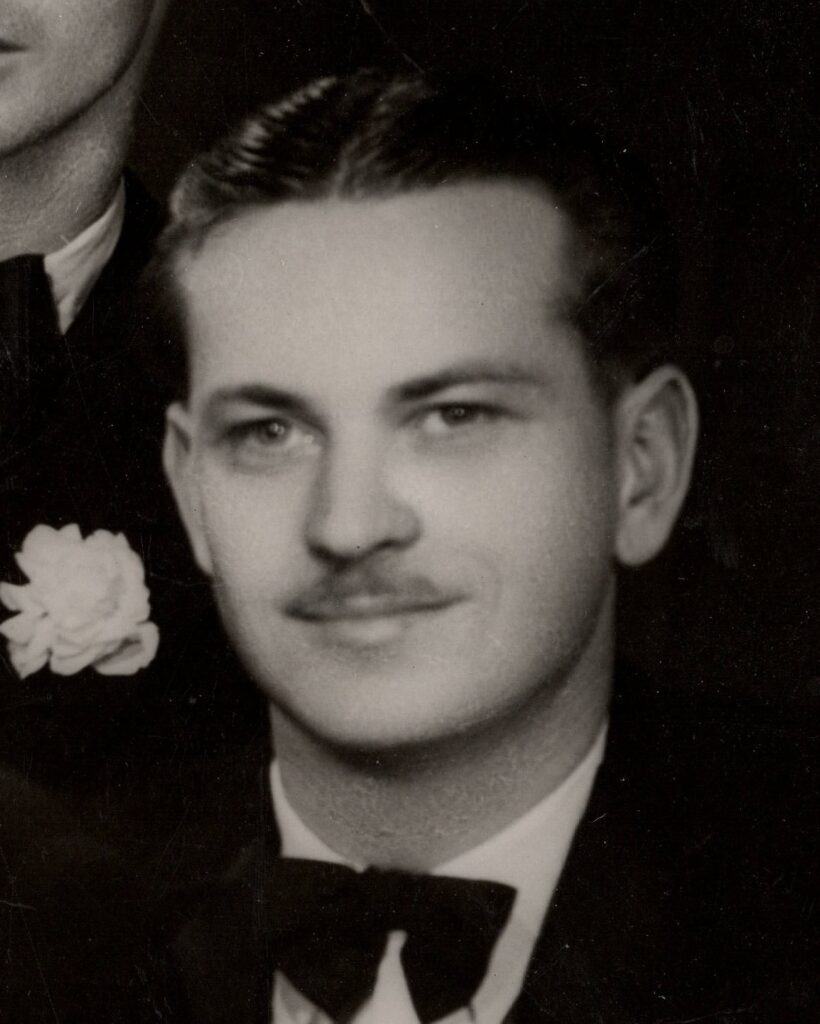
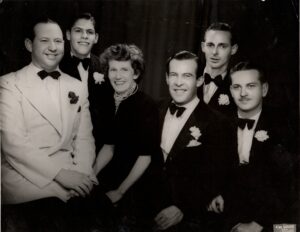
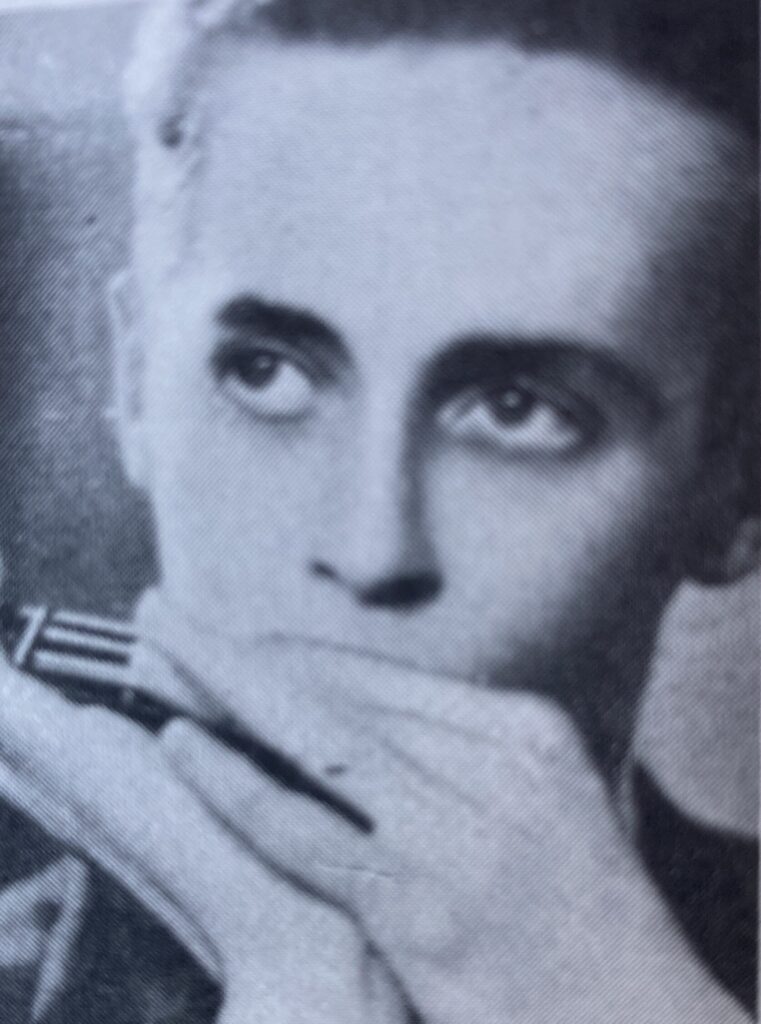
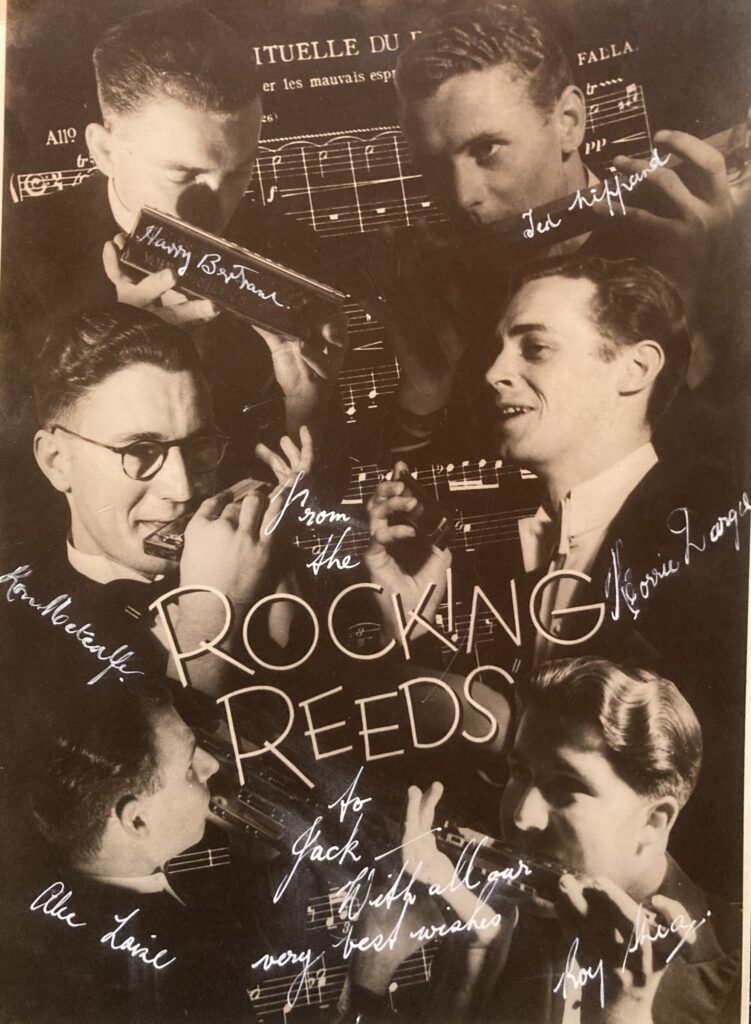
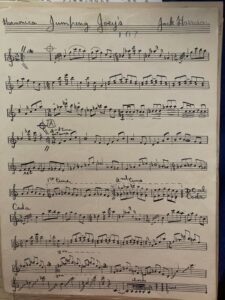
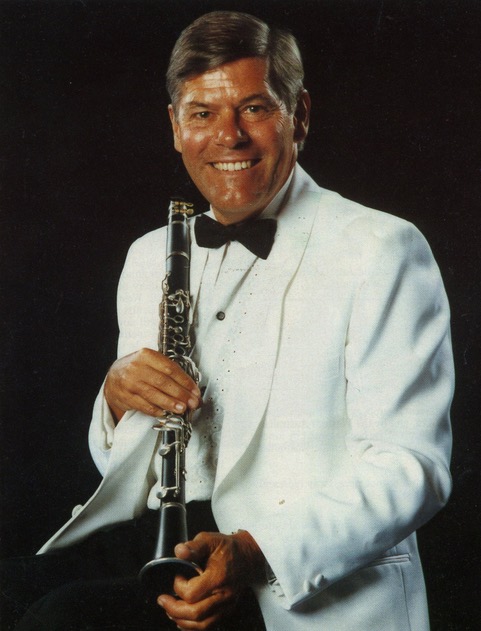
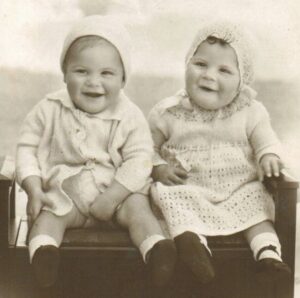
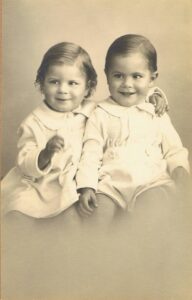
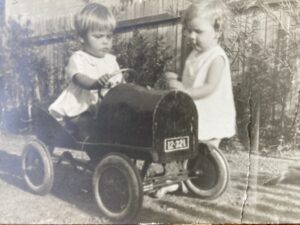
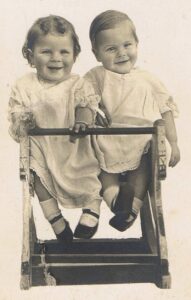
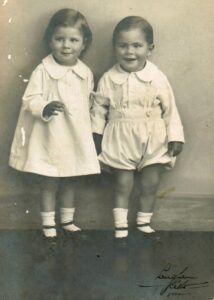
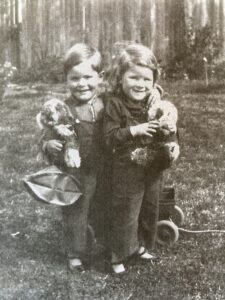
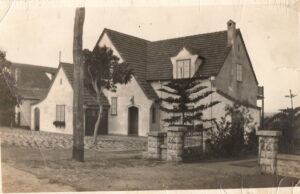
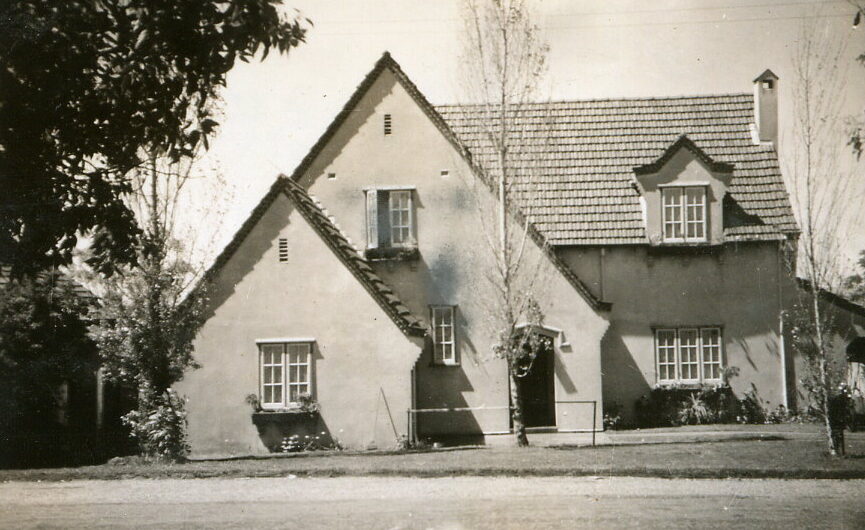
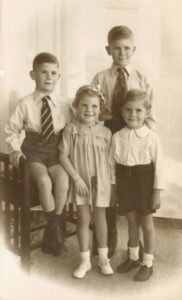
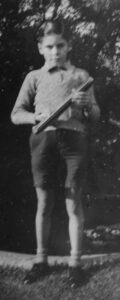 In 1937 Jack and Jill attended Hollywood Primary School for 6 months (corner Hampton and Williams Roads) and then Nedlands State School. Jill remembers having to play “English Country Gardens” on the piano – alternating with Donald Thornton – to assist the children march back to class after assembly.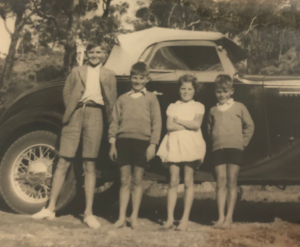
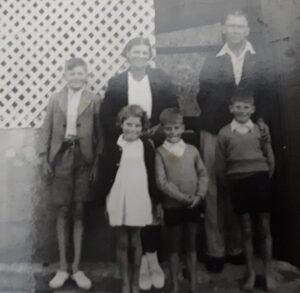
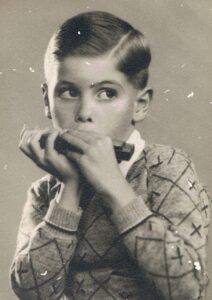
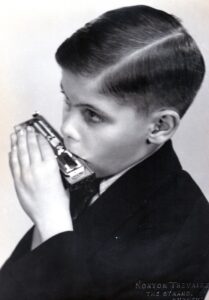
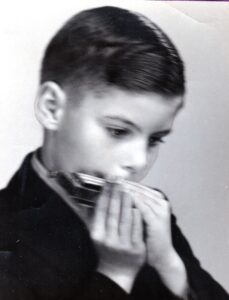
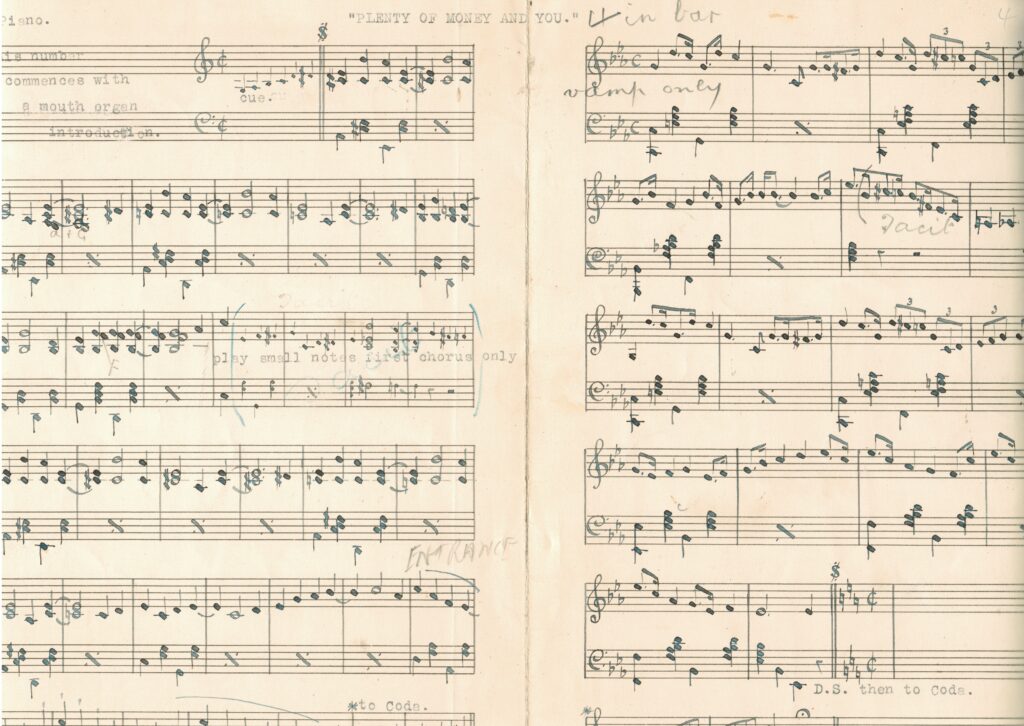
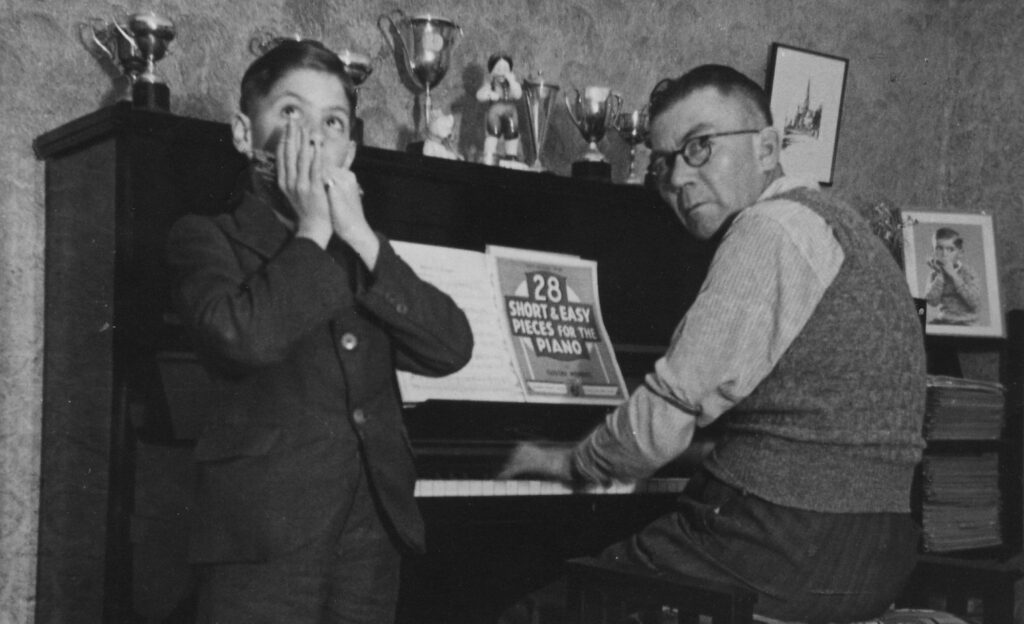
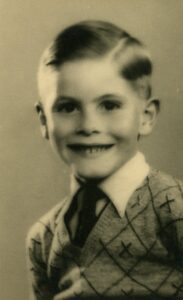
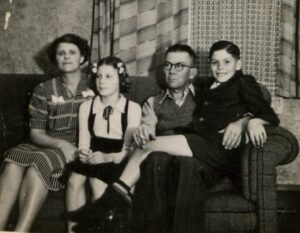
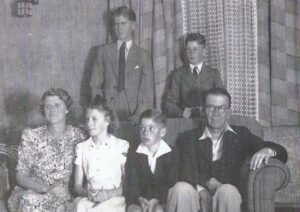
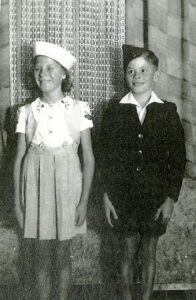
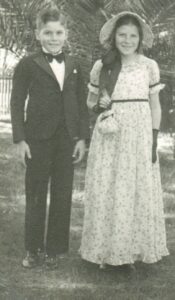
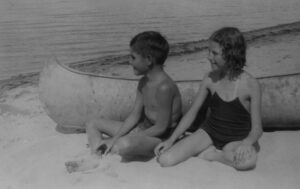
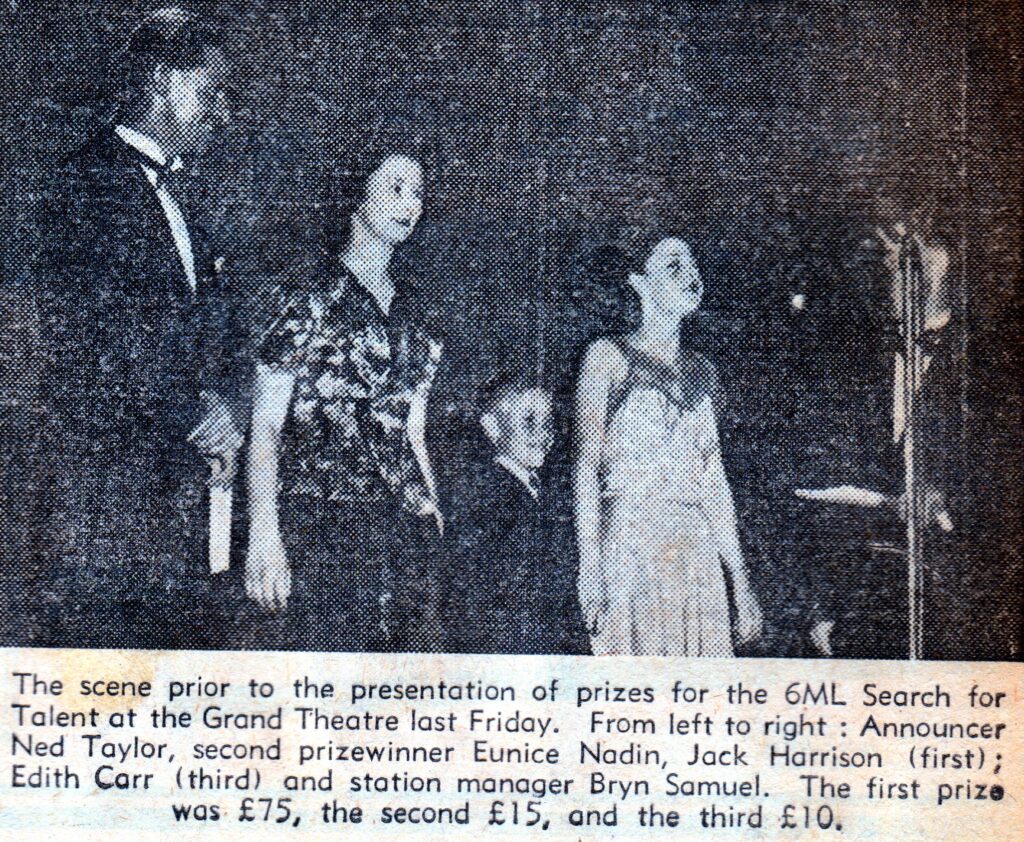
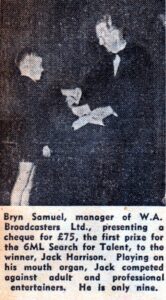
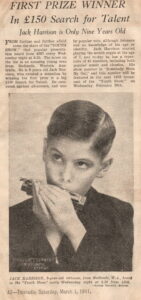 PEOPLE YOU LISTEN TO – In the front row of the Grand Theatre sat a number of newspaper boys. They had left their stands on the street corners to witness the presentation of prizes at the 6ML Search for Talent. The boys waited rather impatiently until proceedings began. At last the nine-year-old winner walked out to receive his prize of 75 pounds. However, he hadn’t gone very far when one of the smallest of the newsboys with all the assurance in the world yelled “I’ll see you later!”. The next successful competitor to walk on stage was a rather attractive girl. The small newsboy’s voice piped up again: “and I’ll see you later, too!”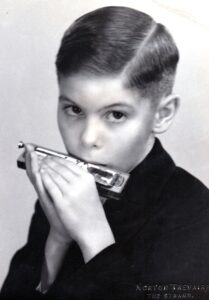
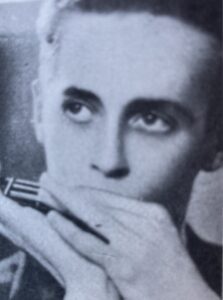
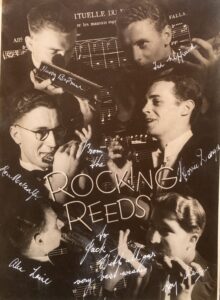 As a result of this win, Jack travelled with his father to Sydney, where Jack had lessons with famous harmonica soloist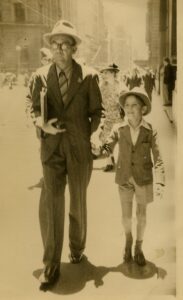
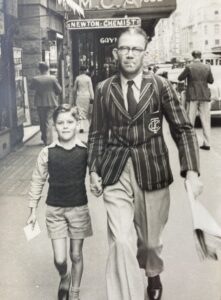
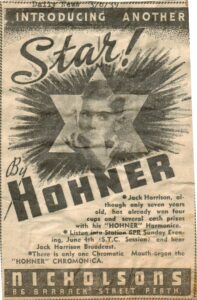
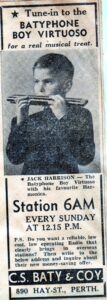 By now, Jack was a representative artist for both Hohner Harmonicas and locally made Batyphone radios.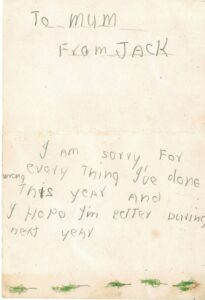
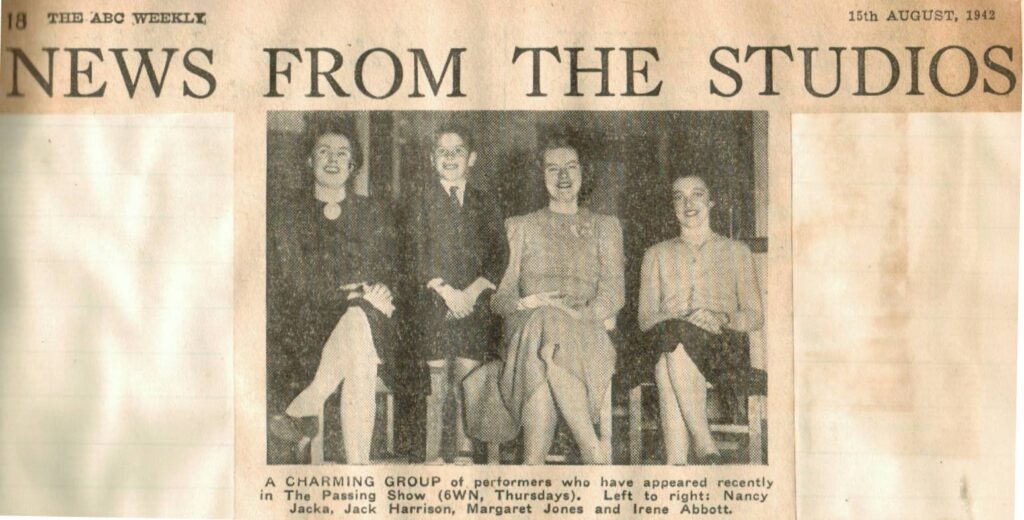
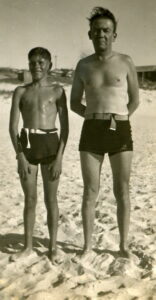
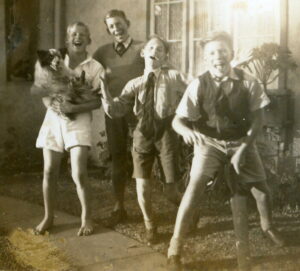
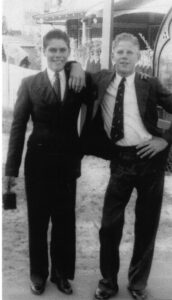
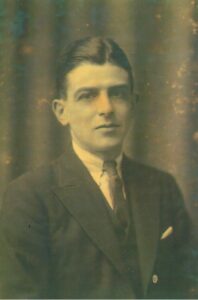 Jack began studying the clarinet with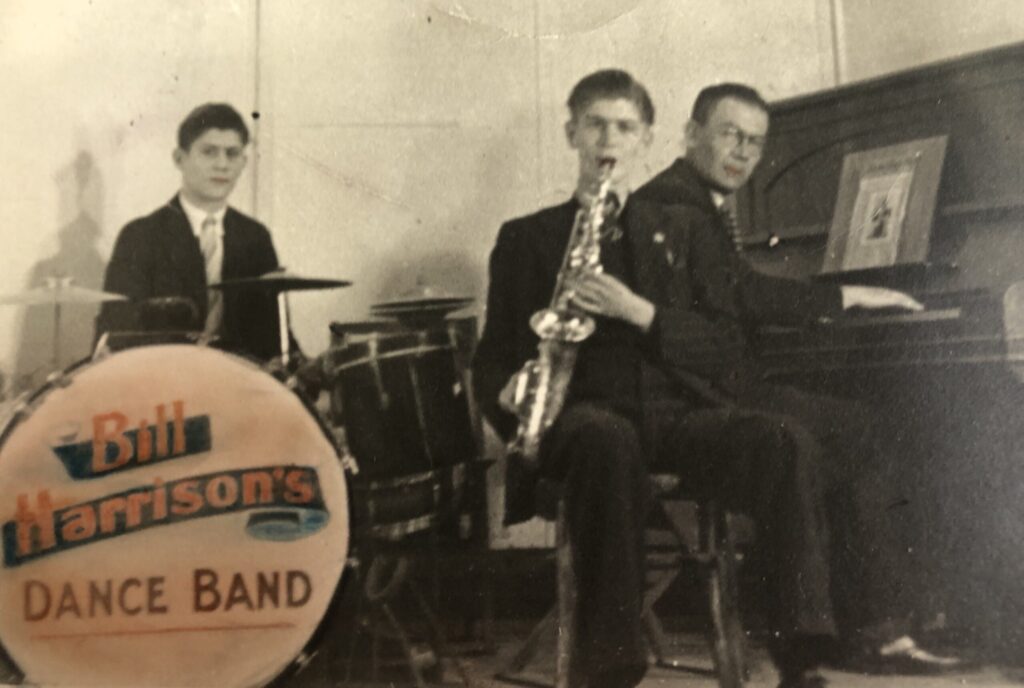
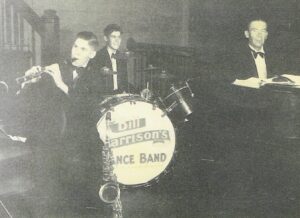
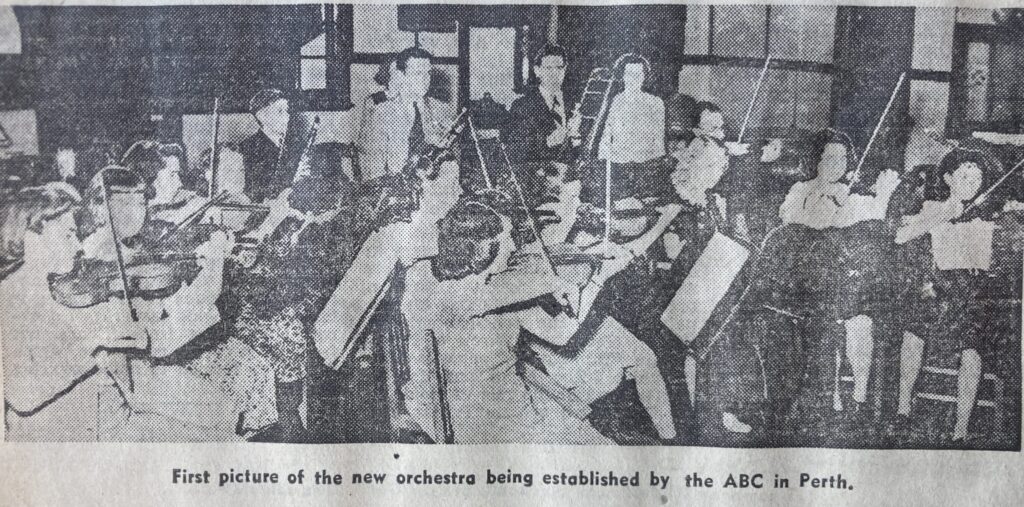
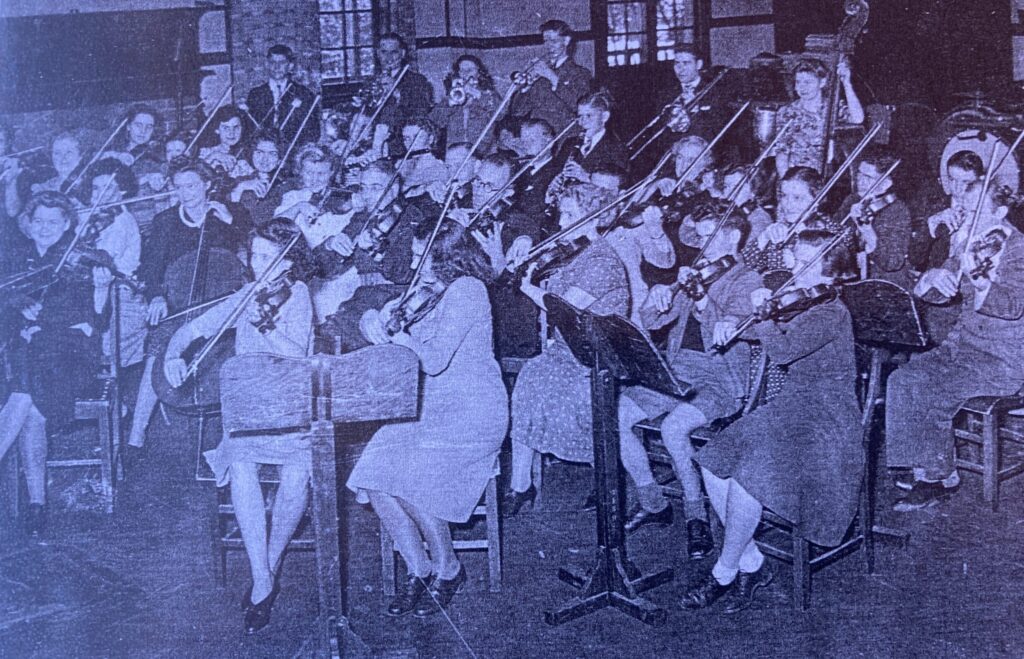
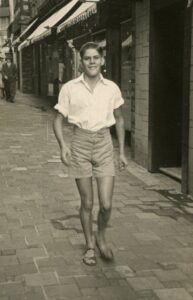
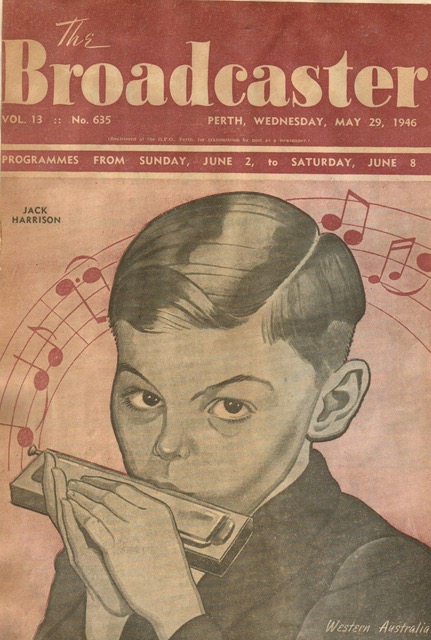
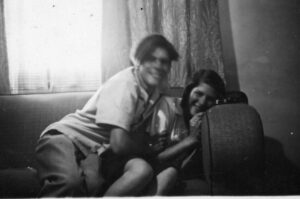
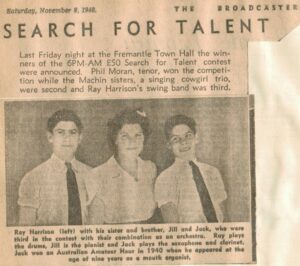
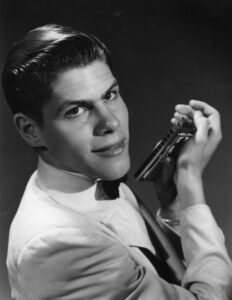
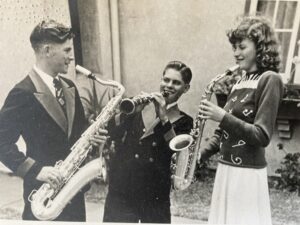
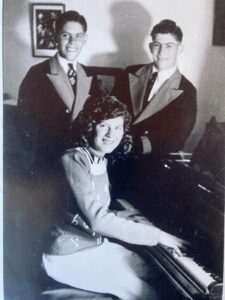
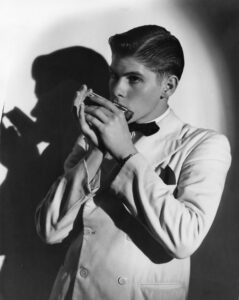
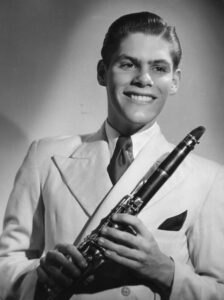
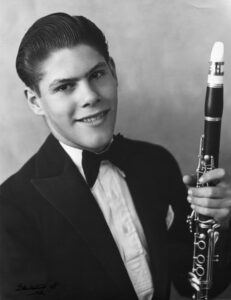
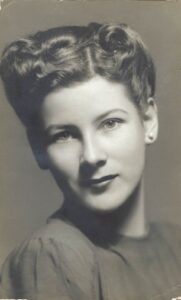
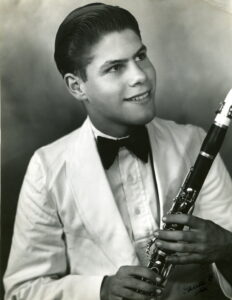
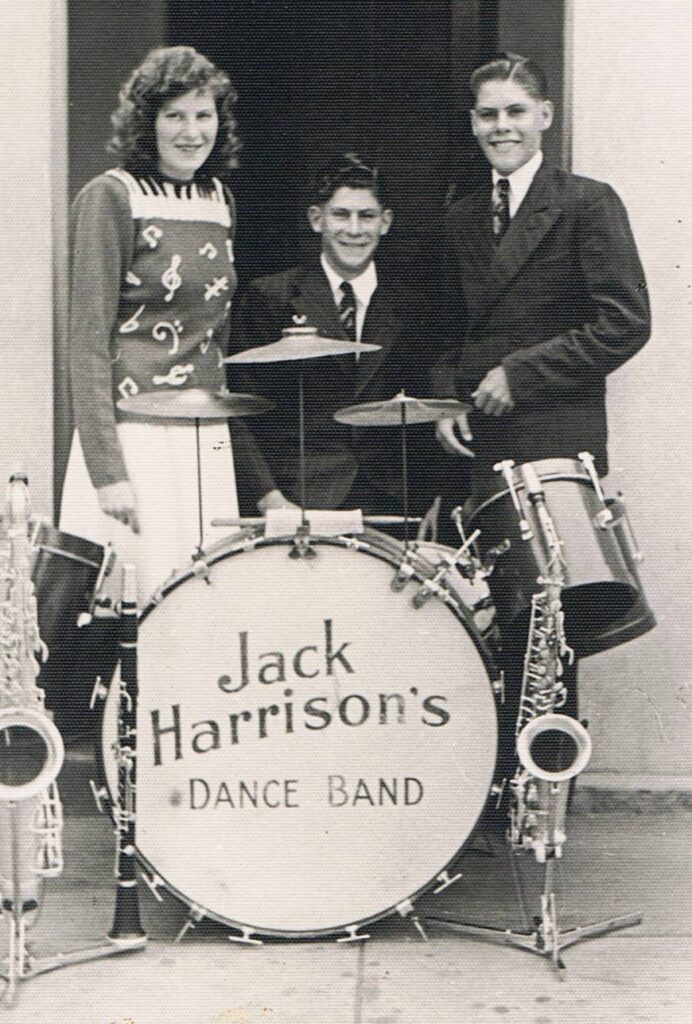
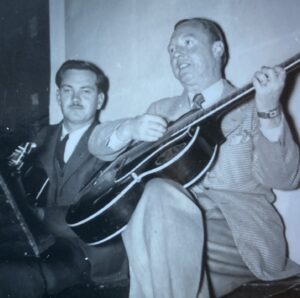
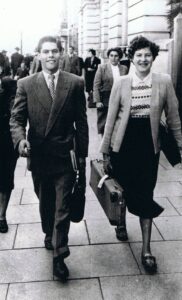
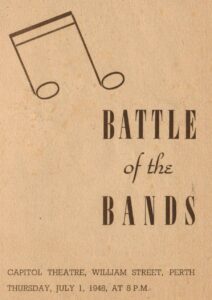
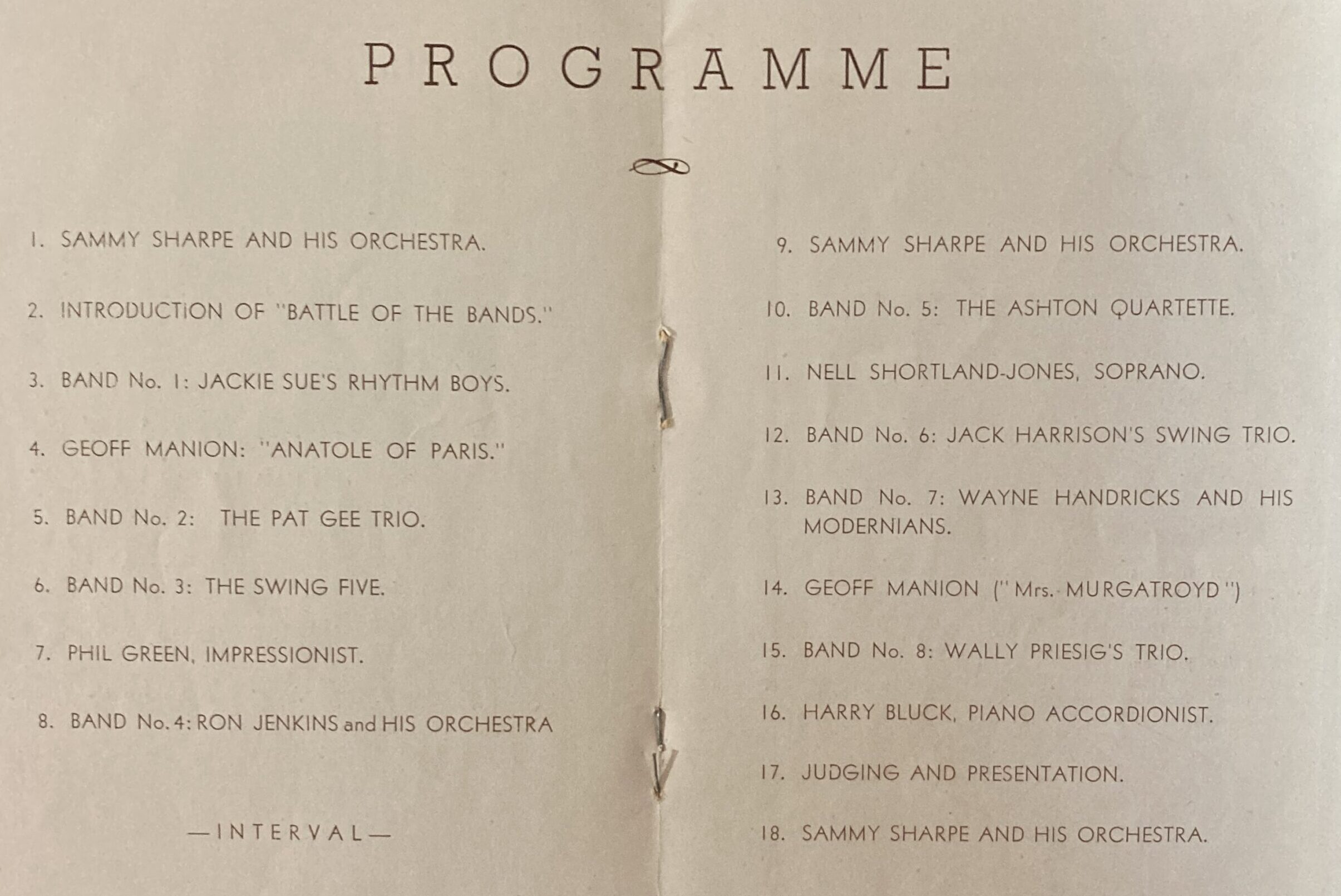
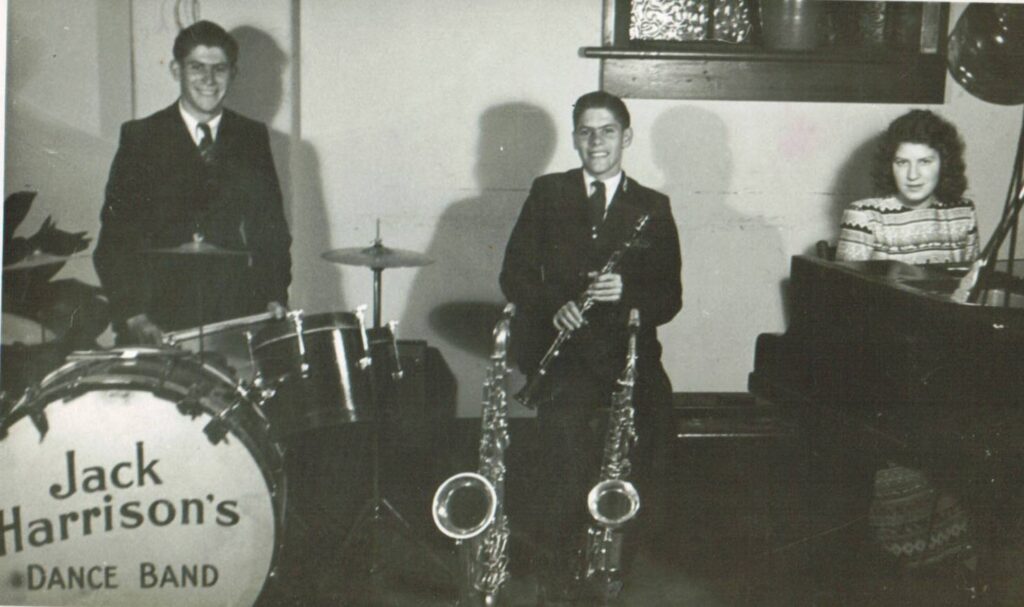
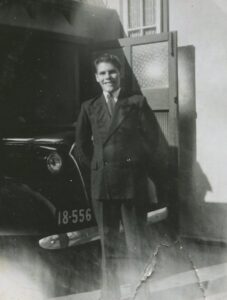
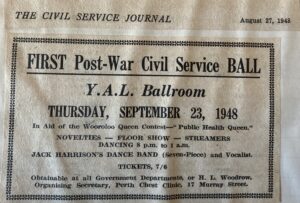
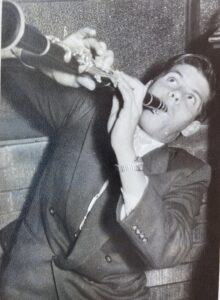
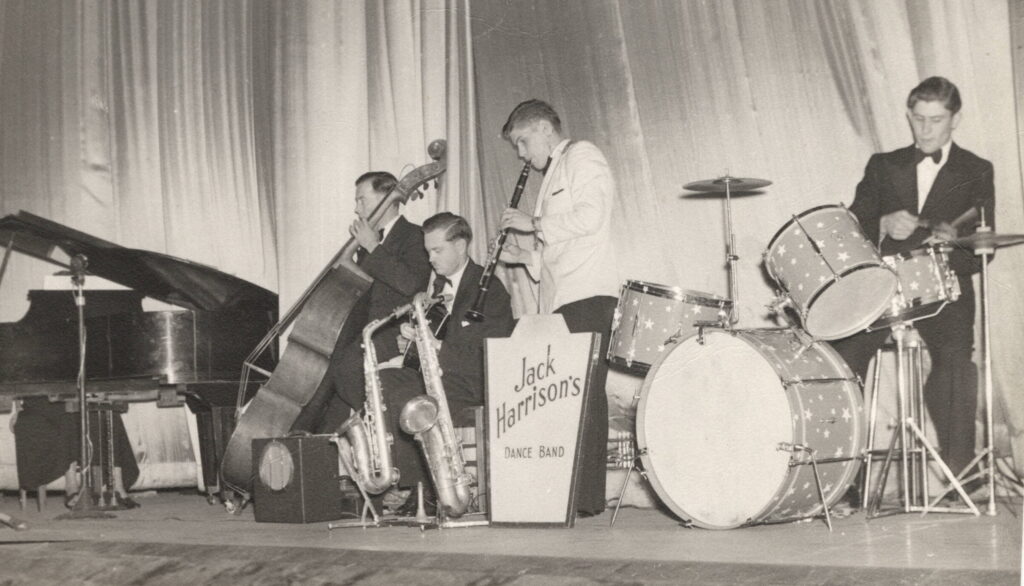
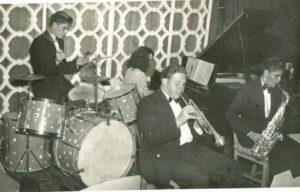
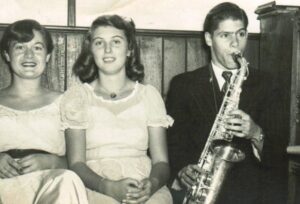
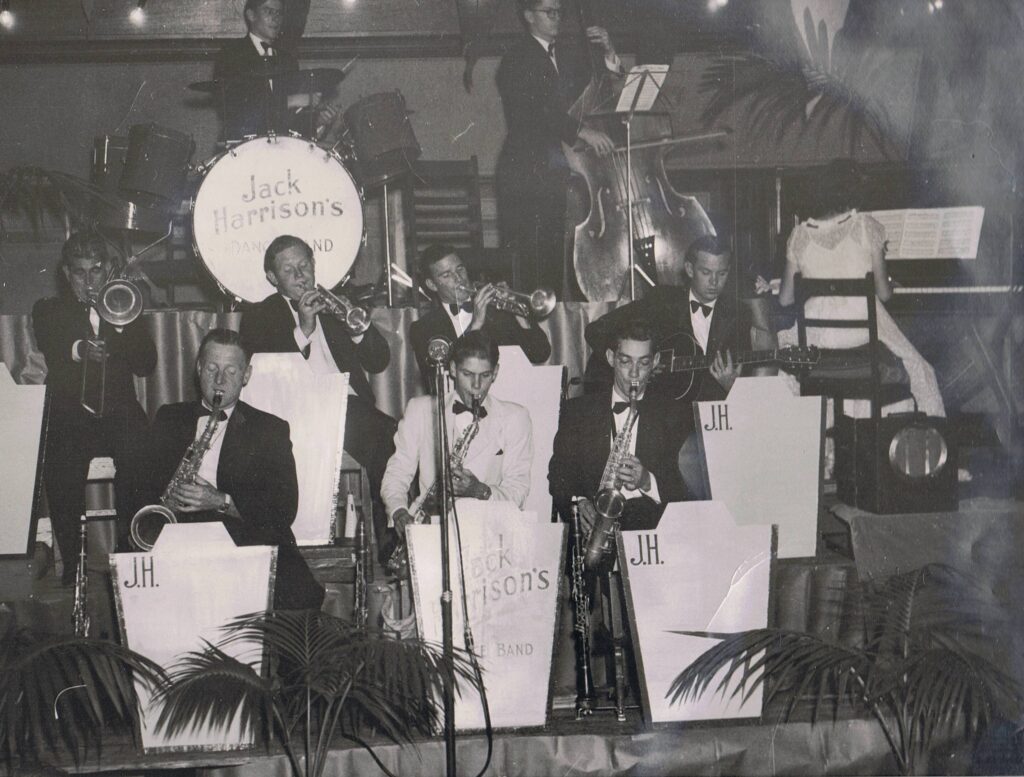
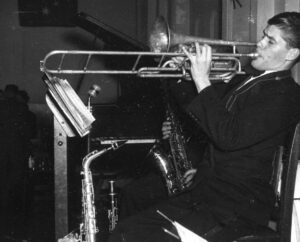
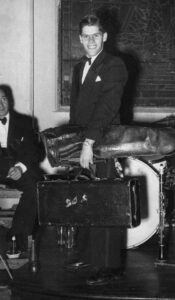
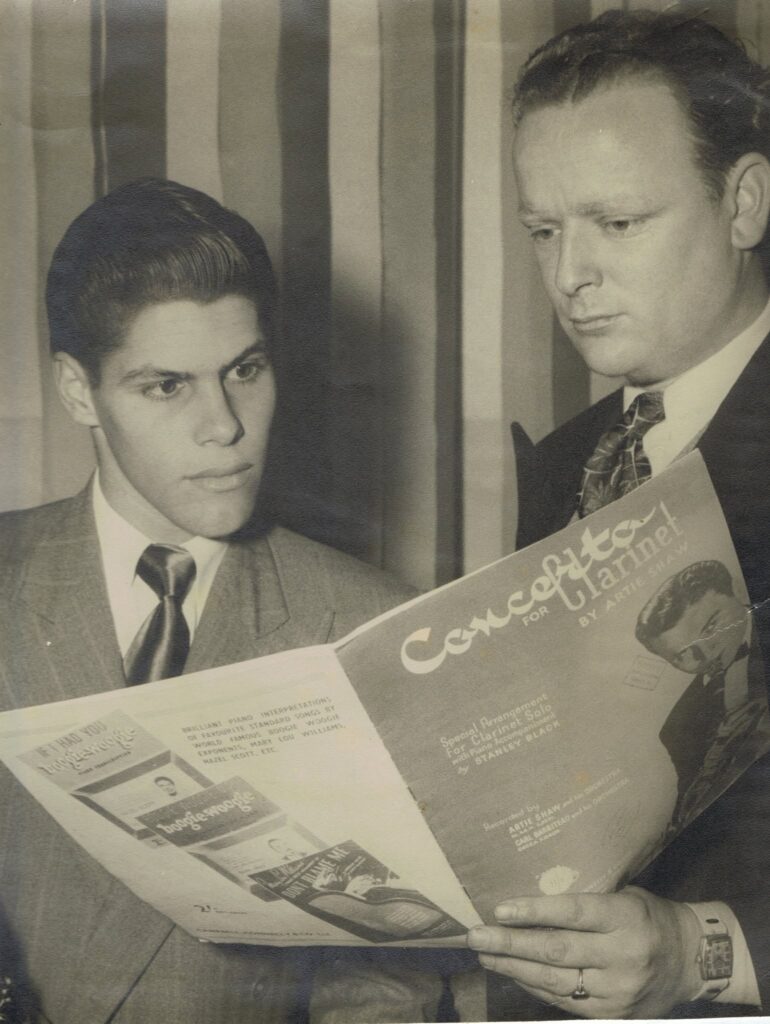
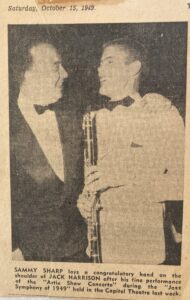
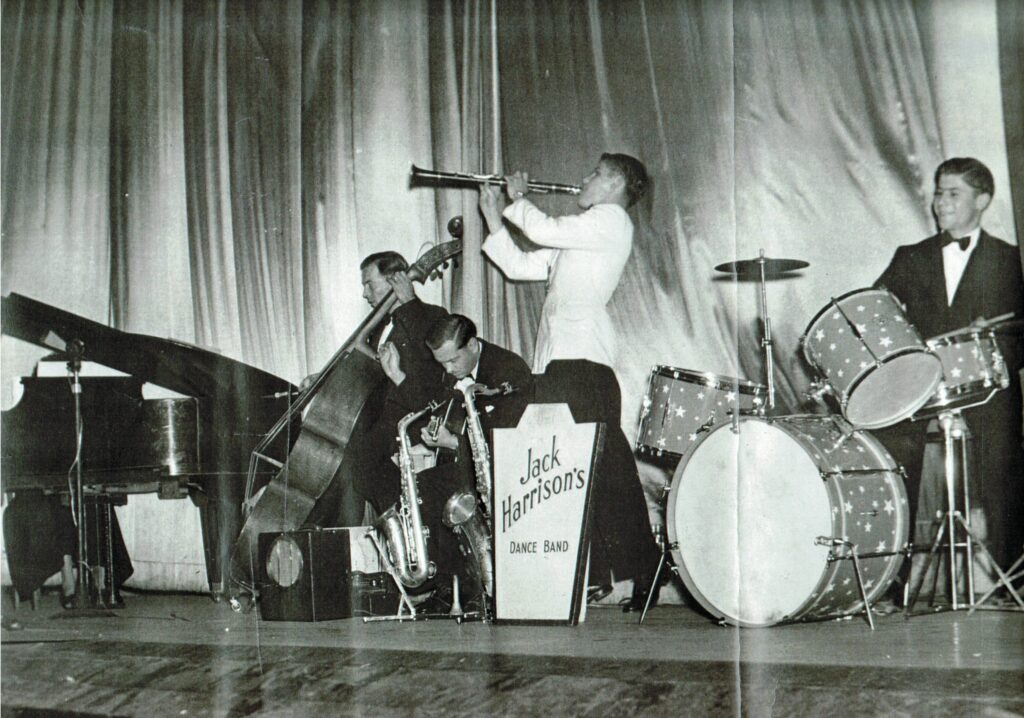
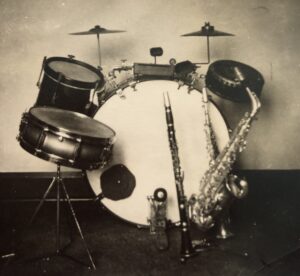
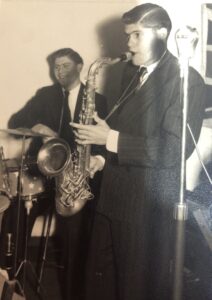
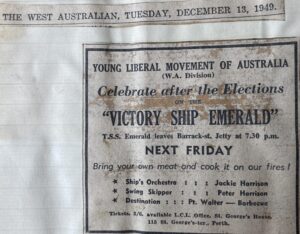
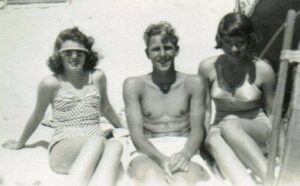
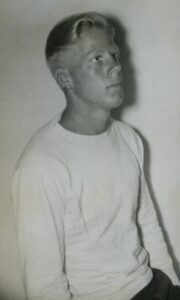
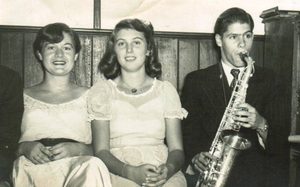
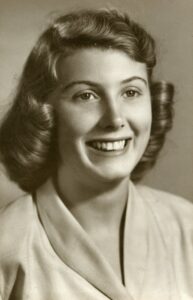
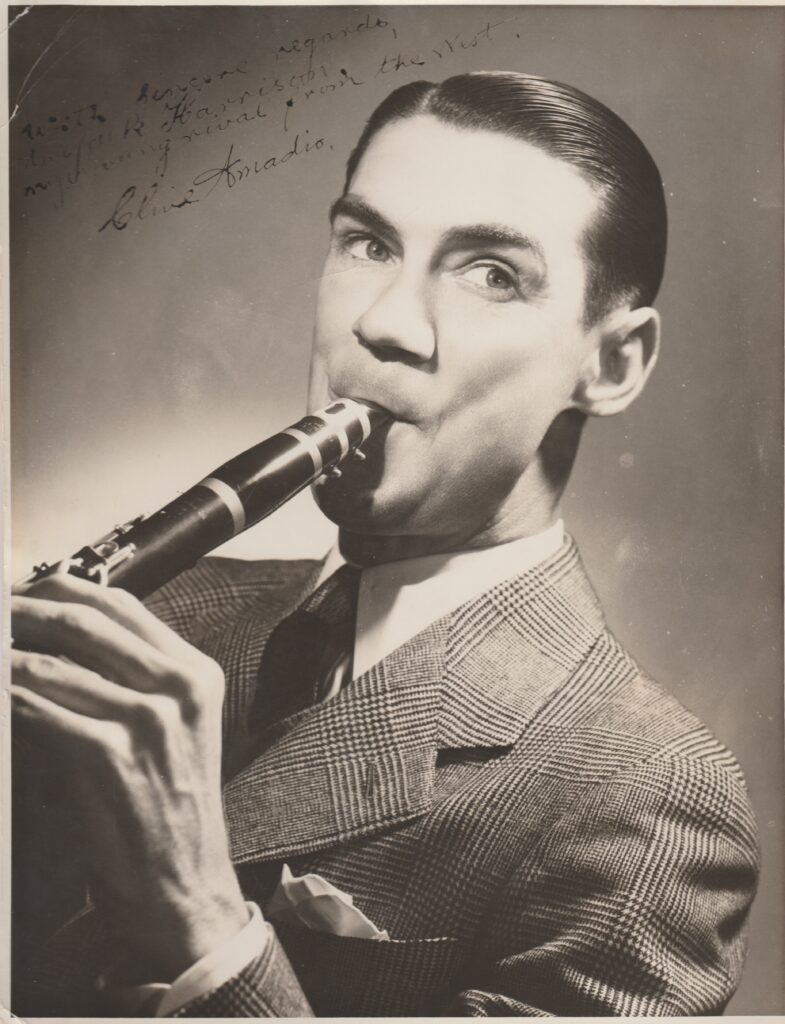
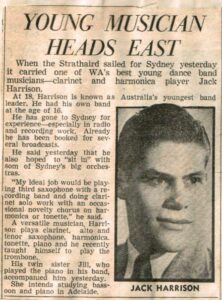
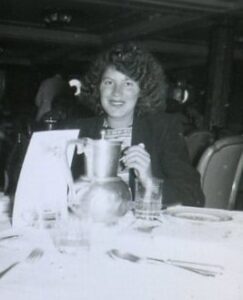 JACK: Sat 21st Jan 1950 (Adelaide departure)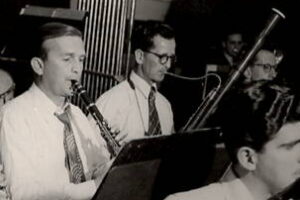
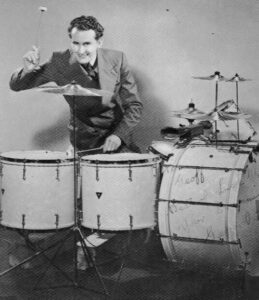
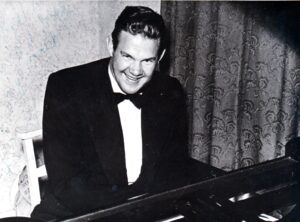
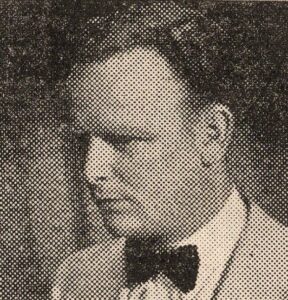
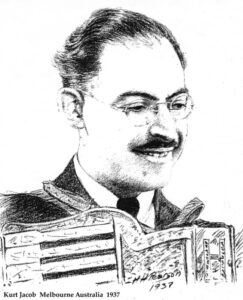
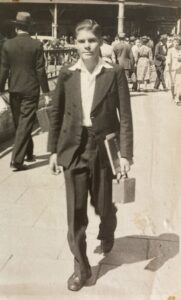
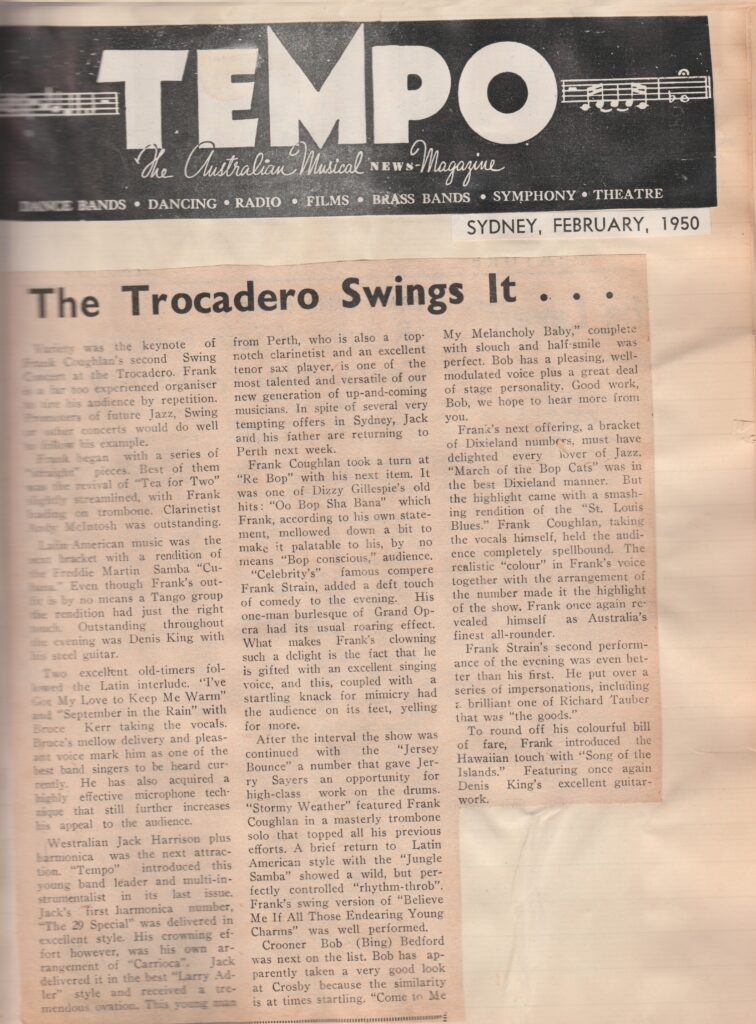
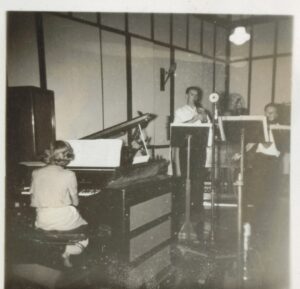
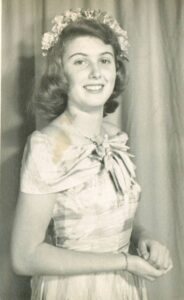
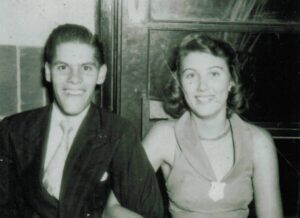
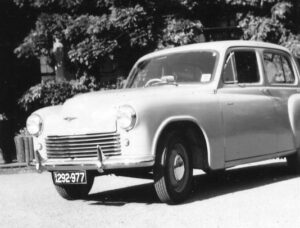
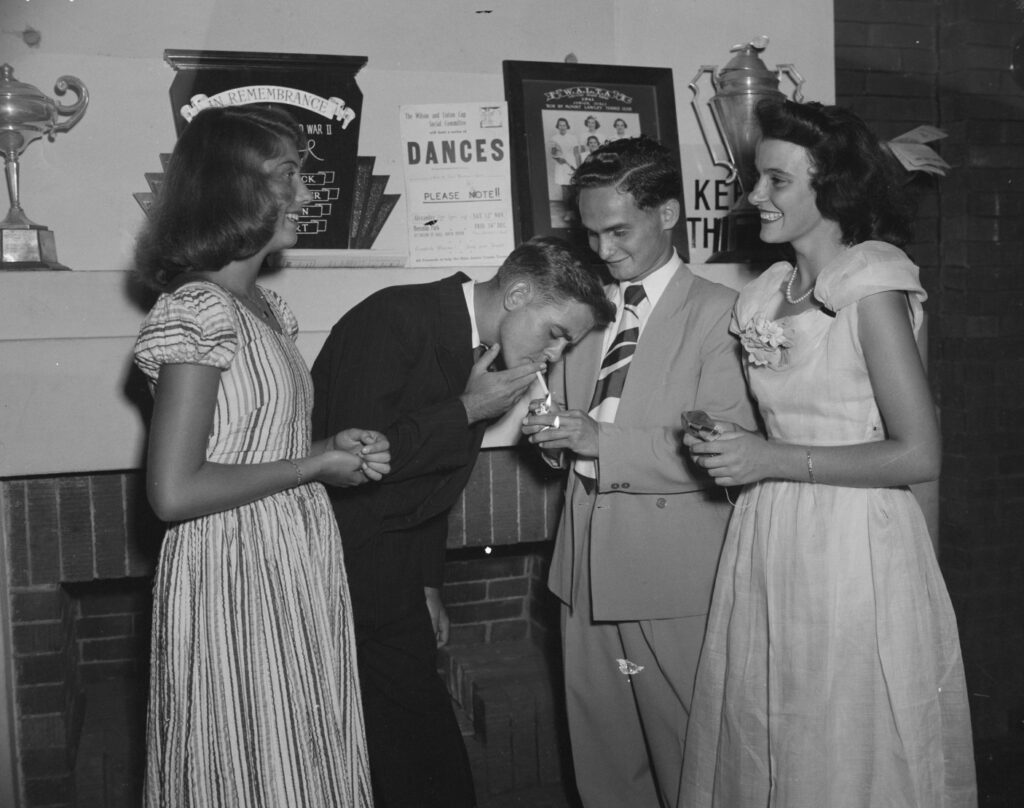
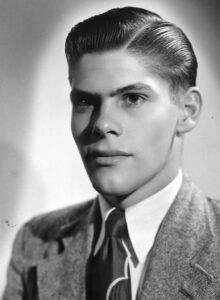
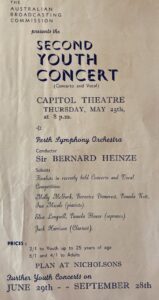
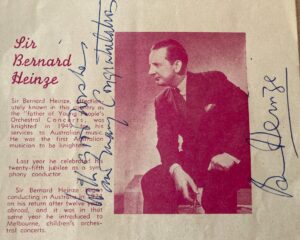
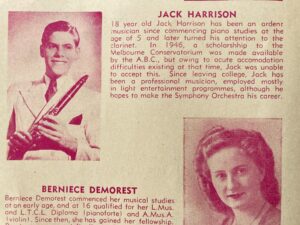 FINALISTS CHOSEN – A.B.C. Concerto And Vocal Contest – (By ‘”Tactus.”)
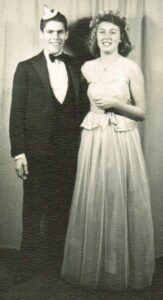
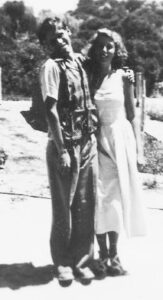
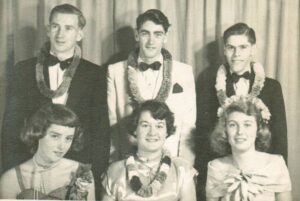
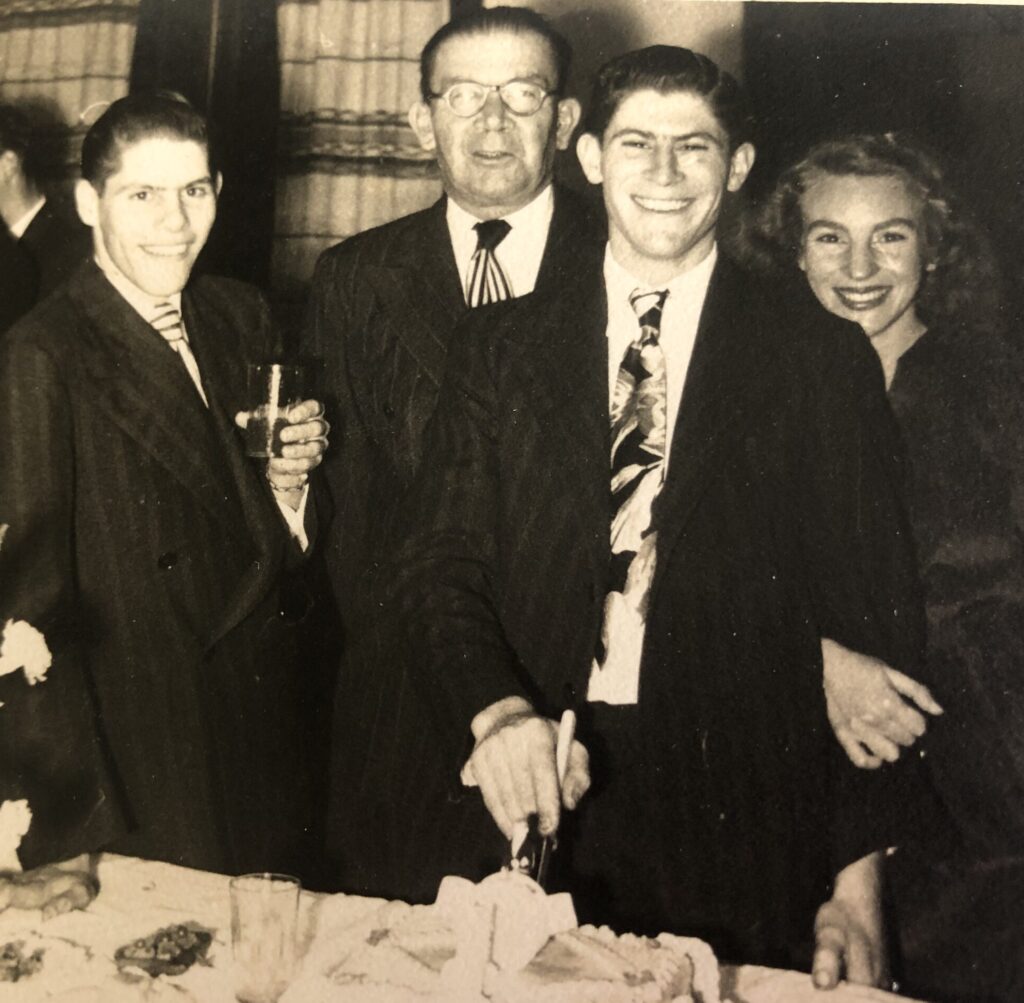
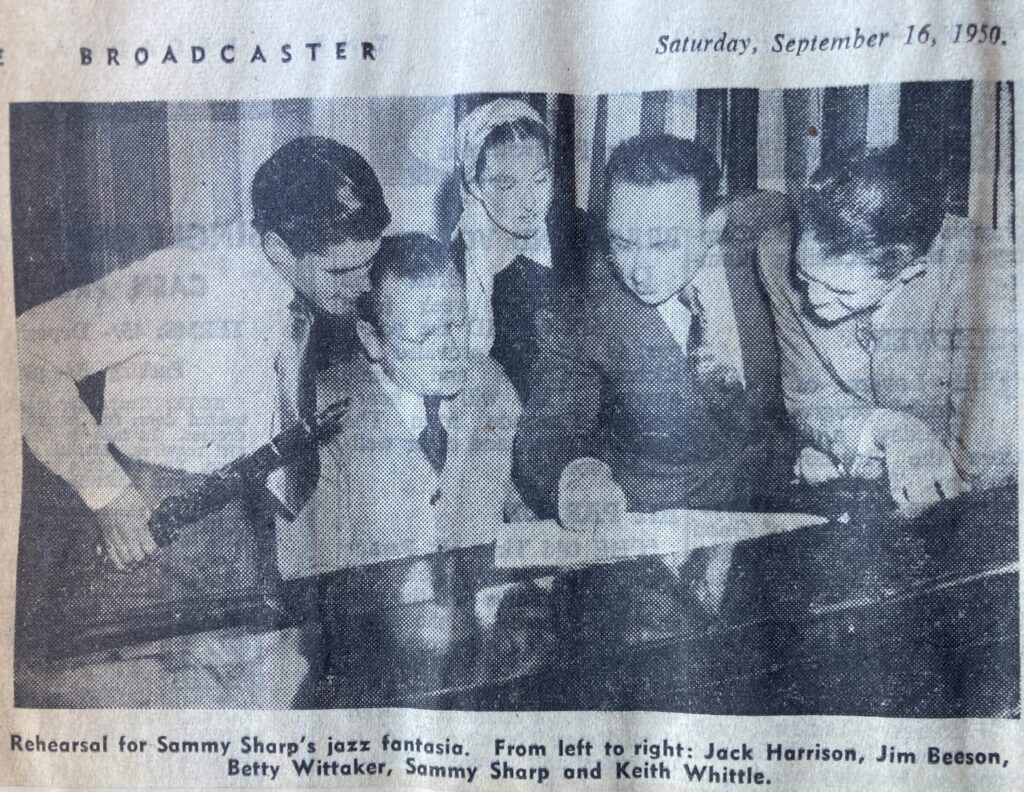
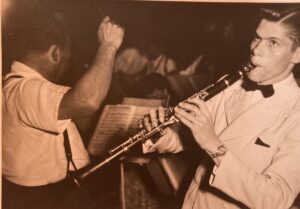
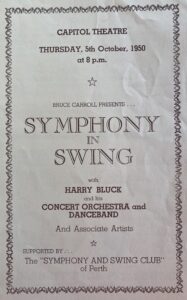
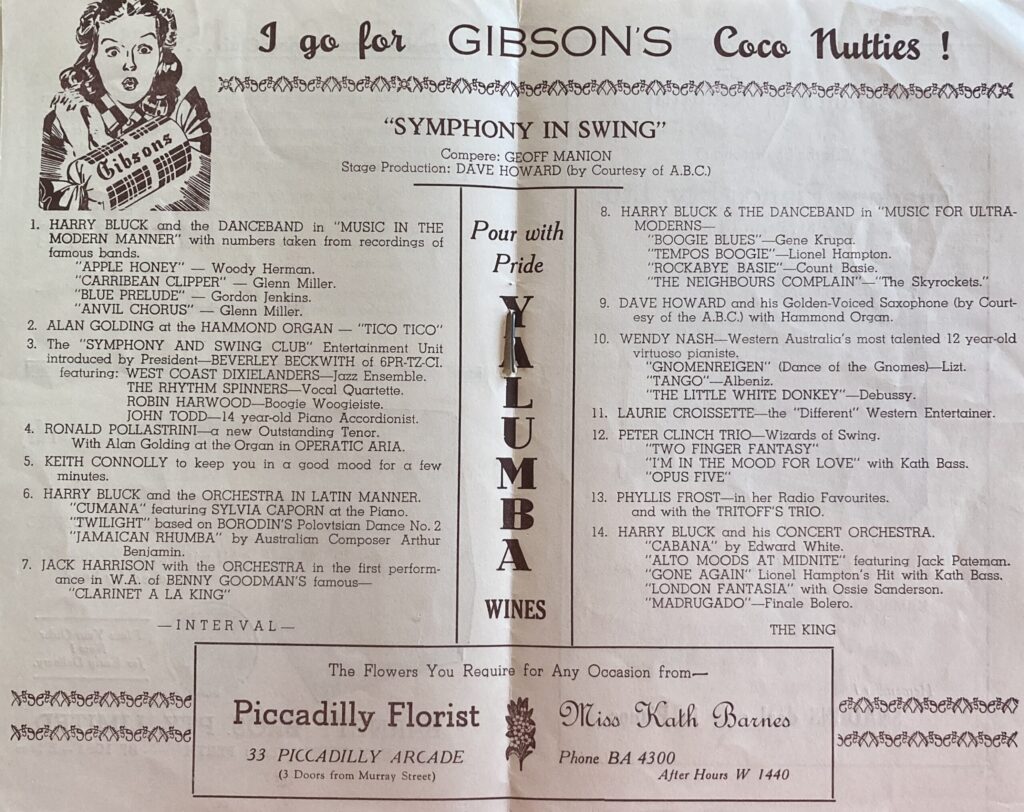
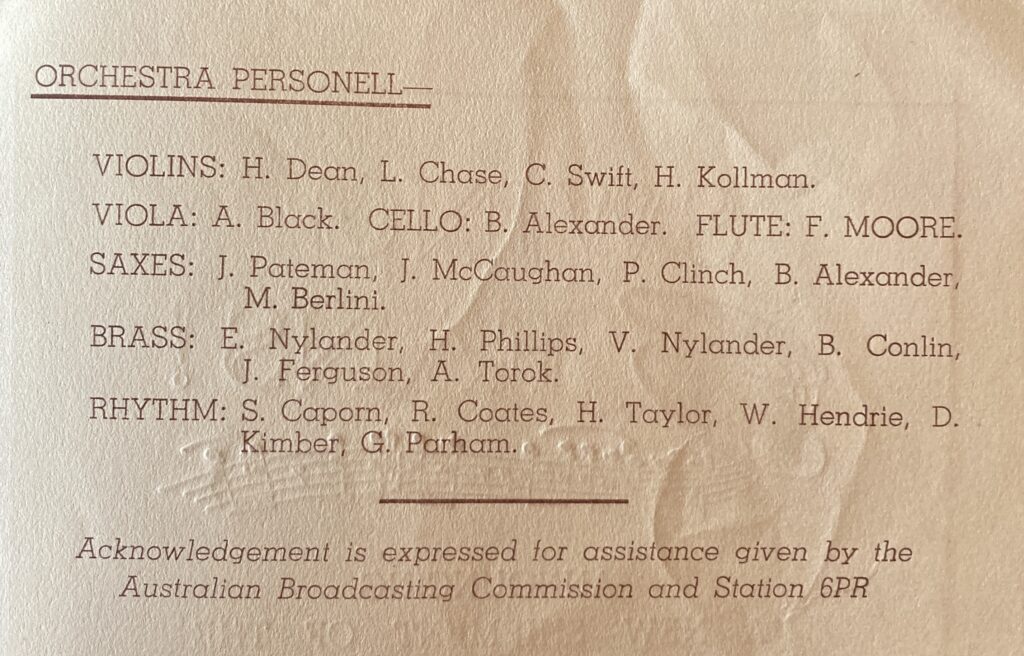
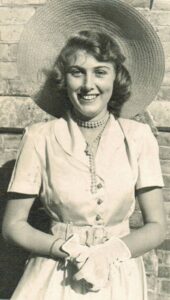
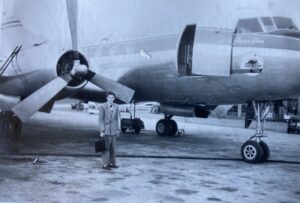
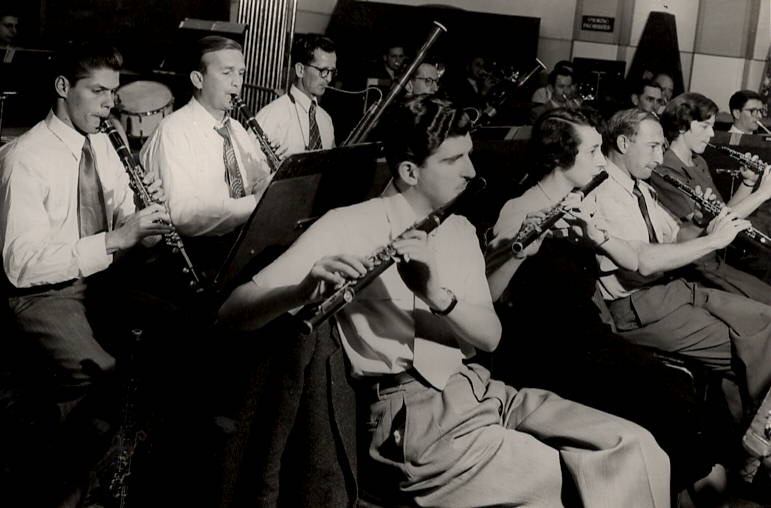
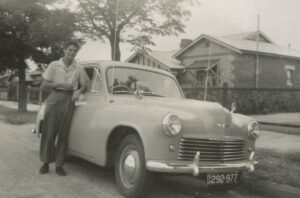
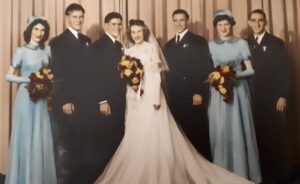
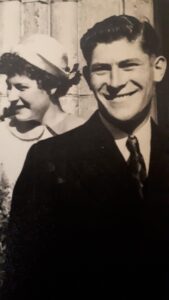
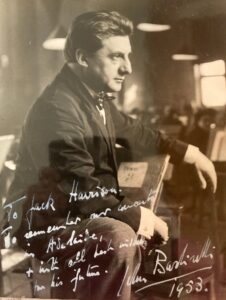
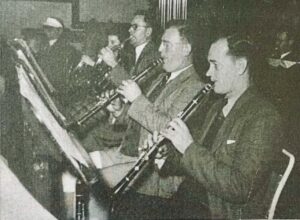
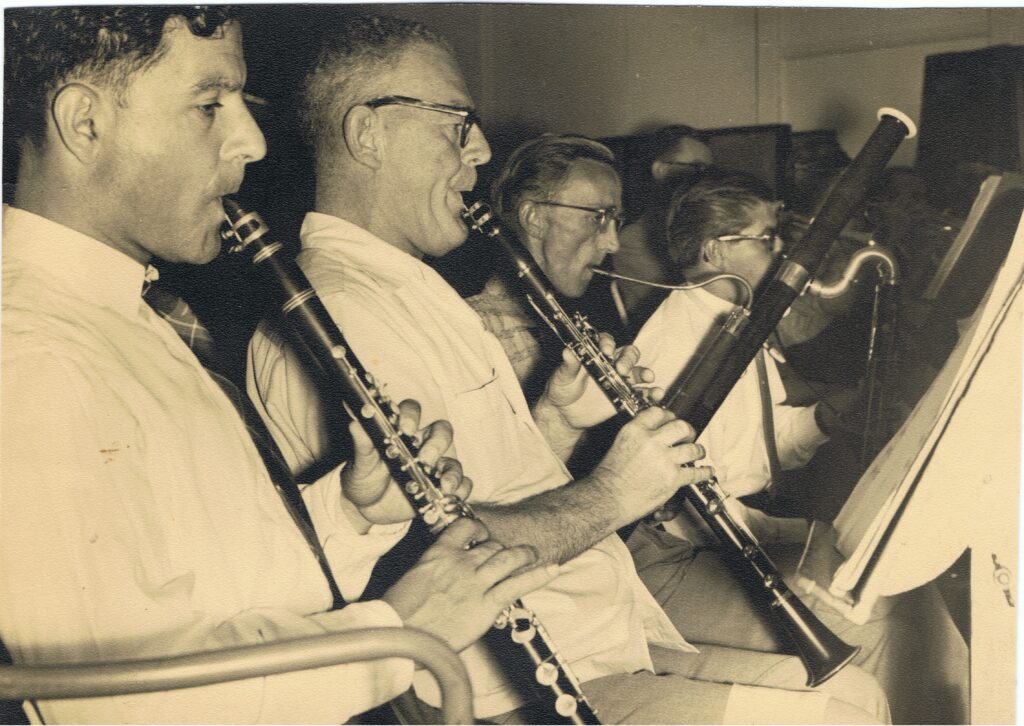
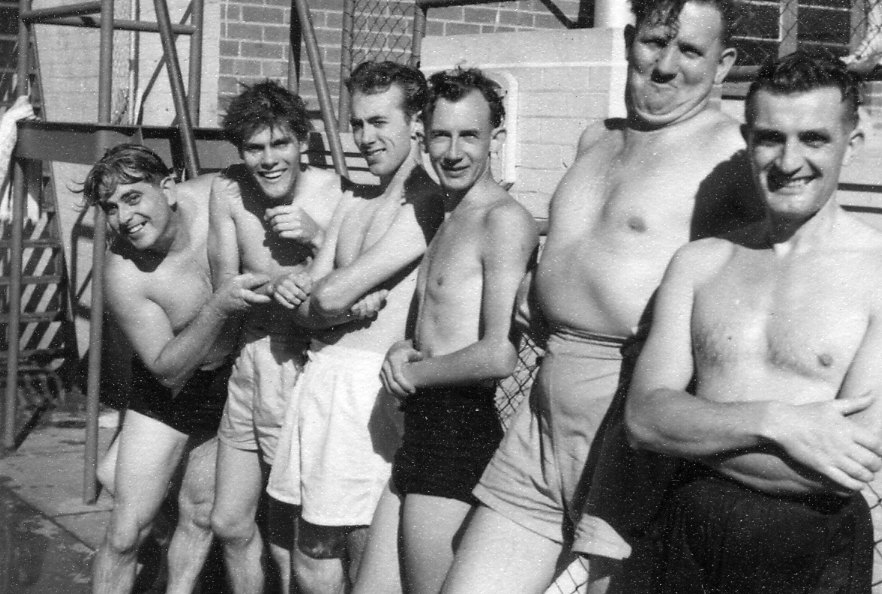
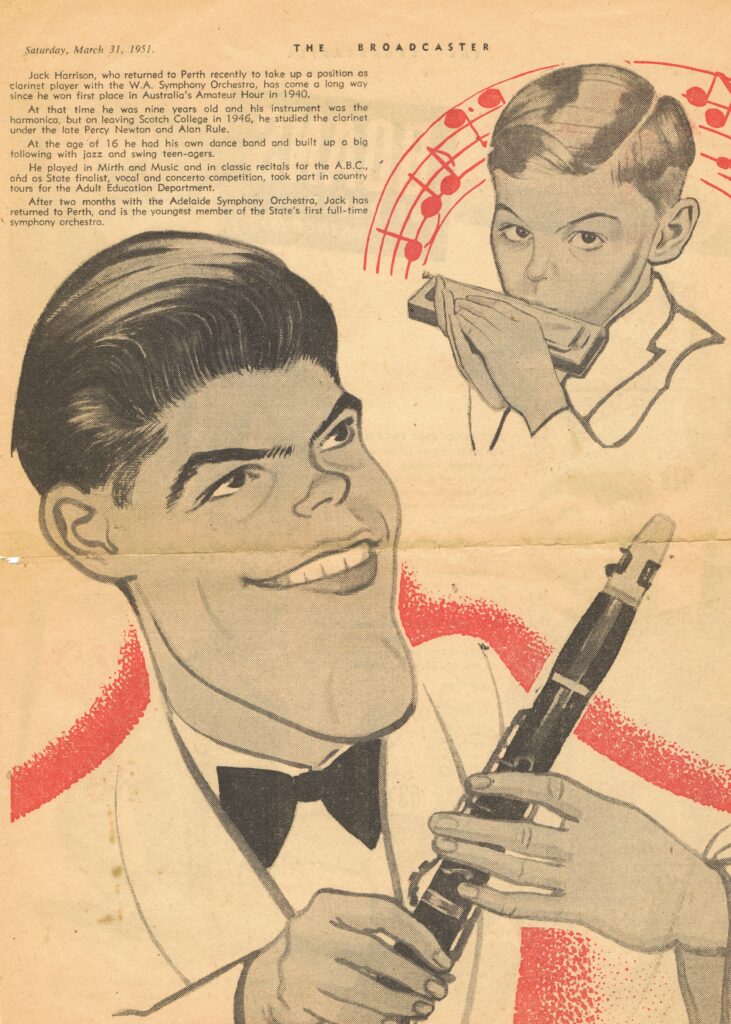
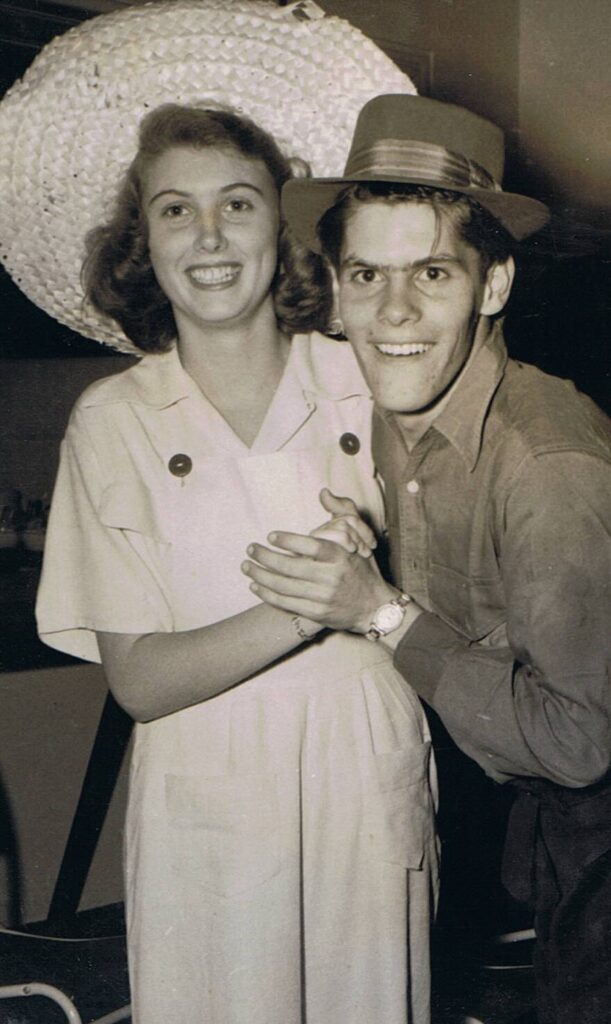
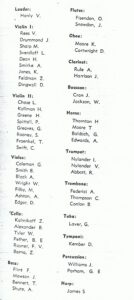
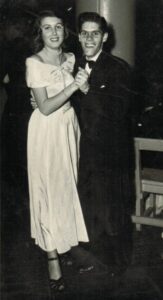
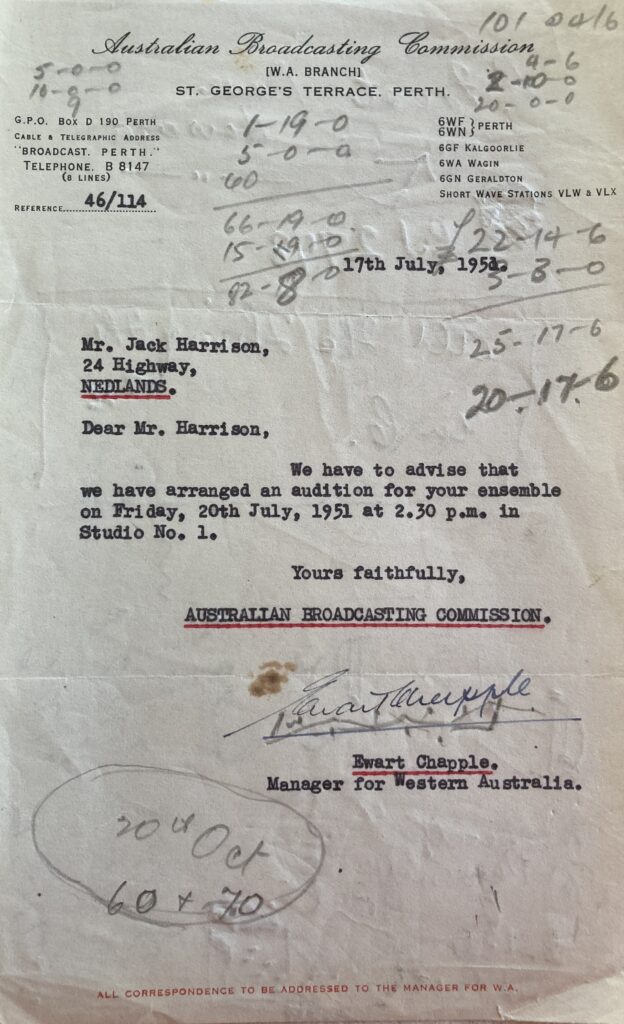
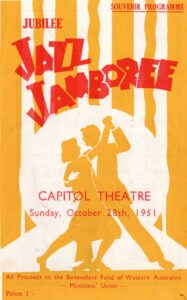
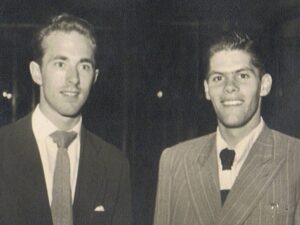
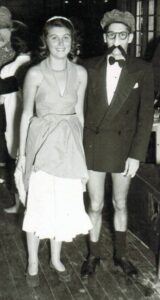
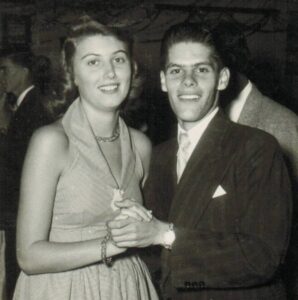
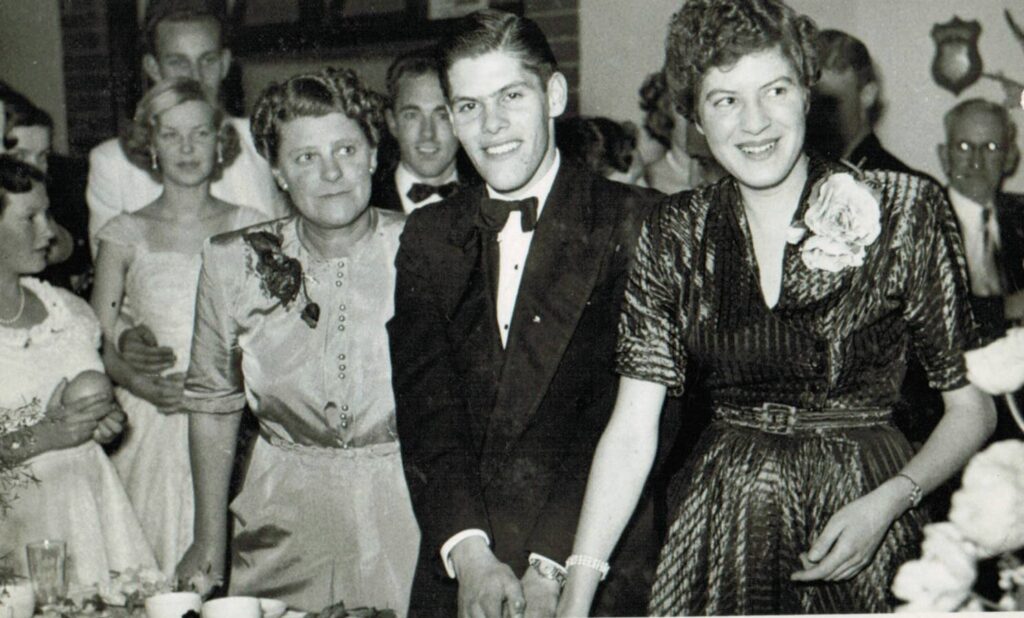
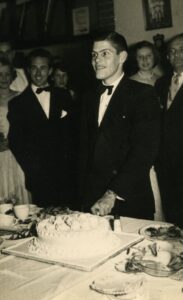
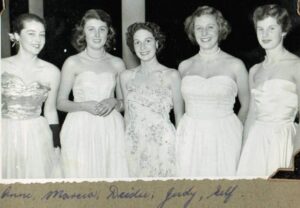
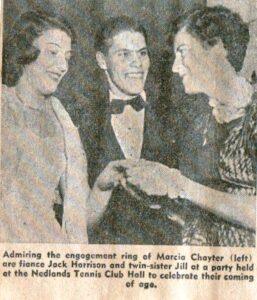
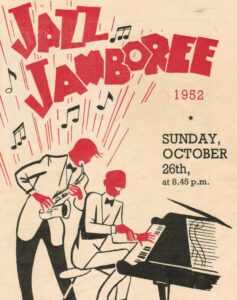
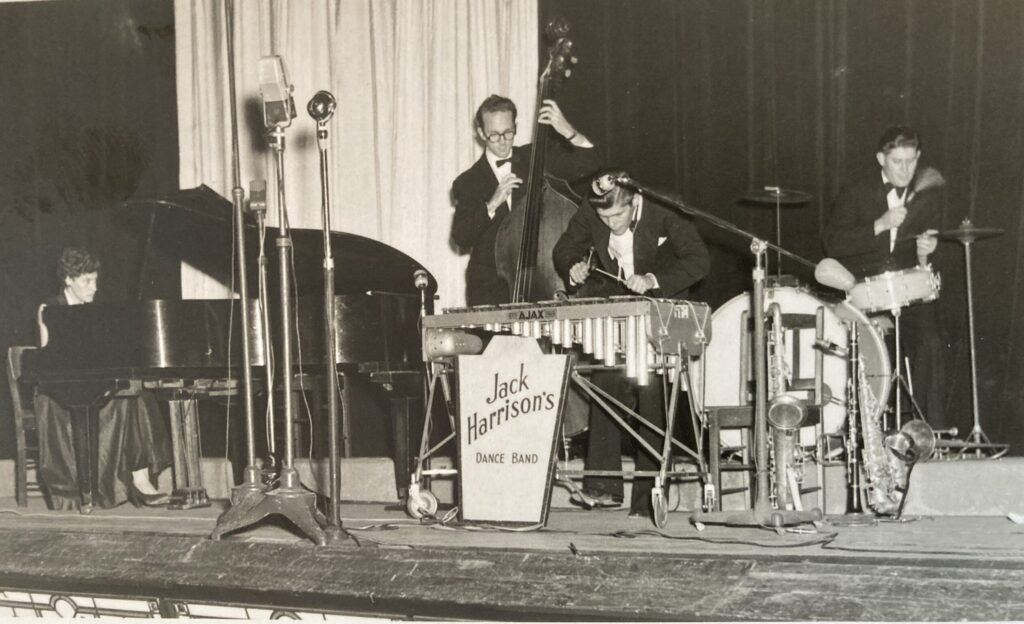
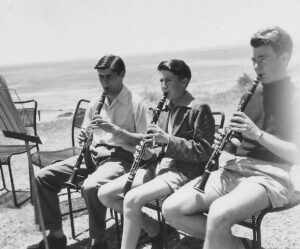
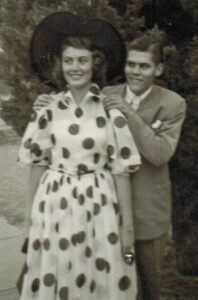
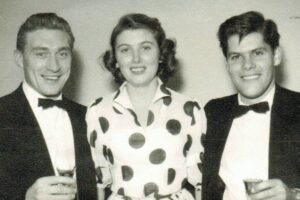
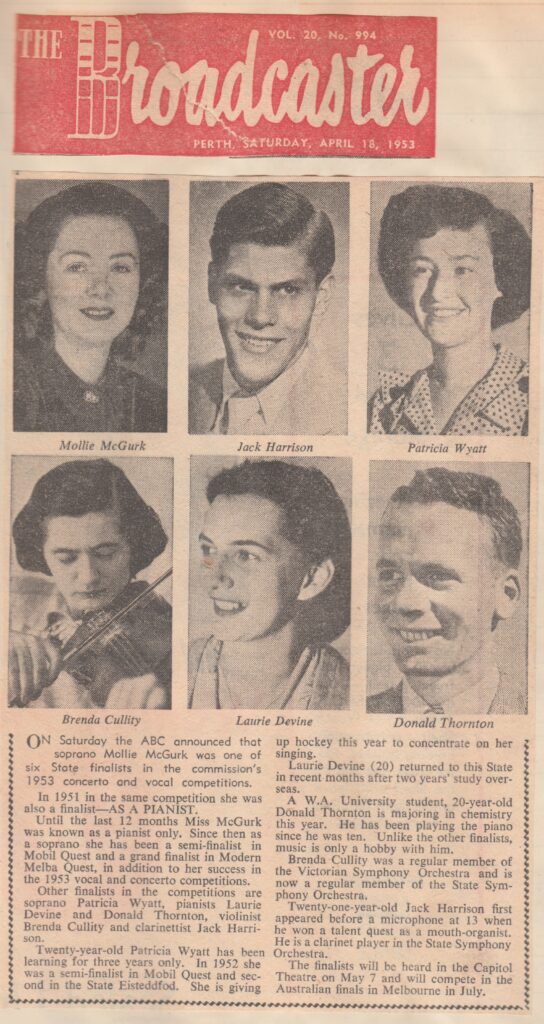
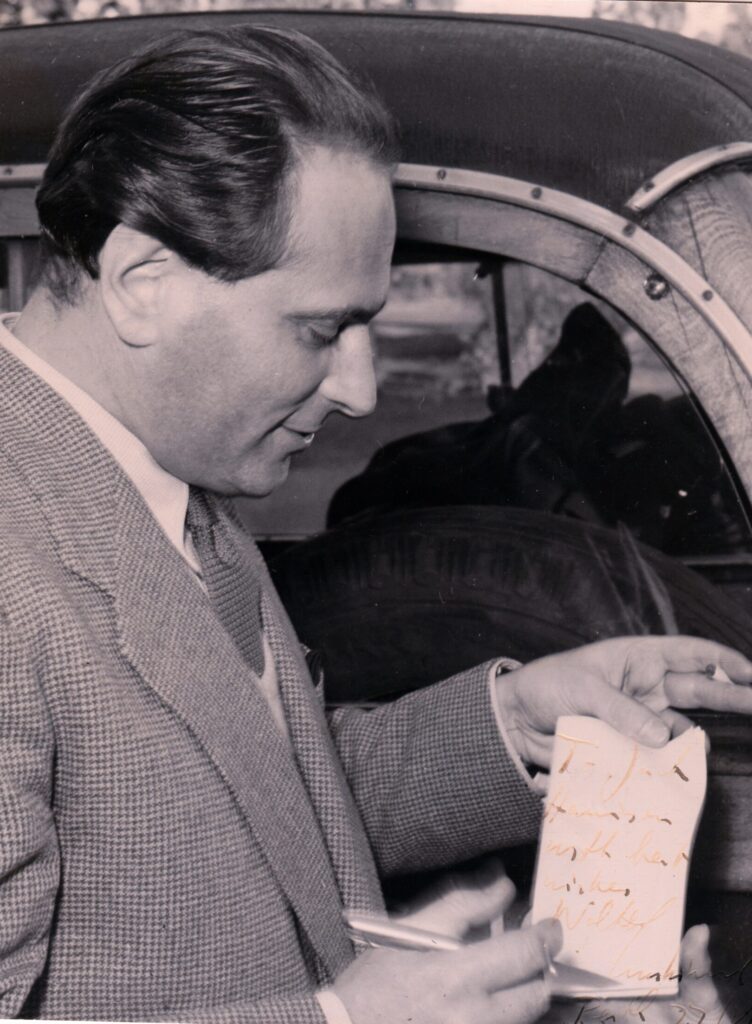
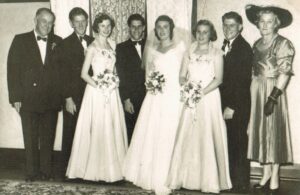
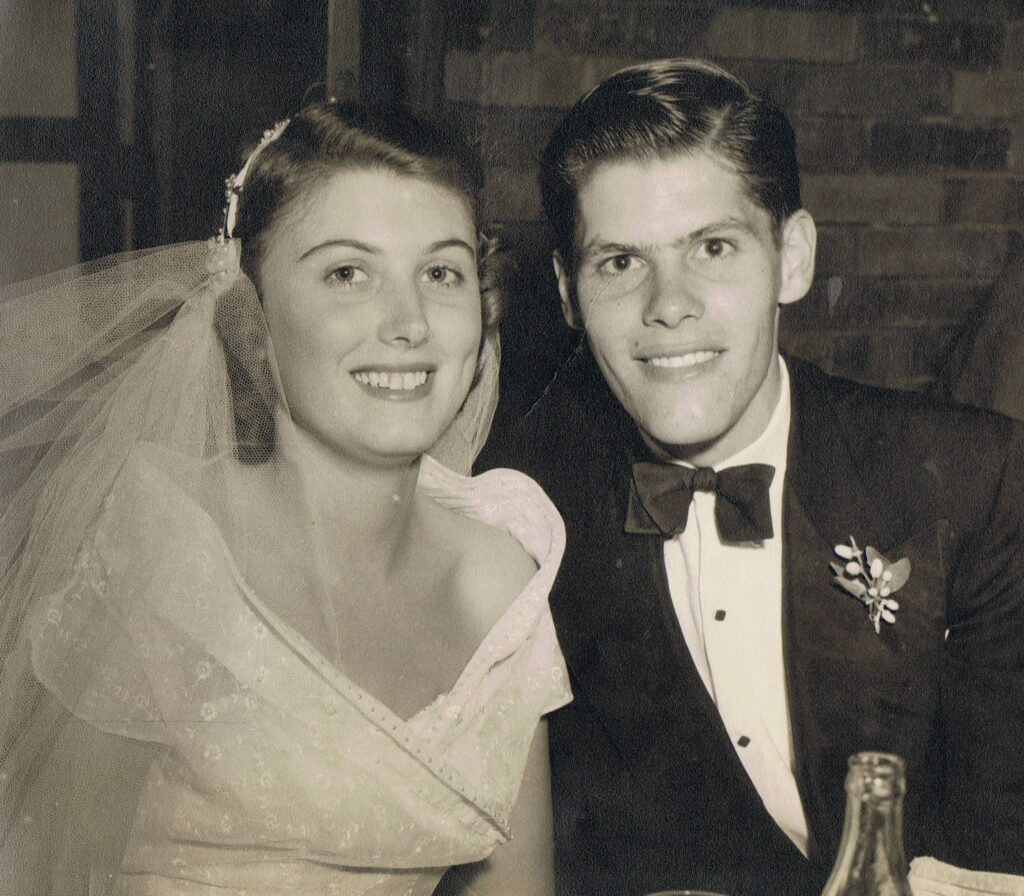
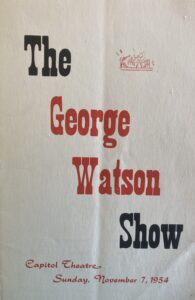
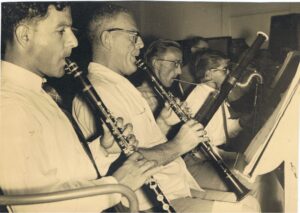
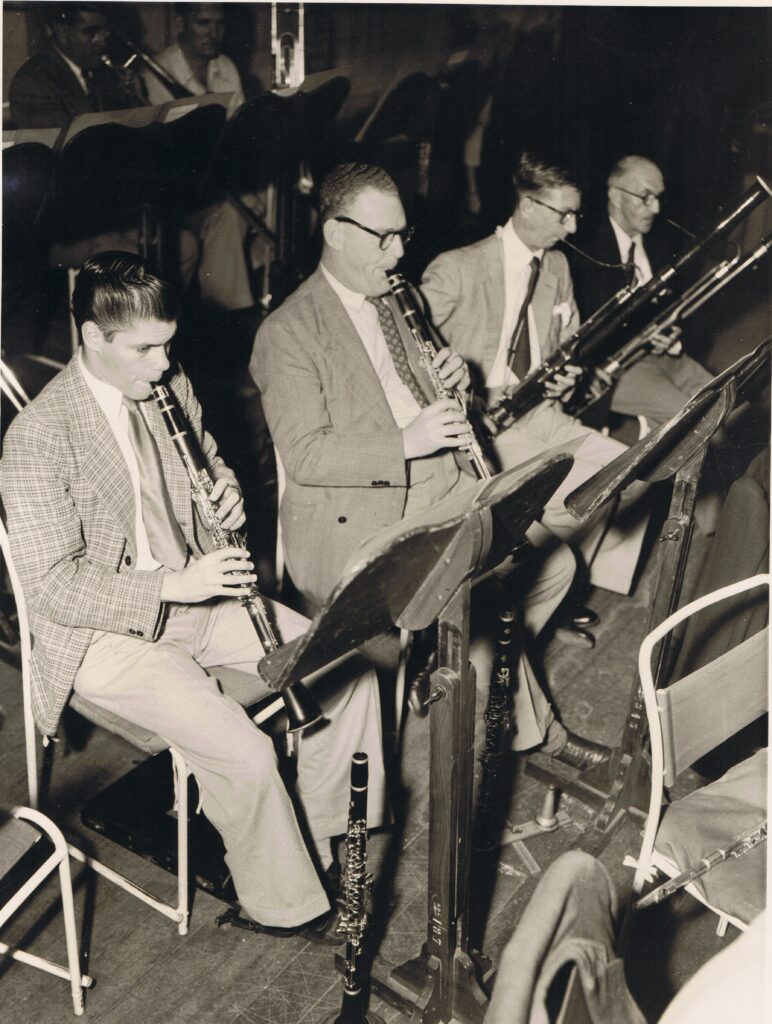
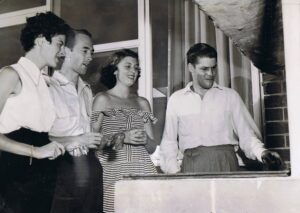
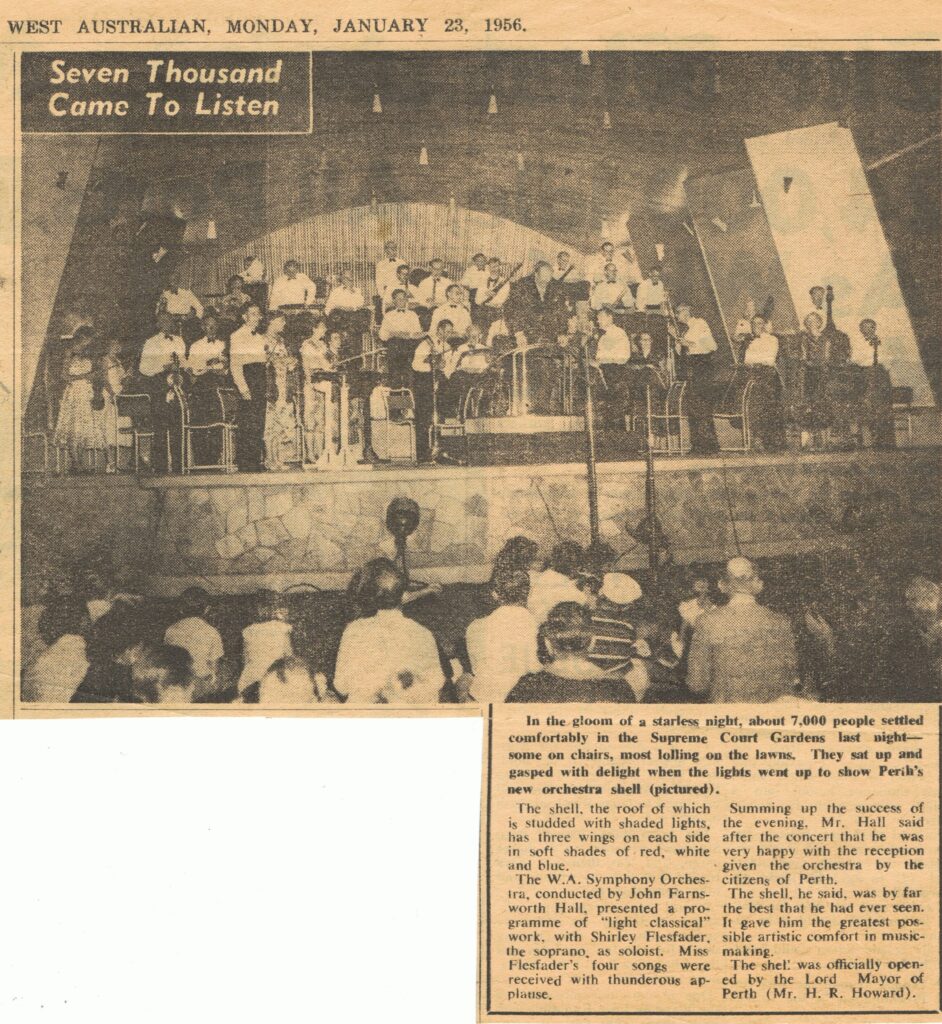
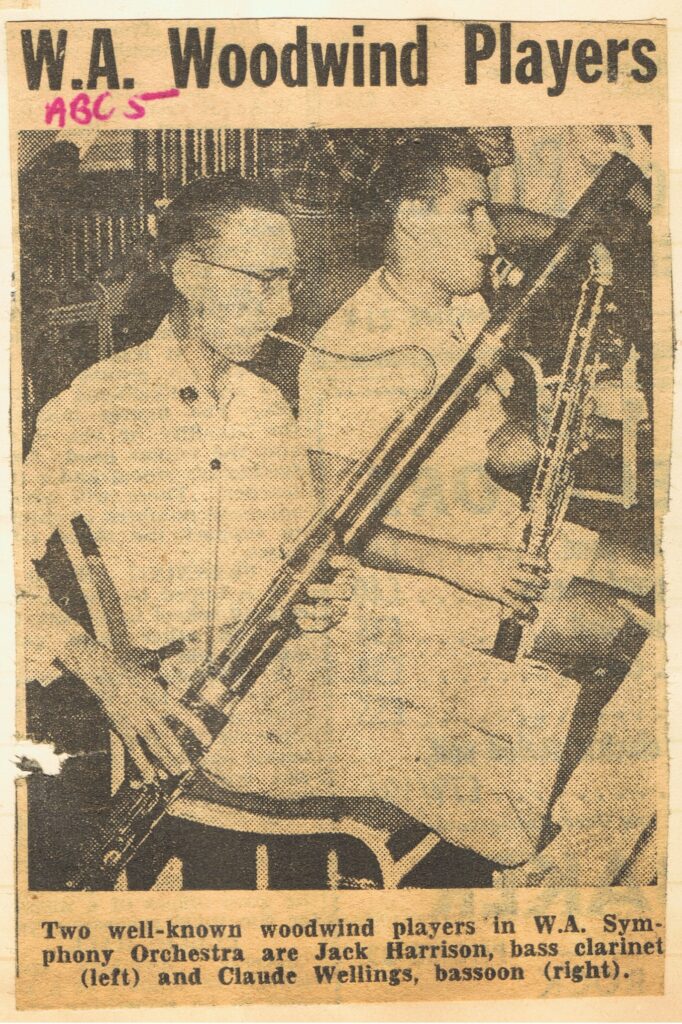
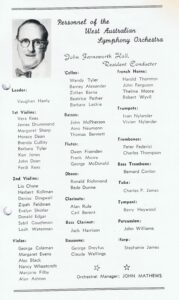
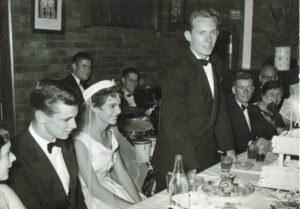
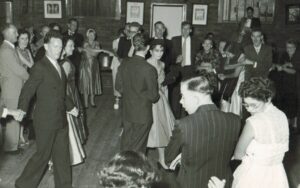
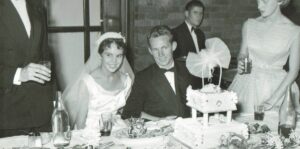
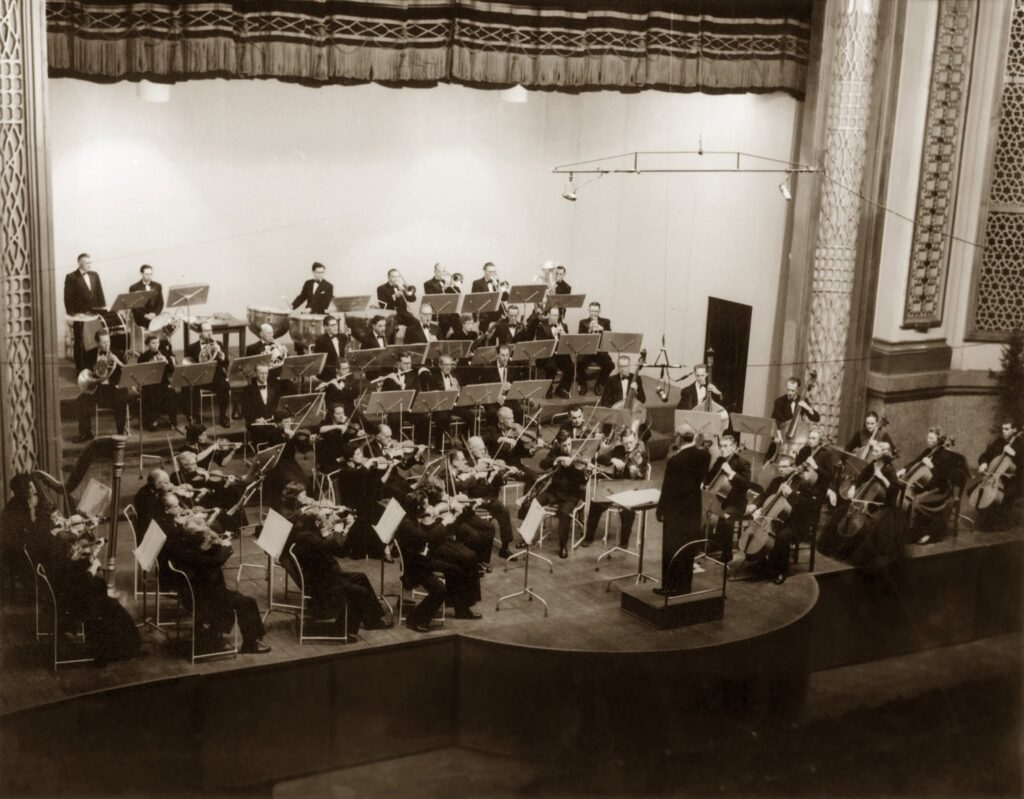
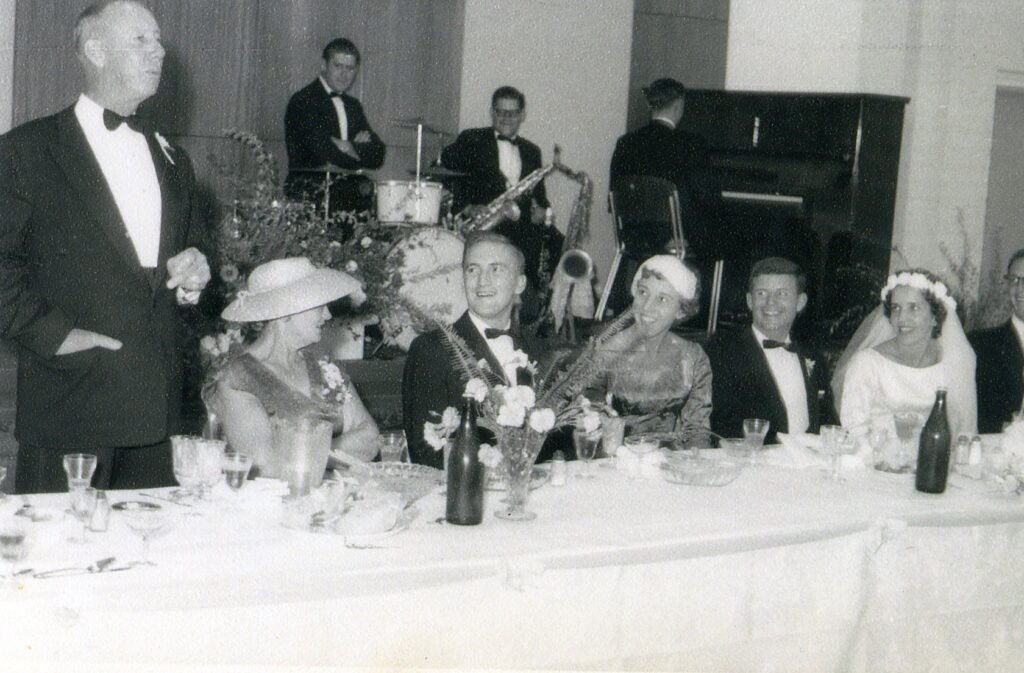
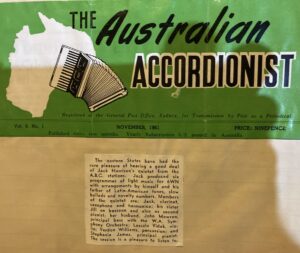
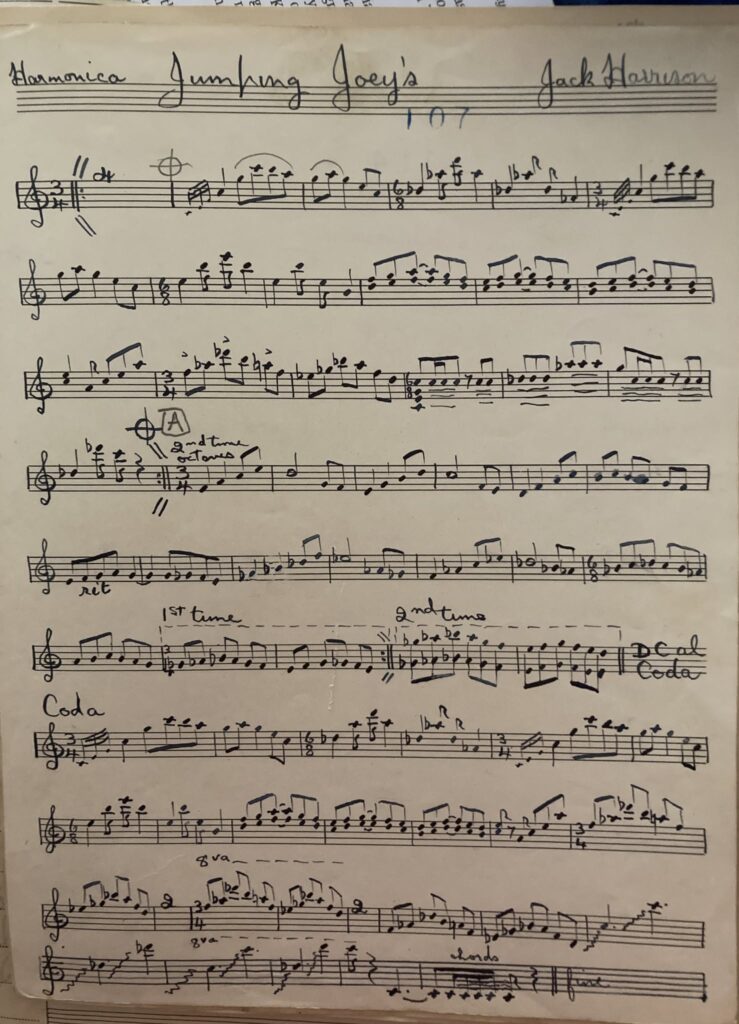
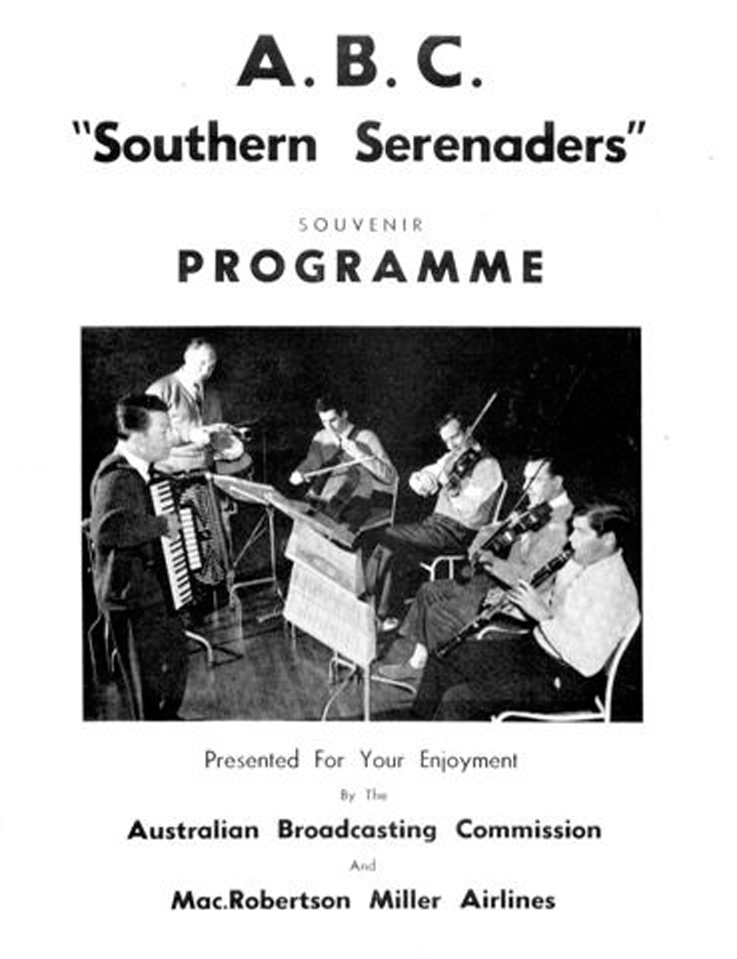
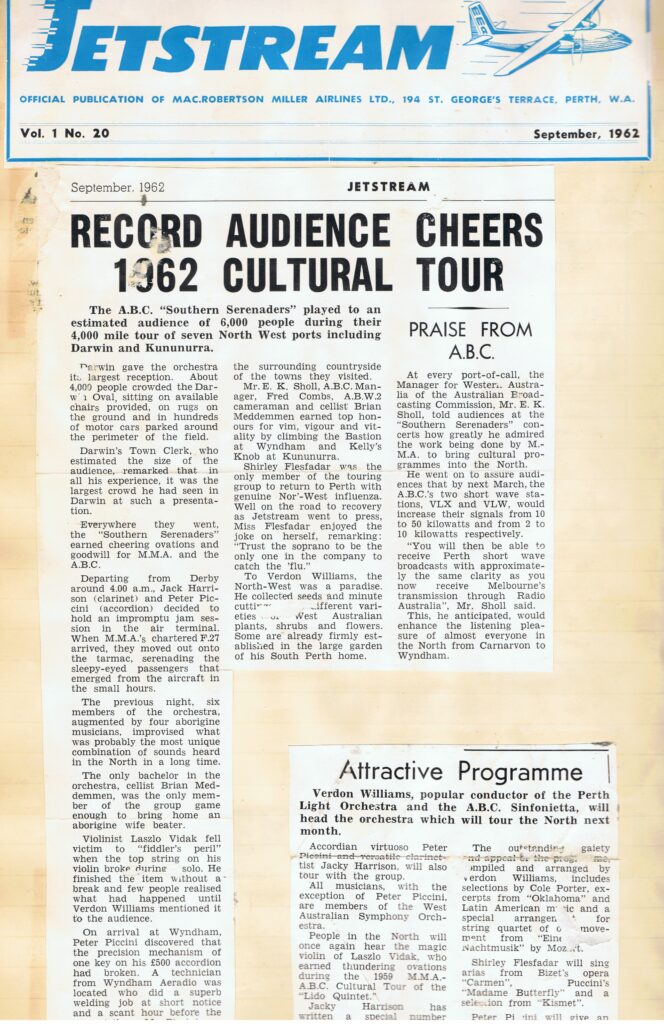
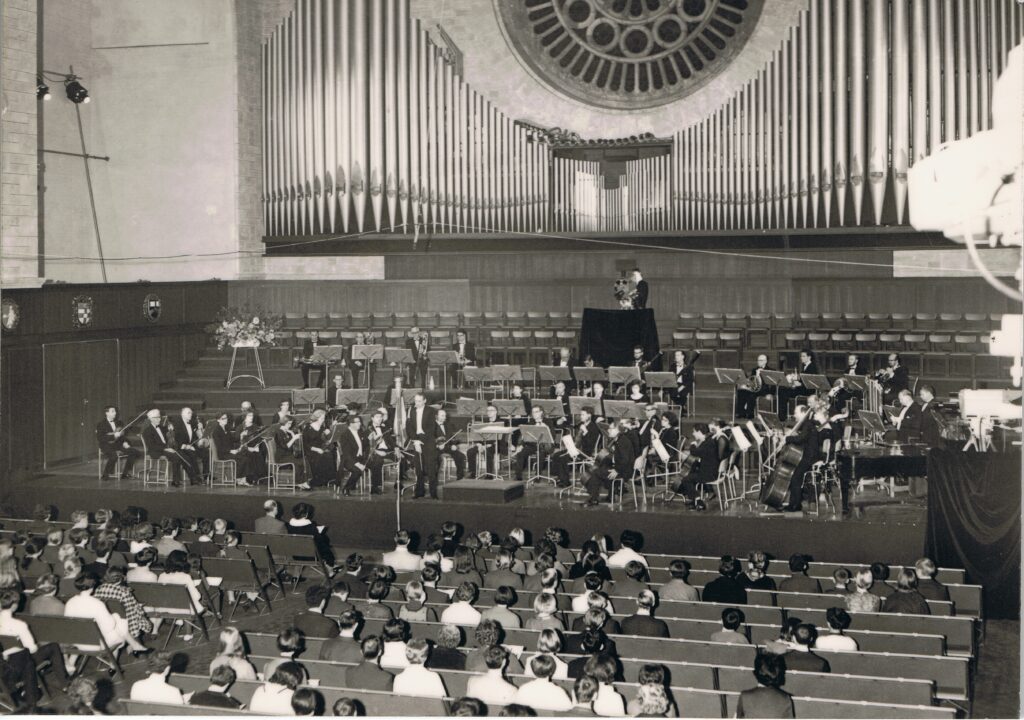
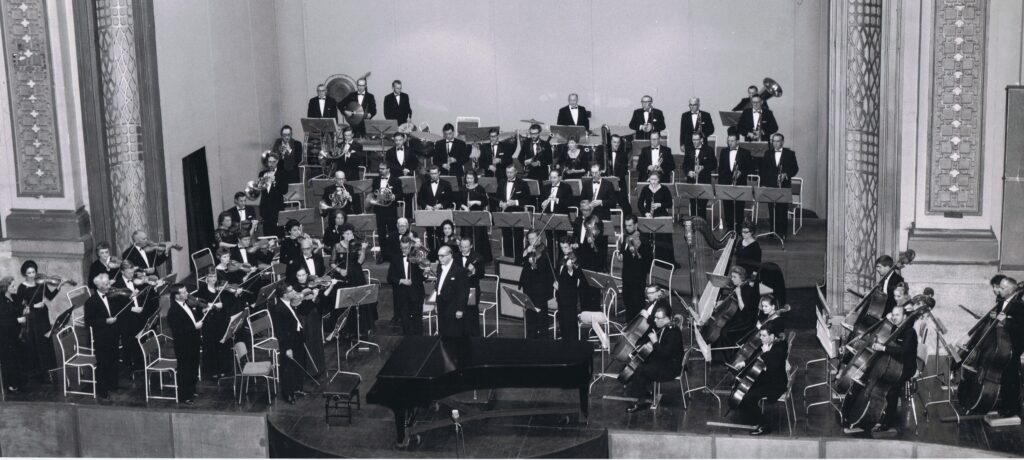
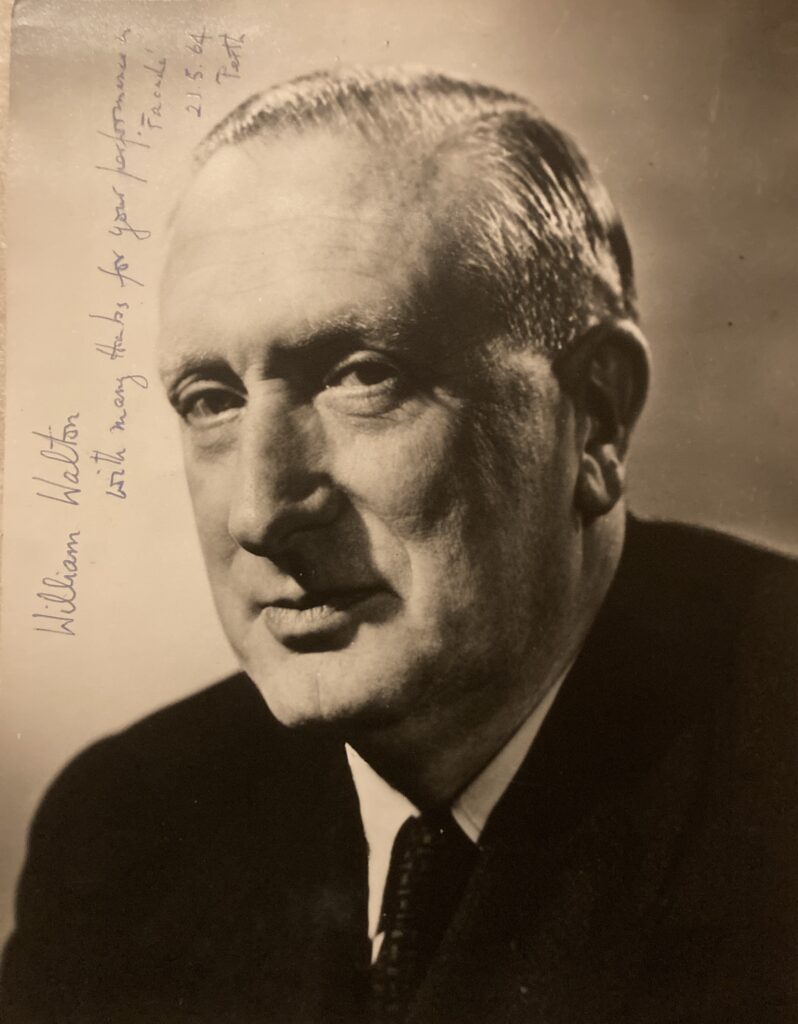
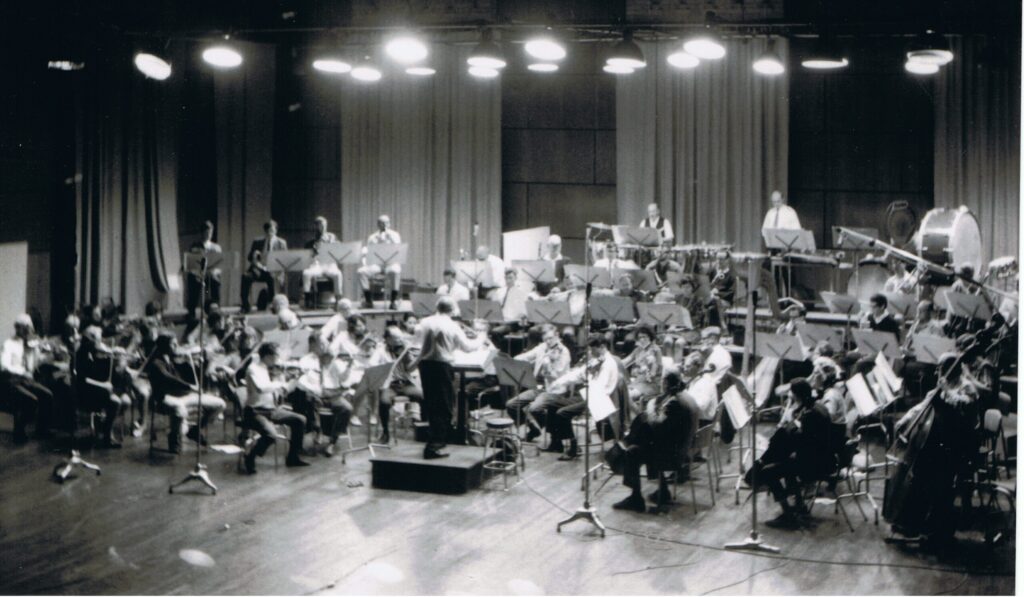
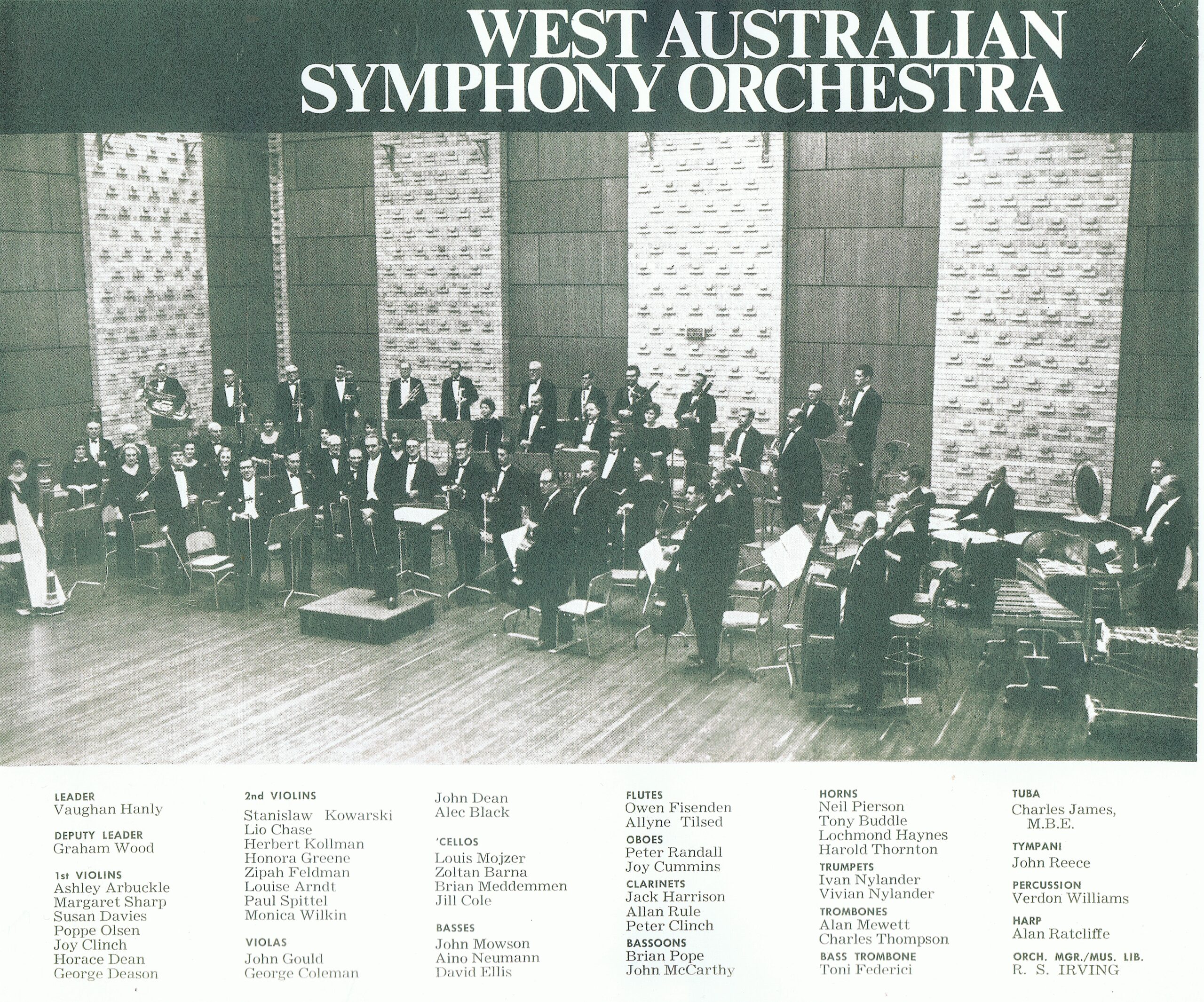
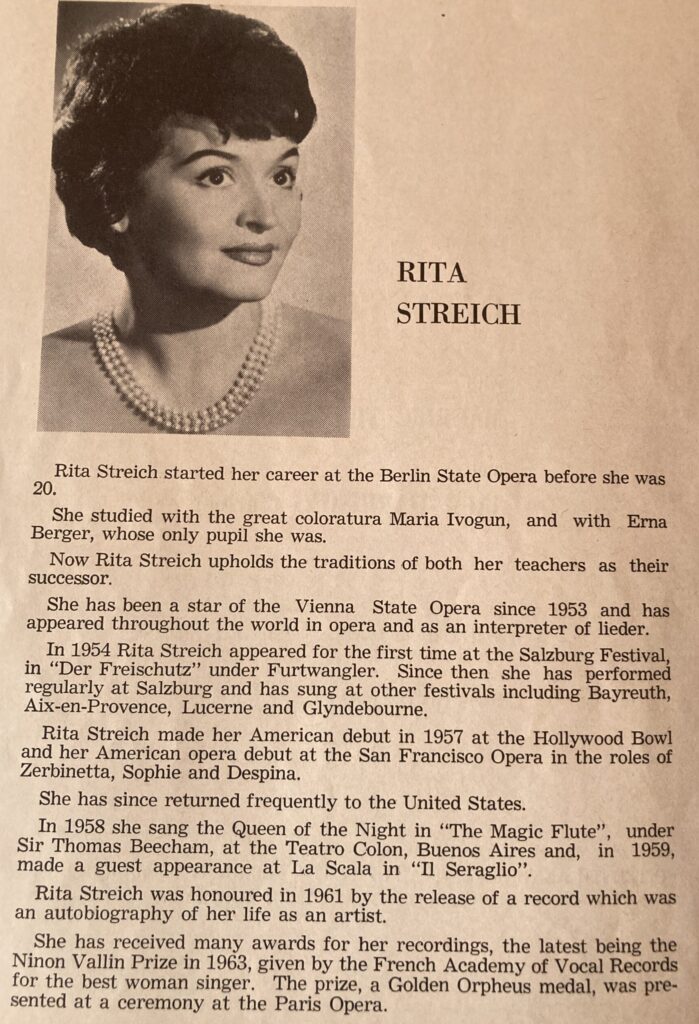
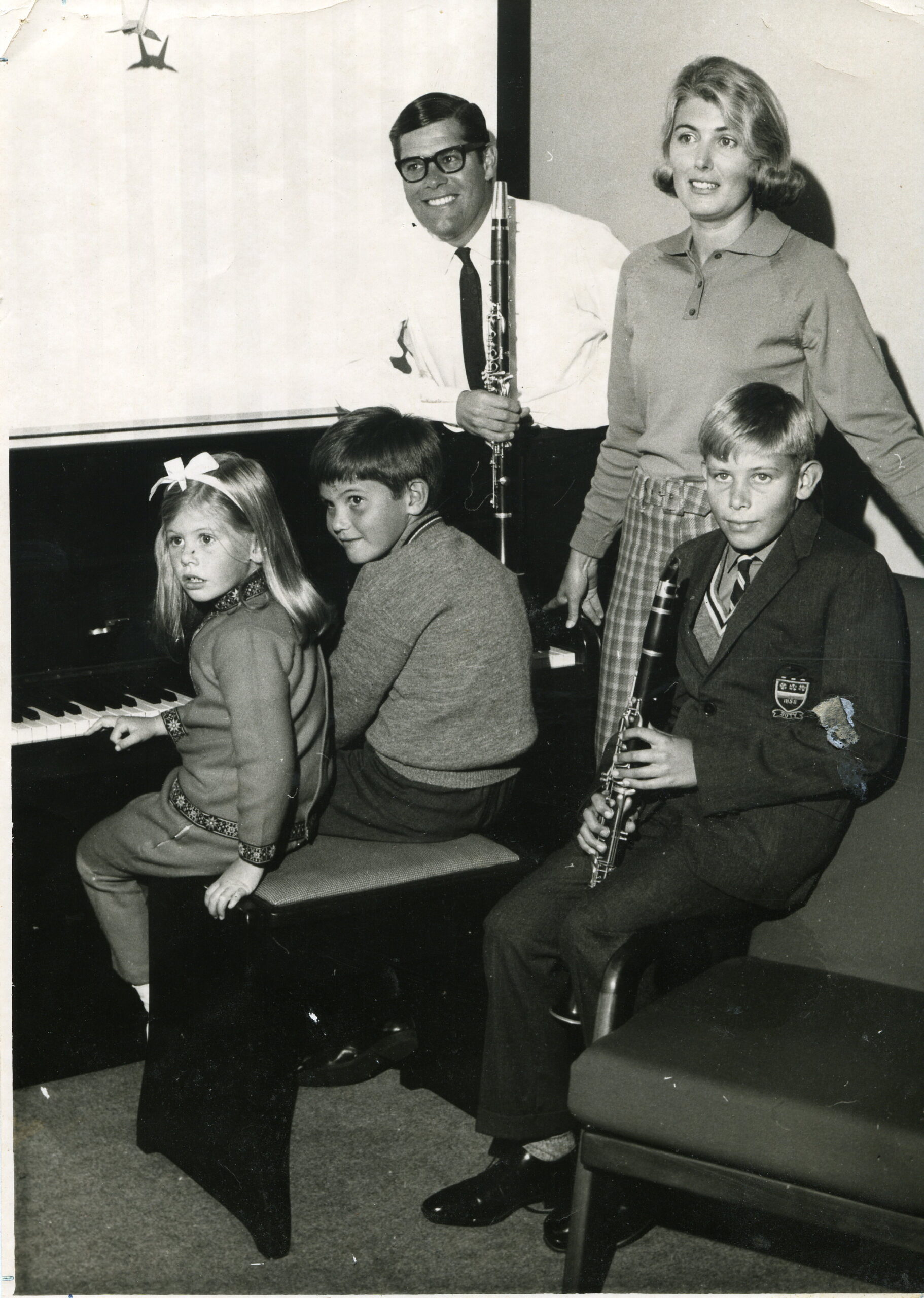
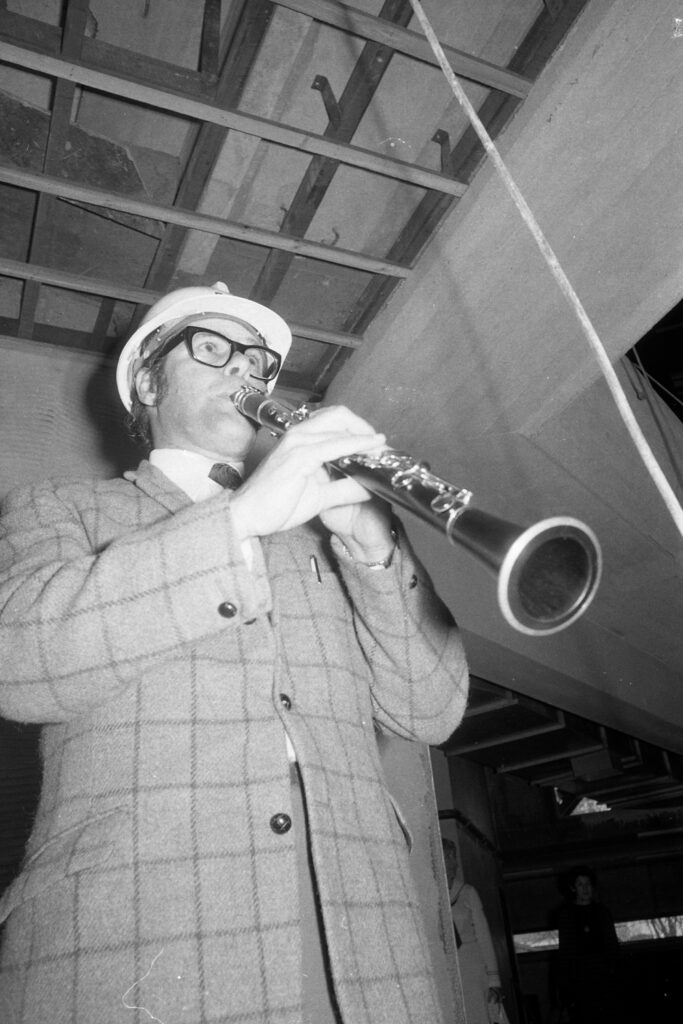
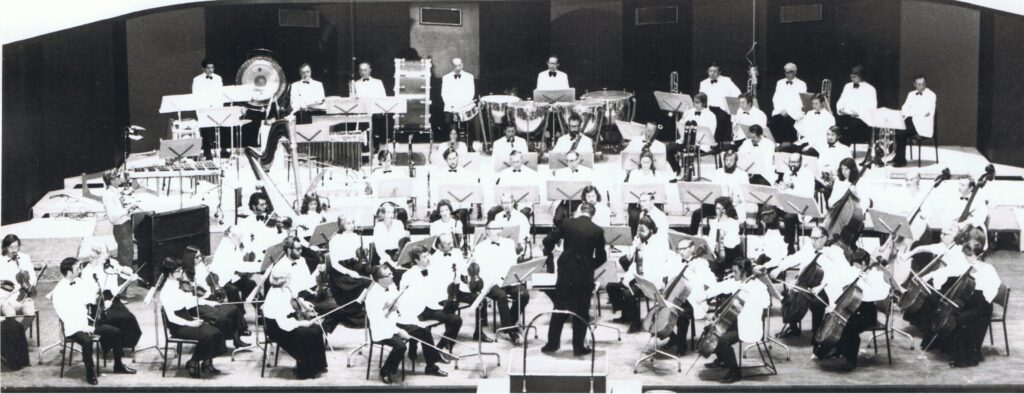
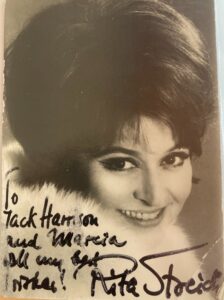
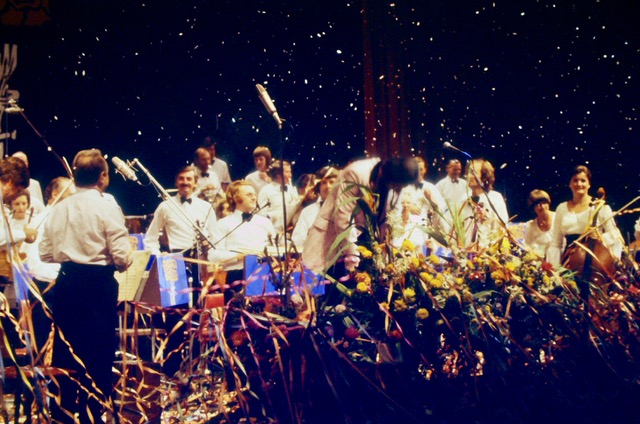
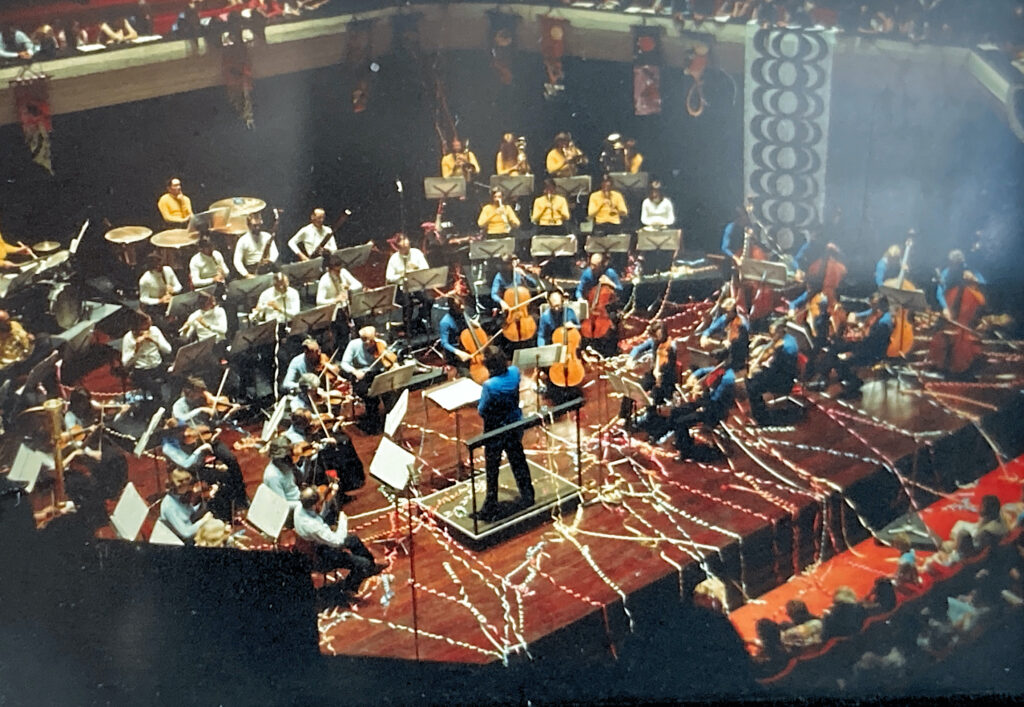
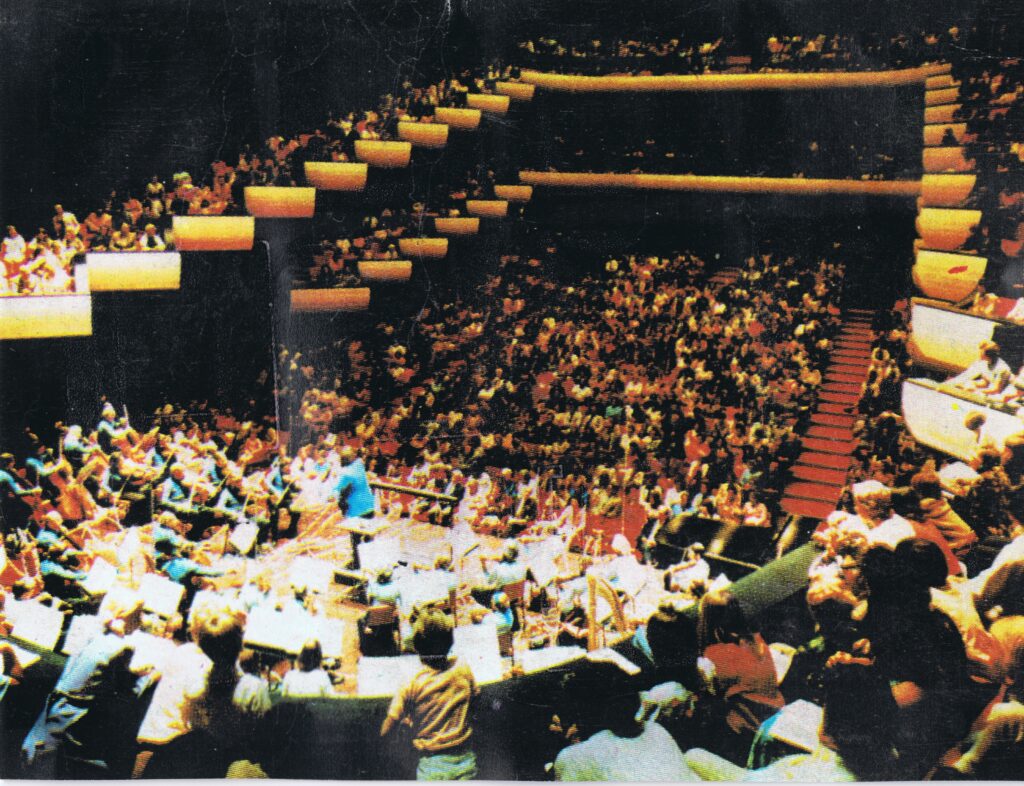
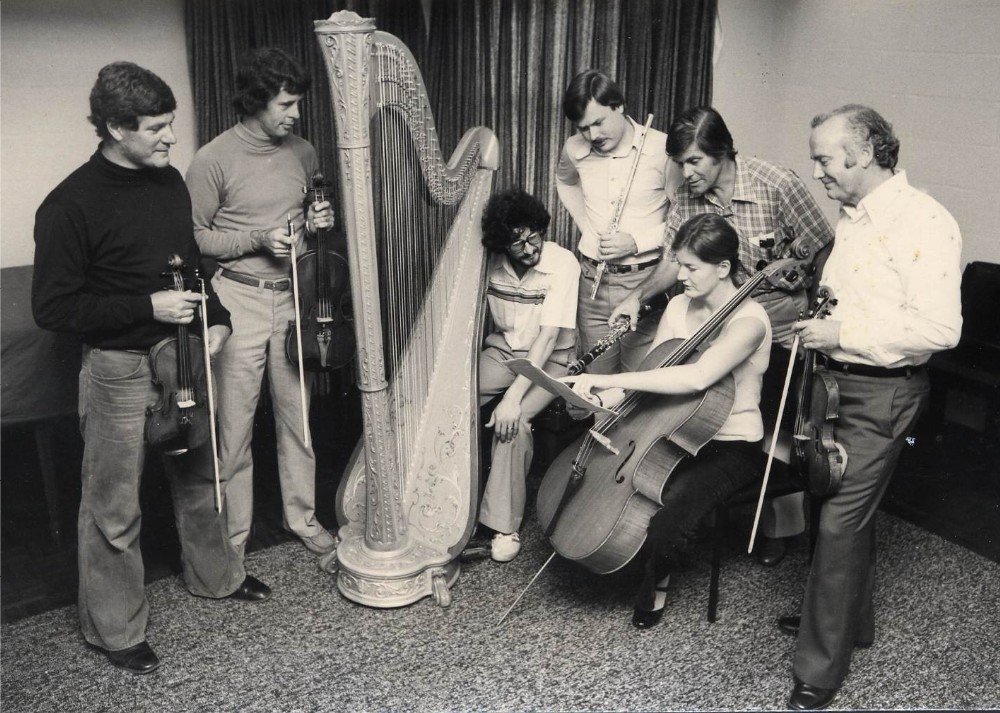
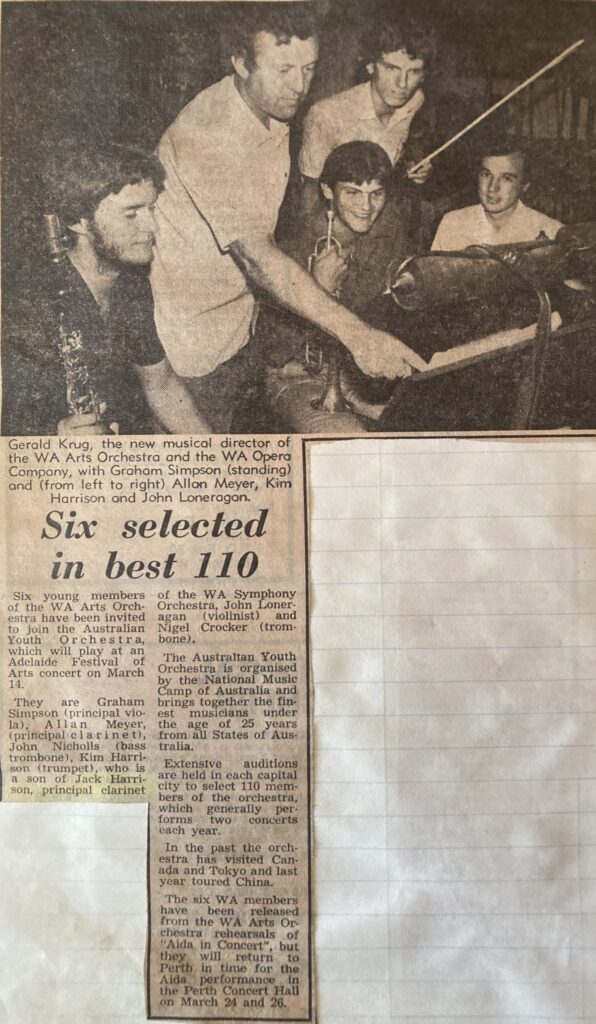
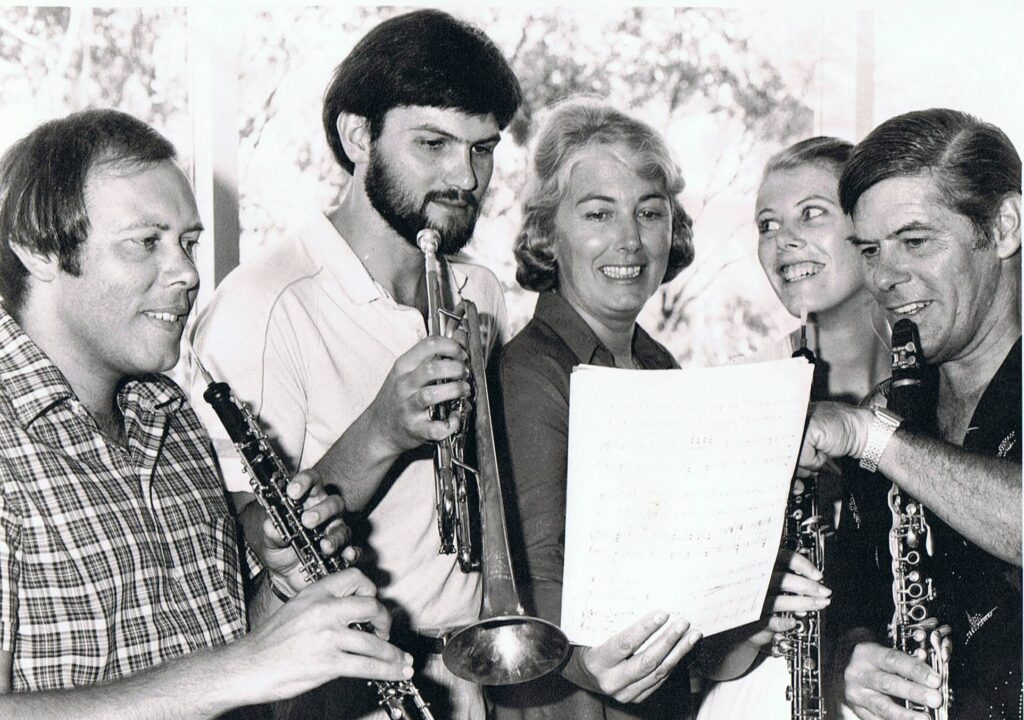
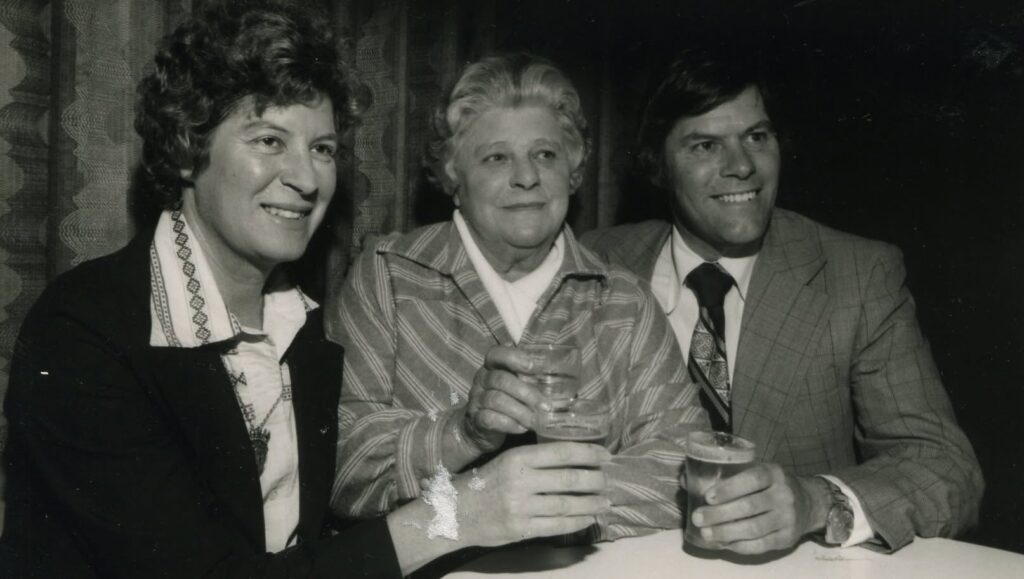
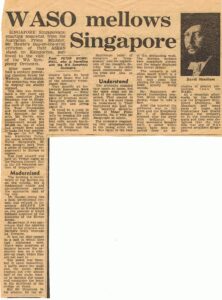
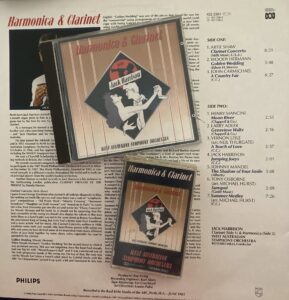
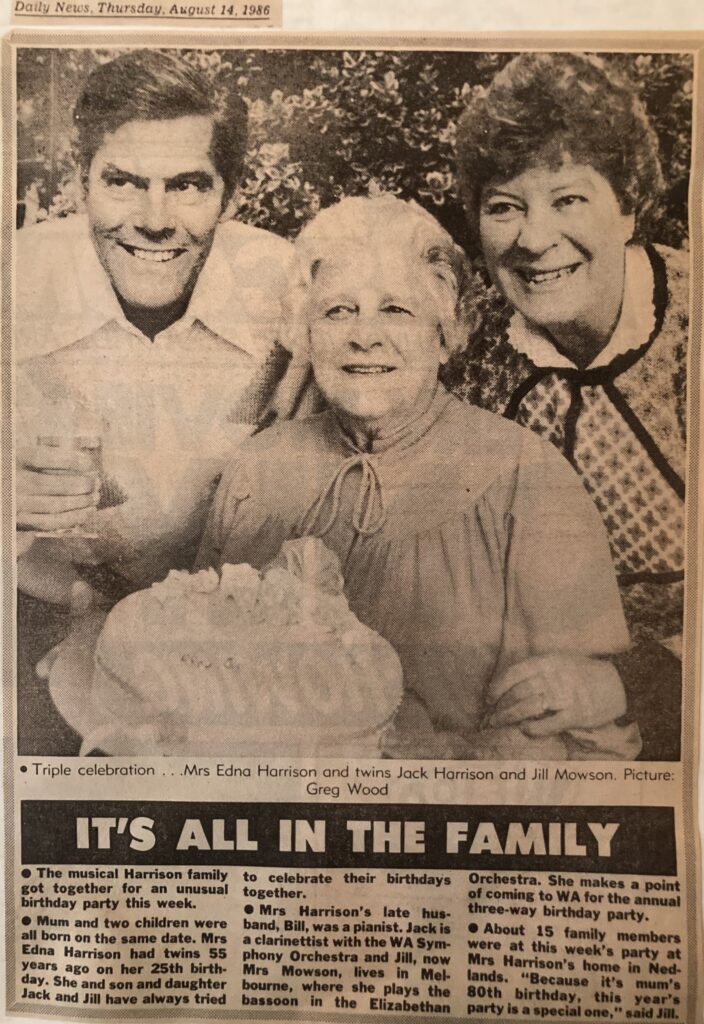
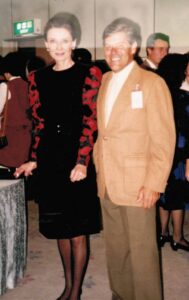
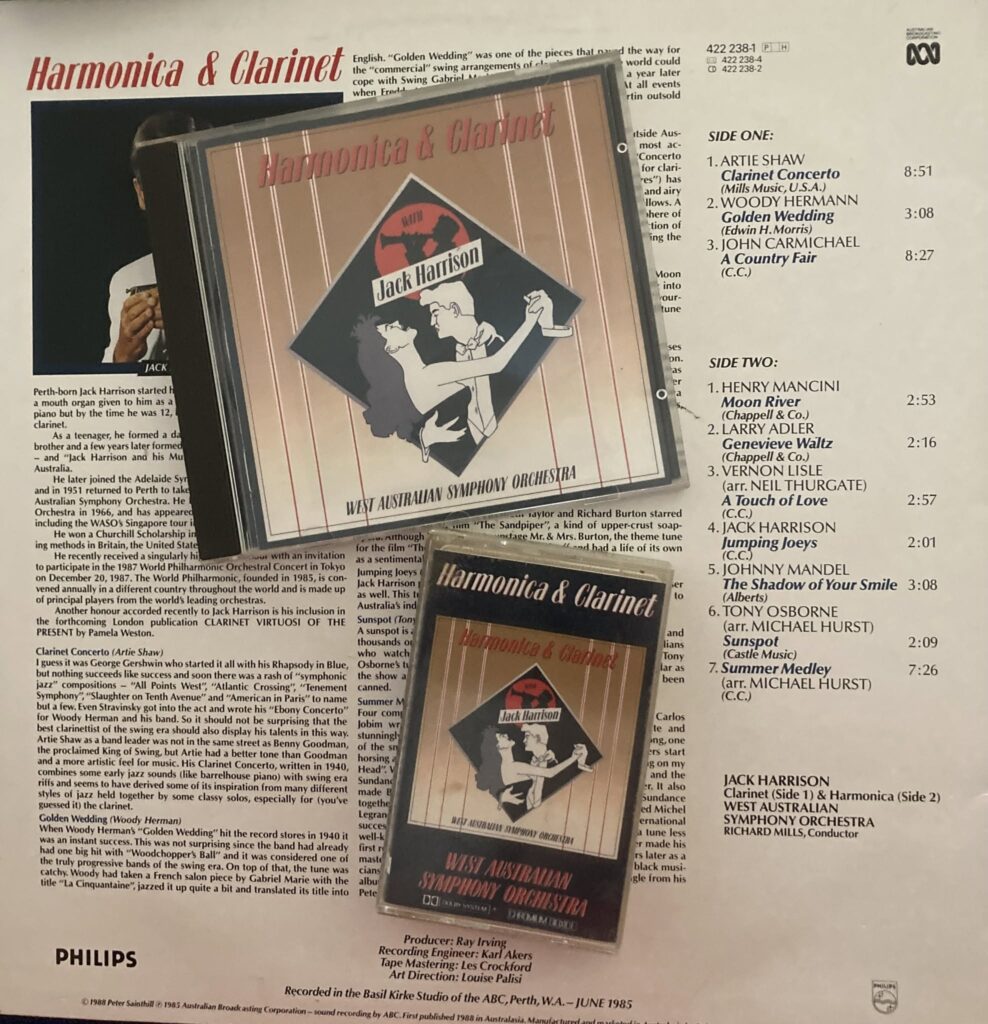
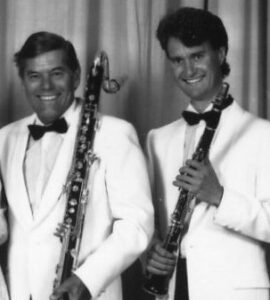
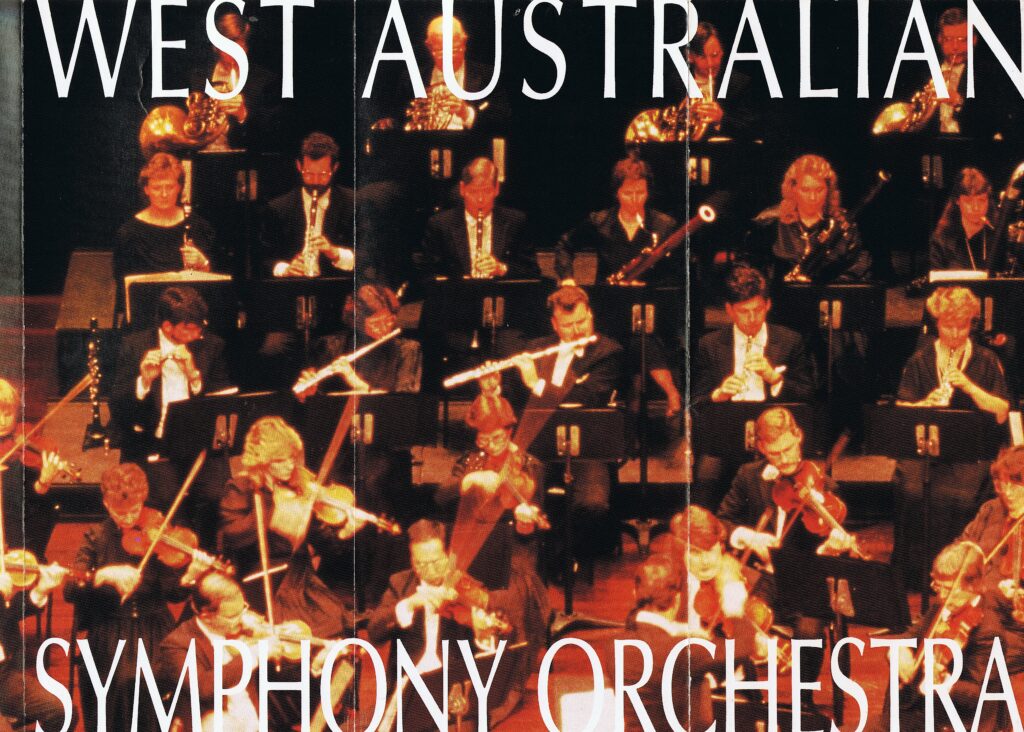
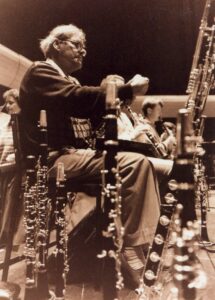 1992
1992