Person

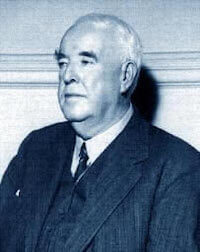
MITCHELL, Sir James

Sir James Mitchell GCMG

1948 – 1951

Sir James Mitchell was the first Australian-born Governor of Western Australia. He was born in 1866 at Dardanup on Paradise Farm, near Bunbury, the son of a grazier.

In 1905 he resigned as a manager with the Western Australian Bank in Northam after being elected to the Legislative Assembly. He held a number of portfolios while in government including Agriculture, Lands, Industries, Railways and Water Supply. He was Premier, Treasurer and Minister for Lands and Repatriation from 1919 to 1924 and served a second term as Premier in 1930.

Sir James was subsequently appointed Lieutenant-Governor, a position he held for 14 years until 1948 when he was finally appointed Governor on 5 October. Sir James actually served as Governor for 18 years because no Governor was appointed over him after his appointment as Lieutenant-Governor in 1933.

His final years at Government House were darkened by personal tragedy. His wife Clara died in 1949, and by his retirement on 30 June 1951 all but one of his children had predeceased him. Sadly, in the early hours of 26 July 1951, after having spent the day shooting with his son Roy near Donnybrook, he died in his sleep in the Vice Regal railway carriage.

https://govhouse.wa.gov.au/office-of-the-governor/former-governors/sir-james-mitchell-gcmg/


The first competition Jack Harrison won was when he was aged 7 in January 1939 at a Scottish Community Concert at the Perth Town Hall.  This link with the Scottish community was no doubt through Edna Harrison’s father William Walter Kerr and her sister Bessie who were members of The Caledonian Society and Pipe Band.

Scottish Community Concert.

The Western Australian Scottish Union held its annual grand Scottish community concert in the Perth Town Hall last night with a crowded house, and in the presence of His Excellency the Lieutenant-Governor (Sir James Mitchell) and Lady Mitchell. Pipe Major Watson and Sergeant J. Sutherland piped the vice-regal party to their seats, (where they were received by Mr. J. MacCallum Smith, ML.A. (president of the union) and Mrs. Smith. The programme opened with pipe band selections and then Miss Betty Robertson sang “Sing us a song of Scotland.” and was accompanied by dancers when she sang the chorus. Mrs. Allan delighted with her rendition of “A Guid New Year” and later “Hall Caledonia,” and “Cam Ye by Athol.” David Lyle opened with “Gae Bring tae me a Pint o’ Wine” and “The Auld Scots Songs.” He sang “Mary” as an additional encore. Towards the end of the programme he again pleased his audience with his rendering of “My Love is like the Red Red Rose.” “Angus McDonald” was Miss Dorothy Ogilvie’s opening solo and was received with prolonged applause. She then presented “Caller Herrin” and in the second half “Success tae Scotland.”  The conductor of the programme, Mr. “Bill” Talbott submitted several humorous items, led the community singing and supervised the amateur trials. Items of particular merit were submitted by Alex McNeil. He sang “A’ the Airts” and “The Nameless Lassie.” Miss Thelma McLennan (grand champion dancer for 1938) gave a sword dance, while pupils of Miss Hodgkinson presented “Sea Trubhais” and “Reel o’ Tulloch.” “The Road to the Isles” was pleasingly sung by Mr. T. Mackie. A comedian, Willie Frew, entertained with ‘The Waggle o’ tie Kilt” and “The Wedding of Sandy McNab,” to which was added many typical Scottish jokes. Four competitors took part in the amateur trials competition and the awards were made to Jack Harrison (mouth organ), A. Thomas (solo), and G. Grant (accordion). Miss L. Hoskings was the accompanist.


PICCADILLY THEATRE OPENING

Regarding the opening date of the Piccadilly Theatre, now almost completed in Hay-street, Perth, the managing director of the Grand Theatre Co. Ltd., Mr. James Stiles, stated that the night of the official opening, which would take the form of a special benefit to the Children’s Hospital, would be somewhere in the first week of March, and the actual date would be announced within a few days.

Arrangements for the reserving of seats for this gala event would be in the hands of an energetic sub-committee from the Children’s Hospital, and the date of the opening of box plans would probably be on Monday, February 28.

The official opening would be attended by His Excellency the Lieutenant-Governor, Sir James Mitchell. G.C.M.G.

A very special programme from Paramount would comprise the first entertainment at the Piccadilly Theatre, the titles being “I Met Him In Paris” (Claudette Colbert. Melvyn Douglas and Robert Young) and “Turn Off the Moon” (Charlie Ruggles and Eleanore Whitney).

Sunday Times (Perth, WA : 1902 – 1955), Sunday 20 February 1938, page 5
Years

1939 – 1945 World War II

Australia entered World War II on September 3, 1939, immediately following Britain’s declaration of war on Germany.

Prime Minister Robert Menzies announced the involvement, prompting a rapid volunteer mobilisation for the 2nd Australian Imperial Force (AIF) to support British forces in Europe and the Middle East, while initiating home-front preparations.

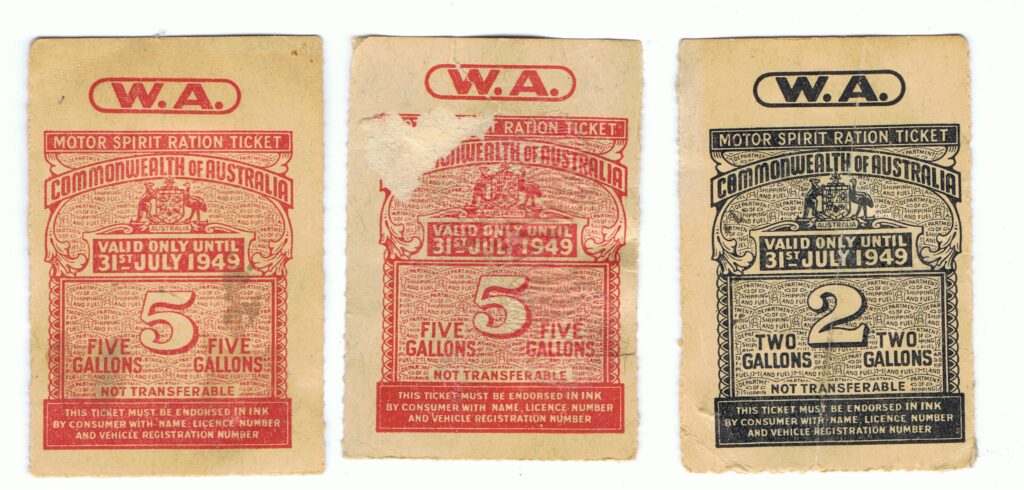
World War II had been dominated everyone’s lives with food and petrol rationing controlled with coupons.

Houses were encouraged to build air raid shelters.

Victory Day finally came on May 8th 1945.

Soldiers in WWII

Charles George Harrison

William Arthur Harrison

Bruce Douglas Meyer


Person

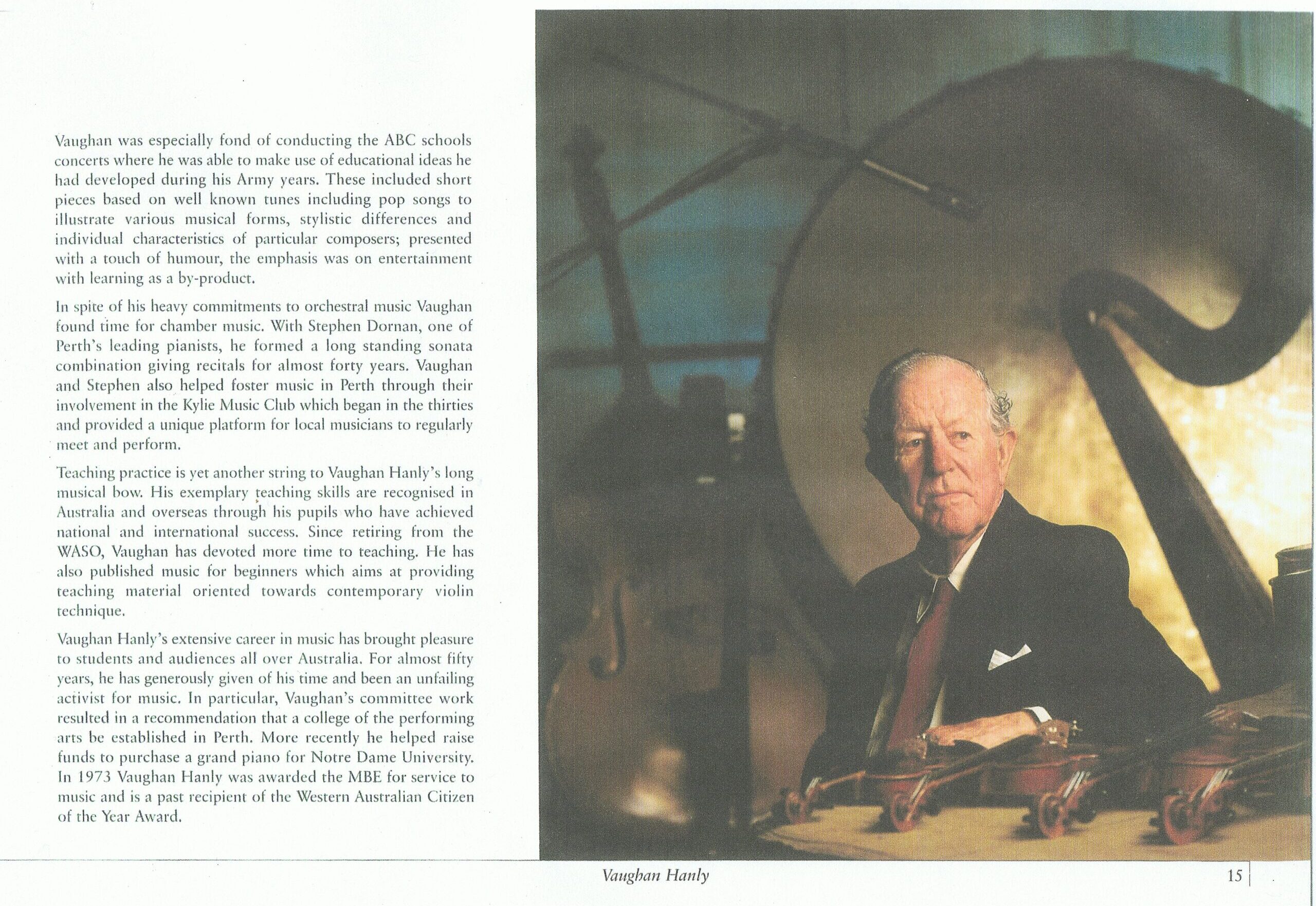
HANLY, Vaughan

“For his outstanding contribution to music, his achievements as a musician, composer, conductor and teacher, for inspiring young musicians and for contributing to the professional standard of the West Australian Symphony Orchestra.”

Vaughan Hanly was born in 1916 in Sydney. After initial violin tuition with Sister Mary Acquin at the Golden Grove Convent of Mercy, he won a scholarship enabling him to study with Florent Hoogstoel at the New South Wales Conservatorium of Music.


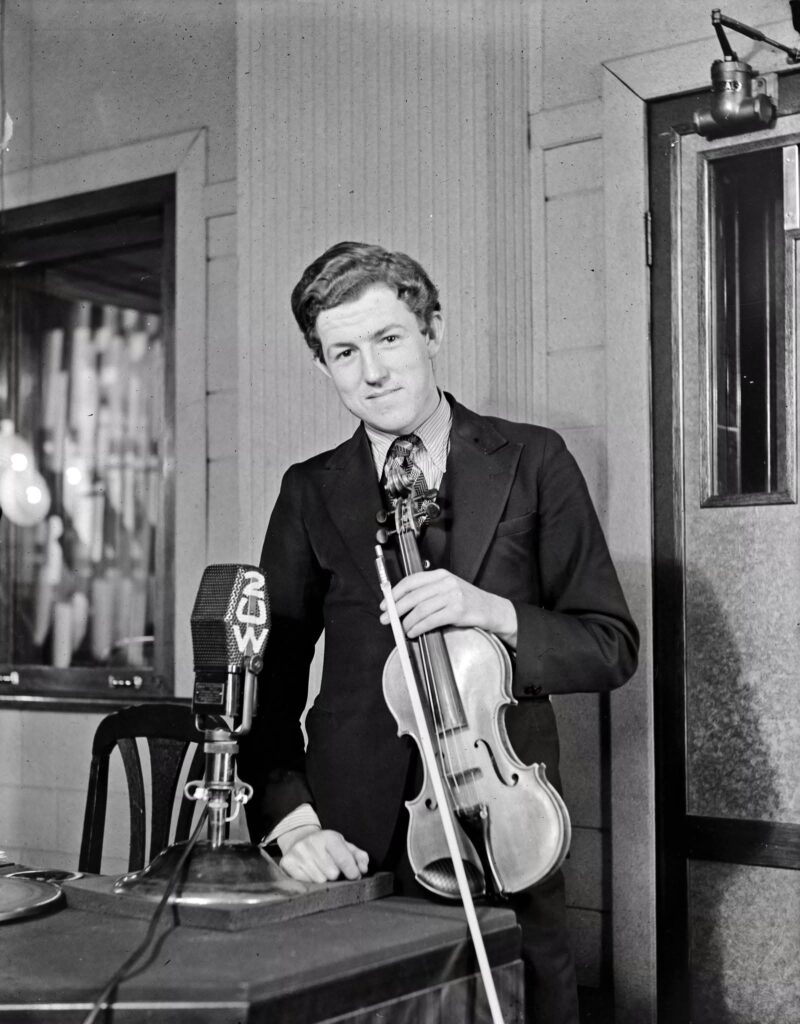
September 1935.

2UW in co-operation with the big music house of Nicholson’s conducted a Radio Eisteddfod, and from it quite a wealth of talent was discovered.
One of the winners in a team of 5 pictured here is violinist Vaughan Hanly, and he will take part with the other 4 winners for a series of 2UW concert broadcasts under the name “Stars of the Southern Cross”.

In 1936 he graduated with both the Performer’s and Teacher’s Diplomas, winning the A.E. Smith Violin Prize. Two years later he made his debut performing the Wieniawski Concerto in D minor with the Sydney Symphony Orchestra. His out- standing performance led to other engagements, including a tour of Australia as solo violinist with Richard Tauber.

On 9 August 1938 at the district registrar’s office, Rockdale, soprano Lorna McKean married Leo Denis Vaughan Hanly, a 21-year-old violinist and a fellow student at the conservatorium; they were to have three children, one of whom is violinist Brian Hanly.

Lorna soon became active in music circles in the city. When World War II broke out she undertook extensive touring and concert work throughout the State to assist the war effort.

In 1939 Vaughan was appointed leader of the ABC’s Perth Orchestra, making his debut as soloist with the orchestra in Mozart’s Concerto in D K218, conducted by Sir Malcolm Sargent. As Madame Alice Carrard recalls, “The ABC was having only 25 people in the orchestra and they were all half amateurs. When Vaughan Hanly arrived then it was something out of the world.”

Between 1942 and 1945 Vaughan served in the Army Education Service in the area of music and drama. After the war he became very active as a teacher and as an examiner for the Australian Music Examinations Board. In 1947 he became Deputy Conductor of the ABC’s Perth Orchestra. He also appeared as soloist in the Tchaikovsky Concerto for Violin conducted by the visiting conductor Walter Suskind.

Vaughan Hanly spent 1948 in England studying conducting with Sir John Barbirolli and violin with the renowned teacher, Max Rostal. During his year abroad Vaughan was invited to join the first violin section of the London Symphony Orchestra affording him the opportunity of playing under many internationally famous conductors. He recalls with great joy playing in a performance of A London Symphony conducted by the composer Ralph Vaughan Williams.

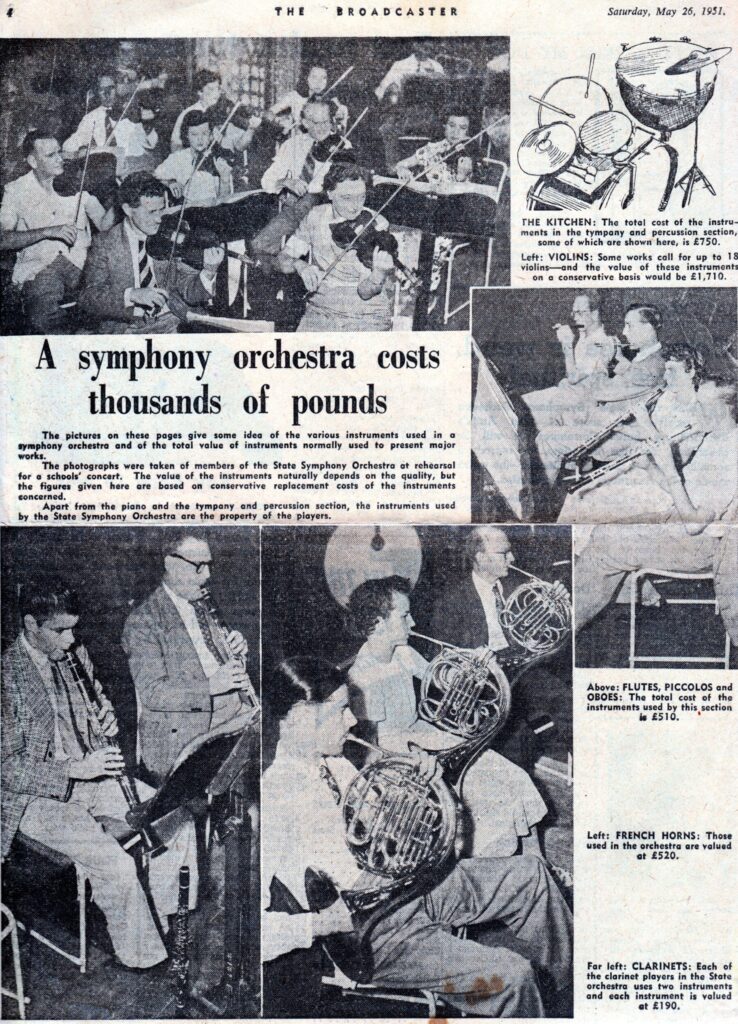
1951 Broadcaster article: cost of a symphony orchestra

Returning to the Perth Orchestra in 1949 Vaughan was very active as a soloist. He visited Adelaide to play the Sibelius Concerto for Violin and followed this with the first performance in Perth of the Delius Violin Concerto. On the same program was Rimsky-Korsakov’s Scheherazade which made it a very busy occasion for Vaughan.

This varied and demanding schedule became typical and was maintained through to his retirement in 1976.

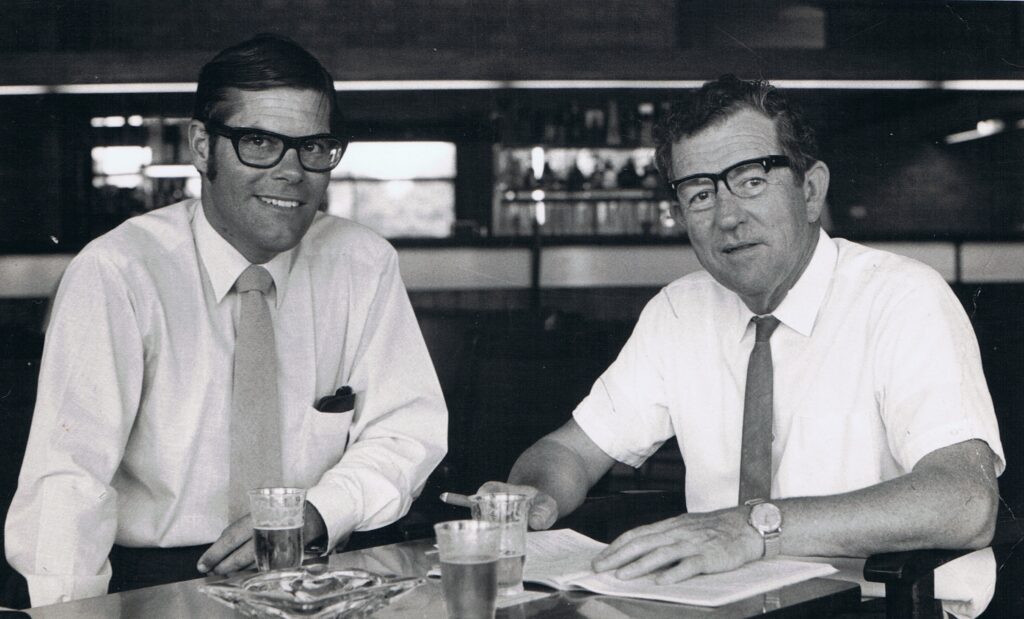
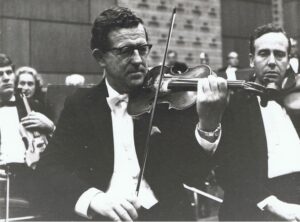
Vaughan Hanly, WASO Concertmaster 1967

Throughout the formative years of the West Australian Symphony Orchestra (WASO) as Concertmaster and Deputy Conductor, Vaughan Hanly, through his dedication and persistence, did much to raise the professional standard of the Orchestra, contributing to the fine reputation it has today.

In addition to his work as Concertmaster and frequent solo appearances Vaughan also conducted studio broadcasts and concerts.

For the 1956 Festival of Perth he was invited to conduct an all Mozart program to mark the bi-centenary of Mozart’s birth. His capacity to interpret works of a larger and more complex nature was demonstrated in 1961 when the resident conductor became too ill to continue after the first rehearsal for a subscription concert. The program consisted of Le Corsair Overture by Berlioz, The Pines of Rome by Respighi and Elgar’s Symphony No 1 in Ab major.

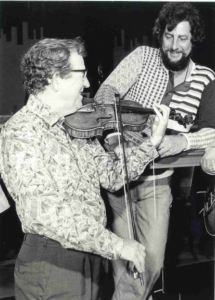
Vaughan Hanly and David Measham

The soloist, Larry Adler, was playing the first Australian performance of a concerto written for him by French composer Serge Lancen. Stepping in at such short notice and successfully conducting such a formidable program greatly enhanced Vaughan Hanly’s reputation as a conductor. Other engagements followed, including concerts with European visitors such as Daniel Barenboim and Gyorgy Pauk.

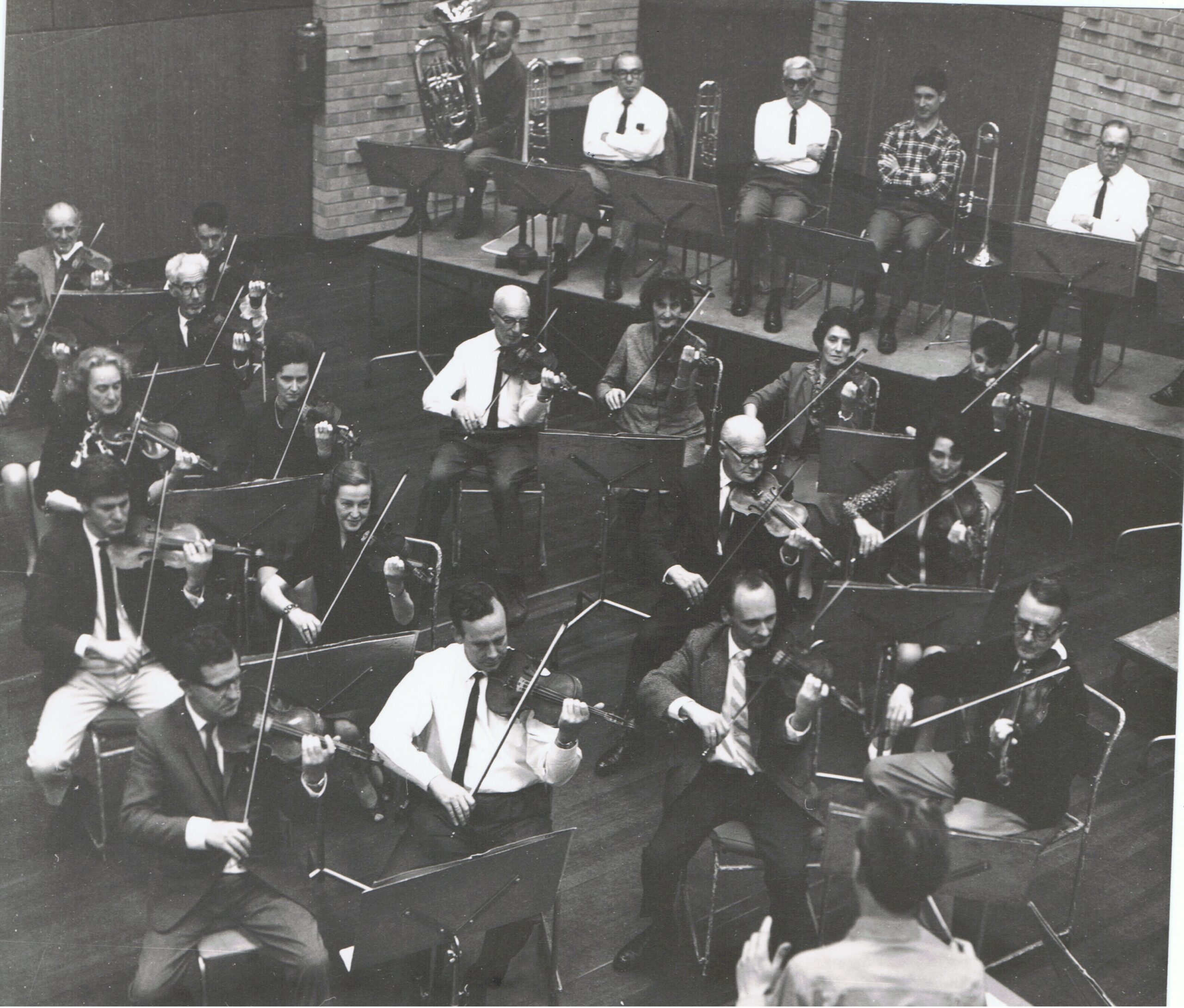
1967 WASO violin section

For the 1966 Festival of Perth he was invited to conduct four concerts by the WASO devoted to British and Australian composers. These programs included many works new to Perth including the first Western Australian performance of Symphony No 8 by Vaughan Williams and the first Australian performance of Little Symphony by Alexander Goehr.

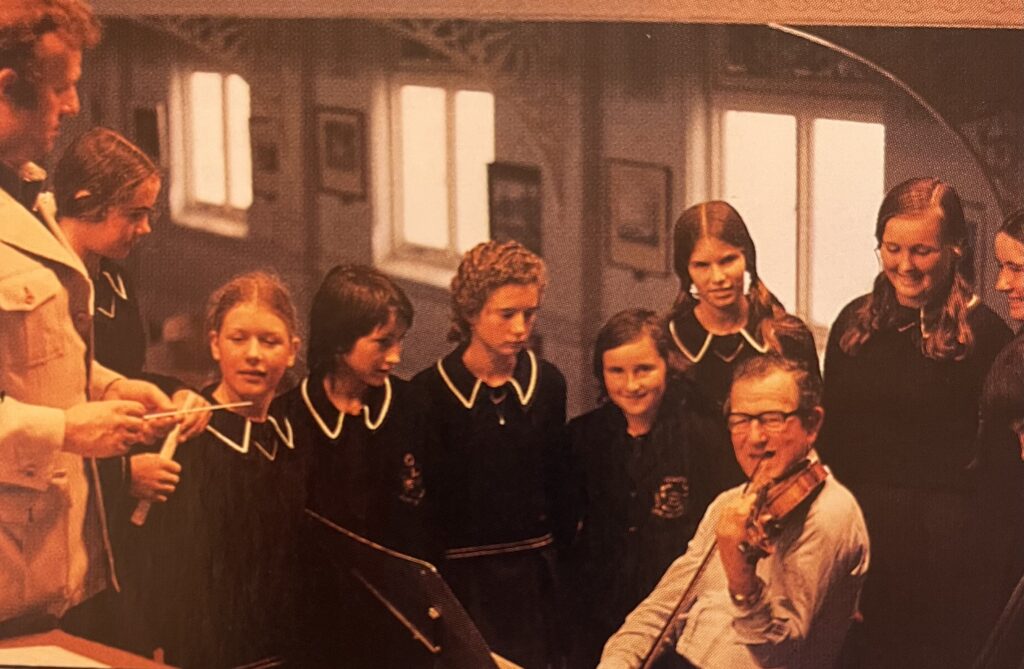
Vaughan was especially fond of conducting the ABC schools concerts where he was able to make use of educational ideas he had developed during his Army years. These included short pieces based on well known tunes including pop songs to illustrate various musical forms, stylistic differences and individual characteristics of particular composers; presented with a touch of humour, the emphasis was on entertainment with learning as a by-product.

In spite of his heavy commitments to orchestral music Vaughan found time for chamber music. With Stephen Dornan, one of Perth’s leading pianists, he formed a long standing sonata combination giving recitals for almost forty years. Vaughan and Stephen also helped foster music in Perth through their involvement in the Kylie Music Club which began in the thirties and provided a unique platform for local musicians to regularly meet and perform.

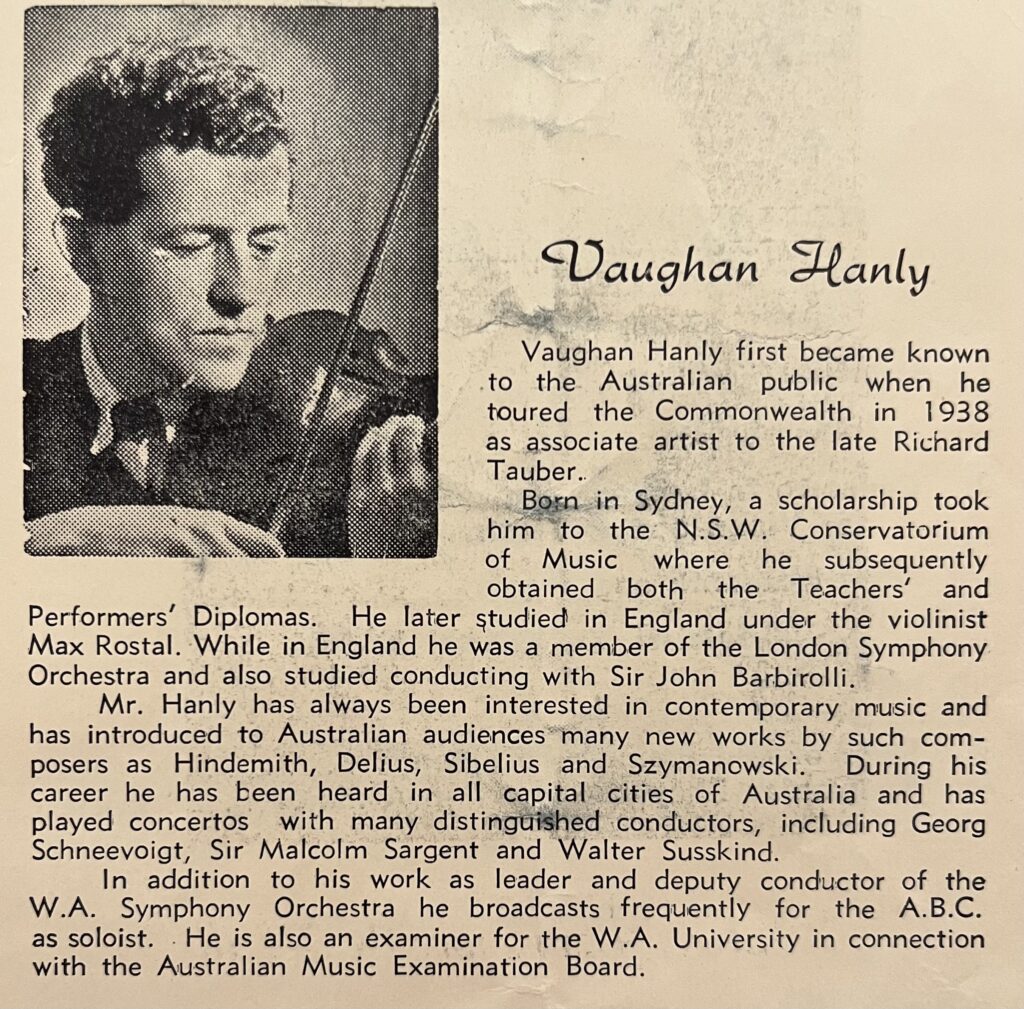
Vaughan Hanly. Source: Symphony Australia 1987, p.10

Teaching practice is yet another string to Vaughan Hanly’s long musical bow. His exemplary teaching skills are recognised in Australia and overseas through his pupils who have achieved national and international success. When he retiring from the WASO, Vaughan devoted more time to teaching. He has also published music for beginners which aims at providing teaching material oriented towards contemporary violin technique.

Vaughan Hanly’s extensive career in music brought pleasure to students and audiences all over Australia. For almost fifty years, he generously gave of his time and been an unfailing activist for music. In particular, Vaughan’s committee work resulted in a recommendation that a college of the performing arts be established in Perth. More recently he helped raise funds to purchase a grand piano for Notre Dame University. In 1973 Vaughan Hanly was awarded the MBE for service to music and was a past recipient of the Western Australian Citizen of the Year Award.

Western Australian State Living Treasure – Vaughan Hanly

REFERENCES:

Western Australian State Living Treasures

West Australian Symphony Orchestra Celebrating 75 Years


Instruments

Years