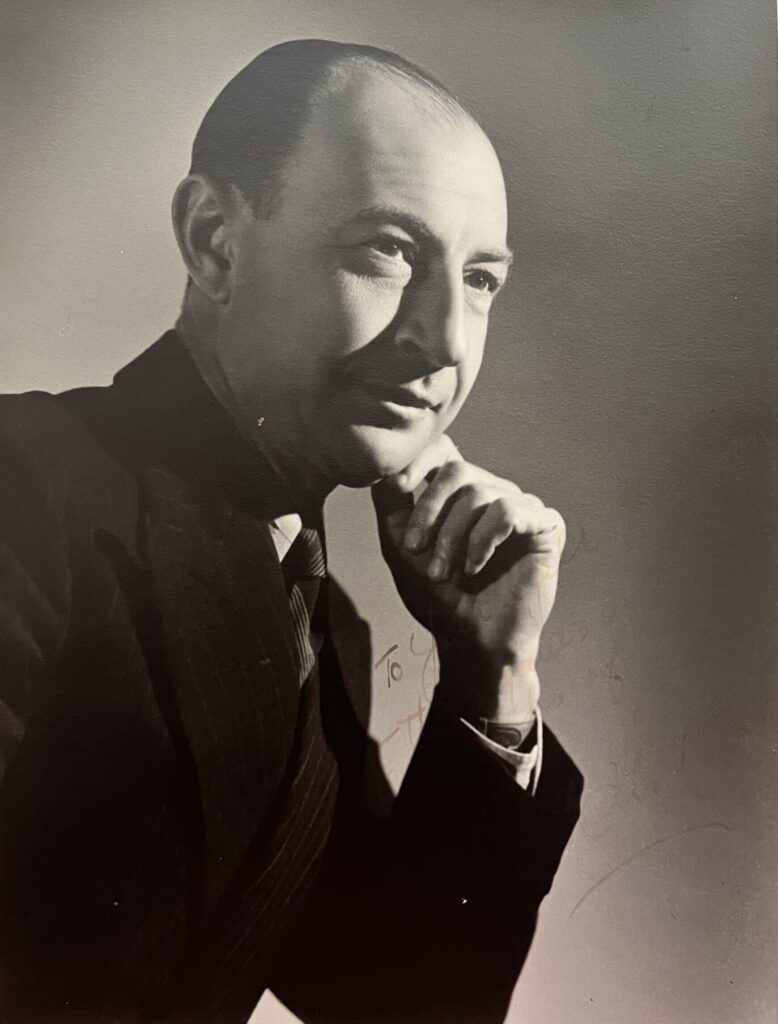
Joseph Mozart Post (1906-1972), musician, was born on 10 April 1906 at Erskineville, Sydney, eldest child of native-born parents John Anthony Joseph Post, law clerk, and his wife Annie Theresa, née Schadel. He grew up in a home rich in the traditions of amateur music-making. His mother was a talented chorister, and his father an enthusiastic conductor much involved with church choirs and suburban musical societies. Joe was regarded as a child prodigy. From about the age of 8 he provided the piano accompaniment at his parents’ musical gatherings. He attended the Christian Brothers’ parish school at Waverley, won a scholarship, and was among the first students at the New South Wales State Conservatorium of Music, opened under Henri Verbrugghen in March 1916. Post studied piano and oboe, acquiring enough proficiency on the latter instrument by the age of 15 to play with the New South Wales State Orchestra until it was disbanded in 1922. He then toured with theatre orchestras, visiting New Zealand in 1924 with one of J. C. Williamson Ltd’s musical-comedy companies.
By 1926 Post was teaching oboe and cor anglais at the conservatorium; later, he also offered tuition in piano. He graduated in 1927 with diplomas in performance and teaching (pianoforte). Despite such auspicious beginnings, he did not see his vocation as a teacher nor as an orchestral musician, but chose to build a career as a conductor. The elder Post gave his son extensive informal training in the conductor’s art. Joseph always regarded his father as his most important mentor and severest critic.
After valuable experience conducting the conservatorium’s chamber orchestra and the choir at St Brigid’s Catholic Church, Coogee, Post seized an opportunity in 1932 to organize a 350-voice choir for the Imperial Opera Company (a touring Italian troupe) to perform in the Williamson Imperial Grand Opera Season. When the regular conductor became indisposed, Post conducted a performance of Aida at only a few hours notice, which led to regular conducting appearances with the company.
The establishment of the Australian Broadcasting Commission in 1932 introduced a powerful new force to the Australian music scene. Post astutely recognized the potential of radio and accepted an offer from the A.B.C. to form a wireless chorus in Sydney. He severed his connexion with the conservatorium, did some conducting with Sir Benjamin Fuller‘s Royal Grand Opera Company and visited Europe in 1935. Returning to Australia, he moved to Melbourne. From 1936 to 1947 he worked for the A.B.C. as a conductor of the Victorian Symphony Orchestra and the city’s A.B.C. wireless chorus.
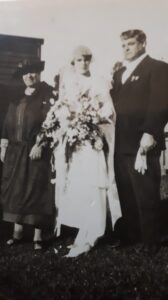
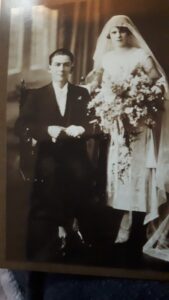
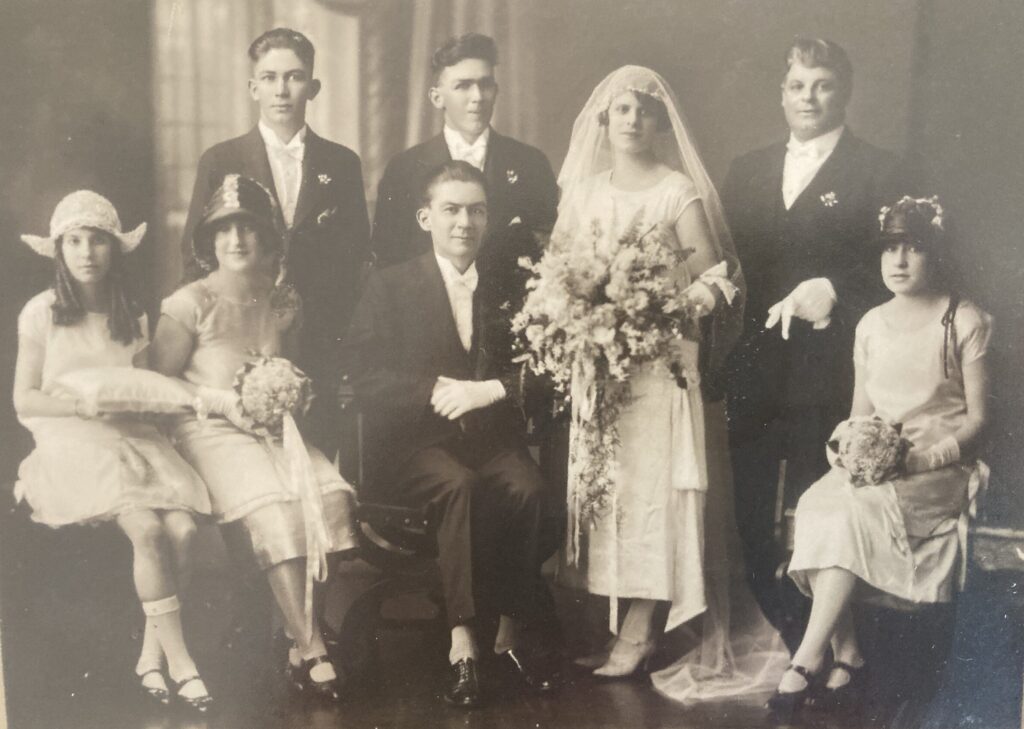
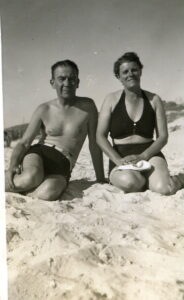
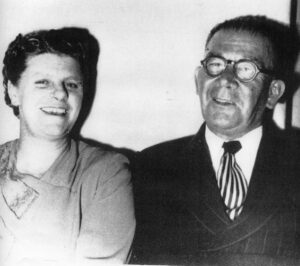
Post was commissioned lieutenant and mobilized in the Australian Army Service Corps, Militia, on 24 August 1940. Transferred to the Australian Imperial Force in July 1942, he was promoted temporary major in the following month and made commandant of the transshipment centre at Terowie, South Australia, an important staging point on the overland supply route to Darwin. He relinquished command in February 1945 and was placed on the Reserve of Officers in March. At St Patrick’s Cathedral, Melbourne, on 12 May 1943 he had married Nancye Lille Tucker, a 28-year-old stenographer.
After World War II Post continued as one of the A.B.C.’s chief conductors. From 1947 to 1957 he was associate-conductor with the Sydney Symphony Orchestra, a term that virtually coincided with (Sir) Eugene Goossens‘s period in charge. Post made many guest appearances with A.B.C. orchestras across Australia. In 1950 he went to Britain on exchange with Charles Groves, conductor of the British Broadcasting Corporation’s Northern Orchestra. At his début at the Royal Albert Hall, Post became the first Australian to conduct at a Promenade Concert; he included a piece by the Australian composer Clive Douglas. He also conducted the Hallé and other British orchestras. At his final concert with the Northern Orchestra, crowds filled the hall and flowed outside.
Despite such successes, Post’s career with the A.B.C. was marred by disappointment. In 1945 he had submitted a proposal to the A.B.C. to establish the Victorian Symphony Orchestra on a full-time basis, but he was twice overlooked for the position of principal conductor. He made no secret of his chagrin when he was not appointed director of music in 1957. Throughout his long tenure with the A.B.C., he never relinquished his involvement with his first love, opera. He was musical director (1947-54) of Gertrude Johnson‘s National Theatre Movement and principal conductor (from 1949) for its opera. In addition, Post also conducted seasons with the New South Wales National Opera in Sydney, and joint seasons of the combined opera companies in 1952. Granted leave from the A.B.C., he was appointed musical director of the Australian Elizabethan Theatre Trust in 1955. He conducted the trust’s first opera production, The Marriage of Figaro, in 1956, but resigned next year to return to the A.B.C. as assistant-director of music.
Heavier administrative responsibilities did not significantly curtail the number of Post’s performances. In 1963 he established the Sydney Little Symphony Orchestra and conducted its début series of four concerts. He also continued his long association with school concerts. The advent of television broadcasting created new audiences for him. He made television appearances with the S.S.O. and conducted numerous operas on television. In 1962 he travelled to Europe and the United States of America to investigate methods of presenting music on television.
At a time when most Australian classical musicians depended on success abroad, Post built a public career in Australia. He and Sir Bernard Heinze represented the first generation of native-born conductors to rise to prominence under the A.B.C. Post conducted when an Australian was required to support visiting celebrity musicians. The role suited his talents admirably. He was proud of his efforts to promote ‘Australian’ composers, releasing recordings of Raymond Hanson‘s Concerto for Trumpet and Orchestra (1948) and Robert Hughes’s Xanadu (1954). Nor was he averse to the performance of ‘new music’, though his tastes could hardly be regarded as avant garde.
In 1966 Post was appointed O.B.E. That year he succeeded Heinze as director of the New South Wales State Conservatorium. He was its first diplomate to fill the position. Although reluctant to take the job, he put considerable effort into the conservatorium’s opera school, but limited his wider involvement to consolidating initiatives begun by Heinze.
Post was a small, spry man with an alert demeanour and an acerbic tongue. He had many interests beyond the music world, being fond of sport (especially golf and lawn bowls), gardening (particularly cultivating camellias) and cooking. A passionate ‘do-it-yourself’ home handyman (who whittled his own batons from English birch), he had an intensely practical approach to life. Post preferred to talk about anything but music, and always insisted that his favourite composer was the one ‘whose work I am playing at the moment’. Like many musicians, he had a strong sense of effort insufficiently rewarded. While he and his brothers John Verdi and Noel Schumann were propelled into careers as professional musicians, Joseph actively discouraged his only child Nola from any sort of musical training. Privately, he spoke of a vanquished desire to practise architecture.
Increasingly dogged by ill health, Post resigned from the conservatorium in late 1971 and moved to the Gold Coast, Queensland. He died of myocardial disease on 27 December 1972 at Broadbeach and was cremated; his wife and their daughter survived him. Although the family had Jewish connexions, Post had been raised in the Catholic faith and died devout in his atheism. He made an unrivalled contribution to the development of opera-conducting in Australia and was, in Roger Covell’s words, the ‘first Australian-born musician to excel in this genre’. As an orchestral conductor, he was judged a ‘good all-round man’: he was well-regarded for his enthusiasm, clarity and economy of gesture, but he was not associated with inspiring or challenging musicianship. None the less, his ability to take over conducting assignments at very short notice became legendary and was greeted with ‘rave’ reviews. Such was the case in 1955 when he substituted for Goossens at a day’s notice to conduct Max Rostal in Bartók’s Violin Concerto, a score with which Post was unfamiliar.