Search names, events, places, organisations, and sources across the archive.
Person
NICHOLLS, Stephanie
Stephanie Nicholls is a Perth-based oboist, pianist, musical director and arts leader with a passion for bringing people together through music.
An accomplished orchestral musician, Stephanie has performed extensively with the West Australian Symphony Orchestra, including as Associate Principal Oboe, and regularly performs as Principal Oboe with Perth Symphony Orchestra.
She is also a collaborative pianist, educator and examiner, with teaching and mentoring experience at the University of Western Australia, WAAPA and Methodist Ladies’ College.
In 2017, she was appointed as a consultant for the Australian Music Examinations Board’s oboe syllabus.
In 2023, Stephanie founded Mirabilis Collective, a Perth-based arts organisation dedicated to celebrating the music and achievements of women composers and performers. As Artistic Director, she brings together musicians across generations to create imaginative chamber music performances that combine outstanding musicianship, storytelling and connection.
In October 2026, Stephanie founded and directed the inaugural Hear Her Now Chamber Music Festival, a 12-day celebration featuring more than 20 events and music by 157 women composers and songwriters spanning over 900 years.
Through Mirabilis Collective, Stephanie also champions regional engagement, music education and community participation, creating opportunities for musicians and audiences to connect through shared musical experiences.
Her work reflects a strong belief in the power of music to build community, nurture talent and ensure that music by women has a lasting place on Australian stages.
Ronald Richmond was born 12th July 1906 in Manchester, England to Prudence and Harry Richmond.
The family, including Ron’s siblings Ivy and Edgar emigrated to Australia and in 1930 in Victoria Ron married Effie Isabel Armstrong.
In 1931 they had a daughter Joy Iolanthe Richmond who would later marry saxophonist Peter Clinch.
Ron appears in West Australian Symphony Orchestra printed programmes from 1955.
1956 WASO orchestra list
COMPOSER IS PROVOCATIVE – February 21, 1956 – By “Fidelio”
A West Australian composer, James Penberthy, offered us last night what in some ways the most adventurous Australian composition so far heard in the Art Gallery programmes.
This includes, notably, his medium of expression; a wind quintet consisting of flute, oboe, clarinet, horn and two bassoons. For this unusual combination Mr Penberthy had produce a work in short, linked movements, based on the music and life of Australian aborigines. He obtained interesting effects in the way of atmosphere and drastic colourings, but his score sounded very fragmentary. It seemed often to be hovering uncertainly between outright imitative realism and the freer imaginative flight which, we felt, should not convincingly emerge. Another unusual inclusion was a set of three nicely fanciful songs for soprano and flute (no piano) by John Gordon, the words being taken from Chinese. The rest was chiefly light music, generally pretty in a conventional style. There were two pieces for flute and piano by A.C. Black (a West Australian), clarinet and piano pieces by Dulcie Holland and Moneta Eagles, songs by Horace Keats and Elizabeth Mills.
Thomas Mayer (conductor) listening to a recording playback with Norman Bourke and Ron Richmond (oboe)
In 1964 Joy Cummins was appointed second oboe in the WASO in 1964 when Ron Richmond had to retire due to ill health and Peter Randall was appointed Principal Oboe.
Stephanie St Clair James was born in 1913 in Northam to Cuthbert Roper and Elsie James.
1935
Finalists In Musical Festival Sections
Further preliminaries in the eleventh Western Australian Musical Festival were conducted at the Assembly Hail today. Those selected as finalists in the piano duet (under 13) were Stephanie James and Eileen Kidson, Shirley Burden and Carmel Burrows, Elsie Masarei and Joan Tempelman, Marcia Ellis and Joyce Foreman, L. Rosekelly and Alison Linden. Finalists in the violin solo (under 13) tests were Lionel Elliott, Gertrude Segal, Joy Hobley and Edward Smith.
Daily News (Perth, WA : 1882 – 1955), Wednesday 2 October 1935, page 5
THE SILVER WATTLE CLUB.
The Silver Wattle Club of Midland Junction held its final meeting for the year on Thursday, November 28, when many visitors were present to enjoy the fine programme and afternoon tea provided. Many gifts from members and friends were sold in aid of the funds for Y.W.C.A. work in the district. The programme was contributed to by: … Mrs. James, recitation, Miss Stephanie James, piano solo.
Swan Express (Midland Junction, WA : 1900 – 1954), Thursday 12 December 1935, page 6
1936
Last Stages Of Music Festival
The West Australian Musical Festival, conducted by the West Australian Music Teachers’ Association, entered its final stages today. It will conclude with the competition for ladies’ choirs tonight. Today the piano sight reading, under 13 under 15 and open were decided. Only-one prize was awarded in the open piano sight reading:
Piano sight reading (under 15)’: Barbara Corpe, 1; Stephanie James,
Daily News (Perth, WA : 1882 – 1955), Saturday 7 November 1936, page 15
MUSICAL FESTIVAL. Striking Piano Performances.
Brilliant pianoforte displays by competitors in the prize-winning section and in other classes were features yesterday of the 12th annual musical festival promoted by the West Australian Music Teachers’ Association, and the adjudicator (Mr. Thorold Waters) found his task a hard one. The festival, which opened on Monday, will continue until Monday evening next. Last night there was a large and appreciative audience. “This has indeed been a stimulating performance, and one which revealed outstanding merit,” said Mr. Waters, at the conclusion of the main feature of the evening-the prize-winners’ section, in which four competitors (all first prize winners at previous festivals) appeared. Each was required to play a Bach excerpt, a sonata movement and a modern piece. In naming Miss Mavis Dick the winner, the adjudicator said that her playing was remarkable for its certainty. He could not detect a note badly defined. Miss Dick chose Bach’s Fugue in G Major, No. 15, First Movement of the Sonata Op. 90 (Beethoven) and “Reflets dans l’eau” (Debussy). She won the event with 90 points, Misses Owenle Lynch (88 points) and Lorna Ford (87 points) being second and third respectively. The evening’s programme opened with the final of the pianoforte solo for competitors over 12 and under 14 years. In this John Hobley, with 83 points, was first, Eleanor Williams (82 points) was second and Stephanie James (81 points) was third. Marjorie Harper and Louis Pryor received honourable mention. In his comments, Mr. Waters said that the piece, “Will o’ the Wisp” (Sweating) had given competitors a severe test and, taken generally, they had done very well. In the under 10 violin solo event, Joy Hobley, with 84 points, was successful with Lionel Elliott (83) points second. There were four sets of finalists in the under 15 pianoforte duet section, who were required to play Colin Taylor’s “Sally Waters.” At the conclusion, the adjudicator confessed that he was hard put to it to separate the competitors. All had rendered very bright performances. Stephanie James and Evelyn Osborne were named the winners with £1 points and Barbara Corpe and Verna Smith were second with 80 points. Marie Quinliven and Joy Salter received honourable mention from the adjudicator. “This song is one which makes big demands on the feelings of the singer. It is a reflective sort of an affair, almost a soliloquy and its Eastern idiom makes it hard to convey. Yet the poetry is beautifully simple; the music, however, is not so simple. The four singers have done well with this song.” Mr. Waters was referring to Granville Bantock’s “Yung Yang,” which was the piece set for the mezzo-soprano solo event. With” 85 points, Mrs. 0. Cox was first, Miss L. Turner (84 points) was second and Miss N. Mcserracher (83 points) was third. Miss G. Tearle received honourable mention. Mr. Mr. N. Grange won the baritone solo event with a good rendering of “Ethiopia Saluting the Colours” (Chas. Wood), which, Mr. Waters commented, was a “very difficult song to interpret.” Mr. W. Frankish was second, with three points less than the winner. Although the hour was growing late, considerable interest was taken in the folk song contest, in which there were three competitors. Mr. Waters complimented all the singers on their renderings and awarded the first prize to Miss Myril Frape, who sang “Look Into My Eye, Come Near,” and another folk song. Mr. B. Gamble was awarded second position. The Darlington Double Quartet was the only entrant in the concerted item section and, after listening to the singers’ rendering of “The Stable Door” (Armstrong Gibbs), the adjudicator recommended to the committee that a special prize be given. Mesdames E. Stokes and J. J. Curlewis and Messrs. J. Tomlinson and A. Bumstead won the mixed quartet event. They sang Pinsuti’s “The Sea Bath its Pearls.” Tonight the first choral contest will take place, for the West Australian Newspapers’ prize and the Hugo Fischer Cup. Contralto and tenor soloists will be heard in finals and there will also be the final of the duet for two pianos.
West Australian (Perth, WA : 1879 – 1954), Thursday 5 November 1936, page 9
1937
TRINITY COLLEGE OF MUSIC. West Australian Exhibitioners. SYDNEY, May 26.–In connection with the award of local exhibitions for Australia by Trinity College of Music, London, the general secretary for Australia (Mr. G. de Cairos Rego) has received the following list of West Australian exhibitioners:–Perth: Stephanie James (senior practical), Boma J. Williams (senior practical), Joy Hobley (intermediate practical), James Purvey (intermediate practical), Lindsay Walker (junior practical), Connie Guilfoyle (Intermediate theory), Norma J. Goodes (advanced junior theory), Mary L. Flanagan (advanced junior theory). Coolgardie: Frances J. Moran (advanced junior theory). York: Margaret L. Betts (intermediate theory). These exhibitions provide tuition in musical subjects or elocution for 12 months.
West Australian (Perth, WA : 1879 – 1954), Thursday 27 May 1937, page 20
TRINITY COLLEGE OF MUSIC. West Australian Exhibitioners. SYDNEY, May 26.-In connection with the award of local exhibitions for Australia by Trinity College of Music, London, the general secretary for Australia (Mr. G. de Cairos Bego) has received the following list of West Australian exhibitioners:-Perth: Stephanie James (senior practical), Roma J. Williams (senior practical), Joy Hobley (intermediate practical), James Purvey (intermediate practical), Lindsay Walker (Junior practical), Connie Guilfoyle (intermediate theory), Norma J. Goodes (advanced junior theory). Mary I. Flanagan (advanced junior theory). Coolgardie: Frances J. Moran (advanced junior theory). York: Margaret L. Betts (intermediate theory). These exhibitions provide tuition in musical subjects or elocution for 12 months.
Western Mail (Perth, WA : 1885 – 1954), Thursday 3 June 1937, page 26
1939
MUSICAL FESTIVAL. Keen Choral Competition.
At last night’s session of the 14th West Australian Musical Festival, promoted by the W.A. Music Teachers’ Association, girls’ choirs and choirs from primary schools delighted a large audience in the Perth Town Hall. Public appreciation was shared by the festival adjudicator (Mr. Harold S. Elvins), who, at the close of the evening, said that he wished to congratulate Perth on having such a number of beautifully fresh young voices. The Victoria Square choir, which won ‘The Western Mail” shield for girls’ choirs, received high commendation from the adjudicator. “Their rendering was very delightfully clear in tone,” he said, “and the speed was nice and well sustained . . . it was a delightful performance. In ‘the Echo Song’ one could almost believe that the echo was outside the hall. The performance was technically faultless. The The songs which girls’ choirs were required to sing were Purcell’s “Nymphs and Shepherds” and “The Echo Song,” by Rowley. Eight school choirs competed, and such was the high standard that only ten marks separated the winning choir from the last on the list. The Victoria Square choir won with 92 marks and the Perth Girls’ School choir and Sacred Heart High School choir, with 88 and 87 marks respectively, were second and third. Six primary schools competed for the Levinson Centenary Shield for choirs of children under 13 years of age. This section was won by St. Joseph’s School with a performance which was. described by the adjudicator is “very delightful” The Kellerberrin State School choir and the East Victoria Park State School choir obtained the second and third places. During yesterday morning and afternoon several other sections. were decided. The’ pianoforte solo for children between 13 and 16 years of age provided an interesting contest. It was won by Mannix Gosper with 91 marks, with Stephanie James (90 marks) and Shirley Bowes Thompson (88 marks) closely following. The adjudicator said that the winner’s work was very good indeed and showed imagination and a sensitive touch. The festival will be continued today in the Assembly Hall. An important item of tonight’s programme will be the ladies’ solo championship, in which there are five finalists.
Other results of yesterday’s contests were as follows: Violin solo (under 14).-Helen Hookway (86 marks). Duet for two pianos-Stephanie James and Lois Harry (86 marks), 1; Terry Jeffers and Arthur Huck (84 marks), 2. Piano solo (over 13′ and under 16).Mannix Gosper (91 marks), 1; Stephanie James (90 marks), 2; Shirley Bowes Thompson (88. marks). 3. Piano quick study contest (under 15) Stephanie James (91 marks). Piano solo (over 15 and under 18). John Hobley (88 marks); 1: Nancy Hemmant (87 marks), 2; Owenyth Evans (85 marks). 3.. Piano solo (over 9 and under 12. final).Joy Edgar (91 marks). 1:. Margaret Carney (90 marks), 2; Walter Bourke (89 marks). 3. Piano solo (over 11 and under 13. final) Allison Linden (87 marks). 1: Walter Bourke (86 marks), 2; Mary Bernet and Valma Hoult (85 marks each). 3. Piano solo (over 12 and under 14. final) Barbara Webster (90 marks), I; Mina Kooperman (89 marks). 2; Ted Bailey (88 marks), 3. Duet for two pianos (under 18):–Morna Graggs and Mannix Gosper
West Australian (Perth, WA : 1879 – 1954), Saturday 1 July 1939, page 15
1940
MUSIC SCHOLARSHIP. University Award for Pianist.
Each alternate year since 1922 the University of Western Australia has offered a music scholarship -valued at £180 (£60 a year for three years) to an outstanding candidate in the diploma and higher grade music examinations. This year the examiners-Mr. Harold S. Elvins, of the Melbourne Conservatorium of Music, and Mr. Frank Hutchens, of the State Conservatorium of Music, Sydney have recommended that the scholarship be awarded to Miss Stephanie St. Clair James, daughter of Mr. and Mrs. C. R. James, of Guildford. Miss James is only 16 years of age. She was born at Northam, but has spent most of her life at Guildford, where, until the end of last year, she was a music pupil of Miss Doris H Pearcy. During the present year she continued her pianoforte studies under Mr. Marshall Sumner. Miss James has had a series of brilliant successes in her pianoforte work. She passed each of the six grades of the University examinations with honours, obtained two exhibitions, and gained the A.Mus.A. diploma at the age of 12. In Trinity College examinations she obtained honours in the senior and higher local divisions, an exhibition and three medals, and lst year, at the age of 15, she gained her L.R.S.M. diploma from the Associated Board of the Royal Schools of Music. She has also been consistently successful in the annual music festivals. Success has attended Miss James’s efforts in other spheres than music. She is an outstanding pupil of Perth College, Mt. Lawley. In 1938 she passed the junior certificate examination in ten subjects, and has distinguished herself particularly in languages. She has her swimming and running colours, having competed successfully for her school in Interschool sports. Next month Miss James will sit for the leaving certificate examination, and. having then completed her general schooling will proceed to a conservatorium of music to continue her music studies.
West Australian (Perth, WA : 1879 – 1954), Wednesday 23 October 1940, page 6
1941
Miss Stephanie James will leave by the Westland express on Saturday to continue her musical studies in Melbourne.
West Australian (Perth, WA : 1879 – 1954), Tuesday 28 January 1941, page 10
Woman’s Realm —ROUNDABOUT. People and Events. By “Halsted.”
THERE was a bevy of young people mostly pupils or ex-pupils of Perth College on the central railway station on Saturday afternoon to wave good-bye to Stephanie James, the gifted young West Australian pianist, who was leaving for Melbourne to take up a four years’ scholarship at the Melbourne University Conservatorium. She was accompanied by her mother, Mrs. Cuthbert James. Arrangements have been made by Miss James’s former teacher (Mr. Marshall Sumner) for her to study with Miss Reike Parker, who was a personal pupil of Schnabel, the German virtuoso, on each of her two trips to Europe. Miss Parker is a sister of Miss Katherine Parker (Mrs. Hubert Eisdell), who is a well-known pianist and composer in London. It is interesting to learn that on her arrival in Melbourne Miss James will use a piano lent to her by another gifted young West Australian, Miss June Epstein, who is returning to this State to take up an appointment at Kobeelya Girls’ School, Katanning. If the necessary arrangements can be made, Miss James hopes to study the oboe as her second instrument.
West Australian (Perth, WA : 1879 – 1954), Tuesday 4 February 1941, page 5
MUSIC SCHOLARSHIP. Won by West Australian Student.
The chairman of the University Music Board (Professor A. D. Ross) has received advice that Miss Stephanie St. Clair James has been awarded the Royal Schools of Music (London) scholarship open to candidates throughout Australia entering for examinations of the Australian Music Examinations Board. The scholarship is tenable for two years and is of the value of £50 per annum. The scholar is required to continue the study of music either at an approved conservatorium of music in Australia or at one of the Royal Schools in London. Last October Miss James gained the £150 music scholarship awarded biennially by the University of Western Australia. Born at Northam in 1924, she has spent most of her life in Guildford, where she was a music pupil of Miss Doris H. Pearcy, but during 1940 she continued her pianoforte studies under Mr. Marshall Sumner. She attended Perth College and passed the junior in 1938 and the leaving certificate last November. Early this year she went to Melbourne and enrolled in the University Conservatorium of Music for the three-year diploma course. She won a further exhibition at the entrance test. Commenting on the award of the scholarship, Professor Ross said yesterday that Miss James was an outstanding student. Her pianoforte playing had last year called forth strong recommendation from the University’s music examiners–Mr. H. S. Elvins, of Melbourne, and Mr. Frank Hutchens, of Sydney who had been impressed by a certain maturity and balance in her playing which was unusual in so young a candidate. “It is good to know,” said Professor Ross, “that Miss James is an allround scholar. To her marked ability in music she adds high attainments in languages, and she has also distinguished herself in sport. Professor Ross added that when the scholarship was first instituted in 1937 the award then was to Miss Owenie Lynch, of Western Australia, who had since gained the Diploma in Music of the University of Melbourne and was now practising as a teacher of music in Kalgoorlie. That West Australian candidates had gained two out of five awards was testimony to the excellence of music work in this State.
West Australian (Perth, WA : 1879 – 1954), Wednesday 7 May 1941, page 4
1943
6WN HIGHLIGHTS
For Week Ending January 23 • A programme “From the Classics” will be given at 3 pm on Sunday. At 8.45 pm (Stephanie James will present a programme.
Swan Express (Midland Junction, WA : 1900 – 1954), Thursday 14 January 1943, page 3
1947
Finalists (By “Tenori”).
Australian Broadcasting Commission’s Concerto and Vocal Competition.
Finalists: Miss Betty North. Miss Nancy Barnden, Miss Betty Wright, Miss Norecn Edwards, and Miss Stephanie James.
Tuesday, April 23, in the Capitol Theatre, the Australian Broadcasting Commission conducted a Concerto and Vocal Concert at which were heard the above dualists in the recent competitions.
The Perth Symphony Orchestra, under the baton of Mr. Ernest J. Roberts, opened with an overture, “The Marriage of Figaro,” by Mozart. Miss Betty North played “Konzertstuck in F Minor for Piano and Orchestra,” by Weber. This item was followed by Recit. and Aria, ” Dove Sono,” from ” The Marriage of Figaro,” by Mozart, rendered by soprano Miss Nancy Barnden.
Miss Betty Wright then played the first movement of ” Concerto in A Minor, Op., 16, for Piano and Orchestra.” by Grieg, which completed the first half of the programme. After the Interval, Miss Noreen Edwards played a Concerto No. 1 in G Minor for Violin and Orchestra, first and second movements by Max Bruch. This artist, although quite young and immature, so far as orchestral associations are concerned, displayed a solidity and sympathy which makes her future musical career assured.
Miss Ray Williams, soprano, then sang “Il Est Deux, Il Est Bon” (from “Herodiade”), and the programme was brought to a close with an item from Miss Stephanie James, Symphonic Variations for Piano and Orchestra” by Franck. Of all the contestants this young lady was outstanding. She has the brilliance and poise of the accomplished artist and a promising musical future is. undoubtedly in store for her.
Music lovers throughout the Stale are appreciative of the Concerto and Vocal programmes provided by the A.B.C., which are a boon to country listeners and which provide aspiring young artists with the opportunity of displaying their talent before a public audience.
Westralian Worker (Perth, WA : 1900 – 1951), Friday 2 May 1947, page 2
A NEW CHOIR Successful Debut Of W.A. Choral Society (By Tactus.”)
The appearance of a new choral organisation in our midst should always be welcomed as another noteworthy stride forward in musical development. Still greater significance may be attached to a debut which brings with it work containing charm and artistry in good measure, as did that of the Western Australian Choral Society, conducted by Arthur Buss at its inaugural concert in the Perth Town Hall last night. The audience was large and appreciative. The choir, with a strength of nearly 70 voices, includes an unusual proportion of young members, and although there was the usual preponderance of the gentler sex and a tenor line of only seven, good balance was maintained. In the points that matter most–intonation, quality, precision, tone-shading and especially soft singing-meritorious results were secured. Good judgment was shown in the avoidance of compositions of magnitude, whilst still maintaining a good musical standard, and it should be added that when lusty climaxes were called for they were secured without force. Arrangements of airs and songs such as “Brother James” (Jacob). “Going Home” (from Dvorak’s “New World” Symphony), “Eriskay Love Lilt” (Kennedy-Fraser), “The Wandering Miller” (from Schubert’s “Die Schone Mullerin” Cycle) and Arne’s “Where the Bee Sucks” abounded in good harmony and were effectively sung. “Blessed Jesu, Fount of Mercy,” a composition in motet style, by Dvorak, Bach’s beautiful chorale, “Jesu, Joy of Man’s Desiring” (complete with the oboe obligato, played by Stephanie James). “My Love Dwelt in a Northern Land” (Elgar), “Ave Verum” (Mozart) and “Invocation” (Schumann) were also included in the choir’s presentations. Interludes provided by the associate artists added considerably to the attractiveness of the programme. Songs by Scott, Rachmaninov. Puccini, and Mozart were sung by Irene Stancliffe, instrumental trios by Beethoven and Bridge were played by Noreen Edwards, Wendy Tyler and Joy Edgar, and pianoforte works by Liszt were contributed by Stephanie James. All the accompaniments were efficiently played by Gwyn Brockway.
West Australian (Perth, WA : 1879 – 1954), Thursday 13 November 1947, page 8
1948
RECITAL
Beethoven’s A major sonata for ‘cello and piano was played by Otti Veit, ‘cellist, and Stephanie James, pianist, at Winthrop Hall last night This, with a group of old English folk songs, sung by Alice Mallon, was featured in a recital arranged by the Adult Education Board.
Sunday Times (Perth, WA : 1902 – 1955), Sunday 18 April 1948, page 10
1950
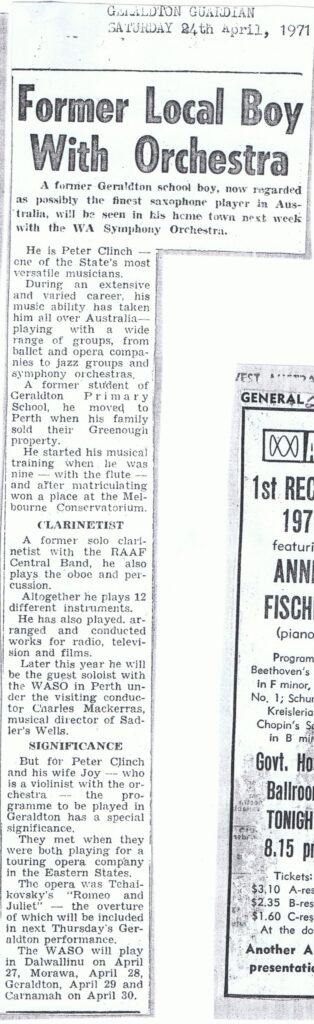
For over a week from Monday 23rd October 1950, clarinettist Jack Harrison toured to country centres under the auspices of the Adult Education Board and was accompanied on piano by and Stephanie James and vocalist Pamela Flower.
COUNTRY MUSIC TOUR
Three well-known local artists will leave on Monday on a tour of country towns under the auspices of the Adult Education Board. They are Miss Stephanie James, pianist, Miss Pamela Flower, soprano, and Mr. Jack Harrison, clarinettist. The assistant-director of Adult Education (Mr. John Birman) said yesterday that towns to be visited would include Harvey, Balingup, Donnybrook, Busselton, Boyup Brook, Kojonup, Katanning and Pingelly. This would be the last of a series of concerts in country districts presented by the board during this year. Afternoon, performances for children would be given, in conformity with the board’s policy to arrange concerts for schoolchildren whenever possible, Mr. Birman said.
The West Australian Saturday 21 October 1950 page 8
Tuesday October 24 1950 – Harvey – Outstanding Trio Of Artists
An outstanding trio of artists will present a concert at Harvey on Tuesday, October 24, under the auspices of the Adult Education Board. They are Miss Stephanie James, pianist, brilliant young West Australian, who has just returned home from overseas studies; Miss Pamela Flower, soprano, who is this year’s winner of the West Australian section of the Mobil Quest competition and who performed last year as soloist with the Perth Symphony Orchestra; and last, but not least, a very outstanding young man, Jack Harrison, who is well known throughout the State for his ability as a clarinet player. Mr. Harrison was this year’s State finalist in the A.B.C. vocal and concerto competition. There will be a school matinee in the afternoon.
Harvey-Murray Times Friday 29 September 1950 page 2
WEDNESDAY 25 OCTOBER 1950 – BALINGUP
A letter from the Adult Education Board which was read at the fast meeting of the CWA at Balingup intimated that there “was an opportunity of providing Balingup with a concert on Wednesday, 25th October. Three excellent Western. Australian artists will be making the trip and will include Miss Pamela Flower, soprano, this year’s winner of the WA division of the mobile quest competition. Jack Harrison, clarinettist, the finalist of this year’s ABC Vocal and Concerto competition and Miss Stephanie James who has just returned home from extensive studies abroad. There will be one evening performance and one afternoon performance for the children.
Blackwood-Warren Sentinel Thursday 5 October 1950 page 6
Thursday October 26 1950 – DONNYBROOK
The Adult Education Board advised that their next visit to Donnybrook with a group of artists would be on Thursday, October 26. The visiting group would include Pamela Flower, soprano; Jack Harrison, clarionetist; with Stephanie James, pianist. The secretary reported that the hall had been booked and preliminary arrangements made.
South Western times Thursday 28 September 1950 page 2
DONNYBROOK EDUCATION BOARD RECITAL
Visit Of Talented West Australian Artists Under the direction of the Adult Education Board Donnybrook was given the opportunity last Thursday to hear three brilliant West Australian artists, Miss Stephanie James (pianist), Miss Pamela Flower (soprano) and Mr Jack Harrison (clarinettist). The programme presented was well chosen, this being evident by the warm reception it received from a fairly large audience. Most gratifying to the local committee was the enthusiastic comments made by those who were fortunate to be present. This augurs well for the future. Mr. Jack Harrison opened the programme with Weber’s Concertino Op. 26 His control of tone and well rounded phrasing at once gave evidence of his ability. Worthy of note was the tonal work in the sustained passages of the slow movements. Later he was heard in “Hymn to the Sun” (Rimsky-Korsakov) Arabesque, an adaptation from Debussy’s No. 2 Prelude and Anita’s Dance from the Peer Gynt Suite by Grieg. Concluding both halves of the programme the voice, clarinet j and piano were heard together in “The Thrush” (Harrhy), “Bird Songs at Eventide” (Coates), “By the Waters of Minnetonka” (Lieurance), “Pipes of Pan” (Monckton). This could have been improved if the clarinet obligato was arranged and not merely the subtraction of certain passages from the piano accompaniment. Mention must be made of Miss James as the accompanist. At all times she was able to catch the mood and tempo of the soloists which is no mean feat. Her ability is remarkable. At the conclusion of the concert members of the local committee of the Adult Education Board entertained the artists at supper. Both Mr. Newton, the Adult Education Board representative and Miss Stephanie James, the leader of the artists thanked the committee. Among the audience were noticed the chairman of the Preston Road Board, Mr. J. K. Kirkpatrick and Mrs. Kirkpatrick, Mr. and Mrs. Newman (Lowden), Mr. and Mrs. R. Skinner, Mr. and Mrs. Guy Brockman, Mr. and Mrs. Cyril Skinner (Lowden), Mr. R. Trevena and Miss Trevena, Mr. A. O. W. Knight, Mr. L. Miller, Mr. T. V. Finch, Mr. and Mrs. L. Mortlock, Mr. and Mrs. G. V. Mitchell, Mrs. A. C. Fenn.
The Preston Mail and District Advocate Thursday 2 November 1950 page 3
THURSDAY October 26 1950 – CONSUMMATE ARTISTRY – Young Westralians Please – DONNYBROOK
A greatly improved patronage was afforded the Adult Education Board’s recital on Thursday evening last when the programme was presented by three brilliant young West Australian artists. The interest now being displayed in what the A.E.B. designates Everyman’s Music is most heartening to the committee which has undertaken the local arrangements. In this respect a word of thanks is due to Mr. Frank Arbuthnott who prepared an ideal stage setting, with the requisite lighting, and to Mr. L. J. Mortlock who made a new Mignon piano, from his showroom, available for the occasion. The visiting party paid glowing tributes to the way they had been received in Donnybrook and of the arrangements
made for the concert presentation. The local Adult Education Committee entertained Misses James and Flower and Messrs. Harrison and Newton (manager) at supper at the conclusion of the entertainment. During the afternoon a short matinee performance was given to about two hundred and fifty children drawn from the Donnybrook schools and the young folk evinced keen appreciation in the fare presented, especially when the mouth organ was produced by Jack Harrison. A pleasing feature of the afternoon was the way the children joined in singing the National Anthem.
The evening opened with Jack Harrison performing the clarinet solo part of Concertino Op. 26 (Weber), Stephanie James explaining that the Concertino was originally written to be played with orchestra. The clarinet was heard to good advantage in slow sustained passages and fingering left little to be desired. The first half of the programme concluded with concerted numbers for voice, clarinet and piano. This was particularly pleasing work, the numbers being “The Thrush” (Edith Harrhy) and “Bird Songs at Eventide” (Eric Coates) , the voice and clarinet harmonising to good effect. Jack Harrison again opened after the interval, choosing “Hymn To The Sun” (Rimsky- Korsakov), “Arabesque” (Debussy) and “Anita’s Dance” (Grieg). Here again the tone was beautiful and brought the audience to its toes. The programme concluded with another concerted group by the voice, clarinet and piano. These numbers “By The Waters Of Minnetonka” (Thurlow Lieurance) and “Pipes Of Pan” (Monckton) lent themselves admirably to the co-ordination of voice and clarinet. For the whole programme sympathetic accompaniments were given by Stephanie James. Thanks To Adult Education Board At the conclusion of the programme Mr. A. C. Frost, provisional chairman of the Donnybrook Adult Education Board Committee, on behalf of the audience, thanked the A.E.B. and the artists for the excellent programme given. Speaking on behalf of the committee he thanked the audience for their splendid response and voiced thanks to Mr. Len Mortlock for the loan of the new piano for the concert. He also expressed the hope that it would be possible to bring other artists and bigger ventures to Donnybrook. One of the requisites for more ambitious programmes was a concert grand piano and the Proton Road Board had now set in motion a proposition to purchase such an instrument for the hall. Previous generations, he said, were long sighted enough to provide a big hall and a stage of requisite size and now support from the Donnybrook people could make the completion of the whole project possible. Replying, Mr. Newton said that it was most heartening to the artists to receive such a warm reception and to have such a satisfactory setting prepared for which to give the concert. He went on to congratulate the Donnybrook civic fathers on their foresight and wisdom in securing a beautiful instrument for their hall. He promised that the A.E.B. would do everything possible to send programmes that will measure to the standard that is being set, mentioning the new State Symphony Orchestra. Finally, Mr. Newton thanked the committee for the setting they had provided on the stage for this concert\ as it was very rarely that the stage is well set and he felt sure that Mr. Arnott’s attention to these details had brought out the very best from the artists. He concluded by saying that the children’s audience at that afternoon’s matinee had been a credit to the parents of Donnybrook.
South Western Times (Bunbury) Thursday 2 November 1950 page 2
FRIDAY 27 October 1950 – BUSSELTON EVERYMAN’S MUSIC RECITAL – POPULAR VISITING ARTISTS
The programme presented in the Regal Theatre last Friday night by the artists, Stephanie James (pianiste), Pamela Flower (soprano) and Jack Harrison (clarinettist) proved to be one of the most popular and enjoyable Busselton has yet heard. The youth and charm of the performers appealed instantly to the audience, while the sincerity and quality of their work revealed them as musicians of high calibre. In turn, the warmth and appreciation of the audience inspired the artists, so that in such a pleasant, atmosphere, it was not surprising that the hours tied all too quickly. The programme opened with Weber’s Concertino, played by Jack Harrison, very ably accompanied by Stephanie James, who described. the piece beforehand as a small concerto. Jack Harrison’s artistry and tone were displayed again later in Rimsky Korsakov’s “Hymn to the Sun,” Debussy’s “Arabesque” and Grieg’s “‘Anitra’s Dance.” The three artists combined most effectively in two groups, one at the end of the first half of the programme and the other at the conclusion. So enjoyable was this combination, with the blending of the clarinet, voice and piano, that, the audience demanded an encore. On Friday afternoon, the children of the State School and Busselton Convent attended a short concert given by the visiting artists. Judging from the warmth of the applause the children enjoyed themselves thoroughly.
The South Western News (Busselton) Thursday 2 November 1950 page 5
Saturday October 28 1950 – Celebrity Concert At Boyup Brook
On October 28, under the auspices of the Boyup Brook Chamber of Commerce, the Adult Education Board included Boyup Brook in its itinerary and gave two hours of delightful instrumental and vocal recital. Those who were unable to attend are to be sympathised with for missing a musical treat which will long be remembered by those fortunate enough to be there. At conclusion the recital, two dainty posies of roses were handed to the lady artists by Mr. R. U Graham, the President of the Chamber of Commerce, after which Mr. B. Ryan, on behalf of the Chamber and residents of the district thanked the Director, Mr. B. Newton, the artists and the Adult Education Board for the recital. He expressed the appreciation of the real music loving section of the community and hoped the Education Board would always include Boyup Brook in its future itineraries. In responding, Mr. Newton said the Board would always include Boyup Brook in its itineraries. He emphasised how pleased he, and the artists were with the reception they had received, and made special comment on the decorations of the stage with flowers from local gardens, which he and the artists regarded as a special token of artistic appreciation. After the recital, he and the artists, accompanied by Members of the Chamber of Commerce and a few friends were entertained at “Blackwood” the home of Mr. and Mrs. R. L. Graham, to a delightful supper, at conclusion of which Mr. Newton thanked the host and hostess for their hospitality. At conclusion of supper, Mr. Harrison was persuaded to bring out his mouth organ, on which instrument he is one of Australia’s most outstanding artists, he gave two excellently rendered numbers which showed his ability with that instrument as well as with the clarinet. Noticeable features of the Director and the Artists were their sociability. They enjoyed themselves just as much as those present enjoyed their company. It was a happy conclusion to a pleasant evening and musical feast. On Sunday they, were taken on a tour round the district by Members of the Chamber of Commerce and by invitation were the guests to afternoon tea at the home of Mr. and Mrs. Frank Ritson. They were accompanied by Mr. and Mrs. R. L. Graham as host and hostess and Mr. and Mrs. A.T, Smith-Ryan. On the Monday they gave a morning concert to scholars from the Boyup Brook, Chowerup and Greenbushes schools in the Boyup Brook Town Hall. Over three hundred scholars were there.
The president of the Chamber of Commerce (Mr. R. L. Graham) and Mrs. Graham invited members of the Chamber of Commerce and their wives to a supper party at their home on Saturday evening last in honour of concert artists Miss Stephanie James, Miss Pamela Flower and Mr. Jack Harrison and Mr. Newton, of the Adult Education Board. An enjoyable supper was served, after which Mr. Jack Harrison favoured the guests with several mouth organ solos, accompanied by Miss James at the piano. On behalf of the artists, Mr. Newton thanked Mr. and Mrs. Graham for their informality and help in making the party such a success. Among those present were: The secretary (Mr. W. Bainbridge) and Mrs. Bainbridge, Mr. and Mrs. E. L. Cummins, Mr. and Mrs. F. Proctor, Mr. and Mrs. A. Smith-Ryan, Mr. and Mrs. V. Randell, Mr. B. 0. Ryan, Miss J. Graham and Mr. E. Godfrey, Mr. P. Scammel and Mr. and Mrs. W. Drown. On Sunday Mr. and Mrs. R. L. Graham and Mr. and Mrs. A. Smith-Ryan took Miss James, Miss Flower and Mr. Harrison touring around the district and later, by invitation, they visited the farm of Mr. and Mrs. F. Ritson and had afternoon tea.
The Blackwood Times (Greensbushes) Friday 3 November 1950 page 8
Monday 30 October 1950 at 8.15pm – KOJONUP MEMORIAL HALL
TUESDAY, 31st OCTOBER, 1950 at 8.15 p.m. in the – KATANNING TOWN HALL
MAKE SURE AND BOOK YOUR SEATS FOR THE CONCERT Featuring three Brilliant young West Australian Artists. STEPHANIE JAMES (Pianist) (First Public appearance after return from abroad), PAMELA FLOWER (Soprano) ,(West Australian Finalist Mobil Quest Competition), JACK HARRISON (Clarinettist) (West Australian Finalist A.B.C. Concerto Competition).
Box plan at Blythe’s Newsagency; Box plan at Barkley & Gilbert’s. Prices: 4/- (No Tax); Children, 1/6 anywhere Direction : Adult Education Board.
The Great Southern Herald (Katanning) Friday 20 October 1950 page 4
CONCERT ARTISTS AT KATANNING – PROGRAMME TO BE PRESENTED ON TUESDAY OCTOBER 31
The Adult Education Board has advised that three concert artists will be presenting a programme at the Katanning Town Hall on Tuesday, October 3. The artists are all well-known in musical circles and their visit to Katanning will be welcomed. The third artist is also a West Australian, who has advanced very well in the musical world. He is Jackie Harrison who, since a very small lad, has been broadcasting over all stations. Mr. Harrison plays several instruments but is visiting Katanning as a clarinettist on this occasion. He is now only 20, but is the proud leader of his own dance band in Perth. He is perhaps better known among the younger people for his success in the jazz band contests in Perth each year. His twin sister plays the piano and his family in general are very musical.
The Great Southern Herald (Katanning) Friday 6 October 1950 page 2
KATANNING ADULT EDUCATION CONCERT – DELIGHTFUL PROGRAMME PRESENTED AT KATANNING
Sponsored by the Adult Education Board, three concert artists presented a delightful programme of great appeal at the Katanning Town Hall on Tuesday. Miss Stephanie James, who is well known in Katanning and who recently returned from further studying abroad, is regarded as one of the most promising pianists in Western Australia. Complementary with the other artists, Miss James showed her skill as a component artist and, as a soloist, played with great sensitivity and understanding Miss Pamela Flower’s chief quality was the delicate and restrained manner in which she handled the work she had chosen. Her stage presence was remarkable for one so young. Jack Harrison has had a meteoric rise to fame as a clarinet virtuoso and gave an unusual selection which was greatly appreciated. The choice of programme was ideally suited for the audience to which it was presented and evidence of its appeal was obvious through out. PIANO NEEDED IN KATANNING At the conclusion of the “presentation, Mr. B. Newton of the Adult Education Board, expressed the appreciation of the artists for the reception they had received at Katanning. He thanked particularly Miss Rae Ricket, and those who had assisted her, for making the local arrangements for the concert and for stage decorations. In thanking Miss Russell, headmistress of “Kobeelya,” for the loan of a piano, Mr. Newton considered it possible that presentations of Adult Education concerts at Katanning might increase in the future, in which case a good piano would he required at the Town Hall. He stated that a small local authority, not very far from Katanning, had recently purchased for its town hall a £900 instrument.
The Great Southern Herald (Katanning) Friday 3 November 1950 page 2
PINGELLY WEDNESDAY NOV 1 and NOV 2 1950
Miss Pamela Flower (soprano), this year’s W.A. finalist in the Mobil Quest competition; Jack Harrison, Clarinettist (finalist in the A.B.C. vocal and concerto competition), Miss Stephanie James, pianist (just returned from studies aboard), are to visit Pingelly under the auspices of the Adult Education Board). The Pingelly Committee finalised arrangements early this week for the visit of these outstanding artists, who are to combine in a Music-Song Recital in the Pingelly Town Hall on Wednesday evening, November 1, and a special programme for district school children, on Thursday morning, November 2. Residents of Pingelly, Brookton and surrounding districts will learn with pleasure of this visit by such well-known and highly rated artists and -at the same time will accord a measure of appreciation to those residents responsible for the arrangements. The box plan will open shortly at the Pingelly Newsagency and further details will be given later.
Pingelly Brookton Leader Thursday 5 October 1950 page 2
Pingelly Adult Education Board – Visit of Outstanding Artists. – Wednesday 1st NOVEMBER
It must have been a disappointment to those residents responsible for the visit to this centre on Wednesday evening of last week three such brilliant artists as Miss Stephanie James (pianist), Miss Pamela) Flower (soprano), and Mr. Jack Harrison (clarionetist), that the Everyman’s Music Recital in which these three artists took part should have been accorded such relatively poor patronage. The Adult Education Board, under the auspices of which the recital was made possible, is commended for its efforts in bringing top ranking artists to rural centres and when a town of the size of Pingelly is privileged to participate in these tours, it is regrettable that the audience is not as large as it should be. Those who attended Wednesday evening’s concert were indeed fortunate, for the performance of the artists was really excellent and thoroughly enjoyed by all present. Mr. Jack Harrison fully retained, if not enhanced, his reputation with delightful renditions on his clarionet.
Pingelly – Brookton Leader Thursday 9 November 1950 page 2
ADULT EDUCATION CONCERT ENJOYED – Wednesday 1st NOVEMBER
Although the attendance at the Everyman’s Music Recital on Wednesday night last, was perhaps, a little disappointing, those who went along thoroughly enjoyed the program submitted by the three Adult Education Board artistes. Fortunately, there were sufficient patrons present to warrant a return at a later date of a similar program, which according to the manager, Mr. E. Newton, would be available in the near future. Many people attended, thinking that all the, music played would be of a classical level well above the heads of the ordinary layman. They were, however, very-agreeably surprised, to find that the majority of the program was well known and those songs which were not so well known were so well presented that they were usually as well enjoyed. Mr. Jack Harrison, who commenced the program with Concertino On. 26 by Weber literally thrilled his listeners with his uncanny technique and control of his clarinet. The rich mellow tone which he so effortlessly produced from this tube of wood and metal won him instant favour. Trios comprising piano, voice and clarinet obligato were exceptionally well presented and proved very popular.
Blackwood – Warren Sentinel Thursday 2 November 1950 page 6
The tour ended after schools’ performances the morning of Thursday 2nd November in Pingelly, a two hour drive from Perth.
1951
The second annual general meeting of the Upper Blackwood Chamber of Commerce was recently held in the Boyup Brook Hall and was well attended. “Two most successful cultural efforts were initiated by the Chamber with the ready co-operation of the Adult Education Board. The first was in the form of a concert by the Greek tenor, Mr. G. Saligaros and Louise D’Arcy, and the second by the trio, Miss Pamela Flower, Miss Stephanie James and Mr. Jack Harrison.
Blackwood-Warren Sentinel Thursday 5 April 1951 page 4
Stephanie James (left) Marcia Harrison, Jill Harrison
The first broadcast of “Jack Harrison and His Music” was on September 1951 on 6WN.
1951 – JACK HARRISON’S SEXTET OPENS ON 6WN
On September 2 Jack Harrison’s Sextet opens on 6WN. The programme will probably consist of light classics, arranged modern ballads, and bright numbers of the samba, tarantella and bolero type.
Last year Jack studied under the Sydney musician Clive Amadio and it is quite likely that Jack’s sessions will resemble the well-known Amadio Quintet.
Jack reports that the members are James Drummond (violinist), Stephanie James (pianist) who recently returned from Europe, Kenneth Murdoch (saxophonist) John Mowson (bass) and his father, William Harrison (organ and vibes). Jack will play first clarinet and second saxophone. He will have a guest singer for each session. Kath Bass, Phyllis Blott and Elise Longwill would probably be the first three he says. Each number will be arranged for the sextet. Jack and his father are doing some of this work. Some work by an Eastern States arranger is available provided it is copied. Sister Jill is doing this in her spare time in Adelaide.
The Broadcaster Saturday August 18 1951 Vol. 18 No. 907.
* THESE STARS TONIGHT *
Friday 7 December 1951
Elizabeth Munro-George, Flora Nowotny, Jack Harrison,
Len Hancock, Stephanie James, Linda Marsh,
JULIANA FLESFADAR (Coloratura Soprano)
PAPADAPAFF (Noted Violinist)
ANATOL PAVLOV and His Balalaika
Edgar Park, Dorothy Holl, Kate Judd School of Modern Ballet, at
GRAND CHARITY CONCERT
ASSEMBLY HALL, Pier Street.
Proceeds to “Daily News” Orphans’ Xmas Appeal Fund.
The West Australian Friday 7 December 1951 page 29
NSW Singer For Concert
WELL-KNOWN Sydney coloratura soprano Julia Flesfada, who arrived in Perth this week, will sing at the Assembly Hall, Pier-st., tonight. She will appear in a Legionnaires concert with pianist Elizabeth Munro-George, clarinettist Jack Harrison, violinist Papadaff, Stephanie James, Edgar Nottage; Len Hancock, and others. Proceeds from the show will be donated to the Daily News Orphans’ Christmas Cheer Fund.
The Daily News Friday 7 December 1951 page 3
1952
DONNYBROOK MUSICAL RECITAL
SATURDAY APRIL 26 1952
In the musical world of Perth the name of Vaughan Hanly is outstanding. He is one of the city’s most gifted violinists and is well known as a leader of the State Symphony Orchestra. Lorna McLean’ is a brilliant soprano who has appeared on the radio and concert platform with conspicuous success. Stephanie James will be remembered in association with Pamela Flower and Jack Harrison on a previous visit to Donnybrook when her work at the piano was a feature of the programme on that occasion. These three artists, Vaughn Hanly, Lorna McLean and Stephanie James, will be heard at a recital in the Donnybrook Memorial Hall on Saturday, April 26, when James on this occasion will have the added advantage of playing on the Bechstein grand. The recital is being sponsored by the Donnybrook Adult Education Committee at considerable cost and music-lovers in the South-West should not miss this opportunity of hearing these talented artists, (Box plans are now open at McDaniel’s newsagency).
Appearances as soloist with the State Orchestra, many studio recitals and tours for the Adult Education Board have made the pianist, Stephanie James , a well known figure in West Australian music circles. Just recently featured with the orchestra at one of the A.B.C.’s 1952 series of concerts for youth, Miss James will be making her first Kalgoorlie appearance as a soloist when she plays at the concert to be given in the Kalgoorlie Town Hall on October 14. Music has brought travel to Stephanie James, for her studies have taken her to many places far from home. At the age of 16 she won two scholarships to the Melbourne Conservatorium, where she gained her Mus.B. degree, and two years later she made a two-year visit to London, France and Switzerland, tour during which she studied at the Royal Academy of Music under well-known teacher, Harold Caxton. At Kalgoorlie she will present with the orchestra, a popular Grieg concerto.
Organisers of the Greek Earthquake Victims’ Relief Fund hope to pass £3,000 with proceeds from a concert in the Capitol Theatre tomorrow night. This week the committee sent £500 to Greece, bringing the total to more than £2,500. In addition, a consignment of clothing was sent for earthquake victim relief. Tomorrow night’s concert will be directed by Mr. Stephen Dornan. Artists will include Shirley Flesfader and Stephanie James, Peter Martin and the Moongana Singers. Two films, including a newsreel of earthquake damage, will be presented.
West Australian (Perth, WA : 1879 – 1954), Saturday 26 September 1953, page 4
1954
Two Women Musicians Will Play For Queen
Looking forward to playing for the Queen are two of Perth’s women musicians, Miss Aino Neumann, a double bass player, and Miss Stephanie James, a pianist. They will be members of a small group who will provide music at the parliamentary dinner and at the women’s reception at the University. Both are members of the West Australian Symphony Orchestra. Born in Sydney, where she studied at the Conservatorium, Miss Neumann joined the orchestra when she came to Perth last year. She started piano lessons when she was, 11, but later decided to learn the double bass, an instrument she had always admired. Dwarfed by her instrument, Miss Neumann is one of the very few women double bass players in Australia. She comes from a musical family. Her mother was a singer and ballet dancer, and her grandfather played the French horn and the organ. In private life Miss Neumann is the wife of Mr. Neil Pierson, a trombonist. Her only hobby beside music, is housekeeping at their City Beach home. As there is no harp in the orchestra, Miss James plays on the piano the parts scored for the harp. A West Australian, she studied at the Melbourne Conservatorium and in England before she joined the orchestra four years ago.
West Australian (Perth, WA : 1879 – 1954), Thursday 18 March 1954, page 22
1955
FAIRY LIKE QUALITY – CELESTE FEATURED BY ORCHESTRA
Concert At Collie
Amongst the thousands of pounds worth of instruments travelling with the W.A. Concert Orchestra during its forthcoming tour will be the piano-like Celeste. This has been fairly recently acquired by the Commission and will be the first time it has been used in country performances. It is believed to be the only one in the State. The Celeste is, about one third the size of an ordinary upright piano. It has a keyboard, and when played, it gives the sound of tinkling bells. There is a fairy-like quality about it and effective use is made of this in the “Dance of the Sugar Plum Fairy” from ‘Nutcracker Suite.” When no harp is available to an orchestra, effective use can be made of the celeste by modifications to the parts written for harp. It has been frequently used in this way at Perth orchestral concerts. Playing the Celeste is Stephanie James, who has made many appearances with the Orchestra since she returned from a two-year study trip. to London, France and Switzerland. The concert in which the Celeste is to be featured will be given in the Miners’ Institute Hall on Monday, March 28. Bookings are at McGeachie’s Newsagency.
Collie Mail (WA : 1908 – 1966), Thursday 24 March 1955, page 4
1961
1961 RADIO BROADCAST
Light Music by Family
When Perth’s versatile instrumentalist Jack Harrison and his quintet play, it’s a family affair. In a series of six programmes of light music starting this Tuesday at 8pm from 6WN, Harrison will play the harmonica, saxophone and clarinet. He and his father have made special arrangements of Latin-American tunes slow ballads and novelty numbers for the programmes. Members of the quintet will be Harrison’s twin sister Jill (bassoonist and second pianist) her husband John Mowson (principal bass with the W.A. Symphony Orchestra), Laszlo Vidak (violin), Verdon Williams (percussion) and Stephanie James (principal piano).
BROADCASTS
The Eastern states have had the rare pleasure of hearing a good deal of Jack Harrison’s quintet from the A.B.C. stations. Jack produced six programmes of light music for 6WN with arrangements by himself and his father of Latin-American tunes, slow ballads and novelty numbers. Members of the quintet are: Jack, clarinet, saxophone and harmonica; his sister Jill on bassoonist and also as second pianist; her husband John Mowson, principal bass with the W.A. Symphony Orchestra; Laszlo Vidak, violin; Verdon Williams, percussion and Stephanie James, principal piano. The session is a pleasure to listen to.
The Australian Accordionist Vol. 8 No. 1 November 1961
1960 Stephanie married George William Coleman.
1966
MUSIC – By Peter Hellstrom – Festival Of Perth 1966
The Master of Queens Musick, Sir Arthur Bliss, has told the Festival Of Perth committee that the planning of the musical programs in the coming festival is a magnificent gesture to British music and should be more widely known. That it has become well known already in Britain is showing by letters from many leading authorities there they include congratulations from the executive of the Composers Guild of Great Britain. Though some prominent English music festivals like Cheltenham Aldeburgh and the longest established Three Choirs Festival feature their country music, no British festival has in recent times included such an extensive and exciting range of British music in one series. Works of nearly 70 composers are included. The Perth programs have been wisely spaced over the six week festival period and though many of the concerts will start at the customary 8 pm some will be at 6 pm to enable patrons to attend another festival attraction the same evening.
Works by Vaughan Williams Gordon Jacob, Howard Ferguson, Lennox Berkeley and Michael Tippett will be new to W.A. The London Symphony Orchestra conducted by Colin Davis will introduce Bliss’s “Discourse for Orchestra” to Australia in one of its Perth concerts. In the other, Tippitt’s Symphony No. 2 and Stravinsksy’s Symphony in Three movements will be played here for the first time. Leading W.A. musicians appearing as soloists in the festival will include soprano Molly McGurk who will sing Benjamin Britain’s song cycle Les Illuminations with the W.A. Symphony Orchestra. She will also sing the solo soprano part in the University Choral Society’s performance of Vaughan Williams A Sea Symphony. Stephen Dorman will be the accompanist for tenor David Galliver’s three British song recitals. He will also partner violinist Vaughan Hanly in a Sonata recital and will play the solo part in constant Lambert’s Concerto for Orchestra and Nine Instruments. Jack Harrison will be the soloist in David Tunley’s Clarinet Concerto and will be joined by the Oriel Quartet in Bliss Clarinet Quintet. Graham Wood will introduce James Penberthy’s Romance for Violin and Orchestra and Alice Carrard will be the pianist with the A.B.C. Wind Players in Rawsthorne’s recent quintet. Madame Carrard will be joined by Mr Stephen Dornan, Stephanie James and Michael Cole to perform Malcolm Williamson’s new Concerto for Wind Quintet and two pianos. The new university organist, Mr John Hind, will be soloist in a program which will feature the W.A. Bach Society. The Oriel Quartet will also be the soloists with the W.A. Symphony Orchestra in Elgar’s Introduction and Allegro for strings and will give a separate recital of works by Howells, Frank Bridge, John Exton (the newly appointed senior lecturer in music at the university) Gerald Finzi, Elizabeth Lutyens and Edmund Rubbra.
The West Australian September 1965
1966
1966 NEW PROGRAM OF “EVERGREENS” FROM W.A.
JACK HARRISON AND HIS MUSIC
A new series of popular all-time favourite music will start on Monday on May 16 1966 at 8.30pm on the First Network.
It will be presented by six members of the West Australian Symphony Orchestra led by Jack Harrison. Special arrangements have been written for their combination of bassoon, bass, violin, piano and percussion with the leader doubling on clarinet and saxophone. There are five programs in the series to be titled “Jack Harrison and his Music”. Jack Harrison will occasionally introduce his first love the mouth organ. He is a versatile musician and once made a multi track recording in which he played 14 instruments including percussion and piano. He has been a member of the W.A. Symphony Orchestra for 15 years during which he has appeared frequently as soloist in clarinet and saxophone Concertos. Highlights of these performances were the Australian Premiere of the Aaron Copland Clarinet Concerto and the Richard Strauss Double Concerto for Bassoon and Clarinet. On this occasion the bassoon soloist was his twin sister Jill who also joins him in his new series doubling on piano and percussion. Items in the first program are “Mice on the Move”, “Gigi”, “Sidewalk”, “Petite Waltz”, “Holiday in Honduras”, “Comedian Gallop” The Pygmy Patrol”, “Will O‘ Wisp” and “Forever Samba”. The other artists in the series Laszlo Vidak violin John Mowson bass Stephanie James piano and Verdon Williams percussion.
2015 – West Australian State Living Treasure
Stephanie Coleman has spent a lifetime playing, studying and teaching music in Western Australia. Known as one of Perth’s foremost pianists and lauded as one of the country’s most respected music teachers, Stephanie has spent more than 60 years dedicated to her art.
Stephanie first put her fingers on the ivory keys when she began lessons at the age of five. With encouragement from her mother, she continued to play the piano and throughout her childhood, she undertook music exams, entered competitions and played in Eisteddfods across Perth. She went on to study music at school, and to this day maintains in jest that she “never practiced enough.” In 1942, Stephanie completed her leaving certificate at Perth College and was offered a scholarship to study at the Melbourne Conservatorium of Music. She accepted the scholarship and moved from Perth to “big city” Victoria at the age of 16 to complete her Bachelor of Music. The degree took four years to complete and Stephanie often practiced up to eight hours per day.
In 1946, the young pianist finished her degree and moved back to WA to accept a position at Kobeelya Girls School in Katanning as a music teacher. Stephanie spent two years passing on her knowledge to young women in the rural town, before resigning in 1948 and returning to Perth. Rather than launching straight into another teaching job, Stephanie did what so many of her peers were doing at the time; she packed a bag and flew to London. She rented a flat with a friend and spent two “wonderful” years taking lessons with renowned pianists, teaching classes at a local secondary school, and attending concerts at London’s great music halls.
In 1950, Stephanie returned to Perth and quickly fell into a position at the ABC. The ABC’s studio orchestra was short a harpist, and Stephanie was asked to play the harp parts on piano, a move that delighted the young pianist and – she jokes – exasperated the conductor. She spent seven years as an orchestral pianist and studio musician before a new opportunity came up at the ABC when the main studio accompanist retired. Stephanie did not believe that she had a shot at the position and was surprised when she was asked to take on the job in 1957. She proudly accepted and was “thrilled” to work as the lead accompanist for eight years. With a preference for playing in the background instead of taking the spotlight as a soloist, Stephanie flourished at the ABC and “loved every minute of it.” She thrived on the challenge of receiving a stack of sheet music two days before going to air and enjoyed the collegiality and social aspect of working with other like-minded musicians from across the State. Through her work with the ABC, she received opportunities to tour the country with the West Australian Symphony Orchestra (WASO).
It was during her time with WASO that Stephanie met her late husband, George Coleman, who spent many years as the orchestra’s principal viola player. After 15 years at the ABC, Stephanie faced a serious setback in 1965 when spinal problems lead to issues with her left hand. After a major operation on her spine, Stephanie was forced to stop playing piano full time. She faced the change head-on and in the mid-1960s began to work full time as a piano teacher. She soon became known as one of the leading music teachers in the country and taught both privately and at the Western Australian Academy of Performing Arts. Stephanie’s teachings extended to children and adults of any age or skill set and many of Perth’s most respected pianists have studied under her. She worked as a music examiner and is currently a Patron of the West Australian Music Teachers Association. Stephanie holds the belief that studying music is incredibly rewarding and gives you an “insight into another world.”
In 1991, Stephanie was awarded a Medal of the Order of Australia in recognition of her service to music as a pianist, teacher and examiner.
Joseph Mozart Post (1906-1972), musician, was born on 10 April 1906 at Erskineville, Sydney, eldest child of native-born parents John Anthony Joseph Post, law clerk, and his wife Annie Theresa, née Schadel. He grew up in a home rich in the traditions of amateur music-making. His mother was a talented chorister, and his father an enthusiastic conductor much involved with church choirs and suburban musical societies. Joe was regarded as a child prodigy. From about the age of 8 he provided the piano accompaniment at his parents’ musical gatherings. He attended the Christian Brothers’ parish school at Waverley, won a scholarship, and was among the first students at the New South Wales State Conservatorium of Music, opened under Henri Verbrugghen in March 1916. Post studied piano and oboe, acquiring enough proficiency on the latter instrument by the age of 15 to play with the New South Wales State Orchestra until it was disbanded in 1922. He then toured with theatre orchestras, visiting New Zealand in 1924 with one of J. C. Williamson Ltd’s musical-comedy companies.
By 1926 Post was teaching oboe and cor anglais at the conservatorium; later, he also offered tuition in piano. He graduated in 1927 with diplomas in performance and teaching (pianoforte). Despite such auspicious beginnings, he did not see his vocation as a teacher nor as an orchestral musician, but chose to build a career as a conductor. The elder Post gave his son extensive informal training in the conductor’s art. Joseph always regarded his father as his most important mentor and severest critic.
After valuable experience conducting the conservatorium’s chamber orchestra and the choir at St Brigid’s Catholic Church, Coogee, Post seized an opportunity in 1932 to organize a 350-voice choir for the Imperial Opera Company (a touring Italian troupe) to perform in the Williamson Imperial Grand Opera Season. When the regular conductor became indisposed, Post conducted a performance of Aida at only a few hours notice, which led to regular conducting appearances with the company.
The establishment of the Australian Broadcasting Commission in 1932 introduced a powerful new force to the Australian music scene. Post astutely recognized the potential of radio and accepted an offer from the A.B.C. to form a wireless chorus in Sydney. He severed his connexion with the conservatorium, did some conducting with Sir Benjamin Fuller‘s Royal Grand Opera Company and visited Europe in 1935. Returning to Australia, he moved to Melbourne. From 1936 to 1947 he worked for the A.B.C. as a conductor of the Victorian Symphony Orchestra and the city’s A.B.C. wireless chorus.
Post was commissioned lieutenant and mobilized in the Australian Army Service Corps, Militia, on 24 August 1940. Transferred to the Australian Imperial Force in July 1942, he was promoted temporary major in the following month and made commandant of the transshipment centre at Terowie, South Australia, an important staging point on the overland supply route to Darwin. He relinquished command in February 1945 and was placed on the Reserve of Officers in March. At St Patrick’s Cathedral, Melbourne, on 12 May 1943 he had married Nancye Lille Tucker, a 28-year-old stenographer.
After World War II Post continued as one of the A.B.C.’s chief conductors. From 1947 to 1957 he was associate-conductor with the Sydney Symphony Orchestra, a term that virtually coincided with (Sir) Eugene Goossens‘s period in charge. Post made many guest appearances with A.B.C. orchestras across Australia. In 1950 he went to Britain on exchange with Charles Groves, conductor of the British Broadcasting Corporation’s Northern Orchestra. At his début at the Royal Albert Hall, Post became the first Australian to conduct at a Promenade Concert; he included a piece by the Australian composer Clive Douglas. He also conducted the Hallé and other British orchestras. At his final concert with the Northern Orchestra, crowds filled the hall and flowed outside.
Despite such successes, Post’s career with the A.B.C. was marred by disappointment. In 1945 he had submitted a proposal to the A.B.C. to establish the Victorian Symphony Orchestra on a full-time basis, but he was twice overlooked for the position of principal conductor. He made no secret of his chagrin when he was not appointed director of music in 1957. Throughout his long tenure with the A.B.C., he never relinquished his involvement with his first love, opera. He was musical director (1947-54) of Gertrude Johnson‘s National Theatre Movement and principal conductor (from 1949) for its opera. In addition, Post also conducted seasons with the New South Wales National Opera in Sydney, and joint seasons of the combined opera companies in 1952. Granted leave from the A.B.C., he was appointed musical director of the Australian Elizabethan Theatre Trust in 1955. He conducted the trust’s first opera production, The Marriage of Figaro, in 1956, but resigned next year to return to the A.B.C. as assistant-director of music.
Heavier administrative responsibilities did not significantly curtail the number of Post’s performances. In 1963 he established the Sydney Little Symphony Orchestra and conducted its début series of four concerts. He also continued his long association with school concerts. The advent of television broadcasting created new audiences for him. He made television appearances with the S.S.O. and conducted numerous operas on television. In 1962 he travelled to Europe and the United States of America to investigate methods of presenting music on television.
At a time when most Australian classical musicians depended on success abroad, Post built a public career in Australia. He and Sir Bernard Heinze represented the first generation of native-born conductors to rise to prominence under the A.B.C. Post conducted when an Australian was required to support visiting celebrity musicians. The role suited his talents admirably. He was proud of his efforts to promote ‘Australian’ composers, releasing recordings of Raymond Hanson‘s Concerto for Trumpet and Orchestra (1948) and Robert Hughes’s Xanadu (1954). Nor was he averse to the performance of ‘new music’, though his tastes could hardly be regarded as avant garde.
In 1966 Post was appointed O.B.E. That year he succeeded Heinze as director of the New South Wales State Conservatorium. He was its first diplomate to fill the position. Although reluctant to take the job, he put considerable effort into the conservatorium’s opera school, but limited his wider involvement to consolidating initiatives begun by Heinze.
Post was a small, spry man with an alert demeanour and an acerbic tongue. He had many interests beyond the music world, being fond of sport (especially golf and lawn bowls), gardening (particularly cultivating camellias) and cooking. A passionate ‘do-it-yourself’ home handyman (who whittled his own batons from English birch), he had an intensely practical approach to life. Post preferred to talk about anything but music, and always insisted that his favourite composer was the one ‘whose work I am playing at the moment’. Like many musicians, he had a strong sense of effort insufficiently rewarded. While he and his brothers John Verdi and Noel Schumann were propelled into careers as professional musicians, Joseph actively discouraged his only child Nola from any sort of musical training. Privately, he spoke of a vanquished desire to practise architecture.
Increasingly dogged by ill health, Post resigned from the conservatorium in late 1971 and moved to the Gold Coast, Queensland. He died of myocardial disease on 27 December 1972 at Broadbeach and was cremated; his wife and their daughter survived him. Although the family had Jewish connexions, Post had been raised in the Catholic faith and died devout in his atheism. He made an unrivalled contribution to the development of opera-conducting in Australia and was, in Roger Covell’s words, the ‘first Australian-born musician to excel in this genre’. As an orchestral conductor, he was judged a ‘good all-round man’: he was well-regarded for his enthusiasm, clarity and economy of gesture, but he was not associated with inspiring or challenging musicianship. None the less, his ability to take over conducting assignments at very short notice became legendary and was greeted with ‘rave’ reviews. Such was the case in 1955 when he substituted for Goossens at a day’s notice to conduct Max Rostal in Bartók’s Violin Concerto, a score with which Post was unfamiliar.
Born in Bern in 1951, Thomas Indermühle is the scion of a Swiss family of musicians. He studied with Heinz Holliger at the University of Music in Freiburg in Breisgau, and with Maurice Bourgue in Paris.
Afterwards, he spent several years as solo oboist in the Netherlands Chamber Orchestra in Amsterdam and the Rotterdam Philharmonic Orchestra. In 1974 he was awarded a prize at the International Competition in Prague, and in 1976 he won the International ARD Competition in Munich.
Since then, he has appeared as a soloist in almost all European countries, in the USA, Canada, Mexico, Japan, Korea and Australia. Leading composers as Manfred Trojahn, Wolfgang Rihm, Akira Nishimura and David Philip Hefti have written oboe concertos for Thomas.
Of great importance to him are also his “Ensemble Couperin”, his activity as a conductor, and his work with his students. Indermühle has been responsible for an oboe class at the Zurich University of Music since 1984, and in 1989 he was appointed professor at the University of Music in Karlsruhe.
He has recorded for Philips, EMI, Claves, Novalis and Camerata Tokyo.
Thomas Indermühle has been trusting Rigoutat since 1972.
Jay Raymond Harrison was the first child of Jack and Marcia Harrison. The name Jay was inspired by the Alan Jay Lerner of the composition team Lerner and Loewe and Raymond after his Dad’s brother Ramon.
Jay and Marcia
Jay’s early years weren’t without a spot of health problems, having been diagnosed with polio at 9 months old.
In 1955, Perth and the broader Western Australian community were in a precarious holding pattern against poliomyelitis (polio). Having survived a devastating, unprecedented epidemic in early 1954—which famously forced authorities to cancel massive royal tour children’s events for Queen Elizabeth II—Perth residents braced themselves as authorities eagerly awaited the highly anticipated, newly developed Salk vaccine. When Perth College shut in late 1955, Marcia’s 14 year old sister Nerida was sent to City Beach to keep her company. In December 1955 Marcia and Jack’s son Jay was diagnosed as having polio, something Marcia took some time to be convinced. One of his legs stopped growing correctly and he suffered chronic bronchitis. He had very specific eating aversions and Mum described his dinners coming back at her in a fountain of vomit.
As a result of polio, Jay was no Polly Farmer, but Mum and Dad noticed that Jay could sing complicated popular songs in tune and in time at an early age.
Marcia dressed Jay as William Tell for the City Beach Primary School Fancy Dress Ball – little did she know how many times he would play the massive cor anglais solo from the Overture with the same name!
Jay as William Tell1967 Harrisons around the Dodonia piano: Jody, Kim, Jack, Marcia and Jay
Jay learnt clarinet from his father Jack Harrison and from the age of 12 aspired to be an orchestral musician. By the age of 17 Jay had passed his AmusA on clarinet.
Jay in “The Five Saints”
At the age of 14, Jay won, as the clarinettist in a Dixieland jazz band called “The Five Saints”, the TV competition Stars of the Future – and travelled to perform in Melbourne as part of the prize.
1972 Jay playing the Dodonia piano with drum machine
In 1973 Jay went to W.A. Secondary Teachers College already accomplished on piano and clarinet and with a lovely tenor voice. He started learning the oboe as a second instrument with the then Principal Oboe of WASO, Peter Randall, who was quite a character.
Jay would turn up to his house of a Saturday morning and he would be in shorts and singlet. He would invariably be cooking up his famous chilli chutney and the smell would waft through the place.
After some lessons with David Theodore in London and only a short time as a full time instrumental teacher of the Clarinet, Oboe and Saxophone with the W.A. Education Department Jay was Principal Oboe in the W.A. Arts Orchestra and also doing casual playing in WASO when they needed an extra player.
Jay was playing second oboe to Robin Powell for a short time and then enjoyed a few visiting Principals such as Neil Stafford and Vicki Phillipson.
April 1979 – NEWS OF THE PLAYERS
Jay Harrison’s appointment as 2nd Oboe and Principal Cor Anglais was recently confirmed. Jay is one of the few West Australians in WASO and this adds to the pleasure of welcoming him to his Sate’s Symphony Orchestra! He studied the clarinet for ten years with his father (Jack Harrison is our Principal Clarinet) and oboe with Peter Randall. He holds a Diploma of Teaching from the Nedlands College of Advanced Education and is currently completing a Bachelor of Education. Before his appointment to WASO he was Principal Oboe with the W.A. Art Orchestra (three years) and the Melville Symphony (amateur players) for five years. Jay recently spent two months in England, during which time he had lessons from David Theodore. His hobbies away from music include golf – bringing him in to line with many WASO members!
Jay Harrison 1977 Proms soloistKarl Akers, Jay Harrison, Kent Fisk 1979 WASO Pilbara tour
A young pom called Laurence Frankel – or as WASO knew him, Flossie – was appointed in 1980. His mass of curly hair was as disruptive as his sense of humour and I think a great time was had in the section as a result! Playing casual oboe in WASO gave sister Jody a glimpse into a different side to Jay. Going from the youth orchestra mentality of “face the front and pay attention”, she was astounded to hear the rude mutterings of the wind section (most notably their father Jack Harrison on Principal Clarinet) and also bassoonist, David Adams, making farm animal noises whenever he or Jay missed a note.
Jay’s father Jack Harrison was in WASO for 43 years. He was sometimes rather rude to conductors, which in his early days, Jay wasn’t always happy about. As the years progressed, Jay was capable of a cheeky retort to a conductor when deemed necessary. On one occasion Jay was asked several times by a conductor to play a passage louder and in the end Jay said “That’s all you’re going to get out of me!”
1982 WASO Joel Marangella and Jay Harrison
A new Principal oboe was appointed from America in 1982 – Joel Marangella.
Leanne Glover, Joel Marangella, Jay Harrison
When WASO expanded in 1989, another oboe position was created which was won by the beautiful, Leanne Glover. The orchestra’s woodwind sections then expanded to four players and Renae Stavely joined the section. Luxury for a few years – Jay finally felt like a Principal Cor Anglais.
A significant event Jody shared with Jay at this time was watching the colour of his face change when he was told on the phone by the police that his house was on fire and driving him to the poor blackened house to witness the devastation. There was a melted mound of vinyl and cardboard that used to be his records. Leanne Glover remembered the hideous smoky smell of his tails as she had to sit next to him that night at a performance.
Mostly Baroque
Jay participated in Mostly Baroque concerts, Camp Quaranups, Madrigal singing nights and parties and could contribute on oboe, cor anglais, clarinet, saxophones, piano, recorders or voice with unassuming ease and play anything from Berio to Glenn Miller either reading music or improvising.
Alan Burnfield, Jay Harrison, Bruce Gillam Camp QuaranupLeanne Glover and Jay playing sax – Jay as the “Skipper” from Gillian’s Island
The most significant moment Jay shared with his family was in 2003 at his sister in law’s 40th dress up party birthday party, when he chose to introduce the love of his life to his brothers and sisters and friends when they were all dressed in outrageous Gilligan Island outfits.
2004 Jay and Kat’s wedding2004 Wedding of Jay & Kat Harrison
Amazingly enough, Katherine wasn’t put off by this and much to the family’s delight married Jay in 2004, 5 months before the unexpected death of his mother, Marcia.
2010 Jay’s retirement
In 2010, Jay retired from WASO after 32 years service and after 55 years exposure to WASO. It was the end of an era – the first time in 59 years there wasn’t a Harrison in the WASO.
Jay said “my time in the Orchestra has been very rewarding and I don’t think I would have been as motivated or interested in any other career. I am a bit sad, I guess, but having done this for 32 years, I don’t think it is the job and the performing that I will miss but the comradeship that has built up over the years.”
Neil Boon is a clarinettist and saxophonist, teacher and administrator.
He has performed as a jazz musician along side colleagues such as Don Burrows and Splinter Reeves, performed in most of the Symphony Orchestras of Australia, including being Principal of the Queensland Symphony, winning the Principal Chair of the Melbourne Symphony Orchestra (but was not released by the RAAF to accept it) and with the Sydney Symphony with Garbor Reeves.
Neil was born in the Netherlands in 1936, decided to become a musician in 1941 and migrated to Australia with his family in October 1950.
Neil’s parents were active in the Dutch Resistance during World War II and their house was 12 km from the German border and became a transit house for Jews looking for places of hiding and allied soldiers who escaped from German prison camps.
Their house had a radio station directly in contact with the BBC and a printing press for the underground newspaper.
After emigrating to Australia, Neil’s family lived first in Merredin and then shifted to Pemberton where Neil had his own dance band.
In 1953 Neil shifted to Perth where he met Stephanie James and Harry Bluck, auditioned for WASO and had lessons from Allan Rule. Neil’s first student was Theo Henderson.
The ABC office consisted of a group of weatherboard cottages with one fairly large room which was called “The Studio”. This rather weird collection of wooden buildings was situated in the beautiful gardens on the south eastern corner of Barrack Street and St George’s Terrace.
We were welcomed warmly by the office staff and introduced to the ABC accompanist, Stephanie James. Stephanie was an extremely tall and friendly woman. She took Bob and me into the main studio. When I handed her the piano music for my pieces she produced her own copies which she preferred to use. She gave me a few minutes to warm up before I went to tune my clarinet to the large Bechstein grand piano. There was only limited time to rehearse together, so we went through stop-starts, tempi and tempo changes in the two pieces. If I had been knocked out by the playing standard of Miss Bray, when I heard Miss James, I felt I’d heard the impossible. I felt humbled to be given the chance to play with her. To have this opportunity so early in my music experiences in my new country was just magic.
The audition was well received by Rudolph Pekarek, the then resident conductor of the Perth Symphony Orchestra (later called WASO). I was given the chance to play the complete Concertino for Clarinet by Weber and the first movement of the Saint- Saens Sonata. Henry Kripps, a visiting Austrian conductor, came into the studio for the Sonata movement. After the performance the two conductors conversed for some time before coming over to talk to us. They congratulated me on my playing. Mr. Pekarek advised me to get in touch with the principal clarinettist of the orchestra, Mr Allan Rule, and ask him to take me on as his student. He said that both he and Mr Kripps were very impressed by my performance. They both shook my hand and wished me well. “Leave your address in the main office, and, if you change address, make sure you let the office know”, were their parting words. Stephanie congratulated me and said that she hoped to see me in Perth soon. Thirty years later we worked together as examiners for the AMEB, the Australian Music Examinations Board.
On leaving the ABC studios with Bob, I felt relieved that it was over whilst at the same time feeling rather sad that my performance with Stephanie James was a once only occurrence. The experience stuck in my mind for a very long time.
I left my address with the main office.
1953 – May
From Neil Boon’s memoires – May 1953:
I had ninety minutes to try and contact Mr. Bluck the dance band/jazz band promoter. I had a lot of trouble locating the Nicholson Music Store. After walking around the commercial business block several times, I eventually found it somewhere in Barrack Street, if I remember correctly.
I took the very narrow creaky stairs to the second floor, which brought me to the office of: Harry Bluck, promoter of live music in WA.
On entering the office I stood face to face with the man who, I’d been told, was the one person in Perth who more than anyone could introduce me to the music making fraternity of Perth. What a helpful person Harry turned out to be!
He took the time to listen to my story and my plans and ambitions.
He made me aware that, contrary to my belief, Perth was a small town with limited opportunities for professional work. He gave me the telephone numbers of several musicians who could be looking for a saxophonist-clarinettist.
It so happened that two of these, Gordon and Don Bates, had approached Harry only a couple of days earlier to see if he knew of a good saxophonist who was looking for work. When I said to him that I wondered if I would be good enough for what these brothers had in mind, Harry answered: “Bloody oath you are”. How did he know that? He said that the grapevine moves fast in little WA. He was well aware of the standard of playing Peter S. and I had produced in the lower South West.
Harry then made a phone call to Gordon B. who was interested in my experience in the Pemberton district. Because I was rather unfamiliar with the lay-out of the Perth suburbs, Gordon was prepared to pick me up from my boarding address on Saturday morning, to go to his studio to see if we could work together.
Harry promised that he would give my phone number to several Perth musicians who could be interested in employing me sometimes.
At 9.45am I told Harry that I had a job interview at ten o’clock. He wished me all the best and said: “believe in your-self young fella”! I took that advice seriously and went on my way.
Before going back to Maylands I went into the city centre with the intention of searching out the music stores. I found a shop called Musgroves, where I met two people who were to become good friends sometime later. One was a young man of exactly my age. His name was Theo Henderson. Theo was a shop-hand at that time. A few years later he started his own music store, which eventually became the largest music store in Perth, known as Theo’s Music.
The other person was an elderly gentleman called Harry Visser. Harry had the reputation of being the best piano technician in Perth. I’d catch up with him a year later when I joined a church group for which he was the organist.
Theo sold me some Vandoren sax and clarinet reeds. He gave me a huge discount which was much appreciated. We became very good friends over the years.
I intended to practise the Mozart Concerto to get it to a level worthy of presenting it to Mr Allan Rule, the principal clarinettist of the West Australian Symphony Orchestra. Hopefully I would be able to contact him to commence lessons on my return to Perth.
At the start of the first week of my stay in the Pemberton I had written to Mr. Rule the principal clarinettist of the Perth Symphony Orchestra, asking him if he would take me on as his pupil. I received his reply just two days before my return to Perth. In it he emphasised that he couldn’t promise anything until he had heard me play. As he didn’t have a telephone, the only way I could contact him was by written correspondence. He did write that Mr. Pekarek, the resident conductor of the WASO, had spoken to him favourably about a young Dutch clarinet player in Merredin. Would that by any chance be me, he wanted to know?
My lessons with Allan Rule the master teacher.
In the music scene the next three months (July 1953) were very exciting!!
I started lessons with Allan Rule, the principal clarinettist with WASO.
Allan was a big bloke with hands twice the size of mine. When he put his instrument in his mouth, it was as if by magic everything else in the world didn’t seem to matter anymore. His was the most beautiful clarinet sound I had ever heard. This was how a clarinet should sound! Whether he played loud or soft, fast or slow, high or low, there always was that pure and clear centre to his tone. His breath support was consistent and his tonguing was super clean, light and rapid, as well as being energetic or aggressive when it needed to be. This big man was a sensitive being with a superb sense of timing, tuning, phrasing and articulation. I was so lucky to have him as my teacher. This was what I’d been waiting for since I first heard about him during my ABC audition in 1951. When Mr. Rule (is what I called him at first) heard me play, his first comment was: “if you are prepared to work hard, maybe, just maybe, one day you will play the clarinet the way it should be played”.
I obviously hadn’t impressed him with my playing or my attitude. It took me some time to realise that, until I met Allan, I’d always been a big fish in a very small pond. Now I was being thrown in the big pond where I’d have to share the “limelight” with much bigger fish. If I wanted to become a professional clarinettist I first had to come down off my “high horse” and learn what it was to be humble and self-critical. No more applause for mediocre young Neil Boon. It was time to get serious, which meant going back to some of the basics, without feeling as though someone was deliberately “stepping on my willy”.
I told Mr. Rule I that was prepared to go back to basics where he thought it necessary. I made a sincere promise that I’d “work my guts out” to get to my best standard possible. “Fair enough, but don’t become a gutless wonder” was his reply. I wasn’t sure how to interpret this comment but I decided to let it rest.
Funny how I remember just about every word we exchanged on that particular day. Although I was rather taken aback by his criticism of my playing that day, I came away from his house elated and zestful, because I now had a Master-Teacher.
In the jazz and dance-band area things went along famously as well.
Gordon and Don gave me plenty of work and Harry Bluck introduced me to the top echelon of the jazz scene in WA. So it happened that I worked with the Sammy Sharp and the Merv Rowston Big Bands on several occasions, whilst in the small group area I picked up a lot of experience working with musicians like Jimmy Beeson, Terry Ingram, Neil Manolini, Keith Whittle and Harry Bluck.
My most wonderful experience was as the reed player in the sextet for the regular Friday night dance organised by the Student’s Social Club of the University of Western Australia (UWA). The Harry Philips Sextet consisted of trumpet, sax & clarinet, guitar, piano, drums and string bass, these days often referred to as the “stand-up bass”. The young regular crowd was huge and extremely responsive. These evenings were highly successful and lasted for nearly two years.
Harry Phillips, the band leader and superb trumpet player, was the elder brother of the highly regarded English jazz clarinet/sax player Syd Phillips. Every member of Harry’s sextet was a first class musician, at least by local standards, and was able to improvise in Dixieland and Swing styles.
My time with Harry’s sextet was one of the real highlights of my career.
When I wasn’t at work or playing in bands, the back shed at number 10 Eighth Ave in Maylands was alive with scales, arpeggios and clarinet excerpts from operas and symphonies. It was a wonder that no one complained about noise after eleven pm as, night after night, I was practising till at least 1 o’clock in the morning in order to be able to front up to Allan Rule and prove to him I was keeping my end of the bargain.
The second lesson with Mr. Rule!
Because of the search for land and the excitement of starting to build a house, my practice had been less than sufficient. I was rather worried that in the first week I hadn’t kept my promise to “work my guts out”.
When I told Allan how the circumstances of the last week had been rather unusual, his reaction was surprisingly mild. In fact, he said that I’d made good progress, but I shouldn’t for one moment think that I could get away with such little practice from now on. During the lesson I began to realise that there was a soft and caring side to this man’s character.
He spoke about the importance of self-confidence and determination.
It became obvious to me that he had done some research into the jazz work I had done over the last two years or so. I’m sure he’d had some contact with Harry Bluck, who of course was well informed regarding my experience in the jazz and dance band scene, both in Perth and the South West mill towns.
For the first time in my life I was made aware of the meaning of the educational terminology of “input and outcome”. Allan said that in regard to playing an instrument, most people think that when reading the music, the job is done when they respond correctly to the instructions on the page.
His words: “Real musicianship comes to the fore by listening to the outcomes of your inputs and deciding how to turn your actions into worthwhile and sensitive musical happenings. It’s all in your interpretation of the notes”.
Herewith Allan tried to make me aware of the need to develop musical awareness. He warned me that the jazz scene in Perth was heavily focused on “being famous” or at least on being well known, rather than being capable and musically proficient (I had noticed that the best known players weren’t necessarily the most capable). According to Allan this didn’t work in what he called “serious” music. I believed by serious music he meant artistic music compared to pop music. In Perth in the early fifties, jazz music was seldom recognised as being artistic, but unfortunately more often categorised with pop music, the music for the masses.
During the next couple of months Allan focussed heavily on sight-reading as well as absolute clarity of tonguing in the clarion register of the instrument.
I was told that I was an intensely stressed player, evident in the way in which I held my instrument. His words were: “you have only one holding finger and nine playing fingers. The task of your right-hand thumb in combination with your embouchure is to hold the instrument firmly. The other nine fingers are totally free to do whatever is needed to perform the required movements for an efficient playing technique. Any one of those nine fingers must never be used to hold or stabilise the instrument, in whatever way possible.
Allan set me to work on a couple of volumes of clarinet excerpts from the symphonic repertoire. After my second lesson with Allan the weekly one hours visit turned into two hour sessions. Each time when I came away from one of those sessions, I felt inspired and raring to go!
1953 – June
Royal Freshwater Bay Yacht Club: Coronation effort was supplied with music from a new young outfit headed by young accordeonist Neil Mannolini and the reed work was very capably dispensed by a teenage Dutch lad— Neil Boon. Up-and-coming outfits like this deserve encouragement— and work!
Mirror (Perth, WA : 1921 – 1956), Saturday 6 June 1953, page 12
IMPROMPTU JAM STOLE THE SHOW
An impromptu jam session nearly stole the show at Thursday night’s WA Amateur Dance Band Concert at the Capitol Theatre. Composite band of members who had competed earlier, really went to town and had patrons rocking in their seats. Jam band was led by internationally known Harry Phillips on the trumpet and Sid Vandervelde on guitar. Boys really turned it on and the crowd went wild. Even when Sammy Sharp came forward to announce the night’s awards the audience clamored for another spread of jam. So a grinning Sammy waved the boys to continue. Night was a feast of bounce, jive and bop with the amateur instrumentalists showing enough promise to indicate that many will soon be making pro names for themselves. Hundreds were present to hear 13 outfits, ranging in size from 4 to 11 pieces, vie with one another in a variety of Jazz renditions. Judges Ken Murdock, Ron Moyle, Merv Rowston, Harry Bluck and Bill Kirkham were not set an easy task. Finally they awarded the shield to the West Coast Dixielanders, a 7 -piece outfit led by Phil Battey on trumpet, George Battey, clarinet, Dick Hatton, trombone, Conn Goldsmith, bass, Bob Anderson, piano. Alan Blight, drums, and Vince Goldsmith, guitar. These boys have been playing together less than a year and decided at the last minute to enter the contest. They will hold the shield until next year’s contests.
The Dixielanders all prefer the type of music their name suggests is their special dish and are keen on the Jelly Roll Morton school. Second place went to Neil Manno’s Quintette with the Jive Five led by Wynne Hammer third. Other awards were: Best Instrumentalist ; Ray Taylor, trumpet. Best Guitar: Jimmy Taylor. Best Drummer: Wynne Hammer. Best Pianist: Thelma McGrath. Best Vocalist: Bill Groessler. Most promising reed player was 17-y-o Neil Boon, a Dutch youth. Organisers, the W A Musicians’ Union, Sammy Sharpe and compere Wally Hadley are to be congratulated on a good show which all agreed was a great improvement on previous contests and augurs well fox the future of dance music in this State. Saw quite a sprinkling of musicians who have given up regular playing in the audience at the Capitol, including Harry Ward and Laurie McGrath.
Mirror (Perth, WA : 1921 – 1956), Saturday 25 July 1953, page 11
Young Musician Receives Loud Applause
A saxophone solo by 17-year old Neil Boon was loudly applauded in the Capitol Theatre last night at the final session of the Jazz Jubilee. The young musician, who arrived in Australia from England four years ago with no knowledge of music appeared in an orchestra with the veteran trumpeter Harry Phillips. He played an arrangement by the late Freddy Gardiner of “I’m In the Mood for Love.” Another artist on the same programme was Jack Harrison, who played six instruments in a ten-minute “jam session.” He played the alto and bass saxophone, clarinet, vibraphone, trombone and the piano accompaniment to his sister Jill when she moved from the piano to play the oboe (bassoon!) in “bebop” tempo.
The West Australian Monday 2 November 1953 page 4
Boy Is Versatile Instrumentalist
WHEN Neil Boon was 11, he played first clarinet in a 150-piece symphony orchestra in Holland.
So it was nothing new to him — now 17— when he bowed to the applause of a Capitol Theatre crowd after his saxophone solos at the Jazz Jamboree last week. But the crowd’s applause did signify one thing — his success as a convert from classical to jazz music. “There’s a bigger future here in jazz than in classical music — especially in the instruments I play,” Neil said , today. Neil is a new Australian. His father is a forestry worker, who migrated from Holland with his family four years ago. The boy had just turned 11 when he wanted to learn to play the piccolo, but could not find one. So he bought a clarinet. Six months later, he joined the Enschede Symphony Orchestra, and three months after that was leading its 35 clarinetists. His clarinet and alto saxophone still occupy him in his spare time. He hopes soon to run his own dance band in Perth.
Daily News (Perth, WA : 1882 – 1955), Thursday 5 November 1953, page 8
LISTENERS WILL HEAR GIBSON
An agreement reached between the W.A. Musicians’ Association and the ABC resulted in last Sunday’s Jazz Jamboree (featuring The Bob Gibson Show) being recorded for broadcasting from 6WF. When the ABC heard that ace band leader Gibson would be the guest artist for the second part of Jazz Jamboree, it came to an agreement with organisers Sam Sharp and Harry Bluck for Gibson’s show to be recorded, and also agreed to pay the W.A. Musicians’ Association a fee for the right to record the show. The date of the broadcast will be published shortly. Gibson is now musical director for 2UW. Recently Gibson signed an agreement with the Columbia Recording Company. The first of his releases to be heard in Perth will probably be “Wild Horses” and “My One and Only Heart”. Gibson, who went to England in 1948 and returned in 1950, now favours big band. He records with a 28-piece band, and for concert and radio work he uses anything from 16 to 20 musicians. Two of his most popular programmes, heard from 2UW and Sportsman’s Parade and Musically Yours. Gibson said that any young musicians who hoped to go abroad needed plenty of capital and lucky breaks. He said that there were too many instances of a bandleader casually approaching a popular tune without having any idea of presentation.
Of the orchestra he conducted at the Jazz Jamboree on Sunday night, Gibson commented “They are a first class bunch of musicians. Considering they had such short notice to get together they gave a truly remarkable performance.” The band leader also praised individual performances. He believes that 17 year old Neil Boon could develop into a top line artist. Jack Harrison displayed plenty of versatility and gave a smooth performance, he said. Gibson also praised the responsiveness of the audience. “In modern music there is no greater encouragement” he said.
The Broadcaster Saturday November 7 1953 Vol .20 No. 1023
BAND HAS BIG NAMES IN EVERY SECTION
When Harry (‘Powerhouse’) Phillips takes up his trumpet on the stage it is usually a signal for wild enthusiasm from rhythm fans who see in him a combination of Louis Armstrong, Harry James and a dozen other trumpet idols. Harry, who has been to WA for nearly 5 years, is from an English musical family which has been associated with big-name bands in England and on the Continent for many years. His brother Syd will always be remembered for his compositions and arrangements with the famous Ambrose. Another brother, Woolf, is equally well known. Before coming here Harry played in most of the capital cities cf Europe and speaks several langues fluently. He has played lead trumpet with brother Syd’s band, with Ambrose, Mantovani and Harry Roy, as will as with his own groups. He can play a sweet trumpet, but is usually associated with the forceful style which gives him his name of ‘Powerhouse.’ Although this looks to be a difficult style, he achieves his effects from the modern non-pressure method, with which there is no great physical effort, despite the seemingly strained attitude of the player. Harry claims to be able to teach this style easily. Associated with Harry in his band are a number of promising young musicians, notably saxophonist Neil Boon, a 17-y-o Dutch boy who literally stopped the show at last Sunday night’s Jazz Jamboree when Bob Gibson was guest conductor. A great future is predicted for this boy, who has been playing saxophone for less than a year, but has played the clarinet for 4 years. His alto sax solo ‘I’m In the Mood for Love’ received such an ovation that compere Wally Hadley had to ask Harry to bring him forward and introduce him to the audience. ..Band’s guitarist Sid Vandervelde, also from London, was with the late Felix Mendelsohn’s Hawaiin Ensemble and the late Freddie Gardner, the great sax stylist. Sid works as a motor-mechanic in Perth and has been here for 2 years. Fans like the drive he gives the band with his solid rhythm on an amplified Spanish guitar. Brothers Don and Gordon Bates, who play piano and drums with the outfit, are local boys who have been well-known in the music game here since they had their own band some years ago. Don is a saddler with his father and Gordon is with a City leather firm. Harry works as a planning engineer for a Perth firm.
The popular Harry Phillips combination which has delighted Perth rhythm fans: From left: Syd Vanderveldt, guitar; Don Bates, drums; trumpeter Harry, Gordon Bates, piano; Neil Boon, sax and clarinet.
Mirror (Perth, WA : 1921 – 1956), Saturday 7 November 1953, page 12
1954
AMATEUR NIGHT IN THE DANCE – BAND WORLD
Next Thursday a dozen dance bands will battle it out for the title of WA’s top amateur group at die annual dance-band contest. As well as the prizes, there is the added incentive for the winner of playing as the house band at the Musicians’ Ball later this year. This will be the winner’s first professional engagement. Bands range from trios to 8-piece outfits. Every phase of dance-band work from Latin-American to Dixieland is covered. Idea of the contest is to boost the music business I generally, as well as giving these youngsters a good start in the music world. From these contests will come the new blood so essential to keep up the standard of local modern music. Many musicians who play on Thursday will be recruited by established bands; some groups will enter the professional field as a unit. Not only does this concert help the newcomer, but it also spurs the old hand on to greater efforts. If, for instance, a clarinet man shows out at the contest, all licorice stick exponents here will endeavour to give their best all the time for fear they are given the axe in preference to these newcomers. Age of the players range from 16-20. A few are older. Bands are not restricted in any way in their choice, and this freedom adds much to the show. Each band can select any 3 numbers, only stipulation being that it has to have a set for dancing. Speaking about the advantages of the contest during the week, trumpeter Sammy Sharp said: ‘We feel that there is no back-door to the music business. It’s no good a musician spending his time in a dead-end job hoping that a big break will come some day. Often it doesn’t arrive and WA loses many prospective stars.’ Many Perth maestros donate prizes for the show for instruments as well as for combinations. Among them is one donated by Harry Bluck for the night’s top pianist. Sammy Sharp donates the trumpet prize. Way the popularity of the band contest has grown is illustrated by the number competing. When initiated 3 years ago, there were only 5 entrants, made up to 7 just before the show. This year, apart from the 13 competing bands, many had to be turned away because of lack of time to fit them in! High hopes are held for a further increase over the next year or so. Last year’s winners, the West Coast Dixielanders, lost little tune in getting established in the professional dance world. In a matter of a few months they worked their way into the Jazz Jamboree, which is now looked upon as the showcase of our I dance bands. Unfortunately, this group has now broken up because a couple of its personnel had to leave Perth. Contest has been referred to by some musicians as a minor edition of the Melody Makers’ Poll. This famous dance band contest covers the whole of Britain and assures the winners permanent employment in the music world.
PHOTO: Gathered round Sammy Sharp are the new bloods of the WA Dance Band world. Picture was taken while they were being briefed for the dance band contest (see story left). Happy smiles belie the fact that on Thursday they will be in deadly earnest to win the competition and get a break with some of the bigger bands around town.
Mirror (Perth, WA : 1921 – 1956), Saturday 31 July 1954, page 12
SMOOTH YOUNG QUARTETTE IS TOP AMATEUR BAND
Dutch Leader Shows Style
Two thousand people left the Capitol on Thursday night convinced that in Neil Boon they had seen the future star of WA’s dance band world. For this 18-y-o Dutch boy with his clarinet swept the pool at the Amateur and Semi-professional Dance Band Contest, winning the trophy for the outstanding performer of the night as well as leading his quartette to victory.
From his first appearance it was evident that Neil was a class above most of the other local youngsters. He had beautiful tone and rapid fingering, and though more impressive in straight playing, shows good technique with his improvisations. He also knows how to put his music across. Too many of the others seemed, naturally enough, restrained and nervous on what was for many their first appearance on a stage. More experienced Boon was always quite at home. His quartet, a smooth little combo rather on the Benny Goodman style, served up some mighty music. Group comprises Eric Anderson (drums). Rob Hijnen (piano), Roy Coates (bass) and Neil (clarinet and sax). After the show the group had a Jam session and were at their best when presenting ‘Georgia on My Mind’ and other old favorites. THE PRO TOUCH Boon pianist Rob Hijnen won the piano award. Hijnen, like Boon, is an amateur with a professional presentation. Playing in the quartet, he was often under notice with brilliant work. Hijnen is a young Dutchman and plays with the ease and grace of Gene Krupa going through one of his craziest drum routines. When Rob gets wound up his head wobbles, almost hitting keys; his lees do a tap dance as he jumps on the stool. But there is no doubt that he and Boon really stole the show. At times he even stole some of Neil’s thunder. Thursday’s win means that the Neil Boon quartet will play at the Musicians’ Ball.
Runner up for Champion Band was the Jive Five (Plus 2). This group, an older combination than most, had a touch of the Billy Cotton style. Tieing for 3rd place were the Apiece Nightclubbers, Victor Mostichelli and his Latin Americans, and Ric Martin’s band. Flic Martin’s group (9 players) was the biggest band in the show. It featured a good sax team. Frank Thomas was a popular winner of trumpet honors. Frank played a wide open trumpet with the Riverside Jazz group and gave them the volume lacking from many other outfits.
MOST SAX APPEAL Alto sax man Rod Wyett was Judged the musician with the most sax appeal. Though the going was close for some prises, the choice of Alien Blight as the leading drummer was never in doubt. He played in a relaxed manner and some of his breaks were first class. Other drummers would have done well to have let their hair down and put a bit more into their drumming. Jim Taylor, guitarist with the Jive Five (plus 2) won the award for that instrument. Voting for the leading vocalist was decided by applause. Winner Bob Burns had to withstand strong competition from some pretty slick chicks. Bob, alto sax man with Ric Martin, sang ‘Laura.’ Another newcomer to do well was Victor Mestichelli. Vic won the accordion prize and his group generally were impressive, playing Latin American numbers. Band work on the whole was promising but patchy. Some of the young musicians were inclined to become lost in the middle of the numbers. Though the crowd gave bands every encouragement, it was not a promising W.A. musician who was greeted with the biggest cheer. It was Sammy Sharp’s announcement ‘Krupa’s Coming!’ which sent a terrific yell running through the theatre. He went on to say that after weeks of negotiations the impossible had happened and Krupa would come here some time this month for a one-night stand. Gene Krupa would be accompanied by pianist Teddy Napoleon and trumpet and clarinet star Eddie Shu.
Mirror (Perth, WA : 1921 – 1956), Saturday 7 August 1954, page 12
Sunday 7 November 1954 – Jazz Concert – George Watson Show
The Capitol Theatre was packed last night when six local bands and a combined band led by George Watson, a former West Australian, gave a jazz concert. Mr. Watson is regarded in Melbourne as one of Australia’s foremost drummers and bandleaders.
The young audience heard jazz classics played by Neil Boon’s Quartet; Cliff Adam’s Show Band; Harry Phillips’ Quartet; Ossie Sanderson’s Trio; Jack Harrison’s Quartet; and the Dixieland Group.
The West Australian Monday 8 November 1954 page 15
1954 George Watson Show1954 Watson George program
1956
BOON WILL BOOM WITH HIS BOOP-BOOP-A-DOO
One night last week I had the pleasure of working with a young musician who has just arrived here from Perth, and I have no hesitation in naming him as one of the most promising clarinettists in town today. He is 19 year old Neil Boon and his very easy style (which shows a distinct Goodman influence) and excellent tone, had the boys in the Joe Marchesani trio very enthusiastic indeed concerning his future prospects in the music game.
The boy’s playing was full of ideas and his technique is a tribute to the thorough teaching of Alan Rule in Perth. Rule was well known to Melbourne theatre audiences as a member of the Regent orchestra for years and built an excellent reputation here as a teacher, before returning to home in the West. He is a big husky fellow and a fine player himself. Another of his prize pupils who is frequently mentioned when swing musicians are discussing the country’s top clarinet men is Jack Harrison of Perth, whose sister Jill was recently appointed to the Melbourne Symphony Orchestra in the bassoon chair.
The Argus Melbourne Saturday March 31 1956
From Neil Boon’s memoires (after 1954):
Although Allan Rule was quite impressed when he heard about the success of my jazz quartet, he was rather concerned that I could be using too much vibrato. This would affect my suitability for orchestral work. I became very aware of the “non-vibrato” clarinet tone for the classics and worked hard to change this unwanted jazz influence.
In quick succession I had three sessions with the Symphony Orchestra when Jack Harrison was otherwise occupied. When I needed an A clarinet e.g. for Beethoven’s seventh, Allan lent me one of his, like he had done for the Mahler first (1966?). In fact, I was allowed to use this instrument for some time until I could buy my own A.
1957
In May 1957, Neil moved to Sydney and had clarinet lessons with Mr Ed Simpson – an experience never to be forgotten.
From Neil Boon’s memories:
He congratulated me on my tone and particularly on my clean and fast tonguing.
Although he’d never met Allan Rule, he was well aware of Alan’s quality of teaching. He had given some lessons to Peter Clinch and presently Alan Rule’s ex-student Donald Westlake, 2nd clarinet in the SSO, was studying with Mr. Simpson. Just as the lesson finished, a young man, maybe some eight years my senior, came into the studio. Mr Simpson introduced us to each other. It turned out that the young man was none other than Don Burrows who, in years to come, would be recognised as one of the world’s greatest jazz clarinettists, not to speak of his outstanding flute and saxophone playing. At the time I met him Don was already a great and famous musician. How lucky I was to be introduced to him!
When Neil returned to Sydney he performed with Don Burrows and had two sessions with the Sydney Symphony Orchestra as 4th clarinet during the period July-September of that year. These sessions became available because Gabor Reeves, the principal, went overseas for that period.
Neil won the Principal clarinet position with the Queensland Symphony Orchestra moving up to Brisbane.
RAAF Band 1959: Peter Edge (flute), Neil Boon (clarinet) Ted Lewis (bass clarinet) Edwin Denton (oboe).
Brisbane didn’t suit Neil and his wife and he sought employment elsewhere, ultimately being offered Lead Clarinet in the R.A.A.F. Band in Melbourne in 1958, a position he shared with Peter Clinch for 9 months. (Peter Clinch had won the second clarinet position in Melbourne Symphony Orchestra when Denilov resigned, but the R.A.A.F. didn’t release him and he lost the position). Peter left the R.A.A.F. and was employed with Channel 9 and Graham Kennedy, as was Neil. Neil was in the Airforce Band for 6 years.
1964
Towards the end of Neil’s time in the R.A.A.F. he successfully auditioned for the Principal Clarinet job in the Melbourne Symphony Orchestra, but, like Peter Clinch, the R.A.A.F. wouldn’t release him and the position was offered to Philip Miechel.
Neil began working for the Education Department to create the first Schools of Instrumental Music in public schools in Victoria.
He was invited to Western Australia and set up the School of Instrumental Music, working with many people including Edgar Nottage, Daphne Murnane, Ted Lewis and John Embleton.
1971
Neil Boon joined the clarinet section of the West Australian Symphony Orchestra while Jack Harrison was away on a Churchill Fellowship.
A performance of Sir William Walton’s “Façade Suite” will be given by the Music Society at the Octagon theatre tomorrow night. The brilliantly witty work with Neville Teede reading the nonsense verse of Edith Sitwell, will be accompanied by the Wigmore Ensemble conducted by Graham wood. Those taking part in the ensemble will be Jill Wright (flute), Jack Harrison (clarinet), Neil Boon (saxophone), Kevin Johnston (trumpet), Jill Cole and Sally Talbot (cellos) and Paul Sarcich (percussion). Members of the group will also play the Pastorales de Noel by Andre Jolivet the French composer and musical director of the Caomedie Francaise, the flute, violin and harp trio of Eugene Goosens and Igor Stravinsky’s “Epitaphium” for flute, clarinet and harp.
The Sunday Times April 20 1980
Neil Boon was an A.M.E.B. examiner for 35 years and retired in 2006.
Up-and-coming exponent of the tenor sax is 18-y-o Peter Clinch, who is heard a lot— and appreciated — in city dance combinations.
Biography
18 – year – old tenor exponent Peter Clinch, of Wembley commenced taking sax lessons at the age of 13 with noted Perth reed man, George Caro. His studies on this instrument commenced along the normal classical lines and later he moved about in amateur orchestral circles until early in 1947, when he joined a group of young musicians who were training under Ken Murdoch, the back-bone of, and stepping stone to, the majority of the city’s prospective dance band men.
During Peter’s stay with Ken’s group, he filled a casual role and played with a number of small outfits around the city until he received his first break, playing 2nd. tenor with Jackie Sue’s Seven Piece outfit at the Fremantle Town Hall in the 1947 season. He remained with this combination for one season, playing at the port and a number of city spots, before moving his stand across to the Chris Gosper combination, which was featured at Anzac House.
During the middle of 1948, Peter sat in with the Sammy Sharp outfit as 4th tenor and later accepted 2nd tenor when well known Johnny McCaughan vacated the position to go South in October, ’48. Since then he has remained with the Sharp outfit and has been heard in the Jazz Jamboree with this outfit, the Battle of the Bands with Jackie Sue and was prominent in Thursday’s Round-up over 6WF, once again with Sammy’s boys. He is a full-time dance musician , and is assured of a rosy path ahead.
Mirror (Perth, WA : 1921 – 1956), Saturday 25 June 1949, page 15
1950
Jazzaroo For Australia Day
A feast for modern music lovers will be provided by the ABC Rhythmettes on Australia Day.
The “Anniversary Jazzaroo,” as the concert is entitled, will be held in the old Catalina hangars on the river foreshore near the University. The 25hr. non-stop show arranged and directed by popular Harry Bluck will feature all types of modern music — jazz, swing, dixieland, be-bop, and latin. Among the assisting artists will be some of the most popular of the local modern soloists, such as Phyllis Frost, Robin Harwood, Ossie Sanderson, and Kath Bass. The new Peter Clinch trio will also appear. Publicity manager W. J. Dawson for the Australia Day Carnival Council, said that ad-mission would be charged for the concert, separate tickets would be 2/6 each, and were obtainable at Nicholsons’ now. He advised those intending to see the “Jazzaroo” to buy tickets early, as he thought that lack of space would make it necessary to refuse many. Proceeds from the concert would be used to further the interests of aquatic sport in this State.
Daily News (Perth, WA : 1882 – 1955), Monday 16 January 1950, page 11
Thursday, Oct. 5th – Capitol Theatre at 8pm – 1950’s GREATEST MUSICAL SHOW
Bruce Carroll presents – Symphony In Swing
With Harry Bluck’s Concert Orchestra and Dance Band, Over 50 Leading Musicians and Radio Artists, Wendy Nash — 12-year-old Virtuoso Pianiste, Jack Harrison — Clarinet Star of the West, Ossie Sanderson — 16-year old ‘London Fantasia’ Soloist, Phyllis Frost — International Broadcasting Vocaliste, Ronald Pollastrini — W.A.’s Outstanding Lyric Tenor, Tritoff’s Trio — First appearance of Radio Vocal Trio, Kath Bass — Star Rhythm Vocaliste, Alan Golding — Leading Exponent of Hammond Electric Organ, Peter Clinch trio — Wizards of Swing, Dave Howard — and His Golden Voiced Saxophone (By Courtesy A. B.C.), Keith Connolly — Sophisticated Humorist, Laurie Croissette — Tho ‘Different’ Western Entertainer ,Symphony and Swing Club’s Entertainment Unit with West Coast Dixielanders — State’s smartest Jazz Ensemble, John Todd — 14-year-old Star Piano Accordionist, Rhythm Spinners — State’s leading Male Modern Vocal Group, Robyn Harwood — Boogie Woogie Specialiste, Beverly Beckwith — Co-Compere of S. and S. Club Group. Compere: Geoff Manion. Stage Production: Dave Howard By Courtesy A. B.C. PRICES : 3/- 4/- 5/- (plus tax). Box Plan at Nicholsons Limited. The Daily News Monday 25 September 1950 page 12
1950 Symphony in Swing programJAZZ JAMBOREE TOMORROW The annual Jazz Jamboree will be held at the Capitol Theatre at 8.45 p.m. tomorrow. Almost 100 professional musicians will take part and play all types of modern music. The entire proceeds of the concert will go to the musicians’ benevolent fund. Sixteen dance-band leaders, all wellknown musicians, will take part, and the show comperes will be Geoff Manion and Peter Harrison.
West Australian (Perth, WA : 1879 – 1954), Saturday 28 October 1950, page 7
THE BIGGEST DANCE BAND SHOW of the YEAR — ALL YOUR FAVORITES
JAZZ JAMBOREE of 1950 – CAPITOL THEATRE – SUNDAY, OCTOBER 29th
NINE OF THE STATE’S LEADING DANCE BANDS
Bill Kirkham’s Embassy Band
Ken Murdoch’s Ensemble
Ron Jenkins Band
Peter Clinch Boptette
Merv Rowston’s Band
Colin Hicks and His Musk
Wayne Hendrick’s Modernaires
Norm Wrightson’s Band
Harry Bluck’s Music in the Modern Manner
ALL YOUR SWING, JAZZ AND BEBOP PAVORITES
500 Unreserved Seats on Sale at Doer
GFOFF MANION and PETER HARRISON. Comperes
JAZZ MUSIC: Nine dance bands combined to present the “Jazz Jamboree of 1950” in the Capitol Theatre on Sunday night to raise money for the W.A. Musician’s Benevolent Fund. Every seat was filled and the audience had an op portunity of comparing different styles. Warm applause greeted special efforts by the bands or their vocalists. The programme was produced by Harry Bluck and the comperes were Geoff Manion and Peter Harrison.
West Australian (Perth, WA : 1879 – 1954), Tuesday 31 October 1950, page 9
1951
1951 Jazz Jamboree program cover
SUNDAY 28th OCTOBER 1951 – CAPITOL THEATRE – JAZZ JAMBOREE
Featuring 12 of Perth’s Leading Dance Bands
Jazzstars, Cliff Adams, Norm Wrightson, Merv Rowston, Ron Jenkins, Harry Bluck, Jimmy Beeson, Bill Kirkham, Peter Clinch, Ken Murdoch, Jack Harrison, Sammy Sharp.
Booking Opens at Nicholsons. Friday 19th October 1951.
A Hot Spot In The Old Town Last Night
Evidence of the increasing popularity of jazz with young and old Perth people was last night s Jazz Jamboree at the Capitol Theatre. Between. 500 and 600 fans were turned away. The theatre, which seats 2249 people, was filled by 7.55 p.m. — 10min. after 400 unreserved seats were offered at the theatre. And bodgies and widgies were far outnumbered by the “over-40” brigade. It was a record house for a jazz jamboree. The audience heard 12 of Perth and Fremantle’s best bands perform. All musicians gave their services free and the Musicians’ Benevolent Fund got the benefit— £501 was paid for tickets. Programme sales yielded more than £50 and, officials estimate that 600 more programmes would have sold “like hot music”.
Daily News (Perth, WA : 1882 – 1955), Monday 29 October 1951, page 3
1951 Jazz Jamboree – programme
1952
1953
Peter joined the RAAF Central Band as Principal Solo Clarinet and Senior NCO in 1953.
He married Joy Iolanthe Richmond (daughter oboist Ronald Richmond) in Victoria in 1953 and they had a daughter Robyn and son David together.
1967
1967 WASO: Peter Clinch augmenting on percussion1967 WASO cellos and basses: Front row left to right: Zoltan Barna (Pest), Louis Mojzer (Buda). 2nd row Jill Heady, Brian Meddemmen. 3rd row: David Ellis, Aino Neumann, John Mowson. Back row: Peter Clinch, Verdon Williams.
1971
1971 Peter Clinch article
Peter played in WASO, filling in for Jack Harrison who went overseas for 5 months on a Churchill Fellowship.
1972
Night of Russian Musical heritage – By John Meyer
Friday June 23 1972
In an evening of Russian music at the ABC orchestral subscription concert in Winthrop Hall last night three works illustrating different facets of that nations musical heritage were featured. The highlight was a controlled and well-defined performance of Tchaikovsky’s Fifth Symphony in E minor played by the West Australian Symphony Orchestra and conducted by Tibor Paul Mr. Paul’s total view of this symphony seem to be an admirable one. He did not emphasise only it’s obvious emotional qualities but gradually built up the drama from the sombre opening for clarinets to the triumphant climax of the final. In this last movement he was well supported by the Orchestra. The performance throughout was distinguished by some fine solo playing especially by Neil Pierson Horn and Jack Harrison and Peter Clinch clarinets.
The West Australian Saturday June 24 1972
1995
Peter Clinch died in Melbourne on 6th June 1995 aged 64.
Peter Clinch was an Australian saxophonist, clarinettist, composer and educator.
Dr. Peter Clinch was born in Geraldton, Western Australia in 1930.
He began his early career augmenting in the clarinet section of the Perth Symphony Orchestra in 1947 , the West Australian Symphony Orchestra and then joined the RAAF Central Band as Principal Solo Clarinet and Senior NCO in 1953. Subsequent to this he played clarinet and saxophone with every ABC Symphony Orchestra in Australia either as a member of the orchestra or as a soloist. Peter was the Head of the Music Department at the Melbourne College of Advanced Education and later the Reader, then Associate Dean (Music Education) at the Faculty of Music, University of Melbourne.
As well as producing a number of recordings, Peter toured extensively in Europe, Asia and the USA as a soloist, recitalist, a chamber music performer, and a conductor as well as giving lectures and masterclasses. The Peter Clinch Saxophone Quartet was the most exciting ensemble of the Australian music scene, certainly its most pertinent in contemporary significance. He won several awards for composition. He was widely respected as a conductor and his jazz performance. He was the founder and President of the Clarinet and Saxophone Society of Victoria, Vice President of the Comité International de Saxophone and has a citation in several “Who’s Who” guides including “Who’s Who in the Commonwealth” and “Who’s Who in the World”. He was the Head of the Department and Reader and Associate Dean of Music Education at the Melbourne CAE (University of Melbourne).
Peter’s international conference contributions included papers for several of the World Saxophone Congresses, the Australian National Clarinet Seminar in Sydney, several of the International Clarinet Congresses and the Australian National Saxophone Seminar in Melbourne (which he organised). He also presented papers at conferences in Western Australia, Sydney, London, Canberra and Yugoslavia. He died in 1995.
Peter’s published works included a Clarinet Tutor for Allan’s Music, the Tausch Concerto for Clarinet and Orchestra and several other clarinet and jazz studies tutors. His journal articles included articles for the international publication Studies in Music, music and book reviews for the Journal of Music Education, the Journal of Australian Music and Musicians, the National Association of Teachers of Singing, the International Journal of Music Education and The Clarinet.
Original compositions include Instruments of the Orchestra, Introduction and Fugue for 4 Percussion, Music for a Grand Tour, Variations for Clarinet and Electric Tape, Introspections for Saxophone and Tape, Saxophony for Voice, Flute, Clarinet and Percussion, Inventions for 7 Players, Clarion Call for Small Ensemble, Music for Clarinet and Small Ensemble, and Quartet for Clarinet, Viola, Piano and Percussion. Many of these works were performed overseas in London, West Berlin, Salzburg, Munich, Hamburg and Brussels.
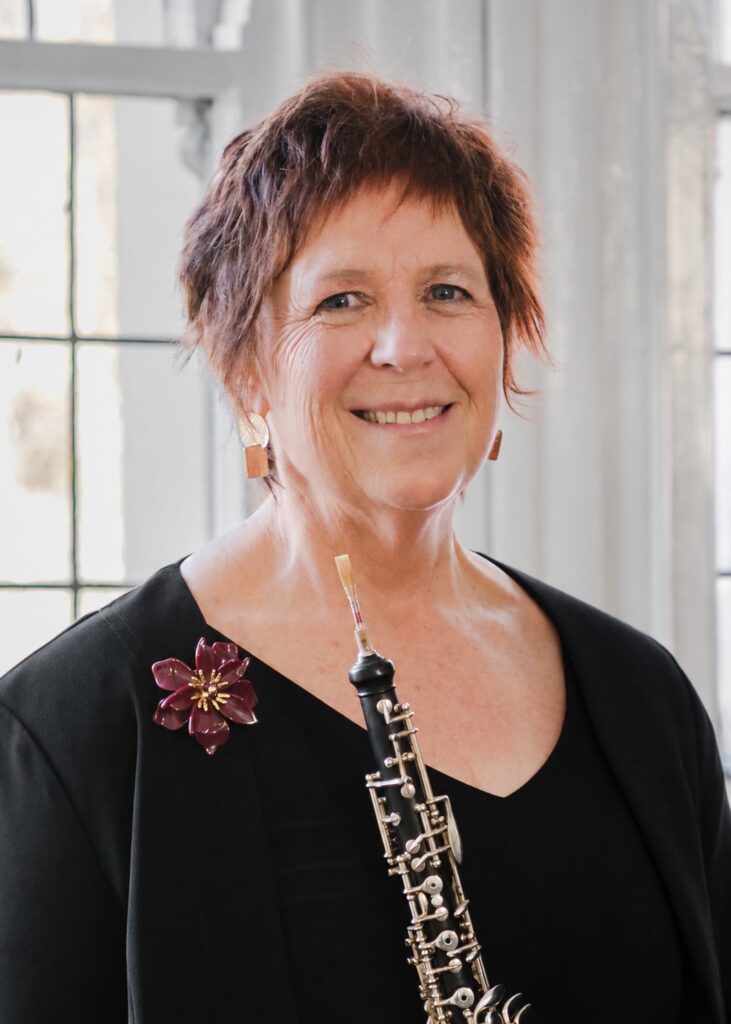
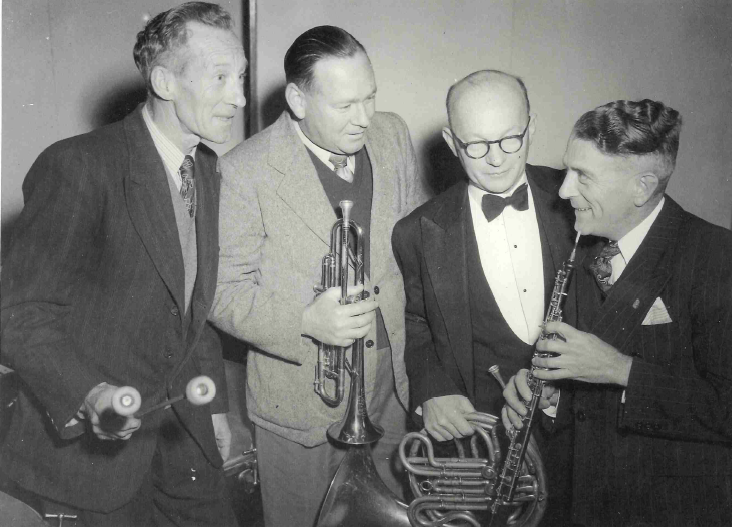
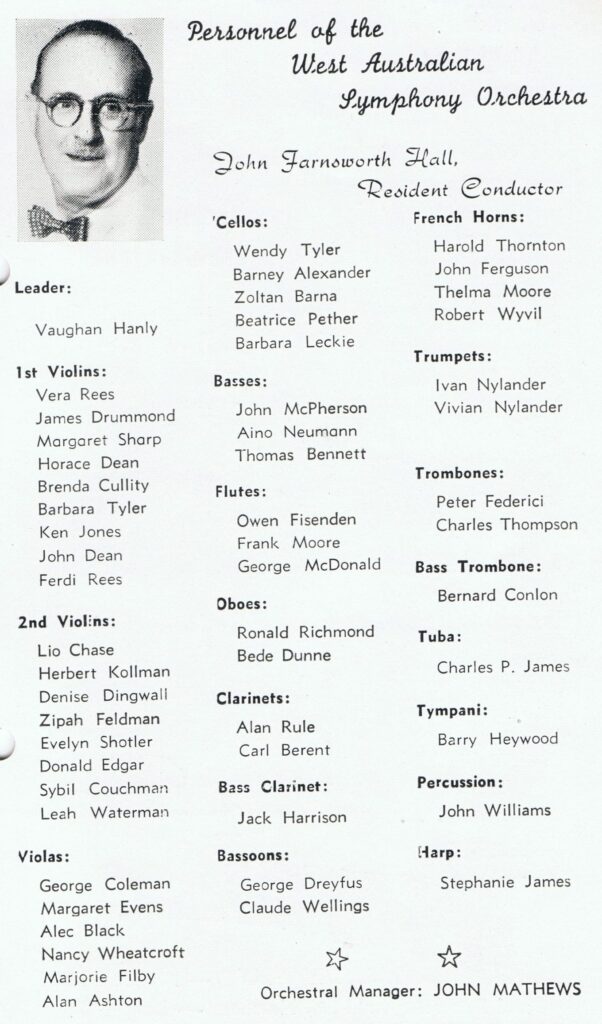
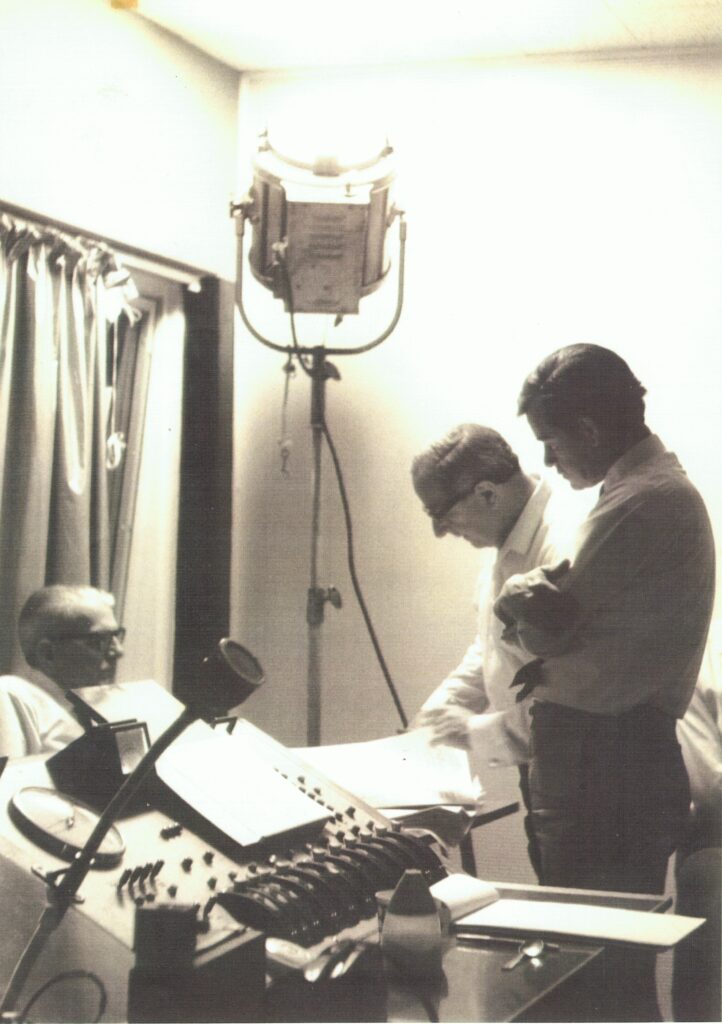
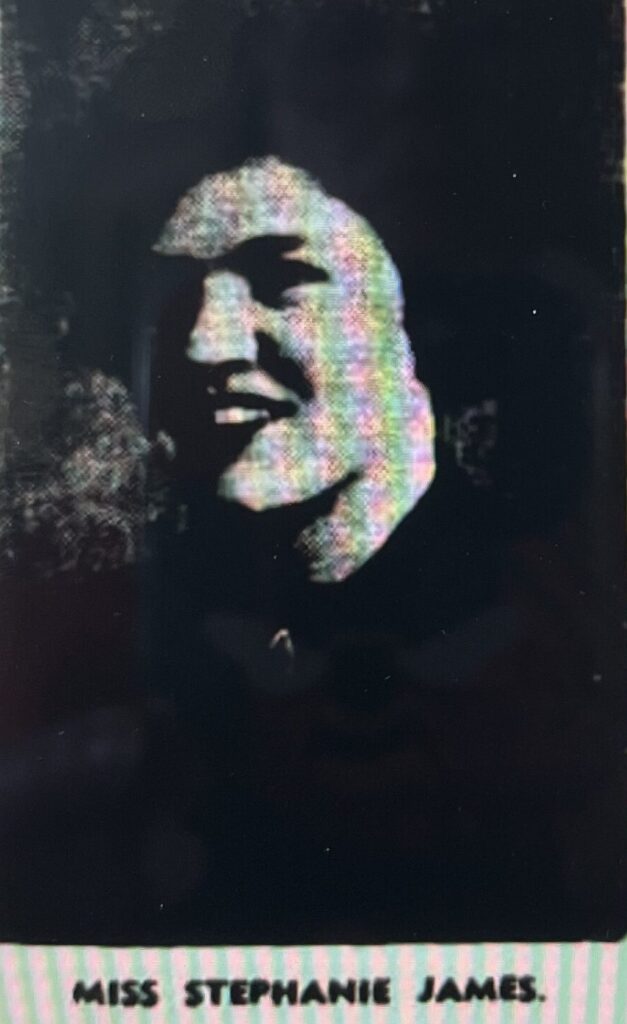
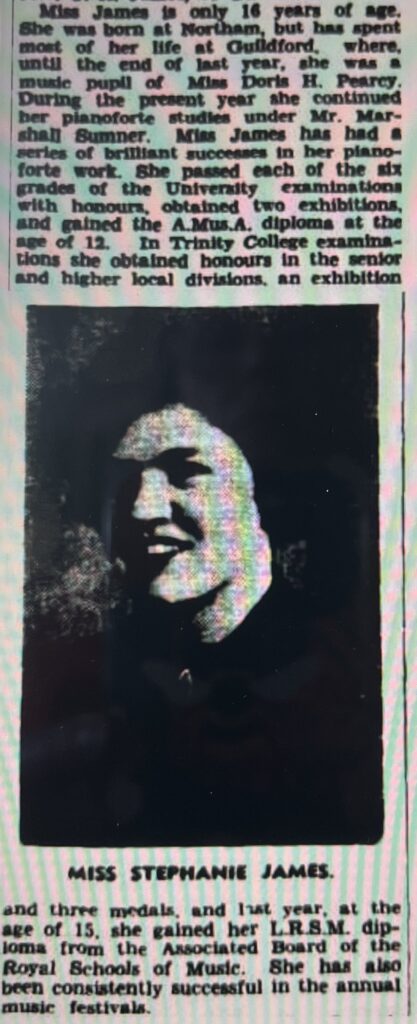
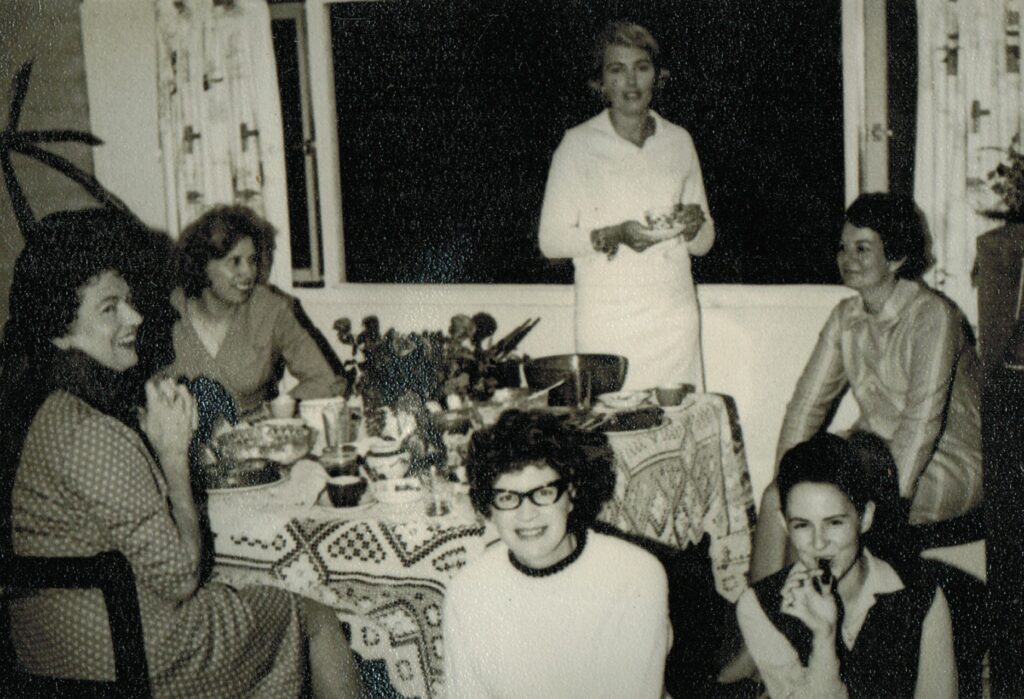
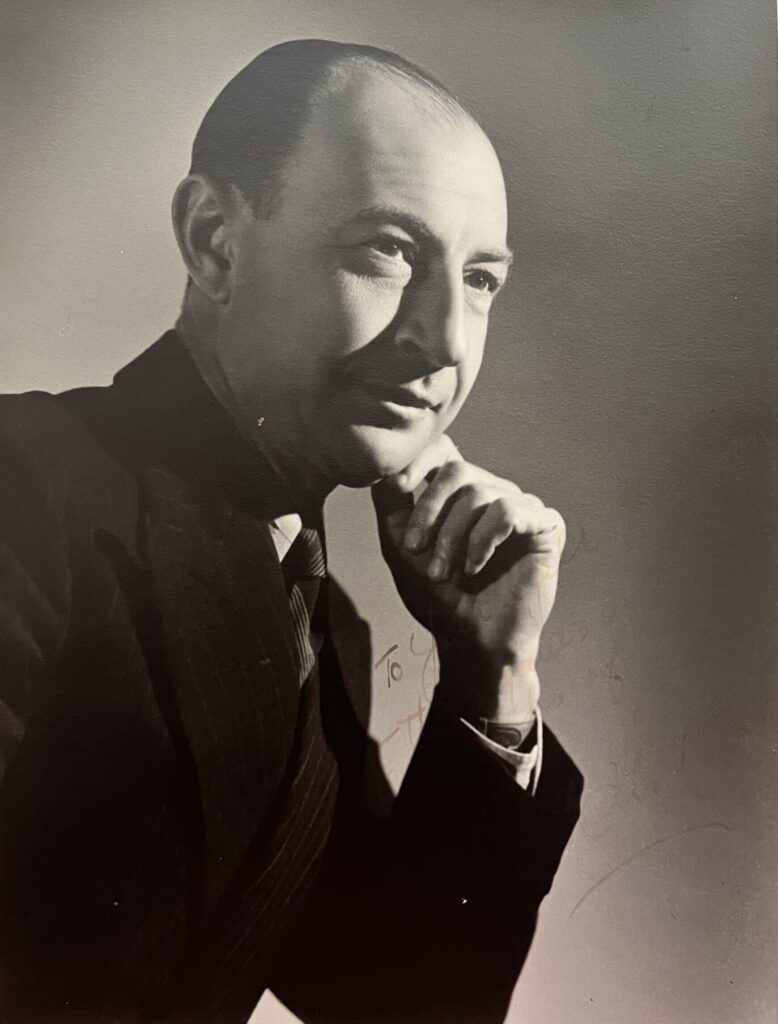
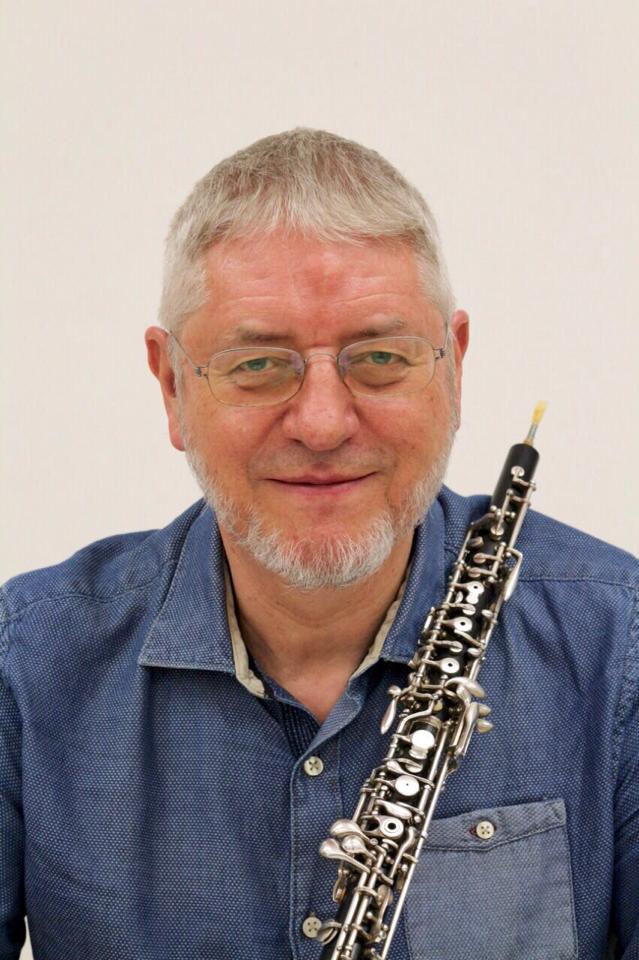
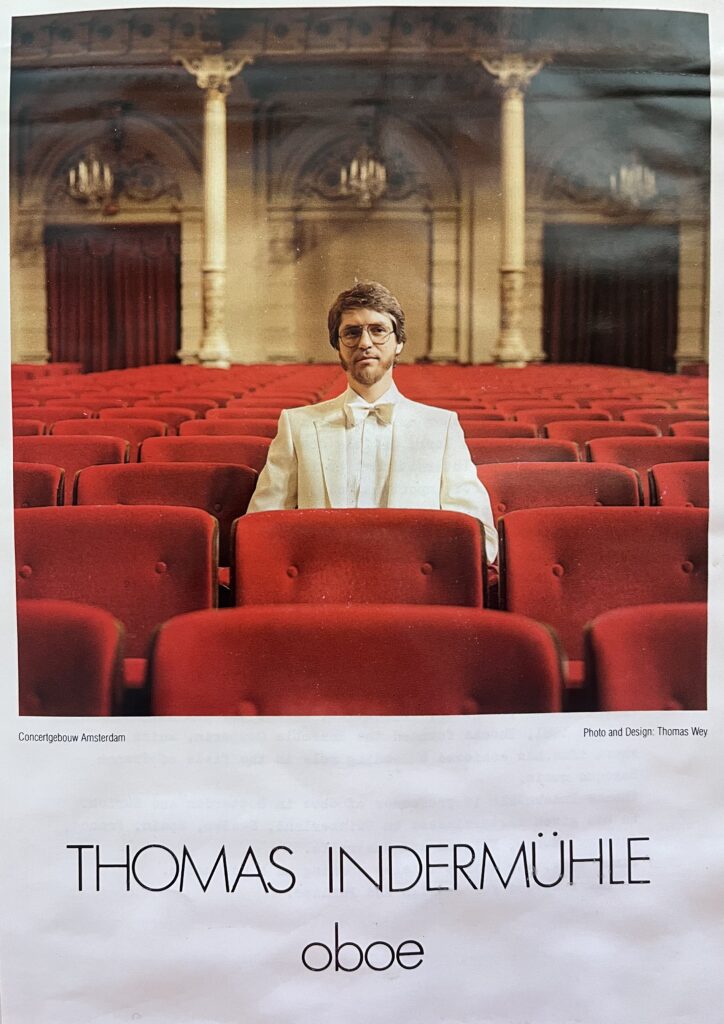
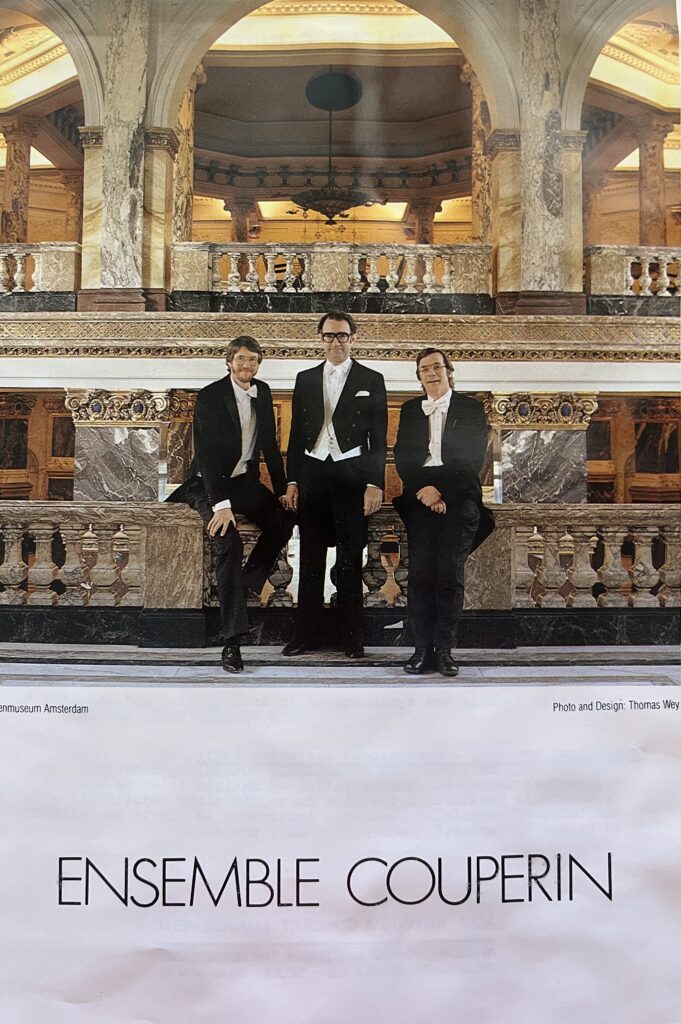
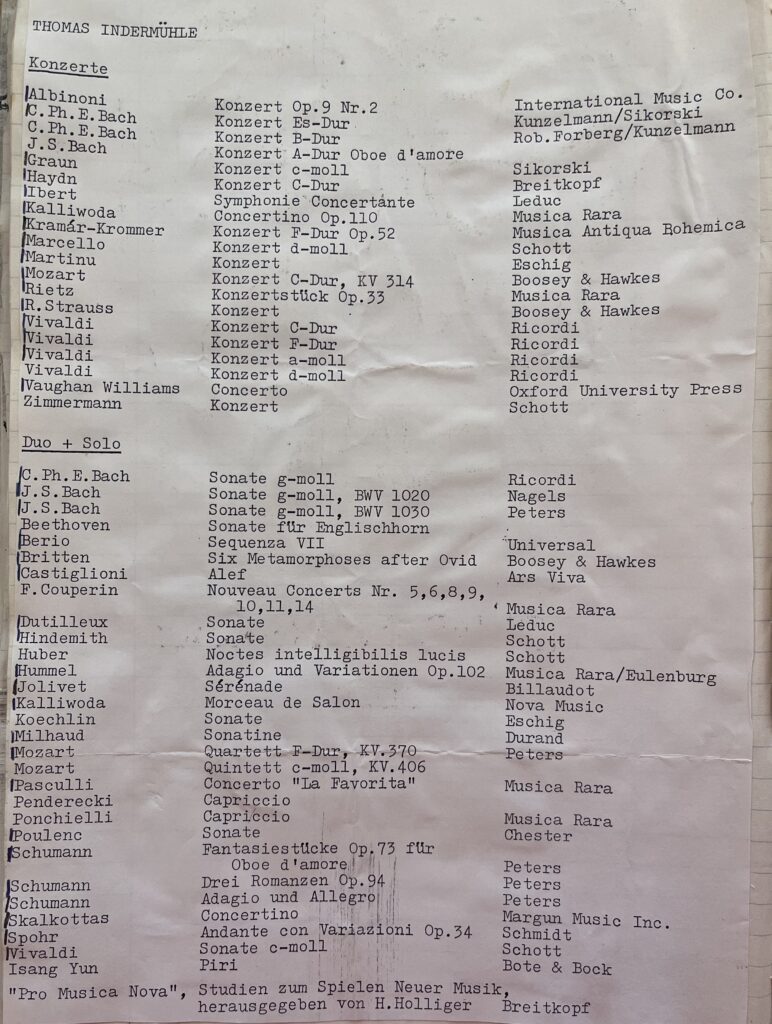
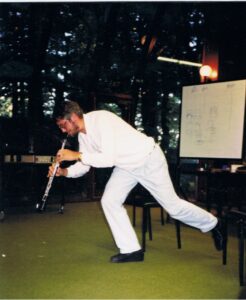
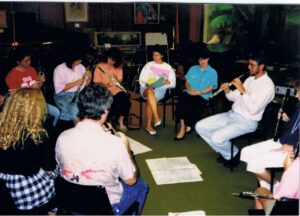
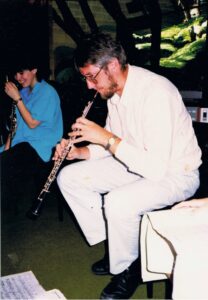
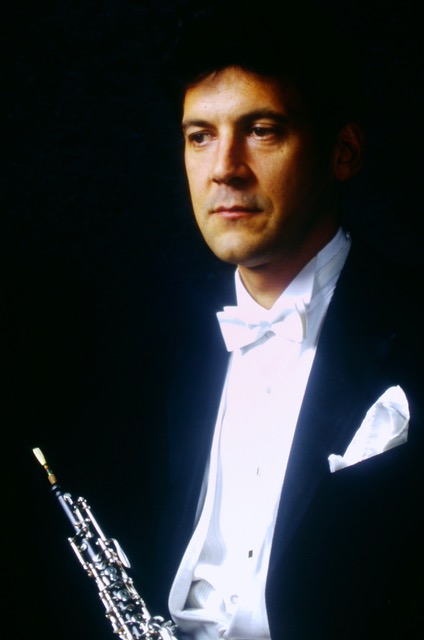
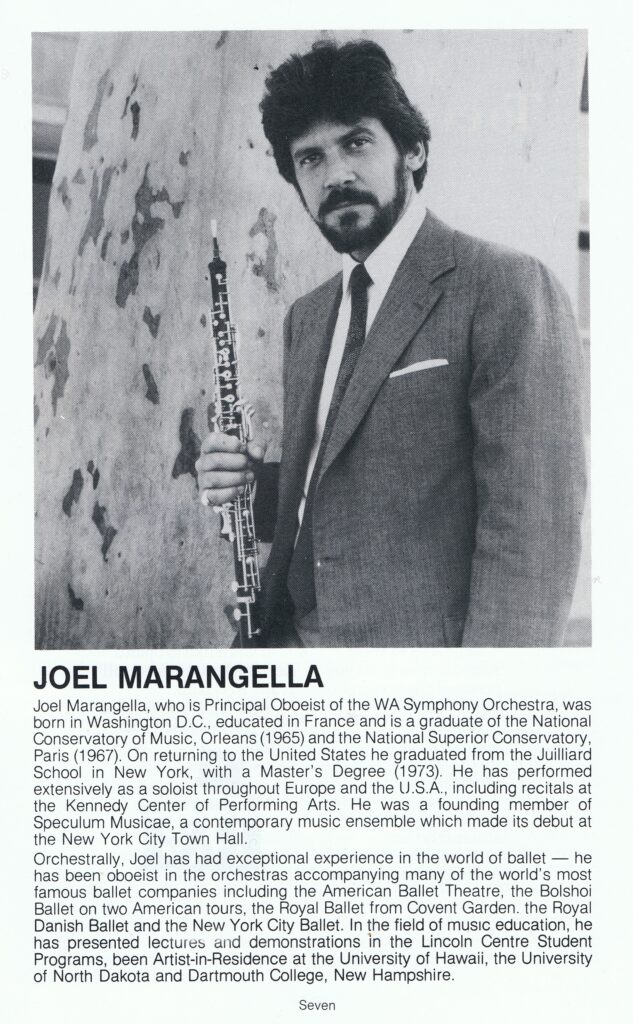
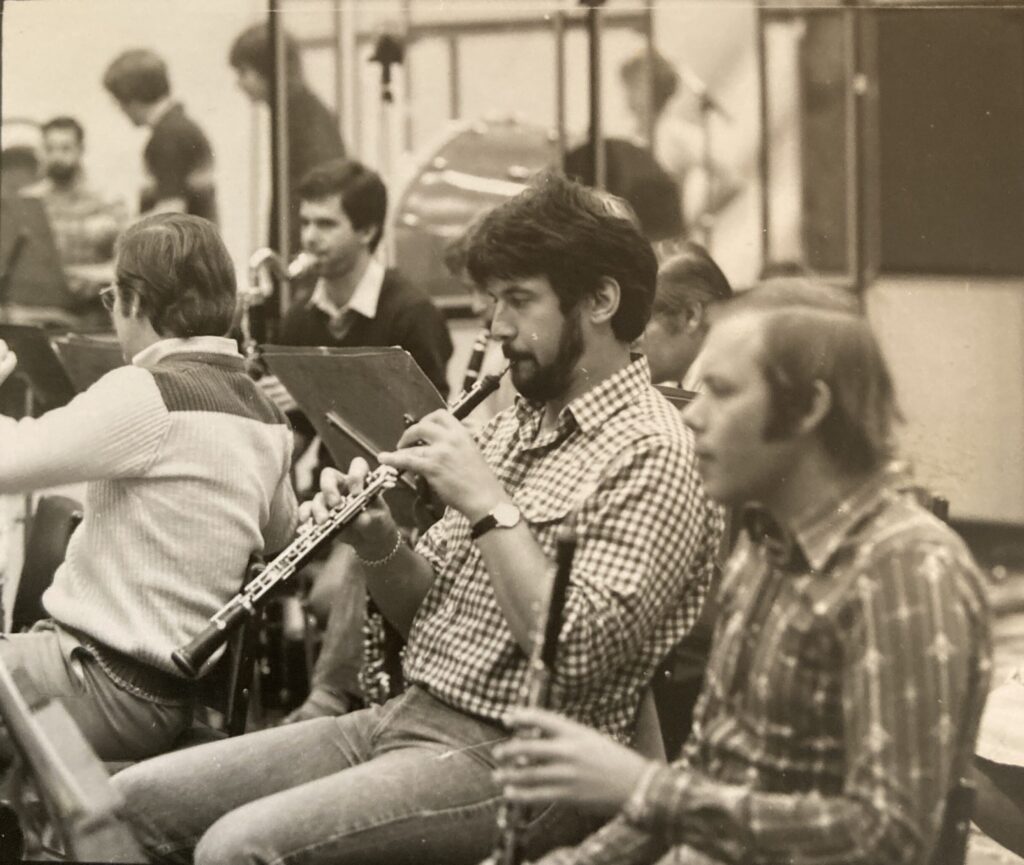
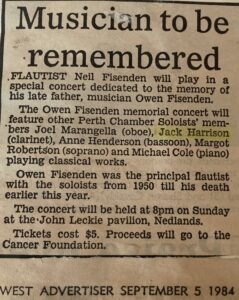
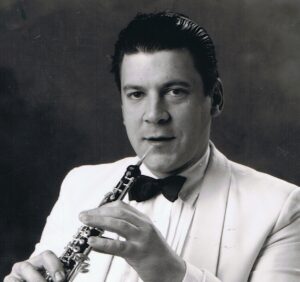
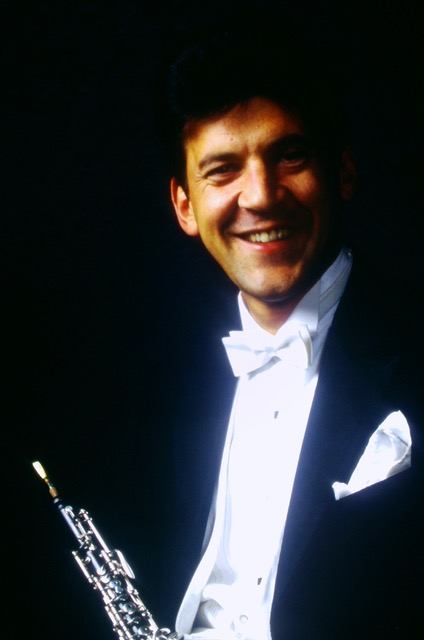
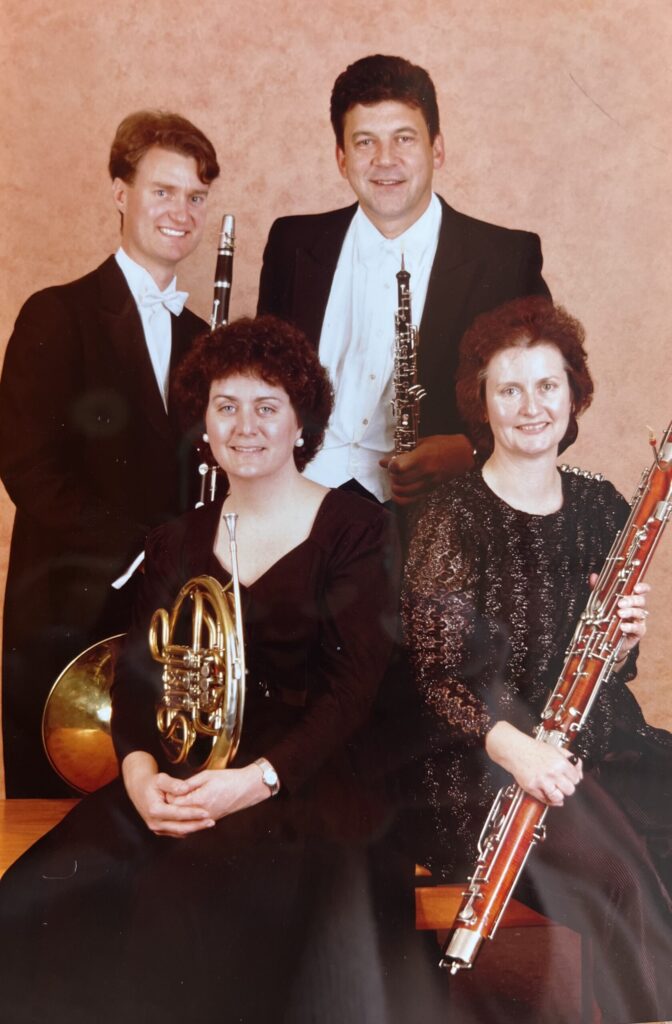
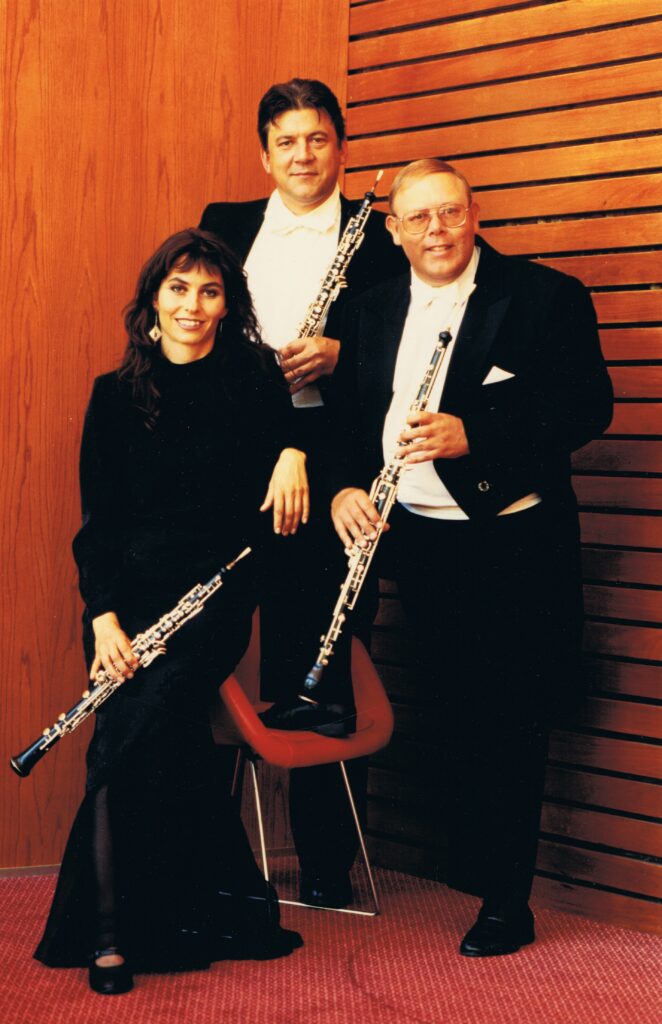
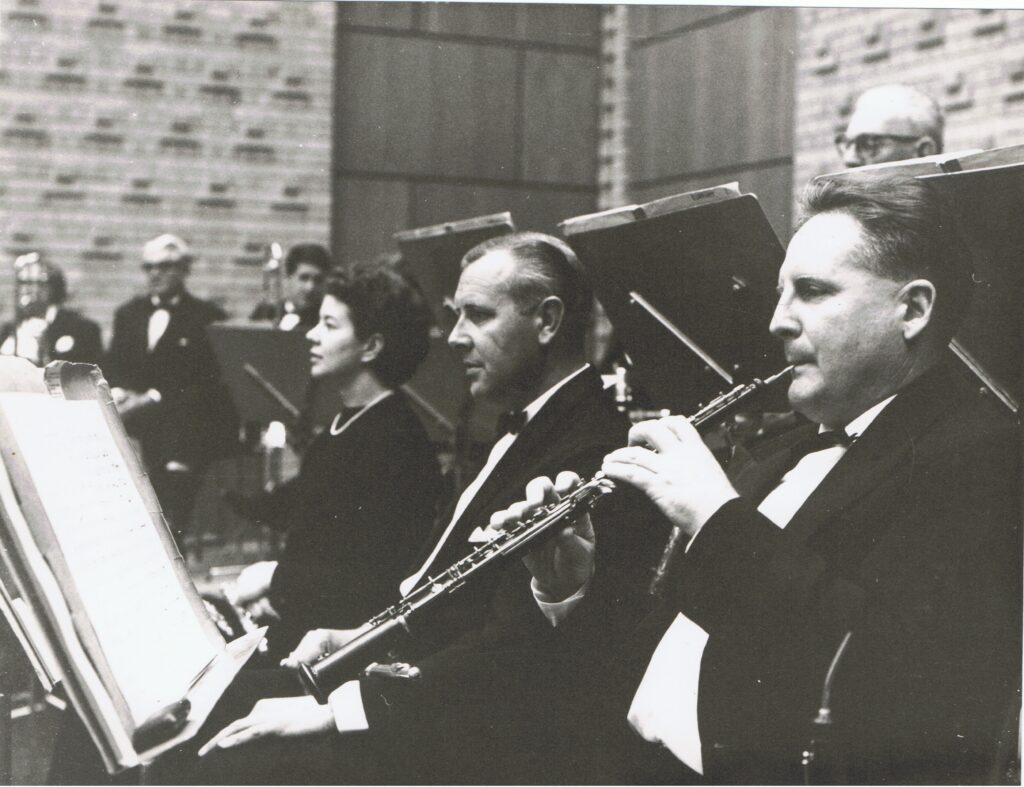
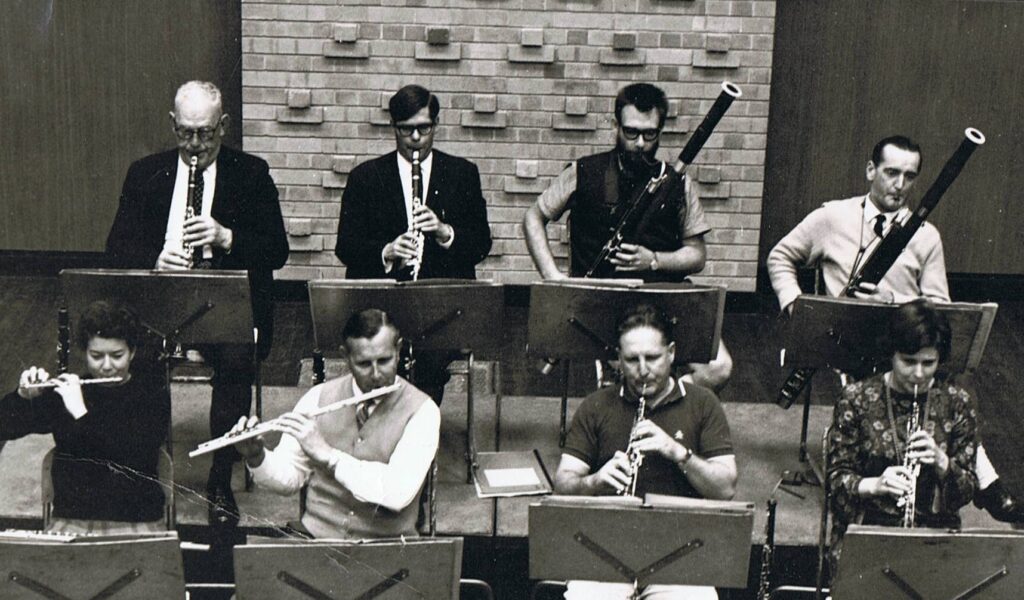
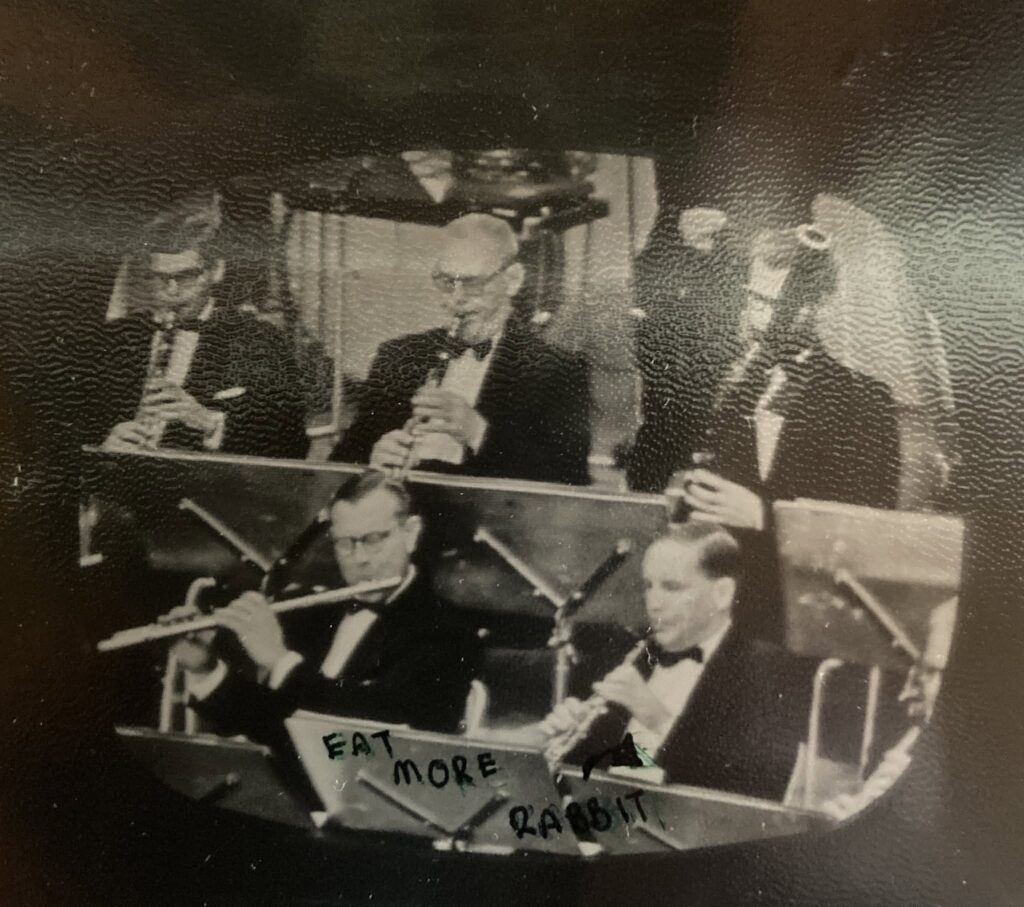
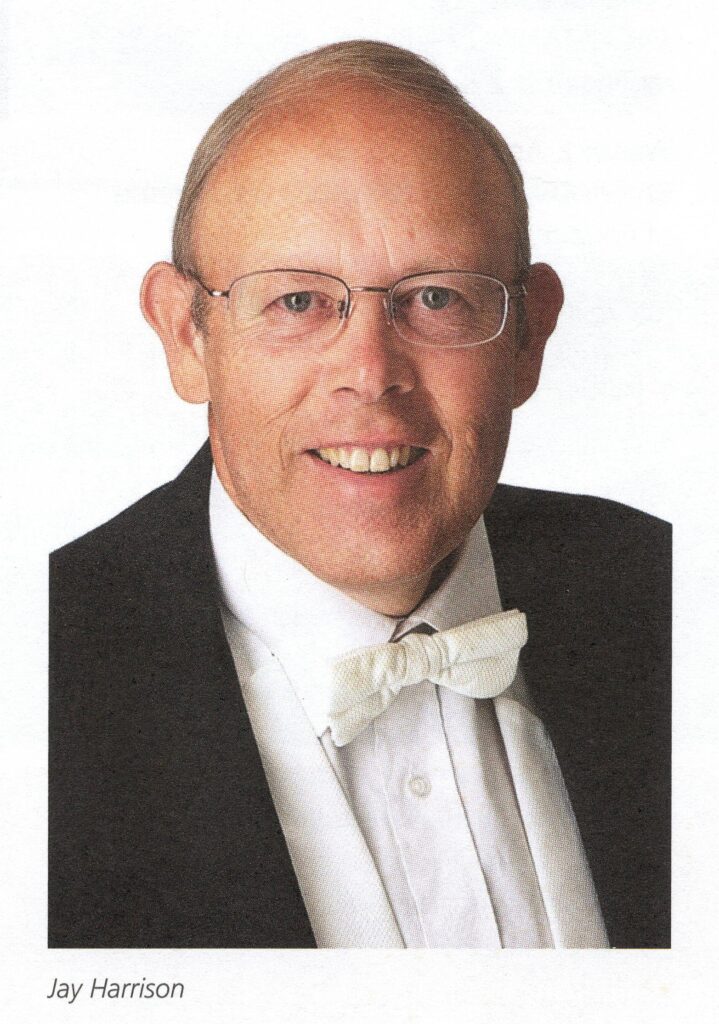

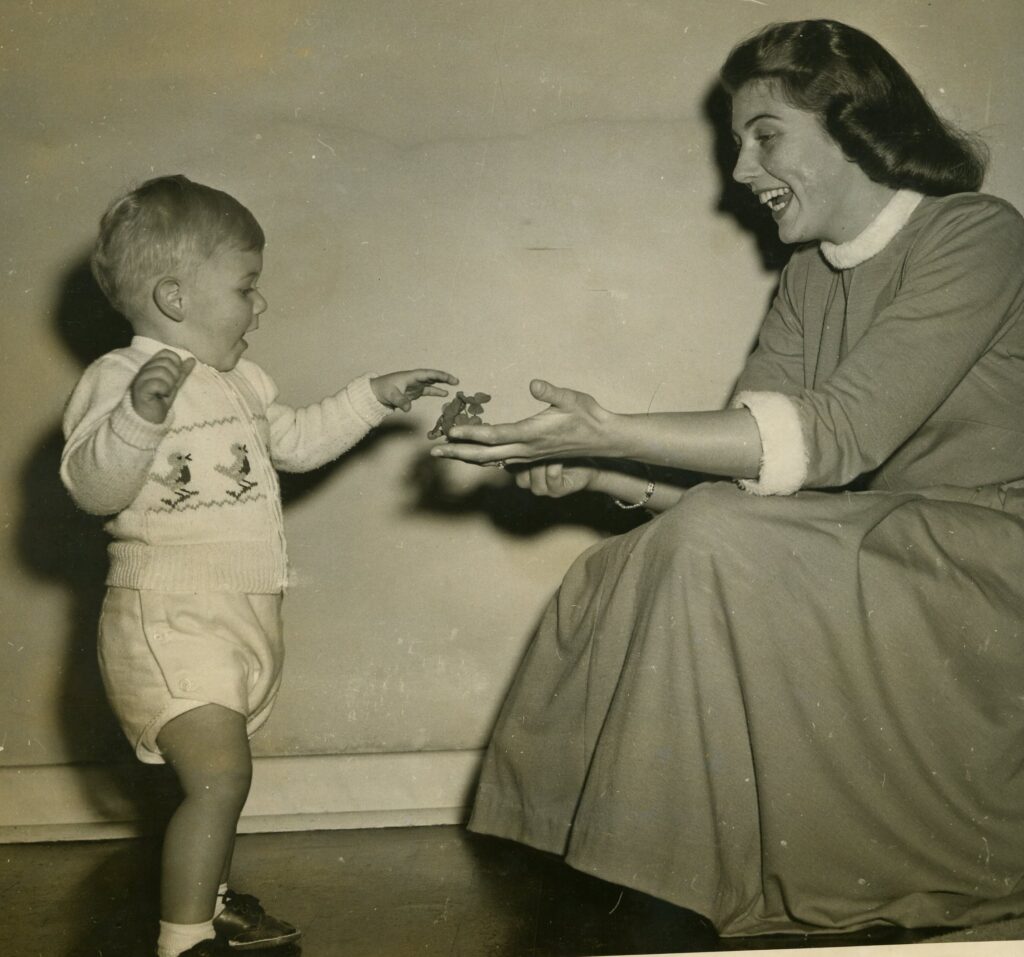
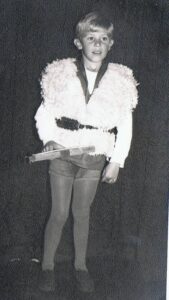
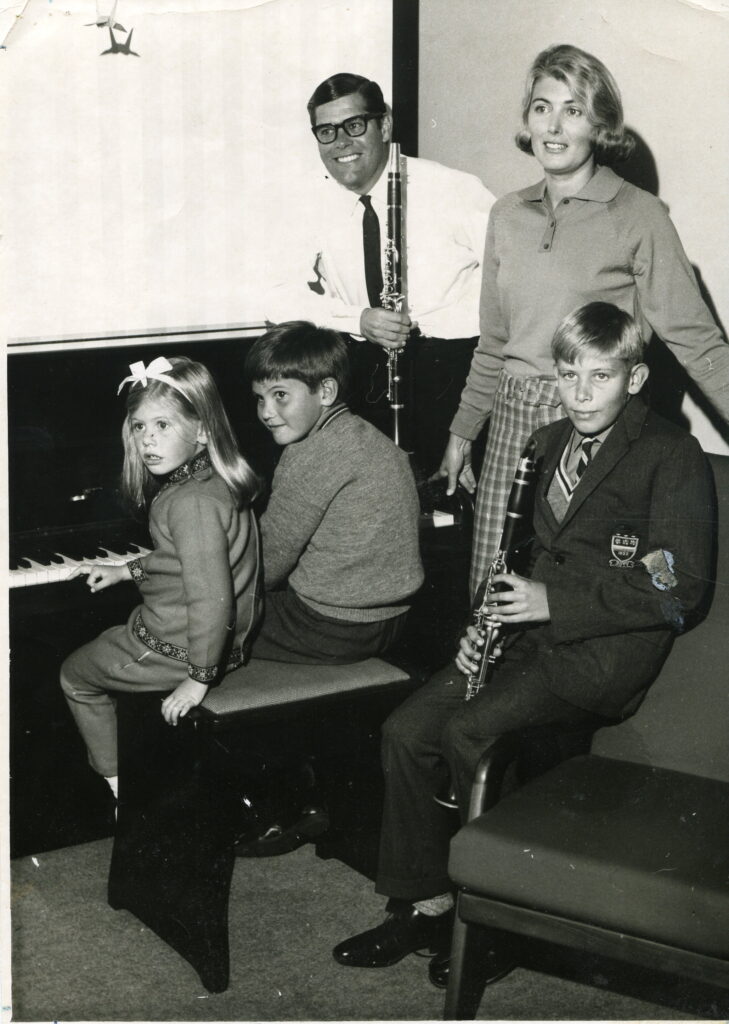
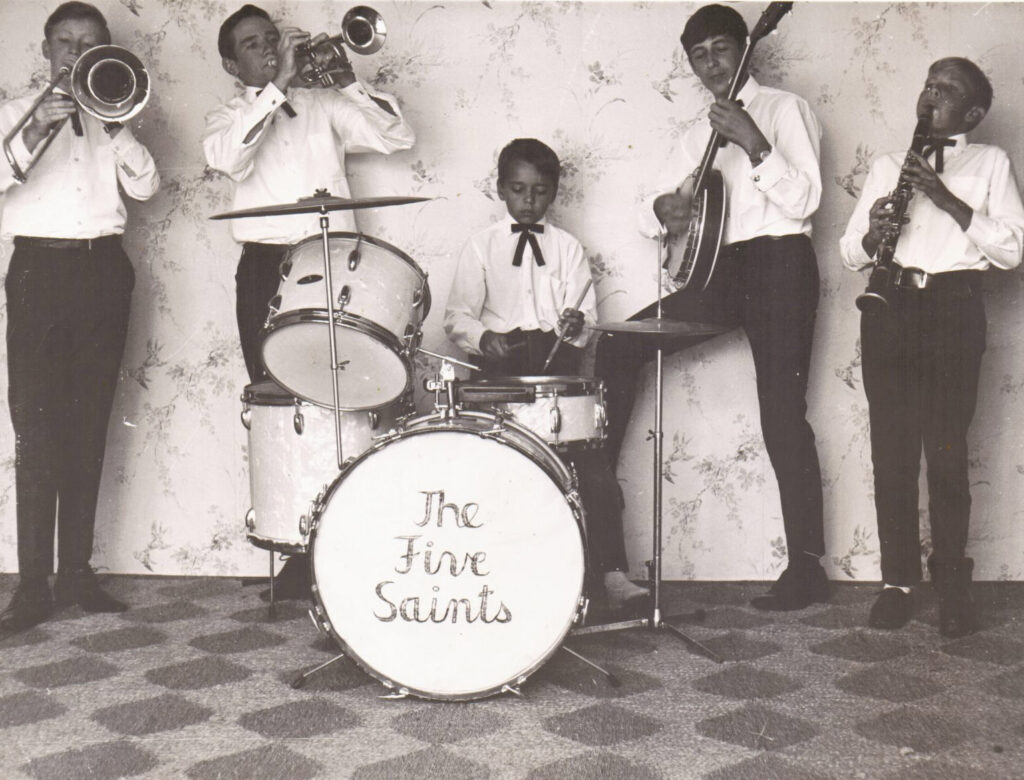
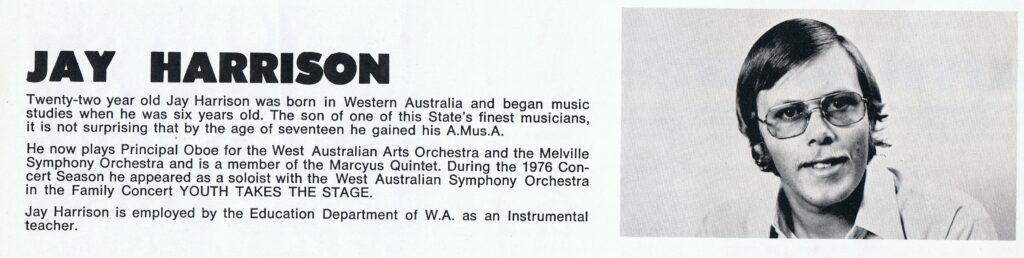
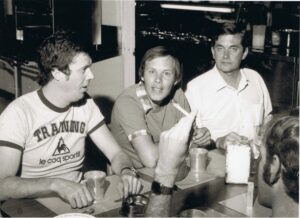
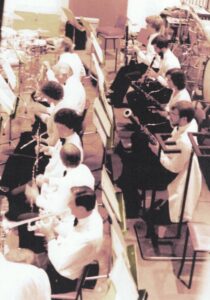
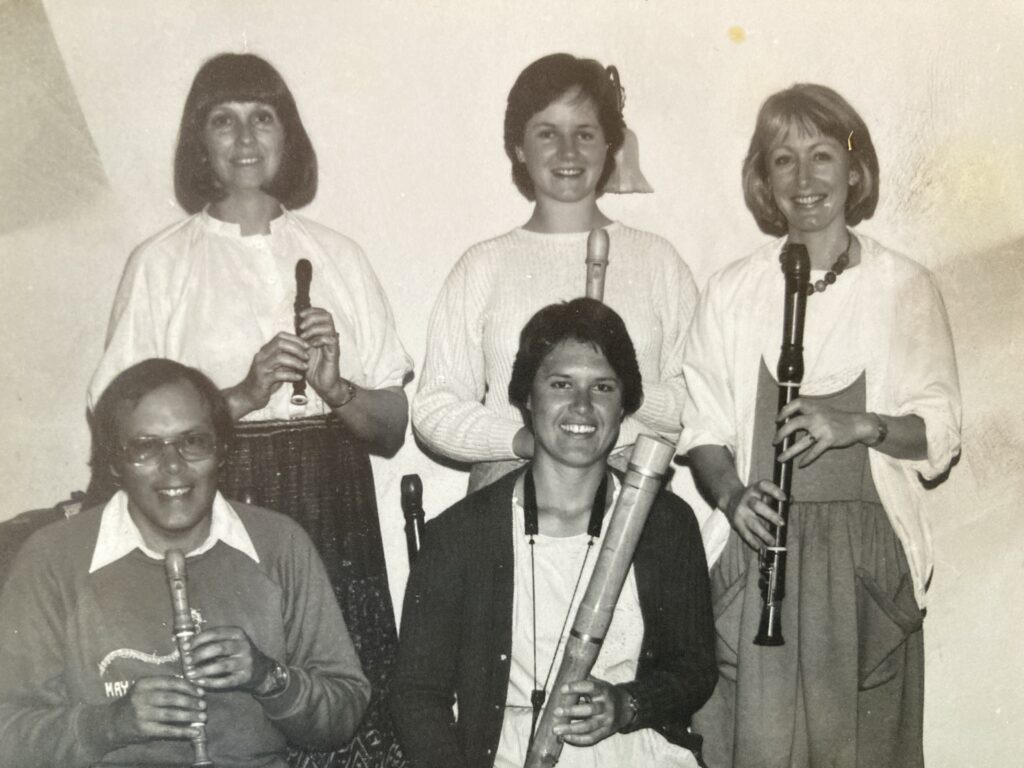
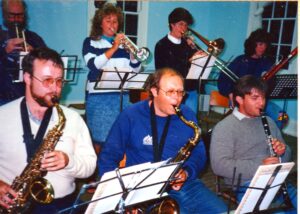
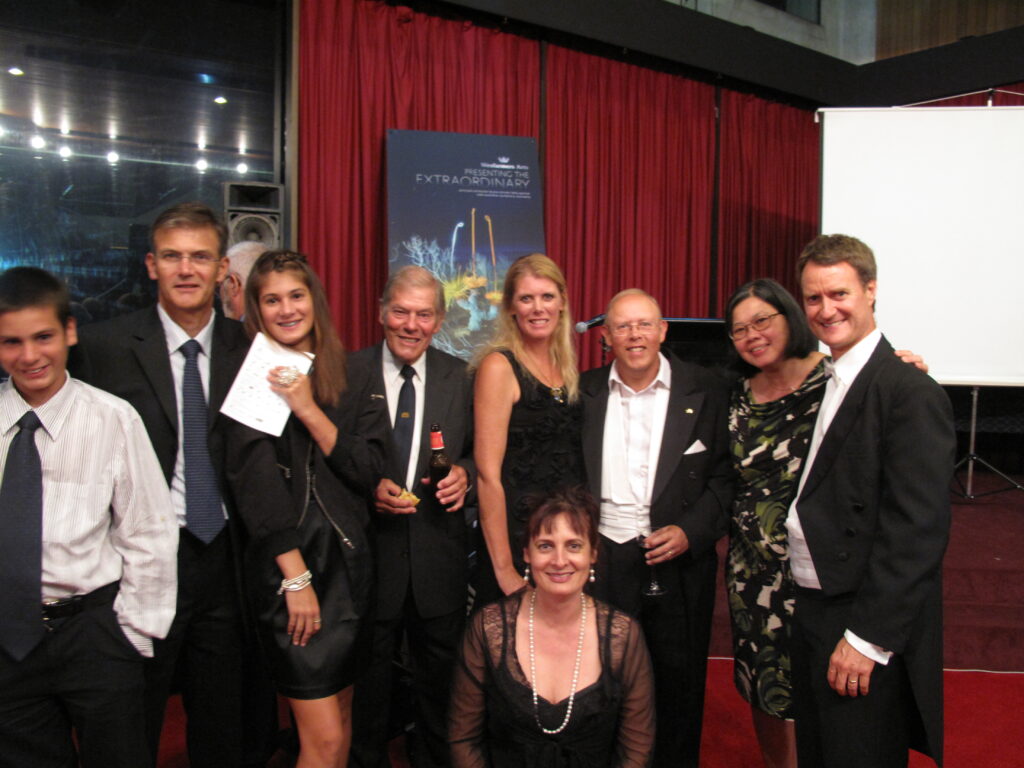
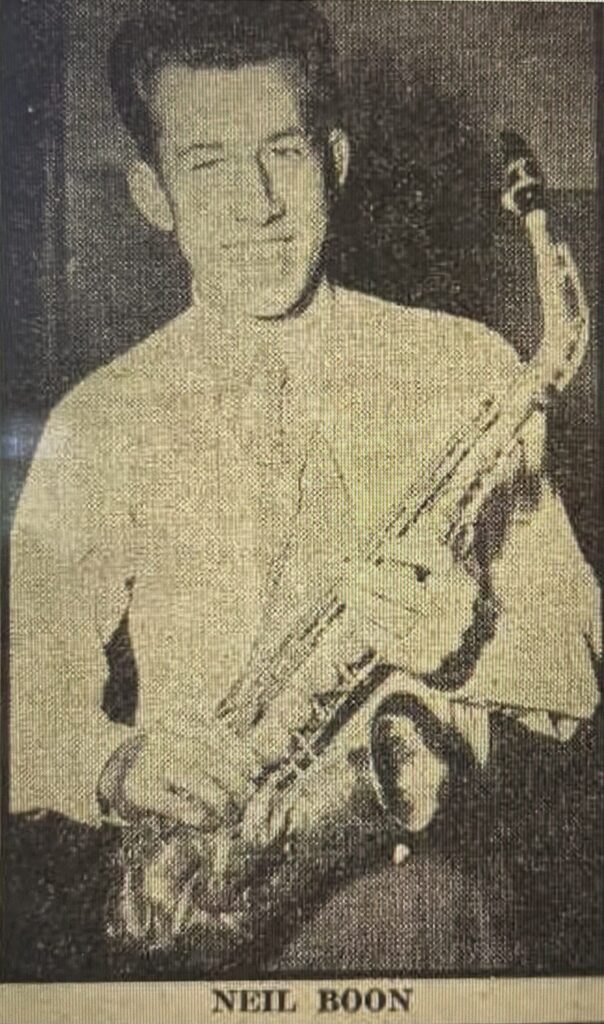
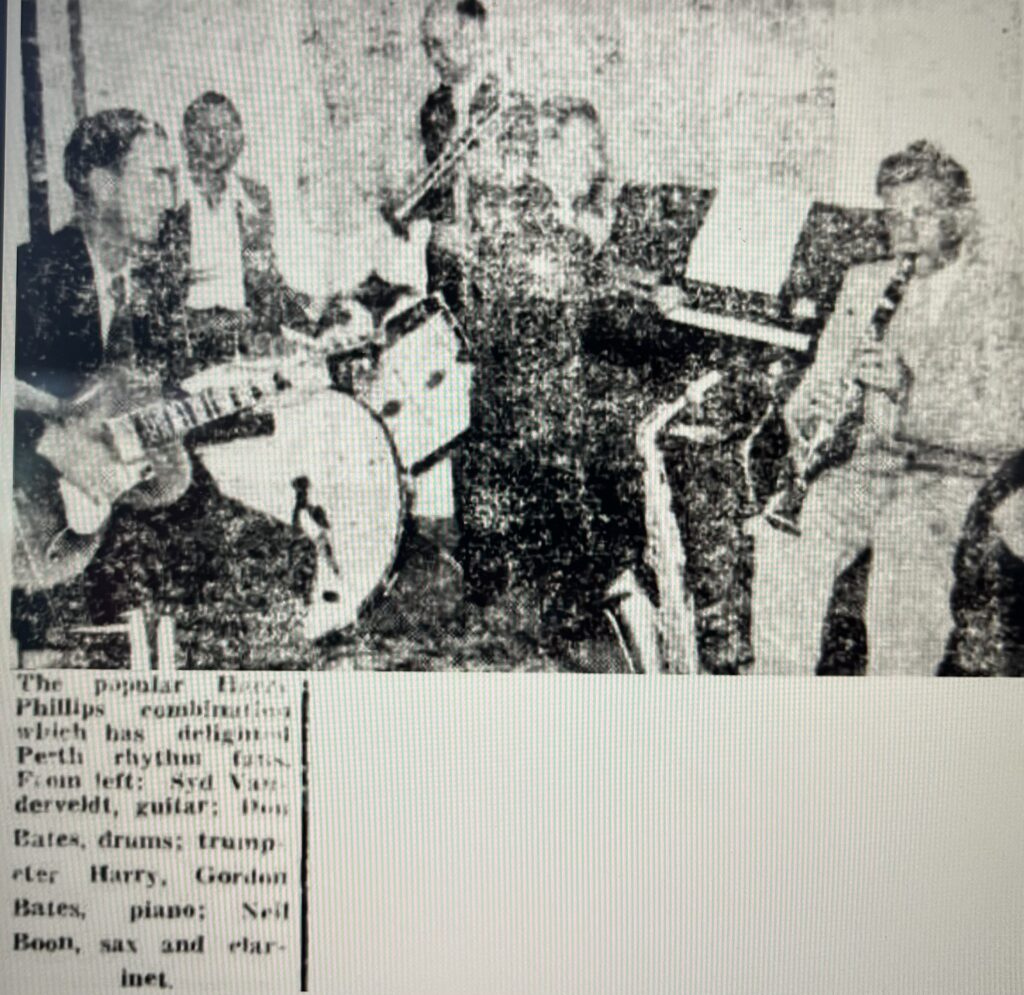 The popular Harry Phillips combination which has delighted Perth rhythm fans: From left: Syd Vanderveldt, guitar; Don Bates, drums; trumpeter Harry, Gordon Bates, piano; Neil Boon, sax and clarinet.
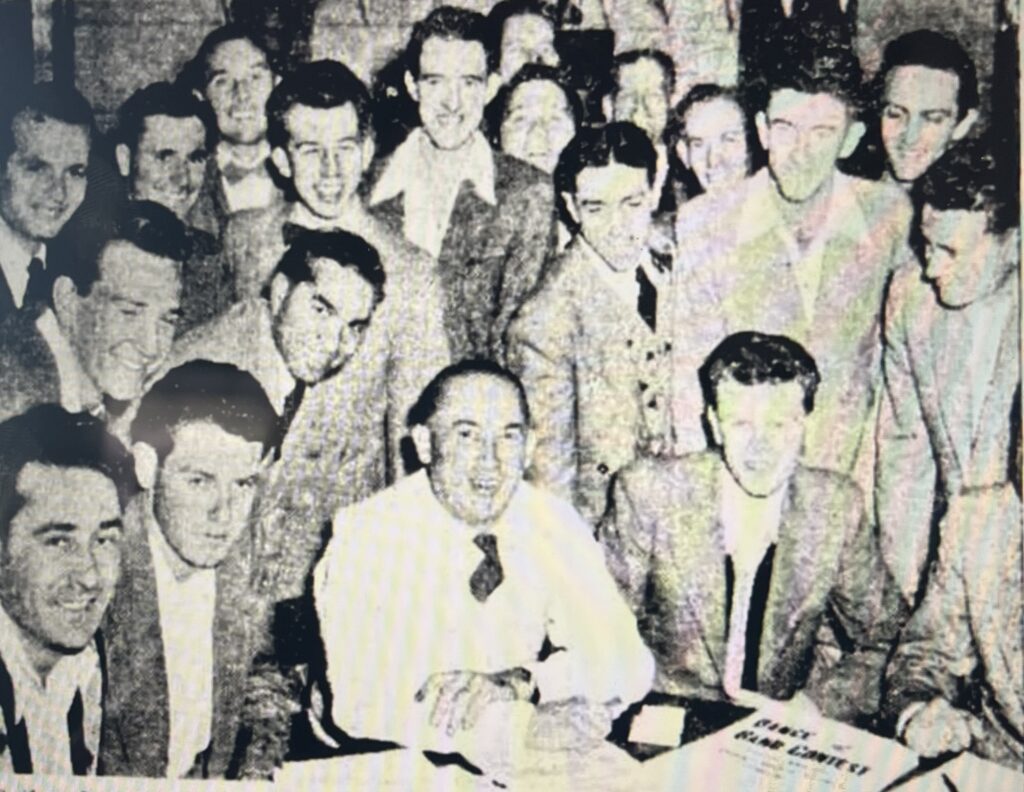 PHOTO: Gathered round Sammy Sharp are the new bloods of the WA Dance Band world. Picture was taken while they were being briefed for the dance band contest (see story left). Happy smiles belie the fact that on Thursday they will be in deadly earnest to win the competition and get a break with some of the bigger bands around town.