Search names, events, places, organisations, and sources across the archive.
Mirth and Music
Mirth and Music was a popular light entertainment radio program broadcast by the Australian Broadcasting Commission (ABC) on station 6WF on Tuesday nights during 1948, 1949 and 1950.
Mirth and Music
ARTISTS
Members of Dave Howard’s Mirth and Music Show met last week and extended best wishes to Miss Betty Bahen, one of its members, prior to her marriage to Mr. Geoff Hammond. On behalf of the troupe, Miss Nell Shortland-Jones presented Miss Bahen with a wedding gift. Those present were Miss Betty Whittaker, Miss Olwyn Thomas, Miss Rhoda Allen, Miss Sylvia Caporn, Mr. Ernest Paulasto, Mr. Fred Paulasto, Mr. Albert Chappelle, Mr. Harry Bluck, Mr. Dave Howard, Mr. Geoff Wilbur, Mr. Ralph Filmer, Mr. Bill Hendrie, Mr. Harold Malcolm, Mr. James Congdon, Mr. Jack Harrison, Mr. Billy Edwards and Mr. Harry Graham.
Western Mail Thursday 9 December 1948 page 37
Rhythmettes
The Rhythmettes: A combination regularly featured in “Mirth and Music” from 6WF on Tuesday nights. Left to right: Harry Bluck (leader, piano accordionist and arranger), Jack Harrison (clarinet), Sylvia Caporn (pianist), Ralph Filmer (bass), George Hay (guitar) and Bill Hendrie (guitar).
The Broadcaster Saturday July 2 1949 Vol. 16. No. 796
Jack Harrison broadcasted weekly by 6WF on Tuesday nights from Tuesday 3rd January 1950.
Jack Harrison’s photo of the staff of “Mirth and Music” in ABC Studio 7. Cliff Adam (guitar), Bill Hendrie (guitar), Ralph Filmer (bass) Dave Howard (producer), Muriel Costigan (singer), Sylvia Caporn (pianist) and Harry Bluck.
Battle of the Bands competition
1948 BATTLE OF THE BANDS – a fund-raising competition was announced in Perth in April 1948 for the Perth Chest Clinic:
TB COLONY – To help raise funds for the Wooroloo after-care colony, a Hospital Queen contest will be held. It will be launched this month and will end in a health week and a musical, dramatic and dancing festival about the end of June.
The Daily News Wednesday 7 April 1948 page 7
On July 1st 1948, Jack Harrison’s trio won £25 in “Battle of the Bands” at the Capitol Theatre. It was attended by His Excellency the Lieutenant-Governor, Sir James Mitchell G.C.M.G. and raised funds for Wooroloo hospital with Margot Elfverson, who was also the receptionist at the Murray St Chest Clinic, as the Public Health Candidate.
Thursday, July 1, 8 p.m. Popular Dance Band Contest – CAPITOL THEATRE. Guest Band .. .. Sammy Sharp and his Boys. Compere: Geoff Manton. PROCEEDS IN AID HOSPITAL QUEEN CONTEST
The West Australian Monday 28 June 1948 page 12
THURSDAY JULY 1 1948 AT 8PM – BATTLE OF THE BANDS CAPITOL THEATRE, WILLIAM STREET, PERTH
Band No. 6 Jack Harrison’s Swing Trio
BATTLE OF THE BANDS CONTEST – HOSPITAL AID – Dance Band Contest Winners – Strains of boogie-woogie, jazz, jive and swing music formed the principal part of last night’s entertainment at the Capitol Theatre in connection with the Wooroloo Hospital Queen Contest. The programme was arranged by the Legion of Liberty. which is one of several bodies who together are seeking to raise £100,000 required for the establishment of a village for the after-care of discharged tuberculosis patients. The chief feature of the evening was the “battle of the bands.” with five dance bands competing for a prize comprising silver and a cheque for £25. Honours went to Jack Harrison’s Swing Trio, one of the smaller ensembles in the competition, consisting of Jack and his twin sister, aged 16 years, and an 18-year-old brother. Ron Jenkins and his orchestra were placed second, and the Ashton Quartette third. The prizes were presented on behalf of the legion by “Miss Liberty” (Miss Elma Palmer). Judgment was based on the strength of the applause. Nearly all accommodation in the theatre was taken. Geoff Manion compered. The West Australian Friday 2 July 1948 page 10
CAPITOL THEATRE SHOW – BATTLE OF THE BANDS CONTEST – VENTURE PROVES HUGE SUCCESS – WOOROLOO HOSPITAL QUEEN CONTEST With a theatre almost packed to capacity hundreds of enthusiasts enjoyed an evening of boogie-woogie, jive, jazz and swing music which formed the principal part of the Capitol Theatre entertainment on 1st July last. During the evening Sammy Sharpe’s fifteen piece Orchestra rendered latest numbers from overseas. The Battle of the Bands proved most interesting, the honours going to the smallest ensembles in the contest. Sixteen year old Jack Harrison, with his twin sister and eighteen year old brother took home the colours in the form of a silver cup and a cheque for £25. Judgement of the winning band was based on applause by the audience and results were very close. Ron Jenkins and his band ran Jack Harrison a very close second, with Mrs Ashton’s Quartette third on the list. Prizes were presented by “Miss Liberty” (Elma Palmer) who afterwards thanked many people and organisations for very valuable assistance rendered to the cause. A good profit was the result of the evening. The Harrisons generously donated five pounds of the prize money to “Miss Liberty’s” Appeal. Shows of this nature prove conclusively that the Legion is fully capable of running large functions, and we feel sure that this addition to the cause will be much appreciated. To members of the Hospital Queen Committee and to all members of the Legion who rendered assistance we express our sincere thanks. We also extend our sincere thanks and appreciation to the many firms whose assistance in various matters added tremendously to the success of the evening. To the contesting bands we owe a particular vote of thanks. Without the band there would not have been a contest. We feel that this Contest stimulated interest in the jazz-band world and we hope that in the future it will be possible to organise other functions of a similar nature.
The Legion (Legion of Liberty) August 1948
HOSPITAL AID –Dance Band Contest Winners – Strains of boogie-woogie, jazz, jive and swing music formed the principal part of last night’s entertainment at the Capitol Theatre in connection with the Wooroloo Hospital Queen Contest. The chief feature of the evening was the “Battle of the Bands” with five dance bands competing for a prize comprising silver and a cheque for 25 pounds. Honours went to Jack Harrison’s Swing Trio, one of the smaller ensembles in the competition, consisting of Jack and his twin sister, aged 16 years and an 18 year old brother. Ron Jenkins and his orchestra were placed second.
The West Australian Friday July 2 1948
Judgement of the winning band was based on applause by the audience…The Harrisons generously donated five pounds of the prize money to the appeal. The Legion Perth Western Australia August 1948
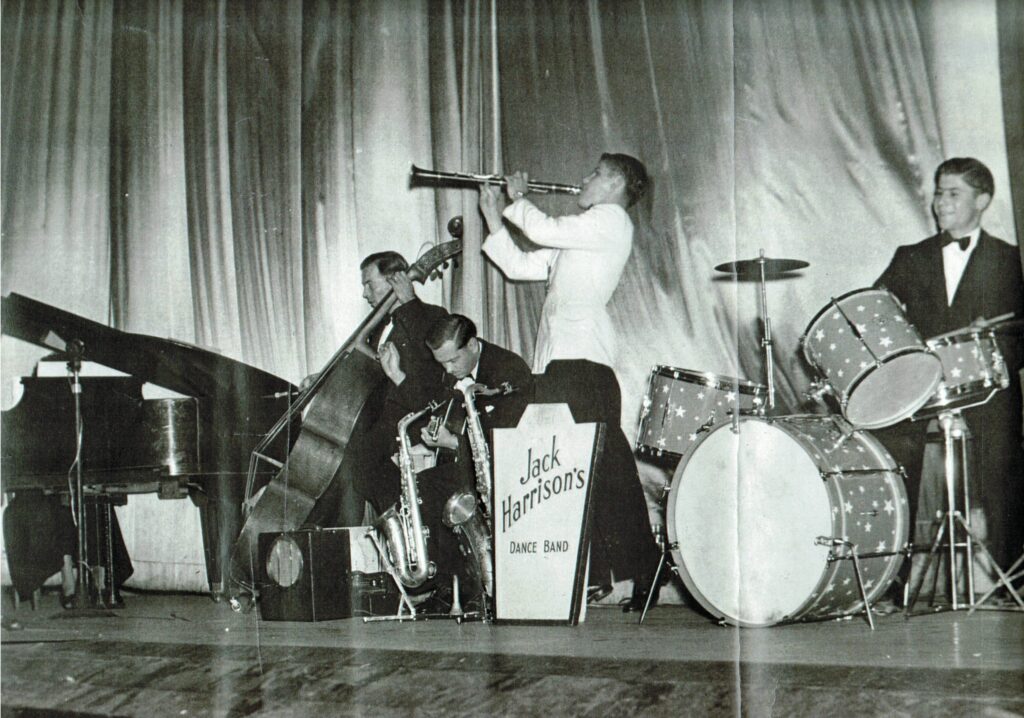
1948 Jack Harrison Dance Band Trio: Jill, Ray and Jack
National Fair competition
1948 NATIONAL FAIR – RADIO COMPETITION
Jack Harrison’s band competed through in the “National Fair”, a radio competition which enabled West Australian talent to be heard in the Eastern States. The format was any Australian state issuing a “challenge” to the rest of Australia to find the best entertainer in a certain area.
“National Fair” a new, weekly, national wide radio competition talent show in which each State of the Commonwealth puts up an “exhibit” which they claim to be the best of its kind in Australia. This “exhibit” which takes the form of a challenge to the other states, can be anything from a singing parrot, to a dance band, or a pearl diver to a pianist – and so on. So far neither of the challenges issued by the Harrison family has been taken up by any of the other states of the Commonwealth. The A.B.C. have engaged these clever young musicians and they will soon be heard on their own half programme one a week on the State networks. Music Maker Australia’s Oldest and Greatest Music Magazine February 1948
“National Fair” – Sixteen Year Old Boy a “Veteran” Entertainer – Western Australia’s second challenge to the rest of Australia in the new 6IX-WB-MD feature “National Fair” will be issued but the versatile musician Jack Harrison, of Nedlands, on Wednesday night at 8 o’clock. Jack is sixteen years of age, but is already a “veteran” entertainer. He will be heard playing the saxophone and clarinet. Jack Harrison was eight years old when he first burst into the musical field as a harmonica player. In 1938 he won the “P. and A. Parade” conducted over 6ML and the following year at the age of nine his father took him to the Eastern States to compete in the “Amateur Hour”. He topped the poll. Then followed professional engagements in Sydney radio, picture theatre bookings and a contract to appear with the Sydney Trocadero Orchestra. He was also guest artist on several occasions in the Sydney broadcast programme, the “Youth Show”. Since his return to W.A., Jack has been busy with local radio engagements, professional bookings and a season at the Tivoli. He has now developed into an extremely competent musician, handling clarinet, saxophone and harmonica with a maturity beyond his years. In “National Fair” he will be accompanied by his sister Jill, his 18 year old brother Ray and his father. On his behalf, Western Australia will challenge the rest of Australia to find a better and more versatile musician. The Broadcaster Saturday January 10 1948 Vol 14, No 719.
NATIONAL FAIR – Harrison family Again – Sixteen-year-old Musician to give further broadcast – Western Australia was represented last week in “National Fair” from 6IX-WB-MD by twins, Jack and Jill Harrison and elder brother Ray. The Harrison family was put up as the best musical family in Australia. Jack Harrison, the 16 year old lad who played both the saxophone and clarinet, was such a success that the producers asked him to put up another challenge, so he is again appearing in the programme next Wednesday as the best clarinettist in Australia. Jack will again be accompanied by his twin Jill on the piano, and his brother Ray on the drums. This time Jack will be playing the clarinet only. His item will be “Special Delivery Stomp” one of Artie Shaw’s favourites. So far this is the first time two challenges have been put up by the same person. The West Australian selectors hope that this challenge is unbeatable, but listeners can decide that for themselves when they hear what the other States can produce to take up this challenge. The other five states also will be presenting their “exhibits” on Wednesday night at 8 o’clock, some again challenging and others answering challenges previously set. If anyone who knows of anything or anybody who could possibly be used as an “exhibit” in “National Fair”, he or she is asked to communicate with W.A. Broadcasters Ltd., Lyric House, Perth. The Broadcaster Saturday January 17 1948 Vol. 14, No. 720
On the Dial – The success of the Harrison Family (Jack, Jill and Ray) in the 6IX-WB-MD session “National Fair”, was demonstrated by the fact that they were engaged by the sponsors for a repeat performance the following week. When they were heard in the session for the first time Jack, who is 16 years of age, was nominated as the best clarinettist in Australia. So far no one has disputed the claim. There are no cash prizes for “National Fair”, but the session enables West Australian talent to be heard in the Eastern states. The programme is broadcast each Wednesday night at 8 o’clock. The Broadcaster Saturday February 14 1948
Harrisons Hit Jackpot in “National Fair” – Although “National Fair” (2UW Wednesday Night) has only been on the air a few weeks, already one of the “exhibits” has received an offer to appear on the A.B.C. This offer was made to the Western Australian Harrison family who appeared twice on “National Fair”, once as the “most musical family” in Australia and the second time Jack Harrison, accompanied by his twin sister Jill and elder brother Ray, appeared as the “best clarinettist”. “National Fair” is a new nation-wide radio competition in which each State of the Commonwealth puts up an “exhibit” which they claim to be the best of its kind in Australia. This “exhibit” which takes the form of a challenge to the other States, can be anything from a singing parrot to a dance band, or a pearl diver to a pianist – and so on. So far neither of the challenges issued by the Harrison family has been taken up by any of the other states in the commonwealth. The A.B.C. has engaged these clever, young musicians and they will soon be heard on their own half hour programme once a week on the State network. The producers of “National Fair” hope that this programme will bring to light many more talented people. Interesting entries continue to come in from all the States, some fantastic, amazing, others like the Harrison family, representing their State with their musical talent. Music Maker February 20 1948
In March 1948, Jack was nominated again as a challenger on “National Fair” responding to Victoria’s nomination to find a better harmonica player than Bruce Skurry.
On the Dial – Jack Harrison will enter the “National Fair” arena once again on Wednesday night. The 16 year old Perth musicians will take up a challenge from Victoria to find a better harmonica player than Brucy Skurry. Jack’s harmonica solo in this 6IX-WB-MD session will be “Smoke Gets in your eyes”. He appeared in two early “National Fair” programmes with his brother Ray and twin sister Jill. They were nominated in the first instance as the best juvenile music-makers. Jack was nominated as the best clarinettist in Australia. To date, no other State has accepted either of the challenges from this versatile family. The Broadcaster Saturday March 13 1948
Person
FILMER, Ralph
Ralph Edward Filmer (1914–1987) was a prominent Australian bass player and double bassist based in Western Australia, often heard performing over the radio network alongside his wife, pianist Greta Young.
1948
AFFIANCED
MISS GRETA YOUNG, only daughter of Mr. and Mrs. W. Young, who has announced her engagement to Mr Ralph Filmer, eldest son of Mrs. C. Filmer and the late Mr. G. Filmer. (Photo by MAURICE, Town Hall Midland)
Perth’s hep-cats are properly mystified. No one will tell them the identity of a mystery band which will play at the big jazz jamboree at the Capitol on Sunday night, Oct. 31. Anyone who solves this Top Swing Secret gets a prize— 6 swing records, no less! Eight bands will play, led by Merv Rowston, Jackie Harrison, Chris Gosper, Ken Murdoch, Sammy Sharp, Ron Jenkins, Bill Kirkham and Harry Bluck.
The Mirror Saturday 23 October 1948 page 4
JAZZ CONCERT
At the Capitol Theatre on Sunday night the professional dance-band musicians of Perth will present a jazz concert. The programme, it is stated, has been planned to cover every style of modern Jazz idiom. Eight bands will be conducted by the following: Merv Rowston, Jack Harrison, Sammy Sharp, Harry Bluck, Ron Jenkins, Chris Gosper, Bill Kirkham and Ken Murdoch. The proceeds will be for charity.
The West Australian Thursday 28 October 1948 page 24
1948 Jack Harrison Quintet with Ralph Filmer and Hendrie
CAPACITY HOUSE FOR SECOND JAZZ JAMBOREE
The second annual W.A. Jazz Jamboree drew a capacity crowd at the Capitol Theatre last Sunday.
Broadcaster Perth Saturday November 6 1948 Vol 15 No 762
According to The Broadcaster Saturday November 6 1948 Vol 15. No 762, “The mystery band of the evening, a two piece unit consisting of Bill Hendrie on the guitar and Ralph Filmer on the bass gave an unusual rendition of “Waltzing Matilda””.
Left: Mr. and Mrs. Ralph Filmer leaving St. Mary’s Church, West Perth. Both are well-known musicians, often heard over the radio. She was Greta Young, daughter of Mr. and Mrs. W. Young, of Barker-road, Subiaco.
Western Mail (Perth, WA : 1885 – 1954), Thursday 25 November 1948, page 37
MEMBERS of Dave Howard’s “Mirth and Music Show” met last week and extended best wishes to Miss Betty Bahen, one of its members, prior to her marriage to Mr. Geoff Hammond. On behalf of the troupe, Miss Nell Shortland-Jones presented Miss Bahen with a wedding gift. Those present were Miss Betty Whittaker, Miss Olwyn Thomas, Miss Rhoda Allen, Miss Sylvia Caporn, Mr. Ernest Paulasto, Mr. Fred Paulasto, Mr. Albert Chappelle, Mr. Harry Bluck, Mr. Dave Howard, Mr. Geoff Wilbur, Mr. Ralph Filmer, Mr. Bill Hendrie, Mr. Harold Malcolm, Mr. James Congdon, Mr. Jack Harrison, Mr. Billy Edwards and Mr. Harry Graham.
Western Mail (Perth, WA : 1885 – 1954), Thursday 9 December 1948, page 37
1949
HAROLD TAYLOR
Drummer Harold Taylor (32) of Mt. Lawley, one of our most experienced percussionists, has had the distinction of playing with famous Eastern States bandleader Frank Coughlan. Harold commenced skin beating at 19 under the very capable and attentive George Watson, and remained under his tutelage until George finally went East. Towards the close of the thirties, Harold had been doing casuals for some time. He got his break when he replaced Colin D’Arcy in a 6 piece outfit at Anzac House. Later stage this group played for the Movie Club at the YAL and many other leading spots around the town. Line up was as follows: Skippy Alexander (alto sax and clarinet), Elmore Nylander (trumpet and trom.), Ralph Filmer (bass), Frank Ryan (piano) and Harold Taylor. In 1942 Harold joined the army with one of the brass bands and finally wound himself in with the 4th Division Entertainment Unit which toured Australia. Band was led by Stan Bourne and was later taken over by WA trombonist Les Dixon, now with the Frank Coughlan’s Sydney band. During 1943 all entertainment units were taken over by Jim Davidson and Harold continued in various outfits until the show was disbanded in 1945. He then joined musical comedy ‘Maid of the Mountains,’ all pit work. Harold was not happy in this combination, so he teamed up with Frank Coughlan’s 8piece Troubadour Dixieland outfit, which toured the Bougainville area. After his discharge Harold returned to the West and did casuals until he went to Harry Bluck at the Pagoda.— ‘QUAIL.’
Mirror (Perth, WA : 1921 – 1956), Saturday 21 May 1949, page 14
Swing Show Thursday 23 June 1949
Organised by A.B.C.’s Dave Howard on Thursday evening at the Burt Memorial Hall from 7.15 to 7.45 p.m. was attended by a mixed crowd of more than 300, who thoroughly appreciated the program broadcast over WF. The four bands which took part were as follows: WA Jazz Group (a Dixieland outfit), the Jack Harrison Quartet, Harry Bluck’s ABC Rhythmettes and Sammy Sharp’s 10 piece outfit. Among the dance band fans saw Dorothy McMeikan, of Nedlands and Joan Bullmore also of the Nedlands district. A family group was present in Judy Grace and brothers Don and Doug of Mt. Lawley, who were discussing the show with Barbara Swift of Nedlands. Visitor Margaret Jacobs of Narrogin noticed chatting with Betty and Bill Clowes of Perth and Yvonne Bell of Bassendean. Ardent swing fan and record collector Ann Poynton, of Nedlands was one of many who thought that there should be more of this type of show. This is the first occasion in which a program has been presented by local bands over the air in this State, and it should be a forerunner to others along the same lines. The Mirror Saturday 25 June 1949 page 15
Rhythmettes
(photo) The Rhythmettes: A combination regularly featured in “Mirth and Music” from 6WF on Tuesday nights. Left to right: Harry Bluck (leader, piano accordionist and arranger), Jack Harrison (clarinet), Sylvia Caporn (pianist), Ralph Filmer (bass), George Hay (guitar) and Bill Hendrie (guitar).
The Broadcaster Saturday July 2 1949 Vol. 16. No. 796
ABC Studio 7 Cliff Adams, Bill Hendry, Muriel Costigan, Dave Howard, Sylivia Caporn, Harry Bluck, Ralph Filmer
1950
Sunday 30th July 1950
Jack Harrison: Cheque to: Ralph Filmer £3/8/6
1951
SQUARE DANCE BROADCASTS
Regional Half-Hour COUNTRY LISTENERS’ REQUEST
Listeners from more than 30 country centres have written to the Australian Broadcasting Commission asking for more square-dance broadcasts, a demand so great that the A.B.C. has decided to introduce a second half-hour regional programme. This will start on Monday night. Under the new arrangement country listener will be able to hear a re-broadcast of the A.B.C.s square dance at Anzac House. This is at present the most popular dance in Perth, and regularly every week whole families come along to join in the fun. The oldest participant so lar been an 83 year old man whose partner was 72. The youngest is a girl of 5. Country folk are regular attendants, and last week a group of five dropped in after a 280-mile drive into town. Caller’s Variations A 6-piece band known as the A.B.C. Hill-Billy Ramblers provides the music. They consist of Harry Bluck, piano accordeon; Cliff Adams, electric guitar; Ralph Filmer, bass; Laurie Croisette, vocal and guitar, George Caro, violin, and Sylvia Caporn, piano. Caller for the dance is Bob Scudder, who was placed under contract to the A.B.C. immediately he returned from a three month Square Dance course in Sydney.
Much depends on the caller, for, unlike the old-time dances which proceed in a set pattern, the square dance can be varied at any time according to the whim of the caller. This adds variety without the necessity for learning any more than a few essential steps and movements. These are not hard, and so that country listeners to broadcasts will be able to follow the caller easily, the A.B.C. has printed a pamphlet outlining the movements which dancers follow in answer to the caller. These will be posted free to listeners on application to the Australian Broadcasting Commission. Broadcast House, Perth.
Collie Mail (WA : 1908 – 1966), Thursday 8 February 1951, page 7
Jazz Jamboree
10. Ken Murdoch
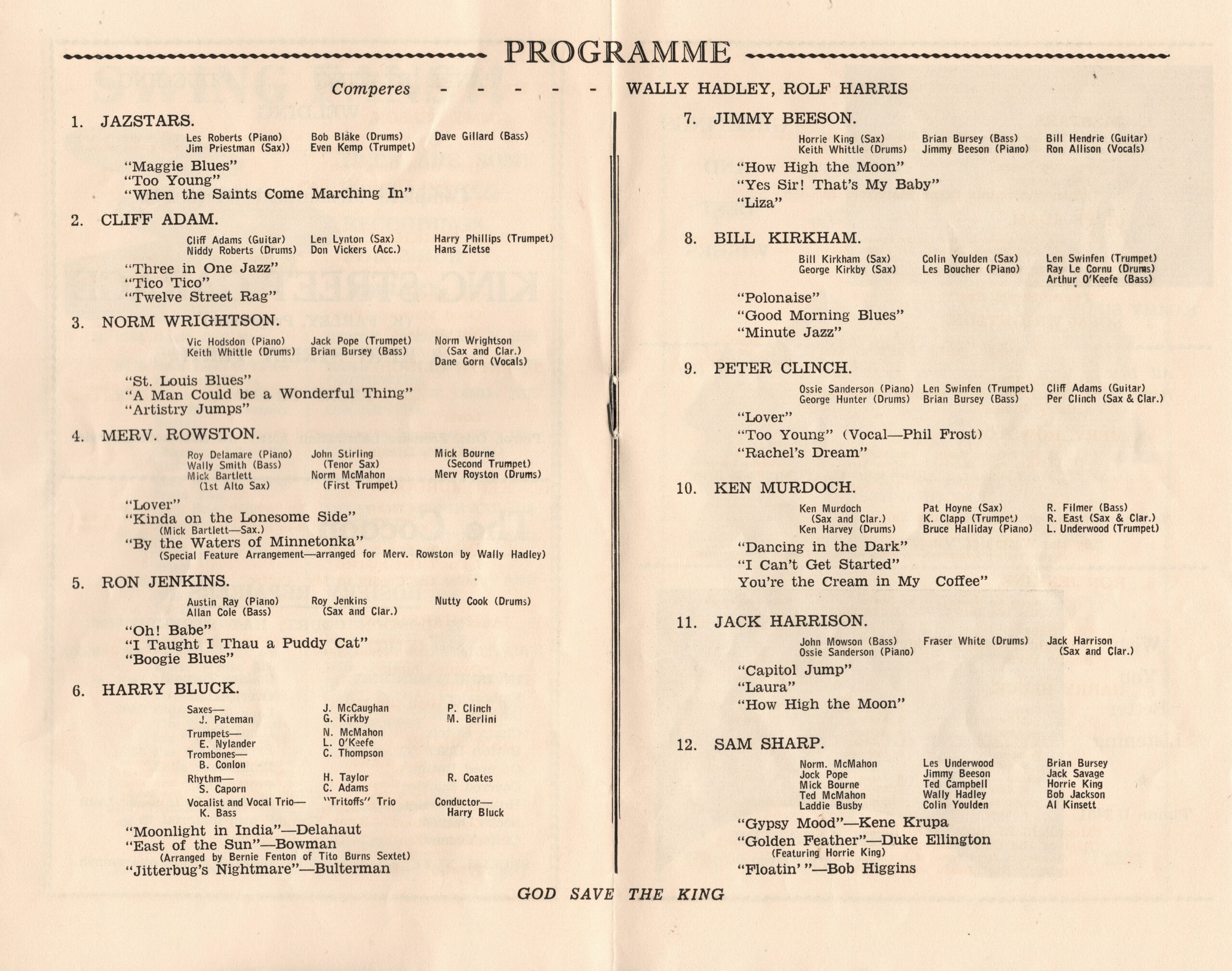
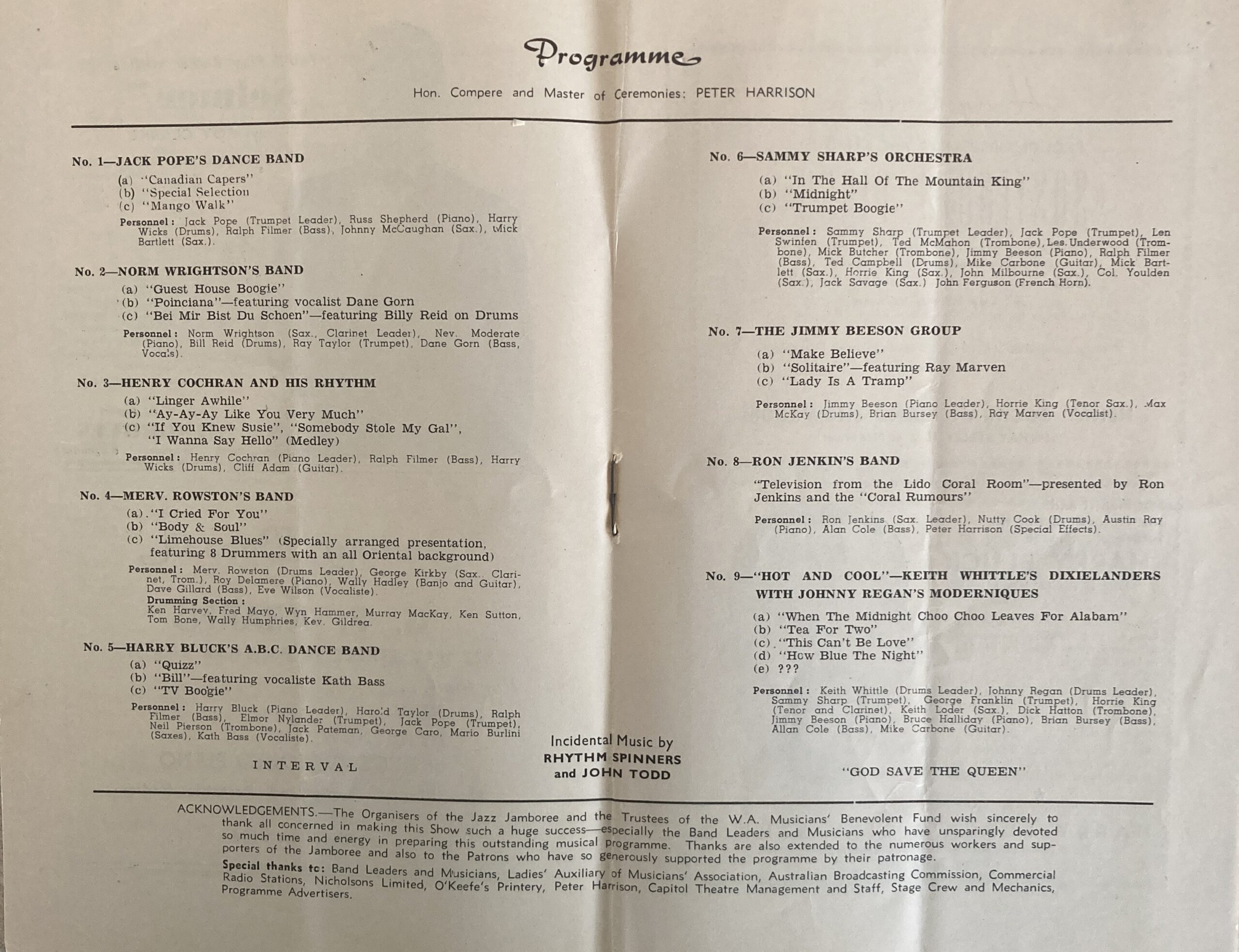
1951 Jazz Jamboree – programme
1952
SHE WAS IN CLASS OF NO OPUS AS A MARITAL MATE
Wife Begins Before Forte, Laments Pianiste’s Husband
I get ideas, so let’s take the long way home. You’re the moment of a lifetime . . . You could write the novel of the century, just from the words which flit across pretty young dance pianiste Greta Marjorie Filmer’s eyes as the band plays on. Come the medley and the anthem and she packs her list of songs up. She’s tired of playing — the piano!
The songs are ended— but the melodies linger on … Greta never seemed to be alone after the ball. And she often homed at 3 o’clock in the morning, her heart beating dancetime — but not for hubby Ralph Edward Filmer. Ralph was relegated to second fiddle on wife Greta’s heart parade. He realised their marriage was quavering so he gave inquiry agent Henry Brankstone the baton and bowed to the inevitable. Often, declared Ralph in Perth Divorce Court this week, when he cut adrift from Greta, he followed her up the street, like a I good guy should. And just as often she led him up a lonely road, or down a shady lane, or somewhere to see some petting in the park. And that’s about as close as Ralph has been to a grapple with Greta for some time— because somebody else has taken his place. And that somebody else is John Burse. Despite all he tried, Ralph told Mr. Justice Walker, Greta wouldn’t budge from Burge. Brankstone came into the picture on June 1. On June 2 Ralph pointed out Greta to the sleuth. And Brankstone opened a dossier which was to become quite, a bulky diary before long. Ralph met Greta after the footy that day. She bade him a cool farewell at the tramstop— and went to meet Burge. Brankstone saw them retire to a vacant block in York st., Subiaco for a quick kiss and a cuddle — in fact, quite a few kisses and cuddles. On June 3 she played in the band at Anzac House. After the dance a party piled into a car and cruised down the road a bit for some steady drinking and cuddling. Greta and Burce parted with a passionate sort n-peck. On June 6 she played at the Karrakatta Club. Brankstone and Ralph Filmer lined, up outside, saw her leave the club at 12.40 a.m.— with Burge. They disappeared into the darkness of a lane, kissing and cuddling on the way. Lane led eventually to the Esplanade where Brankstone and Ralph searched patiently for 2 hours without finding their quarry. Ralph got home late enough— but Greta didn’t arrive till 4 a.m.! On June 7 Greta wasn’t booked — so she took a busman’s holiday at the Pagoda, dancing and drinking with John Burge and others. They left the ballroom after midnight and celebrated the brand new day with a few more drinks. A truck took them back to Perth, where a convenient spot on the Esplanade was occupied for a few for the road. Brankstone saw Greta Filmer and John Burge melt silently into the bushes, arm in arm. About half an hour later they reappeared. Another drink, a few more cuddles and the truck moved off to Barker-rd.. Subiaco, where John gave Greta a real Hollywood goodnight— so close to 3 a.m. it didn’t matter. On June 17, Brankstone followed Greta and John Burge to some flats in Adelaide-tce. but couldn’t locate the flat they entered. They walked arm in arm down the street, he told the judge. Two nights later he saw them go to a movie, but they must have left early because he missed them when the show came out. On June 26 Brankstone saw Greta drive to a house in Stirling-st., where she was greeted lovingly at the door by Burge and they disappeared inside for a couple of hours Just after 11 p.m. they re-emerged— and Greta drove to their favorite little Esplanade niche. A little torchlight on the scene some time, later showed Brankstone and Filmer all they wanted to see. And it was all the judge wanted to hear, too. He gave Filmer an order nisi for which Burge pays. Day after Filmer got his divorce, Mrs Helen Daphne Burge, of Mandurah, got one. too, because Greta Filmer’s boyfriend John was Helen’s hubby. (Lawyer Karl Drake-Brockman for Filmer, lawyer Fred Outran for Mrs. Burge.)
THEIR friendship went something deeper than dance-hall partners! Greta Filmer and John Burge, whose romance was aired in the Divorce Court this week (see story this page) are shown together at a recent ball.
Mirror (Perth, WA : 1921 – 1956), Saturday 13 September 1952, page 3
Jazz Jamboree
1953
1953 Cliff Adam?, William Harrison, John Mowson, Terry Ingram, Ralph Filmer
RANDOM NOTES
ENJOYABLE party-cum-jam-session was held at Colin Youlden’s the other night when a number of local Jazz men and women celebrated the 8th anniversary of Wayne Handrick’s band’s engagement at the now defunct Rainbow Room. Among the participants were Greta Young, who gave out with some nice vocals as well as piano work), Mike Carbone and Hank Collins (guitars), Wayne Handricks, Colin Youlden and George Kirkby (saxes), Ralph Filmer (bass) and Roley Nash (drums). Bryn Gifford pleased with vocals a la Frankie Laine.
Mirror (Perth, WA : 1921 – 1956), Saturday 27 June 1953, page 11
PERTH MUSICIANS PLAN BIG WELCOME FOR RAY HARTLEY ON HIT PARADE
Local-boy-made-good Ray Hartley will step off the Strathnaver onto the proverbial red carpet rolled out by WA musicians when he arrives in Fremantle Tuesday week. Busy drawing up plans and specifications for a monster concert featuring local artists at the Capitol is band leader Sammy Sharp. Many other suggestions about ways and means to honor the writer pianist must be shelved until Ray has been consulted, but certain it is that Ray’s rapid rise in the entertainment world will be appropriately recognised. Present vague information about his ‘working holiday’ stay in Perth will not allow the mapping of any schedule. In fact, it’s thought that the concert at the Capitol will have to wait til a week or so after his arrival because of theatre bookings. How polished pianist Ray broke through the formidable barrier to success with his catchy ‘Let’s Do It Again’ soon after his arrival in London is well known. For some weeks the local radio hammered Donald Peers’ rendition of the number, and it was the same in England and America, where the tune topped the hit parade. Ray’s is truly a ‘rags-to-riches’ story— from a laundry hand to a celebrity in a few years, which seem incredibly short. He put his RAAF discharge in his pocket and went to work in a Perth laundry. Seven years ago he was 6 PM’s station pianist and supplemented his income with odd engagements at the ABC and a dancing school. He made steady local progress and moved across to Sydney in early 1948. There his services were in demand on radio and stage, and in his spare time he collected his A.Mus.A. at Sydney Conservatorium. This was the signal for his departure for London, where he quickly got his feet on the ladder of success. It’s almost 4 years now since Ray landed in London full of hopes and ambition, and since then he’s had at least 16 tunes published, including 2 best sellers. BBC and Radio Luxembourg have sought out his services, and he has made the screen with M-G-M and Pathe. Definite it is that Ray will be heard in 4 broadcasts from the ABC while in his home town. A week after his arrival he will appear in ‘What Next?’ ?
This well – known Perth band is heard weekly in Hit Parade all over Australia and by the troops in Korea. It is the noted combination of Harry Bluck and the conductor-arranger himself is shown at the far left, front row, Next to him in front, from left: Sylvia Caporn, Johnny McCaughan, Mario Burlini, George Franklin. Cliff Adam. Back row: Ralph Filmer, George Caro. Jack Pateman, Ted Mc-Mahon. Arch Waddell.
Mirror (Perth, WA : 1921 – 1956), Saturday 18 July 1953, page 12
Motive Power
This is one of the combinations that provide the motive power for hundreds of square dancing enthusiasts in Perth. Bob Scudder is calling to Harry Bluck’s Hill Billy Ramblers. Musicians are Ralph Filmer (bass), George Simmons (fiddle), Wally Hadley (banJo) and Harry Bluck (accordion).
Mirror (Perth, WA : 1921 – 1956), Saturday 12 September 1953, page 15
Hartley Farewelled
Preparatory to leaving on Tuesday for the U.S. via Melbourne and Sydney, where he will do a series of recitals for the ABC, popular pianist and composer Ray Hartley was guest of honor at two farewell parties of his aunt, Mrs. A. E. Fletcher, and the second at Mr. and Mrs. Merv Rowston’s. First was held at the North Perth home place at Mt. Lawley. At both functions musical friends entertained and were entertained by Ray. Guests included the Billy Heatons, George Kirkby’s, Keith Whittles, Syd Bannisters, Bill Hendries, Henry Cochrane, Ralph Filmer, Ray’s brother Bill, Dave Howard and many others.
Mirror (Perth, WA : 1921 – 1956), Saturday 31 October 1953, page 12
1954
NATION HEARS ‘BARRACK STREET’ BLUES
You’ve probably heard ‘Boogie Blues’ and ‘Memphis Blues.’ You’ve certainly heard ‘St. Louis Blues.’ But have you heard ‘Barrack-st. Blues?’ This is the name of Harry Bluck’s composition heard throughout Australia on the ABC Swing Club this week. Graeme Bell’s ‘Square Dance Rag’ was one of the few standard jazz numbers play ed in the session. Another Bell number, ‘Rockinghorse Rag,’ gave Harry Bluck a chance to feature some impressive key board work as he played the piano solos. Group comprised Harry Bluck (leader and piano), El Nylander (trumpet), Charlie Thompson (trombone), Jack Pateman (tenor sax), George Caro (licorice stick). In the rhythm section were Harold Taylor (tubs), Cliff Adams (guitar and banjo), Ralph Filmer (bass). Program showed just what can be done with skilful arranging. If you wonder why Harold should have picked Barrack-st. for his blues, the answer is simple. His studio overlooks Barrack-st. Harry Bluck WA Jazz Group served up 30 minutes of Australian numbers in the Dixieland style. Some of these compositions were standard jazz compositions. Majority, however, were Australian folk songs, given a new treatment by the local group. All arrangements were by Harry himself. It must have been one of the first times that numbers such as Jack O’Hagen’s ‘Along the Road to Gundagai’ and ‘I’m Gonna Hump My Bluey’ have been heard played in the ‘real razz’ style. But the arrangements were particularly tasteful and these old numbers retained all the appeal which made them a hit for so many years. Even the old bullockies’ classic, ‘Gee Back, Woo Back, Ema,’ was given a new coat of paint by the local boys. They added a little vocal to this number. Even the old ‘When the Dog Sits on the Tuckerbox’ got a jazzing up.
Mirror (Perth, WA : 1921 – 1956), Saturday 22 May 1954, page 13
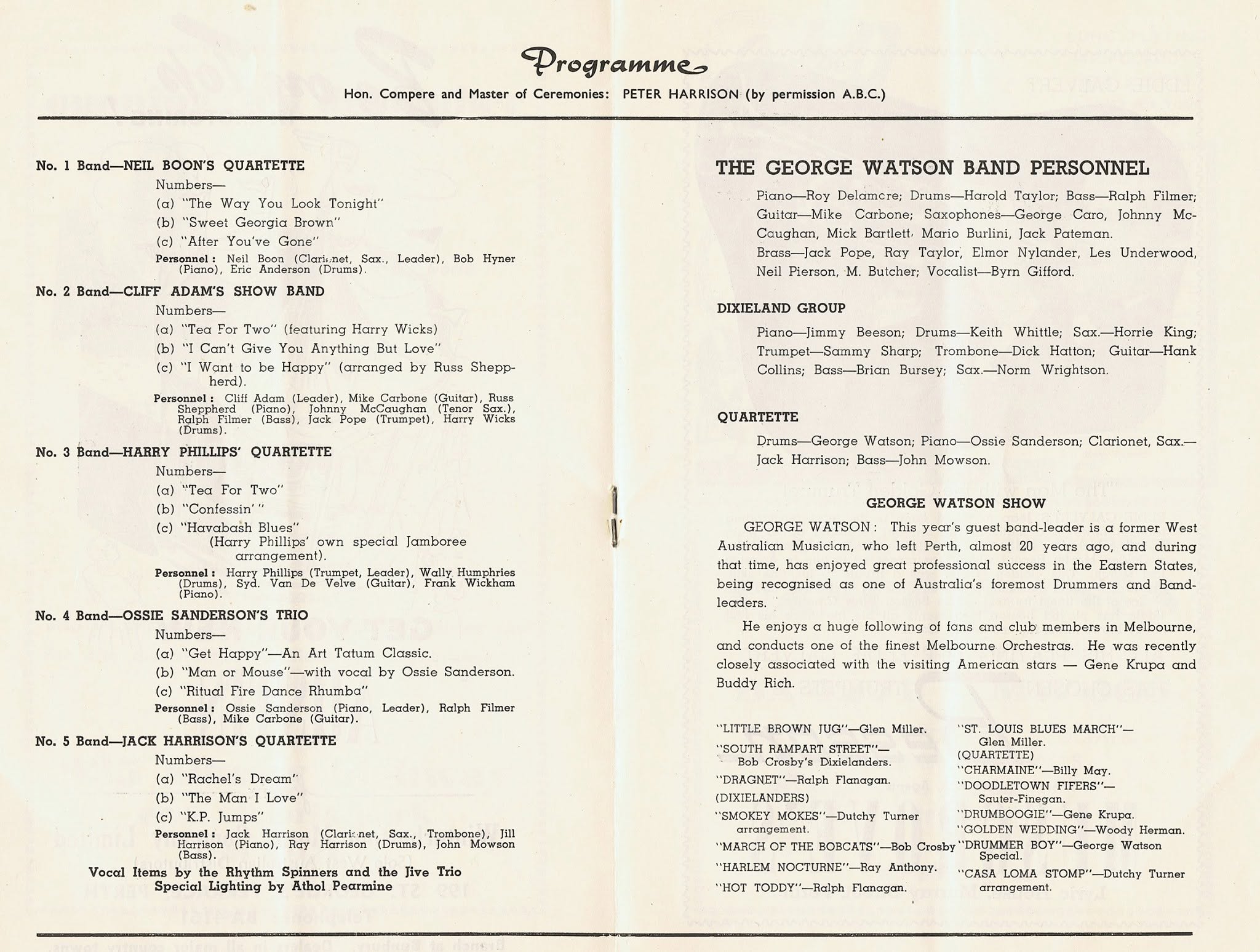
George Watson Show
1954 Watson George program
1955
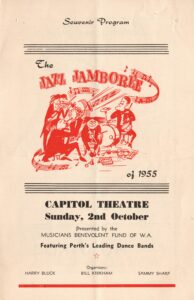
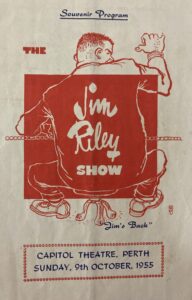
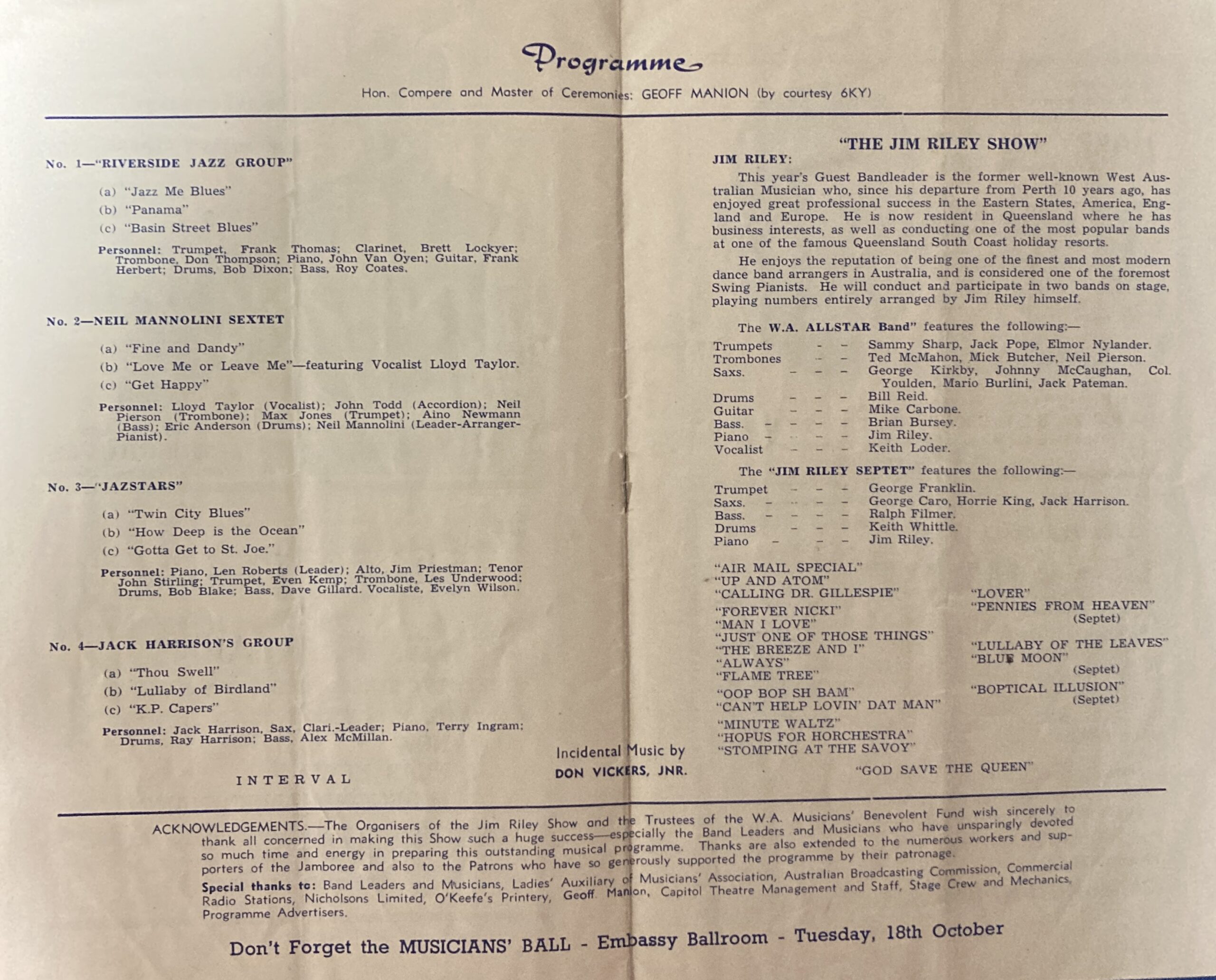
1955 Jazz Jamboree Program
THE YOUNG AUSTRALIA LEAGUE Presents Another “JAZZ FANTASIA”
with Sammy Sharp and his Orchestra.
35 of the State’s Finest Musicians featuring …
Louise D’Arcy — Jack Harrison — Jimmy Beeson — Horrie King, Jack
Pope — Martin Gischus — Colin Youlden — Lisa Ray — Keith Whittle
— Ralph Filmer — Evelyn Wilson.
SPECIAL FEATURE ATTRACTION – A NOVEL PARADE OF MEN’S FASHIONS By ELWOODS, PAN AMERICAN “STYLE STORE FOR MEN” , CAPITOL THEATRE – SUNDAY, 20TH NOVEMBER
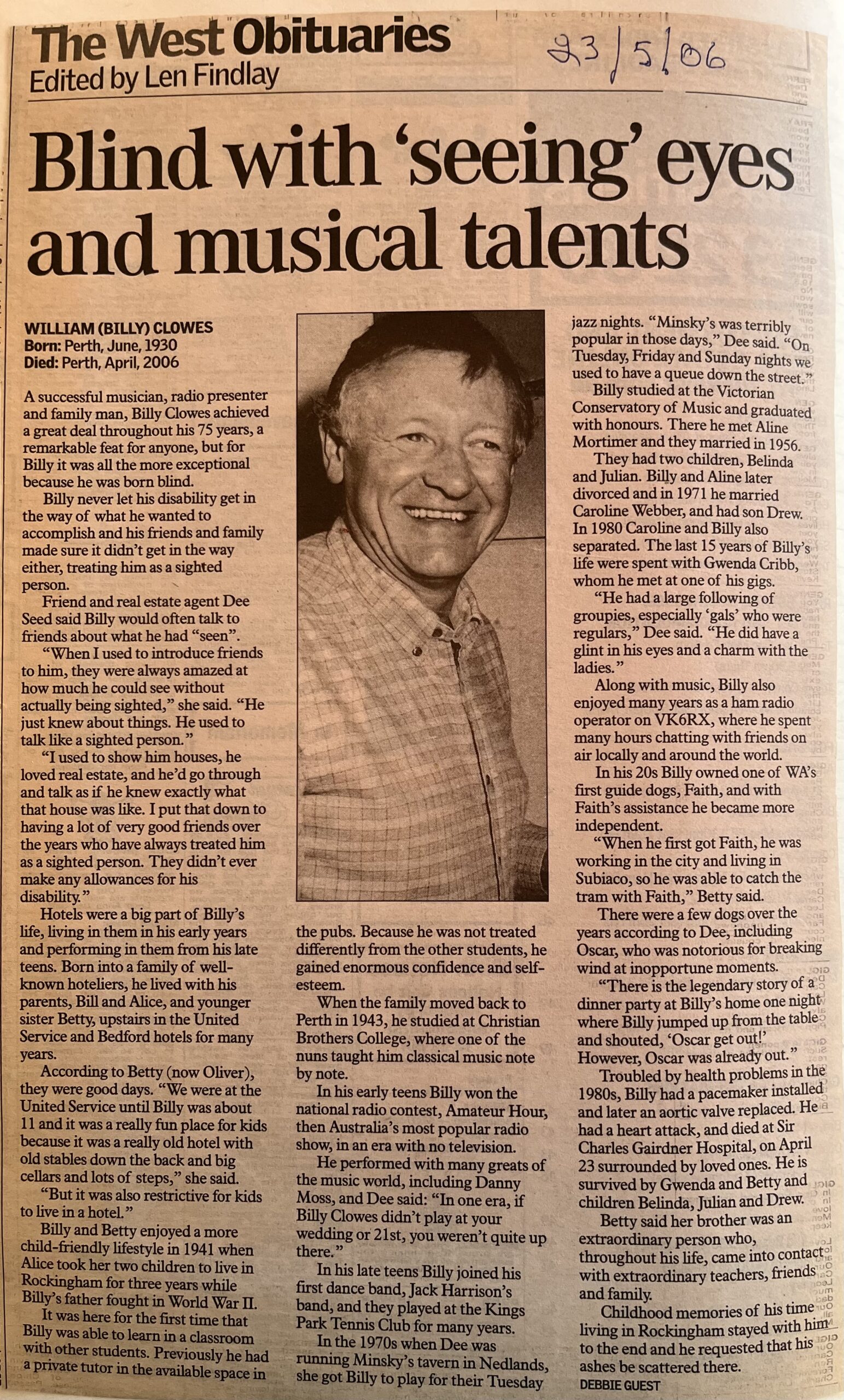
Blind from birth, much admired jazz pianist and piano accordion player, Billy Clowes, was born in 1930.
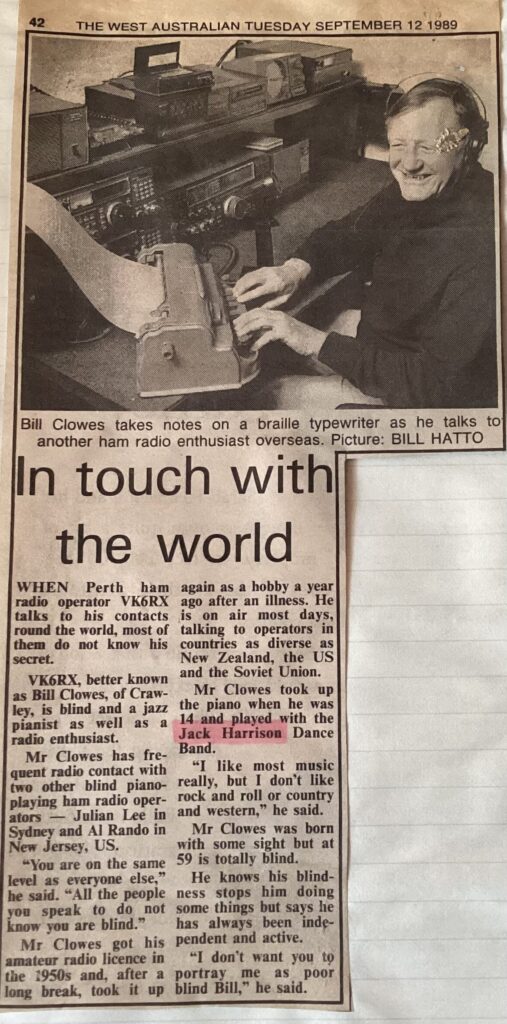
Billy worked a great deal with Jack Harrison and was great friends with Jack, Jill and Ray. Jack took Billy on a tandem bike down the huge hill from King’s Park down to Perth so he could feel what it was like to ride a bike. Jack reminisced that not everyone would hire Billy for gigs as, being blind, he required transport, assistance to the bathroom and food and drinks provided for him.
Jack and Marcia enjoyed holidays at the Clowes house at Palm Beach, near Safety Bay.
Jody and Jack Harrison visited Billy in his retirement. Billy had a huge collection of recordings all carefully labelled in braille.
1948
Variety Show
Wooroloo Hospital Queen contest will be officially opened by His Excellency, Lieut Governor Sir James Mitchell at a variety concert to be held at the Ambassadors
Theatre tomorrow, Sunday, July 18, at 3 pm. Local artists on the programme include pianists Henry Cochrane and Billy Clowes, Jack Harrison and his Swing Quartette, entertainers Dave Howard and Coral Gunning and songsters Maurice Jaffey, Dawn Hack and Betty Hatfield.
Mirror Saturday 17 July 1948 page 15
BLIND BOY AIMS TO LEAD BAND
Every afternoon at the Braille ‘ Society office in William-st, an 18-year-old youth learns economics and history. Study is hard for most young people; but it is harder for him. He is blind. And, he is not particularly interested in history or economics. His ambition is to lead a swing band. The youth is Bill Clowes, of the Bedford Hotel, Perth. Although he was able to ride his own bicycle to school when he was a small boy, it was not long before an ailment left him blind. Despite his handicap he has already started on the road to success. On Friday he began a season with a swing pianist with Perth’s Tivoli Theatre. Bill got his chance when he won a radio contest recently. Bill was taught to play the piano by pianist Henry Cochran.
BOND swing pianist Bill Clowes (18) who despite his handicap is one rung up the ladder to musical success.
Daily News (Perth, WA : 1882 – 1955), Wednesday 22 September 1948, page 4
Billy Clowes (centre back) on a picnic with Ray Harrison, Norma Webber and friends.
1949
Swing Show Thursday 23 June 1949
Organised by A.B.C.’s Dave Howard on Thursday evening at the Burt Memorial Hall from 7.15 to 7.45 p.m. was attended by a mixed crowd of more than 300, who thoroughly appreciated the program broadcast over WF.
The four bands which took part were as follows: WA Jazz Group (a Dixieland outfit), the Jack Harrison Quartet, Harry Bluck’s ABC Rhythmettes and Sammy Sharp’s 10 piece outfit.
Among the dance band fans saw Dorothy McMeikan, of Nedlands and Joan Bullmore also of the Nedlands district. A family group was present in Judy Grace and brothers Don and Doug of Mt. Lawley, who were discussing the show with Barbara Swift of Nedlands. Visitor Margaret Jacobs of Narrogin noticed chatting with Betty and Bill Clowes of Perth and Yvonne Bell of Bassendean. Ardent swing fan and record collector Ann Poynton, of Nedlands was one of many who thought that there should be more of this type of show. This is the first occasion in which a program has been presented by local bands over the air in this State, and it should be a forerunner to others along the same lines.
The Mirror Saturday 25 June 1949 page 15
Accent On Boans Ball
Rhythm accent this week is on Boans Ball at the Embassy, where 1200 happy people ‘went to town’ in a celebrative. air. It seemed to be the ball of the season, such was the free-and-easy atmosphere prevailing.
At the Embassy on Monday night, mid the most gay and colourful decorations seen at any ball this year, 1,200 happy people went to Boans Staff Ball. In lemon lace, saw Val Kift Of Swanbourne dancing with South Fremantle footballer E. Eriksson, who hails from the Manchester department. A Mr. and Mrs. floorside table party included Messrs and Mesdames Les Thompson (nee Phil Hayward), Colin Woods, Jack McAlinden and the Arthur Stanleys …. Been doing a spot of shuffling June Podger, of Belmont, Pam Keyser and Charmain Williams, both of Inglewood . . . Couldn’t help remarking upon Boy Coates doing a trifle of skylarking during supper interval quickstep …. In the cabaret section was invited to a table party shared by Nita Taylor and Bill Allen, of Boans ‘ (Nita, attractively dressed In pink inclined Candle striped taffeta off the shoulder), Shirley Capper, Maidavale, Mr. and Mrs. Bob Owens and Mr. and Mrs: George Redman.
Swing Show organised by teenager’s ‘ Dave Howard on Thursday evening at the Burt Memorial Hall from 7.15 to 7.45 p.m. was attended by a mixed crowd of
more than 300, who thoroughly appreciated the program broadcast over WF. The four bands which took part were as follows: WA Jazz Group (a Dixieland outfit), the Jack Harrison Quartet, Harry Bluck’s ABC Rhythmettes and Sammy Sharp’s 10piece outfit.Among Among the dance band fans saw Dorothy McMeikan, of Nedlands and Joan Bullmore also of the Nedlands district … A family group was present in Judy Grace and brothers Don and Doug of Mt. Lawley, who were discussing the show with Barbara Swift of Nedlands . . . Visitor Margaret Jacobs of Narrogin noticed chatting with Betty and Bill Clowes of Perth and Yvonne Bell of Bassendean . . . Ardent swing fan and record collector Ann Poynton, of Nedlands was one of many who thought that there should be more of this type of show . . . This is the first occasion in which a program has been presented by local bands over the air in this State, and it should be a forerunner to others along the same lines.
Mirror (Perth, WA : 1921 – 1956), Saturday 25 June 1949, page 15
Lounge 10/-, Front Stalls 7/-, Circle 5/-, Back Stalls 3/-.
The West Australian Wednesday 28 September 1949 page 30
CONCERT AT CAPITOL (Sunday 2 Oct 1949)
Good Response To Legacy Drive
The Legacy Club’s appeal for £ 10,000 benefited to the amount of £650 from the “Command Performance” on Sunday night at the Capitol Theatre. It was announced that in the two days since the appeal was launched, £1,500 had been donated and that an anonymous person had offered to donate £100 if five others would contribute a similar sum. The performance was compered by Mr. Dick Pair, of “Australia Hour” fame, produced by Mr. Michael Eustace and contributed to by star artists, all of whom gave their services free. The theatre was packed in all parts. Mr. Fair was piped on to the stage by the W.A. Caledonian Pipe Band. Mr. F. Gaved opened the programme with entertaining feats of magic, after which Mr. Charles Court (cornetist) rendered two items. Miss Pamela Flower’s contributions were followed by dance items by Mr. and Mrs. Wrightson and two sisters, Regina and Janina. Mr. Laurie Croisette, a London baritone, made his first appearance in Australia with two numbers and a guitar selection. Mr. Billy Edwards’s Specialty Harmonists (Messrs. L. Hancock, G. Griffiths, W. Frankish and L Richardson) were heard in three choruses, and Jack Harrison’s Swing Quartette was then heard. A male ballet of Y.A.L boys gave an exhibition of dancing and tap dancing. There was sustained applause for the blind pianist, Mr. Billy Clowes and Bette Whittaker and Phil Morgan. Mr. Albert Chappelle (baritone) had to respond to an encore. A banjo solo by Wally Hadley was also included. The accompanists were Mrs. N. W. Freemantle, Misses Phyllis Blott and Joan Drede and Mr. Billy Edwards.
The West Australian Tuesday 4 October 1949 page 6
SUCCESS IN ADELAIDE
Blind W.A. Pianist Wins Contest A 19-year-old Perth youth who has been blind from birth and who had barely touched a key on a piano until about five years ago, easily won an all Australian “Amateur Hour” radio contest conducted by Dick Fair in Adelaide recently. He is William Clowes, son of a well-known hotelkeeper. The piece that he played was “Dark Eyes.” On Thursday night Mr. W. Clowes, sen., who is well known in football circles, was told by telegram that his son had won the contest, gaining more than twice as many votes as any of his opponents. The talent quest had attracted nine candidates from South Australia in addition to the West Australian candidate, who polled 7.161 votes compared with 3.304 for his nearest opponent. Bill Clowes, jun:, played at the “command performance” concert in aid of the Legacy Club at the Capitol Theatre recently and the reception that he was given induced his father to take hint by air to South Australia for an audition for the “Amateur Hour” competition. He so impressed the auditors that he was placed on the programme that night. The young pianist was originally self-taught, though he has since received lessons from a professional pianist. lie has no knowledge of Braille music, and what knowledge of music he has acquired has been entirely by ear. “I’m afraid I would not be much use in a dance band,” he said yesterday, “but I would like to make a career in radio.”
West Australian (Perth, WA : 1879 – 1954), Saturday 29 October 1949, page 12
BLIND PIANIST WINS WITH 7160 VOTES
One of the highest votes given to an individual artist on the Amateur Hour for some time went to Billy Clowes, a nineteen-year old blind pianist, who at Adelaide on October 13 gave his own arrangement of Dark Eyes. He had polled 1896 votes by nine o’clock (and he was sixth on the programme), sufficient evidence of the way in which he went over. His final total was 7160. Dick Fair heard him play in Perth (his home town) when the Hour’s compere made a flying visit there for a Legacy function, and was so impressed that he arranged for his visit to Adelaide to appear in the programme.
Billy Clowes had jumped into first place in the voting by 9 o’clock. This was an outstanding achievement, polling 1896 votes in half an hour. Billy is a very competent pianist, and is now learning to play the banjo. He arranges his own music for this, too. Billy Clowes, watched by Dick Fair and Mr. W. Clowes, his father, who came with him from Perth to appear on the Hour He was born blind, and can only learn by listening to music, then re-producing it in his own way.
ABC Weekly Vol. 11 No. 45 (5 November 1949)
ARTISTS AT BIG CONCERT
Saturday 3 December 1949
Here are a few more items of interest about the Grand Concert to be held in His Majesty’s Theatre on Saturday December 3 in aid of the United Nations Children’s Appeal. In addition to the performers already mentioned, Billy Clowes, Billy Clowes, the blind West Australian pianist who won the Amateur Hour polling a few weeks ago will appear. Also you will see Don Vicker’s piano-accordion group, the George Everson banjo band and Glen Matson and his guitar quartet. The Kindergarten Union trainees will present a mime called “The Tall, Tall Castle” and well known personality Jack Harrison will also be featured.
An item of particular interest will be the appearance of Mr. A. Croisette, Hillbilly artist. Mr Croisette, an Englishman, has been in W.A. for about two months. He called on Bill Bennitt of 6IX and was immediately auditioned for “National Fair”. That was two days after his arrival in Australia. Shortly afterwards he appeared in “Command Performance” in the Capitol Theatre and dick Fair commented on the outstanding quality of his singing. Mr Croisette is the possessor of a magnificent baritone voice and can sing almost any kind of music, but prefers the hillbilly numbers which he will feature in this concert. He was successfully auditioned by the B.B.C. in England, and but for his move out here, would undoubtably have been heard on air over there. The concert is being arranged by Aunty Judy of the 6IX-WB-MD Children’s Hour who will compere the show.
MARCIA: Friday 10th March 1950 Jack – 8pm Mt Lawley Tennis Club
Bob and Berwyn and Owen and I went to see Jenny in hospital then went to Mount Lawley (Tennis Club). Jack, Ray, Billy Clowes and the rest of the kids came to our place afterwards. Jim gave me “Isn’t it Romantic”. Had a super time.
1950 Jack and Marcia at Clowes’ Rockingham house
MARCIA: Saturday 8th April 1950
Went to Rockingham with Jack, Bob, Stan, Murray in Anne’s car went to Billy Clowe’s for lunch. [Billy Clowes family had a beach house at Palm Beach]. Went to pictures at night with Jack and six boys saw “Gunga Din” had a luscious time. [“Gunga Din” is a 1939 American adventure film starring Cary Grant, Victor McLaglen, and Douglas Fairbanks Jr.]
MARCIA: Tuesday 18th. Jack “Mirth and Music” broadcasted by 6WF Tuesday nights
Went night school. Went to “give it a go” with Jack [competition run by Jack Davey over radio station 2AD Give it a Go (1957) was hosted by radio and TV personality Jack Davey, who also hosted The Pressure Pak Show. The show had pairs of contestants who competed against each other by answering general knowledge questions and was sponsored by the laundry powder company Persil.] then to Billy Clowes’s. Jack came back to our place.
Billy Clowes (piano), Sammy Sharp (trumpet), Ray Harrison (drums)
Wednesday 10th May 1950
Jack Harrison: Cheque to: Bill Clowes Uni Dramatic £2/15
Thursday 10th August 1950
Jack Harrison: Cheque to: Bill Clowes wages £7/5/6
A Light In The Darkness – Braille Society’s Work For The Blind
Reading is a relaxation that appeals to practically every member of the community, whether they be young or old. Can you imagine, then, what it would mean if one were suddenly cut off from one’s reading, by the loss of one’s sight? The Braille Society for the Blind of W.A. (Inc.) is a veritable light in the darkness for the 500-odd blind people in this State whose sight is impaired or destroyed and has a library of volumes embracing every class of literature — many of them done by hand by voluntary workers.
One of its most important functions is the rehabilitation of the blinded person, and the restoring of his confidence; then proving to the world that he is capable of doing so very much than he is given credit for. This is one of the reasons why the Society is always eager to further secondary education, particularly of young blinded people. As outstanding protégées of the organisation, Mrs. Gibbon mentioned … Mr. Bill Clowes, who is making quite a name for himself by playing “swing” on the piano. “Whenever necessary,” she said, “textbooks are put into Braille. Over 1543 volumes and many magazines are circulated throughout the year, and are handled free of charge by the P.M.G.’s Department.
Farmers’ Weekly (Perth, WA : 1947 – 1954), Thursday 5 October 1950, page 20
1951
PEOPLE YOU LISTEN TO
John Tuttell, producer of Australia’s Amateur Hour” who arrived in Perth on March 6th, has launched many artists on the way to fame and fortune. Among them are Barbara Leigh, who stirs Dudley Davenport’s amorous propensities in Much-Binding-in-the-Marsh. The Four Guardsmen, frequently heard on the radio, and Ronald Jackson, winner of this year’s Mobil Quest. This is Mr Tuttell’s first visit to the West, but in his five years as producer of Australia’s Amateur Hour he has welcomed many artists from Perth, including Jack Harrison and Billy Clowes the blind pianist. Mr Tuttell went from school into radio 2FC, and like Claude Rains, who rose from call boy to film star, rose from office boy to announcer, and after a spell learning the technical side of radio (inspired, he says, by his delight in twiddling dials) he joined the Lux Radio Theatre and Australia’s Amateur Hour.
The Broadcaster Saturday March 17 1951
1952
Jazz Jamboree 1952
Story of Billy Clowes, one of Perth’s most popular pianists, is the story of triumph over adversity. Billy was born almost blind. At 13 he went to the Perth Blind School. He had no more than a passing interest in music, but, seeking a worthwhile hobby, he later asked music teacher Henry Cochran to teach him to play. He was now completely blind, and tuition posed a problem that at times seemed almost insurmountable. But with dogged perseverance, aided by an understanding tutor Billy Clowes finally mastered the art of playing by ear. Now he is firmly established as one of Perth’s leading musicians. He plays each night at a leading city hotel and has been heard on local radio. His ambition — to study Braille music in Melbourne and later go to the Melbourne Conservatorium. His favourite pianists — Art Tatum, George Shearing and Lennie Tristano — all of them, like Billy himself, blind.
Mirror Sat 1 November 1952 page 6
1953
EASTER PARADE of Fashions and Entertainment His Majesty’s Theatre (Kindly loaned by R.M.T. Co.) SUNDAY. MARCH 29th at 8.45 p.m. – doors open 8 p.m. Entire proceeds for the War Blinded and Aged Blind Appeal. A Fashion Spectacle of Easter and Autumn frocks evening gowns, furs, teen-age and sports wear worn by Perth’s leading mannequins presented by L. J. LEE McALINDEN in latest Continental style. Studded- with novel variety including HARRY BLUCK AND ORCHESTRA Winterbottom Motor Co. Brass Bond, Billy Clowes, Phyllis Frost BOX PLANS OPEN MONDAY at Nicholsons. D/e and Stalls 5/. (no tax).
West Australian (Perth, WA : 1879 – 1954), Saturday 21 March 1953, page 31
1955JAZZ JAMBOREE
Sunday, October 2, 1955
Capitol Theatre
1955’s biggest swing show!
Admission 5/. Don’t miss it.
Book now ad for Jazz Fantasia 20 November – Jack Harrison scrap book
– JACK HARRISON’S QUARTETTE
Numbers –
“Geneva’s Move”
“Can’t Get Started”
“Jumping with Symphony Sid”
PERSONNEL: Jack Harrison (Clarinet, Sax), Billy Clowes (Piano), Ted Campbell (Drums), John Mowson (Bass).
1964
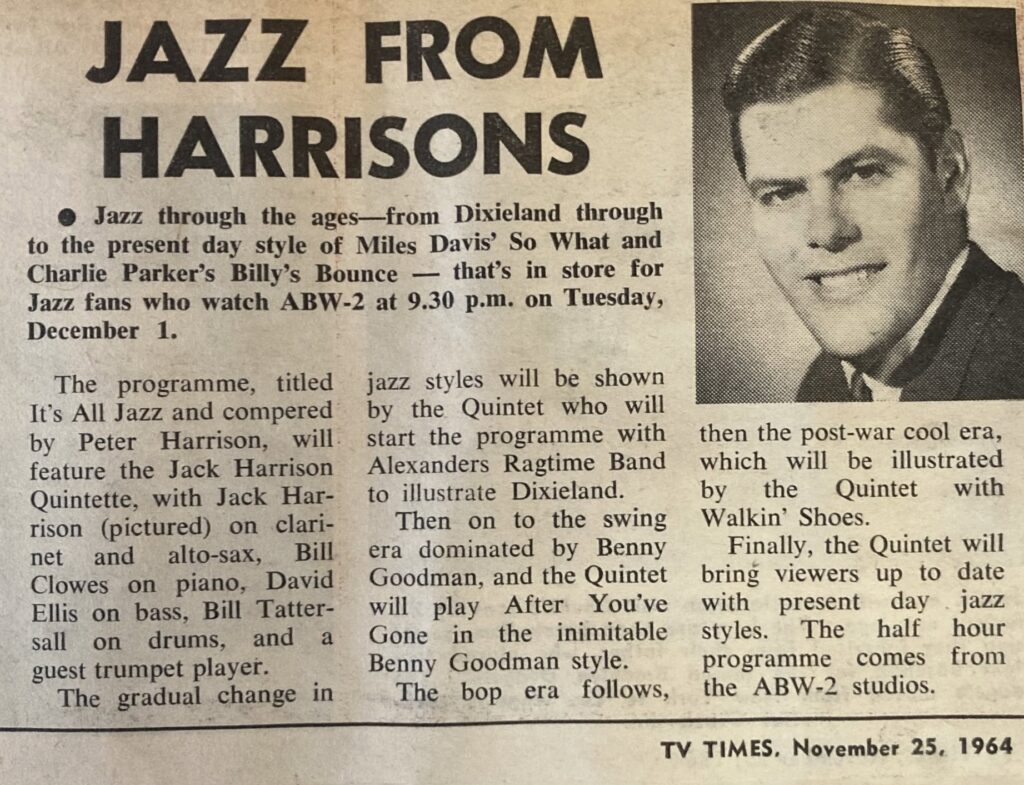
TELEVISION – JAZZ FROM HARRISONS
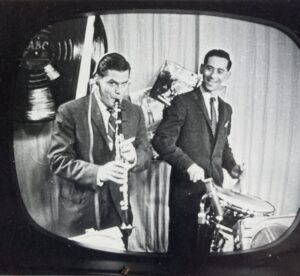
Jazz through the ages – from Dixieland through to the present day style of Miles Davis’ “So What” and Charlie Parker’s “Billy’s Bounce” – that’s in store for jazz fans who watch ABW-2 at 9.30pm on Tuesday December 1.
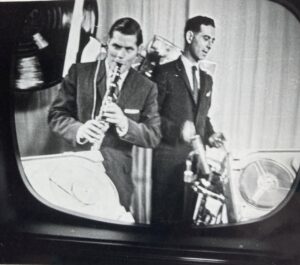
The programme entitles “It’s All Jazz” and compered by Peter Harrison, will feature the Jack Harrison Quintette with Harrison (pictured) on the clarinet and alto-saxophone, Bill Clowes on piano, David Ellis on bass and Bill Tattersall on drums and a guest trumpet player. The gradual change in jazz styles will be shown by the Quintet who will start the program with play “Alexander’s Rag Time Band to demonstrate Dixieland. Then on to the swing era dominated by Benny Goodman, and the Quintet will play “After You’re Gone” in the inimitable Goodman style. The bop era follows, then the post- 1947 cool era, with “Walkin’ Shoes”. Finally, the Quintet will bring viewers up to date with present day jazz styles. The half hour programme comes from the ABW-2 studios. TV Times November 25 1964
Tuesday 1st Dec 1964 – TV PROGRAMMES – DIXIELAND, BOP AND ALL THAT JAZZ
Jazz enthusiasts will look forward to TWO’s Studio ’61 on Tuesday night at 9.35. Called “Jazz Styles”, the 30 minute programme will take jazz back 50 years – and show how it has altered today. Starting with the Dixieland in the early 1900s, it will progress forward, lingering on each distinct style that evolved. “Jazz Styles” will feature the Jack Harrison Quintet with Harrison on clarinet and alto-sax, Billy Clowes on piano, David Ellis on bass and Bill Tattersall on the drums. The group will first swing into “Alexander’s Rag Time Band” – the big Dixieland hit. Then I chronological order they will move through Benny Goodman, cool and bop periods of popular jazz. The programme will end with several examples of present-day mainstream jazz. The quintet will exhibit three distinctive schools – that of Miles Davis, Count Basie and Charlie Parker. “Jazz Styles” is a repeat of part of a University lunch-hour concert given by Jack Harrison Quartet in April. Daily News Friday November 27 1964
Tuesday 1st Dec 1964 – TELEVISION – JAZZ PLAYING 50 OVER 50 YEARS
Dixieland, swing and be-bop is in store for viewers with an ear for jazz on ABW2 at 9.35pm on Tuesday. The programme, called “And All That Jazz” will show how the style of jazz playing has altered in the past 50 years, beginning with Dixieland Jazz. It then moves to the swing era dominated by Benny Goodman, then on to bop, cool and mainstream jazz. The concert will be compered by Peter Harrison with Perth’s top jazz band, the Jack Harrison Quintet. It consists of Jack Harrison (alto sax and clarinet) Billy Clowes (piano) David Ellis (bass) and Bill Tattersall (drums) and a guest trumpet player.
TELEVISION – CHANGING JAZZ
Jazz lovers should make a point of seeing AbW2’s Jazz Concert featuring the Jack Harrison Quintet on Tuesday evening December 1 at 9.30. The program will illustrate the gradual change in jazz over the years, starting with Dixieland music. As an illustration of Dixieland jazz the quintet will play “Alexander’s Rag Time Band”. This is followed by the Benny Goodman era of “After You’re Gone” and other Goodman classics. The comes the bop period representative of which we hear “Anthology” and through to the post- 1947 cool era, an example being “Walkin’ Shoes”. And so right up to the present day style of Miles Davis’s “So What” and Charlie Parker’s “Billy’s Bounce”. Jack Harrison is on the clarinet and alto-saxophone, Billy Clowes on the piano, David Ellis on the bass and Bill Tattersall on the drums and a guest trumpet player. TV Week November 28 1964
The Rhythmettes: A combination regularly featured in “Mirth and Music” from 6WF on Tuesday nights. Left to right: Harry Bluck (leader, piano accordionist and arranger), Jack Harrison (clarinet), Sylvia Caporn (pianist), Ralph Filmer (bass), George Hay (guitar) and Bill Hendrie (guitar). The Broadcaster Saturday July 2 1949 Vol. 16. No. 796
Jazz Jamboree
The first Jazz Jamboree was established by Sammy Sharp in 1947 and was one of the premier annual events for live jazz in Perth. By 1952, the event famously drew crowds of nearly 2,500 people who packed into the historic Capitol Theatre. These jamborees featured dozens of top-line Perth musical combinations playing until midnight, ranging from Glenn Miller-style big band arrangements to small-group modern bebop. It showcased early local “perthonalities”—from blind virtuosic pianists to local blue-collar workers who transformed into world-class players by night.
1947
JAZZ JAMBOREE PLANS FOR PERTH
With 8 leading hot outfits galloping the groove, Perth will have its first public jam session at next. Sunday’s Capitol theatre jazz jamboree. Boogie, jive, swing, Dixieland styles will tangle the tempo in two high powered arrangements and streamlined solos. Bands taking- part will be the combinations of Merv. Rowston, Chris Gosper, Sammy Sharp, John Stirling, Henry Cochrane, Ray Hartley, and Bill Kirkham, with the Hounslow jazz group giving an unusual first concert performance of old style hep. Compere will be Harry Bluck of radio and dance band fame. Over 50 musicians will give jazz a symphonic-scale entourage. Ray Hartley’s trio will play arrangements based on American King Cole’s guitar, bass and piano combinations
Sunday Times (Perth, WA : 1902 – 1955), Sunday 5 October 1947, page 11
Jazz Jamboree Was A Wow
OVER 2,300 young people packed the Capitol Theatre last Sunday night for West Australia’s first Jazz Jamboree. More than 500 were turned away. The thunderous applause of the enthusiastic young audience left the eight Perth jazz bands in no doubt of the vivid show they turned on. It was certainly worth waiting in that long queue in the rain to hear them. Organised by Mr. H. Bluck for the Radio Queen, Jazz Jamboree of 1947 was claimed to be the first of its kind in Australia. Actually it is the second. First was the Jazz Convention organised by the Eureka Hot Jazz Society in Melbourne last December. £160/10/-was raised for Miss Radio, will eventually be divided between the Kindergarten Union and the Silver Chain Nursing League. Organisers are to be congratulated on the low prices. Seats at 2/- and 1/- were well within the reach of young working people. Said one girl afterwards: “It was a beaut show, wasn’t it? You hear them at dances but you don’t realise how good they are ’till they play at a concert.”
Workers Star (Perth, WA : 1936 – 1951), Friday 17 October 1947, page 5
AROUND PERTH WITH HARRY BLUCK – PERTH RADIO STATIONS USING MORE BANDS AND LIVE ARTIST SESSIONS
Quick survey of local musicians currently airing programmes in Perth shows what a keen interest is being shown by local radio stations, both national and commercial, in presenting “flesh and blood” shows, especially by members of the dance band fraternity. Here are where a few of our leading “outfits” can be heard over the local ether. Sammy Sharp’s Band (featuring a 15 piece combination) and vocalist Peter Boyd are prominent each Thursday evening over station 6PR with a Band Presentation and “Talent Quest” show. Over the same network from Perth Town Hall, Chris Gosper and his “Music for Moderns” are relayed from their weekly midday sessions, which have proved a huge success, and shows signs of developing into something really big. From the same network come many other “live” shows including pianist Warrick Lever, Henry Cochrane and Jimmy Beeson. George Hay and his “Hawaiians”, Billy Barnes’ Hill Billys, Accordionist Harry Bluck, saxophonist Jack Pateman.
On the Nationals the weekly show features the “Rhythmettes”, a novelty outfit led by Harry Bluck, while the Jackie Harrison Quintette and Emil also give occasional broadcasts, not forgetting of course, soloist Henry Cochrane. Quick roundup of the other stations tells us of a weekly Sunday Show by the “400 Swingtette” over 6KY, where Chris Gosper and Ralph St. Clair play solo piano sessions, while a prominent Hill Billy movement is also aired by this station.
Theatre May Use More Music
News that Sammy Sharp’s Thursday night broadcasts shift into the Ambassador’s Theatre as part of the programme etc, may mean the thin end of the wedge for some other houses to follow suit and gradually reintroduce more musicians into local theatres. From observation it appears that Perth picture houses are not doing terrific business mid week. Perhaps some really good musical acts and support may be the answer, as indications from the other side of the show business points to outstanding houses for all flesh-and-blood performances.
The Jazz Jamboree
Already the bands concerned in this year’s “Jazz Jamboree” are working on their numbers for this colossal programme which shows every promise of superseding last year’s magnificent turn out. The bands listed to appear so far are – Merv Rowston’s, Jack Harrison’s, Ron Jenkin’s, A Jazz Group, Bill Kirkham’s, Chris Gosper’s and Sammy Sharp’s bands. This year a box plan will be opened and so it is hoped to avoid the terrific crush and queuing that took place last year – the queue was four deep, entirely encircling a complete city block – and was there for a couple of hours in pouring rain. Also – at last – proceeds from this year’s Jamboree go to the Musician’s own Benevolent Fund.
Music Maker October 1948
Sunday Night October 31 JAZZ JAMBOREE OF 1948 – Capitol Theatre
Box plan at Nicholsons. Adm 2/6 Proceeds to Charity. Harry Bluck, who heads the A.B.C. Rhythmettes, is the brains behind the business and all proceeds go to the Musicians’ Benevolent Fund. Box Plan Nicholson’s. Adm 2/6. Proceeds to charity.
The Mirror Saturday October 23 1948 Vol 25. No. 1379
JAZZ CONCERT – Sunday 31st October 1948
To raise funds for the Musicians Benevolent Fund, of WA, a concert under the name of Jazz Jamboree of 1948 will be held in the Capitol Theatre tomorrow night Sunday 31st October. The Daily News Saturday October 30 page 9
Jazz enthusiasts and the disciples of boogie-woogie, swing and be-bop (the translation of which has yet to be given to me) will be right in front of the eight-ball, so to speak, on Sunday night at the capitol theatre where the Jazz Jamboree of 1948 will take the stage as a charity concert. Harry Bluck, who heads the A.B.C. Rhythmettes, is the brains behind the business and all proceeds will go to the Musicians’ Benevolent fund. This year over 60 of Perth’s leading musicians will combine to make the show something for be-boppers (and others) to bop about. Merv Rowston’s Orchestra, Jackie Harrison’s Quintette, Chris Gosper and his Concert Orchestra, Ken Murdoch’s Swing show Quartette, Sammy Sharp’s Orchestra, Harry Bluck’s Jazz Group, Ron Jenkin’s Band and Bill Kirkham and his Jive Five will all be on stage, in addition to the “1948 Mystery Band”. This mystery band seems to be something of a mystery to all except the musicians in it. Harry Bluck tells me that nobody know the personnel, the music they are likely to play, the instruments they will select or even if they will “give out” from the stage or the stalls. But it seems like a great night and the cause will be a worthy one. It should be well worth while to go along to find out exactly what bo-peep is (sorry) bo-bep (excuse), I mean be-pop. Won’t somebody get me out?
The Broadcaster October 1948
Big Jazz Mystery
Perth’s hep-cats are properly mystified. No one will tell them the identity of a mystery band which will play at the big jazz jamboree at the Capitol on Sunday night, Oct. 31. Anyone who solves this Top Swing Secret gets a prize— 6 swing records, no less! Eight bands will play, led by Merv Rowston, Jackie Harrison, Chris Gosper, Ken Murdoch, Sammy Sharp, Ron Jenkins, Bill Kirkham and Harry Bluck.
The Mirror Saturday 23 October 1948 page 4
JAZZ CONCERT
At the Capitol Theatre on Sunday night the professional dance-band musicians of Perth will present a jazz concert. The programme, it is stated, has been planned to cover every style of modern Jazz idiom. Eight bands will be conducted by the following: Merv Rowston, Jack Harrison, Sammy Sharp, Harry Bluck, Ron Jenkins, Chris Gosper, Bill Kirkham and Ken Murdoch. The proceeds will be for charity.
The West Australian Thursday 28 October 1948 page 24
CAPACITY HOUSE FOR SECOND JAZZ JAMBOREE
The second annual W.A. Jazz Jamboree drew a capacity crowd at the Capitol Theatre last Sunday.
Youthful Jackie Harrison captured the imagination of the crowd with a very capable version of “Tiger Rag” on the harmonica. It has been a long time since Jackie Harrison has been heard on this instrument and he well proved jazz can be played on a harmonica.
Broadcaster Perth Saturday November 6 1948 Vol 15 No 762
According to The Broadcaster Saturday November 6 1948 Vol 15. No 762, “The mystery band of the evening, a two piece unit consisting of Bill Hendrie on the guitar and Ralph Filmer on the bass gave an unusual rendition of “Waltzing Matilda””.
1949
Jack Harrison for A.B.C.
Jack Harrison, Western Australia’s Band Leader is due to start on some top line broadcasting features with the A.B.C. Sydney, late this month. A popular figure at the recent Jamboree held in the Capitol Theatre, Perth, Jack also won an Amateur hour some years ago. Jack commenced his musical studies at the age of seven with the help of a sixpenny mouth organ. Before a year had passed he had won over £300 and several trophies playing chromatic harmonica. After his victory at the Sydney Amateur Hour Jack went back to college and the study of clarinet, harmony and counterpoint. Having also mastered the sax, Jack duly formed his own band. The following ear Jack’s outfit won the Battle of the Bands. They played at a number of balls twelve strong, but broadcasted mainly as Quartet or Quintet.
JACKIE HARRISON
The 10 year old boy who used to be heard frequently over the radio playing a harmonica, is now one of this State’s leading dance musicians, though still in his early teens. There is scarcely a dance patron in this city who does not know Jackie Harrison, the young clarinettist of Nedlands, who with his sister Jill at piano and brother Ray beating drums, came out easy winners in the 1948 Battle of the Bands conducted at the Capitol Theatre. Jack, whose versatility has gained him a lot of respect and admiration in the local dance band world, commenced learning the clarinet at a very tender age and later branched out leading the Harrison Trio. He was heard to good effect in the Jazz Jamboree and perhaps the most attractive of all his engagements to date, was this year’s Grad. Ball at Winthrop Hall where he led a 10-piece outfit. For some time past, he has been playing with the ABC Rhythmettes led by Harry Bluck. From the same station, Jack has been conducting a swing quartet at regular intervals. His more recent dance spots are Anzac House, King’s Park Tennis Club, Young Liberal League and also the Mt. Lawley Tennis Club.
‘QUAIL’
The Mirror Saturday 11 June 1949 page 13
1949 Jazz Jamboree – Jack Harrison” Quintet
JAZZ JAMBOREE OF 1949
EIGHT OF PERTH’S BEST BANDS – Alvan St. Jazz Group, Harry Black’s Swingtette, Jack Harrison’s Quintette, Ron Jenkins Lido Quartette, Ken Murdoch’s Band, Bill Kirkham’s Jive Band, Merv. Rowston’s Band, Sammy Sharpe’s Band.
CAPITOL THEATRE, SUNDAY, OCTOBER 30th
ADMISSION: 3/6 (reserved). Box Plan at Nicholsons.
The West Australian Wednesday 19 October 1949 page 30
JIVE FANS – BIG moment in local jive lives will arrive Sunday week when another Jazz Jamboree will be held at the Capitol with 60 of Perth’s best musicians featured in 8 bands. Alvan-street Jazz Group, Harry Bluck Swingtet, Jackie Harrison’s Quintet, Ron Jenkins Lido Quartet, Bill Kirkham’s Swing 7, Ken Murdock’s Band, Merv Rowston’s Society 5 and Sammy Sharp’s Band. Fans will also appreciate a re-appearance of sensational blind singer Phyllis Frost.
Mirror Saturday 22 October 1949 page 14
BIG JAZZ SHOW – Over 60 musicians will appear in the “Jazz Jamboree of 1949” in the Capitol Theatre on Sunday October 30. Eight bands will feature every style from Dixieland to bop. The concerts have been held since 1947 and have attracted very big audiences. The proceeds for the show are donated to the musicians’ benevolent fund. The bands taking part will be: Alvan-street Jazz Group, Harry Bluck Swingtet, Jackie Harrison’s Quintet, Ron Jenkins Lido Quartet, Bill Kirkham’s Swing 7, Ken Murdock’s Band, Merv Rowston’s Society 5 and Sammy Sharp’s Band.
JAZZ JAMBOREE OCT 30 1949 – Among the Dance Bands – A Night to be Remembered
Last week’s “Jazz Jamboree of 1949” provided this State with one of the most pleasant evenings of modern music. Every one of the 60 musicians who performed must be congratulated for his or her enthusiasm, craftmanship and above all determination to make the evening a success. As a result the Musicians’ Benevolent Fund in this state will benefit by a considerable amount of money.
Every one of the 2224 seats in the Capitol Theatre was occupied and crowds paid to stand in the aisles and at the back of the theatre. A queue had formed in William Street outside the theatre shortly after 6pm and an hour later it stretched as far as St George’s Terrace. When the performance commenced at 9 o’clock, hopefuls still thronged the footpath waiting for cancellations or standing room. (Who said jazz wasn’t popular in this state?).
Versatile Musicians
That there were many followers of Jack Harrison and his band was easily seen when they trouped on to the stage and presented four slick numbers; clapping reached its highest point. The last number “I’ve Got Rhythm” was particularly well done and Jack played every instrument within reach on the stage. He capped it all by producing the familiar mouth organ from his pocket and using it to good effect.
The Broadcaster Saturday November 12 1949 page 48
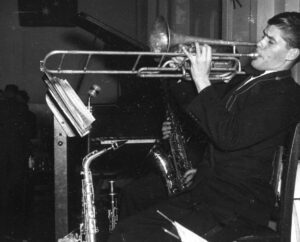
Jack Harrison playing trombone
Young Clarinet Ace Tries a Trombone
Claimed by local jazz musicians to be the youngest band leader in Australia, 18 year old clarinet “wonder boy” Jackie Harrison has started to play a very different instrument – the trombone. Harrison has been noted as a wizard exponent of the mouth-organ and clarinet, but also plays the tenor and alto saxophones and the piano as well as his latest instrument. “Just for fun” Harrison bought a second hand valve trombone (one of the few in Perth) and taught himself to play it. He finds playing the heavy brass instrument hard after the clarinet, but acquitted himself well in a recent Jazz Jamboree in which he played a difficult passage in “I Got Rhythm”. During the number, Harrison played the clarinet, saxophone and mouth organ, as well as the trombone. He often joins his sister Jill for a boogie-woogie piano duet.
BLIND SINGER GIVES BIG AUDIENCE THRILL
I don’t think I was the only one that got a kick out of Jazz Symphony of 1949 which packed the Capitol Thursday night. I really believe the audience enjoyed themselves thoroughly. In a grand show it’s hard to single out any particular artist but I hand the palm to blind singer Phyllis Frost (she’s ex-BBC). Her St. Louis Blues was outstanding. Jackie Harrison’s Concerto for Clarinet and Albert Chappelle’s Soliloquy (with full Sammy Sharp orchestra) we’re 2 other winners. So, too, was the big orchestra’s Rhapsody in Blue, in which Louise D’Arcy, piano, and John Nugent Hayward, conducting, were in splendid form. For humor, a talented musical trio in Niddy Roberts, Cliff Adams and Harry Bluck did a top-ranking job. Judging by the size of the audience, jazz concerts are the vogue. Should be a big gathering at the Jamboree on October 30.
Mirror Saturday 8 October 1949 page 12
1950
BANDLEADERS. Applications are invited from all Bandleaders who wish their bands to participate in the JAZZ JAMBOREE OF 1950 on OCTOBER 29. Application Forms and particulars are available from MUSICIANS’ BENEVOLENT FUND Secretary, Union Office, 33 Barrack-st. Applications close 1 p.m., August 31, 1950. HARRY BLUCK. Hon. Organiser.
West Australian (Perth, WA : 1879 – 1954), Monday 21 August 1950, page 28
JAZZ JAMBOREE TOMORROW The annual Jazz Jamboree will be held at the Capitol Theatre at 8.45 p.m. tomorrow. Almost 100 professional musicians will take part and play all types of modern music. The entire proceeds of the concert will go to the musicians’ benevolent fund. Sixteen dance-band leaders, all wellknown musicians, will take part, and the show comperes will be Geoff Manion and Peter Harrison.
West Australian (Perth, WA : 1879 – 1954), Saturday 28 October 1950, page 7
THE BIGGEST DANCE BAND SHOW of the YEAR — ALL YOUR FAVORITES
JAZZ JAMBOREE of 1950 – CAPITOL THEATRE – SUNDAY, OCTOBER 29th
NINE OF THE STATE’S LEADING DANCE BANDS
Bill Kirkham’s Embassy Band
Ken Murdoch’s Ensemble
Ron Jenkins Band
Peter Clinch Boptette
Merv Rowston’s Band
Colin Hicks and His Musk
Wayne Hendrick’s Modernaires
Norm Wrightson’s Band
Harry Bluck’s Music in the Modern Manner
ALL YOUR SWING, JAZZ AND BEBOP PAVORITES
500 Unreserved Seats on Sale at Doer
GFOFF MANION and PETER HARRISON. Comperes
JAZZ MUSIC: Nine dance bands combined to present the “Jazz Jamboree of 1950” in the Capitol Theatre on Sunday night to raise money for the W.A. Musician’s Benevolent Fund. Every seat was filled and the audience had an op portunity of comparing different styles. Warm applause greeted special efforts by the bands or their vocalists. The programme was produced by Harry Bluck and the comperes were Geoff Manion and Peter Harrison.
West Australian (Perth, WA : 1879 – 1954), Tuesday 31 October 1950, page 9
1951
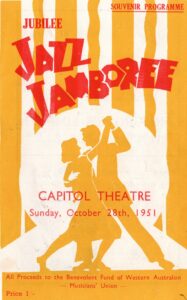
1951 Jazz Jamboree program cover
SUNDAY 28th OCTOBER 1951 – CAPITOL THEATRE – JAZZ JAMBOREE
Featuring 12 of Perth’s Leading Dance Bands
Jazzstars, Cliff Adams, Norm Wrightson, Merv Rowston, Ron Jenkins, Harry Bluck, Jimmy Beeson, Bill Kirkham, Peter Clinch, Ken Murdoch, Jack Harrison, Sammy Sharp.
Booking Opens at Nicholsons. Friday 19th October 1951.
A Hot Spot In The Old Town Last Night
Evidence of the increasing popularity of jazz with young and old Perth people was last night s Jazz Jamboree at the Capitol Theatre. Between. 500 and 600 fans were turned away. The theatre, which seats 2249 people, was filled by 7.55 p.m. — 10min. after 400 unreserved seats were offered at the theatre. And bodgies and widgies were far outnumbered by the “over-40” brigade. It was a record house for a jazz jamboree. The audience heard 12 of Perth and Fremantle’s best bands perform. All musicians gave their services free and the Musicians’ Benevolent Fund got the benefit— £501 was paid for tickets. Programme sales yielded more than £50 and, officials estimate that 600 more programmes would have sold “like hot music”.
Daily News (Perth, WA : 1882 – 1955), Monday 29 October 1951, page 3
1951 Jazz Jamboree – programme
Band Will Strike Up
ORGANISERS of last Sunday’s successful Jazz Jamboree at the Capitol Theatre are planning another type of concert for Sunday night, December 9 to aid the Daily News Orphans’ Fund. A 25-piece string orchestra will play exclusive arrangements not heard “in the flesh” in Perth before, says band leader Sammy Sharp.
Daily News (Perth, WA : 1882 – 1955), Wednesday 31 October 1951, page 2
1952
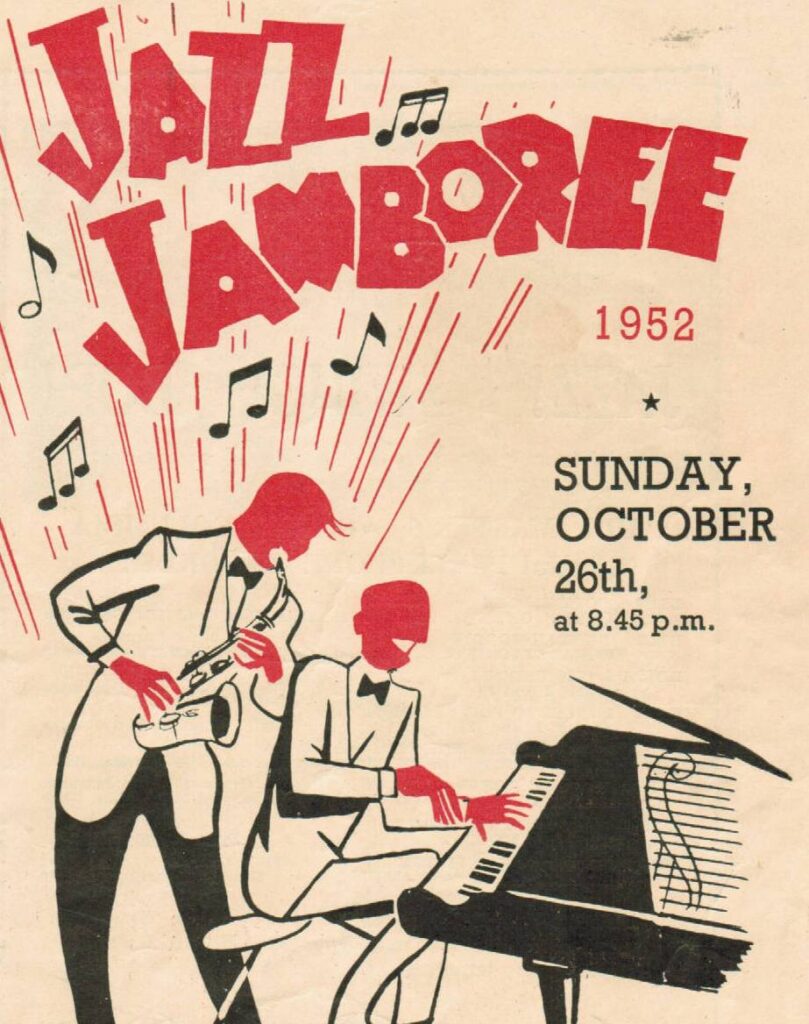
Jazz Jamboree 1952
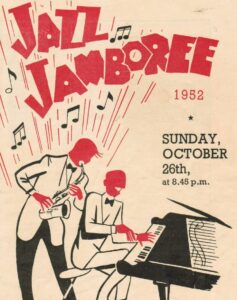
Sunday October 26th 1952 – Jazz Jamboree – DANCE BAND FANS! BOOK EARLY And Avoid Disappointment for the JAZZ JAMBOREE CAPITOL THEATRE
SUNDAY, OCTOBER 26 At 8.45 p.m.
SAMMY SHARP HARRY BLUCK
MERV ROWSTON KEN MURDOCH
BILL KIRKHAM JACKIE HARRISON
THE JAZSTARS NORM WRIGHTSON
RON JENKINS JIMMY BEESON
COLIN HICKS CLIFF ADAM
Tickets 4/-
BOX PLAN NOW OPEN AT NICHOLSONS
PERTHONALITIES OF THE 1952 JAZZ JAMBOREE
A blind pianist who triumphed over adversity; a printer whose favourite pie is jazz; a master musician who cooks for the gang; a tailor who suits his leisure with swing; a mechanic and speedcar driver who likes a sax on the mill and a refrigeration expert who hots it up on percussion.
They are some of Perth’s Jazz personalities. One has played with Spike Jones banjoist in a duo, others have sat in with world names. Their technique is world class — but to most it’s Just the cream of their bread and jam. By day they work but by night they become stars in the
Spotlight. Last Sunday night nearly 2500 people jammed the Capitol Theatre for the 6th annual Jazz Jamboree. Many stayed until midnight to listen to 12 topline Perth combinations give out with music that ranged from the Glen Miller big band arrangements to the bop of small combinations. This is the story of some of the men who made that jazz music— not only the leaders, but the lesser known names who made up those bands. Keith Whittle, drummer with Jimmy Beeson’s combination, first began playing percussion instruments in a small way when he was 3. Whittle became a band leader in his own right at the age of 10.
He organised an outfit at the Mt. Hawthorn School — two paper and comb experts, a mouth organ, tin whistle and a set of drums consisting of kerosene tins and bottles filled with water. It proved a great success with the other pupils but was rather frowned upon by the more conservative teachers. Not disheartened, Keith graduated from the tin can era and a few years
later joined Chris Gosper’s Australian All Stars. When this combination went overseas he became a free-lance drummer with a number of Perth bands. Now employed by one of Perth’s leading music stores, Keith Whittle is a recognised authority on jazz records. His favourite drummer — Gene Krupa.
Story of Billy Clowes, one of Perth’s most popular pianists, is the story of triumph over adversity. Billy was born almost blind. At 13 he went to the Perth Blind School. He had no more than a passing interest in music, but, seeking a worthwhile hobby, he later asked music teacher Henry Cochran to teach him to play. He was now completely blind, and tuition posed a problem that at times seemed almost insurmountable. But with dogged perseverance, aided by an understanding tutor Billy Clowes finally mastered the art of playing by ear. Now he is firmly established as one of Perth’s leading musicians. He plays each night at a leading city hotel and has been heard on local radio. His ambition — to study Braille music in Melbourne and later go to the Melbourne Conservatorium. His favourite pianists — Art Tatum, George Shearing and Lennie Tristano — all of them, like Billy himself, blind.
Wally Hadley, who organised this year’s Jazz Jamboree, has been a guitarist for 22 years. He left Perth in 1934 and after playing at famous hotels in India and Ceylon went on to England where he joined up with Freddy Morgan to form a banjo duo. Freddy Morgan, incidentally, is now with Spike Jones. This act toured the US, the Continent — playing at one time with the Folies Bergere — and also did two tours of Australia with the Tivoli Circuit. Famous names with whom Wally Hadley has worked Include Ted Ray, Ronald Frankau, Max Miller and Josephine Baker. Wally, a printer by trade, works at the Government Printing Office. He ranks as topliners In his particular field, American banjoist Harry Reser and French guitarist
Djangpo Reinhardt.
Cliff Adam, who led his own outfit at last Sunday’s Jazz Jamboree, begun in show business as a tap dancer. An operation put an end to that and Cliff took up the guitar. He left Perth in 1938 to try his luck in the Eastern States. Recognition soon came and he was a member of the band of the Capitol Theatre, Melbourne, and later, Sydney’s Prince Edward Theatre. Some years ago Cliff had the distinction of playing at a ball at Government House, Melbourne, in honour of the Duke and Duchess of Gloucester. Royal party’s official entrance had to be timed to the split second. Afraid to trust the watches of the boys in the band, the Duke’s ADC produced an alarm clock. According to Cliff, the inevitable happened — some- one set the alarm clock to synchronise with the Duke’s entrance. He says it is surprising how difficult it is to switch off an alarm clock sometimes! Cliff names Andre Segovia and George Van Epps as the world’s greatest exponents of the guitar.
TRIBUTE TO HIS OWN COOKING
Perhaps the best known name in the local jazz world belongs to rotund, genial Harry Bluck. A walking tribute to his own cooking, which after music is his greatest interest. Harry Bluck began his professional career when he was still in short pants. He gave his first broadcast at the ABC when he was 13. In those days he was a classical pianist and undertook a serious study of both organ and piano. Later he became the leading exponent of the piano-accordion in WA. Harry says his musical education continued even during the war years when he became attached to an American unit in the Pacific. Here he teamed up with some of the big-name band boys from the US to form a 54 piece band, with which was incorporated a 23 piece
swing outfit. A number of years with leading Sydney and Melbourne night clubs completes a picture of Harry Bluck, who now has the biggest school of music in WA. He also finds time to act as musical director of the ABC Variety Department. Incidentally, the next big musical show in Perth is being organised by Harry Bluck. It will be at His Majesty’s on Dec 18, proceeds for aboriginal soprano Nancy Ellis.
Sammy Sharp, who led a 17 piece band at last Sunday night’s jamboree, is the man who first introduced the idea to Australia. Sammy, one of our leading trumpeters, left Perth for overseas in the early 30’s. With Wally Hadley he toured a number of Eastern countries before eventually settling in England. Here he played with many world famous orchestras, including Eric Winstone, Ted Heath and Louis Levy. Impressed with the interest created in London by the annual Jazz Jamboree, Sammy Sharp decided to organise a similar concert In Perth in 1946. Held in connection with the Miss Australia contest, it was an instantaneous success. Since then the Jazz Jamborees have gone from success to success. Sammy Sharp is one of the few who works full time at music. He teaches trumpet and is also band master for the YAL band.
Ron Jenkins, who led his Lido Quartette at last Sunday night’s concert, has specialised in novelty jazz music. His combination is sometimes known as the local Spike Jones group and he has patterned his music along comedy lines. Ron, like a number of other local boys, started his career as a drummer. He later switched to the saxophone and has stuck to it ever since. His favourite bands are those which give their music novelty treatment. His ambition— to play on
television if — sorry, when—it arrives in Australia.. By profession, Ron Jenkins is a tailor, who can cut a suit as well as he can ‘cut a rug’.
Less than half a dozen of those who took part in the Jamboree are professional musicians who earn a full-time living at the game. They follow a variety of occupations and have a variety of interests out side their music.
Bill Kirkham is a motor engineer who takes time off from sorting out nuts and bolts to sort out crotchets and quavers. He amuses himself in his spare time with speedcar racing and he expects to have something, special for this season with a new car he recently brought over from Adelaide. Bill’s professional musical career resulted from the depression. When things were tough he teamed up with other musicians and he has been at It ever since. He has had his own band for the last 5 years. Kirkham’s favorite band— Glen Milller. Tops in his own instrument, the saxophone – Tex Beneke.
Among the top line drummers in Perth is Merv Rowston. His career goes back to 1927 when he got his first paid engagement for a performance on the electric pianola and drums, A man who gained his experience during the jazz era, he has had as much experience as probably any
other local musician. Keen to improve his drumming technique he went to England In 1934. He learned all he could from leading British drummers and returned to Perth with many new ideas on dance music. Merv has had considerable broadcasting experience and over the years has played at every dance spot in and around Perth. When old time dancing was popular over the air he conducted the ABC old time dance band. Away from music he is a refrigeration engineer.
These are some of the boys who have made the 1952 Jazz Jamboree an outstanding success year after year. That they have achieved their objective of bringing real jazz to Perth people is shown by the tremendous success of these concerts. For many of them who play semi – professionally and work at other jobs during the daytime it has meant many sacrifices. Some of the combinations who played last Sunday spent 6 or 7 months rehearsing for the big night. But: ‘Once you have tasted the thrill of the bandstand there is no turning back,’ said one of them.
Mirror Sat 1 November 1952 page 6
1953
LISTENERS WILL HEAR GIBSON
An agreement reached between the W.A. Musicians’ Association and the ABC resulted in last Sunday’s Jazz Jamboree (featuring The Bob Gibson Show) being recorded for broadcasting from 6WF. When the ABC heard that ace band leader Gibson would be the guest artist for the second part of Jazz Jamboree, it came to an agreement with organisers Sam Sharp and Harry Bluck for Gibson’s show to be recorded, and also agreed to pay the W.A. Musicians’ Association a fee for the right to record the show. The date of the broadcast will be published shortly. Gibson is now musical director for 2UW. Recently Gibson signed an agreement with the Columbia Recording Company. The first of his releases to be heard in Perth will probably be “Wild Horses” and “My One and Only Heart”. Gibson, who went to England in 1948 and returned in 1950, now favours big band. He records with a 28-piece band, and for concert and radio work he uses anything from 16 to 20 musicians. Two of his most popular programmes, heard from 2UW and Sportsman’s Parade and Musically Yours. Gibson said that any young musicians who hoped to go abroad needed plenty of capital and lucky breaks. He said that there were too many instances of a bandleader casually approaching a popular tune without having any idea of presentation.
Of the orchestra he conducted at the Jazz Jamboree on Sunday night, Gibson commented “They are a first class bunch of musicians. Considering they had such short notice to get together they gave a truly remarkable performance.” The band leader also praised individual performances. He believes that 17 year old Neil Boon could develop into a top line artist. Jack Harrison displayed plenty of versatility and gave a smooth performance, he said. Gibson also praised the responsiveness of the audience. “In modern music there is no greater encouragement” he said.
The Broadcaster Saturday November 7 1953 Vol .20 No. 1023
Young Musician Receives Loud Applause
A saxophone solo by 17-year old Neil Boon was loudly applauded in the Capitol Theatre last night at the final session of the Jazz Jamboree. The young musician, who arrived in Australia from England four years ago with no knowledge of music appeared in an orchestra with the veteran trumpeter Harry Phillips. He played an arrangement by the late Freddy Gardiner of “I’m In the Mood for Love.” Another artist on the same programme was Jack Harrison, who played six instruments in a ten-minute “jam session.” He played the alto and bass saxophone, clarinet, vibraphone, trombone and the piano accompaniment to his sister Jill when she moved from the piano to play the oboe (bassoon!) in “bebop” tempo.
The West Australian Monday 2 November 1953 page 4
1954
TEN TOP BANDS TO BEAT OUT JAZZ
That Jazzbo Collins’ quip ‘Be you round,- be you square, it’s guaranteed to curl your hair,’ could well be applied to tomorrow’s ‘Jazz at the Capitol.’
Perth fans have always rushed these shows and judging by the crowd round the box office during the week this one will be no exception. Ten of Perth’s top bands will get together to boost the Wendy Nash Appeal. And in the midst of all this jazz Wendy herself will take the spotlight and play a couple of classical numbers— Clare de Lune (Debussy) end Khachaturian (Toccato). Organiser Harry Bluck says that though these compositions are definitely in the classical sphere he is sure they will go across well with the jazz lovers. Listed for the program are the Harry Bluck Sextette, Ray Le Cornu’s Band. Cliff Adams’ Sextette, The Jazstars, Jack Harrison’s Quartette, Norm Wrightson’s Band, the Jimmy Beeson Group and Merv Rowston’s Band. Popular trumpeter Sammy Sharp will be sitting in with Merv. All these outfits, with the exception of Merv Rowston, will play 3 numbers. He will present his own arrangement, ‘Merv’s Music in the Modern Manner.’ Ray Le Cornu’s Band will give out with ‘Tuxedo Junction,’ made famous by the mighty Glen Miller Orchestra. It will be interesting to see how he puts this number across. Also on Ray’s list is the ‘Woodchop-pers’ Ball,’ old favorite of which Woody Herman made such a great recording. King’s Park dancegoers know what a. terrific job Jackie Harrison makes of the ‘Golden Wedding.’ The hall comes to a standstill when Jackie gets up on the stool to extract those last few high notes from the licorice stick. Ron Jenkins has built a great reputation with his top class music and comic acts. Ron and his quartette will serve up ‘Crazy Man Crazy’— guaranteed to make everyone ‘go mad.’ Norm Wrightson has a certain touch of class about his presentations. He gets a beautiful tone out of his clarinet — which should be well to the fore. ‘ His selections are all numbers played by Benny Goodman groups —’I Got Rhythm.’ ‘South of the Border’ and ‘Undecided.’
Those who were at the Jazz Jamboree last November will no doubt remember the great reception Martin Gieschus got when he sang ‘That Old Black Magic.’ He had to sing it again. Tomorrow night he is singing current pops-top ‘Answer Me My Love’ with the Jimmy Beeson Group. Jimmy’s other 2 items are ‘Sometimes I’m Happy’ and ‘Cheek to Cheek.’ Jazstars are billed for 2 oldies in ‘Tiger Rag’ and ‘That’s a-Plenty.’ Liza Ray provides the vocal of their third number, ‘Somebody Loves Me.’ Harry Bluck sextette will feature ‘Lullaby of Birdland,’ a number popularised by the inimitable George Shearing. Kath Bass exercises the vocal chords singing ‘The One I Love Belongs to Someone Else’ with the Bluck group. ‘ Cliff Adams’ outfit will play ‘The Continental,’ ‘Cumana’ and ‘Long John Stomp.’ It’s no wonder all seats have been taken except 200 seats to be sold at the door.
Mirror (Perth, WA : 1921 – 1956), Saturday 26 June 1954, page 13
TOP BANDS
Oct. 31 and Nov. 7 will be big nights for local Jan lovers. Ten top bands will take the stage for the Jazz Jamboree while the following Sunday’s show is marked by the appearance of Australia’s greatest drum technician — George Watson. An ex-West Australian, Watson has built up a colossal following in Melbourne’s Dance world. Recently he played with drummers’ doyen Gene Krupa. Bands for the Jamboree are Keith Wittle’s Dixielanders, the Jazstars, Johnny Regan’s Moderniques, Ray Le Cornu, Merv Rowston, Harry Bluck, Jimmy Beeson, Norm Wrightson, Ron Jenkins and Sammy Sharp. Both shows will be at the Capitol.
Mirror (Perth, WA : 1921 – 1956), Saturday 23 October 1954, page 11
BIG JAZZ show on SUNDAY
Capacity crowd is expected at tomorrow night’s annual Jazz Jamboree at the Capitol Theatre. Ten well-known local swing hands will take part.
Show is the first of 2 being conducted this year in aid of the Musicians Benevolent Fund. Another will follow on Sunday week. Jamboree fans will have their first opportunity of hearing and seeing Keith Whittle and his Dixielanders, who will lead off tomorrow night’s program. Other bands are Johnny Regan’s Moderniques, Ray lie Cornu, Merv Rowston’s Collegiate Jazz Band, Harry Bluck, Jimmy Beeson, Norm Wrightson, Ron Jenkins and Sammy Sharp.
Big attraction at the second show is visiting drum wizard George Watson. Novel half of the program will be the appearance on stage of 3 bands simultaneously. They will play sections of numbers alternately. Compere for both shows is Peter Harrison.
Mirror (Perth, WA : 1921 – 1956), Saturday 30 October 1954, page 6
1954 George Watson Show1954 Watson George program1955 Jazz Jamboree – program cover
1955
JAZZ JAMBOREE – Sunday, October 2, 1955 – Capitol Theatre
1955’s biggest swing show!
Admission 5/. Don’t miss it.
Book now ad for Jazz Fantasia 20 November
1955 Jazz Jamboree Program1955 Jim Riley Show1955 Jim Riley Show program
Person
DENTON, Kit
Kit Denton was a writer and broadcaster with a lifelong interest in music. He performed in dance bands in Western Australia before his later career in radio and television. He was the father of Andrew Denton.
Kit Denton, originally Arnold Ditkofsky, was a writer, screenwriter, producer and broadcaster who was prominent in his adopted home of Australia. He also tried his hand at prospecting. He was born in England of Polish Jewish descent.
Born Arnold Christopher Ditkofsky on 5th May 1928 in Stepney, Middlesex, England, Kit Denton was raised in London’s East End. His parents, Harry Ditkofsky and Fanny Baskin, were devout Jews who kept Shabbat, ate kosher and spoke Yiddish.
He joined the British Army following the Second World War, with which he served with the British Forces Broadcasting Service in Germany.
Kit (Ditkofsky) Denton migrated from England to Australia.
Kit emigrated to Australia in the late 1940s, working firstly as a gold miner in Kalgoorlie, Western Australia.
Kit (Ditkofsky) Denton is a Military Veteran.
Served in the Australian Military Force 1953-1953
He was a member of the Australian Military Force in 1953.
Kit married Lee Pearson, who was of Irish Catholic heritage, and became an atheist.
From 1951 until 1965, Kit worked for the Australian Broadcasting Commission as an announcer, and eventually moved on to screenwriting, producing and directing television. With an abiding interest in military history, he is best known for his 1973 novel, The Breaker, based on the story of Breaker Morant (the film, Breaker Morant, was not based on Kit’s book, but on a play by Kenneth G Ross). [1] Kit also wrote:
Gallipoli: One Long Grave, a 1986 book about the Gallipoli Campaign of The Great War. [3]
For Queen and Commonwealth, 1987, about British military forces in the late 19th century. [4]
Burning Spear, a 1990 collection of prizewinning and internationally acclaimed stories. [5]
Aged almost 69 years, Kit passed away on 14th April 1997 at his home in the Blue Mountains, New South Wales.
He was the father of comedian, television producer, Gold Logie-nominated television presenter and former radio host, Andrew Denton (4 May 1960-), who married fellow tv presenter Jennifer Byrne and are the parents of Connor Denton (1994-). In August 2006, Andrew announced a $25,000 writing scholarship in his father’s name: The Kit Denton Fellowship, which has been presented to members of the Australian Writers’ Guild from 2007 onwards.
Mr. and Mrs. Kit Denton, who were married last Friday, met in the course of their radio station duties. Mr. Denton is an announcer. The bride, who was Lee Pearson, is the daughter of Mrs. E. J. Pearson, of Tenterfield, N.S.W., who came to Perth for the pretty all-pink wedding which took place at St. Mary’s Cathedral. The honeymooners will set up house in a nice little flat over-looking the river at Mosman Bay.
Western Mail (Perth, WA : 1885 – 1954), Thursday 7 August 1952, page 33
1960
ABC TV Perth (station callsign: ABW) officially launched on May 7, 1960. Broadcasts began from the original studios on Adelaide Terrace in downtown Perth and its transmitter in Bickley, expanding public-owned television to Western Australia. The station relied entirely on live-to-air broadcasting for its music performances. True multitracking did not exist in the station’s infancy; early local audio engineers captured performances using mono or basic two-channel twin-track tape recorders (like early Ampex machines) connected to a centralized mixing console.
Kit Denton assisted Jack Harrison with his multi tracking broadcast.
1961
GOLD MINER IS NOW A TV STAR
Witty, urbane Kit Denton considers himself a “failure” in Australia. The reason: he migrated to be a goldminer, instead has found himself stranded (prosperously) on the surface. Denton came to Western Australia 11 years ago from London. For six months he WAS a goldminer on Western Australia’s colourful goldfields, but then decided he didn’t have the aptitude and settled in Perth. Here he found consolation in a field he had already had some knowledge of in Britain — radio and entertainment. Almost reluctantly he found himself being pushed up the ladder. He worked, successively, on three Perth commercial radio stations, as announcer, programme manager. scriptwriter, then joined the Perth stations of the Australian Broadcasting Commission. He soon won himself a reputation as a polished interviewer and prepared many radio documentaries. Denton has travelled over much of the 1,000,000 square miles of Western Australia with a tape recorder, a lively imagination, a quick eye and ear. Many of his programmes have been broadcast throughout Australia, and some over Radio Australia, the ABC’s shortwave programme to the world. “I was a rotten miner, but Australia has been good to me just the same.” Denton said. “This must be the most exciting continent on earth to live at the moment.”
Good Neighbour (ACT : 1950 – 1969), Saturday 1 April 1961, page 3
1964
A LOOK AT THE BEATLES
The Beatle Cult comes under a close and humorous scrutiny in B-Day on Channel 3 tonight at 8.30.
The programme, narrated and compiled by Kit Denton, looks at the Beatles’ “trade marks”—their shocks of hair, and the distinctive Mersey beat.
Their hair style has become part and parcel of their act.
“Yet,” says Kit Denton, “hair-styles have been part of the ‘personality’ of many of the world’s greatest figures.
“In the 1930’s Adolf Hitler had the most talked about hair-do in the world. The flambouyant wrestler Gorgeous George would have been nothing without his wonder-ul growth of hair. Further back in history, the biblical character Samson won fame through his hair, and maybe the Beatles should note that without it he was a nothing.”
Kit Denton takes a close look at the Beatles’ “Liverpool Sound”, with the Mersey beat.
“Is it any different from the beat that took the King of Swing, Benny Goodman, to dizzy heights in the 1940’s?” Denton asks.
To illustrate his point, he shows a group of madly stomping teenagers of the 1960’s dancing to music by the Beatles. The music changes and you see the same group dancing just as well to Benny Goodman and his swing of the 1940’s; then further back to Kid Ory, even further back to Meade Lux Lewis and way, way back to Johann Sebastian Bach.
Canberra Times (ACT : 1926 – 1995), Thursday 11 June 1964, page 39
1983
Author’s new book not meant to destroy Breaker legend – By PETER FULLER, Literary Editor
I’m devoted to cryptic crosswords,” says Kit Denton, “and I never give them up. I have some at home which I’ve had sitting around for years with one clue still vacant.”
The remark is made by way of analogy. For more than a decade Denton has been wrestling with the mysteries of the lives and death of Harry “Breaker” Morant, bushman, poet, soldier and, some might say, martyr. He has dealt with him fictionally, in his novel ‘The Breaker’, and historically in his latest book, ‘Closed File’, written in part “to get the itch out of my skull”. But is the file really closed on the man who was executed with fellowofficer Peter Handcock at Pretoria in 1902?
“I’d like to think it was; I’d like to think so,” Denton says.
“I don’t really believe it is, not while those imponderables are still there. The analogy is the detective who successfully wraps up the case, the guy’s in prison, and he knows when he goes back over the file that there are two witnesses that he can’t find.
“There are two outstanding things, aren’t there?” he says.
“For me the itch is never going to truly disappear until and unless I can scratch at those two things. One: Who was Morant? Was he Harry Harbord Morant, of Hampshire, or not? That’s one. And the other, what happened to James Francis Thomas’s record of the court-martial, which he brought back to Australia with him? Where the hell is it?”
“There’s an ancilliary one, too: why were the documents destroyed by the Brits? And perhaps another ancilliary question: is my romantic suspicion about a correspondence between the Kaiser and the King anything more than a romantic suspicion? Until the revolution, and I can sit there and rifle through, and say – “There it is: ‘Dear Ted’.
For those who came late, “Breaker” Morant was, by his own word, the son of Admiral Sir George Morant, a member of an old and honourable south-west-of-England house. Whatever truth there might be in that, he was a notable personality in Australia in the latter part of the last century, making a reputation for himself as a superlative horseman and versifier of some talent. When the Boer War broke out he joined the South Australian Mounted Rifles and reached South Africa in February 1900. A little more than a year later he was commissioned as a lieutenant in the Bush Veldt Carbineers, one of the irregular units formed by the British to suppress the Boer commandos; less than a year after that he and Handcock died before a firing squad for war crimes. They were defended by Captain J. F. Thomas, a Tenterfield lawyer and newspaper proprietor. The circumstances surrounding their executions were not quite regular, and it has been suggested that the British used them as scapegoats to placate German outrage at the killing of a German missionary.
Denton says ‘Closed File’ is not an attempt to the “demythologise” the figure of Morant, who has become something of a folk hero in the light of ‘The Breaker’ and the film ‘Breaker Morant’.
“I wasn’t intent in the first place on establishing a myth,” Denton says, “and certainly there’s been no intention in this case of breaking down a legend. “It’s simply that from word one, from the first time I heard him talked about, I’ve wanted to know what the truth of the matter was. And this [‘Closed File’] is something like the book I wanted to write in the first place – not the novel.”
In retrospect, Denton isn’t surprised that Australia was captivated by Morant. It’s a standard pattern, he says. “Robin Hood, Jesse James, William Tell, Siegfried, George Patton – you know. The winner against all odds, like Phar Lap, is one thing; the nearly winner against all odds is the stuff of legend. The good bad man is the one people like because he’s bucking the system.”
At the time that Denton wrote ‘The Breaker’, shortage of time and money prevented him doing the sort of research he wanted to do to unravel the whole Morant story. ‘Closed File’ is the product of that morecomplete research, which has thrown up some surprising facts and opinions, among them the charge by Trooper Theunis Botha, Morant’s interpreter, that on at least one occasion “The Breaker” had shown cowardice in refusing to close with a Boer party.
“That came as a shock to me when I first saw it,” says Denton.
“It’s the only hint, anywhere that I’ve searched, anywhere at all, of that sort of reticence in the face of physical danger. And it’s easily acceptable that Botha was biased about it, or looking at it from the wrong point of view, or not capable of appreciating the military situation, as it was. But then 1 don’t know that Morant was capable of appreciating it. He had no practical experience in making command decisions, other than what he’d learnt on the ground. But he was a quick study, wasn’t he’?”
The Morant of history was, Denton says, “an enigma from beginning to end”: “That business of where he came from is a puzzle.” His character is more easily discerned, however, and Denton would sum it up with the word “bastard”.
“That phrase that the old man who first told me the story used is the one 1 still cling to – ‘The bravest bad bastard I’ve ever met’.
“He was a weird mix of things, and I think if you have to put one word down to describe him neatly, the nearest word 1 think might be “bastard”, in the Australian sense, so that it has that equivocal meaning. He’s a good bastard, he’s a bad bastard: you can take it whichever way you want, and quite plainly through his life people took it at one side or the other. I doubt very much if he knew what side he was on anyway.
“I truly think he was a properly, scientifically, clinically amoral man, incapable of distinguishing between conventional right and wrong. Therefore I can’t see him as a sinful man, as an evil man.”
It’s not unfair, though rather simplistic, to see the Carbineers as tough men who were unjustly punished for doing their job, an admittedly dirty job. If their job was containing the Boers so that peace talks could continue, then they were doing it, Denton says -“but they were doing it in a very roughshod if not slipshod way, which was true not only of them but of most of the other troops under command at that time in forward areas.
“Unjust? Yes, I think that’s probably true because there were so many examples of the same sorts of things being done, on both sides. But there was a degree of unfairness about the whole thing. It was a show-piecc trial – a German missionary had been killed, a civilian. It was a perfect chance for Kitchener to do things that needed to be done, in his eyes.”
For Denton, a question mark still hangs over the behaviour of Lord Kitchener, the British Commander-in-Chief, though “it’s more a suspicion, more a feeling, an emotion than anything else”, he says.
The thing that “really gets under my skin” is that after sentence was passed. Kitchener was out of touch for several days. “At no other level at all than the purely military one, for the GOC in a war area simply to sever himself from communication at that time was dead wrong. It smells,”
Canberra Times (ACT : 1926 – 1995), Sunday 23 October 1983, page 9
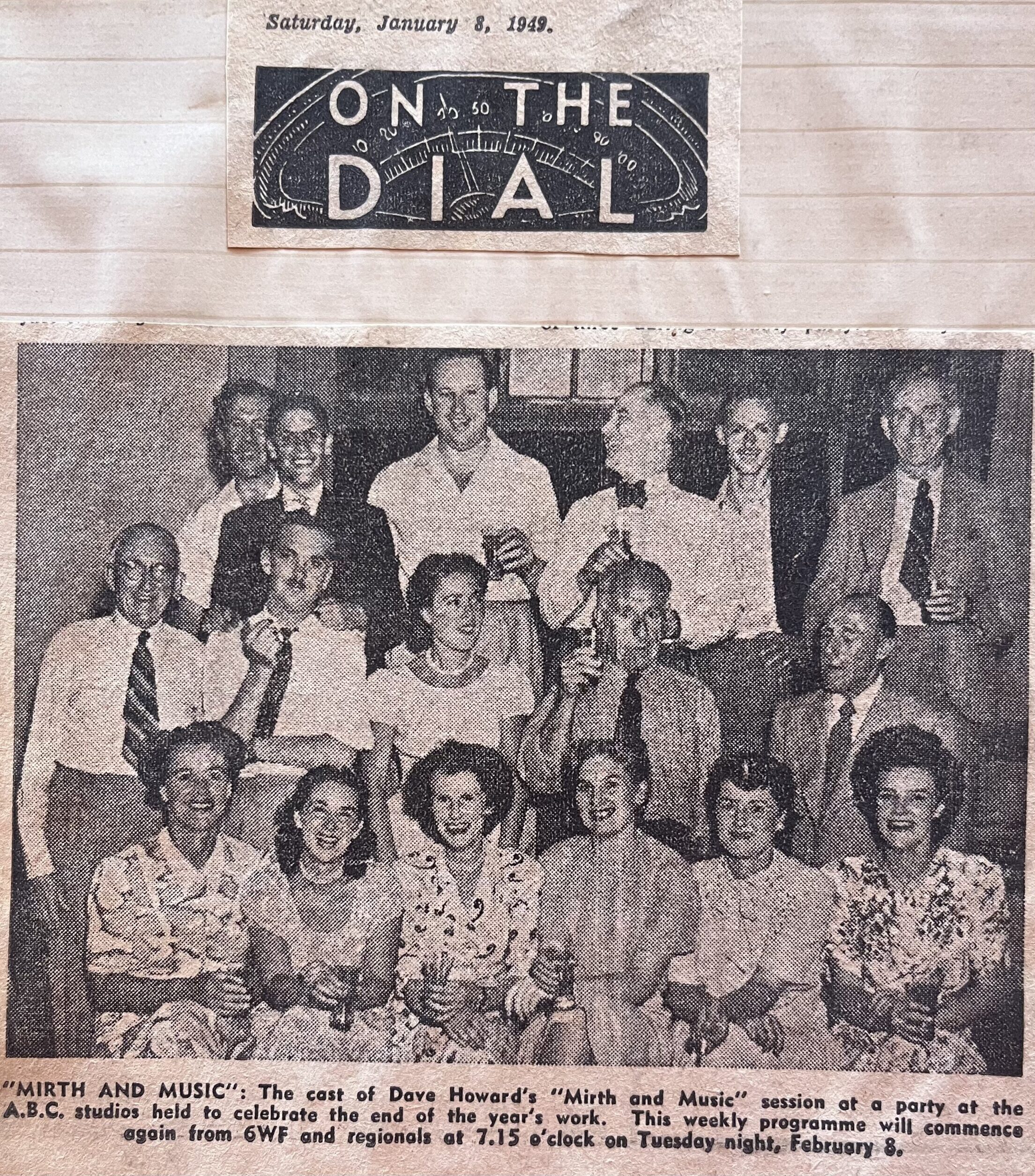 ARTISTS
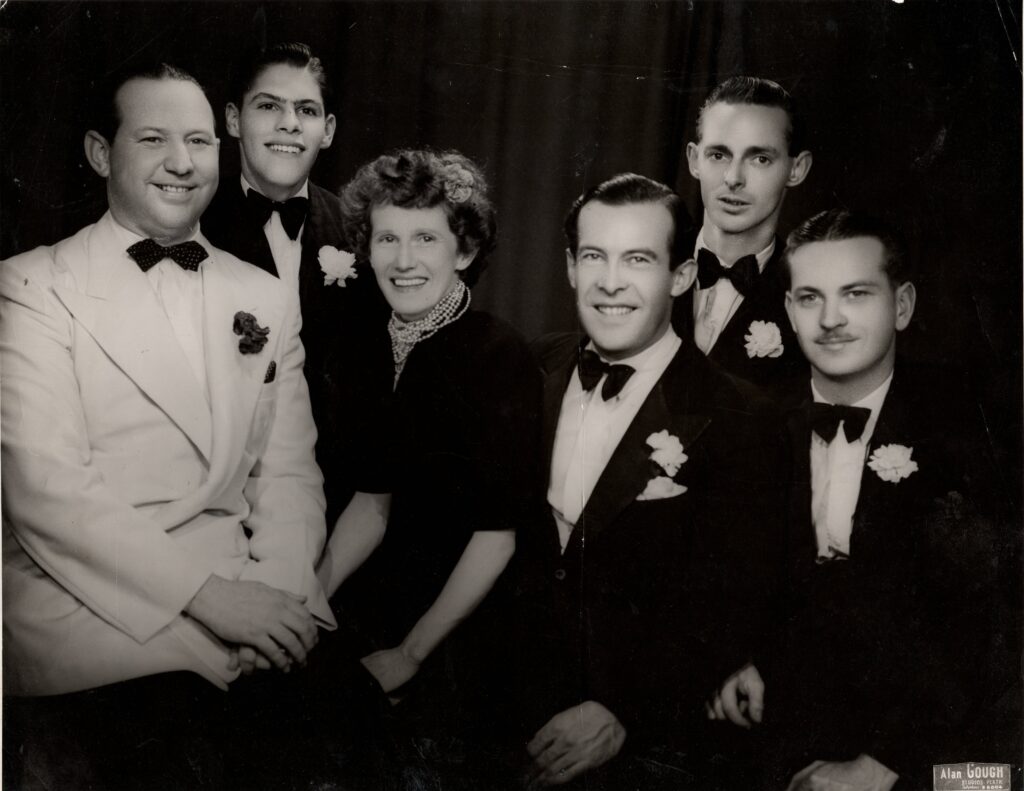
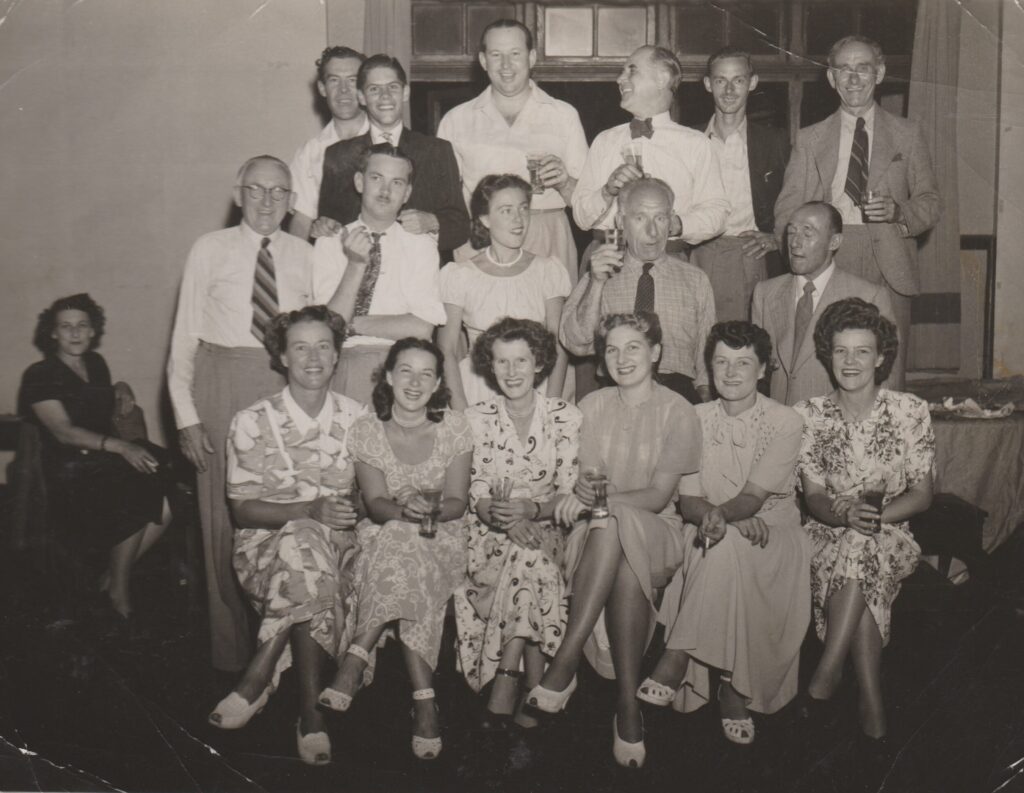
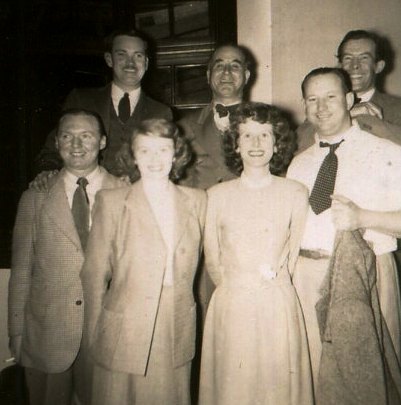
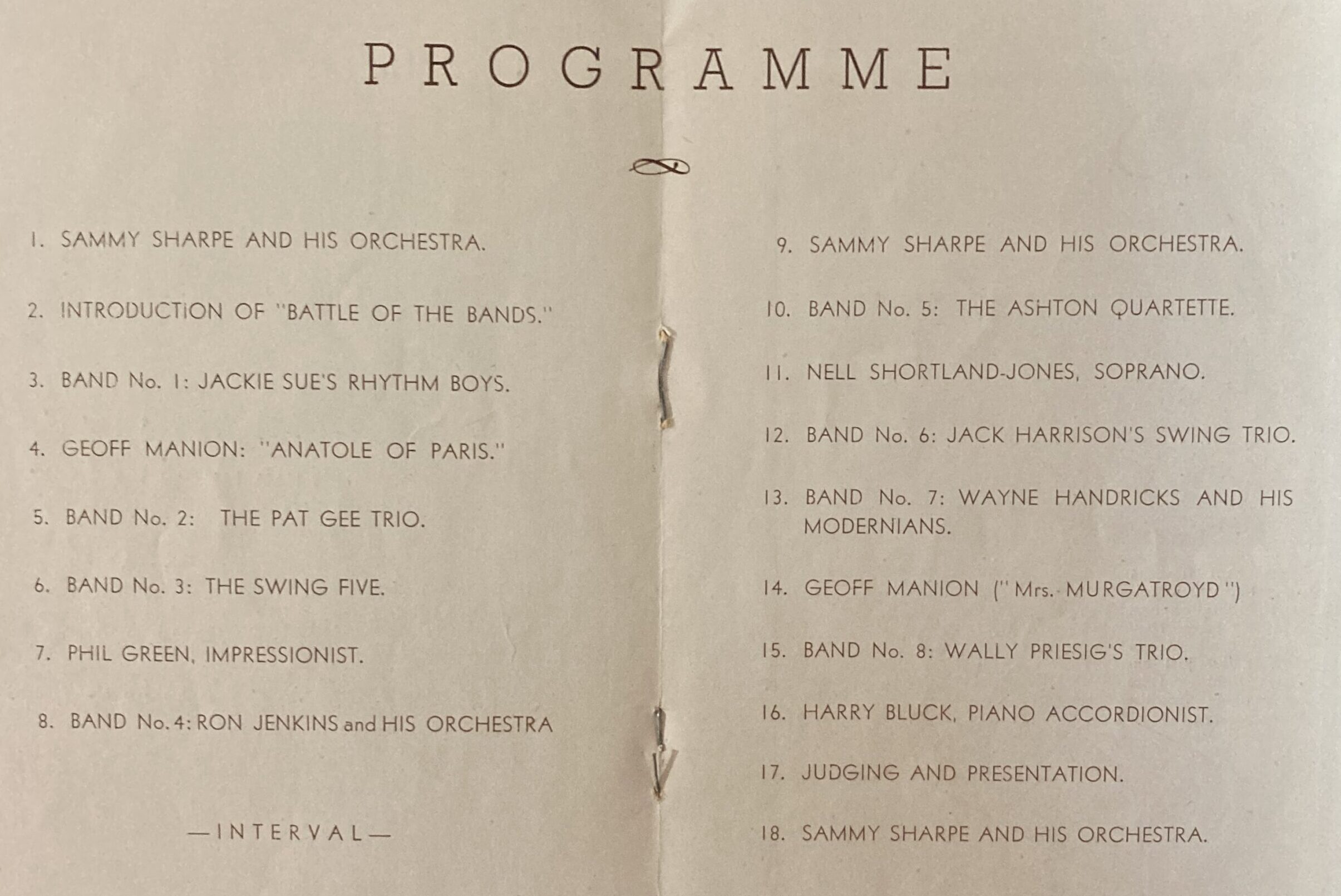
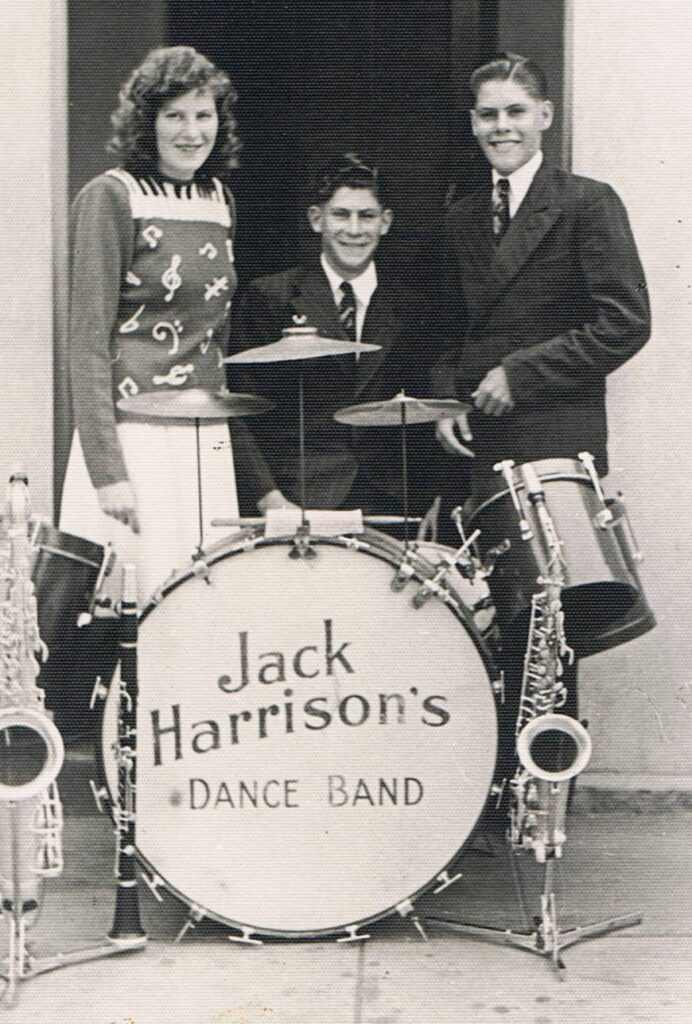
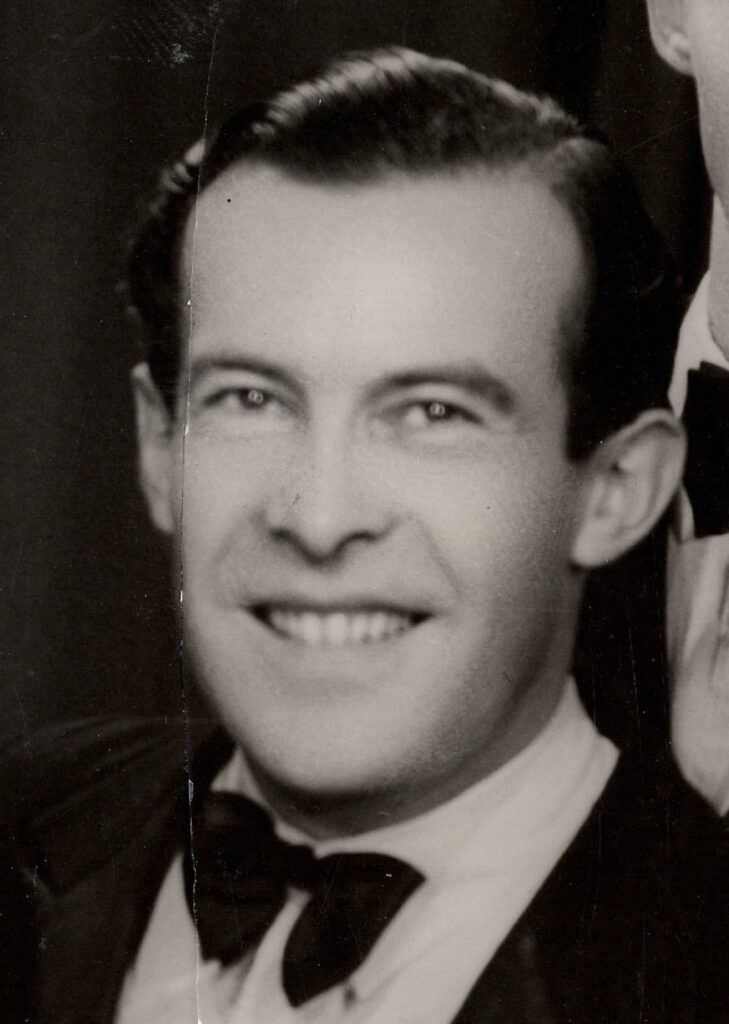
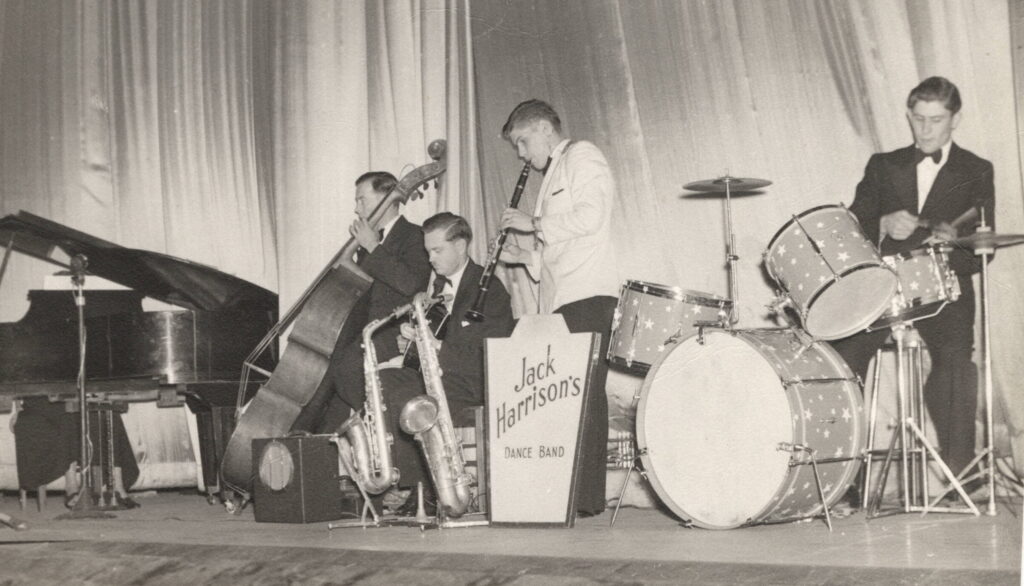
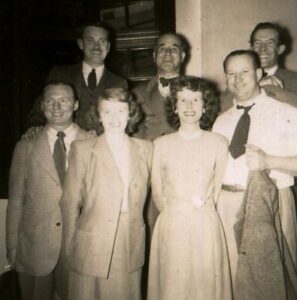
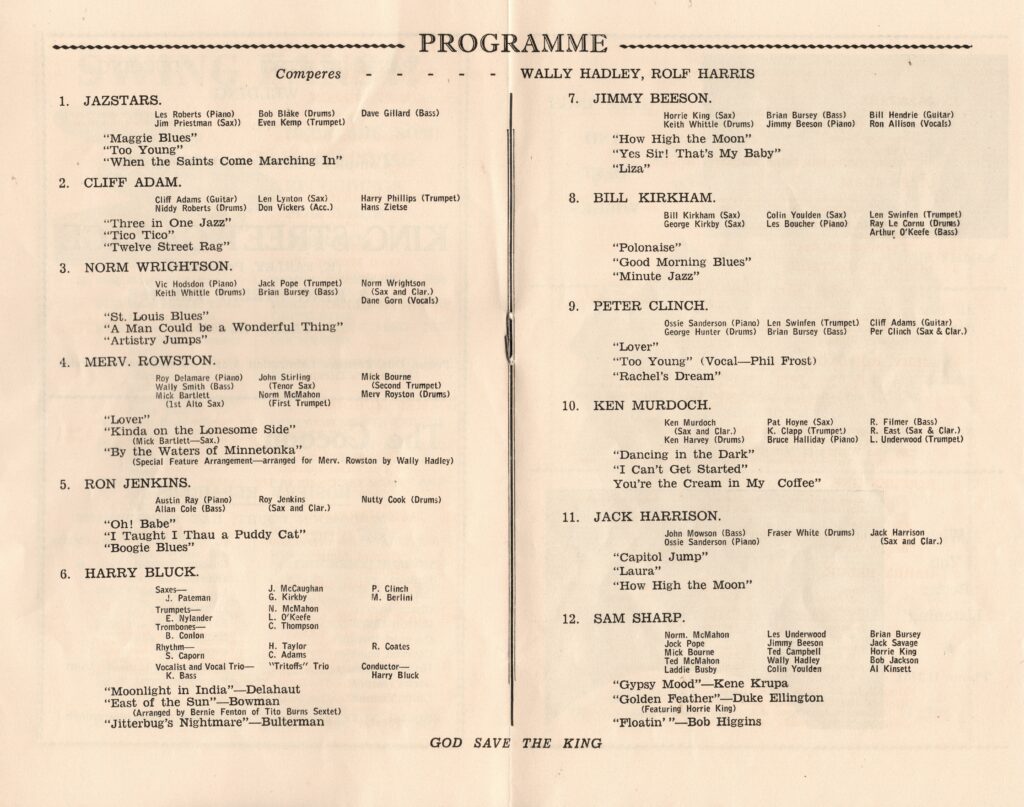
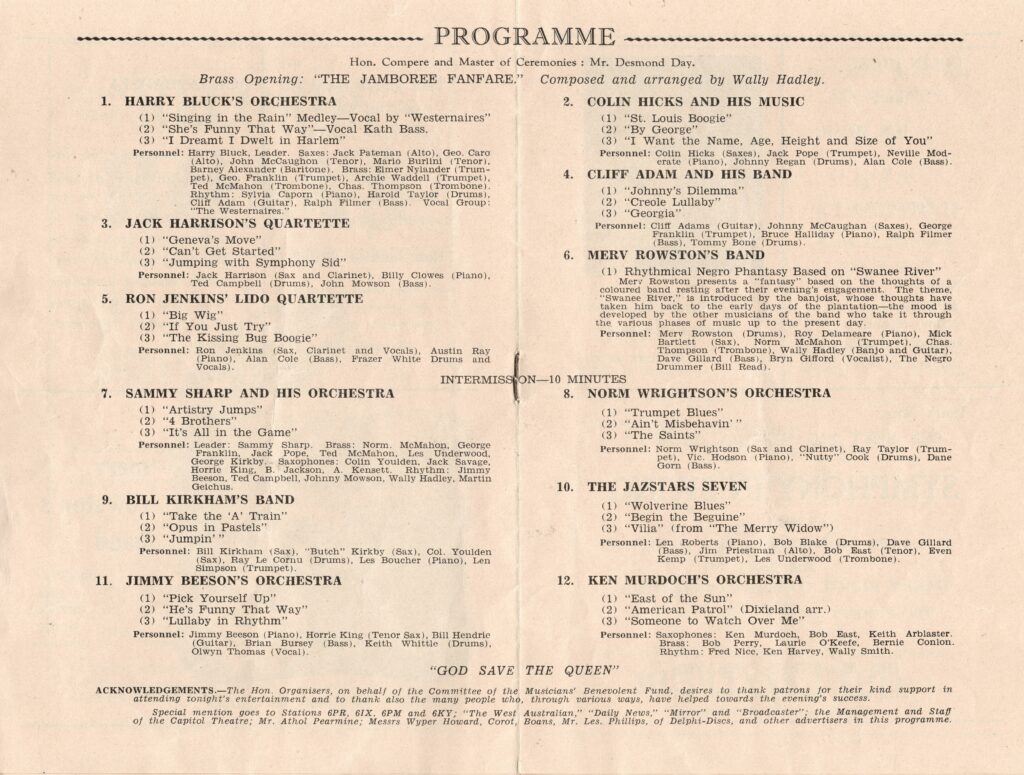
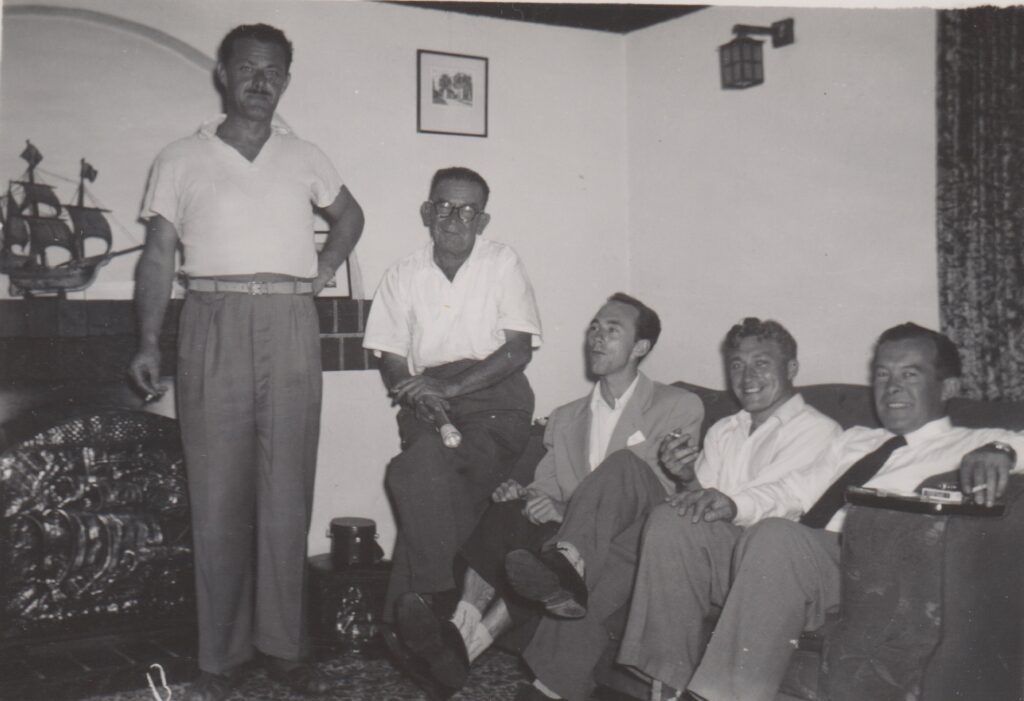
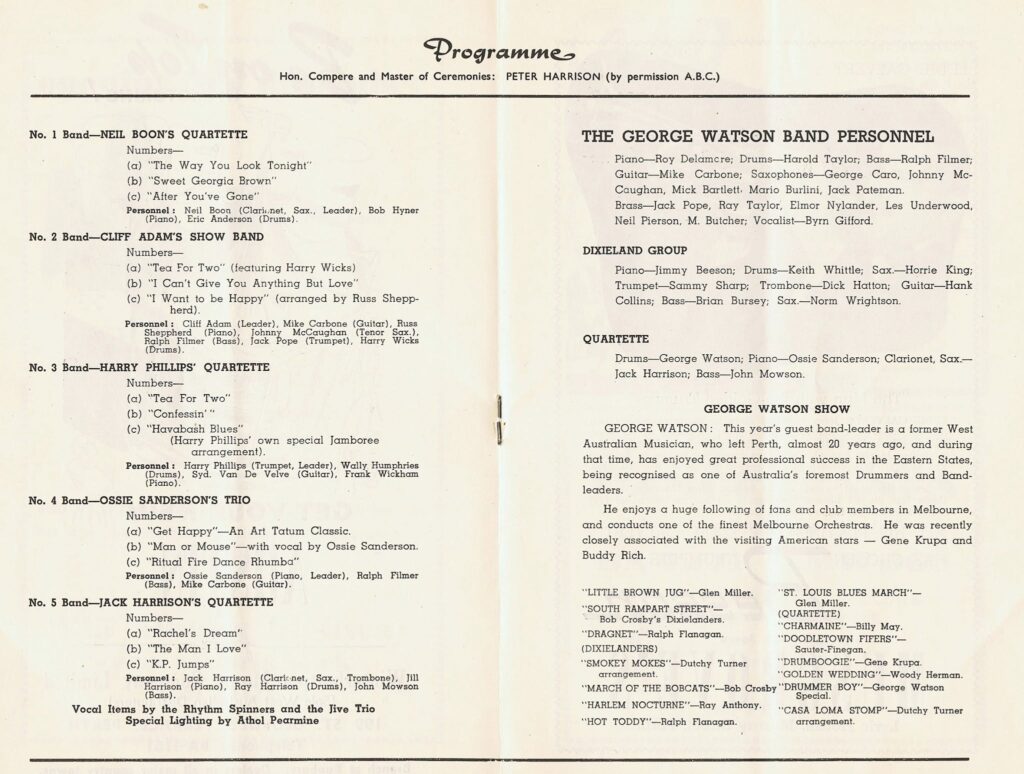
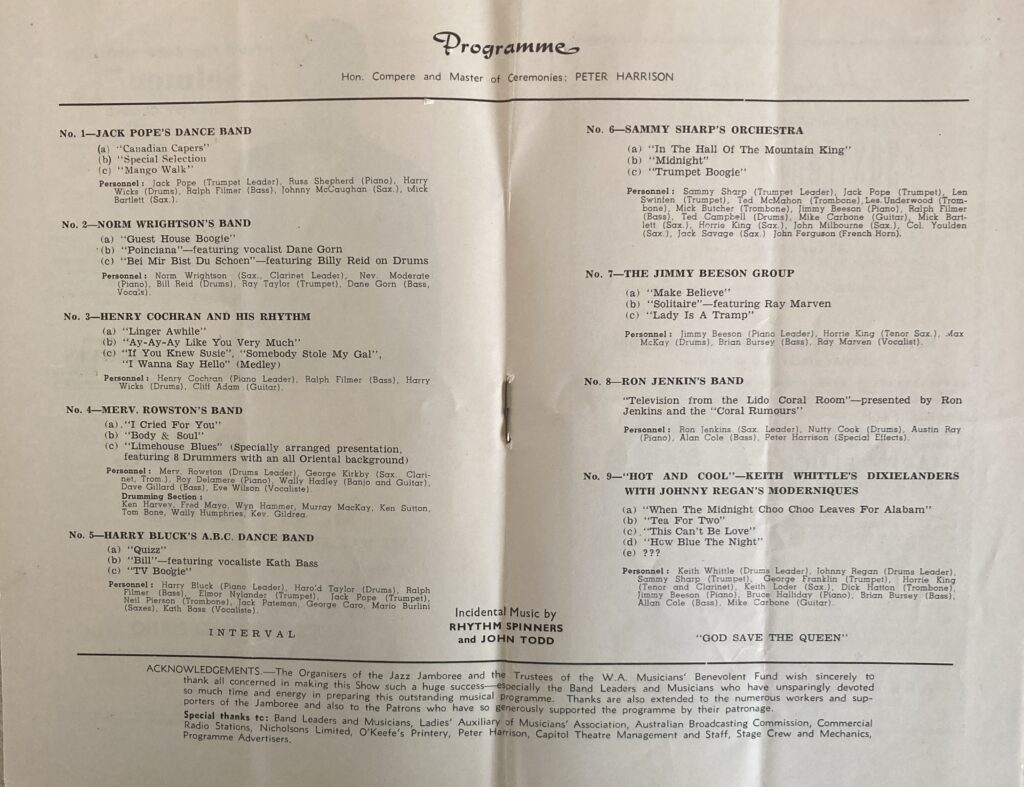
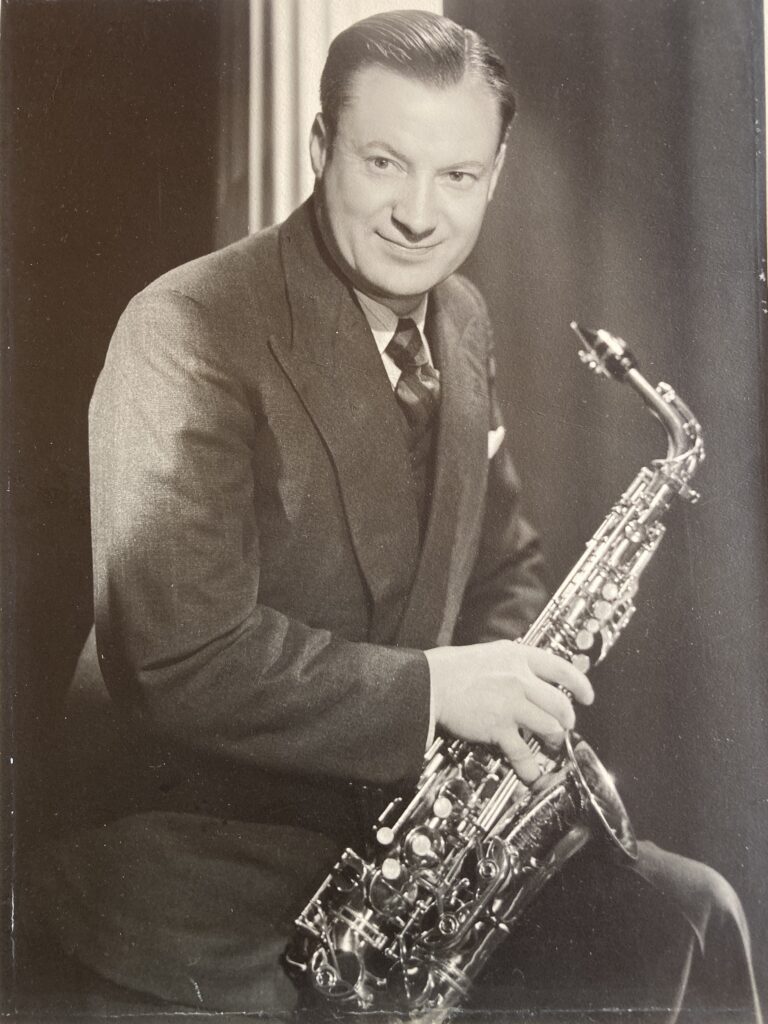
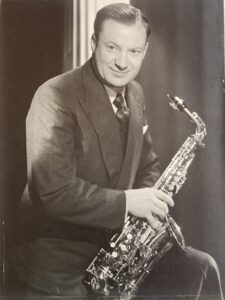
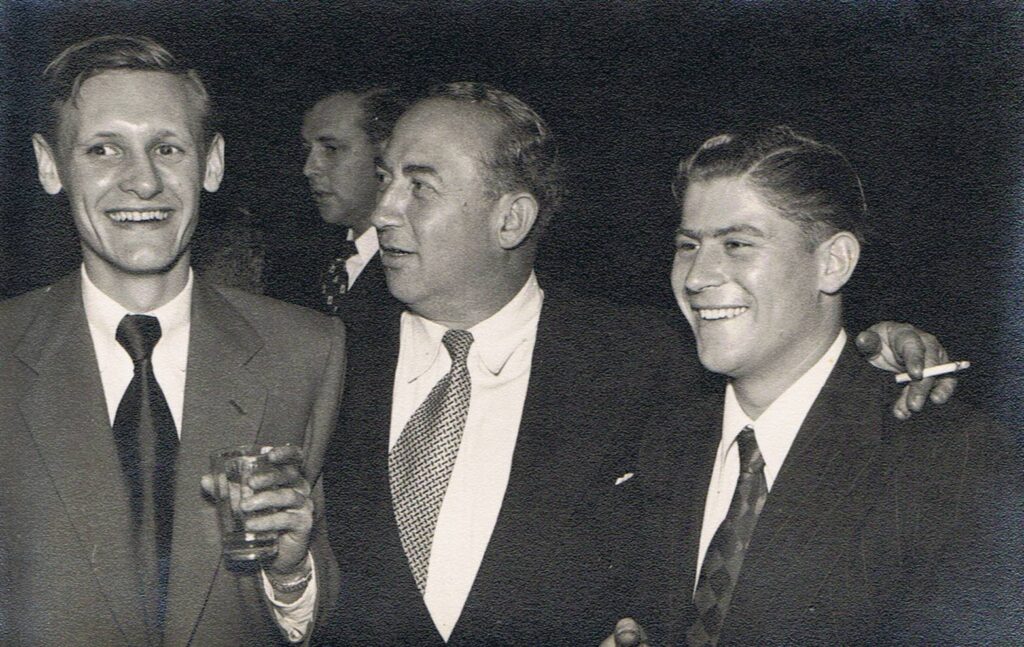
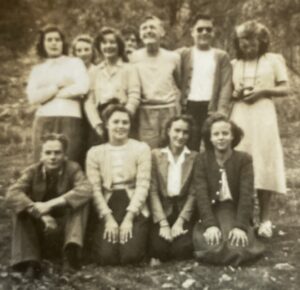
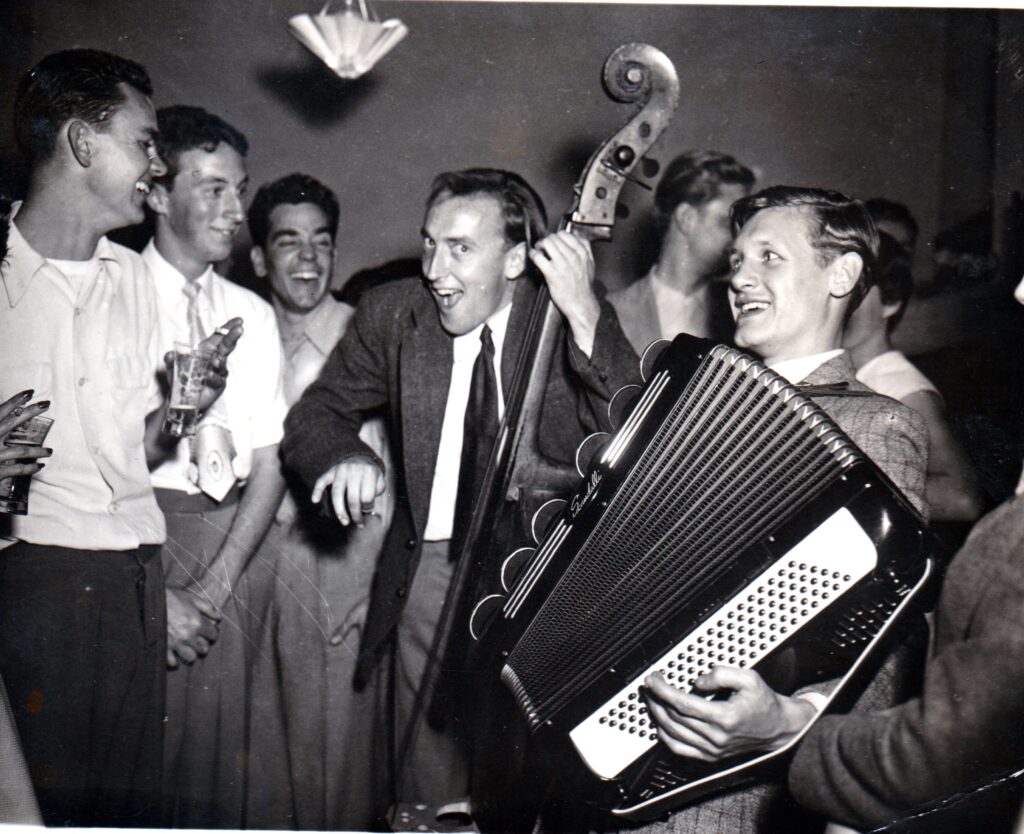
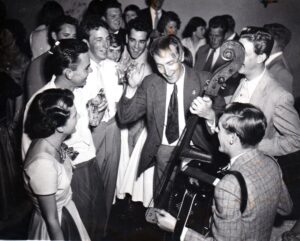 1950