Search names, events, places, organisations, and sources across the archive.
Person
MIECHEL, Philip
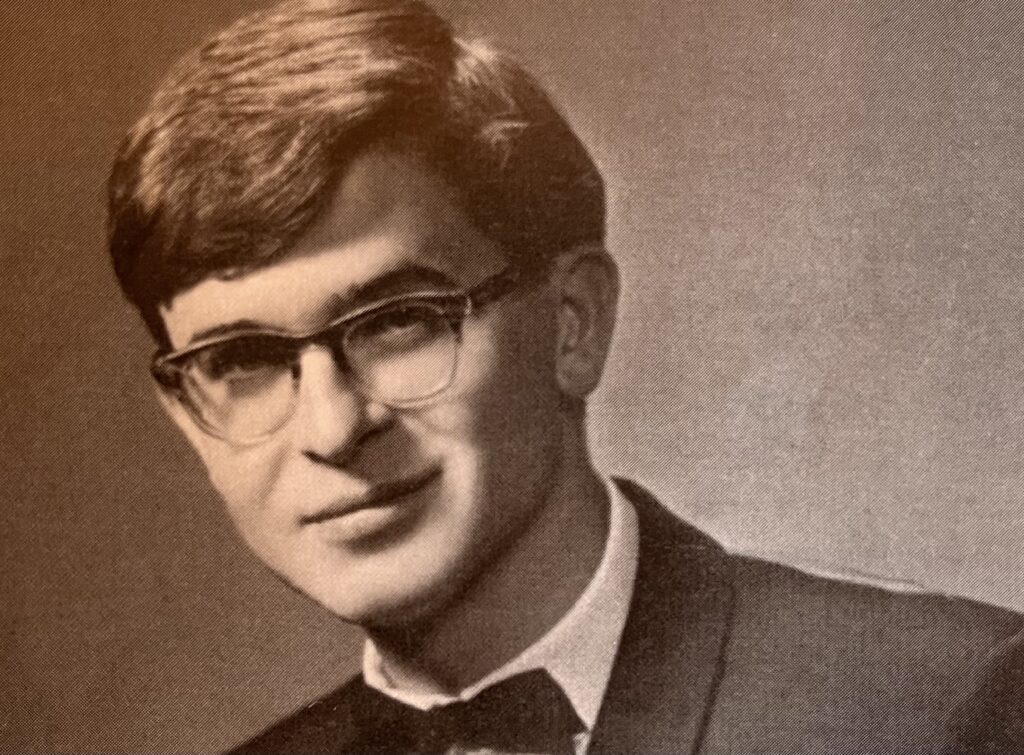
PHILIP MIECHEL was born 8th March 1941 into a musical family.
He began learning the saxophone then changed to clarinet, and after studies at the University of Melbourne Conservatorium joined the Adelaide Symphony Orchestra and won the ABC Instrumental and Vocal Competition in 1963.
He became principal clarinet in the Melbourne Symphony Orchestra in 1964 and studied with Jost Michaels at Detmold, West Germany, on a Churchill Fellowship in 1967.
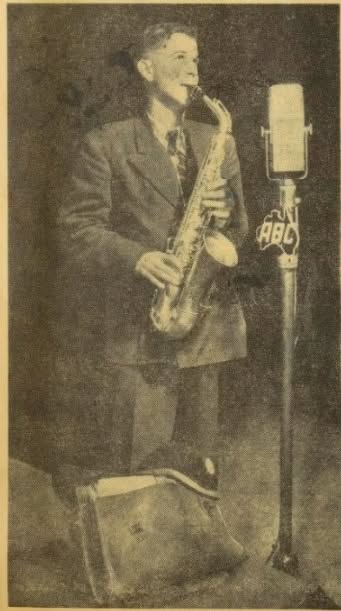
The Victorian schoolboy saxophonist (below) is studying for his Leaving Certificate at Box Hill High School. One of his subjects is music and he is learning the clarinet as well as the saxophone. He usually plays light classics and his ambition is to become a concert artist. He has appeared as guest artist with the Australian Boys’ Choir in Sydney, Brisbane and Hobart.
ABC Weekly Vol. 19 No. 30 (27 July 1957)
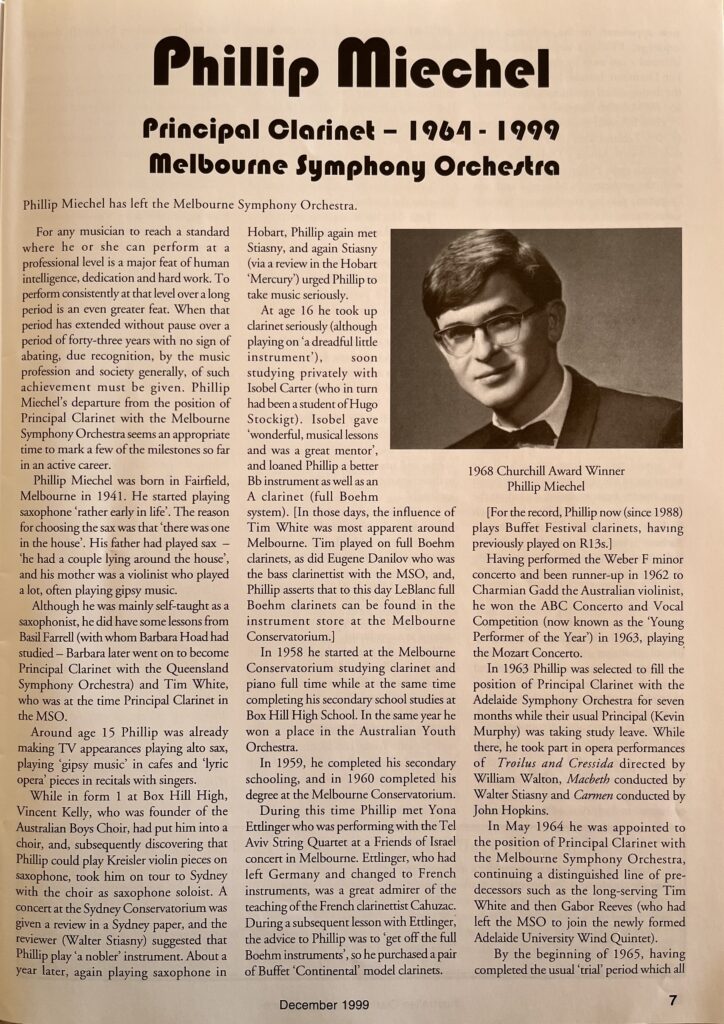
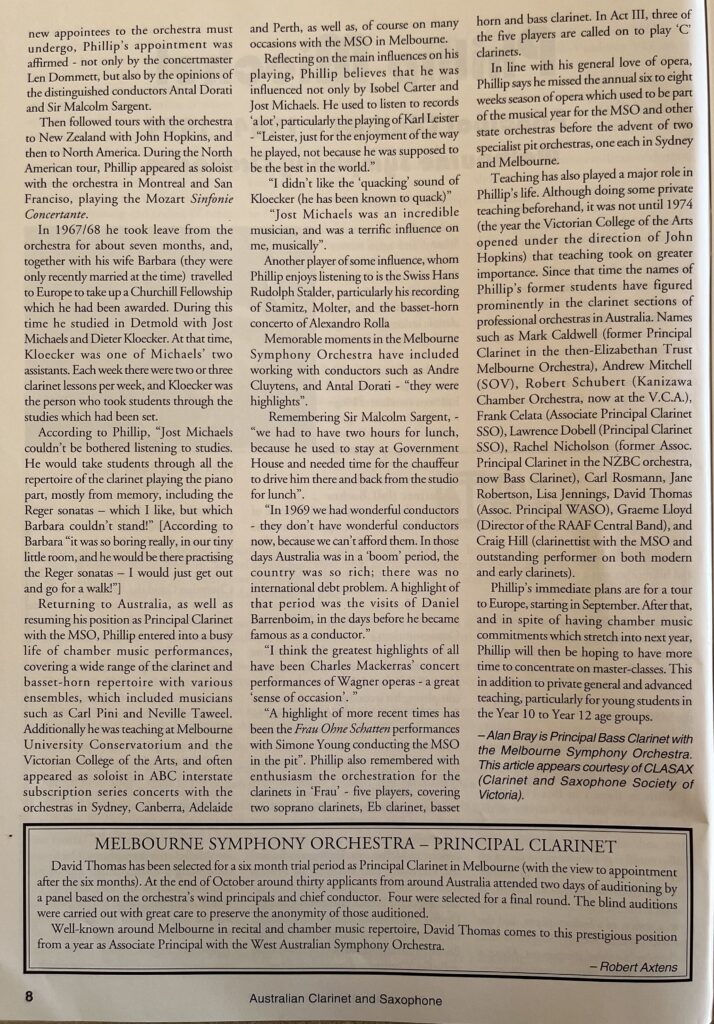
Australian Clarinet and Saxophone, Volume 2, Number 4 December 1999, p. 7-8
1976
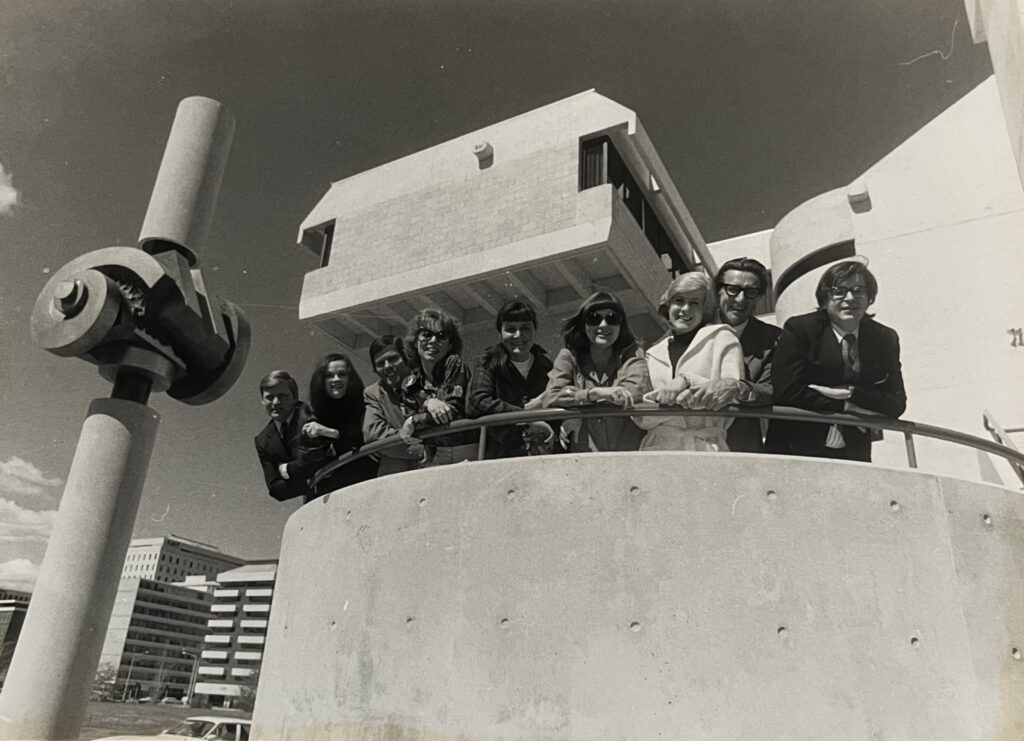
Churchill Fellowship Concert Canberra
Some of the musicians who have been awarded Churchill fellowships and who will take part in a concert at the Canberra School of Music tonight to mark the 10th anniversary of the Churchill Trust, at the school yesterday. From left: Victor Grieve, Kerry Smith, Jack Harrison, Rhonda Vickers, Ailsa McCristal, Pamela Bryce, Sylvia Wade, Ronal Jackson and Phillip Miechel. The concert, which will be broadcast by the ABC, will include works by Dvorak, Ravel, Mozart, Thomas, Weber and Byrd. The program has been chosen by the trust’s musical advisor, Sir Bernard Heinze.
The Canberra Times Tuesday September 28 1976 page 4
A light interlude of mixed Australian talent
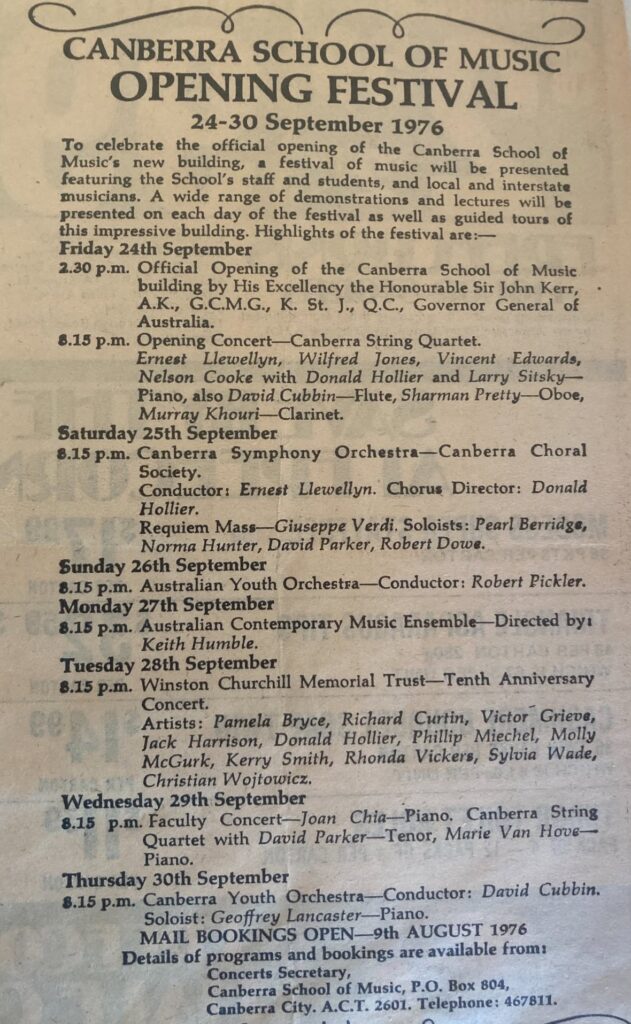
8.15pm Tuesday 28th September 1976
As part of the opening festival of the new School of Music building, and to celebrate at the same time the 10th anniversary of the Winston Churchill Memorial Trust, a special concert on Tuesday night brought 11 former Churchill fellows from all parts of Australia to appear in a concert of great variety and interest. With so many individual artists each presenting one or two short items, it was not the sort of concert which could or should be reviewed in depth. But it did make a very pleasant evening which demonstrated the talents of some of the Australian performers who have received fellowships over the past 10 years. The program ranged from early harpsichord music played by Rhonda Vickers to Donald Hollier playing his own “Sonatina for Piano”, as wider contrast as any program could offer. Two violinists were featured, Kerry Smith in pieces by Bloch and Wieniaski, and Pamela Bryce who played Ravel’s “Tzigane”.
Two clarinets were also included, Phillip Miechel playing two movements from the “Grand Duo Concertante” for clarinet and piano by Weber, and Jack Harrison with a very attractive “Sonatina for clarinet and pian”o by the contemporary Polish composer Antoni Szalowski. The other instrumentalists were French hornist Victor Grieve and cellist Christian Wojtowicz, the latter making a welcome return to Canberra having taught from 1971 to 1973 at the School of Music. Finally, there were a brace of singers, mezzo Sylvia Wade and baritone Ronal Jackson. The accompanists were Ailsa McCristal and Rhonda Vickers.
The Canberra Times Thursday September 30 1976 page 23
Antoni Szalowski was a composer born in Warsaw and died in Paris. He began his music education studying the violin with his father, who was a distinguished violinist and teacher.
In 1930, he completed, with the highest honours, the Konserwatorium Warszawskie (Warsaw Conservatory), where he studied composition with Kazimierz Sikorski, conducting with Grzegorz Fitelberg and piano with Paweł Lewiecki. He continued his studies between 1931 and 1936 with Nadia Boulanger in Paris, where he settled permanently.
He served as president of the Stowarzyszenie Młodych Polskich Muzyków (Association of Young Polish Musicians) in Paris between 1936 and 1948.
Szałowski won numerous prizes at composition competitions, e.g. in 1960 he was awarded the First Prize of the Radiodiffusion-Television Française in Paris for his ballet La femme têtue (1958).
Source: www.polmic.pl.
SONATINA FOR CLARINET
Szalowski’s Sonatina for clarinet and piano, was composed in 1936, the year he became president of the Association of Young Polish Musicians in Paris.
Music – By Peter HellstromSeptember 1976A visit by clarinettist Jack Harrison to the Eastern States this week raises the point again of how some fine Western Australian musicians need more recognition. Mr Harrison, who was granted a Churchill Fellowship in 1971, was invited recently to take part in the official opening concert of the Canberra School of Music next Tuesday. As principal clarinet of the W.A. Symphony Orchestra and a brilliant soloist, he will play a Sonata written by Antoni Szalowski with piano accompaniment. News of this invitation resulted in two more invitations… to perform with the Australian Contemporary Music Ensemble in a Schoenberg suite for seven instruments including three clarinets – and to give a performance in Brisbane for the Chalumeau Society, the Queensland equivalent of the W.A. Flute Society. Monday night’s performance will be at the Canberra School of Music and the other two clarinettists will be Don Westlake the Principal Clarinettist of the Sydney Symphony Orchestra and Murray Khouri, Professor of the clarinet at the new school in Canberra. Mr. Harrison will not be able to give the Brisbane performance because of lack of time. He pointed out this week before leaving Perth that with this brief Leave of Absence from the W.A. Symphony Orchestra he was getting a rare opportunity to hear and perform with leading instrumentalists from other states. And this is my point: such travels by distinguished W.A. executants are essential for them to assess and reassess their own standards, to refresh themselves and interstate performers and to absorb atmosphere which will benefit themselves and thus general performance standards when they return. Sabbatical leave is granted after seven years to academics and generally we profit by it. The Churchill Trust which enabled Mr Harrison to travel before and is doing so this time, has helped many performers as well as people in other spheres. However, it cannot finance everything and everybody. If universities can grant sabbaticals, why cannot some similar system be created for the best full-time performing musicians? If the Federal Government, Liberal and Labor, can spend millions of dollars on buying artworks and such items as travelling Chinese art as well as helping to finance or partially finance some of the so-called creators and creations that pass for art in the broad sense, it could help in such a scheme. It could do so by reappraising the merits and priorities. No wonder we lose some of our best performers when their geographical isolation is aggravated by lack of opportunity for the equivalent of financed sabbaticals. A lot end up by trying their luck interstate or overseas finding success and staying there. Others are left lamenting or stay on, depending either on their employment in orchestras, any work that the University of W.A. can give them, a few ABC broadcasts and teaching. There may not be any geniuses in W.A… I don’t know… but there are some performers worthy of more opportunities than they can hope to get here. Who knows if some reallocation of obviously limited funds was made, we might find many more potentially noteworthy executants. Perhaps the State Government as well as the Commonwealth could look at the matter. (Sir Charles Court please note). The only proviso is that high standards should apply. I think that quite a number would measure up.The West Australian Saturday September 25 1976A light interlude of mixed Australian talent8.15pm Tuesday 28th September 1976As part of the opening festival of the new School of Music building, and to celebrate at the same time the 10th anniversary of the Winston Churchill Memorial Trust, a special concert on Tuesday night brought 11 former Churchill fellows from all parts of Australia to appear in a concert of great variety and interest. With so many individual artists each presenting one or two short items, it was not the sort of concert which could or should be reviewed in depth. But it did make a very pleasant evening which demonstrated the talents of some of the Australian performers who have received fellowships over the past 10 years. The program ranged from early harpsichord music played by Rhonda Vickers to Donald Hollier playing his own “Sonatina for Piano”, as wider contrast as any program could offer. Two violinists were featured, Kerry Smith in pieces by Bloch and Wieniaski, and Pamela Bryce who played Ravel’s “Tzigane”. Two clarinets were also included, Phillip Miechel playing two movements from the “Grand Duo Concertante” for clarinet and piano by Weber, and Jack Harrison with a very attractive “Sonatina for clarinet and piano” by the contemporary Polish composer Antoni Szalowski. The other instrumentalists were French hornist Victor Grieve and cellist Christian Wojtowicz, the latter making a welcome return to Canberra having taught from 1971 to 1973 at the School of Music. Finally, there were a brace of singers, mezzo Sylvia Wade and baritone Ronal Jackson. The accompanists were Ailsa McCristal and Rhonda Vickers. The Canberra Times Thursday September 30 1976 page 23
I first met Ted when I joined the RAAF Central Band in September 1958.
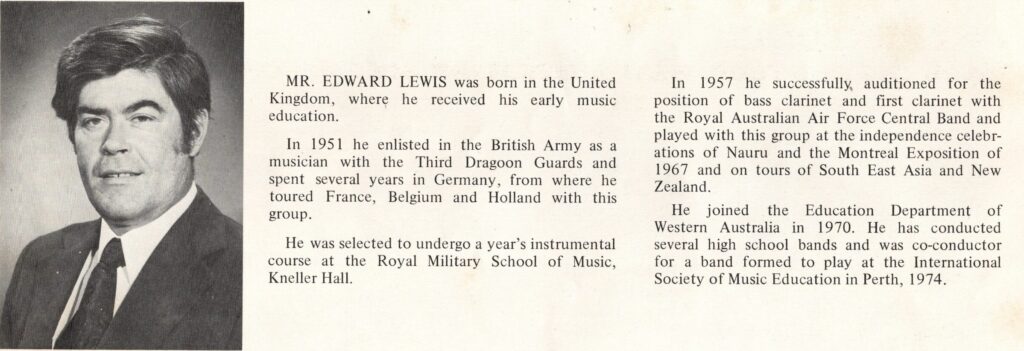
Ted had already joined the Band a year earlier, when the then conductor Squadron Leader Laurie Hicks had recruited new band members in the UK in 1956-57.
Although Ted and I came from very different backgrounds, our love of music, especially our love for the clarinet, was the reason we became very close in the following years. (We also held many other values in common)
When the Band’s principal clarinettist Peter Clinch decided in 1959 not to sign on again I became the principal clarinettist whilst Ted decided he would prefer to concentrate on the bass clarinet. Within a reasonably short time he became one of Australia’s top bass clarinettists.
In an audition for the ABC Symphony Orchestras Ted was placed on a waiting list of suitable bass clarinettists should an opening occur in one of the orchestras. When eventually he was offered a position in The Adelaide Symphony Orchestra Squadron Leader Hicks prevented him from leaving the RAAF.
While he was in the RAAF Band Ted took on the prestigious position of part time clarinet teacher in the Secondary School of Geelong Grammar.
The RAAF Central Band of the late fifties and sixties was without a doubt the finest Concert Band in Australia and many of its leading musicians, on leaving the Air force, became teachers in the Victorian and/or Queensland Education Department’s Instrumental Music Schemes.
Two of such top players in the Band, Ted Lewis and John Wood (the Band’s principal trumpet player), decided to move further away and joined The Education Department of WA. Ted in 1970, John in 1971-72.
When I arrived in Perth from the Victorian Education Department in 1971 Ted had already established himself as a fine teacher of clarinet and flute as a member of a group of 4 teachers in the then Music Branch of the Ed Dept. of WA.
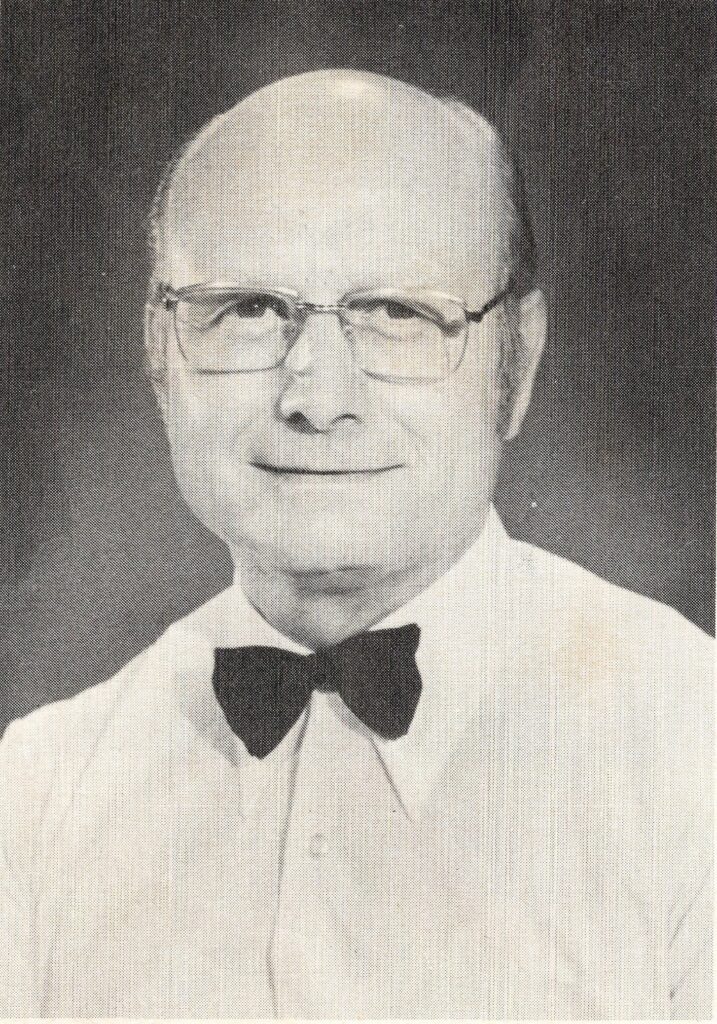
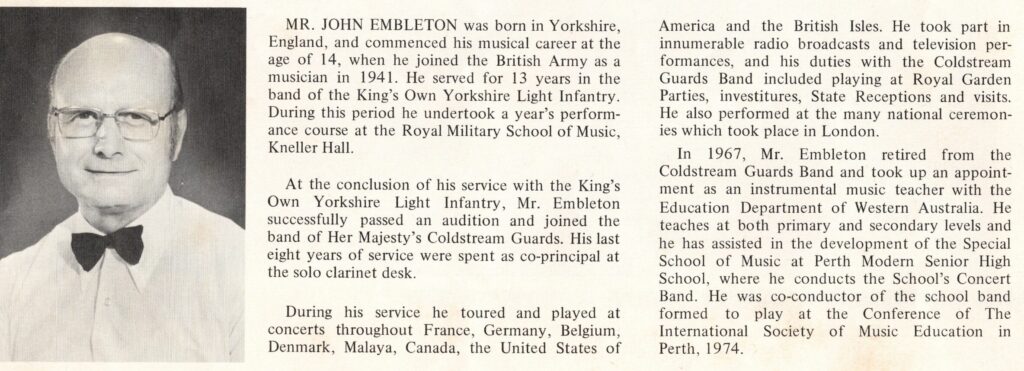
The other 3 teachers in that group were Sam Maher, John Embleton and Daphne Murnane.
In 1971-72 they were joined by John Wood, John Casey and I.
The group grew steadily over the next few years when, among others, we were joined by the first Perth Modern School special music students who graduated through The WA Secondary Teachers College.
Ted taught in a variety of schools and became the conductor of the highly successful John Forest Senior High School Concert Band when that school became part of the Music Branch’s program.
Ted started teaching in Churchlands Senior High School around 1972-73 and he became chief conductor of that school’s wonderful Concert Band soon after.
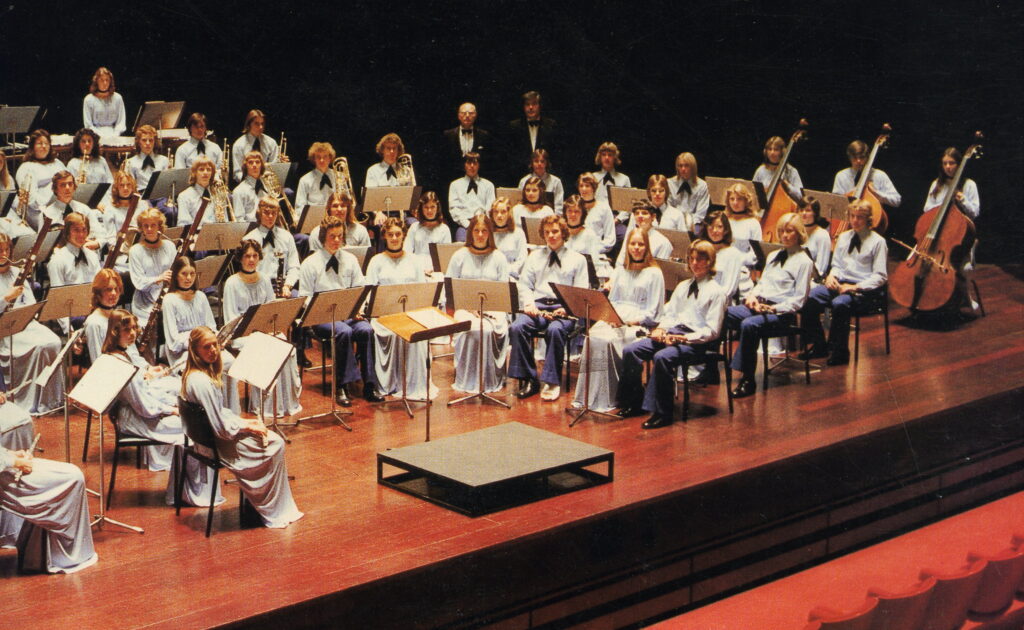
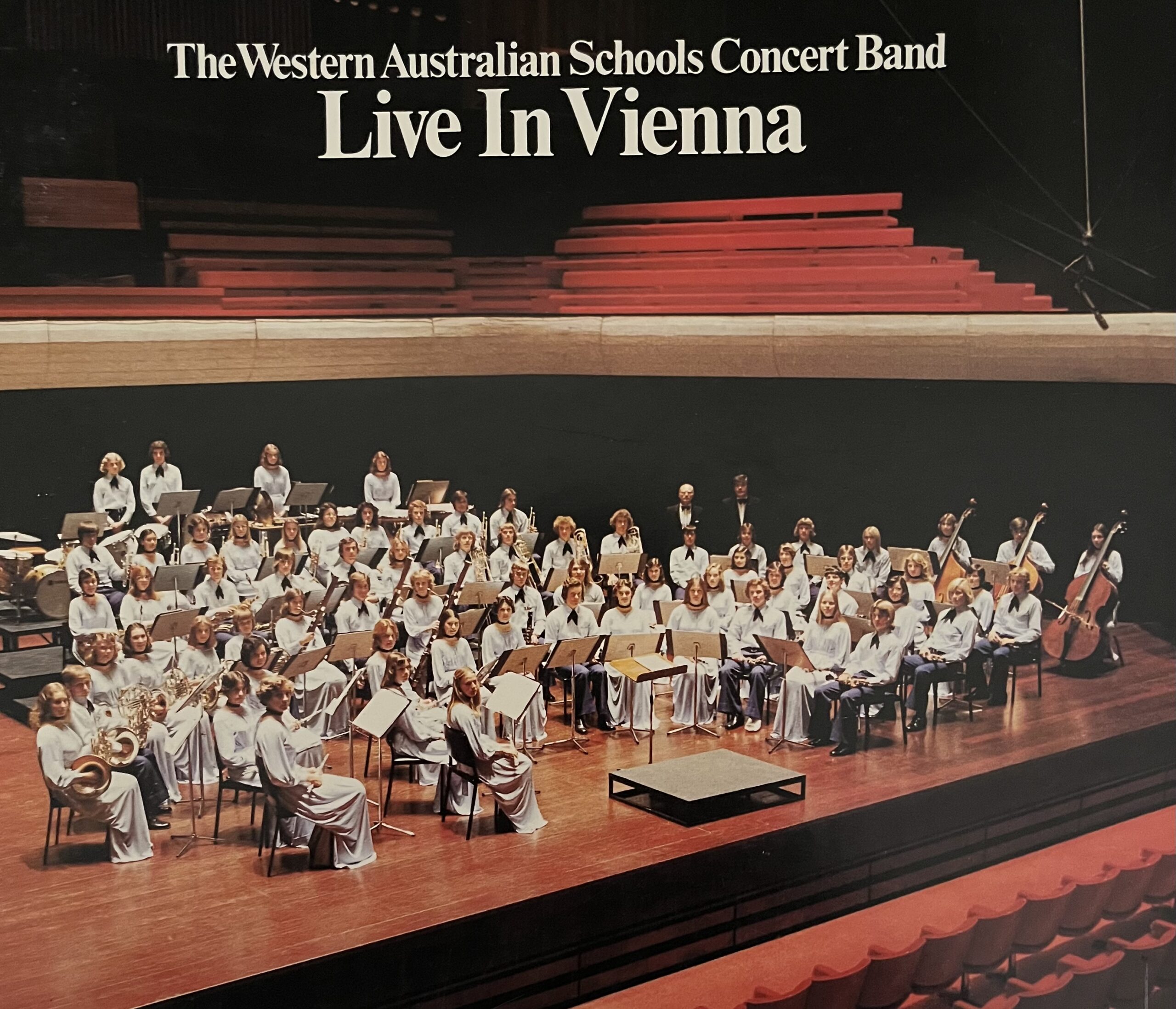
In 1976 He became co-conductor, together with John Embleton, of the Combined Secondary Schools Concert Band. This was a world class ensemble of its kind and its successes were recognised worldwide. Nine of the fourteen clarinet players in this ensemble were Ted’s students and all of the first clarinet players (except for one) were his students.
In March 1982 I became the Head of Instrumental Music in the Ed Dept. and four years later Music Branch was restructured under the name of School of Instrumental Studies. (Later known as SIM, (School of Instrumental Music.)
By that time the School employed 160 teachers filling 96 full time positions. I was the School’s first principal from 1986 until 1991.
Looking at teaching and conducting results over the period 1970–2005 (Ted’s retirement year) there were two teachers, Ted and John Casey who, more than any others, produced outstanding world class results, both in personal and ensemble performance standard.
These days there are many professional clarinettists, conductors, teachers and music administrators in Australia who, to a large extent, owe their success to Ted’s dedication to music education.
Although, by 1973, some concert bands in Australian schools had reached a high standard of precision performance and discipline already, it was Ted who, more than anyone, introduced a new and important component. This was musical sensitivity. This had been lacking so far.
When Ted conducted a concert band I got the feeling that I was listening to our RAAF Central Band once again. After all, that was the best band in the land!!
Speaking for all those whose lives are enriched by having known Ted: “Thank you dear friend. You will live on through your superb contribution.”
Neil Boon.
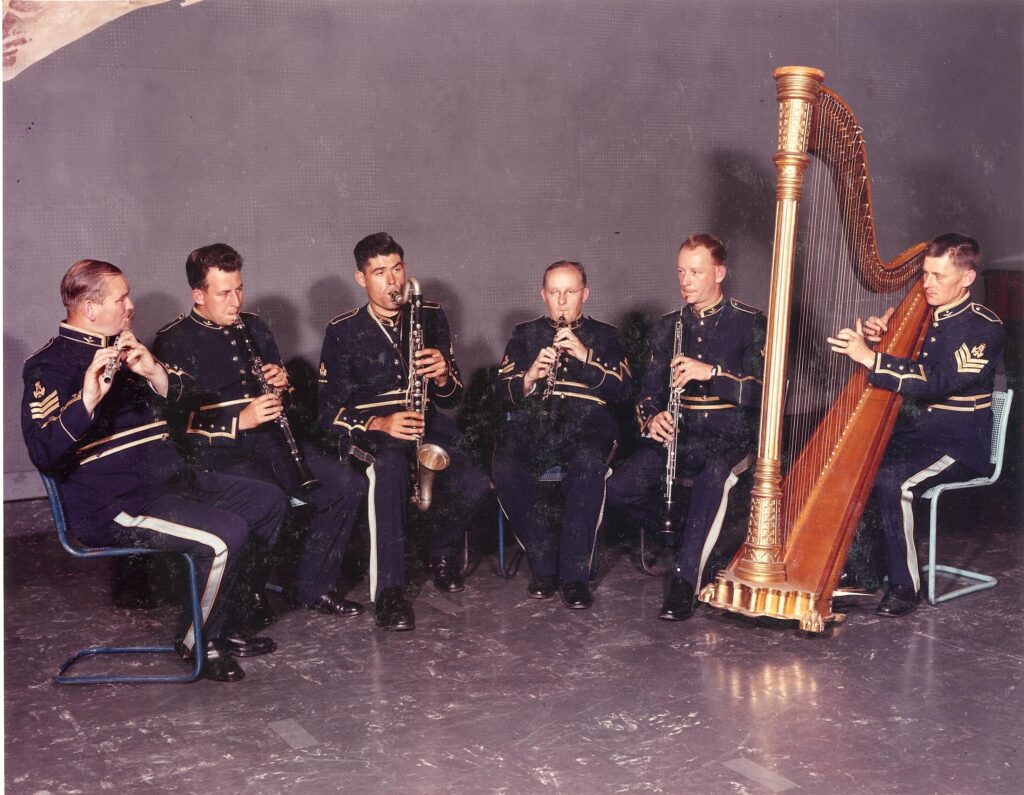
RAAF Band 1959: Peter Edge (flute), Neil Boon (clarinet) Ted Lewis (bass clarinet) Edwin Denton (oboe).
 Notable students of Ted Lewis: