Person

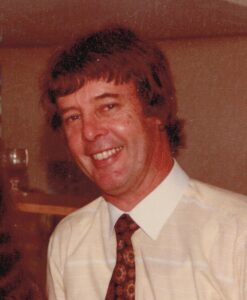
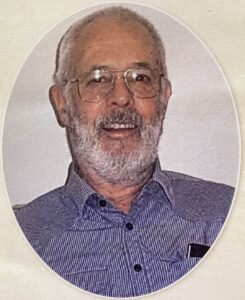
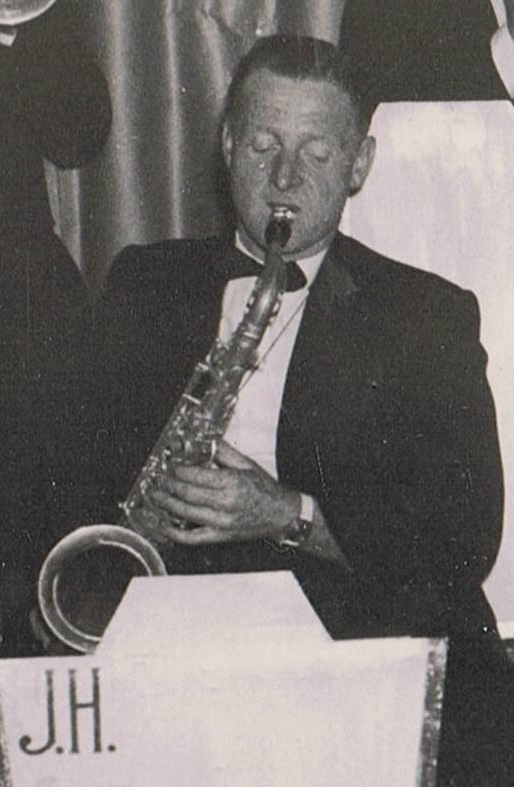
KIRKBY, George "Butch"

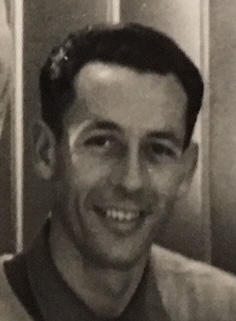
George “Butch” Kirkby Jnr was born 1st October 1912 in Perth.

1934

In aid of the Baby Week Appeal, the Regal Entertainers will give a concert tonight in the Perth Town Hall. Assisting artists will include Misses Ronie Opie, Bubbles Cooper, Edna Winter, Hazel Charles, Doris Mose, Ally Campbell, Valmai Winter and Messrs. Terry Scanlon, Bert Tomlie and Ernest Waltman. The music will be provided by Miss Carma Nagfel, and Albert Thompson, George Kirkby and Arthur Taylor. 

West Australian (Perth, WA : 1879 – 1954), Wednesday 2 May 1934, page 5


1936

MAJORITY PARTY Amid Pink Decorations

To celebrate the coming of age of their eldest daughter, Kaye, Mr. and Mrs. E. Hodges, of Ellesmere street, Mt. Hawthorn, entertained about 120 guests in the R.S.L. Hall, Oxford-street, last Monday evening. The hall was beautifully decorated with streamers and balloons, etc., the tables being well supplied and tastefully decorated by Mrs. Bowen. Dancing was enjoyed to the music supplied by Lena Mills, George Kirkby, Stan Charles and Alby Thompson. A large number of presents were received by the guest of honor, who was dressed in a beautiful gown of pink and wore a pink flower in her hair. The beautiful three-tier cake was presented to her by Mrs. Davies and Miss J. Davies. It was also pink and beautifully decorated. During supper a large key was presented to the guest of honor by her father. Items were rendered by Lena Mills (pianoforte solos), Mr. D. Thompson (comic songs), George Kirkby (saxophone solos) and Alby Thompson (violin solos). The guest of honor also gave a toe solo. The duties of chairman were ably carried out by Mr. Henry, while the usual toasts were proposed by Mr. D. Thompson, Mr. W. Weaver and Mr. T. Steadman. The programme was skilfully arranged by Albert Thompson, who also acted as master of ceremonies.

Sunday Times (Perth, WA : 1902 – 1955), Sunday 17 May 1936, page 1


1939

Deanna Durbin Quest Awaits Vote

The highly successful quest for a local Deanna Durbin was brought to a conclusion apart from final voting at the S.T.C. concert at the Piccadilly Theatre last night. So great was public interest in the concert that every seat was occupied or sold within 10 minutes of the opening of the doors.  The principal feature of the enjoyable programme was the grand final of the Deanna Durbin quest. Seven grand finalists faced the microphone and the packed theatre. Five independent judges chose three of that number. Listeners’ votes will decide the question as to which of the selected three deserves main honours. Each of the grand finalists gave a creditable performance. In one case the contestant was extremely nervous and although she had a particularly sweet voice her nervousness spoiled her effort. In this contest there was pleasing variety of fare. Each of the grand finalists deserves commendation for her efforts. There was plenty of variety in the S.T.C. search for talent. A pianist, male and female vocalists, and instrumentalists presented good fare. One of the competitors — a vocalist — got the gong, but the length or the song rather than any reflection on his performance was responsible. There was only time for one community song.

Then came seven year old Jack Harrison, who was described beforehand as a wonder with the mouth-organ. His performance indicated that the description really applied to him. He gave encores with pleasing matter-of-factness. George Kirkby, saxophonist and Baden Fixter, violinist, gave enjoyable numbers. With the Lucas Novelty Band led by Niddy Roberts they also rendered other pleasing items. The Misses N. Sheridan and A. Hyens gave a particularly pleasing two-piano duet. The two pianists in the Lucas Novelty Band also performed excellently in a duet. Popularity of the band was well evidenced. Paul Daly was in charge of the programme and presided over the happiest concert of the series. Proceeds of the concert (as with the others held at the Piccadilly Theatre) will go to the Baby Week Appeal.  Winners of the Deanna Durbin grand final and the S.T.C. search session will be announced in The Daily News on Thursday. Votes must reach station 6PR or W.J. Lucas Ltd., Hay-street, Perth, by Wednesday at the latest. Last night’s concert was organised by the sponsors of the S.T.C. search for talent — Messrs. W. J. Lucas Ltd., Hay-street,- Perth; M. J. Bateman Ltd., Milligan-street, Perth; and Messrs. Randell and Long, Fremantle, in association with the management of the Piccadilly Theatre and Universal Pictures.  The Daily News Monday 5 June 1939 page 9


1940

SAX PLAYER WEDS COTTESLOE GIRL

Married last week at St. Hilda’s Church of England in View-street, North Perth, Miss Sylvia Page, a pretty brunette of Cottesloe, and Mr. George (‘Butch’) Kirkby of Leederville. Bridegroom has been well known to those in musical spheres for about eight years, he having played the saxophone and clarionette with such combinations as Ron Moyle’s band, the Radiola Rhythm band, and the 6WF dance orchestra. However, he is giving up his musical interests, as he finds hie work with the Crown Law Department keeping him particularly busy. Both bride and bridegroom are much esteemed and highly popular amongst those acquainted with them.

Mirror (Perth, WA : 1921 – 1956), Saturday 2 March 1940, page 2


1943

A GRAND CONCERT

Thursday night, 27th May last was a unique occasion for Moora. A popular military concert party visited the town and gave a concert to a house that was literally full to the doors. Special interest centred in this concert because it was at Moora that the Concert Party made its debut last year. W.O. S. H. Ellwood, O.C. Party and Producer, turned out a polished show with each member of the party doing his bit in a big way. The producer, himself, is an efficient and talented entertainer. He appeared during the evening in parts from Mephistopheles, the double-eyed villain, to an eastern houriairily dancing the exotic dances of the East (Middle). Under the name of Lolita he was “lofed” by Ren. Nolan, the silvery-voiced tenor, who also sang “The Holy City” and other popular songs. Ren has a cultivated voice which should take him high up in the sclae of musical achievement. For the hand of Lolita he had for a rival Billy Kerr, comedian and raconteur, who looked superb with a drooping black moustache. Billy was the life and soul of the party so to speak. His jokes, acting and sardonic explosive laughter kept the audience constantly a-twitter. Geo. (“Glory Road”) Nicholls and Ted Barton were two members of the party who appeared in numerous guises, but particularly as tenor and baritone respectively. They sang the lively duet, with lively movements, ” We Run ‘Em In.” Earl Nowotney, a fine violinist, was well received with his solos, one of which was the popular “Voices of Spring” waltz. Robert (“Dusty Road”) Symonds excelled himself as Canio, basely used by “Mepbo,” among other things in his singing of the aria from “I Pagliacci,” “On with the Motley.” A difficult song to sing but he made it and was roundly applauded for it. Les Dixon was the accomplished leader of the tuneful swingful band. The band played some excellent numbers in a manner which aroused the enthusiasm of the audience to a high pitch. Harold Taylor made his drums talk, while George Kirkby showed great talent on his clarionet and saxophone. Barnie Conlon the dulcet-toned trombone player betrayed championship style in various types, old and new, of trombone playing. Jack Diamond, illusionist and magician, gave a performance which has never been excelled on the Moora stage, and would be quite worthy on any stage. The unique part of this item was that most of his tricks were undetectable. We are still wondering how he managed to get the glass of water up his sleeve. Moora people gave the concert party a special welcome in view of its early and close association with the town. A local C.O. thanked the party at the conclusion which resulted in three hearty Australian cheers from the audience. The producer replied briefly and the assembled party on the stage smiled in sympathy.

Midlands Advocate (Perth, WA : 1930 – 1954), Friday 4 June 1943, page 1


1949

Jack Harrison augmented his swing band according to the requirements of functions, sometimes up to ten players, such as the April 22nd 1949 University of Western Australia Graduation Ball at Winthrop Hall.   Players were issued with a cheque on 5th May 1949 and were paid 3 pound 2 and 6 for the gig.  Players paid were: Norm Wrightson (saxophone), George Kirkby (saxophone), Jack Pope (trumpet), George Franklin (trumpet), Charles Thompson, Bill Hendrie (guitar), Roy Coates, Ray Harrison (drums), Jill Harrison (piano) and Jack was the tenth band member.
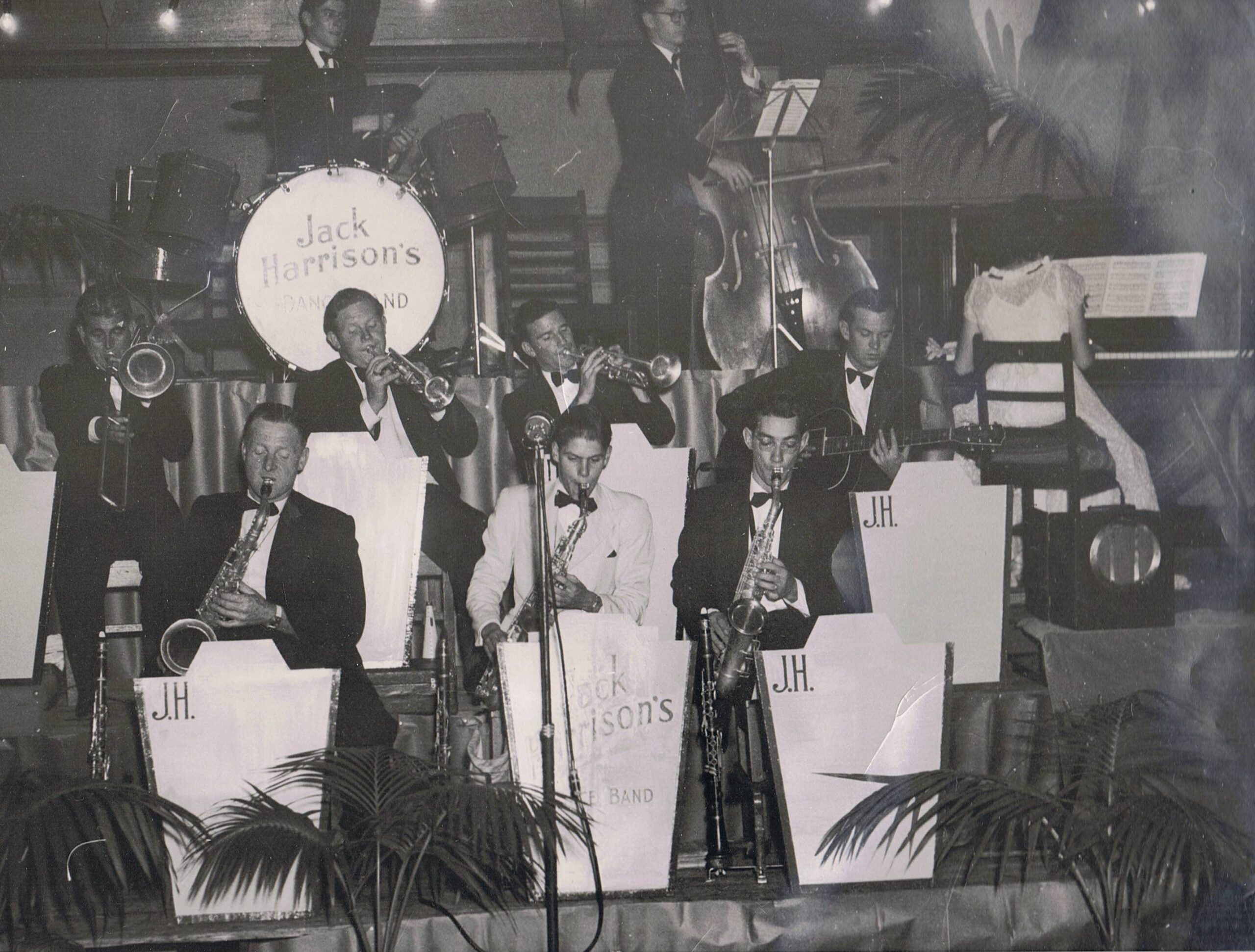
Jack Harrison Dance Band Winthrop Hall

GRADUATION BALL

8.30pm – 2am

April 22 1949 Winthrop Hall, University

In Aid of World Student relief

ADMISSION Double Ticket 24/7 (inc tax.)

Jack Harrison’s Ten Piece Orchestra – bookings at Nicholsons

AROUND PERTH – WITH HARRY BLUCK

Ball Season Starts Rolling in Perth – Heavy Bookings as Biz Booms

The annual outcrop of balls generally makes its presence felt about this time of the year and already some of the earliest have taken place.  This season promises to be a busier one than previously and some large-sized bands should be seen on the various stands. Already, youthful Jack Harrison has made a good start by fronting a 10 piece outfit at the University Graduation Ball, and from all accounts the ultimate sound of the band justified the Harrison judgement in selecting good players as his support.

It’s in The Family!

Jack Harrison’s Trio, winners of Perth’s “Popular Dance Band Contest” for 1948.  This talented threesome have remarkable polish, considering their extreme youthfulness, and have certainly made their presence felt in the comparatively short time for which they have been associated with the dance band business.  From L to R: Jack Harrison (saxes), Ray Harrison (drums), Jill Harrison (piano).  Jack and Jill are both aged 16 and Ray is 18.  Since this photo was taken, Jack Harrison has blossomed out with a 10 piece band, with which he played at the Perth University Graduation Ball. (Photo by Arthur Fielding Ruskin).

Music Maker and Dance Band News May 1949

JACK HARRISON CHEQUE BOOK:

5 MAY 1949

JACK Cheque to:

Norm Wrightson       Grad Ball       £3/2/6

Kirkby Grad Ball       £3/2/6

Pope Grad Ball       £3/2/6

Franklin Grad Ball       £3/2/6

Thompson Grad Ball £3/2/6

Hendrie Grad Ball       £3/2/6

Coates Grad Ball       £3/2/6

Ray Harrison             Grad Ball       £3/2/6

Jill Harrison               Grad Ball       £3/2/6


1950

All Together With A Tra-la-la

EVERY musicker of note turned up at the Jack and Dudie Pateman’s Nedlands home for the serious business of wetting baby Graeme William’s head. They packed the women off to Sylvia Caporn’s home and the ”boys’ had a right royal time. During the arvo Harry Bluck cheffed up spag. savories and what have you. Pete Sullivan (not the curly headed one) brought a can of Indian curry. A spokeshavian playlet ‘Cinderella’ was produced by Maestro Beeson, featured Alan Gough, Cliff Adam, Pete Harrison, Merv Rowston and ‘Lily of the Valley’ Roberts. It was a real classic. Kev Logan even stopped hibernating and made an attempt to hydrate himself. They nearly sold him a sax. Bam Sharp put on a happy time and the beer flowed like wine. Ray Le Cornu did a job with the kegs. Chick helped the food along. Wally Hadley, Maurice Maurice, Keith Whittle, ‘Mule Train,’ George Caro, ‘Cigarettes’ Cooke, Baden Fixter, Butch Kirkby, Bill Kirkham, Henry Cochran were ell in it. At nine o’clock sharp they drank a special toast to George Franklin— wherever he might have been between here and Curfew rang at 2 a.m and everyone departed for their homes. They tell me the Patemans have since bought a block and 3 tents in case of repercussions from neighbours who may dislike jazz, Dixieland — and just plain noise.

Mirror (Perth, WA : 1921 – 1956), Saturday 20 May 1950, page 12


1951

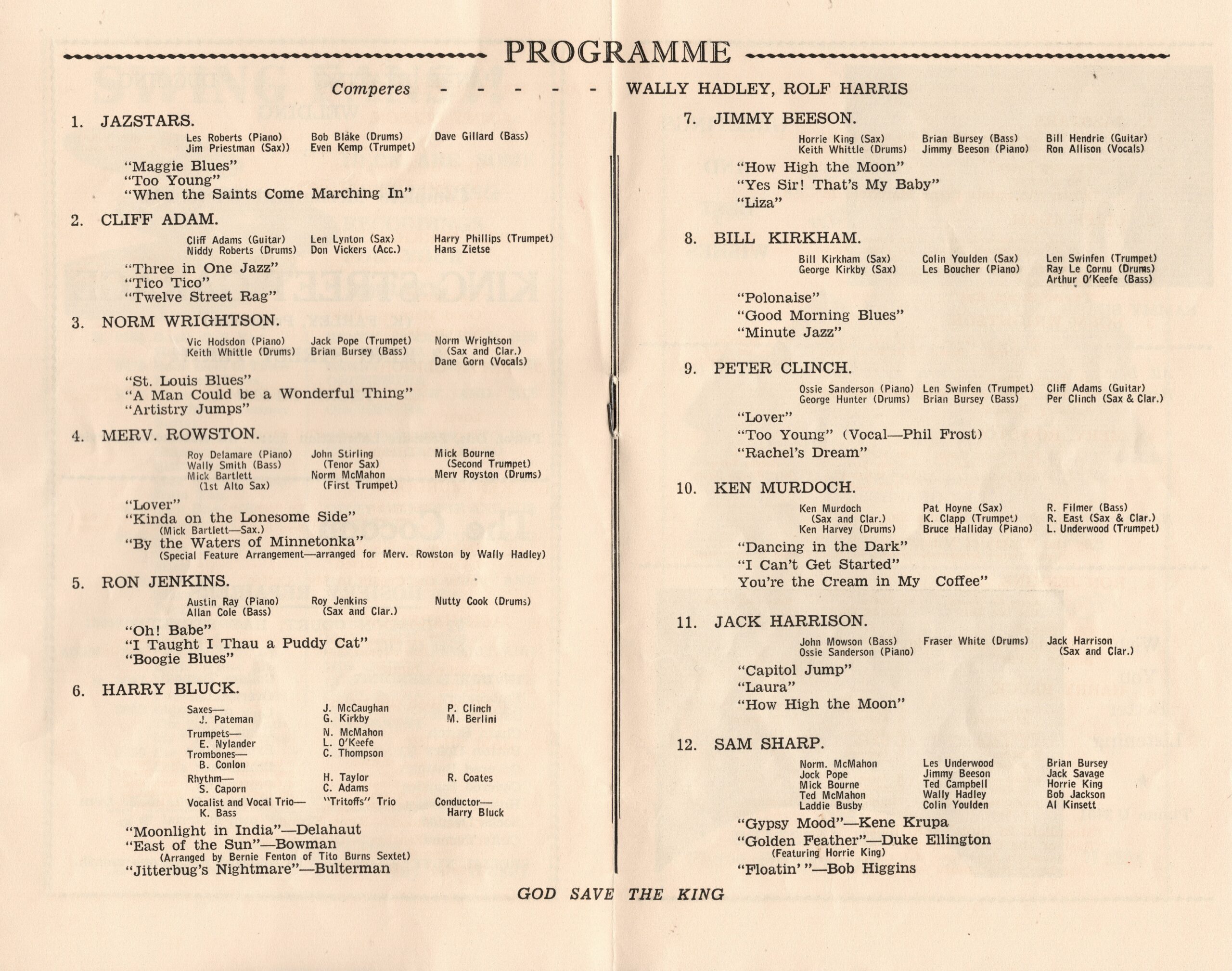
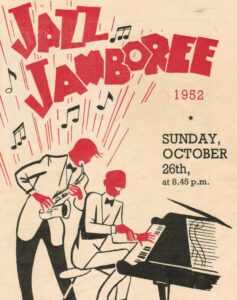
1951 Jazz Jamboree
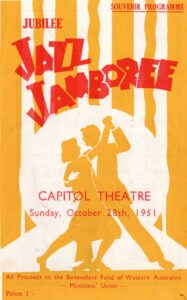
1951 Jazz Jamboree program cover

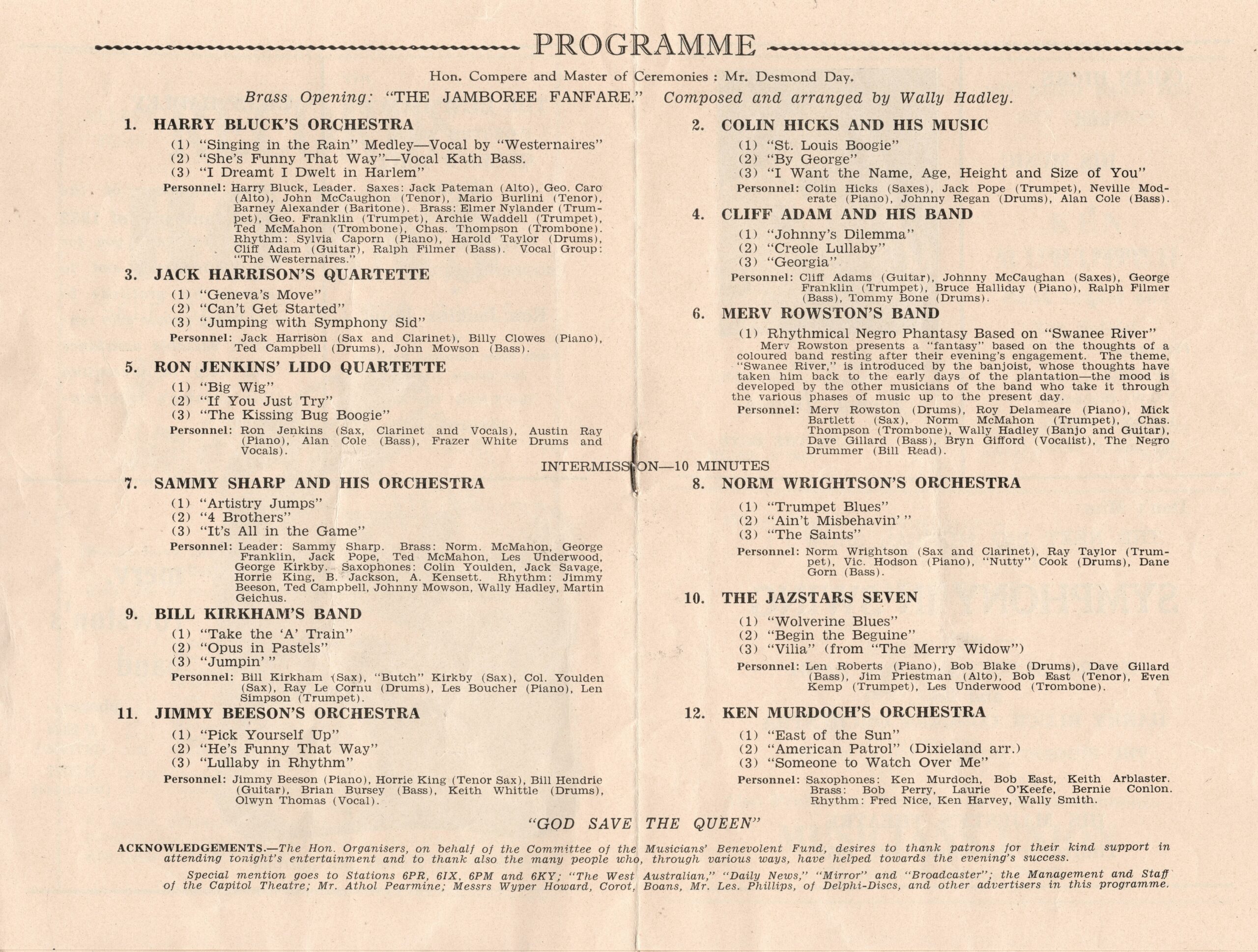
1952 Jazz Jamboree

1951 Jazz Jamboree – programme

1952

Jazz Jamboree 1952


1953

RANDOM NOTES

ENJOYABLE party-cum-jam-session was held at Colin Youlden’s the other night when a number of local Jazz men and women celebrated the 8th anniversary of Wayne Handrick’s band’s engagement at the now defunct Rainbow Room. Among the participants were Greta Young, who gave out with some nice vocals as well as piano work), Mike Carbone and Hank Collins (guitars), Wayne Handricks, Colin Youlden and George Kirkby (saxes), Ralph Filmer (bass) and Roley Nash (drums). Bryn Gifford pleased with vocals a la Frankie Laine.

Mirror (Perth, WA : 1921 – 1956), Saturday 27 June 1953, page 11


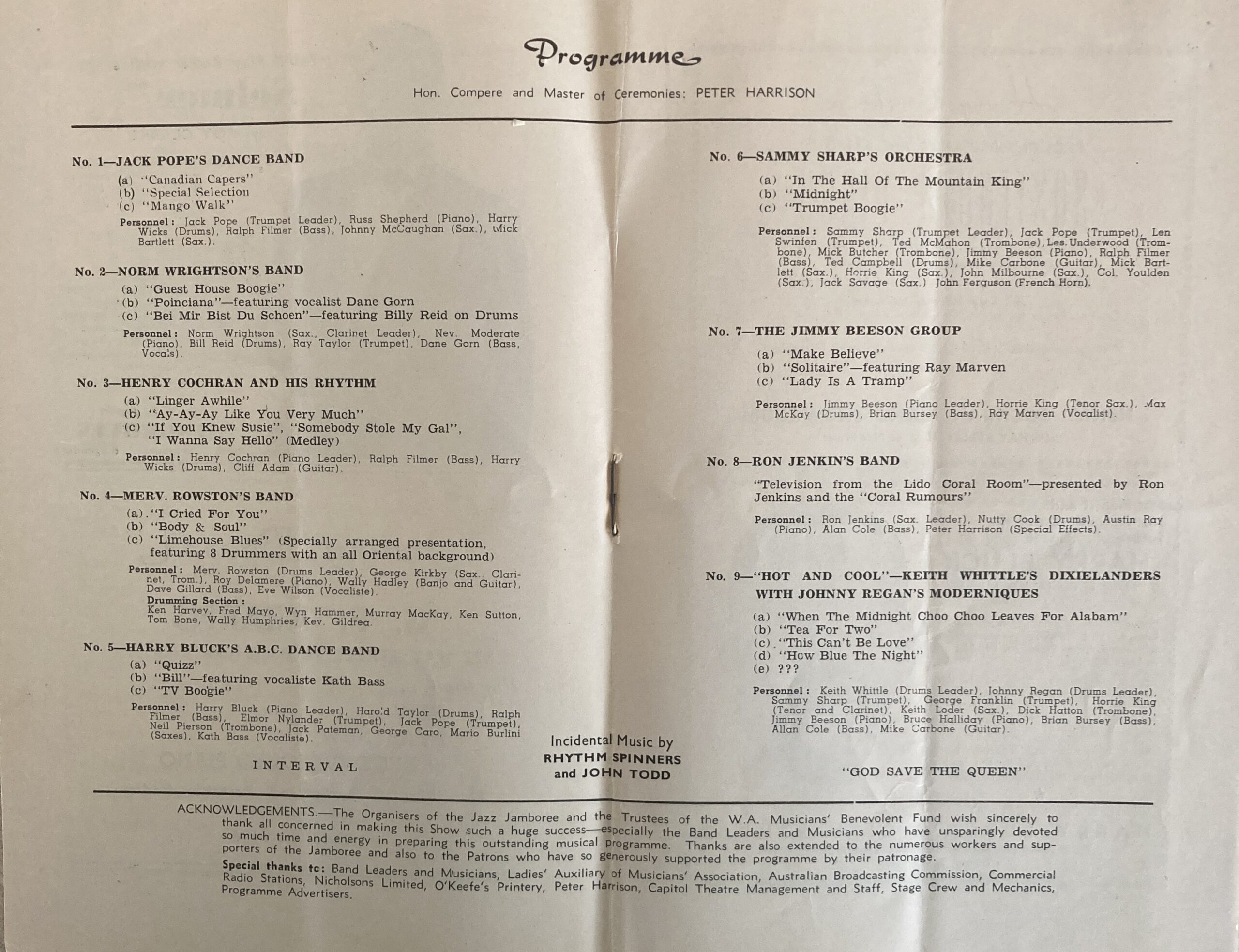
1955
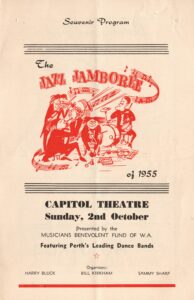
1955 Jazz Jamboree – program cover
1955 Jazz Jamboree Program

1994

George Kirkby died on 23rd September 1994 aged 87.
 

Instruments

Years

Person

REID, George

George Reid was an early Australian music director and conductor. He played a fundamental role in the region’s orchestral history before the Australian Broadcasting Commission (ABC) introduced its “Celebrity” orchestral structure in 1936, a lineage that ultimately evolved into the modern-day West Australian Symphony Orchestra (WASO). Additionally, he was known for directing other local groups during that era, such as the Perth City Band.

George Reid conducted the original Perth Symphony Orchestra and his son Harold gave lessons to Sammy Sharp, Ken Murdoch and Merv Rowston.

Bisset, Andrew, Black Roots White Flowers, (Globe, 1987). p.57


1920

Last Saturday evening the city was full of entertainment. Among the various shows not the least interesting was that given in the Town Hall by some of the members of the Y.A.L. The show was conducted in a very capable manner, and interest was added by the fact that the proceeds were to go towards the institution of a Y.A.L. stall at the Ugly Men’s Wonderwork appeal. Mr. George J. Reid batonned the Y.A.L. orchestra band, and provided some very spirited music. A couple of good solos were rendered by J. McCusker and St. Elmo Vaughan. Bert Fisher gave a good violin rendering of the intermezzo from “Cavalleria Rusticana, ” and W. Berry supplied some Highland dance selections. There was a little sketch by T. Marie, Chester Bond and George Zeplin that was well carried out. Martin Stott gave a monologue and some Dickens recitations, while Chester Bond made a hit as an ‘ ‘ Sun-Raysed ” schoolboy. The company finished off the entertainment with two scenes from “A Midsummer Night ‘s Dream. ‘

W.A. Family Sphere (Perth, WA : 1919 – 1920), Friday 16 January 1920, page 5

1924

FREMANTLE ORCHESTRAL SOCIETY.

At the Fremantle Town Hall on Thursday night in the presence of a large audience, the Fremantle Orchestral Society gave their a concert. The orchestra, which consisted of about thirty performers, rendered a number of selections, both popular and classical, which were much appreciated, and Miss E. Ross and Mr. Rhys Francis, in vocal offerings, contributed in no small measure to the success of the entertainment.

West Australian (Perth, WA : 1879 – 1954), Saturday 20 September 1924, page 10


1925

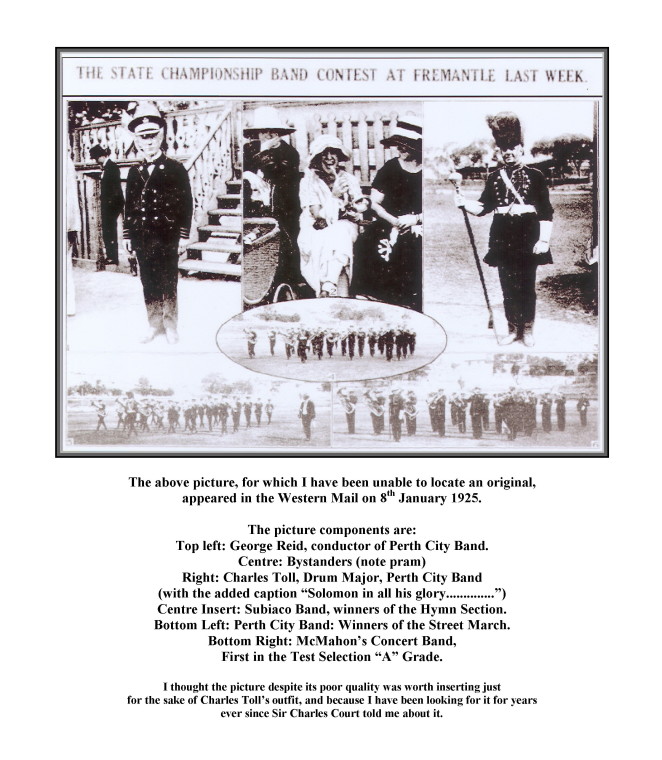
Top left: George Reid, conductor of Perth City Band. Right: Charles Toll, Drum Major, Perth City Band. Centre insert: Subiaco Band, winners of the Hymn Section. Bottom left: Perth City Band, winners of the Street March. Bottom right: McMahon’s.  Courtesy State Library of W.A. BA2811/10

https://purl.slwa.wa.gov.au/slwa_b4792344_1


The Perth City Band, under Conductor George Reid, will render an enjoyable programme to-morrow (Sunday) afternoon in the Government Gardens, commencing at 3.45 o’clock.

Mirror (Perth, WA : 1921 – 1956), Saturday 2 May 1925, page 2


1931

YOUTH TO THE FORE – Y.A.L. Band Contest

From comments he made subsequent to the contest it is apparent that Mr. G. Mellor, adjudicator of the Y.A.L. Band contest which was held last night, was well satisfied with the performances he had heard. He said that the standard of the playing was much improved on that of last year and he was much impressed with the band presentation. While some of the individual soloists were not quite up to the standard of last year, the younger players were a great improvement on previous years. Also in attendance at the contests were Mr. George Reid, first musical director, and Mr. Val Smith, second musical director. They too- expressed appreciation of the contest, and in course of a few remarks, observed that it brought back some happy memories of the day when they held positions with the band. The finals for the champion of the league solo for all finalists will be held on July 23, when the championship of the league will also be decided. The winner will be entitled to hold the cup presented by the officers of the league. The contest last night was conducted by Mr. Ron Rees, musical director of the Y.A.L. RESULTS. The results were: — Trumpeters’ Solo (‘Fanfare’): Norman Williams (35 points), 1. Drummers’ Solo (own choice) : Douglas King (40), 1. ‘B’ Grade Cornet Solo (‘Sweet Spirit Hear My Prayer’): Billy Weston (35), 1. ‘A’ Grade Cornet Solo (Raff’s ‘Cavatin’) : Norman Law (30). 1. Champion Solo: (”’Neath .Austral Skies’): Charles Thompson (40). Tenor Horn Solo (‘Goodbye, Sweetheart’): Clarie Gray (3G), 1. Baritone Euphonium Solo (‘Melody in T’): Roy Facey (36), 1. Trombone Solo (‘Kathleen Mavourneen’) : Robert Lockwood (33). 1. Bass Solo (‘Flower That Bloometh’) : Em Negus (33). 1.  ‘B’ Grade Duet (‘Ever of Thee’): George Franklin and Billy Mangini (33). ‘A’ Grade Duet – ‘Robin Adair’) : Norman Law and Fred Brunsgard (33).

Daily News (Perth, WA : 1882 – 1955), Saturday 4 July 1931, page 3


1932

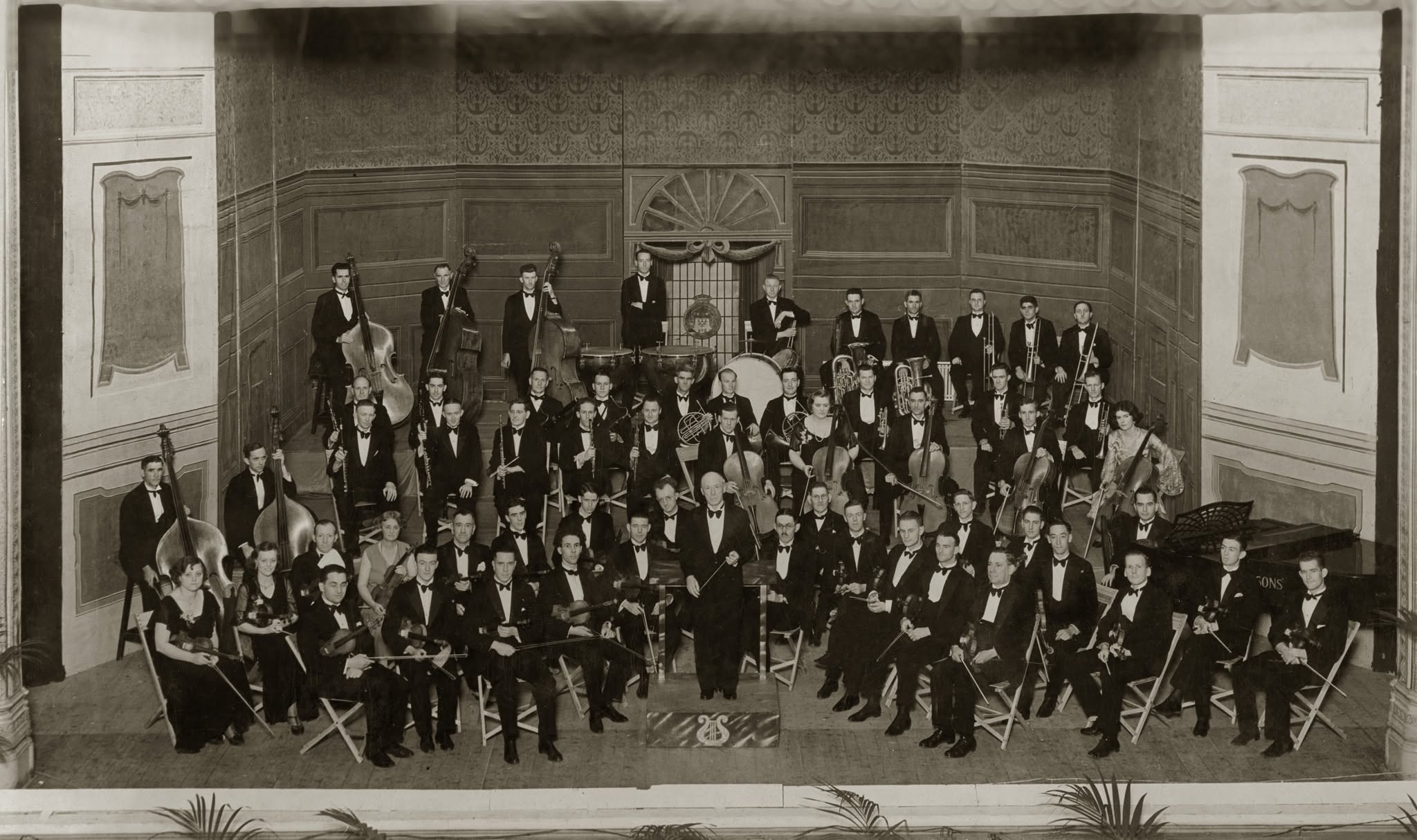
In 1932, timpanist George Reid, who also conducted the City of Perth regimental Band, took over as the resident conductor of the Perth Symphony Orchestra when from Harold T. “Duffy” Newton left for England. Reid held the position of resident for one year after which he was succeeded by Nelson Burton (1933-1935). He was invited back as guest conductor of P.S.O on many occasions. The orchestra gave 10 outside broadcasts during 1932, conducted in the main by Reid. “It seems that the committee of the Perth Symphony Orchestra was unwilling to reinstate Harold Newton, retaining the less flamboyant but more reliable George Reid as the conductor.” Harrison, Marcia, West Australian Symphony Orchestra Celebrating 75 Years, (WASO Holdings Pty Ltd, 2003). P.8

The Perth (professional) Symphony Orchestra is to commence its series of concerts for the season at His Majesty’s Theatre on Sunday evening, May 8.  Mr. H. T. Newton, foundation conductor of the orchestra, is at present on leave, and Mr. G. J. Reid is acting as honorary conductor. A large and influential committee has been appointed and it is hoped to place the organisation on a sound and permanent basis so that the public will have the opportunity of hearing the orchestra in fortnightly concerts.

West Australian (Perth, WA : 1879 – 1954), Saturday 23 April 1932, page 5


A charity concert, organised by the Government Electricity Supply Department in aid of the Railway, Tramway and Electricity Supply Ray, was held in His Majesty’s Theatre on Tuesday last. There was a good attendance and all items were enthusiastically received. The well balanced programme opened with an overture by the Perth Symphony Orchestra under the baton of Mr. George Reid, followed by vocal numbers by Irene Stancliffe. Will Savage, Gertrude Hutton, David Lyle, the Bel Canto Choristers and the Select Four, a cornet solo by Charles Court, violin solos by Horace Dean, ballets by the pupils of Miss Estelle Anderson, and humorous monologues by W. E. Talbot. The concluding item was an amusing one-act play (produced by Miss Pat Hanna), and capably enacted by Miss Muriel Bird and Messrs. H. Bagot and J. Stillwell. Mrs. J. W. Stancliffe was the official accompanist, the hon. organiser. Mr. R. C. West and the hon. secretary. Mr. H. H. G. Clarke. 

Sunday Times Sunday 9 October 1932 page 2


1933 Perth Symphony Orchestra conducted by George Reid in His Majesty’s Theatre

1933

The musical adjudicator for the forthcoming State championship band contests, which will open at Subiaco Oval on February 24 is Mr. George J. Reid. Mr. Reid has been closely identified with the musical life of Perth for the past 25 years. He held the position of conductor to the Perth City Band for several periods, was the musical director of the Young Australian League for a number of years, and led the band of that organisation on its first overseas tour. He is now the conductor of the Perth Symphony Orchestra

West Australian (Perth, WA : 1879 – 1954), Saturday 18 February 1933, page 5


1934

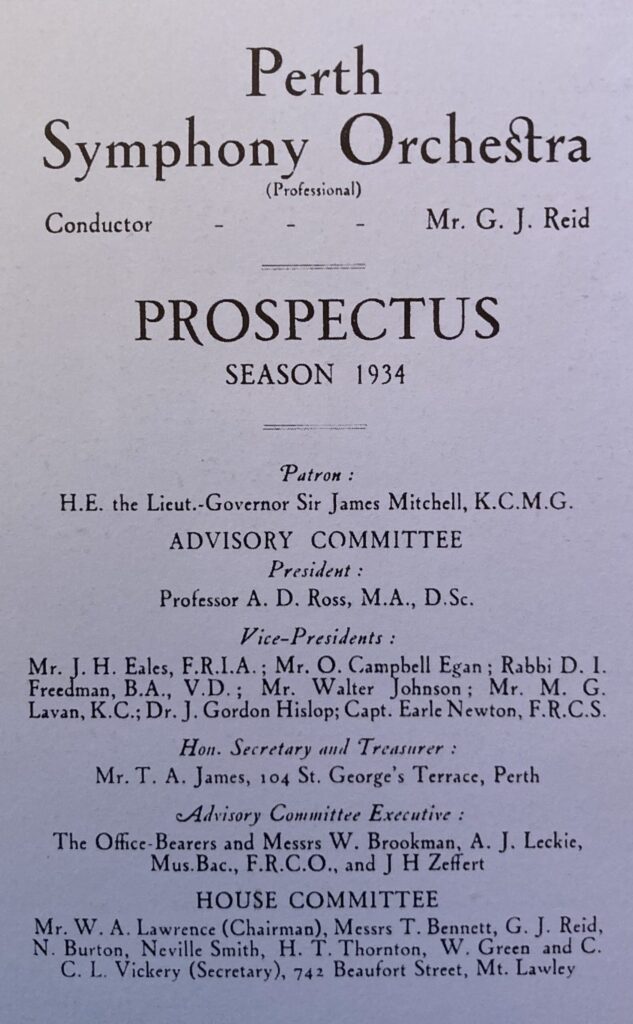
1934 Perth Symphony Orchestra Season – conducted by George Reid

PERTH SYMPHONY ORCHESTRA – Mr. Grainger as Guest Conductor.

The appearance of Mr. Percy Grainger as conductor lent a special interest) to last nights concert by the Perth Symphony Orchestra at His Majesty’s Theatre which was enjoyed by an enthusiastic audience. Mr. Grainger had charge of the orchestra in his own setting of the old English ‘Shepherd’s Hey.’ He proved a Vigorous conductor, and obtained from the: players a dashing and spirited performance in which every member of the orchestra had a share, with special mention deserved by the players of the brighter percussion instruments. Under the regular conductor, Mr. George Reid, the orchestra opened the programme with a powerful performance of Beethoven’s great ‘Egmont’ overture. Its most satisfying work, however, was in Massenet’s ‘Scenes Pittoresque’ suite a feature of which was the excellent showing by the woodwinds. In particular was this noticeable in the third movement in which a wonderfully bell like effect was achieved. The fine legato playing of the strings at the close jot this movement provided a good contrast to the final ‘Fete Boheme,’ in which all the fun of the fair was presented with great gusto. The well-known ‘Faust’ ballet music, by Gounod demonstrated the orchestras wealth of violins, to the extent that a lessening of tone in the more light and graceful passages would have resulted in greater contrasts being obtained. To close the programme the orchestra gave a spirited performance of Glinka’s ‘Russlan and Ludmilla’ overture. Miss Mercia de Mamiel, the assisting vocalist, brought beauty of tone to Mendelssohn’s ‘Wings of Song’ and Logan’s ‘Pale Moon’. As an encore the Brahm’s Lullaby was added. Mr. Harold Reid, xylophonist, gave a brilliant performance of Suppes ‘Morning, Noon and Night.’ which aroused such enthusiasm that arrangements of ‘Liebestraume’ and ‘Believe me, if all those endearing charms’ had to be played before Mr. Reid was allowed to leave. The President of the orchestra (Professor A. D. Ross) announced that at its next Sunday night concert, on June 10, Mr. John Bishop, of Melbourne, would be guest conductor.

West Australian (Perth, WA : 1879 – 1954), Monday 28 May 1934, page 11


The next programme to be presented by the West Australian State Symphony Orchestra, at the Prince of Wales Theatre on Sunday evening September 9, will include the overture to ‘The Merry Wives of Windsor’ (Nicolai), a further extract from the ‘Scheherazade’ suite of Rimsky Korsakov— ‘The Young ‘Prince and Princess’; and one of German’s ‘Henry VIlI.’ dances. Supporting artists include Miss Tess Smallpage, soprano, and Miss Evelyn Landells, pianist. The Perth Professional Symphony Orchestra, under the conductorship of Mr. G. J. Reid, will give its next concert at His Majesty’s Theatre on Sunday week, September 16. In response to numerous requests, the first two movements of Tchaikowsky’s ‘Pathetique’ Symphony will be included in the programme. Other numbers will include ‘Son and Stranger’ overture (Mendelssohn), ‘From the Countryside’ suite (Eric Coates), ‘Entry of the Gods into Valhalla’ (Wagner), ‘Henry VIII. Dances’ (German), ‘Handel in the Strand’ (Percy Grainger), and ‘Imperial March’ (Elgar). The assisting vocalist will’ be Miss Lulu Potter, soprano, who will be heard in songs by Mozart and Puccini. 

West Australian (Perth, WA : 1879 – 1954), Saturday 8 September 1934, page 23


The Perth Professional Symphony Orchestra’s concert tomorrow evening at His Majesty’s Theatre will be the concluding concert of the 1934 season. As the occasion is the anniversary of the Armistice, the first half of the programme will be devoted to remembrance music. Under the conductorship of Mr. G. J. Reid, the orchestra will play the march ‘Power and Glory’ (Sousa, arranged by M. H. J. Otto), ‘Marche Funebre’ (Chopin), ‘Land of Hope and Glory’ (Sir Edward Elgar) and ‘Last Post’ and ‘Reveille’ will be sounded on the trumpets. Mr. C. L. Jenkins (baritone) will sing ‘Red Poppies’ (a poem by ‘Dryblower,’ the music by W. S. Fotheringham) , and ‘Verborgenheit’ and ‘Fussreise’ (Hugo Wolf). The remainder of the programme will be devoted to request items, which will include the overture to ‘William Tell’ (Rossini), ‘Serenata’ (Toselli) and the ballet music to ‘Faust’ (Gounod). Finally, the orchestra will take their farewell for the season by playing the fourth movement of the Haydn ‘Farewell Symphony.’ In this number the various members of the orchestra complete their parts seriatim, and, one after the other, blowing out their candles, leave the stage. The conductor, left alone, extinguishes his candle, leaving the theatre in complete darkness. The concert will be given in the presence of His Excellency the Lieutenant Governor and Lady Mitchell, naval and military representatives and office bearers and members of the R.S.L.

West Australian (Perth, WA : 1879 – 1954), Saturday 10 November 1934, page 23


1935

In 1935, the Perth Symphony Orchestra, conducted mainly by George Reid, gave most of its performances in the newly completed Anzac House in St George’s Terrace, and one special Jubilee Concet in the Capitol Theatre.

Sir William Lathlain presided at the annual general meeting of the Metropolitan Symphony Orchestra, which was held during the week. The election of office-bearers resulted as follows — Patron, The Lieutenant-Governor, Sir James Mitchell; President, Sir William Lathlain; Vice-Presidents, Messrs- Cecil Dent, A. H. Dickson, R. H. Goodman, A. J. Leckie, Eugene Levinson, W. H. Vincent; hon. conductor, Mr. Edward Black; hon. deputy conductor, Mr. C. Court; hon. secretary, Miss Pixie Pretty; hon. asst. secretary, Miss E. G. Pretty; hon. treasurer, Mr. C. Court; hon. librarian, Mr. K. Jones; hon. auditor, Mr. M. H. J. Otto; hon. concert secretary, Mr. R. R. Jones; committee, Misses E. Crabtree and E. Shotter, and Messrs. D. Powell, R Perrin, W. A. Smith and K. Jones. The  financial statement showed that losses had been incurred at the orchestra’s 69th, 70th and 71st concerts. The next concert is .to be held early in June when, In the absence of Mr. Black on a broadcasting engagement in the Eastern States, Mr. George Reid will conduct. 

West Australian (Perth, WA : 1879 – 1954), Saturday 23 March 1935, page 23


The fourth concert of the Perth Symphony Orchestra’s winter series, with Mr. G. J. Reid as conductor, will be given tomorrow evening, June 30, at Anzac House. Mendelssohn’s youthful masterpiece, the overture to ‘A Midsummer Night’s Dream,’ and the overture to ‘The Magic Flute’ (Mozart) are the opening and concluding numbers respectively of an otherwise cosmopolitan programme, which includes two ‘Polovtsian Dances’ from the opera ‘Prince Igor’ (Borodin), some ‘Hiawatha’ music by Coleridge-Taylor, Mozkowski’s ‘Spanish Dances,’ and Kreisler’s ‘Caprice Viennois.’ Miss Gertrude Hutton (contralto) will contribute ‘Armez-Vous’ (Gluck) and songs by Travers and Ivor Novello. 

West Australian (Perth, WA : 1879 – 1954), Saturday 29 June 1935, page 23


INSPIRED MUSIC – Symphony Orchestra’s Concert

On Sunday evening, August 25, the Perth Professional Symphony Orchestra, conducted by Mr. G J. Reid, will give the eighth of its winter concerts at Anzac House. A particularly fine programme include works by some immortal masters of orchestral composition as Wagner, Weber, Brahms, Grieg and Coleridge-Taylor. The ‘Oberon’ overture is to be followed by the four movements — ‘Morning,’ ‘Death of Ase,’ ‘Anitra’s Dance’ and ‘In the Hall of the ‘Mountain King’ — of Grieg’s suite ‘Peer Gynt,’ Op. 64: and by the celebrated arrangement by Weingartner of Weber’s ‘Invitation to the Waltz,’ ‘Three Hungarian Dances’ (Brahms) and ‘The Procession of the Grail’ (Wagner). That BEAUTIFUL MELODY ‘The Willow Song,’ will be heard in its context as the fourth movement of the suite ‘Othello’ by Coleridge-Taylor, which includes also a ‘Dance,’ ‘Children’s Intermezzo,’ ‘Funeral March’ and ‘Military March.’ The programme will conclude with the overture from ‘Zampa’ (Herold). The assisting, artist, Signor Ugo Mina (tenor), will contribute songs by Verdi and others.

Mirror (Perth, WA : 1921 – 1956), Saturday 24 August 1935, page 23


1936

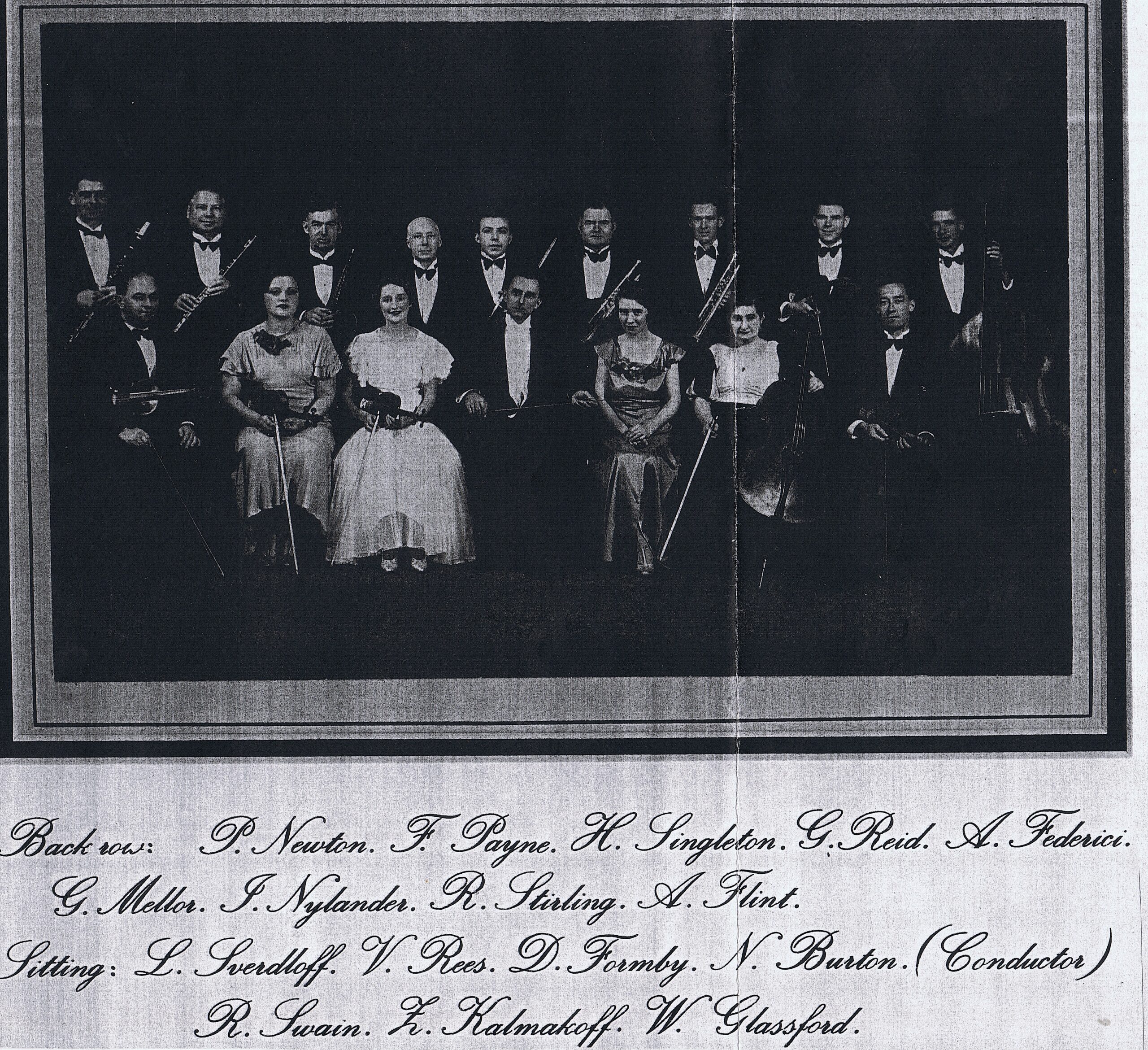
1936 Perth Concert Orchestra

1943

Description

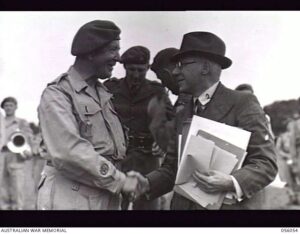
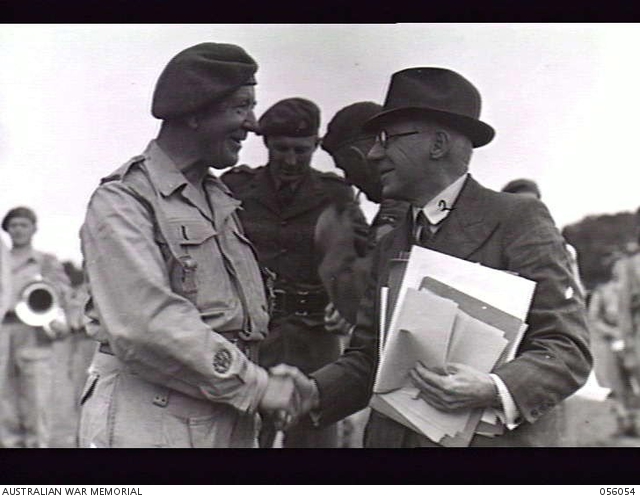
GERALDTON, WA. 1943-08-15. MR GEORGE J. REID (RIGHT), ADJUDICATOR OF THE TRIANGULAR BAND CONTEST BETWEEN THE BANDS OF THE 1ST AUSTRALIAN ARMOURED DIVISION, THE 35TH BATTALION AND THE 54TH BATTALION, CONGRATULATES WARRANT OFFICER 2 A. H. BAILE (CONDUCTOR) OF THE BAND OF THE 1ST AUSTRALIAN ARMOURED DIVISION, ON HIS BAND WINNING EVERY PRIZE IN THE CONTEST.

Australian War Memorial Accession No. 056054

https://www.awm.gov.au/collection/056054


Biography Our Musician for the week is alto and tenor sax expert Jack Pateman, leading alto with the Harry Bluck Sextet. Known throughout the local dance band world as ‘Daddy’ Pateman because of his long association with the dance band profession, Jack commenced earning the sax shortly after World War I at the age of 18, and attended the same tutor as Ken Murdoch at about the same time, namely George Reid, one-time conductor, of the Perth Symphony Orchestra. His first dance band engagement came to him when he took the alto seat in his father’s orchestra (Alf Pateman’s Old Time Band) which played for Mrs. B. Richards’ old time dances at the Unity Theatre back in the 20’s. At a later stage he joined pianist Bill Naughton, now in the Eastern States, and Merv Rowston. This trio moved into the Kit Kat Cabaret Cottesloe and were there for some time. From this nightery, he moved on to the Piccadilly Ballroom where he joined Charlie Sheridan’s 10-piece combination as third alto and later toured with this outfit when it conducted a large scale tour through the wheat belt and sou-west. He was a prominent figure at the Wentworth Hotel, where he occupied alto chair with the Fred Nice trio for -years and during this time he saw 2 seasons at the ANA Boathouse with Jack Nice’s band. During the war, while in the 125 AGT, he played alto and tenor in a concert party quartet under Captain Fred Nice. After the war he took his own band into the Club Cabarita and was later joined by Harry Bluck, who later reformed the band and moved into the Pagoda, where they are now seeing their third season. Jack Pateman was a notable figure in the Jazz Jamborees and was also with the ABC show, Sunday Serenaders, under Sammy Sharp. He has always been a utility man and during his 20 odd years of experience has carried baritone, tenor and alto responsibilities. Jack, whose home is in Claremont is a full-time teacher of the alto- tenor and clarinet.  —’QUAIL.’

Mirror (Perth, WA : 1921 – 1956), Saturday 18 June 1949, page 13

Instruments

Years

Person

CHAYTER, Marcia

MARCIA CHAYTER married Jack Harrison

Marcia Chayter was born on 18th January 1934 in Brisbane to 26 year old chemist Henry William “Rollo” Chayter and 24 year old Norma Helena Emily (nee Henley) and lived at 36 Hamilton Street, Corinda, Brisbane.

CHAYTER On Jan 18th to Mr and Mrs H.W. Chayter Mackie St Moorooka – a daughter (Marcia).

The Courier-Mail Brisbane 20 Jan 1934 pg 12.

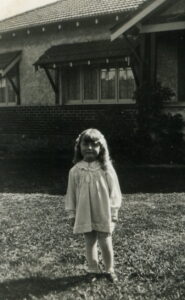
1934 Marcia Chayter

Marcia was baptised on 28th October 1934 at St Aiden’s Church, Clifton Hill, Brisbane, Queensland.  Her Godparents were Doris Alice Guy, Marie Chayter (Rollo’s sister), Clifford Henley (Norma’s brother).
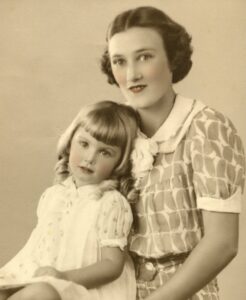
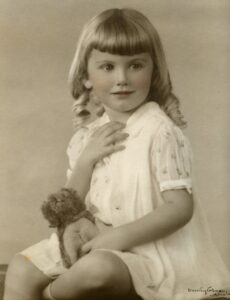
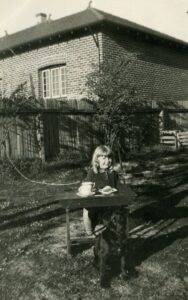
Marcia and Norma Chayter
1937 Marcia Chayter aged 3 years 2 months

In 1937 aged three, Marcia’s life changed forever. With jobs scarce due to the Depression, her father, a fully qualified chemist, accepted the prize offer of managership of the Felton, Grimwade and Bickford chemical factory. 

In March 1937, their Brisbane belongings, Beale upright piano and all, were duly secured with them on a ship called the “Duntroon”. 

Their passage to Perth was so rough that their cases slipped from under one bed to another like greasy snaggers in a frypan.  The accompanying sea sickness knew no bounds.  Norma and the three year old Marcia were so ill, they disembarked in Adelaide and completed the voyage by train. 

1938 Marcia at Woodroyd with “Flash” the dog

On their arrival in Perth they were met by a Mr Maxwell who was the manager of the business side of Feltons. 

1938 Marcia at Woodroyd

A flat in Mount Street central Perth had been organised for them and soon after in they then rented a brand new house at 28 Woodroyd Street, Mt Lawley that had sand for a garden. 

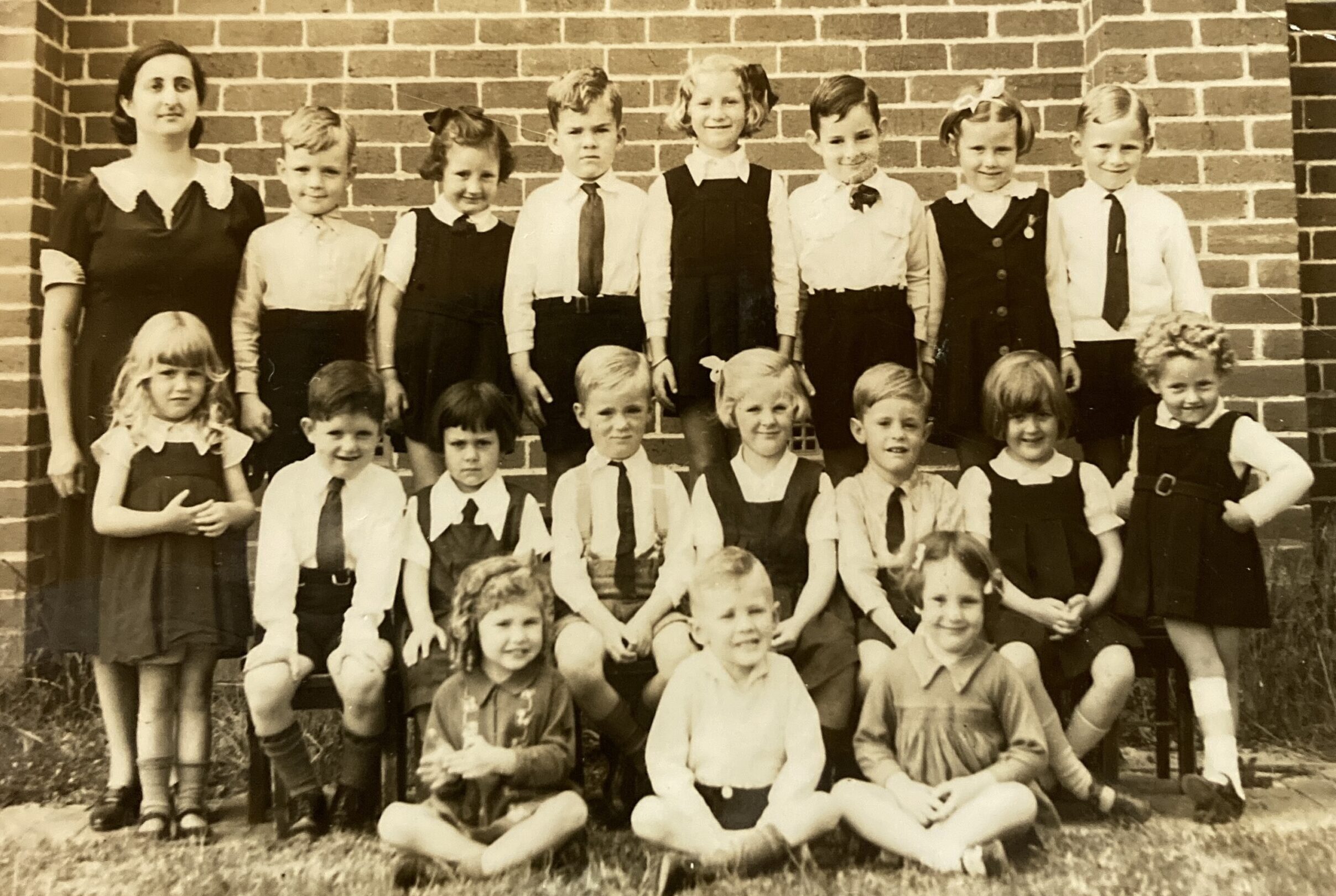
1938 Braemar Kindergarten – Marcia Chayter in front of the teacher far left, wringing her hands

In 1939 Marcia attended “Braemar” Kindergarten and subprimary in St Giles Hall at 65 Lawley Crescent,

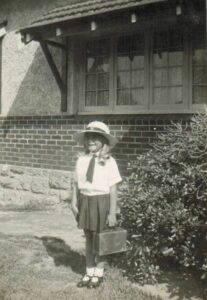
In 1940, Marcia started primary school at Lawley Ladies’ College, a small private school at the end of Longroyd Street, travelling towards Walcott St, Mt Lawley. 

Lawley Ladies College

On May 17th 1941 Norma and Rollo had another daughter, Nerida.
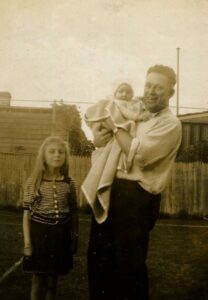
Marcia was eight in 1942 when Lawley Ladies’ College was evacuated to the country and the only alternative was Inglewood State School with Mr. Chandler as headmaster. Marcia was put up from grade 2 to grade 3.
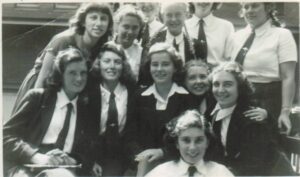
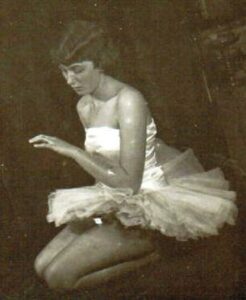
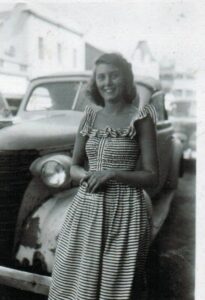
There was a “rough” element at Inglewood school and Norma continued to dress Marcia in her Lawley Ladies’ College uniform for which Marcia was bullied and had stones thrown at her being called a “College Snob”.  She often used to run home as she was so frightened.

In 1943 Marcia was accepted into the Perth College intermediate school aged 9.

Perth College

Marcia left Perth College at the age of 14 gaining her Junior Certificate for which she sat in November 1948. The Perth College nuns were not keen to give an end of year dance, so the PC girls arranged one for themselves.

The parents of one of Marcia’s class, Adrienne Silbert, owned a reception Centre in Mount Lawley called “Tannerville” and so a dance was organised there.  There, Marcia met the band’s clarinettist Jack Harrison.

The University of Western Australia Public Examinations Board awarded the Junior Certificates which Marcia Chayter received in February 1949 passing English, French, Physics, Arithmetic and Algebra, Geography and Latin.  Rollo had hoped Marcia might have excelled at chemistry, but she did not!

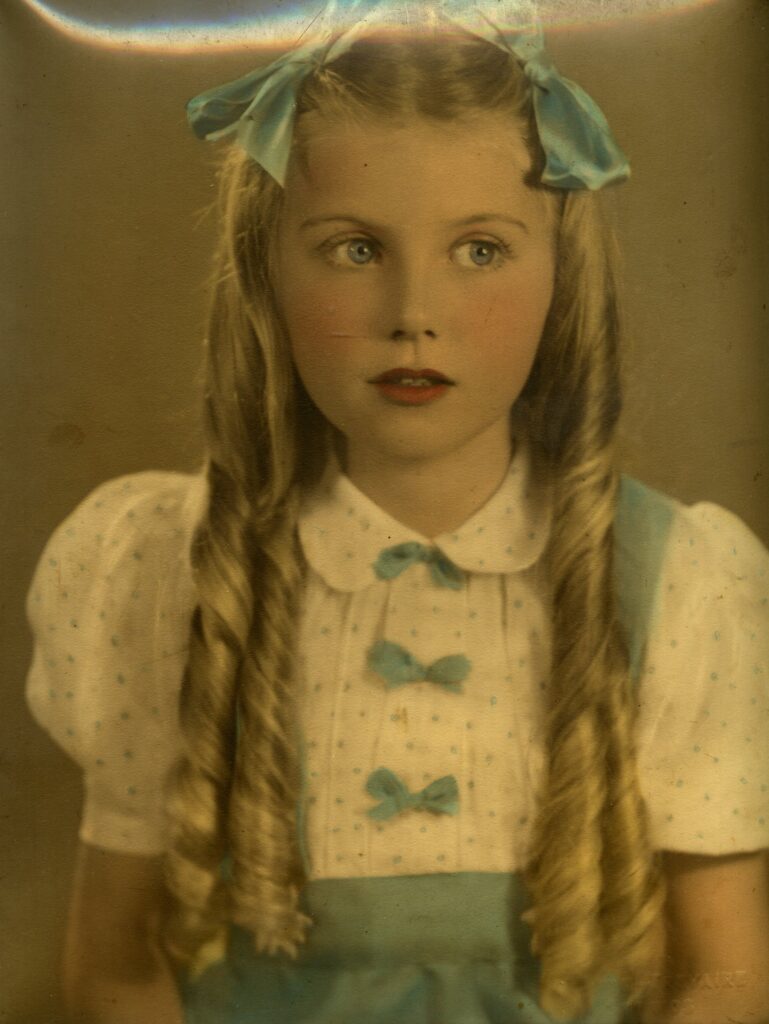
Marcia Chayter 1949

Marcia studied ballet up until the age of 16.

In early 1949 Marcia was employed at the accounting firm of Weir and Broderick in St George’s Terrace. Marcia was the office girl in charge of the mail, tea making, message delivering and other dull jobs. They were very kind, allowing her to do her shorthand homework and typing practice once all her work had been completed.  Mr Broderick was a generous boss and at Christmas he gave her a lovely dress length of material as well as toiletries.

She often met up with her mates in the city in her lunch break. 

Marcia in her seersucker dress

At this stage Marcia still only had two dresses. One was plain blue and Norma had embroidered Marcia’s name on it. The other was made of tablecloth seersucker material that Norma had found.  Any money Marcia had over after bus fares and paying Norma board she saved towards improving her meagre wardrobe.   Balls and dances were frequent and Marcia for which Marcia would creatively try and embellish her few outfits with fresh flowers of a new sash.

Wesley Ball

In 1949 Marcia also started a Junior Secretarial Course studying shorthand and typing at night school twice a week.  Getting to Perth from Mt Lawley by public transport would have involved catching buses and trams.

The Mount Lawley Tennis Club dances held every second Friday was the place to go and Marcia’s Mt Lawley “gang” including the Nevards, Coombs, Berwyn Allen and Marcia would walk to those dances and met Jack Harrison and his twin sister Jill and brother Ray who supplied the music. Everyone knew everyone else everyone danced every dance. There was no alcohol and the man at the door made sure everyone was safe.

Kings Park Tennis Club held a similar type dance every alternate Saturday with the same band and the same people. Berwyn and Marcia caught a tram and a trolley bus to attend. Bob Pope who lived a few streets away often came as well this time.

Jack Harrison and Marcia at Kings Park Tennis club

From the diary Marcia Chayter started on Thursday 22 December 1949, it is clear that she is following Jack Harrison’s dance gigs around. 

at a barn dance

The mention of “the chev” and Jack’s pictures with Marcia (matching her dresses) imply they were going out prior to Marcia’s 1949 diary.

1950 Marcia aged 16 sitting on Jack’s Chev

Most Sundays Marcia Chayter’s “gang” would meet at North Cottesloe Beach.  After Jack and Marcia had started to date, Jack would not join them until the afternoon as he had to practise in the morning and eat a roast dinner for lunch prior to meeting up with his friends!

the gang
1950 Jill, Jack, Marcia & Susan & the Chev

Jack’s car (“the chev”) allowed him the freedom to visit Marcia in Mt Lawley and also provide opportunities for fun excursions and day trips.


In August 1950, Jack was invited to join the South Australian Symphony Orchestra as second clarinet by conductor Henry Krips.  He accepted the position starting in November. 

ABC Schools’ Broadcast Department

In October 1950 Marcia was employed in the typing pool at the ABC in the Schools’ Broadcast Department working at Broadcast House.


Prior to leaving for Adelaide, Jack had many commitments including a 10 day country tour in late October with the Adult Education Board.  It must have been heart breaking for both he and Marcia who had been seriously dating for over a year.


Max Reilly and Marcia

Marcia stared dating Max Reilly, thinking Jack had left for good.

After only three months in the South Australian Symphony Orchestra, Jack returned to Perth on 8th February 1951 to fill the second clarinet position with the West Australian Symphony Orchestra.   

1952 Dee, Judy, Marcia


Marcia continued working at the A.B.C. making lifelong friends, including Judy Mitchell, who later would become her daughter Jody’s Godmother.

Marcia and Jack


Jack announced his engagement to Marcia on 12th August 1952 – his 21st birthday – and they were married on 14th December 1953.

Marcia and Jack

Jack and Marcia commissioned Iwan Iwanoff to design their family home at 11 Dodonia Gardens City Beach where they lived until 1993.

1955 Marcia’s 21st birthday

In between bringing up three children and Jack, Marcia managed to take singing lessons with Sylvia Biddle and was a member of the chorus of the Gilbert and Sullivan Society.

Marcia far left: G&S
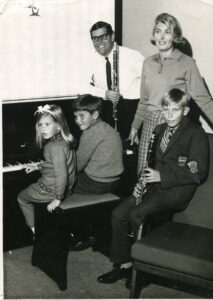
1967 Harrisons around Dodonia piano

Marcia furthered her education. Obtaining her TAE and then completing a Bachelor of Applied Science with a double major in History and Librarian Studies at Curtin University (then W.A.I.T.).  She was employed as librarian at St Columba Theological Library until she retired in 1993.

In 1999 Marcia began writing the history of the West Australian Symphony Orchestra Celebrating 75 Years which was published in 2003.
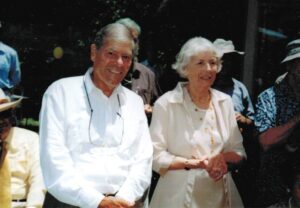
Golden wedding

In 2003, Jack and Marcia celebrated their 50th wedding anniversary.

They had three children:

Jay Raymond (born 17.3.1959)

Kimberley Scott (born 23.1.1959)Jody April (born 23.9.1963)

Marcia Chayter was married to Jack for 51 years.  

In November 2004 Jay was married.

Marcia died unexpectedly of a massive stroke on 9th April 2005 aged 71.

Instruments

Years

Person

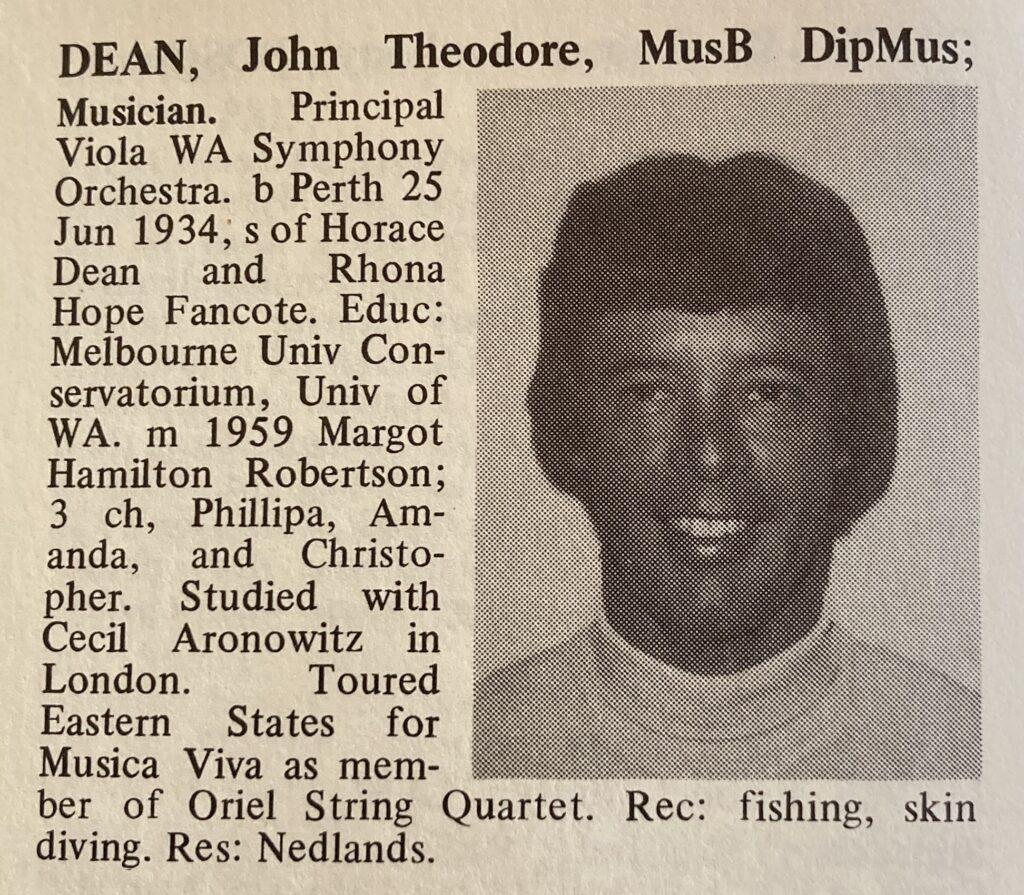
DEAN, John

Vaughan Hanly and Horace Dean

John Theodore Dean was born in 1934 to 30 year old Horace and 22 year old Rhona Hope Dean (nee Fancote).

As a young girl, in order to attend Sunday School at Saint Patrick’s Anglican Church in Mt Lawley, Marcia Chayter had to walk past the house of Horace, Rhona, John and Michael Dean at 29 Rookwood Street, Mt Lawley.  Forty years, later her son would marry John’s daughter.

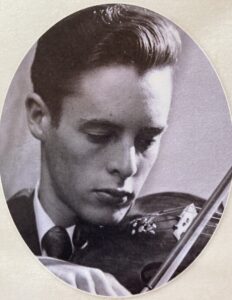
Horace Dean was a violinist and viola player in the Perth Symphony Orchestra and a highly respected performer and educator in Perth’s music circles. His son John followed in his footsteps.


1947 – aged 13

MUSIC AND ART OF SPEECH Exhibition And Diploma Winners Exhibitions were awarded at the September-November examinations in music and the art of speech conducted by the University of W.A. under the auspices of the Australian Music Examinations Board, as follows: Violin: Grade II, John Theodore Dean.

West Australian (Perth, WA : 1879 – 1954), Tuesday 16 December 1947, page 14


1950

This year the Kylie Music Club is meeting on the first Saturday of each month in the Women’s Service Guild hall. Because, however, there is a Musica Viva concert next Saturday, the Kylie May meeting has been advanced to this evening. The first half of the programme will be presented by young artists in John Dean and Bruce Shute (violin and piano), Pearl White (soprano), Betty Wright (piano) and Donald Cartwright (oboe). The concluding work will be a Brahms Sonata played by Vaughan Hanly and Marshall Sumner.

West Australian (Perth, WA : 1879 – 1954), Saturday 29 April 1950, page 21


MUSIC EXAM AWARDS Successful Students Announced The list of awards approved by the University senate in connection with the music examinations held by the Australian Music Examinations Board in September were released yesterday. VIOLIN. Seventh Grade: John Dean. 

West Australian (Perth, WA), Wednesday 20 December 1950, page 14


1951

Awards In The Music Board Exams Awards made in connection with examinations held by the Australian Music Examinations Board have been announced by the University of W.A.    Violin: JOHN THEODORE DEAN. 

West Australian (Perth, WA : 1879 – 1954), Saturday 22 December 1951, page 14


1952

FANCOTE — FORBES A very lovely wedding was solemnised at St. George’s Cathedral, Perth, on Saturday, May 31, between Frederick George, son of Mr. and Mrs. F. Fancote, and June Francis, daughter of Mr. and Mrs. C. Forbes, both of Brookton. The officiating clergyman was the Very Rev. Dean Berivick of Perth. The bride was” beautifully gowned in white”- Chantilly lace over white satin, made with a fitting bodice, medicea collar, a very full skirt falling into a beautiful train, the “frock and train were edged all round with the natural scallops of the lace. Her three-tiered fingertip raw cut tulle veil was held in place by a halo of orange blossom. She carried a trailer of white carnations, gladioli, gerbera roses and bridal marguerite. The bride was attended by her sister, Miss Heather Forbes, in lemon, and her cousin, Miss Fay Nicholas, in blue. The bridesmaids wore lovely frocks of nylon lace and spotted tulle, made with bouffant skirts, allied to fitting bodices and fitting lace boleros with dovetail collars. They carried trailers of roses, asters and gerbera in pastel shades with matching posies in their little lace dutch caps. The bridegroom’s presents to the bridesmaids were diamante bracelets. The bride and bridesmaid’s frocks were made by Mrs. H. Grigo, an old friend of the family and former wardrobe mistress of the Tivoli Theatre, Perth. Mr. Frank Cox was best man and Mr. Phillip Cockcroft, the groomsman. The bride’s mother, assisted by the mother of the groom, received 120 guests to a buffet breakfast at Tintern Lodge, followed by a reception and dancing. During the evening Mr. Horace Dean and his son, John (both A.B.C. artists), favoured the guests with violin duets. The bride’s mother chose a crepe frock of beige’ grey colouring with a matching jacket, a junior navy hat and navy accessories and wore a shoulder spray of red roses. The bridegroom’s mother wore a lavender frock of light wool, lavender Velvet hat and grey accessories and chose a shoulder spray of gold roses. The three-tiered cake was made by the bridegroom’s mother and iced by Mrs. Frank White, of Brookton. The bride, for her going away outfit, chose a lovely pale blue suit trimmed with pearl buttons, a matching blue” hat and burgundy accessories.

Pingelly-Brookton Leader (WA : 1925 – 1954), Wednesday 11 June 1952, page 3


The W.A. Musical Festival will end today. There will be no prize winners’ concert as in former years. This afternoon will be devoted to the finals of all the under-age sections up to 17 years, at the Perth Town Hall, Then, in the Burt Hall at 7.30, will bp contested the finals of the open piano and-violin sections, the champion ladies’ and men’s vocal solos, under18 piano and piano duets. A musical entertainment is included in today’s closing programme for the Arts Festival at the University. Beginning at 7.30 p.m. in Winthrop Hall, John Dean and Donald Thornton will play one of Beethoven’s violin sonatas, the Madrigal Singers will present medieval songs and madrigals, and Mr. Thornton will play Ravel’s Sonatine.

West Australian (Perth, WA : 1879 – 1954), Saturday 12 July 1952, page 15


FOUR WHO WON AT THE W.A. MUSIC FESTIVAL

Some of those who won the finals of their respective divisions when the West Australian Music Festival continued at the Burt Memorial Hall in Perth on Saturday night are shown above during their recitals. They are, from left to right: Mr. John Dean, winner of the open violin solo, Miss Brenda Howarth, winner of the ladies’ championship solo. Mr. R. E. Moran, winner of the open men’s championship solo, and Miss Janette Williams, winner of the open piano solo. 

West Australian (Perth, WA : 1879 – 1954), Monday 14 July 1952, page 2


Women Excel In Champion Solos The singing heard in the women’s championship solo competition was superior to that of the men in their championship at the concluding session of the W.A. Musical Festival in the Burt Hall on Saturday night. This comment was made by the adjudicator Mr. Lindley Evans) in declaring Brenda Howarth the champion woman soloist, with Patricia Wyatt second The winner’s voice was an attractive soprano and her singing was intelligent and musical. Mr. Evans said. Romney Moran won the men’s solo championship. His baritone voice was described by the adjudicator as pleasant, and his performance as thoughtful, with accurate intonation. George Idle was second.

Much interest was aroused by the appearance of an eight year-old competitor in the open violin solo final. He was Geoffrey Michaels, whose playing has recently been praised to a degree that suggests a prodigy. Great Talent Regarding young Michaels, Mr. Evans said: “This was quite a remarkable exhibition for so young a player, being fluent and in time. This is, of course, very great talent, which should be very carefully nursed.”

Mr. Evans awarded the first prize to John Dean, whose playing he described as clear and careful, with fluent technique and true intonation. Geoffrey Michaels was second. The open piano solo was won by Janette Williams, whose playing of an “awkward” test piece was artistic and correct, Mr. Evans said.Roberta Manjon, whose tone and technique were declared to be satisfactory, won the piano solo (over 15 and under 18). Alan Speer was second. David Black and Alan Speer were first in the piano duet (under 18), with Adrienne Sinclair and Leslie Paterson second. Reviewing the festival, Mr. Evans said that the school choirs had been the outstanding feature, their singing having been exceptionally good. In the juvenile instrumental sections there had been much evidence of good teaching.

Following were the results of the juvenile sections- which were heard in the Perth Town Hall on Saturday afternoon. PIANO.–(Under 10): Maree Riddett, I; Roslyn Lang, 2. Solo (over 9, under 12): Barry Palmer and Susanne Maslen, dead heat, 1; Elsie Ottaway 2. Solo (over 12, under 14): Barbara Robinson, 1; Wendy Briggs, 2. Duet (under 13): Athena Hansen and Christine Hill, 1; Margaret Gallash and Barbara Carter 2. Solo (over 11, under 13): Pamela Goldsworthy and Donald McCully, dead heat, 1; Leslie Willcock, 2. Solo (over 13, under 16): Gwenyfred Zengheer-Herrmann, 1; Lynette Friere and Murray Burge, dead heat, 2. Duet (under 15): Helen Rudderham and Barbara Robinson 1: Elsie Ottaway and Rosalind Wasley, 2. VIOLN.–Solo (under 13): Brian Hanly, 1; Ashley Arbuckle, 2. Solo (under 15): Robert Ingram, 1; Ronald Thomas, 2. Solo (under 17): Pauline Thompson, 1; Norma Miller, 2. VOCAL.–Girls. Solo (under 16): Roberta Combs, 1; Natalie Sargent, 2. Boys. Solo: Barry Friere, 1; James Roger, 2. 

West Australian (Perth, WA : 1879 – 1954), Monday 14 July 1952, page 5


The programme to be given in Wesley Church on Tuesday evening by the Perth Philharmonic Society to assist the fund being raised to enable the local contralto Nancy Ellis to proceed to the United States for further study, will include a tribute to Dr. R. Vaughan Williams, who tomorrow celebrates his 80th birthday. It will take the form of a composition of his published in 1950, a Fantasia (Quasi Variazone) on the Old 104th psalm tune, for piano solo accompanied by chorus and orchestra (in this case, the organ). Nancy Ellis herself will contribute a group of songs and John Dean will play violin solos. 

West Australian (Perth, WA : 1879 – 1954), Saturday 11 October 1952, page 17


MUSICIANS AID FUND FOR SINGER (By P.K.). Songs by Nancy Ellis were the highlight of a concert which was held last night in Wesley Church in aid of a fund to send her abroad for further study. Her first song, “My Soul Rejoices” was a little unsteady and lacked the easy serenity that Bach’s songs demand. The Brahms item, however. contained much beauty and gave scope to the singer’s warm and vibrant tone. With closer attention to phrasing, dynamics and other musical “finishings” Miss Ellis should more than fulfill the expectations of those sponsoring the fund. A first Perth performance of Dr. Vaughan Williams’s Fantasia on the old 104th Psalm tune was the second feature of the programme. This work is a sequence of alternate piano and choral episodes-and the combination is not perhaps a very satisfying one. In this work and in the rest of the programme the Perth Philharmonic Society gave us some nicely balanced work. John Dean’s violin solos Bach’s “Arioso” and the ever popular “Ave Maria” had an extremely musical quality.

West Australian (Perth, WA : 1879 – 1954), Wednesday 15 October 1952, page 6


University Awards.

In Music The following awards have been announced in connection with examinations in this State, held by the Australian Music Examinations Board: W.A. Music Scholarship and Violin medal: John DEAN (honours in seventh grade violin).

West Australian (Perth, WA : 1879 – 1954), Saturday 27 December 1952, page 7


1954

A delightful chamber-music evening in her home was arranged by Dr. and Mrs. E. W. Arndt of Nedlands. Well known young artists of Perth contributed, including Dr. and Mrs. Arndt’s daughter Louise, who has completed two years’ violin study in. Amsterdam and is now a pupil at the Melbourne Conservatorium. Louise is returning to Melbourne this week after spending her vacation at home. Shown in the picture are nine-year-old GEOFFREY MICHAELS of Claremont, tuning his violin, for the third movement of the Mendelssohn concerto; MONICA WEINMAN of Claremont, and DAWN BALDWIN of City Beach. Other artists who participated were John and Michael Dean and Keith Middleton.

Western Mail (Perth, WA : 1885 – 1954), Thursday 21 January 1954, page 18


MELBOURNE

FESTIVAL HIGHLY PRAISED Warmly praising ‘Dandenong’s Festival, Mr. Williams said that there might be larger competitions and a lot with bigger prizes, but he felt that this was one that was doing more than any other, because they were giving the opportunities to youth, and they were assisting them in the form of Scholarships to advance their training. That was something he had been trying to get the bigger competitions to adopt. ‘ln this Festival you have something that is a rare thing,” he added. “Tonight every seat in this hall should have been full. You should support this Festival. Believe me it is worth it. This is a great civic effort and something Dandenong should be proud of.” Mr. Williams went on to make a number of helpful suggestions. Cr. Keith Terry, ‘president of the Festival Committee, then presented the Scholarships, Plaques and certificates.

Plaques for the outstanding performers in the several sections went to: John Dean (Violin)

Dandenong Journal (Vic. : 1927 – 1954), Wednesday 12 May 1954, page 3


Dandenong Festival of Music and Art last night. prizewinners at the festival included:— Dandenong Festival Violin Scholarship.—John Dean, St. Kilda. 

Sun News-Pictorial (Melbourne, Vic.), Saturday 8 May 1954, page 14


Fine work by choir

The madrigal singing of the Oriana madrigal choir, directed by Leonard Fullard, is one of the most enjoyable musical experiences Melbourne can offer. At the Assembly Hall last night the work of the choir in music by Wilbye, Weelkes, Pilkington, Richard Carlton, Robert Jones, Byrd, and Purcell was no hit-and-miss affair. The singers kept their eyes on the conductor, the pitch was almost unfailingly ac-curate, and the tone un-forced and well-balanced. Such good results, all too rare amongst our smaller musical groups, can only come as the result of really thorough and intelligent rehearsal, and deserve the highest praise. In a Bach cantata, de-spite some good singing by Betty Fairbank, the performance sank to the more familiar level of the potentially valuable. Handel’s wonderful sonata in D major for violin and continue, played by John Dean and Maryjean Officer, completed the programme. DORIAN LE GALLIENNE.

Argus (Melbourne, Vic. : 1848 – 1957), Saturday 6 November 1954, page 10


1957

In 1957, Horace Dean, a member of the first violins during the earlier years (1942 – 69) of the West Australian Symphony Orchestra, had the pleasure of having his son john playing with him in the violin section of the orchestra.  When a permanent position became available in the viola section, John moved to that instrument moving to the Principal chair several years later. John’s studies at the Melbourne University Conservatorium had been interrupted due to compulsory national service.

Harrison, Marcia. West Australian Symphony Orchestra Celebrating 75 Years. WASO Holdings Pty Ltd, 2003. Page 57.


1958

TALENTED ARTISTS TO VISIT YORK

An all star cast of leading Commonwealth and State artists will give a Concert in the York Town Hall on Saturday, 30th August. The occasion is the one hundred and sixth Anniversary of the York Methodist Church. Geoffrey Michaels, the fourteen year old violin prodigy, who last month, playing with the Sydney Symphony Orchestra, won the A.B.C’s Commonwealth Concerto Competition will be featured. Miss Patricia Connop who was last year’s winner and is at the present the star of the “Mikado” now playing at the Capitol Theatre, together with George Idle who plays opposite her in the same show, will be among vocalists. Miss Dianne Hosking, one of Perth’s leading actresses, will present speech items and John Dean and Bob Ingram, of the Perth Symphony Orchestra, will contribute instrumental items. Miss Margo Robertson, a West Australian finalist of Mobil Quest and Mr Ian Conochie, a leading base soloist in the “Messiah”, will also be vocalists. Duo-pianists of State fame who will perform are Josephine McKimmie and Michael Bartram; Wendy Prosser and Alan Speer. This is the finest line up of talent this State and York has enjoyed for such moderate charges. To make the evening a social success fitting for the occasion supper will be served the admission fee of six shillings will cover this. To obtain a good seat it is advisable to book at Efford’s Pharmacy, Beverley.

Beverley Times (WA : 1905 – 1977), Friday 22 August 1958, page 4


1959

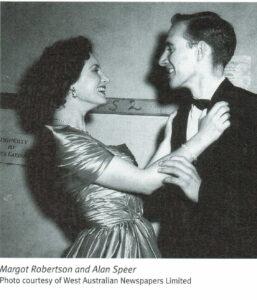
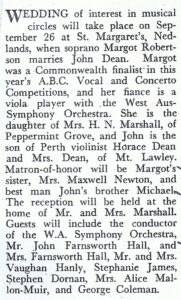
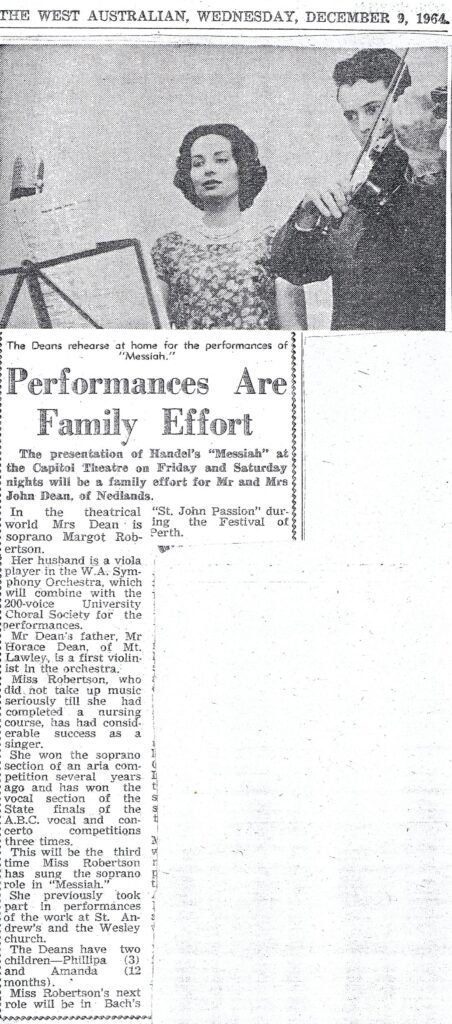
In 1959, John married soprano Margot Robertson.
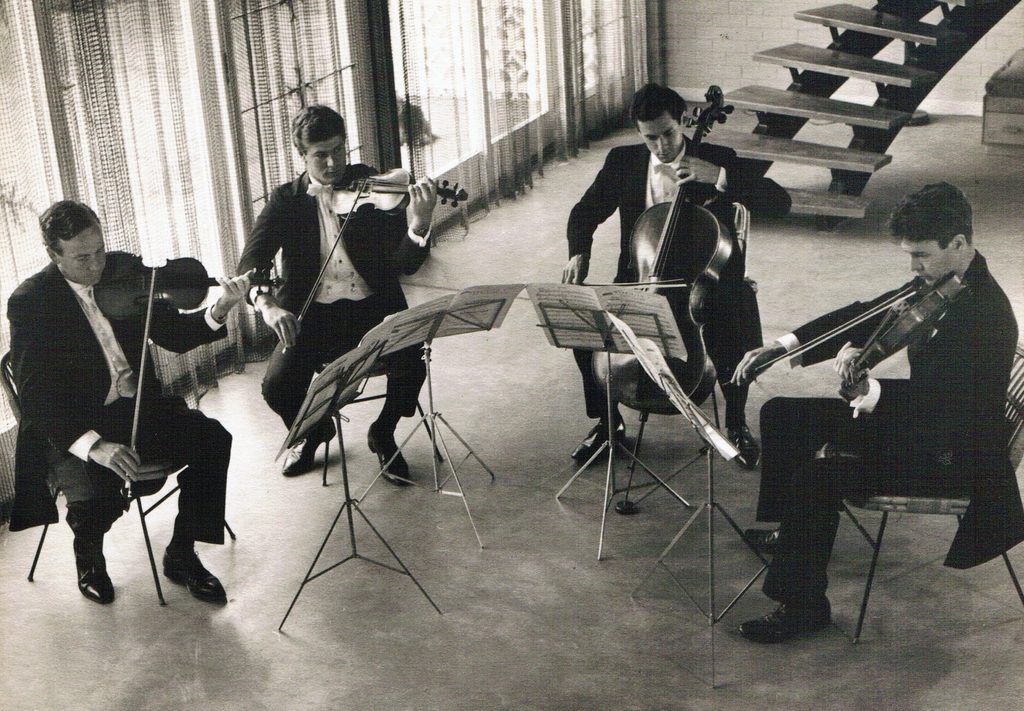

Oriel String Quartet: Graham Wood, Ashley Arbuckle, Brian Meddemmen, John Dean

1961

8pm Sat 5th August 1961 – FESTIVAL CONCERT TONIGHT – WINTHROP HALL

World Premiere of David Farquhar’s prize winning Concertino for Piano and Orchestra. First Performance in Australia – Chamber Concerto No. 3 for Bassoon, Strings and Percussion by Elisabeth Lutyens. David Tunley’s Introduction and Scherzo for Clarinet and Strings. Plus works by Dvorak, Grieg, Delius, Elgar, Walton and others. UNIVERSITY ORCHESTRA conducted by Trevor Jones.  Soloists: Michael Cole, Jack Harrison, Brian Pope. Assisting Artists: John Mowson, John Dean, Verdon Williams. Unreserved seats at door 10/ Students 7/6.

The West Australian Saturday July 15 1961


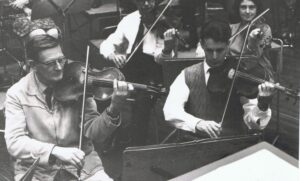
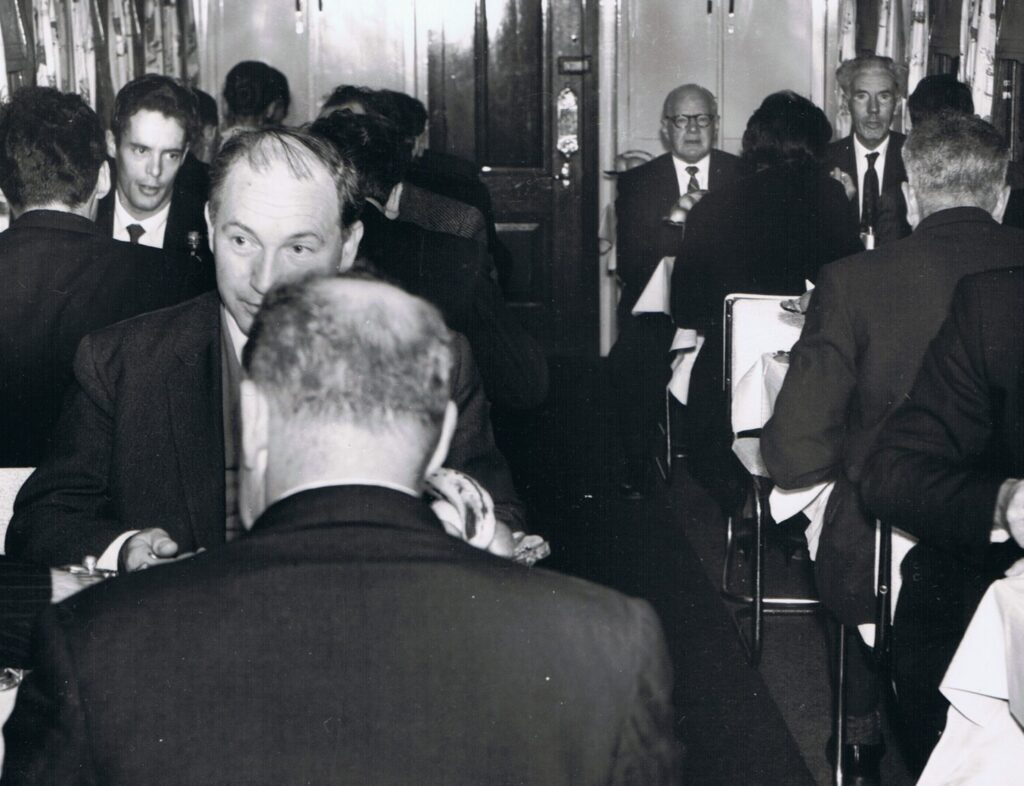
1963 WASO Geraldton tour dining train: John Dean (left) and father Horace (right)


1966

MAY 1966 – MUSIC LOVER’S DIARY

The fourth programme in the A.B.C.’s free recitals in the Basil Kirke Studio this year will be held at 3pm tomorrow.  Jack Harrison, Graham Wood, John Dean, Brian Meddemmen and Stephen Dornan will perform trios by Mozart and Shostakovich.  


1967: John Dean (right) with the West Australian Symphony Orchestra

1967

September 24 1967 – MUSIC – By Peter Hellstrom

There will be an all Beethoven programme at tomorrow afternoon’s recital at the A.B.C. Basil Kirke Studio beginning at 3 o’clock.  It will consist of the Septet in E flat and the Serenade in D. Op.8.  The performers will be Graham Wood (violin), John Dean (viola), Brian Meddemmen (cello), John Mowson (bass), Jack Harrison (clarinet), Neil Pierson (French horn) and Jill Harrison (bassoon).


1968

Sunday February 29 1968 – FEW HEAR FINE RECITAL – By Sally Trethowan

Fewer than 30 people attended yesterday’s free Sunday afternoon recital in the Basil Kirke Memorial Studio to hear what must have been one of the finest given this year by Perth artists.  The oboe playing of Peter Randall in Mozart’s Quartet for oboe and strings was so good that an unchartered listener might’ve thought it was a simple piece. Mr. Randall gave such purity and accuracy to the naturally sharp clear tone of the oboe as to make even the accompanying strings in this piece seem cloudy in effect. It was duly wistful in the doleful minor keyed slow movement and cheerful in the finale where the virtuosic double-tongued passages were given within incisiveness, clarity and extreme rapidity. Violinist Graham Wood led seven other instrumentalists Stanislaw Kowarski (violin) John Dean (Viola) Brian Meddemmen (cello) John Mowson (bass) Patrick Brislan (Horn) Jack Harrison (clarinet) and Jill Harrison (bassoon) in the four movement Octet for Wind and Strings by the modern English composer Howard Ferguson. Mr. Ferguson seems to have a particular affection for clarinet and horn, and the success of the performance to some extent pivoted on Patrick Brislan’s horn playing which allowed no imperfection of tone to mar its richness. The program ended with a reduced version of Richard Strauss’s tone poem “Till Eulenspiegel’s Merry Pranks”.  Originally scored for an orchestra of Wagnerian proportions of over 100 players, it was here rendered by five. Though without the percussion and heavy brass that in the full score are so graphic in describing the grotesque adventures of the mediaeval vagabond Till, it was a happy even witty performance. The final concert in the free Sunday afternoon series will be given in a fortnight.


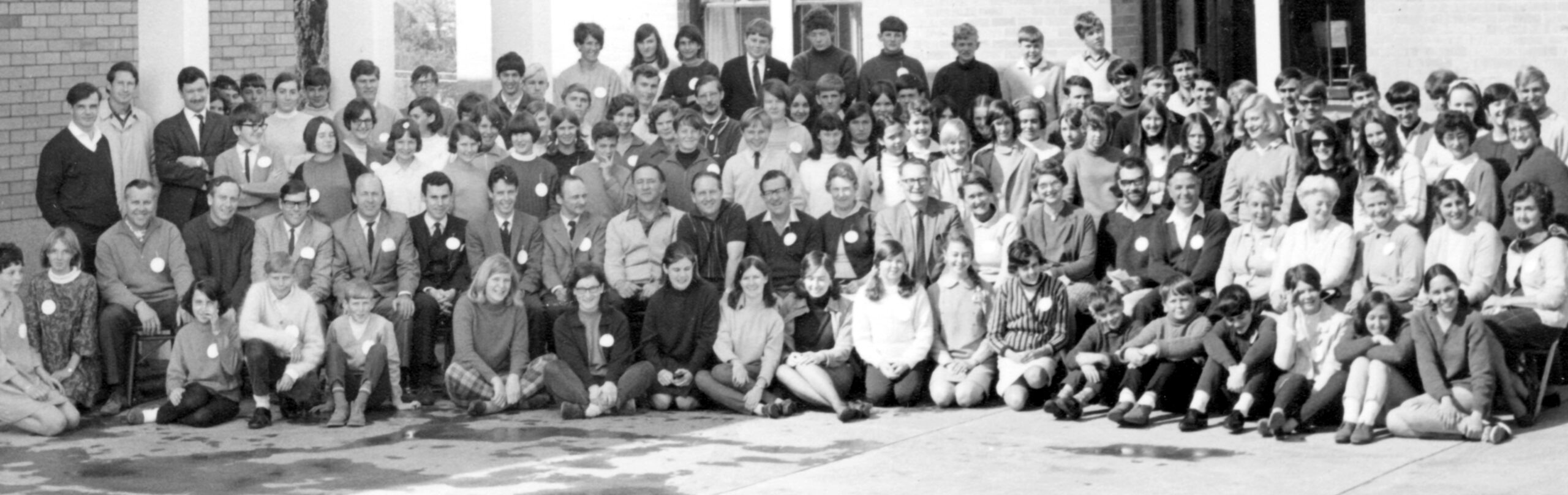
1969 WA Music Camp, Scotch College – John Dean second row, 6th from the left.

1972 – LONDON

In 1972 John studied in Britain with Cecil Aronowitz. During this time he joined fellow Australians Ronald Thomas and Brenda Cullity as members of the English Chamber Orchestra.


1973 Coupled with Ashley Arbuckle, John was soloist with the orchestra in 1973.


1977

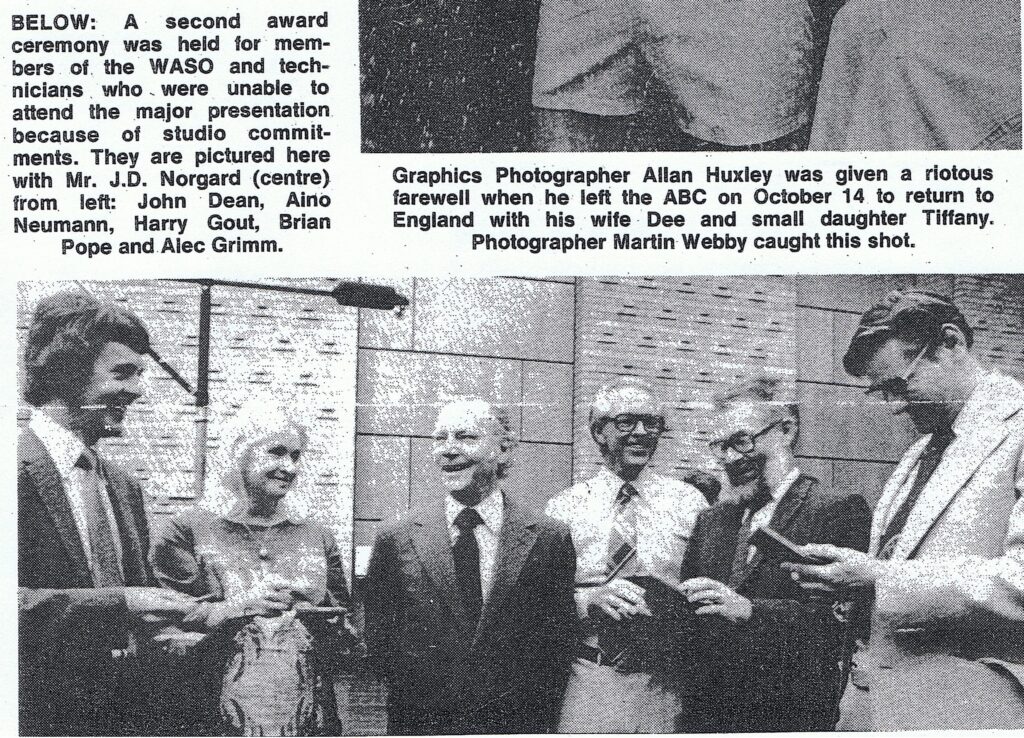
1977: 20 year A.B.C. service medals

John was presented with medal for over 20 years service with the A.B.C.


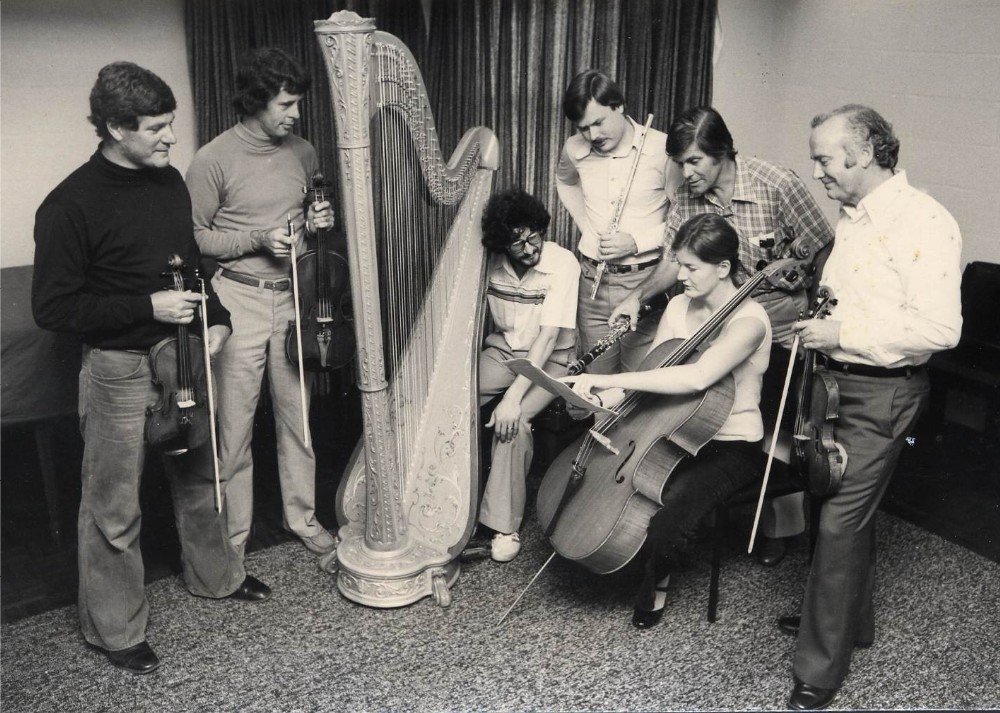
Wigmore Ensemble

1979

23rd April 1979 – Chamber Group off to a Good Start – By Derek Moore Morgan

The recently formed Wigmore Ensemble made its first public appearance last night with a delightfully varied program at the Octagon Theatre. A flexible group with no fixed numbers, it has the practical advantage of being able to present music of widely different genres some of which inevitably gets left on the shelf because it doesn’t quite fit a specific mould such as the string quartet or Trio.  This was a University of W.A. music Society recital. The performers were Graham Wood and Ashley Arbuckle (violins), John Dean (viola), Jill Cole (cello), Neil Fisenden (flute), Jack Harrison (clarinet) and Anthony Maydwell (harp). The final item, Ravel’s atmospheric and beautifully crafted “Introduction and Allegro” brought all the players together to produce a nice degree of sonority and delicacy capturing much of the subtlety of the masterpiece.  Starting with the Mozart Quartet for Flute and Strings in D major a mellifluous example of the composer’s earliest style, the players gave us a bright indication of the bubbling and effervescent Gatty of the Rondo finale.  The British composer Frank Bridge, himself a viola player, wrote a whole body of telling string music.  His little known Trio (Rhapsody) from 1928 proved to be a forward looking piece for the difficult unless usual combination of two violins and viola, with mysterious opening and closing sections surrounding an energetic central portion. The Italian composer Malpiero’s “Sonata a cinque” (1936) is an appealing piece of writing which hangs on the air like a haunting elergy. Anthony Maydwell’s expressive harp playing came to the fore here.  The Quartet for clarinet and strings by Rawsthorne is another piece of chamber music which is deftly written and manipulates varying moods. Jack Harrison’s neatly inflected clarinet tone was well handled.

Sacks, Margaret. The Way 79 Who is Who. Crawley Publishers Pty Ltd, 1979.


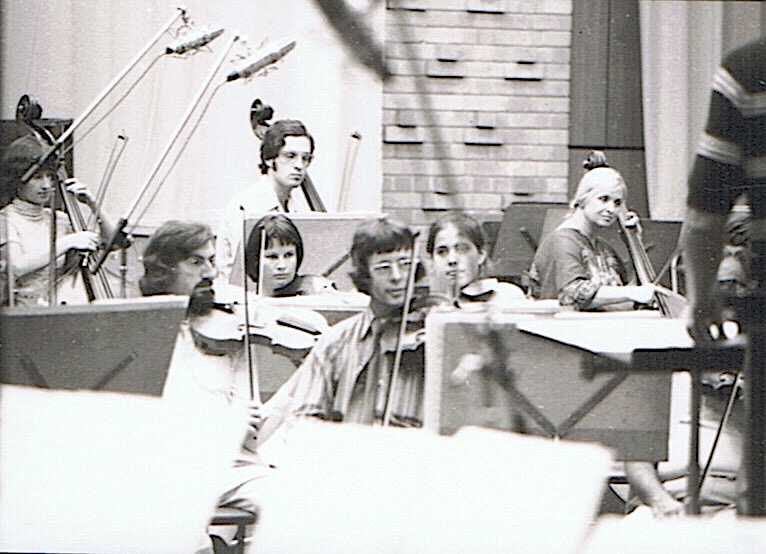
1979 WASO with Measham: Joan Wright, Dave Ellis (basses) Les Crockford, Marion Bonds, John Dean (violas) Aino Neumann (bass). ABC Basil Kirke Studio.

1985

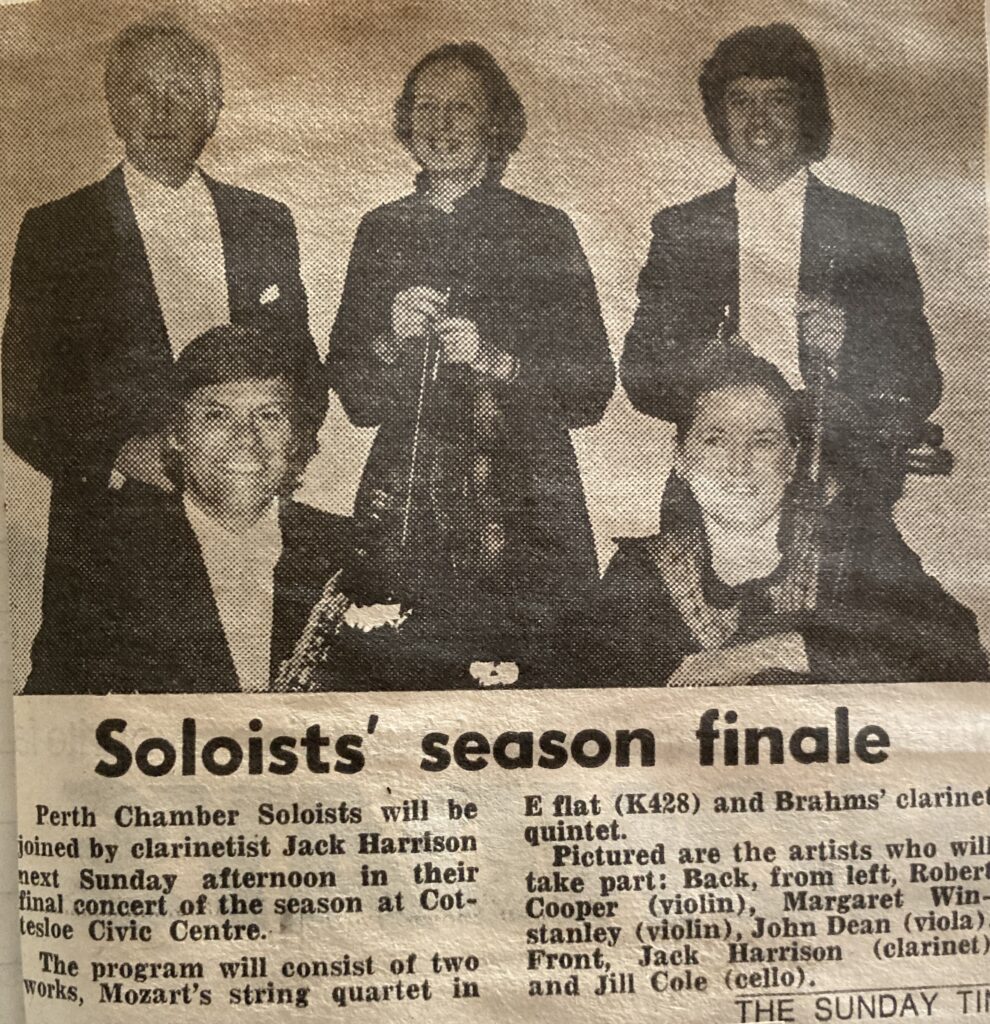
Sunday July 21 1985 – Perth Chamber Soloists – UWA Music Auditorium

Robert Cooper and Neil Barclay (violins), John Dean (viola) and Jill Cole (cello).  Guest artist Jack Harrison (clarinet) performing Quintet for Clarinet and String Quartet (Bliss).


2024 OBITUARY

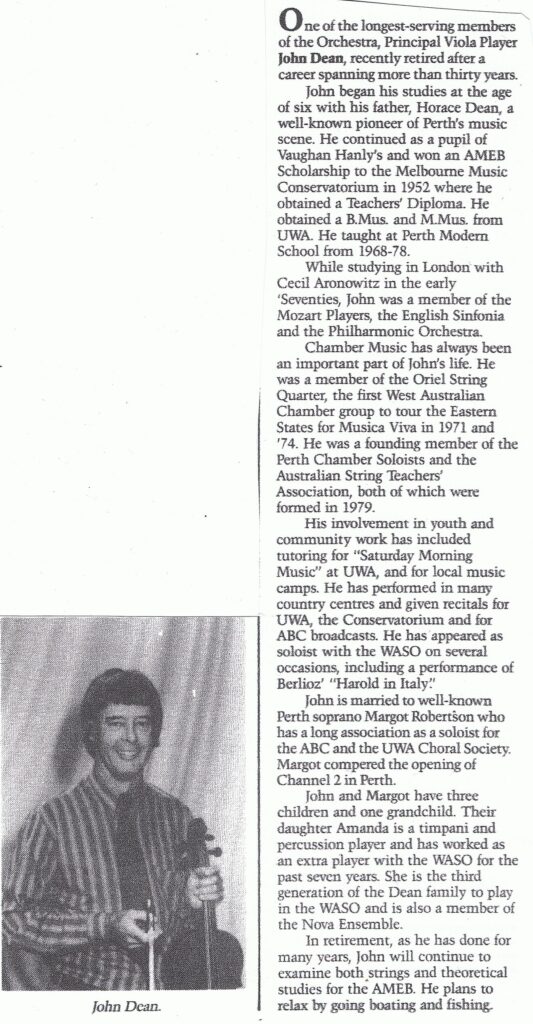
John Dean was the longest-serving principal viola in the Western Australian Symphony Orchestra’s history from 1970 to 1989

John Dean, a former long-standing member of the West Australian Symphony Orchestra (WASO) died on 6 August 2024, aged 90. Dean was a member of WASO for 33 years and was the longest-serving principal viola in the orchestra’s history.

Dean began studying the violin at the age of six with his father, Horace Dean, who was a WASO violinist from 1942 to 1969. In 1952, after studying with Vaughan Hanly, he was awarded an Australian Music Examinations Board (AMEB) Scholarship to the Melbourne Music Conservatorium, where he studied with Boris Stupel. 

In 1956, he returned to Perth to explore employment opportunities. Upon a viola position becoming vacant in WASO, he learnt alto clef and passed the audition.

He served as principal viola from 1970 to 1989, becoming the longest serving musician in that position in WASO’s history.

He was honoured by WASO with the title of emeritus musician for his 33 years of service to the orchestra.

Dean pursued further studies in London with Cecil Aronowitz in the early 1970s and became a member of the Mozart Players, the English Sinfonia and the Philharmonic Orchestra.

After returning to Perth, he joined the Oriel Quartet, the first West Australian group to tour the Eastern States for Musica Viva. He was also a founding member of the Perth Chamber Soloists, and the Australian String Teachers’ Association (AUSTA) – which annually supports the AMEB’s John Dean Award for Best 7th/8th Grade Strings Candidate.

John Dean

As an educator, he held a ten-year teaching engagement at Perth Modern School and taught in Bunbury, as well as theory at the Western Australian Academy of Performing Arts (WAAPA). He tutored for the University of Western Australia’s (UWA) Saturday morning music programme, as well as at local music camps and working as an AMEB examiner. 

His work in the community saw him travel to perform in regional communities, giving recitals for UWA, and playing for ABC broadcasts. Dean appeared as a soloist with WASO on several occasions, including a performance of Berlioz’s Harold in Italy.

Dean is survived by his three children and wife, soprano Margot Robertson.

https://www.thestrad.com/news/australian-principal-violist-john-dean-has-died-aged-90/18458.article

Instruments

Years