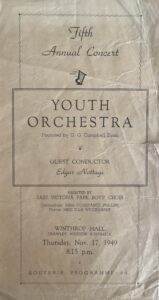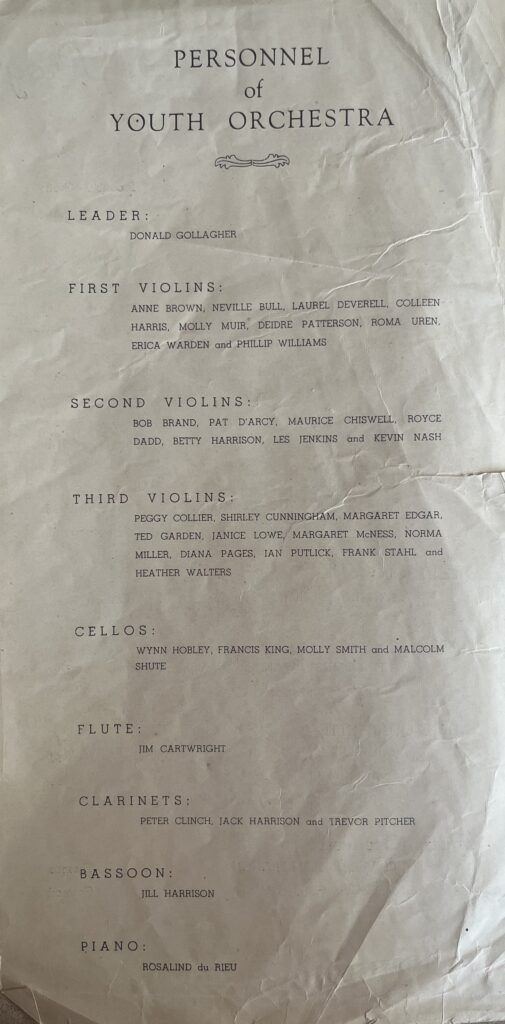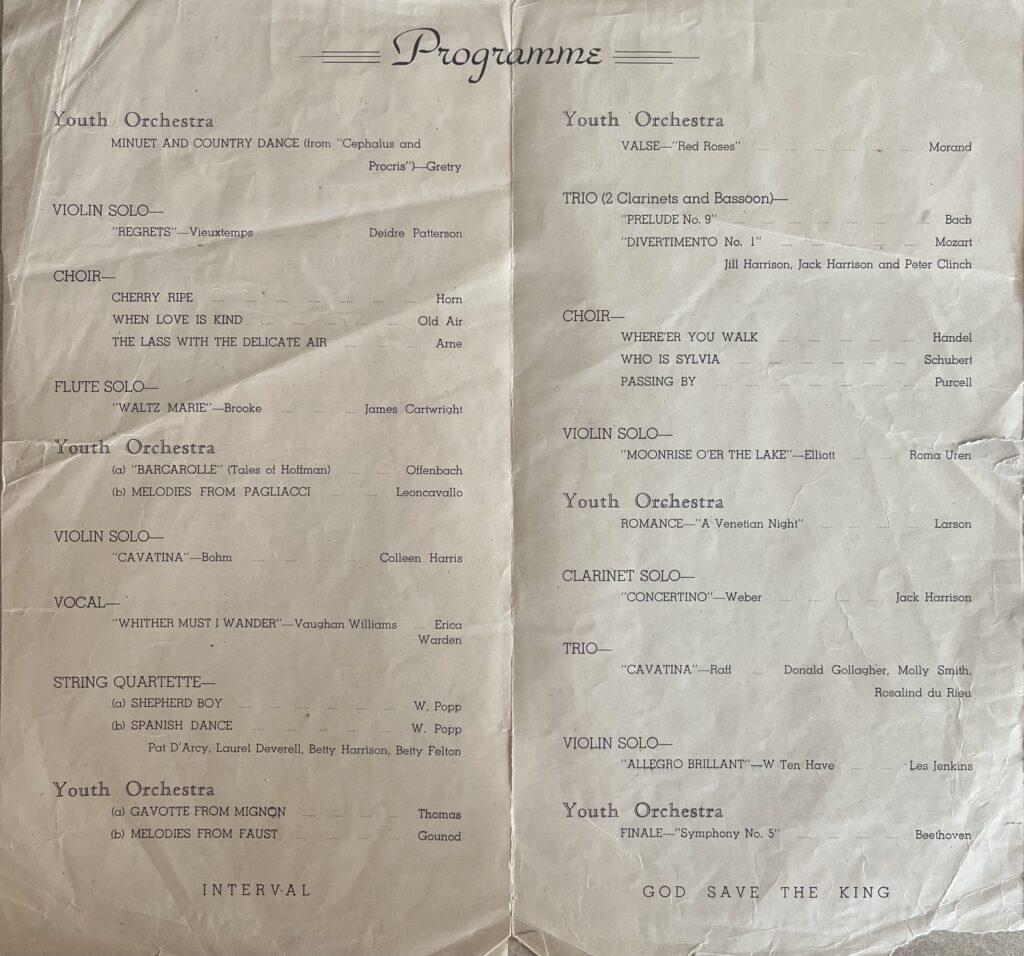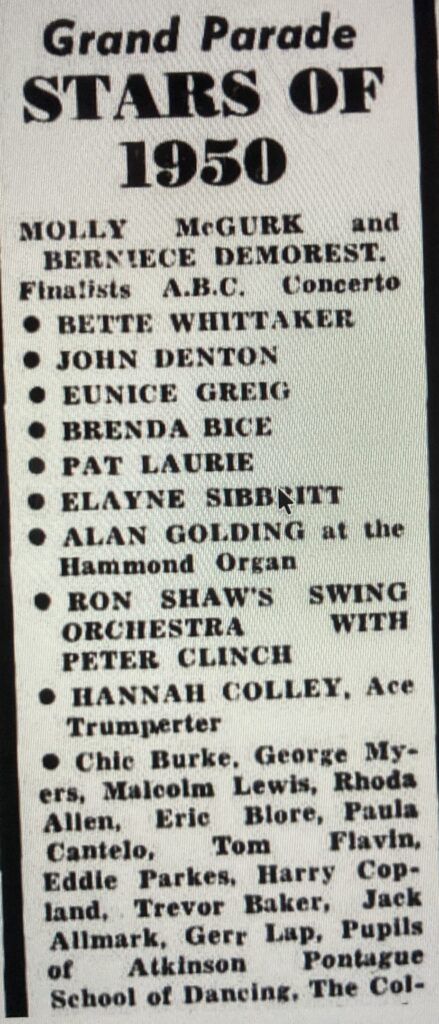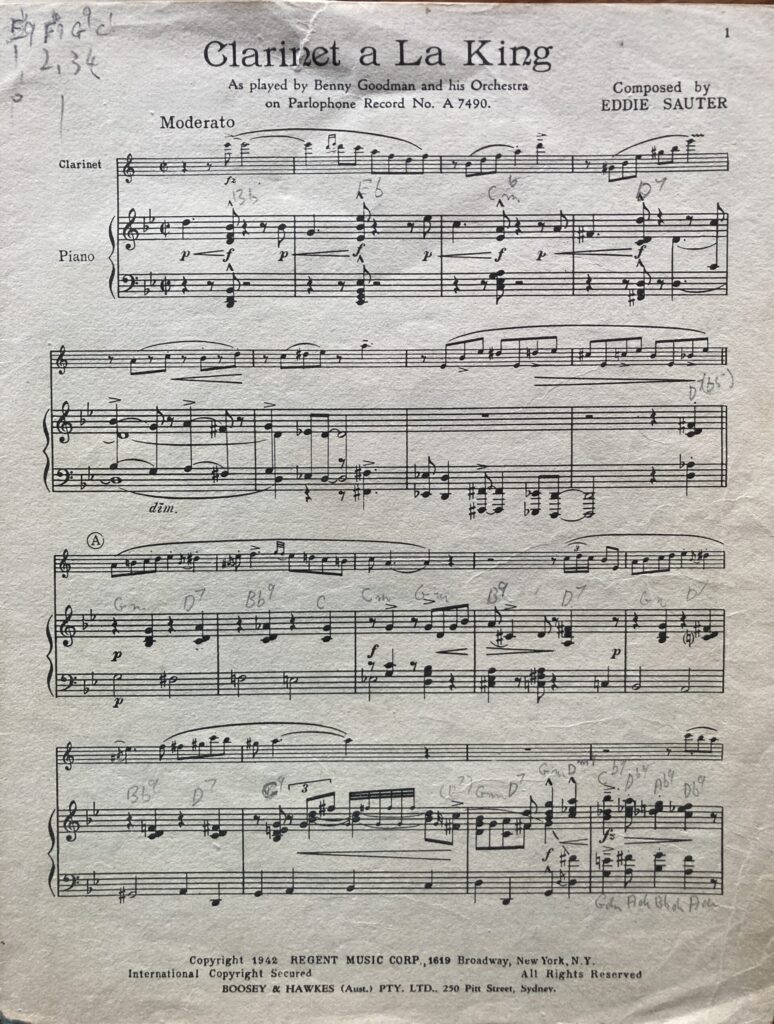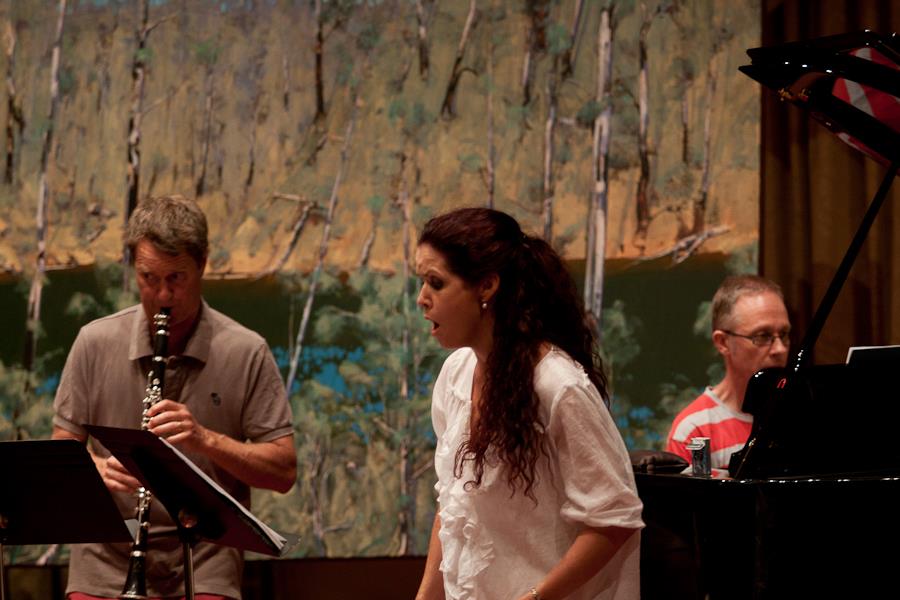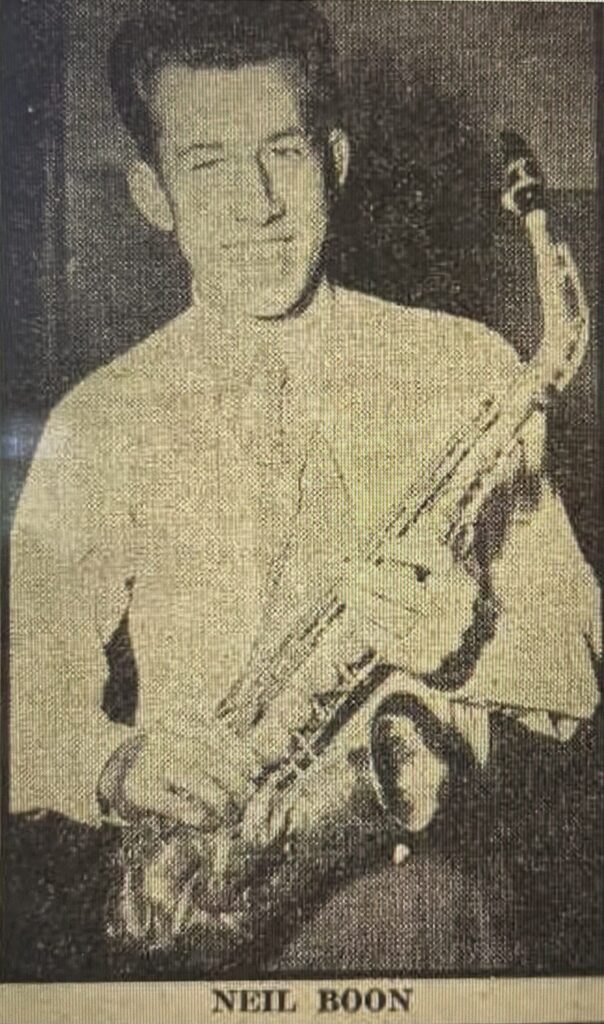
Person

BOON, Neil

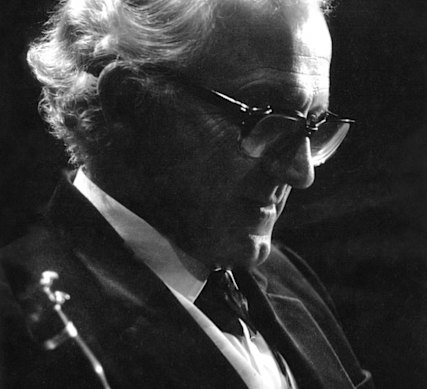
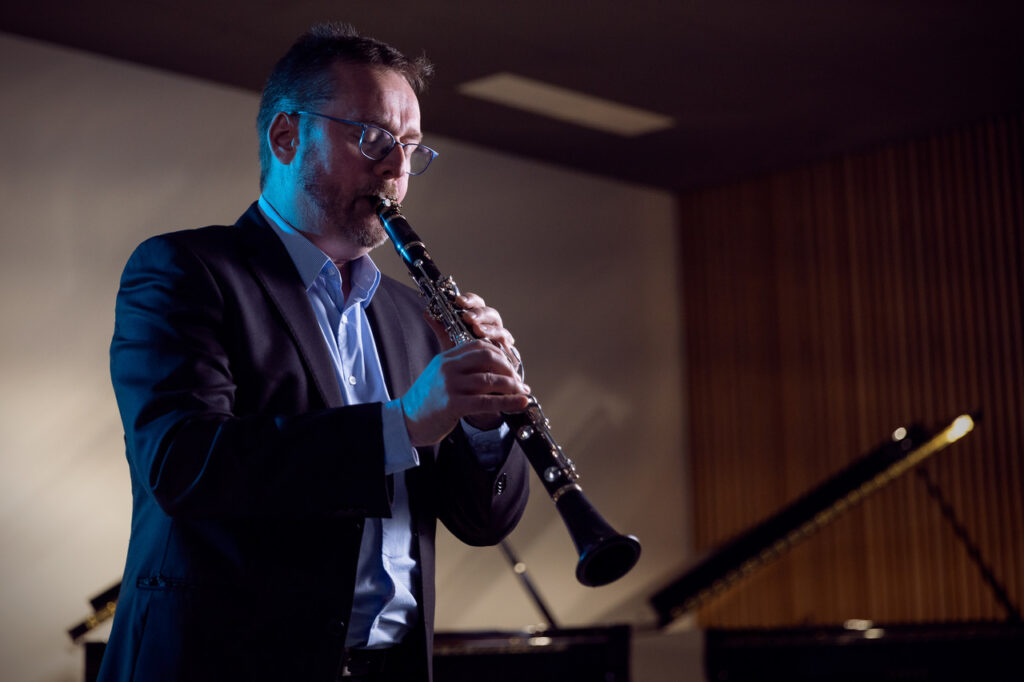
Neil Boon is a clarinettist and saxophonist, teacher and administrator. 

He has performed as a jazz musician along side colleagues such as Don Burrows and Splinter Reeves, performed in most of the Symphony Orchestras of Australia, including being Principal of the Queensland Symphony, winning the Principal Chair of the Melbourne Symphony Orchestra (but was not released by the RAAF to accept it) and with the Sydney Symphony with Garbor Reeves.

Neil was born in the Netherlands in 1936, decided to become a musician in 1941 and migrated to Australia with his family in October 1950.

Neil’s parents were active in the Dutch Resistance during World War II and their  house was 12 km from the German border and became a transit house for Jews looking for places of hiding and allied soldiers who escaped from German prison camps.
Their house had a radio station directly in contact with the BBC and a printing press for the underground newspaper.
 
After emigrating to Australia, Neil’s family lived first in Merredin and then shifted to Pemberton where Neil had his own dance band. 
 
In 1953 Neil shifted to Perth where he met Stephanie James and Harry Bluck, auditioned for WASO and had lessons from Allan Rule.  Neil’s first student was Theo Henderson.

1951

From Neil Boon’s memoires detail his audition for the West Australian Symphony Orchestra:

The ABC office consisted of a group of weatherboard cottages with one fairly large room which was called “The Studio”. This rather weird collection of wooden buildings was situated in the beautiful gardens on the south eastern corner of Barrack Street and St George’s Terrace.

We were welcomed warmly by the office staff and introduced to the ABC accompanist, Stephanie James. Stephanie was an extremely tall and friendly woman. She took Bob and me into the main studio. When I handed her the piano music for my pieces she produced her own copies which she preferred to use. She gave me a few minutes to warm up before I went to tune my clarinet to the large Bechstein grand piano. There was only limited time to rehearse together, so we went through stop-starts, tempi and tempo changes in the two pieces. If I had been knocked out by the playing standard of Miss Bray, when I heard Miss James, I felt I’d heard the impossible. I felt humbled to be given the chance to play with her. To have this opportunity so early in my music experiences in my new country was just magic.

The audition was well received by Rudolph Pekarek, the then resident conductor of the Perth Symphony Orchestra (later called WASO). I was given the chance to play the complete Concertino for Clarinet by Weber and the first movement of the Saint- Saens Sonata. Henry Kripps, a visiting Austrian conductor, came into the studio for the Sonata movement. After the performance the two conductors conversed for some time before coming over to talk to us. They congratulated me on my playing. Mr. Pekarek advised me to get in touch with the principal clarinettist of the orchestra, Mr Allan Rule, and ask him to take me on as his student. He said that both he and Mr Kripps were very impressed by my performance. They both shook my hand and wished me well. “Leave your address in the main office, and, if you change address, make sure you let the office know”, were their parting words. Stephanie congratulated me and said that she hoped to see me in Perth soon. Thirty years later we worked together as examiners for the AMEB, the Australian Music Examinations Board.

On leaving the ABC studios with Bob, I felt relieved that it was over whilst at the same time feeling rather sad that my performance with Stephanie James was a once only occurrence. The experience stuck in my mind for a very long time.

I left my address with the main office.


1953 – May

From Neil Boon’s memoires – May 1953:

I had ninety minutes to try and contact Mr. Bluck the dance band/jazz band promoter. I had a lot of trouble locating the Nicholson Music Store. After walking around the commercial business block several times, I eventually found it somewhere in Barrack Street, if I remember correctly.

I took the very narrow creaky stairs to the second floor, which brought me to the office of: Harry Bluck, promoter of live music in WA.

On entering the office I stood face to face with the man who, I’d been told, was the one person in Perth who more than anyone could introduce me to the music making fraternity of Perth. What a helpful person Harry turned out to be!

He took the time to listen to my story and my plans and ambitions.

He made me aware that, contrary to my belief, Perth was a small town with limited opportunities for professional work. He gave me the telephone numbers of several musicians who could be looking for a saxophonist-clarinettist.

It so happened that two of these, Gordon and Don Bates, had approached Harry only a couple of days earlier to see if he knew of a good saxophonist who was looking for work. When I said to him that I wondered if I would be good enough for what these brothers had in mind, Harry answered: “Bloody oath you are”. How did he know that? He said that the grapevine moves fast in little WA. He was well aware of the standard of playing Peter S. and I had produced in the lower South West.

Harry then made a phone call to Gordon B. who was interested in my experience in the Pemberton district. Because I was rather unfamiliar with the lay-out of the Perth suburbs, Gordon was prepared to pick me up from my boarding address on Saturday morning, to go to his studio to see if we could work together.

Harry promised that he would give my phone number to several Perth musicians who could be interested in employing me sometimes. 

At 9.45am I told Harry that I had a job interview at ten o’clock. He wished me all the best and said: “believe in your-self young fella”! I took that advice seriously and went on my way.


Before going back to Maylands I went into the city centre with the intention of searching out the music stores. I found a shop called Musgroves, where I met two people who were to become good friends sometime later. One was a young man of exactly my age. His name was Theo Henderson. Theo was a shop-hand at that time. A few years later he started his own music store, which eventually became the largest music store in Perth, known as Theo’s Music.

The other person was an elderly gentleman called Harry Visser. Harry had the reputation of being the best piano technician in Perth. I’d catch up with him a year later when I joined a church group for which he was the organist.

Theo sold me some Vandoren sax and clarinet reeds. He gave me a huge discount which was much appreciated. We became very good friends over the years.


I intended to practise the Mozart Concerto to get it to a level worthy of presenting it to Mr Allan Rule, the principal clarinettist of the West Australian Symphony Orchestra. Hopefully I would be able to contact him to commence lessons on my return to Perth. 

At the start of the first week of my stay in the Pemberton I had written to Mr. Rule the principal clarinettist of the Perth Symphony Orchestra, asking him if he would take me on as his pupil. I received his reply just two days before my return to Perth. In it he emphasised that he couldn’t promise anything until he had heard me play. As he didn’t have a telephone, the only way I could contact him was by written correspondence. He did write that Mr. Pekarek, the resident conductor of the WASO, had spoken to him favourably about a young Dutch clarinet player in Merredin. Would that by any chance be me, he wanted to know?

My lessons with Allan Rule the master teacher.

In the music scene the next three months (July 1953) were very exciting!!

I started lessons with Allan Rule, the principal clarinettist with WASO.

Allan was a big bloke with hands twice the size of mine. When he put his instrument in his mouth, it was as if by magic everything else in the world didn’t seem to matter anymore. His was the most beautiful clarinet sound I had ever heard. This was how a clarinet should sound! Whether he played loud or soft, fast or slow, high or low, there always was that pure and clear centre to his tone. His breath support was consistent and his tonguing was super clean, light and rapid, as well as being energetic or aggressive when it needed to be. This big man was a sensitive being with a superb sense of timing, tuning, phrasing and articulation. I was so lucky to have him as my teacher. This was what I’d been waiting for since I first heard about him during my ABC audition in 1951. When Mr. Rule (is what I called him at first) heard me play, his first comment was: “if you are prepared to work hard, maybe, just maybe, one day you will play the clarinet the way it should be played”.

I obviously hadn’t impressed him with my playing or my attitude. It took me some time to realise that, until I met Allan, I’d always been a big fish in a very small pond. Now I was being thrown in the big pond where I’d have to share the “limelight” with much bigger fish. If I wanted to become a professional clarinettist I first had to come down off my “high horse” and learn what it was to be humble and self-critical. No more applause for mediocre young Neil Boon. It was time to get serious, which meant going back to some of the basics, without feeling as though someone was deliberately “stepping on my willy”.

I told Mr. Rule I that was prepared to go back to basics where he thought it necessary. I made a sincere promise that I’d “work my guts out” to get to my best standard possible. “Fair enough, but don’t become a gutless wonder” was his reply. I wasn’t sure how to interpret this comment but I decided to let it rest.

Funny how I remember just about every word we exchanged on that particular day. Although I was rather taken aback by his criticism of my playing that day,   I came away from his house elated and zestful, because I now had a Master-Teacher.

In the jazz and dance-band area things went along famously as well.

Gordon and Don gave me plenty of work and Harry Bluck introduced me to the top echelon of the jazz scene in WA. So it happened that I worked with the Sammy Sharp and the Merv Rowston Big Bands on several occasions, whilst in the small group area I picked up a lot of experience working with musicians like Jimmy Beeson, Terry Ingram, Neil Manolini, Keith Whittle and Harry Bluck.

My most wonderful experience was as the reed player in the sextet for the regular Friday night dance organised by the Student’s Social Club of the  University of Western Australia (UWA). The Harry Philips Sextet consisted of trumpet, sax & clarinet, guitar, piano, drums and string bass, these days often referred to as the “stand-up bass”. The young regular crowd was huge and extremely responsive. These evenings were highly successful and lasted for nearly two years.

Harry Phillips, the band leader and superb trumpet player, was the elder brother of the highly regarded English jazz clarinet/sax player Syd Phillips. Every member of Harry’s sextet was a first class musician, at least by local standards, and was able to improvise in Dixieland and Swing styles.

My time with Harry’s sextet was one of the real highlights of my career.   

When I wasn’t at work or playing in bands, the back shed at number 10 Eighth Ave in Maylands was alive with scales, arpeggios and clarinet excerpts from operas and symphonies. It was a wonder that no one complained about noise after eleven pm as, night after night, I was practising till at least 1 o’clock in the morning in order to be able to front up to Allan Rule and prove to him I was keeping my end of the bargain.

The second lesson with Mr. Rule!

Because of the search for land and the excitement of starting to build a house, my practice had been less than sufficient. I was rather worried that in the first week I hadn’t kept my promise to “work my guts out”.

When I told Allan how the circumstances of the last week had been rather unusual, his reaction was surprisingly mild. In fact, he said that I’d made good progress, but I shouldn’t for one moment think that I could get away with such little practice from now on. During the lesson I began to realise that there was a soft and caring side to this man’s character.

He spoke about the importance of self-confidence and determination.

It became obvious to me that he had done some research into the jazz work I had done over the last two years or so. I’m sure he’d had some contact with Harry Bluck, who of course was well informed regarding my experience in the jazz and dance band scene, both in Perth and the South West mill towns.

For the first time in my life I was made aware of the meaning of the  educational terminology of “input and outcome”.  Allan said that in regard to playing an instrument, most people think that when reading the music, the job is done when they respond correctly to the instructions on the page.

 His words: “Real musicianship comes to the fore by listening to the outcomes of your inputs and deciding how to turn your actions into worthwhile and sensitive musical happenings. It’s all in your interpretation of the notes”.

Herewith Allan tried to make me aware of the need to develop musical awareness. He warned me that the jazz scene in Perth was heavily focused on “being famous” or at least on being well known, rather than being capable and musically proficient (I had noticed that the best known players weren’t necessarily the most capable). According to Allan this didn’t work in what he called “serious” music. I believed by serious music he meant artistic music compared to pop music. In Perth in the early fifties, jazz music was seldom recognised as being artistic, but unfortunately more often categorised with pop music, the music for the masses.

During the next couple of months Allan focussed heavily on sight-reading as well as absolute clarity of tonguing in the clarion register of the instrument.

I was told that I was an intensely stressed player, evident in the way in which I held my instrument. His words were: “you have only one holding finger and nine playing fingers. The task of your right-hand thumb in combination with your embouchure is to hold the instrument firmly. The other nine fingers are totally free to do whatever is needed to perform the required movements for an efficient playing technique. Any one of those nine fingers must never be used to hold or stabilise the instrument, in whatever way possible.

Allan set me to work on a couple of volumes of clarinet excerpts from the symphonic repertoire. After my second lesson with Allan the weekly one hours visit turned into two hour sessions. Each time when I came away from one of those sessions, I felt inspired and raring to go!


1953 – June

Royal Freshwater Bay Yacht Club: Coronation effort was supplied with music from a new young outfit headed by young accordeonist Neil Mannolini and the reed work was very capably dispensed by a teenage Dutch lad— Neil Boon. Up-and-coming outfits like this deserve encouragement— and work! 

Mirror (Perth, WA : 1921 – 1956), Saturday 6 June 1953, page 12


IMPROMPTU JAM STOLE THE SHOW

An impromptu jam session nearly stole the show at Thursday night’s WA Amateur Dance Band Concert at the Capitol Theatre. Composite band of members who had competed earlier, really went to town and had patrons rocking in their seats. Jam band was led by internationally known Harry Phillips on the trumpet and Sid Vandervelde on guitar. Boys really turned it on and the crowd went wild. Even when Sammy Sharp came forward to announce the night’s awards the audience clamored for another spread of jam. So a grinning Sammy waved the boys to continue. Night was a feast of bounce, jive and bop with the amateur instrumentalists showing enough promise to indicate that many will soon be making pro names for themselves. Hundreds were present to hear 13 outfits, ranging in size from 4 to 11 pieces, vie with one another in a variety of Jazz renditions. Judges Ken Murdock, Ron Moyle, Merv Rowston, Harry Bluck and Bill Kirkham were not set an easy task. Finally they awarded the shield to the West Coast Dixielanders, a 7 -piece outfit led by Phil Battey on trumpet, George Battey, clarinet, Dick Hatton, trombone, Conn Goldsmith, bass, Bob Anderson, piano. Alan Blight, drums, and Vince Goldsmith, guitar. These boys have been playing together less than a year and decided at the last minute to enter the contest. They will hold the shield until next year’s contests.

The Dixielanders all prefer the type of music their name suggests is their special dish and are keen on the Jelly Roll Morton school. Second place went to Neil Manno’s Quintette with the Jive Five led by Wynne Hammer third. Other awards were: Best Instrumentalist ; Ray Taylor, trumpet. Best Guitar: Jimmy Taylor. Best Drummer: Wynne Hammer. Best Pianist: Thelma McGrath. Best Vocalist: Bill Groessler. Most promising reed player was 17-y-o Neil Boon, a Dutch youth. Organisers, the W A Musicians’ Union, Sammy Sharpe and compere Wally Hadley are to be congratulated on a good show which all agreed was a great improvement on previous contests and augurs well fox the future of dance music in this State. Saw quite a sprinkling of musicians who have given up regular playing in the audience at the Capitol, including Harry Ward and Laurie McGrath.

Mirror (Perth, WA : 1921 – 1956), Saturday 25 July 1953, page 11


Young Musician Receives Loud Applause

A saxophone solo by 17-year old Neil Boon was loudly applauded in the Capitol Theatre last night at the final session of the Jazz Jubilee. The young musician, who arrived in Australia from England four years ago with no knowledge of music appeared in an orchestra with the veteran trumpeter Harry Phillips. He played an arrangement by the late Freddy Gardiner of “I’m In the Mood for Love.” Another artist on the same programme was Jack Harrison, who played six instruments in a ten-minute “jam session.” He played the alto and bass saxophone, clarinet, vibraphone, trombone and the piano accompaniment to his sister Jill when she moved from the piano to play the oboe (bassoon!)  in “bebop” tempo.

The West Australian Monday 2 November 1953 page 4


Boy Is Versatile Instrumentalist

WHEN Neil Boon was 11, he played first clarinet in a 150-piece symphony orchestra in Holland.

So it was nothing new to him — now 17— when he bowed to the applause of a Capitol Theatre crowd after his saxophone solos at the Jazz Jamboree last week. But the crowd’s applause did signify one thing — his success as a convert from classical to jazz music. “There’s a bigger future here in jazz than in classical music — especially in the instruments I play,” Neil said , today. Neil is a new Australian. His father is a forestry worker, who migrated from Holland with his family four years ago. The boy had just turned 11 when he wanted to learn to play the piccolo, but could not find one. So he bought a clarinet. Six months later, he joined the Enschede Symphony Orchestra, and three months after that was leading its 35 clarinetists. His clarinet and alto saxophone still occupy him in his spare time. He hopes soon to run his own dance band in Perth.

Daily News (Perth, WA : 1882 – 1955), Thursday 5 November 1953, page 8


LISTENERS WILL HEAR GIBSON

An agreement reached between the W.A. Musicians’ Association and the ABC resulted in last Sunday’s Jazz Jamboree (featuring The Bob Gibson Show) being recorded for broadcasting from 6WF.  When the ABC heard that ace band leader Gibson would be the guest artist for the second part of Jazz Jamboree, it came to an agreement with organisers Sam Sharp and Harry Bluck for Gibson’s show to be recorded, and also agreed to pay the W.A. Musicians’ Association a fee for the right to record the show.  The date of the broadcast will be published shortly.  Gibson is now musical director for 2UW.  Recently Gibson signed an agreement with the Columbia Recording Company.  The first of his releases to be heard in Perth will probably be “Wild Horses” and “My One and Only Heart”.  Gibson, who went to England in 1948 and returned in 1950, now favours big band.  He records with a 28-piece band, and for concert and radio work he uses anything from 16 to 20 musicians.  Two of his most popular programmes, heard from 2UW and Sportsman’s Parade and Musically Yours.  Gibson said that any young musicians who hoped to go abroad needed plenty of capital and lucky breaks.  He said that there were too many instances of a bandleader casually approaching a popular tune without having any idea of presentation. 

Of the orchestra he conducted at the Jazz Jamboree on Sunday night, Gibson commented “They are a first class bunch of musicians.  Considering they had such short notice to get together they gave a truly remarkable performance.”  The band leader also praised individual performances.  He believes that 17 year old Neil Boon could develop into a top line artist.  Jack Harrison displayed plenty of versatility and gave a smooth performance, he said.  Gibson also praised the responsiveness of the audience.  “In modern music there is no greater encouragement” he said. 

The Broadcaster Saturday November 7 1953 Vol .20 No. 1023


BAND HAS BIG NAMES IN EVERY SECTION

When Harry (‘Powerhouse’) Phillips takes up his trumpet on the stage it is usually a signal for wild enthusiasm from rhythm fans who see in him a combination of Louis Armstrong, Harry James and a dozen other trumpet idols. Harry, who has been to WA for nearly 5 years, is from an English musical family which has been associated with big-name bands in England and on the Continent for many years. His brother Syd will always be remembered for his compositions and arrangements with the famous Ambrose. Another brother, Woolf, is equally well known. Before coming here Harry played in most of the capital cities cf Europe and speaks several langues fluently. He has played lead trumpet with brother Syd’s band, with Ambrose, Mantovani and Harry Roy, as will as with his own groups. He can play a sweet trumpet, but is usually associated with the forceful style which gives him his name of ‘Powerhouse.’ Although this looks to be a difficult style, he achieves his effects from the modern non-pressure method, with which there is no great physical effort, despite the seemingly strained attitude of the player. Harry claims to be able to teach this style easily.  Associated with Harry in his band are a number of promising young musicians, notably saxophonist Neil Boon, a 17-y-o Dutch boy who literally stopped the show at last Sunday night’s Jazz Jamboree when Bob Gibson was guest conductor. A great future is predicted for this boy, who has been playing saxophone for less than a year, but has played the clarinet for 4 years. His alto sax solo ‘I’m In the Mood for Love’ received such an ovation that compere Wally Hadley had to ask Harry to bring him forward and introduce him to the audience. ..Band’s guitarist Sid Vandervelde, also from London, was with the late Felix Mendelsohn’s Hawaiin Ensemble and the late Freddie Gardner, the great sax stylist. Sid works as a motor-mechanic in Perth and has been here for 2 years. Fans like the drive he gives the band with his solid rhythm on an amplified Spanish guitar. Brothers Don and Gordon Bates, who play piano and drums with the outfit, are local boys who have been well-known in the music game here since they had their own band some years ago. Don is a saddler with his father and Gordon is with a City leather firm. Harry works as a planning engineer for a Perth firm.
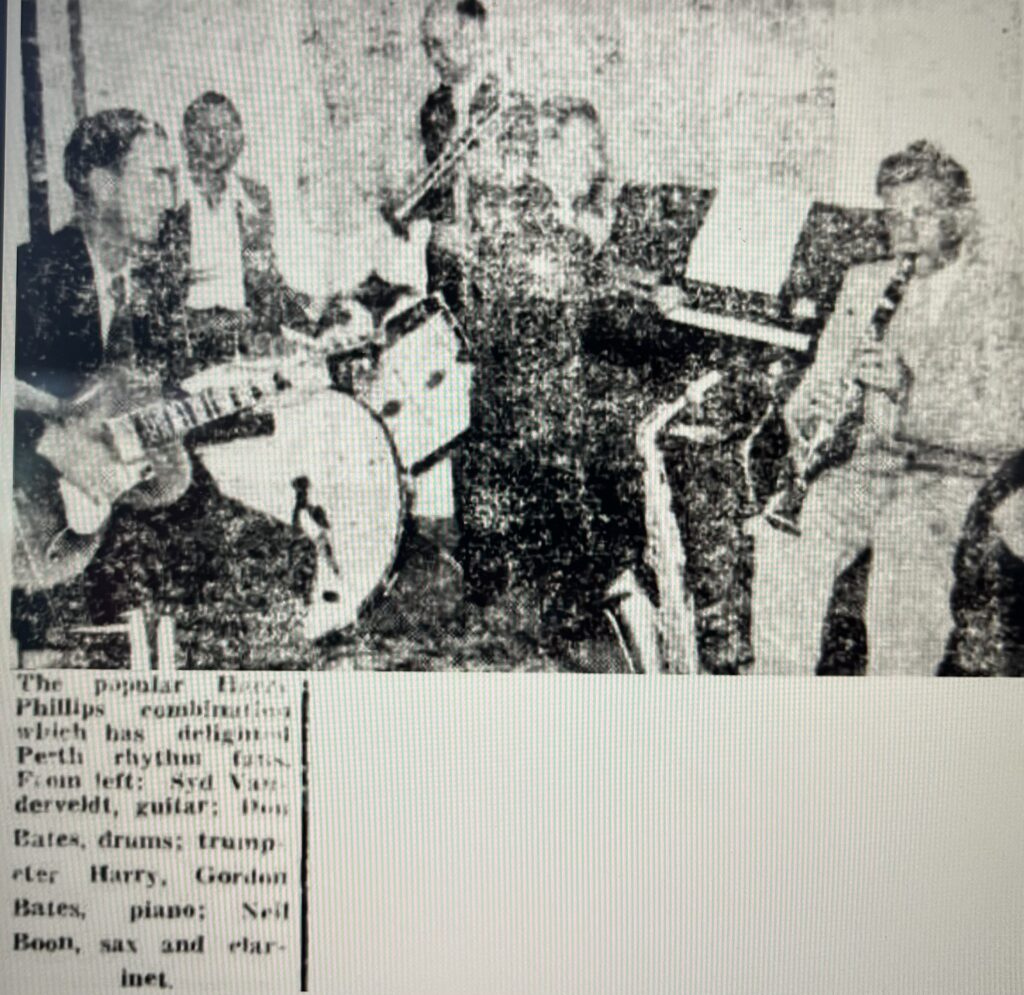
The popular Harry Phillips combination which has delighted Perth rhythm fans: From left: Syd Vanderveldt, guitar; Don Bates, drums; trumpeter Harry, Gordon Bates, piano; Neil Boon, sax and clarinet.

Mirror (Perth, WA : 1921 – 1956), Saturday 7 November 1953, page 12


1954

AMATEUR NIGHT IN THE DANCE – BAND WORLD

Next Thursday a dozen dance bands will battle it out for the title of WA’s top amateur group at die annual dance-band contest. As well as the prizes, there is the added incentive for the winner of playing as the house band at the Musicians’ Ball later this year. This will be the winner’s first professional engagement. Bands range from trios to 8-piece outfits. Every phase of dance-band work from Latin-American to Dixieland is covered. Idea of the contest is to boost the music business I generally, as well as giving these youngsters a good start in the music world. From these contests will come the new blood so essential to keep up the standard of local modern music. Many musicians who play on Thursday will be recruited by established bands; some groups will enter the professional field as a unit. Not only does this concert help the newcomer, but it also spurs the old hand on to greater efforts. If, for instance, a clarinet man shows out at the contest, all licorice stick exponents here will endeavour to give their best all the time for fear they are given the axe in preference to these newcomers. Age of the players range from 16-20. A few are older. Bands are not restricted in any way in their choice, and this freedom adds much to the show. Each band can select any 3 numbers, only stipulation being that it has to have a set for dancing. Speaking about the advantages of the contest during the week, trumpeter Sammy Sharp said: ‘We feel that there is no back-door to the music business. It’s no good a musician spending his time in a dead-end job hoping that a big break will come some day. Often it doesn’t arrive and WA loses many prospective stars.’ Many Perth maestros donate prizes for the show for instruments as well as for combinations. Among them is one donated by Harry Bluck for the night’s top pianist. Sammy Sharp donates the trumpet prize. Way the popularity of the band contest has grown is illustrated by the number competing. When initiated 3 years ago, there were only 5 entrants, made up to 7 just before the show. This year, apart from the 13 competing bands, many had to be turned away because of lack of time to fit them in! High hopes are held for a further increase over the next year or so. Last year’s winners, the West Coast Dixielanders, lost little tune in getting established in the professional dance world. In a matter of a few months they worked their way into the Jazz Jamboree, which is now looked upon as the showcase of our I dance bands. Unfortunately, this group has now broken up because a couple of its personnel had to leave Perth. Contest has been referred to by some musicians as a minor edition of the Melody Makers’ Poll. This famous dance band contest covers the whole of Britain and assures the winners permanent employment in the music world.
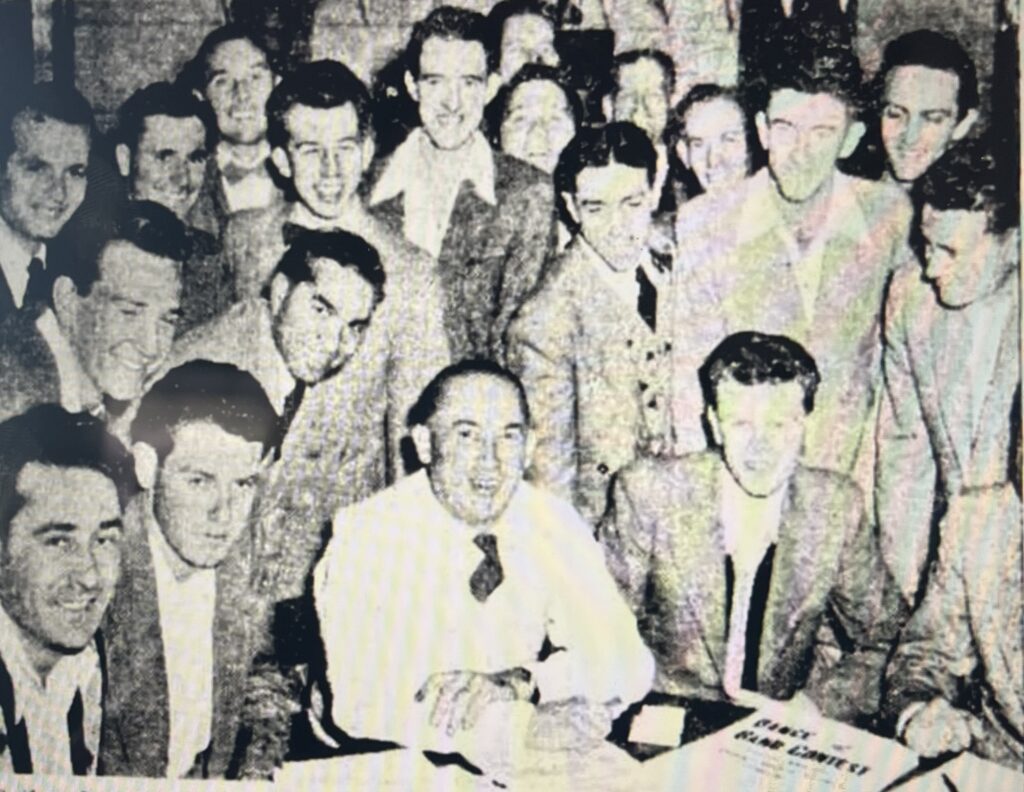
PHOTO: Gathered round Sammy Sharp are the new bloods of the WA Dance Band world. Picture was taken while they were being briefed for the dance band contest (see story left). Happy smiles belie the fact that on Thursday they will be in deadly earnest to win the competition and get a break with some of the bigger bands around town.

Mirror (Perth, WA : 1921 – 1956), Saturday 31 July 1954, page 12

SMOOTH YOUNG QUARTETTE IS TOP AMATEUR BAND

Dutch Leader Shows Style

Two thousand people left the Capitol on Thursday night convinced that in Neil Boon they had seen the future star of WA’s dance band world. For this 18-y-o Dutch boy with his clarinet swept the pool at the Amateur and Semi-professional Dance Band Contest, winning the trophy for the outstanding performer of the night as well as leading his quartette to victory.

From his first appearance it was evident that Neil was a class above most of the other local youngsters. He had beautiful tone and rapid fingering, and though more impressive in straight playing, shows good technique with his improvisations. He also knows how to put his music across. Too many of the others seemed, naturally enough, restrained and nervous on what was for many their first appearance on a stage. More experienced Boon was always quite at home. His quartet, a smooth little combo rather on the Benny Goodman style, served up some mighty music. Group comprises Eric Anderson (drums). Rob Hijnen (piano), Roy Coates (bass) and Neil (clarinet and sax). After the show the group had a Jam session and were at their best when presenting ‘Georgia on My Mind’ and other old favorites. THE PRO TOUCH Boon pianist Rob Hijnen won the piano award. Hijnen, like Boon, is an amateur with a professional presentation. Playing in the quartet, he was often under notice with brilliant work. Hijnen is a young Dutchman and plays with the ease and grace of Gene Krupa going through one of his craziest drum routines. When Rob gets wound up his head wobbles, almost hitting keys; his lees do a tap dance as he jumps on the stool. But there is no doubt that he and Boon really stole the show. At times he even stole some of Neil’s thunder. Thursday’s win means that the Neil Boon quartet will play at the Musicians’ Ball.

Runner up for Champion Band was the Jive Five (Plus 2). This group, an older combination than most, had a touch of the Billy Cotton style. Tieing for 3rd place were the Apiece Nightclubbers, Victor Mostichelli and his Latin Americans, and Ric Martin’s band. Flic Martin’s group (9 players) was the biggest band in the show. It featured a good sax team. Frank Thomas was a popular winner of trumpet honors. Frank played a wide open trumpet with the Riverside Jazz group and gave them the volume lacking from many other outfits.

MOST SAX APPEAL Alto sax man Rod Wyett was Judged the musician with the most sax appeal. Though the going was close for some prises, the choice of Alien Blight as the leading drummer was never in doubt. He played in a relaxed manner and some of his breaks were first class. Other drummers would have done well to have let their hair down and put a bit more into their drumming. Jim Taylor, guitarist with the Jive Five (plus 2) won the award for that instrument. Voting for the leading vocalist was decided by applause. Winner Bob Burns had to withstand strong competition from some pretty slick chicks. Bob, alto sax man with Ric Martin, sang ‘Laura.’ Another newcomer to do well was Victor Mestichelli. Vic won the accordion prize and his group generally were impressive, playing Latin American numbers. Band work on the whole was promising but patchy. Some of the young musicians were inclined to become lost in the middle of the numbers. Though the crowd gave bands every encouragement, it was not a promising W.A. musician who was greeted with the biggest cheer. It was Sammy Sharp’s announcement ‘Krupa’s Coming!’ which sent a terrific yell running through the theatre. He went on to say that after weeks of negotiations the impossible had happened and Krupa would come here some time this month for a one-night stand. Gene Krupa would be accompanied by pianist Teddy Napoleon and trumpet and clarinet star Eddie Shu.

Mirror (Perth, WA : 1921 – 1956), Saturday 7 August 1954, page 12


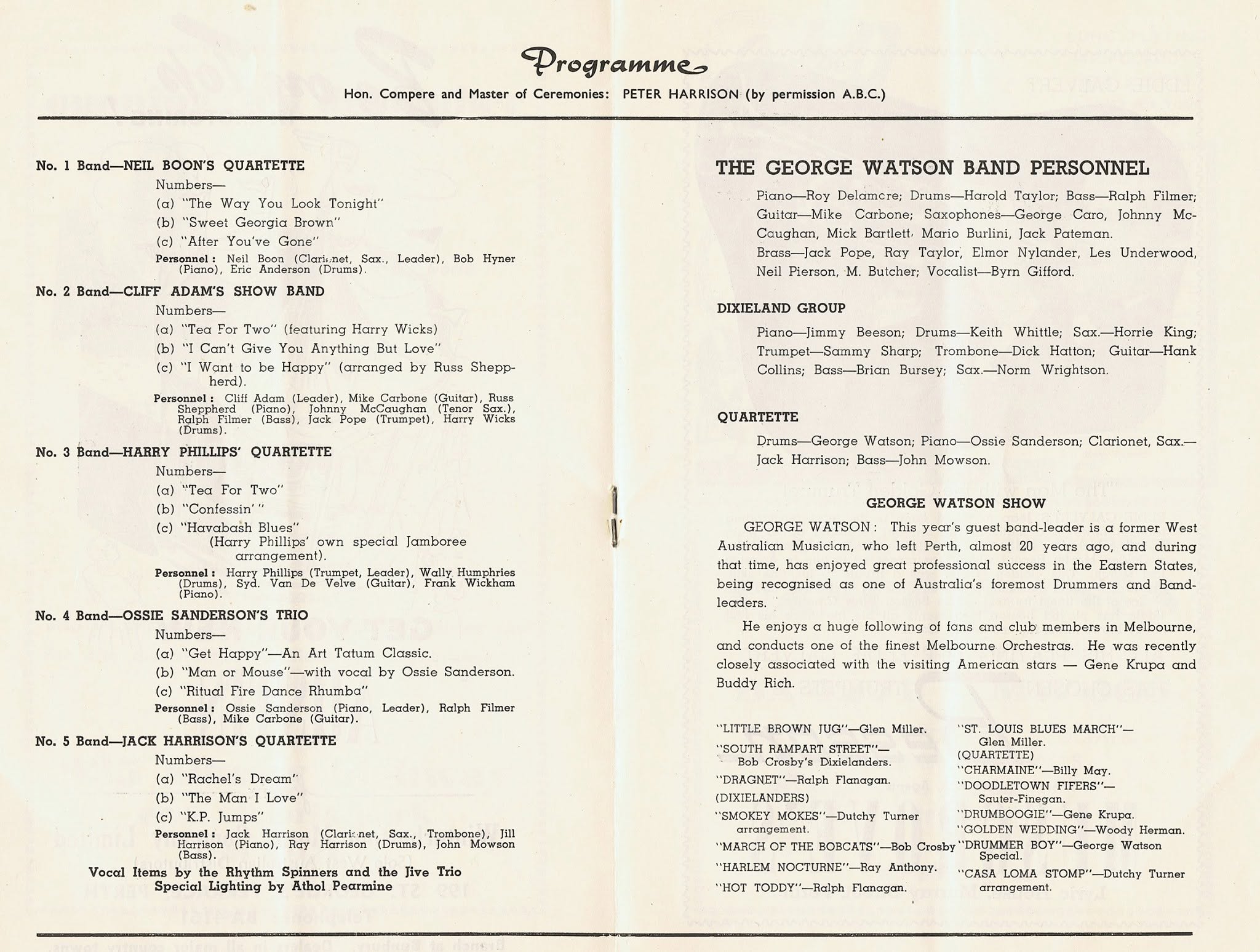
Sunday 7 November 1954 – Jazz Concert – George Watson Show

The Capitol Theatre was packed last night when six local bands and a combined band led by George Watson, a former West Australian, gave a jazz concert. Mr. Watson is regarded in Melbourne as one of Australia’s foremost drummers and bandleaders.

The young audience heard jazz classics played by Neil Boon’s Quartet; Cliff Adam’s Show Band; Harry Phillips’ Quartet; Ossie Sanderson’s Trio; Jack Harrison’s Quartet; and the Dixieland Group.

The West Australian Monday 8 November 1954 page 15
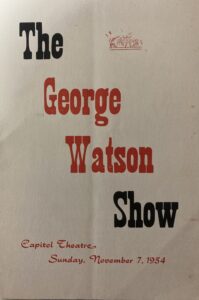
1954 George Watson Show
1954 Watson George program

1956

BOON WILL BOOM WITH HIS BOOP-BOOP-A-DOO

One night last week I had the pleasure of working with a young musician who has just arrived here from Perth, and I have no hesitation in naming him as one of the most promising clarinettists in town today.  He is 19 year old Neil Boon and his very easy style (which shows a distinct Goodman influence) and excellent tone, had the boys in the Joe Marchesani trio very enthusiastic indeed concerning his future prospects in the music game. 

The boy’s playing was full of ideas and his technique is a tribute to the thorough teaching of Alan Rule in Perth.  Rule was well known to Melbourne theatre audiences as a member of the Regent orchestra for years and built an excellent reputation here as a teacher, before returning to home in the West.  He is a big husky fellow and a fine player himself.  Another of his prize pupils who is frequently mentioned when swing musicians are discussing the country’s top clarinet men is Jack Harrison of Perth, whose sister Jill was recently appointed to the Melbourne Symphony Orchestra in the bassoon chair. 

The Argus Melbourne Saturday March 31 1956


From Neil Boon’s memoires (after 1954): 

Although Allan Rule was quite impressed when he heard about the success of my jazz quartet, he was rather concerned that I could be using too much vibrato. This would affect my suitability for orchestral work. I became very aware of the “non-vibrato” clarinet tone for the classics and worked hard to change this unwanted jazz influence.

In quick succession I had three sessions with the Symphony Orchestra when Jack Harrison was otherwise occupied. When I needed an A clarinet e.g. for Beethoven’s seventh, Allan lent me one of his, like he had done for the Mahler first (1966?). In fact, I was allowed to use this instrument for some time until I could buy my own A.   


1957

In May 1957, Neil moved to Sydney and had clarinet lessons with Mr Ed Simpson – an experience never to be forgotten.

From Neil Boon’s memories:

He congratulated me on my tone and particularly on my clean and fast tonguing.

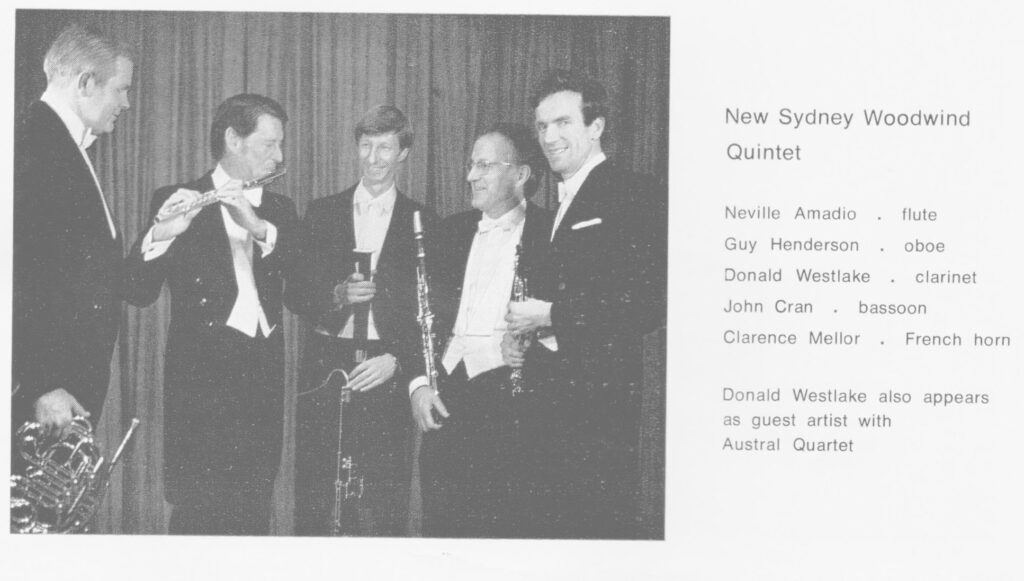
Although he’d never met Allan Rule, he was well aware of Alan’s quality of teaching. He had given some lessons to Peter Clinch and presently Alan Rule’s ex-student Donald Westlake, 2nd clarinet in the SSO, was studying with Mr. Simpson. Just as the lesson finished, a young man, maybe some eight years my senior, came into the studio. Mr Simpson introduced us to each other. It turned out that the young man was none other than Don Burrows who, in years to come, would be recognised as one of the world’s greatest jazz clarinettists, not to speak of his outstanding flute and saxophone playing. At the time I met him Don was already a great and famous musician. How lucky I was to be introduced to him!


When Neil returned to Sydney he performed with Don Burrows and had two sessions with the Sydney Symphony Orchestra as 4th clarinet during the period July-September of that year. These sessions became available because Gabor Reeves, the principal, went overseas for that period.


Neil won the Principal clarinet position with the Queensland Symphony Orchestra moving up to Brisbane. 
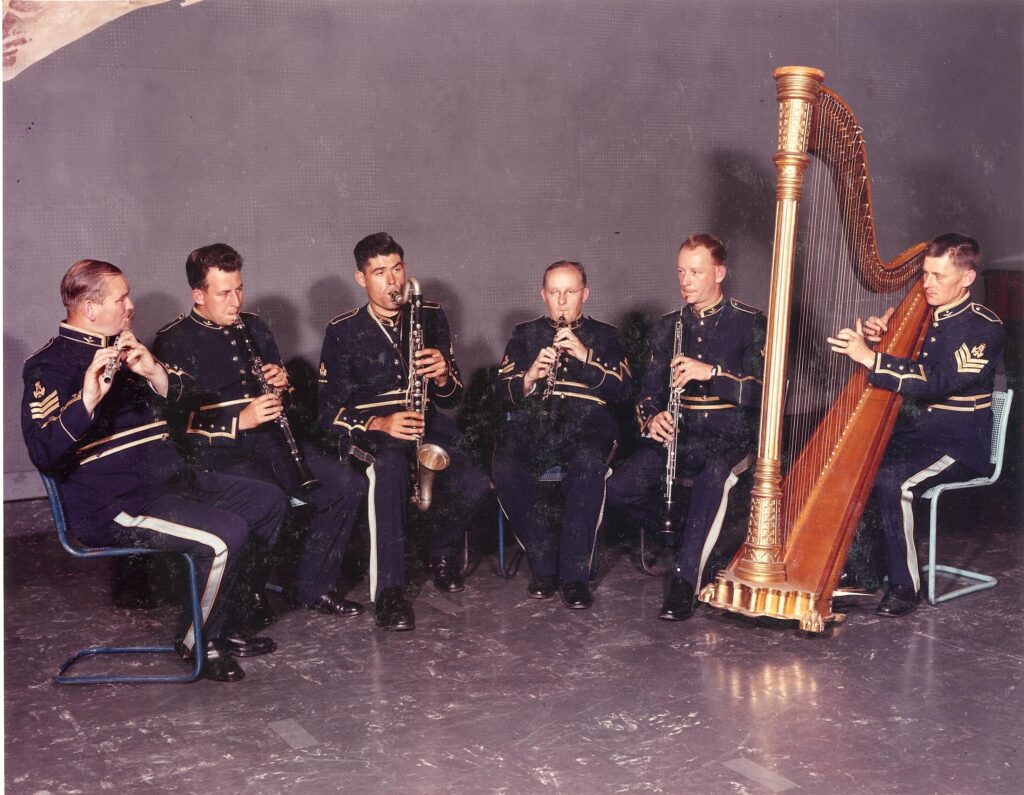
RAAF Band 1959: Peter Edge (flute), Neil Boon (clarinet) Ted Lewis (bass clarinet) Edwin Denton (oboe).

Brisbane didn’t suit Neil and his wife and he sought employment elsewhere, ultimately being offered Lead Clarinet in the R.A.A.F. Band in Melbourne in 1958, a position he shared with Peter Clinch for 9 months.  (Peter Clinch had won the second clarinet position in Melbourne Symphony Orchestra when Denilov resigned, but the R.A.A.F. didn’t release him and he lost the position).  Peter left the R.A.A.F. and was employed with Channel 9 and Graham Kennedy, as was Neil.  Neil was in the Airforce Band for 6 years.
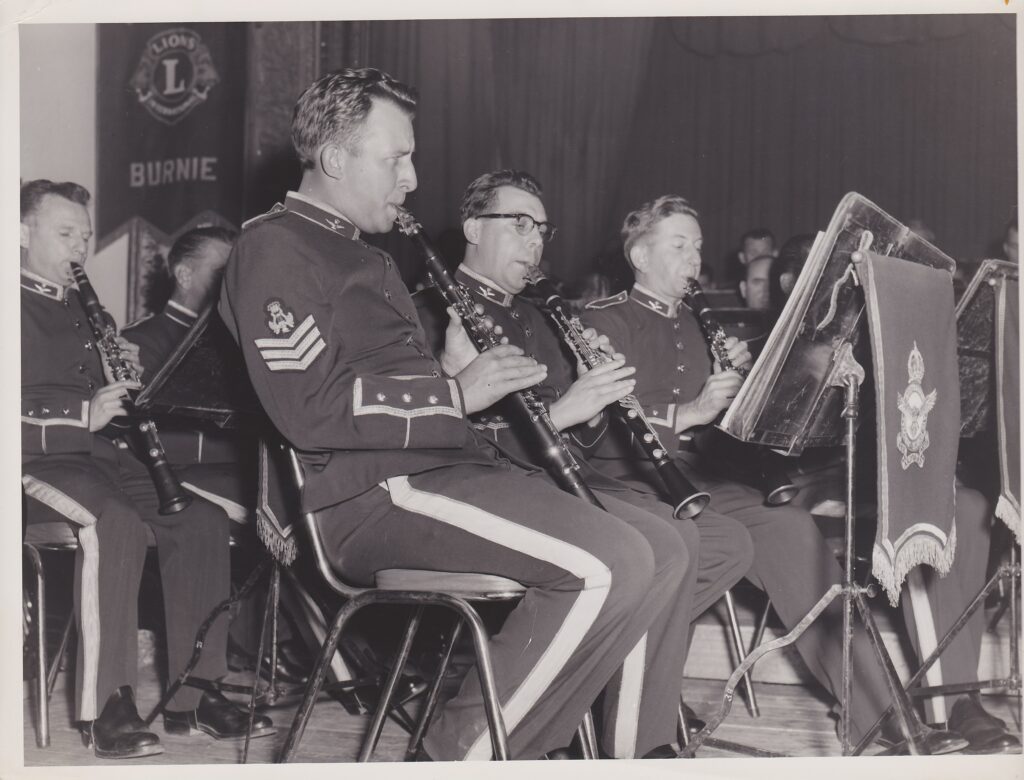

1964

Towards the end of Neil’s time in the R.A.A.F. he successfully auditioned for the Principal Clarinet job in the Melbourne Symphony Orchestra, but, like Peter Clinch, the R.A.A.F. wouldn’t release him and the position was offered to Philip Miechel.  

Neil began working for the Education Department to create the first Schools of Instrumental Music in public schools in Victoria.

He was invited to Western Australia and set up the School of Instrumental Music, working with many people including Edgar Nottage, Daphne Murnane, Ted Lewis and John Embleton.  


1971

Neil Boon joined the clarinet section of the West Australian Symphony Orchestra while Jack Harrison was away on a Churchill Fellowship.


https://thewest.com.au/entertainment/art/three-jazzy-decades-ng-ya-301838


1980

April 21 1980 – Octagon Performance

A performance of Sir William Walton’s “Façade Suite” will be given by the Music Society at the Octagon theatre tomorrow night.  The brilliantly witty work with Neville Teede reading the nonsense verse of Edith Sitwell, will be accompanied by the Wigmore Ensemble conducted by Graham wood.  Those taking part in the ensemble will be Jill Wright (flute), Jack Harrison (clarinet), Neil Boon (saxophone), Kevin Johnston (trumpet), Jill Cole and Sally Talbot (cellos) and Paul Sarcich (percussion).  Members of the group will also play the Pastorales de Noel by Andre Jolivet the French composer and musical director of the Caomedie Francaise, the flute, violin and harp trio of Eugene Goosens and Igor Stravinsky’s “Epitaphium” for flute, clarinet and harp. 

The Sunday Times April 20 1980


Neil Boon was an A.M.E.B. examiner for 35 years and retired in 2006.
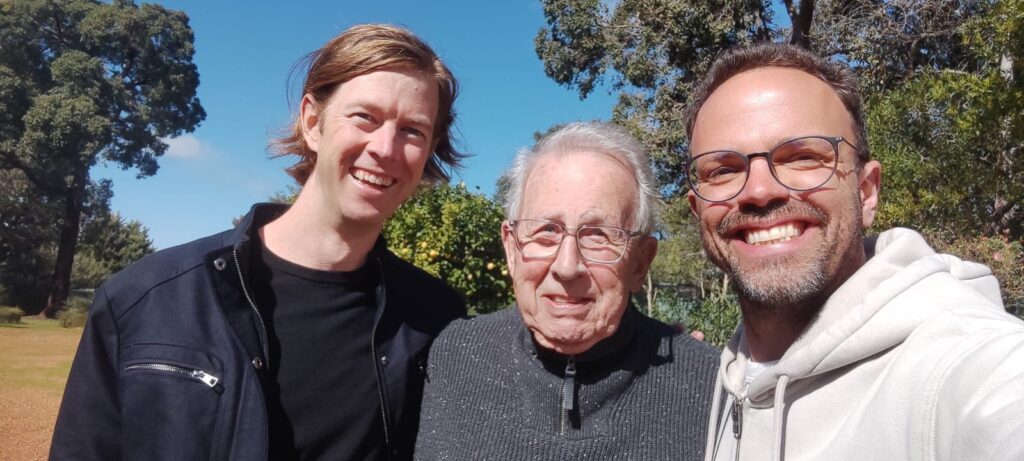

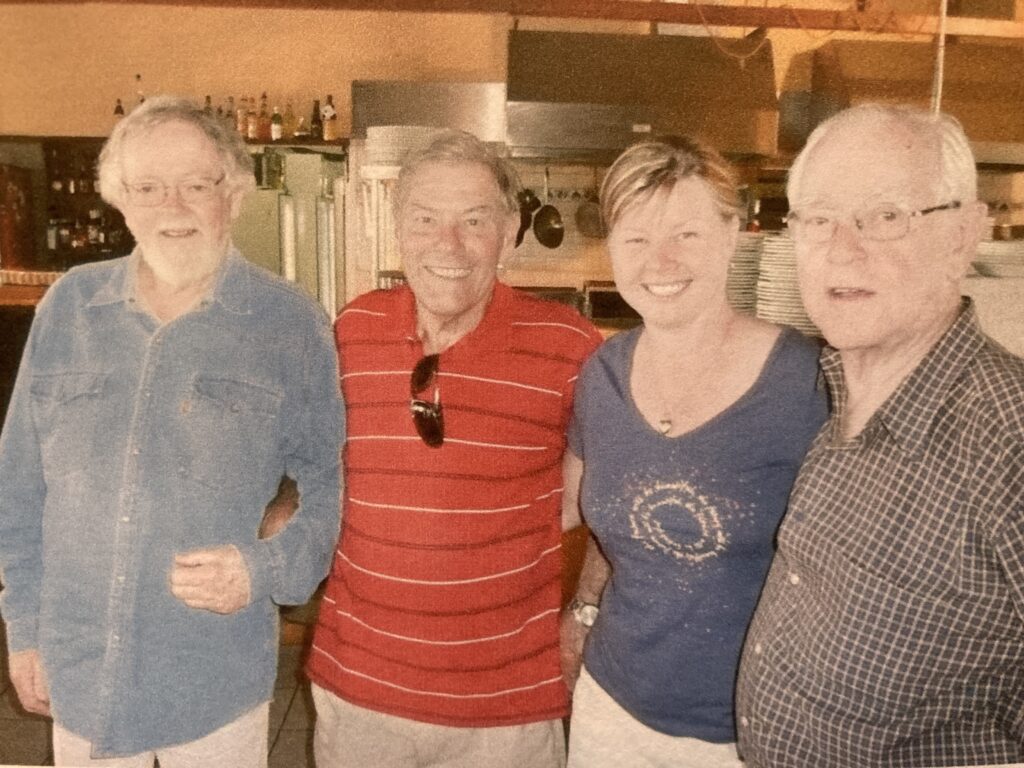
Lachlan Skipworth, Neil Boon and Luke Davoll

NOTABLE STUDENTS

Luke Davoll

Janelle Dawson (oboe)

Dale Pointon

Lachlan Skipworth

Janine Taylor (oboe)

Kathryn Younger (nee Hagarty) (oboe)
 

Instruments

Years

Person

AMADIO, Clive

Clive Lyoff Amadio (1904–1983)

by Donald Westlake

This article was published:

Clive Lyoff Amadio (1904-1983), saxophonist and clarinettist, was born on 28 February 1904 at Darlington, Sydney, second son of New Zealand-born Harry Henville Taylor, furniture manufacturer and instrumentalist, and his wife Florence Ada, née Beer, who was from New South Wales. Harry had taken the surname of his stepfather, Henry Antonio Amadio. The flautist John Amadio, who was to marry Florence Austral, was Harry’s brother. One of Sydney’s leading musicians, Harry played flute, oboe and clarinet for `The Firm’ (J. C. Williamson Ltd), and also for the New South Wales State Conservatorium of Music orchestra. He gave Clive all his early training, first on the flute and oboe and then on the clarinet, and encouraged him to take the saxophone seriously. Having left school by the age of 13, Clive often practised for eight hours without a break. Eager to become an engineer, he began an apprenticeship but was, he claimed, `forced into the musical world’ by his father.

In his mid-teens, as well as playing in ensembles for silent pictures and musical comedies, Clive was solo clarinettist in both the New South Wales State Military Band and the Manly Municipal Band. At 19 he was touring as solo saxophonist on the Tivoli circuit, in, by his own account, one of the highest paid musical positions in Australia at that time, earning £15 a week. When `the talkies’ arrived, Amadio’s popularity as solo saxophonist in the accompanying show bands blossomed. With slicked-back black hair and dark eyes, he was described in 1929 as `that handsome sheik with the sax’. He had married Gwendolen Marjorie Morgan on 25 August 1928 at St Michael’s Church of England, Rose Bay, but they were divorced after about a year. On 2 October 1935 he married Laurie Mary Walley at the registrar’s office, Annandale.

Amadio played with groups such as the Royal Squadron Syncopators, Nigger Minstrels and Spanish Syncopators, and recorded with Quintrell’s Tivolians. His show-band performances continued until the demise of the bands themselves after World War II, a frenetic period that included two years (1932-34) as principal clarinettist to the Australian Broadcasting Commission’s studio orchestra; membership of an early light music broadcast ensemble, the New Note Octet; the formation of his own quintet, a group that was to survive the end of the war by thirteen years; and solo engagements that proliferated with his burgeoning popularity. He had performed on 1 July 1932, when the ABC assumed control of the national broadcasting service, as saxophone soloist on 2BL.

Late in 1939 the quintet that was to render him a household name across Australia and the South Pacific went to air for the first time. Usually billed in the early years as the Mode Moderne Quintet, its name was changed to the Clive Amadio Quintet after the war and the group was given prime Sunday night listening time with recorded mid-week repeats. Reviews at the time reflected its popularity: `the best light musical combination ever presented on the air in this country’ and `the finest small-ensemble music on the air’. It broadcast on the ABC for almost twenty years, sometimes featuring Australian compositions and guest artists.

Meanwhile Amadio was establishing a reputation as one of Australia’s most accomplished clarinettists and its finest saxophonist. His public performances often included saxophone pieces that have since become standard repertoire: Rapsodie (Claude Debussy); Concertino da Camera (Jacques Ibert); Saxo-Rhapsody (Eric Coates); and works written especially for him by his three arrangers, Dulcie Holland, Henry Krips and Bruce Finlay. Employed by the State Conservatorium of Music (1942-45), he taught the saxophone.

In January 1954 Amadio played for Queen Elizabeth II at a royal banquet and was cited by the Sun-Herald as Australia’s best-known serious musician after (Sir) Eugene Goossens. He took part in the first of a series of chamber music concerts sponsored by the ABC in February 1954. Accompanied by his pianist Olga Krasnik, he left for an overseas tour of some months (1954-55). In Paris they recorded Holland’s Sonata for E♭ Alto Saxophone and Piano and her Musette and Gigue for the United Nations Educational, Scientific and Cultural Organization. They gave recitals for the British Broadcasting Corporation and he performed Coates’s Saxo-Rhapsody with the BBC Concert Orchestra conducted by (Sir) Charles Mackerras. Amadio and Krasnik also broadcast for the French, Austrian, Spanish and South African broadcasting services.

In August 1958 Amadio’s contract was not renewed by the ABC. For a time he continued freelancing but by May 1959 he had bought the newsagency in Oxford Street, Woollahra, that, with Olga Krasnik, he would run for the next thirteen years. Divorcing Laurie, Clive married Olga, also a divorcee, on 28 July 1967 at the registrar-general’s office, Sydney. In August 1972 they retired to Nelson Bay. They joined the part-time staff of the State Conservatorium of Music, Newcastle branch, where they taught and performed from 1973 until 1980. In that year he was appointed AM and awarded honorary life membership of the Clarinet Society of New South Wales, the first time this award had been made to an Australian. He collected rare guns, which interested him more for the workmanship displayed than for their performance. He died on 21 October 1983 at Randwick and was cremated. His wife, and the son and two daughters of his second marriage survived him.

Select Bibliography

  • D. Westlake, From Me to You (1999)
  • ABC Weekly, 8 June 1946, p 5, 22 June 1957, p 9
  • Sun-Herald (Sydney), 31 Jan 1954, p 46
  • Canon, Oct 1956, p 93
  • SP613/1, series item 7/4/10, parts 1 and 2 (National Archives of Australia)
  • private information.

Citation details

Donald Westlake, ‘Amadio, Clive Lyoff (1904–1983)’, Australian Dictionary of Biography, National Centre of Biography, Australian National University, https://adb.anu.edu.au/biography/amadio-clive-lyoff-12131/text21733, published first in hardcopy 2007, accessed online 22 September 2026.

This article was published in hardcopy in Australian Dictionary of Biography, Volume 17, (Melbourne University Press), 2007

https://adb.anu.edu.au/biography/amadio-clive-lyoff-12131

In 1950 during his stay in Sydney Jack Harrison performed with Frank Coughlan’s band in a series of swing concerts at the Trocadero and received an offer to stay with the band as a permanent member.  He also received lessons from Clive Amadio.

In Donald Westlake’s book “From Me to You The Life and Times of Clive Amadio” he quotes a letter from Jack written in December 1998:

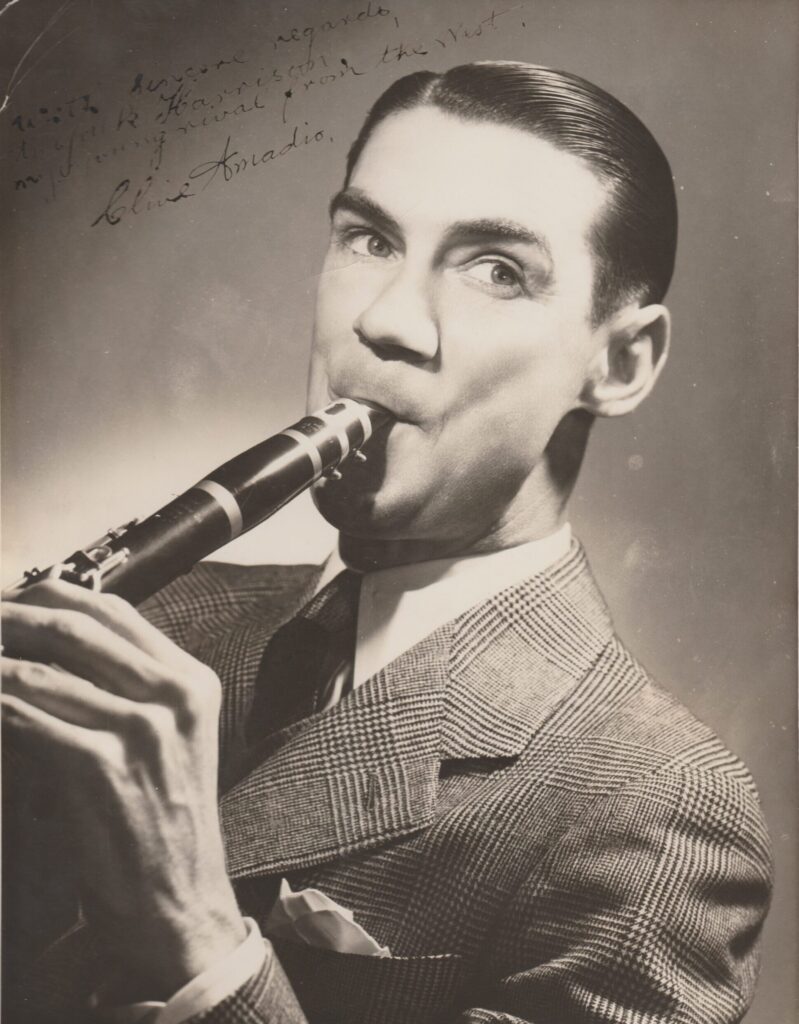
Sometime in the early 50s, I went East with Dad and met Clive Amadio. I had a little ensemble in Perth similar to his that’s why I was interested. We went to a couple of his recording sessions in an old studio somewhere in the middle of Sydney and then out to his house in Vaucluse for a couple of lessons, lovely chap very friendly. The main thing he talked about was the double embouchure. He was a great one for that. I tried it for a couple of months but couldn’t see any advantage so gave it away. I’ve still got the autographed photograph. He gave me very nice head and shoulder studio photograph. When I got back, I had it framed and hung it over my bed – it was there for years.   It says “with sincere regards to Jack Harrison, my young rival from the West. Clive Amadio.”


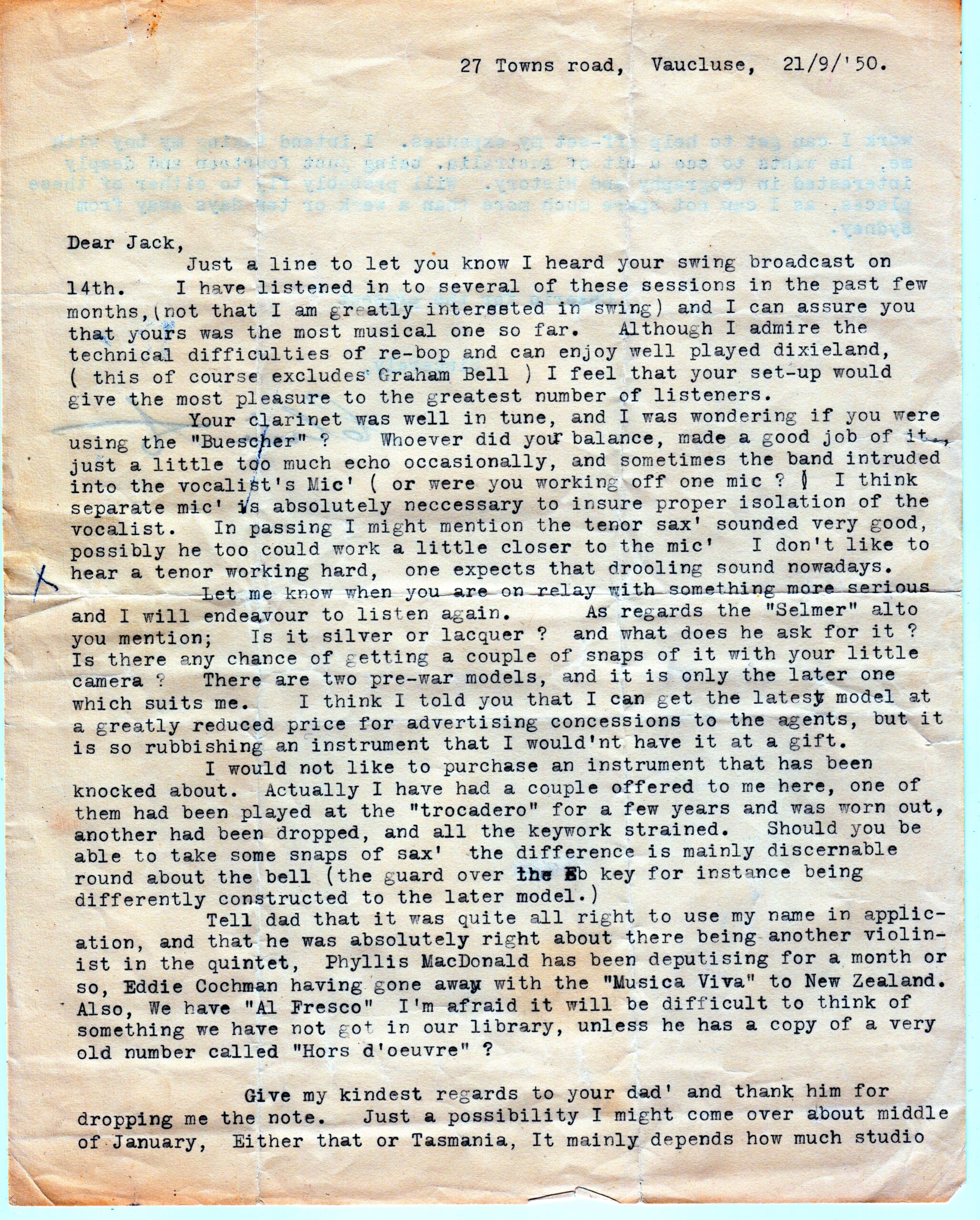
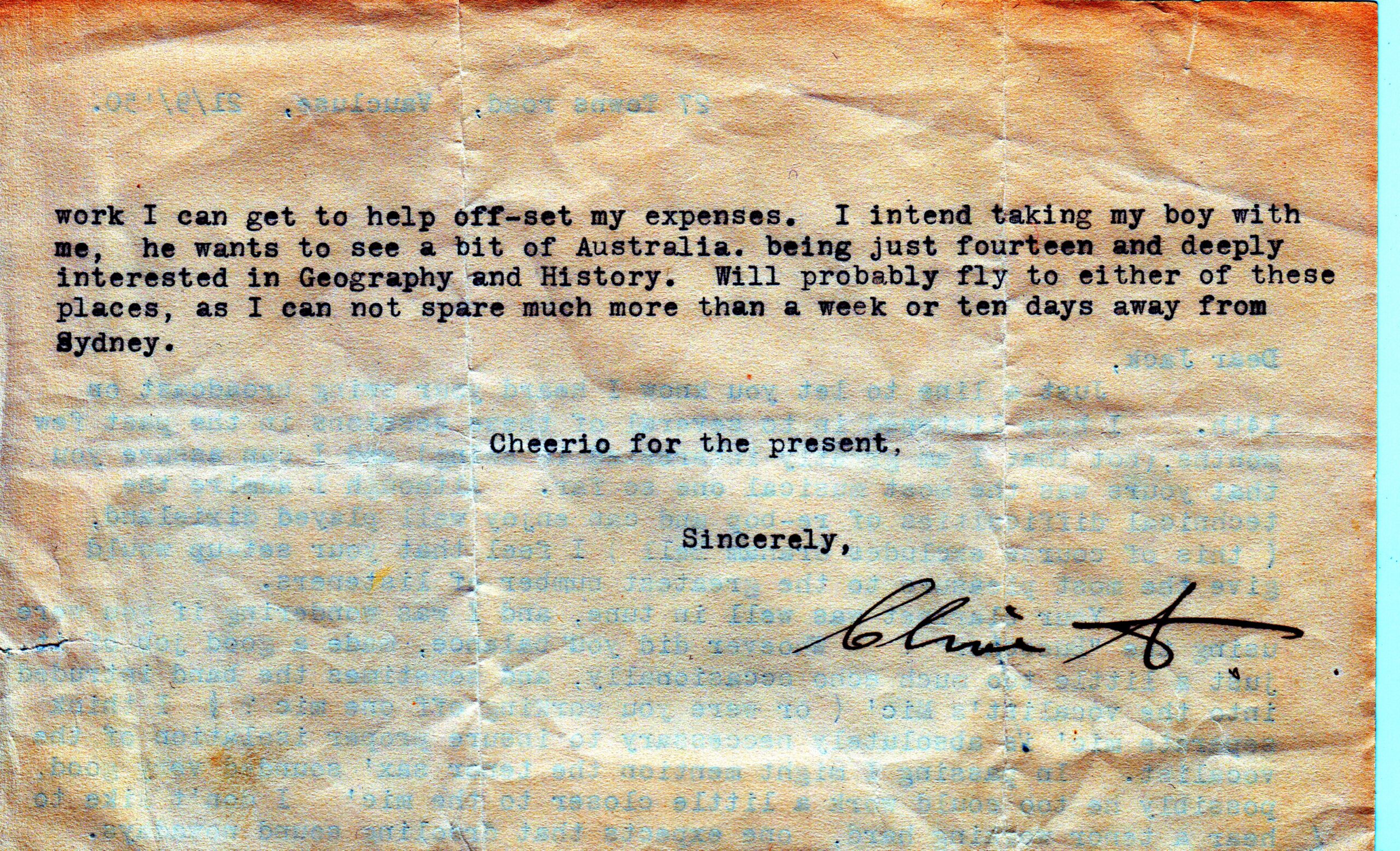
On Monday 21st August 1950 Jack Harrison received a letter from Clive Amadio:

27 Towns Road, Vaucluse, 21/09/50.

Dear Jack,

Just a line to let you know I heard your swing broadcast on 14th (September). I have listened in to several of these sessions in the past few months, (not that I am greatly interested in swing) and I can assure you that yours was the most musical one so far. Although I admire the technical difficulties of be-bop and can enjoy well played Dixieland (this of course excludes Graham Bell) I feel that your set up would give the most pleasure to the greatest number of listeners.

Your clarinet was well in tune and I was wondering if you were using the Buescher?  Whoever did your balance made a good job of it, just a little too much echo occasionally and sometimes the band intruded into the vocalist’s microphone (or were you working off one mic?). I think separate mic is absolutely necessary to ensure proper isolation of the vocalist.  In passing. I might mention the tenor sax sounded very good. Possibly he, too, could work a little closer to the mic. I don’t like to hear a tenor working hard. One expects that drooling sound nowadays.

Let me know when you are on relay with something more serious and I will endeavour to listen again.  As regards the Selmer alto you mentioned, is it silver or lacquer? And what does he ask for it? Is there any chance of getting a couple of snaps of it with your little camera? There are two pre-war models and it is only the later one which suits me. I think I told you that I can get the latest model at a greatly reduced price for advertising concessions to the agents, but it is so rubbishing an instrument that I wouldn’t have it as a gift.

I would not like to purchase an instrument that has been knocked about. Actually, I have had a couple offered to me here, one of them had been played at the Trocadero for a few years and was worn out. Another had been dropped and all the key work strained. Should you be able to take some snaps of the sax, the difference is mainly discernible round about the bell (the guard over the E flat key for instance being differently constructed to the later model).

Tell Dad that it was quite alright to use my name in application and that he was absolutely right about there being another violinist in the quintet, Phyllis MacDonald has been deputising for a month or so, Eddie Cochman having gone away with the Music Viva to New Zealand.  Also we have “Al Fresco” (music). I’m afraid it will be difficult to think of something we have not got in our library unless he has a copy of a very old number called “Hors d’oeuvre”?

Give my kindest regards to your dad and thank him for dropping me the note. Just a possibility I might come over about middle of January, either that or Tasmania. It mainly depends how much studio work I can get to help off-set my expenses. I intend taking my boy with me. He wants to see a bit of Australia being just 14 and deeply interested in geography and history. Will probably fly to either of these places as I cannot spare much more than a week or 10 days away from Sydney. Cheerio for the present,

Sincerely

Clive Amadio.


Instruments

Years

Person

WESTLAKE, Donald

DONALD WESTLAKE: 1931 – 2021

Despite his father’s fierce disapproval, Donald Westlake was undeterred in his desire to pursue a career in music from an early age. His mother – a gifted pianist – actively encouraged the young Donald by regularly taking him to concerts by the Perth Symphony Orchestra.

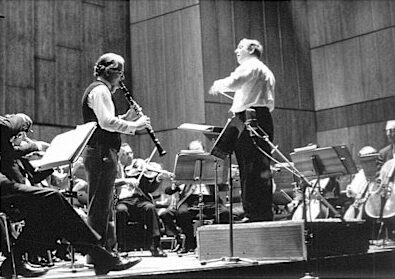
Donald Westlake, principal clarinettist with the Sydney Symphony Orchestra.

At age 13, he began clarinet lessons in Perth with Percy Newton and dabbled with dance-band music and jazz until moving east to attend the Melbourne Conservatorium studying under Isobel Carter.

His rise to professional status was meteoric: by the age of 22, in 1953, he had won 1st prize in the ABC’s Concerto Competition; was awarded a commonwealth tour as a featured soloist with the ABC; was appointed principal clarinet with the Queensland Symphony Orchestra; and was then subsequently invited by Sir Eugene Goossens to take up the principal clarinet position with the Sydney Symphony Orchestra (SSO).

In August of the same year, he married SSO violinist Heather Sumner and they travelled to London where Donald accepted a scholarship at the Royal College of Music in London, studying under Bernard Walton and graduating in 1956.

After returning to Australia, he was re-appointed principal clarinet with the SSO, a position he held from 1960 until 1978.

courtesy Patrick Brislan

Clarinettist Donald Westlake on the Sydney Symphony Orchestra European Tour in 1974.

As a soloist, he commanded a formidable stage presence and his interpretations of the great concertos by Mozart, Weber, Copland, and Nielsen left music critics grasping for superlatives and frequently garnered standing ovations.

He shared the stage of the Sydney Opera House and Town Hall with numerous musical luminaries of the era, including Igor Stravinsky, Leonard Bernstein, Aaron Copland, Sir Charles Mackerras, Willem van Otterloo and performed the Mozart clarinet concerto under the baton of the legendary Daniel Barenboim on the occasion of the maestro’s very first conducting engagement in 1962.

He was the featured soloist on the SSO’s 1974 European tour, performing the Mozart clarinet concerto in Montreux, Basel, Stuttgart, Braunschweig and Lisbon. His performance in Stuttgart earned no less than seven curtain calls.

From our partners

“He can make the clarinet recite poetry with rare eloquence, but then he can launch a sequence of breath-taking pyrotechnics that few other clarinet players can match in speed, clarity, accuracy and range of timbre,” wrote music critic Fred Blanks of Donald’s 1980 performance of Webers second concerto. “No wonder he unleashed an ovation.”

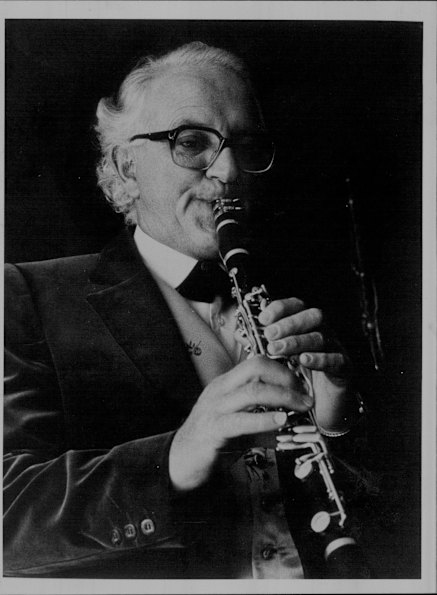
Donald Westlake, clarinettist, guest artist with the Sydney String Quartet when they perform in the forthcoming Mostly Mozart season at the Sydney Opera House on December 23, 1983. Fairfax

As a teacher he was highly revered, with a reputation for delivering brutal honesty and nigh impossible expectations; despite his old school “make it or break it” teaching philosophy, many fine players flourished and went on to pursue professional careers.

When not rehearsing or touring with the SSO, he could be found sailing the Great Barrier Reef, bushwalking in the Blue Mountains, or performing chamber music with his colleagues.

He was a committed environmentalist and actively supported Friends of the Earth by organising a number of benefit concerts during the 1970s.

In 1978 when on leave in October, Don asked Jack Harrison to play Principal Clarinet with the Sydney Symphony Orchestra for two concerts.

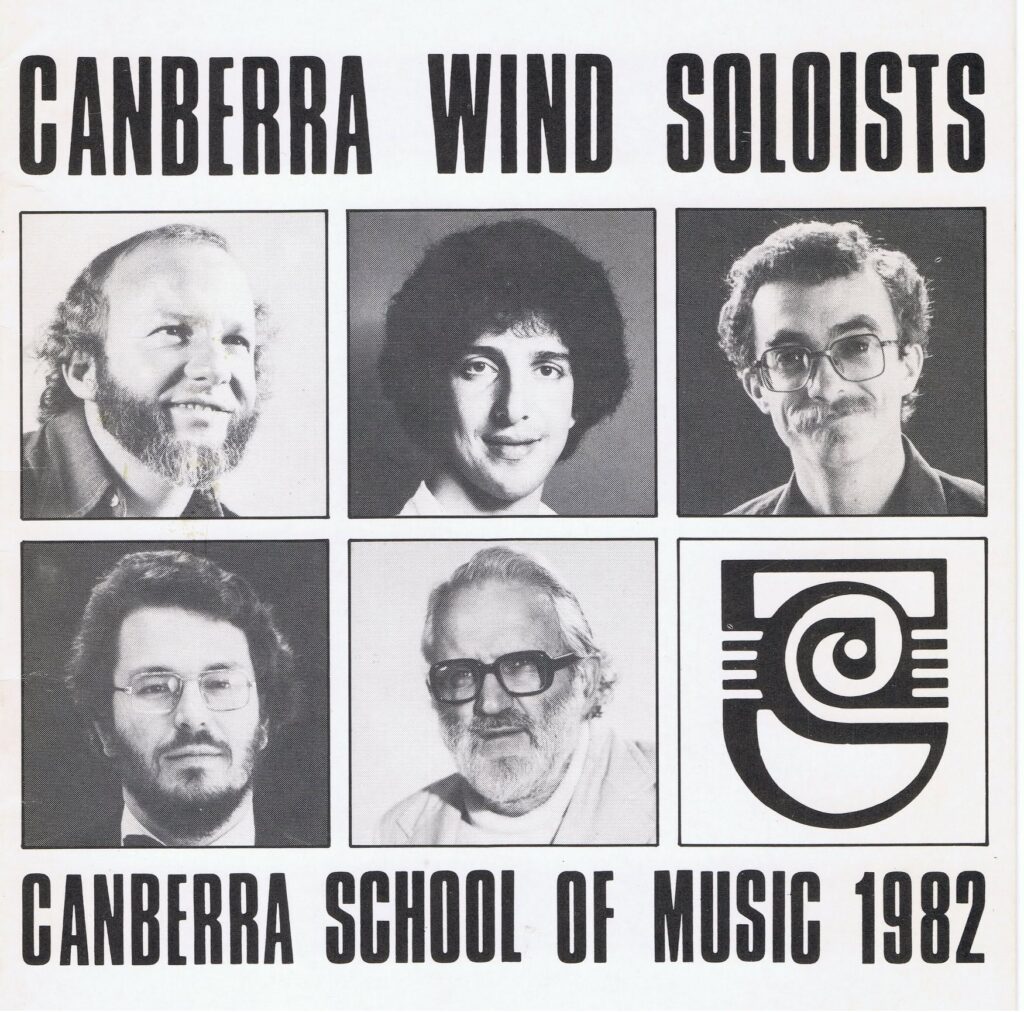
From 1979 to 1984, he took up the position of Head of Woodwind at the Canberra School of Music at ANU, where he focused on teaching and performing with the Canberra Wind Soloists.

Canberra Wind Soloists 1982


In 1985, following a long battle with tenosynovitis, he was no longer able to play the clarinet and retired to a hobby farm in northern NSW where he wrote several music biographies, most notably From me to you: the life and times of Clive Amadio.

He separated from Heather and married his partner of over 40 years, Laura Danckwerts in 2018.

His recording of the Mozart Concerto with the SSO conducted by Robert Pikler for RCA in 1976 remains perhaps one of his most enduring legacies and still receives regular airplay on classical radio.

“Westlake’s technique is impeccable, his control of phrasing and contrasts of attack quite beyond all carping. I’ve come to love the school of clarinet playing to which Westlake belongs: even, steady in tone, coloured by occasional washes of moonlit lustre,” stated music critic Roger Covell upon the album’s release.

Donald, who died in August, was father to Nigel, Kathryn (deceased), Kristin, a grandfather of six and great-grandfather of four.

Nigel Westlake is a composer, musician and conductor.


1976 – National Clarinet Seminar N.S.W.

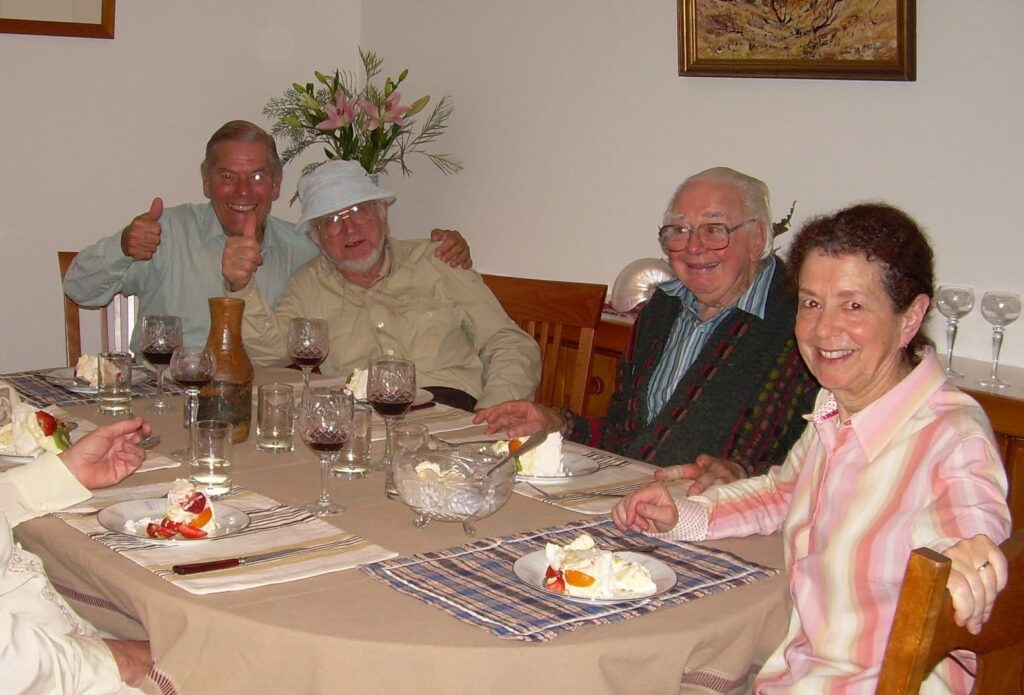
Thumbs up! Don Westlake with Jack Harrison
Don Westlake, Jack Harrison with Norman Bourke (right)

https://www.smh.com.au/national/sso-clarinettist-commanded-formidable-stage-presence-20210907-p58phv.html

https://www.australianmusiccentre.com.au/artist/westlake-donald

Instruments

Years

Person

THOMAS, David

David Thomas is one of Australia’s leading orchestral clarinettists and clarinet teachers. 

He grew up in the Dandenong Ranges near Melbourne and studied clarinet with Phillip Miechel (ex-MSO principal clarinet) at the University of Melbourne and Roger Salander at the Vienna Conservatorium of Music. 

His first permanent orchestral position was Associate Principal Clarinet with WASO, joining the orchestra in 1998 with Allan Meyer as his Section Principal Clarinet.  Since 2000 he has been Principal Clarinet of the Melbourne Symphony Orchestra, and since 2005 he has taught at the Australian National Academy of Music, helping a whole generation of young Australian clarinettists find their feet professionally.

1998 WASO clarinets: Alex Millier, Allan Meyer, David Thomas and Lorna Cook. Source: Australian Clarinet and Saxophone, Volume 2, Number 4 December 1999, p.4.

On Jack Harrison:
“Unfortunately I am a little too young to have heard some of the really important pioneering Australian clarinettists in the flesh — Don Westlake in Sydney, Isobel Carter in Melbourne, and Jack Harrison in Perth.  But I did get to chat with Jack after WASO concerts he attended, and I’ve heard plenty of anecdotes from musicians who worked with him.  For a performance of Mahler’s 1st Symphony towards the end of his playing career, I’m told the WASO clarinet section delighted in loading Jack up with all the possible doublings on his 3rd clarinet part: bass clarinet as well as clarinets in Bb, A, C and Eb.  It must have taken him half an hour to pack up after those concerts.  My favourite attributed quote is one of reassurance to a young clarinettist colleague addressing perhaps our biggest fear in concert:  “If you don’t bust a note occasionally, you’re not trying hard enough”.  I am quite sure this doesn’t reflect any sort of lackadaisical attitude from Jack, but rather a wonderfully Australian attitude to work:  quality really does matter, but let’s not get worked up if something goes wrong, and let’s make sure to encourage our colleagues to give it their all.  In this sense, I am proud to (try to) follow in Jack’s footsteps, and the experience of working in the section he had led so effectively for so many years helped me develop the skills I needed as a section leader in the orchestra of my own home town.”

Jack Harrison…loaded up

Instruments

Person

SMITH, Ashley William

SMITH, Ashley William was taught by Allan Meyer.

Described as ‘Incandescent… a masterly display of skill and insight… as an apologist for contemporary music-making, you would search hard to find this clarinettist’s equal’ (The Age), Ashley William Smith performs as a clarinet soloist, recitalist, and chamber musician across Australia, the USA and Asia.

A laureate of major Australian awards, he has received the Music Council of Australia Freedman Fellowship, an ABC Symphony International Young Performer Award, a Churchill Fellowship, and the APRA Performance of the Year. He is recognised by leading instrument makers as a Backun and D’Addario Artist.

Committed to the creation and performance of new music, more than 30 major solo works have been written for him, including concertos by Lachlan Skipworth and James Ledger.

As a chamber musician, Ashley has appeared worldwide with ensembles including the Calder Quartet, Dover Quartet, the Australian String Quartet and the Southern Cross Soloists, and with organisations including Bang on a Can, the Chamber Music Society of Lincoln Centre, Chamber Music Northwest, the Kennedy Centre, and the Beijing Modern Music Festival.

Ashley is an Associate Professor at the University of Western Australia, where he is Chair of Woodwind and Deputy Head of School. A graduate of Yale University and the University of Western Australia, and a Fellow of the Australian National Academy of Music, he received prizes as the most outstanding performance graduate of each institution. In 2020, he completed a doctorate in music analysis.

Alongside performance, he works in artistic leadership as an artistic director and is a sought-after public speaker and music educator. He contributes to the Australian music sector through mentorship, programming, advisory work and board leadership.

Instruments

Person

HOLLAND, Peter

HOLLAND, Peter

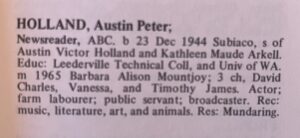
Peter Holland studied clarinet under Alan Rule in 1961 and 1962.

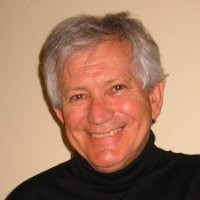
Peter Holland (born 1944) is an Australian former broadcaster, interviewer and newsreader, who worked for the Australian Broadcasting Corporation in radio and television news from 1966 to 1998 and then Channel Nine from 1998 to 2003. He then became a senior lecturer at the Western Australian Academy of Performing Arts.

In the 1984 federal election he unsuccessfully ran for the seat of Forrest for the Australian Labor Party.

In 1995, he won the Western Australian Citizen Of The Year (community services) award. He won the Premier’s Book Award in 1994 for an anthology of Western Australian writing.

In 2003, in the midst of National Nine News’ national dominance in the ratings, Holland left his role with local television station STW and took up a full-time teaching post with Edith Cowan University, having been a part-time member of staff since 2001.

From 2005, he was coordinator of the Graduate Diploma of Broadcasting course at the Western Australian Academy of Performing Arts at the Edith Cowan University campus.

Holland retired in 2013 and resides in the Perth Hills, where he has lived since 1972.


Sacks, Margaret, The Way 79 Who is Who, (Crawley Publishers Pty Ltd, 1979), p. 183

Instruments

Person

CLINCH, Peter

Peter Gladstone Clinch was born in Geraldton, Western Australia on 26th June 1930.

He learnt the clarinet from George Caro , Percy Newton and Alan Rule and the saxophone from Ken Murdoch.


1949

Only 18 But Has Future!

Up-and-coming exponent of the tenor sax is 18-y-o Peter Clinch, who is heard a lot— and appreciated — in city dance combinations.

Biography

18 – year – old tenor exponent Peter Clinch, of Wembley commenced taking sax lessons at the age of 13 with noted Perth reed man, George Caro. His studies on this instrument commenced along the normal classical lines and later he moved about in amateur orchestral circles until early in 1947, when he joined a group of young musicians who were training under Ken Murdoch, the back-bone of, and stepping stone to, the majority of the city’s prospective dance band men.

During Peter’s stay with Ken’s group, he filled a casual role and played with a number of small outfits around the city until he received his first break, playing 2nd. tenor with Jackie Sue’s Seven Piece outfit at the Fremantle Town Hall in the 1947 season. He remained with this combination for one season, playing at the port and a number of city spots, before moving his stand across to the Chris Gosper combination, which was featured at Anzac House.

During the middle of 1948, Peter sat in with the Sammy Sharp outfit as 4th tenor and later accepted 2nd tenor when well known Johnny McCaughan vacated the position to go South in October, ’48. Since then he has remained with the Sharp outfit and has been heard in the Jazz Jamboree with this outfit, the Battle of the Bands with Jackie Sue and was prominent in Thursday’s Round-up over 6WF, once again with Sammy’s boys. He is a full-time dance musician , and is assured of a rosy path ahead.

Mirror (Perth, WA : 1921 – 1956), Saturday 25 June 1949, page 15


1950

Jazzaroo For Australia Day

A feast for modern music lovers will be provided by the ABC Rhythmettes on Australia Day.

The “Anniversary Jazzaroo,” as the concert is entitled, will be held in the old Catalina hangars on the river foreshore near the University. The 25hr. non-stop show arranged and directed by popular Harry Bluck will feature all types of modern music — jazz, swing, dixieland, be-bop, and latin. Among the assisting artists will be some of the most popular of the local modern soloists, such as Phyllis Frost, Robin Harwood, Ossie Sanderson, and Kath Bass. The new Peter Clinch trio will also appear. Publicity manager W. J. Dawson for the Australia Day Carnival Council, said that ad-mission would be charged for the concert, separate tickets would be 2/6 each, and were obtainable at Nicholsons’ now. He advised those intending to see the “Jazzaroo” to buy tickets early, as he thought that lack of space would make it necessary to refuse many. Proceeds from the concert would be used to further the interests of aquatic sport in this State.

Daily News (Perth, WA : 1882 – 1955), Monday 16 January 1950, page 11


Thursday, Oct. 5th – Capitol Theatre at 8pm  – 1950’s GREATEST MUSICAL SHOW

Bruce Carroll presents – Symphony In Swing

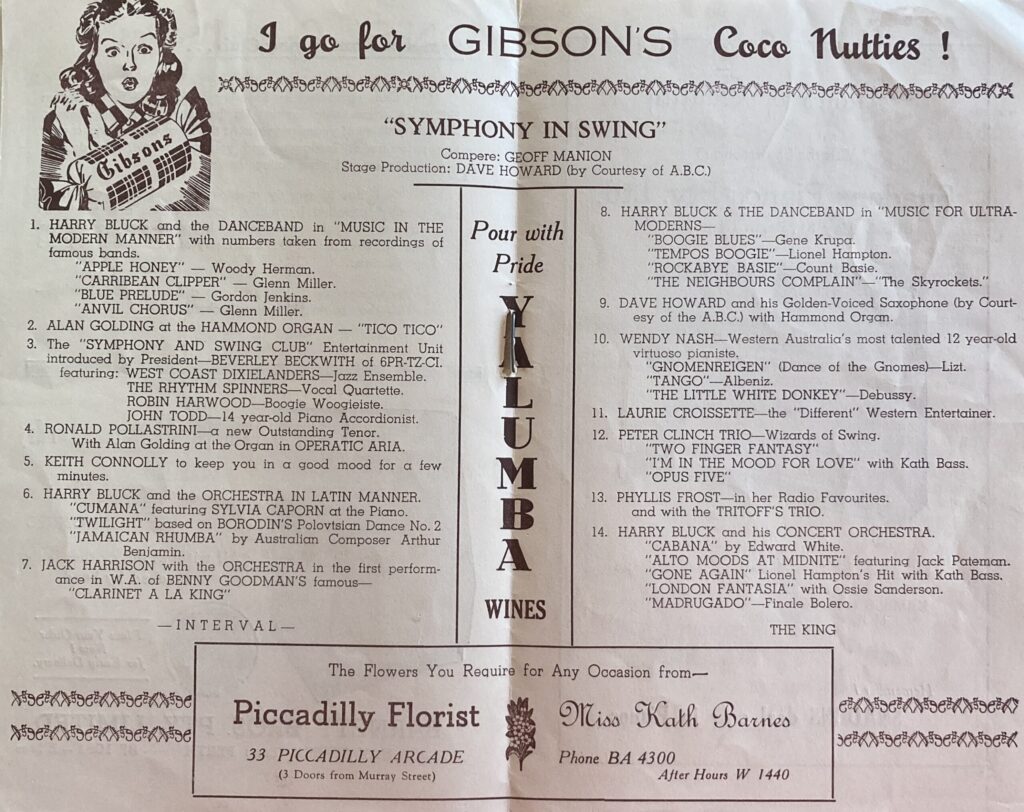
With Harry Bluck’s Concert Orchestra and Dance Band, Over 50 Leading Musicians and Radio Artists, Wendy Nash — 12-year-old Virtuoso Pianiste, Jack Harrison — Clarinet Star of the West, Ossie Sanderson — 16-year old ‘London Fantasia’ Soloist, Phyllis Frost — International Broadcasting Vocaliste, Ronald Pollastrini — W.A.’s Outstanding Lyric Tenor, Tritoff’s Trio — First appearance of Radio Vocal Trio, Kath Bass — Star Rhythm Vocaliste, Alan Golding — Leading Exponent of Hammond Electric Organ, Peter Clinch trio — Wizards of Swing, Dave Howard — and His Golden Voiced Saxophone (By Courtesy A. B.C.), Keith Connolly — Sophisticated Humorist, Laurie Croissette — Tho ‘Different’ Western Entertainer ,Symphony and Swing Club’s Entertainment Unit with West Coast Dixielanders — State’s smartest Jazz Ensemble, John Todd — 14-year-old Star Piano Accordionist, Rhythm Spinners — State’s leading Male Modern Vocal Group, Robyn Harwood — Boogie Woogie Specialiste, Beverly Beckwith — Co-Compere of S. and S. Club Group. Compere: Geoff Manion. Stage Production: Dave Howard By Courtesy A. B.C.   PRICES : 3/- 4/- 5/- (plus tax).   Box Plan at Nicholsons Limited.   The Daily News Monday 25 September 1950 page 12

1950 Symphony in Swing program
JAZZ JAMBOREE TOMORROW The annual Jazz Jamboree will be held at the Capitol Theatre at 8.45 p.m. tomorrow. Almost 100 professional musicians will take part and play all types of modern music. The entire proceeds of the concert will go to the musicians’ benevolent fund. Sixteen dance-band leaders, all wellknown musicians, will take part, and the show comperes will be Geoff Manion and Peter Harrison.

West Australian (Perth, WA : 1879 – 1954), Saturday 28 October 1950, page 7

THE BIGGEST DANCE BAND SHOW of the YEAR — ALL YOUR FAVORITES

JAZZ JAMBOREE of 1950 – CAPITOL THEATRE – SUNDAY, OCTOBER 29th

NINE OF THE STATE’S LEADING DANCE BANDS

Bill Kirkham’s Embassy Band

Ken Murdoch’s Ensemble

Ron Jenkins Band

Peter Clinch Boptette

Merv Rowston’s Band

Colin Hicks and His Musk

Wayne Hendrick’s Modernaires

Norm Wrightson’s Band

Harry Bluck’s Music in the Modern Manner

ALL YOUR SWING, JAZZ AND BEBOP PAVORITES

500 Unreserved Seats on Sale at Doer

GFOFF MANION and PETER HARRISON. Comperes

JAZZ MUSIC: Nine dance bands combined to present the “Jazz Jamboree of 1950” in the Capitol Theatre on Sunday night to raise money for the W.A. Musician’s Benevolent Fund. Every seat was filled and the audience had an op portunity of comparing different styles. Warm applause greeted special efforts by the bands or their vocalists. The programme was produced by Harry Bluck and the comperes were Geoff Manion and Peter Harrison.

West Australian (Perth, WA : 1879 – 1954), Tuesday 31 October 1950, page 9


1951

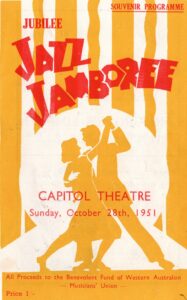
1951 Jazz Jamboree program cover

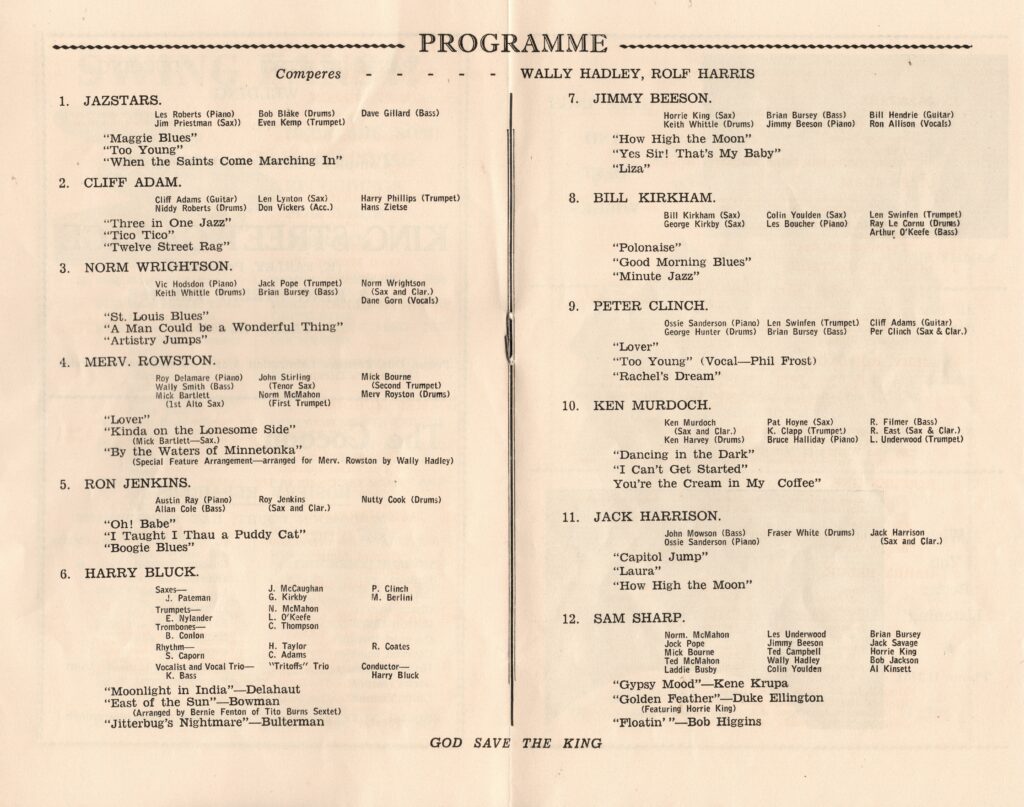
SUNDAY 28th OCTOBER 1951 – CAPITOL THEATRE – JAZZ JAMBOREE

Featuring 12 of Perth’s Leading Dance Bands

Jazzstars, Cliff Adams, Norm Wrightson, Merv Rowston, Ron Jenkins, Harry Bluck, Jimmy Beeson, Bill Kirkham, Peter Clinch, Ken Murdoch, Jack Harrison, Sammy Sharp.

Booking Opens at Nicholsons.  Friday 19th October 1951.

A Hot Spot In The Old Town Last Night

Evidence of the increasing popularity of jazz with young and old Perth people was last night s Jazz Jamboree at the Capitol Theatre. Between. 500 and 600 fans were turned away. The theatre, which seats 2249 people, was filled by 7.55 p.m. — 10min. after 400 unreserved seats were offered at the theatre. And bodgies and widgies were far outnumbered by the “over-40” brigade. It was a record house for a jazz jamboree. The audience heard 12 of Perth and Fremantle’s best bands perform. All musicians gave their services free and the Musicians’ Benevolent Fund got the benefit— £501 was paid for tickets. Programme sales yielded more than £50 and, officials estimate that 600 more programmes would have sold “like hot music”.

Daily News (Perth, WA : 1882 – 1955), Monday 29 October 1951, page 3

1951 Jazz Jamboree – programme

1952


1953

Peter joined the RAAF Central Band as Principal Solo Clarinet and Senior NCO in 1953. 

He married Joy Iolanthe Richmond (daughter oboist Ronald Richmond) in Victoria in 1953 and they had a daughter Robyn and son David together.


1967

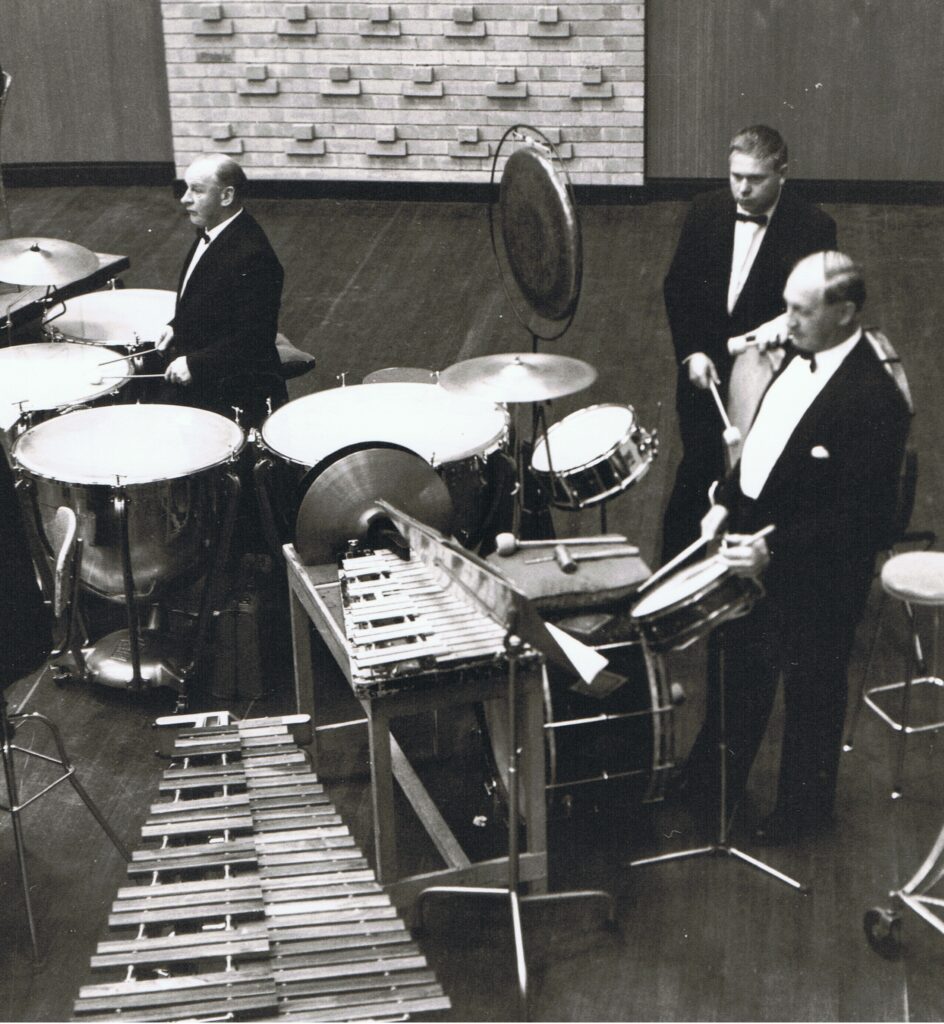
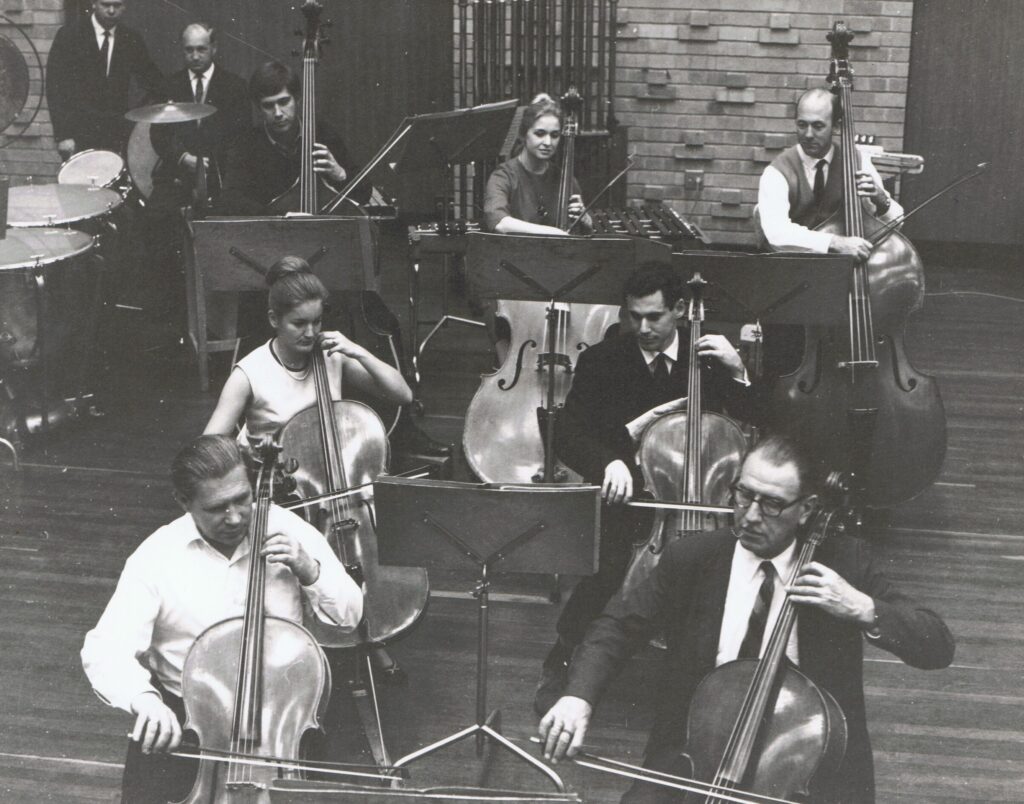
1967 WASO: Peter Clinch augmenting on percussion
1967 WASO cellos and basses: Front row left to right: Zoltan Barna (Pest), Louis Mojzer (Buda). 2nd row Jill Heady, Brian Meddemmen. 3rd row: David Ellis, Aino Neumann, John Mowson. Back row: Peter Clinch, Verdon Williams.

1971

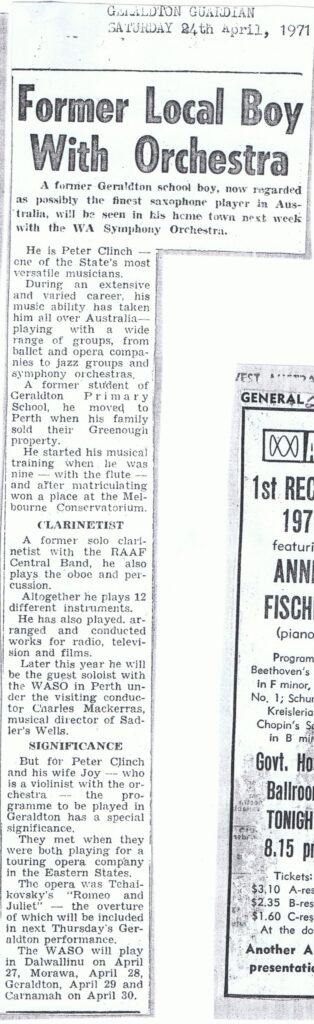
1971 Peter Clinch article

Peter played in WASO, filling in for Jack Harrison who went overseas for 5 months on a Churchill Fellowship.


1972

Night of Russian Musical heritage – By John Meyer

Friday June 23 1972

In an evening of Russian music at the ABC orchestral subscription concert in Winthrop Hall last night three works illustrating different facets of that nations musical heritage were featured. The highlight was a controlled and well-defined performance of Tchaikovsky’s Fifth Symphony in E minor played by the West Australian Symphony Orchestra and conducted by Tibor Paul Mr. Paul’s total view of this symphony seem to be an admirable one. He did not emphasise only it’s obvious emotional qualities but gradually built up the drama from the sombre opening for clarinets to the triumphant climax of the final. In this last movement he was well supported by the Orchestra. The performance throughout was distinguished by some fine solo playing especially by Neil Pierson Horn and Jack Harrison and Peter Clinch clarinets. 

The West Australian Saturday June 24 1972


1995

Peter Clinch died in Melbourne on 6th June 1995 aged 64.


Peter Clinch was an Australian saxophonist, clarinettist, composer and educator.

Dr. Peter Clinch was born in Geraldton, Western Australia in 1930.

He began his early career augmenting in the clarinet section of the Perth Symphony Orchestra in 1947 , the West Australian Symphony Orchestra and then joined the RAAF Central Band as Principal Solo Clarinet and Senior NCO in 1953. Subsequent to this he played clarinet and saxophone with every ABC Symphony Orchestra in Australia either as a member of the orchestra or as a soloist. Peter was the Head of the Music Department at the Melbourne College of Advanced Education and later the Reader, then Associate Dean (Music Education) at the Faculty of Music, University of Melbourne.

As well as producing a number of recordings, Peter toured extensively in Europe, Asia and the USA as a soloist, recitalist, a chamber music performer, and a conductor as well as giving lectures and masterclasses. The Peter Clinch Saxophone Quartet was the most exciting ensemble of the Australian music scene, certainly its most pertinent in contemporary significance. He won several awards for composition. He was widely respected as a conductor and his jazz performance. He was the founder and President of the Clarinet and Saxophone Society of Victoria, Vice President of the Comité International de Saxophone and has a citation in several “Who’s Who” guides including “Who’s Who in the Commonwealth” and “Who’s Who in the World”. He was the Head of the Department and Reader and Associate Dean of Music Education at the Melbourne CAE (University of Melbourne).

Peter’s international conference contributions included papers for several of the World Saxophone Congresses, the Australian National Clarinet Seminar in Sydney, several of the International Clarinet Congresses and the Australian National Saxophone Seminar in Melbourne (which he organised). He also presented papers at conferences in Western Australia, Sydney, London, Canberra and Yugoslavia. He died in 1995.

Peter’s published works included a Clarinet Tutor for Allan’s Music, the Tausch Concerto for Clarinet and Orchestra and several other clarinet and jazz studies tutors. His journal articles included articles for the international publication Studies in Music, music and book reviews for the Journal of Music Education, the Journal of Australian Music and Musicians, the National Association of Teachers of Singing, the International Journal of Music Education and The Clarinet.

Original compositions include Instruments of the Orchestra, Introduction and Fugue for 4 Percussion, Music for a Grand Tour, Variations for Clarinet and Electric Tape, Introspections for Saxophone and Tape, Saxophony for Voice, Flute, Clarinet and Percussion, Inventions for 7 Players, Clarion Call for Small Ensemble, Music for Clarinet and Small Ensemble, and Quartet for Clarinet, Viola, Piano and Percussion. Many of these works were performed overseas in London, West Berlin, Salzburg, Munich, Hamburg and Brussels.

https://www.move.com.au/artist/peter-clinch

https://d2ajug1vehh95s.cloudfront.net/24120booklet.pdf


Person

NEWTON, Percy

1897 – 26.1.1947

Walter Percival Newton was born in 1897 and died 26.1.1947 aged 50.

Percy Newton arrived with his brother Harold and family from England in 1927.  The Newton brothers were very involved in consolidating the new Perth Symphony Orchestra in the late 1920s. 


Nicholson’s Limited was a music store situated in the heart of Perth and many of the players used to meet in its music hall to discuss a possible solution to their problems of finding work. Among this group were the Newton Brothers, Percy and Harold, who had immigrated from the United Kingdom in 1927. They played for the most part with the Prince of Wales Theatre Orchestra then, following its demise, moved to the Capitol Theatre Orchestra. Percy Newton was a fine clarinet player whose services had been sought by prestigious orchestral conductors in England and who later became a leader teacher of this instrument giving a good grounding to later clarinet stars like Donald Westlake and Jack Harrison.

Harrison, Marcia WEST AUSTRALIAN SYMPHONY ORCHESTRA Celebrating 75 Years 2003 p.3

Percy was an appointed member of the professional Perth Symphony Orchestra formed in 1936 playing clarinet and was appointed deputy conductor in 1937. He remained Principal Clarinet until 1946.


1928 William Harrison performed with the Newton brothers

Joy Boys – A Talented Company

The Joy Boys gave a bright and varied entertainment in the Town Hal Dalwallinu on Wednesday night. The programme included singing, step-dancing, and musical items. Mr Sydney Clarke, on the violin, was much appreciated. Mr Clark rendered an imitation of the bagpipes on the violin, which was very good indeed, as were his old-time melodies and step dancing. Mr Cass Mahomet’s singing was greatly enjoyed. Mr Irwin Lawrances’s cornet solo and Mr Percy Newton‘s saxophone number brought forth great applause. Mr Les Dixon delighted his hearers by his playing the piano, and Mr Townley was splendid on the sousaphone and trombone. The company was worthy of a larger audience. 

North-Eastern Courier (Perth, WA), Saturday 6 September 1930, page 3


Saturday, January 9th 1932 – 6WF, PERTH.

8.0: The first revue of 1932 by the Radioptomists, produced by Harry Graham. Artists: Dorothy Manning, Billy Edwards, David Lyle, Harold Newton, Malcolm Dick, Paul Daly, Eileen Hart, Lulu Potter, Edna Waterman and Percy Newton; accompanist, Phyllis Blott.  The 6WF Revue Orchestra and the A.B.C. Mixed Quartet will assist. 

Western Mail (Perth, WA : 1885 – 1954), Thursday 24 December 1931, page 3


SYMPHONY ORCHESTRA – Last Sunday’s Concert

Before a moderately large audience, the Perth Symphony Orchestra offered another first class concert at His Majesty’s Theatre last Sunday evening. The music was of a lighter type than usual and, though it may not have suited sonic of the high-brow critics, appealed to the major section of the crowd.

Two dance numbers, Ponchielli’s popular ‘Dance of the Hours’ and Puccini’s ‘Witches’ Dance’ from ‘Le Villi,’ were both well rendered, except that the cold weather mitigated against the tone of the strings and affected the wood wind, where one or two weak links sometimes TEND TO SPOIL the excellent playing of the principal clarinet (Mr. Percy Newton). A suite of ballet music, ‘Hiawatha,’ by Coleridge-Taylor was a delight, and selections from ‘Rigoletto’ — one of Verdi’s best -known operas — proved popular with the audience. Mr. George Mellor (cornet) was, as usual, responsible for some fine solo work in the ‘Paraphrase’ which preceded the famous quartette that closed the number, and incidentally Mr. Reid had to respond with an encore to this item. Two overtures, ‘The Barber of Seville’ (Rossini) and ‘Zampa’ (Herold) completed the orchestral section of the programme. Signor Ugo Mina (tenor) offered pleasing selections from Italian operas. 

Mirror (Perth, WA : 1921 – 1956), Saturday 22 July 1933, page 12


‘JOHN O’LONDON’S’ CIRCLE – An Evening of Music

The concluding session of the year of the ‘John O’ London’s’ Literary Circle was held last night at Lyric House, Murray Street. A programme of music was contributed to by Perth musicians. A quintet conducted by Mr. Harold Newton, and consisting of Messrs. Ron Brearley (cello), Fred Murphy (clarionet), Percy Newton  (clarionet), Norbert Coulehan (oboe), and Mrs. Wilson (pianoforte) provided several of the items. Solos were given by Mr. Brearley and Mrs. Wilson, and songs by Mr. Austin Coulehan and Miss June Fiore. In addition, a musical monologue and elocutionary items were contributed by Miss May Downes and Miss Mary Ward. The musical part of the entertainment was organised by Mr. Norbert Coulehan. The circle will resume its meetings in March.
West Australian (Perth, WA : 1879 – 1954), Friday 15 December 1933, page 12


SUNDAY BROADCASTS – New 6IX Feature.

NEXT Sunday evening at 6.15 o’clock the first of a new series of broadcast will take place from the Ambassadors Theatre over station 6IX. Ron Brearley and his Merrymakers and a novelty orchestra will present a session of popular and classical vocal and instrumental numbers, which is being sponsored by General Theatres Corporation, Ltd., as a regular weekly feature. Among the artists who are to be heard are Harold Newton, Rita Hawse, Will Talbot Anthony Northe, Teddy Phillips, Percy Newton, and a feature of the first programme will be the novel way of introducing the items. Among the items to be played on the first night will be the ever-popular “Mikado” selection, rendered by the Merrymakers Orchestra. Rita Hawse will be heard in three numbers, “Bird Songs at Eventide,” “Ballad Memories” and “Everything I Have Is Yours,” accompanied by the orchestra and organ. Will Talbot, monologuist, will present “Sitting on a Log” and there will be an unusual organ and piano duet by Messrs. Northe and Phillips.

Western Mail (Perth, WA : 1885 – 1954), Thursday 23 August 1934, page 39


State Symphony Orchestra.

The West Australian State Symphony Orchestra will give another concert at the Prince of Wales Theatre, Perth, on Sunday night. An Algerian march by Mr. de Laeter (a member of the orchestra) will be the opening number and will be followed by “Capriccio Espagnol” (Rimsky-Korsakov), “Komarinskaja” (Glinka) and a repetition by request of Rimsky Korskov’s “The Flight of the Bumble Bee,” played at the last concert. Assisting artists include Paul Daly, May Webster and her eight mascots, Percy Newton and Ruth Cranfield.
West Australian (Perth, WA : 1879 – 1954), Friday 24 August 1934, page 8


FAMOUS CONDUCTOR – Coaxes Great Music From Perth Orchestra

Thursday night was a momentous one in Perth musical circles, when the fruits of Professor Schneevoigt’s (the eminent Finnish conductor) work with the Perth Symphony Orchestra of 65 players were revealed to the public at His Majesty’s Theatre. A Tchaikowsky Symphony occupied the whole of the first half, and right from the first bar of the supremely delicate, wistful pianissimo opening it was apparent that a genius was wielding the baton. Indeed, never before had local music-lovers been regaled with such appetising fare, and while the four movements were being played, one might have heard the proverbial pin drop during the soft passages or the brief pause between each section. Even at the conclusion of the Symphony there was an impressive silence before a STORM OF APPLAUSE which lasted for several minutes, swept through the theatre. Professor Schneevoigt was recalled several times and eventually he also joined in the applause as a gesture to the magnificent work of the orchestra. Indeed, unstinted praise must be given the musicians, especially to the leader of the clarionets, Mr. Percy Newton, on whose capable shoulders rested the initial responsibility for introducing the symphonic theme. Later in the evening the conductor shook hands with Mr. W. Glassford, whose interpretation of a pleading melody in one of the other numbers was to his liking. A delicate suite for strings, Sibelius’ ‘Rakastava.’ was the first item of the second half. This, as was the case with rest of the offerings, suffered a few blemishes by minor false entries and, at times, a decided uncertainty on the part of some of the key players, but were overshadowed by the grand concerted climax that were obtained throughout the evening. Of special merit was the performance, with lovely orchestral accompaniment, of Perth’s gifted soprano, Miss Lorna Sydney Smith, whose DELIGHTFUL RENDERINGS of Wagner’s ‘Schmergen’ and ‘Traume’ were well received. 

Mirror (Perth, WA : 1921 – 1956), Saturday 12 June 1937, page 17


DUAL BIRTHDAY PARTY – WEST PERTH FUNCTION

With a flesh-and-blood orchestra playing the opening overture, scenes from ‘Romeo and Juliet,’ musical travesties and acting ad lib, quite a gay party took place at the home of Mrs. Craze, Havelock-street, West Perth, on Tuesday night. The occasion was the anniversary of the birthdays of Misses Roma Craze and Edna Waterman, and was marked by the attendance of many musicians and their friends. Some of the culminating scenes were real rollicking gems, when instead of cellos and double basses, Alf Shute sang a declamatory ditty and danced a fandango amid the wreckage of a travelling gipsy’s caboose. Harold Newton as guest conductor and brother Percy as temperamental pianist saw these maestros in lighter vein and provided much entertainment to their friends, who developed sore throats cheering them on or shrieking at their carefree antics. In addition to Mrs. Craze and her three daughters, those present were Mr. and Mrs. Harold Newton, Mr. and Mrs. Percy Newton, Mr. and Mrs. Dan Chaloner, Mr. and Mrs. Alf Shute, Mrs. Jones (Tasmania), Mrs. Waterman, Mrs. R. Rees, Miss Frankie Woodhouse, Miss Nina Gobi, T. Bennett and Cyril Huntley. During the partaking of supper Mr. Harold Newton, supported by many other speakers, proposed the toast of the celebrants, referring eulogistically to Miss Roma Craze, who is leaving for England shortly to continue her studies as a linguist and other professional attainments.

Mirror (Perth, WA : 1921 – 1956), Saturday 10 September 1938, page 23


HER REWARD FOR PLUCKY RESCUE

THIS IS THE SIDE OF LAST WEEK’S HEROIC RESCUE STORY THAT WASN’T TOLD

When little 14-year-old Nylsalie Newton, daughter of well-known clarinettist and A.B.C. deputy conductor Percy Newton, dragged two drowning women to safety in the Claremont Baths, she subsequently received unstinted admiration of praise from her schoolmates and the many others who heard about her noble deed. Scores of people stood watching the two women drown, were even laughing at their antics, not dreaming they were in difficulties. Nylsalie Newton did. Her young brain did a piece of quick thinking and she jumped into split-second action of which any veteran would have been proud. So much everyone knows, although at the time she unobtrusively slipped away from the Baths soon as she had informed the attendant of the two ladies’ plight. But what the public doesn’t know is how the brave youngster was rewarded for her plucky effort. She put down her bathing cap while she changed into her street clothes and returned to find it missing. It had been stolen.

Mirror (Perth, WA : 1921 – 1956), Saturday 22 April 1939, page 10


MINIATURE RECITAL – Mozart Trio and Songs

A Mozart trio in E flat major for piano, viola and clarinet was played by Phyllis Blott, William Glassford and Percy Newton at the thirteenth of this seasons series of miniature recitals at the Karrakatta Club Hall yesterday afternoon. It was a pleasing experience, having for a Perth audience not only the attraction of a masterly composition well presented but also the element of novelty for the work has had but few public performances in this city. 

West Australian (Perth, WA : 1879 – 1954), Friday 5 November 1943, page 3


EVERYMAN’S MUSIC – Recital Tonight

An unusually varied programme is offered by the Adult Education Board in the third of the current Everyman’s Music series to be given in Winthrop Hall this evening at 8.15 o’clock. Chamber music will include the Divertimento in B Flat for two clarinets and bassoon (Mozart) with Percy Newton, Robert Trew and Jock Good and the Mozart Trio in E Flat for piano, clarinet and viola with Edward Black, Percy Newton and William Glassford. 

West Australian (Perth, WA : 1879 – 1954), Thursday 25 April 1946, page 6


Jack Harrison ,Don Westlake and Peter Clinch studied clarinet with Percy Newton.


Person

GOODMAN, Benny


Benny Goodman (born May 30, 1909, Chicago, Illinois; died June 13, 1986)

Benny Goodman’s reign as “King of Swing,” “Patriarch of the Clarinet,” and “Swing’s Senior Statesman” began when he helped many Americans see the silver lining around that cloud known as the Depression. The optimism and grace of swing music brought the nation through some of its darkest days.

Goodman was the ninth of 12 children born to Russian-Jewish immigrants. Although many boys at that time followed in their father’s footsteps in terms of profession, Goodman followed his heart and pursued a career in music. His first clarinet was borrowed from Chicago’s Kehelah Jacob Synagogue in order to play in the boys’ band there. The synagogue provided instruments and lessons to young boys who wished to play in the band. As jazz spread like wildfire through the Chicago music scene in the 1920s, the teenage Goodman became inspired by such jazz pioneers as King Oliver and Louis Armstrong.

At the age of 14, Goodman was already making money playing the clarinet in Chicago’s South Side speakeasies and dance halls. Goodman later met drummer Ben Pollack and headed off to New York with his orchestra. Not long afterwards, Goodman formed his own band to work for singer Russ Columbo. The band included Gene Krupa on drums, Joe Sullivan on piano, and Babe Russin on tenor sax. Goodman and his band worked for Columbo for a summer, then they got a job on a national New York-based radio show, “Let’s Dance” in a 10:30 PM to 1:30 AM time slot. The band was able to make its first extended tour because of the popularity of the radio show. However, Goodman’s segment was on too late for most New Yorkers so he was not well known in New York. Consequently, the turn-out for the band’s opening night was very disappointing. On opening night at Elitch’s Garden, in Denver, nightclubbers demanded a refund unless the band played waltzes. When the band got to California, though, crowds of people were lining up waiting to hear Goodman and his band. Being in a time zone three hours earlier than New York, the Californians had been listening to th on the radio show.

At this point, everything began to change. The band’s luck changed in a major way when they performed at Hollywood’s Palomar Ballroom. The crowd even stopped dancing to stand around the bandstand when Goodman played “King Porter Stomp” and “When Buddha Smiles.” By the time the band reached Chicago for what turned into an eight-month engagement at the Urban Room of the Congress Hotel, Goodman was being called “The King of Swing.” The band also started a new radio series and began a series of Sunday afternoon concerts at the Congress Hotel while they were in Chicago.

It was at the Congress that Goodman made an important breakthrough in race relations when he hired two black musicians, Teddy Wilson and Lionel Hampton. Goodman refused to appear without them, even in the deep south.

Goodman became the first jazzman to also achieve prominence in the genre of classical music, but it was swing music that brought the crowds out at dawn to line up at the entrances of dance halls such as the Manhattan Room of the Pennsylvania Hotel and even had people dancing in the aisles of New York’s Paramount Theater. Goodman received numerous awards during his 60 year-long career including an honorary doctorate from Yale University and the Peabody Medal from the Peabody Conservatory. He died in 1986 at the age of 77.

https://www.kennedy-center.org/artists/g/go-gz/benny-goodman

Benny Goodman commissioned several major classical and contemporary clarinet pieces that significantly expanded the instrument’s repertoire.

  • Aaron Copland: Clarinet Concerto (1948) – Written for Goodman, featuring a jazz-influenced style and a famous concluding glissando.
  • Béla Bartók: Contrasts (1938) – A chamber work for violin, clarinet, and piano inspired by Hungarian and Romanian dance traditions.
  • Paul Hindemith: Clarinet Concerto (1947) – A major, technically demanding symphonic work commissioned by Goodman.
  • Francis Poulenc: Sonata for Clarinet and Piano (1962) – Premiered by Goodman and Leonard Bernstein after the composer revised it for Goodman.
  • Malcolm Arnold: Clarinet Concerto No. 2 (1960) – Composed for and dedicated to Goodman.
  • Darius Milhaud: Concerto for Clarinet and Orchestra (1956).
  • Morton Gould: Derivations for Clarinet and Band (1956)

https://www.britannica.com/biography/Benny-Goodman

https://www.bennygoodman.com/biography/
Goodman music album cover


Goodman biography from album


1950’s GREATEST MUSICAL SHOW

Thursday, Oct. 5th Capitol Theatre at 8pm

Bruce Carroll presents

Symphony In Swing

With Harry Bluck’s Concert Orchestra and Dance Band

Over 50 Leading Musicians and Radio Artists

Wendy Nash — 12-year-old Virtuoso Pianiste

Jack Harrison — Clarinet Star of the West

Ossie Sanderson — 16-year old ‘London Fantasia’ Soloist

Phyllis Frost — International Broadcasting Vocaliste

Ronald Pollastrini — W.A.’s Outstanding Lyric Tenor.

Tritoff’s Trio — First appearance of Radio Vocal Trio

Kath Bass — Star Rhythm Vocaliste

Alan Golding — Leading Exponent of Hammond Electric Organ

Peter Clinch trio — Wizards of Swing

Dave Howard — and His Golden Voiced Saxophone (By Courtesy A. B.C.)

Keith Connolly — Sophisticated Humorist

Laurie Croissette — Tho ‘Different’ Western Entertainer

Symphony and Swing Club’s Entertainment Unit with West Coast Dixielanders — State’s smartest Jazz Ensemble

John Todd — 14-year-old Star Piano Accordionist

Rhythm Spinners — State’s leading Male Modern Vocal Group

Robyn Harwood — Boogie Woogie Specialiste

Beverly Beckwith — Co-Compere of S. and S. Club Group

Compere: Geoff Manion

Stage Production: Dave Howard By Courtesy A. B.C. – PRICES : 3/- 4/- 5/- (plus tax) – Box Plan at Nicholsons Limited.

The Daily News Monday 25 September 1950 page 12


Symphony In Swing – October 5 1950

On October 5, a concert entitled “Symphony in Swing” will be presented in the Capitol Theatre. Produced by Harry Bluck, whose concert orchestra and dance band will give a number of items, the programme will include varied numbers by local artists, many of whom are under 20 years of age. The 12-year-old pianist, Wendy Nash, will give a classical group, Jack Harrison, the young clarinettist will give the first West Australian performance of a number entitled “Clarinet a la King,” and the 16-year-old pianist Ossie Sanderson, will present “London Fantasia.” Other artists will be Ronald Pollastrini, tenor, and a new vocal group, the Tritoffs, who will be making their first public appearance. They will be associated with Phyllis Frost, the blind vocalist. There will be many other singers and instrumentalists. 

Western Mail Thursday 28 September 1950 page 23

5.10.1950 Benny Goodman Clarinet a la King   W.A. PREMIERE   AUSTRALIAN PREMIERE? Jack Harrison (clarinet) Harry Bluck and his Concert Orchestra and Dance band Capitol Theatre Perth, Western Australia Bruce Carroll presents “Symphony in Swing”

Clarinet a la King “as performed by Benny Goodman”
Clarinet a la King parts

Instruments

2011 Blackwood

Iain Grandage, Kevin Gillam, Brendon Darby

Composed by Iain Grandage, libretto by Kevin Gillam. Commissioned for and performed by Sara Macliver (soprano), Allan Meyer (clarinet) and Graeme Gilling (piano). Paintings by Brendon Darby (courtesy of Janet Holmes a Court). Commissioned and acquitted by Jody Harrison (Director, Solo to Symphony) through funds by the Australia Council.

In 2005 Blackwood was commissioned by Jody Harrison assisted by a grant through the Australia Council.

Growing up listening to her father Jack perform Schubert’s Shepherd on the Rock gave the initial inspiration for Jody’s desire to add to the limited repertoire for clarinet, soprano and piano. This genesis of an idea grew into the inclusion of a broader inclusion of artists to create this uniquely West Australian project.

Iain Grandage said “These are structurally formal poems, yet they contain deeply expressive language. In setting them to music I have attempted to reflect this duality – syllabic structures of the poems are reflected formally in the metres of the musical settings while the melodic lines inhabit a far more lyrical domain. Similarly, the expansion inherent in both the river’s growth and our own personal journey is reflected in a gradual expansion of musical intervals through the course of the work from 2nds in arterials through to octaves in then sea.

Clarinettist Allan Meyer, soprano Sara Macliver and pianist Graeme Gilling were the selected artists. Composer Iain Grandage envisaged a song cycle and accepted the commission as did poet, Kevin Gillam.

Iain and Kevin discussed a life and love story entwined with the journey of the Blackwood River from the South West to the ocean, linking with the black wood of the clarinet.

Kevin said “I see major value in a work such as this in fusing the art forms of music and poetry with the more general theme of landscape.” Knowing that West Australian artist Brendon Darby built a studio on the banks of the Blackwood River and had spent many hours painting “that beautiful river” Jody approached Brendon to contribute paintings as a backdrop to the performance. Darby said he felt “great affinity” with the Blackwood River and was the ultimate addition to the Blackwood team.

The clarinet (the woodwind family’s own black wood) alternatively plays the roles of lover and landscape – Messiaen-like birdsong and watery figurations on occasion make way for duets with the voice, most notably in the two love songs that delineate the work’s tripartite structure.
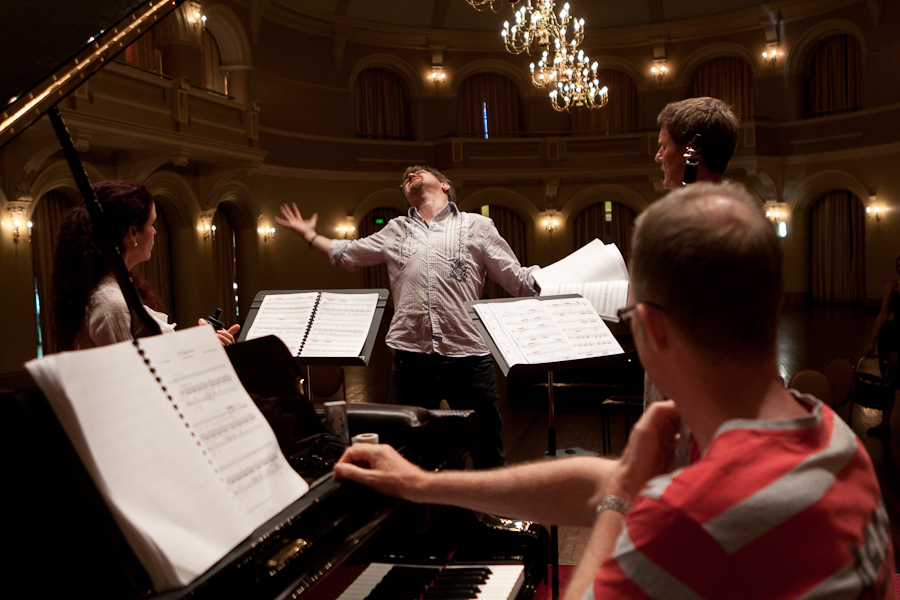
The first of these love songs (some nights there are no words) marks the end of the first section of the work and the second (Seine) occurs at the beginning of the final section. Throughout the central section of the cycle, an ever-darkening series of settings incorporate expanding musical means (including a quote from Schoenberg’s Pierrot Lunaire) and end with a clarinet solo – a reflection on the text ‘how great the diameter of solitude’.
Blackwood was premiered on Sunday 13th February 2011 at Government House Ballroom presented by the Perth International Arts Festival and Tura New Music. Janet Holmes à Court added to her art collection Brendon Darby’s diptych Blackwood Song during the interval of this performance and generously allows the art to be included in all performances. Brendon meticulously incorporated parts of Kevin’s poetry into the paintings.

Iain said “My joy in writing this work was that it was in fact not an act of solitude. I was writing for dear friends and colleagues – musicians of the highest order whom I have had the pleasure of making music with for many years. I would like to thanks Sara, Allan and Graeme for their patience, facility and unfailing generosity whilst the piece emerged, Jody Harrison for commissioning it (with assistance from the Music Board of the Australia Council) and of course Kevin for his wonderful words that help transport us all to our own places of calm and deep contentment.”

Iain Grandage 2010

Iain Grandage programme notes (2011):

Text:

The texts of the song cycle Blackwood track the course of the Blackwood River in the South-West of Western Australia from its head to the Indian Ocean. However on another, more personal level they track a very human tale of birth, love and transcendence. The tension between the expanse of landscape and the intimacy of the human being within it is, for me, integrally connected to our sense of Australian identity. It has long been an inspiration to me, as it has many Australian composers.

Reviews:

“This is a uniquely West Australian project inspired by the Blackwood River. It is a beautiful work for voice, clarinet and piano, the unique combinations of which produce several wonderful moments during the work. It is a very engaging piece with great unity from movement to movement leaving the listener often unaware of the change until later.”

APRA/AMC Classical Music Awards Judging Panel

TEXT

prelude

how great the diameter of solitude?

(i) arterials

across the back of this land,

across knots and bones

thin rivulets of leaving

thoughts that fall then join in flow

at gravity’s whim

across the back of this land

and throat’s of crow and logic’s

smooth stones mark these veins,

thin rivulets of leaving

long sentences curling with

sibilance whisper

across the back of this land

(iii) three rivers

(i) the afternoon river

is patient and

festooned with kookaburra

and full up on winter and

the colour

of my shoe with

white froth from upstream

and through old glass are

tuarts on the

far bank

and inwardly rippled with the

worryings of larvae

as a duck cuts

against flow and

seeps into the old stool

lying, half in

half out

and ignores the rusted

sculptings of black cockatoos-

knows sunset is due

many attempts at the one

breath, all bleeding, these

thin rivulets of leaving

as wet bracken gifts to the

distant pull of brine,

across the back of this land

thin rivulets of leaving

(ii) some nights there are no words

some nights there are no words,

just an undressing,

a gradual nakedness

the Blackwood ripples, swarms

and we breathe it in,

us born-agains lying sweet and fragile

by its side,

lingering,

hypnotised by the river’s lick

of wounded land.

marooned beneath the sooty sky

shrubs play chinese whispers

but settle longer now,

luxuriating, shivering a little

as frost too seeks a skin

on which to shrink,

us two freckled blue,

smeared,

but patient, pushing thought

through unbuttoned sleeves

some nights there are no words

(ii) today’s river

like religion, drowning

the old stool,

like new pewter,

knows of rain

(iii) the last river

the last river was before the

last river is old glass the

last river is raven and green

oil drum the last river is

story unseen the last river

knew two ducks the last

river has taken more land the

last river beyond sunlight

the last river before moon the

last river is gnarled bones

of tuart the last river too

dark for dreams the last river

won’t be written down

(iv) night river

gums stand in second-

hand moonlight, river

dark, murmuring its

creed, somewhere close, metallic

notes of night

parrot, frogs ’wooden

reply, careless slap

of wet syllables

(vii) then sea

before mouth, green pearl,

river’s offering

or just forgotten?

moon indifferent

river offering

gush of fresh in brine

moon indifferent

frogs throating their known

against the pylons

of jetty. under-growth servers the purpose

of prayer cushion. how

great the diameter of solitude?

(v) (instrumental)

gush of fresh in brine

wind shaves banks to dune

frogs throating their known

wind shaves banks to dune

but, not forgotten

before mouth, green pearl

(vi) Seine

so we took us to stream, you swum.

I did not. we watched haze of late day

smudge in the banks, you spoke. I did not.

a man with road and line and fly

sewed and burred the murked skin. You dozed.

I did not. We drank, just a bit, sips,

wine your Aunt left a long time back, a

crisp white which tugged us to now. you

moved close. I did too. It could have been

the wine, the time, the way the sun

slunk back to wait ‘til dawn, could have been

the light, how white and hope and ash

and loss etched and webbed and made us taut

but slack and small and one, could have

been the choir of frogs that bumphed and burped

to each and all from the rocks and

scree near the dam. it was, we think, all

of these things. You asked. I said yes

Poems © Kevin Gillam.

Reproduced here with permission of the author.

https://limelight-arts.com.au/reviews/iain-grandage-blackwood-allan-meyer-sara-macliver-graeme-gilling/

https://www.australianmusiccentre.com.au/work/grandage-iain-blackwood

Blackwood is available on Spotify.