Search names, events, places, organisations, and sources across the archive.
Person
COPLAND, Aaron
Brooklyn, New York was a bustling place at the turn of the last century, filled with people of many nationalities. Many were immigrants; some were customers of Copland’s Department Store on Washington Avenue. Described by Aaron Copland as “a kind of neighborhood Macy’s,” the store was operated by Sarah and Harris Copland, Russian-born, Jewish immigrants. They lived above and to the side of the store with their five children. Everyone in the family worked at the store. “Copland’s” was the center of their lives.
Harris and Sarah Copland outside of Copland’s Department Store, 1922
“The store proved to be influential in the shaping of my formative years,” Copland explained. “I took the cash register from time to time, learning the responsibility and trust the job implied. Artists have usually been thought to be nitwits in the handling of money. No one has ever accused me of that particular failing.”
When his friends joked about his frugality, and Leonard Bernstein called him “plain,” Copland would object good-naturedly: “What do you expect from the son of shopkeepers!” It was in the store that Aaron learned the value of hard work. “The daily routine was demanding, with Saturdays and sale days particularly exhausting, and Christmas the busiest time of all,” he recalled. “I worked after school. Later on it occurred to me that I was selling toys to kids my own age!”
In preparation for his autobiography, Copland talked about his family. He never looked for hidden meanings. His father came from Russia and the family settled on the East Coast, but his mother’s family, the Mittenthals, were more adventurous. They settled in Texas and sold dry goods until Jesse James’ brother, Frank, robbed the store and the family moved north to the Lower East Side of New York City. Sarah Mittenthal had spent her first nineteen years among cowboys, Indians, and immigrants. Copland was often asked, “How could a Jewish boy from Brooklyn write cowboy music?” He would respond, “Well, all American boys love the West!” or “Agnes [De Mille] insisted.” Not inclined towards self-analysis, he did not recognize a connection between Billy the Kid or Rodeo and his mother, who had grown up in Texas and sang Western folk songs to her youngest child. The Mittenthal relatives believed that their famous cousin’s dignity and reserve were southern traits from their side of the family.
Aaron Copland at the age of 9 with his sister Josephine
Copland grew up with so many people around him that he was never lonely, but there was a certain amount of benign neglect that actually proved advantageous. He was left to make his own decisions. When he asked for piano lessons, the reaction was not enthusiastic–they had been given to his siblings with little success–but his parents agreed that he could find a teacher himself if he wanted lessons, and they would pay. Where this desire and talent to be a musician came from, no one knew, including Copland himself. He once wrote in a brief autobiographical sketch: “I was born on a street in Brooklyn that can only be described as drab…” There was no connection of any kind to the arts. When Aaron told his father that he wanted to be a musician, Harris Copland exclaimed, “Where do you ever get such an idea?” But Aaron persisted, enduring “the tough guys around the block” who called him “sissy” and teased him about carrying a case with music. He found a few artistic friends who talked to him about France and wrote poetry. When he knew he needed a higher level of instruction, he arranged for lessons with the well-known New York musician Rubin Goldmark. “I will never forget the excitement of going over the Brooklyn Bridge to Manhattan!” Copland exclaimed. Thus began a lifelong attachment to New York City. But not to Rubin Goldmark. Copland soon learned to keep his more imaginative pieces to himself, much as Charles Ives had done earlier when studying with Horatio Parker at Yale.
While working with the Copland papers and manuscripts that were in file cabinets in the basement of his house in Peekskill, New York, I came upon six workbooks of assignments for Rubin Goldmark. Copland was astonished to see things he had not looked at for sixty years. “Holy Moses!” he exclaimed, “I kept everything!” (He actually used expressions like this, as well as “gee whiz” and “golly.”) As we turned the pages of one folder labeled “Juvenilia,” Copland gleefully read the instructions from Goldmark: “No parallel fifths! No fourths! No octaves!” In response to my comment about how far he had strayed from these exercises, he said, “I had to learn it somewhere, and this was as good as it got in those days.” No anger, no criticism of Goldmark, no impatience to move on. Only humor at being called “the young modernist” of the class at the graduation recital.
Copland had been on the lookout for a way to get to France, “where everything new and exciting was happening.” He applied and was accepted for the first fellowship at the Conservatoire Americain at the Palace of Fontainebleau. Goldmark insisted Copland could not go without mastering sonata form. After composing a complete and proper sonata to satisfy Goldmark, Copland was free to board the ocean liner France for his first European crossing and what would be the most meaningful years of his life. It was five months before his twenty-first birthday. He had never been further from home than Manhattan.
Nadia Boulanger and her class, Paris, 1923. Library of Congress, Music Division.
Fontainebleau was a good introduction to France before going on to Paris. While at the Palace, a friend insisted Copland attend a harmony class taught by a young Frenchwoman, Nadia Boulanger. He was so impressed that he made a difficult decision–she was to be his teacher. Later, he remembered, “I hesitated, because I had never heard of any composer who had studied with a woman.” The good news was that it cost less: only 60 francs (about $4.20). As usual, his parents trusted him to make the right decision.
Copland, Virgil Thomson, and Melville Smith were Boulanger’s first American students. They were followed by Roy Harris, Walter Piston, Elliott Carter, and many of the century’s composers and musicians. Her students, who became known as the “Boulangerie,” called her “Mademoiselle.” She recognized Copland’s talent from the start, as he did hers. In later years, he often said, “I don’t know what my career would have been like without her!”
Copland was immensely talented–but he was also the right person in the right place on several crucial occasions. For example, it happened that Serge Koussevitzky was assuming his post as music director of the Boston Symphony Orchestra at the very same time Copland was planning to return to the states in 1924. Boulanger took Copland to see the famous conductor in Paris. After Copland played part of his only orchestral work, the ballet Grohg, on the piano Koussevitzky said, “You vill write an organ concerto, Mademoiselle vill play it, and I vill conduct!” (In the end, Walter Damrosch led the first performance of the concerto, with the New York Symphony.) Copland had never heard a note of his own orchestration, and here was the great conductor asking for a major work to be played by both the Boston Symphony Orchestra and the New York Symphony (one of the earlier incarnations of the New York Philharmonic). When Copland asked his teacher, “Do you really think I can do it?” she pointed a finger at him. “You can do it!” That was the end of the discussion.
A year of study in France became three. While far from home, Copland began to think about finding a distinctively American sound. “There is a French-sounding music, a German sound, why not American? We had done it in ragtime and jazz, but not in the kind of concert music I was interested in.” He returned to New York in 1924, totally unknown, without a job, but with the Koussevitzky commission in his pocket and a determination to promote American music. From the start of what would become a spectacular career, Copland had the support of an influential teacher and a major conductor with an orchestra at his disposal. “I’m a lucky guy,” was Copland’s genial way of recognizing his extraordinary good fortune.
Copland’s primary goal was to compose the best music he could. A quality of excellence is evident in all his work, from a wide range of abstract concert music to collaborative works for radio, film, ballet, and opera. He had a secondary goal: to promote the cause of American music and to increase performance opportunities for composers. Copland was at the center of activities in the world of contemporary music for decades. His efforts helped establish American music on the world scene, and his leadership and dedication as a “good citizen” set an example for composers that followed after him.
Copland changed very little through the years. He was a private person and kept personal affairs to himself, as he believed they should be. Even those closest to Copland were not sure they really knew him. He was supremely interested in all aspects of music to the exclusion of other things. He did not pay much attention to the other arts, except certain kinds of literature, such as biography. He had no hobbies, nor did he care much about food, sports, or gardens. But anything and everything relating to music interested him. He loved to hear gossip about the music world from visitors, and very late in life when he could no longer go to concerts he would still ask, “What’s happening out there? Who are the young composers? What are they writing?” He laughed when told tonality was back, saying he was not aware it had gone anywhere, and he was amused to hear about Minimalism. “By definition, it can’t do much harm, can it?” His wit and good humor made for good company.
Leonard Bernstein and Aaron Copland at the rehearsal for the world premiere of Copland’s Connotations, Philharmonic Hall, 1962. Courtesy of the New York Philharmonic Leon Levy Digital Archives. (Photo: Bert Bial)
“Simplicity” is a word that has been used to describe both the man and his music. If it is simplicity, then it is of the most complex kind. Copland was a complicated combination of genuine modesty and supreme confidence. He knew who he was and what he had accomplished, and he was very sure of himself musically, rarely adopting suggestions from others, even Boulanger or Koussevitzky. He would be interested, listen politely, then inevitably stay with his original decision. The only change he has ever accepted came from Leonard Bernstein, who deleted a few measures in the last movement of the Third Symphony. Copland didn’t appreciate the cut being made and played first without his permission, but he was so admiring of Lenny’s musicianship that he agreed for artistic reasons. Copland and Bernstein, totally different personalities, were very close, personally and musically.
Special birthday celebrations began with Copland’s 50th and continued to the 90th. He enjoyed them, mostly because these occasions generated performances of his music. He was especially pleased when his “neglected children” were included–those pieces played less often than the more popular ones. Copland’s long life and career paralleled what was happening around him. Although interested in what was new, he was not, like Ives and other innovators, far ahead of his time. When his music changed, as it did several times, it intuitively mirrored the world around him–from periods when he composed esoteric intellectual pieces, such as the three major piano works and the Short Symphony, to when he wrote the more accessible collaborative ballets with Lincoln Kirstein, Eugene Loring, Agnes De Mille, and Martha Graham. Commissions and extra-musical conditions might stimulate Copland’s imagination, but when he got down to composing, it was musical ideas that generated his decisions. The result was a “Copland sound” that is recognizable in all his work. It is a sound that became synonymous with the finest values of America to the world.
Vivian Perlis was a Historian specializing in 20th-century American music. On the faculty of the Yale School of Music, she was founding director of the Oral History Project in American Music. She was known for her recording and film productions, lectures, and publications among them, Charles Ives Remembered, an Oral History and as co-author with Aaron Copland, Copland: 1900 Through 1942 and Copland Since 1943. Television productions include documentaries on Eubie Blake, John Cage, Copland, and Ives.https://www.aaroncopland.com/about/the-man-behind-the-music/CLARINET CONCERTO
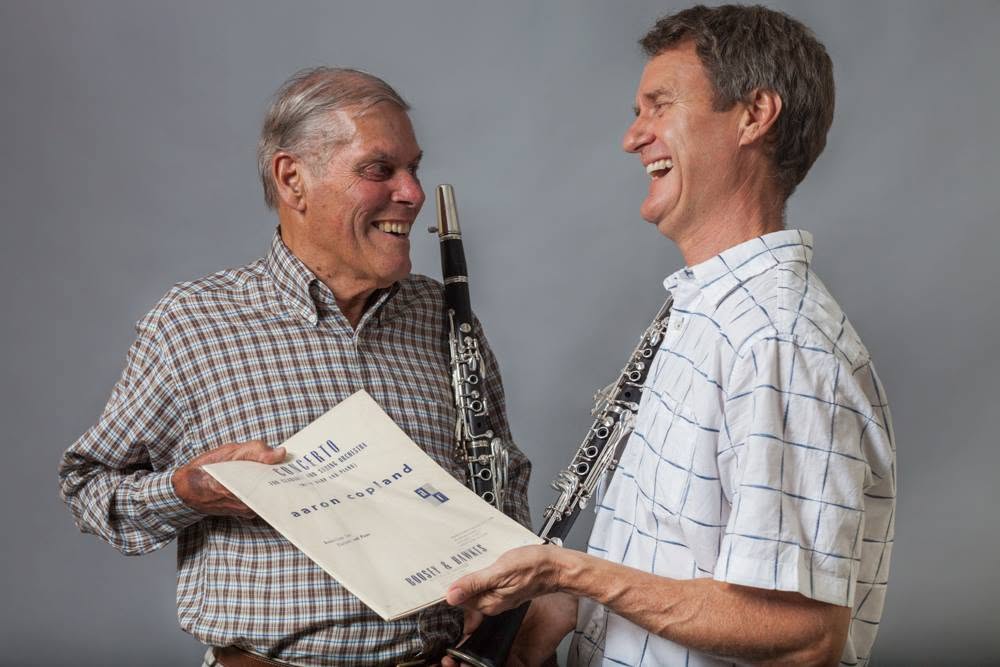
“The renowned jazz clarinetist Benny Goodman asked Copland to compose a work for him. The result was a two-movement concerto: the first section is one of Copland’s most lyrical and melodious creations; the second is in an all-out jazzy style replete with a glissando or jazz “smear” at the end. The movements are connected by a cadenza for the soloist. Benny Goodman said in an interview, “I always felt good about that commission and about playing the Concerto with Aaron conducting.” Since then, many of the foremost clarinetists worldwide have performed the piece.” https://www.aaroncopland.com/works/clarinet-concerto/
Jack Harrison performed the Australian premiere of Aaron Copland’s Clarinet Concerto with the West Australian Symphony Orchestra, presented by the Australian Broadcasting Commission.
MUSIC – 3pm MARCH 11 1962 Fremantle
There will be an interesting programme at the W.A. Symphony Orchestra’s free concert in the Fremantle Town Hall at 3pm tomorrow. The orchestra and clarinettist Jack Harrison will perform a concerto by Aaron Copland and the orchestra programme will include Rossini’s “Thieving Magpie” Overture, and arrangement of Bach choral prelude and Mussorgsky’s “A Night on the Bare Mountain”. The West Australian Saturday March 10 1962
COPLAND CLARINET CONCERTO – AUSTRALIAN PREMIERE
3pm MARCH 11 1962 Fremantle
There will be an interesting programme at the W.A. Symphony Orchestra’s free concert in the Fremantle Town Hall at 3pm tomorrow. The orchestra and clarinettist Jack Harrison will perform a concerto by Aaron Copland and the orchestra programme will include Rossini’s “Thieving Magpie” Overture, and arrangement of Bach choral prelude and Mussorgsky’s “A Night on the Bare Mountain”.
The West Australian Saturday March 10 1962
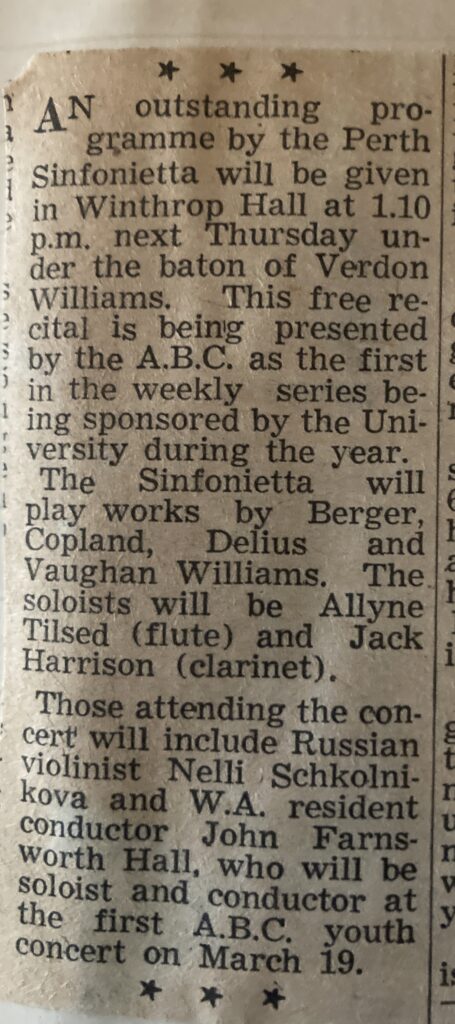
MARCH 14th 1963
An outstanding programme by the Perth Sinfonietta will be given in Winthrop Hall at 1.10pm next Thursday under the baton of Verdon Williams. This free recital is being presented by the A.B.C. as the first in a weekly series being sponsored by the University during the year. The Sinfonietta will play works by Berger, Copland, Delius and Vaughan Williams. The soloists will be Allyne Tilsed (flute) and Jack Harrison (clarinet). Those attending the concert include Russian violinist Nelli Schkolniskova and W.A. resident conductor John Farnsworth Hall, who will be soloists and conductor in the first A.B.C. Youth Concert on March 19.
LUNCH MUSIC IS PROMISING – By Sally Trethowan – MARCH 14th 1963
The programme for this year’s free lunch-hour concert series held on Thursdays in Winthrop Hall is even more interesting and varied in type of music and number of performers than last year’s.
If the first concert given yesterday to a large audience by the Perth Sinfonietta, is any indication of the quality, the weekly programmes will be exciting musical experiences and a major contribution to musical life in W.A.
The Perth Sinfonietta always gives us an entertaining, thought-provoking programme. Conductor Verdon William’s introductory comments are instructive, to the point, and do not offend by being too technical or too long. The choice of composers in yesterday’s concert – Berger, Vivaldi, Copland, Delius and Vaughan Williams – leaned heavily towards the moderate, making the Vivaldi Flute Concerto (“The Goldfinch”) a pertinent, pleasant comment on, and exposition of, a more elegant and graceful age. The young flautist, Allyne Tilsed, who has just joined the W.A. Symphony Orchestra has a sureness of tone control which allows the most delicate innuendos without over or under emphasis. In Vivaldi’s “Goldfinch”, flute and strings chattered and trilled in animated conversation, whereas in the Copland Clarinet Concerto, a different symphonic relationship exists between orchestra and clarinet.
Clarinettist Jack Harrison interwove the sure mellowness of tone and bell-like clarity of his instrument into the orchestral texture of the work.
The brief overture of Jean Berger that began the programme and a Delius “Serenade” and Vaughan Williams “Fantasia on Greensleeves” which closed it, are works typical of the individuality of their composers, but have in common the fact that they make light and easy listening.
The West Australian March 15 1963
15.3.1963
Aaron CoplandClarinet Concerto (1948) AUSTRALIAN PREMIERE
Jack Harrison (clarinet) Perth Sinfonietta Verdon Williams (conductor)
Free lunchtime concert Winthrop Hall, University of Western Australia
Allan Meyer performed the Copland in 2013, just after Jack Harrison passed away.
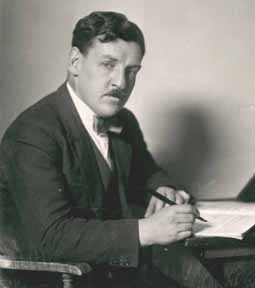
Gordon Jacob was the musician’s musician par excellence. He was noted for his complete professionalism as a composer and arranger of music both light and serious. Jacob was born in London on 5 July 1895 and died on 8 June 1984, shortly before his 89th birthday. After his initial schooling at Dulwich College, he became a student at the Royal College of Music in London, where his tutors included Sir Charles Villiers Stanford, Sir Hubert Parry and Herbert Howells. He taught briefly at Birkbeck and Morley Colleges, also in London, before returning to the Royal College as a lecturer in 1926; he was to remain there until his retirement in 1966. His students there included Malcolm Arnold, Imogen Holst (composer daughter of Gustav), Elizabeth Maconchy and Bernard Stevens.
Gordon Jacob is remembered for his achievement in a number of fields. His textbooks Orchestral Technique (1931), The Composer and his Art (1955) and The Elements of Orchestration (1962) are still widely read and respected. He arranged a number of works by other composers, producing orchestral versions of Vaughan Williams’ English Folk Song Suite and Holst’s First and Second Suites and Moorside Suite, all originally for wind or brass band, and orchestrating items from the Fitzwilliam Virginal Book as the William Byrd Suite (1922, rev. 1939); Mam’zelle Angot is a ballet suite arranged from Lecocq’s opera of 1872.
Jacob also wrote a number of original works for symphonic band, including An Original Suite (1928), Music for a Festival (1951), Flag of Stars (1956), the Concerto for Band (1970), Double Concerto (1976) and Celebration Overture (1984).
His original orchestral works include two symphonies (1929 and 1944), three sinfoniettas (1942, 1951, 1953), a Divertimento for small orchestra (1938), the Galop joyeux (1937) and a generous quantity of concertante pieces: for viola, piano (two concertos), oboe (two concertos), bassoon, cor anglais, horn, violin (two concertos), flute (two concertos), cello, trombone and harmonica.
Gordon Jacob is published by Boosey & Hawkes.
This biography can be reproduced free of charge in concert programmes with the following credit: Reprinted by kind permission of Boosey & Hawkeshttps://www.boosey.com/composer/Gordon%20Percival%20Septimus+Jacob?ttype=BIOGRAPHYhttps://www.gordonjacob.net/index.htmlRHAPSODY FOR ALTO SAXOPHONE AND STRINGSwas composed onOctober 27, 1948and was originally written as a Rhapsody for English Horn (Cor Anglais) and Strings for the oboist Terence MacDonagh. Jacob simultaneously created the alternative arrangement for the E-flat alto saxophone, which has since become a staple in classical saxophone repertoire.In March 1963 Jack Harrison performed the Australian premieres ofGordon Jacob’s Rhapsody for Alto Saxophone and Strings
andRalph Vaughan Williams’s Romance for Harmonica and Orchestra
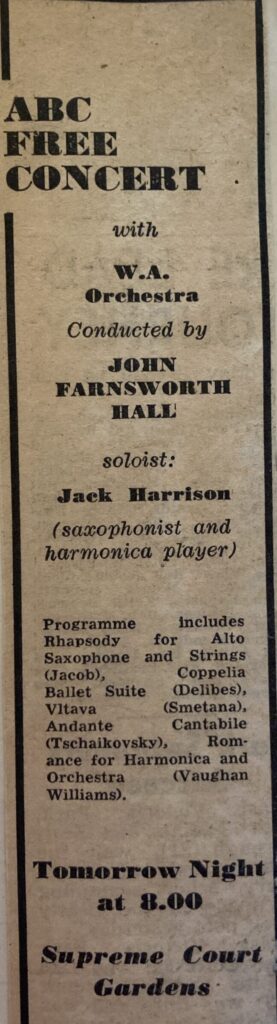
ABC FREE CONCERTWithW.A. Symphony OrchestraConducted by John Farnsworth HallSoloist: Jack Harrison (saxophonist and harmonica player)Programme includes:Rhapsody for Alto Saxophone and Strings (Gordon Jacob)Romance for Harmonica and Orchestra (Vaughan Williams)Tomorrow Night at 8pmSupreme Court Gardens
Mar 1963
Gordon Jacob Rhapsody for Alto Saxophone and Strings (1948) AUSTRALIAN PREMIERE
Vaughan WilliamsRomance for Harmonica and Orchestra (1951) AUSTRALIAN PREMIERE
MUSIC – By Peter Hellstrom – Festival Of Perth 1966The Master of Queens Musick, Sir Arthur Bliss, has told the Festival Of Perth committee that the planning of the musical programs in the coming festival is a magnificent gesture to British music and should be more widely known. That it has become well known already in Britain is showing by letters from many leading authorities there they include congratulations from the executive of the Composers Guild of Great Britain. Though some prominent English music festivals like Cheltenham Aldeburgh and the longest established Three Choirs Festival feature their country music, no British festival has in recent times included such an extensive and exciting range of British music in one series. Works of nearly 70 composers are included. The Perth programs have been wisely spaced over the six week festival period and though many of the concerts will start at the customary 8 pm some will be at 6 pm to enable patrons to attend another festival attraction the same evening.Works by Vaughan Williams, Gordon Jacob, Howard Ferguson, Lennox Berkeley and Michael Tippett will be new to W.A. The London Symphony Orchestra conducted by Colin Davis will introduce Bliss’s “Discourse for Orchestra” to Australia in one of its Perth concerts. In the other, Tippitt’s Symphony No. 2 and Stravinsksy’s Symphony in Three movements will be played here for the first time. Leading W.A. musicians appearing as soloists in the festival will include soprano Molly McGurk who will sing Benjamin Britten’s song cycle Les Illuminations with the W.A. Symphony Orchestra. She will also sing the solo soprano part in the University Choral Society’s performance of Vaughan Williams A Sea Symphony. Stephen Dorman will be the accompanist for tenor David Galliver’s three British song recitals. He will also partner violinist Vaughan Hanly in a Sonata recital and will play the solo part in constant Lambert’s Concerto for Orchestra and Nine Instruments. Jack Harrison will be the soloist in David Tunley’s Clarinet Concerto and will be joined by the Oriel Quartet in Bliss Clarinet Quintet. Graham Wood will introduce James Penberthy’s Romance for Violin and Orchestra and Alice Carrard will be the pianist with the A.B.C. Wind Players in Rawsthorne’s recent quintet. Madame Carrard will be joined by Mr Dornan, Stephanie James and Michael Cole to perform Malcolm Williamson’s new Concerto for Wind Quintet and two pianos. The new university organist, Mr John Hind, will be soloist in a program which will feature the W.A. Bach Society. The Oriel Quartet will also be the soloists with the W.A. Symphony Orchestra in Elgar’s Introduction and Allegro for strings and will give a separate recital of works by Howells, Frank Bridge, John Exton (the newly appointed senior lecturer in music at the university) Gerald Finzi, Elizabeth Lutyens and Edmund Rubbra. The West Australian September 1965FOURTEENTH ANNUAL FESTIVAL OF PERTH – THE ABC PRESENTS(in association with Festival of Perth Committee) Opening Concerts ofMUSIC OF BRITAIN SERIESA 15-concert feast of music from the great heritage of British compositions and including many new works.Tuesday Feb 8 1966A.B.C. Festival OrchestraConductor: Vaughan HanlySoloist: Jack Harrison (clarinet)Programme:Symphony No. 4 (Boyce)Little Symphony (Jacob)Concerto for Clarinet and Strings – first performance (Tunley)Serenade (Ferguson)B Flat Divertimento (Berkeley)WINTHROP HALLReserve Prices 11/-, 8/6, Unreserved from 5/ at hall after 7pmhttps://www.gordonjacob.net/
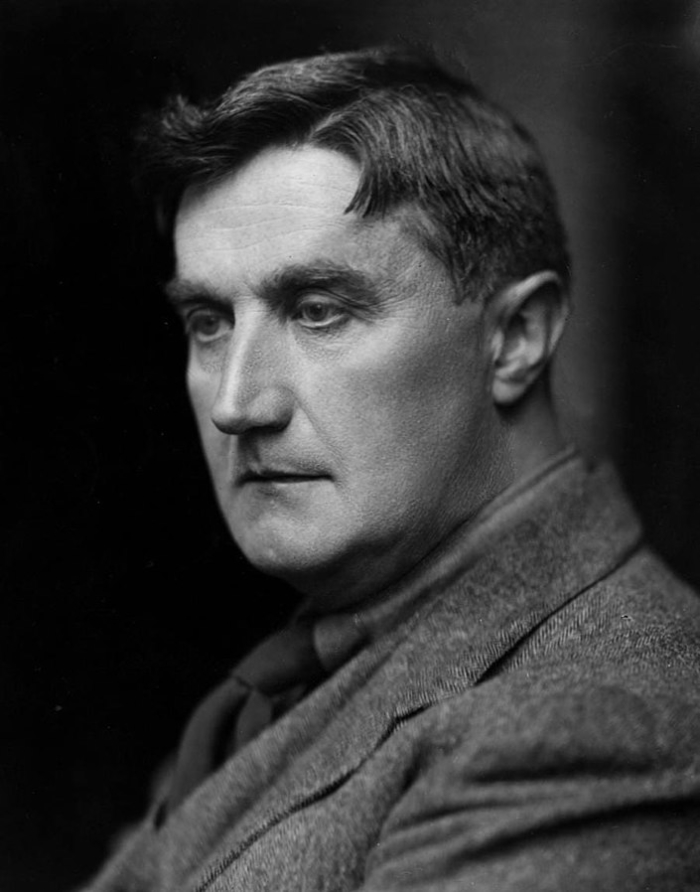
Ralph Vaughan Williams OM (12 October 1872, Down Ampney, Gloucestershire – 26 August 1958, London) was an English composer of symphonies, chamber music, opera, choral music, and film scores. He was also a collector of English folk music and song: this activity both influenced his editorial approach to the English Hymnal, beginning in 1904, in which he included many folk song arrangements set as hymn tunes, and also influenced several of his own original compositions.
Vaughan Williams spent most of his life in London. He studied the viola, piano and organ, and he wanted to compose, but his family discouraged him from an orchestral career. He graduated from Trinity College, Cambridge, and studied composition at the Royal College of Music, as well as organ and piano with several teachers, Although he also studied abroad with Max Bruch and Maurice Ravel, his style remained individual and English. He was appointed organist at Lambeth, and his interest in English folk music dates from his stay there. He became good friends with Gustav Holst, and they often shared their works in progress with each other. His work on the English Hymnal greatly influenced his musical career.
He joined the Royal Army Medical Corps in France during World War I. From the 1920s onward, he was in increasing demand as a composer and conductor. He composed simple pieces and grand orchestral works and is considered the outstanding composer of his generation in England. According to Hubert J. Foss in The Heritage of Music, “In Vaughan Williams we hear the historic speech of the English people. What he gives us in music is the language of the breakfast table. It is also the language that Shakespeare wrote.”
https://www.windrep.org/Ralph_Vaughan_Williamshttps://www.fabermusic.com/we-represent/ralph-vaughan-williamsROMANCE FOR HARMONICA, STRINGS, AND PIANO
This whimsical piece for harmonica accompanied by string orchestra and piano was written for the great harmonica player Larry Adler (for whom Malcolm Arnold wrote his Harmonica Concerto). It was premiered by Adler in New York in 1952, a performance that was swiftly followed by another at the Proms under the baton of Sir Malcolm Sargent. Vaughan Williams writes idiomatically for the instrument without sacrificing his own distinctive compositional style, exploiting its expressive possibilities and showcasing the virtuosity of the soloist.
https://global.oup.com/academic/product/romance-for-harmonica-9780193693265?cc=au&lang=en&#In March 1963 Jack Harrison performed the Australian premieres ofGordon Jacob’s Rhapsody for Alto Saxophone and Strings
andRalph Vaughan Williams’s Romance for Harmonica and Orchestra.
Mar 1963
Gordon Jacob Rhapsody for Alto Saxophone and Strings (1948) AUSTRALIAN PREMIERE
Vaughan Williams Romance for Harmonica and Orchestra (1951) AUSTRALIAN PREMIERE
Jack Harrison (saxophone)
Jack Harrison (harmonica) John Farnsworth Hall (conductor)
West Australian Symphony Orchestra
ABC Free Concert, Supreme Court Gardens Perth, Western Australia
ABC FREE CONCERT 1963 – With the W.A. Symphony Orchestra – Conducted by John Farnsworth HallSoloist: Jack Harrison (saxophonist and harmonica player)Programme includes:Rhapsody for Alto Saxophone and Strings (Gordon Jacob)Romance for Harmonica and Orchestra (Vaughan Williams)Tomorrow Night at 8pmSupreme Court GardensCONCERT – MARCH 14th 1963An outstanding programme by the Perth Sinfonietta will be given in Winthrop Hall at 1.10pm next Thursday under the baton of Verdon Williams. This free recital is being presented by the A.B.C. as the first in a weekly series being sponsored by the University during the year. The Sinfonietta will play works by Berger, Copland, Delius and Vaughan Williams. The soloists will be Allyne Tilsed (flute) and Jack Harrison (clarinet). Those attending the concert include Russian violinist Nelli Schkolniskova and W.A. resident conductor John Farnsworth Hall, who will be soloists and conductor in the first A.B.C. Youth Concert on March 19.LUNCH MUSIC IS PROMISING – By Sally TrethowanMARCH 14th 1963The programme for this year’s free lunch-hour concert series held on Thursdays in Winthrop Hall is even more interesting and varied in type of music and number of performers than last year’s.If the first concert given yesterday to a large audience by the Perth Sinfonietta, is any indication of the quality, the weekly programmes will be exciting musical experiences and a major contribution to musical life in W.A.The Perth Sinfonietta always gives us an entertaining, thought-provoking programme. Conductor Verdon William’s introductory comments are instructive, to the point, and do not offend by being too technical or too long. The choice of composers in yesterday’s concert – Berger, Vivaldi, Copland, Delius and Vaughan Williams – leaned heavily towards the moderate, making the Vivaldi Flute Concerto (“The Goldfinch”) a pertinent, pleasant comment on, and exposition of, a more elegant and graceful age. The young flautist, Allyne Tilsed, who has just joined the W.A. Symphony Orchestra has a sureness of tone control which allows the most delicate innuendos without over or under emphasis. In Vivaldi’s “Goldfinch”, flute and strings chattered and trilled in animated conversation, whereas in the Copland Clarinet Concerto, a different symphonic relationship exists between orchestra and clarinet.Clarinettist Jack Harrison interwove the sure mellowness of tone and bell-like clarity of his instrument into the orchestral texture of the work.The brief overture of Jean Berger that began the programme and a Delius “Serenade” and Vaughan Williams “Fantasia on Greensleeves” which closed it, are works typical of the individuality of their composers, but have in common the fact that they make light and easy listening.The West Australian March 15 1963TELEVISION TONIGHT –SEPTEMBER 16 1963 – SMOOTH, MAN, SMOOTH – LIKE HOTIt caters for the highbrow and the “way-out man”. From the off beat “Take Five” to Tchaikovsky’s soulful Andante Cantabile. No, you don’t have to go to a record shop or have the radios tuned to two stations. What do you do? Tune in to TWO tomorrow night Tuesday September 17th 1963 at 9.30.Entitled Quartets in Contrast, this live show will present a string quartet and a jazz quartet in the same programme and will demonstrate the versatility of each. The jazz quartet is led by Jack Harrison and the string by violinist Graham Wood. The show was devised by ABC Music Supervisor Fred Ackland and will be produce by Jock Millett. The two quartets will combine for the opening number – the Andante Cantabile. In combination, they will also play “Stranger in Paradise”. Arrangements of both tunes have been specially written by Vaughan Williams who is also responsible for the string quartet adaption of Arthur Benjamin’s lively Jamaican Rhumba. The jazz group goes classical with Corelli’s Gigue but also presents some straight jazz with a bracket of four numbers: Take Five, It’s A Raggy Waltz, Little Girl Blue and All the Things You Are. Daily News Monday September 16 1963 page 6MUSIC – By Peter HellstromFestival Of Perth 1966The Master of Queens Musick, Sir Arthur Bliss, has told the Festival Of Perth committee that the planning of the musical programs in the coming festival is a magnificent gesture to British music and should be more widely known. That it has become well known already in Britain is showing by letters from many leading authorities there they include congratulations from the executive of the Composers Guild of Great Britain. Though some prominent English music festivals like Cheltenham Aldeburgh and the longest established Three Choirs Festival feature their country music, no British festival has in recent times included such an extensive and exciting range of British music in one series. Works of nearly 70 composers are included. The Perth programs have been wisely spaced over the six week festival period and though many of the concerts will start at the customary 8 pm some will be at 6 pm to enable patrons to attend another festival attraction the same evening.Works by Vaughan Williams Gordon Jacob, Howard Ferguson, Lennox Berkeley and Michael Tippett will be new to W.A. The London Symphony Orchestra conducted by Colin Davis will introduce Bliss’s “Discourse for Orchestra” to Australia in one of its Perth concerts. In the other, Tippitt’s Symphony No. 2 and Stravinsksy’s Symphony in Three movements will be played here for the first time. Leading W.A. musicians appearing as soloists in the festival will include soprano Molly McGurk who will sing Benjamin Britain’s song cycle Les Illuminations with the W.A. Symphony Orchestra. She will also sing the solo soprano part in the University Choral Society’s performance of Vaughan Williams A Sea Symphony. Stephen Dorman will be the accompanist for tenor David Galliver’s three British song recitals. He will also partner violinist Vaughan Hanley in a Sonata recital and will play the solo part in constant Lambert’s Concerto for Orchestra and Nine Instruments. Jack Harrison will be the soloist in David Tunley’s Clarinet Concerto and will be joined by the Oriole Quartet in Bliss Clarinet Quintet. Graham Wood will introduce James Penberthy’s Romance for Violin and Orchestra and Alice Carrard will be the pianist with the A.B.C. Wind Players in Rawsthorne’s recent quintet. Madame Carrard will be joined by Mr Dornan, Stephanie James and Michael Cole to perform Malcolm Williamson’s new Concerto for Wind Quintet and two pianos. The new university organist, Mr John Hind, will be soloist in a program which will feature the W.A. Bach Society. The Oriel Quartet will also be the soloists with the W.A. Symphony Orchestra in Elgar’s Introduction and Allegro for strings and will give a separate recital of works by Howells, Frank Bridge, John Exton (the newly appointed senior lecturer in music at the university) Gerald Finzi, Elizabeth Lutyens and Edmund Rubbra. The West Australian September 1965THE THREE VOCALISES
(often referred to by the German title Drei Vocalisen)
is a wordless chamber work written for soprano voice and B-flat clarinet.
Composed in 1958, it is one of the final pieces Vaughan Williams completed during the last year of his life, written shortly after his celebrated Ten Blake Songs. The work was dedicated to the soprano Margaret Ritchie and published posthumously by the Oxford University Press.
The Australian premiere of Vaughan Williams “Vocalisen” was performed at Winthrop Hall on 2nd March 1968 at part of the sixteenth Festival of Perth. Jack was paid $50 and one free ticket. The engagement included an appearance “with Miss Streich on two occasions on 2nd March 1968” and to make himself available for “such rehearsals as she may determine after her arrival in Perth on 26th February.”
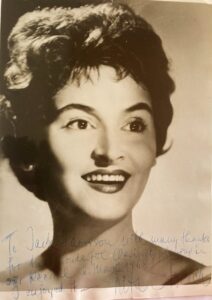
Rita Streich signed photo
Jack had Rita Streich sign a photograph which is inscribed “To Jack Harrison with many thanks for the beautiful clarinet playing in our recital 2 March 1968. I enjoyed it – Rita Streich”. Rita Streich, Super Star – By Sally TrethowanHer rendering of Mahler’s “I Breathed a Gentle Fragrance” was close to perfection, as was her singing of Schubert’s “Shepherd on the Rock”. In this last work, and that of Vaughan Williams, her voice was matched by the sweet, sure expressive clarinet obligato of Jack Harrison.The West Australian Monday March 4 1968Perfection at Winthrop Hall – By Robert D. NussbaumJack Harrison’s role was a still more limited one but again perfect in its way. The clarinet obligato to Schubert’s “The Shepherd on the rock” is probably the most beautiful part ever conceived for that instrument and the work itself ranks high among Schubert’s many fine compositions. Ss one who has grappled with this obligato half a dozen times in the last four year, I’m in a pretty good position to judge the effectiveness of this presentation. Probably taking his cue from the restraint of the soloist and possibly out of unwillingness to overshadow her in any way, Mr. Harrison held back most of the brilliance of which he is capable. From the sustained note at the beginning to the rapid runs of the coda, he held the volume down to about mezzo forte but he still provided the technically flawless, musicianly interpretation that Perth audiences have come to expect from him (and the kind that makes less skilful executants despair). In the Vaughan Williams “Vocalises” he seemed to be accompanying Miss Streich rather than in duet with her; even so, the blend between voice and clarinet was beautifully managed. The” Shepherd on the Rock” gave Miss Streich more opportunity to demonstrate the range of which she is capable than any other single number on the program and she took advantage of it. The Critic Vol. 8 No. 7 22 March 1968
2.3.1968
Vaughan Williams “Vocalisen” (1958) AUSTRALIAN PREMIERE
Jack Harrison (clarinet)
Maurice Till (piano)
Rita Streich (soprano)
Festival of Perth
Winthrop Hall University of Western Australia
1971AN EVENING OF BRILLIANCE WITH FIEDLER – BY PAULINE STEELFoot stamping, applauding concert goers last night persuaded conductor Arthur Fiedler to return to the stage three times after an evening of brilliant entertainment. The music burst into a bubble of merriment as encore of “Fantasia on Greensleeves” by Vaughan Williams and “Aquarius” (demanded twice) were played. The audience had been alternately thrilled, enchanted and amused by the music of Mr. Fiedler and the West Australian Symphony Orchestra. They had packed into Winthrop Hall to hear the second of the ABC concerts for the Festival Of Perth. From the moment the program began with the thrilling chords of the “Triumphal March” from Aida, Mr Fiedler demonstrated the conducting technique that has made him famous under his baton. The W.A. Symphony Orchestra played with precision and great variety of mood. The mysterious atmosphere of Weber’s “Oberon” overture was captured by the Orchestra conjuring up a fairy world. Soloist Jack Harrison demonstrated the beauty and tone of the clarinet during the solo passages of a less well-known work Debussy’s Rhapsody number one for clarinet and Orchestra. He executed the technically difficult piece with great feeling. A highlight of the program was Ibert’s “Divertissement”, a very funny piece with the lead comic role being taken one after the other by wind instruments. The audience enjoyed the fantasy, romance and gaiety of the suite from “The Nutcracker”. The second half of the program ended with a selection from Oklahoma and the fun filled 76 trombones from ”The Music Man”. The West Australian Wednesday February 17 1971
Ralph Vaughan Williams’ Romance for Harmonica and Orchestra – Australian premiere
ROMANCE FOR HARMONICA, STRINGS, AND PIANO This whimsical piece for harmonica accompanied by string orchestra and piano was written for the great harmonica player Larry Adler (for whom Malcolm Arnold wrote his Harmonica Concerto). It was premiered by Adler in New York in 1952, a performance that was swiftly followed by another at the Proms under the baton of Sir Malcolm Sargent. Vaughan Williams writes idiomatically for the instrument without sacrificing his own distinctive compositional style, exploiting its expressive possibilities and showcasing the virtuosity of the soloist.
On 17th March 1963 Jack Harrison performed the Australian premiere at an ABC Free Concert with the West Australian Symphony Orchestra conducted by John Farnsworth Hall . This open-air event was part of the ABC’s Summer Orchestral Concerts series.
Gordon Jacob Saxophone
.
17 Mar 1963
Gordon Jacob Rhapsody for Alto Saxophone and Strings (1948) AUSTRALIAN PREMIERE Vaughan Williams Romance for Harmonica and Orchestra (1951) AUSTRALIAN PREMIERE
Jack Harrison (saxophone) Jack Harrison (harmonica) John Farnsworth Hall (conductor) West Australian Symphony Orchestra
ABC Free Concert, Supreme Court Gardens Perth, Western Australia
ABC FREE CONCERT 1963
With
W.A. Symphony Orchestra
Conducted by John Farnsworth Hall
Soloist: Jack Harrison (saxophonist and harmonica player)
Programme includes:
Rhapsody for Alto Saxophone and Strings (Gordon Jacob)
Romance for Harmonica and Orchestra (Vaughan Williams)
Tomorrow Night at 8pm
Supreme Court Gardens
Gordon Jacob’s Rhapsody for Alto Saxophone and Strings – Australian premiere
Gordon Jacob‘s RHAPSODY FOR ALTO SAXOPHONE AND STRINGS was composed on October 27, 1948 and was originally written as a Rhapsody for English Horn (Cor Anglais) and Strings for the oboist Terence MacDonagh. Jacob simultaneously created the alternative arrangement for the E-flat alto saxophone, which has since become a staple in classical saxophone repertoire.
On 17th March 1963 Jack Harrison performed the Australian premiere at an ABC Free Concert with the West Australian Symphony Orchestra conducted by John Farnsworth Hall . This open-air event was part of the ABC’s Summer Orchestral Concerts series.
Jack performed it on his Henri Selmer Mark VI alto saxophone (serial number M57874, manufactured around 1954–1955.
Gordon Jacob Saxophone
Soloist: Jack Harrison (saxophonist and harmonica player)
Programme includes:
Rhapsody for Alto Saxophone and Strings (Gordon Jacob)
Romance for Harmonica and Orchestra (Vaughan Williams)
Tomorrow Night at 8pm
Supreme Court Gardens
17 Mar 1963
Gordon Jacob Rhapsody for Alto Saxophone and Strings (1948) AUSTRALIAN PREMIERE Vaughan Williams Romance for Harmonica and Orchestra (1951) AUSTRALIAN PREMIERE
Jack Harrison (saxophone) Jack Harrison (harmonica) John Farnsworth Hall (conductor) West Australian Symphony Orchestra
ABC Free Concert, Supreme Court Gardens Perth, Western Australia
Person
HARRISON, Jody
Jody Harrison created this website and edits and adds to it every day.
The internet is not a reliable source, so every effort has been made to only represent sourced material and all corrections are welcome.
This website represents a lifetime of hoarding and sorting physical archival material which now needs to be digitised. It expands upon years of research started by my grandfather William, continued by my Aunty Jill and is ongoing, with the particular assistance of cousin Julie (daughter of Ramon) and all of you.
This website is dedicated to my parents Jack and Marcia. I am the last child of this union and although I never succeeded in a career of music, I attempt to honour them through my strongest skills – hoarding, organisation and my passion for history.
From 1969 Jody studied the piano learning from Patricia Gladstones and later in 1978 with Michael Cole achieving Grade 7 in both piano and the oboe in 1980.
Jody studied ballet with Diana Waldron from 1969 until 1974.
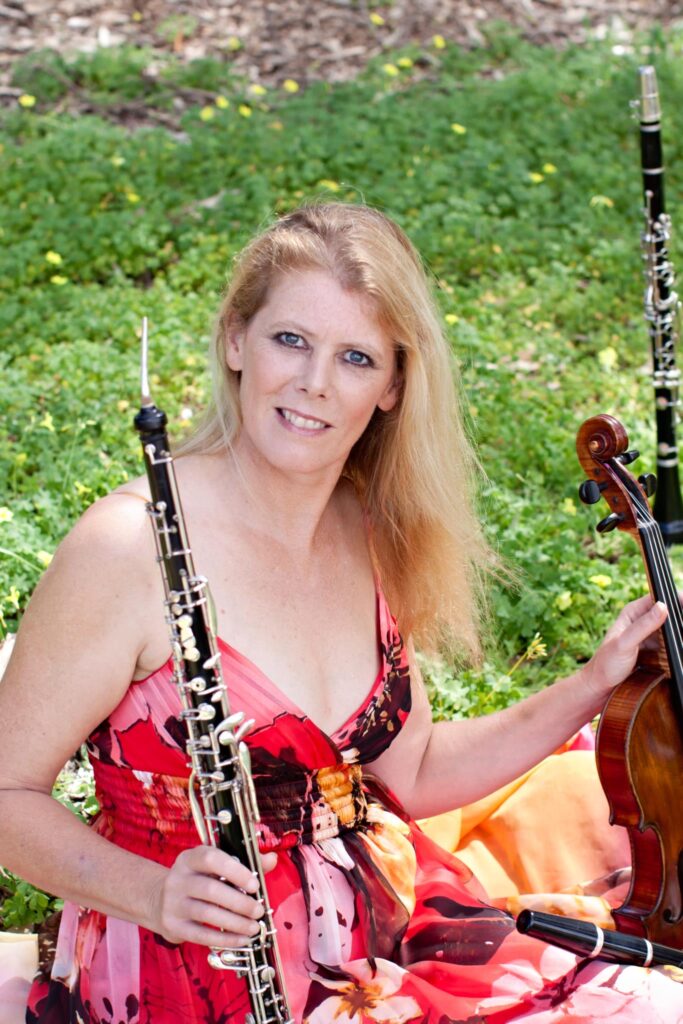
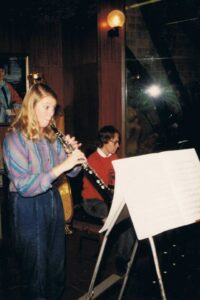
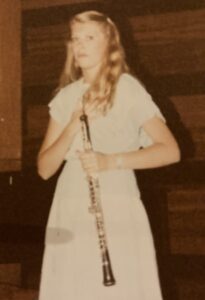
From the age of 12 Jody learnt the oboe, initially from her brother Jay and then from Lawrence Frankel, Joel Marangella and Thomas Indermühle.
Joy performed in the1983 Australian Youth Orchestra season in Perth and was Principal Oboe for their 1985 Adelaide season.
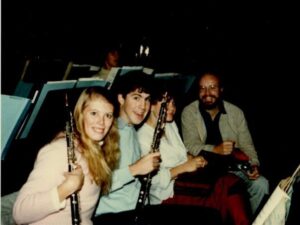
1985 AYO Adelaide Oboe section: Jody Harrison, Anthony Chesterman, Diana Doherty and KenAmanda Dean, Tim White, Jody Harrison, Adrienne Badcock, Peter Grimshaw and Cameron Retchford.1984 I and V Elisa Wilson and Jody in the same frock
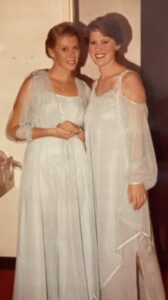
Jody was a W.A. finalist in the 1984 Young Performers Award performing solo cor anglais with the WASO. conducted by Albert Rosen in the Perth Concert Hall in front of 1800 people. Accompanying her in the WASO was her father Jack, brother Jay and oboe teacher Joel Marangella. Elisa Wilson was a vocal finalist and arrived wearing an almost identical frock of floaty pale blue chiffon. The whole experience from beginning to end was terrifying and Jody never needed to perform a concerto again.
Jody Graduated from the University of W.A. with a Bachelor of Music Honours in 1984. She was accompanied by Graeme Gilling for her final recital who invited her back in 1985 to perform in his Masters recital.
Jody accompanied by Margaret Seares in Eileen Joyce Studio1984 Final recital accompanied by Graeme Gilling
In 1985 she was awarded Australian Music Board and Western Australian Arts Council grants to undertake post graduate performance studies at the Zürich Conservatorium of Music with oboist Thomas Indermühle where she studied towards a Soloist Diploma from 1986 – 1987 and attended a Summer School in Provence, France.
On returning to Perth, she continued performing with the W.A. Arts Orchestra and in 1988 completed the first year of a Bachelor of Arts (Arts Management) at Edith Cowan University which she deferred due to a move to Melbourne.
In 1989 Jody worked for Melbourne Radio 3LO and then in December was appointed as Assistant Orchestra Manager with the Melbourne Symphony Orchestra and with whom she also augmented on oboe and cor anglais.
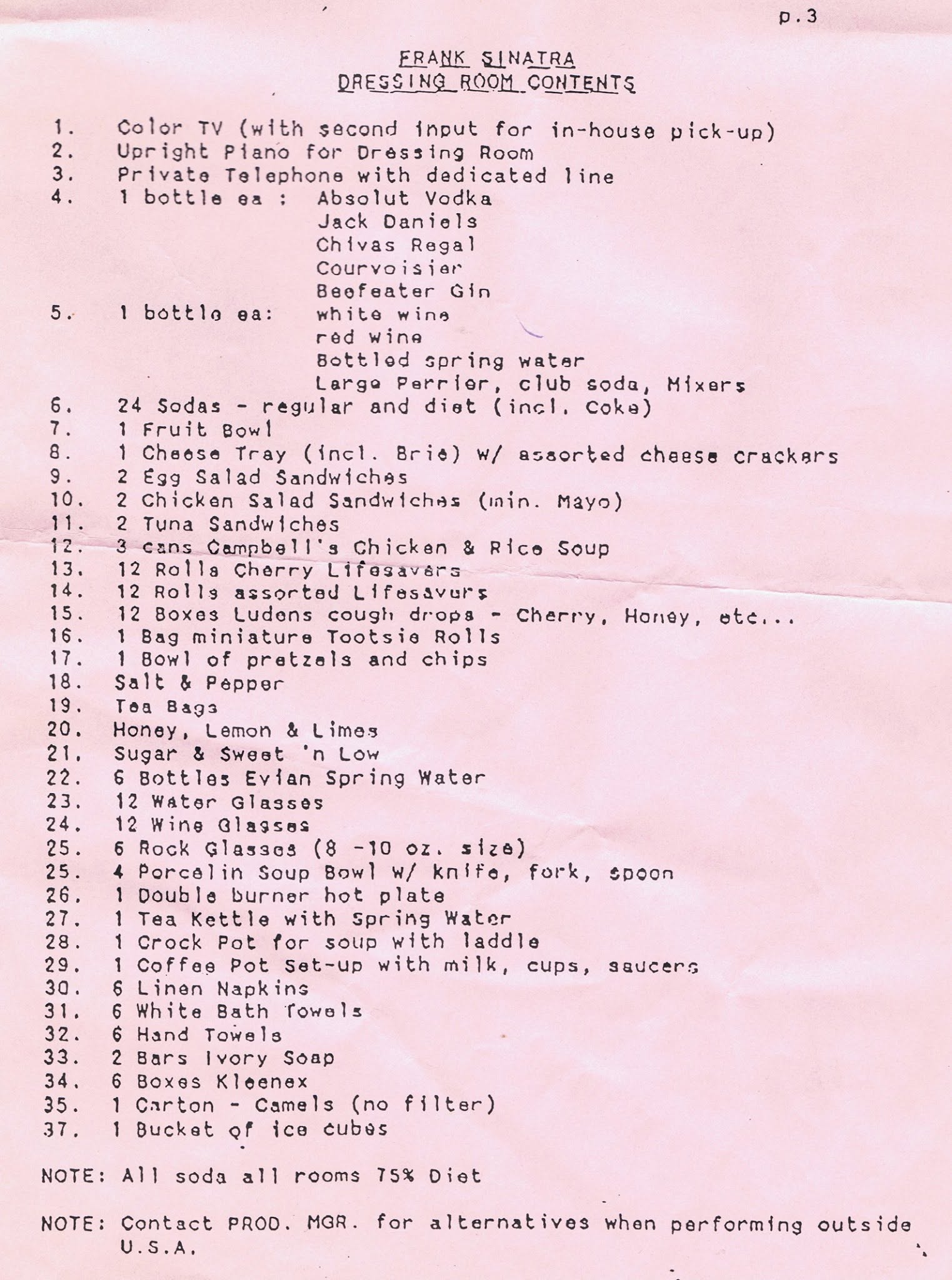
As an Orchestra Manager with Melbourne Symphony, Jody was lucky enough to meet Elton John who had previously toured with the orchestra, was privileged to manage one of the last concerts conducted by Stuart Challender and managed the Frank Sinatra concert in Melbourne in 1991.
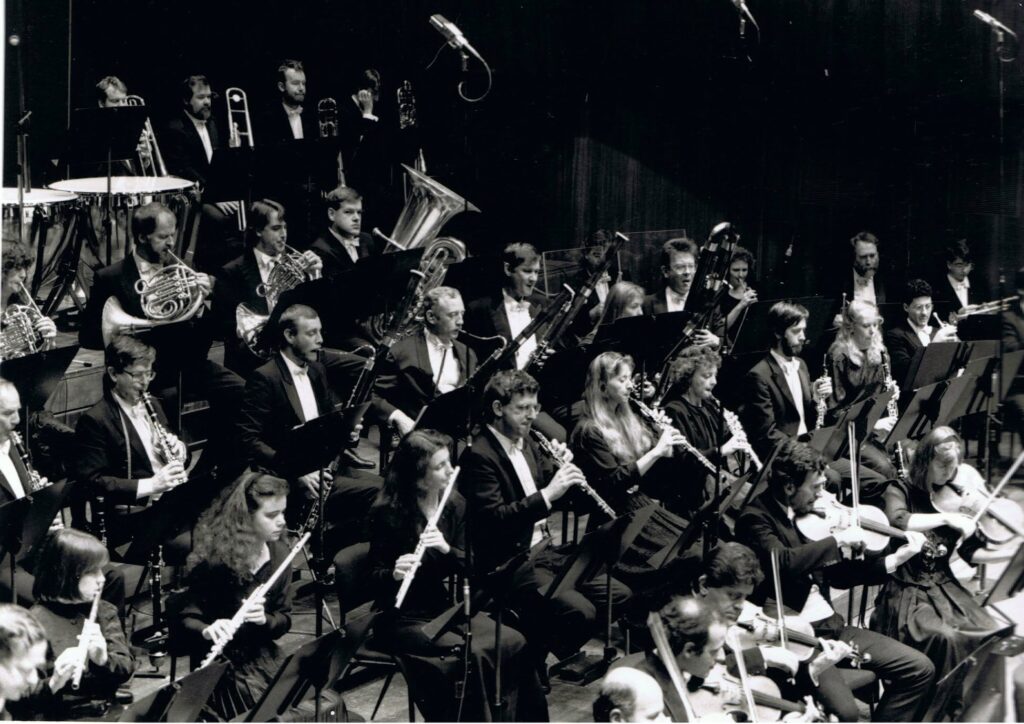
In 1991 she returned to Perth to work in the management of the West Australian Symphony Orchestra, occasionally augmenting on oboe and cor anglais.
1992 WASO Holst “The Planets” at the Quarry Amphitheatre
1993
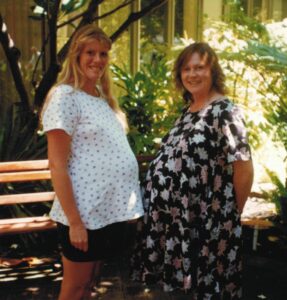
1997 outside the ABC with WASO’s Josie Aitcheson who is 28 weeks pregnant with twins
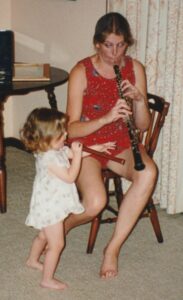
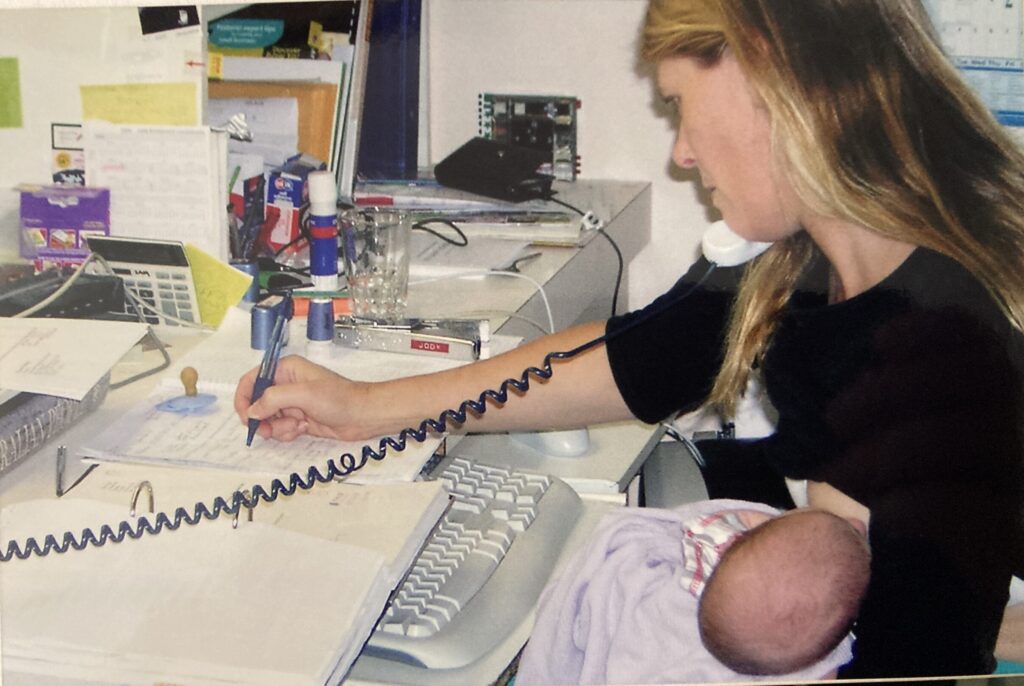
In 1993 Jody had her first child – Samantha and in 1997 another daughter, Jacqueline.
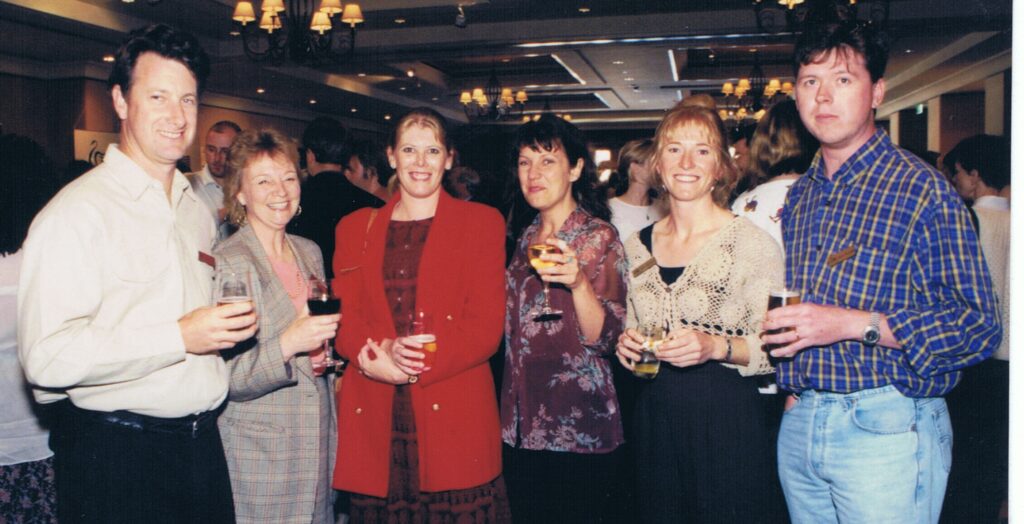
1997 WASO party: Andrew Tait, Clare Bannister, Jody Harrison, Louise Ross, Ellie Laurence, Oliver McAslan
Jody produced and created many concerts, including the inaugural Symphony at Sandalford with Kate Ceberano and many outdoor concerts in venues such as Kings Park.
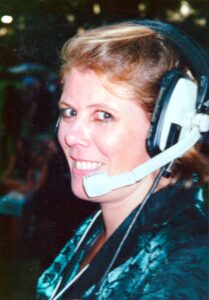
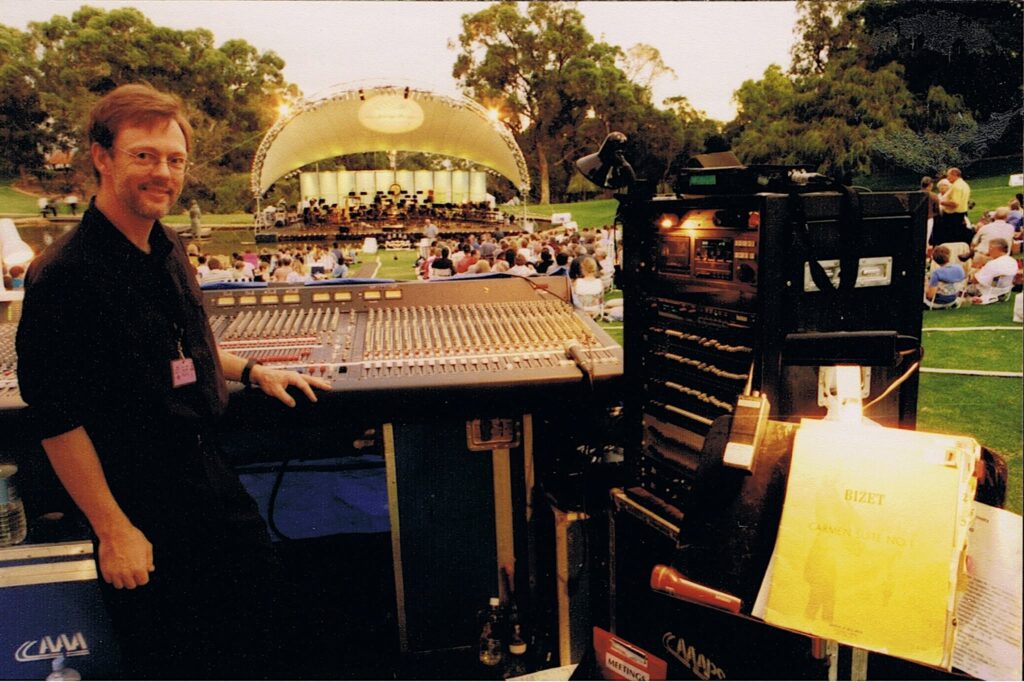
WASO Pops at Kings Park with sound engineer James Hewgill.
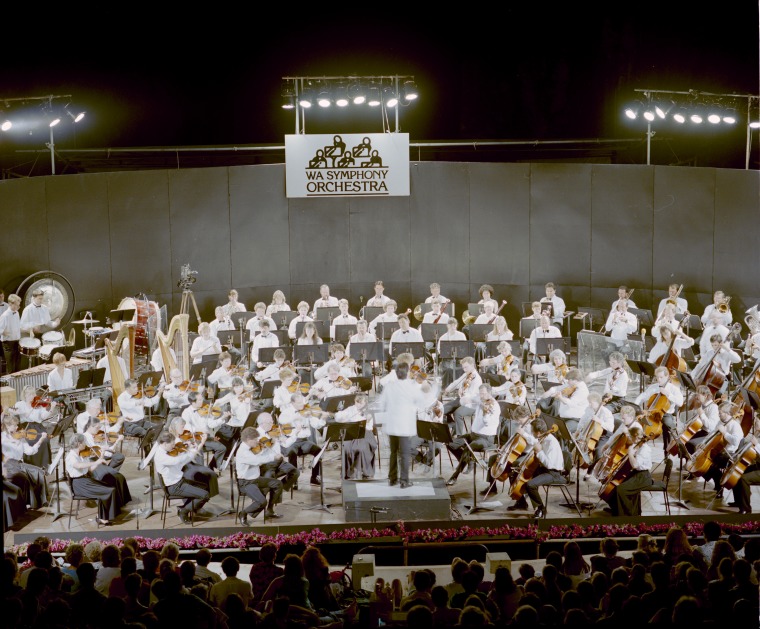
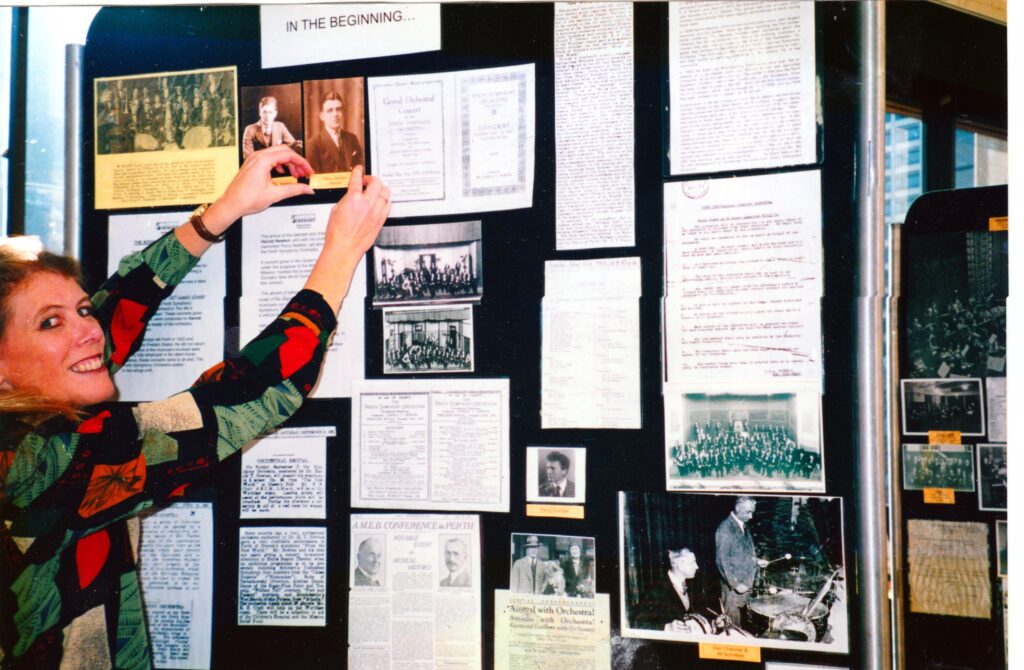
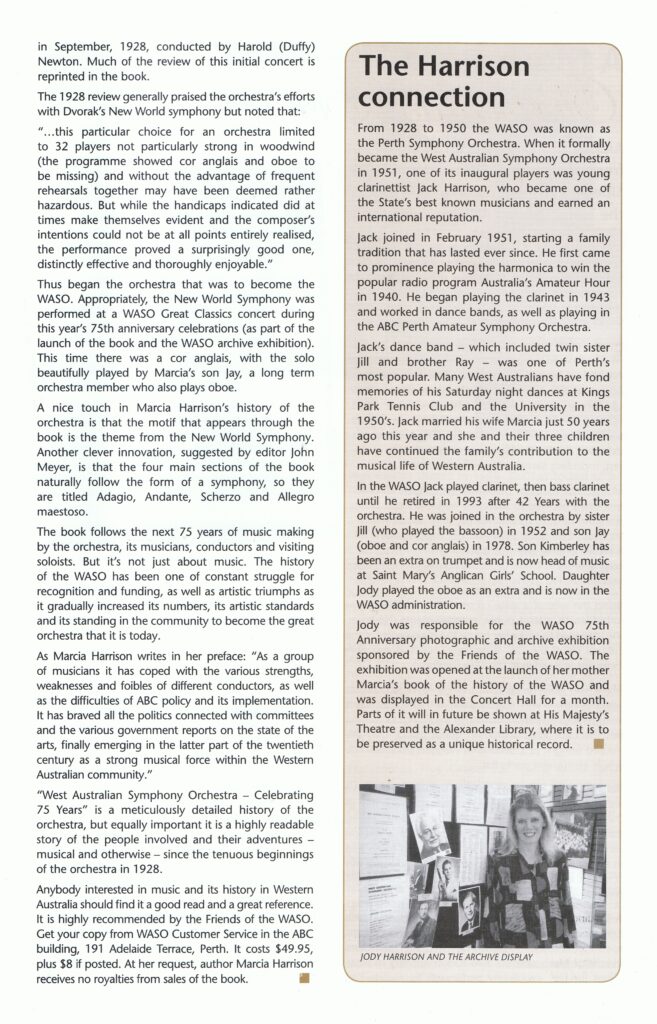
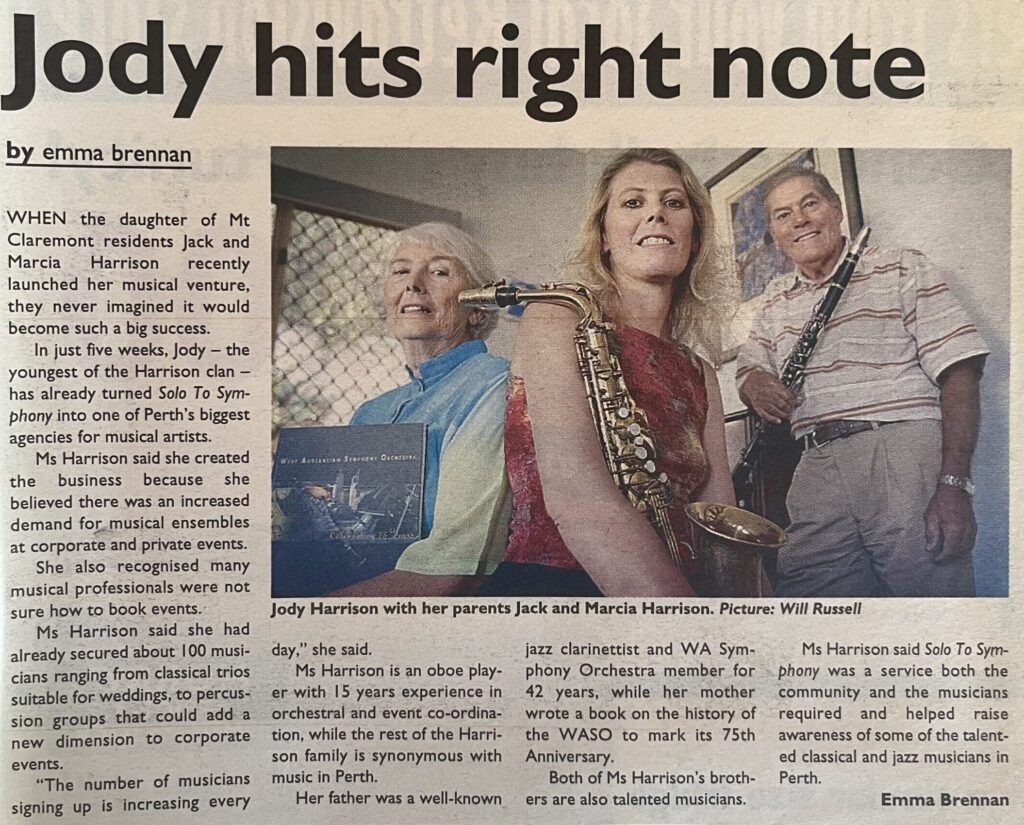
In 2003 Jody curated an exhibition celebrating the history of the WASO, their 75th Anniversary and the publication of her mother Marcia Harrison‘s book.
2004: WASO 75th Anniversary exhibition
In November 2004 , after 13 years, WASO made Jody’s position redundant.
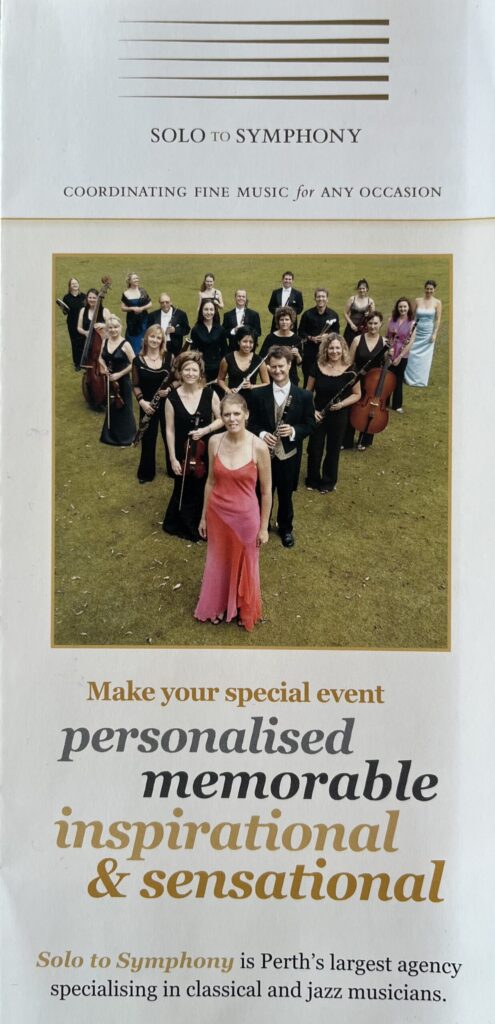
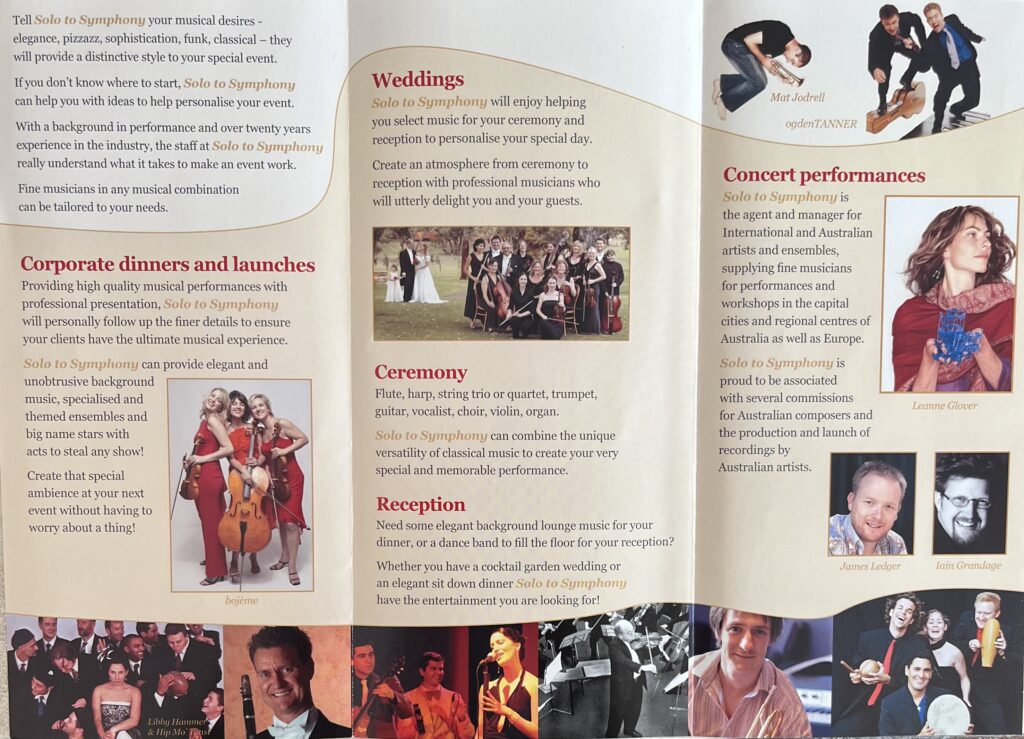
In February 2005 Jody created and became Director of her own company Solo to Symphony and was an agent for jazz and classical musicians until 2013, including Libby Hammer and Hip Mo’ Toast.
This was the last photograph of Jody’s mother Marcia, who passed away unexpectedly on April 9th 2005.
In 2006, aged 43, Jody had her third child, so she was pretty busy.
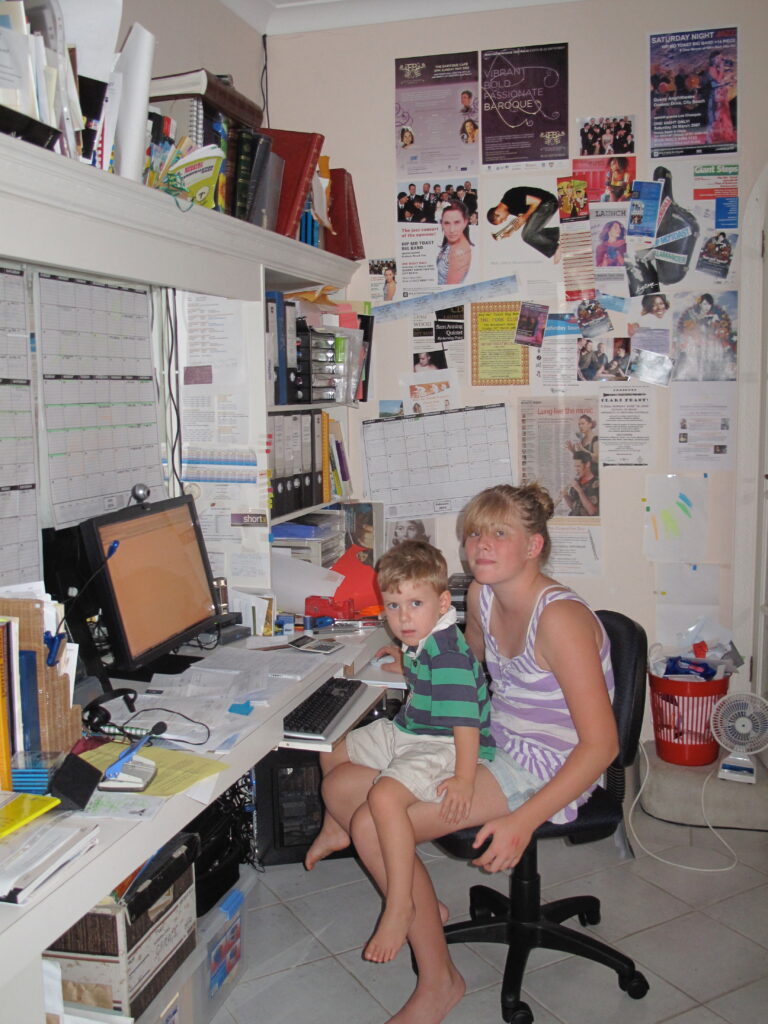
2008 Solo to Symphony office staff
As Director of Solo to Symphony, she successfully applied for several grants, including being awarded an Australia Council Grant for the Blackwood Project. Blackwood was premiered 2011 Perth International Arts Festival. It was commissioned for Iain Grandage (composer), Kevin Gillam (poet/lyricist) and performers Sara Macliver (soprano), Allan Meyer (clarinet) & Graeme Gilling (piano) and the art of Brendon Darby.
From 2009 until 2012 Jody was employed by U.W.A. as Manager, Festival Baroque Australia.
From 2011 until 2013 she was Online Editor of Scoop magazine.
2006 Jody (pregnant with Max) and her Dad Jack Harrison
Jody has three children:
Samantha
Jacqueline
Max
She is a passionate genealogist and historian and a proud promoter of music in Western Australia.
1993 Allan Meyer, Jody Harrison and baby Sam at the WASO Xmas party on the ABC sundeck. Jane Geeson is Father Xmas.


 MARCH 14th 1963