Search names, events, places, organisations, and sources across the archive.
Person
MEWETT, Alan
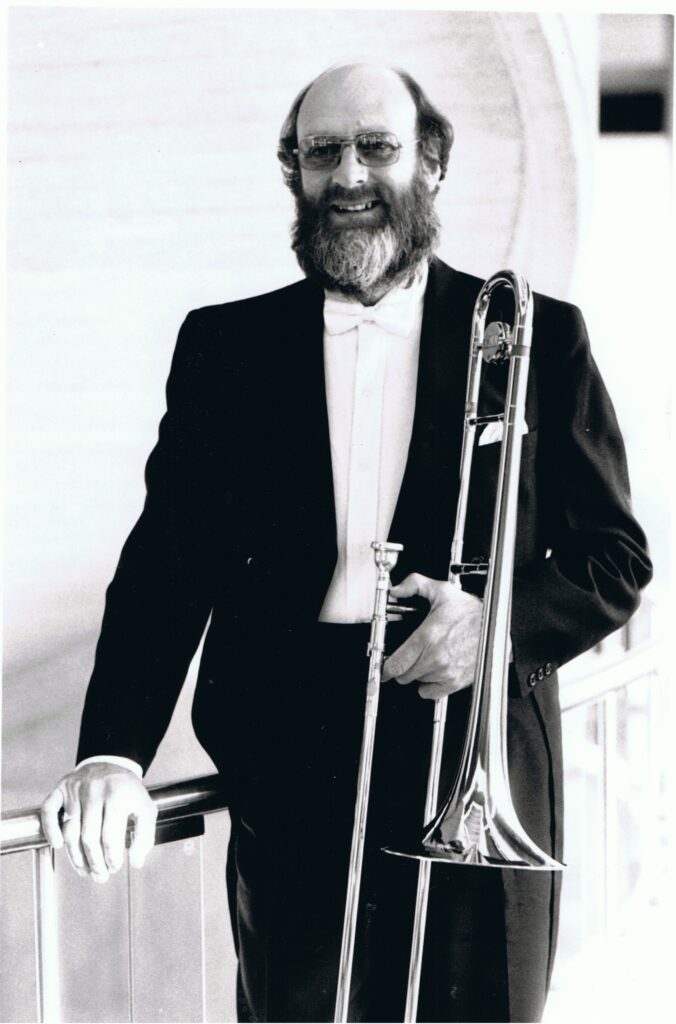
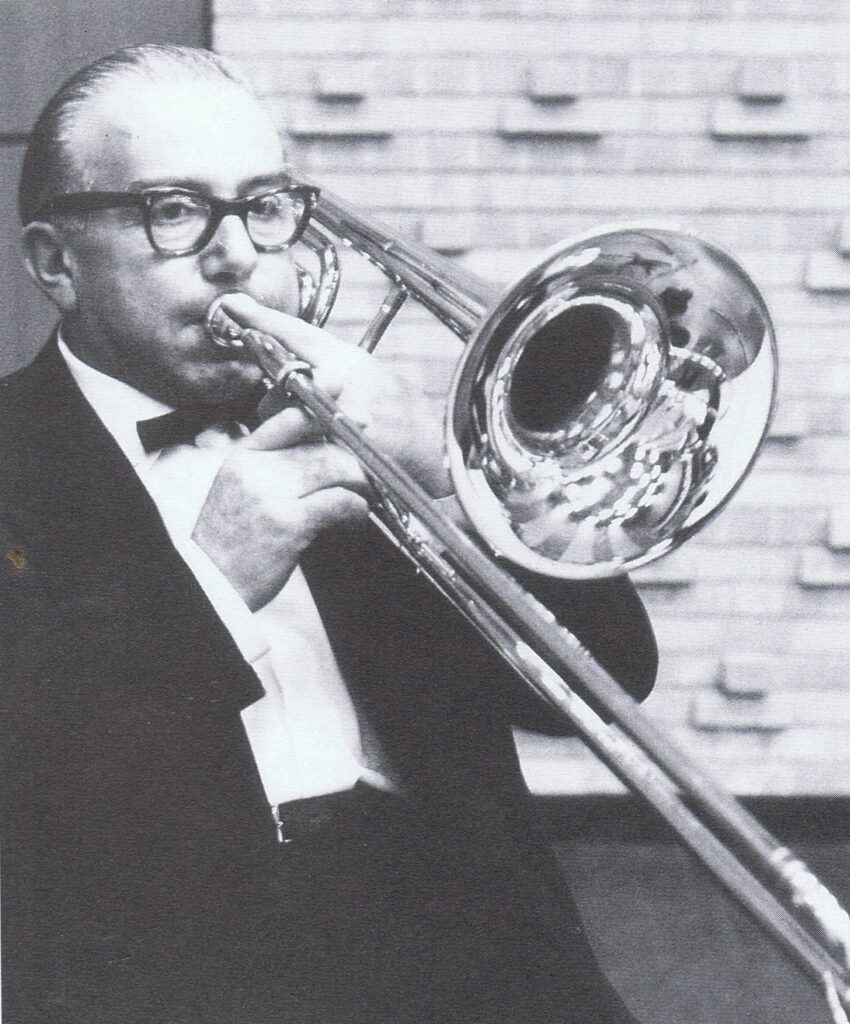
Alan Percy Mewett was born on 28th March 1929. He studied under Harold C. Willis, who was the bass trombonist for the Melbourne Symphony Orchestra and also credited brass musicians Gordon Webb and D. Mendelow as positive influences on his development.
Alan married Mary Therese Walsh in 1955 in Melbourne and they had four children.
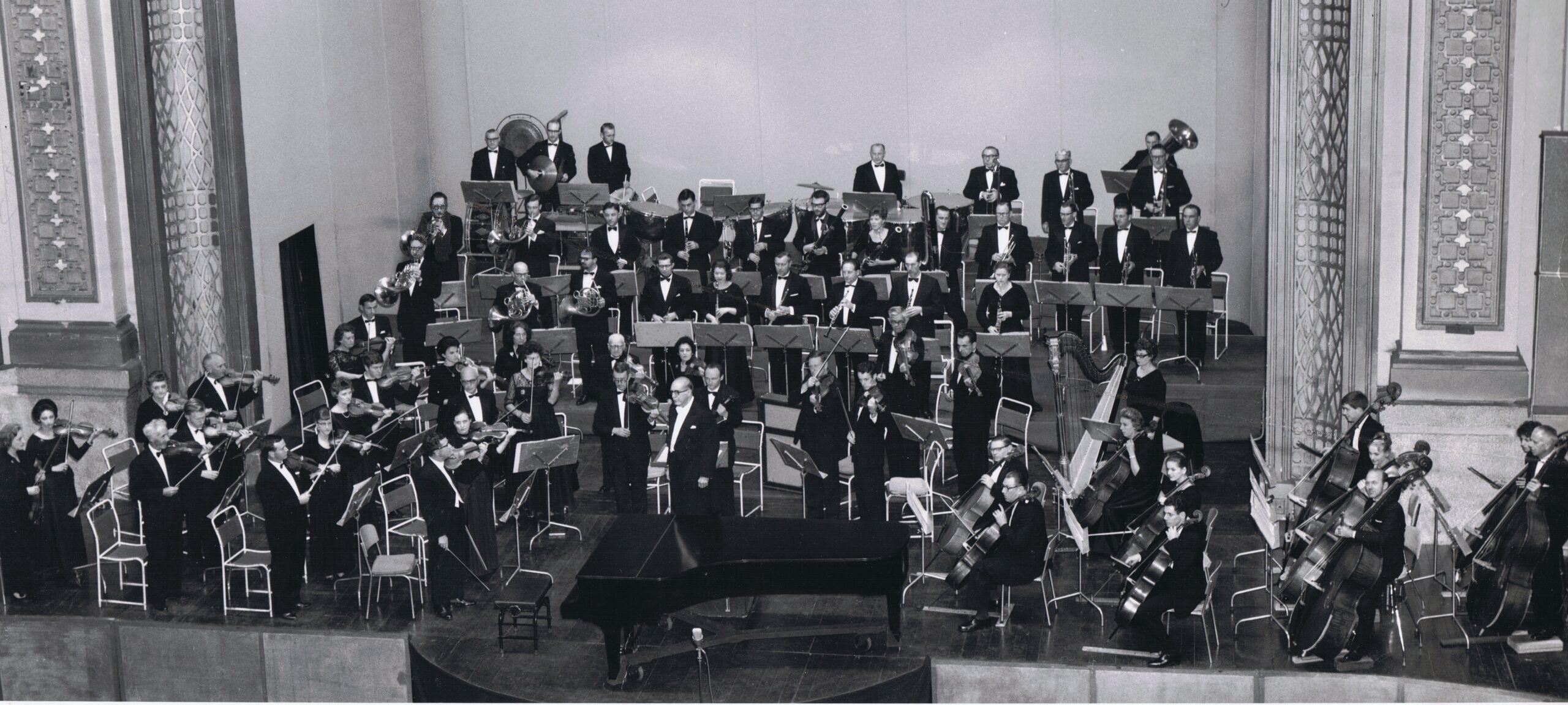
Alan was Principal Trombone with the West Australian Symphony Orchestra in the mid to late 1960’s with Charles Thompson and Tony Federici.
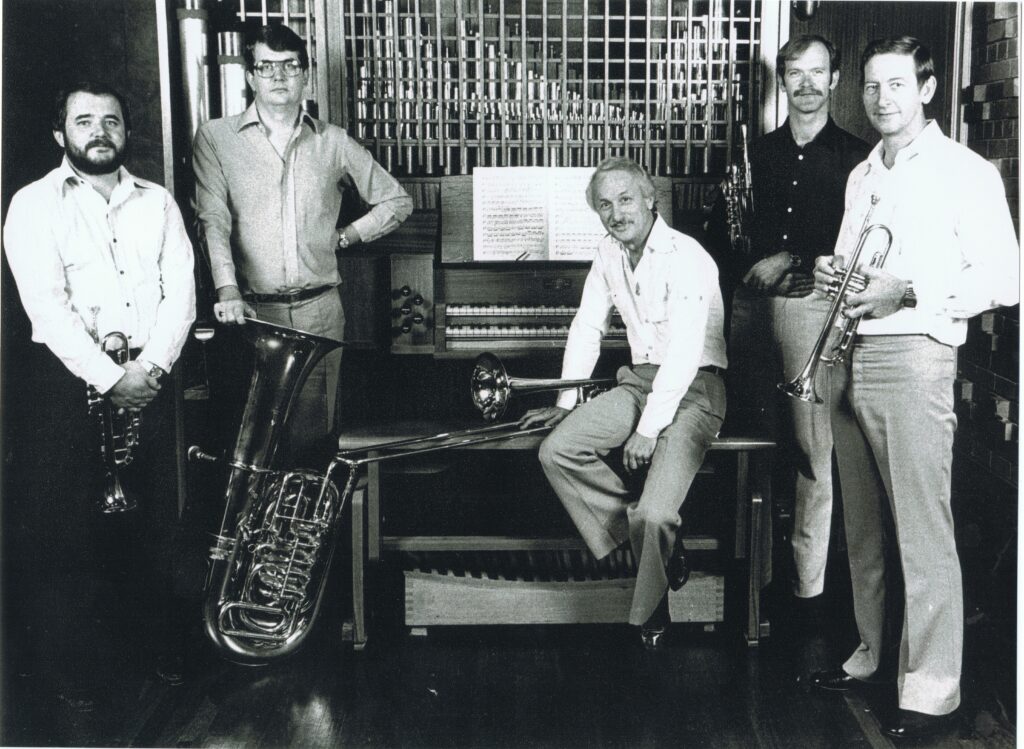
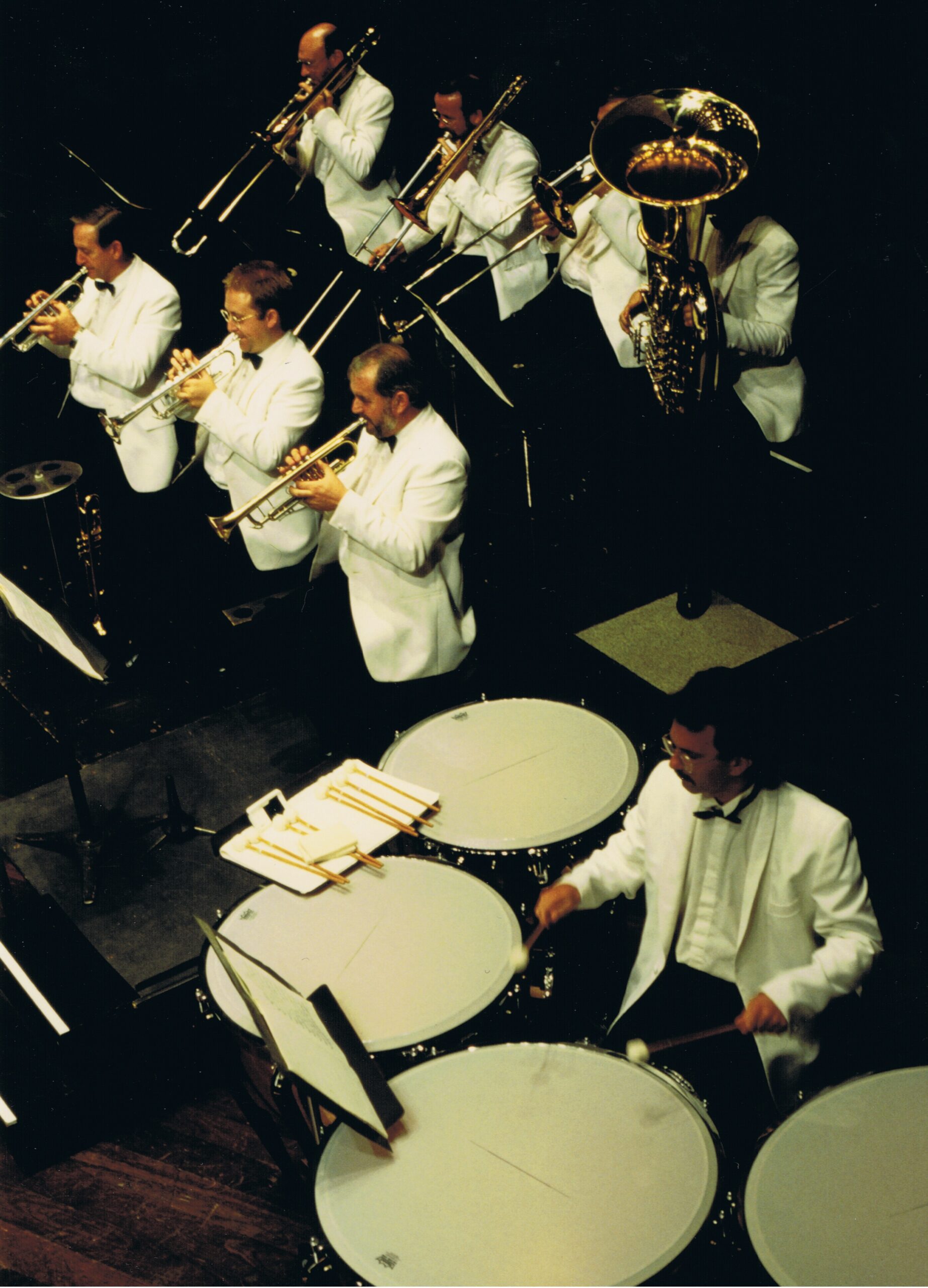
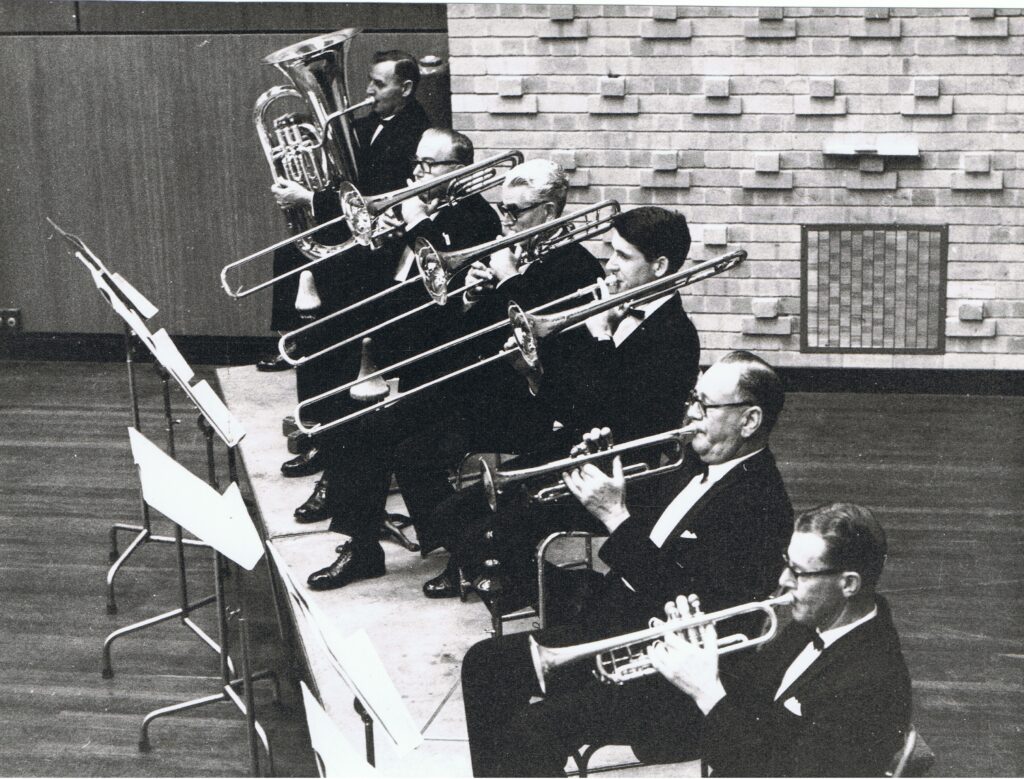
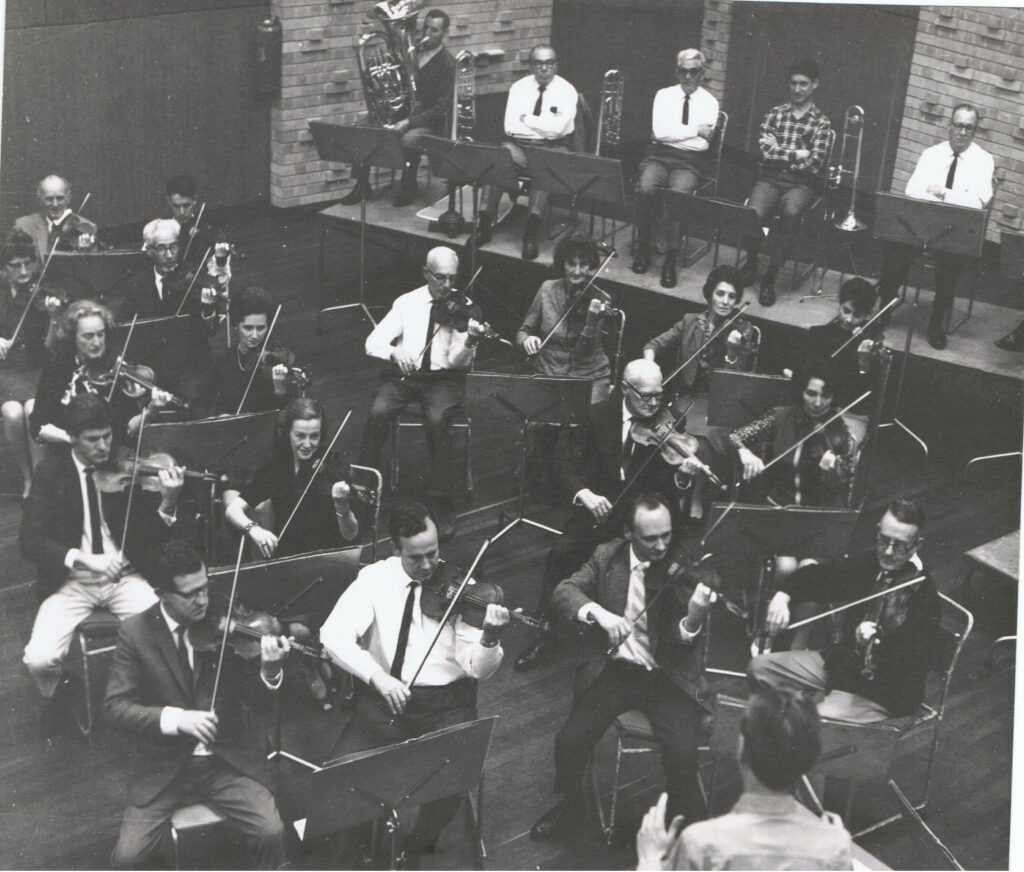
1967 WASO trumpets, trombones and tuba in ABC Basil Kirke Studio
Mewett left WASO to become the Principal Bass Trombonist for the Sydney Symphony Orchestra joining the in 1969. He replaced William Waterer and performed alongside notable low-brass colleagues such as Cliff Goodchild and Steve Rossé.
Beyond orchestral performance, Mewett wrote original solo repertoire for his instrument. His piece Declamation for Solo Bass Trombone has been featured as a championship piece in the National Band Council of Australia National Solo Championships.
Richard Traquair Hatton was born at his parents home at 82 Highway (now Kingsway) Nedlands on 27th July, 1926.
His father, George, was an auditor with the West Australian Government Railways and travelled the state (though he never drove). He was a champion soccer player and cricketer. His mother, Annie Jeanette was a school teacher and several times women’s champion of Nedlands Tennis Club. She also played the piano and they both often held musical soirees at their house in the evenings singing Gilbert and Sullivan and other popular classics of the day. Undoubtedly this was influential on the young Dick as he subsequently became a musician.
Dick had two brothers, Ted and Jim, who were 8 and 10 years older respectively. Dick was educated at Claremont Primary School and Christ Church Grammar. However, he did not attend school until year 4, having been home schooled by his mother before that. Upon leaving school, he worked at Nicholsons and was often to be found in the record department comparing notes with the young Keith Whittle. A few years later, he was playing league football with Claremont before joining the Air Force as an aircraft fitter in 1944 at the age of 18. During the war he spent time in Melbourne and Kalgoorlie, both experiences he always remembered fondly. After the war, he took an apprenticeship as a printer and soon after this, met young Dulcie Ashworth fromYork, fresh out the Air Force herself. During this time he was an active motorcyclist, racing in the Harley Scramble several times and road racing at places such as Caversham and Moolyabini on his Excelsior Warrior and, later, Manxman.
Finally, in 1952, Dick married Dulcie. Children Philip, Elizabeth and Christopher followed soon afterwards in 1954, ‘56 and ’57 respectively. They settled into 24 Watkins Rd, Dalkeith for what Dick often said were “good years”. During this time, he worked as a clerk for the Army, being based first at Swan Barracks and then at Karrakatta. The Claremont Football Club was very important, with the family rarely missing a Saturday afternoon game.
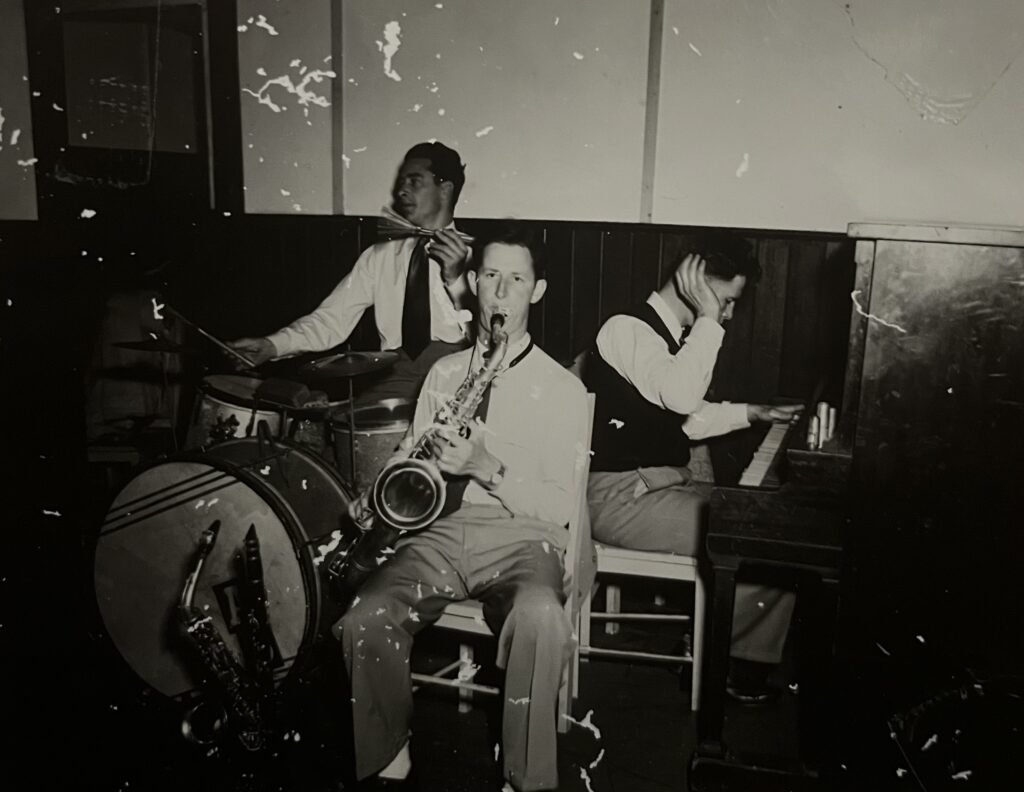
All throughout these years, Dick had been a part time professional musician, playing trombone, piano and alto sax with many different bands. He had been a pioneer of the traditional jazz revival in Perth after the war as a founding member of the West Side Jazz Group in the late 1940’s. Later, in the 1950s, came a very popular band, the West Coast Dixielanders. Along the way, he played all sorts of weddings, balls, parties, etc with people such as Elsie Bruce, Bruce Wroth, Allen Blight, Sam Sharp and John Reagan’s “Modernaires”.
In 1961, the whole family travelled toMelbourne on the Oriana where Dick attended theAustralian Jazz Convention. In the late 1960’s, he decided to throw caution to the wind and start his own business as a trucking contractor. This worked well for a few years and gave him a lot of satisfaction. However, it was destroyed when he hit a dog while riding his motorbike and nearly died, being hospitalized for the best part of two months. He lost his contract with the truck and his insurance did not cover motorcycle accidents. After trying to struggle on with a contract that was not as good as his previous one, he finally gave up and became a bus driver with the MTT.
Taking leave, he took his first trip to Europe at this time. Around this time too the marriage to Dulcie was in trouble and they finally separated in 1976.
After a couple of difficult years, he met Tina Tieleman who, in 1979, became his new wife. They enjoyed more than 30 good years together, first living in Swanbourne and then retiring to Golden Bay, followed by Warnbro, where they built their dream home and Dick his dream workshop. This enabled him to finish restoring the 1937 Chev truck, which he rebuilt from a rusted hulk that had been lying in a farmer’s field, over a period of 10 years. They also drove around Australia in their Comer camper van, took trips to Hong Kong with the Air Force Association Band and a vintage car tour of Tasmaniain their classic Humber. They were active in the Peel branch of the Vintage Car Club and Dick played in various bands including a 15 year stint with the MagicDream Big Band and finishing in the last few years as a stalwart of the Rockingham Swing Band.
The last few years were difficult for Dick, marked by growing illness, frailness and dementia for both him and Tina. When finally forced to move from his home, he was very unhappy. His last year was spent living with Phil. It was great that Phil, Liz and chris were able to nurse him until the end finally came in Fremantle Hospital from pneumonia complicated by the effects of Non-Hodgkins Lymphoma and Prostate cancer.
Keith Whittle and Dick worked together at Nicholson‘s when they were 16, savouring each new jazz record as it arrived in the store.
1947
MYOLA CLUB TOASTS COLIN MOUNSEY’S 21st
The Myola Club, Claremont, was the scene of much gaiety one night during the week when Colin, eldest son of Mr. and Mrs. Fred Mounsey, of Nedlands, celebrated his 21st birthday. Mrs. Mounsey received the guests in charming gown of azure blue crepe, beaded in silver, and black accessories. During the evening the guests autographed a large wooden key. Only disappointment was that Colin’s only sister, Joy, was unable to be present. Some of those invited were: Mr. and Mrs. Cannemeyer, Mr. and Mrs. Ralph Siele, Mr. and Mrs. D. Lambert, Mr. and Mrs. Bob Lakides, Mr. and Mrs. Morgan Herbert, Mrs. A. Moran, Mr. and Mrs. Eric Wilson, Mr. and Mrs. Jo Walton; Misses Melva Jones, Betty Green, Beryl King, Billie Diamond, June McShane, Val Wroth, Edith Materson, Val Wansbrough, Mary Carlson. Joan Firby, Lea Parker, Beryl Sexton. J. Maloney, Norma Schofield, Margaret Atherdon., Margaret Le Lievre, P. Carter, Joan Carlson. Messrs. F. Mounsey, Des Thomas, Bruce Wroth, Arthur Downey, Keith Hownslow, Col. Goldsmith, Dick Hatton, John Miller, Frank Sagare, Peter Lyons, Mas Annear, Merv Howie, Phil Greenwood, Bert Hall, George Freeman, Ray West, Peter Hatton, Allan Tyson, Roland Baker, Jo Watson, Bunt Hardy, D. Mounsey, and many others.
Mirror (Perth, WA : 1921 – 1956), Saturday 3 May 1947, page 13
1951
Country engagements announced this week are; Dulcie Mavis Ashworth of York to Dick Hatton of Nedlands.
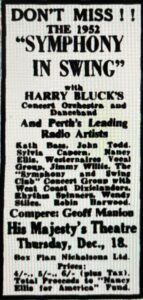
DON’T MISS The 1952 Symphony in Swing with Harry Bluck‘s Concert Orchestra and Dance Band
And Perth’s Leading Radio Artists:
Kath Bass, John Todd, Sylvia Caporn, Nancy Ellis, Westernaires Vocal Group, Jimmy Willis the “Symphony and Swing Club,” Concert Group with West Coast Dixielanders, Rhythm Spinners, Wendy Stiles, Robin Harwood. Compere: Geoff Manion.
HIS MAJESTY’S THEATRE. THURSDAY. DEC 18th. Box plan Nicholsons Ltd. Prices 4/, 5/. 67 (plus tax). Total proceeds to “Nancy Ellis for America” Fund.
Daily News (Perth, WA : 1882 – 1955), Saturday 13 December 1952, page 11
1953
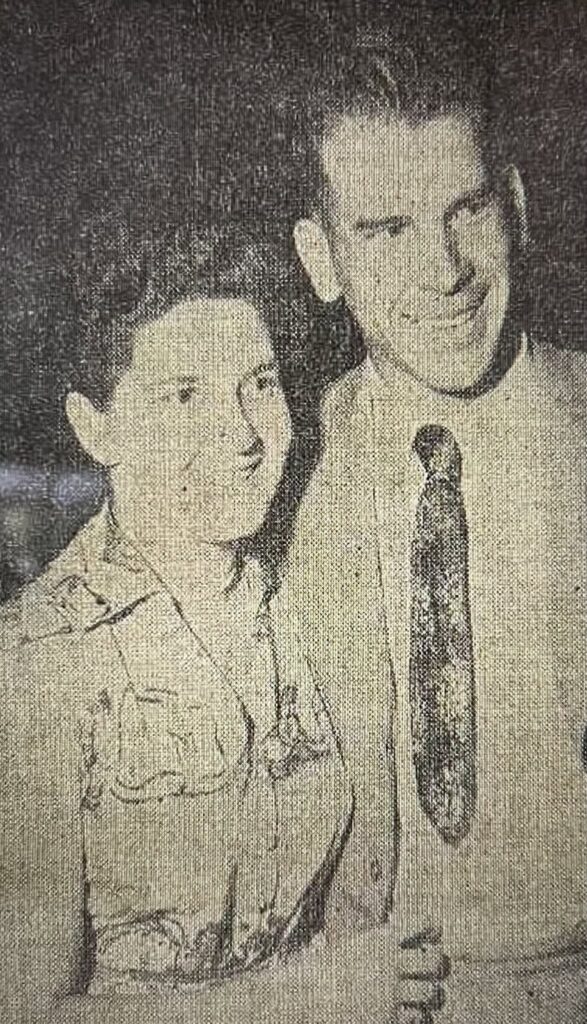
Dulcie and Dick Hatton: Daily News (Perth, WA : 1882 – 1955), Saturday 17 January 1953, page 9
Reason to celebrate
Joan lnnes of Mt. Lawley and Flying-Officer Noel Johnson, of Pearce. recently announced their engagement, and last night Frank Throssell gave them a party at his Nedlands home.
Daily News (Perth, WA : 1882 – 1955), Saturday 17 January 1953, page 9
IMPROMPTU JAM STOLE THE SHOW
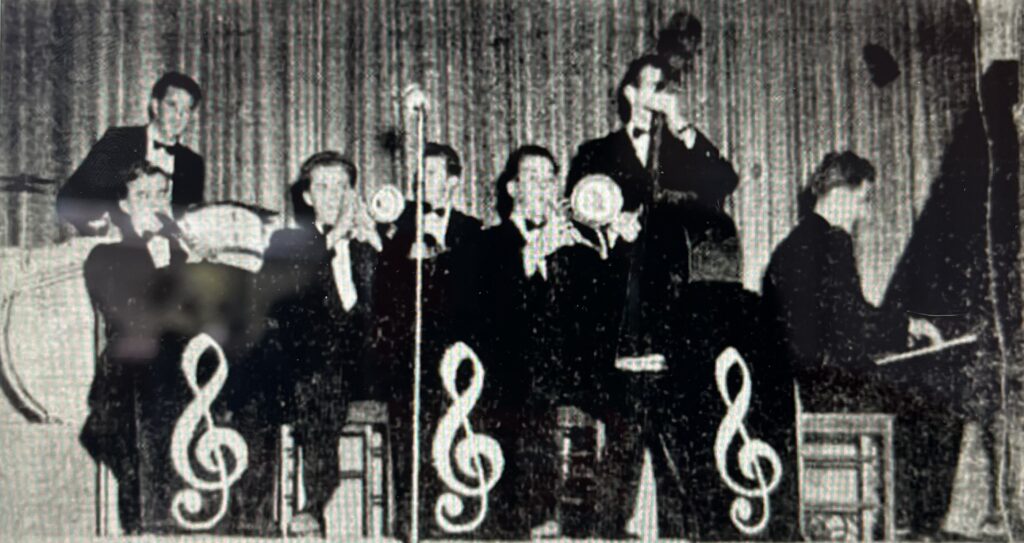
An impromptu jam session nearly stole the show at Thursday night’s WA Amateur Dance Band Concert at the Capitol Theatre. Composite band of members who had competed earlier, really went to town and had patrons rocking in their seats. Jam band was led by internationally known Harry Phillips on the trumpet and Sid Vandervelde on guitar. Boys really turned it on and the crowd went wild. Even when Sammy Sharp came forward to announce the night’s awards the audience clamoured for another spread of jam. So, a grinning Sammy waved the boys to continue. Night was a feast of bounce, jive and bop with the amateur instrumentalists showing enough promise to indicate that many will soon be making pro names for themselves. Hundreds were present to hear 13 outfits, ranging in size from 4 to 11 pieces, vie with one another in a variety of Jazz renditions. Judges Ken Murdock, Ron Moyle, Merv Rowston, Harry Bluck and Bill Kirkham were not set an easy task. Finally, they awarded the shield to the West Coast Dixielanders, a 7 -piece outfit led by Phil Battey on trumpet, George Battey, clarinet, Dick Hatton, trombone. Conn Goldsmith, bass, Bob Anderson, piano. Alan Blight, drums, and Vince Goldsmith, guitar. These boys have been playing together less than a year and decided at the last minute to enter the contest. They will hold the shield until next year’s contests.
The Dixielanders all prefer the type of music their name suggests is their special dish and are keen on the Jelly Roll Morton school. Second place went to Neil Manno’s Quintette with the Jive Five led by Wynne Hammer third. Other awards were: Best Instrumentalist; Ray Taylor, trumpet. Best Guitar: Jimmy Taylor. Best Drummer: Wynne Hammer. Best Pianist: Thelma McGrath. Best Vocalist: Bill Groessler. Most promising reed player was 17-y-o Neil Boon, a Dutch youth. Organisers, the W A Musicians’ Union, Sammy Sharp and compere Wally Hadley are to be congratulated on a good show which all agreed was a great improvement on previous contests and augurs well for the future of dance music in this State. Saw quite a sprinkling of musicians who have given up regular playing in the audience at the Capitol, including Harry Ward and Laurie McGrath.
Mirror (Perth, WA : 1921 – 1956), Saturday 25 July 1953, page 11
THEY MADE GOOD – AND SUCCESS DIDN’T GO TO THEIR HEADS
PICTURED ARE THE WEST COAST DIXIELANDERS who won the Dance Band Contest last week at the Capitol. Personnel, left to right: Geo. Battey (clarinet), Alan Blight (drums), Phil Battey (leader and trumpet), Vince Goldsmith (guitar), Dick Hatton (trom), Col Goldsmith (bass) and Bob Anderson (piano).
Mirror (Perth, WA : 1921 – 1956), Saturday 1 August 1953, page 12
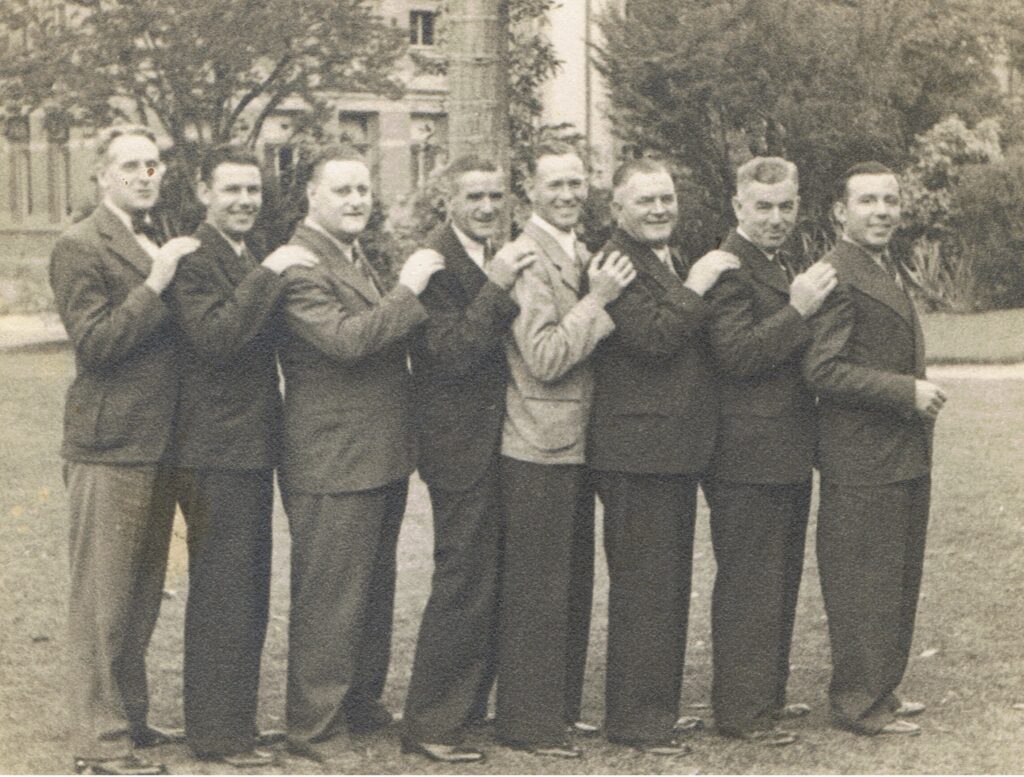
Alan Blight, Bruce Wroth and Dick Hatton
1954
HATTON (nee Ashworth): At Kensington, to Dulcie and Dick – a son (Philip Traquair.)
West Australian (Perth, WA : 1879 – 1954), Saturday 22 May 1954, page 40
MANY MUSICIANS AND ARTISTS donated their time at the Teen and Twenty Club’s open dance which was held to raise money for the Wendy Nash appeal. A cheque for £65 has been given to the young’ pianist. Artists included the Rhythm Spinners, Lisa Ray and Bill Higgins. Paul and Eileen, W.A. jive champions. Johnny and Evelyn, nightclub entertainers from Melbourne, and Wendy Stiles. Among the musicians were Jack Harrison, Horrie King, Sammy Sharpe, Jimmy Beeson, Keith Whittle, Johnny Regan, Alex MacMillan, Ralph Filmer, Dick Hatton and Les West’s orchestra.
Western Mail (Perth, WA : 1885 – 1954), Thursday 22 July 1954, page 22
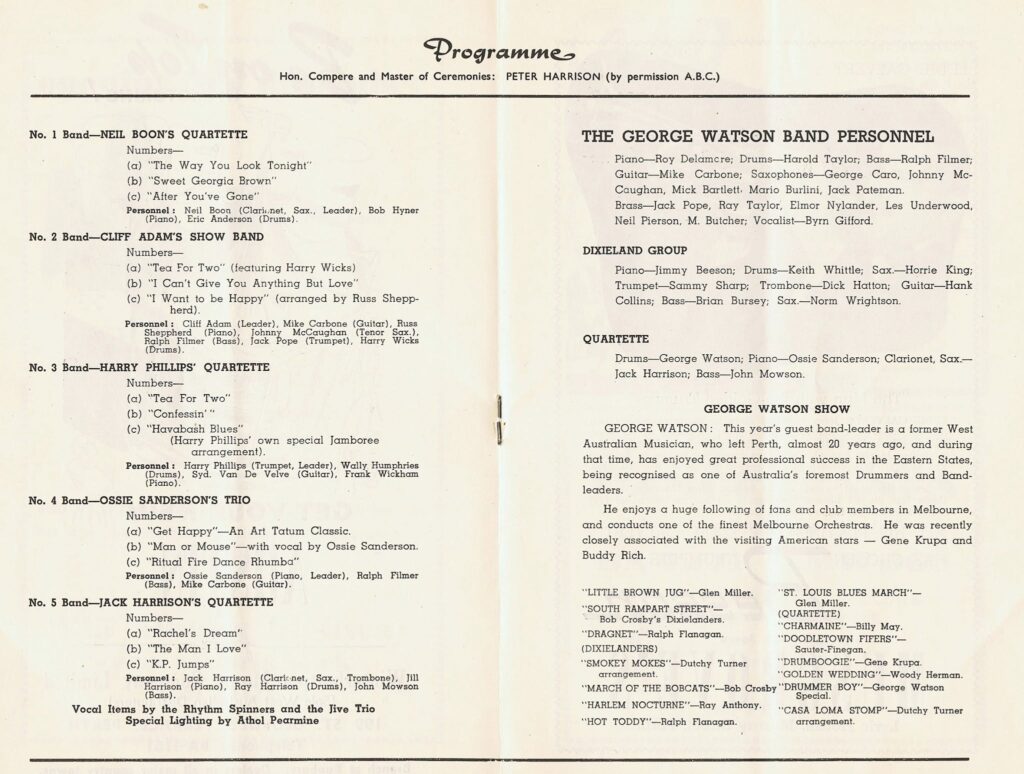
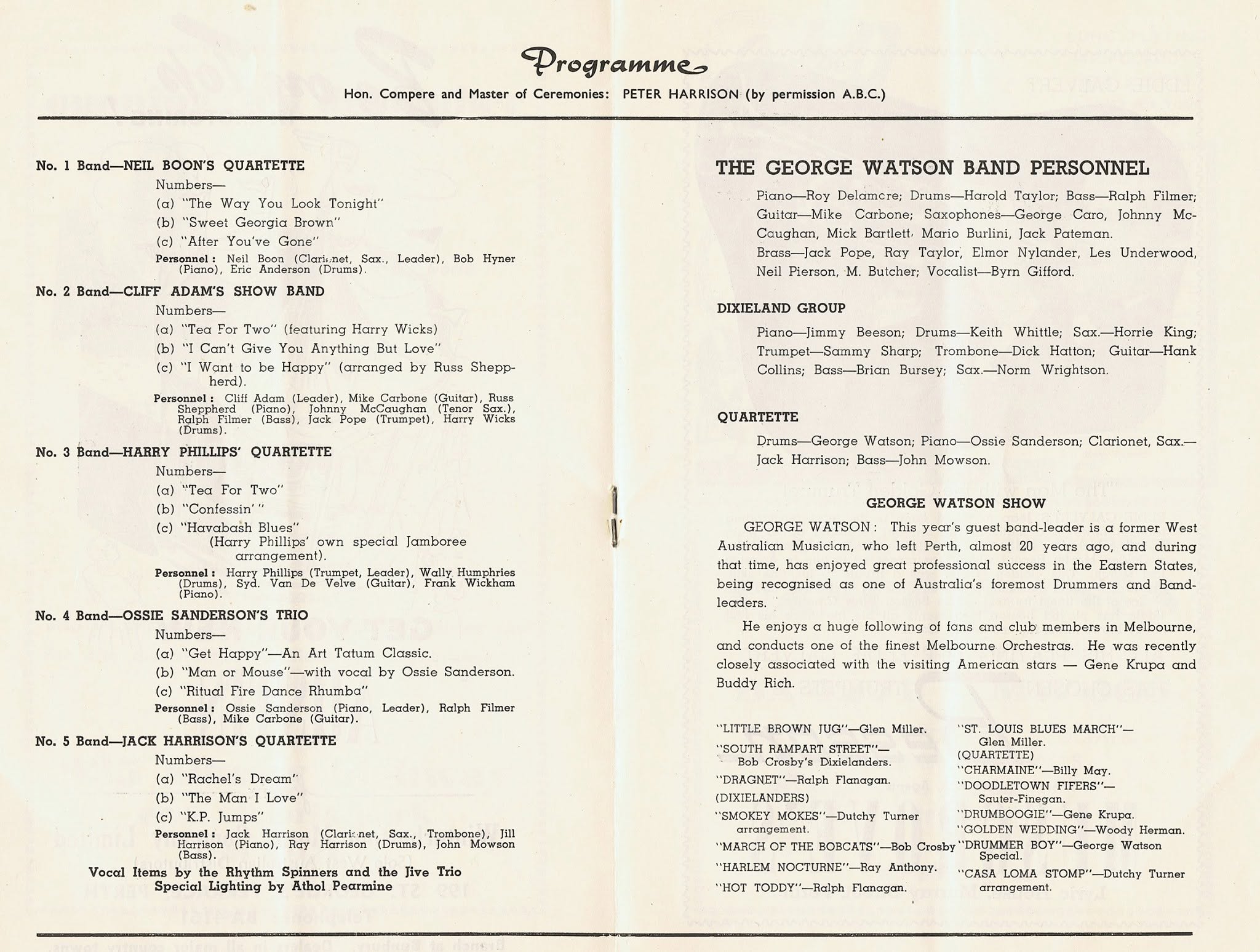
1954 George Watson Show1954 Watson George program
1955
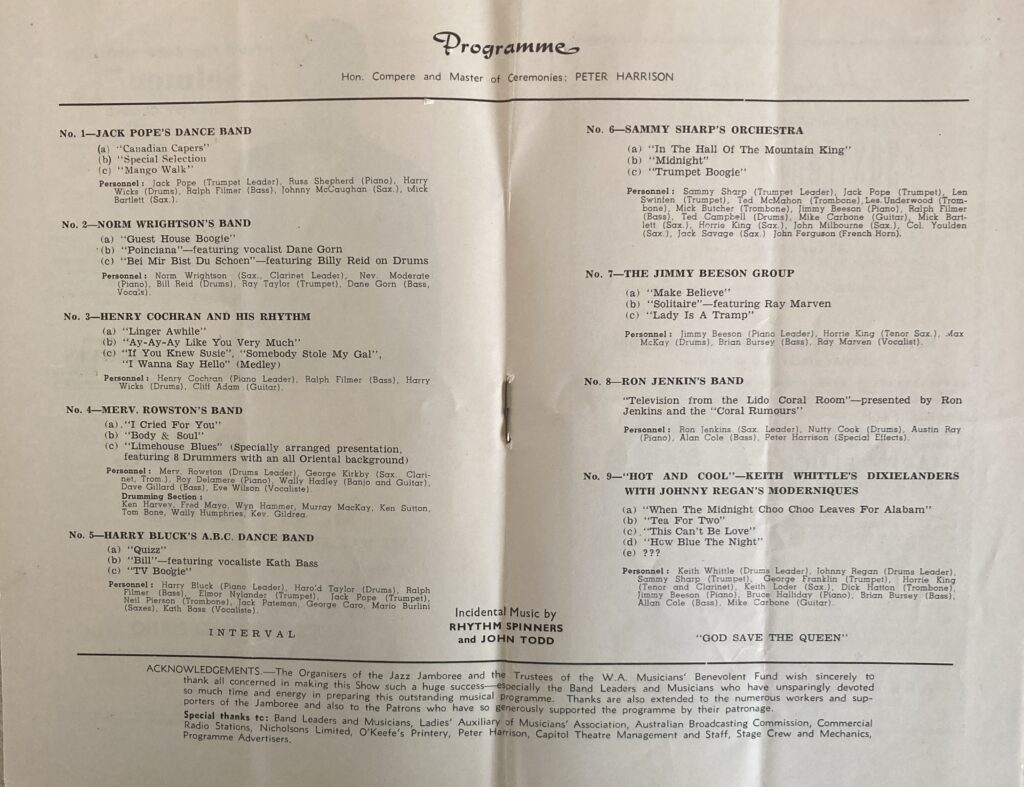
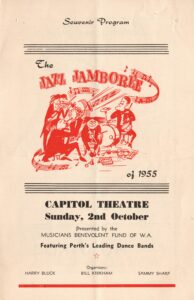
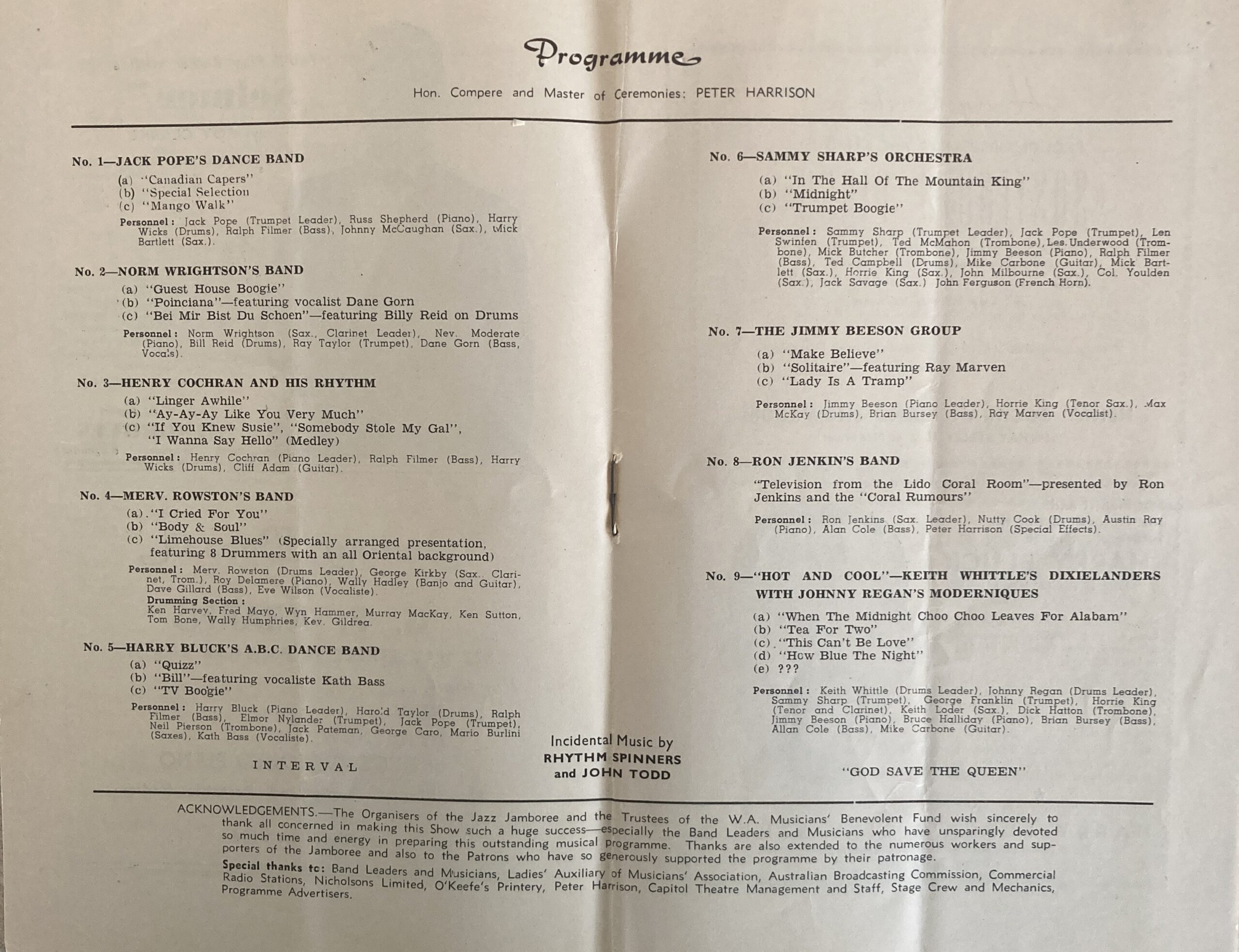
1955 Jazz Jamboree – program1955 Jazz Jamboree Program
1960
Australian Jazz Convention 1960 riverboat trip
The family went across from Perth on the Oriana so Dick Hatton (trombone/piano) could play at the convention.
1976
The main-stream group “The Dick Hatton Quintet” with Barry Bruce (piano), Bruce Wroth (sax) and Keith Whittle (drums) and sit ins Ken “Kipper” Keresky (trombone) and Eddie Martin (trumpet) and a group fronted by Colin Scott (guitar) and Murray Wilkins (bass guitar). Bruce Wroth mentioned above and who works in the Art Department of the daily morning paper, The West Australian, a few weeks back won the first prize in a graphic art competition to design a symbol for the Festival of Perth which is held annually.
Jazz Down Under, 5 January 1976
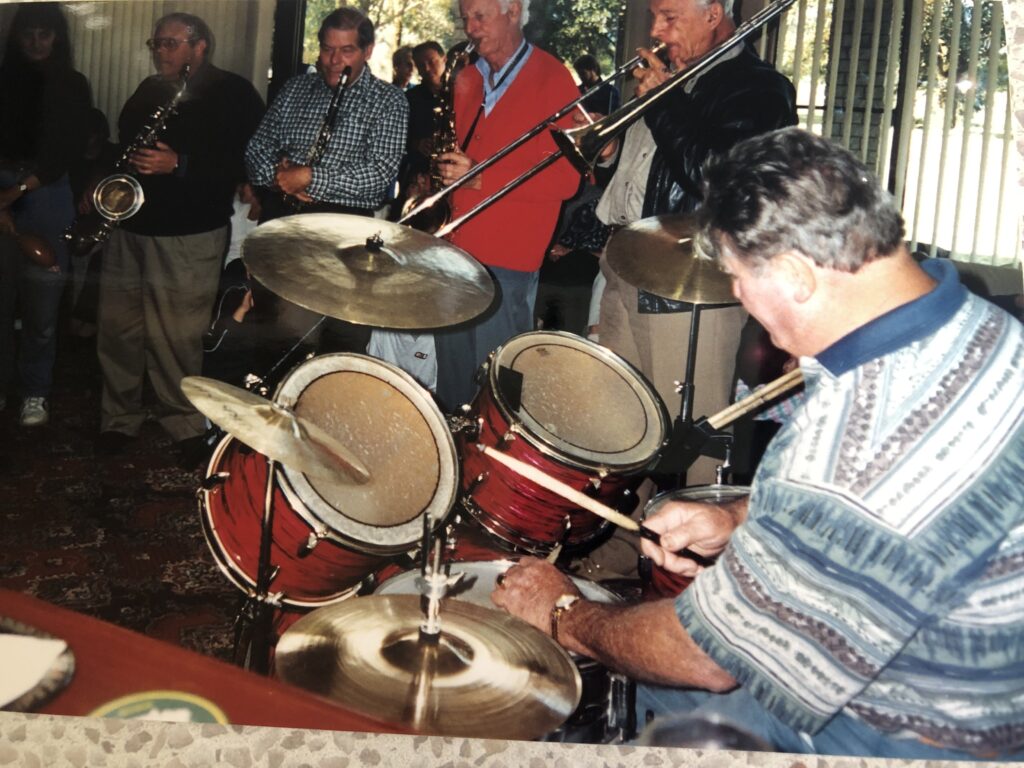
2000 – 70th birthday of Ray Harrison: Jack Harrison, Bruce Wroth (sax), Dick Hatton (trombone) Ray Harrison (drums)Dick Hatton (left), Bruce Wroth, Jill Mowson, Jay Harrison, Ross GeorgeJay and Jack Harrison, Bruce Wroth, Dick Hatton
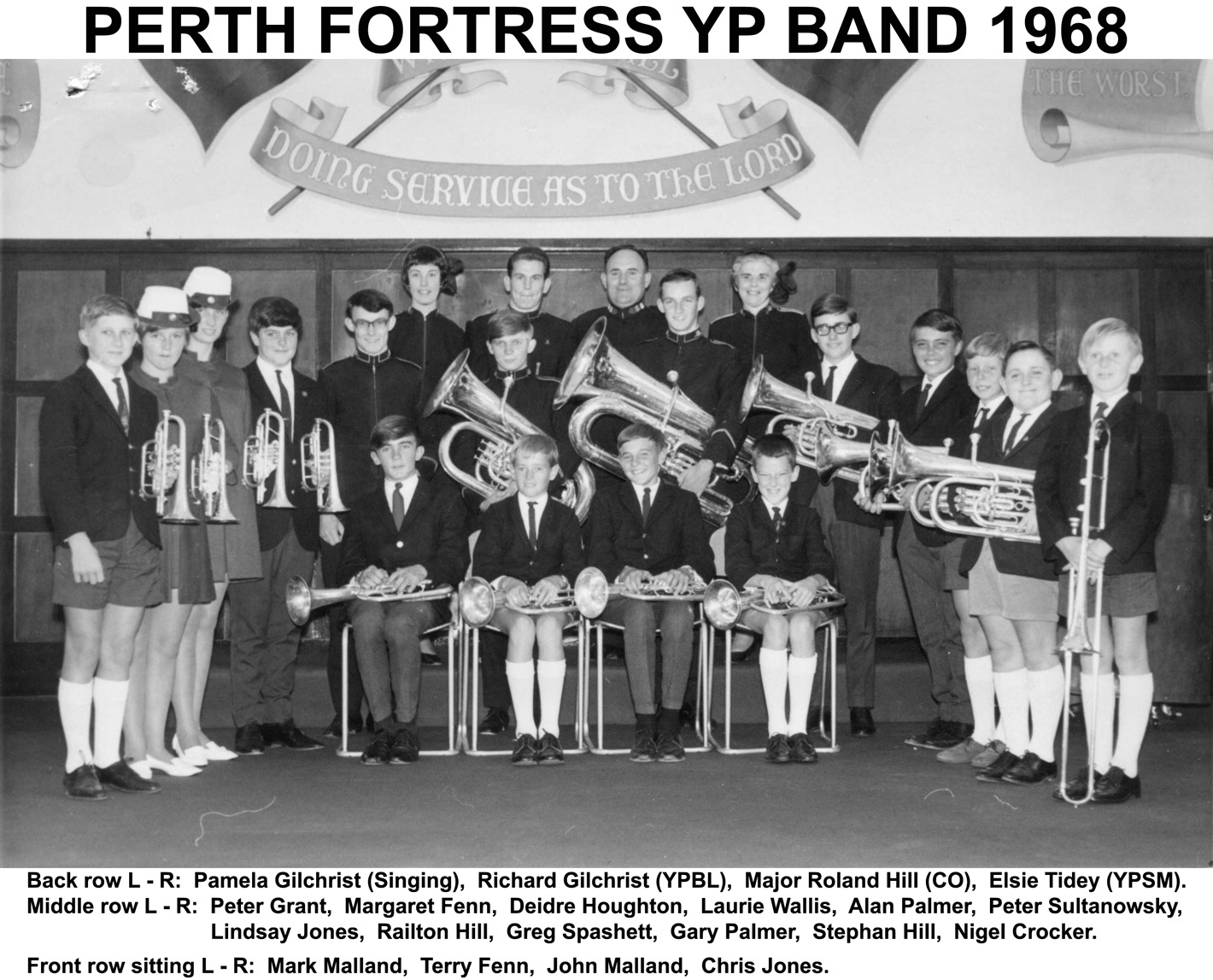
Nigel Crocker began is brass playing life performing in Salvation Army bands.
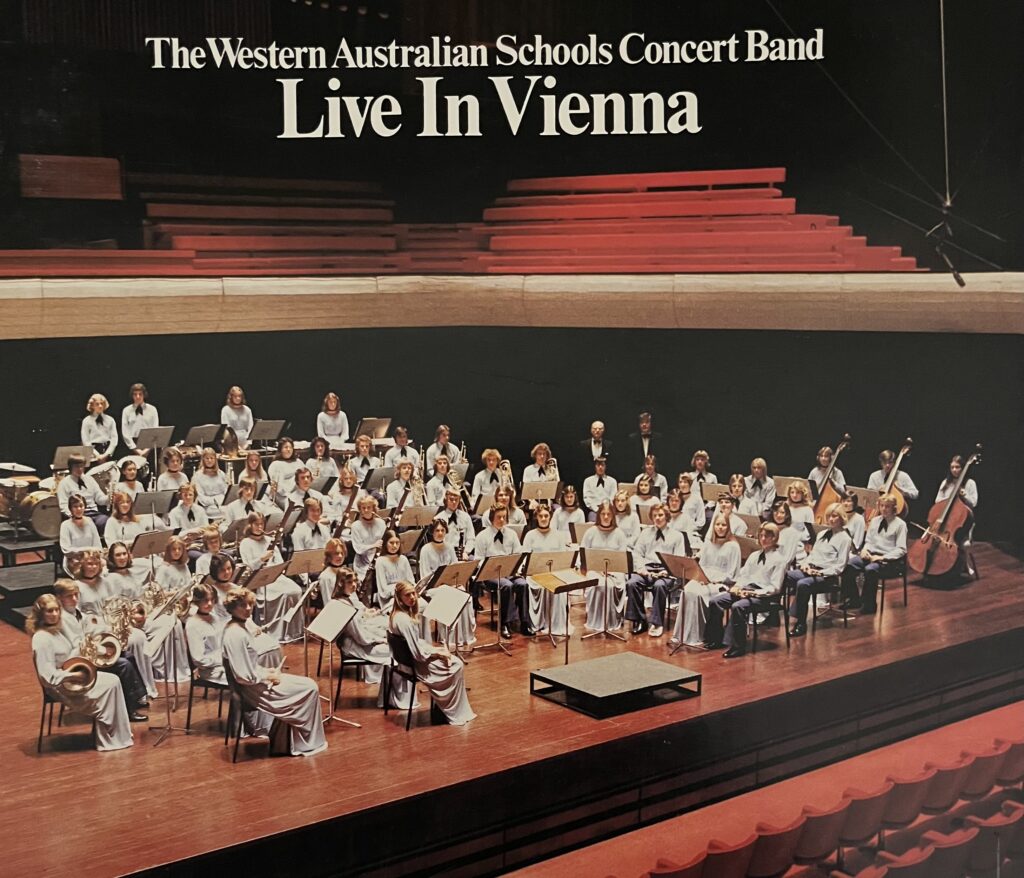
Nigel attended Perth Modern School and was a member of the Western Australian Schools’ Concert Band overseas tour from June 23 to July 1976 performing in London, Vienna, Innsbruck, Lucerne, Montreux and Zurich as part of the Fifth International Festival of youth and Music and the Tweflth International Conference of the International Society for Music Education.
The band was conducted by Ted Lewis and John Embleton and consisted of an amalgamation of largely Perth Modern School and Churchlands music scholarship students and a handful of representatives from other schools.
Margaret Bellos winners: Kim Harrison, Nigel Crocker, Marie Chantal Bertinazzo and Allan Meyer
After high school, he hung around the U.W.A. Music Department for a year, long enough to win the Margaret Bellos prize.
Nigel’s career started in funk and R&B bands in Perth in the late ’70’s.
In 1978 Nigel played with WASO on a weekly contract which rolled on for 10 months due to vacancies in the trombone section following recent departures by Simone De Haan and a few months later Bill Farnham.
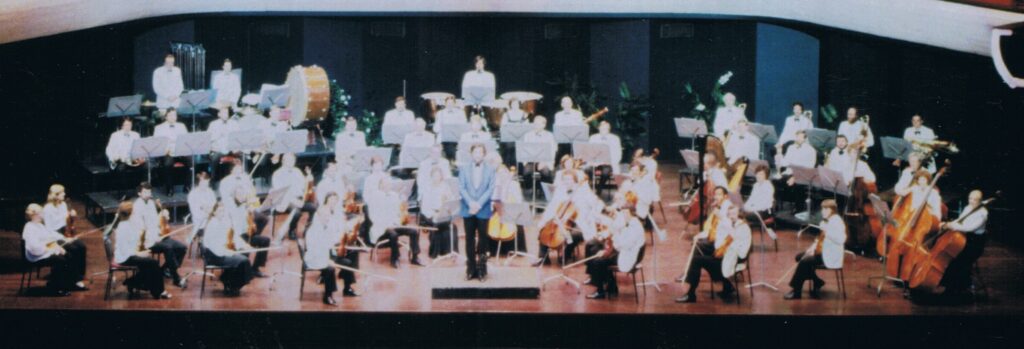
WASO Proms concert at the Entertainment Centre – Nigel centre stage
ON JACK HARRISON:
“As a smart arse 19 year old I called all my new colleagues by their first names except for Mr Farnham (who’d been my teacher in high school) and Mr Harrison. He told me to call him Jack but it was strange ‘cos I’d known him as Mr Harrison since I was a whippersnapper. Jack’s easy, free playing and velvety sound was a revelation, especially as I’d only just come out out of some pretty squawky high school concert bands. I still love hearing it to this day. Indeed I loaned my copy of Jack’s Moon River CD to a young Som Howie who had just started freelancing here in Sydney. Little did I know a decade or so later he’d be sitting alongside Jack’s son-in-law Allan Meyer (another close buddy) in the WASO clarinet section. I also loved Jack’s quick quips about the occasional posturing, pompous conductors chock full of their own self importance. He had the amazing skill to project his voice to the front desk but somehow not quite reaching the ears of the maestro. A skill I have endeavoured to master throughout my own career.”
Jack Howard and Nigel Crocker NOT playing in Hunters and Collectors
Upon moving to Melbourne in ’81, Nigel found himself playing briefly with Hunters and Collectors before securing a position in the trombone section on the Channel 9 band on The Don Lane Show.
In 1983 Nigel was appointed Principal Trombone of Tasmanian Symphony Orchestra.
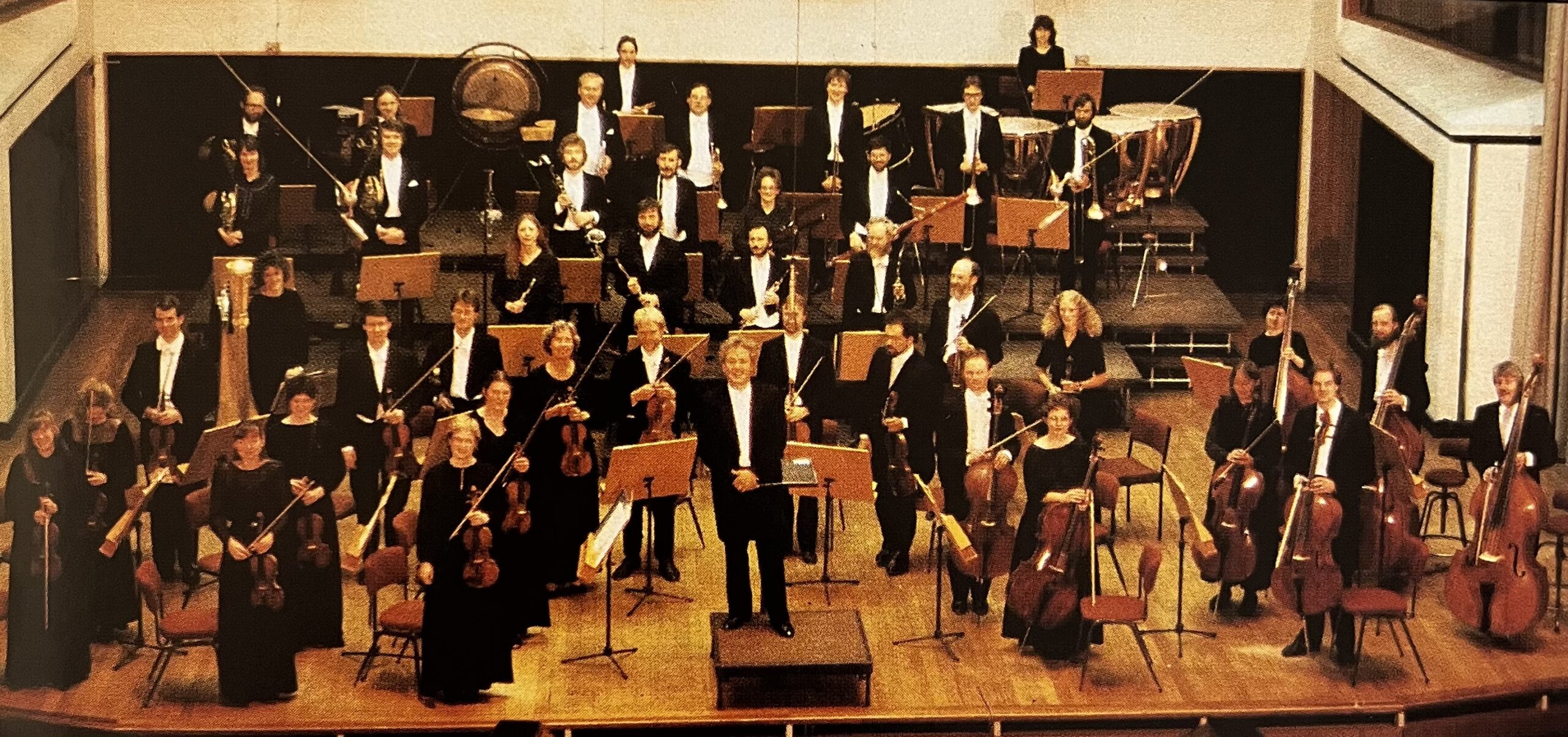
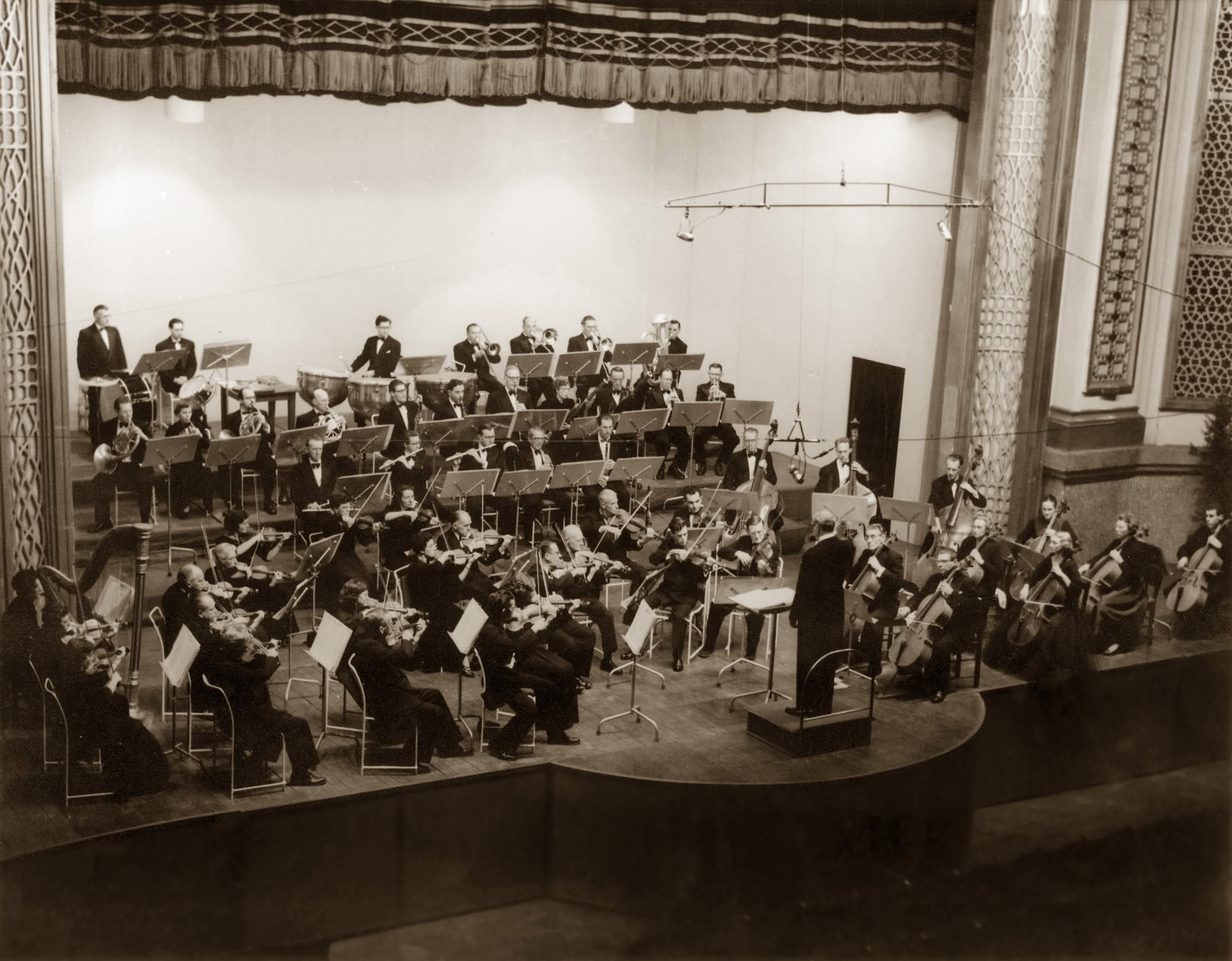
Tasmanian Symphony Orchestra. Source: Symphony Australia 1987, p.127.
After 7 years with them he moved to Sydney where he has been busy freelancing ever since, across a broad spectrum of genres.
Sydney Trombone Quartet: Scott Kinmont (SSO), Nigel Crocker, Will Farmer (OAO) Matthew Walker. Australian Opera Gala concert 19932013: James Morrison, Nigel Crocker, Ed Wilson (Daly Wilson), Dave Panichi, Dan Barnett and Colin Burrows
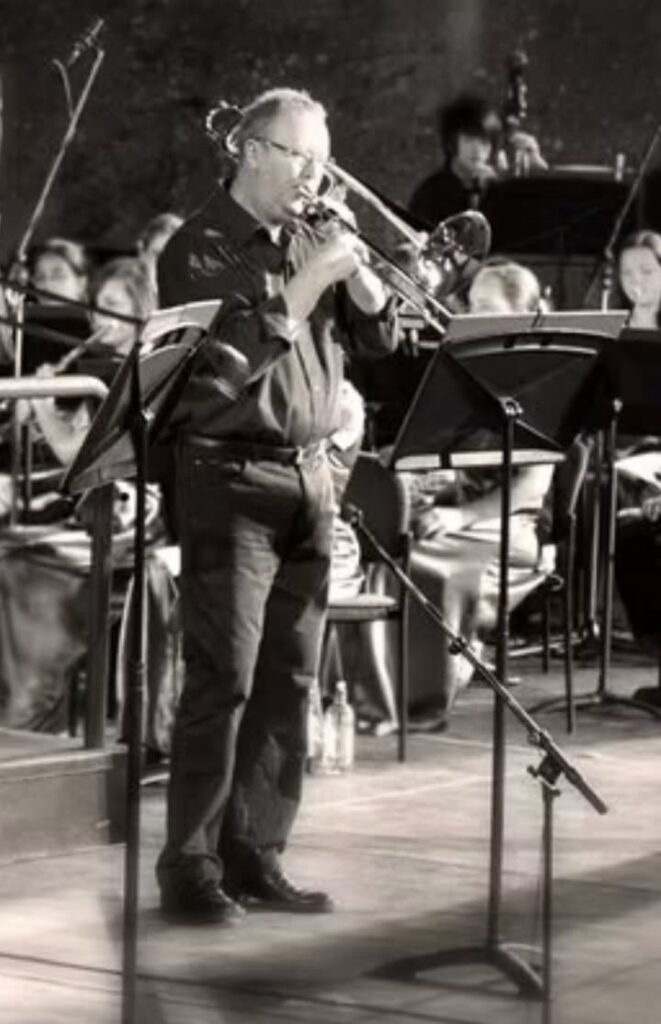
For the past couple of decades he has also been a trombone lecturer at the Sydney Conservatorium of Music and Principal Trombone with Canberra Symphony Orchestra.
Brandenberg Orchestra on sackbut
Nigel took up the sackbut in the early 2000’s and has since then has appeared regularly with the Australian Brandenburg Orchestra and Pinchgut Opera. More recently he has also been collaborating with Van Diemen’s Band on their acclaimed new CD ‘Transformations’ featuring the incredible voice of West Australian Andrew O’Connor.
He was born in 1933 in Bound Brook New Jersey U.S.A, obtaining a Bachelor of Science at Ithaca College New York and a Masters of Music from New England Conservatory Boston Massachusetts.
He toured Europe with the 7th Army Symphony Orchestra for 2 years.
He was Principal Trombone with the Milwaukee Symphony Orchestra, conducting Brass Clinics and performing Brass Quintet recitals.
He came to Australia in 1972 joining the Elizabethan Melbourne Orchestra as Principal Trombone.
1979
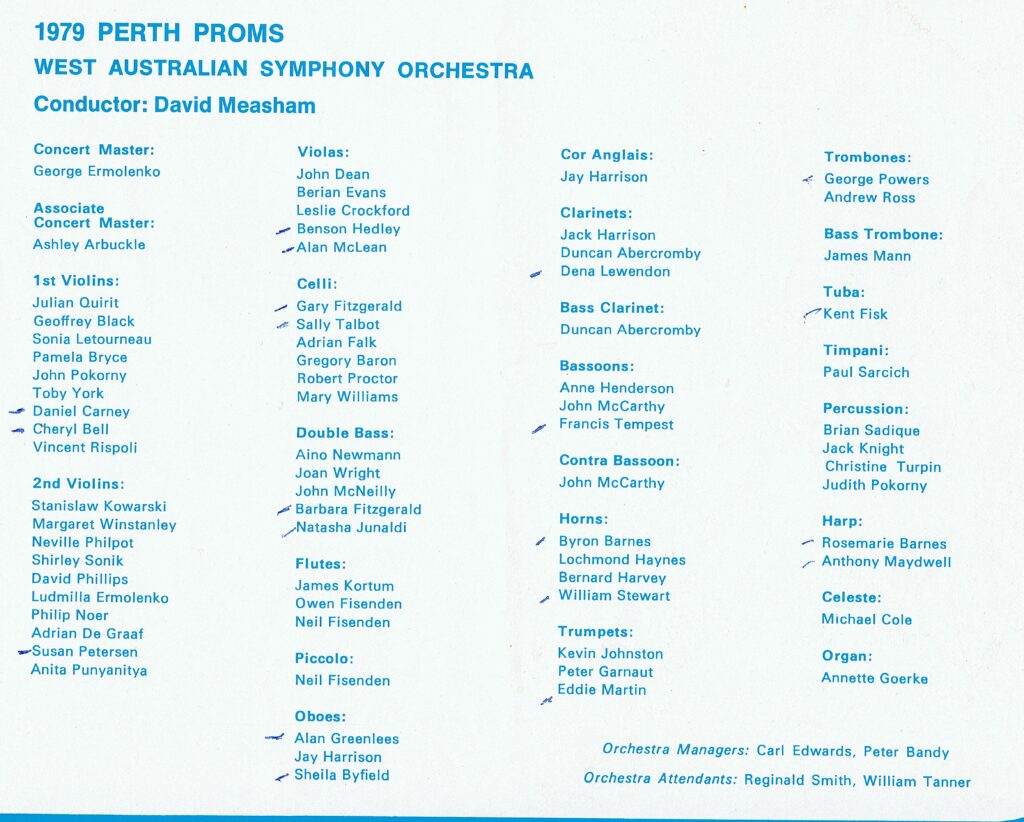
1979 Proms program orchestra list
George died unexpectedly on 25th January 1982 aged 49 and Jim Mann moved to the Principal Trombone position in the West Australian Symphony Orchestra.
A specialist in Early Childhood Music, Danielle Joynt is widely considered to be one of Australia’s most outstanding Early Childhood Music Teachers. She is the Founder and Director of Cottage School of Music Junior and has been instrumental in introducing play-based learning to the early childhood music curriculum.
From 2010 to 2021, Danielle sang , narrated, composed and wrote for the performance group Music Book – classical musicians from WASO and W.A. Opera who arranged and perform children’s books to music.
After completing her BMus in trombone performance at the Canberra School of Music, Australian National University, Danielle attended the Kodaly Institute in Kecskemet, Hungary, graduating in 1988. Returning to Australia, she became Lecturer in Early Childhood Music at the Canberra School of Music before founding the Young Conservatorium Program in Tasmania in 1994. Danielle returned to Perth in 1998 and founded Cottage School of Music Junior.
In 2009, Danielle released the online music program Cantaris Early Childhood Music Learning and began writing and presenting annual children’s concerts with Fremantle Symphony Orchestra.
At the 2010 ISME World Conference in China, Danielle gave a public class with pre-school children from the International School in Beijing.
Danielle was the key presenter at the Inaugural Kodaly Symposium in Perth, and in July 2011 presented a workshop and class at the International Kodaly Symposium in Brisbane.
In 2014 Danielle formed Cantaris Children’s Choir – a community choir for children aged five to eight years of age.
In 2018 Danielle established the Music Therapy program at the Mary Ward Centre at John XXIII College.
She is the author of Beautiful Children’s Rhymes – beautifulchildrensrhymes.com (containing over 1,000 rhymes for children) and the classical music and rhyme site for babies and their families Rhyme Baby at rhymebaby.com.
Danielle retired Cottage School of Music Junior after twenty-three years in 2021.
At present Danielle facilitates weekly sound meditations throughout Perth and the south-west as Dhvani Sound Meditation.
A fully qualified and registered yoga teacher, Danielle teaches Vinyasa, Yin, Chair and Restorative Yoga in Fremantle. She is also a fully qualified and registered counsellor (M. Couns, ECU) and trauma sensitive yoga facilitator.
In 2026, Danielle has been in residence at the Walyalup Fremantle Arts Centre composing music for an upcoming exhibition, and preparing for doctoral study around the use of meditative sound in trauma therapy.
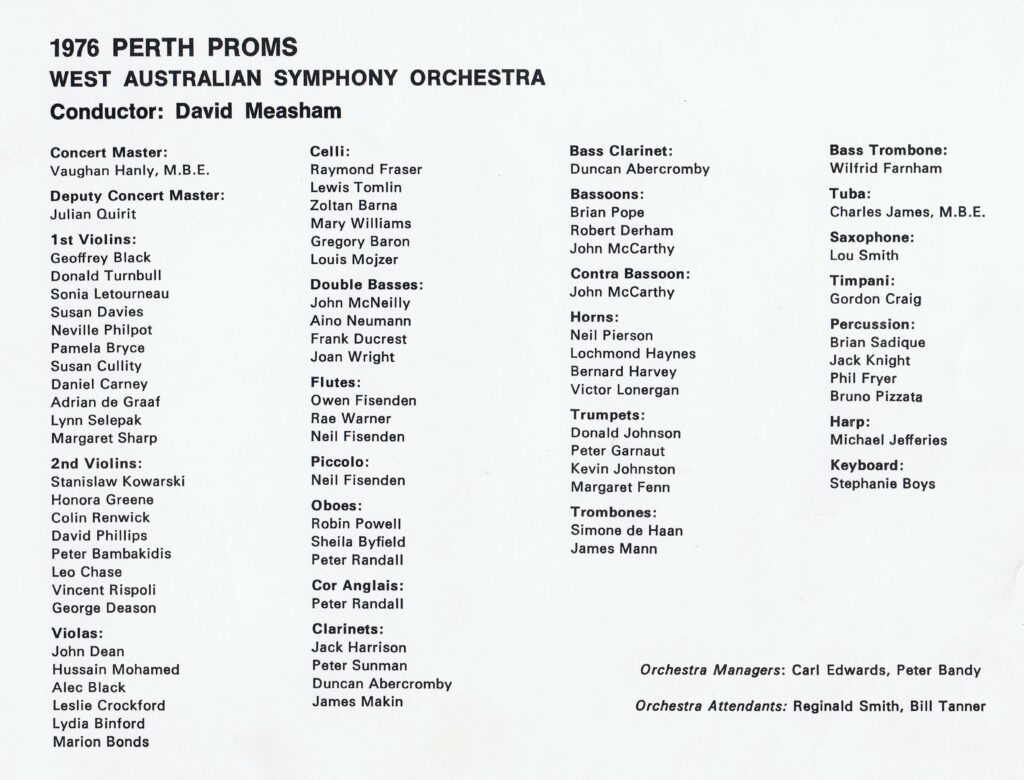
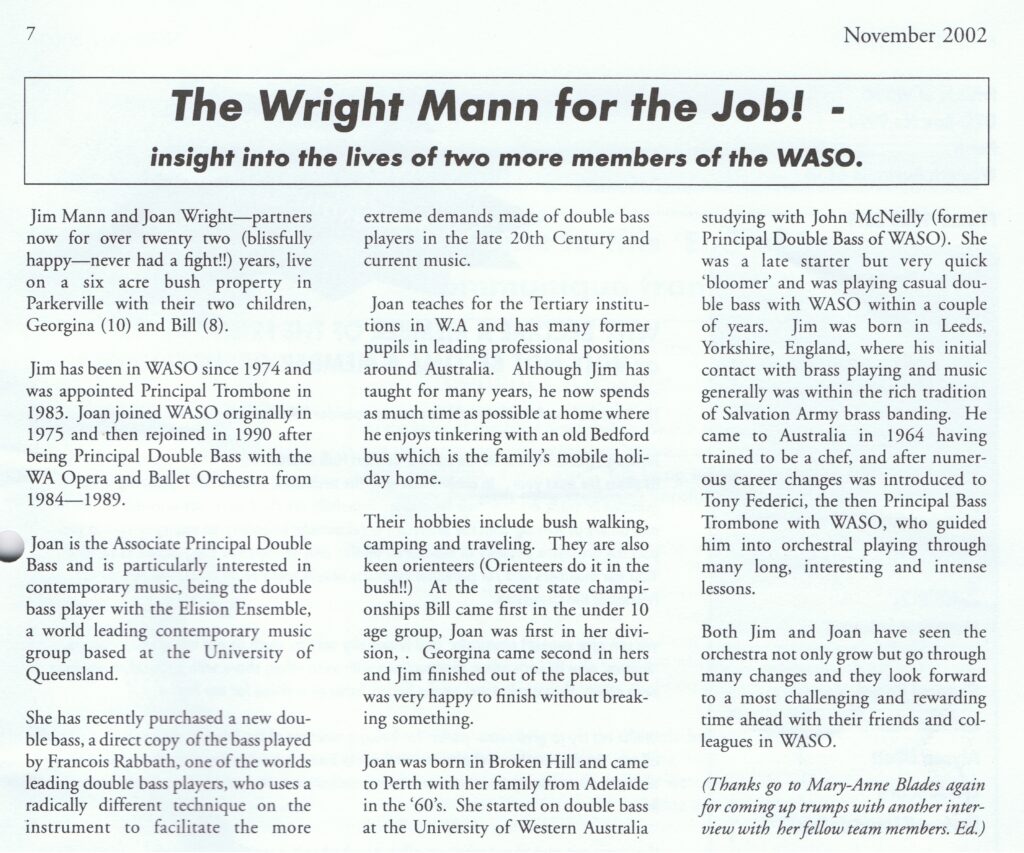
James Raymond Mann was born in Leeds, Yorkshire, England where his initial contact with brass playing and music generally was within the rich tradition of Salvation Army brass banding. He came to Australia in 1964 having trained to be a chef and after numerous career changes was introduced to Tony Federici, the then Principal Trombone with the West Australian Symphony Orchestra, who guided him into orchestral playing through many long, interesting and intense sessions.
He joined the WASO in 1974 and was appointed Principal in 1983 after the untimely death of his colleague George Powers.
1976
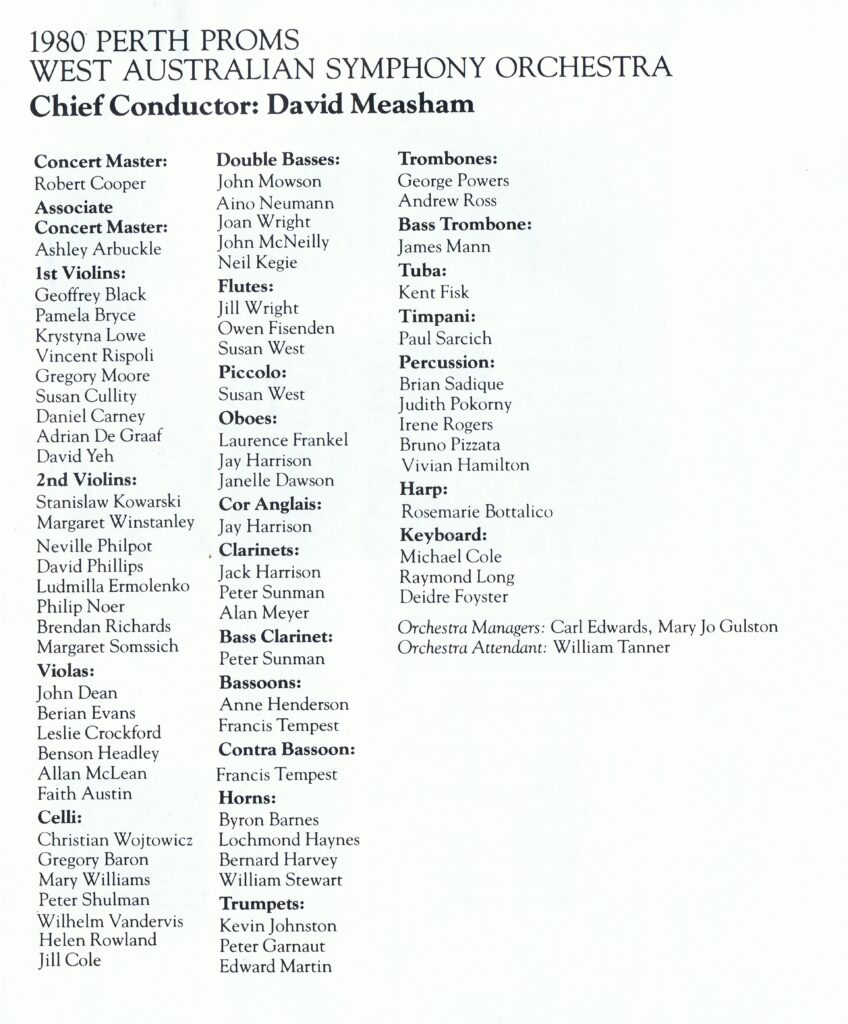
1980
1980 WASO Proms Orchestra list
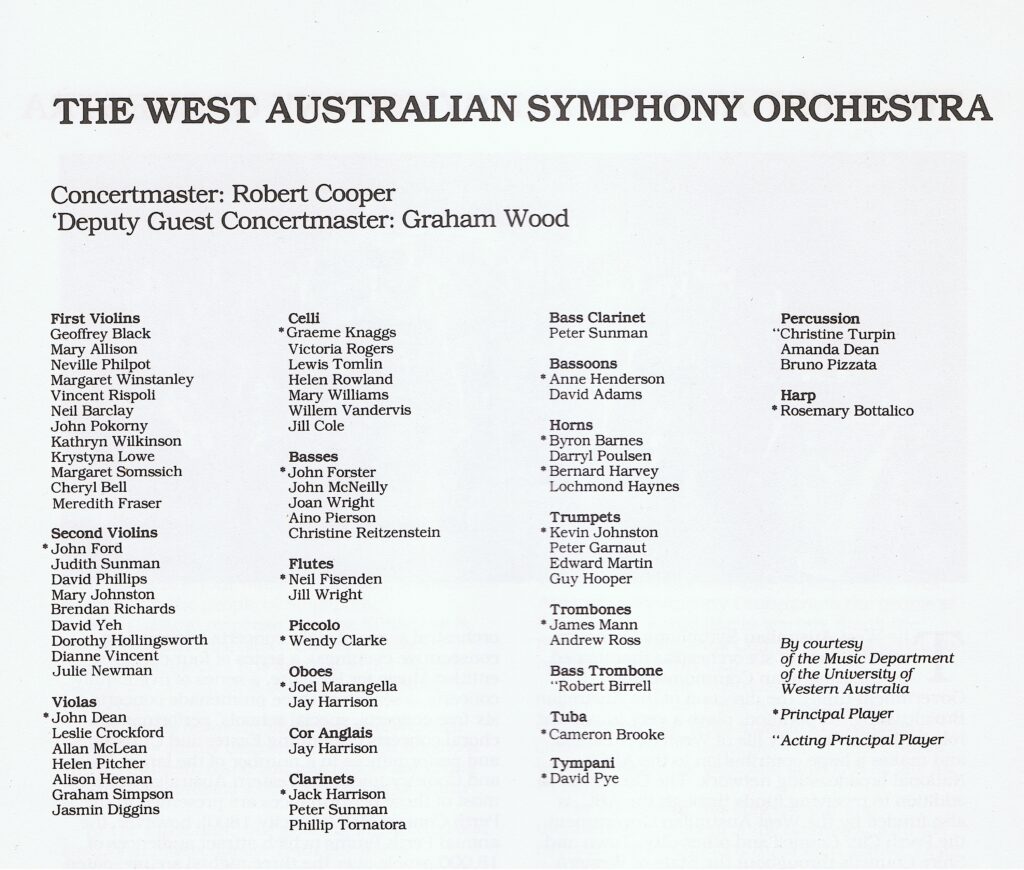
1983
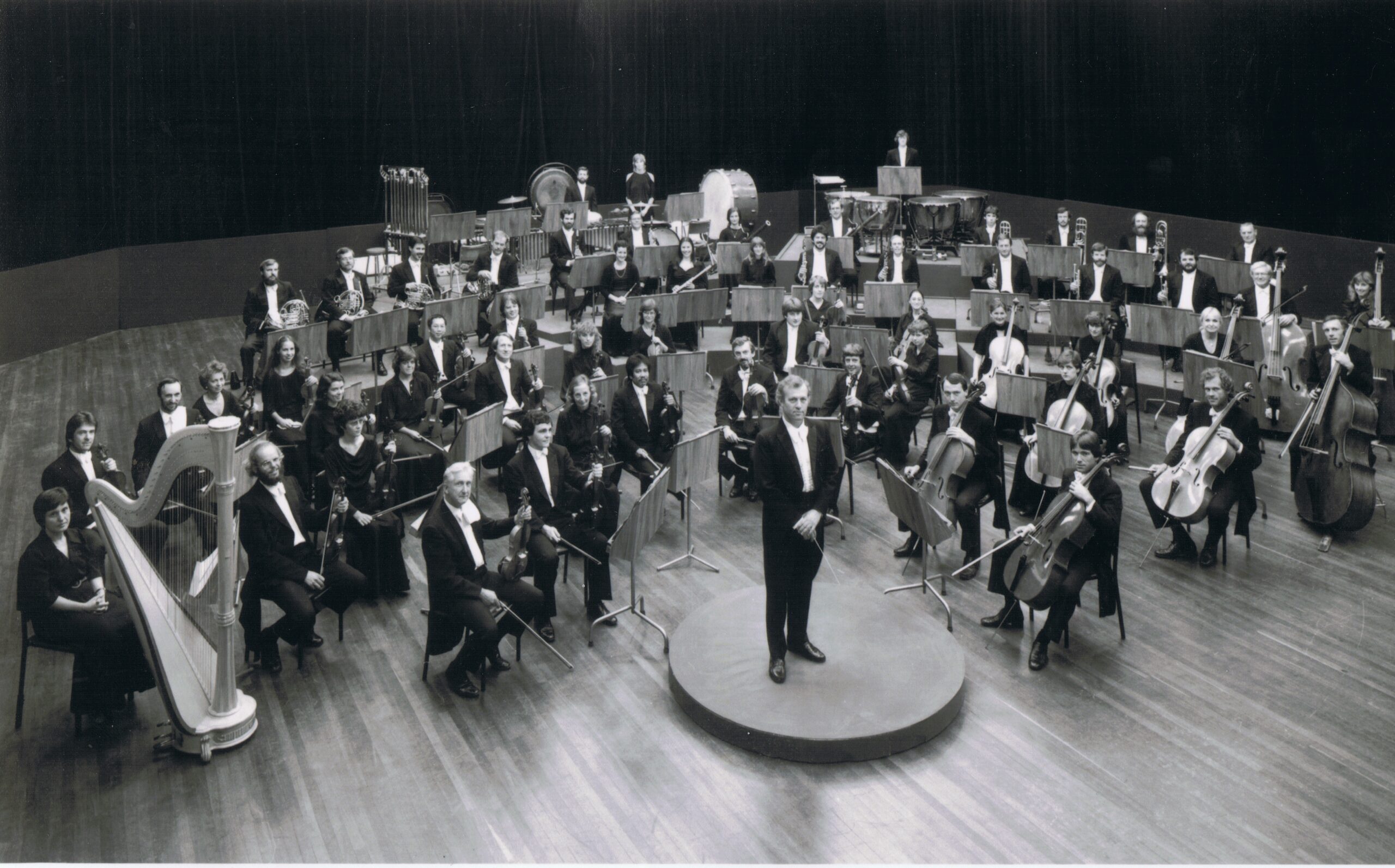
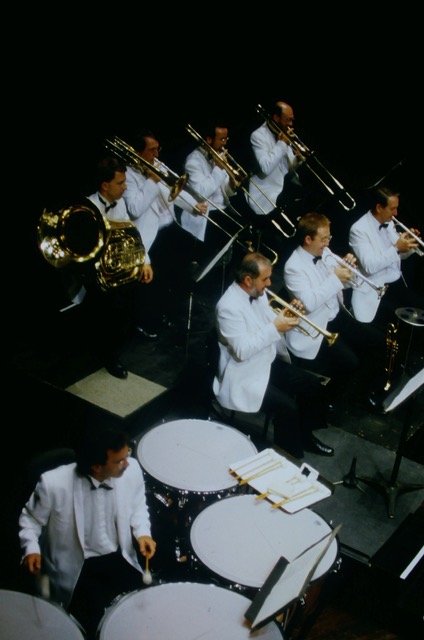
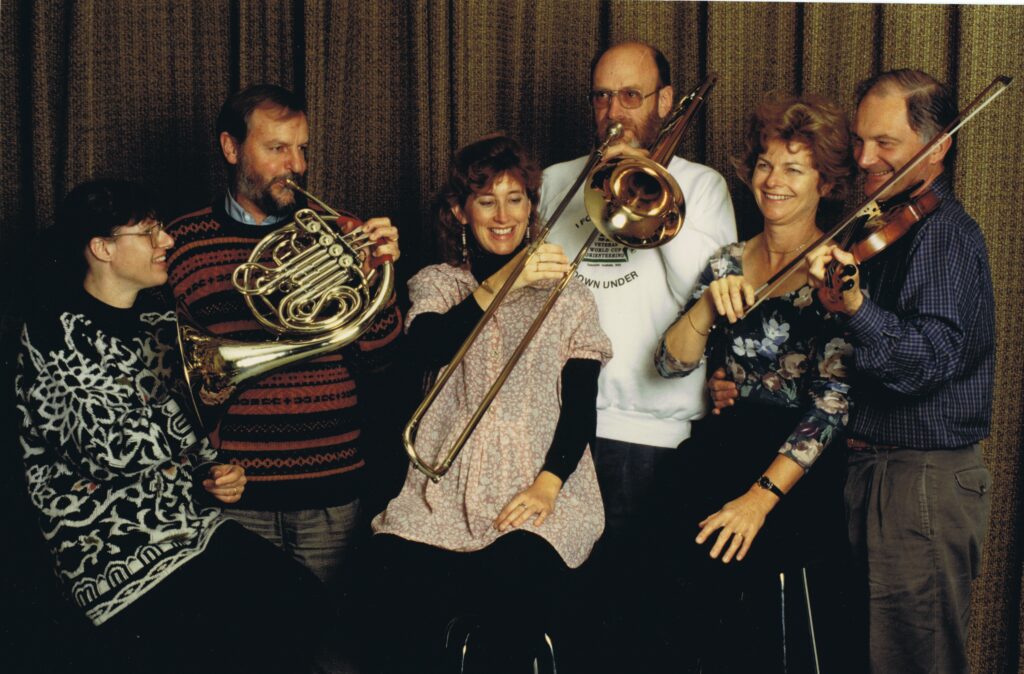
1983 WASO Singapore Tour orchestra list1983 WASO in Studio 620 with conductor Gerald Krug1980s WASO brass section in white tuxedos: trumpets – Kevin Johnston, Andrew Evans, Eddie Martin. Trombones – Jim Mann, Andy Ross. Timpani – Alex Timcke.
1990
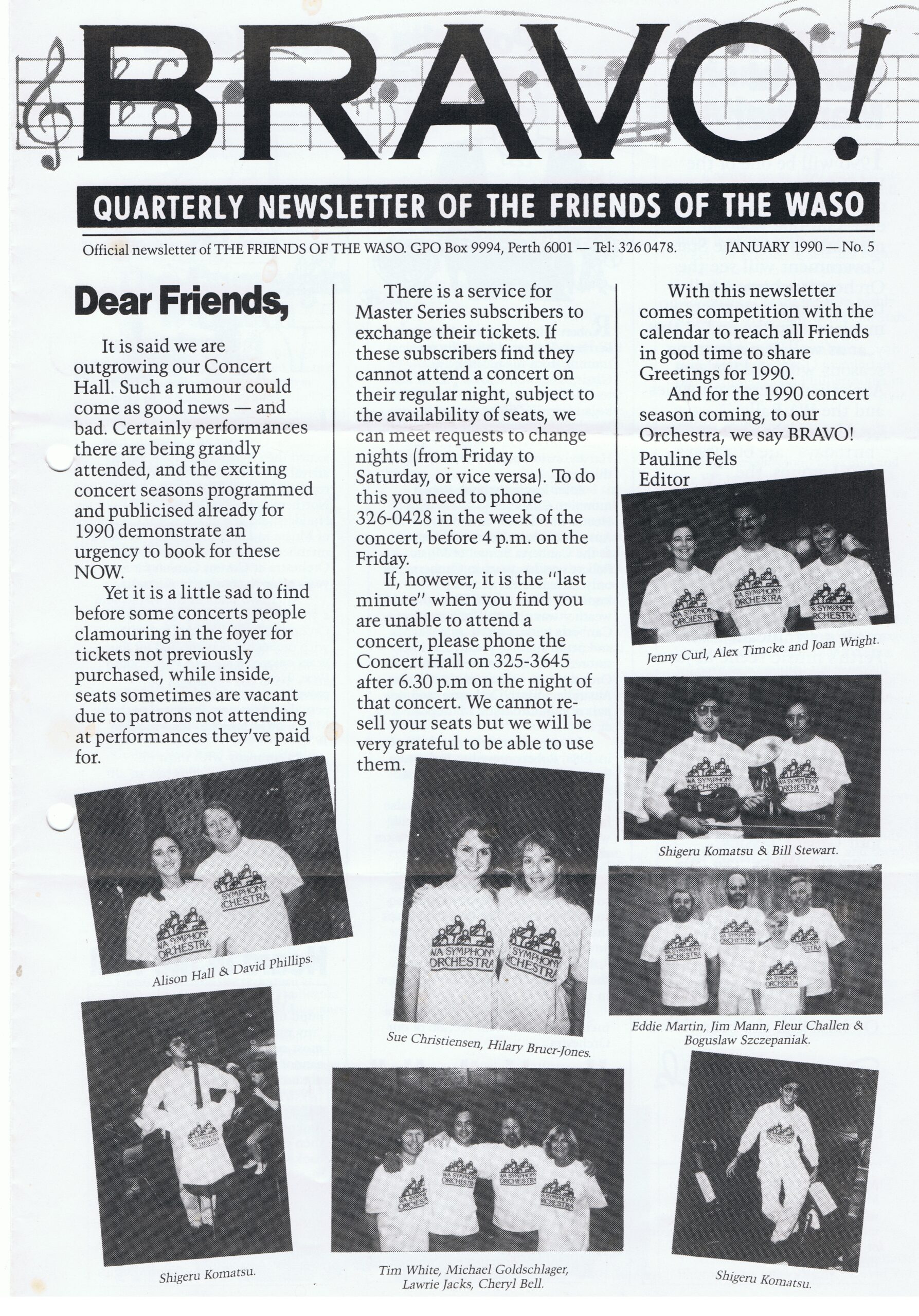
Vladimir Verbitsky, conductorAshley Arbuckle, Leanne Glover, Christine Reitzenstein, Sean Priest, Jim Mann
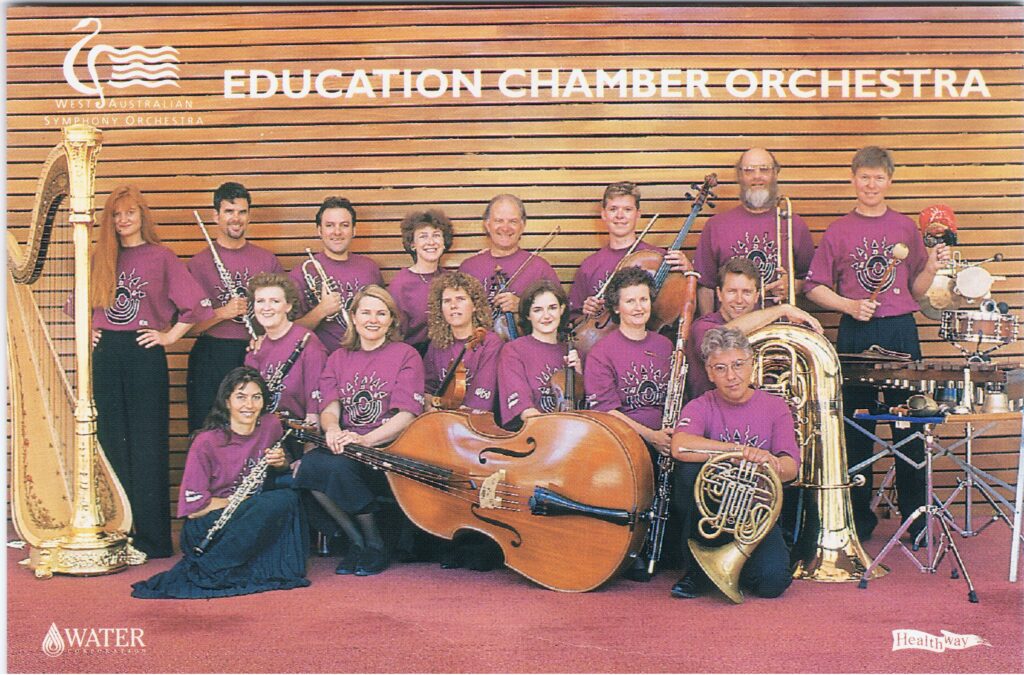
Jim was passionate about education and very involved with WASO’s education and touring ensemble, EChO.
EChO 1995: the founding players in plain WASO shirts – Jim in the hat
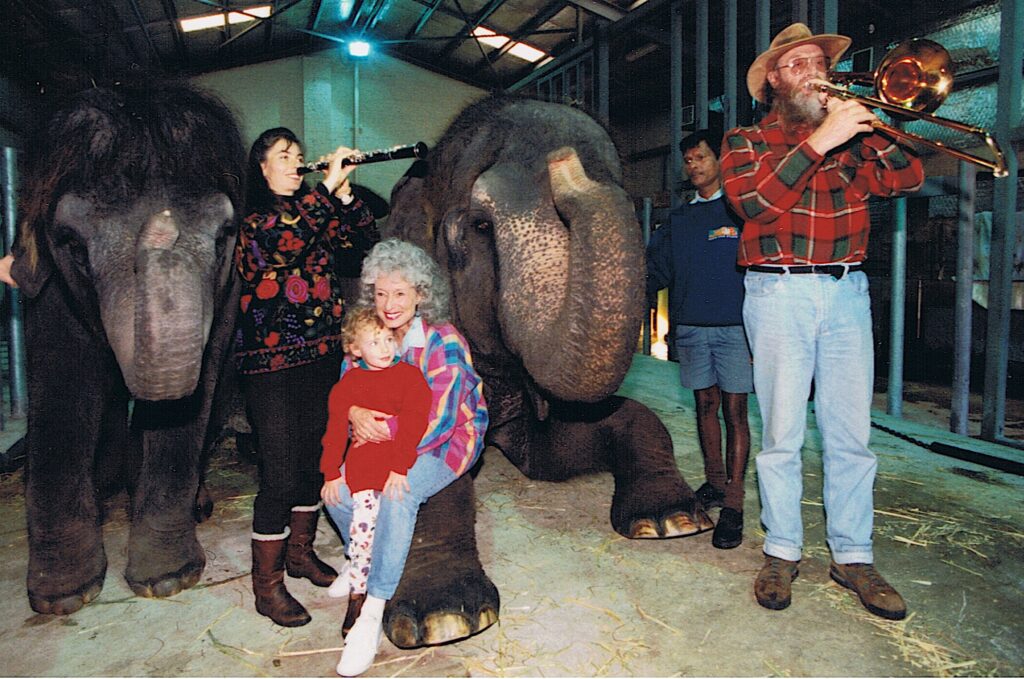
1996 Leanne Glover, Benita Collings (with Georgina Mann) and Jim Mann advertising the “Carnival of the Animals” themed concert with WASO
1991
1993
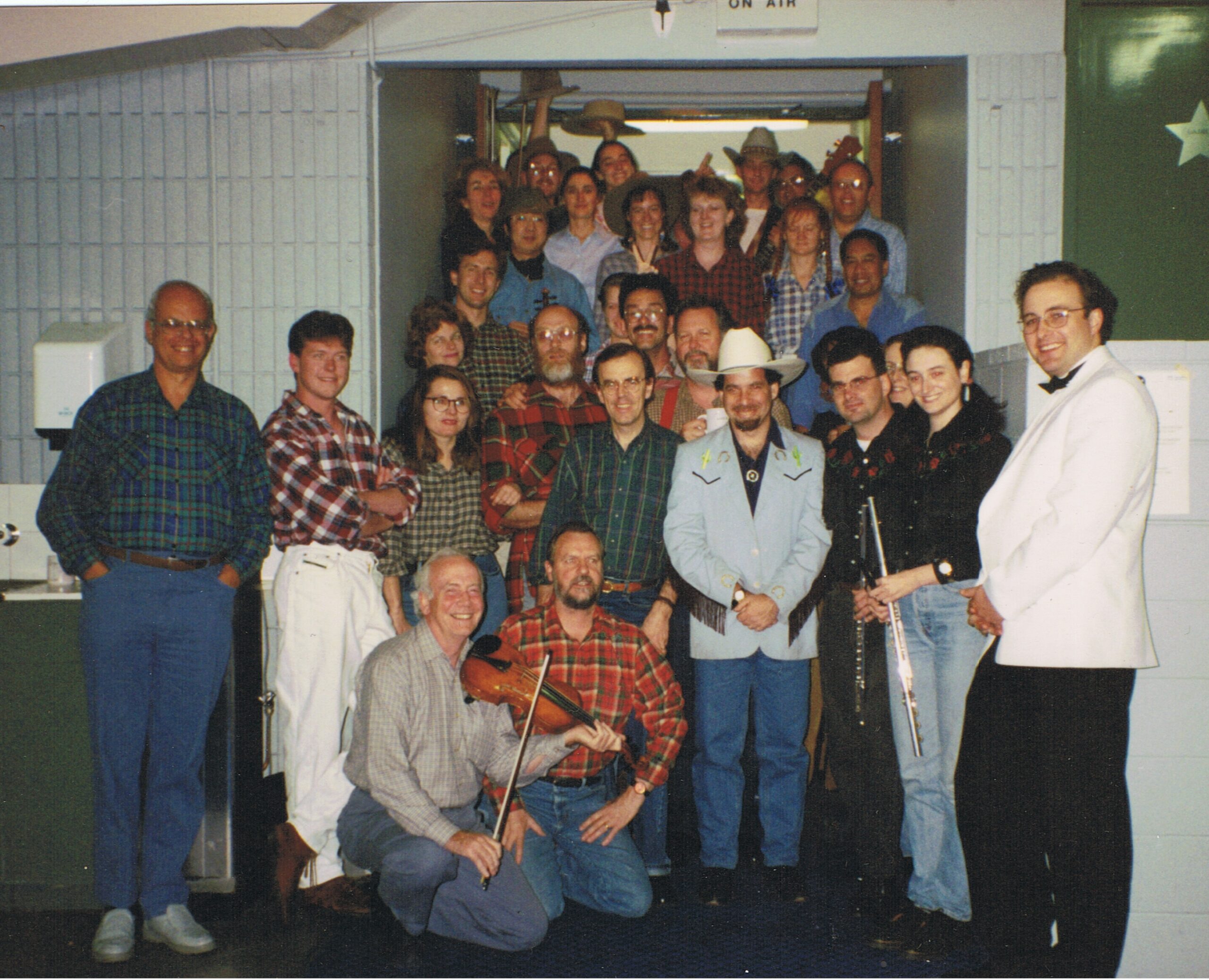
1993 WASO concert with Ian “Macca” Macnamara – Australiana theme – Jim left centre with red checked shirt
1996
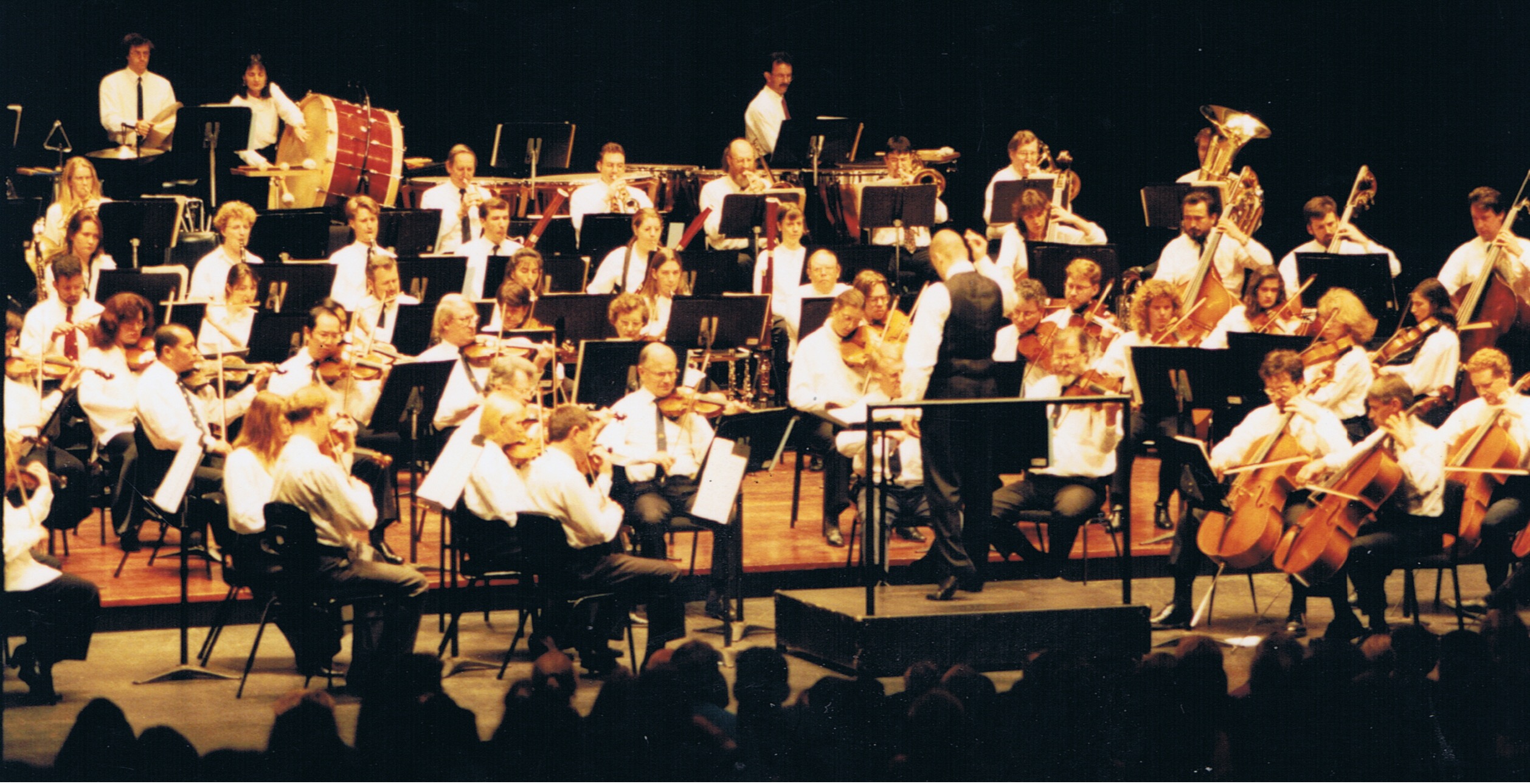
1996 WASO Healthway Concert
1997
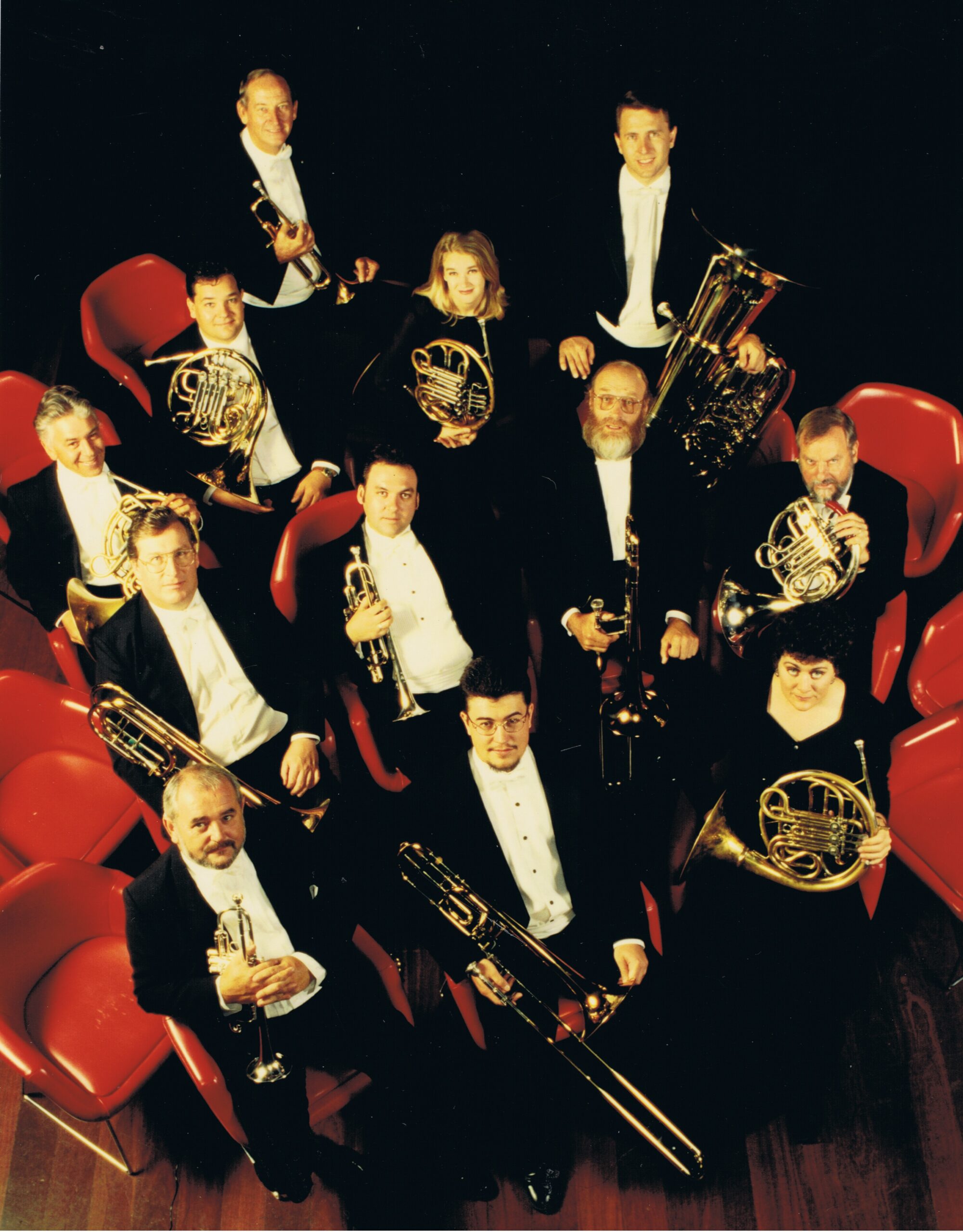
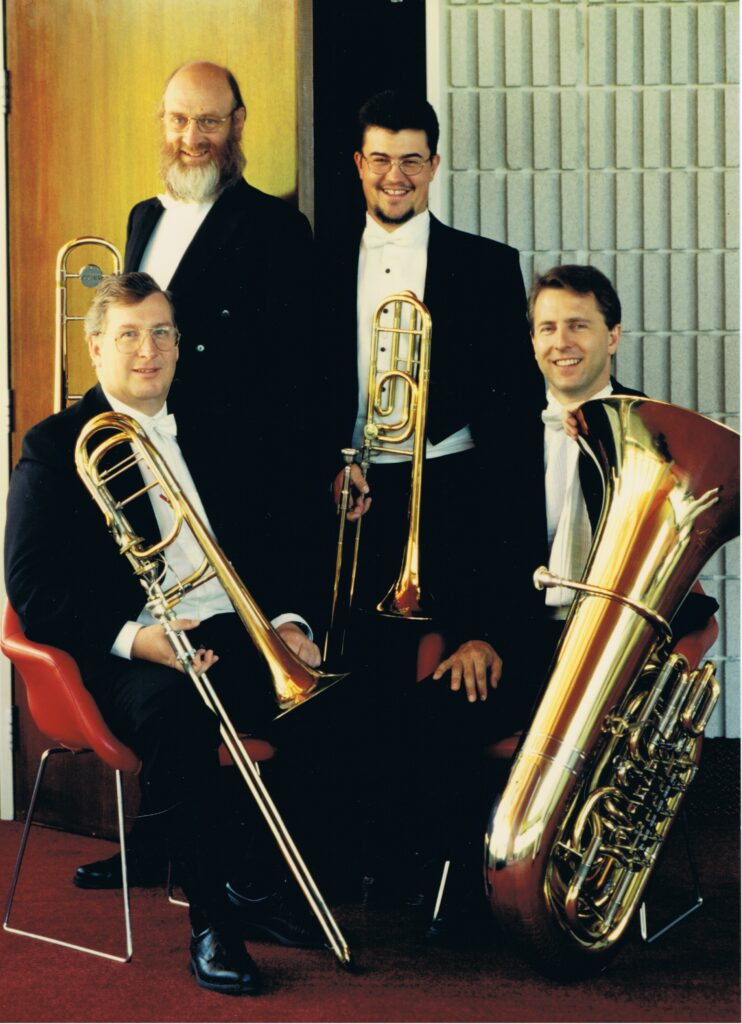
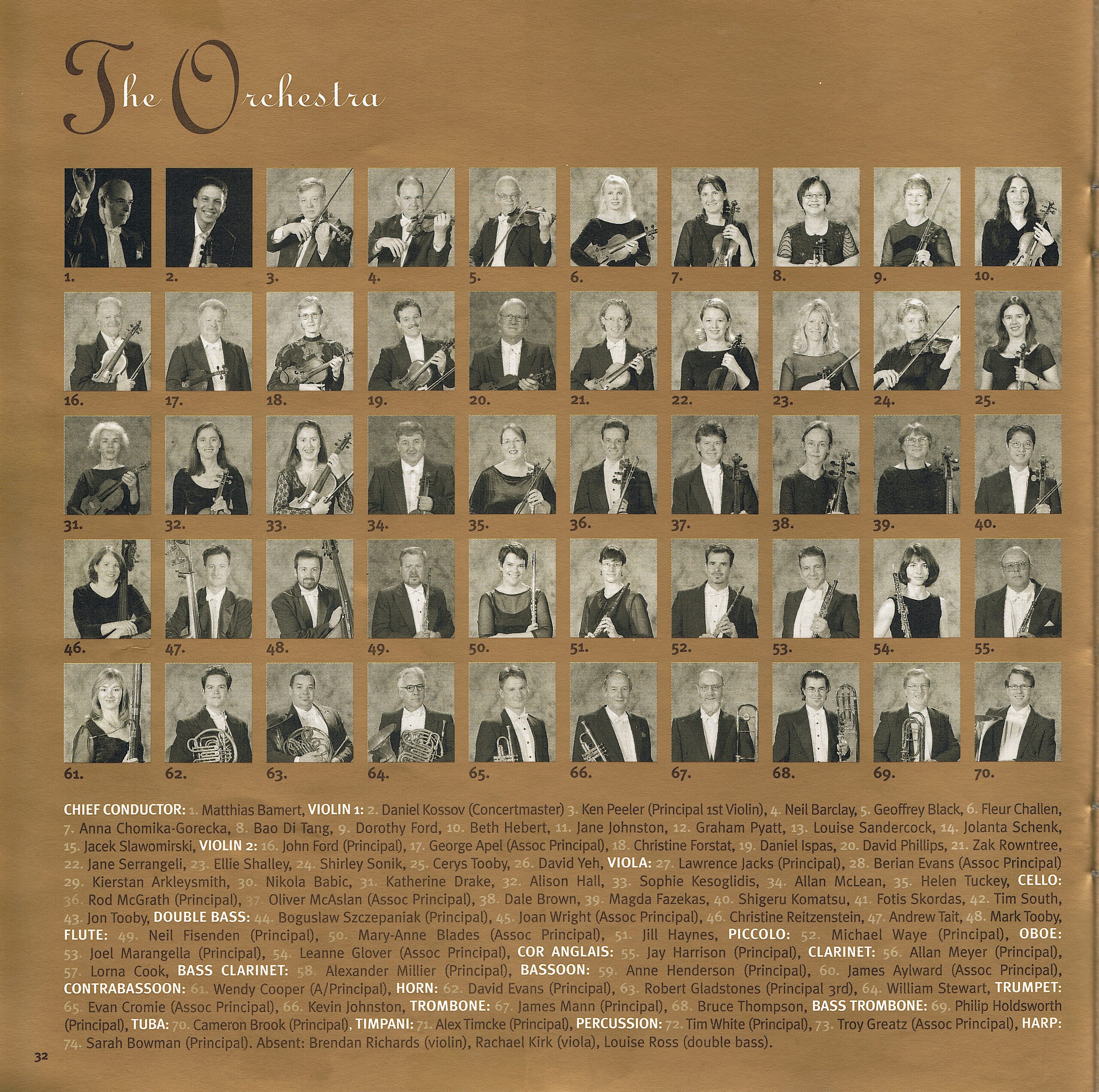
1997 WASO Brass section with horns1997 WASO trombones: Philip Holdsworth, Jim Mann, Bruce Thompson and tuba, Cameron Brook.
2000
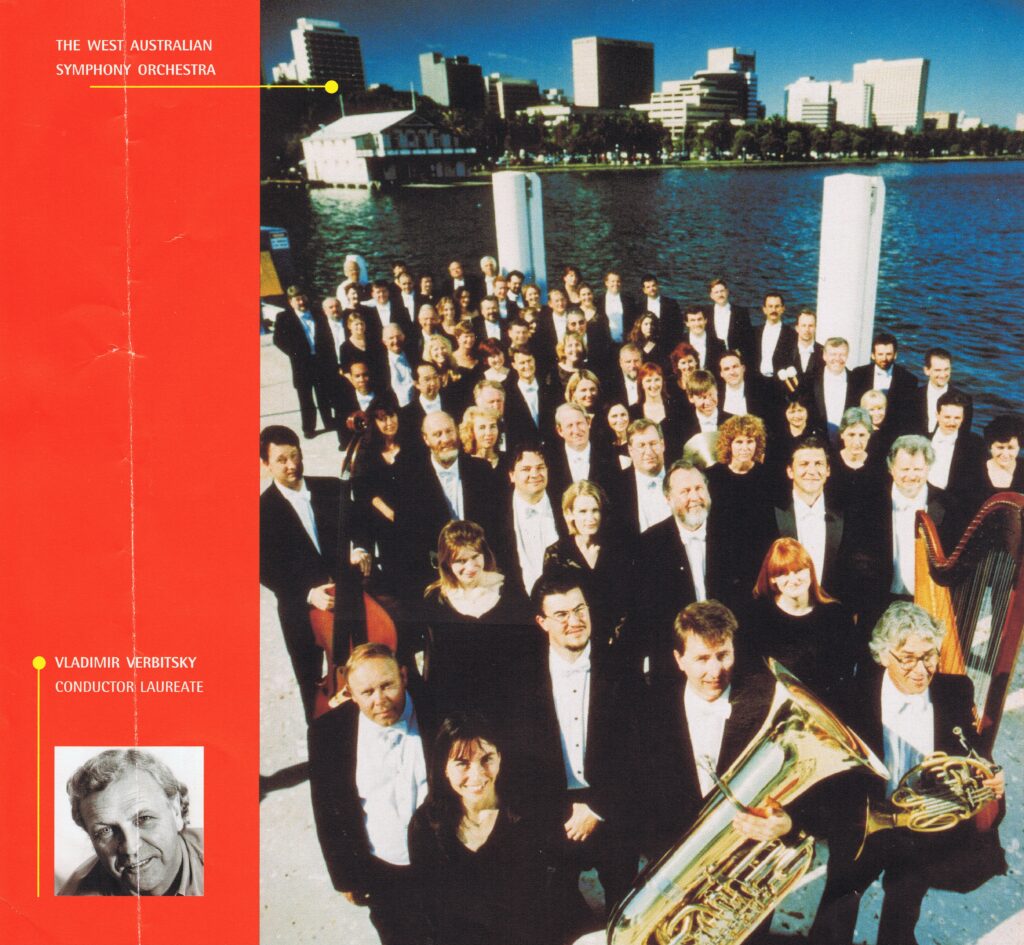
2000 WASO Brochure with conductor Vladimir Verbistsky
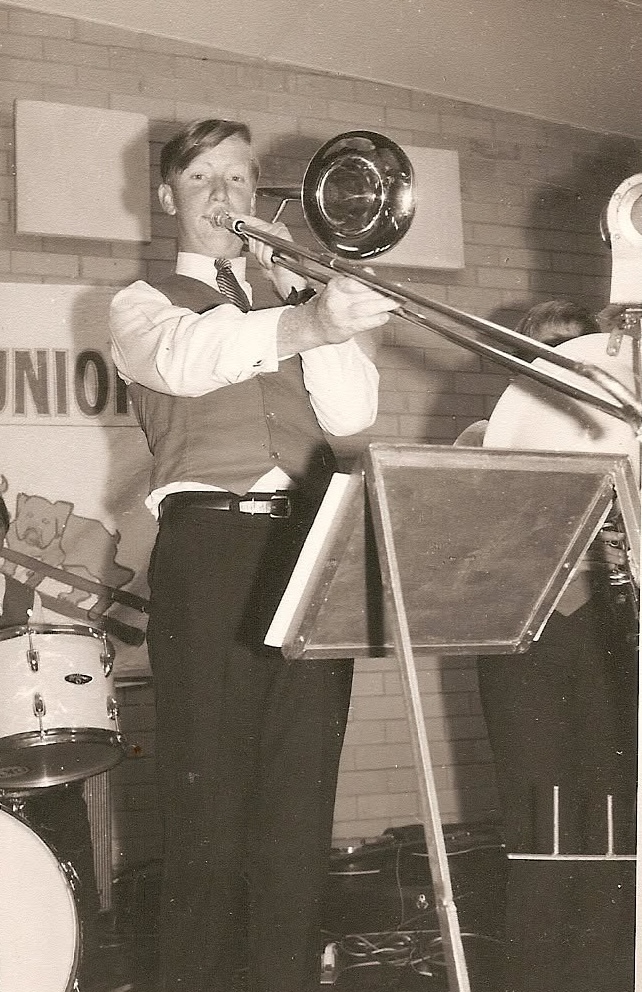
Bob Matthews began his musical life in Perth’s brass band movement and the Y.A.L. band under the guidance of maestro Sammy Sharp.
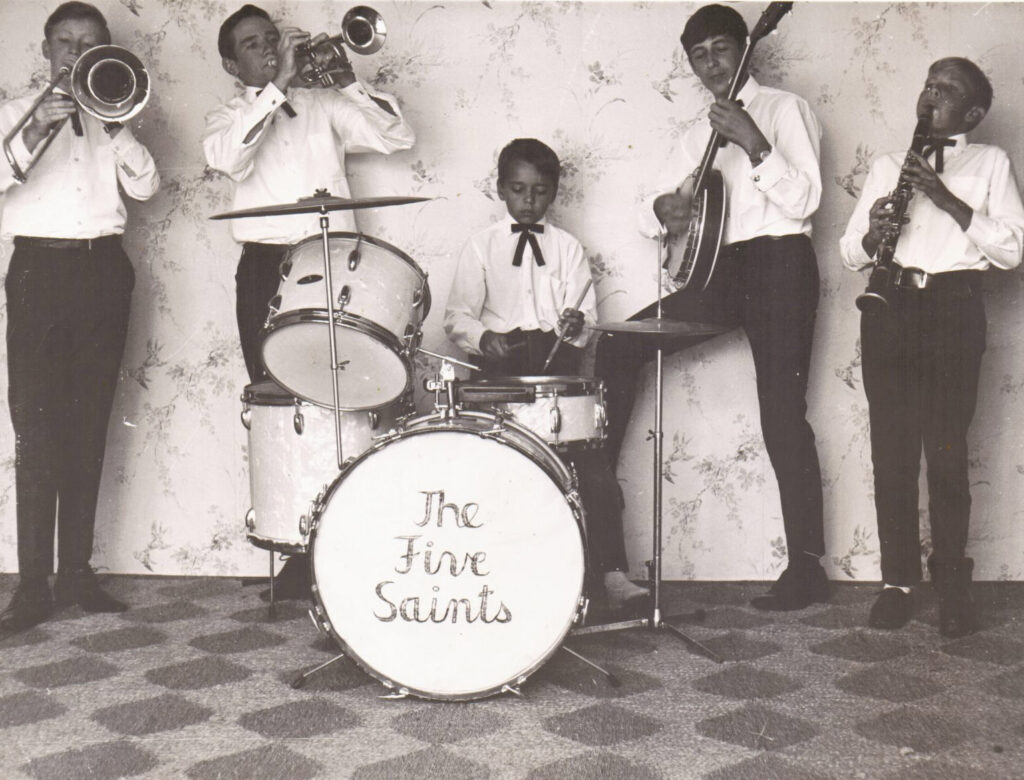
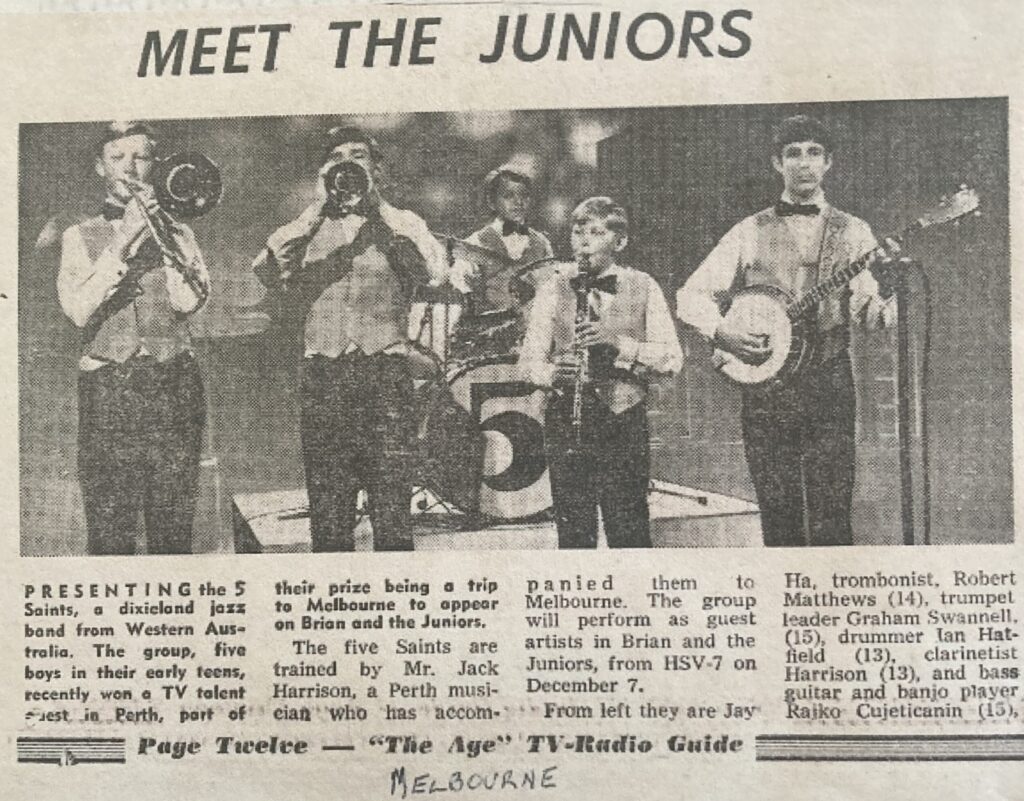
After playing various brass instruments, he eventually settled on the trombone and became a founding member of the award-winning traditional jazz band The Five Saints, mentored by Jack Harrison and featuring his son Jay Harrison on clarinet.
“The Five Saints”
A music scholarship took Bob to Perth Modern School, followed by a two-year scholarship with the ABC’s National Training Orchestra in Sydney. Subsequent orchestral engagements included periods with the West Australian Symphony Orchestra and the Elizabethan Trust Orchestra at the Sydney Opera House.
A Churchill Fellowship enabled Bob to undertake further trombone studies at Indiana University in the United States. He subsequently returned to Perth, where he spent ten years as Principal Trombone with the W.A. Arts Orchestra, alongside a developing career in music education. It was also in the Arts Orchestra that he met his wife, Diane Riddell, then the orchestra’s Principal Flute.
Robert Matthews, William Stewart, Margaret Fenn, Kim Harrison
Following his years with the Arts Orchestra, Bob gradually reduced his freelance performing commitments and moved into full-time music education, spending the remainder of his working career teaching music in Perth schools.
Charles Thompson was born in 1910 to Emma and James Thompson.
1931
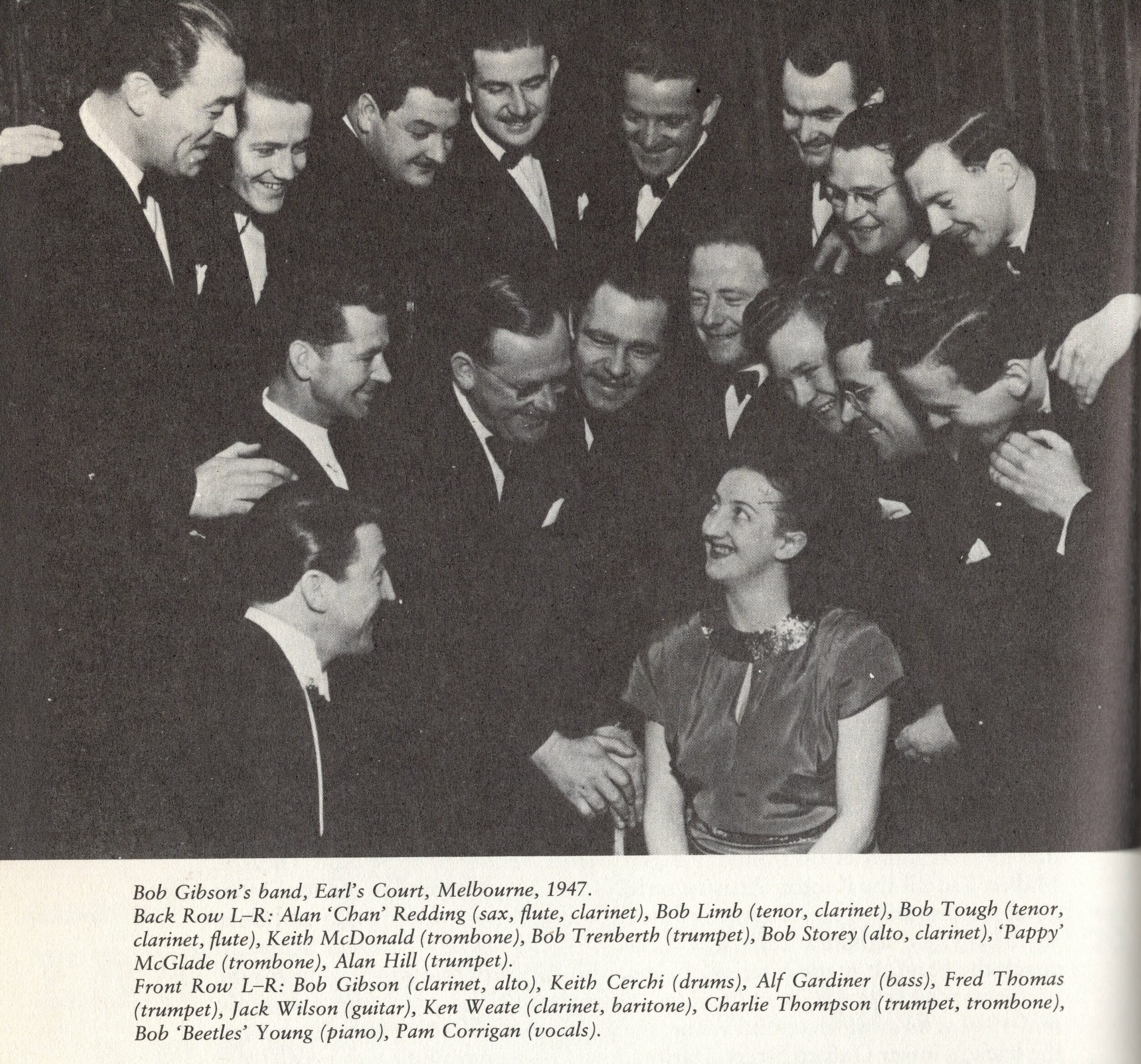
C. Thompson (trombone) appears in the 1931 West Australian Symphony Orchestra program. Twenty years later the name of Charles Thompson reappears. Charlie, who married violinist Denise Dingwall, was a professional photographer with a studio in the prestigious London Court. He took many portraits for the A.B.C. publicity department. During the war years and beyond, Charles played in the Melbourne based Bob Gibson Dance Band.
The West Subiaco Scout Hall was prettily decorated for the coming-of age celebration of Mr. Charles Court, the well-known cornetist and the function, which proved thoroughly enjoyable, was largely attended. During supper the customary toasts were given with musical honours. Mr. A. J. McLaren, in a happy and sincere manner, proposed the principal toast, and was supported by Mr. W. Halvorsen, while that of the parents was suitably attended to by Messrs. J. Dennison and R. C. Bradbury. Mr. W. Court handed Mr. Chas Court a huge key, which was attached to a large chain. Those who contributed to the evening’s pleasure were Mr. Bert Harding, trick cyclist, Miss Sylvia George and Mr. C. Thompson, while Mr. Court played cornet solos. Mr. Tom Bennett was M.C. and Mr. Fred Nice accompanist.
Sunday Times Sunday 9 October 1932 page 2
1933
A pleasant and informal party to Miss Maud Dingwall, on the eve of her departure for Europe, took place at the Repertory Club on Friday afternoon. The music room was gay with Michaelmas & daisies, zinnias, and carnations. Miss Dingwall, who received the heartiest good wishes from her many friends, wore a graceful gown of figured crepe de chine in tones of petunia and gold on a black background, and a little black hat, finished by a plaited brim. Among those present were: — … Charles The Shakespeare Club held a well-attended meeting last Thursday evening. Misses Molly Malone, Ethel Treadgold, and Denise Dingwall and Mr. Glen Lilley contributed towards the entertainment and Mr. Charles Thompson was responsible for an amusing presentation of scenes from ‘A Midsummer Night’s Dream.’ The president (Mr. John Le Tessier) wished Miss Maude Dingwall, who is shortly sailing for Europe bon voyage and happiness in her new sphere of life. On behalf of the members, the secretary (Miss Laurel Berryman) presented Miss Dingwall with a bouquet. Miss Dingwall gave a charming little speech in response, and stated that her term of office and membership in the club had been a very happy one. She added that she was delighted to see present the founder of the club, Miss Freda Treadgold (now Mrs. Seddon Vincent, of Kellerberrin).
West Australian (Perth, WA : 1879 – 1954), Tuesday 11 April 1933, page 5
Lee McAlinden and his Orchestra Supreme.
Those whose pleasure it has been to hear this talented orchestra will have another opportunity tomorrow evening (Sunday, 25th) (see advert on page 1). The second grand professional charity concert presented by Lee McAlinden has a full supporting variety programme which includes the following assisting artists: Edith Simmons (soprano), Bill Quarrell (baritone), Linton Boys, and the wonder child, Baby Shirley King; bright solos from Ray Reason (trumpet), Geo Caro (sax), Joe Roston (piano), C. Thompson (trombone), Ray Le Cornu (xylo), Eddie Birnie (clar.).
Weekly Guardian (Subiaco, WA : 1933 – 1934), Saturday 24 June 1933, page 2
LOCAL BAND HONOURED – Engagements in Eastern States.
For the first time in broadcasting history a West Australian band has been engaged through the Australian Broadcasting Commission to give performances over the air in the Eastern States. Ron Moyle and his ‘Westralians,’ a combination of local performers, will leave for Adelaide by the Great Western express on Saturday, night, and will be absent for about six weeks. The ‘Westralians’ will be heard over the air from 5CL, Adelaide, on December 21 and 22, and from South Australia they will go to Melbourne, where they will broadcast from 3LO-between January 6 and 27. It is possible that the band will; also visit Sydney. Ron Moyle himself is well-known to listeners in Western Australia, having been connected with broadcasting in this State for many years. His band, which is composed of the following players, was heard from 6WF during last dancing season: — Ron Moyle, A.T.C.L. (pianist); Bob Gibson, L.A.B. (alto saxophone, clarinet and violin) ; George Caro, A.T.C.L. (tenor saxophone, clarinet and violin); Allan Gough, A.T.CJj. (alto saxophone, clarinet and violin); Viv. Nylander (trumpet and trombone); Kem. Fimmel (trumpet); Charles Thompson (trombone and trumpet),Wally Hadley (banjo, flute and guitar); Cliff Adam (guitar, tap dancer and vocalist); Eddy Roberts (drums and vocalist); and Tom Bennett (bass). The band will give a final concert at the Ambassadors Theatre on Friday night.
West Australian (Perth, WA : 1879 – 1954), Wednesday 13 December 1933, page
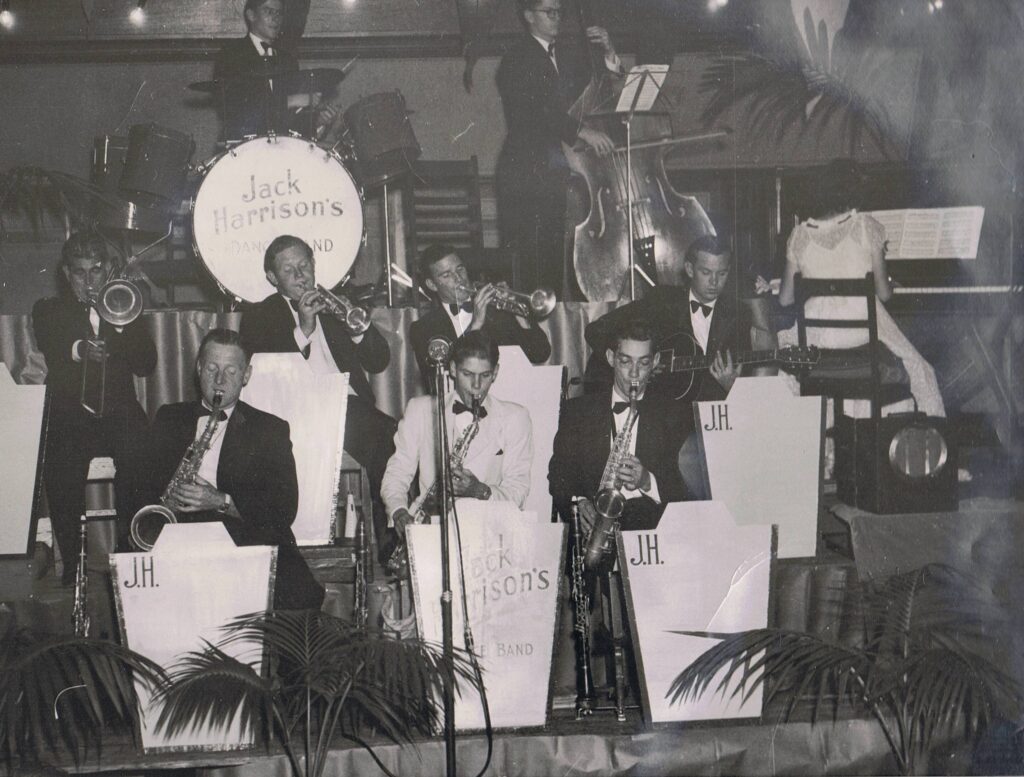
Jack Harrison augmented his swing band according to the requirements of functions, sometimes up to ten players, such as the April 22nd 1949 University of Western Australia Graduation Ball at Winthrop Hall. Players were issued with a cheque on 5th May 1949 and were paid 3 pound 2 and 6 for the gig. Players paid were: Norm Wrightson (saxophone), George Kirkby (saxophone), Jack Pope (trumpet), George Franklin (trumpet), Charles Thompson (trombone), Bill Hendrie (guitar), Roy Coates (bass), Ray Harrison (drums), Jill Harrison (piano) and Jack was the tenth band member.
Jack Harrison Dance Band Winthrop Hall
GRADUATION BALL
8.30pm – 2am
April 22 1949 Winthrop Hall, University
In Aid of World Student relief
ADMISSION Double Ticket 24/7 (inc tax.)
Jack Harrison’s Ten Piece Orchestra – bookings at Nicholsons
AROUND PERTH – WITH HARRY BLUCK – Ball Season Starts Rolling in Perth – Heavy Bookings as Biz Booms
The annual outcrop of balls generally makes its presence felt about this time of the year and already some of the earliest have taken place. This season promises to be a busier one than previously and some large-sized bands should be seen on the various stands. Already, youthful Jack Harrison has made a good start by fronting a 10 piece outfit at the University Graduation Ball, and from all accounts the ultimate sound of the band justified the Harrison judgement in selecting good players as his support. Jack Harrison has blossomed out with a 10 piece band, with which he played at the Perth University Graduation Ball.
Music Maker and Dance Band News May 1949
5 MAY 1949
JACK HARRISON Cheques to:
Norm Wrightson Grad Ball £3/2/6
Kirkby Grad Ball £3/2/6
Pope Grad Ball £3/2/6
Franklin Grad Ball £3/2/6
Thompson Grad Ball £3/2/6
Hendrie Grad Ball £3/2/6
Coates Grad Ball £3/2/6
Ray Harrison Grad Ball £3/2/6
Jill Harrison Grad Ball £3/2/6
Piano stylist and master of improvisation, Henry Cochran surprised me when he said he commenced his career in the dance band profession as a percussionist in the days of 1927 when he played drums for Jack Niece’s outfit at the much spoken of Gliders Dance at Roberts-rd, Sublaco. During the early days of the depression, Henry recalls organising an 18-piece band which played at a small hall somewhere in the vicinity of Cannington. That evening, the band which included Charlie Thompson and many other leading musicians, were not paid according to rates, but received a white shirt and bow tie each ‘Things were tough those days,’ said Henry. During the middle 30’s, Henry was resident pianist at the Adelphi during the day; solo pianist at the Carlton Cafe and led a trio at the Adelphi Lounge during the evening hours. Afternoon dance sessions at the Carlton listed prominent musicians such as Cec Mitchell and George Watson of Eastern States fame, Sammy Sharp, Charlie Thompson and others.
Mirror (Perth, WA : 1921 – 1956), Saturday 14 May 1949, page 13
4 JULY 1949
JACK HARRISON
Cheque to: Jack Pope Womens College £5/3
Colin Youlden Womens College £2/11/8
Bill Kirkham Womens College £2/11/8
Charlie Thompson Womens College £2/11/8
George Franklin Womens College £2/11/8
Bill Hendrie Womens College £2/11/8
Roy Coates Womens College £2/11/8
1951
1951 WASO Kalgoorlie tour: Charles Thompson, Jack Harrison, John Mowson, Don Cartright, Bernie Conlon, Jock Williams
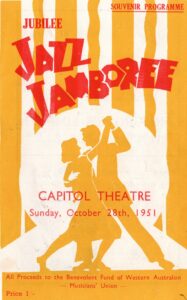
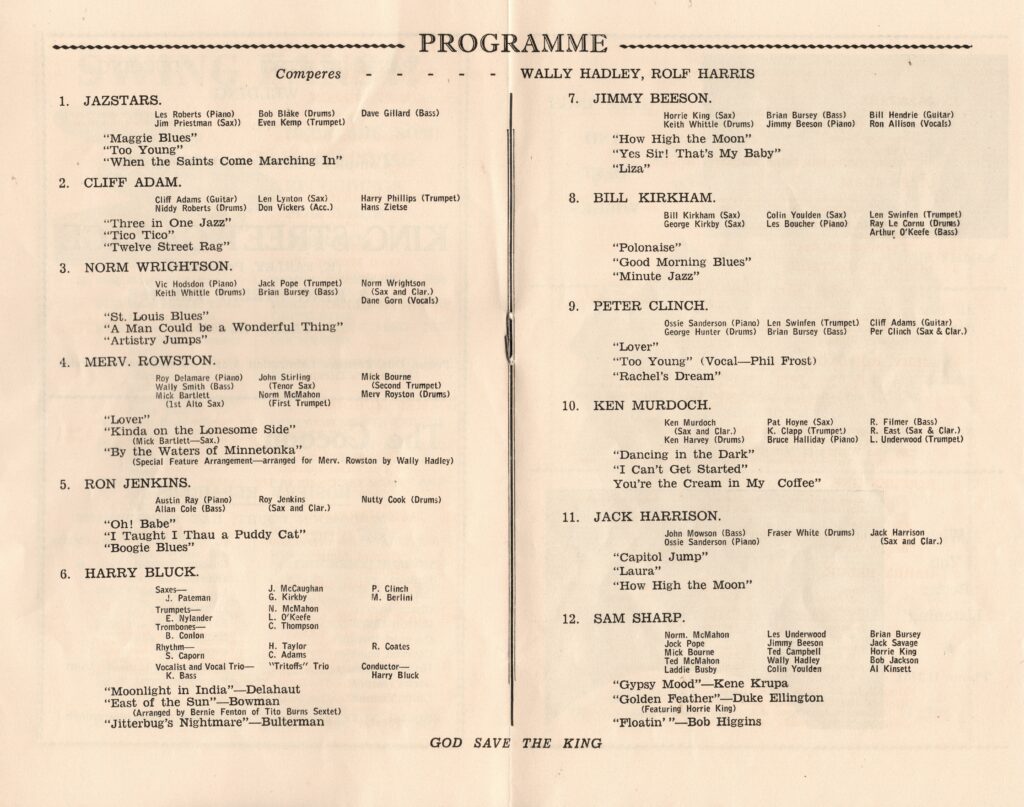
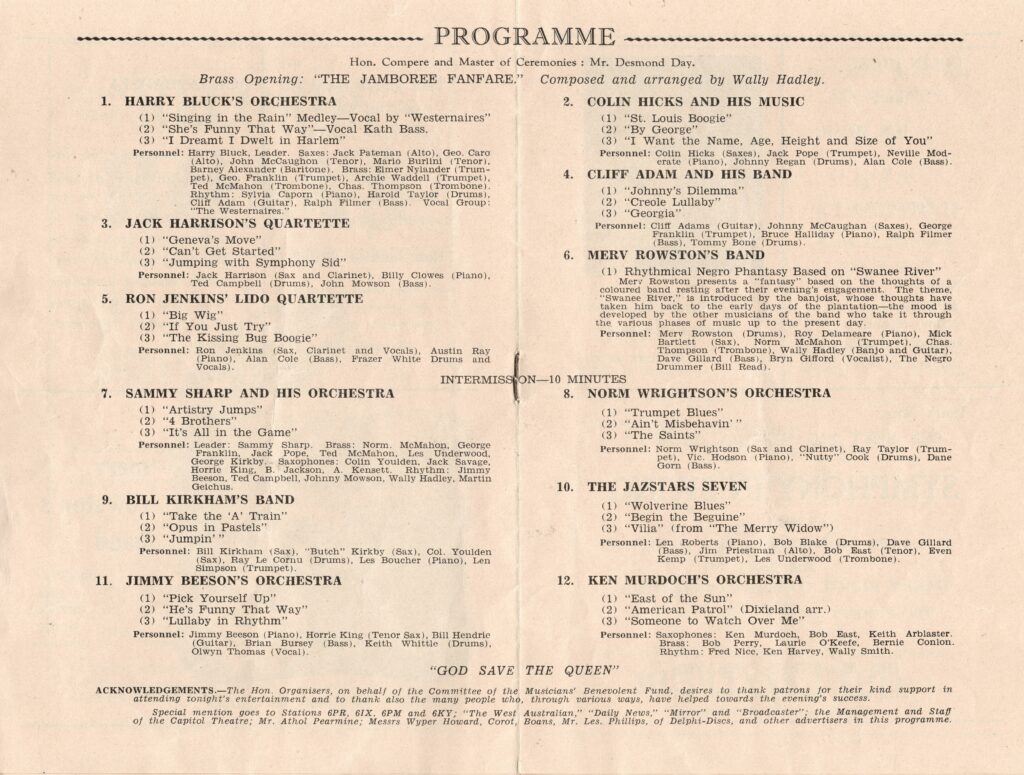
1951 Jazz Jamboree – programme
1952
DINGWALL-THOMPSON: The engagement is announced between Denise Mary, youngest
daughter of Mrs. and the late Mr. D. Dingwall, of 32 Alexander road, East Fremantle, and
Charles Andrew, youngest son of the late Mr. and Mrs. Thompson. of 7 Violet-street. Perth.
West Australian (Perth, WA : 1879 – 1954), Saturday 26 April 1952, page 13
Right: This is Billie Dingwall christened Denise Mary – who says that friends weren’t as surprised as they should have been when she and fellow musician Charles Thompson announced their engagement. They play – she, the violin and he, the trombone – in the Perth Symphony Orchestra. In her spare time, Billie pours her personality into radio plays.
Western Mail (Perth, WA : 1885 – 1954), Thursday 8 May 1952, page 35
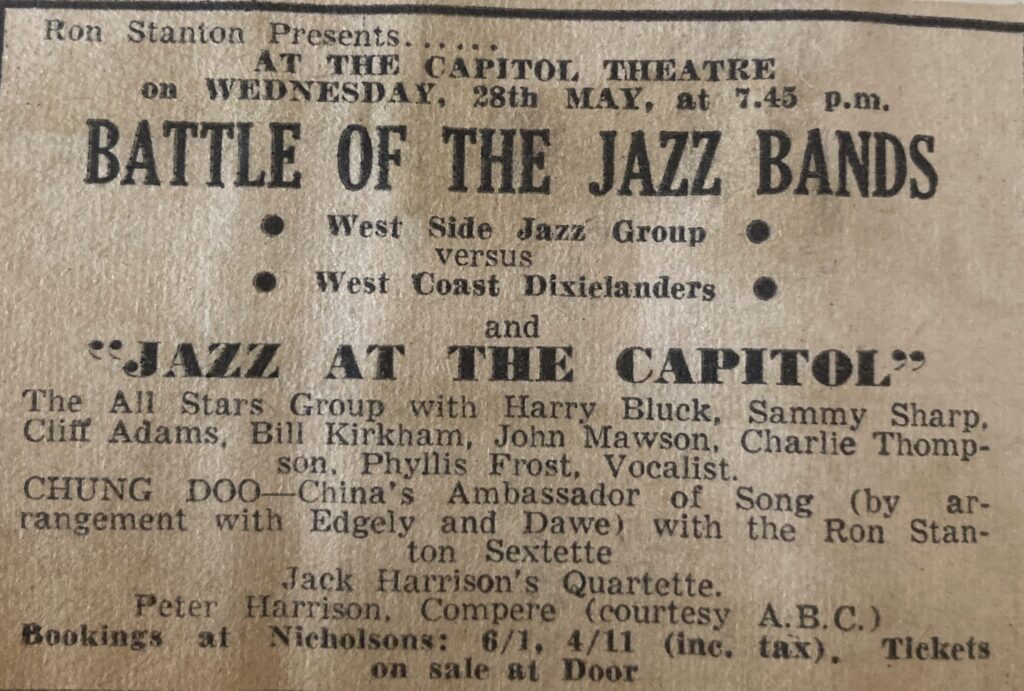
Wednesday 28th May 1952
Jazz At The Capitol
Lena Horne. Spike Jones. Mills Brothers. Harry Eddison. Lester Young. Ella
Fitzgerald. Ray Brown . . .
They’re just a few big names of modern music in the long list of acquaintances claimed by Ron Stanton, now in Perth. Ron, a Sydneysider, is a genuine young man of music. American tours have given him an intimate knowledge of techniques over there — and he’s bringing them to Perth.
Particularly impressed with the annual festival Jazz at the Philharmonic, he has formed a “leaders group” in Perth for Jazz at the Capitol. Group includes Harry Bluck, Sammy Sharp, Cliff Adams, Bill Kirkham, John Mowson, Charlie Thompson and Ron Stanton himself.
Program— at the Capitol on Wednesday night— will also include the “name bands” of Perth, Chung Doo, Stanton’s sextet and Jack Harrison’s quartette.
Mirror Saturday 24 May 1952 page 8
1953
An effort is being made to have a reunion of players of Ron Moyle’s old band. – These include: Ron Moyle (pianist and leader), Cliff Adam (guitar, vocals and tapdancing), Niddy Roberts (drums), Wally Hadley (banjo), Tommy Bennett (bass), Ken Pimmell and Viv Nylander (trumpets), Charles Thompson (trombone), Alan Gough, George Caro, Bob Gibson (saxes).
Mirror (Perth, WA : 1921 – 1956), Saturday 24 October 1953, page 12
1965
1965 WASO: Ivan Nylander (trumpet), John Reece (timpani), Honora Greene (violin), Jill Cole (cello), Charles Thompson (trombone), Bernard Conlon (bass trombone) and Susan Peterson (violin)
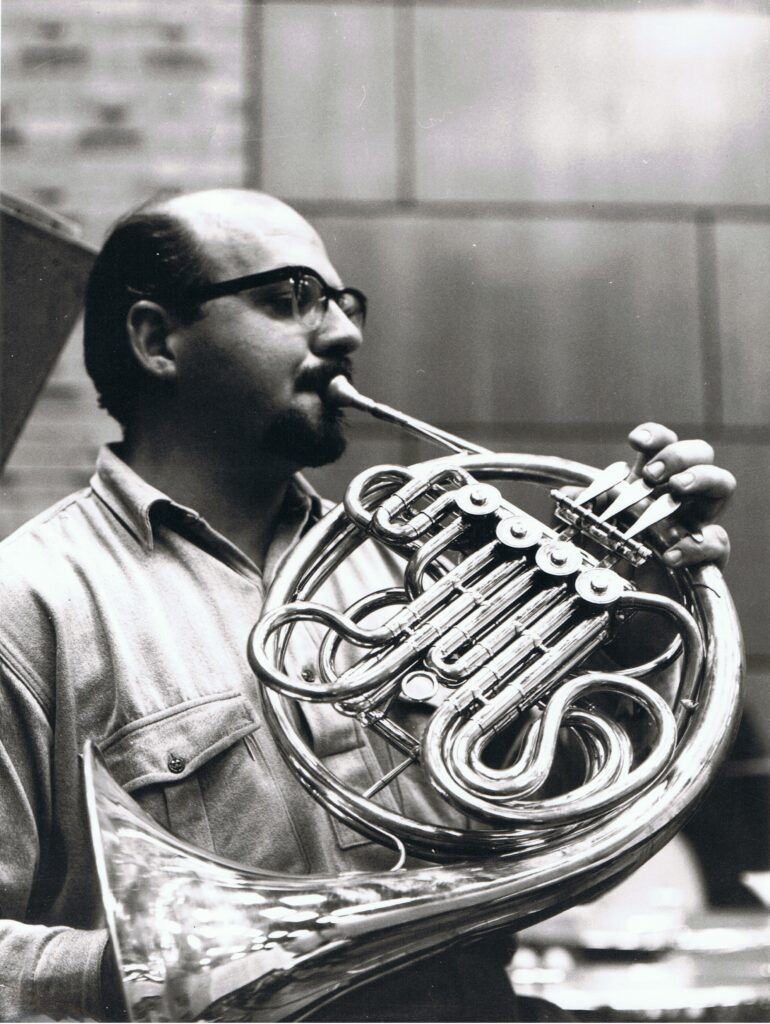
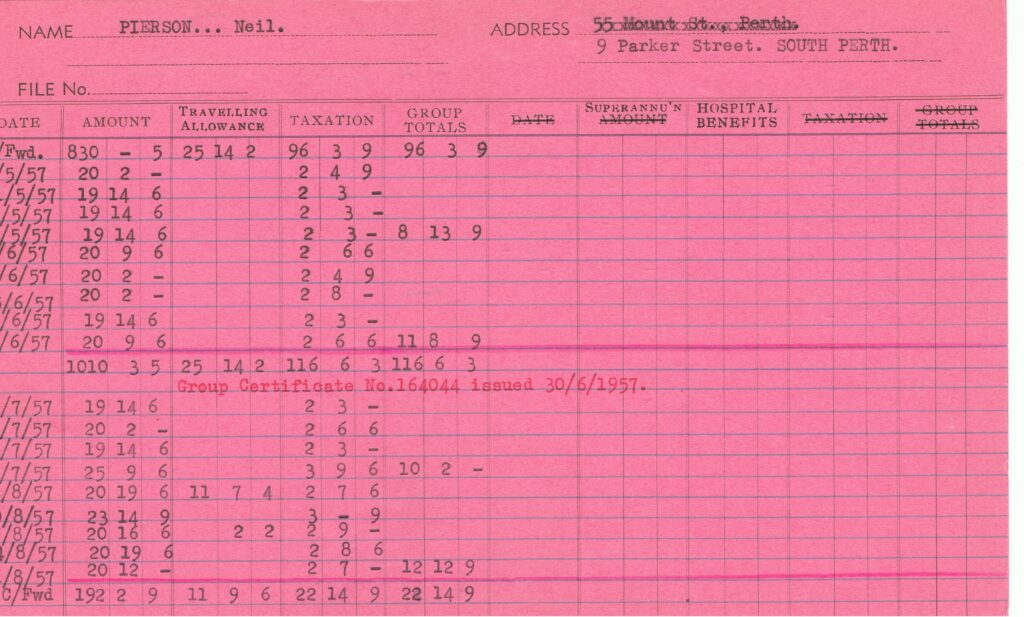
Husband and wife team Aino Neumann and Neil Pierson both studied at the Sydney Conservatorium. They married in 1952 and moved to Perth the following year, Aino to play bass with the West Australian Symphony Orchestra while Neil played trombone with a band at His Majesty’s Theatre. Later, on advice from Rudolf Pekarek, he studied french horn as a second instrument and joined the orchestra in 1956 playing that instrument.
1954 George Watson Show1954 Watson George program1955 Jazz Jamboree – program cover1955 Jazz Jamboree Program
1956
COMPOSER IS PROVOCATIVE
February 21, 1956
By “Fidelio”
A West Australian composer, James Penberthy, offered us last night what in some ways the most adventurous Australian composition so far heard in the Art Gallery programmes. This includes, notably, his medium of expression; a wind quintet consisting of flute, oboe, clarinet, horn and two bassoons. For this unusual combination Mr Penberthy had produce a work in short, linked movements, based on the music and life of Australian aborigines. He obtained interesting effects in the way of atmosphere and drastic colourings, but his score sounded very fragmentary. It seemed often to be hovering uncertainly between outright imitative realism and the freer imaginative flight which, we felt, should not convincingly emerge. Another unusual inclusion was a set of three nicely fanciful songs for soprano and flute (no piano) by John Gordon, the words being taken from Chinese. The rest was chiefly light music, generally pretty in a conventional style. There were two pieces for flute and piano by A.C. Black (a West Australian), clarinet and piano pieces by Dulcie Holland and Moneta Eagles, songs by Horace Keats and Elizabeth Mills. The performers were Sylvia Biddle (soprano), Owen Fisenden (flute), Jack Harrison (clarinet), Neil Pierson (horn), Ron Richmond (oboe), George Dreyfus and Claude Welling (bassoons) and Phyllis Allen (accompanist).
1957
1967
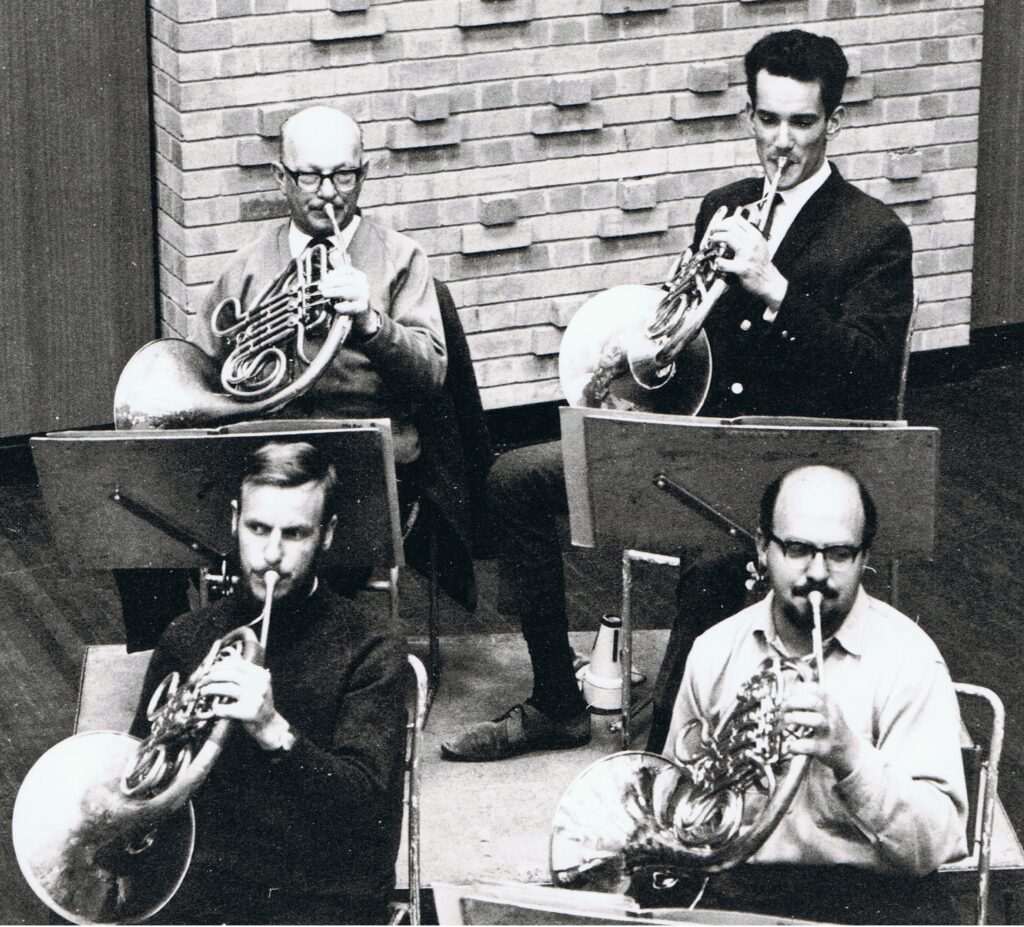
1967 WASO horn section: (back) Harold Thornton, Tony Buddle; Lochmond Haynes, Neil Pierson
MUSIC – By Peter Hellstrom
September 24 1967
There will be an all Beethoven programme at tomorrow afternoon’s recital at the A.B.C.Basil Kirke Studio beginning at 3 o’clock. It will consist of the Septet in E flat and the Serenade in D. Op.8. The performers will be Graham Wood (violin), John Dean (viola), Brian Meddemmen (cello), John Mowson (bass), Jack Harrison (clarinet), Neil Pierson (French horn) and Jill Harrison (bassoon).
1970
SWING TIME AT THE PLAYHOUSE – By Peter Hellstrom
The playhouse will really swing on February 10, 17, 24 and March 3 when four Perth’s best jazz groups go through their paces in a series that will be part of the Festival Of Perth. These late afternoon jazz concerts starting at 5:45 pm, will each consist of two widely different types of performance. There will be first class fare for those like the trad jazz and for those more attuned to mainlining. One of the groups, Don Johnson’s Octet, includes five members of the West Australian Symphony Orchestra who will thus reveal the versatility. Members of the Octet are Robert Johnson (trumpet), Neil Pierson (French horn, trumpet and trombone), Peter Clinch (alto saxophone), Jack Harrison (tenor saxophone), Harry Retting (piano) Brian Bursey (bass), Bill Tattersall (drums) and Bill Farnham (trombone). The West Australian Saturday January 31 1970
Sunday May 26 1970
The second concert in Series I of this year’s A.B.C. recitals in the Basil Kirke Studio will be given tomorrow afternoon at 3 o’clock. A Rossini Quartet For Wind will be played by flautist Owen Fisenden, clarinettist Jack Harrison, horn player Neil Pierson and bassoonist Brian Pope. A Beethoven septet will be performed by clarinettist Jack Harrison, bassoonist Brian7, violinist Vaughan Hanly, violist John Gould, cellist Ray Fraser and double bass player Aino Neumann. One of the objects of the concert is to bring the best local artists playing chamber music before the public. Symphony concerts naturally attract more people because of the grandeur and perhaps a little because of the mere occasion. But we must not let the chamber music and solo recitals die. They are part of the backbone of music in Europe, the primary source of most music.
1972
Congratulations – we’re lucky to have you, Mr Paul
By Robert Gude
If conductor Tibor Paul thought the rousing ovation he received at this week’s Youth Concert was simply urging him on for an encore, he misjudged his young audience. It is customary for audiences who want more for their money to stomp and holler hoping for a kind of bargain basement addition to the printed program. Such was not the case following the WASO’s fine performance of the titanic Fifth. Every section without exception excelled in alternating dynamics and delicacy, Mr Paul conducting without a score, was in complete command with his subtle sweeping cues and characteristically spare, precise beat. Jack Harrison was heard in a fine reading of Stanford’s Clarinet Concerto. Mr Harrison alone saved this plain, uninteresting work bearing shades of Elgar and a momentary sally in Wagner. For one brief moment, an elegant melody carried by the entire string section could have lent unusual character to this concerto – had Stanford continued variations on this theme for solo clarinet, developing and alternating this material into meaningful music. Mr Stanford chose however to leave this melody suspended in mid-air, a la Bruckner, never to be heard again. Mr. Harrison came upon this work during his recent Churchill Foundation study tour and brought it to us as an example of fine writing for clarinet. This it was beyond doubt propelled by Mr Harrison’s undoubted skill and this was reflected in the fine reception he received from a young audience which appreciates his enormous talents. The program opened with Stravinsky’s orchestral suite from the ballet “The Fairy’s Kiss” one of this great Russian, French, American’s gentler works. What could go unnoticed was the excellence of harpist, Michael Jefferies, the first chair solo quartet provided by leader Vaughan Hanly, Stanislav Kowarski (second violin) George Coleman (viola) and Raymond Fraser (cello) and, again risking reputation, the WASO’s splendid horn section led by Neil Pierson. Concert audiences in Liverpool, England still recall with awe and admiration Mr. Paul’s appearance on the podium of the Royal Liverpool Philharmonic last October. Here, beyond question, is a conductor of world standing. The A.B.C. the WASO and Perth concert audiences should appreciate the nature and global reputation of Mr. Paul while he is with us, they should count themselves fortunate.
Sunday Independent May 14 1972
Night of Russian Musical heritage – By John Meyer
Friday June 23 1972
In an evening of Russian music at the ABC orchestral subscription concert in Winthrop Hall last night three works illustrating different facets of that nations musical heritage were featured. The highlight was a controlled and well-defined performance of Tchaikovsky’s Fifth Symphony in E minor played by the West Australian Symphony Orchestra and conducted by Tibor Paul Mr. Paul’s total view of this symphony seem to be an admirable one. He did not emphasise only it’s obvious emotional qualities but gradually built up the drama from the sombre opening for clarinets to the triumphant climax of the final. In this last movement he was well supported by the Orchestra. The performance throughout was distinguished by some fine solo playing especially by Neil Pierson Horn and Jack Harrison and Peter Clinch clarinets.
The West Australian Saturday June 24 1972
1973
Albert Herring Proves to be a Bad Catch
With Robert Gude
Ten minutes late getting underway to a two-fifths empty house at the Octagon, the opening night of the W.A. Opera Company’s production of Benjamin Britten’s “Albert Herring” was already too moribund to resuscitate. The plotting in Act One induced the muse of Morpheus simply because it was virtually impossible to decipher what anyone on stage was singing about. The company threw away the key to the plot which remained undiscovered right to the last bar of Act Three. Patricia Whitbread remained prominent both vocally and socially in her role as the imperious Lady Billows. Her larger than life characterisation lent itself to projecting both voice and diction into the lifeless acoustics of the Octagon. The rest of the cast had equal opportunity but for some inexplicable reason underplayed and undersang Britten’s brilliant operatic farce. An occasional word or two was intelligible. isolated by bar after bar of baffle. The less said about Martin Clare portraying the mumbling Mayor the better. Mr Clare’s pitch was pathetic, his onstage efforts inept. Between Miss Whitbread and Mr Clare this small cast was totally inadequate for the operatic task required.
What redeems Albert Herring is the splendid production by John Milson. Act Two Scene One had the magic Milson touch: Jeffrey Weaver as Harry enduring functional discomfort during choir practice; Cliff Arndt’s bedrock boredom of wearisome waffle from windbags; John Nicholson’s stunned mullet manner and accepting homage as though facing the gallows with a recommendation for preferential treatment. Kristan Fredrickson’s articulate set and consummate costumes were colourful. Allowance should have been made, however, for a costume change amongst characters who could afford more than one ensemble thus enhancing the illusion of a passage of stage time. Conductor Geore Tintner seemed determined that Britten’s 12 member orchestra should overwhelm his singers at every opportunity. Strings were insecure throughout, with the exception of Aino Neumann, contrabass; Neil Pierson’s horn; Jack Harrison’s clarinet; Peter Randall’s oboe; James Hopkinson’s flute and most commendable, Michael Jefferies impeccable harp held Mr Tintner’s orchestra together. This festival fare is indigestible, not worth a candle and most certainly not worth the price of admission. If Britten’s Herring performed at it was on opening night is the W.A. Opera Company’s first production for the Festival Of Perth it could well be the last.
Sunday Independent February 4 1973
1975
September 15 1975 – The Alberni String Quartet
Schubert Octet in F Major Op. 166
With John McNeilly – bass; Jack Harrison – clarinet; Neil Pierson – horn; Brian Pope – bassoon.
1978
Neil Pierson retired from WASO after 22 years service.
Antonio Federici was born in 1912 in Bologna, Provincia di Asti, Piemonte, Italy.
He came to Australia in 1930 and was known as Anthony, Tony and occasionally Peter. He was a versatile musician playing trombone, mandolin and guitar.
1936
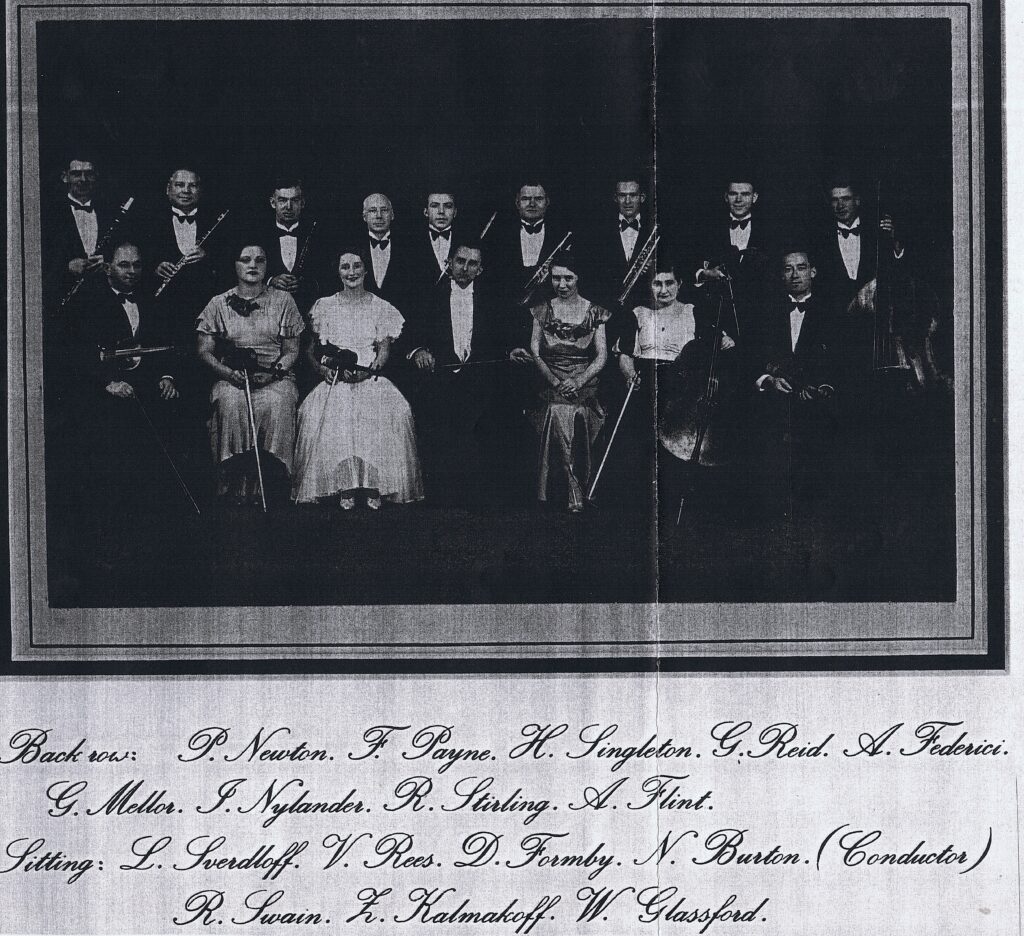
In 1936 auditions, overseen by Ernest J. Roberts, were held in order to establish a nucleus of Perth musicians to augment the 6.W.F. Studio Orchestra for public concerts given by the Perth Symphony Orchestra.
1930s Perth Studio Orchestra in front of old ABC building.
BACK L-R: Fred Flint, Tony Federici, Harry Singleton, Rima Swain, Lazar Sverdloff, Ivan Nylander, Alec Black, Vera Rees, Percy Newton, William Glassford, George Davies, Bob Trew, George Mellor.
FRONT: ?, Vaughan Hanly, Dave Kember, Harold Thornton, ?.
Those chosen for the coveted positions were: Vera Rees (Waterman) as the leader, Lazar Sverdloff and Dorothy Formby 1st violins, Bill Glassford 2nd violin, Bob Stirling viola, Zlata Kalmikoff cello, Freddy Flint bass, Harry Singleton oboe, Fred Payne flute, Percy Newton clarinet, George Mellor 1st trumpet, Ivan Nylander 2nd trumpet, Tony Federici trombone, George Reid drums and Rima Swain piano.
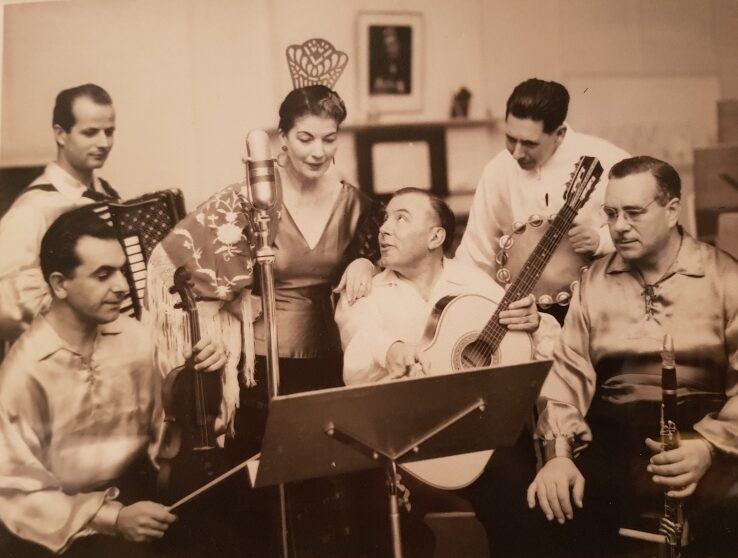
9.35: “The Gypsy Players”: Lazar Sverdloff (violin), Zlata Kalmikoff (cello), Phyllis Blott (piano), A. Federici (guitar), in association with Enrico Rigattieri (tenor).
GYPSY SONGS AND DANCES TONIGHT
Tonight’s national broadcast: “The Gypsy Quartette” have a programme of love, songs and Russian gypsy selections for presentation at 8.20. Enrico Rigattieri will provide the vocal interludes.
Daily News (Perth, WA : 1882 – 1955), Tuesday 30 June 1936, page 10
RADIO ARTISTS INJURED. Bus Accident on Wagin Trip.
When returning to Perth early yesterday morning from the Wagin Town Hall, where a concert had been given in celebration of the opening of the new broadcasting station 6WA, a party of radio artists from Perth National Station met trouble. They were travelling in two buses and several motor cars. As one of the buses, containing about 20 passengers, turned from the Wagin Road into Albany-road, it skidded across Albany-road. Its complete overturn was prevented when it collided with a tree. Glass in the windows was smashed, and the flying pieces gashed several of the passengers, three of whom were taken in a St John ambulance and a motor car to the Wagin Hospital, where they were admitted for treatment. These were Mr. Duncan Morison, a pianist who has been touring Australia with Mr. Sydney McEwan, the Scottish tenor; Mr. Fred Payne (flautist) and Mr. Anthony Federici (trombone player), members of the Australian Broadcasting Commission’s Perth Concert Orchestra. None of the passengers was seriously injured, though the double bass played by Mr. Fred Flint was smashed to pieces. With the aid of passing cars and the other vehicles of the party, the occupants of the damaged bus completed their journey to Perth. News was received in Perth yesterday that the injured persons were recovering. It was announced that, despite the casualties, the band would keep its engagements.
West Australian (Perth, WA), Wednesday 9 December 1936, page 24
Later details in connection with the accident to a Perth motor Iras at the intersection of the Wagin and Perth roads on Monday night indicate that 20 radio artists were involved, a number of whom sustained minor injuries, three being gashed with flying, glass seriously enough to require treatment at the Wagin Hospital. These were Messrs. Duncan Morison (pianist), Fred Payne (flautist) and Anthony Federici (trombone player). The fact that although several saxophone players were included in the party none was hurt shows what strange freaks Fate sometimes plays.
Great Southern Herald (Katanning, WA : 1901 – 1966), Saturday 12 December 1936, page 2
1939
ORCHESTRA AND SINGER. Promenade Concert at Capitol.
It was an unusual treat for those who attend the fortnightly promenade concerts presented by the Australian Broadcasting Commission at the Capitol Theatre to have a celebrity on last night’s programme. A larger number than usual gathered as a result of the announcement that Lord Lurgan would sing. The visiting baritone was listed for three items, but so insistent was the audience that after recalls he gave extras which were no less satisfying than his principal numbers. He repeated the excerpt from Messager’s opera, “Monsieur Beaucaire,” which he gave in his first recital last Wednesday and sang Frederick Keel’s “Trade Winds” and “Bird Songs at Eventide” (Eric Coates). As encores he gave “River Shannon” (Reginald Moore) and the well-known negro spiritual. “Swing Low, Sweet Chariot.” The programme numbers were accompanied by muted orchestra, and the extras by piano. Two charming brackets, one being three “Nell Gwynne” dances by Edward German and the other Massenet’s “Scenes Pittoresques,” were the outstanding contributions from the orchestra, which was under the baton of Mr. Ernest J. Roberts. The strength of the orchestra was reduced from the usual standard by the absence of a number of the stringed instruments, the most notable results being a diminution in the bass. The opening overture was that from von Suppe’s opera Light Cavalry,” and was taken with appropriate brightness. Other popular items were Kreisler’s “Schon Rosmarin” and Moszkowski’s “Serenade,” and the operatic selection was from Sullivan’s “H.M.S. Pinafore” and was particularly well received. Billed as a solo item for piano with orchestra, a sequence of Strauss waltz themes arranged by Borschel was rather an orchestral presentation with prominent ornamentation from the piano, Miss Rima Swain being the star of the moment. Her keyboard technique was pleasing, her arpeggios and similar ornamentations being particularly fluent. Another solo item with orchestra was “Sliding Jim” (Losey), the soloist being Mr. Anthony Federici on the trombone. The evening ended with the playing and singing of the hymn “Rock of Ages”.
West Australian (Perth, WA : 1879 – 1954), Monday 17 July 1939, page 9
Tony married Olive Cecelia Mudford in 1940 and they initially lived at 26 Park Street, Subiaco.
RECORDING:
Signor G. Magistro (Spanish Guitar)
Three pieces (5:00)
In the early 1930s Frederici (mandolin) and Magistro (Spanish guitar) played on several musical broadcasts over radio station 6WF, including several Community Concerts broadcast from the Perth Town Hall.
The attached recording of three guitar pieces by Magistro was made in the late 1940s.
Two sides – Nicholson’s Sound Recording Studios.
Courtesy G. Emery
orchestra members1951 Ivan, Jack Harrison, Viv, John Mowson, Tony Federici
1952
Iwan Iwanoff and his wife, Linda, migrated to Australia as part of the International Refugee Organisation resettlement scheme, arriving in Fremantle, Western Australia in March 1950. In 1951, Jack Harrison joined the West Australian Symphony Orchestra as second clarinet. The Principal Trombonist of WASO was Anthony “Tony” Federici, who had been in the orchestra since 1936. In the early 1950’s, Tony had a flat in the same Riverside Drive block as Iwanoff, just a short walk from the ABC building where WASO rehearsed. Tony apparently showed Jack an Iwanoff house being built in Subiaco. There were 2 houses in Subiaco in 1953 – one in Roberts Road for Nicoloff, and one at 102 Barker Road for Lazar Sverdloff.
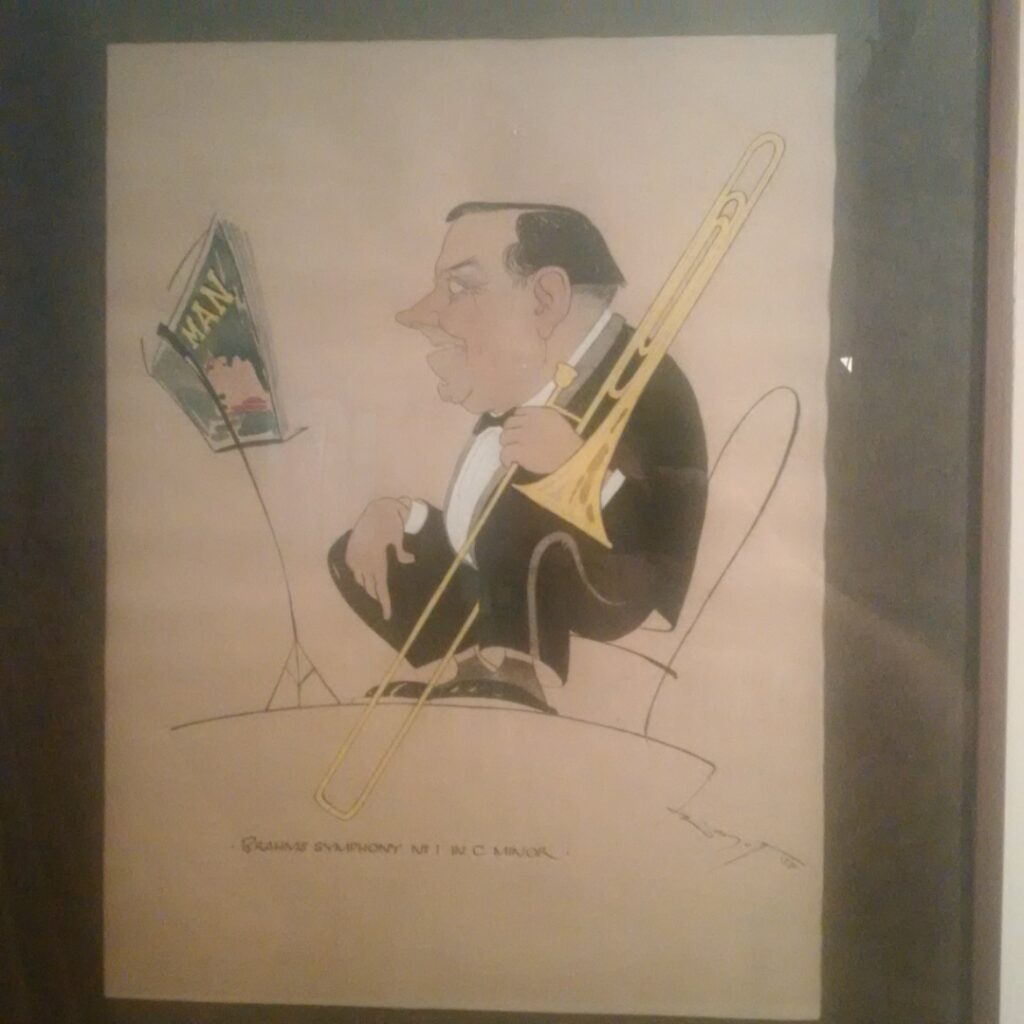
Iwan Iwanoff caricature of Tony Federici
10.8.1954
FLINT (Fred): On Aug. 7, dear friend of Tony and Olive Federici.
Dear memories.
1958
WASO Capitol Theatre 19581950s WASO tour Viv Nylander, Jill Cooper, Louise Arndt and Tony Federici
1959
“Typica Latina”
In 1959 Tony established the ensemble “Typica Latina” with Carmen Watts which performed in radio broadcasts and also toured and was a member of the “Lido Quintet”.
WORTH REPORTING
Two of the Lido Quintet, Victor Mestichelli (left) and Tony Federici, show two Derby children how to play the accordion and the guitar.
LOCAL halls were packed and the nor’westers went wild when a concert party recently travelled beyond Geraldton into the vast north of Western Australia.
The concerts were staged at Derby, Darwin, Port Hedland, Wittenoom Gorge, and
Carnarvon. Audiences travelled hundreds of miles from inland stations, and flocked into Darwin from Rum Jungle. The concerts were given by the A.B.C. Lido Quintet, specially formed for the tour from the ranks of the A.B.C.’s
Tipica Latina group, heard in the National relay. “It was a wonderful experience, a wonderful place, with wonderful people,” Tony Federici, the quintet’s leader told us. But there were some be-hind-the-scenes difficulties to cope with. Take the case of Mario Burlini, the quintet’s clarinettist. His ears were affected by the plane trips. And at times he was so deaf he couldn’t hear the other boys playing. But he didn’t give in. By following the boom-boom of Eric King’s bass drum and counting bars, Mario didn’t miss a beat. And accordionist Victor Mestichelli was so airsick that he sat propped in his chair on stage with his accordion strapped to him only staggering to his feet for solo numbers.
Australian Women’s Weekly (1933 – 1982), Wednesday 7 October 1959, page 31
1961
ABW TO SCREEN BIRTHDAY SHOW
Thursday May 11 1961
By Keith Flanagan
ABW Channel 2 will tonight present its biggest live show yet, to celebrate its first birthday. There will be singers, dancers, a 25 piece orchestra and an invited audience of 200 for the two hour show.
Jock Millett will produce the cabaret style show in the Kirk Memorial Studio in the radio building – the biggest studio the A.B.C. has here. The record library will be taken over as a makeup room for the 44 people who will come before the cameras. Lighting in the studio will be equivalent to 1000 60 watt globes. Jim Fisher, Earl Reeve and Diana Ward will compere the show, to run from 8pm to 10.30pm, with a half hour break from 9 for the American documentary “Our Man in Space”. Verdon Williams has formed a 25 piece orchestra for the show. Artists to appear are the Four Notes, Margot Robertson, Tony Federici, Carmen Arenas, Adriano Angelucci, Doris Dodd, Garry Smith and Derna Sluik, Jack Harrison, the Wrightsons, Lorna Sydney, Gerrard Sibbritt and Terri Charlesworth, Andre Tio, Peter Piccini and a demonstration ballroom group.
The West Australian Thursday May 11 1961
WASO water pistols
MEMBERS OF THE W.A. SYMPHONY ORCHESTRA
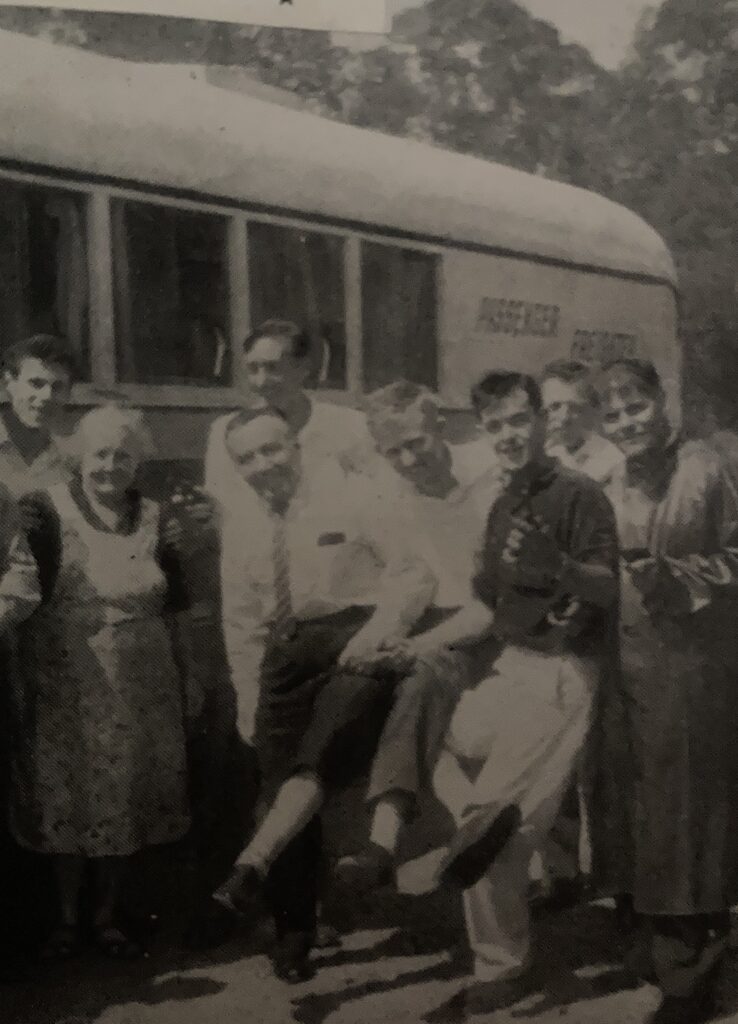
were in a gay mood as they boarded the bus after a stop on their way back to Perth from a recent tour of the South West. In the picture below are Tony Federici (trombone), Brian Hanley (violin) and Norm Bourke (music presentation assistant) while the bus driver and proprietress of the hotel look a little bewildered by it all. On the extreme right is Jack Harrison (clarinet) who took the precaution of wearing a raincoat to defend himself against the water pistols they are all brandishing.
Radio Active May 1961
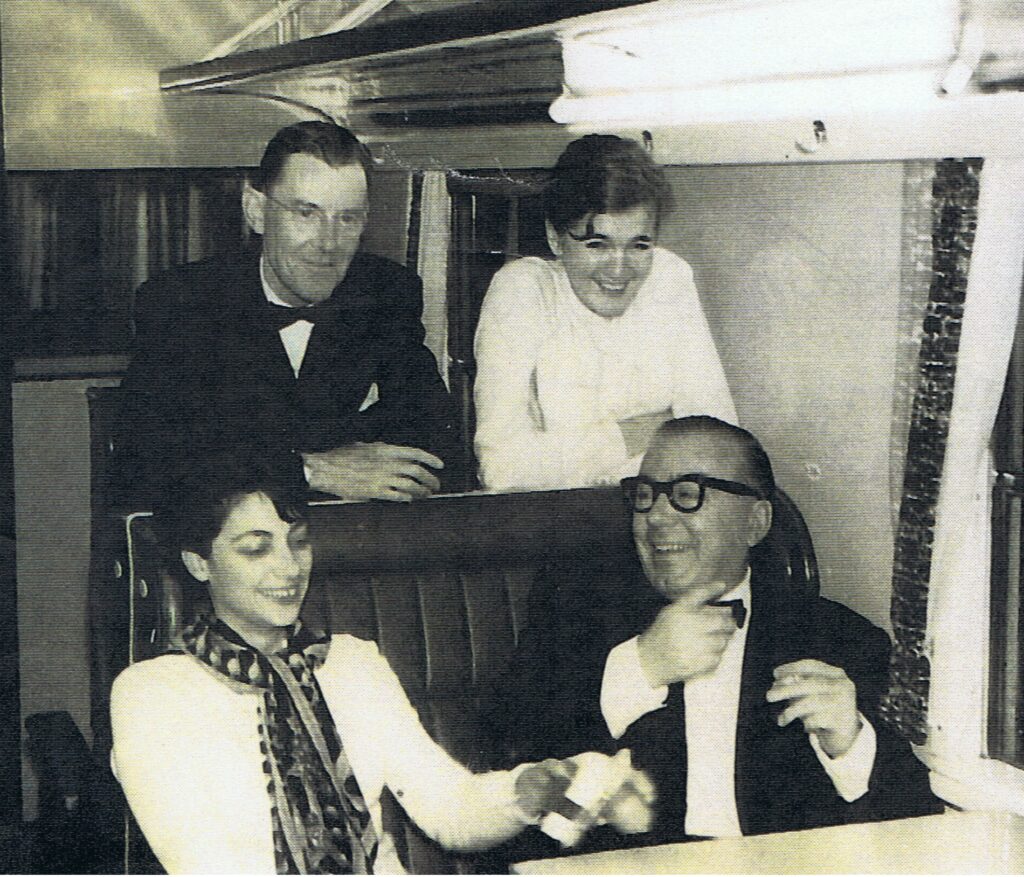
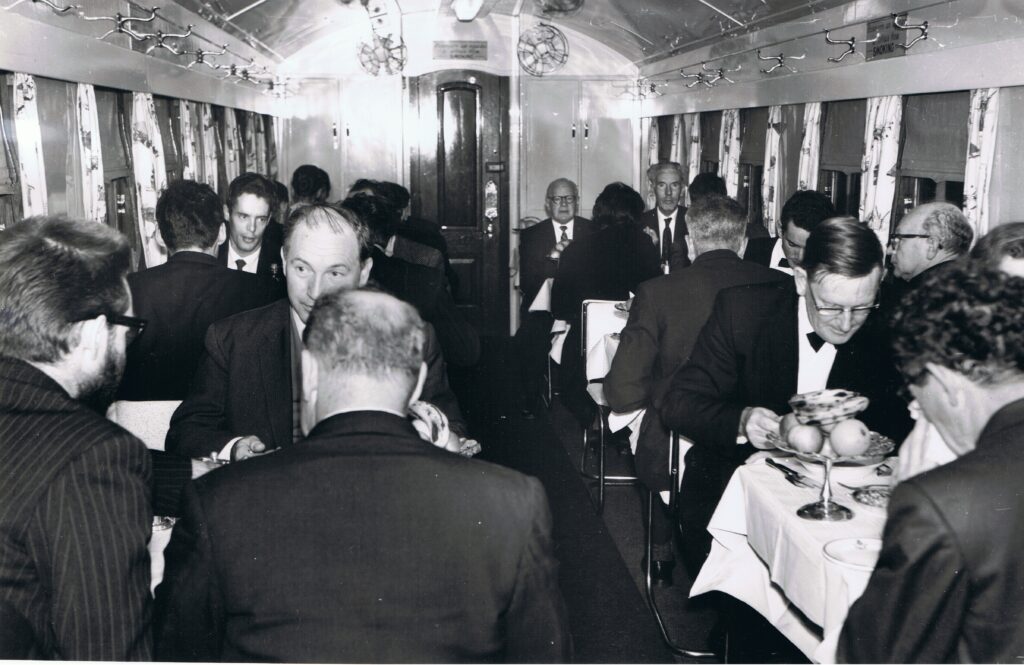
1963 WASO Geraldton tour dining train
1965
1965 John Farnsworth Hall WASO Capitol Theatre
1967
1967 WASO trumpets, trombones and tuba in ABC Basil Kirke Studio
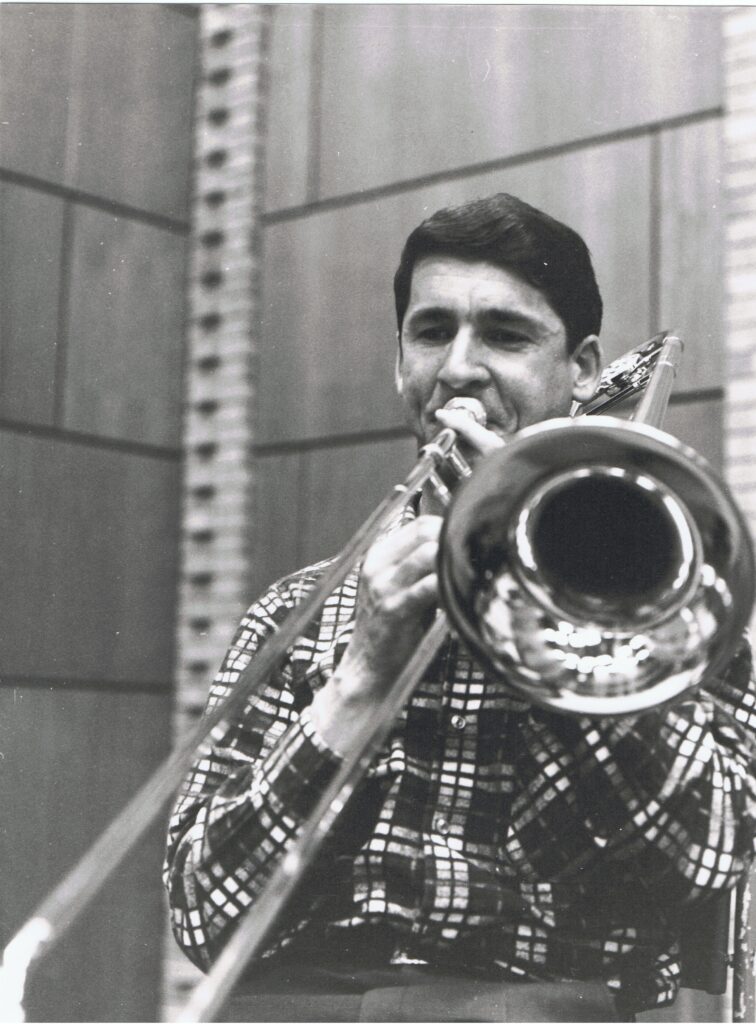
Principal Trombone player Tony Federici (sometimes known as Peter) was another talented and versatile player. Aswell as leading a small ensemble called “Typica Latina”, any time Mozart’s Don Giovanni sand his serenade “Deh vieni alla finestra” under the window it was Tony who exquisitely played the mandolin accompaniment. He was also a barber and was happy to set up a shop in his garden to cut the hair of unwilling children belonging to other members of the orchestra. Jack Harrison’s son Jay was one of these children, as he was afraid of men in white coats due to too many visits to hospital as a child and associated the white coats of shop barbers.
Harrison, Marcia, West Australian Symphony Orchestra Celebrating 75 Years, (WASO Holdings Pty Ltd, 2003). P.35
1967 Tony Federici trombone
Tony Federici retired from the West Australian Symphony Orchestra in 1972 after 36 years of service.
Government House,
Canberra, A.C.T. 2600
HER Majesty the Queen has been graciously pleased to approve the award of the Imperial Service Medal to the following persons on their retirement:
Australian Broadcasting Commission
Federici, Antonio, formerly Principal Trombonist,
West Australian Symphony Orchestra, Perth, Western Australia.
Commonwealth of Australia Gazette (National : 1901 – 1973), Thursday 2 November 1972 (No.103), page 1
Tony died just 7 years later aged 66 on 14th March 1979.
 The band was conducted by